Are you ready to stand out in your next interview? Understanding and preparing for Mobile Equipment Maintenance interview questions is a game-changer. In this blog, we’ve compiled key questions and expert advice to help you showcase your skills with confidence and precision. Let’s get started on your journey to acing the interview.
Questions Asked in Mobile Equipment Maintenance Interview
Q 1. Describe your experience troubleshooting hydraulic systems in mobile equipment.
Troubleshooting hydraulic systems requires a systematic approach. Think of it like detective work – you need to gather clues to identify the culprit. My experience involves systematically checking for leaks (visual inspection and pressure testing), examining hydraulic fluid for contamination (color, smell, particulate matter), and verifying the proper function of components like pumps, valves, cylinders, and filters. I start with the simplest checks, like verifying fluid levels and looking for obvious leaks, before moving onto more complex diagnostics. For example, if a hydraulic cylinder isn’t extending, I might first check the fluid level and then inspect the cylinder for damage. If the fluid level is low and there’s no visible leak, the problem could be an internal leak within the cylinder or a faulty pump. I use pressure gauges to measure system pressure at various points, comparing readings to manufacturer specifications to pinpoint pressure drops indicating leaks or restrictions. Finally, I utilize specialized diagnostic tools to check for electrical faults within the hydraulic control system.
For instance, I once worked on an excavator with a malfunctioning arm. After eliminating obvious leaks and checking fluid levels, I used a pressure gauge to discover a significant pressure drop across a particular valve. Replacing the valve resolved the issue, demonstrating the importance of methodical troubleshooting.
Q 2. Explain the process of performing a preventative maintenance check on a diesel engine.
Preventative maintenance on a diesel engine is crucial for longevity and optimal performance. Think of it as regular check-ups for your engine, preventing major problems down the line. My process begins with a visual inspection, checking for leaks, loose connections, and damage to belts, hoses, and other components. Then I check fluid levels (engine oil, coolant, fuel) and their condition. I inspect the air filter for clogging, which can affect engine performance and lead to overheating. I check the fuel filters and change them as per the maintenance schedule. I also examine the battery terminals for corrosion and ensure the battery has the correct charge. Furthermore, I inspect the engine’s external components, such as the alternator and starter motor, for wear or damage.
A crucial step is checking the engine’s oil pressure and temperature. Low oil pressure indicates potential problems with the oil pump or bearings, whereas excessively high temperature points to coolant issues or blockages. I also check the engine’s belts for wear, cracks, and proper tension. Finally, I’d typically record all readings and observations in a logbook for future reference and to track the engine’s health over time.
Q 3. What are the common causes of engine overheating in mobile equipment?
Engine overheating in mobile equipment can stem from several common issues. Think of it as a system struggling to dissipate heat. The most frequent culprits are inadequate coolant levels, a malfunctioning cooling system (leaks, clogged radiator, faulty water pump, or thermostat), or a faulty fan. Other causes can include a blocked air intake, leading to restricted airflow and increased engine temperature, or problems with the cooling fan. A clogged radiator severely limits the engine’s ability to shed heat, causing an immediate temperature rise. Similarly, a faulty thermostat can prevent the coolant from circulating efficiently. Finally, internal engine problems, such as a failing head gasket, can also cause overheating by allowing coolant to leak into the engine’s cylinders.
For example, I once encountered a situation where a piece of debris had blocked the radiator, leading to significant engine overheating. A simple cleaning of the radiator resolved the issue. Another time, a faulty thermostat was the root cause – once replaced, the engine operated at the correct temperature.
Q 4. How do you diagnose electrical faults in mobile equipment?
Diagnosing electrical faults involves a combination of systematic testing and the use of specialized tools. It’s akin to tracing a circuit, finding where the current flow is disrupted. I start with a visual inspection, checking for damaged wiring, loose connections, corroded terminals, and blown fuses. Next, I use a multimeter to measure voltage, current, and resistance in various parts of the electrical system. This helps isolate faulty components like switches, sensors, solenoids, or wiring harnesses. I use wiring diagrams to understand the circuit layout and trace the path of the electrical signal. I also utilize diagnostic software connected to the machine’s computer to read fault codes stored in the system’s memory. Finally, I might use a continuity tester to check for broken wires or short circuits.
A recent example involved a malfunctioning light on a loader. Using a multimeter, I traced the problem to a broken wire in the harness. Repairing the wire restored the light’s functionality. Similarly, fault codes from the diagnostic software can greatly accelerate finding an issue, saving significant time.
Q 5. What safety procedures do you follow when working on mobile equipment?
Safety is paramount when working on mobile equipment. It’s about following established procedures to minimize the risk of accidents. Before beginning any work, I always ensure the equipment is properly secured (wheels chocked, engine off, parking brake engaged) and the area is clear of obstructions and personnel. I wear appropriate Personal Protective Equipment (PPE), including safety glasses, gloves, hearing protection, and steel-toe boots. I always follow the manufacturer’s safety guidelines found in the operator’s manual and any relevant lockout/tagout procedures to prevent unexpected starts. If working at height or in confined spaces, I adhere to specific safety protocols for those situations. I also ensure that all tools are properly maintained and in good working condition. Regularly checking my surroundings for hazards is crucial, and clear communication with colleagues is essential to prevent accidents.
For example, before working on a hydraulic system, I always lower the equipment’s components to prevent accidental movements. Likewise, before starting any electrical work, I always ensure the power is disconnected and locked out.
Q 6. Describe your experience with diagnostic tools and equipment.
My experience with diagnostic tools is extensive. I’m proficient with multimeters for measuring voltage, current, and resistance; pressure gauges for hydraulic systems; and engine diagnostic scanners for reading fault codes from the machine’s electronic control unit (ECU). I also use oscilloscopes for more advanced electrical diagnostics. I’m comfortable using specialized software to interpret data from these tools and translate it into actionable repair strategies. I’m familiar with different types of diagnostic software for various makes and models of mobile equipment. Additionally, I frequently use thermal cameras to detect overheating components early on, preventing more serious damage. My experience extends to using various hand tools, along with specialized tools specific to different machines and components.
For example, I once used an oscilloscope to identify an intermittent electrical signal issue that a simple multimeter couldn’t detect, ultimately saving significant time and avoiding unnecessary part replacement.
Q 7. How familiar are you with different types of mobile equipment transmissions?
My familiarity with mobile equipment transmissions is broad. I understand the mechanics and operation of various types, including manual transmissions, automatic transmissions (both hydrostatic and powershift), and continuously variable transmissions (CVTs). I’m familiar with their components – clutches, gears, planetary gearsets, torque converters, and hydraulic pumps and motors – and their typical failure modes. I can diagnose problems related to gear shifting, slippage, unusual noises, and power loss. I can identify the specific transmission type in a machine and understand its unique characteristics, allowing for effective troubleshooting and repair. This knowledge extends to understanding the interaction between the transmission and other systems such as the engine and hydraulics. I’m experienced in servicing and repairing various types, including both mechanical and electronically controlled units.
I once diagnosed a problem with a powershift transmission by identifying the cause of the slip as a worn clutch pack, based on the machine’s symptoms and a visual inspection of the fluid.
Q 8. Explain your experience with repairing or replacing components such as engines, transmissions, or hydraulic pumps.
Over the past 15 years, I’ve extensively worked on repairing and replacing a wide range of components in mobile equipment, from heavy-duty construction machinery to agricultural vehicles. This includes everything from complete engine overhauls (including replacing pistons, connecting rods, and cylinder heads) to transmission rebuilds (requiring careful disassembly, inspection for wear, and replacement of synchronizers or gears as needed), and hydraulic pump repairs (diagnosing leaks, replacing seals, and calibrating pressure relief valves).
For instance, I once worked on a backhoe with a failing hydraulic pump. After diagnosing the issue (low pressure and noticeable leakage), I systematically disassembled the pump, identified the faulty parts (a worn-out internal seal and a cracked valve), sourced the replacements, and reassembled the pump, ensuring proper alignment and calibration. This brought the machine back to full operational capacity. Another example involved rebuilding the transmission of a large farm tractor. This required a detailed understanding of gear meshing and precise adjustment of the shifting mechanisms to guarantee smooth and efficient operation.
Q 9. How do you determine the root cause of a recurring mechanical issue?
Pinpointing the root cause of a recurring mechanical issue involves a systematic approach. I begin with a thorough review of the machine’s maintenance history and any previous repair records. This helps identify patterns and potential contributing factors. Next, I perform a comprehensive inspection of the affected system, checking for wear, tear, misalignment, or any other visible defects. Then, I use diagnostic tools, such as pressure gauges, temperature sensors, and specialized software, to collect data and gather precise information about the system’s performance.
For example, if a vehicle experiences repeated overheating, I wouldn’t just replace the thermostat. I’d investigate the cooling system entirely: inspect the radiator for clogs, check the coolant level and quality, examine the water pump for proper function, and verify the fan clutch’s operation. This methodical approach ensures we’re addressing the underlying cause, not just the symptom.
Often, data analysis is key; I might track the frequency of the issue under specific operating conditions to reveal underlying problems. A sophisticated approach might involve creating fault trees to visually represent potential causes and their relationships, aiding in identifying the most probable culprit.
Q 10. What is your experience with welding and fabrication in mobile equipment repair?
Welding and fabrication are essential skills in mobile equipment repair. My experience encompasses various welding processes, including shielded metal arc welding (SMAW), gas metal arc welding (GMAW), and gas tungsten arc welding (GTAW). I can effectively weld a wide array of metals commonly found in mobile equipment, such as mild steel, stainless steel, and aluminum. This skillset is invaluable for repairing damaged components, fabricating custom parts, and modifying existing structures.
For instance, I’ve repaired cracked frames on excavators using GMAW, precisely welding the fractured parts while ensuring the structural integrity of the frame remains intact. Similarly, I’ve fabricated custom brackets and mounting points for specialized attachments. Proper welding techniques are crucial not just for functionality but also for safety; a poorly executed weld could compromise the overall structural integrity of the equipment, leading to accidents.
Q 11. Describe your understanding of different types of lubricants and their applications.
Understanding lubricants is fundamental to effective mobile equipment maintenance. Different types of lubricants are designed for specific applications and operating conditions. For example:
- Engine oils: These are formulated to protect engine components from wear, reduce friction, and dissipate heat. The choice of engine oil depends on factors such as engine type, operating temperature, and viscosity requirements.
- Gear oils: These have higher viscosity and extreme-pressure additives to handle the high loads and stresses experienced in gearboxes and differentials.
- Hydraulic fluids: These fluids are designed to transmit power in hydraulic systems, providing lubrication and preventing corrosion. Different hydraulic fluids are available with varying viscosity grades and additives for different applications.
- Grease: Grease is a semi-solid lubricant that is particularly useful in applications where lubrication is needed in difficult-to-reach areas or under extreme conditions.
Choosing the wrong lubricant can lead to premature wear, reduced efficiency, and even catastrophic failures. Proper lubrication selection is based on the manufacturer’s recommendations and an understanding of the equipment’s operating conditions and intended use.
Q 12. How do you prioritize multiple maintenance tasks to ensure efficient operation?
Prioritizing maintenance tasks requires a structured approach. I typically use a combination of methods including:
- Criticality assessment: Prioritize tasks based on the potential impact of failure. A critical component failure (such as an engine seizing) necessitates immediate attention, while a less critical issue (like a minor cosmetic defect) can be scheduled for later.
- Preventive maintenance schedules: Adhering to manufacturer-recommended maintenance schedules is crucial for preventing premature failures and extending the lifespan of the equipment. These schedules often specify intervals for tasks like oil changes, filter replacements, and inspections.
- Condition-based maintenance: Monitoring the condition of equipment components through regular inspections and diagnostic testing helps to identify potential problems early on and schedule maintenance accordingly. This might involve checking oil levels, monitoring temperature sensors, or running diagnostic software.
- Downtime optimization: Considering potential downtime during maintenance helps in scheduling tasks efficiently. Larger repairs might require more extended downtime, so scheduling them strategically is important to minimize operational disruption.
In essence, it’s about balancing proactive preventive maintenance with reactive repairs based on urgency and potential consequences of failure. Effective scheduling minimizes downtime and maximizes the operational life of mobile equipment.
Q 13. Explain your experience with interpreting technical manuals and schematics.
Interpreting technical manuals and schematics is a daily part of my job. My experience involves deciphering complex diagrams, component specifications, and troubleshooting guides to diagnose and repair equipment effectively. I can readily understand electrical schematics, hydraulic diagrams, and mechanical drawings, allowing me to trace electrical circuits, identify hydraulic components, and understand the mechanical workings of the system.
For example, if a machine’s hydraulic system malfunctions, I would refer to the hydraulic schematic to trace the flow of fluid, pinpoint potential problem areas (e.g., valves, cylinders), and troubleshoot accordingly using the manual’s guidance. An understanding of different symbology (e.g., electrical, hydraulic, pneumatic) is fundamental to successfully navigating these documents.
Q 14. Describe your experience working with computerized maintenance management systems (CMMS).
I have extensive experience working with computerized maintenance management systems (CMMS). I’m proficient in using CMMS software to schedule preventive maintenance, track repairs, manage inventory, and generate reports. This includes inputting work orders, assigning tasks to technicians, tracking parts usage, and generating reports on maintenance costs, equipment downtime, and overall equipment effectiveness (OEE).
I’ve used various CMMS platforms, including [mention specific examples if comfortable – e.g., IBM Maximo, SAP PM]. The use of CMMS significantly improves efficiency by centralizing maintenance information, optimizing workflows, and facilitating data-driven decision-making. For example, using CMMS allows us to predict potential failures based on historical data, preventing unforeseen downtime and saving costs.
Q 15. What are your methods for maintaining accurate records of repairs and maintenance?
Maintaining accurate repair and maintenance records is crucial for efficient fleet management and preventative maintenance. My method involves a multi-pronged approach, combining digital and physical record-keeping. I utilize a Computerized Maintenance Management System (CMMS), a software that allows for detailed logging of all repairs, maintenance schedules, parts used, labor hours, and costs. This system generates reports on equipment performance, identifying potential issues before they escalate. In addition to the CMMS, I meticulously maintain physical work orders, ensuring all entries are legible and complete. These documents serve as backups and provide a quick reference point during audits or investigations. Each entry includes date, time, equipment ID, specific problem, parts used (with serial numbers if applicable), labor performed, and final test results. Finally, I use barcodes or QR codes linked to the CMMS to quickly log parts and services. This system prevents errors and makes data retrieval efficient.
For example, if a wheel bearing on a loader needs replacement, the CMMS will track the entire process – from the initial work order documenting the issue, to the parts ordered (with supplier details), the labor hours spent by the mechanic, the final cost, and the date of completion. The physical work order acts as a second layer of confirmation, ensuring data integrity. This detailed tracking ensures traceability, aids in warranty claims, and ultimately helps to reduce downtime and improve overall equipment lifespan.
Career Expert Tips:
- Ace those interviews! Prepare effectively by reviewing the Top 50 Most Common Interview Questions on ResumeGemini.
- Navigate your job search with confidence! Explore a wide range of Career Tips on ResumeGemini. Learn about common challenges and recommendations to overcome them.
- Craft the perfect resume! Master the Art of Resume Writing with ResumeGemini’s guide. Showcase your unique qualifications and achievements effectively.
- Don’t miss out on holiday savings! Build your dream resume with ResumeGemini’s ATS optimized templates.
Q 16. How do you handle emergency repairs in a field environment?
Emergency repairs in the field require a quick assessment, improvisation, and prioritization. My approach focuses on safety first, followed by immediate mitigation of the problem to prevent further damage or downtime. I start with a thorough assessment of the situation. This includes determining the severity of the issue, identifying potential safety hazards, and gathering information from the operator about the circumstances leading to the malfunction. Next, I prioritize the repairs based on urgency and the potential risk of continued operation. A critical failure (like a complete hydraulic system failure) needs immediate attention, whereas a minor issue (e.g., a small leak) may be addressed later. I always utilize available resources effectively – this includes utilizing on-hand tools and spare parts, contacting the workshop or parts supplier for necessary components, and leveraging the expertise of colleagues if needed. For example, if I encounter a flat tire in a remote area, immediate action would involve safely changing the tire using available tools. If there’s damage to the rim, I’d assess the situation, making a judgment call on whether a temporary repair is feasible or if a tow truck is needed. Detailed reporting of the emergency repair, including the cause, actions taken, and parts used, is crucial for updating the CMMS and preventing future incidents.
Q 17. Describe a time you had to solve a complex mechanical problem.
I once encountered a complex problem with a large excavator’s hydraulic system. The machine experienced intermittent loss of power to the main boom, making it unreliable and dangerous to operate. Initial diagnostics pointed to multiple potential causes – faulty hydraulic pump, blocked lines, or issues with the control valves. My approach was methodical. I began by systematically checking all components, starting with the easiest and least expensive options. I first checked for leaks, visually inspecting all hydraulic lines and fittings. No leaks were detected. Next, I used a pressure gauge to check the hydraulic fluid pressure at different points in the system. I discovered that the pressure dropped significantly when the boom was activated. This narrowed the problem to either the pump or a control valve. Since the pressure was still present at the pump, the fault lay within the control valve assembly. The problem was further complicated by the excavator’s age – it required sourcing replacement parts from a specialist, as the original manufacturer no longer supplied them. I eventually located a refurbished control valve, carefully installed it, ensuring proper alignment and seal integrity, and re-tested the boom operation. This meticulous approach ensured the problem was identified and resolved correctly, avoiding costly errors that would have compounded the problem.
Q 18. How do you stay updated on the latest technologies and best practices in mobile equipment maintenance?
Staying updated is essential in this rapidly evolving field. I utilize several methods to keep my knowledge current. Firstly, I actively participate in industry conferences and workshops, networking with other professionals and learning about emerging technologies and best practices. This allows me to directly engage with experts and learn from real-world experiences. Secondly, I subscribe to industry publications and online journals, which provide regular updates on new equipment, maintenance techniques, and regulatory changes. I also actively participate in online forums and communities, discussing various maintenance challenges and sharing insights with other professionals. Thirdly, I always encourage manufacturer training on new models and systems, enabling hands-on experience with cutting-edge technologies. Finally, I actively seek out opportunities to work with diverse equipment, gaining experience across different brands and types of machinery. This continuous learning approach is critical to maintaining a high level of competency and proficiency in this dynamic field.
Q 19. What is your experience with different types of braking systems in mobile equipment?
My experience encompasses various braking systems used in mobile equipment. These include:
- Hydraulic Brakes: These are common in many types of heavy equipment, using hydraulic fluid pressure to actuate brake shoes or discs. I’m proficient in diagnosing issues such as fluid leaks, worn brake pads, and malfunctioning calipers or master cylinders. I also understand how to properly bleed hydraulic brake systems, ensuring correct operation.
- Air Brakes: Large vehicles like trucks and articulated dump trucks typically use air brakes. My expertise includes troubleshooting problems in the air compressor, air lines, valves, and brake chambers. Understanding the safety implications of air brake systems is critical, including regular inspections and maintenance to ensure functionality and prevent failures.
- Electric Brakes: Some newer machines incorporate electric braking systems, often as auxiliary brakes or for parking. I have experience diagnosing problems in electric brake systems, including checking motor functionality, sensors, and electrical connections.
- Wet Brakes: These brakes use an oil bath to cool and lubricate the braking components, common in transmissions and other high-torque applications. My experience extends to disassembling and rebuilding wet brakes, paying close attention to proper clearances and lubrication.
Understanding the unique characteristics of each system is critical for effective diagnostics and repair.
Q 20. Explain your understanding of emission control systems in diesel engines.
Diesel engines employ various emission control systems to reduce harmful pollutants such as particulate matter (PM), nitrogen oxides (NOx), and hydrocarbons (HC). My understanding covers several key technologies:
- Exhaust Gas Recirculation (EGR): EGR reroutes a portion of the exhaust gas back into the combustion chamber, reducing combustion temperature and thus NOx formation. I’m familiar with diagnosing EGR valve problems, cleaning or replacing components, and understanding EGR system functionality.
- Diesel Particulate Filter (DPF): DPFs trap soot particles, preventing them from entering the atmosphere. I know how to monitor DPF regeneration (the process of burning off accumulated soot), diagnose blockage issues, and conduct necessary cleaning or replacement. Understanding the various DPF regeneration strategies – passive, active, and forced – is vital.
- Selective Catalytic Reduction (SCR): SCR injects a diesel exhaust fluid (DEF) into the exhaust stream, chemically reducing NOx into harmless nitrogen and water. I understand the critical role of DEF quality and level, as well as diagnosing issues with the SCR catalyst, dosing system, and ammonia sensors.
- Diesel Oxidation Catalyst (DOC): DOCs oxidize hydrocarbons and carbon monoxide, reducing emissions of these pollutants. I’m familiar with the inspection, and replacement of DOCs when needed.
Maintaining these systems is crucial for environmental compliance and optimal engine performance. Understanding their interdependency and how failures in one system can impact others is essential for effective troubleshooting.
Q 21. How familiar are you with different types of tire maintenance and repair?
Tire maintenance and repair are fundamental aspects of mobile equipment upkeep, impacting safety, performance, and fuel efficiency. My experience encompasses various aspects:
- Tire Pressure Monitoring: Regular checks of tire pressure are crucial, as underinflation leads to premature wear and reduced fuel efficiency, while overinflation can damage the tires. I’m proficient in using pressure gauges and employing proper inflation techniques.
- Tire Inspections: Visual inspections are crucial to identify damage such as cuts, punctures, tread wear, or sidewall damage. I understand how to assess tire condition and identify potential safety hazards.
- Puncture Repair: Small punctures can be repaired using appropriate plug kits or patches. However, it is important to determine if the damage is repairable; deep punctures or damage to the sidewall typically require tire replacement.
- Tire Mounting and Demounting: I am skilled in properly mounting and demounting tires using appropriate tools and techniques. This involves using safety precautions to avoid damage to rims or tires.
- Wheel Alignment: Incorrect wheel alignment increases tire wear and reduces vehicle handling. I have experience with checking and adjusting wheel alignment using specialized equipment.
Proper tire management contributes to minimizing downtime and reducing overall operating costs.
Q 22. Describe your experience working with various types of undercarriage components.
My experience with undercarriage components spans a wide range of heavy mobile equipment, including excavators, bulldozers, and loaders. I’m proficient in servicing and repairing various components, such as tracks, rollers, idlers, sprockets, and bogies. Understanding the intricacies of each component is crucial for effective maintenance. For example, a worn sprocket can cause premature track wear, leading to costly replacements. I’ve worked on both steel and rubber tracks, diagnosing issues like track tension problems, broken links, and damaged undercarriage seals. I regularly inspect for wear and tear, using my knowledge of tolerances and wear patterns to predict when replacements are necessary, thus preventing catastrophic failures in the field. I’m also familiar with various undercarriage lubrication techniques and the importance of maintaining the correct lubrication pressure and flow. For example, improperly lubricated rollers can lead to significant damage to the track and the roller itself, resulting in costly downtime.
- Track tension: I’ve developed expertise in adjusting track tension to ensure optimal performance and longevity, preventing issues like track derailment.
- Roller and Idler inspection: I’m skilled in identifying worn or damaged rollers and idlers through visual inspection and measurements, ensuring timely replacement before they cause significant damage.
- Sprocket alignment: Proper sprocket alignment is vital for minimizing track wear. My experience includes precisely aligning sprockets to factory specifications.
Q 23. Explain your experience with troubleshooting and repairing AC and heating systems in mobile equipment.
Troubleshooting and repairing AC and heating systems in mobile equipment requires a deep understanding of both refrigeration principles and the specific systems used in these machines. It’s not just about fixing a broken part; it’s about diagnosing the root cause. For example, a seemingly simple issue like insufficient cooling could stem from a refrigerant leak, a faulty compressor, a clogged condenser, or even a malfunctioning blower motor. My approach involves a systematic diagnostic procedure, starting with a visual inspection, then checking pressures and temperatures, and finally, testing individual components using specialized tools like manifold gauges and amp meters. I’ve handled various refrigerant types (R-134a, R-410A, etc.), following all safety protocols for handling these potentially hazardous substances. I’m proficient in leak detection techniques, from using electronic leak detectors to pressure testing the system. I’ve repaired compressors, condensers, evaporators, and blowers, replacing components as needed and ensuring the system is properly evacuated and charged. One memorable case involved an excavator where a small refrigerant leak went unnoticed until the compressor seized. My quick diagnosis and repair minimized downtime.
Q 24. How do you ensure the safety of yourself and others while performing maintenance tasks?
Safety is my paramount concern. Every maintenance task begins with a thorough risk assessment. I always wear appropriate personal protective equipment (PPE), including safety glasses, gloves, steel-toe boots, hearing protection, and sometimes respirators depending on the task. Before starting any work, I ensure the equipment is properly secured, locked out, and tagged out to prevent accidental starts. I’m very familiar with the potential hazards associated with working on heavy machinery, such as pinch points, rotating parts, and high-voltage systems. I use caution when working at heights, utilizing appropriate fall protection equipment if necessary. I always follow established safety procedures and communicate clearly with my colleagues to prevent accidents. I frequently perform pre-shift inspections to identify and rectify any potentially hazardous conditions. Additionally, I participate regularly in safety training programs and stay up-to-date with industry best practices. For example, I’ve always employed the correct procedures for handling flammable fluids, like diesel and hydraulic oil, to prevent fires or explosions.
Q 25. Describe your experience in working with different types of fuel systems.
My experience with fuel systems encompasses various types, including diesel, gasoline, and propane. I understand the differences in fuel handling, storage, and safety precautions for each type. I’ve worked on fuel tanks, pumps, filters, injectors, and fuel lines, diagnosing and repairing issues such as fuel leaks, clogged filters, faulty injectors, and low fuel pressure. I’m familiar with fuel system diagnostics tools, such as fuel pressure gauges and scan tools, that allow for precise diagnosis of fuel delivery problems. For example, a faulty injector in a diesel engine can lead to poor fuel economy, excessive smoke, and even engine damage. I’ve experience with both mechanical and electronic fuel injection systems and can repair or replace components accordingly. Safety is crucial when working on fuel systems because of the flammability and toxicity of fuel. I strictly adhere to safety protocols to minimize risks and always ensure proper ventilation when working near fuel tanks or lines.
Q 26. What is your experience in managing inventory and ordering parts?
I have significant experience managing inventory and ordering parts, using both manual and computerized inventory management systems. I’m skilled at forecasting parts demand based on historical data, equipment usage patterns, and scheduled maintenance requirements. I create and maintain accurate records of parts on hand, ensuring sufficient stock levels to minimize downtime due to part shortages. I’m adept at using computerized inventory management systems to track part numbers, quantities, and costs. I work directly with suppliers to obtain quotes, place orders, and manage delivery schedules, negotiating favorable prices and delivery terms whenever possible. I’m also proficient in identifying and sourcing obsolete parts, exploring alternative suppliers or finding suitable replacements when needed. Efficient inventory management is crucial for cost control and minimizing operational delays. In my previous role, I successfully implemented a new inventory system which reduced parts shortages by 15% and lowered overall inventory costs by 10%.
Q 27. How do you handle pressure and tight deadlines in a fast-paced maintenance environment?
Working in a fast-paced maintenance environment often involves pressure and tight deadlines. My approach involves prioritization, organization, and effective time management. I prioritize tasks based on urgency and impact, focusing on critical repairs that minimize downtime. I create detailed work plans and schedules, breaking down complex tasks into smaller, manageable steps. I effectively communicate progress and any potential delays to my supervisors and team members, keeping everyone informed. I’m also adept at multitasking and adapting to unexpected issues that may arise. I remain calm and focused under pressure, utilizing my problem-solving skills to find efficient and effective solutions. For instance, during a period of unexpectedly high equipment breakdown, I implemented a system of shift prioritization and team delegation that significantly improved response times and mitigated downtime. My proactive approach and clear communication skills allow me to effectively manage pressure and meet deadlines without compromising safety or quality.
Key Topics to Learn for Your Mobile Equipment Maintenance Interview
- Preventive Maintenance Schedules & Procedures: Understanding the importance of routine inspections, lubrication, and component replacements to maximize equipment lifespan and minimize downtime. Consider the specific schedules and procedures for different types of mobile equipment.
- Diagnostic Techniques & Troubleshooting: Developing proficiency in identifying malfunctions through visual inspection, diagnostic tools, and understanding error codes. Practice explaining your troubleshooting methodology and how you approach complex problems.
- Hydraulic & Pneumatic Systems: Mastering the principles of hydraulic and pneumatic systems, including components, operation, and common issues. Be prepared to discuss troubleshooting experiences related to these systems on various types of mobile equipment.
- Electrical Systems & Diagnostics: Understanding the electrical components of mobile equipment, including wiring diagrams, circuit testing, and troubleshooting electrical faults. Consider how you’d approach diagnosing problems using multimeters and other testing equipment.
- Engine Repair & Maintenance: Demonstrating knowledge of internal combustion engines, including their components, operation, and common maintenance procedures. Be prepared to discuss your experience with different engine types and troubleshooting engine-related issues.
- Safety Procedures & Regulations: Highlighting your commitment to safety through knowledge of relevant regulations, lockout/tagout procedures, and safe working practices. Be ready to discuss specific examples demonstrating your dedication to safety.
- Record Keeping & Documentation: Understanding the importance of accurate and detailed record-keeping for maintenance performed, including parts used and time spent. Be prepared to discuss your experience maintaining accurate logs and reports.
Next Steps
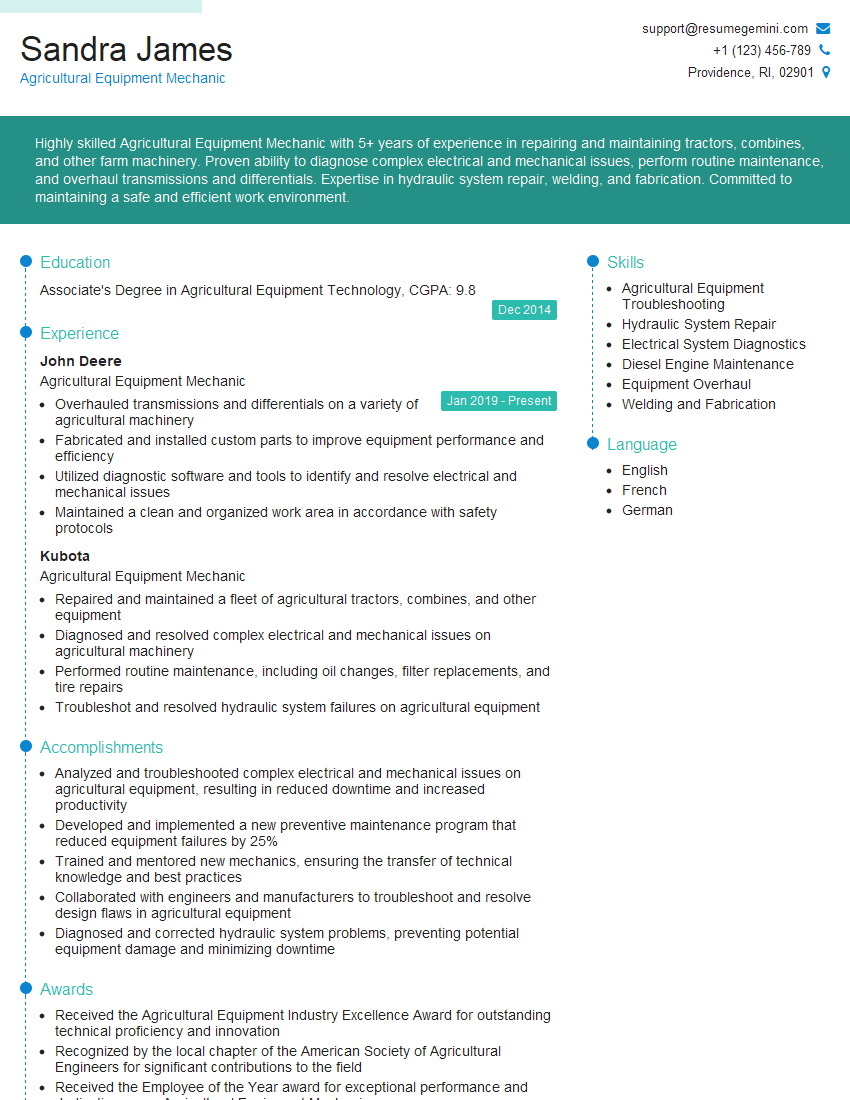
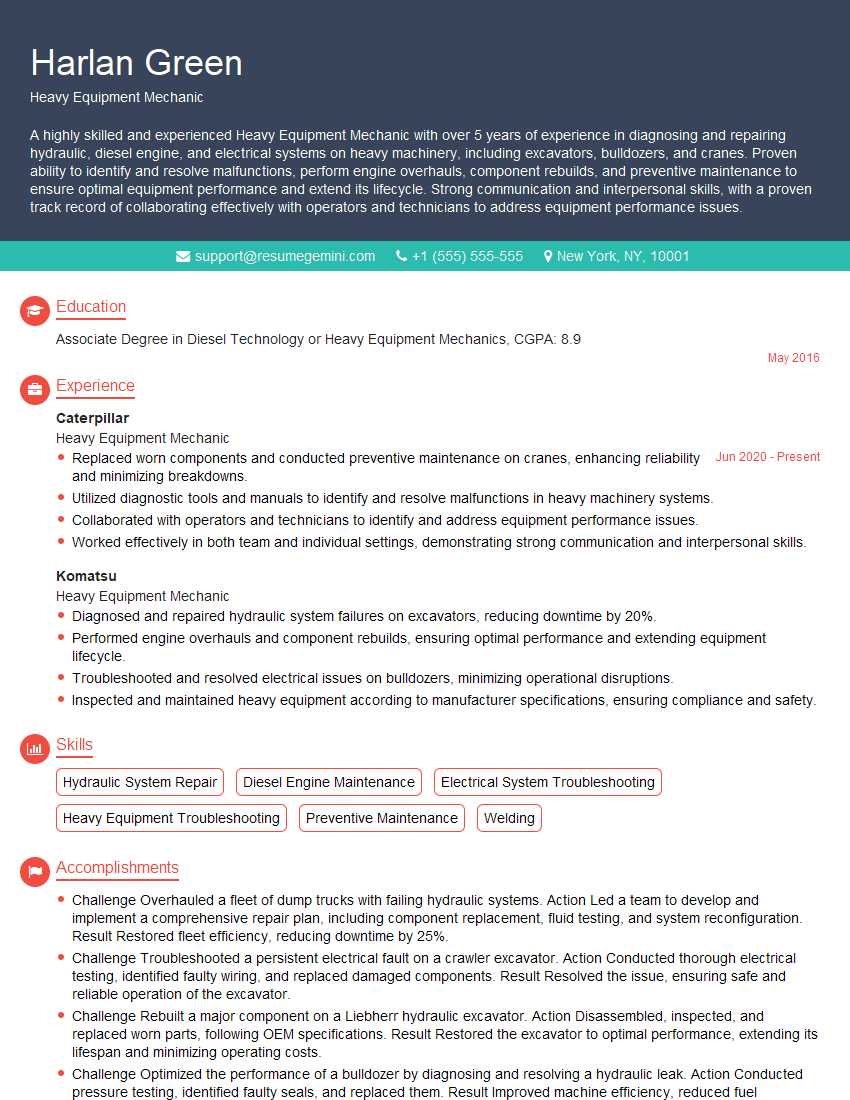
Mastering Mobile Equipment Maintenance is crucial for a successful and rewarding career, opening doors to advancement and higher earning potential. A strong resume is your first step towards landing your dream job. To maximize your chances, create an ATS-friendly resume that highlights your skills and experience effectively. ResumeGemini is a trusted resource that can help you build a professional and impactful resume tailored to the specific requirements of the Mobile Equipment Maintenance field. Examples of resumes tailored to this sector are available to help guide your process.

Explore more articles
Users Rating of Our Blogs
Share Your Experience
We value your feedback! Please rate our content and share your thoughts (optional).
What Readers Say About Our Blog
Very informative content, great job.
good