The right preparation can turn an interview into an opportunity to showcase your expertise. This guide to Biological Agent Detection interview questions is your ultimate resource, providing key insights and tips to help you ace your responses and stand out as a top candidate.
Questions Asked in Biological Agent Detection Interview
Q 1. Explain the process of detecting Bacillus anthracis in a clinical sample.
Detecting Bacillus anthracis, the bacterium causing anthrax, in a clinical sample involves a multi-step process prioritizing safety and accuracy. It typically begins with presumptive testing, followed by confirmatory testing.
Presumptive Testing: This often involves rapid methods like Gram staining to identify the characteristic Gram-positive, rod-shaped bacteria. A positive Gram stain raises suspicion, but isn’t definitive proof. Other rapid tests, like antibody-based assays (e.g., lateral flow immunoassays), can detect B. anthracis antigens, providing a quicker, albeit less specific, result. These are useful for initial triage and outbreak response.
Confirmatory Testing: Definitive identification requires more sophisticated techniques. Culture on specific media is crucial. B. anthracis exhibits unique colony morphology and growth characteristics. Molecular methods like PCR (polymerase chain reaction) amplify specific DNA sequences unique to B. anthracis, providing definitive identification. Additional tests may be needed to distinguish B. anthracis from closely related species. For example, assessing the presence of specific virulence factors (like capsule or toxins) further confirms the diagnosis. All testing must be performed in a biosafety level 3 (BSL-3) laboratory due to the potential risk of infection.
Q 2. Describe various methods for detecting viral agents, including PCR and ELISA.
Detecting viral agents relies on a variety of methods, each with its strengths and limitations. PCR and ELISA are two widely used techniques.
PCR (Polymerase Chain Reaction): PCR is a molecular technique that amplifies specific DNA or RNA sequences from the virus. It’s incredibly sensitive, meaning it can detect even tiny amounts of viral genetic material. Different types of PCR exist, like RT-PCR (reverse transcriptase PCR) used for RNA viruses. Imagine PCR as making millions of copies of a specific viral gene, making it easily detectable. This is particularly useful in early stages of infection when viral load may be low. A positive PCR result strongly suggests the presence of the virus.
ELISA (Enzyme-Linked Immunosorbent Assay): ELISA is an immunological technique that detects viral antigens (proteins) or antibodies produced by the host in response to viral infection. It is less sensitive than PCR but can be faster and simpler. Imagine ELISA as a ‘lock and key’ system – antibodies (the ‘keys’) are used to specifically recognize viral antigens (the ‘locks’). Different types of ELISA exist, such as direct, indirect, and sandwich ELISAs, each with its specific applications. A positive ELISA result suggests a current infection or previous exposure to the virus.
Other methods for viral detection include viral culture (growing the virus in a lab), electron microscopy (visualizing the virus under a microscope), and next-generation sequencing (NGS), which provides a comprehensive view of the viral genome. The choice of method depends on factors such as the type of virus, available resources, and the urgency of the diagnosis.
Q 3. What are the limitations of rapid diagnostic tests for biological agents?
Rapid diagnostic tests (RDTs) for biological agents, while offering speed and convenience, have limitations. The most significant limitation is their potential for lower sensitivity and specificity compared to traditional laboratory methods.
Lower Sensitivity: RDTs may not detect low levels of the agent, leading to false-negative results. This is especially concerning in early stages of infection or when the agent is present in low concentrations in the sample. Imagine trying to find a single grain of sand on a beach – it’s challenging. Similarly, RDTs might miss the agent if its concentration is too low.
Lower Specificity: RDTs can sometimes produce false-positive results, indicating the presence of the agent when it’s not actually there. This can be due to cross-reactivity with other substances, leading to inaccurate diagnoses and unnecessary interventions. This is like mistakenly identifying a similar-looking object as the target agent.
Limited Information: RDTs often provide only a qualitative result (positive or negative), providing little information about the agent’s concentration or virulence. Further testing is usually needed to obtain detailed information.
Therefore, while RDTs can be invaluable for rapid triage and initial screening, confirmatory testing using more sensitive and specific laboratory methods is typically necessary for accurate diagnosis and appropriate management.
Q 4. How do you differentiate between naturally occurring outbreaks and deliberate release of biological agents?
Differentiating between naturally occurring outbreaks and deliberate releases of biological agents requires a multifaceted approach involving epidemiological investigation, environmental sampling, and agent characterization.
Epidemiological Clues: A naturally occurring outbreak usually shows a gradual increase in cases clustered geographically or linked by a common source. A deliberate release, however, might show a more rapid and widespread dissemination, potentially with a distinct geographic pattern inconsistent with typical spread. For example, a sudden increase in cases in a non-endemic area might suggest a deliberate release.
Environmental Sampling: The presence of the agent in unusual environments or locations might indicate a deliberate release. For example, finding high concentrations of a specific agent in seemingly unrelated areas would raise suspicion.
Agent Characterization: Genetic analysis of the agent can provide critical clues. Unusual genetic markers or mutations not found in naturally occurring strains might point to genetic manipulation or intentional modification, suggesting a deliberate act. A weaponized form of an agent will also have distinct characteristics.
Other Factors: Consideration of the timing, location, and context of the outbreak, alongside any available intelligence or threat assessments, are also vital in differentiating between natural and deliberate events. Often this requires collaboration between public health officials, law enforcement, and intelligence agencies.
Q 5. Discuss the role of biosafety level (BSL) in handling biological agents.
Biosafety levels (BSLs) are critical for handling biological agents, providing a framework for minimizing the risk of exposure and infection. The BSL framework classifies agents based on their potential risk, dictating the necessary safety precautions.
BSL-1: Agents pose minimal risk to healthy adults, requiring standard microbiological practices like handwashing and disinfecting work surfaces. Imagine working with non-pathogenic E. coli strains.
BSL-2: Agents pose moderate risk, requiring more stringent precautions such as biological safety cabinets (BSCs) for handling infectious materials, personal protective equipment (PPE), and specific waste disposal procedures. Many common pathogens fall into this category.
BSL-3: Agents can cause serious or potentially lethal infections, requiring high-level containment facilities with specialized ventilation systems, stringent PPE, and rigorous training for personnel. B. anthracis and many other highly dangerous agents fall here.
BSL-4: Agents pose a high risk of life-threatening infections with no available treatments or vaccines. These labs have the highest level of containment and require specialized suits, rigorous decontamination procedures, and strict entry and exit protocols. Examples include Ebola and other highly lethal viruses.
Adherence to the appropriate BSL is non-negotiable to protect laboratory personnel, the community, and the environment from accidental exposure to dangerous biological agents. Failing to comply with BSL guidelines can have serious consequences.
Q 6. Explain the principle behind mass spectrometry in biological agent detection.
Mass spectrometry (MS) is a powerful analytical technique used for identifying and characterizing biological agents based on their mass-to-charge ratio. Imagine it as weighing molecules extremely precisely.
The principle behind MS in biological agent detection relies on ionizing molecules (giving them a charge) and then separating them based on their mass-to-charge ratio using electric and magnetic fields. This separation allows for precise measurement of the mass of each molecule. The mass spectrum – a plot of ion abundance versus mass-to-charge ratio – serves as a fingerprint, uniquely identifying different molecules.
In biological agent detection, MS is used to analyze proteins, peptides, lipids, and other biomolecules present in a sample. By comparing the obtained mass spectrum to known databases, we can identify the biological agent present. Techniques like matrix-assisted laser desorption/ionization (MALDI) and electrospray ionization (ESI) are commonly used to ionize the molecules prior to mass analysis.
For example, MS can identify specific proteins unique to a particular bacterium or virus, thus providing conclusive evidence of its presence even in complex mixtures. MS is also used in proteomics, enabling the identification of many proteins simultaneously, providing a holistic view of the agent’s composition.
Q 7. What are the key characteristics of a highly effective biosurveillance system?
A highly effective biosurveillance system requires several key characteristics to ensure timely detection and response to biological threats.
Comprehensive Data Collection: This involves gathering data from multiple sources, including clinical laboratories, hospitals, veterinary clinics, environmental monitoring stations, and even social media. The more data points, the more likely we are to detect an anomaly.
Rapid Data Analysis: Advanced analytical tools and algorithms are needed to efficiently process the large volumes of data and identify unusual patterns or deviations from baseline levels that could signify an outbreak. Think of this as a sophisticated early warning system.
Real-Time Monitoring: The system needs to provide near real-time updates to allow for prompt response and intervention. Delays in detection can have dire consequences.
Integration and Collaboration: Effective communication and collaboration among different agencies and organizations (public health, law enforcement, etc.) are crucial for information sharing and coordinated response. The system must operate as a unified whole.
Validation and Verification: The system’s accuracy and reliability need continuous validation and verification to ensure its effectiveness. Regular testing and quality control measures are essential.
Scalability and Flexibility: A robust system must be scalable to handle both small-scale outbreaks and large-scale emergencies. It also needs to be flexible enough to adapt to emerging threats and technological advancements. Imagine a system designed to scale up quickly to respond to large outbreaks.
By combining these characteristics, a powerful biosurveillance system can significantly enhance our ability to detect and respond to biological threats, ultimately protecting public health and national security.
Q 8. Describe different types of biological agent sampling techniques.
Biological agent sampling techniques depend heavily on the suspected agent, the environment, and the objective of the sampling. The goal is always to collect a representative sample that maximizes the chance of detecting the agent while minimizing contamination.
- Swabbing: Used for surfaces, this involves rubbing a sterile swab across the area of interest. This is good for collecting samples from relatively small, accessible areas, but may not be sufficient for large or porous surfaces. Think of swabbing a doorknob suspected of contamination.
- Air Sampling: This employs devices like impingers or filters to collect airborne particles. Different devices are used depending on the particle size and concentration expected. This is crucial in detecting airborne pathogens like anthrax spores.
- Liquid Sampling: Collecting liquid samples from water sources or potentially contaminated fluids is achieved using sterile containers and techniques to avoid contamination. For example, taking a water sample from a suspected contaminated well.
- Surface Sampling: This uses various methods, including swabs, wipes, or specialized collection tools depending on the surface material and the type of agent suspected. Imagine collecting samples from a suspicious powder found on a desk.
- Bulk Sampling: This involves taking large quantities of material, such as soil or food, to analyze for the presence of biological agents. This is particularly useful in large-scale contamination events.
The choice of technique is critical and requires a thorough understanding of the potential agent and the environment.
Q 9. Explain the importance of chain of custody in biological agent detection investigations.
Chain of custody (COC) in biological agent detection is paramount for ensuring the integrity and admissibility of evidence. It’s a meticulous documentation trail that tracks the sample from collection to analysis and final disposal, proving its authenticity and preventing tampering or contamination. Imagine a courtroom scenario—without a complete and unbroken COC, evidence is questionable.
Maintaining COC involves:
- Detailed Documentation: Recording every step, including date, time, location, individual handling the sample, and any changes made.
- Secure Storage: Storing samples in appropriate conditions to prevent degradation or contamination.
- Signed Transfers: Using chain of custody forms to document each transfer of the sample between individuals.
- Verification and Authentication: Ensuring that all documentation is accurate and complete, with signatures from all individuals involved.
Breaks in the chain of custody can compromise the entire investigation and render the results inadmissible in court or other official proceedings.
Q 10. How do you interpret the results of a biological agent detection assay?
Interpreting results from a biological agent detection assay requires careful consideration of several factors. It’s not a simple ‘yes’ or ‘no’ answer.
First, understanding the assay’s sensitivity and specificity is crucial. Sensitivity refers to the assay’s ability to detect even small amounts of the agent, while specificity means the assay only detects the target agent and not other substances. A low sensitivity might result in a false negative (missing the agent), while a low specificity might produce false positives (detecting something else as the agent).
Secondly, the context of the sample matters. A positive result requires further confirmation through additional tests. A single positive result might be due to contamination or a false positive. Multiple positive results from different assays and samples are far more reliable.
Finally, quantitative results (how much agent is present) offer valuable information about the potential severity of the situation. These results often necessitate further investigation to understand the source of contamination and the potential risk.
Q 11. What are the ethical considerations associated with biological agent detection?
Ethical considerations in biological agent detection are critical and encompass several aspects. The potential for misuse and the impact on individuals’ rights are central concerns.
- Privacy and Confidentiality: Handling personal information obtained during investigations must adhere to strict privacy regulations. Results should only be shared with authorized personnel.
- Informed Consent: When dealing with human samples, informed consent is essential. Individuals must understand the purpose of testing and potential implications before participation.
- Data Security: Protecting sensitive data from unauthorized access or disclosure is vital. This includes secure storage, transmission, and disposal of information.
- Dual Use Concerns: The same technologies used for defense against bioweapons could potentially be used for malicious purposes. Researchers and practitioners have a responsibility to minimize the risk of their work being misused.
- Equity and Access: Ensuring equitable access to detection technologies and resources is essential. This is particularly important in public health emergencies.
Ethical considerations require constant vigilance and a commitment to responsible practice.
Q 12. Describe various methods for inactivating biological agents.
Inactivating biological agents is crucial for safely handling and disposing of potentially hazardous materials. The methods used depend on the agent’s characteristics and the context. It’s important to ensure complete inactivation, verifying it through appropriate testing.
- Autoclaving: Using high-pressure steam sterilization to kill microorganisms. This is very effective for many agents, but the effectiveness depends on factors such as the agent’s resistance and the autoclave cycle used.
- Chemical Inactivation: Employing chemicals such as bleach (sodium hypochlorite), formaldehyde, or glutaraldehyde to inactivate agents. Different chemicals are effective against different agents, and safety precautions during handling are critical.
- Radiation Inactivation: Using ultraviolet (UV) light or gamma radiation to damage the genetic material of microorganisms, rendering them non-viable. This method requires specialized equipment and training.
- Incineration: Burning the contaminated materials at high temperatures to completely destroy biological agents. This is a highly effective but potentially environmentally impactful method.
Choosing the right inactivation method is essential for safety and environmental protection.
Q 13. Explain the role of risk assessment in handling biological agents.
Risk assessment is fundamental in handling biological agents. It’s a systematic process to identify potential hazards, evaluate the likelihood of those hazards occurring, and determine the severity of potential consequences. This allows for the development of appropriate safety protocols and mitigation strategies.
A thorough risk assessment considers various factors:
- Agent Characteristics: Infectiousness, virulence, stability, and transmissibility of the agent.
- Exposure Pathways: How individuals might come into contact with the agent (e.g., inhalation, ingestion, dermal contact).
- Individual Susceptibility: Factors such as age, health status, and underlying conditions that affect vulnerability to infection.
- Environmental Factors: Temperature, humidity, and other environmental factors that affect the survival and dissemination of the agent.
Based on the risk assessment, appropriate biosafety levels, personal protective equipment (PPE), and containment procedures are defined to minimize risk.
Q 14. Describe the challenges in detecting novel or emerging biological agents.
Detecting novel or emerging biological agents presents significant challenges due to their unknown characteristics and the lack of readily available diagnostic tools. Predicting and preparing for these agents is difficult.
Challenges include:
- Lack of Diagnostic Assays: Until a novel agent is characterized, specific diagnostic tests cannot be developed. This requires rapid development of new detection methods as soon as a new agent is identified.
- Unknown Properties: The agent’s virulence, transmissibility, and other critical characteristics may be unknown, complicating risk assessment and control measures.
- Rapid Evolution: Agents can evolve quickly, potentially developing resistance to existing treatments and altering their detection profiles.
- Global Surveillance: Effective global surveillance networks are crucial to detect and respond to emerging agents quickly, requiring collaboration among countries and organizations.
- Technological Limitations: Current detection technologies might not be sensitive or specific enough to detect small quantities of novel agents.
Addressing these challenges requires investments in advanced detection technologies, robust surveillance networks, and collaboration among researchers and public health officials worldwide.
Q 15. How would you respond to a suspected biological agent release in a public space?
Responding to a suspected biological agent release requires immediate and coordinated action. First, safety is paramount. My initial response would involve securing the area, preventing further contamination, and initiating evacuation of non-essential personnel. This would be followed by contacting relevant authorities – local health departments, law enforcement, and specialized response teams (like the CDC in the US or equivalent international organizations). Simultaneously, I would begin initial assessment, gathering information about potential agents, the suspected source, and the affected individuals. This would involve using rapid detection methods like lateral flow assays to quickly identify potential threats. Once the initial response is underway, more thorough sampling and laboratory analysis would commence to confirm the presence and identity of the biological agent. Effective communication throughout the entire process is critical to ensure a coordinated and efficient response, minimizing risk and ensuring public safety. For example, imagine a suspicious white powder found in a public building: my actions would focus on securing the area, contacting emergency services, and deploying rapid detection tests before more complex laboratory analysis can be performed.
Career Expert Tips:
- Ace those interviews! Prepare effectively by reviewing the Top 50 Most Common Interview Questions on ResumeGemini.
- Navigate your job search with confidence! Explore a wide range of Career Tips on ResumeGemini. Learn about common challenges and recommendations to overcome them.
- Craft the perfect resume! Master the Art of Resume Writing with ResumeGemini’s guide. Showcase your unique qualifications and achievements effectively.
- Don’t miss out on holiday savings! Build your dream resume with ResumeGemini’s ATS optimized templates.
Q 16. Discuss the role of personal protective equipment (PPE) in biological agent detection.
Personal Protective Equipment (PPE) is absolutely crucial in biological agent detection. It forms the first line of defense against exposure to potentially hazardous materials. The type of PPE used depends heavily on the suspected agent and the level of risk. For example, working with highly infectious agents like Ebola might necessitate a Level 4 biosafety suit including a respirator, full body cover, and gloves. Less hazardous situations may only require gloves, masks (N95 or higher), and eye protection. Proper training on donning, doffing (removing), and maintaining PPE is just as vital as wearing it. Improper use can significantly increase the risk of contamination and exposure. Imagine a team investigating an anthrax-contaminated letter; each member must wear appropriate PPE to prevent inhalation or skin contact. Regular checks of PPE integrity, along with appropriate decontamination procedures, are key parts of this critical preventative strategy.
Q 17. What are the legal implications of handling biological agents?
Handling biological agents is heavily regulated due to their potential for misuse and the significant risks they pose. Laws and regulations vary by country but generally center around licensing, registration, security, and disposal. Individuals and institutions working with these agents must obtain the necessary permits and follow strict protocols. Failure to comply can result in severe penalties, including fines and imprisonment. The unauthorized possession, use, or release of biological agents is a criminal offense with serious consequences. For instance, laboratories must adhere to strict security measures to prevent theft or accidental release, maintain detailed records of their activities, and undergo regular inspections. Moreover, ethical considerations are paramount, and responsible stewardship of these potentially dangerous substances is fundamental.
Q 18. How do you ensure quality control and quality assurance in a biological agent detection laboratory?
Quality control (QC) and quality assurance (QA) are fundamental to ensuring the accuracy and reliability of results in a biological agent detection laboratory. QC focuses on the individual tests and procedures, using controls (positive, negative, and blanks) to verify the accuracy and precision of the assays. QA looks at the bigger picture, encompassing the overall system, from sample collection and handling to data analysis and reporting. This involves regular calibration of equipment, validation of methods, proficiency testing, and adherence to standardized operating procedures (SOPs). For example, we’d use certified reference materials to confirm the accuracy of our detection methods. Regular audits, internal and external, are vital for continuous improvement and maintaining a high level of confidence in the results. Any deviations or errors identified require immediate investigation and corrective actions, documented thoroughly to improve future testing.
Q 19. Explain the difference between qualitative and quantitative methods in biological agent detection.
Qualitative methods in biological agent detection simply determine the presence or absence of a specific agent. They provide a yes/no answer. Quantitative methods, on the other hand, not only confirm the presence of the agent but also determine the amount or concentration present. A qualitative test might use a lateral flow assay to detect the presence of a particular toxin, while a quantitative test would use a technique like real-time PCR to determine the number of bacterial cells present in a sample. Imagine testing for a specific virus: a qualitative method tells you whether the virus is present, whereas a quantitative test tells you the viral load, giving crucial information about the severity of infection and the potential for transmission.
Q 20. Describe the use of lateral flow immunoassays in biological agent detection.
Lateral flow immunoassays (LFAs) are rapid, point-of-care diagnostic tests frequently used for biological agent detection. They rely on the principle of antigen-antibody binding. A sample is applied to a test strip containing immobilized antibodies. If the target antigen (biological agent) is present, it will bind to the antibodies, resulting in a visible line or color change. LFAs are easy to use, portable, and provide results relatively quickly. They are ideal for initial screening or field testing, but they might not be as sensitive or specific as laboratory-based methods. They can be used to quickly detect various biological agents, such as toxins or pathogens, though they are not generally as accurate as techniques such as PCR.
Q 21. How do you validate a new biological agent detection method?
Validating a new biological agent detection method is a rigorous process involving several steps to ensure its accuracy, reliability, and suitability for its intended use. This begins with analytical validation, assessing parameters such as sensitivity, specificity, precision, and accuracy. Then comes clinical validation which confirms how well the test performs in real-world samples compared to a gold standard. This often includes large-scale studies involving various populations and sample types. Robust statistical analysis is needed throughout the validation process. Regulatory approval is usually required before a new method can be used routinely. For example, a novel biosensor for detecting a specific pathogen would undergo a rigorous validation procedure including extensive testing with positive and negative controls, comparison with established methods, and assessment in diverse real-world samples before being considered reliable and trustworthy.
Q 22. What are the potential false positive and false negative results in bioagent detection, and how to minimize them?
False positives and false negatives are critical concerns in biological agent detection. A false positive occurs when a test incorrectly indicates the presence of a bioagent when none exists, leading to unnecessary panic, resource expenditure, and potential disruption. A false negative, conversely, means a test fails to detect a real bioagent, potentially leading to delayed response and increased risk of harm.
Minimizing these errors requires a multi-pronged approach:
- Employing multiple detection methods: Combining different technologies (e.g., immunoassays, PCR, mass spectrometry) increases accuracy by cross-validating results. If one test yields a positive result, but another doesn’t, it signals the need for further investigation.
- Rigorous quality control: This includes regular calibration and maintenance of equipment, properly trained personnel, and the use of positive and negative controls in every assay to check for contamination or equipment malfunctions.
- Environmental monitoring: Understanding background levels of naturally occurring microorganisms in the environment helps distinguish true positives from background noise. This requires careful sampling and analysis to establish baseline levels.
- Data analysis and interpretation: Sophisticated algorithms and statistical analysis can help identify patterns and filter out false positives by analyzing data from multiple sources.
- Careful sample collection and handling: Contamination during sample collection can lead to false positives. Proper techniques and sterile materials are essential.
For example, imagine a hospital screening for anthrax. A false positive could lead to unnecessary quarantines and decontamination procedures, while a false negative could allow the spread of a highly infectious disease. Therefore, minimizing both false positives and negatives is crucial for public health and safety.
Q 23. Describe the different types of biological agent detection equipment and their applications.
Biological agent detection equipment varies greatly depending on the agent, the environment, and the speed of response needed. Here are some key types:
- Immunoassays (e.g., ELISA): These rapid tests detect specific bioagent antigens using antibodies. They’re relatively inexpensive and portable but may have lower sensitivity than other methods. Applications include point-of-care diagnostics and initial screening.
- Polymerase Chain Reaction (PCR): This technique amplifies specific DNA or RNA sequences from a bioagent, offering high sensitivity and specificity. It’s commonly used for confirmation of preliminary findings and can identify specific strains of agents. Applications are in laboratories with more sophisticated equipment.
- Mass Spectrometry: This powerful technique identifies bioagents based on their unique molecular weight. It offers high throughput and can detect a wide range of agents, but it is more complex and expensive. Applications are often in high-security laboratories and advanced research settings.
- Biosensors: These devices use biological components (like antibodies or enzymes) to detect bioagents in real time. They’re often portable and can be used in various settings, from field surveillance to environmental monitoring. Applications include rapid detection at border crossings or public events.
- Microarray technology: These devices can detect multiple bioagents simultaneously using a miniaturized array of probes. They’re useful for high-throughput screening but require specialized equipment and expertise.
The choice of equipment depends heavily on the specific situation. For example, rapid, portable immunoassays might be ideal for initial screening in a suspected outbreak, while PCR or mass spectrometry would be used for confirmation and detailed analysis in a laboratory setting.
Q 24. How do you prioritize and manage multiple simultaneous biological agent detection investigations?
Managing multiple simultaneous investigations requires a systematic and prioritized approach. This often involves applying a triage system based on several criteria:
- Severity of the threat: Agents with high lethality and transmissibility take precedence.
- Potential for widespread impact: Events affecting large populations require immediate attention.
- Time sensitivity: Investigations with short response windows are prioritized.
- Available resources: The allocation of personnel, equipment, and expertise should align with the priority.
A clear communication and coordination structure is critical. This typically includes a central command center that coordinates communication between different teams, including sample collection, analysis, and response teams. A detailed incident report system ensures that all findings are documented and shared across the teams. This can be aided by dedicated software to track all the ongoing investigations, allowing for an effective overview and resource allocation.
For example, if there’s a suspected anthrax attack in a densely populated area and a separate report of a potential botulism contamination in a smaller, isolated community, the anthrax investigation would likely be prioritized due to the higher risk to public health.
Q 25. Discuss the role of technology in enhancing biological agent detection capabilities.
Technology plays a vital role in enhancing biological agent detection capabilities by improving sensitivity, specificity, speed, and portability. Key advancements include:
- Miniaturization and portability: Handheld devices and point-of-care diagnostic tools allow for rapid detection in remote or field settings.
- Automation and high-throughput screening: Robotic systems and automated analysis platforms increase efficiency and reduce the time to results.
- Advanced data analysis techniques: Machine learning and artificial intelligence algorithms can help identify patterns, filter out noise, and improve the accuracy of detection.
- Next-generation sequencing (NGS): This technology allows for rapid and comprehensive characterization of bioagents, including identification of mutations and genetic variations.
- Integration of different technologies: Combining various detection methods into a single platform improves accuracy and reduces the overall time to detection.
For instance, the development of portable PCR machines allows for quick on-site testing in the event of a suspected outbreak, reducing the time lag associated with laboratory analysis. Similarly, advancements in biosensors allow for real-time monitoring of specific bioagents in the environment.
Q 26. Explain the importance of collaboration and communication in biological agent detection response.
Effective collaboration and communication are paramount in successful bioagent detection and response. A coordinated effort involving multiple stakeholders is needed:
- Public health agencies: Responsible for surveillance, outbreak investigation, and public health messaging.
- Law enforcement: Involved in securing the scene, conducting investigations, and maintaining order.
- Healthcare providers: Provide medical care to those affected and implement infection control measures.
- Laboratory personnel: Perform diagnostic tests and provide accurate results in a timely manner.
- Military and other first responders: Participate in containment and response activities.
Clear and timely communication channels are crucial. This includes secure communication systems for sharing sensitive information, standardized protocols for data reporting, and regular briefings to keep all stakeholders informed. Effective communication avoids confusion, prevents duplication of effort, and ensures a coordinated response.
Imagine a scenario where a suspicious package arrives at a government building. Effective collaboration between law enforcement, public health officials, and laboratory personnel is vital in ensuring the package is safely handled, the potential agent identified, and any necessary response measures implemented promptly and accurately.
Q 27. Describe different decontamination procedures for biological agents and contaminated materials.
Decontamination procedures depend heavily on the specific bioagent, the type of surface, and the level of contamination. Generally, decontamination involves one or a combination of the following methods:
- Chemical disinfection: Using chemical agents such as bleach, chlorine dioxide, or formaldehyde to inactivate or destroy the bioagent. The choice of disinfectant depends on the agent and the material being decontaminated.
- Physical decontamination: Methods like incineration, autoclaving, or UV irradiation are used to destroy the bioagent using heat, pressure, or radiation. Incineration is often the most effective method for destroying highly resistant agents and contaminated materials.
- Other methods: Specialized techniques such as ozone treatment or gamma irradiation may be used for specific applications.
Before decontamination, it’s critical to assess the situation and the level of contamination. This involves identifying the suspected agent, determining the extent of contamination, and evaluating the risks involved. A comprehensive safety plan is essential, ensuring the safety of personnel and the environment during the decontamination process. For example, decontamination of a building following a suspected anthrax attack would require specialized equipment and training, and would likely involve a multi-stage process of initial cleaning followed by disinfection with approved chemicals.
Q 28. What are the current challenges and future directions in biological agent detection?
Current challenges in biological agent detection include:
- Rapid detection of novel agents: The potential for emerging and engineered bioagents requires adaptable and versatile detection systems.
- Detection in complex environments: Detecting bioagents in diverse environments (e.g., air, water, soil) presents significant analytical challenges.
- Improving sensitivity and specificity: Reducing false positives and negatives remains a key focus of research and development.
- Addressing cost and accessibility: Making advanced detection technologies more affordable and accessible, especially in resource-limited settings.
- Combating bioterrorism: Developing rapid response systems to detect and neutralize the use of biological weapons.
Future directions focus on:
- Developing point-of-care diagnostics: Creating simple, rapid, and portable detection systems for use in various settings.
- Integrating advanced technologies: Combining multiple detection methods into integrated platforms for enhanced performance.
- Leveraging big data and artificial intelligence: Using advanced data analysis techniques to improve detection speed and accuracy.
- Developing more robust and versatile sensors: Creating sensors that can detect a wider range of bioagents in complex environments.
- Improving international collaboration and data sharing: Sharing information and resources globally to enhance preparedness and response efforts.
The future of biological agent detection relies heavily on interdisciplinary collaborations combining expertise in biology, engineering, computer science, and public health to develop and deploy the next generation of detection systems.
Key Topics to Learn for Biological Agent Detection Interview
- Microbial Identification Techniques: Understanding various methods like PCR, ELISA, mass spectrometry, and microscopy for identifying biological agents. Consider the strengths and weaknesses of each technique and their applications in different scenarios.
- Biosensor Technology: Explore the principles and applications of biosensors in rapid detection, including electrochemical, optical, and piezoelectric approaches. Focus on sensitivity, specificity, and limitations.
- Sample Collection and Handling: Master the critical procedures for collecting, preserving, and transporting biological samples while maintaining sample integrity and avoiding contamination. This includes understanding chain-of-custody protocols.
- Data Analysis and Interpretation: Develop proficiency in analyzing complex datasets generated from detection techniques. This includes statistical analysis, interpretation of results, and understanding false positives/negatives.
- Risk Assessment and Biosecurity: Understand the principles of risk assessment related to biological agents, including threat assessment and mitigation strategies. Familiarity with biosecurity protocols and regulations is crucial.
- Laboratory Safety and Procedures: Thorough knowledge of safety protocols and best practices within a biological agent detection laboratory is essential. This includes understanding BSL levels and appropriate personal protective equipment.
- Emerging Technologies: Stay updated on the latest advancements in biological agent detection, including next-generation sequencing (NGS) and advanced bioinformatics tools.
- Case Studies and Problem Solving: Practice applying your knowledge to real-world scenarios. Consider how you would approach a specific detection challenge, analyze data, and propose solutions.
Next Steps
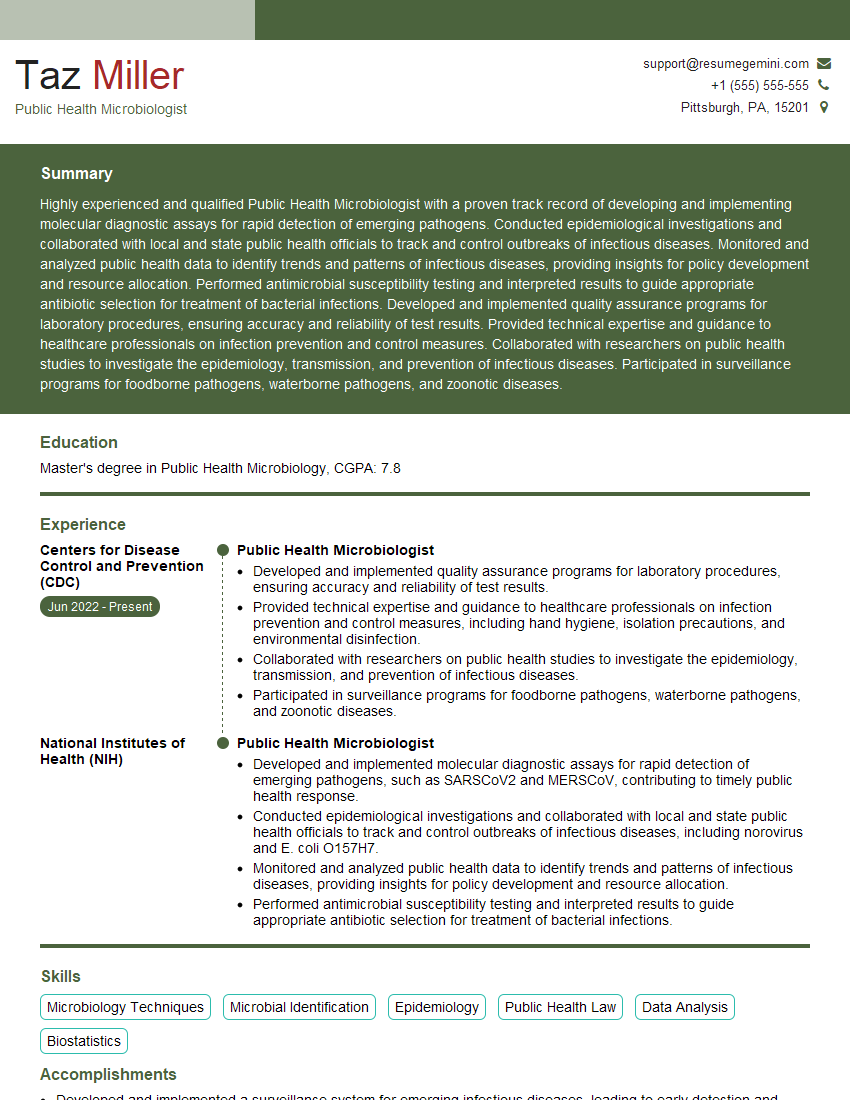
Mastering Biological Agent Detection opens doors to exciting and impactful careers in public health, national security, and research. To significantly increase your job prospects, crafting a strong, ATS-friendly resume is paramount. ResumeGemini can be a trusted partner in this process, helping you build a professional and compelling resume that showcases your skills and experience effectively. Examples of resumes tailored specifically to Biological Agent Detection are available within ResumeGemini to guide you. Invest time in building a strong resume – it’s your first impression on potential employers.
Explore more articles
Users Rating of Our Blogs
Share Your Experience
We value your feedback! Please rate our content and share your thoughts (optional).
What Readers Say About Our Blog
Very informative content, great job.
good