Unlock your full potential by mastering the most common Boat and Marine Equipment Operation interview questions. This blog offers a deep dive into the critical topics, ensuring you’re not only prepared to answer but to excel. With these insights, you’ll approach your interview with clarity and confidence.
Questions Asked in Boat and Marine Equipment Operation Interview
Q 1. Describe your experience with various types of marine engines.
My experience encompasses a wide range of marine engines, from small outboard motors commonly found on fishing boats and recreational craft to large inboard diesels powering commercial vessels and yachts. I’ve worked extensively with various manufacturers, including Mercury, Yamaha, Yanmar, and Caterpillar, gaining hands-on experience with their unique characteristics and maintenance requirements. This includes troubleshooting engine malfunctions, performing regular maintenance such as oil changes and filter replacements, and conducting major overhauls where necessary. For example, I once diagnosed and repaired a faulty fuel injection system on a Yanmar diesel, preventing significant downtime for a charter boat operation. My familiarity extends to both petrol and diesel engines, understanding their distinct operational differences and the safety precautions specific to each.
- Outboard Motors: Experienced with two-stroke and four-stroke models, including troubleshooting issues like carburettor problems, spark plug fouling, and lower unit issues.
- Inboard Engines: Proficient in diagnosing and repairing problems in various inboard systems, from fuel delivery to cooling systems and exhaust manifolds. Familiar with both gasoline and diesel inboard engines.
- Sterndrive Engines: Experienced with the maintenance and repair of sterndrive units, understanding the complexities of the drive system and its components.
Q 2. Explain the process of performing a pre-trip inspection on a boat.
A thorough pre-trip inspection is crucial for ensuring safe and efficient boat operation. Think of it like a pre-flight check for an airplane – it’s a systematic process designed to identify any potential problems before they become hazards. My pre-trip inspection typically follows this checklist:
- Visual Inspection: Checking for any visible damage to the hull, deck, and superstructure. Looking for cracks, leaks, or signs of deterioration.
- Fuel System Check: Verifying adequate fuel levels, checking for leaks, and ensuring the fuel lines are secure and free from damage.
- Engine Check: Inspecting oil and coolant levels, checking for leaks, and ensuring the engine starts easily and runs smoothly. Listening for any unusual noises.
- Electrical System Check: Testing the battery voltage, checking the operation of navigation lights, bilge pumps, and other electrical equipment.
- Safety Equipment Check: Verifying that all safety gear, including life jackets, flares, fire extinguishers, and first-aid kit, are in good working order and readily accessible.
- Navigation Equipment Check: Ensuring the GPS, VHF radio, and other navigation equipment are functioning correctly and have sufficient power.
- Documentation Check: Reviewing necessary documentation, such as registration papers, insurance, and any relevant permits.
For example, during a recent inspection, I noticed a small crack in the hull near the waterline. This was immediately addressed, preventing a potential leak that could have jeopardized the trip.
Q 3. How do you troubleshoot a malfunctioning GPS navigation system?
Troubleshooting a malfunctioning GPS navigation system requires a systematic approach. I would begin by:
- Checking the Power Source: Ensuring the GPS receiver is properly connected to a power source and that the power source itself is functioning correctly.
- Checking the Antenna: Inspecting the antenna for damage or obstructions. A poorly positioned or damaged antenna can significantly affect signal reception.
- Checking the GPS Settings: Verifying that the GPS unit is properly configured and that the correct settings, such as date, time, and coordinates, are selected.
- Performing a System Reset: If the problem persists, I would perform a system reset to clear any temporary software glitches or errors. This is usually done via the unit’s menu.
- Checking for Software Updates: Checking for and installing any available software updates. These updates often address known bugs and improve performance.
- Testing in Different Locations: Moving the boat to a location with an unobstructed view of the sky to test the signal reception.
- Contacting Technical Support: If the problem remains unresolved after trying these troubleshooting steps, contacting the GPS manufacturer’s technical support for further assistance is crucial.
For instance, I once resolved a GPS issue by simply repositioning the antenna to avoid interference from the boat’s metal structure.
Q 4. What are the safety procedures for operating a boat in heavy weather?
Operating a boat in heavy weather requires a heightened level of caution and adherence to strict safety procedures. The primary goal is to minimize risk and ensure the safety of everyone onboard. Key safety procedures include:
- Reduce Speed: Reducing speed significantly to maintain control and avoid capsizing. Navigating at a speed appropriate for the conditions is crucial.
- Monitor Weather Reports: Constantly monitoring weather forecasts and radar to stay informed about changing conditions.
- Wear Personal Floatation Devices (PFDs): Ensuring everyone onboard wears appropriate PFDs, especially in rough seas.
- Closely Monitor Sea Conditions: Observing wave patterns, swells, and currents to anticipate and react to potential hazards.
- Reduce Sail Area: In sailboats, reducing the sail area significantly to prevent overloading and capsizing.
- Seek Shelter: If conditions worsen, seeking shelter in a safe harbor or bay.
- Consider Delaying Voyage: If weather conditions are excessively hazardous, postponing the voyage until conditions improve is essential.
- Inform Others: Informing someone of your trip details and anticipated return time in case of an emergency.
A real-world example involves my experience navigating a small fishing boat in a sudden squall. By reducing speed, reefing the sails, and seeking shelter immediately, we were able to avoid a potentially dangerous situation.
Q 5. Describe your experience with different types of marine propulsion systems.
My experience with marine propulsion systems is extensive, covering a wide range of technologies. This includes:
- Outboard Motors: These are commonly used on smaller boats and offer portability and ease of maintenance. I’m familiar with various outboard designs and their limitations.
- Inboard Engines: These are usually more powerful and suitable for larger vessels. My experience includes both petrol and diesel inboard engines, each requiring different maintenance procedures and safety precautions.
- Sterndrive Engines: This system combines the power of an inboard engine with the convenience of an outboard-like drive system. I’m well-versed in the intricacies of this design and common maintenance issues.
- Jet Propulsion: This propulsion system uses a pump to propel the vessel, offering greater maneuverability in shallow water. I’ve worked with various jet propulsion systems and understand their strengths and weaknesses.
- Sails: I’m experienced with a variety of sail designs and their operational characteristics, including techniques for efficient sailing in different wind conditions.
For example, I’ve successfully troubleshooted a sterndrive unit’s failure by identifying a faulty gimbal bearing. This knowledge of different propulsion systems ensures I can provide tailored maintenance and repair services.
Q 6. How familiar are you with various types of marine charts and navigation tools?
I am very familiar with various types of marine charts and navigation tools, essential for safe and efficient navigation. My experience includes:
- Paper Charts: Proficient in using paper charts, understanding chart symbols, and performing calculations such as dead reckoning and compass error correction.
- Electronic Charts (ENCs): Expert in using electronic charts, including plotting courses, marking waypoints, and utilizing various charting software. I understand the importance of chart updates and data accuracy.
- GPS Navigation: Highly proficient in using GPS receivers for determining position, plotting courses, and monitoring speed and heading.
- VHF Radio: Experienced in using VHF radio for communication, distress calls, and weather updates.
- AIS (Automatic Identification System): Familiar with using AIS to track other vessels and avoid collisions.
- Radar: Experienced with using radar to detect other vessels, landmasses, and weather systems.
- Magnetic Compass: Proficient in using a magnetic compass, understanding its limitations and how to correct for compass error.
For example, I once used a combination of paper charts and GPS to navigate a small boat through a complex channel, ensuring a safe passage despite challenging conditions.
Q 7. Explain the process of anchoring a vessel in different types of water conditions.
Anchoring a vessel safely requires understanding the specific water conditions. The process generally involves these steps:
- Selecting an Appropriate Location: Identifying a location with sufficient water depth and a suitable bottom to ensure a secure hold. Considering factors like wind, currents, and proximity to other vessels.
- Determining the Appropriate Scope: Calculating the appropriate length of anchor rode (rope or chain) needed to provide adequate holding power. The general rule of thumb is at least 5:1 or 7:1 scope (ratio of rode to depth).
- Deploying the Anchor: Lowering the anchor slowly and steadily, maintaining control to avoid fouling. The anchor should be set perpendicular to the wind or current.
- Testing the Anchor Set: Once the anchor is set, gently pulling on the rode to ensure it is securely embedded. If the anchor drags, it needs to be reset.
- Setting the Rode: Ensuring that the anchor rode is properly secured and arranged, typically with the end attached to a cleat or windlass.
- Monitoring the Anchor Set: Regularly monitoring the anchor set, especially during changes in wind or current, to ensure the vessel remains securely anchored.
Different water conditions necessitate variations in this process. For example, in sandy bottoms, a longer scope might be necessary, while in rocky areas, careful consideration of the anchor type is crucial to avoid damage. In strong currents, a heavier anchor and additional scope are needed for a secure hold.
Q 8. How do you handle emergency situations such as engine failure or fire onboard?
Engine failure or fire are serious threats requiring immediate, calm action. My approach is based on a prioritized, systematic response. First, I ensure the safety of all onboard, instructing everyone to don life jackets and move to a designated safe area away from the immediate danger. For engine failure, I’d first attempt to restart the engine, checking fuel supply, electrical connections, and any visible damage. If the restart is unsuccessful, I’ll assess the situation – is it a minor issue fixable at sea, or does it require towing? I’ll contact the Coast Guard or other emergency services via VHF radio, providing precise location, vessel details, and the nature of the emergency.
In case of fire, my primary focus is containment and evacuation. I’ll use the onboard fire extinguishers, aiming at the base of the flames. If the fire is beyond control, I’ll immediately initiate evacuation and contact emergency services. Regular fire drills and crew training are crucial for a coordinated response. Knowing the location of fire extinguishers, safety equipment, and escape routes is paramount. For instance, I remember a situation on a charter boat where a small grease fire started in the galley. Quick action with a fire extinguisher prevented a major incident. The key is preparedness and a well-rehearsed plan.
Q 9. What is your experience with marine radio communication systems?
I’m proficient in using VHF marine radio communication systems, including distress calls, making weather reports, and communicating with other vessels and shore-based authorities. I understand the importance of using proper radio etiquette, including using clear and concise language, identifying my vessel and location, and following the established communication protocols. I am familiar with the different channels, including the distress channel (16), hailing channels, and working channels. I’ve used marine radios extensively for coordinating rendezvous points with other boats, requesting assistance during heavy weather, and reporting potential hazards. I’ve also completed GMDSS training, ensuring my competency in emergency procedures. This training emphasized proper radio procedures and the use of different communication methods, including EPIRB (Emergency Position-Indicating Radio Beacon) activation.
Q 10. Describe your knowledge of marine regulations and safety guidelines.
My knowledge of marine regulations and safety guidelines is comprehensive, encompassing COLREGs (International Regulations for Preventing Collisions at Sea), Navigation Rules, and various local and national regulations. I’m familiar with safety equipment requirements, including life jackets, flares, fire extinguishers, and EPIRBs. I understand the importance of maintaining proper documentation, including vessel registration, safety certificates, and crew qualifications. I am aware of the need for regular safety inspections and maintenance. For example, I meticulously follow the guidelines for carrying the required number and type of flares based on vessel size and intended voyage. This is crucial not only for compliance but also to ensure the safety of everyone onboard. The enforcement of these regulations is paramount for reducing accidents and protecting the marine environment. Ignoring these can lead to serious consequences, including fines and legal action.
Q 11. How do you maintain and troubleshoot marine electrical systems?
Maintaining and troubleshooting marine electrical systems requires a blend of practical skills and theoretical understanding. I’m experienced in diagnosing and resolving issues related to batteries, charging systems, wiring, and electrical components. This includes using multimeters to check voltage, current, and continuity. I can identify and rectify problems such as faulty wiring, corroded connections, and malfunctioning switches. I understand the importance of proper grounding and bonding to prevent corrosion and ensure electrical safety. I always adhere to safety precautions while working with electrical systems, such as disconnecting power before working on live components. For instance, I recently resolved an issue with a boat’s starting system by tracing a faulty wire to a corroded connection at the battery terminal. Cleaning the connection and tightening it solved the problem.
Q 12. Explain your understanding of hydraulic systems used in marine equipment.
Hydraulic systems are crucial in many marine applications, including steering, anchoring, and lifting equipment. My understanding covers hydraulic pumps, cylinders, valves, and fluid lines. I know how to identify and diagnose leaks, pressure issues, and other malfunctions. I’m familiar with different hydraulic fluids and their properties, and the importance of maintaining proper fluid levels and cleanliness. I understand the principles of hydraulic pressure and how it’s used to generate force. For example, I’ve worked on hydraulic steering systems, troubleshooting problems like slow response or complete failure by checking for leaks, verifying proper fluid levels, and inspecting the pump and cylinder for damage. Regular inspection and maintenance are critical to prevent failures and ensure the safe operation of hydraulic equipment.
Q 13. Describe your experience with different types of knots and their applications.
Knot tying is a fundamental skill for any mariner. I’m proficient in a wide range of knots, including bowlines, cleat hitches, clove hitches, figure-eight knots, and various others, each suited for specific applications. A bowline, for instance, is an excellent knot for creating a loop that won’t slip. A clove hitch is useful for quickly securing a line to a post or cleat. I understand the importance of tying knots securely and correctly. Improper knot tying can have serious consequences, leading to equipment failure or even personal injury. I can demonstrate proper knot tying techniques and explain their applications in different scenarios, including mooring, docking, and securing equipment.
I remember a situation where a quickly tied clove hitch saved a yacht from drifting off its mooring in a sudden squall. My experience extends to advanced knots for specialized applications like splicing and creating intricate lashings.
Q 14. How do you perform routine maintenance on marine equipment?
Routine maintenance is critical for the safe and reliable operation of marine equipment. My approach is based on a comprehensive checklist that includes regular inspections and servicing of the engine, fuel system, electrical system, hydraulic systems, and safety equipment. This involves checking fluid levels, lubricating moving parts, inspecting for corrosion and wear, and replacing worn components as needed. I maintain detailed logs of all maintenance activities, including dates, work performed, and any issues identified. For example, I follow a strict schedule for changing engine oil and filters, inspecting the propeller shaft for corrosion, and testing fire extinguishers. Preventive maintenance reduces the risk of breakdowns and ensures the longevity of the equipment. Proactive maintenance is significantly more cost-effective than reactive repairs following an equipment failure.
Q 15. Explain your understanding of marine pollution prevention and response procedures.
Marine pollution prevention is paramount for preserving our oceans and waterways. It involves proactive measures to avoid spills and discharges, coupled with effective response strategies for when incidents occur. Prevention focuses on responsible handling of fuel, waste, and bilge water. This includes regular maintenance checks on fuel tanks and lines to prevent leaks, using designated waste receptacles for garbage and recycling, and employing oil absorbent pads and containment booms to mitigate accidental spills. Proper training for crew members on waste management protocols is critical.
Response procedures kick in when pollution occurs. This involves immediately containing the spill (if applicable), using absorbent materials, and notifying the relevant authorities like the Coast Guard. The specific response plan will vary based on the type and amount of pollutant and the location of the incident. For example, a small oil leak from a recreational boat may involve using absorbent pads and notifying the harbormaster, whereas a large oil spill from a cargo vessel would require a much larger and more coordinated response involving specialized equipment and personnel.
I’ve personally been involved in several pollution prevention initiatives, including developing and implementing waste management plans for charter boats, and participating in oil spill response training exercises. One instance involved a minor fuel leak on a vessel I was captaining; quick action with absorbent materials prevented further environmental damage.
Career Expert Tips:
- Ace those interviews! Prepare effectively by reviewing the Top 50 Most Common Interview Questions on ResumeGemini.
- Navigate your job search with confidence! Explore a wide range of Career Tips on ResumeGemini. Learn about common challenges and recommendations to overcome them.
- Craft the perfect resume! Master the Art of Resume Writing with ResumeGemini’s guide. Showcase your unique qualifications and achievements effectively.
- Don’t miss out on holiday savings! Build your dream resume with ResumeGemini’s ATS optimized templates.
Q 16. How familiar are you with different types of boat hull designs and their characteristics?
Boat hull designs vary widely, each with its own strengths and weaknesses. Understanding these characteristics is vital for safe and efficient operation. Common designs include displacement hulls, planing hulls, semi-displacement hulls, and catamarans. Displacement hulls, like those on most sailboats and many smaller motorboats, move by pushing water aside. They’re efficient at lower speeds but become inefficient at higher speeds. Planing hulls, common on faster powerboats, lift the hull out of the water at higher speeds, significantly reducing drag. Semi-displacement hulls represent a compromise, offering decent performance across a broader speed range.
Catamarans, with their twin hulls, offer excellent stability and spaciousness but require more power to achieve the same speed as a monohull (single-hull) boat. Consider the hull type of a fishing vessel versus a luxury yacht: a fishing boat might need a robust displacement hull to handle rough seas and heavy loads, while a luxury yacht might prioritize speed and stability using a planing hull or a semi-displacement design. Selecting the right hull type is crucial for matching the boat’s intended use and operating conditions. The choice involves careful consideration of factors like speed, fuel efficiency, stability, and cargo capacity.
Q 17. What is your experience with using sonar and depth finders?
Sonar and depth finders are indispensable tools for navigation and fishing. I’m proficient in using both, interpreting the data they provide to ensure safe passage and efficient fishing. Sonar uses sound waves to create an image of the underwater environment, revealing the seabed, fish schools, and underwater obstructions. Depth finders measure the water depth directly beneath the vessel. I have extensive experience using both traditional analog systems and advanced digital systems with GPS integration. The digital systems often allow for the recording and saving of sonar data for later analysis.
For example, while navigating a shallow channel, I would rely on the depth finder to ensure sufficient clearance and avoid running aground. Sonar would be utilized to identify any submerged rocks or other hazards that might not be visible on a chart. In fishing, sonar helps locate fish schools, providing invaluable information to optimize fishing techniques. The ability to accurately interpret sonar data, understanding factors like water temperature and bottom type, greatly enhances fishing success. My experience also includes using various types of sonar, including side-scan and fish-finding sonar.
Q 18. Describe your knowledge of different types of boat rigging and sail handling.
Boat rigging refers to the system of ropes, wires, and fittings that support a sailboat’s masts, sails, and other components. Sail handling involves the skillful manipulation of sails to optimize performance and safety. Rigging systems vary greatly depending on the type and size of the vessel, including fractional, masthead, and cutter rigs. Understanding the different types of rigging and their configurations is essential for safe and efficient sailing.
Sail handling includes tasks like hoisting, furling, and trimming sails. Proper sail handling techniques involve understanding the effects of wind speed and direction on sail trim, adjusting sail tension to optimize performance, and securing sails during maneuvers or inclement weather. I’ve extensive experience with various sail handling techniques on different types of sailboats, from small dinghies to larger cruising yachts. This includes knowledge of sail controls, such as halyards, sheets, and winches. I am also familiar with reefing procedures (reducing sail area in strong winds) to maintain control and prevent damage to the boat or its rigging.
Q 19. How do you calculate fuel consumption and plan refueling strategies?
Calculating fuel consumption and planning refueling strategies are crucial for long-distance voyages or extended operations. The process involves determining fuel burn rate, considering factors like vessel speed, engine load, and sea conditions. The fuel burn rate is often expressed in gallons per hour (GPH) or liters per hour (LPH). This data is frequently found in the engine’s specifications or through onboard monitoring systems.
Fuel consumption can be estimated using a formula based on the engine’s specific fuel consumption (SFC) and engine power. Fuel Consumption = SFC × Power × Time. To plan refueling, I would determine the total distance, estimate fuel consumption based on anticipated speed and conditions, and identify suitable refueling points along the route. Safety margins are always factored in to account for unexpected delays or increased fuel consumption due to adverse weather. For example, a trip planning requires considering reserve fuel for emergencies or potential delays. This ensures safe operation and avoids running out of fuel at sea, a potentially dangerous situation.
Q 20. Explain your experience with managing a boat crew.
Managing a boat crew effectively requires strong leadership, communication, and delegation skills. I emphasize clear roles and responsibilities, providing adequate training to each crew member, and fostering a positive and safe working environment. Safety briefings, regular communication updates, and efficient task assignment are key to successful crew management. I ensure the crew is well-versed in emergency procedures and their specific responsibilities during emergencies.
I have successfully managed crews ranging in size from two to ten people. One example involved managing a crew during a multi-day offshore sailing race. Effective delegation and clear communication regarding sail handling, navigation, and safety protocols ensured a successful and safe completion of the race. Building trust and rapport with the crew is crucial for creating a collaborative and productive atmosphere. Motivating the team to work together efficiently and fostering a sense of teamwork are essential for successful operations.
Q 21. Describe your understanding of different types of marine batteries and charging systems.
Marine batteries are critical for powering onboard systems. Different types of batteries cater to various needs, each with advantages and disadvantages. Flooded lead-acid batteries are common but require regular maintenance; gel-cell batteries offer better vibration resistance; AGM (absorbed glass mat) batteries are sealed and maintenance-free; and lithium-ion batteries offer higher energy density and longer lifespan but are typically more expensive.
Charging systems must be matched to the battery type. A properly sized charging system, including alternator, battery charger, and possibly solar panels, ensures batteries are adequately charged and maintained. Overcharging can damage batteries, while undercharging reduces their lifespan. Monitoring battery voltage and state of charge (SOC) is vital. Understanding the intricacies of battery charging systems, including voltage regulation, current limiting, and equalization charging, is essential for optimal battery performance and longevity. I have experience with various battery types and charging systems, troubleshooting problems and ensuring reliable power supply for all onboard equipment. This includes understanding the implications of parallel and series battery connections.
Q 22. How do you perform preventative maintenance on a marine engine?
Preventative maintenance on a marine engine is crucial for ensuring its longevity and reliable operation. Think of it like regular check-ups for your car – neglecting it leads to bigger problems down the line. My approach is systematic and follows a checklist, adapting to the specific engine type and manufacturer’s recommendations.
- Visual Inspection: I start with a thorough visual inspection, checking for leaks, corrosion, loose connections, and any signs of damage to belts, hoses, or wiring. For example, a cracked hose could lead to a coolant leak and overheating.
- Fluid Levels and Quality: I check and top off all fluid levels – engine oil, coolant, transmission fluid, power steering fluid – and assess their condition. Cloudy or discolored fluids often indicate contamination and require attention.
- Filters: Replacing fuel, air, and oil filters is essential. Dirty filters restrict flow, impacting engine performance and potentially causing damage. I always use filters specified by the manufacturer.
- Belt Tension and Condition: I inspect all drive belts for wear, cracks, or slippage. A worn belt can break, leaving you stranded. I use a tension gauge to ensure proper tension.
- Cooling System: I flush the cooling system regularly to remove sediment and scale buildup. This prevents overheating and improves engine efficiency. I also inspect the impeller for wear – a damaged impeller can severely restrict water flow.
- Lubrication: I lubricate moving parts, such as gimbal bearings and steering cables, to prevent wear and friction. Proper lubrication extends the lifespan of components.
- Battery Inspection: Marine batteries require regular checks of terminal connections, electrolyte levels, and charging systems. A weak battery can leave you without power.
- Logbook Maintenance: I meticulously document all maintenance activities in a logbook, including dates, services performed, and any issues noted. This aids in future troubleshooting and helps track the overall health of the engine.
By consistently following this preventative maintenance schedule, I’ve avoided costly repairs and ensured reliable engine performance on numerous vessels, from small fishing boats to larger yachts.
Q 23. Explain your experience with troubleshooting and repairing marine plumbing systems.
Troubleshooting and repairing marine plumbing systems require a keen eye for detail and a methodical approach. Marine plumbing is unique because it involves saltwater, which is corrosive, and often operates under pressure. My experience encompasses various aspects, from simple leak repairs to more complex system overhauls.
- Leak Detection: Locating leaks can be challenging. I use a combination of visual inspection, pressure testing, and dye tracing to pinpoint the source of the leak. For example, a slow leak might only be noticeable by a slight discoloration of the surrounding area.
- Pump Repair and Replacement: I’m proficient in diagnosing and repairing various types of marine pumps, including bilge pumps, water pumps, and pressure pumps. Understanding pump types and their operation is key to efficient repairs.
- Valve and Fitting Replacement: I can replace valves, fittings, and hoses, paying close attention to compatibility with the saltwater environment. Using appropriate materials is crucial to prevent corrosion and leakage.
- System Flushing and Cleaning: Regular flushing and cleaning of the plumbing system is essential to remove sediment and prevent blockages. I often use specialized cleaning solutions designed for marine systems.
- Tank Inspection and Cleaning: I have experience inspecting and cleaning water tanks, ensuring they are free from contamination and debris. This is vital for potable water systems.
One memorable instance involved a yacht with a persistent leak in its freshwater system. After systematically checking all fittings and hoses, I discovered a hairline crack in a seemingly innocuous valve hidden beneath a cabinet. Replacing that valve resolved the issue, saving the owners from considerable inconvenience and potential damage. This demonstrates my problem-solving skills and attention to detail.
Q 24. Describe your experience with operating various types of marine winches and cranes.
My experience with marine winches and cranes spans a variety of types and applications, from small electric winches used for docking to powerful hydraulic cranes for lifting heavy equipment. Safety is paramount when operating these systems.
- Electric Winches: I’m comfortable operating various electric winches, understanding their controls, and performing routine maintenance. I know how to properly secure loads and avoid overloading the winch.
- Hydraulic Winches and Cranes: I have experience operating hydraulic winches and cranes, understanding the importance of pressure monitoring and safety protocols. This includes pre-operation checks and safe load handling procedures.
- Maintenance and Troubleshooting: I can perform basic maintenance tasks, such as lubricating moving parts, and troubleshoot minor malfunctions. This includes identifying hydraulic leaks and addressing electrical issues.
- Load Handling and Securing: Proper load handling and securing techniques are vital to prevent accidents. I always use appropriate rigging and follow safety regulations to ensure secure load handling.
During one charter, a hydraulic winch malfunctioned midway through a hoisting operation. By calmly assessing the situation, I identified the problem – a loose hydraulic fitting – and, using my knowledge of hydraulic systems, temporarily secured the fitting, allowing us to complete the operation safely before a more thorough repair could be done. This reflects my ability to handle unexpected situations effectively and safely.
Q 25. How do you handle conflicts or disagreements within a boat crew?
Conflict resolution within a boat crew is crucial for maintaining a safe and productive working environment. Working in close quarters on a boat can inevitably lead to disagreements. My approach focuses on open communication, active listening, and finding mutually agreeable solutions.
- Open Communication: I encourage open and honest communication, ensuring everyone feels comfortable expressing their concerns. This creates a transparent atmosphere and prevents minor issues from escalating.
- Active Listening: I practice active listening to understand different perspectives and identify the root cause of the conflict. This involves more than just hearing; it means understanding and acknowledging others’ points of view.
- Mediation: If a disagreement arises, I act as a mediator, helping crew members find common ground and resolve the issue fairly. This involves facilitating discussion and exploring options that satisfy everyone involved.
- Teamwork Focus: I consistently emphasize teamwork and remind the crew that their common goal is the safe and successful operation of the vessel. This shared purpose helps overcome individual differences.
- Clear Expectations: Establishing clear roles, responsibilities, and expectations from the outset minimizes potential conflicts. This means making sure everyone knows what is expected of them.
On one occasion, a disagreement arose between the deckhand and engineer regarding the allocation of work. By actively listening to both perspectives and emphasizing teamwork, I guided them toward a mutually acceptable solution that efficiently completed both tasks. This highlights my ability to defuse tension and maintain a positive working environment.
Q 26. Explain your understanding of tide and current influences on navigation.
Understanding the influence of tides and currents is fundamental for safe and efficient navigation. Tides are the rise and fall of sea levels caused by the gravitational pull of the moon and sun, while currents are the continuous flow of water. Both significantly impact vessel speed, course, and arrival time.
- Tidal Charts and Predictions: I use tidal charts and prediction tables to determine the height and timing of high and low tides. This information is crucial for navigating shallow waters and entering harbors.
- Current Charts and Forecasts: Current charts and forecasts show the direction and speed of currents. This helps determine the actual speed made good over the ground. Failing to account for strong currents can lead to significant deviations from the intended course.
- Tidal Ranges: Understanding tidal ranges (the difference between high and low tide) is essential to avoid grounding in shallow areas. A vessel requiring a certain water depth must account for the minimum water level during a tidal cycle.
- Current Influence on Course: Currents can push or pull a vessel, requiring corrections to the vessel’s heading to maintain course. I compensate for current effects when planning the route and during navigation.
- Tidal Currents: Strong tidal currents can be present in narrow channels or estuaries. Navigating these areas requires careful planning and attention to the current’s influence.
During a recent coastal voyage, we encountered unexpectedly strong currents near a narrow passage. By consulting current charts and adjusting our speed and heading, we safely navigated the passage, avoiding potential hazards. This highlights the importance of considering both tidal and current influences.
Q 27. What is your experience with using electronic charting systems (ECS)?
Electronic Charting Systems (ECS) are indispensable tools for modern navigation, providing detailed charts, navigational information, and safety features. My experience with ECS includes various systems and applications.
- Chart Plotting and Route Planning: I use ECS for plotting courses, calculating distances, and determining estimated times of arrival (ETAs). This includes factoring in tides, currents, and other navigational considerations.
- Navigation Aids: I use ECS to identify and utilize various navigational aids, including buoys, lighthouses, and GPS waypoints. This ensures precise navigation and compliance with regulations.
- Safety Features: ECS systems often include safety features, such as depth alarms, collision avoidance systems, and automatic identification system (AIS) integration. These help prevent collisions and groundings.
- Data Management: I manage chart updates and maintain the ECS system, ensuring that all data is accurate and current. This involves downloading updates and keeping the system properly configured.
- Various ECS Systems: I have experience using several different ECS brands and models, adapting readily to new systems and their features.
During a night passage, the ECS provided crucial information regarding water depth and nearby traffic via AIS, allowing for safe navigation in limited visibility conditions. This showcases the importance and safety implications of utilizing modern electronic navigation tools.
Q 28. Describe your experience with vessel stability and trim.
Understanding vessel stability and trim is critical for safe and efficient operation. Stability refers to the vessel’s ability to remain upright, while trim relates to the vessel’s attitude – whether it sits level or tilted.
- Factors Affecting Stability: Several factors influence stability, including vessel design, weight distribution, and sea conditions. I understand how these factors interact to affect the vessel’s stability.
- Trim Adjustments: I can make trim adjustments by shifting weight or adjusting ballast tanks to achieve optimal performance and handling. This is often necessary to minimize pitching and rolling during rough seas.
- Stability Concerns: I know how to identify and address potential stability concerns, such as overloading, improper weight distribution, or damage to the hull. Ignoring these can lead to dangerous situations.
- Weather Considerations: I account for weather conditions when assessing stability and trim, taking into account factors like wind and waves. Heavy weather can significantly affect a vessel’s stability.
- Safe Operating Limits: I operate within the vessel’s safe operating limits to ensure adequate stability and prevent dangerous situations. This involves adherence to the vessel’s stability data and relevant regulations.
During a heavy weather passage, I adjusted the vessel’s trim by moving fuel tanks and shifting cargo to improve stability and reduce excessive rolling. This ensured a safer and more comfortable journey for the crew and passengers. This highlights my ability to make informed decisions in challenging conditions to enhance safety.
Key Topics to Learn for Boat and Marine Equipment Operation Interview
- Navigation Systems: Understanding GPS, chart plotting, electronic charting systems (ECS), and compass usage. Practical application includes planning safe routes, avoiding hazards, and accurately determining position.
- Engine Operation and Maintenance: Knowledge of various engine types (inboard, outboard, sterndrive), their operational principles, preventative maintenance schedules, troubleshooting common engine problems, and safety procedures.
- Safety Procedures and Regulations: Familiarity with maritime regulations, safety equipment (life jackets, flares, radios), emergency procedures, and personal safety practices. Practical application includes demonstrating understanding of safe operating practices and emergency response protocols.
- Electrical Systems: Understanding boat electrical systems, including batteries, wiring, alternators, and electrical safety procedures. Practical application involves troubleshooting electrical issues and ensuring safe electrical operation.
- Hull Maintenance and Repair: Basic understanding of hull materials, common hull problems (corrosion, osmosis), and basic repair techniques. Practical application involves identifying potential hull issues and performing preventative maintenance.
- Deck Equipment and Handling: Knowledge of various deck equipment (anchors, winches, ropes, fenders), their proper use, and maintenance. Practical application includes demonstrating safe and efficient use of this equipment.
- Communication Systems: Understanding VHF radio operation, distress calls, and proper communication etiquette. Practical application involves demonstrating proficiency in using marine communication systems.
Next Steps
Mastering Boat and Marine Equipment Operation opens doors to exciting career opportunities with diverse responsibilities and potential for advancement. A strong foundation in these skills is crucial for success in this field. To significantly boost your job prospects, create an ATS-friendly resume that effectively highlights your expertise. ResumeGemini is a trusted resource to help you build a professional and impactful resume tailored to the maritime industry. We provide examples of resumes specifically designed for Boat and Marine Equipment Operation roles to help you create a compelling application.
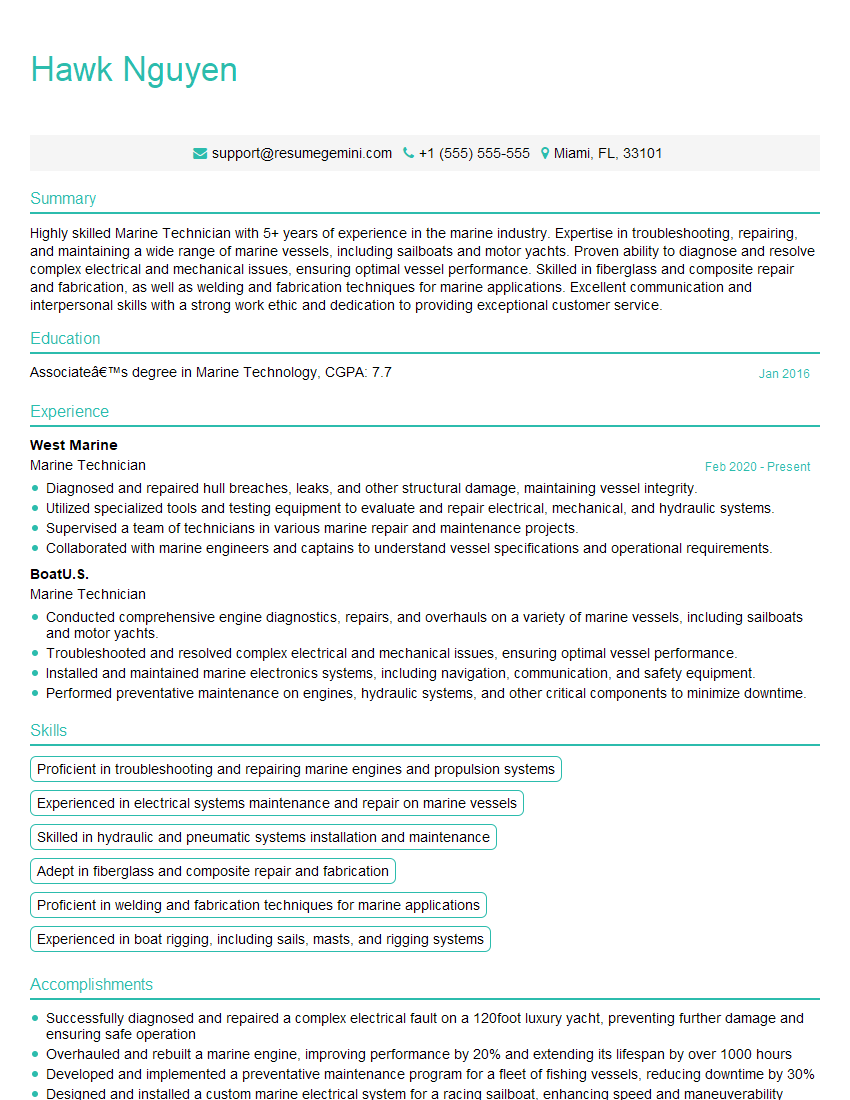
Marine Technician Resume Sample
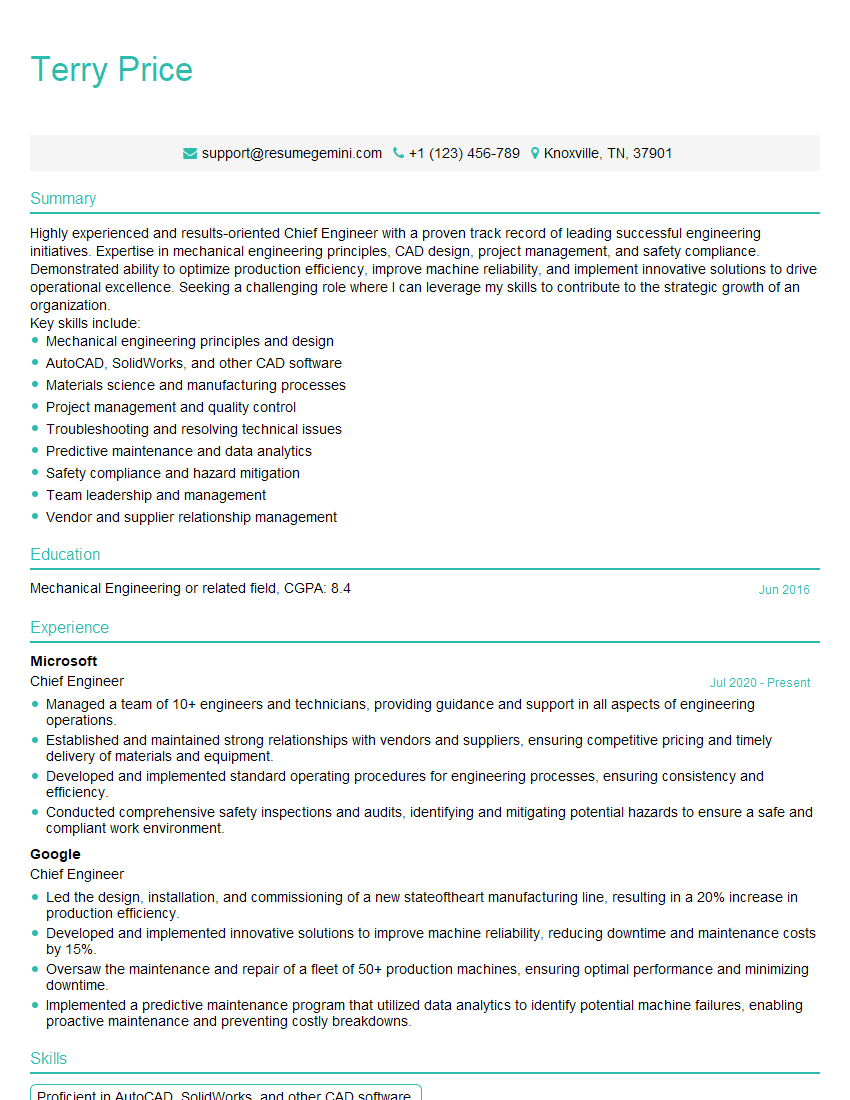
Chief Engineer Resume Sample
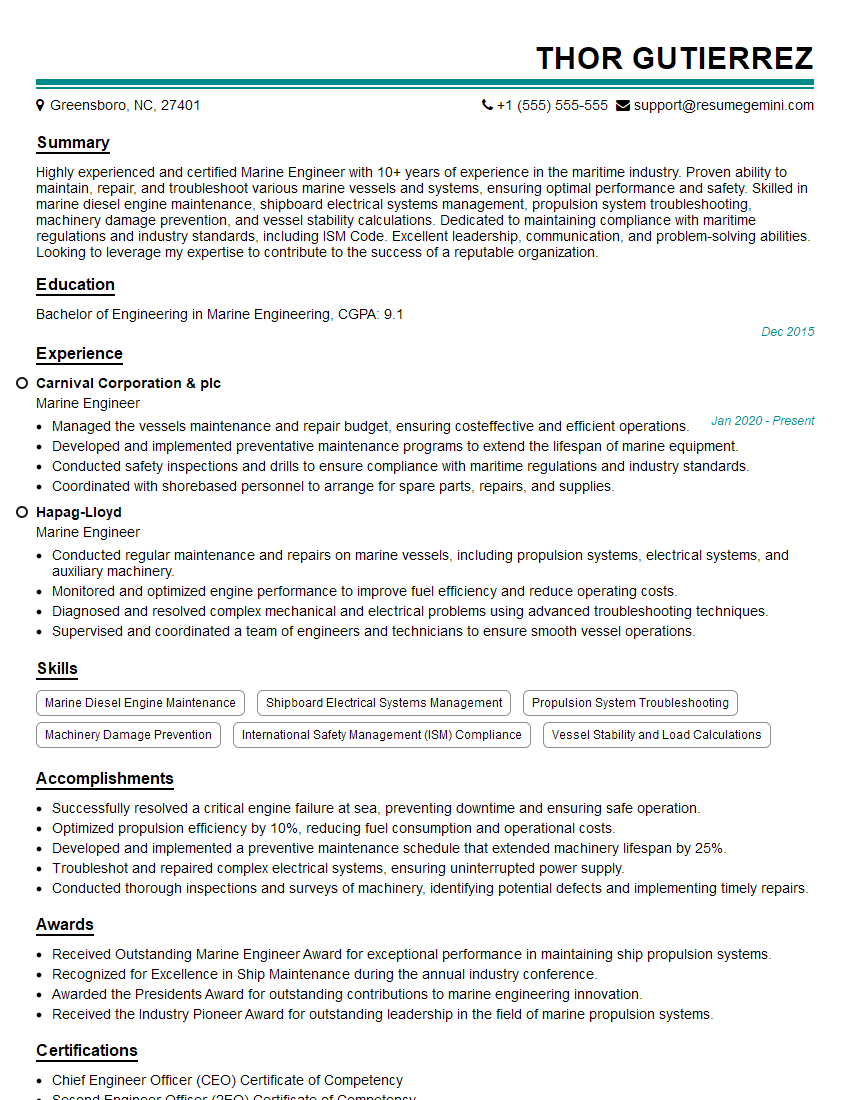
Marine Engineer Resume Sample
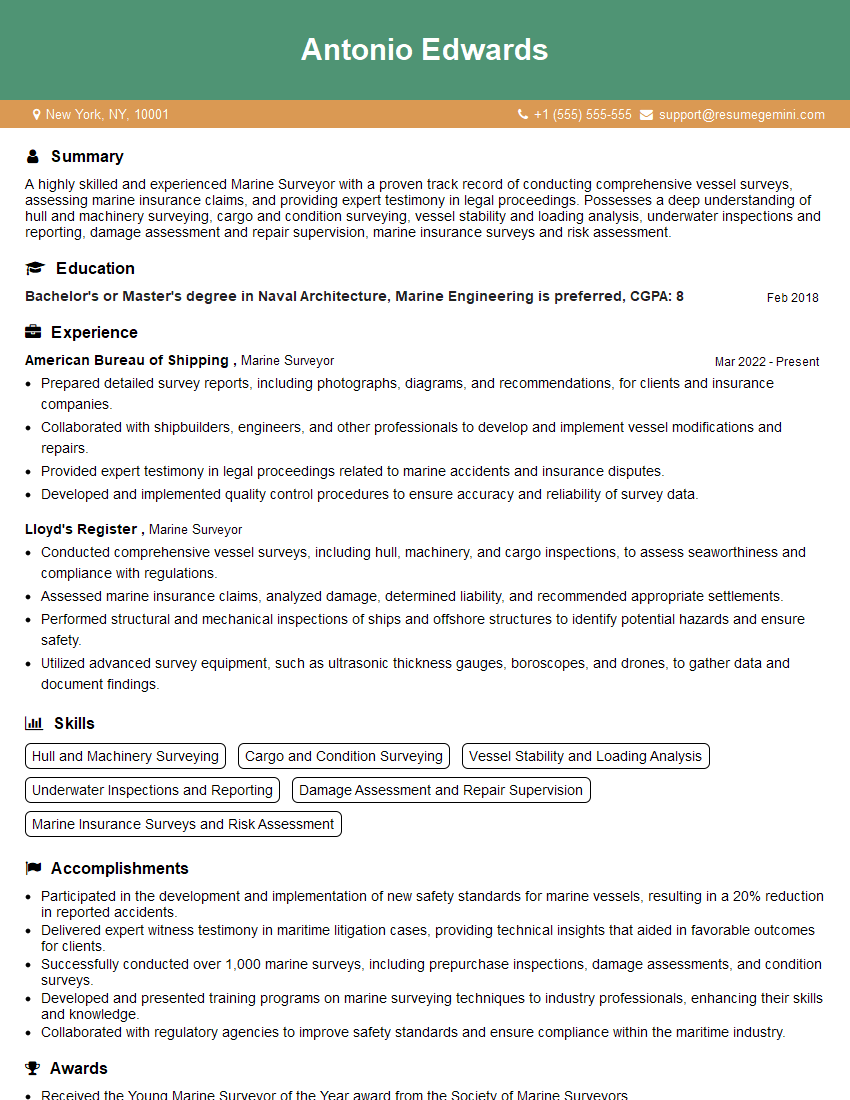
Marine Surveyor Resume Sample
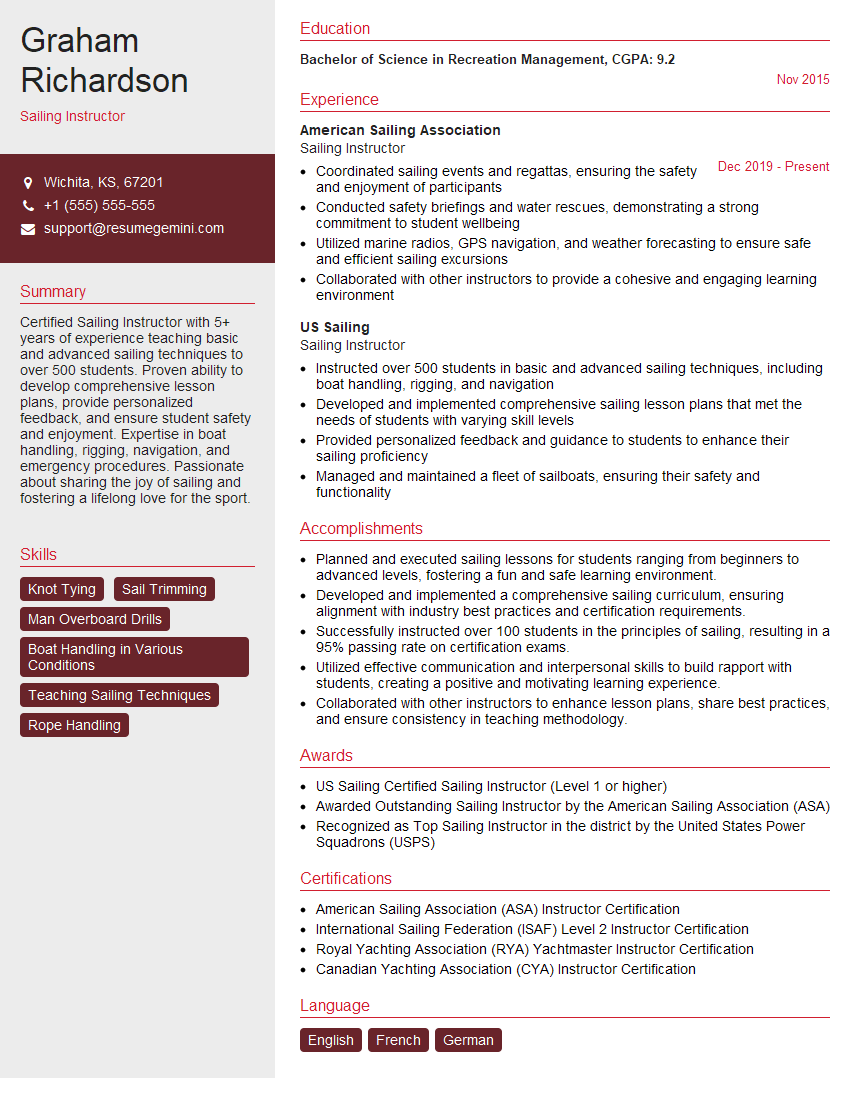
Sailing Instructor Resume Sample
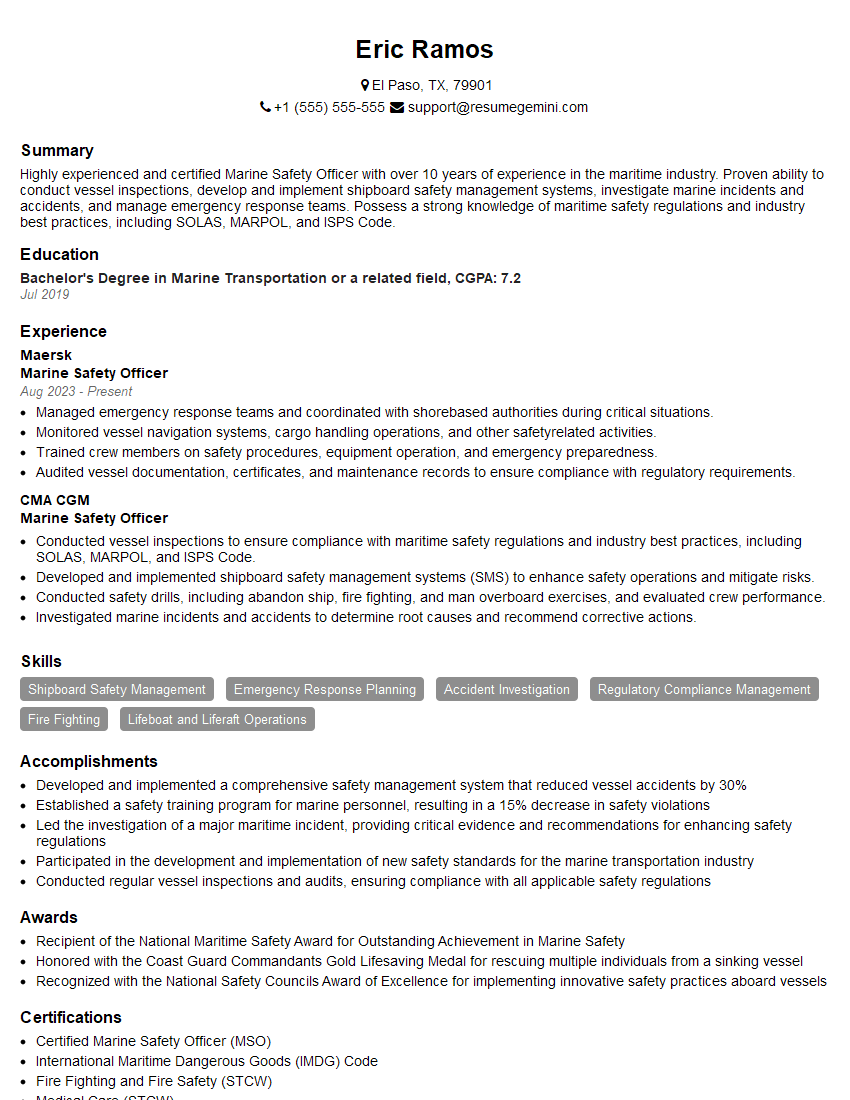
Marine Safety Officer Resume Sample
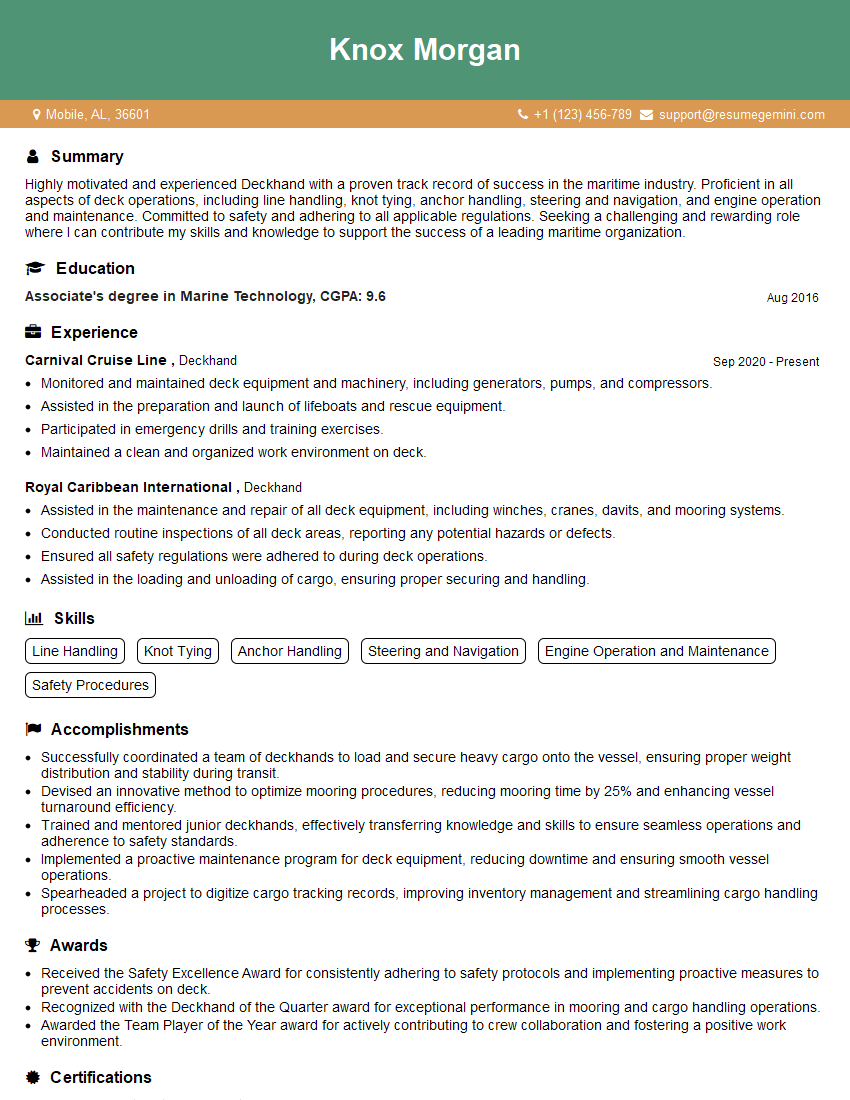
Deckhand Resume Sample
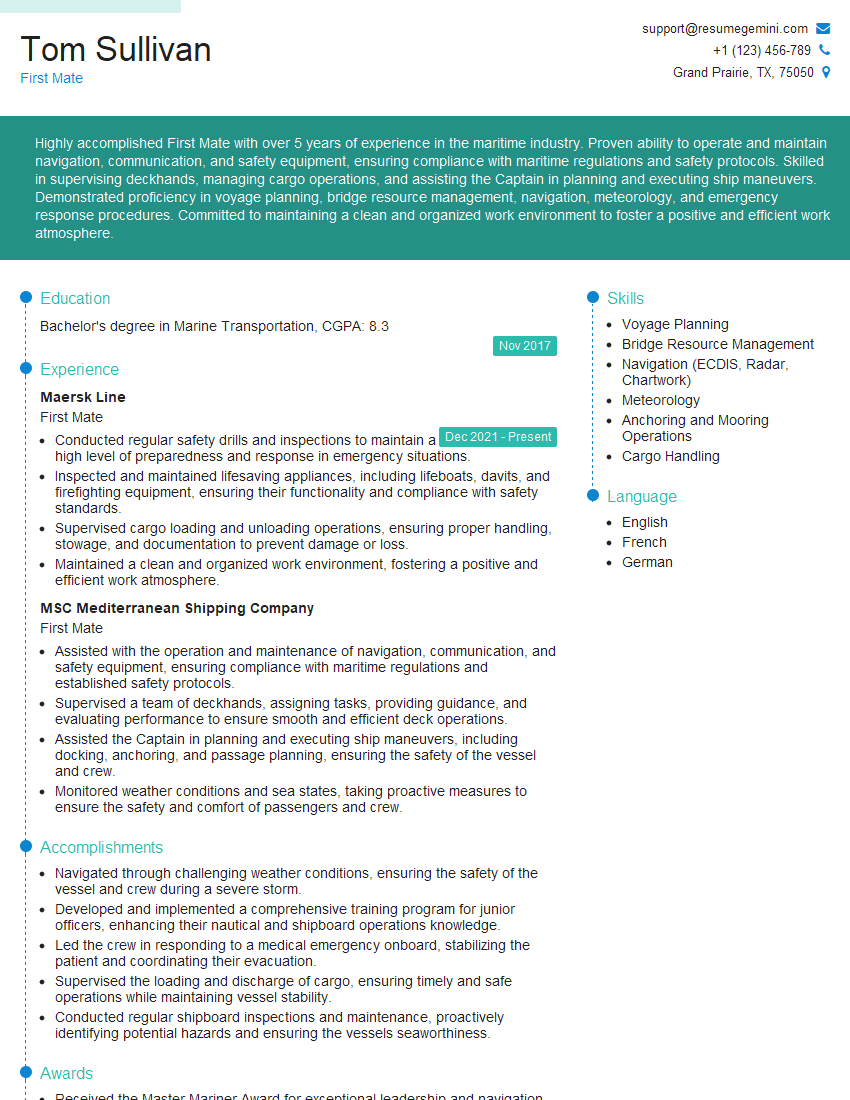
First Mate Resume Sample
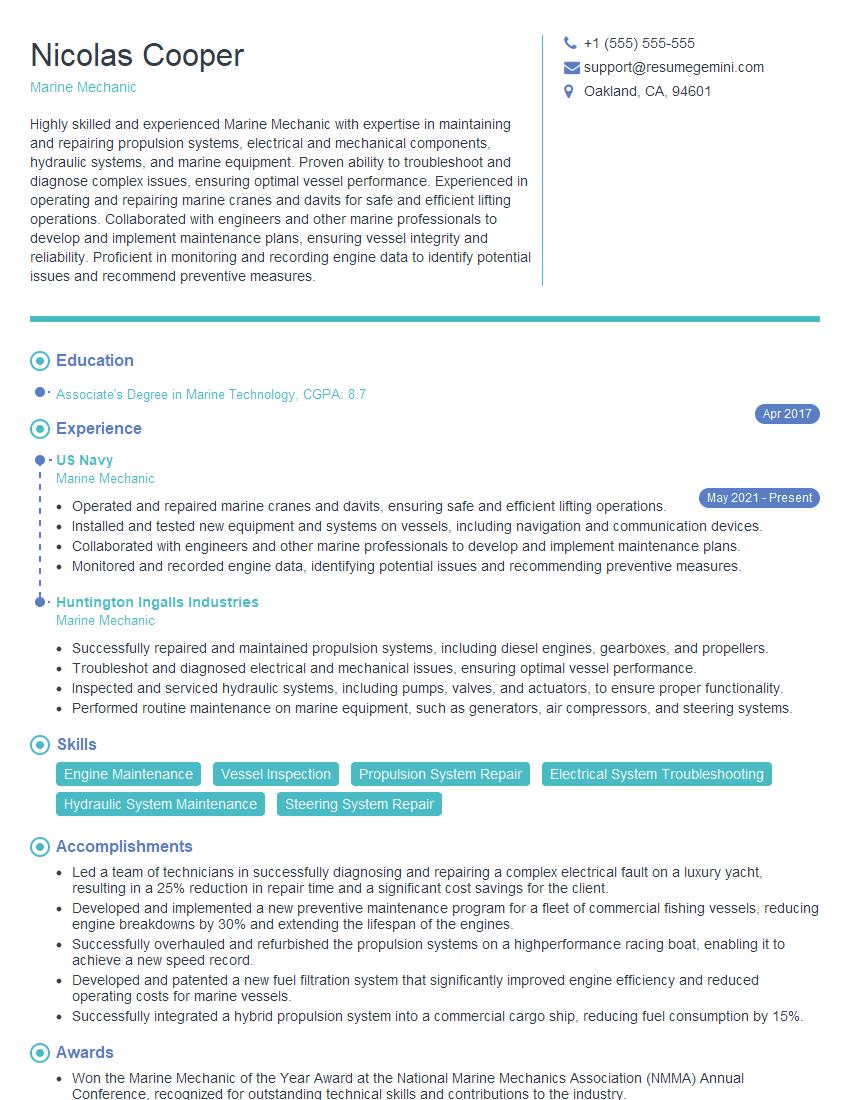
Marine Mechanic Resume Sample
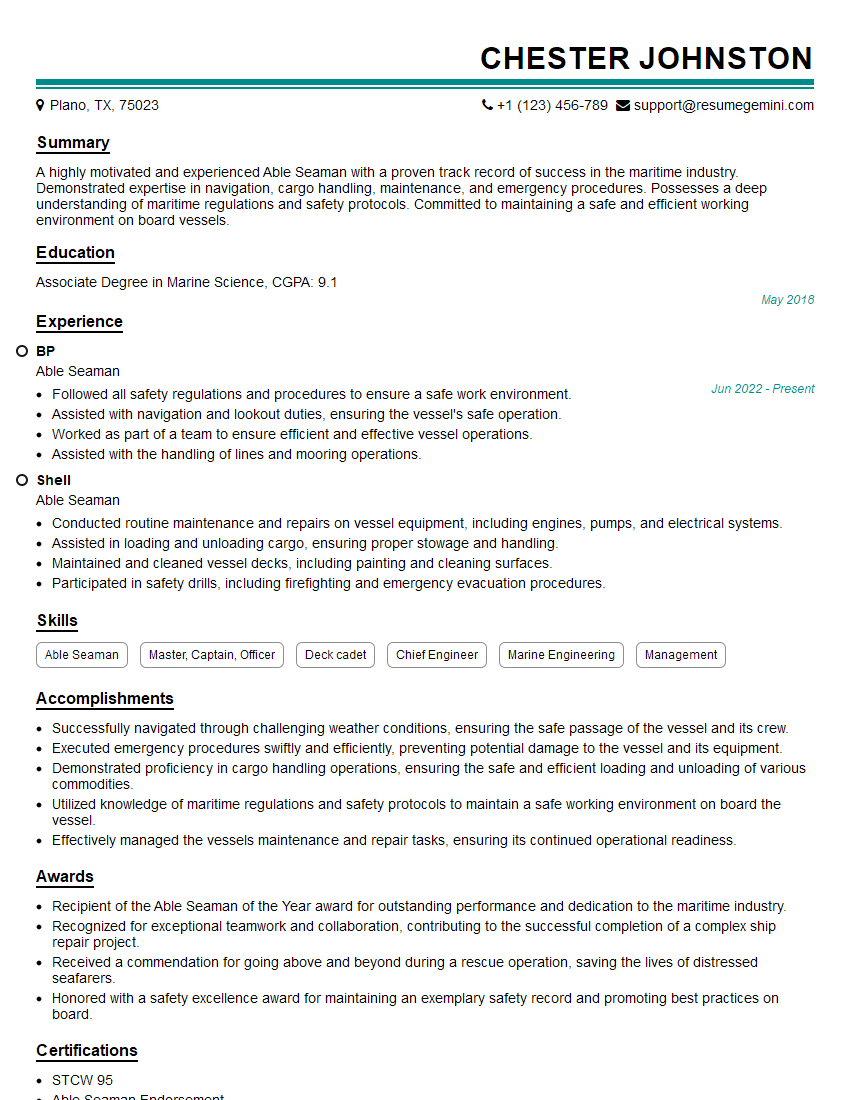
Able Seaman Resume Sample
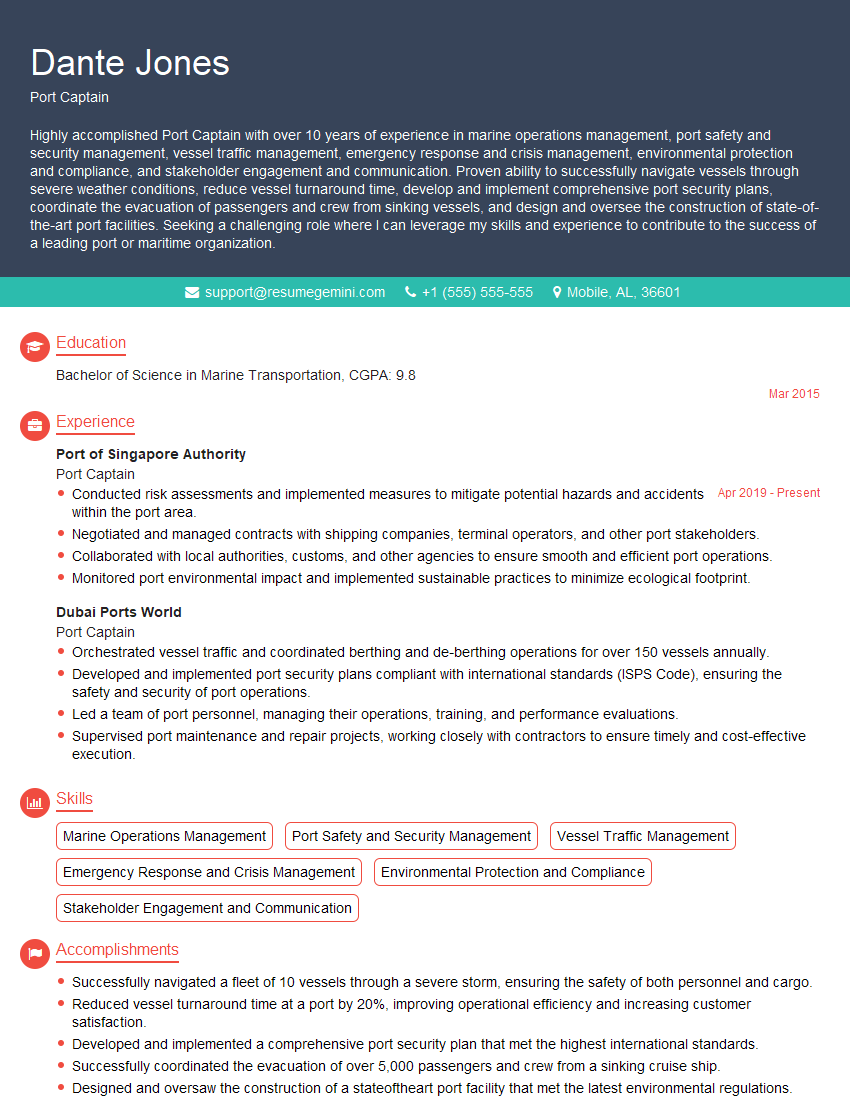
Port Captain Resume Sample

Tugboat Operator Resume Sample
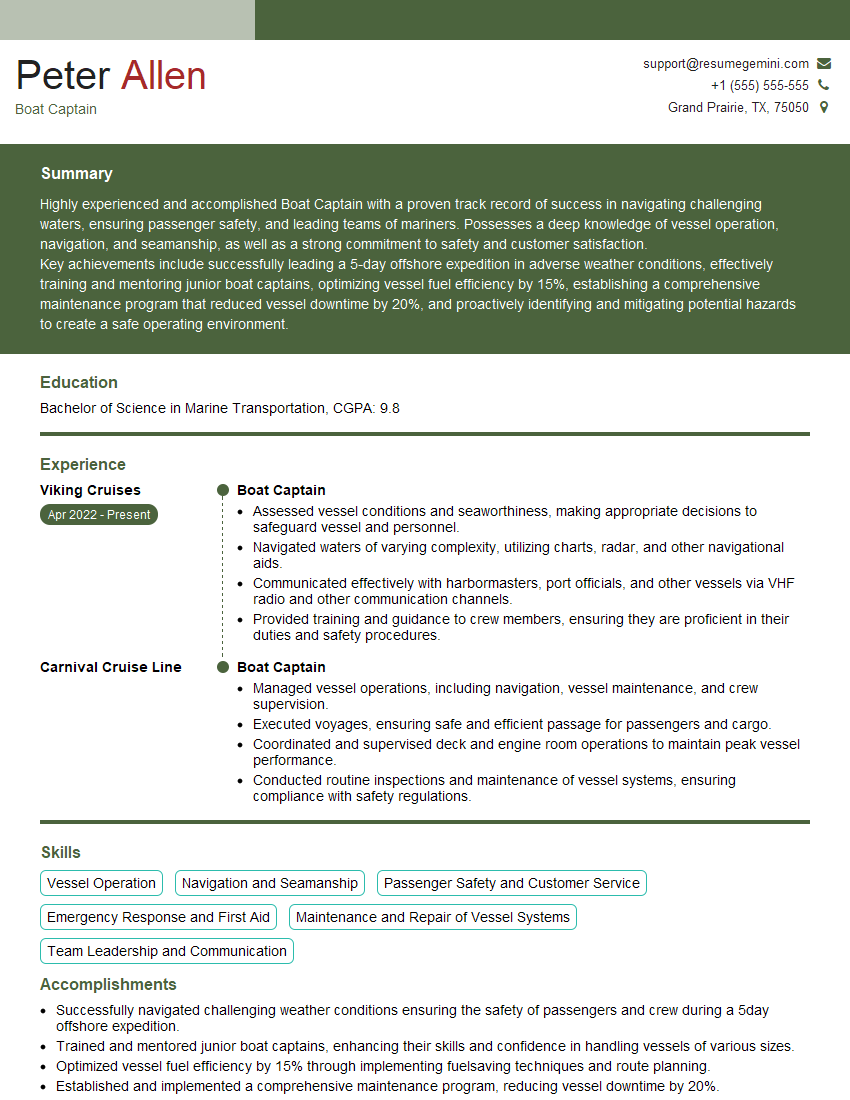
Boat Captain Resume Sample
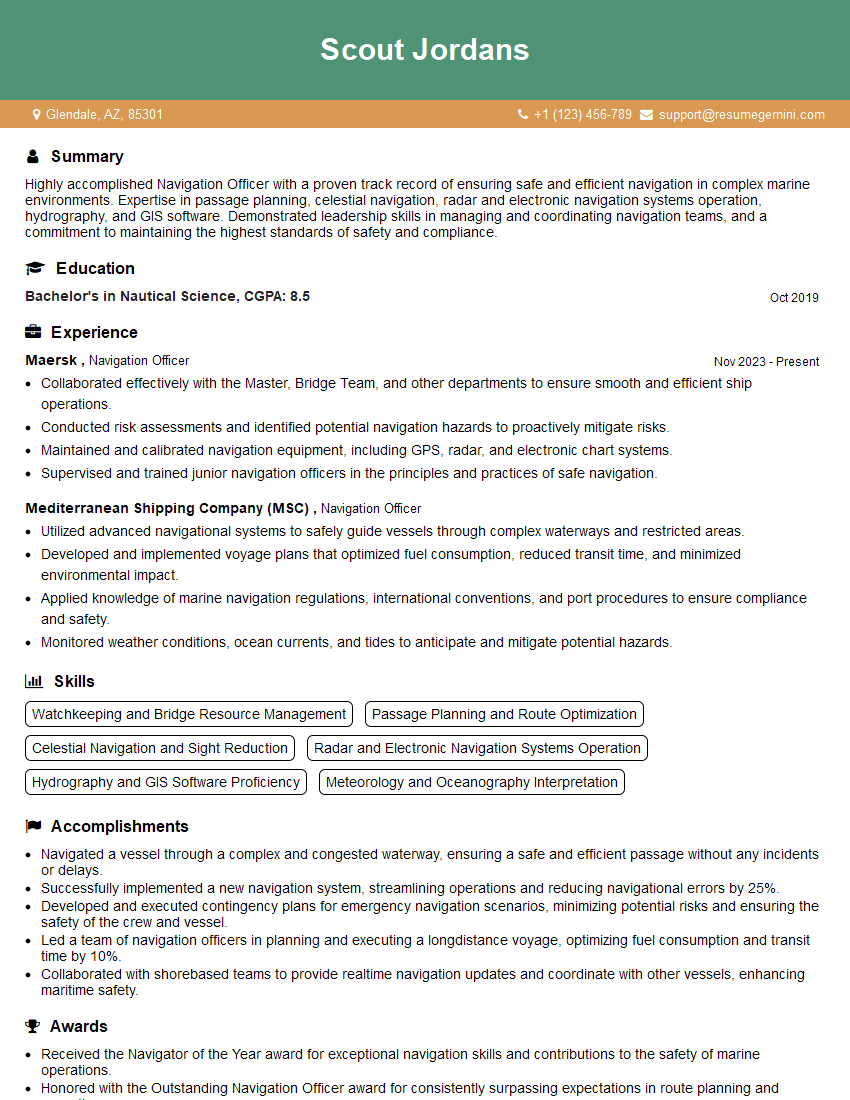
Navigation Officer Resume Sample
Explore more articles
Users Rating of Our Blogs
Share Your Experience
We value your feedback! Please rate our content and share your thoughts (optional).
What Readers Say About Our Blog
Very informative content, great job.
good