Preparation is the key to success in any interview. In this post, we’ll explore crucial Document Encryption and Security interview questions and equip you with strategies to craft impactful answers. Whether you’re a beginner or a pro, these tips will elevate your preparation.
Questions Asked in Document Encryption and Security Interview
Q 1. Explain the difference between symmetric and asymmetric encryption.
Symmetric and asymmetric encryption are two fundamental approaches to securing data. The core difference lies in the number of keys used.
Symmetric encryption uses a single secret key to both encrypt and decrypt data. Imagine a locked box: you need the same key to lock it (encrypt) and unlock it (decrypt). This is very efficient, as encryption and decryption are fast. However, securely sharing the key between parties becomes a major challenge. Examples include AES and DES.
Asymmetric encryption, also known as public-key cryptography, employs two keys: a public key for encryption and a private key for decryption. Think of a mailbox with a slot for anyone to drop letters (public key encryption) but only the mailbox owner has the key to open it and retrieve the mail (private key decryption). The public key can be widely distributed, enhancing security as the private key remains confidential. However, it’s computationally more intensive than symmetric encryption. RSA is a prime example.
Q 2. Describe the workings of AES and RSA algorithms.
AES (Advanced Encryption Standard) is a symmetric block cipher. It operates by dividing the data into blocks of a fixed size (128 bits) and using a secret key to transform each block through multiple rounds of mathematical operations. The number of rounds depends on the key size (128, 192, or 256 bits), impacting security. Its strength lies in its speed and robust security; it’s widely adopted for securing data at rest and in transit.
RSA (Rivest-Shamir-Adleman) is an asymmetric algorithm. It relies on the mathematical difficulty of factoring large numbers. The process involves generating a pair of keys: a public key and a private key, intricately linked through prime numbers. Encryption uses the public key, while decryption requires the private key. RSA is mainly used for key exchange, digital signatures, and secure communication channels where key distribution is a concern.
Q 3. What are the advantages and disadvantages of using public key infrastructure (PKI)?
Public Key Infrastructure (PKI) is a system for creating, managing, distributing, using, storing, and revoking digital certificates and managing public-key cryptography. It plays a vital role in establishing trust and secure communication in online environments.
Advantages:
- Authentication: Verifies the identity of parties involved in a digital transaction.
- Data integrity: Ensures data hasn’t been tampered with.
- Non-repudiation: Prevents parties from denying their involvement in a transaction.
- Confidentiality: Secures sensitive information exchanged online.
Disadvantages:
- Complexity: Setting up and managing a PKI system can be complex and costly.
- Single point of failure: Reliance on a central authority can create a single point of failure.
- Scalability issues: Managing large-scale PKI systems can be challenging.
- Trust issues: Trust in the certification authority is paramount.
Q 4. How does digital signing work, and what are its security benefits?
Digital signing uses asymmetric cryptography to ensure data authenticity and integrity. It employs a private key to create a digital signature for a document or message. Anyone with the corresponding public key can verify this signature.
Process:
- The sender uses their private key to create a hash (a unique fingerprint) of the document.
- This hash is then encrypted using the sender’s private key to create the digital signature.
- The digital signature is attached to the document.
- The recipient uses the sender’s public key to decrypt the signature and obtain the original hash.
- The recipient then calculates the hash of the received document.
- If both hashes match, the signature is valid, verifying the document’s integrity and authenticity.
Security Benefits:
- Authentication: Verifies the sender’s identity.
- Integrity: Ensures the document hasn’t been altered.
- Non-repudiation: Prevents the sender from denying they sent the document.
Q 5. Explain the concept of a digital certificate and its role in authentication.
A digital certificate is an electronic document that binds a public key to a specific entity (individual, organization, or device). Think of it as an online identity card. It contains information such as the entity’s name, public key, and validity period, signed by a trusted Certificate Authority (CA).
Role in Authentication: When you access a website using HTTPS, your browser checks the website’s digital certificate. The browser trusts the CA that issued the certificate. If the certificate is valid, the browser verifies the website’s identity, ensuring you’re communicating with the legitimate site, not an imposter.
Q 6. What are hashing algorithms, and how are they used in data security?
Hashing algorithms are one-way functions that take an input (data of any size) and produce a fixed-size output called a hash value or message digest. This process is irreversible; you cannot reconstruct the original data from the hash.
Use in Data Security:
- Data Integrity: By comparing the hash of a document before and after transmission or storage, you can detect any changes (even minor ones).
- Password Storage: Passwords are rarely stored directly; instead, their hashes are stored. This makes it extremely difficult to retrieve the actual passwords even if the database is compromised.
- Digital Signatures: Hashing is a crucial component of digital signatures, as it provides a concise representation of the data to be signed.
Common hashing algorithms include SHA-256 and MD5, though MD5 is now considered cryptographically weak.
Q 7. Describe different types of encryption attacks (e.g., brute force, known-plaintext).
Various attacks target encryption systems, aiming to compromise the confidentiality or integrity of data.
Brute-force attack: This involves systematically trying every possible key until the correct one is found. It’s computationally expensive but becomes more feasible with shorter keys or weaker algorithms.
Known-plaintext attack: The attacker has access to both the ciphertext (encrypted data) and the corresponding plaintext (original data). They try to deduce the key used for encryption by analyzing the relationship between the two.
Ciphertext-only attack: The attacker only has access to the ciphertext. This is the most challenging attack as they have no information about the plaintext.
Chosen-plaintext attack: The attacker can choose the plaintext they want to encrypt and obtain the corresponding ciphertext. This helps them deduce the key by analyzing the patterns.
Chosen-ciphertext attack: Similar to the chosen-plaintext attack but the attacker chooses the ciphertext and obtains the corresponding decrypted plaintext.
Mitigating these attacks involves using strong encryption algorithms with sufficiently long key lengths, implementing robust key management practices, and employing additional security measures.
Q 8. Explain the concept of key management and its importance.
Key management is the systematic process of creating, storing, using, and destroying cryptographic keys. Think of keys as passwords for your digital files – without proper management, your data is vulnerable. Its importance stems from the fact that the security of your entire encryption system hinges on the security of your keys. A compromised key renders your encryption useless.
- Key Generation: Securely generating keys using robust algorithms and sufficient bit length is crucial. Weak keys are easily cracked.
- Key Storage: Keys should be stored securely, often using hardware security modules (HSMs) or encrypted vaults, minimizing the risk of theft or unauthorized access. Imagine storing your house keys in a well-hidden safe – that’s the principle here.
- Key Distribution: Sharing keys securely is another challenge. Methods like key exchange protocols (e.g., Diffie-Hellman) are essential to avoid interception.
- Key Rotation: Regularly changing keys reduces the window of vulnerability. Like changing your password, rotating keys limits damage if one is compromised.
- Key Destruction: When a key is no longer needed, it must be securely destroyed to prevent its reuse or recovery. This is analogous to physically destroying a sensitive document.
Poor key management can lead to data breaches, regulatory fines, and reputational damage. Robust key management practices are a cornerstone of any effective document security strategy.
Q 9. What are the best practices for securing sensitive documents at rest and in transit?
Securing sensitive documents involves protecting them both at rest (when stored) and in transit (when being transferred). Best practices include:
- At Rest:
- Encryption: Encrypt documents using strong, industry-standard algorithms like AES-256 before storing them. This is like locking a safe containing your valuable documents.
- Access Control: Implement strict access control mechanisms, limiting access to authorized personnel only using role-based access control (RBAC) and multi-factor authentication (MFA).
- Data Loss Prevention (DLP): Employ DLP tools to monitor and prevent sensitive data from leaving the organization’s control.
- Secure Storage: Utilize encrypted storage systems, preferably with version control and backups stored offline.
- In Transit:
- HTTPS/TLS: Always use HTTPS/TLS to encrypt data transmitted over the internet. Think of this as using a secure, sealed envelope for your documents.
- VPN: For sensitive data transfers, utilize a Virtual Private Network (VPN) to create a secure tunnel.
- Data Masking/Tokenization: Consider masking or tokenizing sensitive data elements before transmission, replacing sensitive information with substitutes.
Implementing these measures provides a multi-layered defense against potential threats. The combination of encryption, access control, and secure transfer methods provides the strongest possible protection.
Q 10. Discuss the security implications of cloud-based document storage.
Cloud-based document storage offers convenience and scalability, but introduces specific security implications:
- Data breaches: Cloud providers, while generally secure, can still be vulnerable to attacks. A compromise affects all clients on that system.
- Data sovereignty and compliance: Storing data in the cloud raises concerns about compliance with various data privacy regulations (e.g., GDPR, CCPA).
- Vendor lock-in: Migrating data from one cloud provider to another can be complex and costly.
- Access control and visibility: Organizations need strong controls and granular visibility into who is accessing their data in the cloud.
- Data encryption: Organizations need to understand the encryption mechanisms used by the cloud provider and ensure they align with their security policies.
To mitigate these risks, organizations should carefully select a reputable cloud provider with strong security certifications and robust security controls. They should also implement their own security measures, such as encryption at rest and in transit, and robust access controls.
Q 11. Explain how to choose an appropriate encryption algorithm for a specific application.
Choosing the right encryption algorithm depends on several factors:
- Security requirements: The sensitivity of the data dictates the strength needed. High-value data requires strong algorithms like AES-256.
- Performance requirements: Some algorithms are faster than others, impacting performance. This is a trade-off with security.
- Hardware constraints: Certain algorithms may require specific hardware support. This is especially relevant for embedded systems.
- Legal and regulatory compliance: Specific algorithms might be mandated by industry regulations.
- Key management: The algorithm’s key management requirements should align with your organization’s infrastructure.
For example, AES-256 is widely considered a strong and versatile choice for most applications, offering a good balance between security and performance. However, for specific, high-security applications, or those with very specific hardware limitations, other algorithms might be more suitable. It’s essential to carefully evaluate all factors before making a selection. Consider consulting cryptography experts for complex scenarios.
Q 12. What are the key considerations when implementing data loss prevention (DLP) measures?
Implementing Data Loss Prevention (DLP) requires careful consideration of:
- Data identification: Accurately identifying sensitive data types is the first step. This often involves data classification and tagging.
- Monitoring and detection: DLP tools monitor data movement and identify potential data breaches. This requires robust logging and analytics.
- Prevention mechanisms: DLP solutions prevent sensitive data from leaving the organization through various means, including blocking unauthorized transfers, encrypting data at rest and in transit, and restricting access.
- Policy enforcement: Clearly defined policies are crucial for effective DLP implementation. These policies must be communicated and enforced throughout the organization.
- Integration and automation: Integrating DLP with other security tools (e.g., SIEM, endpoint detection and response) enhances overall security. Automating responses to detected incidents is essential for timely mitigation.
- User education and awareness: Employees need training on data security best practices to avoid accidental data loss.
A well-designed DLP program should be proactive, integrated, and adaptable to changing threats. It needs to provide timely alerts and remediation capabilities and be tailored to the specific data and risks relevant to an organization.
Q 13. How do you ensure the integrity of encrypted data?
Ensuring the integrity of encrypted data involves verifying that the data hasn’t been tampered with during storage or transmission. This is typically achieved using:
- Message Authentication Codes (MACs): MACs generate a cryptographic checksum of the data, which is included alongside the encrypted data. Upon decryption, the recipient regenerates the MAC and verifies it against the received one. A mismatch indicates tampering.
- Digital Signatures: Digital signatures use public-key cryptography to verify the authenticity and integrity of the data. They ensure that the data originates from a trusted source and hasn’t been altered.
- Hashing: Hashing algorithms create a unique fingerprint of the data. This hash value is stored separately or included with the encrypted data. Any change to the data will result in a different hash value.
The choice between these methods often depends on the application’s requirements. For simple integrity checks, MACs are often sufficient. For situations requiring non-repudiation (proof of origin) and stronger security guarantees, digital signatures are more appropriate. Hashing is often used as part of a broader security strategy alongside other methods.
Q 14. Explain the concept of zero-knowledge proof and its applications.
A zero-knowledge proof (ZKP) allows one party (the prover) to prove to another party (the verifier) that a statement is true without revealing any information beyond the validity of the statement itself. Imagine proving you have a solution to a puzzle without showing them the solution – that’s the essence of ZKP.
Applications in Document Encryption:
- Authentication: Users can prove their identity without revealing their password.
- Access Control: Individuals can prove they have the right to access a document without revealing the encryption key.
- Data Integrity Verification: A user can verify the integrity of a document without decrypting it.
ZKPs are particularly valuable in scenarios where privacy is paramount. They enable secure authentication and access control without compromising the confidentiality of sensitive data or encryption keys. This is a powerful tool for advanced security protocols in document management systems.
Q 15. Describe the role of access control lists (ACLs) in securing documents.
Access Control Lists (ACLs) are like a digital bouncer for your documents, determining who gets access and what they can do. They’re a crucial part of document security, working alongside encryption to ensure only authorized individuals can view or modify sensitive information. Instead of relying solely on encryption, which focuses on confidentiality, ACLs manage the permission aspect of security.
Think of a shared Google Doc. The owner might set permissions to allow some users to edit, others to only comment, and others just to view. That’s an ACL in action. It’s a list specifying users or groups and their corresponding rights (read, write, execute, etc.) for a specific file or folder. Without ACLs, encryption alone wouldn’t prevent an authorized user (perhaps via a stolen password) from making unauthorized changes.
In a corporate setting, ACLs are fundamental for managing sensitive documents like financial reports, client data, or intellectual property. Sophisticated systems allow for fine-grained control, setting permissions based on roles, departments, or even specific projects. Regular audits and reviews of ACLs are essential to ensure they remain aligned with the company’s security policies and current needs.
Career Expert Tips:
- Ace those interviews! Prepare effectively by reviewing the Top 50 Most Common Interview Questions on ResumeGemini.
- Navigate your job search with confidence! Explore a wide range of Career Tips on ResumeGemini. Learn about common challenges and recommendations to overcome them.
- Craft the perfect resume! Master the Art of Resume Writing with ResumeGemini’s guide. Showcase your unique qualifications and achievements effectively.
- Don’t miss out on holiday savings! Build your dream resume with ResumeGemini’s ATS optimized templates.
Q 16. What are the challenges of securing data in a BYOD environment?
Securing data in a Bring Your Own Device (BYOD) environment presents unique challenges because it expands the attack surface significantly. Personal devices are often less secure than company-owned devices, lacking the same level of management and security controls. This increases the risk of data breaches through compromised devices, lost or stolen devices, unpatched operating systems, or unsecured Wi-Fi networks.
- Data leakage: Employees may accidentally or intentionally transfer sensitive data to their personal devices, making it vulnerable to loss or unauthorized access.
- Malware and viruses: Personal devices are more susceptible to malware infection, potentially compromising company data.
- Lack of control: IT departments have less control over the security settings and configurations of personal devices.
- Compliance challenges: Meeting regulatory compliance requirements (like HIPAA or GDPR) becomes more difficult when managing data across a heterogeneous collection of personal devices.
To mitigate these risks, strong mobile device management (MDM) solutions are crucial. These tools allow IT to enforce security policies, manage application installations, and remotely wipe data from compromised devices. Data encryption, both in transit and at rest, is also essential. Robust authentication methods (e.g., multi-factor authentication) should be employed to ensure only authorized users access corporate data. Regular security awareness training for employees is also key to preventing human error from becoming a security vulnerability.
Q 17. How do you handle key escrow and recovery in case of loss or compromise?
Key escrow and recovery are critical components of a robust encryption strategy. Key escrow refers to the secure storage of encryption keys by a trusted third party. This is essential for situations where the original key holder loses access to the keys or the keys are compromised. Key recovery involves retrieving access to the encrypted data using the escrowed key.
The balance between security and accessibility is delicate. If key escrow is too easily accessible, it defeats the purpose of encryption. If it’s too difficult to access, it renders the encrypted data irretrievable in the event of a key loss or compromise. Various methods are employed:
- Split key management: The key is split into multiple parts, stored separately, and requires multiple authorized parties to reconstruct it.
- Hardware security modules (HSMs): These are specialized hardware devices designed for secure key generation, storage, and management.
- Key recovery agents: Designated individuals or entities are given access to the escrowed key under specific conditions.
Implementing key escrow and recovery requires a carefully considered plan that addresses access control, audit trails, and legal requirements. This usually involves clearly defined protocols and procedures for key access, usage, and revocation, all while adhering to stringent security standards. A crucial element is to ensure that only authorized personnel or systems have access to the key recovery mechanism.
Q 18. What are the legal and regulatory requirements for data encryption in your region?
Legal and regulatory requirements for data encryption vary significantly by region and industry. In many jurisdictions, there are regulations mandating data encryption for specific data types, especially sensitive personal information (like PII). These regulations often specify acceptable encryption algorithms and key lengths. For instance, the EU’s General Data Protection Regulation (GDPR) imposes stringent requirements for data protection, including encryption, while HIPAA in the US governs the security of protected health information.
Failure to comply with these regulations can result in significant penalties, including hefty fines, legal action, and reputational damage. It is crucial for organizations to thoroughly understand the relevant laws and regulations in their region and industry and to implement encryption strategies that meet or exceed these requirements. This may involve conducting regular risk assessments, implementing strong access control mechanisms, and maintaining detailed records of encryption practices. Consulting with legal and security experts is highly recommended to ensure compliance.
Note: This answer cannot provide specific legal advice. Organizations should consult legal professionals in their region for accurate and up-to-date information on data encryption regulations.
Q 19. Explain the importance of data classification and its role in encryption strategy.
Data classification is the process of categorizing data based on its sensitivity and criticality. It’s the foundation of a strong encryption strategy because it determines which data needs the most robust protection. Different data categories require different levels of security controls, and encryption is a key element of this protection.
For example, highly sensitive data, such as customer financial information or intellectual property, requires stronger encryption algorithms, more rigorous access control, and potentially hardware-based security solutions. Less sensitive data might only need basic encryption or other security measures. This tailored approach prevents over-encryption (which can be inefficient and cumbersome) and under-encryption (which leaves sensitive data vulnerable).
A typical data classification scheme might include categories such as:
- Confidential: Highly sensitive data requiring strong encryption and access control.
- Internal: Sensitive data accessible only to authorized personnel within the organization.
- Public: Data that is publicly available and does not require encryption.
By classifying data, organizations can streamline their encryption strategy, allocate resources effectively, and meet compliance requirements. Regular data classification reviews are essential to adapt to changing needs and risks within the organization.
Q 20. What are the different types of encryption keys (e.g., session keys, master keys)?
Different types of encryption keys serve different purposes in a hierarchical key management system. This is crucial for scalability and security.
- Master Keys (or Root Keys): These are the highest-level keys in the hierarchy. They’re used to encrypt other keys (such as key encryption keys). Think of it as a master key that unlocks other keys, which in turn unlock specific data.
- Key Encryption Keys (KEKs): These keys encrypt other keys, typically session keys. This layered approach reduces the risk; if a session key is compromised, only that data is vulnerable, not the entire system.
- Session Keys (or Data Encryption Keys DEKs): These are used for the actual encryption and decryption of data. They are typically shorter-lived and are generated for each communication session or specific data set. This limits the impact of compromise.
Example: Imagine a bank. The master key might be stored in a highly secure HSM. The KEK could encrypt individual keys for various branches. Each branch would then use its specific KEK to encrypt and decrypt its own session keys, protecting customer data from unauthorized access. This multi-layered system ensures that even if one key is compromised, the entire system remains secure.
Q 21. How does steganography differ from cryptography?
Cryptography and steganography are both used to protect information, but they employ different techniques. Cryptography scrambles the information itself, making it unreadable without the decryption key. Steganography, on the other hand, hides the existence of the information.
Cryptography uses mathematical algorithms to transform readable data (plaintext) into an unreadable format (ciphertext). This relies on strong encryption algorithms and secret keys. Think of it like putting a message inside a locked box. The key is needed to open the box and read the message.
Steganography hides information within seemingly harmless media, like images or audio files. The existence of the hidden message is concealed. Think of it as writing a secret message in invisible ink; you only reveal the message by applying a special method. While seemingly harmless, the image might contain hidden files.
In summary: Cryptography protects the content of a message, whereas steganography conceals the existence of a message. Often, they are used together for a more layered security approach. The hidden message inside a steganographic file can be further encrypted using cryptography, providing double protection.
Q 22. Discuss the concept of homomorphic encryption and its applications.
Homomorphic encryption is a revolutionary type of encryption that allows computations to be performed on encrypted data without decryption. Imagine having a locked box (encrypted data) where you can add or multiply numbers inside without opening the box. That’s the essence of homomorphic encryption.
This is incredibly powerful because it allows for secure cloud computing, where sensitive data can be processed by third-party servers without compromising its confidentiality. For example, a hospital could send encrypted patient records to a cloud service for analysis without revealing the patient’s sensitive information. The cloud service could perform calculations (like averages or statistical analyses) on the encrypted data and return the encrypted results. Only the hospital with the decryption key can then unlock and view the results.
There are different types of homomorphic encryption, including Partially Homomorphic Encryption (PHE), which supports either addition or multiplication, but not both, and Fully Homomorphic Encryption (FHE), which supports both. FHE is computationally much more intensive but offers greater flexibility. Applications extend beyond healthcare; they include secure voting systems, financial transactions, and privacy-preserving machine learning.
Q 23. Describe different methods for securing email communications.
Securing email communications involves a multi-layered approach. The simplest, yet often overlooked method, is using strong passwords and two-factor authentication (2FA). This prevents unauthorized access to your email account.
- Encryption in transit (TLS/SSL): This ensures that your emails are encrypted while traveling between your email client and the mail server. Look for the padlock icon in your browser’s address bar. Most reputable email providers use this by default.
- Encryption at rest: This protects your emails stored on the mail server. This is often handled by the email provider and depends on their security measures.
- End-to-end encryption: This is the gold standard. Solutions like PGP (Pretty Good Privacy) or S/MIME encrypt emails before they leave your device, meaning only the intended recipient can decrypt them. This prevents even your email provider from reading your messages.
- Email security gateways and filters: These act as a barrier against phishing, malware, and spam, enhancing overall email security.
It’s crucial to use a combination of these methods for robust email security. For sensitive information, end-to-end encryption is highly recommended.
Q 24. What are the security implications of using weak or easily guessable passwords?
Using weak or easily guessable passwords opens the door to a wide range of security breaches. Think of your password as the key to your digital life. A weak key allows anyone to enter.
- Brute-force attacks: Hackers can use automated tools to try millions of password combinations until they find the correct one. Weak passwords make this significantly easier and faster.
- Dictionary attacks: These exploit common words, phrases, and personal information found in easily accessible databases, increasing the chances of a successful attack if your password isn’t sufficiently complex.
- Credential stuffing: Hackers use stolen username and password combinations from data breaches on other websites to try them on your accounts. If you reuse passwords, a breach on one site can compromise all your accounts.
- Social engineering: Hackers might trick you into revealing your password through phishing scams or other deceptive tactics. A weak password makes this even more effective.
The consequences can range from account hijacking and data theft to identity theft and financial losses. Strong, unique passwords, along with 2FA, are fundamental to protecting yourself.
Q 25. How do you assess the security posture of an existing document encryption system?
Assessing the security posture of a document encryption system requires a multi-faceted approach. It’s like conducting a thorough health check on a critical system. Here’s a structured approach:
- Inventory and Documentation: Begin by documenting all components of the system – encryption algorithms, key management procedures, access controls, and any related software or hardware.
- Vulnerability Assessment: Conduct regular vulnerability scans and penetration tests to identify potential weaknesses in the system. Tools like Nessus or OpenVAS can automate this process.
- Key Management Review: Examine the key management procedures. Are keys properly protected? Is there a robust key rotation policy in place? Are appropriate access controls implemented?
- Compliance Audit: Ensure that the system complies with relevant industry standards and regulations (e.g., HIPAA, GDPR).
- Access Control Review: Verify that access to encrypted documents is properly restricted to authorized personnel only. Principle of least privilege should be applied.
- Incident Response Plan: A clear incident response plan should be in place to manage and mitigate potential security incidents efficiently.
This comprehensive assessment will reveal the strengths and weaknesses of the system, guiding improvements and enhancements to strengthen its overall security.
Q 26. What are some common vulnerabilities in document encryption systems?
Document encryption systems, while offering crucial protection, are not without vulnerabilities. Several common weaknesses exist:
- Weak Encryption Algorithms: Using outdated or easily breakable encryption algorithms makes the system susceptible to attacks.
- Poor Key Management: Improper key storage, lack of key rotation, or weak key generation practices significantly weaken security. A lost or compromised key renders encryption useless.
- Vulnerable Software or Hardware: Flaws in the software or hardware used in the encryption system can be exploited by attackers.
- Side-Channel Attacks: These attacks exploit information leaked through unintended channels (e.g., timing, power consumption) during encryption or decryption.
- Insider Threats: Malicious or negligent insiders with access to the system can compromise its security.
- Metadata Leakage: Unencrypted metadata associated with encrypted files can reveal sensitive information.
Regular updates, strong key management practices, and careful selection of encryption algorithms are essential to mitigate these vulnerabilities.
Q 27. Describe your experience with specific encryption tools and technologies.
Throughout my career, I’ve had extensive experience with a range of encryption tools and technologies. I’m proficient in using and managing:
- AES (Advanced Encryption Standard): A widely used and robust symmetric encryption algorithm that provides strong protection for data at rest and in transit.
- RSA (Rivest–Shamir–Adleman): A widely used asymmetric encryption algorithm for key exchange and digital signatures.
- PGP (Pretty Good Privacy): A well-established solution for end-to-end email encryption and secure file transfer.
- S/MIME (Secure/Multipurpose Internet Mail Extensions): Another widely used standard for securing email communications.
- Various Key Management Systems (KMS): I have experience managing and configuring hardware security modules (HSMs) and cloud-based KMS for secure key storage and rotation.
I’m also familiar with various encryption libraries and APIs, which allow for seamless integration into various applications and systems. My experience extends to implementing and auditing encryption solutions, ensuring they align with best practices and regulatory requirements.
Key Topics to Learn for Document Encryption and Security Interview
- Symmetric vs. Asymmetric Encryption: Understand the differences, advantages, and disadvantages of each approach, including algorithms like AES and RSA.
- Hashing Algorithms: Learn about various hashing functions (e.g., SHA-256, MD5) and their role in ensuring data integrity and authentication.
- Digital Signatures and Certificates: Grasp the concepts of digital signatures, public key infrastructure (PKI), and certificate authorities (CAs) and their importance in verifying authenticity and non-repudiation.
- Key Management: Explore best practices for key generation, storage, distribution, and rotation to maintain security.
- Encryption Standards and Protocols: Familiarize yourself with common encryption standards like TLS/SSL, and their applications in securing data transmission.
- Data Loss Prevention (DLP): Understand methods and tools used to prevent sensitive data from leaving a controlled environment.
- Access Control and Authorization: Learn about different access control models (e.g., role-based access control) and how they apply to document security.
- Vulnerabilities and Attacks: Explore common vulnerabilities related to document encryption and security, such as man-in-the-middle attacks and known algorithm weaknesses. Be prepared to discuss mitigation strategies.
- Practical Application: Be ready to discuss real-world scenarios where document encryption and security are crucial, such as protecting sensitive medical records or financial data.
- Problem-Solving: Practice identifying and solving problems related to key management, data breaches, and security incidents.
Next Steps
Mastering Document Encryption and Security is crucial for a successful career in cybersecurity and related fields. It opens doors to high-demand roles and showcases your expertise in protecting sensitive information. To maximize your job prospects, crafting a compelling and ATS-friendly resume is essential. ResumeGemini is a trusted resource to help you build a professional resume that highlights your skills and experience effectively. We provide examples of resumes tailored specifically to Document Encryption and Security roles to give you a head start. Invest time in creating a strong resume – it’s your first impression to potential employers.
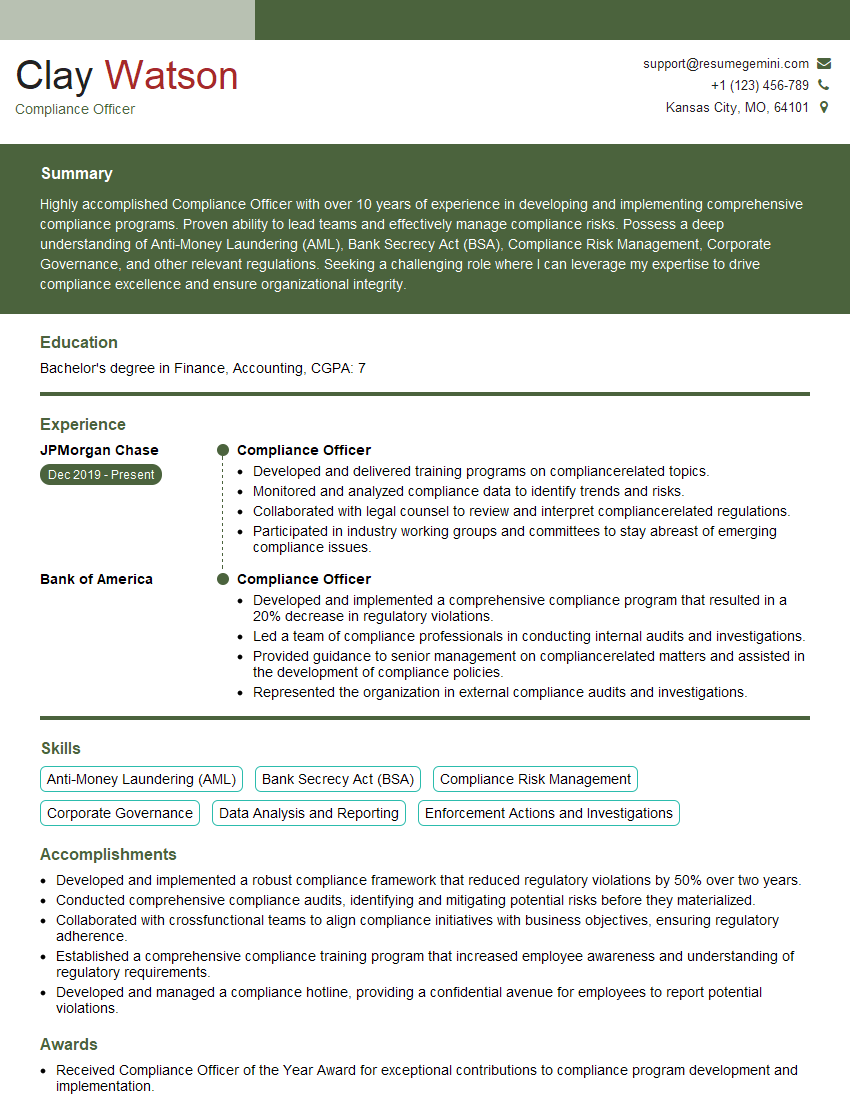
Compliance Officer Resume Sample
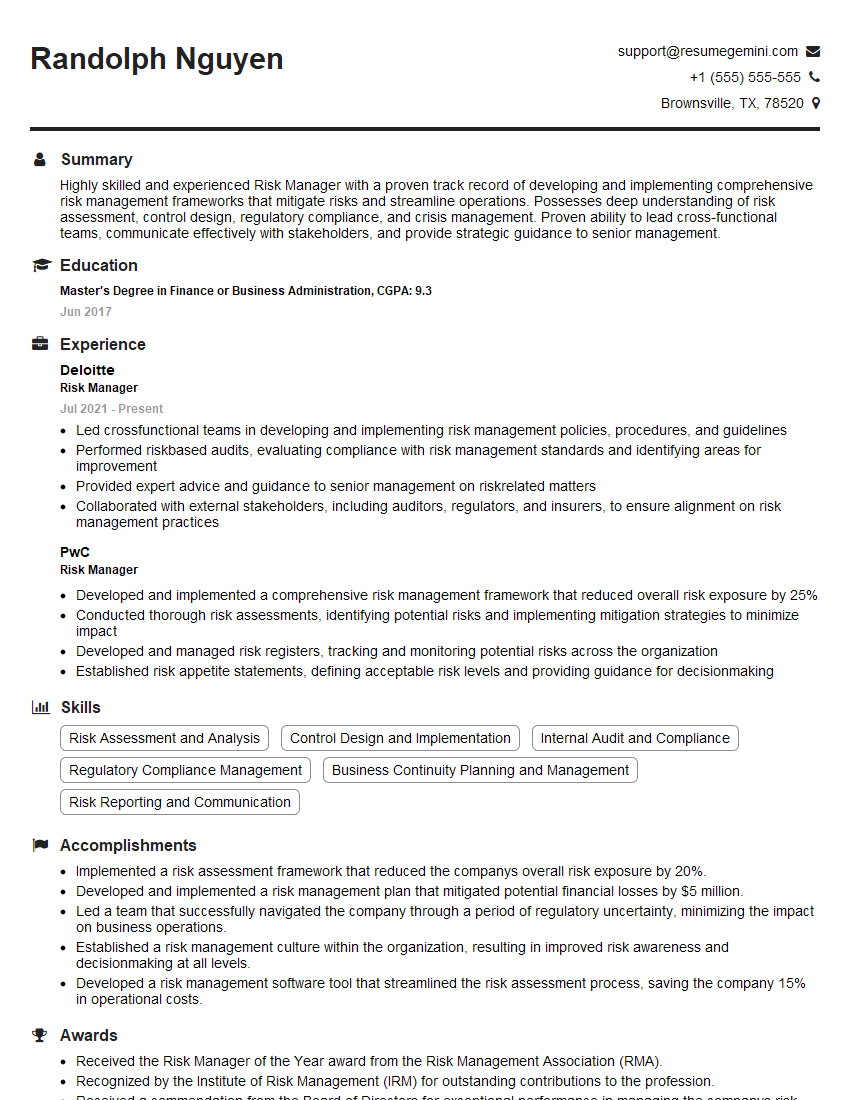
Risk Manager Resume Sample
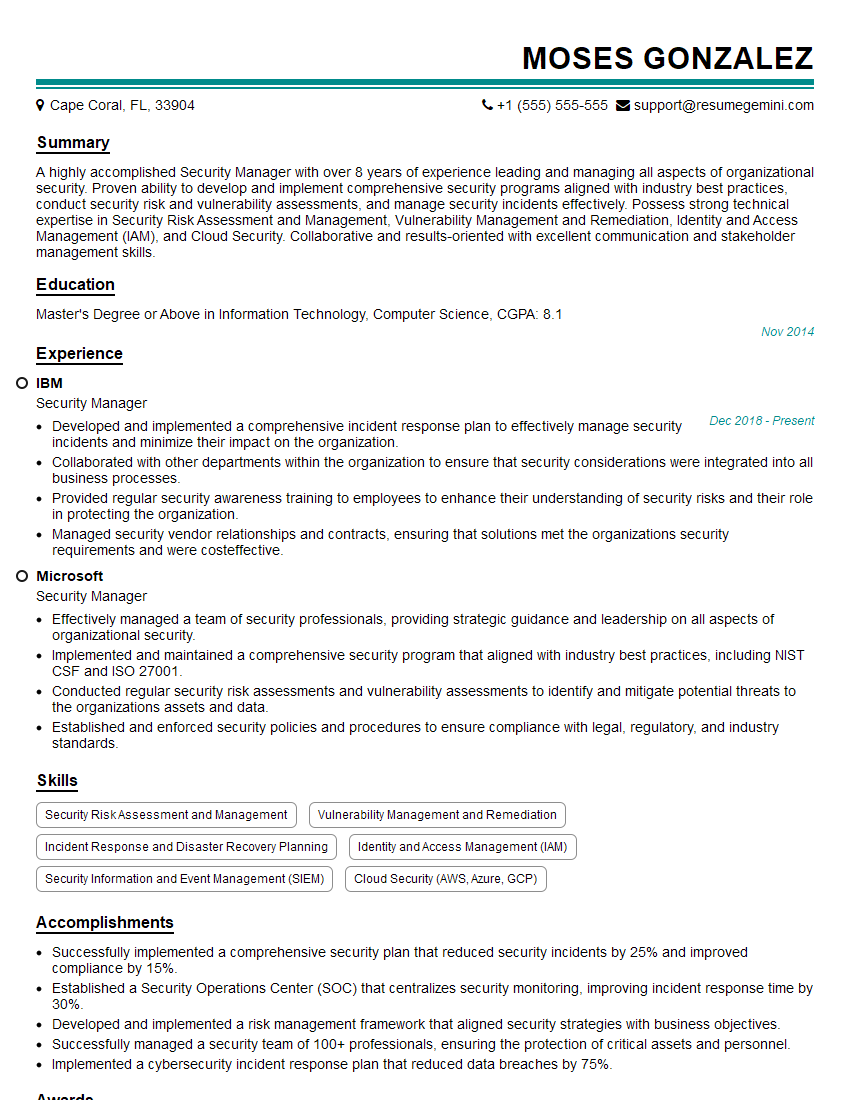
Security Manager Resume Sample
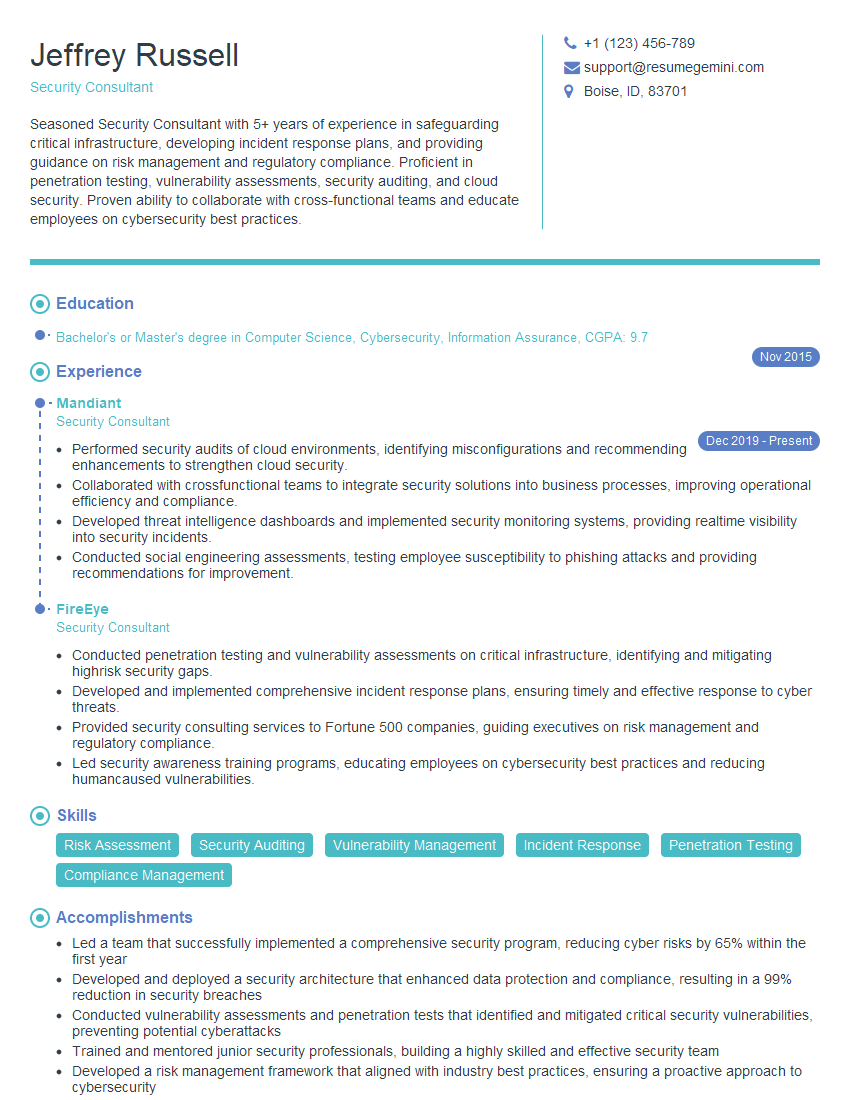
Security Consultant Resume Sample
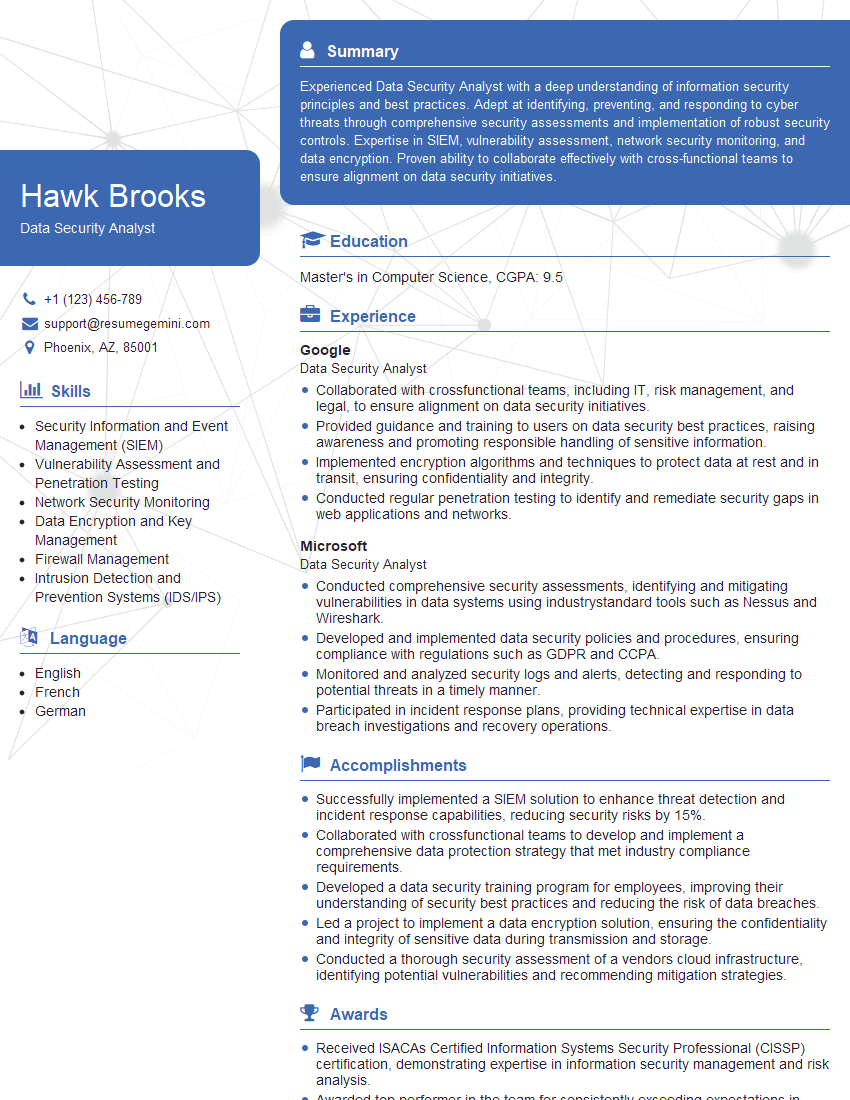
Data Security Analyst Resume Sample
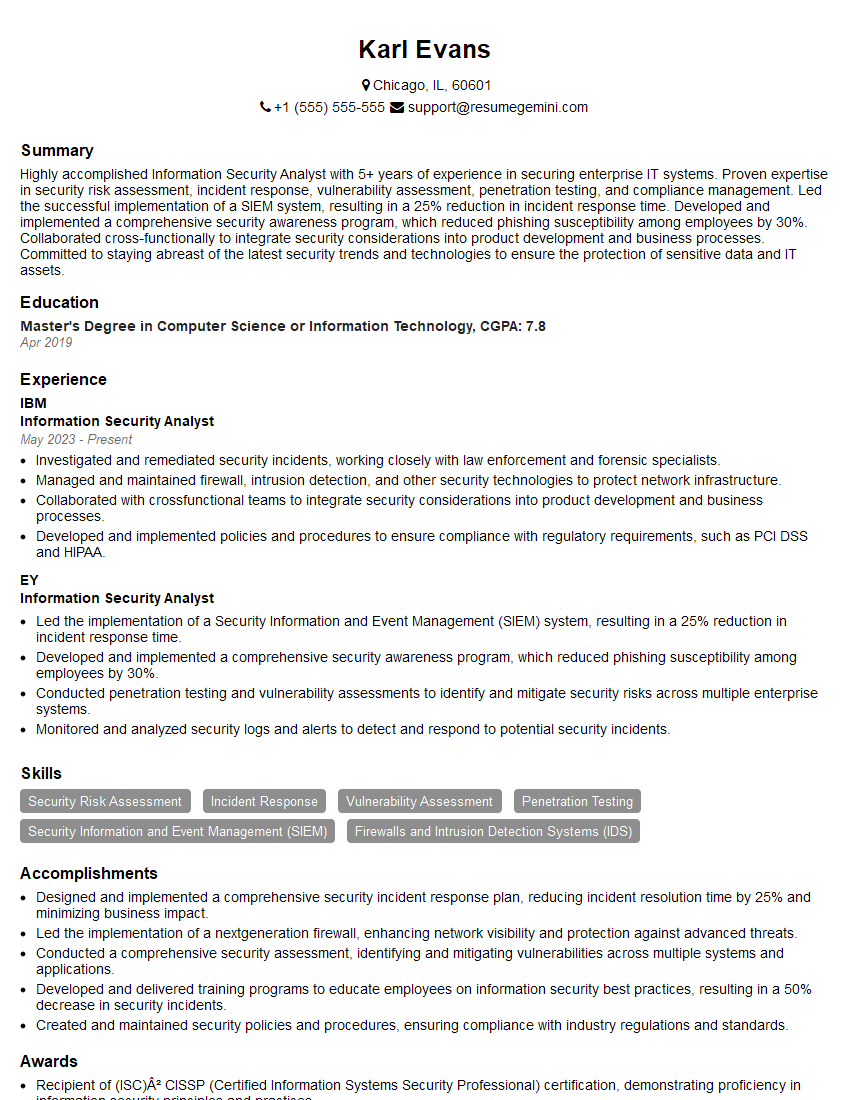
Information Security Analyst Resume Sample
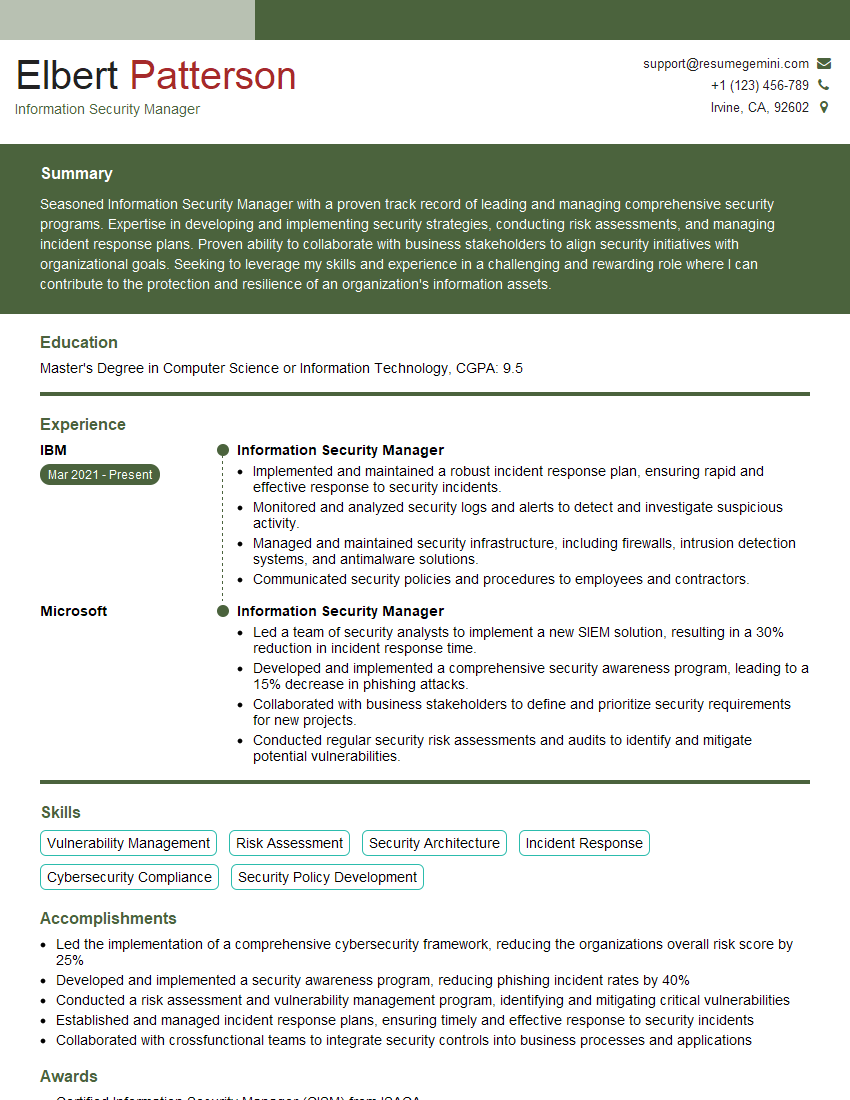
Information Security Manager Resume Sample
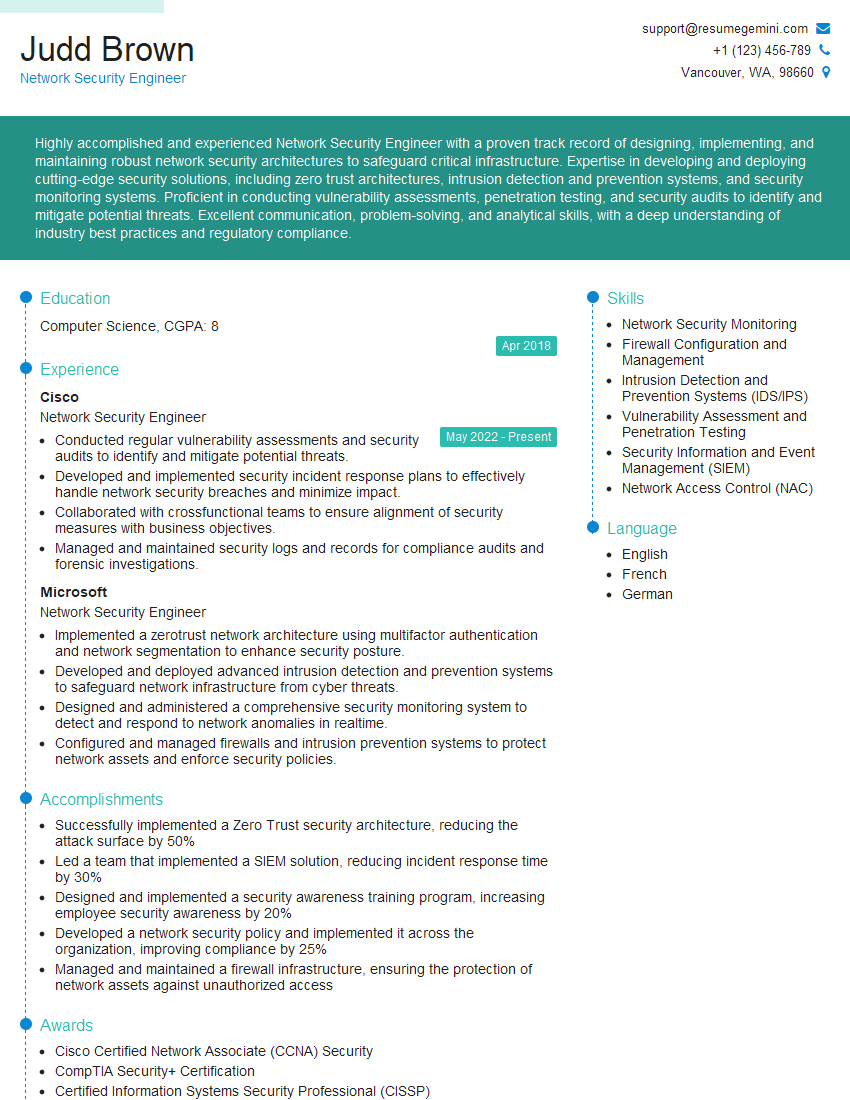
Network Security Engineer Resume Sample
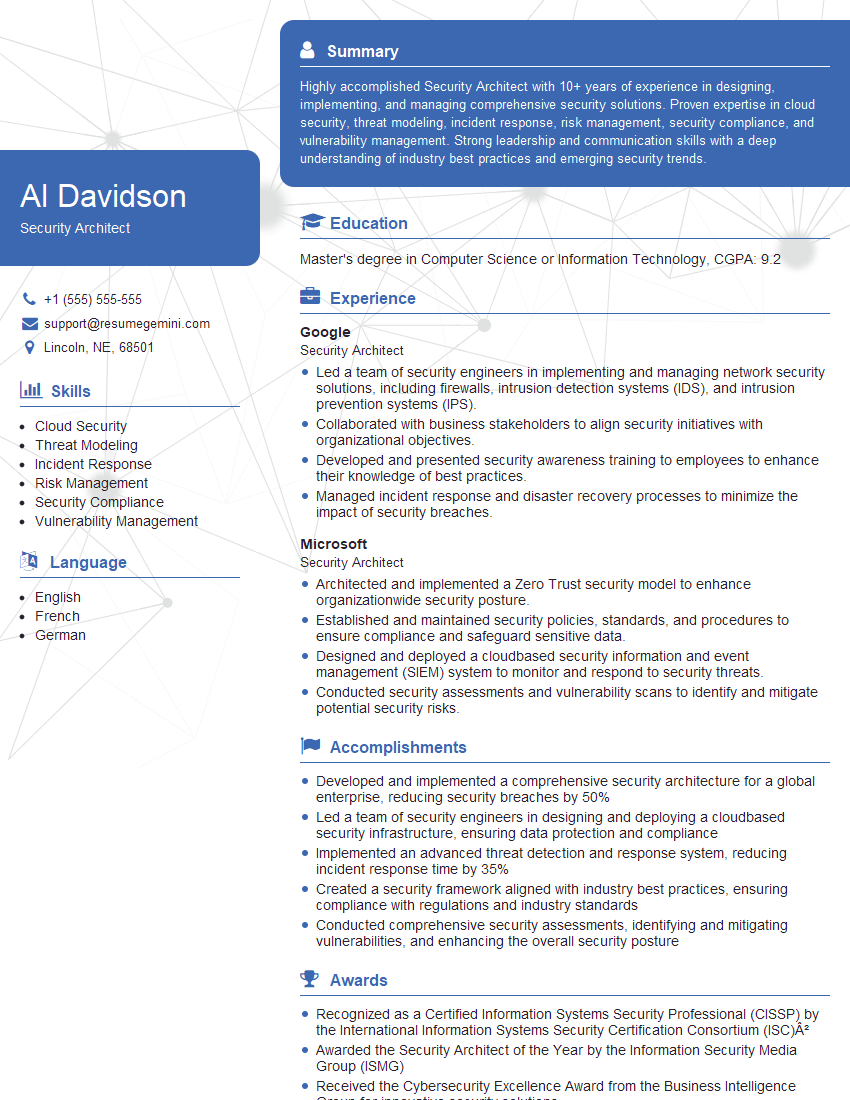
Security Architect Resume Sample
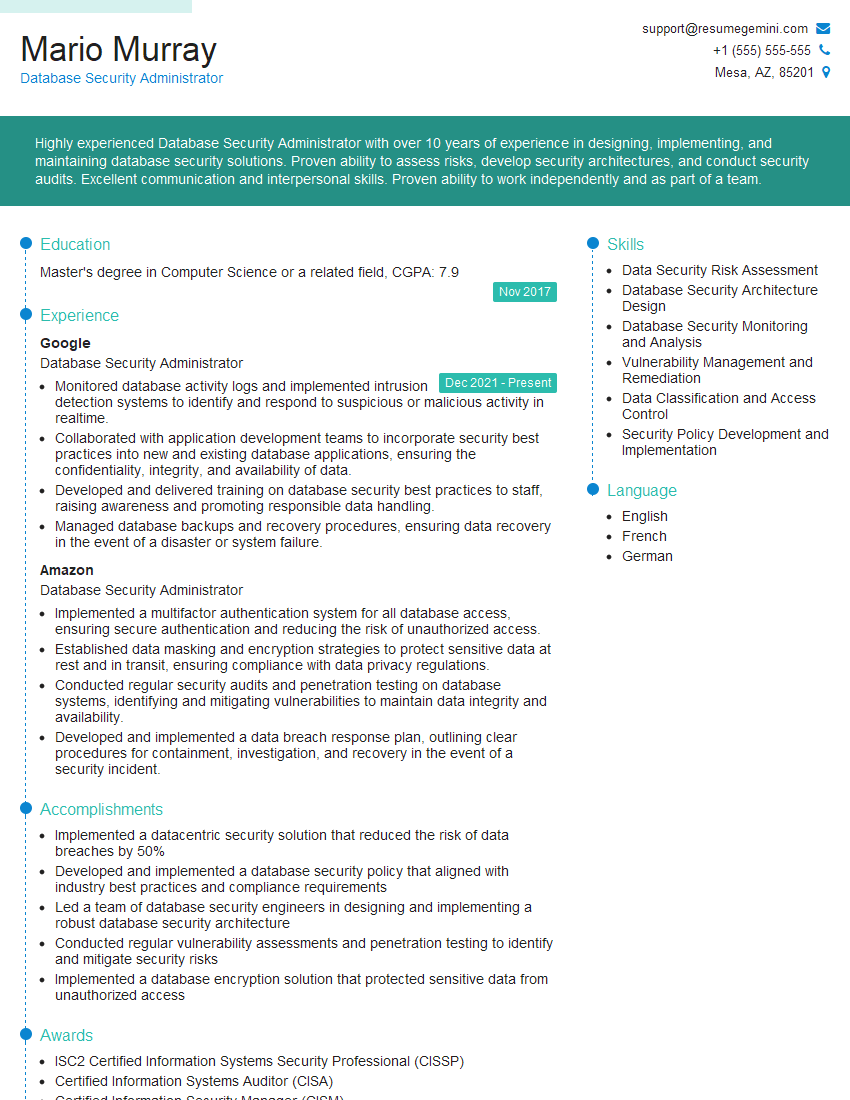
Database Security Administrator Resume Sample

Cryptographer Resume Sample

IT Security Specialist Resume Sample
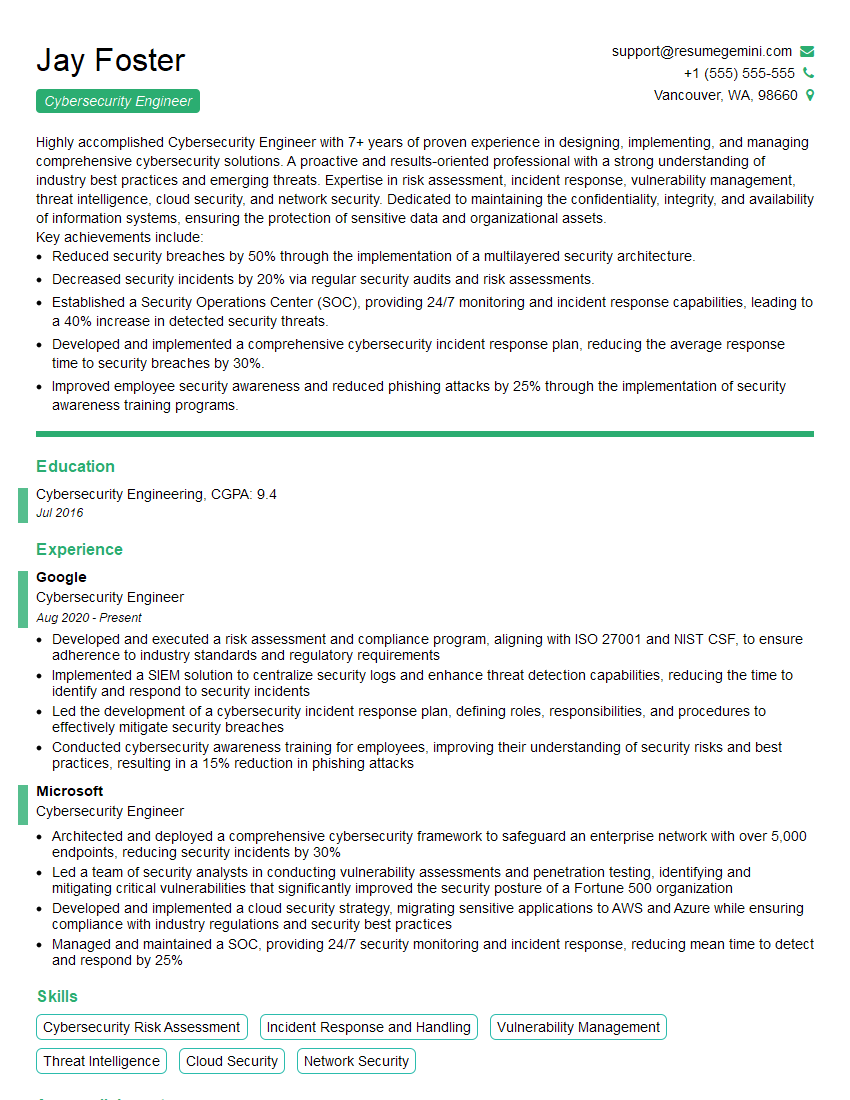
Cybersecurity Engineer Resume Sample
Explore more articles
Users Rating of Our Blogs
Share Your Experience
We value your feedback! Please rate our content and share your thoughts (optional).
What Readers Say About Our Blog
Very informative content, great job.
good