The thought of an interview can be nerve-wracking, but the right preparation can make all the difference. Explore this comprehensive guide to Boat and Vehicle Operation interview questions and gain the confidence you need to showcase your abilities and secure the role.
Questions Asked in Boat and Vehicle Operation Interview
Q 1. Describe your experience operating different types of boats.
My experience encompasses a wide range of vessels, from small recreational crafts like outboard-powered dinghies and center console fishing boats to larger inboard-powered yachts and even commercial passenger vessels. I’ve operated both single-engine and twin-engine boats, navigating various water conditions, including calm inland lakes, rough coastal waters, and even open ocean passages. For example, I spent a summer captaining a 30-foot sailboat, chartering it for coastal cruises, requiring adept handling of sails and navigation in variable winds. My experience also includes operating jet boats, understanding their unique handling characteristics and the importance of maintaining safe distances from shorelines. This diverse experience has honed my skills in boat handling, seamanship, and safety procedures, allowing me to adapt to different vessel types and operational environments.
Q 2. Explain your understanding of navigation rules and regulations.
My understanding of navigation rules and regulations is comprehensive and adheres to the International Regulations for Preventing Collisions at Sea (COLREGs), as well as local and national regulations. I’m familiar with the rules of the road, including the use of navigational aids like buoys and lights, proper signaling, and safe passage procedures. Understanding right-of-way rules between different types of vessels is crucial, as is maintaining a safe speed in congested areas and restricted waterways. For instance, I know the importance of maintaining a proper lookout at all times and utilizing radar and GPS navigation systems effectively. I’m also knowledgeable about various charts and publications, ensuring I’m aware of any restrictions or hazards in a given area. Regular refresher courses keep my knowledge updated and help me respond to evolving navigational challenges.
Q 3. How do you handle emergency situations on a boat?
Handling emergencies on a boat demands quick thinking and efficient execution. My approach follows a structured process: first, assess the situation – what’s the nature of the emergency? Then, I prioritize safety – securing the vessel and anyone onboard. This might involve deploying safety equipment like life jackets and flares or initiating emergency communications using VHF radio. Next, I implement appropriate damage control measures, which could involve anything from bailing water to repairing a minor engine malfunction. Finally, I coordinate rescue if necessary, contacting emergency services and providing them with accurate location details. For example, during a sudden squall while sailing, I immediately reduced sail, deployed the storm jib, and communicated our situation to other vessels in the area. Regular safety drills and emergency preparedness plans are crucial for effective response in any boat emergency.
Q 4. What are the different types of marine engines and their maintenance?
Marine engines are broadly classified into inboard, outboard, and sterndrive types. Inboard engines are located within the hull, typically diesel or gasoline. Outboards are mounted on the transom, mostly gasoline-powered. Sterndrives are a hybrid, with the engine inboard and a drive unit extending to the propeller. Maintenance varies based on engine type, but generally includes regular oil changes, filter replacements, and inspection of belts, hoses, and other components. Diesel engines require more rigorous maintenance due to their complex fuel systems. Regular servicing, following manufacturer’s recommendations, is critical for preventing costly breakdowns and ensuring safe operation. For example, I’m familiar with diagnosing common problems like overheating, fuel starvation, and electrical faults, and I’m proficient in performing routine maintenance tasks and minor repairs.
Q 5. What safety procedures do you follow when operating a boat?
Safety is paramount when operating any boat. My procedures begin with a pre-departure check, ensuring all safety equipment is onboard and functional, including life jackets, flares, a first-aid kit, and a VHF radio. I always review weather forecasts and plan my route accordingly. While underway, I maintain a sharp lookout for other vessels, navigational hazards, and changing weather conditions. I enforce strict adherence to navigation rules and speed limits. I also ensure passengers understand and follow safety instructions, and all passengers are wearing life jackets in appropriate conditions. Post-trip, I thoroughly inspect the vessel, addressing any maintenance issues immediately. This meticulous approach minimizes risk and ensures a safe boating experience for everyone.
Q 6. Describe your experience with different types of vehicles.
My vehicle operation experience includes cars, vans, trucks, and forklifts. I’m comfortable driving various types of cars, from sedans to SUVs, and have experience with manual and automatic transmissions. I’ve also operated light and medium-duty trucks, including experience with towing trailers. This experience extends to operating forklifts safely and efficiently, following all workplace safety regulations. Each type of vehicle presents unique challenges and requires a different skill set, but the core principles of safe operation remain the same: defensive driving, awareness of surroundings, and compliance with traffic laws.
Q 7. What are your familiarization with various vehicle types and their operating procedures?
My familiarity extends to understanding the specific operating procedures for different vehicle types. For example, operating a forklift safely requires understanding load capacity, stability concerns, and appropriate maneuvering techniques in tight spaces. Driving a truck, especially one with a trailer, necessitates knowledge of proper hitching, maneuvering, and braking techniques. I also understand the differences in handling characteristics between various vehicle types – the responsiveness of a sports car differs significantly from that of a heavy-duty truck. Regular vehicle inspections and preventative maintenance are crucial for reliable and safe vehicle operation. I prioritize adhering to all safety regulations and maintenance schedules appropriate for each vehicle type to ensure safety and efficiency.
Q 8. How do you ensure vehicle maintenance and safety checks?
Ensuring vehicle maintenance and safety checks is paramount for safe and efficient operation. My approach is proactive and systematic, following a checklist approach combined with regular observation. This involves both pre-trip and post-trip inspections, as well as scheduled maintenance based on manufacturer recommendations and operational hours.
- Pre-trip Inspection: This includes checking fluid levels (oil, coolant, brake fluid, power steering fluid), tire pressure and condition, lights, wipers, horn, and overall body integrity for any damage. I also examine the vehicle’s undercarriage for leaks or damage.
- Post-trip Inspection: After each operation, I check for any new leaks, unusual noises, or signs of wear and tear. This helps identify potential issues early before they escalate.
- Scheduled Maintenance: This involves adhering to the manufacturer’s recommended maintenance schedule for oil changes, filter replacements, belt and hose inspections, and other necessary services. I meticulously maintain detailed records of all maintenance activities.
- Documentation: All inspections and maintenance activities are documented meticulously, ensuring traceability and compliance with regulations.
For example, during a recent pre-trip inspection of a delivery truck, I noticed a slight leak in the power steering fluid. This was immediately addressed, preventing a potential breakdown and ensuring safe operation.
Q 9. Describe your experience with different types of vehicle maintenance.
My experience encompasses a wide range of vehicle maintenance, from routine checks to more complex repairs. I’m proficient in performing preventative maintenance on various vehicle types including cars, trucks, and boats. This experience includes:
- Routine Maintenance: Oil changes, filter replacements (air, fuel, oil), fluid level checks, tire rotations and replacements, belt and hose inspections, and battery checks.
- Brake System Maintenance: Inspecting brake pads, rotors, calipers, and fluid levels. I’m comfortable performing brake pad replacements when necessary.
- Engine System Maintenance: Diagnosing and troubleshooting engine-related problems, including spark plug replacements, ignition system checks, and fuel system inspections.
- Electrical System Maintenance: Troubleshooting electrical issues, including lighting systems, starting systems, and charging systems. I possess the ability to diagnose and repair minor electrical problems.
- Boat Specific Maintenance: In the marine environment, I’m experienced in maintaining outboard and inboard engines, checking propeller shafts, performing hull cleaning, and ensuring proper operation of navigational equipment. This includes regular cleaning and lubrication of moving parts to prevent corrosion.
For instance, while working on a fishing boat, I identified a problem with the fuel injector system through systematic diagnostic procedures. This proactive maintenance prevented major engine damage and costly repairs.
Q 10. How do you handle difficult driving conditions (e.g., bad weather, heavy traffic)?
Handling challenging driving conditions requires a blend of skill, experience, and caution. My approach emphasizes defensive driving techniques, anticipating potential hazards and reacting appropriately.
- Bad Weather: In bad weather, I reduce speed significantly, increase following distance, use headlights, and avoid sudden maneuvers. I pay close attention to road conditions and adjust my driving accordingly. For instance, on a rainy day, I would increase my following distance to give myself more time to react to unexpected braking.
- Heavy Traffic: In heavy traffic, I maintain a safe following distance, avoid abrupt braking or acceleration, and signal my intentions clearly. I anticipate traffic flow and look for opportunities to smoothly merge or change lanes. I’m also mindful of blind spots and constantly scan my surroundings.
- Low Visibility: In low-visibility conditions (fog, snow, night driving), I use low beam headlights, reduce speed, and increase following distance. I rely heavily on my senses and use caution.
In a real-world scenario, during a heavy snowstorm, I successfully navigated a challenging mountain pass by employing these strategies and prioritising safety over speed.
Q 11. Explain your understanding of driving regulations and laws.
I have a comprehensive understanding of driving regulations and laws, which is essential for safe and legal operation of any vehicle. This knowledge encompasses:
- Traffic Laws: I am familiar with speed limits, right-of-way rules, traffic signals, and other basic traffic regulations.
- Vehicle Regulations: I understand regulations concerning vehicle maintenance, licensing, registration, and safety equipment (seatbelts, child restraints, etc.).
- Commercial Vehicle Regulations (if applicable): I am aware of specific regulations for commercial vehicles, including hours of service, weight limits, and cargo securement.
- Specific Regional Laws: I am always aware of any specific state/regional laws or regulations concerning driving.
For example, I am always aware of weight limits for commercial vehicles and ensure that cargo is properly secured and distributed to prevent overloading and accidents.
Q 12. How do you handle emergency situations while driving a vehicle?
Handling emergency situations requires quick thinking, decisive action, and a calm demeanor. My approach is based on a structured process:
- Assess the Situation: Quickly evaluate the emergency – what is happening, where am I, and what are the potential dangers?
- Activate Emergency Procedures: If needed, I activate hazard lights, pull over safely to the side of the road, or take other appropriate actions depending on the nature of the emergency.
- Contact Emergency Services: If necessary, I contact emergency services (police, fire department, ambulance) and provide accurate location information.
- Provide Assistance (if safe): If it’s safe to do so and I am capable, I will render assistance to those involved in the accident.
- Documentation: After the emergency, I document the incident and provide details to relevant authorities.
In one incident, I had to safely pull over to the side of the road due to a sudden tire blowout. By following this procedure, I avoided further complications and ensured my safety and that of other drivers.
Q 13. Describe your experience with loading and unloading cargo.
My experience with loading and unloading cargo spans diverse settings and cargo types, emphasizing both efficiency and safety. I’m familiar with various loading techniques and equipment depending on the type of cargo and vehicle.
- Manual Handling: I’m proficient in safely handling various types of cargo, using appropriate lifting techniques to avoid injury. This includes using lifting aids when necessary.
- Equipment Operation: I’m experienced in operating various loading and unloading equipment such as forklifts, pallet jacks, and cranes (with appropriate certifications).
- Cargo Organization: I prioritize efficient cargo organization to optimize space utilization and minimize shifting during transit.
- Weight Distribution: I ensure proper weight distribution to maintain vehicle stability and prevent overloading.
For example, while working for a logistics company, I efficiently loaded and unloaded pallets using a forklift, ensuring the cargo was properly secured and distributed to maintain balance and stability.
Q 14. What is your knowledge of different types of cargo securing techniques?
Securement of cargo is critical for preventing accidents and damage during transit. My understanding includes various techniques, selected based on the nature of the cargo and the transportation method.
- Strapping: Using straps to secure cargo to the vehicle. Different types of straps are chosen based on weight and type of cargo.
- Tie-downs: Employing tie-downs to secure individual items or groups of items to prevent shifting.
- Blocking and Bracing: Using blocks and braces to prevent cargo from shifting or collapsing. This is particularly important for loose or unstable items.
- Shrink Wrapping: Using plastic shrink wrap to bundle and protect palletized goods.
- Load Bars and Nets: Utilizing load bars and cargo nets to prevent smaller items from shifting within a vehicle.
For instance, when transporting fragile equipment, I would utilize a combination of blocking and bracing along with straps to ensure that the cargo remained secure and undamaged throughout transit.
Q 15. How do you ensure the safety of cargo during transportation?
Ensuring cargo safety during transportation involves a multi-faceted approach encompassing proper securing, environmental protection, and documentation. Think of it like building a sturdy house – you need a strong foundation and careful attention to detail.
Securement: Cargo must be properly secured to prevent shifting or damage during transit. This involves using appropriate lashing techniques, including straps, chains, or nets, depending on the cargo type and mode of transportation. For instance, on a boat, we’d use specialized marine-grade straps and ensure proper weight distribution to prevent the vessel from becoming unstable. For vehicles, we’d utilize tie-downs and ensure the cargo is evenly distributed and doesn’t exceed the vehicle’s weight capacity. Incorrect securing can lead to accidents and significant damage.
Environmental Protection: Depending on the cargo, special measures might be necessary to protect it from the elements (sun, rain, extreme temperatures) or prevent spillage. This could involve using tarps, waterproof containers, or climate-controlled transport. For example, transporting sensitive electronics would require climate-controlled containers to maintain optimal temperature and humidity levels during both boat and land transport.
Documentation: Comprehensive documentation is crucial. This includes inventory lists, bills of lading, and any specific handling instructions. This paper trail is vital for insurance claims, tracking, and regulatory compliance. For example, hazardous materials require specific documentation detailing the type of material, its hazards, and the safety precautions taken during transport.
Career Expert Tips:
- Ace those interviews! Prepare effectively by reviewing the Top 50 Most Common Interview Questions on ResumeGemini.
- Navigate your job search with confidence! Explore a wide range of Career Tips on ResumeGemini. Learn about common challenges and recommendations to overcome them.
- Craft the perfect resume! Master the Art of Resume Writing with ResumeGemini’s guide. Showcase your unique qualifications and achievements effectively.
- Don’t miss out on holiday savings! Build your dream resume with ResumeGemini’s ATS optimized templates.
Q 16. Describe your experience with GPS navigation systems.
My experience with GPS navigation systems spans over 10 years, encompassing various applications in both boat and vehicle operation. I’m proficient in using both handheld and integrated systems. It’s more than just getting from point A to point B; it’s about optimizing the journey for safety and efficiency.
Route Planning: I utilize GPS to plan optimal routes, considering factors like water depth (for boats), traffic conditions (for vehicles), and potential hazards. For example, I use nautical charts integrated with my boat’s GPS to avoid shallow areas or reefs, and real-time traffic data to circumvent congestion on the road.
Navigation & Tracking: I rely on GPS for precise navigation, especially in unfamiliar waters or areas with poor visibility. The tracking capabilities allow for monitoring of progress and provide valuable data for future route planning. In cases of emergencies, GPS tracking can be essential for search and rescue operations.
Integration with other systems: I am familiar with integrating GPS with other onboard systems, such as electronic charts, autopilot, and vessel monitoring systems (VMS), increasing overall safety and operational efficiency. For instance, the GPS data can be linked to the boat’s autopilot to maintain a pre-programmed course.
Q 17. How do you plan routes efficiently and safely?
Efficient and safe route planning requires a systematic approach that considers several factors, blending technology with practical knowledge. It’s similar to planning a complex project, requiring careful consideration of different aspects to avoid unforeseen delays or problems.
Destination & Constraints: First, I identify the exact destination and any constraints – weight limits for bridges, water depth restrictions, hazardous areas, etc. For boats, I’d consult nautical charts and tide tables. For vehicles, I’d check for road closures or construction zones.
Route Options: Using GPS and other mapping tools, I explore several route options, comparing travel time, distance, fuel consumption, and potential risks. I might use online tools that factor in real-time traffic conditions.
Risk Assessment: I conduct a risk assessment, identifying potential hazards and developing contingency plans. This includes preparing for unexpected weather changes, mechanical failures, and navigational challenges.
Optimization: The chosen route needs to be optimized for both efficiency and safety. Sometimes, a slightly longer route might be safer in the long run.
Q 18. Explain your understanding of fuel efficiency and its impact on cost.
Fuel efficiency is paramount in transportation, directly impacting operational costs and environmental impact. It’s like managing your household budget – reducing fuel consumption translates to more money saved.
Understanding Factors: Fuel efficiency is influenced by factors such as vessel/vehicle type, engine condition, load, speed, weather conditions, and even route planning. For boats, hull condition and propeller efficiency play a significant role. For vehicles, tire pressure and driving habits matter.
Strategies for Improvement: Several strategies can improve fuel efficiency. These include regular maintenance, optimized speed, proper loading, and efficient route planning. For example, maintaining optimal tire pressure and avoiding aggressive acceleration and braking can significantly impact fuel consumption in vehicles. For boats, proper hull cleaning and regular engine maintenance are vital.
Cost Impact: Fuel is a major operational expense. Improving fuel efficiency directly translates to lower costs, improving profitability and competitiveness. Even a small percentage increase in fuel efficiency can accumulate to significant savings over time.
Q 19. What are your strategies for managing time and meeting deadlines?
Time management is crucial in transportation. Meeting deadlines requires proactive planning and efficient execution, similar to managing a project with multiple tasks.
Prioritization: I prioritize tasks based on urgency and importance, focusing on critical deadlines first. This is often done using task management tools or simply making a detailed to-do list.
Planning & Scheduling: I develop detailed schedules, anticipating potential delays and incorporating buffer time. This includes factoring in loading/unloading time, potential traffic or weather delays, and unforeseen issues.
Flexibility: I remain flexible and adaptable to unforeseen circumstances, adjusting schedules as needed. This could involve rerouting to avoid traffic or making quick adjustments to the loading process.
Communication: Clear and timely communication with dispatchers and clients is essential to manage expectations and avoid misunderstandings. If delays occur, I proactively communicate to inform stakeholders.
Q 20. How do you communicate effectively with dispatchers and other personnel?
Effective communication is the backbone of safe and efficient transportation. It’s about ensuring everyone is on the same page, much like a well-coordinated orchestra.
Clear & Concise: I use clear and concise language, avoiding jargon. I confirm instructions and provide regular updates to avoid misunderstandings.
Active Listening: I actively listen to instructions and questions, ensuring I fully understand the requirements before proceeding. I ask clarifying questions when needed.
Various Communication Methods: I utilize various communication methods, including two-way radios, cell phones, and onboard computer systems, selecting the most appropriate method for the situation. For example, in an emergency, a radio would be the quickest method to reach dispatch.
Professionalism: I maintain a professional and respectful demeanor in all communications.
Q 21. Describe your experience with using onboard computer systems.
My experience with onboard computer systems is extensive. They’ve become indispensable tools, transforming transportation from a largely manual process to a technologically advanced one.
Navigation Systems: I utilize onboard GPS systems for route planning, navigation, and tracking, as discussed earlier.
Vessel Monitoring Systems (VMS): For boats, VMS provides real-time data on vessel location, speed, course, and other critical parameters. This data is crucial for safety monitoring and compliance.
Engine Management Systems: These systems monitor engine performance, providing data on fuel consumption, engine temperature, and other critical parameters for maintenance and operational efficiency.
Communication Systems: Onboard computers often integrate communication systems, enabling seamless communication with dispatchers, clients, and other relevant personnel.
Proficiency with these systems enhances safety, efficiency, and operational effectiveness. For example, early warnings from engine management systems can prevent potential breakdowns, minimizing delays and costs.
Q 22. What is your understanding of log books and other documentation required?
Logbooks and other documentation are crucial for maintaining a comprehensive record of operations, ensuring compliance, and facilitating efficient troubleshooting. For boats, this typically includes a vessel log detailing voyages, maintenance, repairs, and any incidents. For vehicles, it might involve a driver’s log indicating hours of operation, routes, and cargo details. Other essential documentation might include:
- Maintenance records: Detailed accounts of scheduled and unscheduled maintenance, repairs, and part replacements for both boats and vehicles.
- Safety certificates and inspections: Evidence of regular inspections, certifications, and adherence to safety standards.
- Insurance documents: Proof of insurance coverage for both the vessel/vehicle and any associated liabilities.
- Crew/driver licenses and qualifications: Verifying the competence of personnel operating the equipment.
- Cargo manifests (for vehicles): Lists of goods transported, including quantities and destinations.
- Navigation charts and logs (for boats): Records of planned and actual routes, navigational data, and weather conditions.
Think of these documents as a detailed history of your operations – essential for auditing, insurance claims, and problem resolution. Maintaining them meticulously is vital for professional responsibility and legal compliance.
Q 23. How do you maintain accurate records of your operations?
Maintaining accurate records requires a systematic approach. For both boat and vehicle operations, I utilize digital and paper-based systems depending on the specific context. Digital tools like dedicated logging apps or spreadsheets enable efficient data entry, storage, and analysis. Paper logs are used for immediate documentation when digital access is limited. My approach involves:
- Immediate recording: All relevant data is recorded as soon as possible after an event to maximize accuracy and minimize memory lapses. For example, immediately after a boat trip, I’d note the start and end times, route, weather conditions, and any noteworthy events.
- Clear and concise entries: Entries are written clearly, using standardized terminology and units of measurement. Avoid ambiguous language. Think ‘Engine RPM 2500, speed 15 knots’ instead of ‘Engine running fast, boat moving pretty quickly.’
- Regular review and verification: Recorded data is regularly reviewed for accuracy and completeness. Inconsistencies are investigated and resolved.
- Secure storage: Both digital and paper records are securely stored to prevent loss or damage. Regular backups are crucial for digital data.
- Version control (for digital logs): Maintaining different versions or backups of files, allowing for easy retrieval of past entries.
This organized approach guarantees the reliability and integrity of my operational records, crucial for both accountability and operational efficiency.
Q 24. Explain your approach to problem-solving in challenging operating situations.
My problem-solving approach is rooted in a structured, systematic methodology. I follow a process that prioritizes safety, efficiency, and thoroughness. In a challenging situation, my steps would be:
- Assessment: First, I carefully assess the situation, identifying the root cause of the problem. This includes gathering all relevant information, considering potential contributing factors, and evaluating the risks involved.
- Prioritization: I prioritize tasks based on urgency and impact. Immediate safety concerns always come first.
- Resource allocation: I determine what resources (personnel, equipment, tools) are needed to resolve the issue efficiently.
- Implementation: I implement the chosen solution, closely monitoring its effectiveness.
- Review and adaptation: I evaluate the outcome, making necessary adjustments to the solution if it’s not achieving the desired result. Documentation of the problem and resolution is critical.
For example, if a boat engine fails at sea, I wouldn’t panic; I’d follow this systematic process. I’d assess the situation (engine failure, location, weather), prioritize safety (call for help, assess immediate risks), allocate resources (life rafts, communication equipment), implement a solution (attempt repairs, deploy distress signal), and then review the outcome (post-incident analysis to prevent recurrence).
Q 25. Describe your experience with working in a team environment.
I thrive in team environments. My experience includes collaboration on various projects involving both boat and vehicle operations, requiring effective communication, coordination, and shared responsibility. I believe in:
- Clear communication: Open and honest communication is key. I ensure everyone understands their roles, responsibilities, and expectations. I’m comfortable giving and receiving constructive feedback.
- Shared decision-making: I actively participate in discussions, contributing my expertise while valuing the perspectives of others. Decision-making is collaborative and transparent.
- Mutual respect: I treat all team members with respect, regardless of their role or experience. I foster a positive and inclusive work environment.
- Task delegation: I effectively delegate tasks based on individual strengths and skills, ensuring everyone feels valued and engaged.
- Conflict resolution: I proactively address conflicts through open communication and compromise, focusing on finding mutually agreeable solutions.
In a recent project involving a large vessel refit, my collaborative efforts with the engineering team led to the project’s successful and timely completion, exceeding initial expectations.
Q 26. How do you adapt to changing weather conditions and emergencies?
Adapting to changing weather conditions and emergencies requires constant vigilance, proactive planning, and a comprehensive understanding of risk management. My approach includes:
- Weather monitoring: Regularly checking weather forecasts before and during operations, adapting plans as needed. This involves utilizing reliable weather apps and services, and understanding local weather patterns.
- Emergency preparedness: Having well-defined emergency procedures in place, with all crew/drivers trained in their implementation. This includes knowing how to react to various scenarios, such as engine failure, collisions, or severe weather.
- Communication protocols: Utilizing clear communication protocols to keep all team members informed and coordinated during emergencies or sudden changes in weather. Maintaining constant communication through radios or other means.
- Risk assessment: Continuously assessing the risks posed by changing weather conditions, adjusting operational plans accordingly. Knowing when to postpone, delay or cancel operations.
- Safety equipment: Ensuring that all necessary safety equipment is readily available and in good working order. Regular inspection and maintenance of safety gear is paramount.
For instance, if a sudden storm develops while operating a boat, I would immediately activate the emergency procedures: Assess the situation, contact relevant authorities if needed, and prioritize getting the vessel to safety. This involves utilizing all available navigation and communication tools while ensuring crew safety.
Q 27. Explain your understanding of environmental regulations related to boat and vehicle operation.
Environmental regulations related to boat and vehicle operation are crucial to protect our ecosystems and prevent pollution. My understanding covers a wide range of regulations, including:
- Waste disposal: Proper disposal of waste, including sewage, garbage, and bilge water, adhering to specific regulations for both marine and terrestrial environments. This includes knowing where and how to dispose of waste responsibly.
- Fuel handling: Safe and responsible handling of fuels, preventing spills and adhering to regulations regarding fuel storage and discharge. Knowing procedures for spill prevention and response is essential.
- Noise pollution: Operating boats and vehicles at appropriate noise levels, minimizing disturbance to wildlife and nearby communities. Awareness of noise limits and control measures is vital.
- Emissions regulations: Adhering to regulations regarding emissions from both engines and vehicles, ensuring compliance with air quality standards. Understanding emissions controls and maintenance is crucial.
- Protected areas: Respecting regulations pertaining to protected areas, including speed restrictions, anchoring limitations, and prohibited zones. This involves knowing local regulations and restrictions on access.
Ignoring these regulations can lead to severe fines and environmental damage. Responsible operation is not only legally mandated but also ethically necessary.
Q 28. How do you prioritize safety and compliance while operating vehicles or boats?
Prioritizing safety and compliance is fundamental to my operational philosophy. It’s not simply about following rules; it’s about fostering a safety culture that permeates all aspects of operation. My approach involves:
- Pre-operation checks: Thorough pre-operation checks of both boats and vehicles to ensure they are in safe and operable condition. This includes verifying all systems and equipment function correctly.
- Risk assessment: Conducting regular risk assessments to identify potential hazards and implement preventative measures. This includes assessing weather conditions, route planning, and equipment limitations.
- Crew/driver training: Ensuring that all crew members and drivers are adequately trained in safe operating procedures, emergency response, and relevant regulations.
- Safety equipment: Maintaining readily accessible and functional safety equipment, including life jackets, fire extinguishers, first-aid kits, and communication devices.
- Compliance monitoring: Regularly monitoring compliance with all relevant regulations and standards. This includes reviewing documentation and ensuring that all procedures are followed correctly.
Safety and compliance are not optional extras; they are integral parts of my operational strategy. A commitment to safety ensures not only legal compliance but also protects the well-being of my team, the environment, and the assets I operate.
Key Topics to Learn for Boat and Vehicle Operation Interview
- Navigation & Chart Reading: Understanding nautical charts, GPS systems, compass use, and safe navigation practices for both boats and vehicles (e.g., off-road navigation).
- Safety Procedures & Regulations: Knowledge of relevant safety regulations, emergency procedures, and preventative maintenance for both watercraft and vehicles. This includes understanding safety equipment and its proper use.
- Mechanical Knowledge: Basic understanding of engine operation, maintenance, and troubleshooting for both boat and vehicle types relevant to the job description. This could include fuel systems, electrical systems, and basic repair procedures.
- Operational Techniques: Proficiency in maneuvering boats and vehicles in various conditions (e.g., docking, towing, driving in adverse weather). Demonstrating a practical understanding of efficient and safe operation is key.
- Load Management & Weight Distribution: Understanding the importance of proper weight distribution in both boats and vehicles for safe and efficient operation. This includes considerations for stability and handling.
- Environmental Awareness: Knowledge of environmental regulations and best practices related to boat and vehicle operation, such as minimizing environmental impact and adhering to pollution control measures.
- Communication & Teamwork: Highlighting experience in effective communication (e.g., using marine radios, maintaining situational awareness), teamwork, and following instructions from supervisors.
- Problem-Solving & Decision-Making: Be prepared to discuss instances where you had to troubleshoot equipment malfunctions, navigate unexpected challenges, or make critical decisions in high-pressure situations.
Next Steps
Mastering boat and vehicle operation opens doors to exciting career opportunities offering diverse challenges and professional growth. To maximize your job prospects, it’s crucial to present your skills and experience effectively. Crafting an ATS-friendly resume is essential for getting your application noticed by recruiters. ResumeGemini is a trusted resource to help you build a professional and impactful resume that showcases your abilities. They provide examples of resumes tailored to Boat and Vehicle Operation, ensuring your application stands out from the competition.
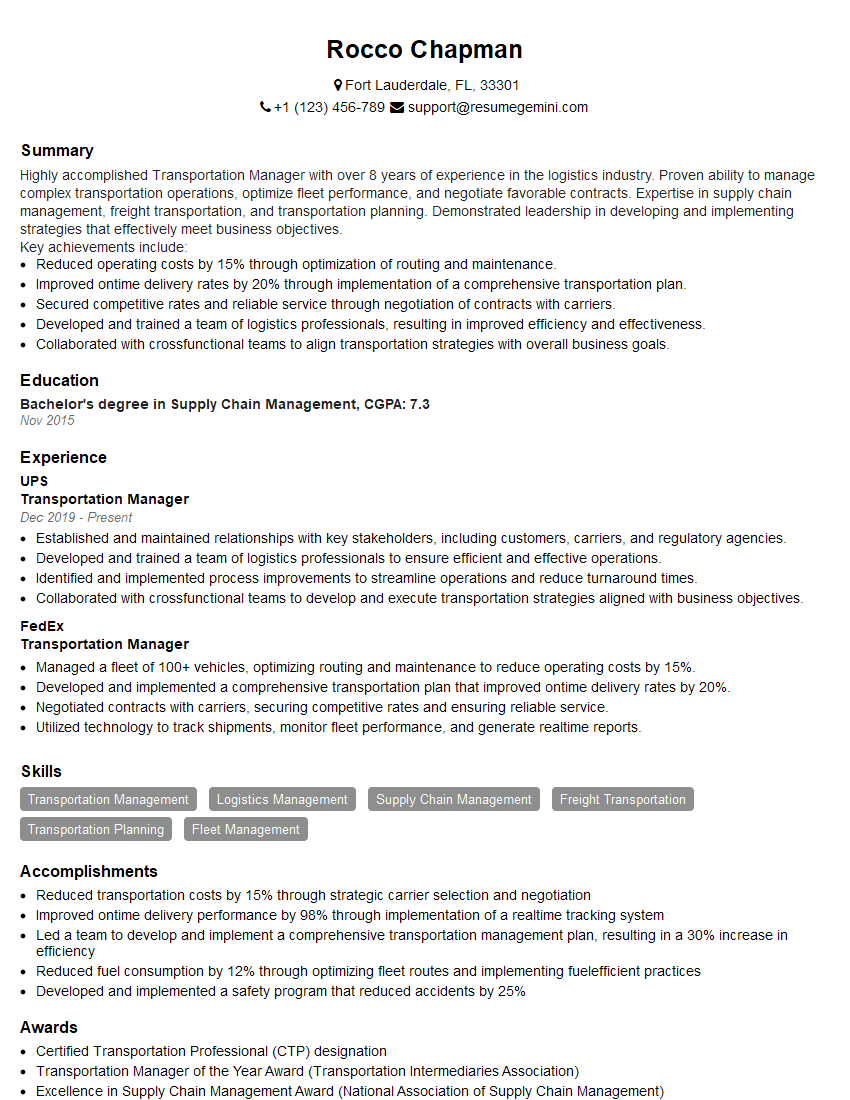
Transportation Manager Resume Sample
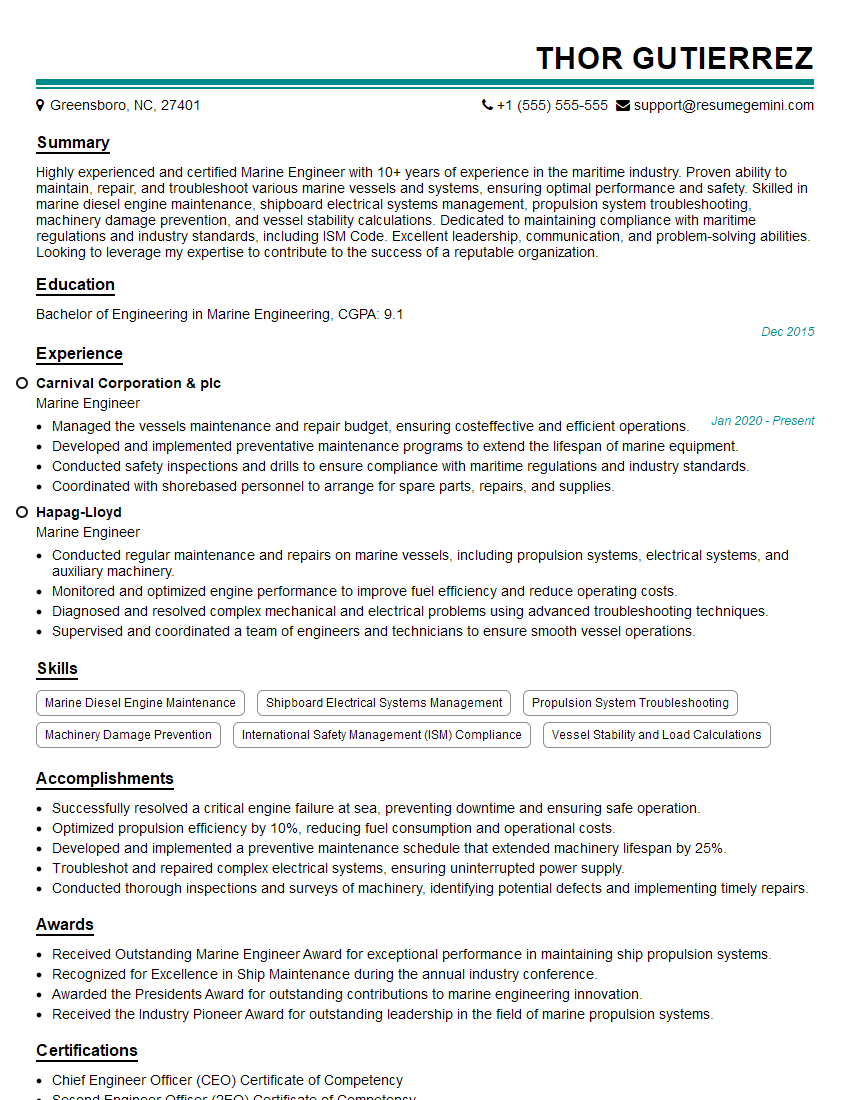
Marine Engineer Resume Sample

Crane Operator Resume Sample
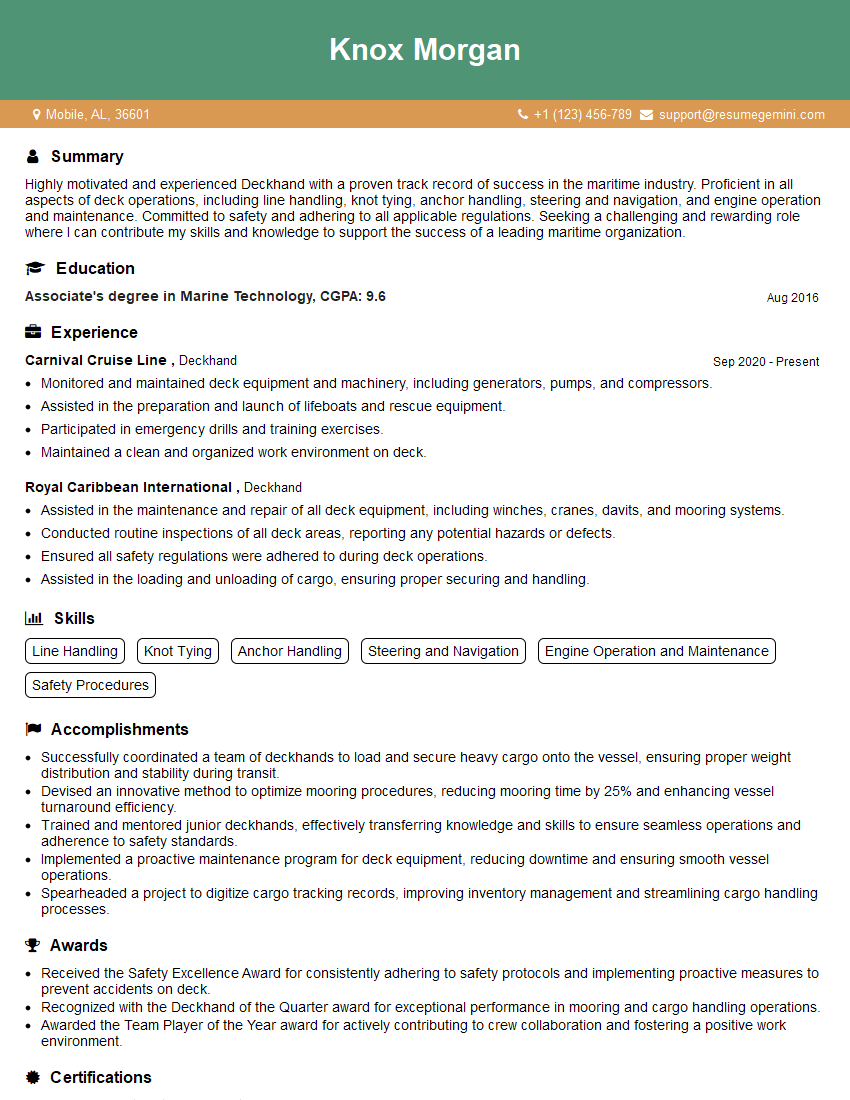
Deckhand Resume Sample
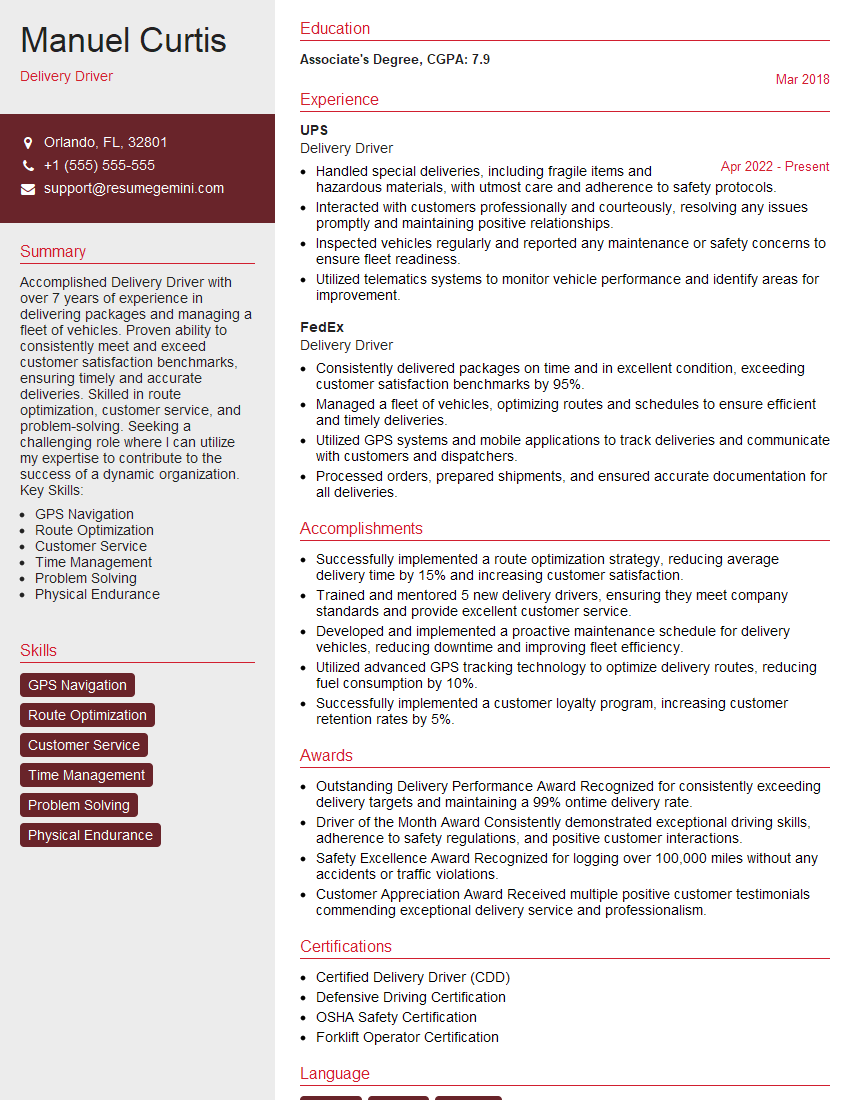
Delivery Driver Resume Sample
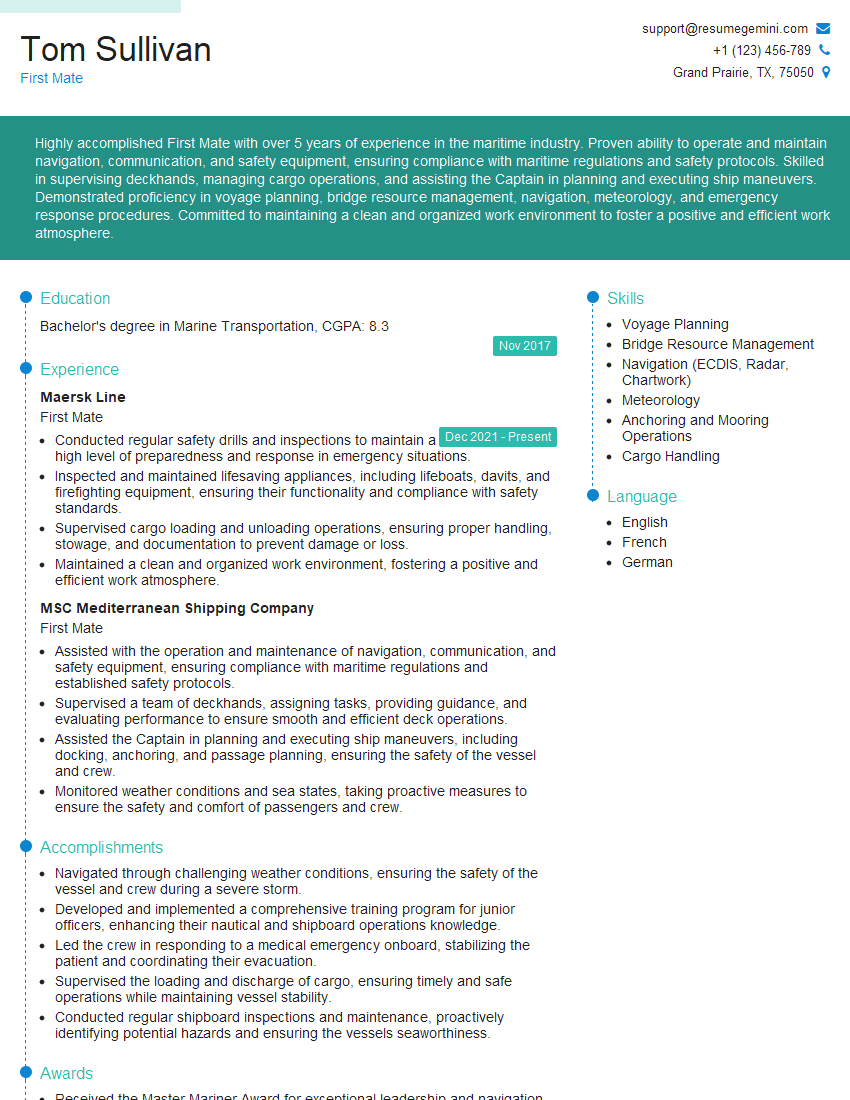
First Mate Resume Sample
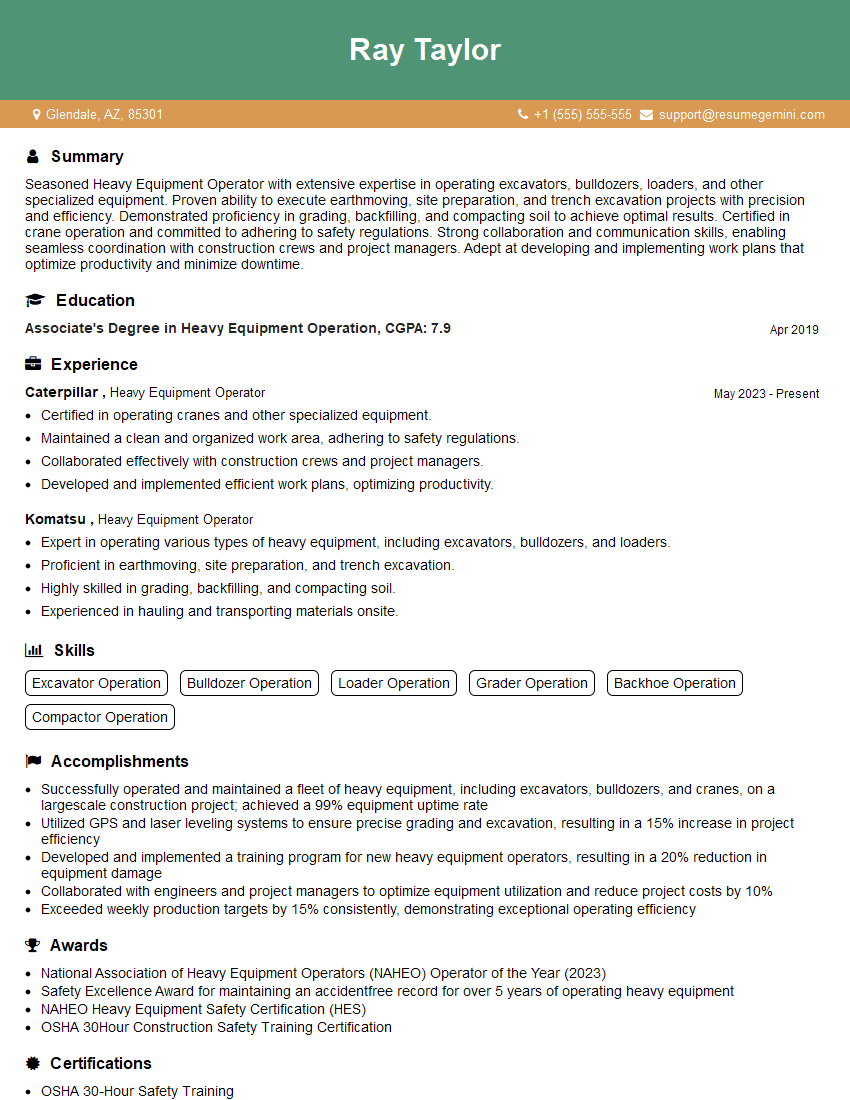
Heavy Equipment Operator Resume Sample
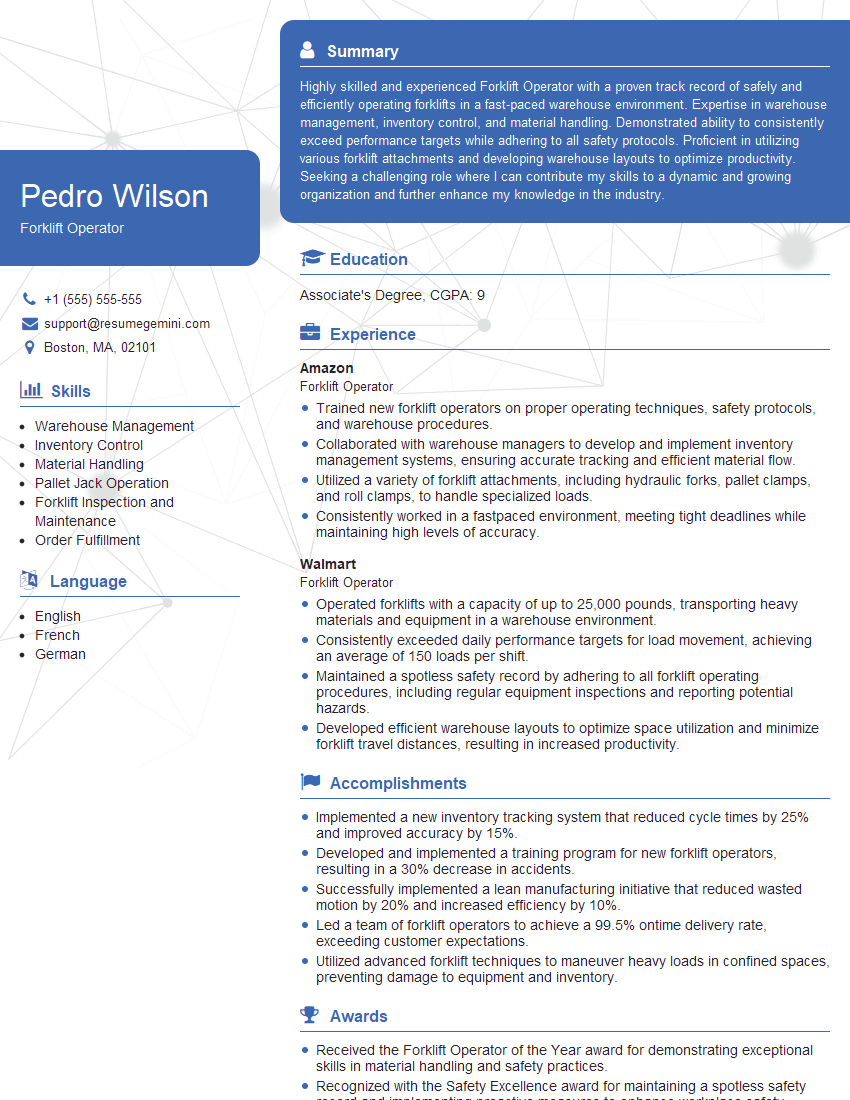
Forklift Operator Resume Sample
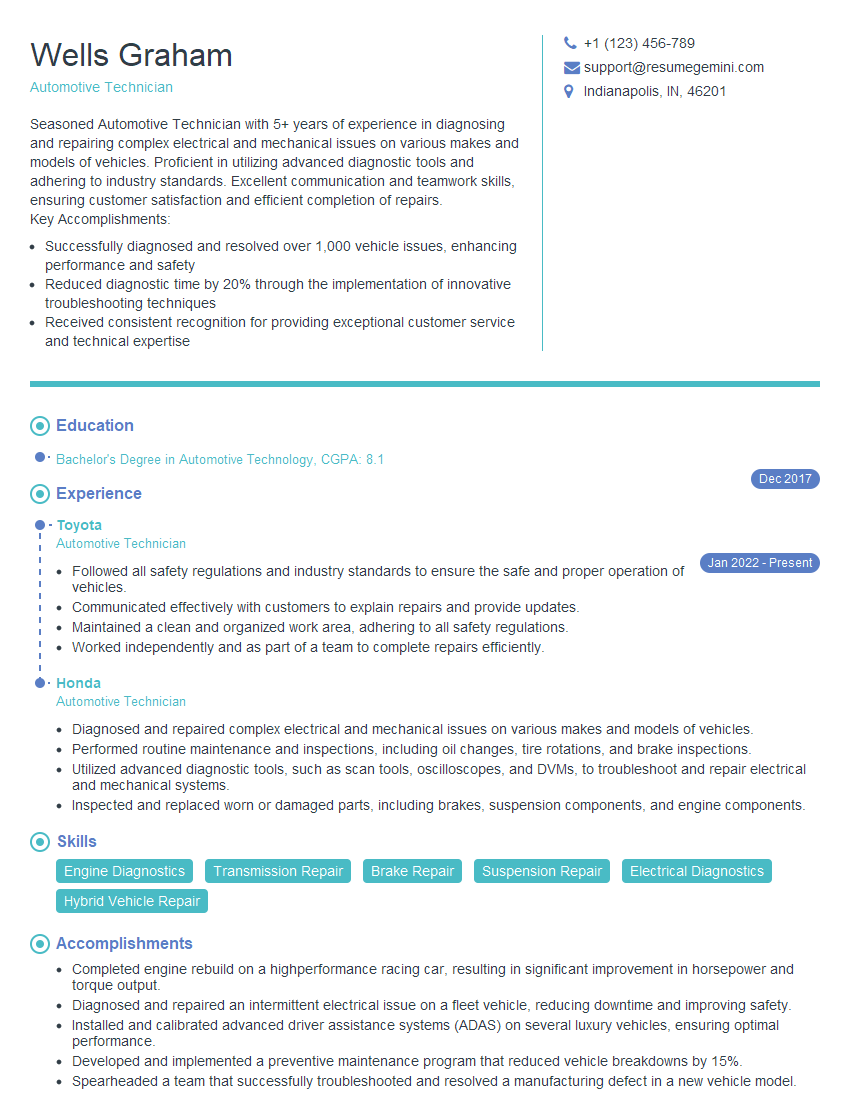
Automotive Technician Resume Sample
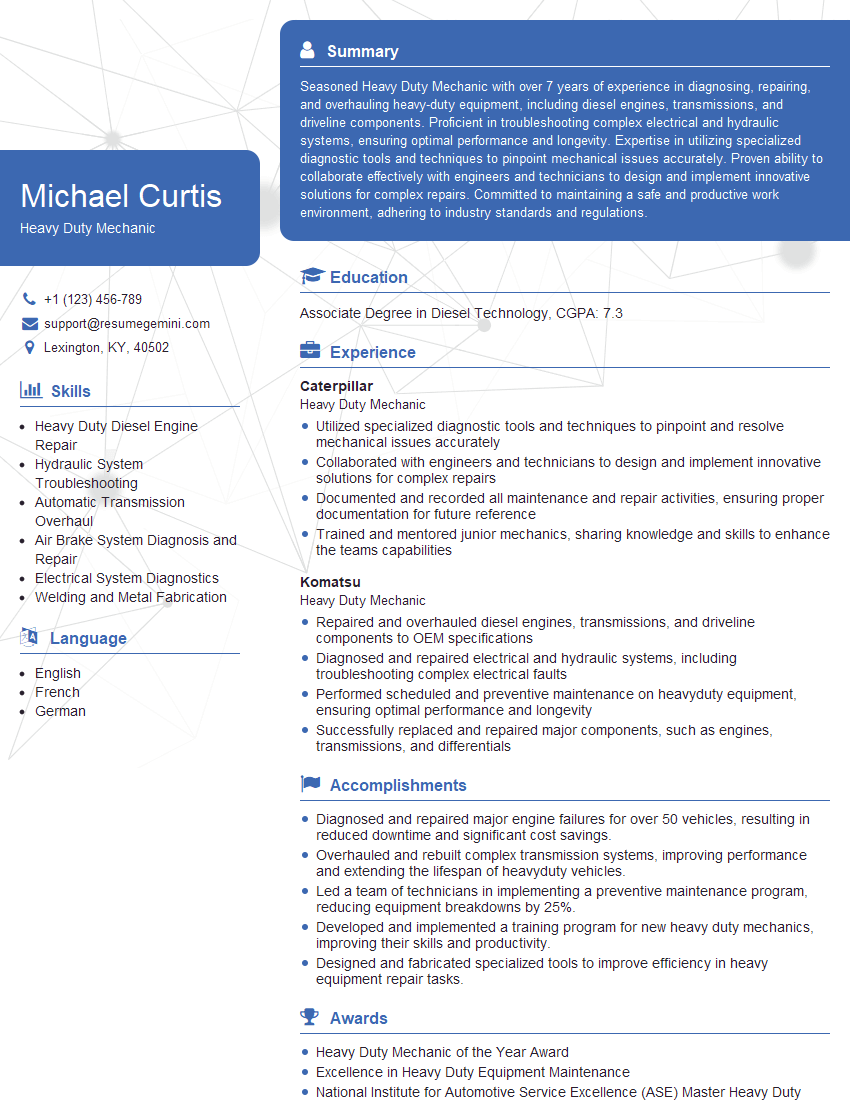
Heavy Duty Mechanic Resume Sample
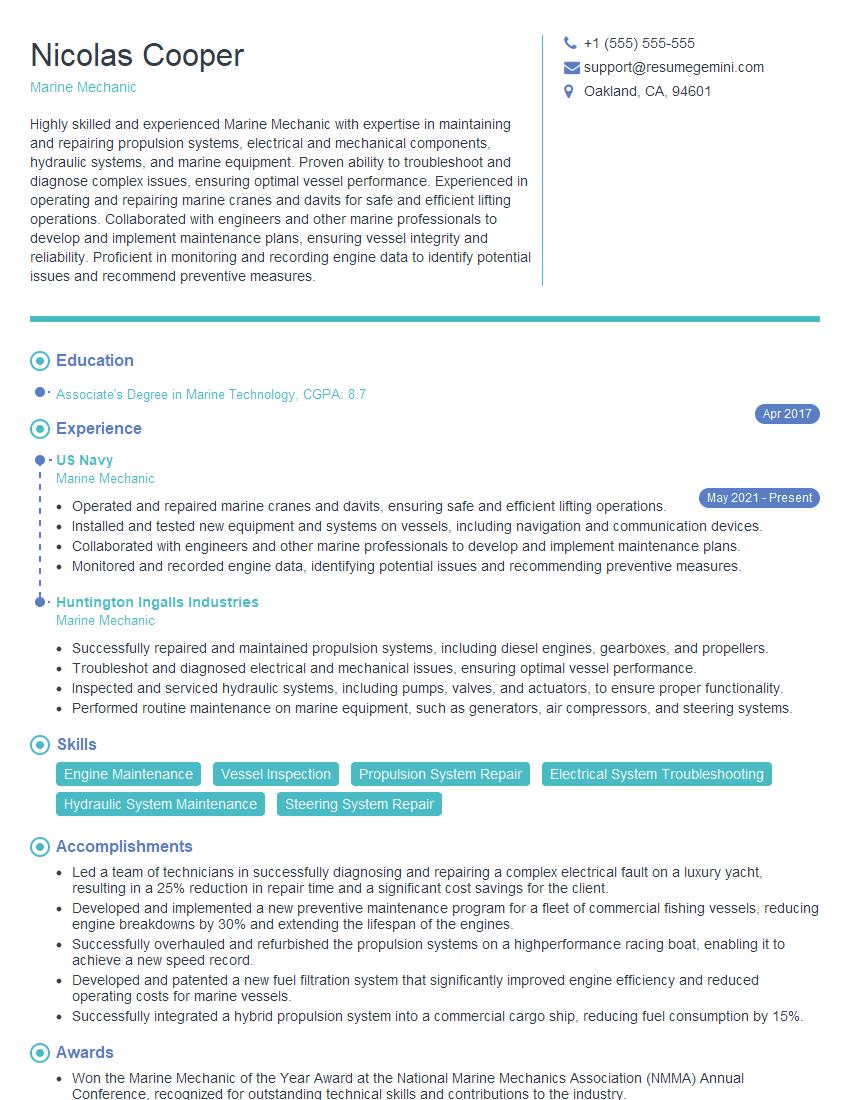
Marine Mechanic Resume Sample
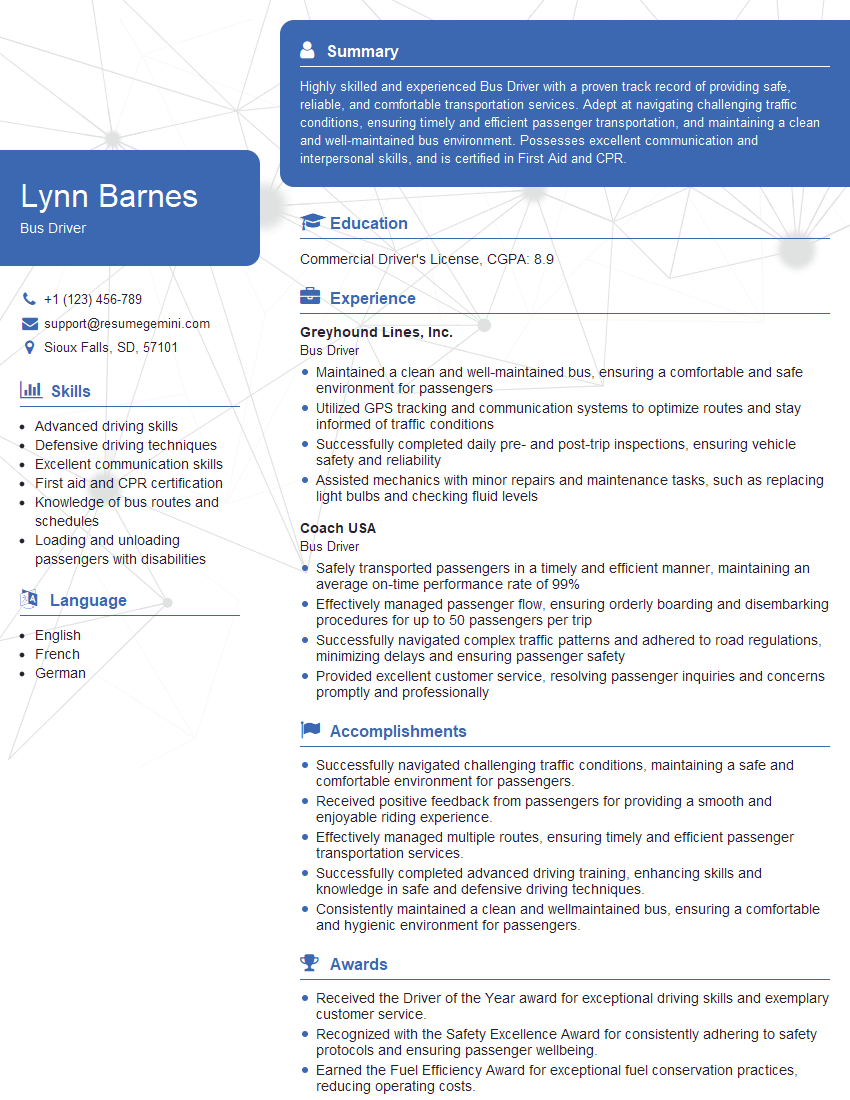
Bus Driver Resume Sample
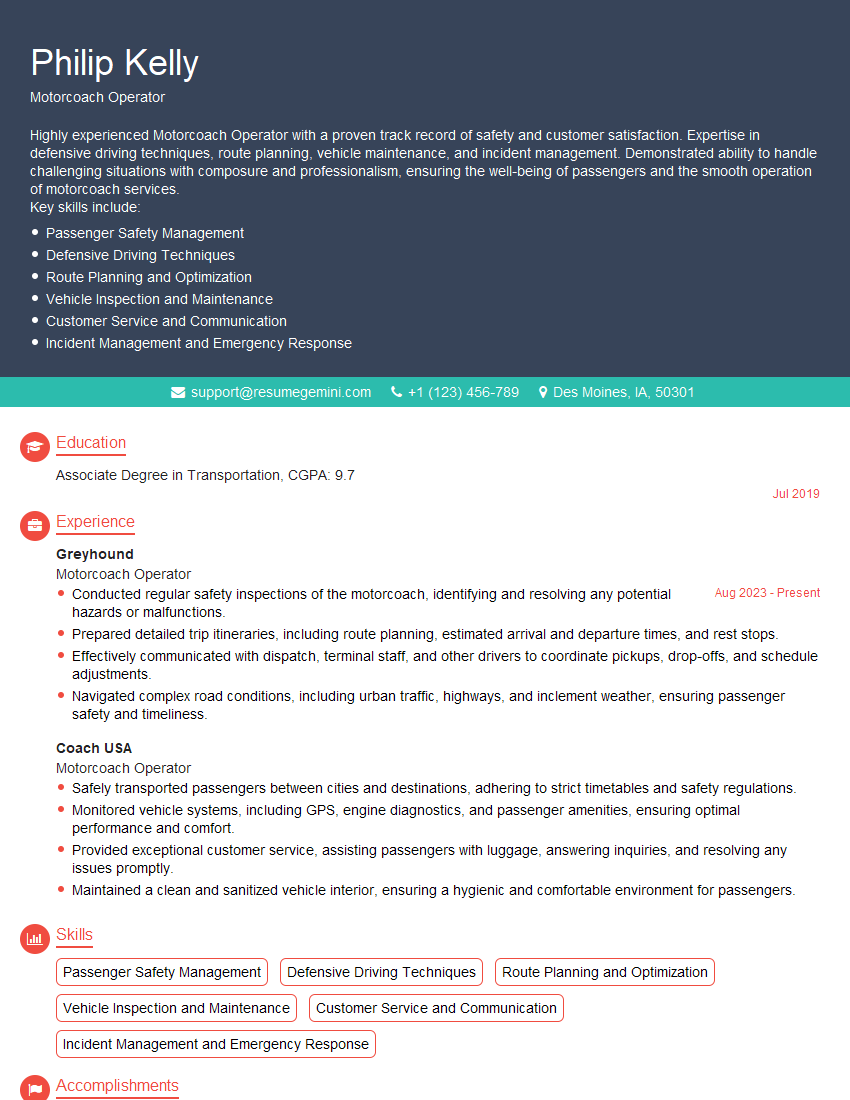
Motorcoach Operator Resume Sample
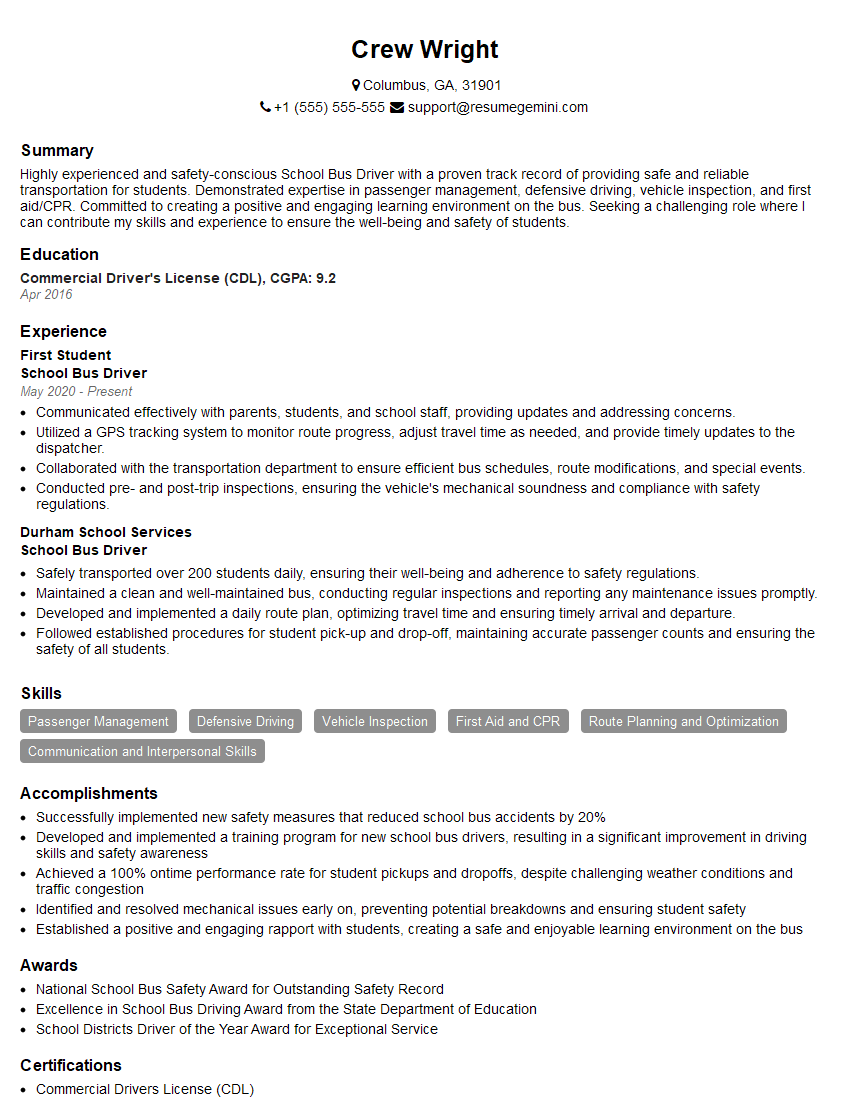
School Bus Driver Resume Sample
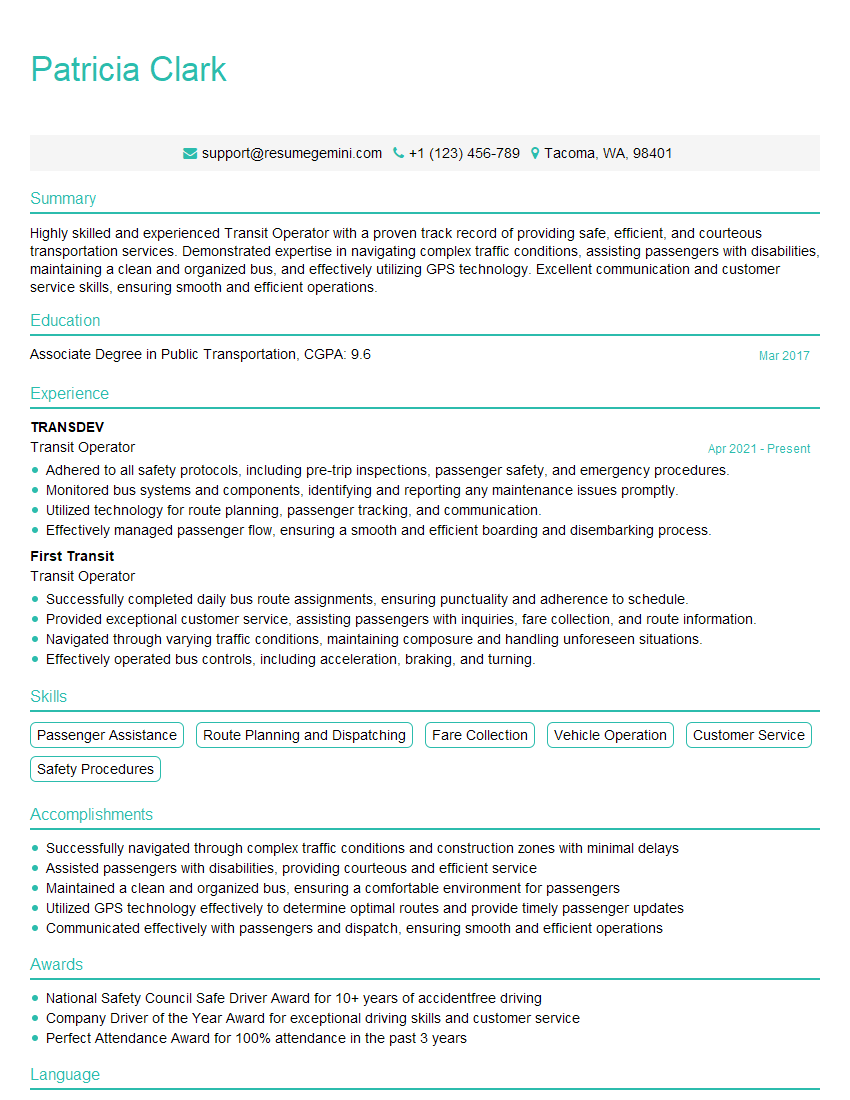
Transit Operator Resume Sample
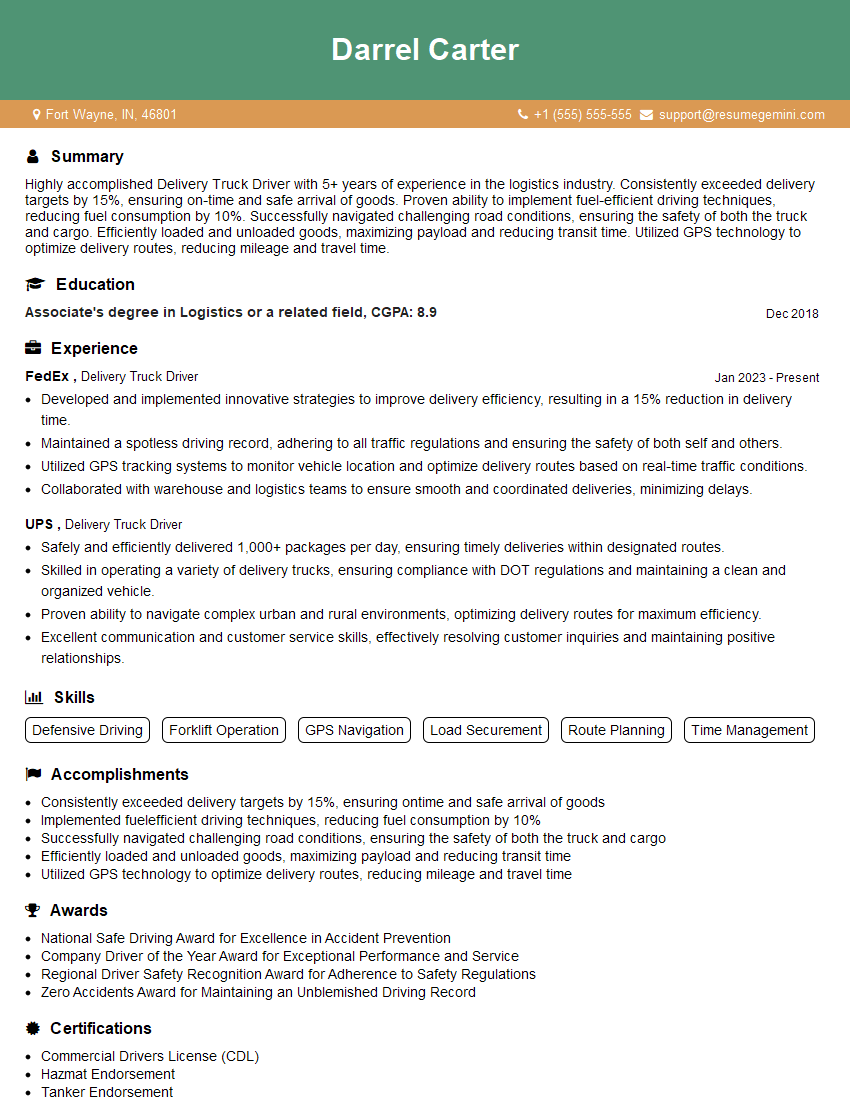
Delivery Truck Driver Resume Sample
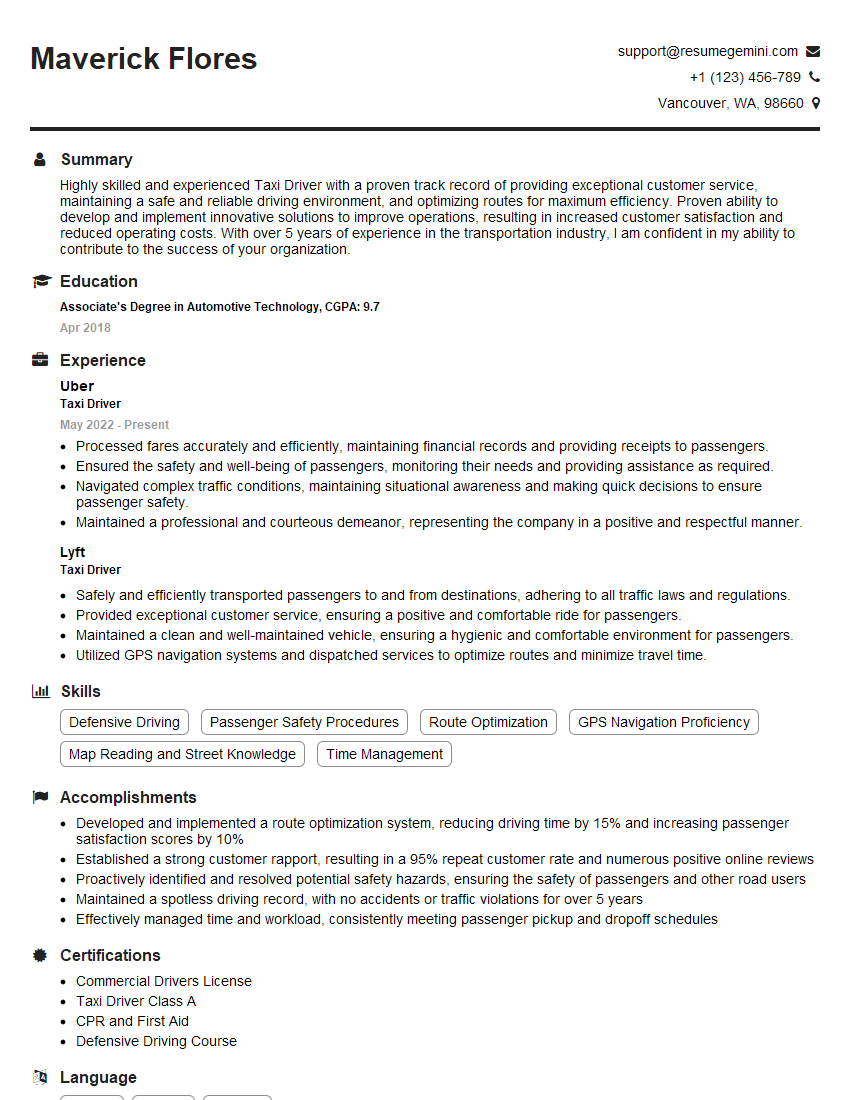
Taxi Driver Resume Sample

Tugboat Operator Resume Sample
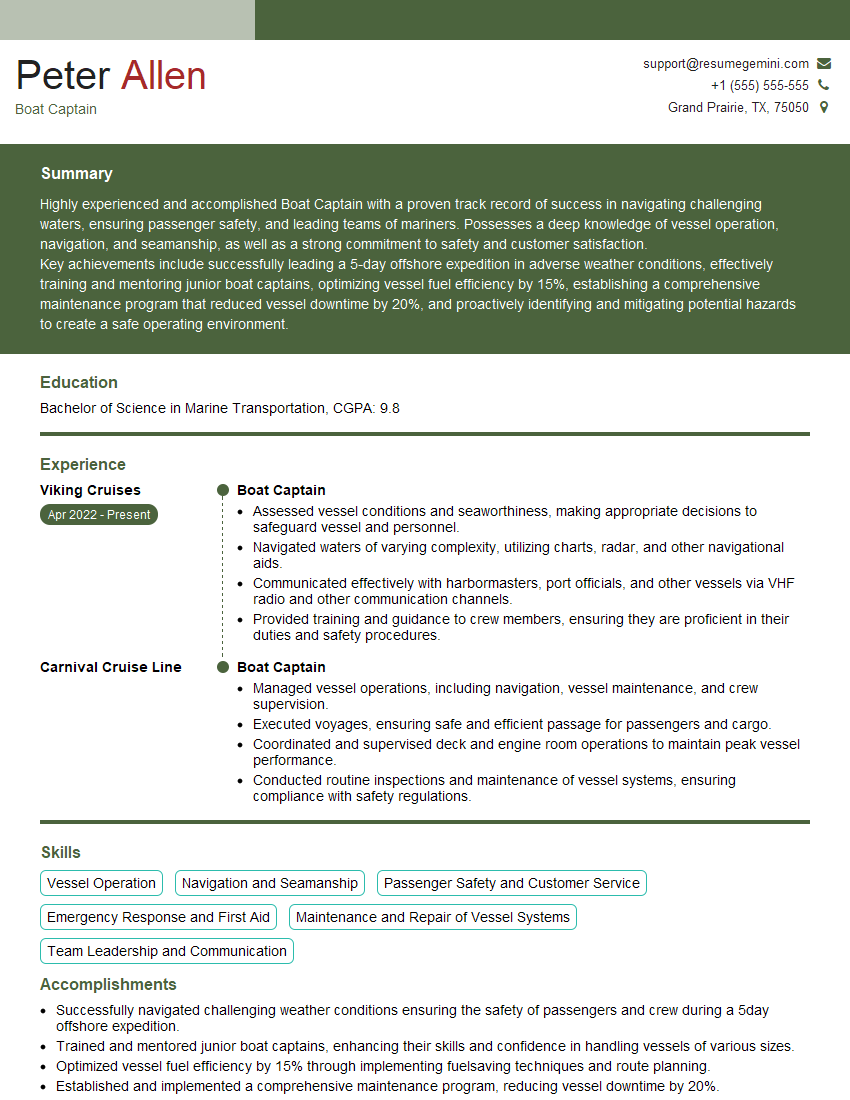
Boat Captain Resume Sample
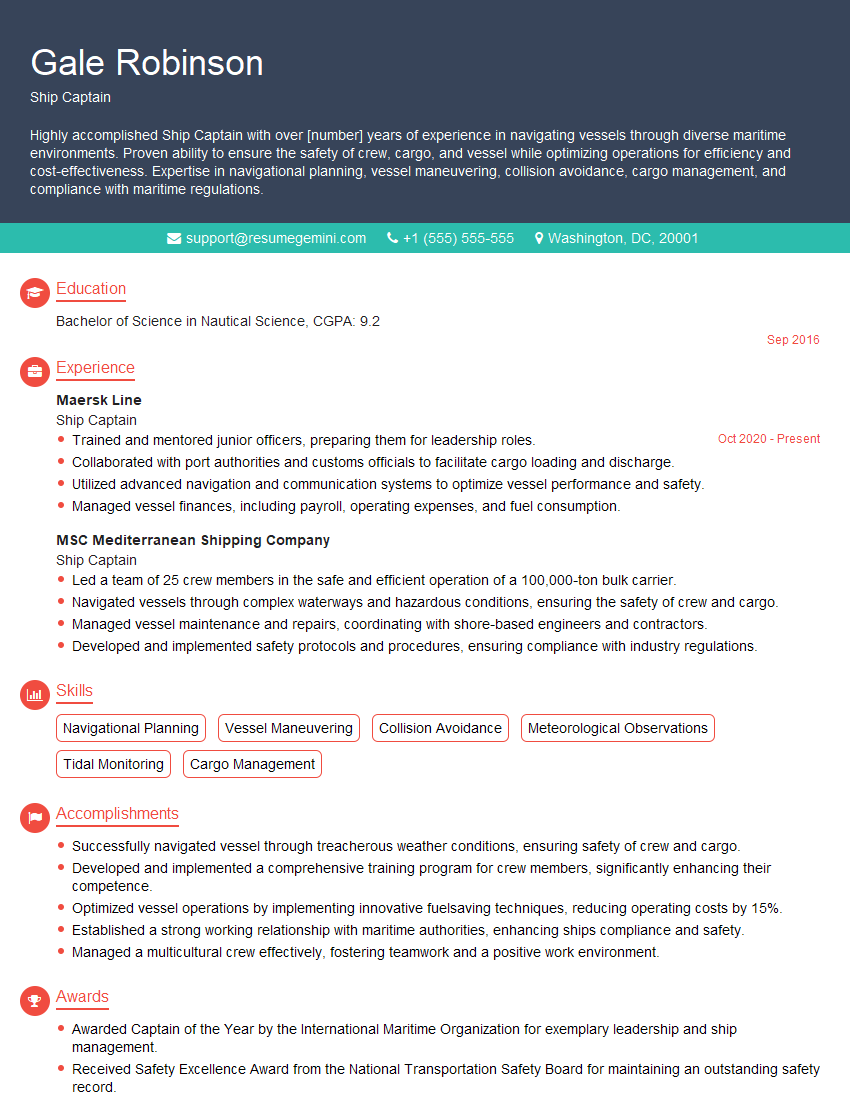
Ship Captain Resume Sample
- Transportation Manager
- Marine Engineer
- Crane Operator
- Deckhand
- Delivery Driver
- First Mate
- Heavy Equipment Operator
- Forklift Operator
- Automotive Technician
- Heavy Duty Mechanic
- Marine Mechanic
- Bus Driver
- Motorcoach Operator
- School Bus Driver
- Transit Operator
- Delivery Truck Driver
- Taxi Driver
- Tugboat Operator
- Boat Captain
- Ship Captain
Explore more articles
Users Rating of Our Blogs
Share Your Experience
We value your feedback! Please rate our content and share your thoughts (optional).
What Readers Say About Our Blog
Very informative content, great job.
good