The right preparation can turn an interview into an opportunity to showcase your expertise. This guide to Bodywork repair interview questions is your ultimate resource, providing key insights and tips to help you ace your responses and stand out as a top candidate.
Questions Asked in Bodywork repair Interview
Q 1. Describe your experience with different types of auto body damage.
Throughout my career, I’ve encountered a wide spectrum of auto body damage, ranging from minor dents and scratches to major collision repairs involving structural damage. Minor damage often includes hail damage, door dings, and bumper scrapes. These are usually addressed with techniques like paintless dent repair or minor filler work. More significant damage includes crumpled fenders, cracked bumpers, broken headlights, and even frame damage from severe collisions. These require more extensive repairs, often involving panel replacement, welding, and frame straightening. I’ve also worked on classic car restorations which presented unique challenges related to sourcing original parts and using appropriate repair techniques for older materials.
For example, I once repaired a vintage Porsche 911 that had sustained significant damage to its rear quarter panel. This involved not only replacing the damaged panel, but also meticulously matching the paint to the original finish, a process that required extensive color matching and blending techniques. Another challenging case involved a modern SUV that had rolled over, resulting in significant frame damage. This repair demanded precise measurements and adjustments to ensure the vehicle’s structural integrity was restored to factory specifications.
Q 2. What are the common methods used for dent repair?
Dent repair employs various methods depending on the severity and location of the damage. Paintless dent repair (PDR) is a popular technique for small, shallow dents. This method uses specialized tools to gently massage the dent out from the inside of the panel, avoiding the need for paint and body filler. For deeper or more complex dents, traditional methods involving body filler are employed. Body filler is a putty-like material that fills in damaged areas, creating a smooth surface for painting. Before applying the filler, the damaged area must be properly prepared by cleaning, sanding, and sometimes welding or panel replacement. After the filler dries and cures, it’s shaped, sanded, and primed to ensure a smooth surface.
Think of PDR like gently coaxing a child’s toy back into shape, whereas body filler is like using clay to sculpt a damaged area. Both techniques require precision and skill to achieve the best results.
Q 3. Explain the process of preparing a vehicle for painting.
Preparing a vehicle for painting is a crucial step that directly impacts the final finish. This multi-stage process involves several key steps. First, the damaged area is thoroughly cleaned to remove any dirt, grease, or debris. Next, any remaining rust is removed using wire brushing, sanding, or chemical treatments. Damaged areas are repaired using methods as discussed above and the area surrounding the repair is carefully sanded smooth to feather the edges of the filler. Masking tape and paper are applied to protect areas that won’t be painted. This involves carefully covering windows, trim, and any parts of the car that shouldn’t be painted. Any surface imperfections are smoothed out using various grades of sandpaper. The entire vehicle, or at least the area being painted, is then primed. Primer provides a uniform base coat for the topcoat and helps ensure optimal adhesion. After the primer has dried and cured, it’s often sanded again before the topcoat is applied.
Imagine preparing a canvas for a painting; you need a clean, smooth surface before applying any paint for a lasting, high-quality result.
Q 4. What types of paint systems are you familiar with?
My experience encompasses various paint systems, including single-stage, basecoat/clearcoat, and specialized systems like those used for metallic or pearlescent finishes. Single-stage systems are simpler, combining color and clear coat in one application. Basecoat/clearcoat systems offer greater depth and durability. The base coat provides the color, while the clear coat adds shine, protection, and UV resistance. Metallic and pearlescent paints require specialized techniques to achieve a uniform and consistent finish, often necessitating multiple coats and careful blending. I also have experience using waterborne paints, which are becoming increasingly popular due to their environmental friendliness and superior quality.
Each system presents unique challenges and requires a different approach to application and finishing.
Q 5. How do you ensure a proper color match during the painting process?
Achieving a precise color match is critical for a professional finish. I typically use a spectrophotometer to scan the original paint and generate a formula for the closest match. However, even with a perfect formula, environmental factors and aging can cause slight variations. Therefore, I always mix a small batch of paint first, spraying it onto a test panel to ensure it aligns with the original. I then carefully blend the new paint into the existing paint, using techniques that minimize any visible line between the old and new paint. This may involve wet-on-wet blending or multiple coats with meticulous feathering. Careful observation under various lighting conditions is crucial to ensure an invisible repair.
Think of it like matching threads for a tailor—getting the perfect color is not just about the formula, but the artistry of blending it seamlessly.
Q 6. Describe your experience with different types of body fillers and their applications.
I’m experienced with a variety of body fillers, each suited to different applications. For example, polyester fillers are popular due to their ease of use, fast drying time, and good filling properties. However, they can be somewhat brittle if not applied correctly. Epoxy fillers are stronger and more durable, making them ideal for repairs that require greater strength, such as structural repairs. Urethane fillers offer a balance between strength and flexibility, often used for larger repairs or areas that may experience some movement or vibration. The choice of filler depends on the extent of the damage, the location of the repair, and the desired final strength and durability. Each filler also requires careful preparation, application and sanding.
Choosing the right body filler is akin to selecting the right tool for a specific job. Using the wrong type can lead to poor quality repairs.
Q 7. What safety precautions do you take when working with automotive chemicals?
Safety is paramount in my work. When handling automotive chemicals such as paints, primers, solvents, and body fillers, I always wear appropriate personal protective equipment (PPE), including respirators, safety glasses, gloves, and protective clothing. I work in a well-ventilated area to minimize exposure to fumes and dust. I carefully follow the manufacturer’s instructions for mixing and applying these chemicals, paying close attention to any warnings or precautions. Used chemicals are disposed of properly in accordance with local environmental regulations. Regular equipment maintenance and proper storage practices of all materials further enhance my safety measures. Furthermore, I am acutely aware of fire hazards and take all necessary precautions when working with flammable materials. My safety practices aren’t merely procedures; they’re ingrained habits protecting both myself and the environment.
Safety is not an option, but an integral and essential part of my job that I never compromise on.
Q 8. How do you diagnose and repair structural damage to a vehicle?
Diagnosing and repairing structural damage starts with a thorough visual inspection. I look for things like misaligned panels, gaps that are inconsistent with factory specifications, and any visible signs of bending or distortion. Then, I’ll use measuring tools like a laser measuring system or a measuring tape to precisely quantify the damage. This is crucial for determining the extent of the repair and ensuring accuracy.
For instance, if a car has been rear-ended, I’ll check the alignment of the bumper, trunk lid, and rear quarter panels. I use a measuring system to find the exact dimensions of the misalignment, comparing them to the manufacturer’s specifications. This precise data guides the repair process. If frame damage is suspected, I’ll use a frame measuring system to assess the chassis’s structural integrity, looking for deviations from factory specifications. Repairing this type of damage often requires specialized techniques and equipment, such as frame pulling systems, to restore the vehicle’s original alignment and structural rigidity.
After the diagnosis, the repair process might involve straightening bent metal using techniques such as pulling or hammering, replacing damaged sections with new panels, and welding in new metal sections when necessary. This whole process is meticulously documented to ensure all repairs meet manufacturer standards and to have a record for future reference.
Q 9. What experience do you have with welding techniques used in auto body repair?
My welding experience encompasses a range of techniques essential for auto body repair. I’m proficient in MIG (Metal Inert Gas), TIG (Tungsten Inert Gas), and spot welding. MIG welding is my go-to for most repairs due to its speed and efficiency, especially on sheet metal. TIG welding provides superior precision for more intricate repairs and when working with thinner gauges of steel or aluminum. Spot welding is crucial for joining panels together, often used in conjunction with other welding methods for a stronger, more consistent repair. I also understand the importance of proper weld preparation, including cleaning the metal surfaces, ensuring the correct amperage, and maintaining proper shielding gas flow for quality welds.
For example, when repairing a damaged fender, I might use MIG welding to attach a replacement panel. However, if a small section needs to be added or repaired on a delicate part of the car, TIG welding would provide the precision needed to avoid warping or damage to surrounding areas. My understanding of various filler materials allows me to select the right one for the job, ensuring a strong and corrosion-resistant repair.
Q 10. Explain your understanding of different metal-finishing techniques.
Metal finishing is a critical step in auto body repair, ensuring a flawless and durable finish. This involves a series of processes aimed at preparing the metal surface for paint and protecting it from corrosion. The techniques I use frequently include grinding, sanding, filling, and priming.
Grinding removes excess metal, welds, or imperfections. Sanding smooths out the surface, creating a level base for the filler. Filling techniques utilize body filler to correct dents and scratches, creating a smooth and even surface. Finally, the application of primer seals the metal and provides a uniform base for the paint to adhere to.
I also understand the importance of selecting the correct grit of sandpaper at each stage of the process to achieve the desired smoothness, avoiding scratches or imperfections that would be visible in the final finish. This process requires patience, attention to detail, and a good understanding of the properties of different metal finishing products.
Q 11. What is your experience with computerized estimating systems?
I have extensive experience with computerized estimating systems, such as Audatex and Mitchell. I use these systems to accurately assess the damage to a vehicle, determine the necessary repairs, and generate a detailed estimate for the customer and the insurance company. This involves inputting information about the vehicle, identifying damaged parts, and selecting appropriate repair procedures based on the manufacturer’s repair information. The system then automatically calculates the cost of parts, labor, and materials.
For instance, when I scan a vehicle into an estimating system, the program uses images and my inputted data to automatically generate a comprehensive estimate, including the parts needed, the labor involved, and the projected costs. I can then review this estimate, adjust it as needed to ensure accuracy, and present it to the customer. This expertise is crucial for ensuring transparent and fair pricing for both the customer and the insurance provider.
Q 12. How do you manage your time effectively in a busy body shop environment?
Managing time effectively in a busy body shop requires meticulous organization and prioritization. I use a combination of strategies to stay on schedule. This includes carefully planning my workflow, creating a daily schedule, and prioritizing tasks based on urgency and complexity. I also adhere to strict deadlines and communicate effectively with colleagues and clients to keep everyone informed of progress and any potential delays.
For example, I may prioritize urgent repairs needing quick turnaround, such as a vehicle with a damaged headlight affecting safety, while planning less urgent repairs for later timeslots in the day. I’m adept at managing multiple projects concurrently, switching between tasks as needed while maintaining quality and efficiency. Efficient use of time-saving techniques, like using quick-drying materials or employing repair methods that require less time, also boosts my overall productivity in the demanding shop environment.
Q 13. How do you handle challenging customers or difficult repairs?
Handling challenging customers or difficult repairs demands patience, clear communication, and a problem-solving approach. With difficult customers, active listening and empathy are crucial. I aim to understand their concerns and explain the repair process in detail, reassuring them at each step. I strive to manage expectations, highlighting potential challenges and outlining realistic timelines.
For difficult repairs, I rely on my expertise and experience to find creative solutions. If a repair requires an unusual technique or specialized tools, I’ll research the best approach, often consulting with experienced colleagues or manufacturers for guidance. Documentation and photographic evidence are critical in these cases, helping to clarify procedures and resolve any disputes.
For example, I recently worked with a customer whose car had sustained extensive damage. Rather than getting frustrated, I walked them through the assessment process, explained the complexities of the repair, and managed their expectations regarding the timeline. This open communication helped alleviate their concerns, building trust and ensuring a positive outcome.
Q 14. Describe your experience with using measuring tools in body repair.
Precise measuring is fundamental to accurate bodywork repair. My experience includes using a variety of tools, from basic measuring tapes and rulers to sophisticated laser measuring systems. Measuring tapes provide a quick assessment of larger discrepancies, while laser measuring systems are used for more precise measurements, particularly when aligning panels and checking for frame damage.
I’m proficient in using different measuring techniques, such as taking measurements from multiple points of reference to obtain an accurate assessment. I regularly use digital calipers and depth gauges for measuring gaps between panels and checking the accuracy of repairs. Moreover, I am adept at interpreting the measurements and translating them into appropriate repair strategies, ensuring all components are aligned and fit perfectly.
For example, when repairing a damaged door, I’ll use a combination of laser measurements and a measuring tape to ensure that the door aligns perfectly with the body of the vehicle. The laser system ensures that the door is square and properly aligned. This attention to detail is critical for producing a high-quality repair that meets both functional and aesthetic standards.
Q 15. What is your experience with different types of body panels?
My experience encompasses a wide range of body panels, from the relatively simple to the highly complex. I’ve worked extensively with steel panels, which are common on most vehicles, understanding their properties and how different gauges of steel impact repair strategies. Aluminum panels, increasingly prevalent in modern vehicles due to their lightweight nature, require specialized techniques to avoid damage during repairs. I’m also proficient in working with composite materials like fiberglass and carbon fiber, which demand careful handling and specific repair methods to maintain structural integrity. For example, repairing a dented aluminum hood requires different welding techniques and filler application than repairing a steel quarter panel.
- Steel Panels: These are the most common and generally the easiest to repair, using techniques like welding, panel beating, and filler application.
- Aluminum Panels: These require specialized welding techniques (like MIG welding with the appropriate filler wire) and careful surface preparation to avoid corrosion.
- Composite Panels: Repairing these often involves bonding, using specialized resins and fillers, and careful sanding to achieve a smooth, paintable surface.
Career Expert Tips:
- Ace those interviews! Prepare effectively by reviewing the Top 50 Most Common Interview Questions on ResumeGemini.
- Navigate your job search with confidence! Explore a wide range of Career Tips on ResumeGemini. Learn about common challenges and recommendations to overcome them.
- Craft the perfect resume! Master the Art of Resume Writing with ResumeGemini’s guide. Showcase your unique qualifications and achievements effectively.
- Don’t miss out on holiday savings! Build your dream resume with ResumeGemini’s ATS optimized templates.
Q 16. What is your experience with the repair of plastic body panels?
Plastic body panels present unique challenges. They’re more susceptible to cracking and warping than metal panels. My approach prioritizes careful assessment of the damage. Minor scratches and scuffs might only require sanding and repainting. Deeper damage may need plastic welding, using a heat gun and specialized plastic filler. For larger cracks or broken parts, I often utilize plastic bonding agents, ensuring a strong, durable repair. The crucial aspect here is selecting the correct type of plastic filler and adhesive, matched to the specific plastic type of the panel. For instance, some plastics react poorly to certain solvents, leading to warping or discoloration.
I’ve also dealt with situations involving significant damage that requires replacing the entire panel. This is especially true for bumpers or larger plastic components where a repair may not be structurally sound or aesthetically acceptable.
Q 17. Explain the process of repairing a damaged bumper.
Repairing a damaged bumper follows a systematic process. First, I thoroughly assess the damage – is it just a scratch, a dent, a crack, or a complete fracture? Minor scratches and scuffs can be addressed with sanding and repainting. For dents, I might use heat to carefully reshape the plastic, followed by filling and sanding. Cracks require a more involved approach, often involving plastic welding or bonding.
- Assessment: Determine the extent of damage.
- Cleaning: Thoroughly clean the bumper to remove dirt and debris.
- Repair: Employ appropriate techniques: plastic welding, bonding, or filler application.
- Sanding: Smooth the repaired area to ensure a seamless finish.
- Priming & Painting: Apply primer and matching paint to restore the original appearance.
If the damage is too extensive, replacing the bumper is the most practical solution. This involves removing the damaged bumper, installing the new one, and ensuring proper alignment and fitting.
Q 18. How do you identify and repair rust damage?
Rust is a significant concern in bodywork repair. Identifying rust starts with a thorough visual inspection, looking for surface rust (superficial discoloration), bubbling paint, or areas of pitting. I use specialized tools like a rust probe to determine the extent of the corrosion. Once the extent of the rust is identified, I remove all affected areas using techniques like wire brushing, sanding, or even using specialized rust removal chemicals. The critical step is ensuring complete removal to prevent future rust propagation. After rust removal, I apply a rust-inhibiting primer, followed by filler if necessary to smooth out the surface. Finally, I prime and paint the repaired area, matching the existing color as closely as possible.
Severe rust damage may require replacing the affected section of the body panel, which is why early detection is so crucial. For example, if rust has severely compromised the structural integrity of a floor pan, a section might need to be cut out and replaced.
Q 19. Describe your experience with using different types of automotive tools and equipment.
My experience encompasses a vast array of automotive tools and equipment, including:
- Welding equipment: MIG, TIG, spot welders, for various metals.
- Body hammers and dollies: For shaping and straightening panels.
- Sanding equipment: Orbital sanders, DA sanders, and various grades of sandpaper for smoothing surfaces.
- Measuring tools: Measuring tapes, digital calipers, and panel alignment tools to ensure accurate repairs.
- Paint equipment: Spray guns, mixing cups, and spray booths for professional paint application.
- Frame straightening equipment: Frame racks and pulling systems for aligning chassis.
Proficiency with these tools is essential for efficient and high-quality repairs. For example, understanding the nuances of MIG welding parameters for different metal gauges is crucial to avoid warping or burning the metal.
Q 20. What experience do you have with frame straightening and alignment?
Frame straightening and alignment are critical for restoring a vehicle’s structural integrity after a collision. My experience involves using frame racks and pulling systems to carefully align the vehicle’s chassis to its original specifications. This involves precise measurements and adjustments, using specialized tools and techniques to ensure the frame is perfectly aligned. Improper alignment can lead to handling problems, reduced safety, and future mechanical issues.
This process requires a detailed understanding of vehicle chassis construction and the use of sophisticated measuring equipment to ensure accurate alignment. It’s a meticulous process that demands both precision and experience.
Q 21. What is your experience with post-repair quality checks?
Post-repair quality checks are paramount. They’re a crucial step to ensure the repair meets the highest standards of safety and aesthetics. My checks involve several steps:
- Visual Inspection: Careful examination of the repaired area for imperfections such as uneven surfaces, paint imperfections, or misalignment.
- Functionality Check: Verification that all components, such as doors, hoods, and bumpers, function correctly.
- Alignment Check: Ensuring proper panel alignment and overall vehicle fit and finish.
- Road Test: A short road test to verify handling and identify any vibrations or other issues.
The goal is to deliver a repair that’s not only aesthetically pleasing but also structurally sound and safe. A thorough quality check ensures the customer receives a vehicle that’s as good as new.
Q 22. How do you maintain a clean and organized workspace?
Maintaining a clean and organized workspace is paramount in auto body repair for safety, efficiency, and quality. Think of it like a surgeon’s operating room – a cluttered space increases the risk of accidents and hinders precision. My approach is multi-faceted:
- 5S Methodology: I apply the 5S methodology – Sort, Set in Order, Shine, Standardize, Sustain. This involves regularly sorting through tools and materials, organizing them logically, cleaning the work area thoroughly, establishing standard procedures for tool placement and material storage, and consistently maintaining this order.
- Designated Areas: I have specific areas for different tasks: a dedicated area for prepping parts, a separate space for painting, and a designated area for welding. This prevents cross-contamination and improves workflow.
- Tool Organization: Tools are meticulously organized, using shadow boards or labeled drawers for easy access and to ensure nothing is misplaced. This saves valuable time searching for the right tool during a repair. I also regularly check the condition of my tools to make sure they are clean and properly functioning.
- Waste Management: Proper waste disposal is crucial. I separate hazardous waste (like solvents) from regular trash, following all safety regulations. This minimizes environmental impact and prevents accidents.
By implementing these strategies, I create a safe, efficient, and professional workspace that fosters quality work and prevents costly mistakes.
Q 23. How do you stay updated on new technologies and techniques in auto body repair?
The auto body repair industry is constantly evolving. To stay ahead, I actively pursue continuous learning through several methods:
- Industry Publications and Websites: I regularly read trade publications like Collision Repair magazine and visit websites dedicated to auto body repair, staying informed about the latest repair techniques and technological advancements.
- Manufacturer Training: Participating in manufacturer-specific training programs is essential. These programs provide hands-on experience with new tools and materials, along with best-practice techniques for specific vehicle makes and models.
- Seminars and Workshops: Attending industry seminars and workshops allows me to network with other professionals and learn from leading experts in the field. I also look for opportunities to attend training sessions on new technologies such as advanced driver-assistance systems (ADAS) repair.
- Online Courses and Certifications: Online courses offer flexibility and access to a wide range of topics. I regularly complete certifications to update my knowledge and skills, ensuring I am proficient in the latest techniques.
Staying current is not just about keeping up, it’s about maintaining a competitive edge and providing the highest quality service to my clients.
Q 24. Explain the importance of accurate measuring in body repair work.
Accurate measuring is the foundation of successful body repair. Inaccurate measurements lead to misaligned panels, poor fit, and ultimately, a subpar repair. Think of it as building a house – if the foundation isn’t square, the whole structure will be flawed.
- Measuring Tools: I use a variety of precision measuring tools, including measuring tapes, rulers, digital calipers, and laser measuring devices to ensure accuracy down to the millimeter.
- Reference Points: Establishing accurate reference points on the vehicle is crucial. These points provide a consistent basis for all measurements, ensuring consistent alignment during the repair process. These points are often factory-specified points and are essential for maintaining vehicle structural integrity.
- Panel Alignment: Precise measurements are essential for aligning body panels. Even minor discrepancies can affect the final finish and overall appearance of the vehicle. The use of measuring tools and fixtures for proper panel alignment cannot be understated.
- Computerized Measuring Systems: For complex repairs, I utilize computerized measuring systems that provide detailed measurements and analysis of the vehicle’s structure. These systems can pinpoint even subtle damage and help guide the repair process, ensuring precise alignment and restoration.
My commitment to precise measurement ensures a high-quality, safe, and durable repair.
Q 25. What troubleshooting skills do you use for diagnosing problems?
Troubleshooting in auto body repair involves a systematic approach to identify and solve problems. It’s a process of elimination that relies on observation, deduction, and experience.
- Visual Inspection: The first step is a thorough visual inspection of the damaged area. This involves looking for signs of damage that are not immediately apparent. Sometimes, a seemingly minor dent can conceal extensive damage underneath.
- Component Testing: Testing individual components like electrical systems or mechanical parts is crucial to determine whether they are functioning correctly or contributing to the problem. For instance, checking the functionality of door latches after a collision is critical.
- Structural Analysis: Using measuring tools and computerized systems, I assess the structural integrity of the vehicle to identify any hidden damage or misalignment that might not be visible to the naked eye. This step is important for safety and ensuring long-term structural integrity.
- Process of Elimination: By carefully inspecting, testing, and analyzing, I systematically eliminate possible causes until the root cause of the problem is identified.
- Reference Materials: Repair manuals, service bulletins, and online resources are critical resources for obtaining manufacturer’s specifications and repair procedures. This ensures the repair is performed according to the manufacturer’s recommendations.
Effective troubleshooting combines technical knowledge with a methodical approach to problem-solving, which results in efficient and accurate repairs.
Q 26. What is your experience with fiberglass repair?
I have extensive experience with fiberglass repair, encompassing various techniques and materials. Fiberglass repair requires specific skills and knowledge due to its unique properties.
- Preparation: Proper preparation is key. This involves cleaning the damaged area, removing loose or damaged material, and ensuring a clean, sound surface for repair. It’s crucial to remove all contaminants and ensure the substrate is adequately prepared for the bonding agent.
- Material Selection: The type of fiberglass used depends on the type of damage and the location of the repair. For example, different fiberglass mats and resins are chosen based on flexibility and strength requirements.
- Layering and Curing: Repair often involves layering multiple layers of fiberglass mat and resin to build up the necessary strength and thickness. Proper curing is critical, to ensure the fiberglass properly bonds and achieves its necessary strength and structural integrity.
- Finishing: After the repair has cured, I carefully sand and shape the repaired area, ensuring a smooth surface for priming and painting. This step ensures a professional finish that matches the surrounding panels.
I’ve worked on a wide range of fiberglass repairs, from minor cracks to major structural damage on boats, cars, and other vehicles. My experience allows me to successfully repair fiberglass components while maintaining their structural integrity and aesthetic appearance.
Q 27. Describe your understanding of collision repair estimates.
Understanding collision repair estimates is crucial for accurate pricing and efficient repair planning. A well-constructed estimate ensures both the customer and the shop are on the same page regarding the scope of work and associated costs.
- Detailed Assessment: An accurate estimate begins with a thorough assessment of the damage, using measuring tools and diagnostic equipment to identify all affected components. Hidden damage that isn’t immediately visible must be accounted for.
- Parts Identification: Correctly identifying the necessary parts, including OEM (Original Equipment Manufacturer) or aftermarket parts, is crucial. The estimate should specify the part numbers and sources to avoid discrepancies later.
- Labor Costs: Accurate labor costs are calculated based on the complexity of each repair step, considering the time and skill required for each task. Industry standard time guides are often used to determine labor hours.
- Material Costs: The estimate must include all material costs, such as paints, primers, adhesives, and other consumables used in the repair. Prices are obtained from reputable suppliers to avoid unexpected cost increases.
- Supplementary Charges: Additional charges, such as for towing, storage, or administrative fees, should be clearly outlined in the estimate.
A properly constructed estimate serves as a contract between the customer and the shop, outlining the work to be performed and the total cost. It is essential for transparency and client satisfaction.
Q 28. How do you handle a complex repair that involves multiple damaged parts?
Complex repairs involving multiple damaged parts require a structured and methodical approach. I utilize a step-by-step process to ensure a successful outcome.
- Damage Assessment: A detailed assessment of all damage is paramount, using measuring equipment and structural analysis tools to identify the extent and nature of the damage to each part and their interconnection.
- Repair Sequencing: A proper repair sequence is critical. I determine the order in which to address each damaged part, ensuring that the repair of one area does not negatively impact the repair of another. This requires a keen understanding of the vehicle’s structure and the interrelationship between various components.
- Structural Repair: Structural repairs are prioritized to ensure the vehicle’s integrity is restored before cosmetic repairs. This involves straightening bent or damaged structural members and ensuring proper alignment using jigs and fixtures.
- Component Replacement: Damaged parts that are beyond repair are replaced with OEM or high-quality aftermarket parts. This ensures the vehicle’s safety and performance are restored to factory standards.
- Final Alignment and Refinishing: After all repairs are complete, a final alignment check is performed to verify proper fit and function of all components. This is followed by finishing steps like priming and painting to achieve a professional and aesthetically pleasing final finish.
Handling complex repairs requires a combination of technical expertise, problem-solving skills, and meticulous attention to detail. My experience allows me to successfully navigate these challenges and deliver high-quality results.
Key Topics to Learn for Bodywork Repair Interview
- Damage Assessment and Evaluation: Understanding different types of vehicle damage (collision, hail, rust), assessing damage severity, and determining the appropriate repair techniques.
- Metal Repair Techniques: Practical application of techniques like panel beating, welding (MIG, TIG, spot welding), pulling, and shrinking damaged metal panels back to their original shape and form.
- Plastic Repair: Understanding the properties of different plastics used in vehicles, and the techniques involved in repairing cracked, broken, or damaged plastic components, including welding and bonding.
- Paint and Finishing: Preparation of surfaces for painting (sanding, priming), color matching techniques, applying paint (spray guns, other methods), clear coat application, and final polishing for a flawless finish.
- Estimating and Repair Planning: Accurately assessing the time and materials required for a repair, creating a detailed repair plan, and adhering to budgetary constraints.
- Safety Procedures and Regulations: Understanding and applying relevant safety procedures for working with tools, chemicals (paints, solvents), and equipment, as well as adhering to industry safety regulations.
- Tools and Equipment: Demonstrating familiarity with common bodywork repair tools and equipment (welders, sanders, paint spray guns, measuring tools) and their safe and effective operation.
- Problem-Solving and Troubleshooting: Explaining your approach to troubleshooting complex repair issues, adapting techniques as needed, and ensuring high-quality results even when faced with unexpected challenges.
Next Steps
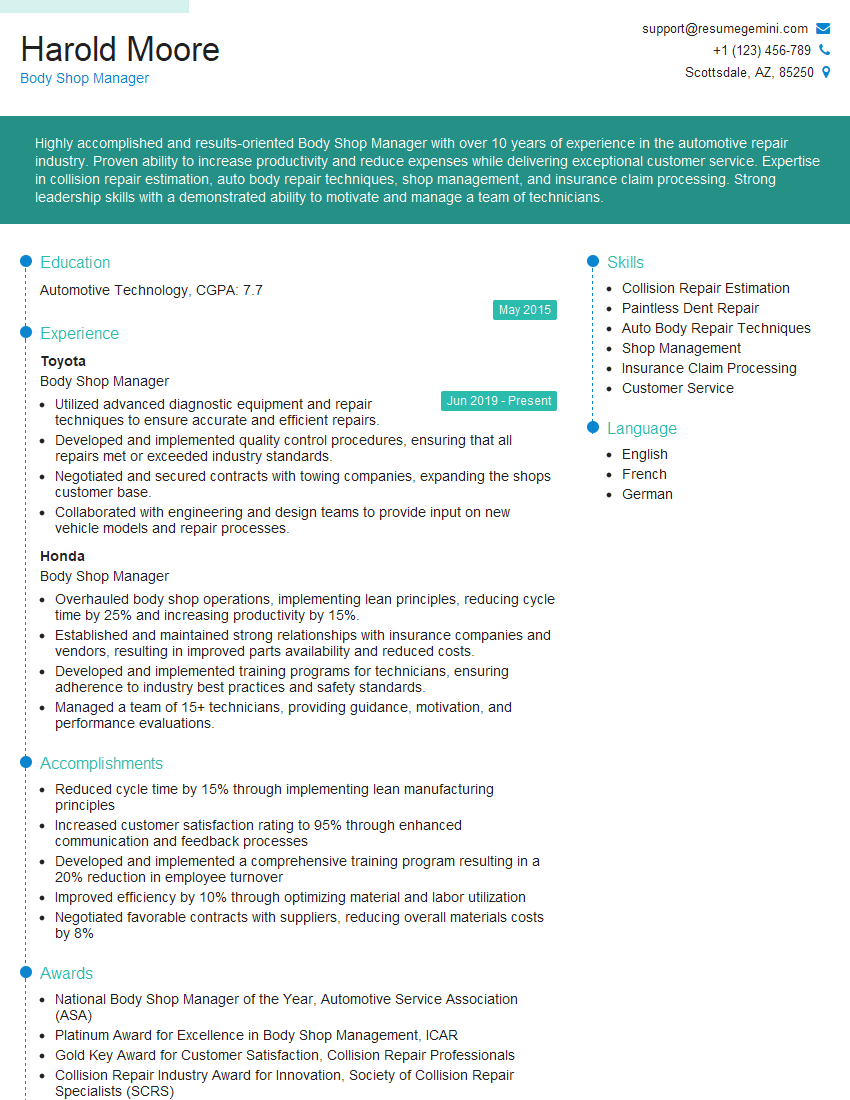
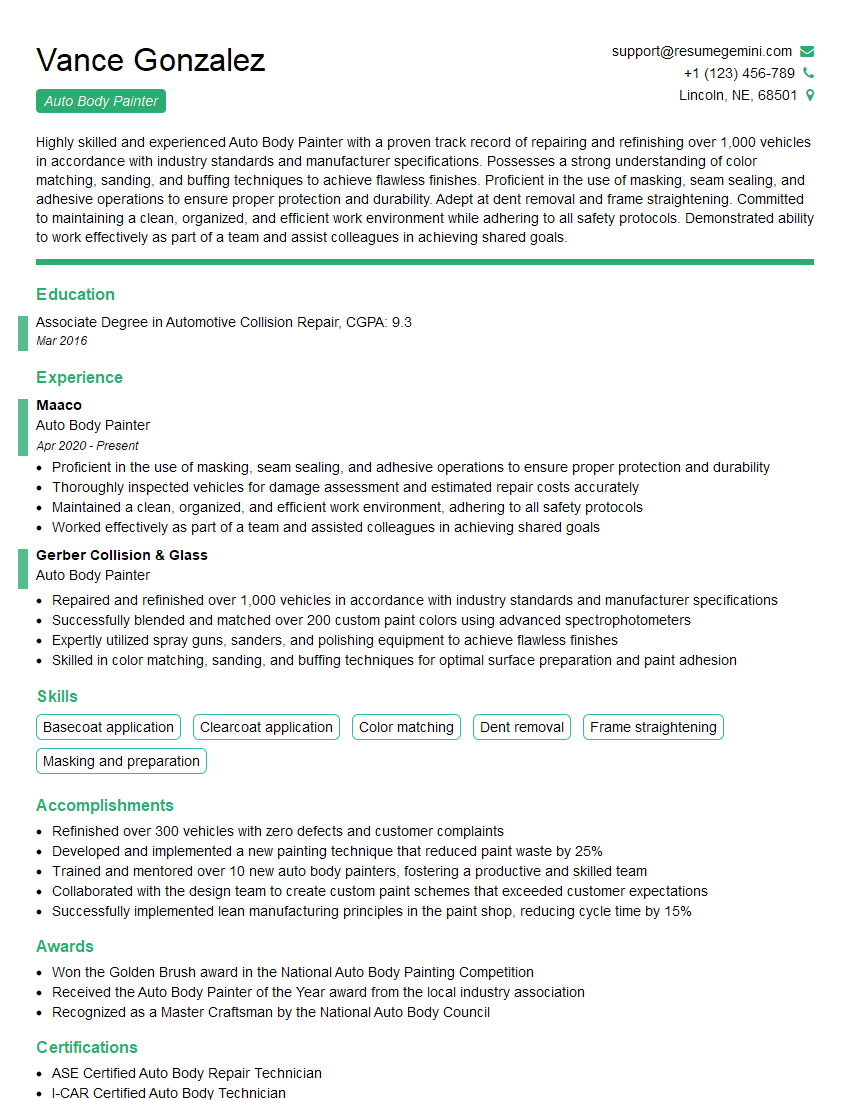
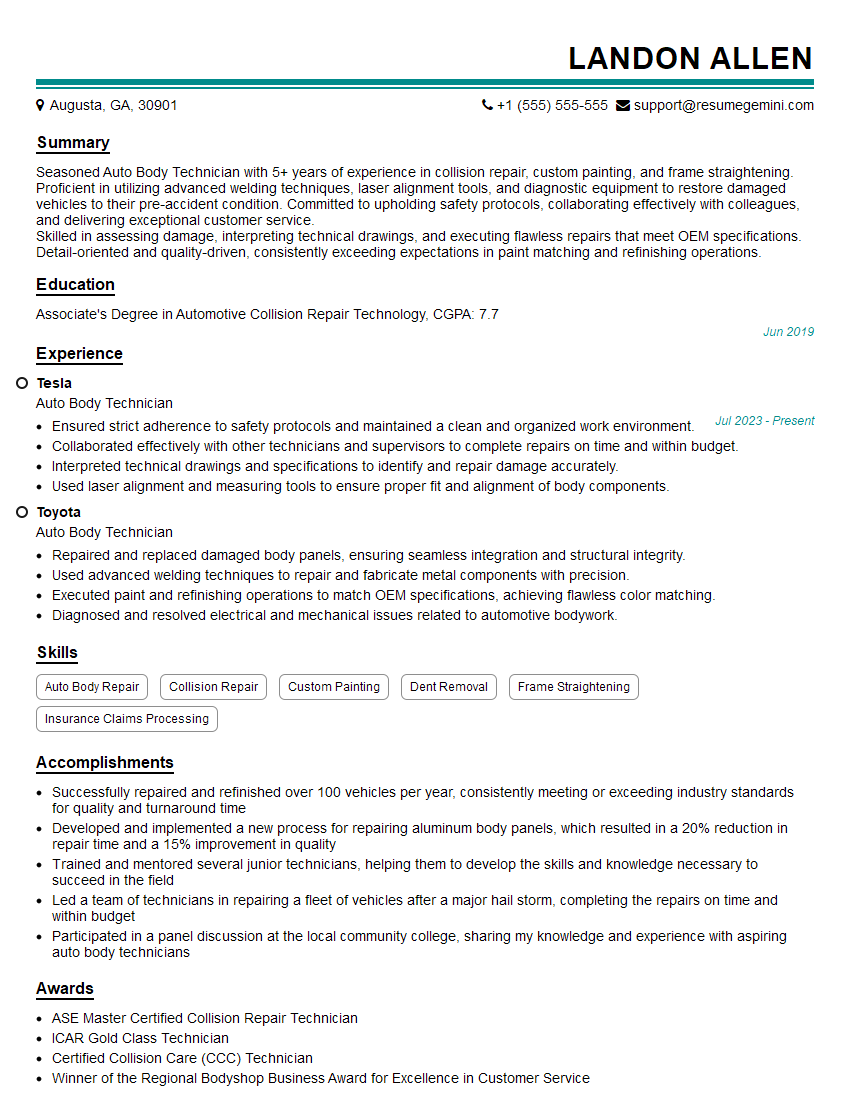
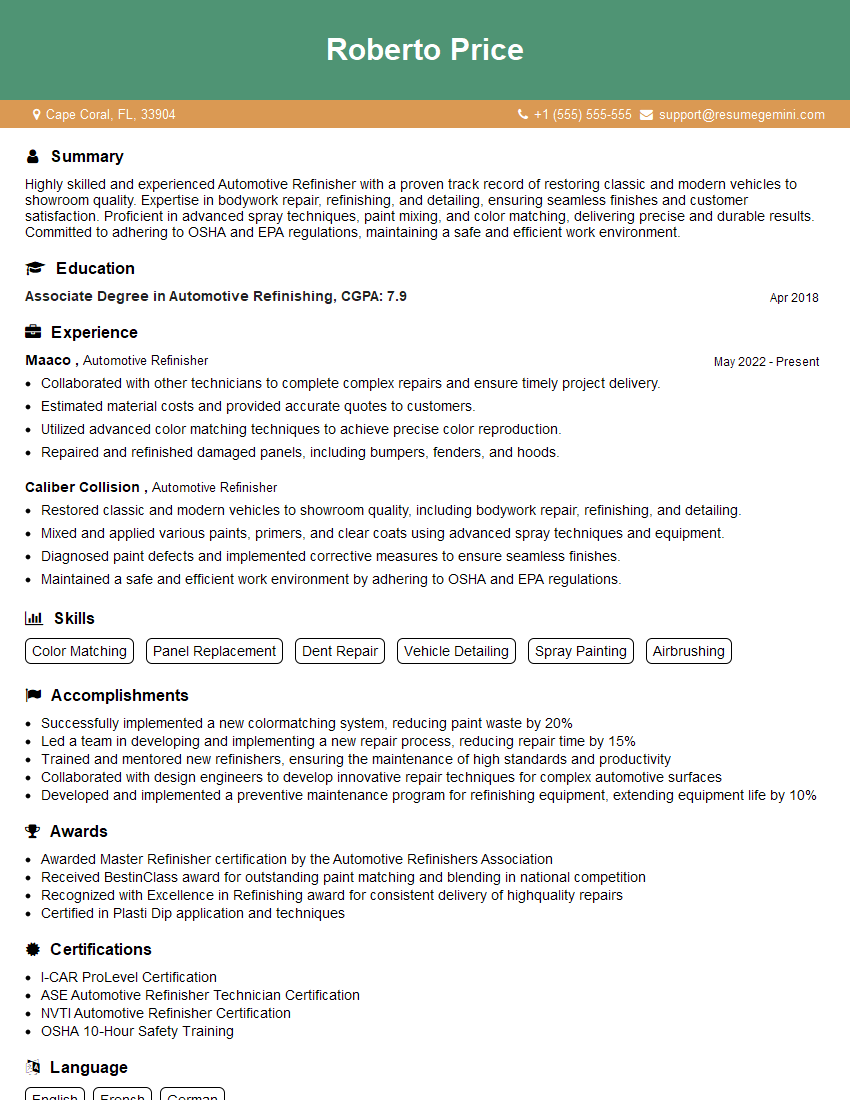
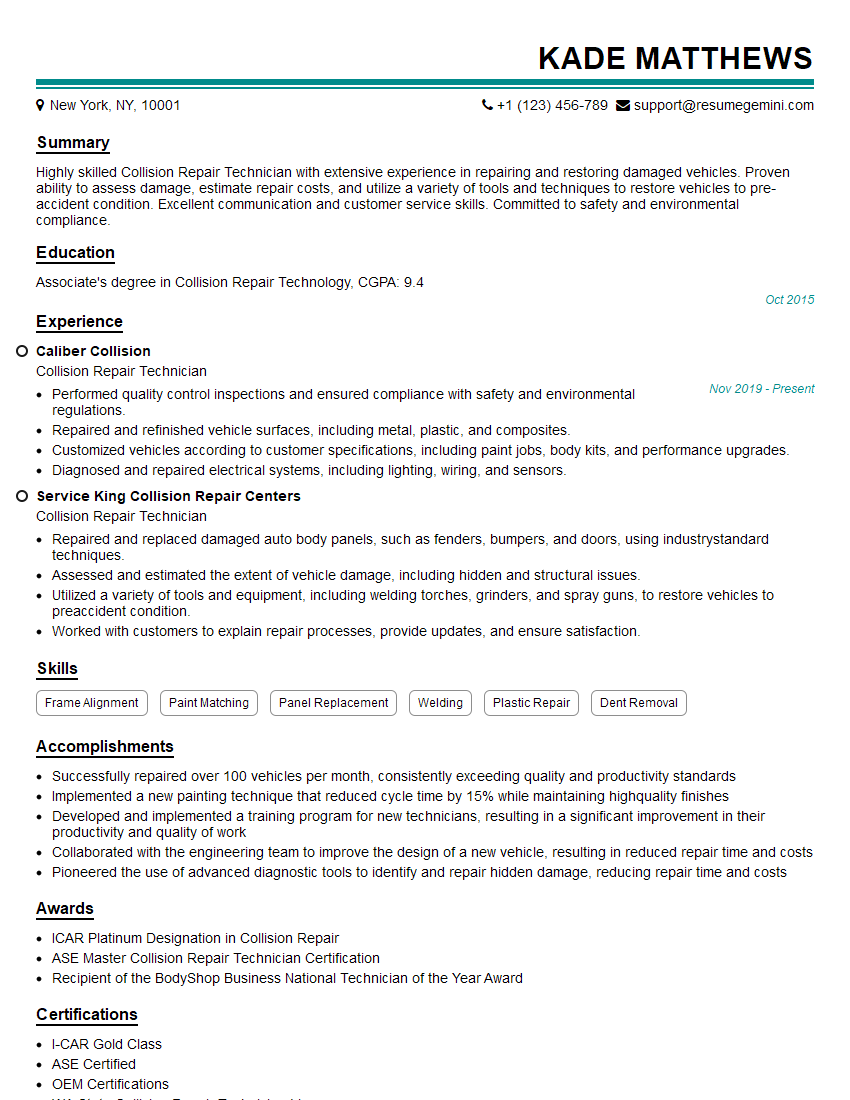
Mastering bodywork repair opens doors to a rewarding and skilled trade with excellent career growth potential, offering opportunities for specialization and advancement. Building a strong resume is crucial to landing your dream job. To significantly increase your chances, create an ATS-friendly resume that highlights your skills and experience effectively. ResumeGemini is a trusted resource that can help you build a professional resume tailored to the automotive body repair industry, ensuring your qualifications stand out to potential employers. Examples of resumes tailored to Bodywork Repair are available to help guide you.
Explore more articles
Users Rating of Our Blogs
Share Your Experience
We value your feedback! Please rate our content and share your thoughts (optional).
What Readers Say About Our Blog
Very informative content, great job.
good