Are you ready to stand out in your next interview? Understanding and preparing for Brand Development and Marketing interview questions is a game-changer. In this blog, we’ve compiled key questions and expert advice to help you showcase your skills with confidence and precision. Let’s get started on your journey to acing the interview.
Questions Asked in Brand Development and Marketing Interview
Q 1. Explain your understanding of brand positioning and its impact on marketing strategy.
Brand positioning is the strategic process of defining and communicating a brand’s unique value proposition to its target audience. It’s about carving out a specific space in the consumer’s mind, distinct from competitors. A strong brand position is crucial because it directly influences marketing strategy. It dictates messaging, target audience selection, channel strategies, and overall tone of voice. For example, if a brand positions itself as a luxury item, its marketing will emphasize quality, craftsmanship, and exclusivity, using channels like high-end magazines and exclusive events. Conversely, a brand positioning itself as budget-friendly would focus on value, affordability, and practicality, utilizing different channels and messaging.
Think of it like real estate: you wouldn’t try to sell a luxury penthouse using the same strategy as a family home. Your marketing strategy needs to directly align with the brand’s desired position in the marketplace. A misaligned strategy will confuse consumers and dilute brand equity.
Q 2. Describe your experience with developing a brand strategy from scratch.
In my previous role at [Company Name], I was responsible for developing the brand strategy for a new line of organic skincare products. We began with extensive market research, analyzing competitor landscapes, identifying target demographics, and understanding their needs and pain points. We then defined the brand’s core values: sustainability, natural ingredients, and ethical sourcing. This formed the foundation for the brand’s personality, voice, and visual identity. We developed a unique brand name, a compelling brand story, and a visually consistent logo and packaging design, all reflecting the core values. We also defined our key messaging, focusing on the benefits of our products and highlighting our commitment to environmental responsibility. The result was a comprehensive brand strategy document that guided all subsequent marketing efforts and ensured a cohesive brand experience for consumers.
Q 3. How would you measure the success of a marketing campaign?
Measuring the success of a marketing campaign requires a multi-faceted approach, going beyond simple vanity metrics. I typically employ a mix of qualitative and quantitative methods. Quantitatively, we look at key metrics like conversion rates (website visits to purchases), return on investment (ROI), reach (impressions and engagements), and customer acquisition cost (CAC). Qualitatively, we assess brand awareness through surveys and social listening, track customer satisfaction through feedback forms and reviews, and analyze changes in brand perception using sentiment analysis. Ultimately, success is measured by achieving pre-defined objectives. For example, did the campaign increase brand awareness by X%, drive Y number of leads, or generate Z revenue? Success also requires analyzing *why* the campaign performed as it did, leading to informed decisions for future campaigns.
Q 4. What are the key performance indicators (KPIs) you would track for a social media campaign?
For a social media campaign, I would track several KPIs, categorized for clarity:
- Reach & Engagement: Impressions, reach, likes, comments, shares, saves, click-through rates (CTR).
- Conversion: Website clicks, lead generation (form submissions), sales attributed to social media.
- Brand Building: Brand mentions, sentiment analysis (positive, negative, neutral), hashtag performance.
- Audience Growth: Follower growth, audience demographics, audience engagement rate.
The specific KPIs prioritized would depend on the campaign’s objectives. A campaign focused on brand awareness would emphasize reach and engagement, while a campaign focused on sales would prioritize conversions. Regular monitoring of these KPIs allows for real-time adjustments to optimize campaign performance.
Q 5. Explain your experience with different marketing channels (e.g., digital, print, social media).
My experience spans across various marketing channels. I’ve managed digital marketing campaigns utilizing SEO, SEM (PPC), email marketing, and programmatic advertising. In digital, data-driven decision making is key. For example, A/B testing different ad creatives or email subject lines to optimize performance. I also have experience with print marketing, including brochures, magazines, and newspapers – particularly beneficial for reaching older demographics or building brand authority in niche publications. Finally, my social media experience encompasses strategy development, content creation, community management, and paid social advertising across various platforms. The selection of channels always depends on the target audience, the brand’s overall strategy, and the campaign’s specific goals.
Q 6. How would you handle a negative brand crisis?
Handling a negative brand crisis requires a swift and decisive response. My approach follows a structured framework:
- Assess the situation: Identify the severity of the crisis, the source, and the potential impact on the brand’s reputation.
- Assemble a crisis team: Bring together key stakeholders from communications, legal, and customer service to coordinate a response.
- Develop a communication plan: Craft a consistent message addressing the issue directly and honestly. Transparency is paramount.
- Engage with stakeholders: Respond promptly to customer concerns and media inquiries, utilizing all relevant channels, and proactively addressing misinformation.
- Monitor the situation: Track media coverage, social media sentiment, and customer feedback to assess the effectiveness of the response and make necessary adjustments.
- Learn from the experience: Conduct a post-crisis review to identify what went wrong and implement measures to prevent future crises.
The key is to act quickly, be transparent, and demonstrate empathy for those affected. Ignoring a crisis will only exacerbate the damage.
Q 7. Describe your experience with market research and its role in brand development.
Market research plays a vital role in brand development. It provides the foundational data necessary to make informed decisions about target audience, brand positioning, messaging, and product development. My experience includes conducting both quantitative (surveys, statistical analysis) and qualitative (focus groups, interviews) research methods. For example, in developing a new product line, we conducted extensive customer surveys to understand their needs and preferences, and then followed up with focus groups to gather deeper insights into their motivations and behaviors. This research informed not only the product’s features and functionalities but also its pricing strategy, packaging design, and marketing messaging. Without market research, brand development becomes a guessing game, leading to potentially wasted resources and a disconnect with the target market.
Q 8. How do you stay up-to-date with the latest marketing trends?
Staying ahead in the dynamic world of marketing requires a multi-pronged approach. It’s not just about reading a few articles; it’s about actively seeking out diverse sources of information and critically analyzing them.
Industry Publications and Blogs: I regularly follow leading marketing publications like MarketingProfs, HubSpot’s blog, and Neil Patel’s content. These provide in-depth analyses of emerging trends, case studies, and best practices.
Conferences and Webinars: Attending industry conferences like SXSW, Marketing Week Live, and various webinars offers invaluable networking opportunities and insights directly from industry leaders. I actively participate in Q&A sessions to deepen my understanding.
Social Media and Online Communities: I actively engage on platforms like LinkedIn and Twitter, following key influencers and participating in relevant discussions. This allows me to grasp real-time trends and diverse perspectives.
Competitive Analysis: I regularly analyze the marketing strategies of competitors, both within and outside my industry. This helps me identify innovative approaches and potential areas for improvement in my own strategies.
Data and Analytics: I use data analysis tools like Google Analytics to track marketing performance and identify emerging trends based on real-world results. This provides a grounded perspective on what is actually working.
By combining these approaches, I ensure I’m not just passively consuming information, but actively shaping my understanding of the ever-evolving marketing landscape.
Q 9. What is your experience with budget allocation and management in marketing?
Budget allocation and management is a critical skill in marketing, requiring a blend of strategic thinking, analytical prowess, and detailed execution. I’ve consistently demonstrated my ability to effectively manage marketing budgets across various campaigns and projects.
Strategic Allocation: My approach begins with a thorough understanding of the marketing objectives and the key performance indicators (KPIs) that will measure success. I then allocate budget proportionally to channels and activities that are most likely to yield the highest return on investment (ROI). For instance, a new product launch might necessitate a higher allocation to paid advertising compared to a mature product with established brand awareness.
Tracking and Reporting: Throughout the campaign, I rigorously track spending against the budget and monitor KPIs. Regular reporting allows me to identify areas performing well and areas requiring adjustments. This allows for dynamic reallocation of funds to maximize effectiveness.
Contingency Planning: I always incorporate contingency planning into the budget. Unexpected expenses can occur, and having a buffer allows for flexibility and prevents derailing the entire campaign.
Data-Driven Optimization: I use data analysis to continuously evaluate the effectiveness of budget allocation. If a specific channel consistently underperforms, I adjust the budget accordingly. This ensures efficient use of resources and optimal ROI.
In my previous role, I successfully managed a $500,000 marketing budget, resulting in a 25% increase in lead generation within six months by optimizing spend based on real-time data analysis.
Q 10. Describe your experience with content marketing and SEO.
Content marketing and SEO are intrinsically linked; effective content marketing relies heavily on strong SEO practices to ensure discoverability and reach. My experience encompasses the entire lifecycle, from strategy and content creation to optimization and analysis.
Keyword Research and Strategy: I begin by conducting thorough keyword research to understand what terms the target audience uses to find relevant information. This informs the content creation process and ensures the content is easily discoverable through search engines.
Content Creation: I create high-quality, engaging content tailored to the target audience. This includes blog posts, website copy, infographics, videos, and other formats, always keeping SEO best practices in mind.
On-Page Optimization: I optimize the website and individual pages for SEO, including meta descriptions, title tags, header tags, and image alt text. This ensures search engines understand the content and its relevance.
Off-Page Optimization: I implement off-page SEO strategies such as link building and social media promotion to increase the authority and visibility of the website.
SEO Analytics and Reporting: I use tools like Google Search Console and Google Analytics to track the performance of SEO efforts and report on key metrics such as organic traffic, keyword rankings, and conversion rates.
For example, in a past project, I implemented a content marketing strategy that resulted in a 40% increase in organic traffic within six months, directly impacting lead generation and brand awareness.
Q 11. How would you create a compelling brand story?
Creating a compelling brand story is crucial for building emotional connections with customers and fostering brand loyalty. It’s more than just a tagline; it’s a narrative that resonates with the target audience on a deeper level.
Understanding the Brand’s Core Values: The process starts with a thorough understanding of the brand’s mission, vision, and values. What are the brand’s core beliefs and how do they translate into actions?
Identifying the Target Audience’s Needs and Aspirations: The story needs to resonate with the target audience. What are their challenges, desires, and aspirations? How can the brand help them achieve their goals?
Crafting a Narrative with a Clear Beginning, Middle, and End: The story should have a clear arc, starting with the brand’s origin, highlighting key challenges overcome and successes achieved, and ending with a vision of the future. Think of it like a good movie script.
Incorporating Authentic Storytelling: The story should feel genuine and relatable. Authenticity builds trust and connection.
Consistent Brand Messaging: The brand story should be consistently communicated across all touchpoints – website, social media, marketing materials, and customer interactions.
For instance, consider Dove’s ‘Real Beauty’ campaign. It told a powerful story about challenging unrealistic beauty standards, resonating deeply with women and solidifying Dove’s position as a brand that champions self-acceptance.
Q 12. What is your experience with A/B testing and data analysis in marketing?
A/B testing and data analysis are essential for optimizing marketing campaigns and maximizing ROI. My experience in these areas allows me to make data-driven decisions that improve campaign performance.
A/B Testing Methodology: I employ a rigorous A/B testing methodology to compare different versions of marketing materials, such as website headlines, call-to-action buttons, or email subject lines. This helps identify what resonates best with the target audience.
Data Collection and Analysis: I utilize various analytics tools to collect data on campaign performance. This includes website analytics, email marketing metrics, and social media engagement data.
Statistical Significance: I understand the importance of statistical significance when analyzing A/B testing results. This ensures that observed differences are not due to random chance.
Iterative Optimization: I use data analysis to identify areas for improvement and iterate on campaign strategies. The process is continuous – testing, analyzing, and refining.
Reporting and Communication: I present data-driven insights clearly and concisely to stakeholders, using visualizations and metrics that are easy to understand.
In a recent campaign, I conducted A/B testing on email subject lines. One version, emphasizing a sense of urgency, resulted in a 20% increase in open rates compared to the control group.
Q 13. How would you define target audience segmentation for a specific product or service?
Target audience segmentation is crucial for effective marketing. It’s about dividing a broad market into smaller, more homogeneous groups with similar needs, characteristics, and behaviors. This allows for more personalized and targeted messaging, increasing the effectiveness of marketing efforts.
Demographic Segmentation: This involves dividing the market based on factors like age, gender, income, education, occupation, and family size.
Geographic Segmentation: This divides the market based on location, such as country, region, city, or climate.
Psychographic Segmentation: This focuses on consumer lifestyles, values, attitudes, interests, and personality traits.
Behavioral Segmentation: This segments the market based on consumer behavior, such as purchasing habits, brand loyalty, usage rate, and responsiveness to marketing efforts.
Example: Consider a company launching a new fitness tracker. They might segment their target audience based on:
Demographics: Age (25-45), income (middle to high), health-conscious individuals.
Psychographics: Active lifestyle, health-conscious, tech-savvy.
Behavioral: Regular gym-goers, users of fitness apps.
By targeting each segment with specific messaging that addresses their unique needs and preferences, the company can maximize the effectiveness of its marketing campaigns.
Q 14. Explain your experience with competitive analysis and market share.
Competitive analysis and understanding market share are fundamental for strategic brand development and marketing. It helps businesses identify opportunities, mitigate threats, and make informed decisions.
Identifying Competitors: The first step is to identify all direct and indirect competitors. Direct competitors offer the same or similar products/services, while indirect competitors address the same customer need through different solutions.
Analyzing Competitor Strengths and Weaknesses: Thorough analysis of competitors’ marketing strategies, product offerings, pricing, and customer reviews is crucial. This helps identify gaps in the market and areas where a business can differentiate itself.
Estimating Market Share: Understanding a company’s market share provides a benchmark of its relative success within the market. Various research reports and data analytics tools can be used to estimate market share.
Competitive Advantage: Based on the competitive analysis, a business can define its unique selling proposition (USP) and develop a competitive advantage that sets it apart from its competitors.
Strategic Planning: The insights gained from competitive analysis are used to inform strategic planning, including product development, marketing strategies, and pricing decisions.
For example, if competitive analysis reveals a gap in the market for eco-friendly products, a business can develop and position itself to capture that segment of the market, improving its market share and profitability.
Q 15. Describe your approach to integrating marketing efforts across various channels.
My approach to integrated marketing hinges on a holistic understanding of the customer journey across all touchpoints. It’s not about siloed campaigns on individual channels; it’s about creating a cohesive brand experience. I begin by defining clear, measurable goals aligned with the overall business objectives. Then, I develop a comprehensive strategy outlining the optimal channels to reach the target audience at each stage of the funnel – from awareness to consideration to purchase and beyond. This involves careful channel selection based on audience demographics and behavior. For example, if our target audience is primarily on Instagram, we’ll invest heavily in visually-driven content there. If they’re more engaged on LinkedIn, we’ll leverage professional content and thought leadership.
Crucially, consistent brand messaging and visual identity are maintained across all channels. This ensures brand recognition and a unified customer experience. We also employ tracking and analytics to measure the performance of each channel and optimize our strategy based on data-driven insights. Finally, regular cross-channel campaign reporting is key to assess overall effectiveness and make necessary adjustments.
- Example: For a recent B2B client, we implemented an integrated campaign using LinkedIn for thought leadership, email marketing for nurturing leads, and webinars for engagement, all leading to a streamlined sales process.
Career Expert Tips:
- Ace those interviews! Prepare effectively by reviewing the Top 50 Most Common Interview Questions on ResumeGemini.
- Navigate your job search with confidence! Explore a wide range of Career Tips on ResumeGemini. Learn about common challenges and recommendations to overcome them.
- Craft the perfect resume! Master the Art of Resume Writing with ResumeGemini’s guide. Showcase your unique qualifications and achievements effectively.
- Don’t miss out on holiday savings! Build your dream resume with ResumeGemini’s ATS optimized templates.
Q 16. How do you measure the return on investment (ROI) of marketing campaigns?
Measuring ROI for marketing campaigns requires a multifaceted approach. It’s not enough to simply look at vanity metrics like likes or impressions. We need to track key performance indicators (KPIs) directly linked to business outcomes. This involves establishing clear, measurable goals at the outset of each campaign. For example, if the goal is lead generation, we’ll track metrics such as website traffic, conversion rates, and cost per lead. If the goal is brand awareness, we’ll track metrics like social media engagement, reach, and brand mentions.
We use a combination of quantitative and qualitative data. Quantitative data comes from analytics platforms like Google Analytics, social media analytics, and CRM systems. This provides hard numbers on website traffic, engagement, conversions, and sales. Qualitative data, such as customer surveys and feedback, helps us understand the effectiveness of our message and the overall customer experience. By combining these data points, we can get a holistic view of the campaign’s impact and calculate ROI using formulas like:
(Revenue generated - Marketing investment) / Marketing investmentThis formula provides a percentage return. However, ROI calculation can also extend beyond purely financial metrics to include brand equity building, customer loyalty enhancement, and other intangible benefits, which can be challenging but crucial to a complete assessment.
Q 17. What is your experience with marketing automation tools?
I have extensive experience with various marketing automation tools, including HubSpot, Marketo, and Pardot. My expertise encompasses everything from implementation and configuration to campaign creation and optimization. I’m proficient in using these tools to automate repetitive tasks, personalize customer interactions, and track campaign performance. For example, I’ve used HubSpot to create automated email sequences that nurture leads, segment audiences based on behavior, and score leads based on engagement.
I understand the importance of integrating marketing automation with other systems like CRM (Customer Relationship Management) for a holistic view of the customer journey. This integration allows for seamless data flow, improved lead qualification, and more targeted messaging. My experience also extends to using these tools for A/B testing, which helps to optimize campaigns and improve conversion rates. I firmly believe that marketing automation is essential for scaling marketing efforts efficiently and effectively.
Q 18. Describe your experience working with cross-functional teams.
I thrive in collaborative environments and have extensive experience working with cross-functional teams, including sales, product development, customer service, and executive leadership. I believe in open communication and active listening to ensure everyone is aligned on goals and strategies. I’m adept at facilitating discussions, resolving conflicts, and fostering a positive and productive team dynamic.
For example, in a previous role, I collaborated with the product development team to align marketing campaigns with new product launches. This involved close coordination to ensure consistent messaging and a smooth product rollout. The collaborative effort resulted in a highly successful launch exceeding projected sales targets. I also work closely with the sales team to provide them with the resources and information they need to effectively close deals. Successful cross-functional collaboration requires a proactive and communicative approach, fostering trust and a shared understanding of objectives.
Q 19. What is your experience with crisis communication management?
Crisis communication management is a critical skill for any marketer. My experience includes developing and executing crisis communication plans, managing social media during a crisis, and working with media outlets to shape the narrative. I understand the importance of rapid response, transparency, and empathy in mitigating damage to brand reputation.
A key element is proactive planning – identifying potential crises and developing preemptive strategies. This includes defining clear communication protocols, designating spokespeople, and preparing pre-written statements for common scenarios. During a crisis, the focus is on accurate and timely communication to all stakeholders, including customers, employees, investors, and the media. This often involves using multiple communication channels to ensure widespread reach and manage the spread of misinformation. The goal is to regain trust and minimize negative impact on the brand.
Q 20. How do you adapt your marketing strategy for different platforms?
Adapting marketing strategies for different platforms is crucial for maximizing reach and impact. Each platform has its unique audience, content formats, and best practices. My approach involves conducting thorough audience research to understand the demographics, interests, and behaviors of users on each platform.
For example, Instagram requires visually engaging content, whereas LinkedIn focuses more on professional networking and thought leadership. Twitter necessitates concise and impactful messaging, while Facebook allows for longer-form content and community building. I tailor content format, tone, and style to suit each platform’s conventions. I also leverage platform-specific features, such as Instagram stories or LinkedIn groups, to enhance engagement and reach a broader audience. A/B testing across platforms allows for continuous optimization of strategies for maximum impact. This iterative approach is essential to staying ahead of platform changes and maximizing return on investment.
Q 21. Describe a time you had to pivot a marketing strategy due to unexpected circumstances.
In a previous role, we launched a major campaign centered around a new product feature. Early results were disappointing; engagement was low, and conversions were far below projections. After analyzing the data, we discovered that the messaging wasn’t resonating with our target audience. Our initial focus was on the technical aspects of the feature, overlooking the benefits for the user. We quickly pivoted the strategy.
We redesigned our creative assets to highlight the user benefits and simplified our messaging to focus on the problem the feature solved. We also shifted our targeting to reach a more relevant audience segment. We leveraged social listening to understand what our audience was saying about the product and incorporated that feedback into our messaging. Within a few weeks, we saw a significant improvement in engagement and conversions. The key takeaway was the importance of flexibility and data-driven decision-making. Being willing to adapt a strategy based on real-time data and customer feedback is crucial for successful marketing.
Q 22. What experience do you have with influencer marketing?
Influencer marketing is a cornerstone of modern brand development, leveraging the reach and trust of key individuals on social media and other online platforms to promote products or services. My experience spans across various influencer tiers, from micro-influencers with highly engaged niche audiences to macro-influencers with broader reach. I’ve managed campaigns involving content creation, strategic partnerships, and performance measurement. For instance, in a recent campaign for a sustainable fashion brand, we collaborated with a mix of micro and macro-influencers to showcase the brand’s commitment to ethical practices. This multi-tiered approach allowed us to target different audience segments effectively, resulting in a significant increase in brand awareness and website traffic. We tracked key metrics like engagement rate, reach, and website clicks to optimize our strategy continuously. Another project involved identifying influencers based on their alignment with our brand values and target audience demographics, emphasizing authentic storytelling over mere product placement. Successful influencer marketing isn’t just about choosing the right influencers; it’s about creating meaningful relationships and building authentic campaigns that resonate with their audiences.
Q 23. Explain your familiarity with various marketing analytics platforms.
My familiarity with marketing analytics platforms is extensive, encompassing both free and paid tools. I’m proficient in using Google Analytics to track website traffic, user behavior, and conversion rates. This platform offers invaluable insights into user demographics, source of traffic, and popular content. I also have experience with social media analytics dashboards provided by platforms like Facebook, Instagram, and Twitter, which allow me to monitor campaign performance, audience engagement, and sentiment analysis. For deeper dives into campaign ROI and customer behavior, I utilize tools like Adobe Analytics and Mixpanel, which provide advanced segmentation and attribution modeling capabilities. Furthermore, I’m comfortable working with CRM platforms to track customer interactions and measure the effectiveness of email marketing campaigns. Choosing the right platform depends on the specific marketing objectives and budget constraints. For example, for a small business with limited resources, Google Analytics and free social media analytics might suffice. For a larger enterprise with complex marketing needs, a more comprehensive solution like Adobe Analytics might be necessary. The key is to leverage the data effectively to inform data-driven decisions and optimize marketing performance.
Q 24. How would you address a situation where a marketing campaign underperformed?
When a marketing campaign underperforms, a systematic approach is crucial. First, I would thoroughly analyze the data to identify the root cause. This involves reviewing key metrics such as reach, engagement, conversion rates, and ROI. For example, if the click-through rate is low, it could indicate issues with ad copy or targeting. Low conversion rates might point to problems with the landing page or the overall user experience. Second, I would assess the campaign’s strategy. Did we accurately identify the target audience? Was the messaging compelling and relevant? Were the channels selected appropriate for reaching the target audience? Third, I would conduct a competitor analysis to identify best practices and opportunities for improvement. Finally, based on these insights, I would propose actionable steps to improve the campaign. This might involve refining the targeting parameters, adjusting the messaging, optimizing the landing page, or changing the marketing channels altogether. For example, if an email campaign underperforms, I might segment the audience more precisely, A/B test subject lines and content, and improve the email’s design for better readability and mobile responsiveness. Continuous monitoring and adaptation are key to maximizing campaign success.
Q 25. What are your thoughts on the future of brand development in the digital age?
The future of brand development in the digital age will be increasingly defined by personalization, authenticity, and data-driven decision-making. Consumers are becoming more discerning and expect brands to understand their individual needs and preferences. This demands sophisticated data analytics and AI-powered personalization tools to deliver tailored experiences. Authenticity will also play a vital role, as consumers are more likely to connect with brands that are transparent, ethical, and have a strong sense of purpose. Brands will need to build trust by engaging in genuine conversations with their audiences and actively addressing societal issues. Data will continue to be the lifeblood of brand development, empowering marketers to track campaign performance, measure ROI, and optimize strategies in real time. The rise of immersive technologies like augmented reality and virtual reality will also open up new opportunities for brands to connect with their consumers in innovative ways, creating unforgettable brand experiences. The successful brands of tomorrow will be those that embrace these trends, building authentic connections with their audiences while leveraging data to personalize their marketing efforts.
Q 26. Describe your experience with email marketing best practices.
My email marketing experience is rooted in best practices that prioritize deliverability, engagement, and ROI. I adhere to CAN-SPAM compliance regulations to ensure that our emails are legal and ethical. I always segment our email lists based on demographics, purchase history, and engagement to personalize messages and improve open and click-through rates. For example, I might send different emails to first-time buyers versus repeat customers, tailoring content to their specific needs and preferences. I utilize A/B testing to optimize subject lines, email content, and calls to action. I carefully track key metrics like open rates, click-through rates, and conversion rates to gauge campaign performance and make data-driven improvements. Mobile optimization is also crucial; I ensure that our emails are responsive and render correctly on various devices. Finally, I maintain a clean email list by regularly removing inactive subscribers to improve deliverability and avoid spam filters. Ultimately, successful email marketing hinges on providing valuable content that resonates with the recipient, nurturing relationships, and driving conversions.
Q 27. How do you ensure brand consistency across different channels?
Maintaining brand consistency across different channels requires a well-defined brand style guide and a collaborative approach. The style guide should encompass everything from logo usage and color palettes to typography and messaging tone. This document serves as a central repository for all brand elements, ensuring uniformity across all platforms. Furthermore, we use brand asset management systems to easily access and share approved brand materials. Consistent messaging is paramount, so we ensure that all communication aligns with the overall brand narrative. We establish clear guidelines for social media, website content, email marketing, and any other channels. Regular brand audits help identify any inconsistencies and ensure that all channels reflect the same brand identity. For instance, if we use a certain tone of voice on our website, that same tone should be reflected in our social media posts and email communications. Training staff on the brand style guide and providing clear communication protocols ensures that everyone is on the same page and contributes to maintaining a consistent brand image.
Q 28. What is your approach to building and maintaining relationships with key stakeholders?
Building and maintaining strong relationships with key stakeholders is essential for successful brand development. My approach emphasizes open communication, transparency, and mutual respect. I prioritize active listening to understand their needs and concerns. Regular meetings and updates keep stakeholders informed about campaign progress and challenges. I provide clear and concise reports that highlight key metrics and accomplishments. For example, I’ll share data visualizations to illustrate performance and identify areas for improvement. Constructive feedback is encouraged and used to refine strategies and improve future initiatives. Celebrating successes together builds morale and strengthens relationships. When challenges arise, proactive communication and collaborative problem-solving are crucial. By fostering a collaborative environment and consistently demonstrating my commitment to their success, I build lasting partnerships based on trust and mutual respect.
Key Topics to Learn for Brand Development and Marketing Interview
- Brand Strategy: Understanding brand positioning, target audience analysis, and value proposition development. Practical application: Developing a concise brand positioning statement for a hypothetical product.
- Marketing Mix (4Ps): Mastering the interplay of Product, Price, Place, and Promotion. Practical application: Analyzing a competitor’s marketing mix and suggesting improvements.
- Digital Marketing: Expertise in SEO, SEM, social media marketing, email marketing, and content marketing. Practical application: Outlining a digital marketing strategy for a new product launch.
- Brand Storytelling & Messaging: Crafting compelling narratives and consistent messaging across all channels. Practical application: Developing key brand messages that resonate with the target audience.
- Market Research & Analysis: Utilizing data and insights to inform marketing decisions. Practical application: Interpreting market research data to identify opportunities and challenges.
- Branding & Visual Identity: Understanding logo design, color palettes, typography, and overall brand aesthetics. Practical application: Analyzing the effectiveness of a brand’s visual identity.
- Campaign Management & Measurement: Planning, executing, and analyzing the performance of marketing campaigns. Practical application: Describing key performance indicators (KPIs) for a social media campaign.
- Budgeting & Resource Allocation: Effectively managing marketing budgets and resources. Practical application: Creating a realistic marketing budget for a small business.
- Competitive Analysis: Identifying and understanding key competitors and their strategies. Practical application: Conducting a SWOT analysis of a major competitor.
Next Steps
Mastering Brand Development and Marketing opens doors to exciting and rewarding career opportunities, offering significant growth potential within dynamic and creative industries. To maximize your job prospects, crafting an ATS-friendly resume is crucial. ResumeGemini is a trusted resource to help you build a professional and impactful resume that showcases your skills and experience effectively. Examples of resumes tailored to Brand Development and Marketing are available to help you get started.
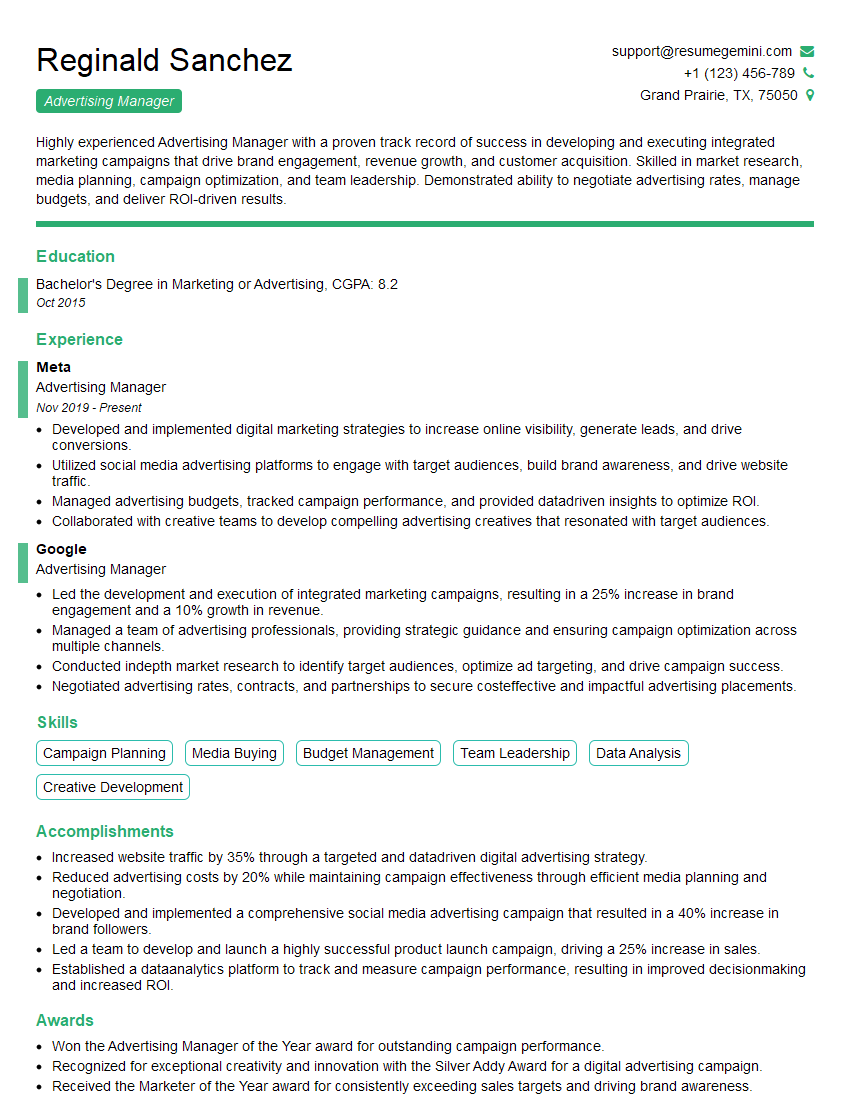
Advertising Manager Resume Sample
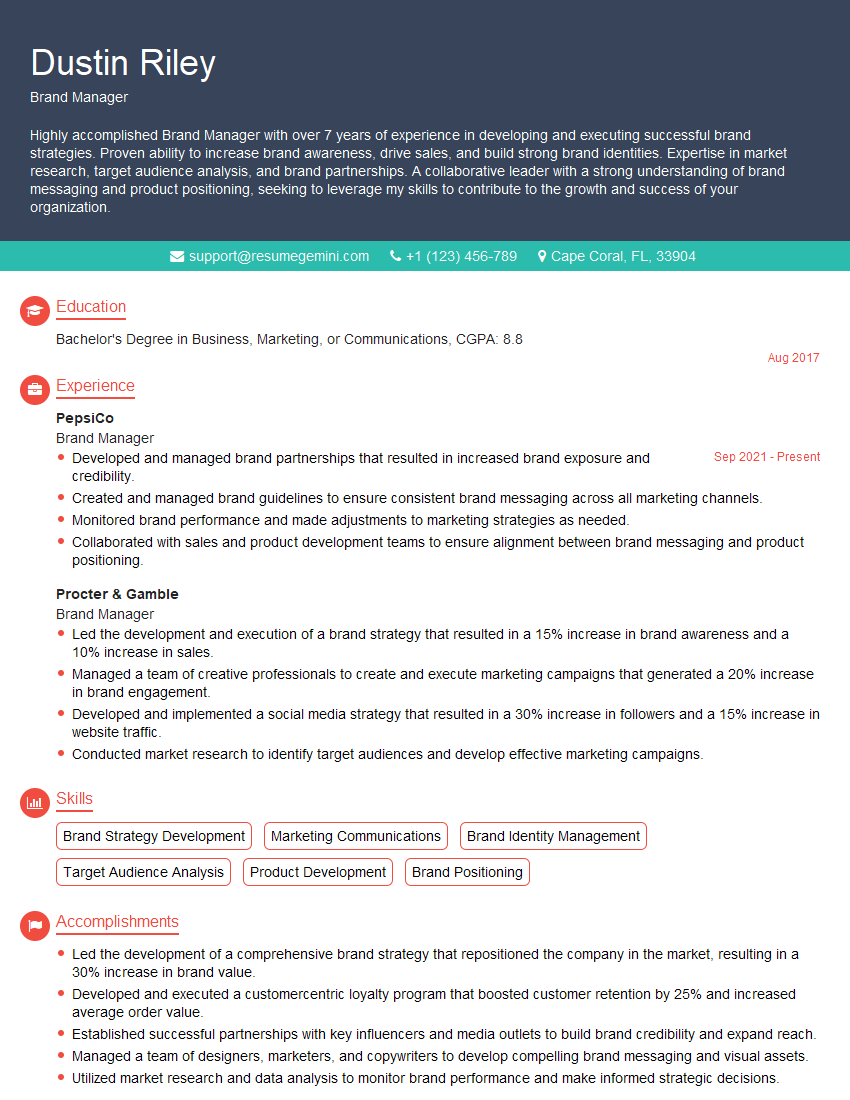
Brand Manager Resume Sample
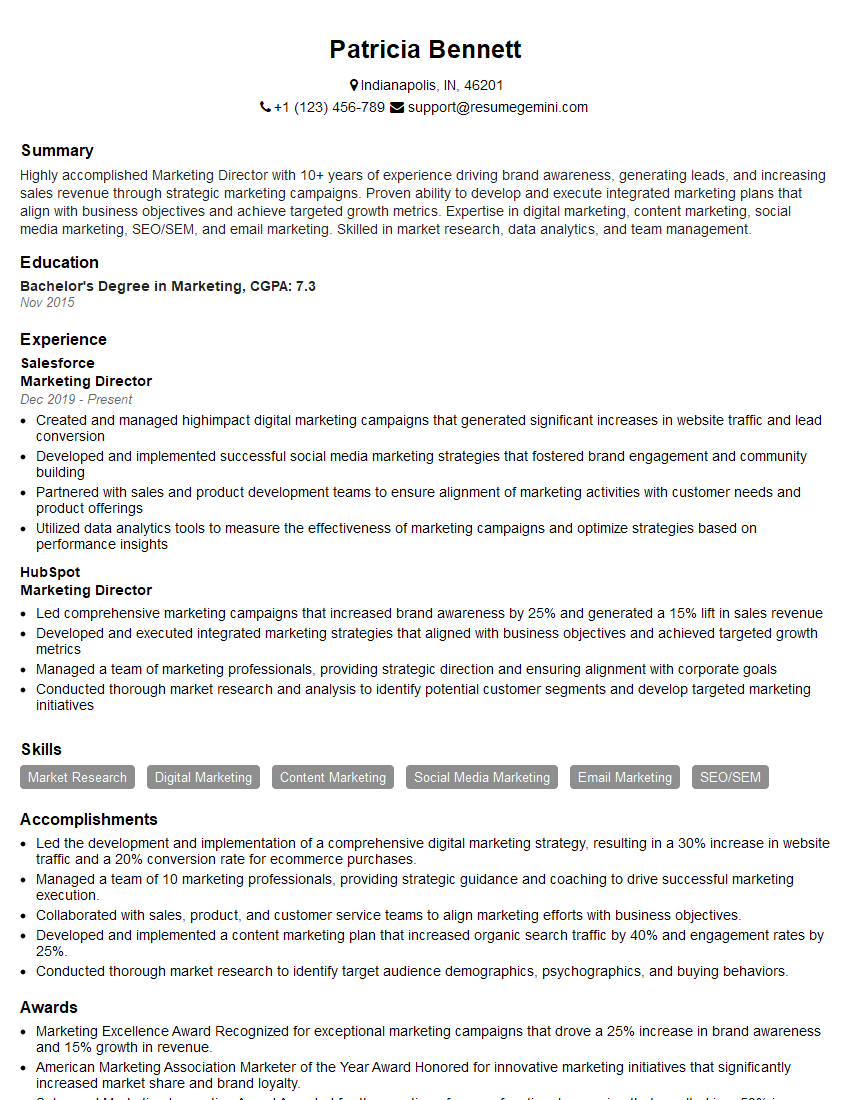
Marketing Director Resume Sample
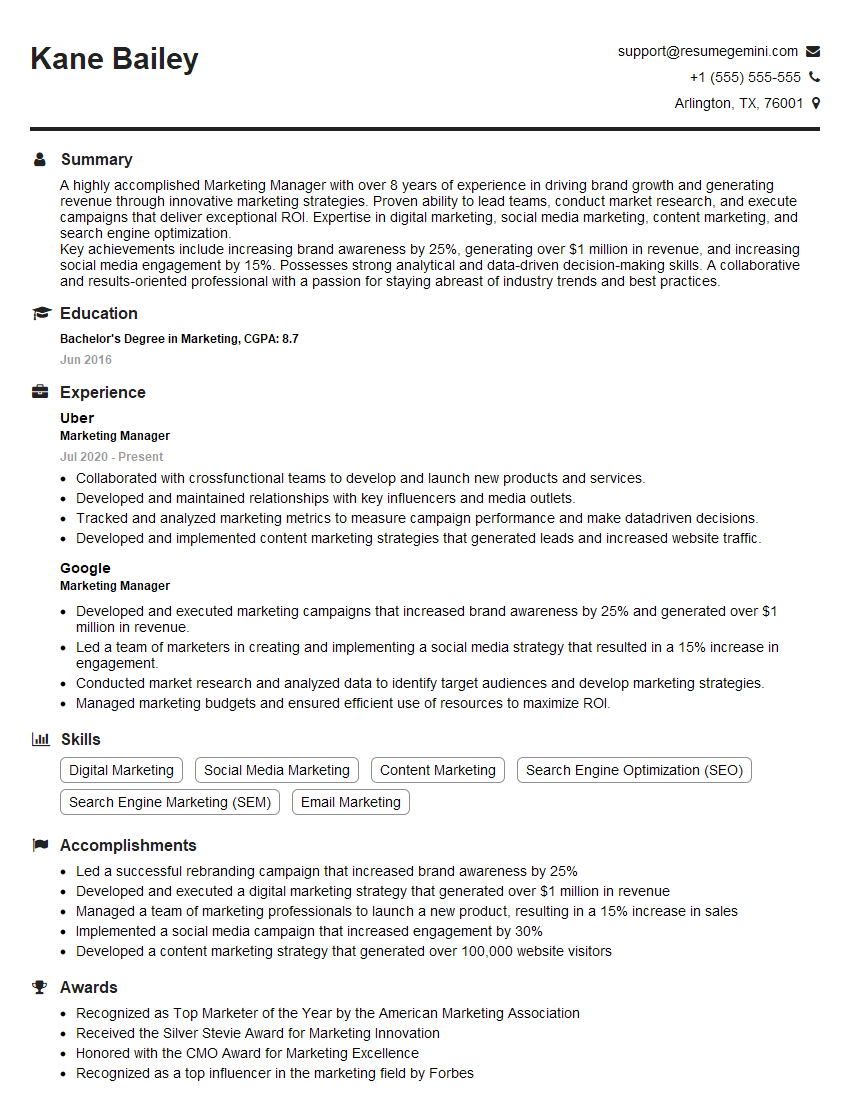
Marketing Manager Resume Sample
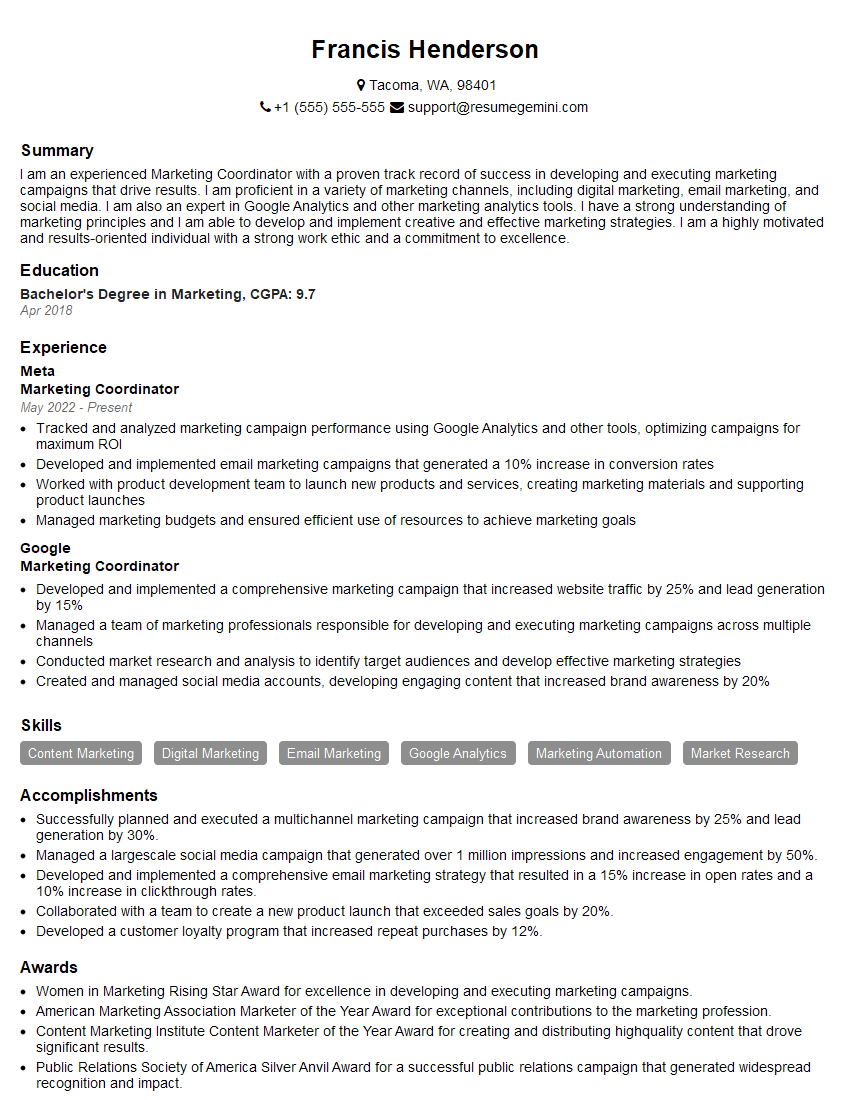
Marketing Coordinator Resume Sample

Marketing Communications Manager Resume Sample
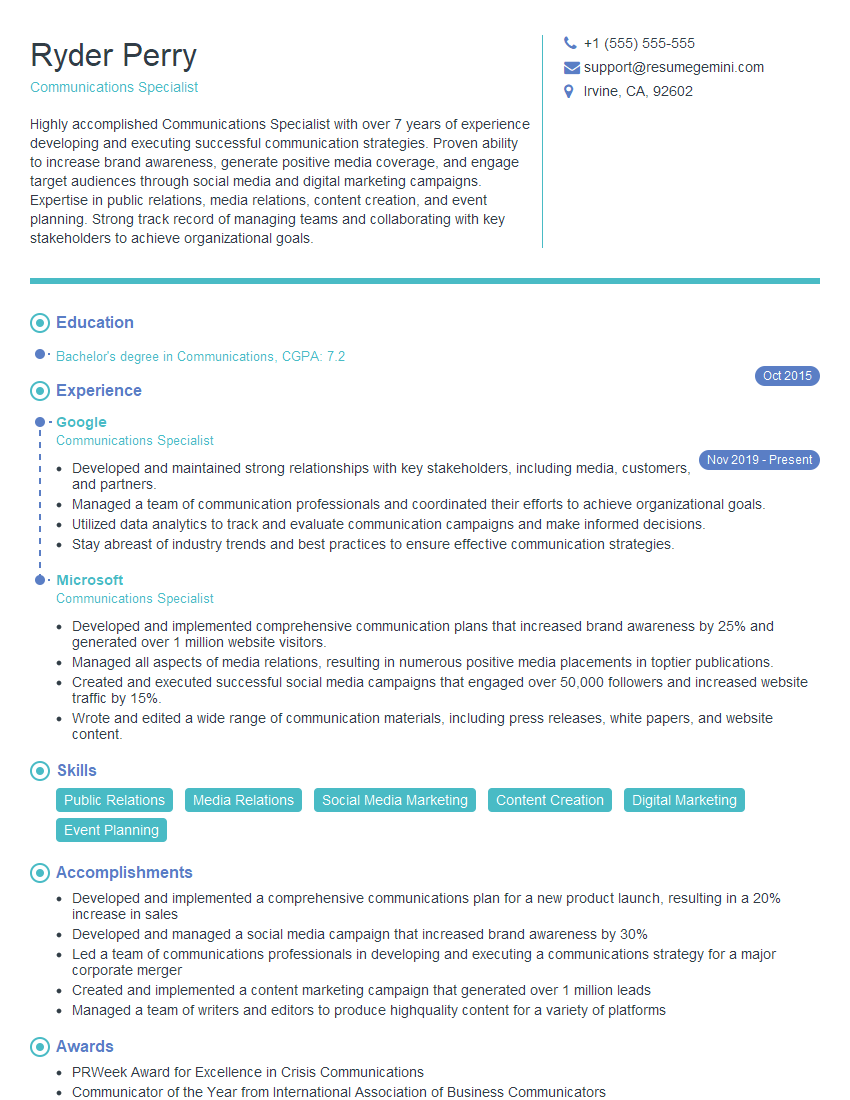
Communications Specialist Resume Sample
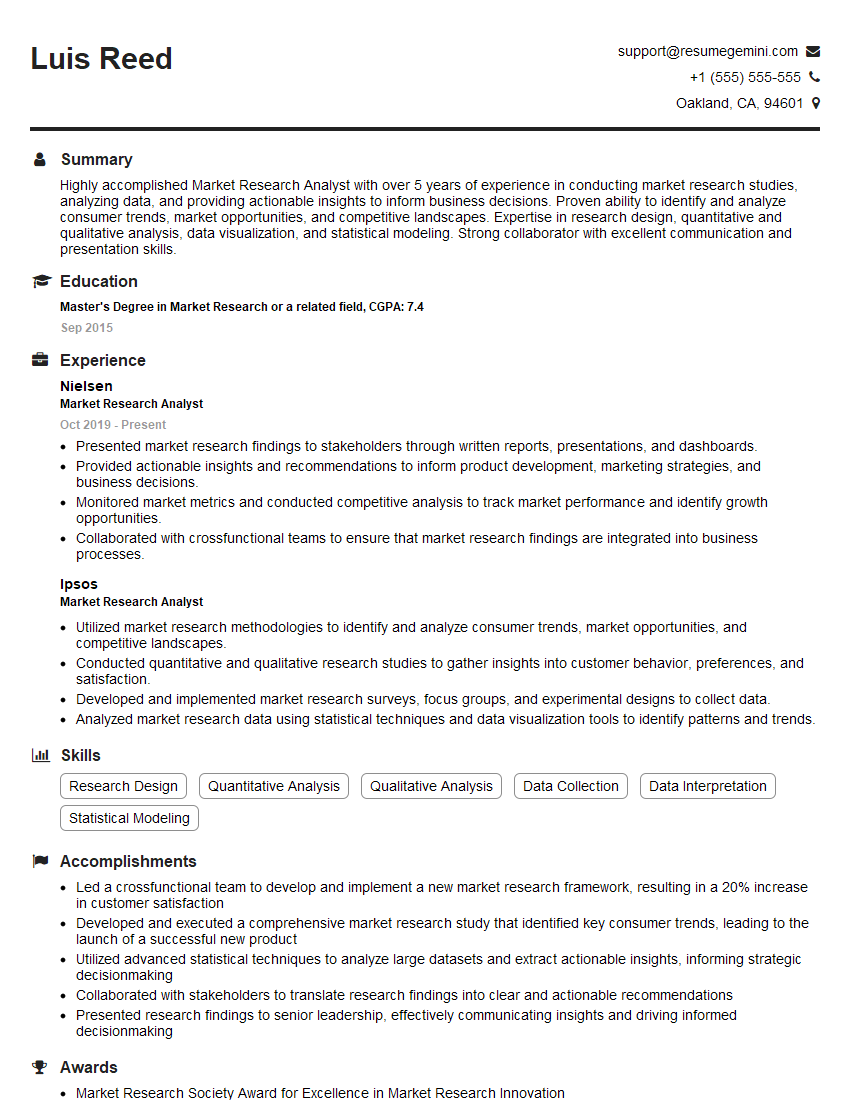
Market Research Analyst Resume Sample
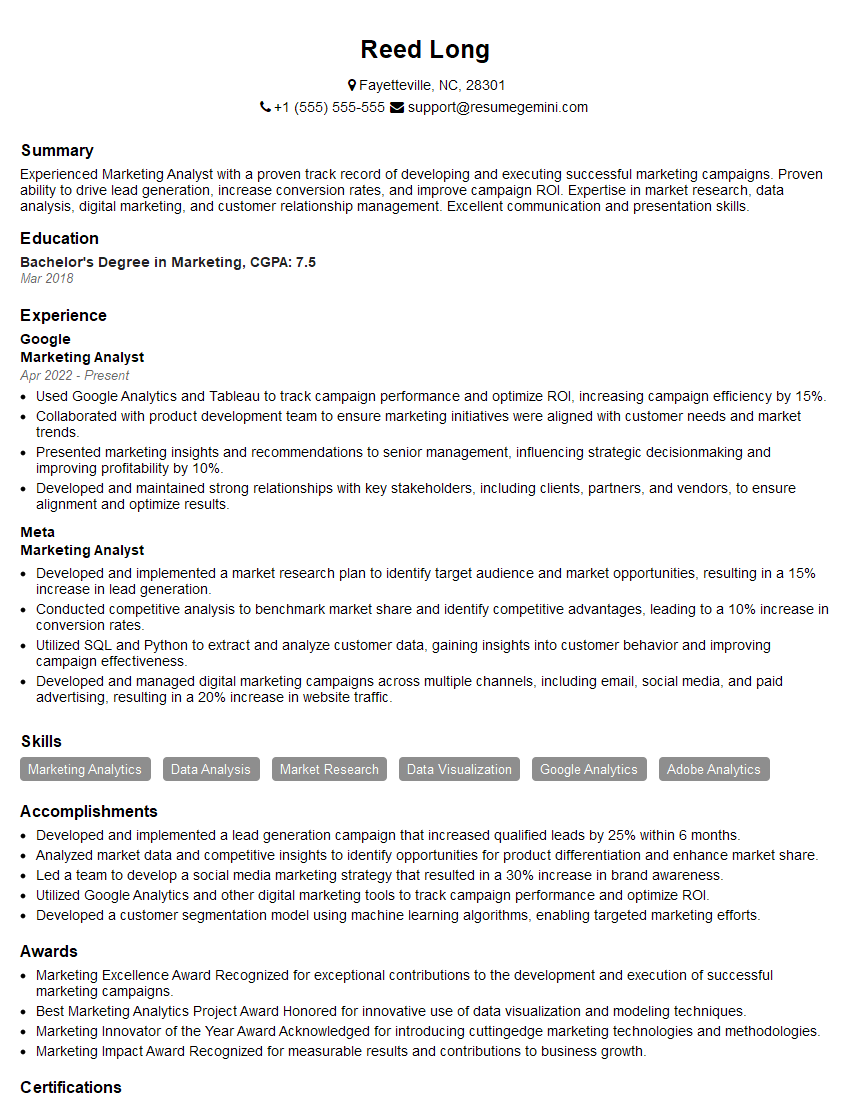
Marketing Analyst Resume Sample
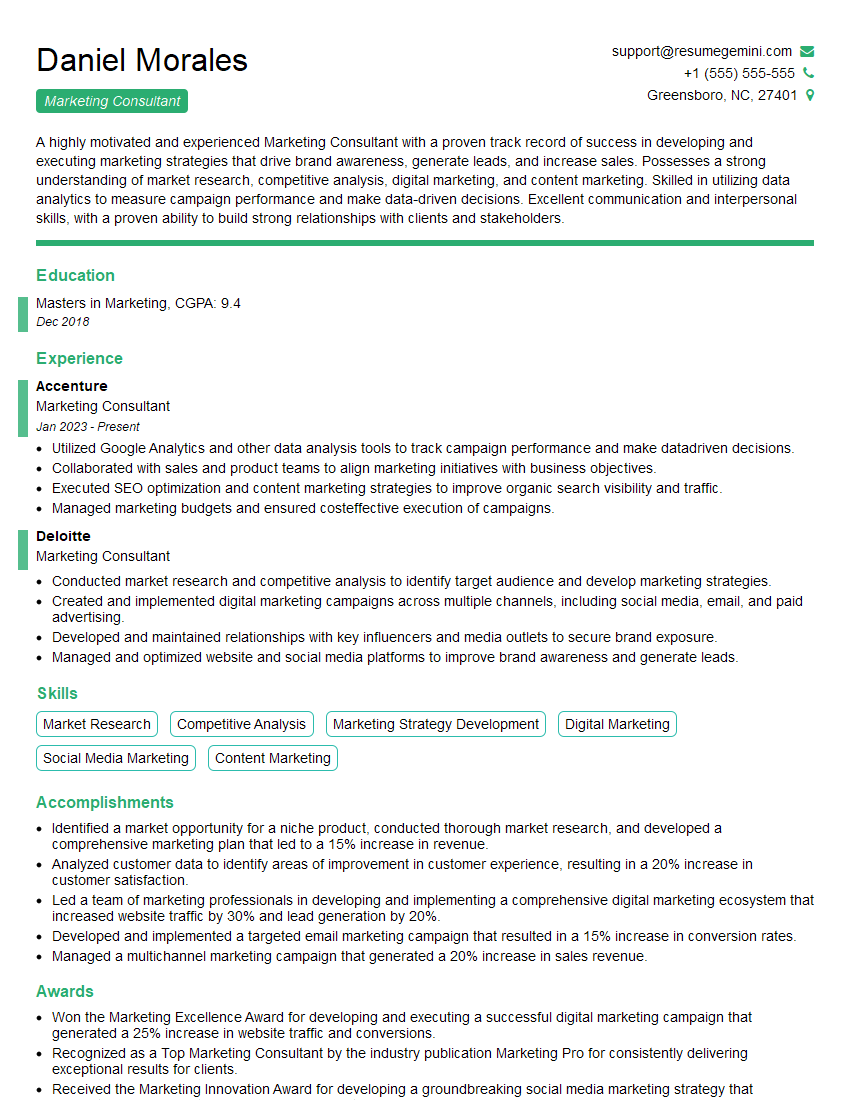
Marketing Consultant Resume Sample
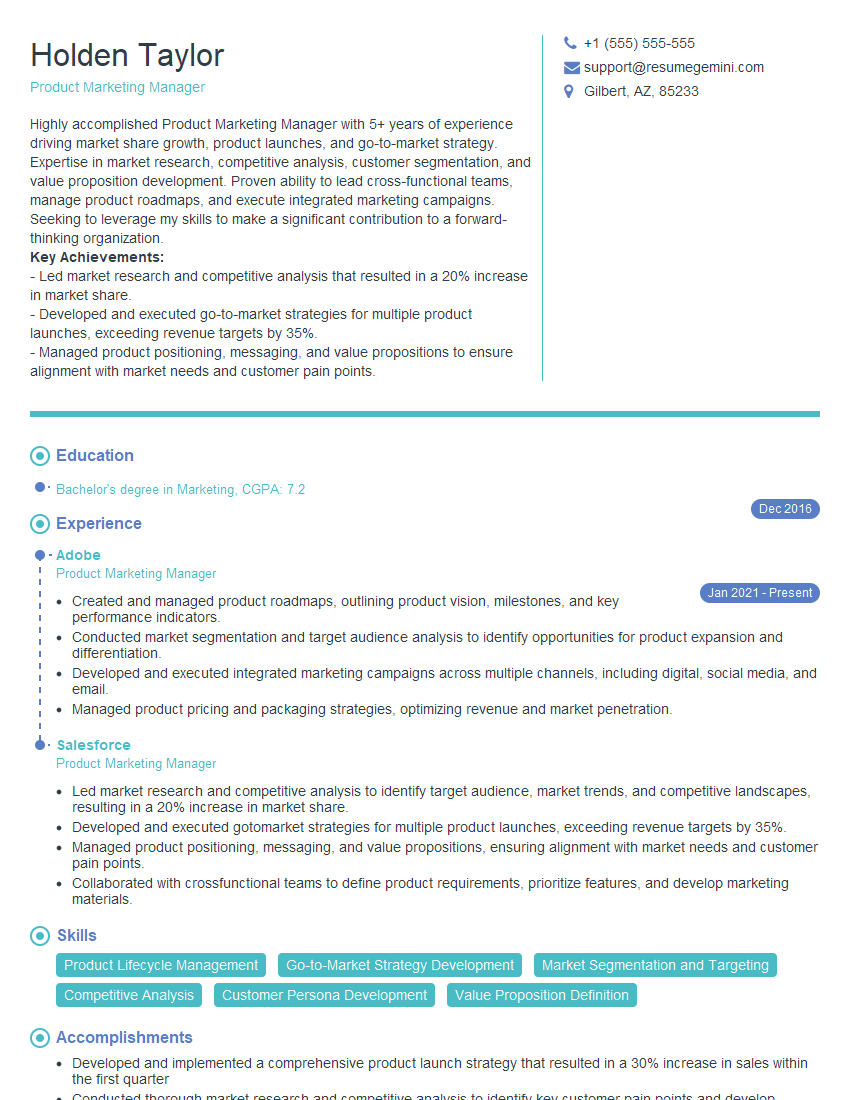
Product Marketing Manager Resume Sample

Social Media Manager Resume Sample
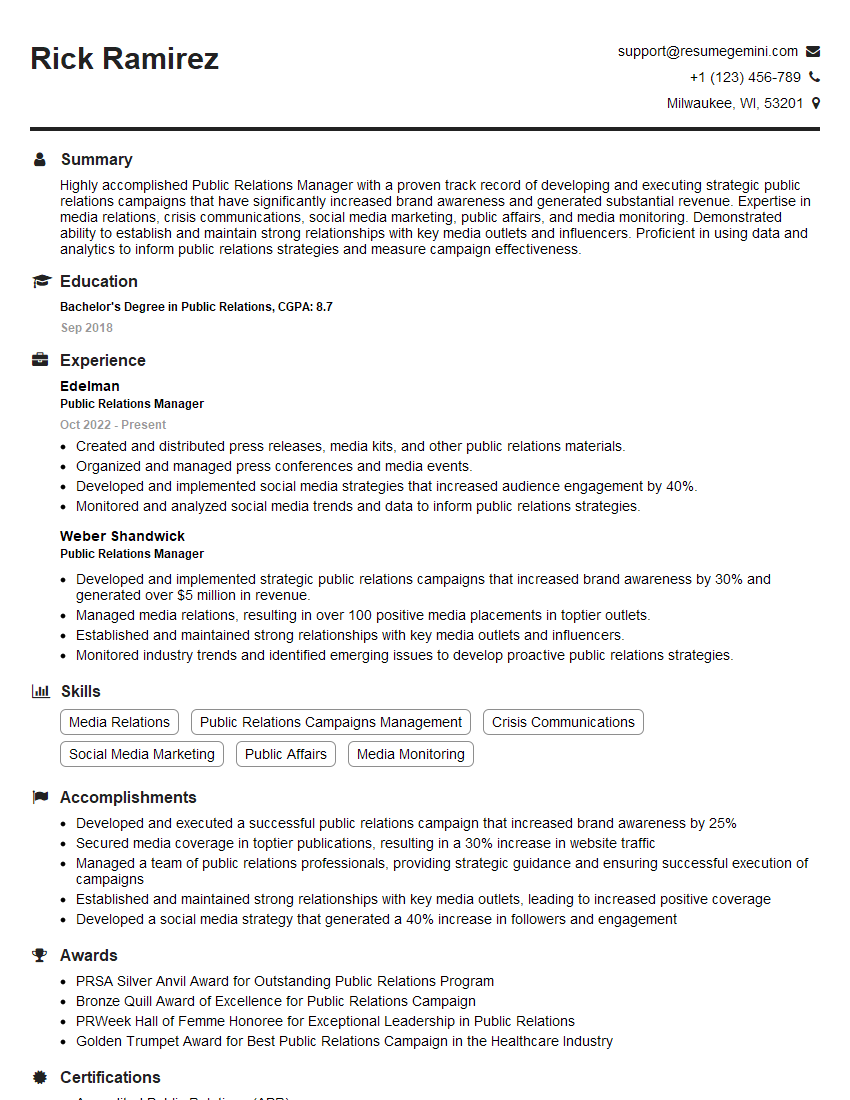
Public Relations Manager Resume Sample

Growth Hacker Resume Sample
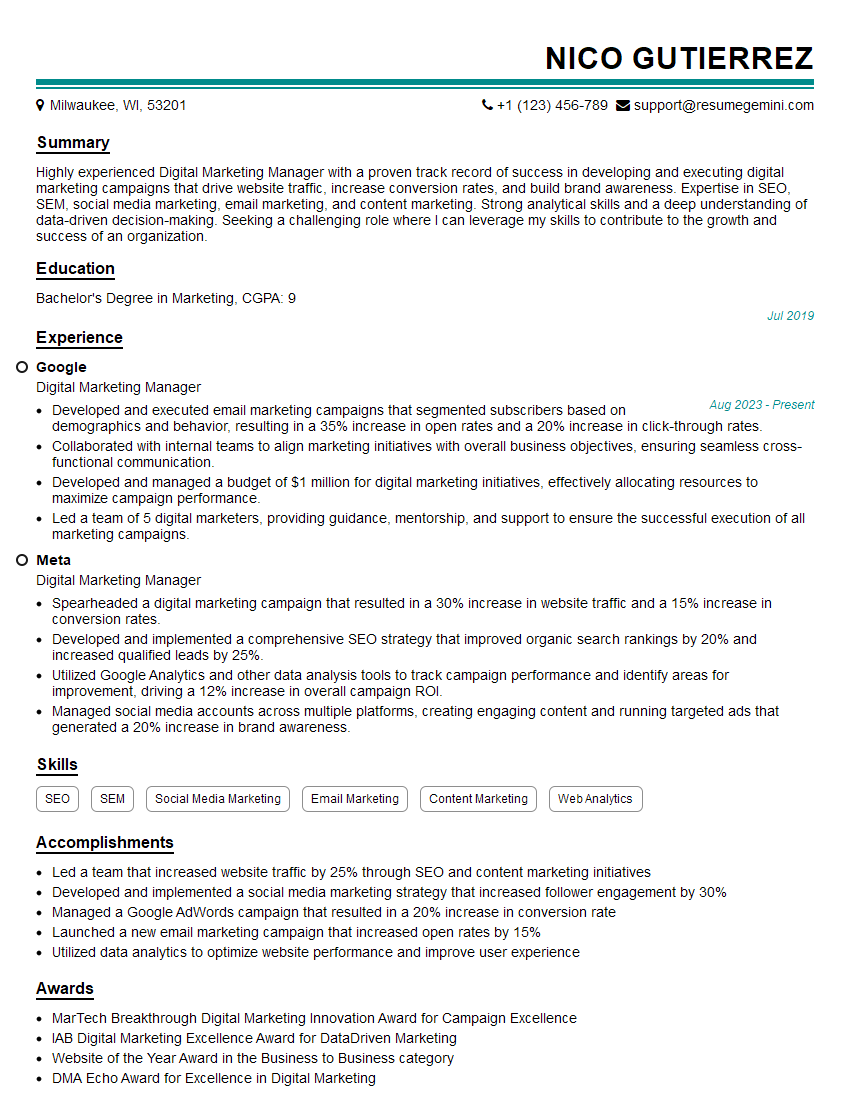
Digital Marketing Manager Resume Sample
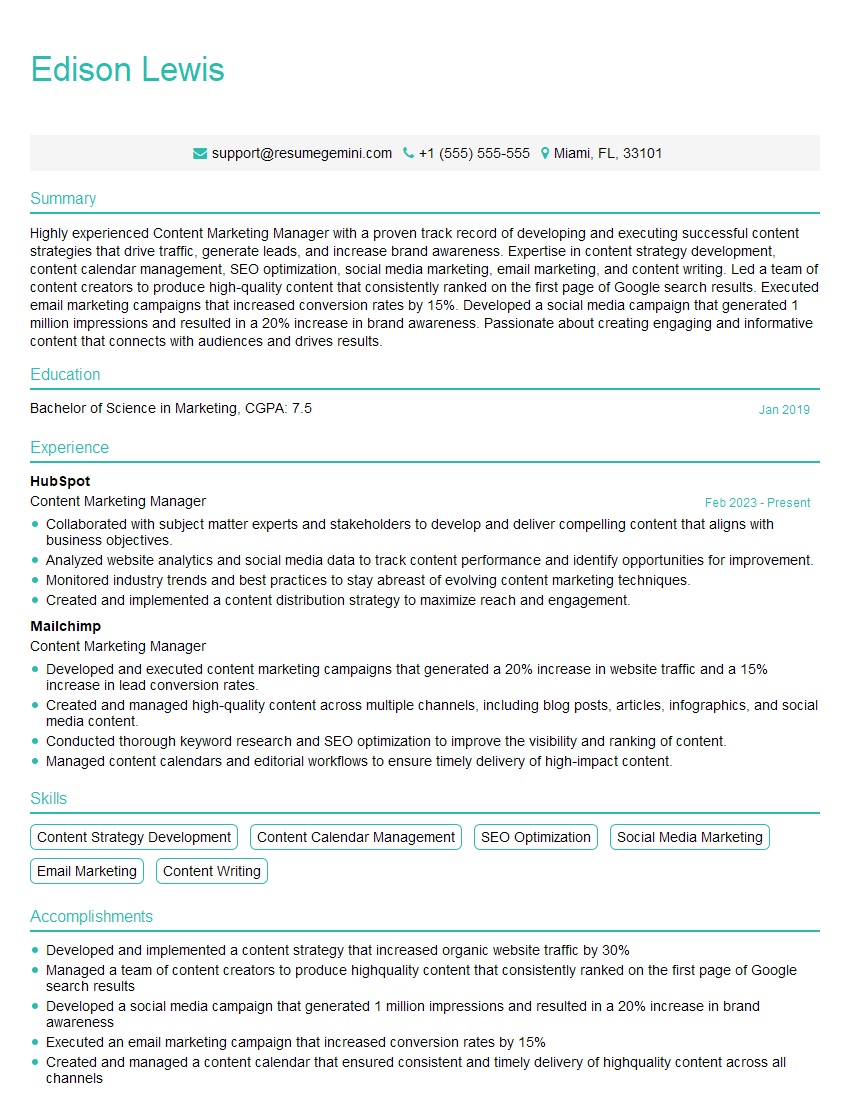
Content Marketing Manager Resume Sample
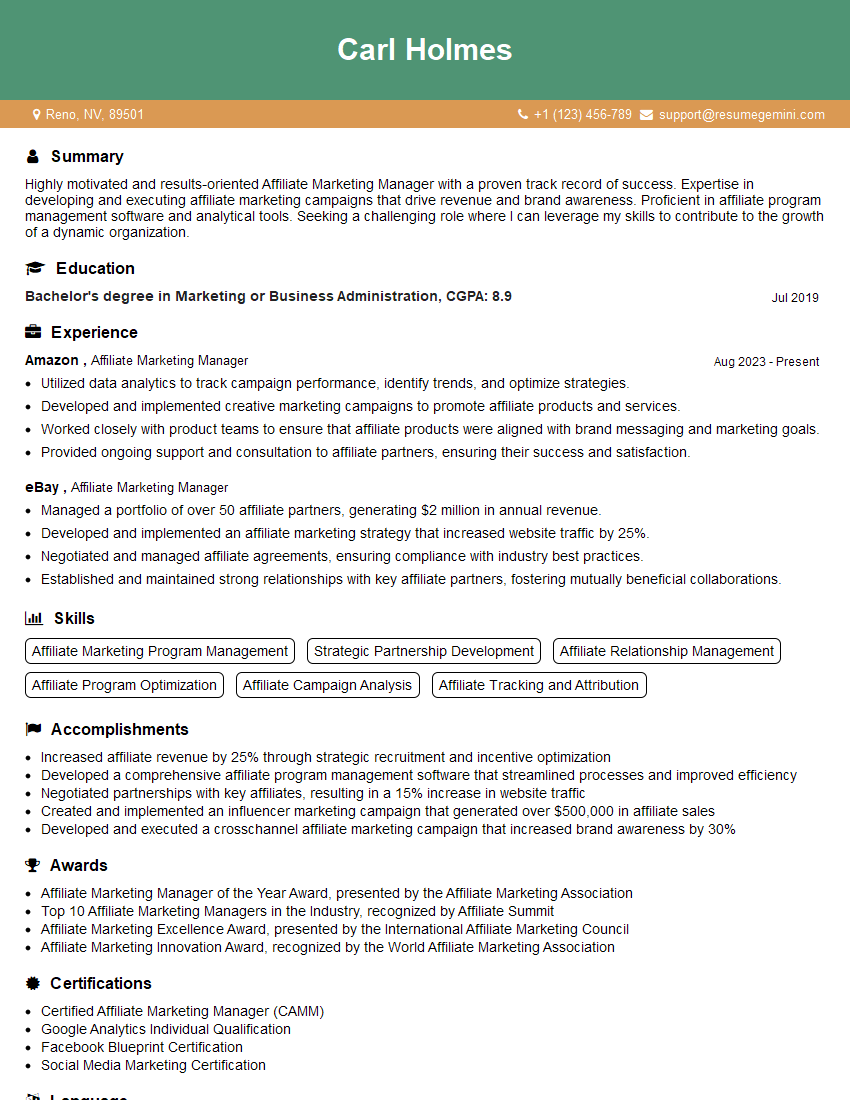
Affiliate Marketing Manager Resume Sample
- Advertising Manager
- Brand Manager
- Marketing Director
- Marketing Manager
- Marketing Coordinator
- Marketing Communications Manager
- Communications Specialist
- Market Research Analyst
- Marketing Analyst
- Marketing Consultant
- Product Marketing Manager
- Social Media Manager
- Public Relations Manager
- Growth Hacker
- Digital Marketing Manager
- Content Marketing Manager
- Affiliate Marketing Manager
Explore more articles
Users Rating of Our Blogs
Share Your Experience
We value your feedback! Please rate our content and share your thoughts (optional).
What Readers Say About Our Blog
Very informative content, great job.
good