Interviews are more than just a Q&A session—they’re a chance to prove your worth. This blog dives into essential Electrical Components interview questions and expert tips to help you align your answers with what hiring managers are looking for. Start preparing to shine!
Questions Asked in Electrical Components Interview
Q 1. Explain the difference between active and passive components.
The key difference between active and passive components lies in their ability to amplify or control power. Passive components, like resistors, capacitors, and inductors, simply respond to the applied voltage or current. They don’t require an external power source to operate and cannot amplify signals. Think of them as simple traffic controllers—they guide the flow of electricity but don’t generate or boost it.
Active components, on the other hand, such as transistors, operational amplifiers (op-amps), and integrated circuits (ICs), require an external power source to function. They can amplify signals, switch circuits, or perform complex logic operations. They are like powerful engines—they not only direct the flow of electricity but also increase its power or modify its characteristics.
Example: A resistor simply resists the flow of current, while a transistor can be used to amplify a weak signal into a much stronger one.
Q 2. Describe the operation of a capacitor and its applications.
A capacitor is a passive component that stores electrical energy in an electric field. It consists of two conductive plates separated by an insulating material called a dielectric. When a voltage is applied across the capacitor, electrons accumulate on one plate, creating an electric field that stores energy. The amount of charge a capacitor can store is directly proportional to the applied voltage and the capacitance (measured in Farads, F), a property determined by the area of the plates, the distance between them, and the dielectric material.
The capacitor’s behavior can be described by the equation: Q = CV, where Q is the charge, C is the capacitance, and V is the voltage.
Applications: Capacitors are used extensively in various applications, including:
- Filtering: Blocking DC voltage while allowing AC signals to pass, crucial in power supplies and audio circuits.
- Energy storage: In flash photography, power backup systems, and some electric vehicles.
- Timing circuits: Creating precise time delays in oscillators and timing circuits.
- Coupling and decoupling: Transferring signals between circuit stages or isolating sections of a circuit to prevent interference.
Example: In a power supply, a capacitor smooths out the pulsating DC output from a rectifier, providing a relatively steady DC voltage.
Q 3. What are the different types of resistors and their characteristics?
Resistors are passive components that impede the flow of current. They come in various types, each with specific characteristics:
- Carbon Film Resistors: Inexpensive, widely available, and suitable for general-purpose applications. They have a relatively low tolerance (e.g., ±5%).
- Metal Film Resistors: Offer better precision and stability than carbon film resistors, with tighter tolerances (e.g., ±1%).
- Wirewound Resistors: High power handling capability, commonly used in applications requiring higher wattage dissipation. They are less precise than metal film resistors.
- Surface Mount Resistors (SMD): Miniaturized resistors designed for surface mounting on printed circuit boards (PCBs), enabling higher component density.
Characteristics to consider include: Resistance value (measured in Ohms, Ω), tolerance, power rating (measured in Watts, W), and temperature coefficient (how much the resistance changes with temperature).
Example: A 1kΩ (1000 Ω) resistor with a ±5% tolerance would have a resistance value between 950 Ω and 1050 Ω. The power rating indicates how much power the resistor can dissipate without overheating.
Q 4. Explain the working principle of an inductor.
An inductor is a passive component that stores energy in a magnetic field. It typically consists of a coil of wire wound around a core material. When current flows through the coil, it generates a magnetic field. The inductance (measured in Henries, H) determines the amount of energy stored for a given current. Inductors oppose changes in current; the larger the inductance, the greater the opposition to change.
This opposition is described by the equation: V = L(di/dt), where V is the voltage across the inductor, L is the inductance, and di/dt is the rate of change of current.
Working Principle: When the current through the inductor increases, the magnetic field expands, inducing a voltage that opposes the increase in current. Conversely, when the current decreases, the collapsing magnetic field induces a voltage that tries to maintain the current.
Applications: Inductors are used in various applications, including:
- Filtering: Blocking high-frequency AC signals while allowing DC current to pass.
- Energy storage: In switched-mode power supplies (SMPS).
- Resonant circuits: In radio frequency (RF) circuits and oscillators.
- Chokes: Suppressing high-frequency noise in power supplies.
Example: In a switching power supply, an inductor smooths out the current fluctuations, providing a more stable output voltage.
Q 5. What are the key parameters of a transistor?
Transistors are active semiconductor components that act as electronic switches or amplifiers. Key parameters include:
- Current Gain (β or hFE): The ratio of collector current to base current in a bipolar junction transistor (BJT). A higher β indicates a greater amplification capability.
- Voltage Gain: The ratio of output voltage to input voltage in an amplifier configuration.
- Input Impedance (Zin): The resistance seen by the input signal source. A high input impedance means less loading of the signal source.
- Output Impedance (Zout): The resistance seen by the load connected to the output. A low output impedance means better power transfer to the load.
- Power Dissipation (Pd): The maximum power the transistor can safely dissipate without overheating. This is crucial for selecting an appropriate transistor for a given application.
- Operating Voltage and Current Ranges: The voltage and current ranges within which the transistor can operate reliably.
Example: In a common-emitter amplifier configuration, a transistor with a high β value is desired to achieve high current amplification. The power dissipation rating helps determine whether a transistor can handle the expected power demands of the circuit.
Q 6. How do you select appropriate components for a circuit design?
Selecting appropriate components is crucial for successful circuit design. The process involves several steps:
- Understanding the circuit requirements: Determine the desired functionality, input/output voltage and current levels, frequency response, and power requirements.
- Component selection based on specifications: Choose components that meet or exceed the circuit’s requirements. Consider factors like tolerance, power rating, temperature coefficient, and operating voltage/current ranges.
- Component datasheets review: Consult datasheets to verify component parameters and ensure compatibility with the chosen components.
- Simulation and prototyping: Simulate the circuit using software (like LTSpice or Multisim) to verify its functionality and refine the component selection. Build a prototype to test the circuit in a real-world environment.
- Testing and adjustment: Thoroughly test the circuit to ensure it performs as expected. Adjustments may be necessary to optimize the performance.
Example: Designing a power amplifier requires selecting transistors with high power dissipation ratings and appropriate current gain to achieve the desired output power. Capacitors and inductors will be needed for filtering and energy storage, and their values will need to be carefully selected to ensure stable operation.
Q 7. Describe different types of integrated circuits (ICs).
Integrated circuits (ICs) are miniature electronic circuits that combine many transistors, resistors, capacitors, and other components on a single silicon chip. They come in many types, categorized by their functionality:
- Digital ICs: Perform logic operations and data processing. Examples include logic gates (AND, OR, NOT), flip-flops, microprocessors, and memory chips.
- Analog ICs: Process continuous signals, such as voltage or current. Examples include operational amplifiers (op-amps), analog-to-digital converters (ADCs), and digital-to-analog converters (DACs).
- Mixed-signal ICs: Combine both digital and analog circuitry on a single chip, often used in applications requiring both types of signal processing.
- Application-Specific Integrated Circuits (ASICs): Custom-designed ICs tailored for specific applications, offering high performance and efficiency. They are more expensive and have longer development times compared to off-the-shelf ICs.
- Field-Programmable Gate Arrays (FPGAs): Programmable logic devices that allow users to configure the circuit’s functionality after manufacturing. They provide flexibility and adaptability for various applications.
Example: A microprocessor is a complex digital IC that executes instructions to perform computations and control operations in a computer. An operational amplifier is an analog IC commonly used for signal amplification and filtering.
Q 8. What are the common failure modes of electrical components?
Electrical components, like any physical object, are subject to failure. Understanding common failure modes is crucial for effective design, maintenance, and troubleshooting. These modes often depend heavily on the component type, but some general categories include:
- Open Circuits: A break in the conductive path, preventing current flow. Imagine a broken wire – no electricity can pass. This is common in wires, resistors (due to overheating), and capacitors (due to dielectric breakdown).
- Short Circuits: An unintended path for current, often leading to excessive heat and component damage. Think of it like a shortcut for electricity; it bypasses the intended path, often drawing too much current. This can happen in damaged insulation, improperly soldered components, or due to component degradation (e.g., electrolytic capacitor failure).
- Overheating: Excessive current or power dissipation can cause components to overheat, leading to degradation, material changes, and eventual failure. Resistors are particularly prone to this, as are integrated circuits (ICs) if they exceed their power ratings. The heat can melt solder joints, damage semiconductors, or even cause fires.
- Dielectric Breakdown: In components like capacitors, this refers to the failure of the insulating material, causing a short circuit. It’s often caused by excessive voltage stress exceeding the component’s rated voltage. Think of it like punching a hole through the insulation.
- Mechanical Failure: Physical damage such as cracks, loose connections, or broken leads can disrupt functionality. This is more prevalent in connectors, switches, and physically stressed components.
- Electrochemical Degradation: This is a slow process where chemical reactions within the component lead to changes in its properties, eventually affecting performance. Electrolytic capacitors are highly susceptible to this.
Understanding these failure modes helps engineers choose appropriate components, implement robust designs, and employ effective testing and preventive maintenance strategies.
Q 9. How do you troubleshoot a faulty circuit?
Troubleshooting a faulty circuit involves a systematic approach. It’s like detective work! Here’s a typical procedure:
- Visual Inspection: Begin with a careful visual inspection. Look for obvious signs of damage, such as burned components, loose connections, or broken wires. Often, the problem is readily apparent.
- Check Power Supply: Verify the power supply is providing the correct voltage and current. A simple multimeter is invaluable here. A faulty power supply is a very common source of problems.
- Measure Voltages: Use a multimeter to measure voltages at various points in the circuit, comparing them to the expected values based on the schematic. Discrepancies pinpoint problematic areas. For example, zero volts where you expect a specific voltage suggests an open circuit.
- Check for Short Circuits: A multimeter can also detect short circuits, which would show an unexpectedly low resistance reading between two points.
- Component Testing: If the problem isn’t immediately obvious, test individual components using a multimeter or specialized component testers. This will isolate faulty resistors, capacitors, transistors, etc.
- Signal Tracing: For more complex circuits, use an oscilloscope to trace signals and identify areas where the signal is corrupted or absent.
- Schematic Review: Always refer to the circuit schematic. This provides crucial information about the intended connections and signal paths. It’s the roadmap for troubleshooting.
Remember to always disconnect power before performing any tests to avoid electrical shock. Safety first!
Q 10. Explain the importance of datasheets in component selection.
Datasheets are the bible for component selection. They provide comprehensive information about a component’s electrical, mechanical, and thermal characteristics. They are indispensable for ensuring the component meets the requirements of your design. Imagine building a house without blueprints – you’d be in trouble! Datasheets play the same vital role in electronics.
- Electrical Specifications: Datasheets detail key parameters such as voltage ratings, current ratings, power dissipation, impedance, capacitance, and inductance. These are crucial for selecting components that can handle the expected operating conditions.
- Mechanical Specifications: This section covers physical dimensions, weight, mounting options, and lead configurations. This ensures your component fits physically into your design.
- Environmental Specifications: They specify the operating temperature range, humidity tolerance, and other environmental factors the component can withstand. Critical for reliable operation in various conditions.
- Tolerance: Datasheets indicate the tolerance of key parameters. For example, a 100-ohm resistor with a 5% tolerance could have a resistance anywhere between 95 ohms and 105 ohms. Understanding tolerances helps anticipate the range of actual values.
- Reliability Data: Some datasheets provide information on failure rates and mean time between failures (MTBF), valuable for assessing the long-term reliability of the design.
Using a datasheet ensures component compatibility, prevents design errors, and helps in the selection of reliable components suitable for the intended application. Never start a design without consulting the datasheet!
Q 11. What are the different types of connectors used in electronics?
Connectors are essential for interfacing different parts of an electronic system. They come in a vast array of types, each optimized for specific applications. Some common examples include:
- Wire-to-Wire Connectors: These connect wires together, often using crimped terminals. Common examples are screw terminals, crimp connectors, and solderless connectors.
- Wire-to-Board Connectors: These connect wires to printed circuit boards (PCBs). Popular options include header connectors, pin connectors, and various types of sockets.
- Board-to-Board Connectors: These connect PCBs together. Examples include edge connectors, stacking connectors, and mezzanine connectors.
- Backplane Connectors: Used for high-speed data transmission and typically found in larger systems, servers, or telecommunications equipment.
- Circular Connectors: These are robust and commonly used in harsh environments or where high reliability is required. They are often waterproof or sealed. Examples include military-grade connectors and aviation connectors.
- Rectangular Connectors: These come in various sizes and configurations, suitable for a broad range of applications, including computer peripherals and industrial control systems.
- RF Connectors: Designed for radio frequency signals, they minimize signal loss and ensure proper impedance matching. Examples include BNC, SMA, and N connectors.
Selecting the appropriate connector depends on factors like the number of connections, current carrying capacity, signal frequency, environmental conditions, and cost. A connector failure can be a major design flaw, so choice is critical.
Q 12. Explain the concept of impedance matching.
Impedance matching is the technique of ensuring that the impedance of a source (e.g., a transmitter) is equal to the impedance of a load (e.g., a receiver). Think of it as a smooth transition for electrical energy. Mismatch leads to reflections, signal loss, and reduced power transfer.
Why is it important? When impedance is mismatched, some of the signal energy is reflected back towards the source instead of being delivered to the load. This is analogous to trying to push a heavy box across a rough floor. The friction (mismatched impedance) reduces the efficiency of your pushing (signal transfer).
How is it achieved? Impedance matching is achieved using matching networks, which are typically composed of inductors and capacitors. These networks transform the impedance of the source to match the impedance of the load. The specific design of the matching network depends on the source and load impedances and the frequency of the signal.
Examples: Impedance matching is particularly crucial in high-frequency applications, such as radio frequency (RF) systems and transmission lines. A mismatched antenna can result in significant signal loss and poor performance.
Q 13. What are the different types of power supplies and their applications?
Power supplies are essential for providing the necessary voltage and current to electronic devices. Several types exist, each with specific characteristics and applications:
- Linear Power Supplies: These are simple and inexpensive, but less efficient. They use a linear regulator to step down the voltage. Think of them as a simple voltage divider. They’re suitable for low-power applications where efficiency is not paramount.
- Switching Power Supplies (SMPS): These are highly efficient and are widely used in modern electronics. They use switching transistors to rapidly switch the voltage on and off, providing a much more efficient conversion than linear regulators. They are ideal for higher-power applications, where efficiency and size are important.
- Uninterruptible Power Supplies (UPS): These provide backup power during outages, preventing data loss and ensuring the continued operation of critical equipment. They’re often used for computers, servers, and medical devices.
- Battery Power Supplies: These use batteries as the source of power. They are portable and widely used in mobile electronics.
- AC-DC Power Supplies: These convert AC voltage from the mains to DC voltage required by most electronic circuits. This is the ubiquitous wall-wart type of power supply found in many devices.
- DC-DC Power Supplies: These convert one DC voltage level to another DC voltage level. They are often used to create multiple voltage rails within a system.
The choice of power supply depends on factors like required voltage, current, efficiency requirements, size constraints, and cost. Choosing the wrong power supply can lead to component damage, device failure, or even fire hazards.
Q 14. Describe the different types of filters and their uses.
Filters are circuits designed to pass certain frequencies while attenuating (reducing the amplitude of) others. They’re essential for removing unwanted noise or isolating specific frequency bands. Think of them as sieves for electrical signals.
- Low-pass Filters: These allow low-frequency signals to pass while attenuating high-frequency signals. Imagine a filter that only lets the bass through, blocking the treble.
- High-pass Filters: These allow high-frequency signals to pass while attenuating low-frequency signals. This is like a filter letting only the treble through, blocking the bass.
- Band-pass Filters: These allow a specific range of frequencies to pass while attenuating frequencies outside that range. Like a filter letting only the mid-range frequencies through.
- Band-stop Filters (Notch Filters): These attenuate a specific range of frequencies while allowing frequencies outside that range to pass. This removes unwanted noise or interference within a specific frequency band.
Filters can be implemented using passive components like resistors, capacitors, and inductors or active components like operational amplifiers (op-amps). The choice of filter type and implementation depends on the specific application, frequency response requirements, and other design considerations. Filters are crucial for signal processing and noise reduction in many applications.
Q 15. Explain the concept of signal integrity.
Signal integrity refers to the fidelity of a signal as it travels through a circuit. Think of it like sending a message – you want the message to arrive at its destination unchanged and clear. In electronics, that message is the signal, and any distortion, noise, or attenuation during transmission compromises signal integrity. This can lead to malfunctioning circuits, data corruption, or even complete system failure.
Factors affecting signal integrity include impedance mismatches (think of a sudden change in the width of a water pipe causing a pressure surge), reflections (like echoes in a canyon), crosstalk (adjacent signal lines interfering like two conversations overlapping), and electromagnetic interference (EMI, external noise affecting the signal like static on a radio).
Maintaining signal integrity is crucial in high-speed digital circuits, where even slight distortions can cause errors. Techniques like controlled impedance transmission lines, proper grounding, and shielding are employed to mitigate these issues. For instance, in a high-speed data center, ensuring signal integrity is paramount for reliable data transfer between servers, using techniques like differential signaling to minimize noise and EMI.
Career Expert Tips:
- Ace those interviews! Prepare effectively by reviewing the Top 50 Most Common Interview Questions on ResumeGemini.
- Navigate your job search with confidence! Explore a wide range of Career Tips on ResumeGemini. Learn about common challenges and recommendations to overcome them.
- Craft the perfect resume! Master the Art of Resume Writing with ResumeGemini’s guide. Showcase your unique qualifications and achievements effectively.
- Don’t miss out on holiday savings! Build your dream resume with ResumeGemini’s ATS optimized templates.
Q 16. What are the different types of sensors and their applications?
Sensors are devices that detect and respond to physical phenomena like light, temperature, pressure, or motion. They convert these phenomena into electrical signals that can be processed and interpreted by a system. There’s a wide variety, categorized based on the physical quantity they measure.
- Temperature Sensors: Thermocouples, thermistors, RTDs (Resistance Temperature Detectors). Applications range from industrial process control to weather monitoring.
- Pressure Sensors: Piezoresistive, capacitive, and strain gauge-based sensors. Used in everything from tire pressure monitoring systems to aircraft altimeters.
- Light Sensors: Photodiodes, phototransistors, photoresistors. Applications include cameras, light meters, and automated lighting systems.
- Motion Sensors: Accelerometers, gyroscopes, magnetometers. Found in smartphones, robotics, and automotive safety systems.
- Position Sensors: Potentiometers, encoders, Hall-effect sensors. Essential in robotic arms, industrial automation, and vehicle control systems.
The choice of sensor depends entirely on the specific application. For example, a high-precision medical instrument might need a very accurate and stable temperature sensor, while a simple consumer product might use a less expensive, lower-accuracy alternative.
Q 17. How do you ensure the reliability of a circuit design?
Ensuring circuit reliability involves a multifaceted approach, encompassing design, component selection, and testing. Think of building a house – you wouldn’t use substandard materials or skip crucial steps in the construction process.
- Robust Design: Incorporating sufficient safety margins, considering worst-case scenarios (e.g., temperature variations, power fluctuations), and using appropriate simulation tools to verify the design’s performance under different conditions.
- Component Selection: Choosing high-quality, reliable components from reputable manufacturers, ensuring they meet or exceed the required specifications. Considering derating components – operating them at a lower voltage or current than their maximum ratings to extend their lifespan and reliability.
- Thermal Management: Effective heat dissipation is crucial. Proper heat sinking and airflow management prevent overheating, which is a major cause of component failure.
- Manufacturing Considerations: Employing controlled manufacturing processes, appropriate soldering techniques, and quality control measures to minimize defects.
- Testing and Verification: Thorough testing throughout the design and manufacturing process, including functional tests, environmental stress tests (e.g., temperature cycling, vibration), and reliability tests (e.g., accelerated life testing).
For instance, in automotive electronics, reliability is paramount due to safety-critical applications. Extensive testing and stringent quality control are essential to ensure the consistent and dependable operation of components even under harsh environmental conditions.
Q 18. What are the different types of testing methods for electrical components?
Testing electrical components involves various methods depending on the component type and the desired level of detail.
- Functional Testing: Verifying that the component operates as specified under normal operating conditions. This could involve measuring voltage, current, resistance, or other relevant parameters.
- Parametric Testing: Measuring the electrical characteristics of the component, such as capacitance, inductance, or gain. This is often done using specialized test equipment.
- Environmental Stress Testing: Exposing the component to extreme conditions (temperature, humidity, vibration) to assess its robustness and reliability under stress.
- Life Testing: Operating the component under normal or accelerated conditions for an extended period to determine its lifespan and failure rate. Accelerated life testing uses higher stress levels to shorten the testing time.
- Non-Destructive Testing: Methods like X-ray inspection or visual inspection that don’t damage the component are used to detect defects.
- Destructive Testing: Involves damaging the component to evaluate its internal structure or failure mechanisms. Examples include tensile testing or pull testing.
The specific tests used will depend on the application. For example, a critical component in a spacecraft might undergo far more rigorous testing than a component in a simple consumer electronic device.
Q 19. Explain the difference between analog and digital signals.
Analog and digital signals represent information differently. Imagine a dimmer switch (analog) versus an on/off light switch (digital).
Analog signals are continuous and vary smoothly over time. Their amplitude and frequency can take on any value within a range. Think of a voltage that can be 1.5V, 2.7V, 3.14V, etc. They’re like a smoothly flowing river.
Digital signals, on the other hand, are discrete. They represent information as a sequence of binary digits (bits), typically 0 or 1, representing low and high voltage levels. They switch abruptly between these levels, representing a series of on/off states. It’s like a series of on/off clicks from a light switch.
Analog signals are susceptible to noise and distortion more easily than digital signals, which are more resilient due to their discrete nature. Digital signals are easier to process and transmit long distances using digital signal processing techniques. However, converting analog signals to digital format (analog-to-digital conversion or ADC) can introduce quantization errors. Analog signals are often used in sensors and audio applications, while digital signals are dominant in computers and digital communication systems.
Q 20. Describe different types of semiconductor devices.
Semiconductor devices are electronic components made from materials with electrical conductivity between that of a conductor and an insulator, like silicon or germanium. They form the basis of modern electronics.
- Diodes: Allow current to flow in only one direction, acting like a one-way valve. Used for rectification (converting AC to DC) and signal processing.
- Transistors: Act as electronic switches or amplifiers, controlling larger currents with smaller control signals. The foundation of modern integrated circuits (ICs).
- Integrated Circuits (ICs): Contain millions or billions of transistors and other components on a single chip. The brains of modern electronics, allowing for miniaturization and high functionality.
- MOSFETs (Metal-Oxide-Semiconductor Field-Effect Transistors): A type of transistor widely used in digital circuits and power electronics due to their energy efficiency and ease of fabrication.
- BJTs (Bipolar Junction Transistors): Another type of transistor, often used in analog circuits and high-frequency applications.
- Op-amps (Operational Amplifiers): Highly versatile ICs used for signal amplification, filtering, and other signal processing tasks.
Each type of semiconductor device plays a specific role in electronic systems. For example, MOSFETs are crucial in modern microprocessors, while diodes are essential in power supplies.
Q 21. What are the key considerations for PCB design?
PCB (Printed Circuit Board) design is a critical aspect of electronics manufacturing. It’s like designing the ‘roadmap’ for electronic components.
- Component Placement: Strategic placement of components to minimize signal path lengths, reduce crosstalk, and optimize thermal management. Components generating significant heat should be placed strategically for efficient heat dissipation.
- Routing: Efficient and organized routing of signal traces to ensure signal integrity. Techniques like controlled impedance routing and differential pair routing are critical in high-speed designs.
- Layer Stackup: Careful selection and arrangement of layers to minimize interference and optimize signal transmission. This affects impedance control, crosstalk, and overall signal integrity.
- Grounding and Power Distribution: Proper grounding is crucial to minimize noise and ensure stable operation. Power planes need to be designed to distribute power efficiently and evenly across the board.
- EMI/EMC Considerations: Designing the PCB to minimize electromagnetic interference and ensure electromagnetic compatibility to prevent unwanted signal interference and meet regulatory requirements.
- Thermal Management: Proper heat dissipation to prevent component overheating and ensure reliable operation. This includes considering copper thickness and placement of heat sinks.
- Manufacturing Constraints: Considering manufacturing limitations and costs while designing the PCB to ensure manufacturability.
A poorly designed PCB can lead to signal integrity issues, overheating, and ultimately, system failure. Experienced designers use specialized software tools and employ best practices to create reliable and efficient PCBs.
Q 22. How do you choose the right microcontroller for an application?
Choosing the right microcontroller involves carefully considering several key factors. Think of it like choosing the right tool for a job – a hammer won’t work for screwing in a screw!
- Application Requirements: What tasks will the microcontroller perform? Will it need to handle real-time processing, complex calculations, or significant amounts of data? For example, a simple LED controller needs a much less powerful microcontroller than a system controlling a robotic arm.
- Processing Power: This is measured in MIPS (Millions of Instructions Per Second) or clock speed. Higher values indicate faster processing capabilities. Consider the computational demands of your algorithms and the necessary response times.
- Memory: Microcontrollers have various types of memory (RAM and Flash). RAM stores actively used data, while Flash stores program code and persistent data. Sufficient memory is crucial for the application to function without errors.
- Peripherals: Does your application need specific interfaces like UART, SPI, I2C, ADC, or DAC? Microcontrollers often have built-in peripherals to simplify integration with sensors, actuators, and other components. Ensure your chosen microcontroller has the necessary peripherals and the number of pins required.
- Power Consumption: Power consumption is a critical factor, especially for battery-powered devices. Look for microcontrollers with low power modes and efficient architectures.
- Cost: The cost of the microcontroller, development tools, and software should also be taken into account.
- Development Ecosystem: Consider the availability of development tools (compilers, debuggers, IDEs), libraries, and community support. A robust ecosystem can greatly simplify development and troubleshooting.
Example: For a simple temperature monitoring system with an LCD display, an 8-bit microcontroller like the ATmega328P (used in Arduino Uno) might suffice. However, for a sophisticated industrial control system with many sensors and actuators, a more powerful 32-bit microcontroller like an ARM Cortex-M series would be more appropriate.
Q 23. Explain the concept of EMI/EMC and how to mitigate it.
EMI (Electromagnetic Interference) and EMC (Electromagnetic Compatibility) are closely related concepts. EMI refers to unwanted electromagnetic energy that disrupts the proper functioning of electronic equipment. EMC, on the other hand, is the ability of electronic equipment to function satisfactorily in its electromagnetic environment without introducing intolerable EMI to that environment. Imagine it like a noisy party – EMI is the unwanted noise, while EMC is ensuring your equipment can still function despite the noise.
Mitigating EMI/EMC involves several strategies:
- Shielding: Enclosing sensitive components within a conductive enclosure (e.g., a metal box) to block electromagnetic fields. This is like soundproofing a room.
- Filtering: Using components like capacitors and inductors to filter out unwanted frequencies from power lines and signal paths. These act like filters removing specific frequencies from the noise.
- Grounding: Providing a low-impedance path for unwanted currents to flow to ground, preventing them from interfering with sensitive circuits. This is like giving the noise a path to escape.
- Proper Component Placement: Arranging components to minimize coupling between sensitive and noisy circuits. Keeping the ‘noisy’ components away from sensitive ones is crucial.
- Cable Management: Using shielded cables and proper routing techniques to prevent unwanted radiation and coupling. Careful organization helps minimize interference.
- PCB Design: Careful layout of components and traces on the printed circuit board (PCB) to minimize EMI generation and susceptibility. This involves strategic placement to minimize interference.
Example: In a high-power switching power supply, EMI filters are crucial to prevent interference with nearby radio receivers or other sensitive equipment. Shielding the power supply can also help to reduce radiated emissions.
Q 24. What are the different types of memory devices and their applications?
Memory devices are essential for storing data in electronic systems. They differ in their access speeds, storage capacity, and volatility (whether data is retained when power is lost).
- RAM (Random Access Memory): Volatile memory; data is lost when power is removed. Used for storing actively used data and program instructions. Types include SRAM (Static RAM, faster but more expensive) and DRAM (Dynamic RAM, slower but cheaper and denser).
- ROM (Read-Only Memory): Non-volatile memory; data is retained when power is removed. Used for storing firmware, boot code, and other permanent data. Types include PROM (Programmable ROM), EPROM (Erasable PROM), EEPROM (Electrically Erasable PROM), and Flash memory.
- Flash Memory: Non-volatile memory; data can be written and erased in blocks. Commonly used in solid-state drives (SSDs), USB drives, and microcontrollers for program storage and data logging. Faster than traditional hard drives.
- EEPROM (Electrically Erasable Programmable Read-Only Memory): Non-volatile memory allowing individual bytes to be written and erased electrically, often used for configuration settings that need infrequent updates.
Applications: RAM is used for storing data that needs to be accessed quickly, like the operating system and running applications. ROM is used to store instructions that are needed when the system is booted, while flash memory is used for storing large amounts of data that needs to be persistent, such as program code in microcontrollers or files in USB drives.
Q 25. Describe the operation of an operational amplifier (op-amp).
An operational amplifier (op-amp) is a high-gain, direct-coupled amplifier with differential inputs and a single output. Think of it as a versatile building block for many analog circuits.
Operation: The op-amp amplifies the difference between the two input voltages (V+ and V-). The output voltage (Vout) is proportional to this difference, and the gain is determined by external components (resistors and capacitors) connected to the op-amp. In most applications, negative feedback is used to stabilize the gain and improve linearity.
Ideal Op-Amp Characteristics (approximations):
- Infinite input impedance: Draws no current from the input sources.
- Zero output impedance: Can supply any amount of current to the load.
- Infinite gain: Can amplify any small difference between inputs to a large output.
- Zero input offset voltage: The output is zero when both inputs are at the same voltage.
Applications: Op-amps are incredibly versatile and used in a wide range of applications, including amplifiers, comparators, integrators, differentiators, filters, and many other analog signal processing circuits. They form the core of numerous electronic devices.
Q 26. What are the safety precautions when working with high-voltage components?
Working with high-voltage components demands strict adherence to safety precautions to prevent serious injury or death. High voltage poses significant risks of electric shock, burns, and arc flashes.
- Proper Training: Only trained and qualified personnel should work with high-voltage components. This includes understanding safety procedures, equipment, and risk mitigation.
- Personal Protective Equipment (PPE): Use appropriate PPE, including insulated gloves, safety glasses, and arc flash protective clothing. This acts as a barrier between you and the high voltage.
- Lockout/Tagout Procedures: Implement lockout/tagout procedures to prevent accidental energization of circuits during maintenance or repair. This ensures that the power is completely and safely off before work begins.
- Insulated Tools: Utilize insulated tools specifically designed for high-voltage applications. This prevents current flow through your body.
- Grounding: Ensure proper grounding of equipment and yourself to prevent buildup of static electricity or stray voltage. This provides a safe path for any stray current.
- Safety Mats: Use insulated mats to prevent contact with conductive surfaces. This further ensures you are protected from the ground.
- Warning Signs: Clearly indicate high-voltage areas with prominent warning signs. This prevents accidental contact.
- Emergency Procedures: Be aware of emergency procedures and have readily available first aid and emergency contact information. Knowing what to do in case of an accident is crucial.
Example: Before working on a high-voltage power supply, ensure the power is completely disconnected, and use a multimeter to verify that the voltage is zero. Then, carefully discharge any stored energy in capacitors using appropriate discharge tools.
Q 27. Explain the use of different types of diodes.
Diodes are semiconductor devices that allow current to flow easily in one direction but restrict flow in the opposite direction. They’re like one-way valves for electricity.
- Rectifier Diodes: Convert alternating current (AC) to direct current (DC). They are the most common type of diode and are essential in power supplies.
- Zener Diodes: Maintain a constant voltage across themselves, even if the current changes. Used for voltage regulation and protection against voltage surges.
- Schottky Diodes: Have a lower forward voltage drop than standard rectifier diodes, making them more efficient at higher frequencies. Used in switching power supplies and high-speed circuits.
- LED (Light-Emitting Diodes): Emit light when current flows through them. Used in displays, indicators, and lighting.
- Photodiodes: Generate a current when exposed to light. Used in light sensors and detectors.
- Varactor Diodes: Capacitance varies with applied reverse voltage, used in electronic tuning circuits.
- Tunnel Diodes: Exhibit negative resistance, useful in high-frequency oscillators and amplifiers.
Example: A rectifier diode is used in a simple power supply to convert AC mains voltage to DC voltage for powering electronic devices. Zener diodes are used to protect sensitive circuits from voltage spikes.
Q 28. Describe the concept of thermal management in electronic circuits.
Thermal management is the process of controlling and regulating the temperature of electronic circuits. Heat is a byproduct of electrical current flowing through components, and excessive heat can cause malfunctions, damage, or even failure. Think of it like keeping a computer cool to prevent overheating.
Strategies for Thermal Management:
- Heat Sinks: Passive devices that increase the surface area for heat dissipation, allowing more efficient heat transfer to the surrounding air.
- Fans: Active cooling devices that force air over heat sinks or components, accelerating heat removal.
- Heatsinks with Fans: Combination of passive and active cooling – the heatsink provides a large surface area for heat dissipation, and the fan moves air over it for efficient cooling.
- Liquid Cooling: More sophisticated systems using fluids to transfer heat away from components. Often used in high-power applications.
- Thermal Interface Materials (TIMs): Materials like thermal paste or pads used to improve the thermal contact between components and heat sinks, reducing thermal resistance.
- Proper Component Placement and Layout: Strategically positioning components on a PCB to allow for better airflow and heat dissipation.
- Derating Components: Operating components below their maximum power rating to reduce heat generation.
Example: In a high-power amplifier, a large heat sink and a fan may be required to keep the power transistors from overheating. Proper thermal management is critical for the reliability and longevity of the amplifier.
Key Topics to Learn for Electrical Components Interview
- Passive Components: Understand the characteristics and applications of resistors, capacitors, and inductors. Explore different types and their tolerances. Be prepared to discuss series and parallel combinations and their impact on circuit behavior.
- Active Components: Master the fundamentals of transistors (BJT, FET), diodes, and operational amplifiers (op-amps). Practice analyzing their behavior in various circuit configurations and understand their limitations.
- Semiconductor Devices: Familiarize yourself with the principles of PN junctions, Zener diodes, and other semiconductor devices. Understand their role in power management and signal processing.
- Integrated Circuits (ICs): Gain a foundational understanding of different IC types, their functionality, and applications in various systems. Discuss the advantages and disadvantages of using ICs.
- Circuit Analysis Techniques: Practice applying techniques like Kirchhoff’s laws, nodal analysis, and mesh analysis to solve circuit problems. Be comfortable with both DC and AC circuit analysis.
- Power Systems: Explore basic concepts in power systems, including power generation, transmission, and distribution. Understand common power components like transformers and power supplies.
- Signal Processing: Develop an understanding of fundamental signal processing concepts and their implementation using electrical components. This may include filtering, amplification, and signal conditioning.
- Troubleshooting and Problem-Solving: Practice identifying and resolving common issues in electrical circuits. Develop a systematic approach to fault diagnosis and repair.
Next Steps
Mastering electrical components is crucial for a successful and fulfilling career in engineering and related fields. A strong understanding of these fundamentals opens doors to diverse and challenging opportunities. To maximize your job prospects, invest time in crafting an ATS-friendly resume that effectively highlights your skills and experience. ResumeGemini is a valuable resource to help you build a professional and impactful resume that stands out to recruiters. Examples of resumes tailored to the Electrical Components field are available to guide you through the process.
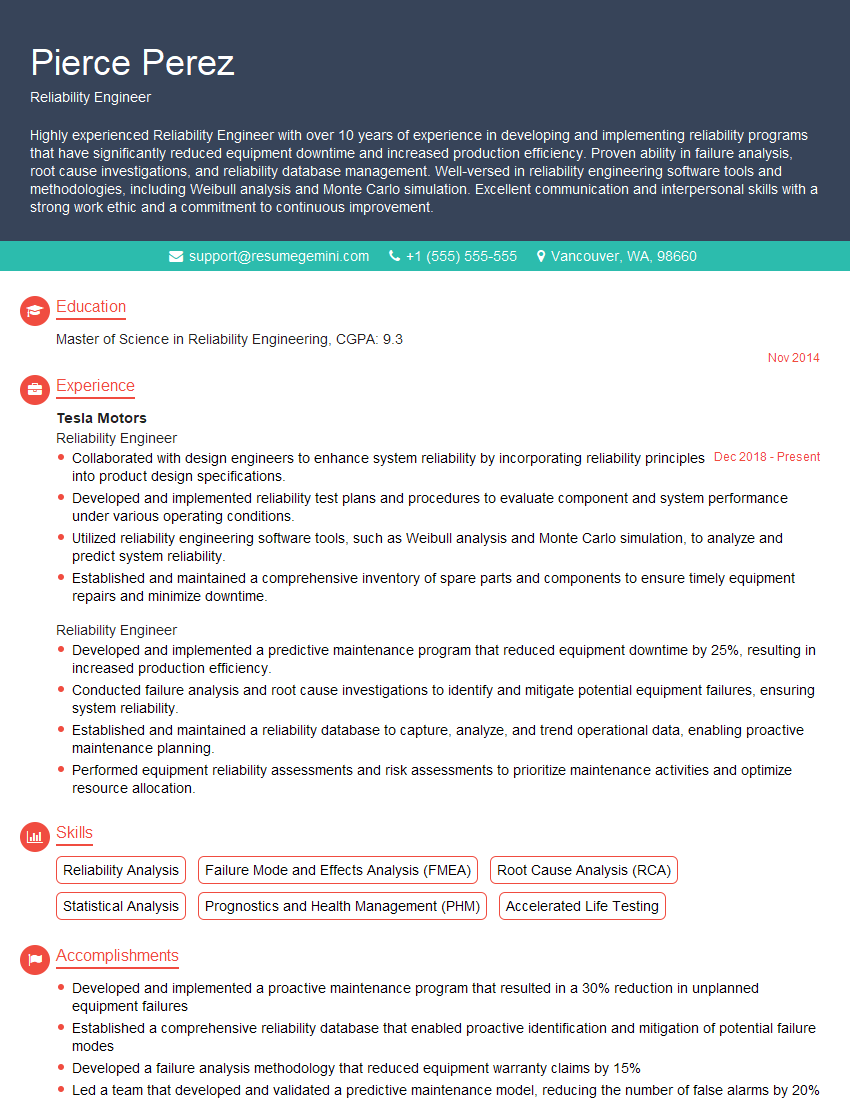
Reliability Engineer Resume Sample

Hardware Engineer Resume Sample
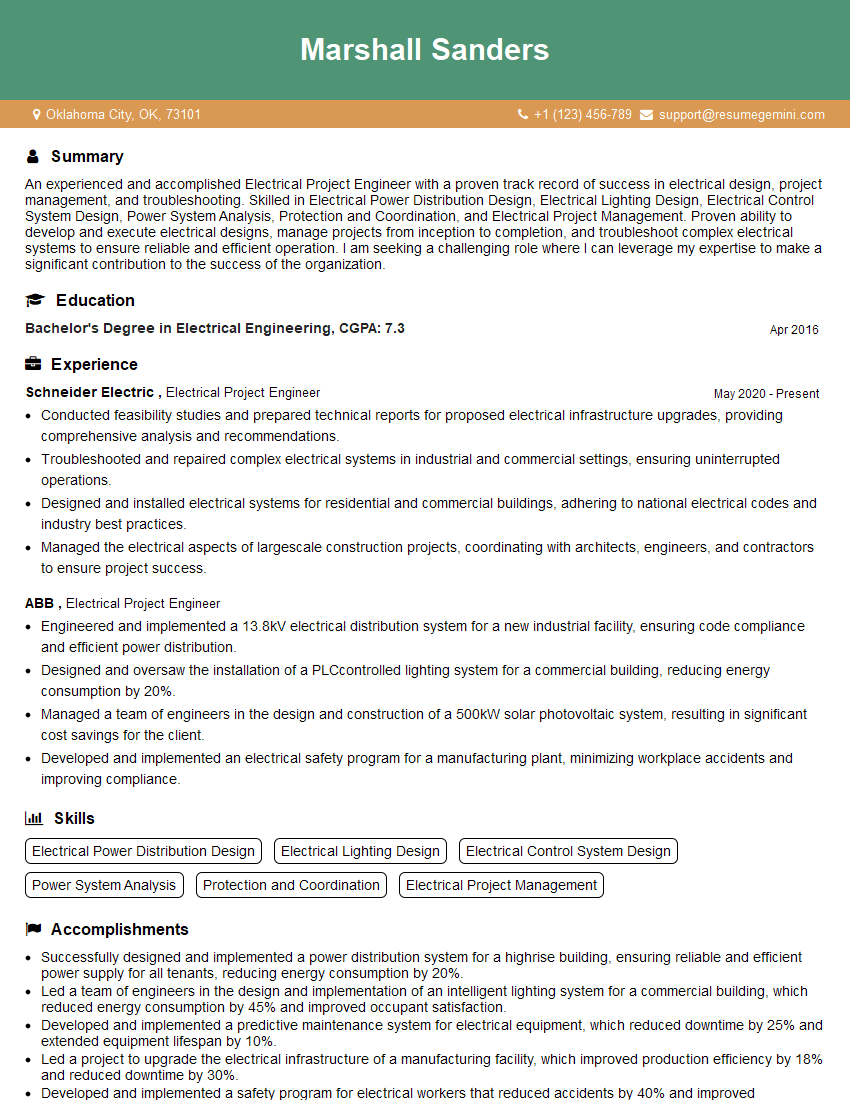
Electrical Project Engineer Resume Sample
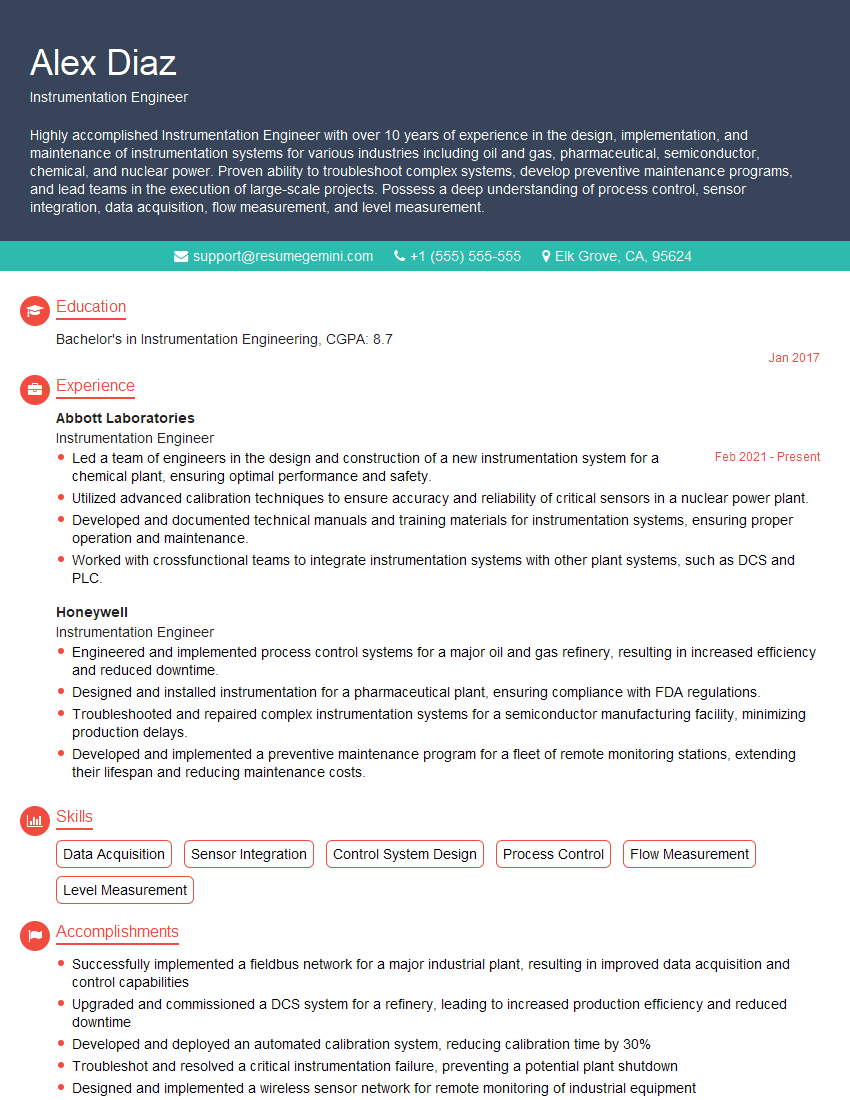
Instrumentation Engineer Resume Sample
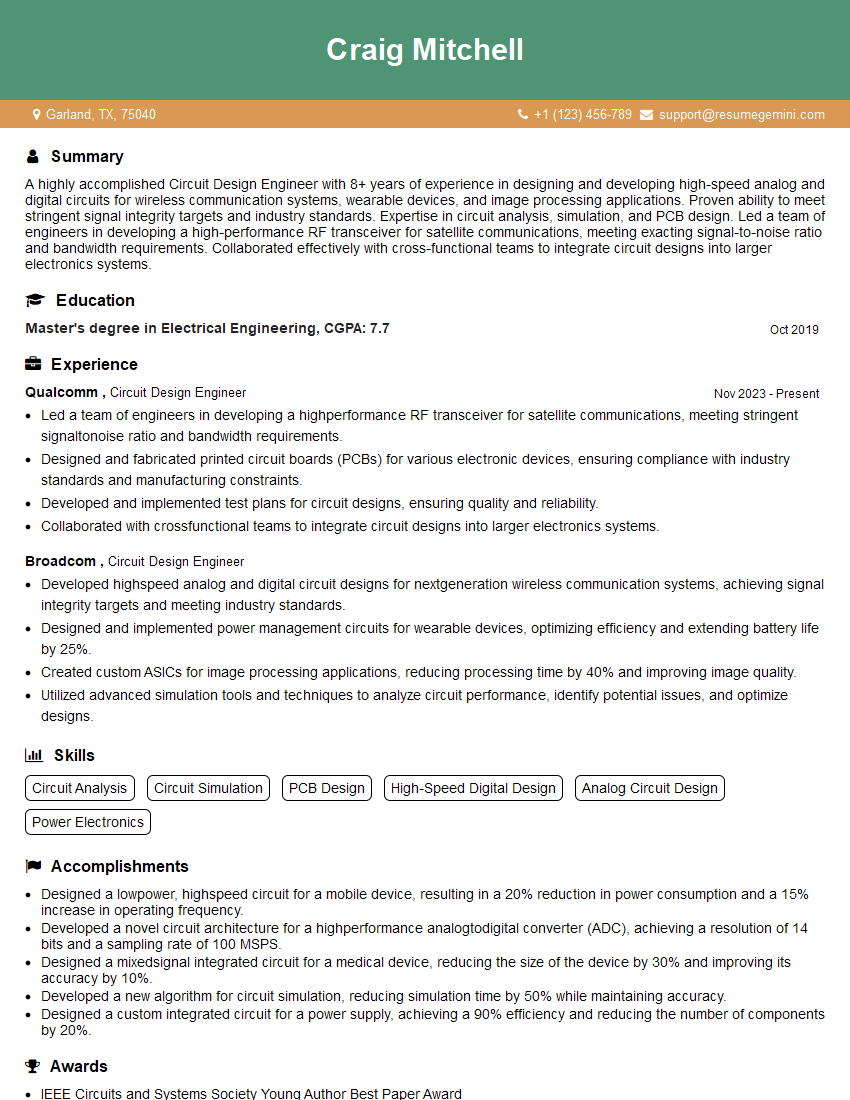
Circuit Design Engineer Resume Sample
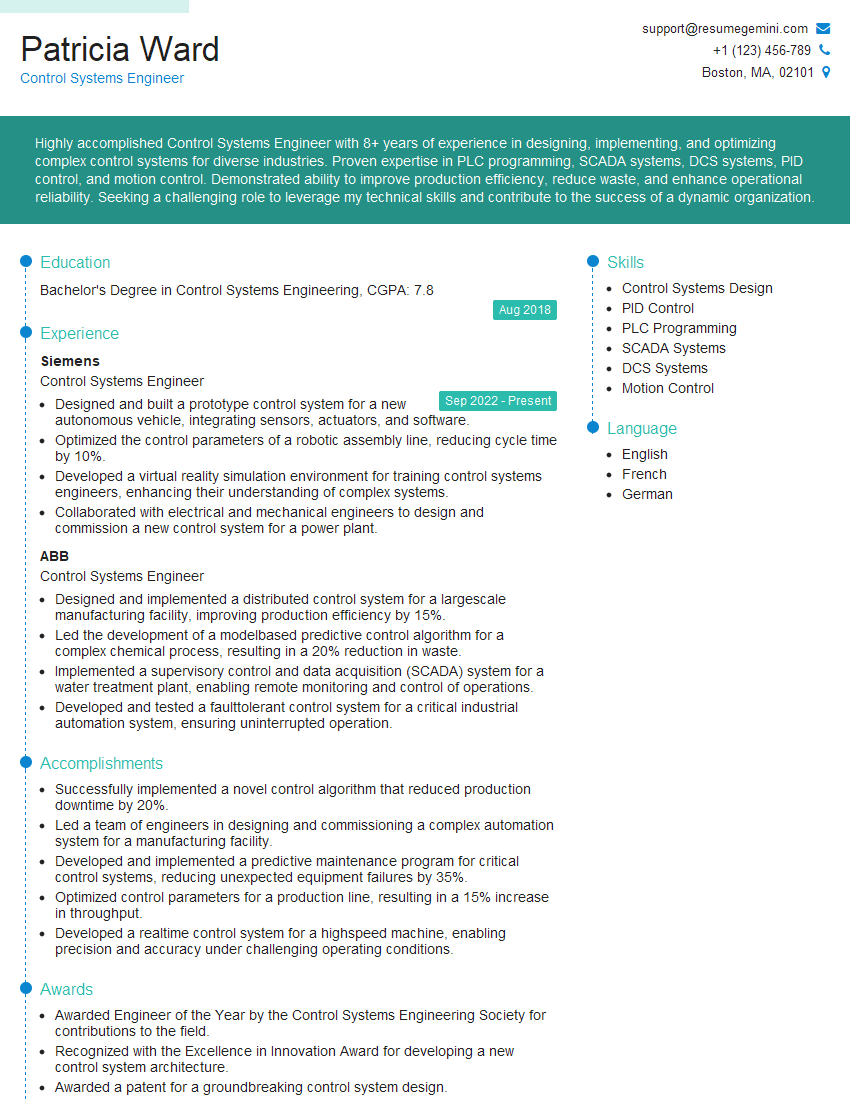
Control Systems Engineer Resume Sample

Microelectronics Engineer Resume Sample
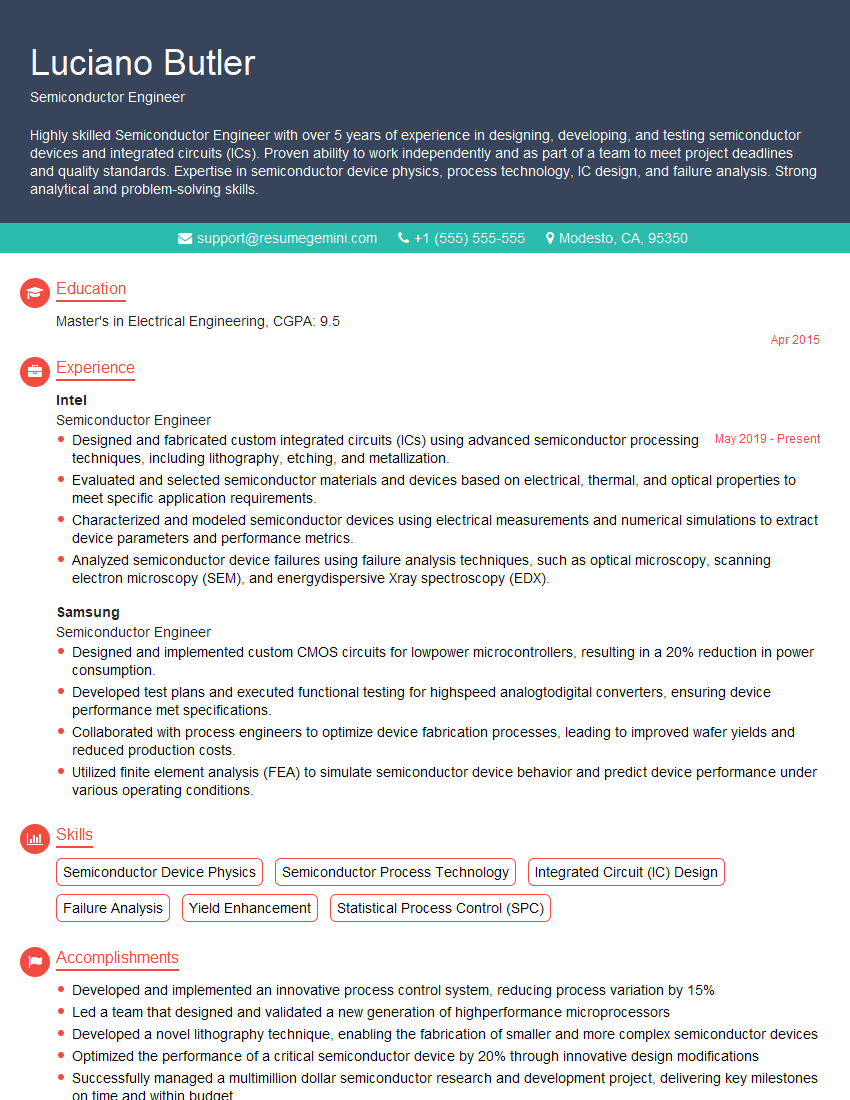
Semiconductor Engineer Resume Sample

Robotics Engineer Resume Sample
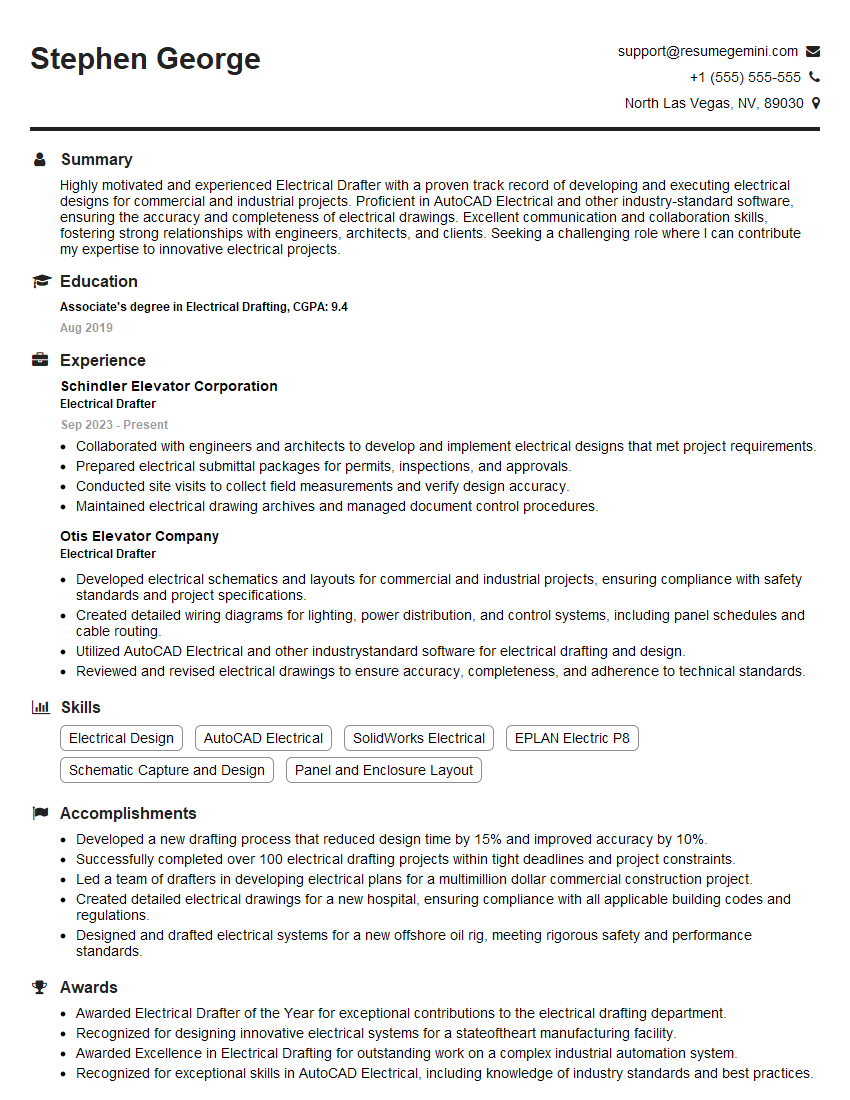
Electrical Drafter Resume Sample

Electronics Technician Resume Sample
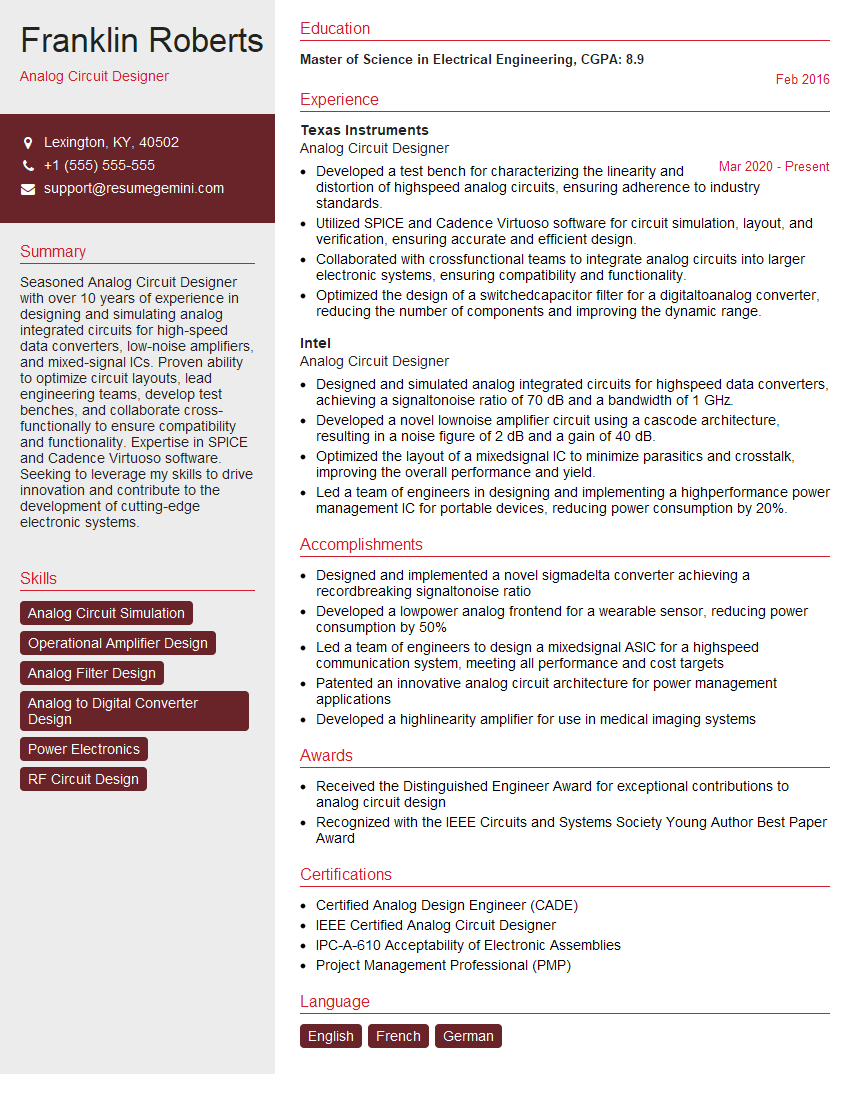
Analog Circuit Designer Resume Sample
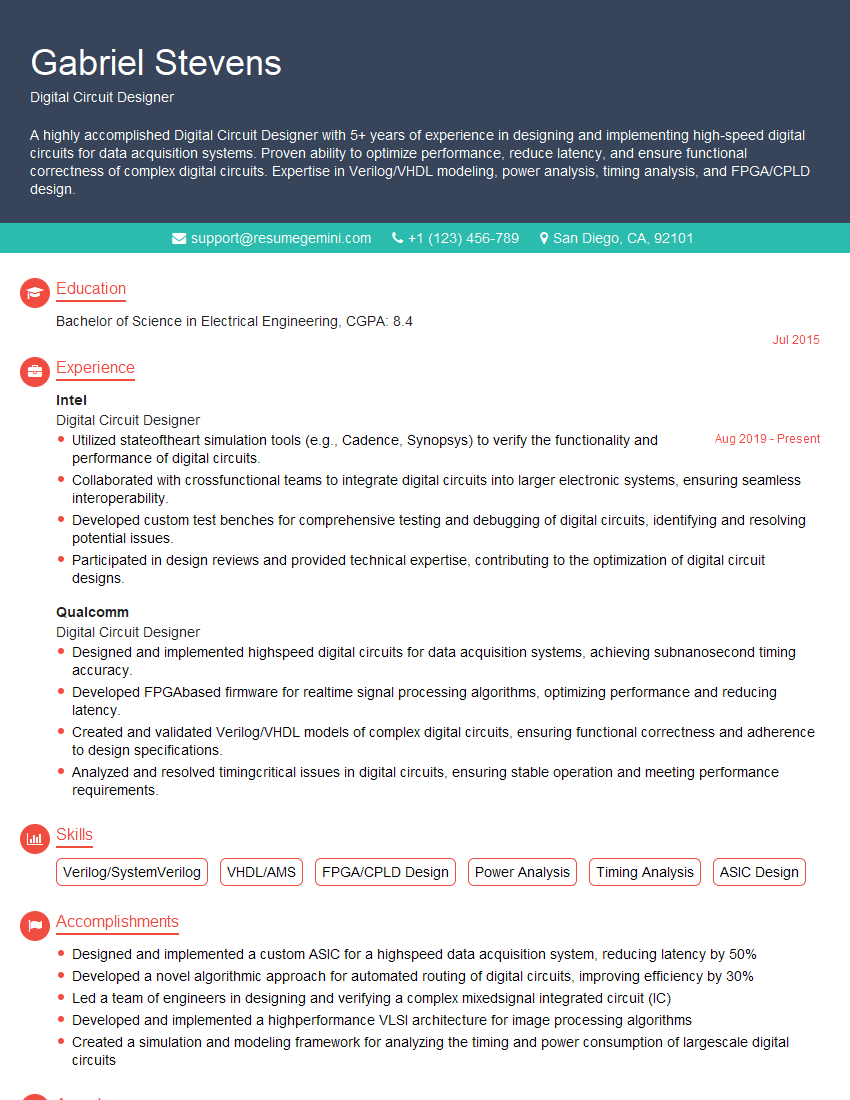
Digital Circuit Designer Resume Sample
Explore more articles
Users Rating of Our Blogs
Share Your Experience
We value your feedback! Please rate our content and share your thoughts (optional).
What Readers Say About Our Blog
Very informative content, great job.
good