The right preparation can turn an interview into an opportunity to showcase your expertise. This guide to Branding and Image Management interview questions is your ultimate resource, providing key insights and tips to help you ace your responses and stand out as a top candidate.
Questions Asked in Branding and Image Management Interview
Q 1. Explain the difference between branding and marketing.
Branding and marketing are closely related but distinct concepts. Think of it this way: branding is about defining who you are, while marketing is about telling people who you are.
Branding is the overall process of creating a unique and compelling identity for a company, product, or service. It encompasses everything from your logo and visual style to your values, mission, and personality. It’s about building an emotional connection with your audience.
Marketing, on the other hand, is the process of promoting your brand and products or services to your target audience. This involves activities like advertising, public relations, sales promotions, and content marketing. Marketing utilizes various strategies to drive sales and achieve business objectives.
For example, Apple’s branding emphasizes simplicity, innovation, and a premium user experience. Their marketing campaigns reflect this, often focusing on the emotional connection customers feel with their products, rather than just technical specifications. They are distinct activities working together towards a common goal.
Q 2. Describe your process for developing a brand strategy.
Developing a brand strategy is a systematic process. My approach typically involves these key steps:
- Market Research & Analysis: Understanding the competitive landscape, target audience needs, and market trends is crucial. This includes competitor analysis, consumer surveys, and market data analysis.
- Brand Positioning & Definition: This step defines the core values, unique selling proposition (USP), and brand personality. What makes you different? What problem do you solve? What is your brand’s tone of voice?
- Target Audience Segmentation: Identifying specific groups within your broader market who share similar characteristics and needs allows for more effective messaging and campaign targeting.
- Brand Identity Development: Creating a visual identity (logo, color palette, typography) that embodies the brand’s personality and values. This also includes developing brand guidelines to ensure consistent application.
- Brand Messaging & Storytelling: Crafting a compelling narrative that resonates with your target audience. This involves defining your key messages and how you will communicate your brand’s value proposition.
- Implementation & Rollout: Launching the brand strategy across all touchpoints, from website and social media to marketing materials and customer service interactions.
- Monitoring & Evaluation: Continuously tracking brand performance, gathering feedback, and making adjustments as needed.
For instance, when working with a new sustainable fashion brand, I would delve into the eco-conscious consumer market, analyze competitors like Patagonia, and create a brand story that emphasizes ethical production and environmental responsibility.
Q 3. How do you measure the success of a branding campaign?
Measuring the success of a branding campaign requires a multifaceted approach. It’s not just about sales figures; it’s about measuring the impact on brand perception and overall brand equity.
- Brand Awareness: Measuring increases in website traffic, social media engagement, and brand mentions.
- Brand Sentiment: Tracking positive and negative mentions of the brand across online platforms. Tools like social listening platforms can be very helpful here.
- Customer Loyalty: Measuring customer retention rates, repeat purchases, and net promoter score (NPS).
- Website Analytics: Analyzing website traffic, bounce rates, and time spent on site to understand user engagement.
- Sales & Revenue: Tracking changes in sales figures and revenue generated from the campaign.
- Market Share: Analyzing the brand’s position relative to its competitors.
For example, a successful rebranding campaign for a coffee shop might show a significant increase in social media followers, positive customer reviews, and an improved perception of the brand as modern and innovative.
Q 4. How would you handle a negative brand crisis?
Handling a negative brand crisis requires swift, decisive, and transparent action. My approach involves:
- Rapid Response: Acknowledge the issue immediately and show empathy for those affected. Don’t wait for things to escalate.
- Damage Control: Address the issue publicly with honesty and transparency. Take responsibility where appropriate and avoid making excuses.
- Crisis Communication Plan: Having a pre-established plan in place helps ensure a coordinated and consistent response.
- Proactive Monitoring: Continuously monitor social media and news outlets for potential negative mentions.
- Internal Communication: Keep employees informed and aligned on the company’s response to the crisis.
- Long-Term Recovery: Once the immediate crisis is resolved, focus on rebuilding trust and regaining customer confidence.
Think of the Tylenol crisis of the 1980s. Their prompt and decisive response, involving product recalls and improved safety measures, helped them rebuild consumer trust and ultimately save the brand. Transparency and action are key.
Q 5. What are the key elements of a strong brand identity?
A strong brand identity is more than just a logo; it’s a holistic representation of your brand’s personality and values. Key elements include:
- Brand Name & Tagline: Memorable and relevant to the brand’s offerings.
- Logo & Visual Identity: A visually appealing and consistent design system, encompassing colors, typography, and imagery.
- Brand Voice & Tone: The way the brand communicates, reflecting its personality and target audience.
- Brand Values & Mission: The core principles that guide the brand’s actions and decisions.
- Brand Story & Narrative: A compelling narrative that connects with the target audience on an emotional level.
- Brand Personality: The human-like characteristics that define the brand, such as friendly, sophisticated, or adventurous.
For example, Dove’s brand identity centers on real beauty and self-acceptance. Their visual imagery, messaging, and campaigns all reflect this core value, creating a strong and recognizable brand.
Q 6. How do you ensure brand consistency across all platforms?
Ensuring brand consistency across all platforms requires meticulous planning and execution. This includes:
- Brand Guidelines Document: A comprehensive guide outlining all aspects of the brand identity, including logo usage, color palettes, typography, and voice guidelines.
- Style Guides for Digital Platforms: Specific guidelines for website design, social media content, and email marketing.
- Training & Education: Ensuring all employees and external partners understand and adhere to the brand guidelines.
- Regular Audits & Reviews: Periodically reviewing all brand touchpoints to ensure consistency and identify any deviations.
- Centralized Brand Asset Management System: A system for storing and distributing brand assets, ensuring everyone is using the most up-to-date versions.
Imagine a large corporation with multiple departments and agencies. A well-defined brand style guide ensures that the marketing materials created by different teams maintain a consistent visual identity and messaging, preventing a fragmented and diluted brand image.
Q 7. Explain your understanding of target audience segmentation.
Target audience segmentation is the process of dividing a broad target market into smaller, more manageable groups based on shared characteristics. This allows for more effective and personalized marketing campaigns.
Segmentation can be based on various factors:
- Demographics: Age, gender, income, education, location.
- Psychographics: Lifestyle, values, interests, attitudes.
- Behavioral: Purchase history, brand loyalty, usage rate.
- Geographic: Location, climate, population density.
For example, a company selling high-end cosmetics might segment its market by demographics (age, income), psychographics (interest in beauty and skincare), and behavior (purchase frequency). This allows them to tailor their messaging and marketing efforts to each specific segment, increasing the effectiveness of their campaigns. Instead of a broad message to everyone, they create specific campaigns resonating with specific groups.
Q 8. How do you conduct brand audits and competitive analyses?
A brand audit and competitive analysis are crucial first steps in any branding strategy. Think of it as a thorough health check for your brand and a reconnaissance mission into your market landscape.
Brand Audits involve a deep dive into your own brand. We analyze your current brand positioning, messaging, visual identity (logo, colors, fonts), customer perception, and market presence. This often involves surveys, interviews with customers and employees, and reviewing marketing materials and online presence. We’re looking for inconsistencies, areas of strength and weakness, and opportunities for improvement. For example, we might find that while your brand messaging aims for ‘sophistication,’ your website design appears outdated and unprofessional, creating a disconnect.
Competitive Analyses focus on understanding your competitors. We identify key competitors, analyze their strengths and weaknesses, pricing strategies, target audiences, and overall brand positioning. Tools like SWOT analysis (Strengths, Weaknesses, Opportunities, Threats) are frequently used here. Let’s say you’re launching a new organic coffee brand. A competitive analysis would reveal which competitors focus on fair-trade, sustainable practices, or specific flavor profiles, helping us carve out a unique niche.
These two processes inform each other. The brand audit reveals internal strengths and weaknesses, while the competitive analysis illuminates external opportunities and threats, leading to a comprehensive understanding of the brand’s position in the marketplace.
Q 9. What are some common branding challenges and how do you overcome them?
Branding challenges are ubiquitous. Some common ones include inconsistent messaging, a lack of clear brand identity, negative customer reviews, and difficulty differentiating from competitors.
- Inconsistent Messaging: This happens when different departments or marketing materials communicate different brand values or promises. The solution is to develop a centralized brand style guide outlining core messages, tone of voice, and visual guidelines.
- Lack of Clear Brand Identity: Without a defined brand personality and target audience, your message will lack focus and impact. The solution here is to conduct thorough market research and develop a clear brand strategy that articulates your unique value proposition.
- Negative Customer Reviews: Negative feedback can severely damage brand reputation. Addressing these publicly and professionally, proactively seeking customer feedback, and improving processes to prevent future issues are key.
- Difficulty Differentiating from Competitors: A crowded market requires a unique selling proposition (USP). Identify what truly sets you apart, whether it’s quality, price, convenience, or a unique experience.
Overcoming these challenges often requires a multi-pronged approach involving internal communication, marketing strategy refinement, and consistent monitoring of customer feedback. It’s an ongoing process, not a one-time fix.
Q 10. Describe your experience with brand repositioning.
Brand repositioning is like giving your brand a makeover – a strategic change in how the brand is perceived by the target market. It’s usually necessary when a brand’s current image is no longer relevant or effective, or when the target market has shifted.
In one project, we worked with a long-standing financial institution whose image was perceived as outdated and inflexible. Through extensive market research, we discovered that their target demographic—young professionals—valued transparency, digital convenience, and social responsibility. The repositioning involved a complete overhaul of their visual identity, messaging, and marketing channels. We introduced a modern logo, a more conversational tone of voice, and focused on highlighting their socially responsible initiatives. The result was a rejuvenated brand that resonated with the target audience, leading to increased customer engagement and brand loyalty.
Successful repositioning necessitates a clear understanding of the reasons behind the need for change, a well-defined target audience, and a strong communication strategy to convey the new brand identity effectively. It involves a careful consideration of all brand touchpoints to ensure consistent messaging and image.
Q 11. How do you use market research to inform branding decisions?
Market research is the bedrock of informed branding decisions. It provides insights into consumer behavior, preferences, and needs, guiding the development of a relevant and resonant brand.
We utilize a variety of research methods, including:
- Surveys: To gather quantitative data on customer opinions, preferences, and demographics.
- Focus groups: For qualitative insights into consumer attitudes and perceptions.
- Interviews: To gain detailed understanding of individual customer experiences.
- Competitive analysis: To understand the competitive landscape and identify opportunities.
- Social media listening: To monitor brand mentions and customer feedback.
For instance, before launching a new product line, we would conduct thorough market research to identify the target audience, understand their needs and pain points, and assess the competitive landscape. This research would then inform decisions regarding product features, pricing, marketing messages, and overall brand positioning. The data provides a foundation for minimizing risk and maximizing the chances of success.
Q 12. What are your preferred methods for building brand awareness?
Building brand awareness is about getting your brand noticed and remembered. We employ a multi-channel approach, combining traditional and digital tactics:
- Content marketing: Creating valuable and engaging content (blog posts, videos, infographics) that attracts and educates the target audience.
- Social media marketing: Building a strong presence on relevant social media platforms, engaging with followers, and running targeted ad campaigns.
- Search engine optimization (SEO): Optimizing website and content for search engines to improve organic visibility.
- Public relations (PR): Securing media coverage and building relationships with journalists and influencers.
- Paid advertising: Utilizing platforms like Google Ads and social media ads to reach a wider audience.
- Events and sponsorships: Participating in industry events and sponsoring relevant activities to increase brand visibility and build relationships.
The optimal mix of these methods depends on the target audience, budget, and industry. For example, a B2B tech company might prioritize content marketing and LinkedIn advertising, while a consumer goods brand might focus on social media marketing and influencer collaborations.
Q 13. Explain your understanding of brand equity and its importance.
Brand equity is the overall value of your brand. It’s essentially the intangible assets associated with your brand name and logo that contribute to a customer’s positive perception and purchasing decisions. Think of it as the reputation and goodwill your brand has earned over time.
Key components of brand equity include:
- Brand awareness: How familiar consumers are with your brand.
- Brand loyalty: The degree to which customers prefer your brand over others.
- Perceived quality: Customer perceptions of your brand’s quality and reliability.
- Brand associations: The positive feelings and thoughts linked to your brand.
Strong brand equity is crucial because it translates to higher profits, increased customer retention, and a competitive advantage. A brand with strong equity can charge premium prices, attract top talent, and weather market fluctuations more effectively. Building brand equity is a long-term investment that requires consistent effort and a commitment to delivering on brand promises.
Q 14. How do you integrate branding with other marketing initiatives?
Branding isn’t a standalone activity; it’s the foundation upon which all other marketing initiatives are built. A well-defined brand strategy ensures consistency and coherence across all marketing efforts.
We integrate branding into other marketing activities by:
- Consistent messaging: Ensuring that all marketing materials (website, brochures, social media posts, advertisements) communicate the same brand message and values.
- Unified visual identity: Using consistent branding elements (logo, colors, fonts, imagery) across all platforms.
- Target audience alignment: Tailoring marketing messages and channels to resonate with the target audience’s preferences and behaviors.
- Brand storytelling: Developing compelling narratives that connect with the audience on an emotional level.
- Performance tracking: Measuring the effectiveness of marketing initiatives in terms of brand awareness, customer engagement, and sales.
For example, a social media campaign must align with the overall brand voice and visual identity established in the brand guidelines. Similarly, website design needs to reflect the brand’s personality and target audience. A cohesive approach across all marketing channels reinforces brand recognition and strengthens brand equity.
Q 15. How do you manage a brand’s reputation online?
Managing a brand’s online reputation requires a proactive and multi-faceted approach. Think of it like being a diligent gardener – constantly tending to the health and appearance of your brand’s digital presence. This involves several key strategies:
- Monitoring Online Mentions: Utilize social listening tools to track brand mentions across various platforms (Twitter, Facebook, Instagram, review sites, etc.). This allows for early detection of both positive and negative feedback.
- Engaging with Customers: Respond promptly and professionally to comments, reviews, and mentions. Addressing concerns publicly demonstrates transparency and care. For negative feedback, aim for empathy and a solution-oriented response. A simple, “We’re so sorry to hear about your experience, [customer name]. Could you please contact us directly at [email address or phone number] so we can help resolve this?” can go a long way.
- Reputation Management Tools: Leverage tools that help you track and manage online reviews. Encourage positive reviews and address negative ones constructively. Remember, it’s not about deleting negative feedback, but about responding professionally and showing you care.
- SEO Optimization: Ensure your website and positive content rank highly in search results. This pushes negative content further down the page. This involves focusing on strong keyword research and high-quality content creation.
- Crisis Communication Plan: Have a detailed plan in place to address any potential crises or negative publicity. Swift and transparent communication is crucial in mitigating damage.
For example, I once worked with a client who experienced a negative social media storm after a product malfunction. By quickly acknowledging the issue, offering immediate solutions to affected customers, and proactively communicating updates, we were able to mitigate the damage and restore trust.
Career Expert Tips:
- Ace those interviews! Prepare effectively by reviewing the Top 50 Most Common Interview Questions on ResumeGemini.
- Navigate your job search with confidence! Explore a wide range of Career Tips on ResumeGemini. Learn about common challenges and recommendations to overcome them.
- Craft the perfect resume! Master the Art of Resume Writing with ResumeGemini’s guide. Showcase your unique qualifications and achievements effectively.
- Don’t miss out on holiday savings! Build your dream resume with ResumeGemini’s ATS optimized templates.
Q 16. Discuss your experience with visual identity design and guidelines.
Visual identity design is the cornerstone of brand recognition. It’s the visual language that speaks to your target audience and conveys your brand’s personality. My experience encompasses the entire process, from initial concept development to the creation of comprehensive brand guidelines. This involves:
- Logo Design: Creating a memorable and versatile logo that works across various applications (website, print, social media).
- Color Palette Selection: Choosing colors that align with the brand’s personality and evoke the desired emotions.
- Typography Selection: Selecting fonts that are legible, consistent with the brand’s personality, and easy to use across different platforms.
- Imagery Selection: Defining the style and tone of imagery (photography, illustration) used to represent the brand.
- Brand Guideline Creation: Developing a comprehensive document that outlines all the visual elements and their proper usage, ensuring brand consistency across all channels.
For instance, I recently worked on a project for a tech startup. We developed a clean, modern logo with a vibrant color palette that reflected their innovative and energetic brand personality. The brand guidelines ensured consistency in all marketing materials, resulting in a strong and recognizable brand identity.
Q 17. Explain your experience with brand voice and tone development.
Brand voice and tone are the verbal equivalents of visual identity. They define how a brand communicates with its audience. It’s the personality your brand projects through its words. Tone changes depending on context, but voice remains consistent.
- Voice Definition: Defining the brand’s personality traits (e.g., friendly, professional, authoritative, humorous). This informs the overall style of communication.
- Tone Development: Determining the appropriate tone for specific situations (e.g., formal for business communications, informal for social media). Think of this as adjusting volume and inflection.
- Style Guide Creation: Developing a comprehensive style guide that outlines grammar, punctuation, and vocabulary usage to ensure consistency.
- Content Review and Editing: Ensuring all brand communications align with the established voice and tone guidelines. This consistency builds brand familiarity and trust.
For example, a luxury car brand would have a sophisticated and authoritative voice, while a social media platform might have a more friendly and informal voice. Inconsistency undermines brand equity. I recently worked with a client who struggled with an inconsistent brand voice across their marketing materials. By developing a clear style guide and providing training to their team, we were able to create a unified and impactful brand voice.
Q 18. How do you measure brand loyalty and advocacy?
Measuring brand loyalty and advocacy involves a combination of quantitative and qualitative methods. It’s not just about sales, but about the emotional connection customers have with your brand.
- Customer Satisfaction Surveys: Gathering feedback on customer satisfaction through surveys and feedback forms.
- Net Promoter Score (NPS): Measuring customer willingness to recommend the brand to others.
- Repeat Purchase Rate: Tracking the percentage of customers who make repeat purchases.
- Social Media Monitoring: Tracking brand mentions and sentiment analysis on social media.
- Customer Reviews and Testimonials: Collecting reviews and testimonials to understand customer experiences and perceptions.
- Customer Lifetime Value (CLTV): Calculating the total revenue generated by a customer over their relationship with the brand.
For example, a high NPS score indicates strong brand loyalty and advocacy. Analyzing customer reviews can also provide valuable insights into areas of strength and weakness. By combining these methods, we get a more holistic view of brand loyalty.
Q 19. Describe your experience working with diverse teams on branding projects.
Working with diverse teams is crucial in branding, as different perspectives bring richness and creativity to the process. My experience involves fostering collaboration and leveraging the strengths of each team member. This includes:
- Effective Communication: Establishing clear communication channels and protocols to ensure everyone is on the same page.
- Respectful Collaboration: Creating a safe and inclusive environment where everyone feels comfortable sharing their ideas.
- Conflict Resolution: Developing strategies to address disagreements and find mutually acceptable solutions.
- Leveraging Expertise: Recognizing and utilizing the specialized skills and knowledge of each team member.
- Team Building Activities: Engaging in team-building exercises to foster stronger relationships and collaboration.
I’ve successfully managed projects involving designers, writers, marketers, developers, and clients from various cultural backgrounds. By creating a collaborative and inclusive environment, we were able to combine diverse perspectives and deliver exceptional results. For example, a recent project included team members from three different countries. By employing collaborative tools and clear communication protocols, we overcame cultural and geographical barriers and delivered a cohesive and culturally sensitive brand strategy.
Q 20. How do you handle conflicting opinions on branding decisions?
Conflicting opinions are inevitable in branding projects. The key is to manage them constructively and reach a consensus that reflects the brand’s overall goals. This involves:
- Understanding Perspectives: Actively listening to and understanding the rationale behind different opinions.
- Data-Driven Decision Making: Using market research, data analysis, and consumer insights to support decisions.
- Facilitated Discussions: Organizing structured discussions to ensure everyone has a voice and the conversation remains focused.
- Compromise and Negotiation: Finding common ground and making compromises to achieve a mutually acceptable outcome.
- Documentation and Agreement: Documenting decisions and ensuring everyone is in agreement.
For example, during a recent rebranding project, there were differing opinions on the logo design. By presenting data from market research and consumer testing, we were able to guide the team toward a logo that was both aesthetically pleasing and effective in communicating the brand’s message. This involved a structured discussion and compromise among team members who initially had differing opinions.
Q 21. What are your thoughts on the importance of brand storytelling?
Brand storytelling is incredibly important because it connects with consumers on an emotional level, building trust and loyalty beyond mere product features. It’s about crafting a narrative that resonates with your target audience, making your brand memorable and relatable.
- Authenticity: Telling a story that is genuine and reflects the brand’s values and mission.
- Emotional Connection: Eliciting emotions in the audience, creating a lasting impression.
- Target Audience Focus: Tailoring the story to resonate with the specific needs and aspirations of the target audience.
- Multiple Touchpoints: Using various channels (website, social media, video, print) to tell the brand’s story consistently.
- Consistent Messaging: Maintaining a consistent message and voice throughout the storytelling process.
Think of brands like Dove, which have built successful campaigns based on powerful storytelling and emotional resonance with their audience. I once helped a small artisanal coffee roaster develop their brand story, highlighting the passion of the founders, the origin of their beans, and their commitment to sustainable farming. This authentic story resonated deeply with their target audience and contributed significantly to their brand growth.
Q 22. How do you use data analytics to inform branding strategies?
Data analytics plays a crucial role in modern branding. It allows us to move beyond gut feeling and intuition, grounding our strategies in concrete evidence. We use data to understand our target audience, track campaign performance, and ultimately, optimize our efforts for maximum impact.
- Audience Insights: We leverage tools like Google Analytics, social media analytics, and CRM data to build detailed customer personas. This includes understanding demographics, psychographics (values, interests, lifestyle), online behavior, and purchasing patterns. For example, analyzing website traffic reveals which content resonates most, informing future content creation and messaging.
- Campaign Performance: We track key metrics like website traffic, social media engagement (likes, shares, comments), brand mentions, and conversion rates (sales, leads, app downloads). This data informs adjustments to ongoing campaigns and provides valuable insights for future strategies. A/B testing different ad creatives, for instance, helps determine which resonates best with the target audience.
- Brand Sentiment Analysis: We utilize tools to monitor brand mentions across various online platforms, analyzing the sentiment (positive, negative, neutral). This helps us identify potential PR issues early on and proactively address concerns. For example, a sudden surge in negative sentiment surrounding a product launch might indicate a need for immediate damage control.
Ultimately, data-driven branding allows for continuous improvement and ensures our strategies remain relevant and effective.
Q 23. What is your experience with budget management in branding projects?
Budget management is paramount in branding. It requires a meticulous approach that balances creative vision with financial prudence. My experience involves developing detailed budgets, tracking expenses, and ensuring optimal resource allocation across different branding initiatives.
- Detailed Budgeting: I start by thoroughly defining project scope, identifying all necessary resources (design, photography, printing, marketing, etc.), and estimating associated costs. This typically involves creating a detailed breakdown of expenses, allocating funds to specific tasks and timelines.
- Tracking and Reporting: Throughout the project, I maintain accurate records of all expenses, comparing them against the budget to identify potential overruns early on. Regular progress reports highlight spending patterns and project status, ensuring transparency and accountability.
- Value Optimization: My approach focuses not just on cost reduction, but on maximizing the value of each investment. This involves exploring cost-effective alternatives without compromising quality, prioritizing essential elements, and strategically allocating resources for maximum impact. For example, investing in high-quality photography for a key marketing campaign might be more valuable than spending on less impactful collateral.
In essence, effective budget management in branding is about strategic investment, not simply cost-cutting. It ensures that every dollar spent contributes to achieving the overall branding objectives.
Q 24. Describe your experience with different branding methodologies (e.g., agile, waterfall).
My experience encompasses both agile and waterfall methodologies, each with its strengths and weaknesses. The choice depends heavily on the project’s nature and client needs.
- Waterfall Methodology: This linear approach is best suited for projects with clearly defined requirements and minimal anticipated changes. Each phase (requirements, design, development, testing, deployment) is completed sequentially. While offering a structured approach, it can be less adaptable to changes or unexpected challenges. I’ve utilized this for large-scale rebranding projects with a fixed scope and timeline.
- Agile Methodology: This iterative approach is ideal for projects where flexibility and adaptation are crucial. The project is broken down into smaller sprints, allowing for continuous feedback and adjustments. It’s highly collaborative and fosters quick iterations, leading to faster prototyping and testing. I’ve found agile particularly useful for social media campaigns or digital branding projects where quick responses to market trends are necessary.
I’m comfortable adapting my approach based on the specific requirements of each project, often integrating elements of both methodologies to optimize the process.
Q 25. How do you adapt branding strategies for different market segments?
Adapting branding strategies for different market segments is critical for success. A one-size-fits-all approach rarely works. Understanding the unique nuances of each target audience is key.
- Market Research: Thorough research is essential to understand the demographics, psychographics, needs, and preferences of each segment. This might involve conducting surveys, focus groups, and analyzing competitor activities.
- Messaging and Tone: The brand’s messaging and tone must resonate with each segment’s values and preferences. For example, a youthful audience might respond to a playful and informal tone, while a more mature audience might prefer a sophisticated and authoritative approach.
- Channels and Platforms: The most effective communication channels vary across segments. A younger demographic might be more receptive to social media marketing, while an older demographic might respond better to traditional print media.
- Product and Service Adaptation: In some cases, the product or service itself might need adjustments to meet the specific needs of a particular segment.
For example, a clothing brand might tailor its marketing campaigns and product offerings to appeal to different age groups, creating separate lines targeting teenagers, young adults, and middle-aged consumers. Each line would have distinct messaging, design elements, and distribution channels.
Q 26. How do you ensure your branding efforts are aligned with the company’s overall business objectives?
Aligning branding efforts with overall business objectives is paramount. Branding isn’t an isolated activity; it’s a strategic tool that must contribute to the company’s bottom line.
- Strategic Alignment: I begin by thoroughly understanding the company’s mission, vision, values, and strategic goals. The branding strategy must be directly connected to these objectives.
- Key Performance Indicators (KPIs): Defining measurable KPIs is crucial to track the effectiveness of branding initiatives. These KPIs should be directly linked to business outcomes, such as increased brand awareness, market share, customer loyalty, or sales revenue.
- Integrated Communication: All branding efforts – marketing campaigns, website design, social media presence, customer service – must be consistent and reinforce the overall brand message. Inconsistency dilutes the brand’s impact.
- Regular Review and Adjustment: The branding strategy should be regularly reviewed and adjusted based on performance data and changing market dynamics. This ensures the strategy remains relevant and effective in driving business growth.
For instance, if the company’s goal is to increase market share, the branding strategy should focus on building brand awareness, establishing a strong brand identity, and differentiating the brand from competitors. This would involve specific marketing and communication strategies designed to achieve this goal.
Q 27. What is your experience with crisis communication and reputation management related to branding?
Experience in crisis communication and reputation management is crucial for any brand. A single negative event can severely damage a brand’s reputation, potentially leading to significant financial losses.
- Proactive Monitoring: Regularly monitoring brand mentions across various platforms helps identify potential issues early on. This allows for proactive responses and prevents small problems from escalating into major crises.
- Crisis Communication Plan: Having a well-defined crisis communication plan is essential. This plan should outline steps to take in case of a negative event, including identifying key stakeholders, drafting press releases, and establishing communication channels.
- Rapid Response: Responding swiftly and decisively to a crisis is crucial. Delaying a response can worsen the situation and damage the brand’s credibility.
- Transparency and Accountability: Being transparent and accountable in addressing the crisis builds trust with stakeholders. Acknowledging mistakes and taking corrective actions demonstrates responsibility.
- Reputation Repair: After the crisis, efforts should focus on repairing the brand’s reputation. This might involve launching a public relations campaign, engaging with customers, and implementing changes to prevent future incidents.
For example, a food company experiencing a product recall needs to communicate quickly and transparently with consumers, provide clear instructions, and offer solutions to mitigate the negative impact on its brand reputation. Effective crisis management can minimize long-term damage and preserve consumer trust.
Key Topics to Learn for Branding and Image Management Interview
- Brand Strategy Development: Understanding the process of defining target audiences, brand values, and unique selling propositions. Consider practical examples of how you’ve analyzed a brand’s current standing and proposed strategic improvements.
- Visual Identity and Design: Discuss the importance of logo design, typography, color palettes, and overall aesthetic consistency in building a strong brand image. Prepare examples of how you’ve used visual elements to communicate a brand’s message effectively.
- Brand Messaging and Communication: Explore the creation of compelling brand narratives, tone of voice guidelines, and effective communication strategies across various platforms (website, social media, etc.). Be ready to discuss how you’ve crafted messages tailored to different target audiences.
- Crisis Communication and Reputation Management: Understand how to handle negative publicity and maintain a positive brand image during challenging situations. Think about strategies for mitigating damage and restoring public trust.
- Digital Brand Management: Discuss the role of social media, SEO, and online reputation management in shaping brand perception. Be prepared to discuss relevant metrics and analytics used to track brand performance online.
- Market Research and Competitive Analysis: Explain how market research informs brand strategy and how competitive analysis helps to position a brand effectively. Prepare examples demonstrating your ability to conduct thorough market research and analyze competitor strategies.
- Brand Storytelling and Content Marketing: Explore the power of narrative in building brand loyalty and creating engaging content that resonates with the target audience. Be prepared to discuss how you’ve developed compelling brand stories.
- Brand Measurement and Evaluation: Understand the key metrics used to track brand performance and evaluate the effectiveness of branding initiatives. Be ready to discuss methods for measuring ROI on branding investments.
Next Steps
Mastering Branding and Image Management is crucial for career advancement, opening doors to exciting opportunities in marketing, communications, and public relations. A well-crafted resume is your first impression – ensure yours is ATS-friendly to maximize your chances of landing an interview. To build a truly impactful resume, leverage the power of ResumeGemini. It’s a trusted resource designed to help you create a professional document that showcases your skills and experience effectively. We provide examples of resumes tailored to Branding and Image Management to help you get started.
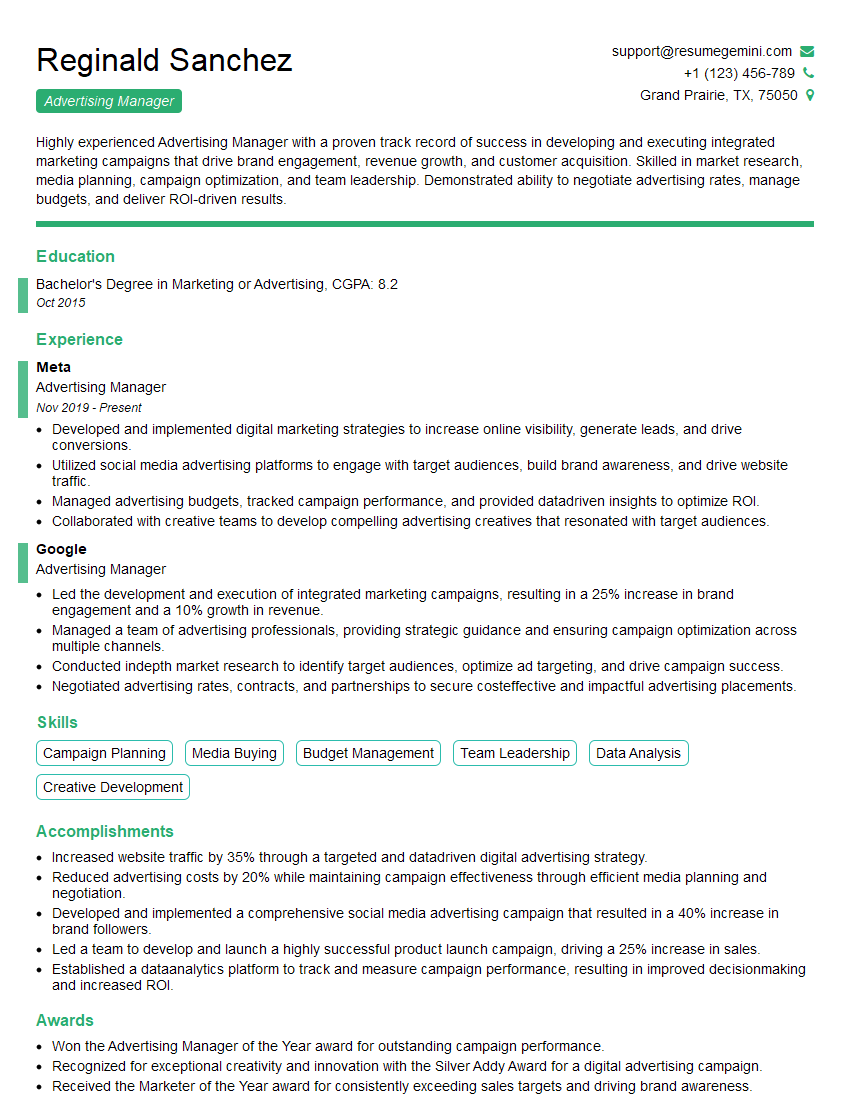
Advertising Manager Resume Sample
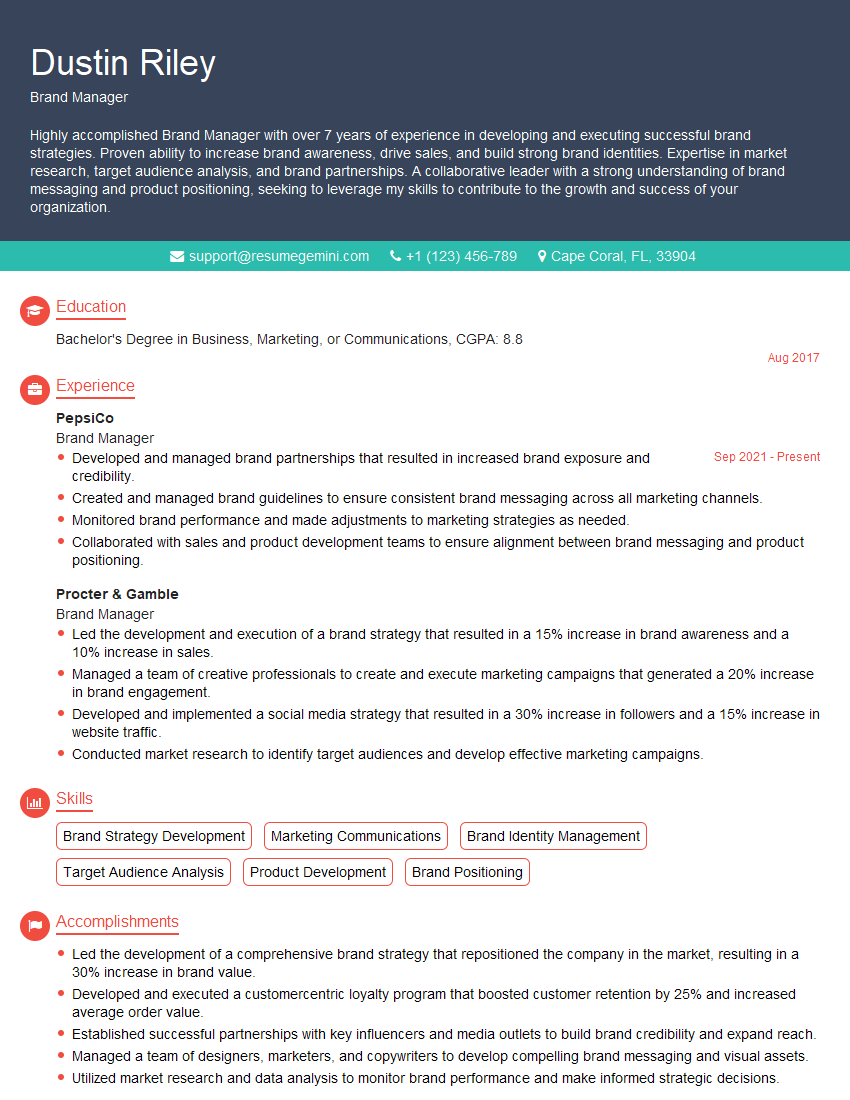
Brand Manager Resume Sample

Creative Director Resume Sample
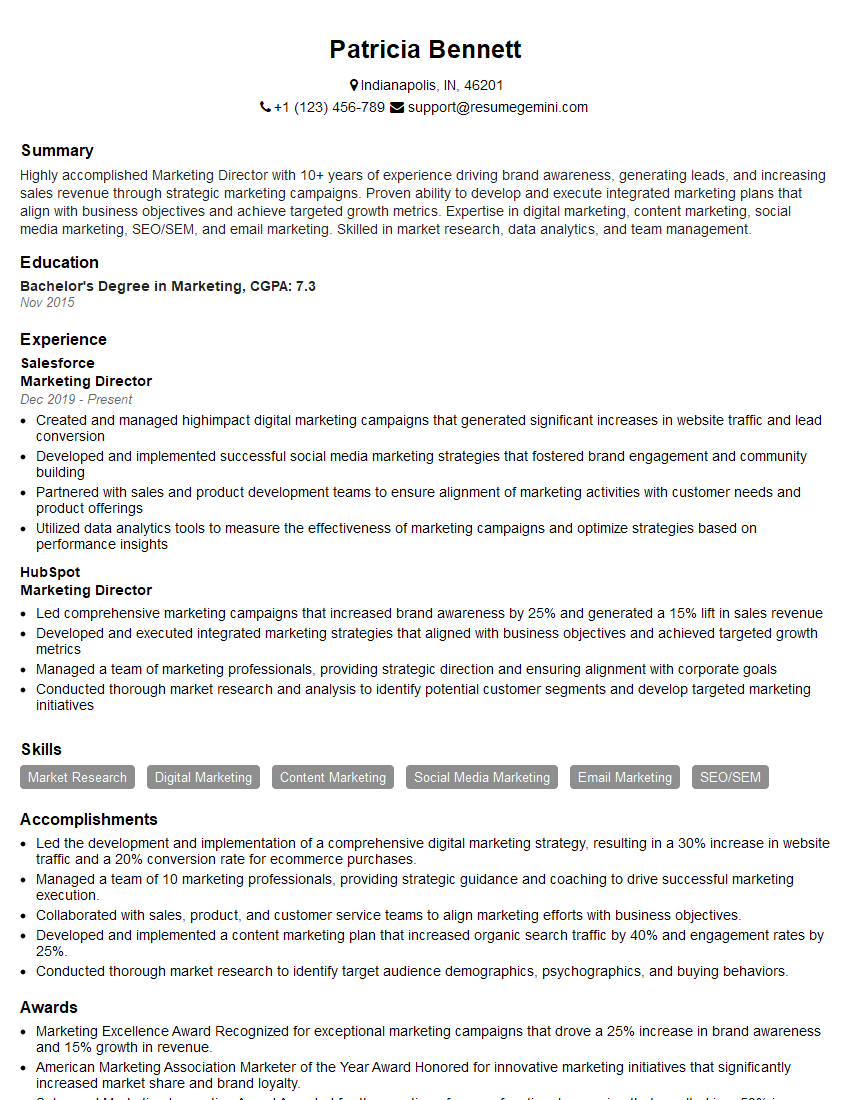
Marketing Director Resume Sample
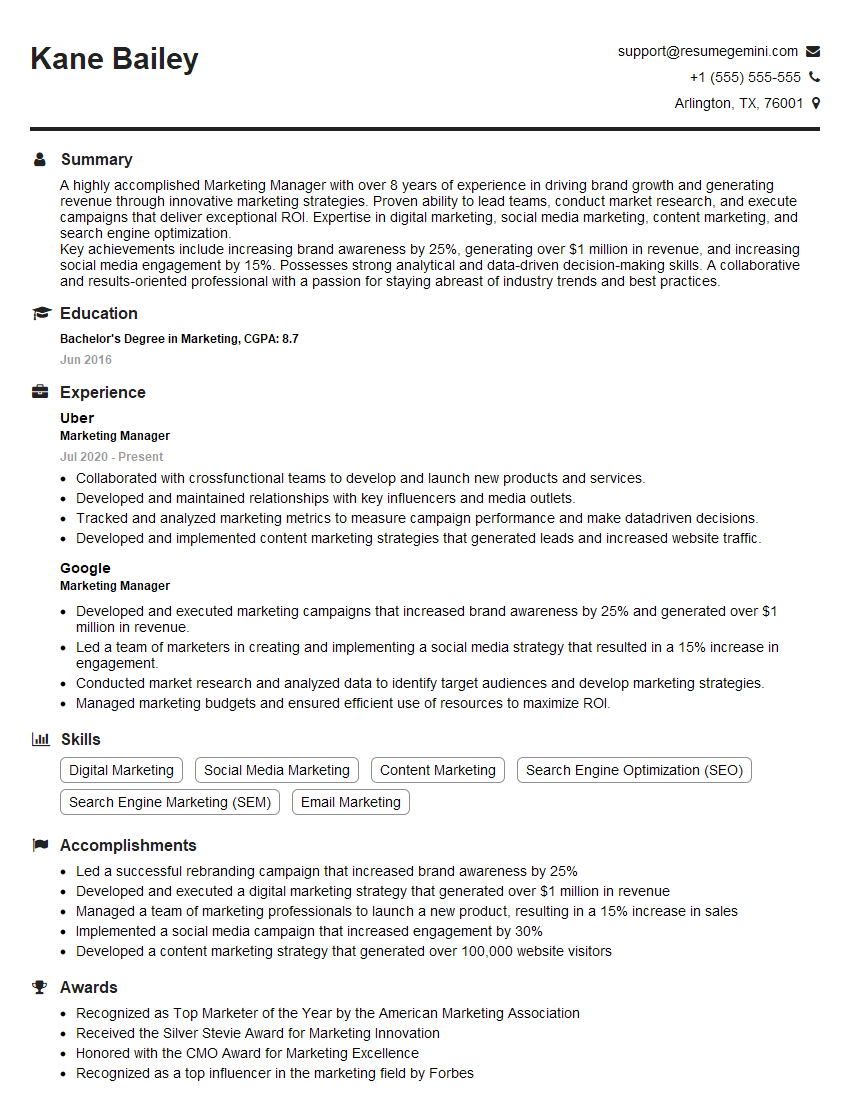
Marketing Manager Resume Sample
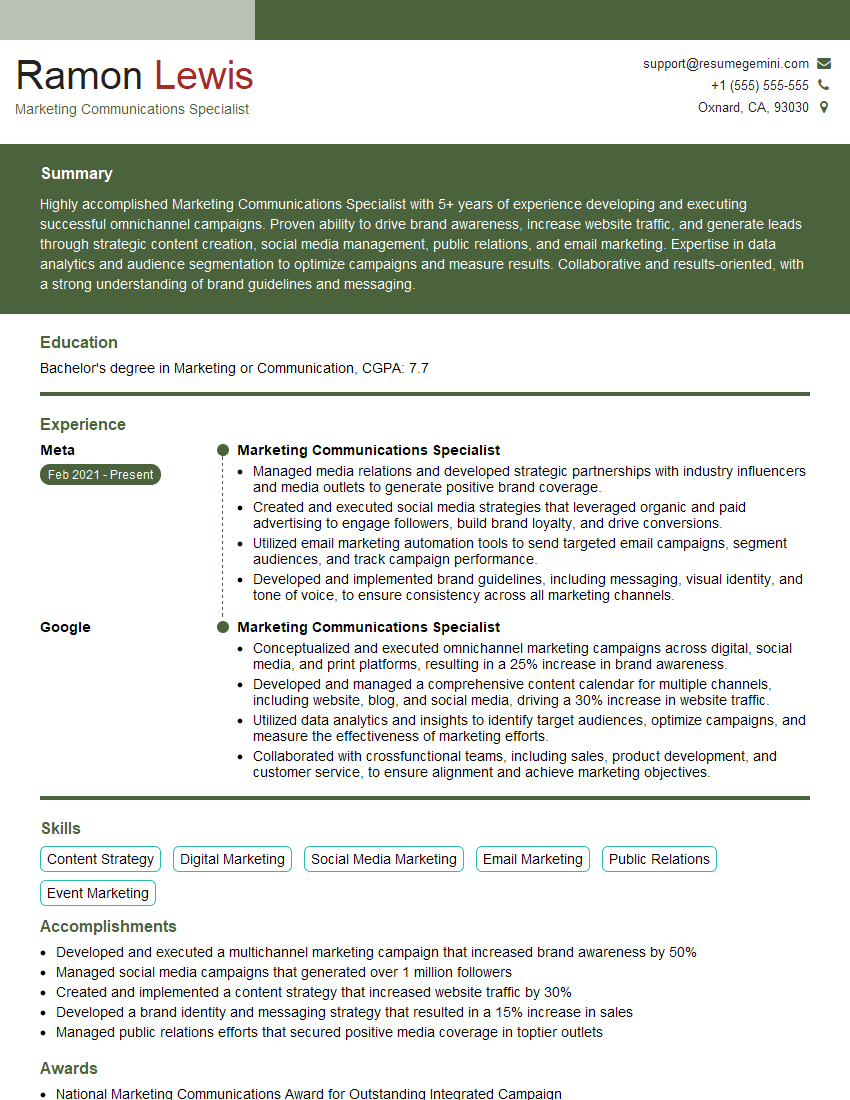
Marketing Communications Specialist Resume Sample

Communications Manager Resume Sample
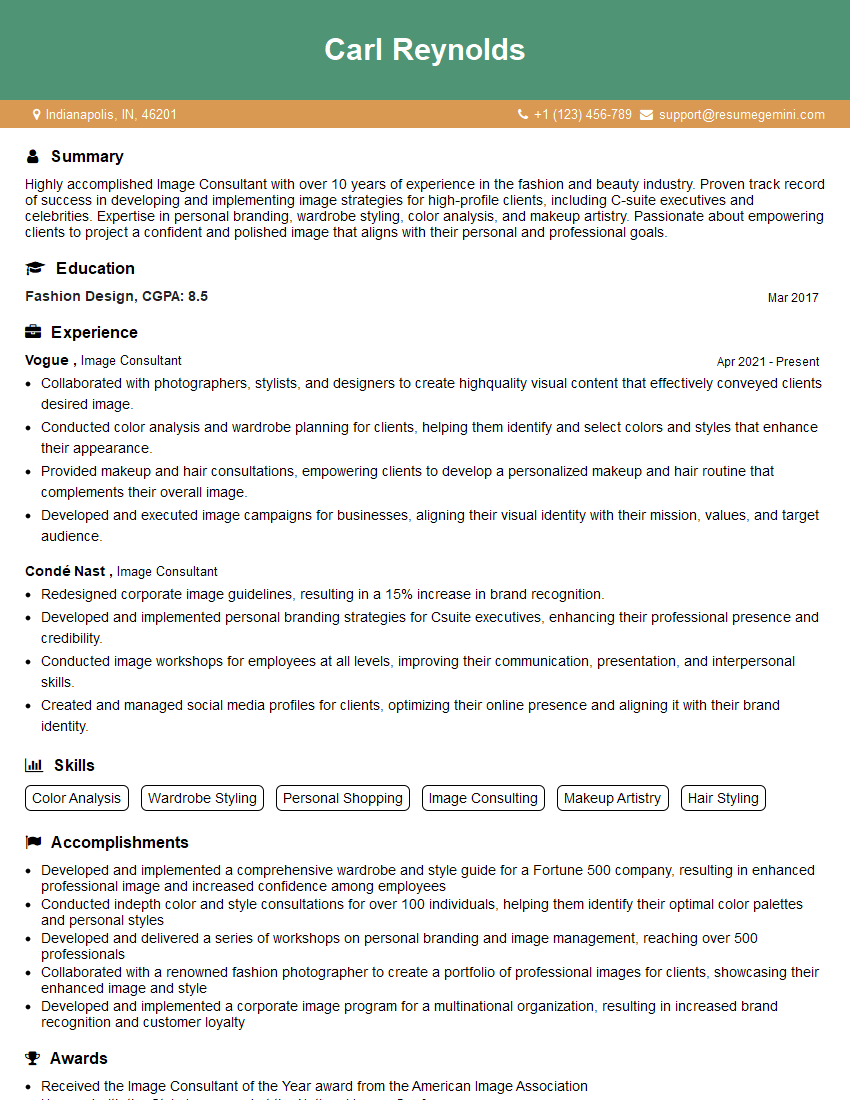
Image Consultant Resume Sample
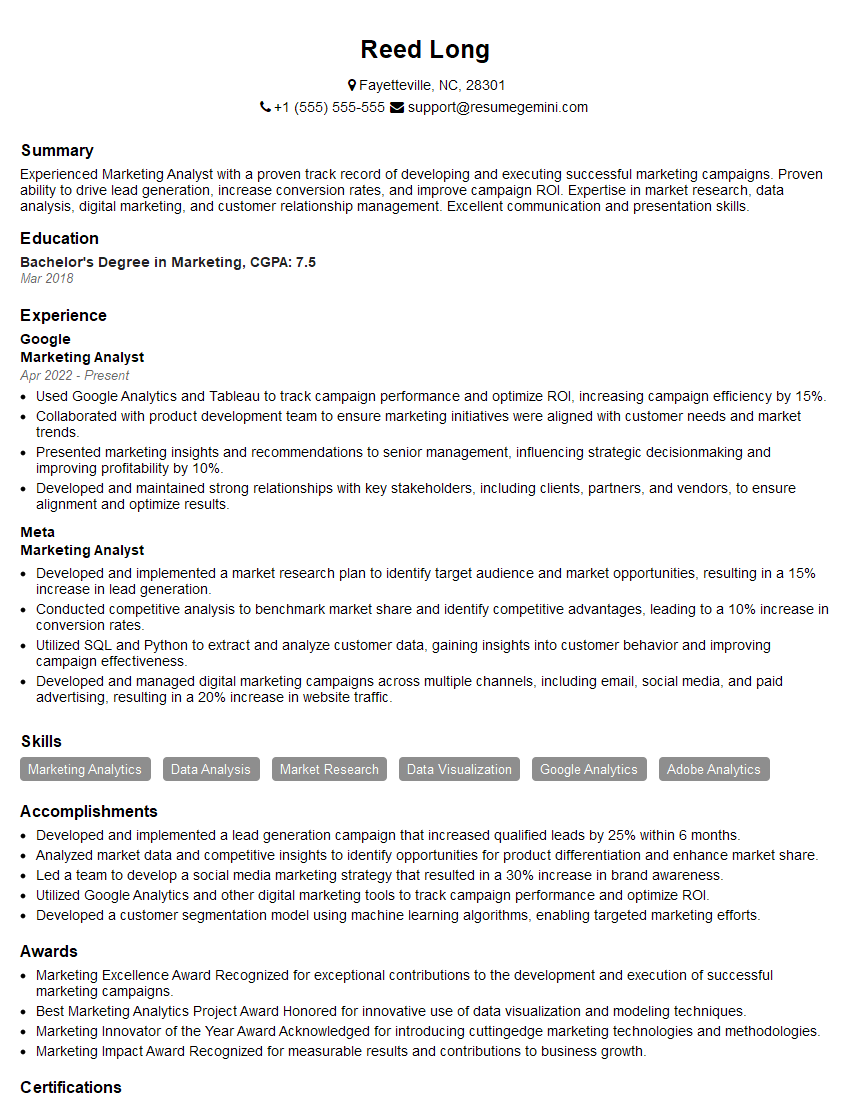
Marketing Analyst Resume Sample

Social Media Manager Resume Sample
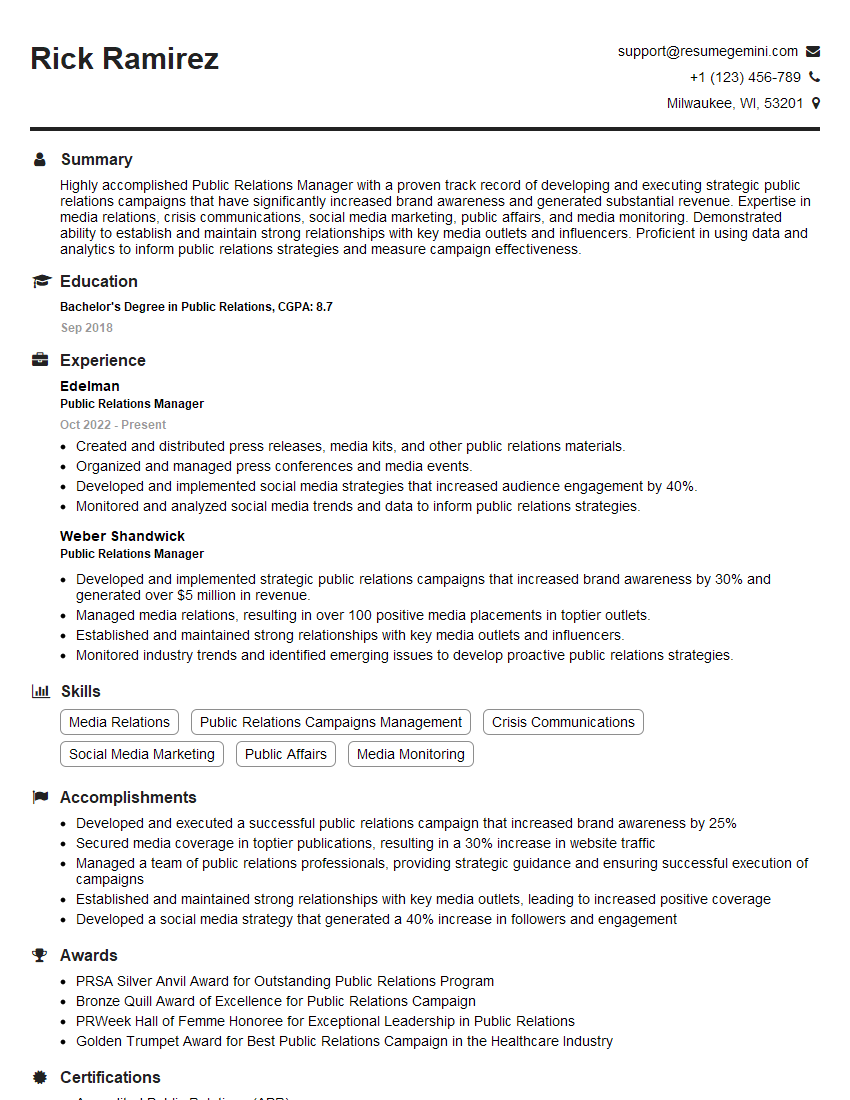
Public Relations Manager Resume Sample
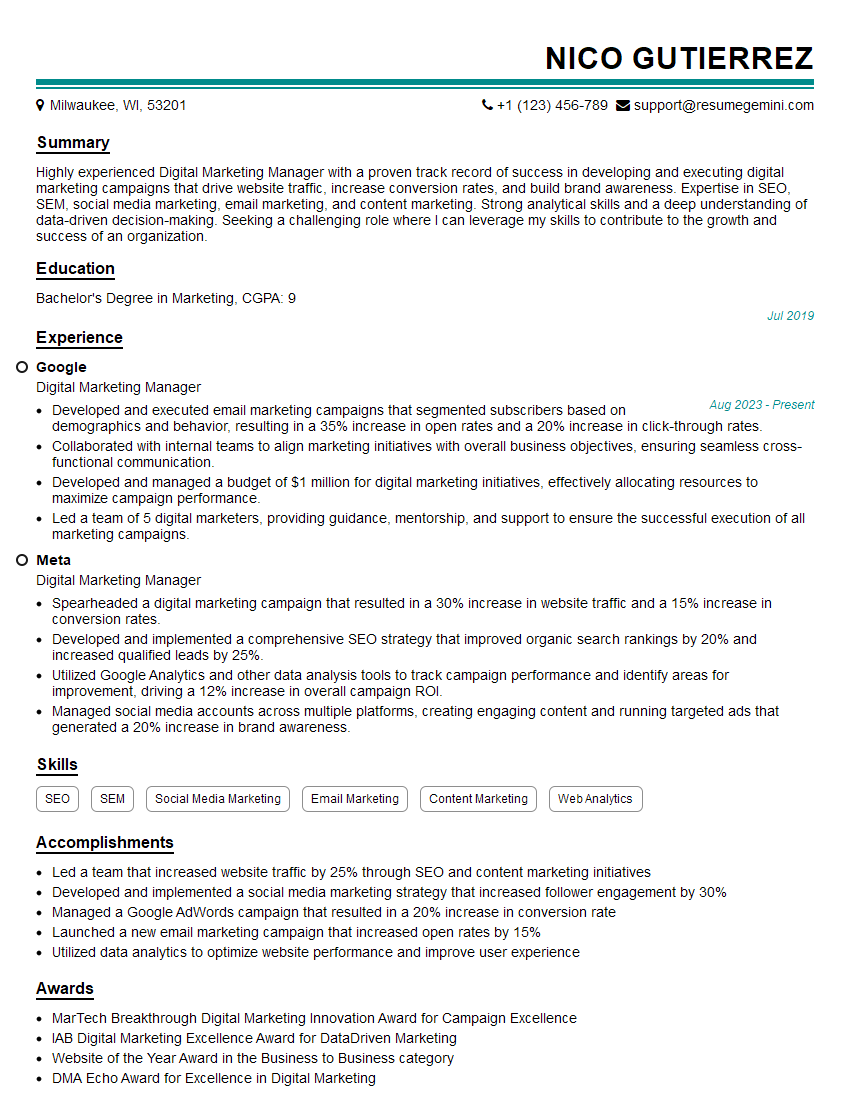
Digital Marketing Manager Resume Sample
Explore more articles
Users Rating of Our Blogs
Share Your Experience
We value your feedback! Please rate our content and share your thoughts (optional).
What Readers Say About Our Blog
Very informative content, great job.
good