Every successful interview starts with knowing what to expect. In this blog, we’ll take you through the top Breaching interview questions, breaking them down with expert tips to help you deliver impactful answers. Step into your next interview fully prepared and ready to succeed.
Questions Asked in Breaching Interview
Q 1. Explain the difference between a black box, white box, and gray box penetration test.
The key difference between black box, white box, and gray box penetration testing lies in the amount of information the tester has about the target system. Think of it like trying to open a safe:
- Black Box Testing: You’re completely blind. You have no prior knowledge of the system’s architecture, code, or internal workings. You’re working solely with what’s externally visible, much like trying to crack a safe with no clues about its combination or construction.
- White Box Testing: You have complete access to the system’s inner workings – the source code, network diagrams, internal documentation. You’re essentially working with the blueprints of the safe, giving you a significant advantage in finding vulnerabilities.
- Gray Box Testing: This is a middle ground. You have some information about the system – maybe a network diagram or partial access to certain components – but not complete knowledge. It’s like having a partial diagram of the safe’s internal mechanism, offering some assistance but not a complete solution.
Each approach has its strengths and weaknesses. Black box testing simulates a real-world attack, while white box testing allows for a more thorough and in-depth analysis. Gray box testing provides a balance between the two.
Q 2. Describe your experience with common vulnerability scanning tools (e.g., Nessus, OpenVAS).
I have extensive experience using Nessus and OpenVAS, two industry-standard vulnerability scanners. Nessus is known for its comprehensive plugin library and detailed reporting, while OpenVAS offers a more open-source and customizable approach. I’ve used them extensively to identify a wide range of vulnerabilities, from outdated software and insecure configurations to known exploits.
For example, during a recent engagement, I used Nessus to scan a client’s network. It identified several critical vulnerabilities, including outdated versions of Apache HTTP server and missing security patches on several Windows servers. OpenVAS was subsequently used to validate these findings and provide more granular information on the vulnerabilities’ exploitation potential. This combination allows for both a broad initial scan and a more focused follow-up investigation.
Q 3. How do you identify and prioritize vulnerabilities found during a penetration test?
Identifying and prioritizing vulnerabilities is crucial. I use a multi-step process:
- Severity Assessment: I categorize vulnerabilities based on their severity (critical, high, medium, low), considering factors like the potential impact (data breach, system compromise), exploitability (ease of attack), and the presence of exploit code. Common scoring systems like CVSS (Common Vulnerability Scoring System) are invaluable here.
- Business Impact Analysis: I assess the potential impact on the organization’s operations, reputation, and financial standing. A vulnerability that might be considered low-severity technically could be high-severity if it compromises a critical business function.
- Prioritization: Based on severity and business impact, I prioritize vulnerabilities, focusing on those that pose the greatest immediate risk. This often involves creating a risk matrix that visually represents the likelihood and impact of each vulnerability.
For example, a SQL injection vulnerability in a customer database is always a high priority, regardless of the technical complexity of exploiting it, as it directly threatens sensitive customer data.
Q 4. What are the key steps involved in a typical penetration testing engagement?
A typical penetration testing engagement follows these key steps:
- Planning & Scoping: Defining the objectives, targets, and timeframe of the test. This involves a clear understanding of the client’s requirements and any limitations.
- Reconnaissance: Gathering information about the target system, including its network topology, software versions, and potential vulnerabilities. This might involve passive reconnaissance (using publicly available information) or active reconnaissance (probing the system for open ports and services).
- Vulnerability Analysis: Identifying and assessing vulnerabilities using vulnerability scanners, manual techniques, and exploitation attempts.
- Exploitation: Attempting to exploit identified vulnerabilities to gain unauthorized access or control of the system. This is done responsibly and ethically, with explicit permission from the client.
- Reporting: Documenting the findings, including a detailed description of the vulnerabilities, their severity, and recommendations for remediation. This is crucial for informing the client and guiding their patching and mitigation efforts.
- Post-Testing Activities: Following up with the client, confirming that the recommendations have been implemented, and possibly conducting retests to verify the effectiveness of the remediation.
Q 5. Explain your understanding of OWASP Top 10 vulnerabilities.
The OWASP Top 10 represents the most critical web application security risks. Understanding them is fundamental to secure development. These aren’t static; they’re updated periodically to reflect evolving threats. However, some consistent themes remain. They cover a broad range of vulnerabilities, including:
- Injection (SQLi, XSS, etc.): Malicious code injected into inputs to manipulate database queries or client-side scripts.
- Broken Authentication: Weak passwords, insecure session management, and lack of multi-factor authentication.
- Sensitive Data Exposure: Failure to protect sensitive data like passwords, credit card numbers, or personal information.
- XML External Entities (XXE): Using untrusted XML data to access internal system resources.
- Broken Access Control: Inadequate authorization controls, leading to unauthorized access to data or functionality.
- Security Misconfiguration: Incorrect or incomplete configuration of web servers, databases, and application settings.
- Cross-Site Scripting (XSS): Injecting malicious client-side scripts to steal session cookies or perform other malicious actions.
- Insecure Deserialization: Processing untrusted serialized data, potentially leading to remote code execution.
- Using Components with Known Vulnerabilities: Relying on outdated or vulnerable third-party libraries or frameworks.
- Insufficient Logging & Monitoring: Lack of proper logging and monitoring capabilities to detect and respond to security incidents.
My experience includes proactively identifying and mitigating these risks throughout the software development lifecycle (SDLC).
Q 6. Describe your experience with different types of web application attacks (e.g., SQL injection, XSS).
I’ve extensive experience with various web application attacks. Here are a few examples:
- SQL Injection (SQLi): I’ve conducted numerous tests to identify vulnerabilities where attackers can inject malicious SQL code into input fields to manipulate database queries. This can lead to data breaches, data modification, and even complete server takeover. I use various techniques to detect this, including manual testing and automated tools.
- Cross-Site Scripting (XSS): I’ve tested for XSS vulnerabilities where attackers can inject malicious JavaScript code into web pages, often stealing user cookies or redirecting users to phishing sites. I’ve used both reflected and stored XSS attacks to demonstrate this risk.
- Cross-Site Request Forgery (CSRF): I’ve identified vulnerabilities where an attacker can trick a user into performing unwanted actions on a web application they are already authenticated to. This often involves exploiting the lack of proper CSRF tokens or other protection mechanisms.
Understanding the nuances of these attacks, and many others, is critical for designing effective defenses.
Q 7. How do you handle unexpected findings during a penetration test?
Handling unexpected findings is a crucial aspect of penetration testing. It’s not uncommon to discover something unforeseen. My approach is systematic:
- Document Everything: Meticulously record all unexpected findings, including the steps taken, the results obtained, and any potential implications. Screenshots and logs are vital.
- Assess the Risk: Carefully evaluate the severity and potential impact of the unexpected finding. This often involves checking whether the finding is a vulnerability, a misconfiguration, or simply an unexpected behavior.
- Inform the Client: Communicate the unexpected finding to the client immediately, especially if it poses a significant security risk. Transparency and clear communication are paramount.
- Investigate Further (If Necessary): If the finding requires further investigation, I will conduct additional testing to understand its nature and scope. This may involve deeper analysis of system logs, network traffic, or other relevant data.
- Update the Report: Incorporate the unexpected findings and any resulting analysis into the final report.
For instance, discovering an unlisted server during network scanning requires careful investigation. I’d analyze its purpose, security posture, and potential vulnerabilities before reporting it to the client along with mitigation recommendations.
Q 8. Explain your experience with network security protocols (e.g., TCP/IP, HTTP, HTTPS).
My experience with network security protocols is extensive, encompassing both the theoretical understanding and practical application of protocols like TCP/IP, HTTP, and HTTPS. TCP/IP forms the backbone of the internet, defining how data is transmitted across networks. I’ve worked extensively with its intricacies, including port scanning, analyzing packet captures (pcap files), and understanding how firewalls and intrusion detection systems interact with TCP/IP traffic. HTTP and HTTPS are crucial for web communication; I understand their differences regarding encryption (HTTPS uses SSL/TLS to secure communication), and I’ve performed numerous security assessments focusing on HTTP headers, cookies, and vulnerable web applications. For example, I’ve identified and exploited vulnerabilities like SQL injection by crafting malicious HTTP requests to manipulate database queries.
I’ve also leveraged my understanding of these protocols to build and test secure network configurations, including designing firewall rules to restrict unauthorized access based on IP addresses, ports, and protocols. I’m also adept at analyzing network traffic to identify suspicious patterns and pinpoint potential security breaches.
Q 9. Describe your approach to social engineering.
My approach to social engineering is ethical and responsible. It’s not about deceiving people for malicious purposes, but rather understanding how social manipulation techniques can be used to identify vulnerabilities in security systems. Think of it like penetration testing, but leveraging human psychology instead of technical exploits.
I start by researching the target organization and its employees, gathering information publicly available online. This might involve checking LinkedIn profiles, company websites, or even news articles to learn about the organizational culture and identify key personnel. Then, I might simulate realistic scenarios, such as posing as a concerned IT professional requesting login credentials for “urgent maintenance,” to test the effectiveness of security awareness training.
Crucially, I always obtain explicit written consent before attempting any social engineering exercise. This ensures ethical and legal compliance. After each test, I provide detailed reports of my findings, highlighting vulnerabilities and recommending effective mitigation strategies.
Q 10. How do you document your findings and create a comprehensive report?
Thorough documentation is paramount in breaching. My reports follow a consistent structure, prioritizing clarity and detail. I begin with an executive summary outlining the key findings and recommendations. The main body then meticulously details the methodologies used, the steps taken, and the evidence collected.
I use a combination of textual descriptions, screenshots, network diagrams, and even video recordings to comprehensively illustrate my findings. All discovered vulnerabilities are categorized based on severity (e.g., critical, high, medium, low) and assigned a Common Vulnerabilities and Exposures (CVE) number where applicable.
Furthermore, I always include a detailed remediation plan, offering specific, actionable steps to address the identified vulnerabilities. The report ends with an appendix containing all the supporting evidence, including logs, code snippets, and any other relevant data. I prioritize using standard reporting templates for consistency and easy comprehension.
Q 11. What are some common mitigation strategies for identified vulnerabilities?
Mitigation strategies depend heavily on the specific vulnerability. However, some common approaches include:
- Patching and Updating: Regularly updating software and operating systems is crucial to address known vulnerabilities. This includes applying security patches promptly to close the gaps attackers could exploit.
- Firewall Configuration: Properly configuring firewalls to restrict inbound and outbound traffic based on specific ports and protocols helps limit the attack surface.
- Intrusion Detection/Prevention Systems (IDS/IPS): These systems monitor network traffic for malicious activity, alert administrators of suspicious patterns, and, in the case of IPS, actively block attacks.
- Security Awareness Training: Educating employees about phishing scams, social engineering tactics, and best security practices reduces the likelihood of human error—a common cause of breaches.
- Multi-factor Authentication (MFA): Adding an extra layer of security beyond passwords with MFA (e.g., one-time codes, biometrics) significantly enhances account protection.
- Regular Security Audits and Penetration Testing: Proactive security assessments identify weaknesses before they can be exploited by malicious actors.
For example, if a SQL injection vulnerability is discovered, the solution could involve input sanitization and parameterized queries to prevent malicious SQL code from being executed.
Q 12. Explain your experience with various operating systems (e.g., Windows, Linux).
My experience with operating systems is broad, encompassing Windows (various versions, from XP to Windows Server 2022) and various Linux distributions (e.g., Ubuntu, Kali Linux, CentOS). I’m proficient in both command-line interfaces and graphical user interfaces. This includes managing users and groups, configuring network settings, analyzing system logs, and identifying system-level vulnerabilities.
In Windows, I’ve worked extensively with the registry editor, examining system settings and configurations for weaknesses, and I have experience with PowerShell scripting for automating tasks and conducting security assessments. In Linux, I am comfortable using the Bash shell, navigating the file system, and managing processes using tools like top and ps. My experience with both Windows and Linux allows me to adapt effectively to various environments and assess security from multiple perspectives.
Q 13. Describe your experience with scripting languages (e.g., Python, PowerShell).
I have extensive experience with Python and PowerShell, leveraging these scripting languages extensively for automation and security tasks. In Python, I’ve developed scripts for network scanning, vulnerability analysis, and data manipulation. For instance, I’ve used libraries like nmap and scapy to build automated vulnerability scanners.
PowerShell is equally important; I’ve built scripts to manage Active Directory users and groups, automate security audits, and analyze Windows event logs. Get-EventLog is a prime example of a command I frequently use to investigate security events. My scripting capabilities enable efficient and effective penetration testing and vulnerability management.
Q 14. How do you stay up-to-date with the latest security threats and vulnerabilities?
Staying current in the ever-evolving cybersecurity landscape is a priority. I regularly follow industry news sources, such as security blogs, newsletters, and podcasts. I actively participate in online communities and forums where security professionals share information and discuss emerging threats.
I regularly attend webinars and conferences, keeping up with the latest research and best practices. Furthermore, I actively track vulnerability databases like the National Vulnerability Database (NVD) and exploit-databases to stay informed about newly discovered vulnerabilities and their potential impact. Maintaining these practices helps me stay ahead of the curve and effectively assess and mitigate emerging threats.
Q 15. Describe your experience with incident response methodologies.
Incident response methodologies are the structured processes used to handle security incidents, from detection to recovery. My experience encompasses the entire NIST Cybersecurity Framework, focusing on the ‘Detect,’ ‘Respond,’ and ‘Recover’ functions. I’ve led numerous incident response efforts, employing frameworks like the Lockheed Martin Cyber Kill Chain. This involves:
- Detection: Utilizing SIEM (Security Information and Event Management) tools to identify anomalous activity. For example, a sudden spike in failed login attempts from unusual geographical locations would trigger investigation.
- Analysis: Deep diving into logs, network traffic, and endpoint data to understand the scope and impact of the breach. This often involves malware analysis (discussed further in the next question).
- Containment: Isolating affected systems to prevent further damage. This might involve disconnecting a compromised server from the network or quarantining infected workstations.
- Eradication: Removing malware and restoring systems to a secure state. This often requires meticulous remediation, including patching vulnerabilities and updating security software.
- Recovery: Restoring data from backups and ensuring business continuity. Regular backups and disaster recovery plans are critical here.
- Post-Incident Activity: Conducting a thorough post-mortem analysis to identify weaknesses in security controls and implement preventive measures to avoid similar incidents in the future. This often includes creating a detailed report documenting the entire incident response process.
For instance, in one case, we responded to a ransomware attack by quickly isolating affected servers, recovering data from backups, and implementing stronger access controls. Our post-incident analysis revealed a vulnerability in our VPN configuration, which was promptly addressed.
Career Expert Tips:
- Ace those interviews! Prepare effectively by reviewing the Top 50 Most Common Interview Questions on ResumeGemini.
- Navigate your job search with confidence! Explore a wide range of Career Tips on ResumeGemini. Learn about common challenges and recommendations to overcome them.
- Craft the perfect resume! Master the Art of Resume Writing with ResumeGemini’s guide. Showcase your unique qualifications and achievements effectively.
- Don’t miss out on holiday savings! Build your dream resume with ResumeGemini’s ATS optimized templates.
Q 16. Explain your understanding of different types of malware.
Malware encompasses a broad range of malicious software designed to damage, disrupt, or gain unauthorized access to computer systems. My understanding covers several categories:
- Viruses: Self-replicating programs that attach to other files. Think of them as biological viruses, infecting and spreading.
- Worms: Self-replicating programs that spread across networks without needing a host file. They are like a wildfire, rapidly consuming resources.
- Trojans: Disguised as legitimate software, they often provide a backdoor for attackers. Imagine a Trojan horse, seemingly harmless but hiding a dangerous payload.
- Ransomware: Encrypts files and demands a ransom for their release. It’s like a digital kidnapping.
- Spyware: Secretly monitors user activity, stealing sensitive information. It’s like a hidden camera in your computer.
- Rootkits: Hide their presence on a system, making detection difficult. They’re like chameleons, blending into the system.
- Adware: Displays unwanted advertisements. It’s like a persistent pop-up that never goes away.
- Bots: Automated programs controlled by attackers to perform malicious tasks, forming botnets that can be used for DDoS attacks (Distributed Denial of Service). Imagine an army of zombie computers.
Understanding the different types of malware is crucial for effective detection and response. Each type has unique characteristics and requires a tailored approach to analysis and remediation.
Q 17. How do you perform malware analysis?
Malware analysis involves carefully examining malicious software to understand its behavior, capabilities, and origins. My approach uses a combination of static and dynamic analysis:
- Static Analysis: Examining the malware without executing it. This involves using tools like disassemblers (e.g., IDA Pro) to analyze the code, identifying functions, strings, and other indicators of compromise (IOCs). It’s like looking at a blueprint of the malware to understand its structure.
- Dynamic Analysis: Running the malware in a controlled environment (e.g., a sandbox) to observe its behavior. This allows me to see what actions it performs, what networks it contacts, and what data it accesses or modifies. It’s like watching the malware in action.
I also utilize sandboxing technologies like Cuckoo Sandbox and other specialized tools for network analysis and memory forensics. The process typically begins with identifying the sample, verifying its integrity through hashing, and then systematically analyzing it using the techniques mentioned above. The goal is to identify the malware’s purpose, its command-and-control infrastructure, and the damage it might cause. This information is crucial for developing effective countermeasures and remediation strategies.
Q 18. Describe your experience with digital forensics.
Digital forensics involves the scientific examination of digital evidence to provide information for legal or investigative purposes. My experience includes:
- Data Acquisition: Using forensic tools (e.g., EnCase, FTK) to create bit-stream copies of hard drives and other storage devices, ensuring data integrity and chain of custody.
- Data Analysis: Examining data for evidence of malicious activity, such as deleted files, registry modifications, and network logs. This often involves using specialized tools for file carving, memory analysis, and network traffic analysis.
- Timeline Reconstruction: Creating a timeline of events based on timestamps and other metadata to understand the sequence of actions.
- Report Writing: Preparing detailed reports documenting the findings and their legal implications.
I have worked on numerous investigations, ranging from internal security incidents to assisting law enforcement agencies in criminal investigations. For example, in one case, I was able to recover deleted files from a suspect’s hard drive that provided crucial evidence in a cybercrime case.
Q 19. Explain your approach to securing cloud environments.
Securing cloud environments requires a multi-layered approach, combining cloud-native security features with traditional security best practices. My approach involves:
- Identity and Access Management (IAM): Implementing strong password policies, multi-factor authentication, and least privilege access controls to restrict access to sensitive resources. This is the foundation of cloud security.
- Network Security: Utilizing virtual private clouds (VPCs), firewalls, and intrusion detection/prevention systems (IDS/IPS) to protect cloud networks. Think of this as creating secure perimeters in the cloud.
- Data Security: Employing data encryption both in transit and at rest to protect sensitive data. This protects data even if a breach occurs.
- Security Monitoring and Logging: Implementing comprehensive logging and monitoring tools to detect and respond to security threats. Think of this as having eyes and ears on your cloud environment.
- Vulnerability Management: Regularly scanning for vulnerabilities and patching systems promptly. This is critical for preventing attacks.
- Compliance: Ensuring adherence to relevant security standards and regulations (e.g., ISO 27001, SOC 2).
For example, I’ve worked with clients to implement robust IAM policies, configure secure VPCs, and integrate security monitoring tools into their cloud infrastructure. This proactive approach significantly reduces the risk of breaches and data loss.
Q 20. How do you ensure compliance with industry regulations (e.g., GDPR, HIPAA)?
Ensuring compliance with industry regulations like GDPR and HIPAA requires a comprehensive approach. My experience involves:
- Data Mapping: Identifying and classifying all personal data processed by the organization. Knowing what data you have is the first step.
- Privacy Impact Assessments (PIAs): Conducting regular PIAs to identify and mitigate potential privacy risks. This is a proactive risk management approach.
- Data Security Controls: Implementing appropriate security controls to protect personal data, such as encryption, access controls, and data loss prevention (DLP) measures. This includes technical and administrative controls.
- Incident Response Plan: Having a plan in place to handle data breaches and other security incidents. This helps to minimize the impact of a breach.
- Employee Training: Educating employees about data privacy and security best practices. A well-trained staff is crucial.
- Data Subject Access Requests (DSARs): Establishing procedures for handling DSARs in a timely and efficient manner. This ensures compliance with GDPR requirements.
Compliance is not a one-time effort but an ongoing process. We use various tools and frameworks to monitor compliance and ensure continuous improvement. For example, we use automated tools to scan for vulnerabilities and ensure data encryption is properly implemented.
Q 21. Describe your experience with vulnerability management tools.
I have extensive experience using various vulnerability management tools, including Nessus, OpenVAS, QualysGuard, and Tenable.sc. These tools allow us to:
- Automated Vulnerability Scanning: Regularly scan systems for known vulnerabilities, identifying potential weaknesses in our security posture. This is akin to having a security checkup for all our systems.
- Vulnerability Assessment: Evaluating the severity and potential impact of identified vulnerabilities, prioritizing remediation efforts based on risk level. This is prioritization of the security issues.
- Patch Management: Tracking and managing software patches to ensure that systems are up-to-date and protected against known vulnerabilities. This ensures that all systems are using the latest security fixes.
- Reporting and Dashboards: Generating reports to track vulnerability remediation progress and identify trends. This helps us track how we are doing.
Beyond the tools themselves, my expertise lies in interpreting the results, correlating findings with other security data, and developing remediation plans. I don’t just rely on automated scans; I also incorporate manual penetration testing and other techniques to ensure a holistic and comprehensive approach to vulnerability management. For instance, in a recent engagement, the automated scans initially missed a critical vulnerability in a legacy application. Through manual penetration testing, we identified and remediated this critical vulnerability, significantly improving the overall security posture.
Q 22. What are your preferred methodologies for penetration testing?
My preferred methodologies for penetration testing follow a structured approach, aligning with industry best practices like the OWASP Testing Guide. I typically employ a phased approach, starting with reconnaissance to gather information about the target system. This includes passive reconnaissance like using search engines and Shodan, and active reconnaissance like port scanning with tools like Nmap. Following this, I move to vulnerability analysis, using both automated scanners like Nessus and OpenVAS, and manual techniques to identify exploitable weaknesses. Next comes exploitation, carefully attempting to compromise the system based on identified vulnerabilities. I always document every step meticulously, following a well-defined testing plan that’s pre-approved with the client. Finally, I perform post-exploitation activities like privilege escalation and data exfiltration (within the agreed-upon scope), followed by a comprehensive report detailing my findings and remediation recommendations. This cyclical approach allows for a thorough assessment and ensures that we cover a wide range of potential attack vectors.
For example, in a recent engagement focusing on web application security, I started by performing a thorough manual review of the application’s source code, complemented by automated vulnerability scans. This helped me identify a critical SQL injection vulnerability, which I then exploited to gain unauthorized access to the database. My report included not just the vulnerability details, but also a step-by-step demonstration of the exploit and a detailed remediation plan to help prevent future attacks.
Q 23. Explain your experience with network traffic analysis tools.
I’m proficient in several network traffic analysis tools, including Wireshark, tcpdump, and Kismet. These tools allow me to capture, filter, and analyze network packets, providing valuable insights into network activity. Wireshark, for instance, allows deep packet inspection, enabling me to identify anomalies, malicious traffic, and vulnerabilities in network protocols. I often use tcpdump for its command-line efficiency when capturing large amounts of data from specific network interfaces. Kismet, on the other hand, is invaluable for detecting wireless networks and identifying potential access points that might be vulnerable to attacks.
In a recent engagement involving a suspected data breach, I used Wireshark to analyze network traffic logs. By filtering the captured packets, I was able to isolate suspicious communications indicating data exfiltration attempts. The detailed information provided by Wireshark helped me identify the source of the breach and provide concrete evidence to the investigation team.
For instance, filtering by protocol (e.g., 'tcp port 80') or by specific keywords within the packet payload helps isolate relevant data quickly.Q 24. How do you handle scope creep during a penetration testing engagement?
Scope creep is a major concern in penetration testing. To mitigate it, a clear and concise scope document is crucial from the outset, defining the target systems, testing methodologies, and the permitted activities. This document should be jointly agreed upon and signed off by both the client and the penetration tester before the engagement commences. Regular communication throughout the process is vital. I use weekly or bi-weekly status calls to update the client on progress, discuss any emerging issues, and ensure we remain within the pre-defined scope. If new areas are identified during testing, they should be documented as ‘out-of-scope’ findings. If the client wants to expand the scope, a change order process is followed, involving a formal agreement on updated timelines and costs.
Imagine we’re assessing a web application, and we initially focus on the customer-facing website. During testing, we discover a potentially vulnerable internal application. Instead of exploring it (which is out of scope), I’d document this finding, discuss it with the client, and if they wish us to assess it, formally request a scope change agreement before proceeding.
Q 25. Describe a time you had to deal with a particularly challenging vulnerability.
One particularly challenging vulnerability involved a zero-day exploit in a legacy system. The system used outdated software, and there was no readily available information or patches to address the vulnerability. This required extensive reverse engineering of the system’s code and protocol to understand the flaw. The challenge was compounded by the limited documentation available and the tight deadline for delivering results. To solve this, I combined dynamic and static analysis techniques. Static analysis using tools like Ghidra provided a deeper understanding of the codebase, while dynamic analysis using debuggers and custom-written exploits enabled me to identify the root cause of the vulnerability and develop a proof-of-concept exploit. Ultimately, this led to a recommendation for a complete system replacement as remediation was practically infeasible.
Q 26. Explain your understanding of cryptography and its applications.
Cryptography is the practice and study of techniques for secure communication in the presence of adversarial behavior. It involves transforming plaintext into ciphertext using cryptographic algorithms, making it unreadable to unauthorized parties. Symmetric-key cryptography, like AES, uses the same key for encryption and decryption, while asymmetric-key cryptography, like RSA, employs a pair of keys (public and private). Cryptographic hashing functions, like SHA-256, create one-way transformations, used for data integrity verification.
In penetration testing, I use my understanding of cryptography to assess the security of cryptographic implementations. For example, I’d analyze the strength of encryption algorithms used to protect sensitive data, assess the implementation of digital signatures for authentication, and analyze the security of key management practices. Weak implementations or improper key handling can significantly weaken security, even with strong algorithms. A classic example is the use of weak or easily guessed passwords, completely defeating even the strongest encryption.
Q 27. How do you approach the ethical considerations involved in penetration testing?
Ethical considerations are paramount in penetration testing. I always adhere to the highest ethical standards, ensuring that all testing activities are conducted within the agreed-upon scope and with the explicit consent of the client. I strictly abide by the law and only access systems or data that have been explicitly authorized. Confidentiality is paramount; all findings are treated with the strictest confidence, only shared with the appropriate personnel within the client’s organization. Furthermore, any unintended damage caused during the testing process is reported immediately to the client, and appropriate remediation steps are discussed collaboratively.
For example, before commencing any testing, I’ll carefully review the client’s security policies and relevant legal frameworks to ensure complete compliance. I document every action and carefully avoid any activity that exceeds the authorized scope, even if it reveals further vulnerabilities.
Q 28. Describe your experience with automated penetration testing tools.
I have extensive experience with automated penetration testing tools such as Nessus, OpenVAS, Metasploit, and Burp Suite. These tools automate various aspects of the penetration testing process, significantly improving efficiency and effectiveness. Nessus and OpenVAS are vulnerability scanners that automate the process of identifying vulnerabilities in systems and applications. Metasploit provides a framework for developing and launching exploits against identified vulnerabilities, while Burp Suite is a powerful tool for testing web applications, automating tasks like spidering, scanning, and fuzzing. However, I always remember that automated tools are just a starting point. Manual verification and analysis are still crucial to ensure the accuracy of the results and to uncover more complex or subtle vulnerabilities that automated tools may miss.
For example, while an automated scan might identify a SQL injection vulnerability, a manual review is often needed to determine the precise nature of the vulnerability, its potential impact, and the most effective way to exploit it.
Key Topics to Learn for Breaching Interview
- Network Reconnaissance: Understanding techniques for identifying vulnerabilities in target networks, including port scanning, service enumeration, and vulnerability scanning. Practical application: Explain how you would approach identifying potential entry points into a network given limited information.
- Exploit Development & Selection: Knowledge of various exploit techniques and the ability to choose the most appropriate exploit based on the identified vulnerabilities. Practical application: Discuss the trade-offs between different exploit types (e.g., remote vs. local, speed vs. reliability).
- Privilege Escalation: Mastering methods to gain higher privileges within a compromised system. Practical application: Describe your approach to escalating privileges from a low-level user account to administrator access.
- Post-Exploitation: Techniques for maintaining access, collecting data, and moving laterally within a compromised network. Practical application: Explain how you would ensure persistence and avoid detection after a successful breach.
- Defensive Security Measures: Understanding common security defenses and how to bypass them ethically. Practical application: Discuss how intrusion detection systems (IDS) and prevention systems (IPS) function and how their limitations might be exploited (ethically, of course).
- Legal and Ethical Considerations: Awareness of legal and ethical implications of penetration testing and ethical hacking. Practical application: Explain your understanding of responsible disclosure and the importance of obtaining proper authorization before conducting any penetration testing activities.
- Reporting and Documentation: The ability to clearly and concisely document findings and recommendations. Practical application: Describe the key elements of a comprehensive penetration testing report.
Next Steps
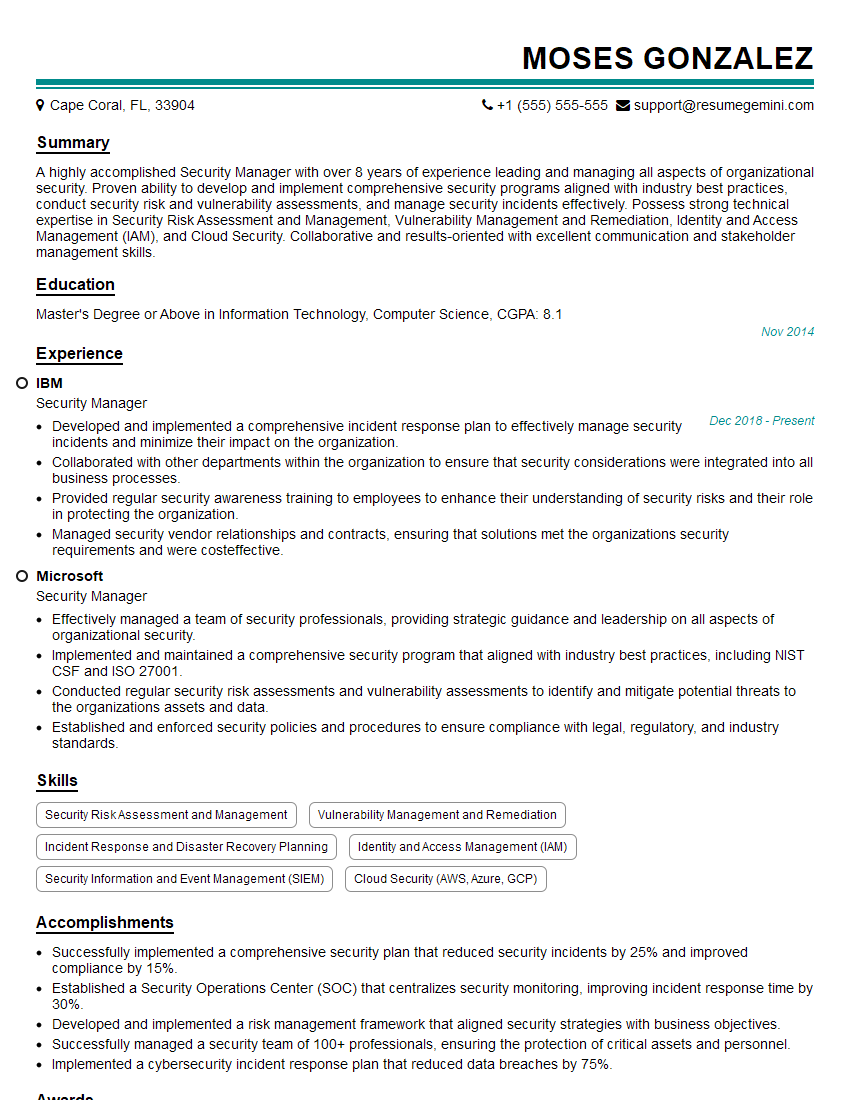
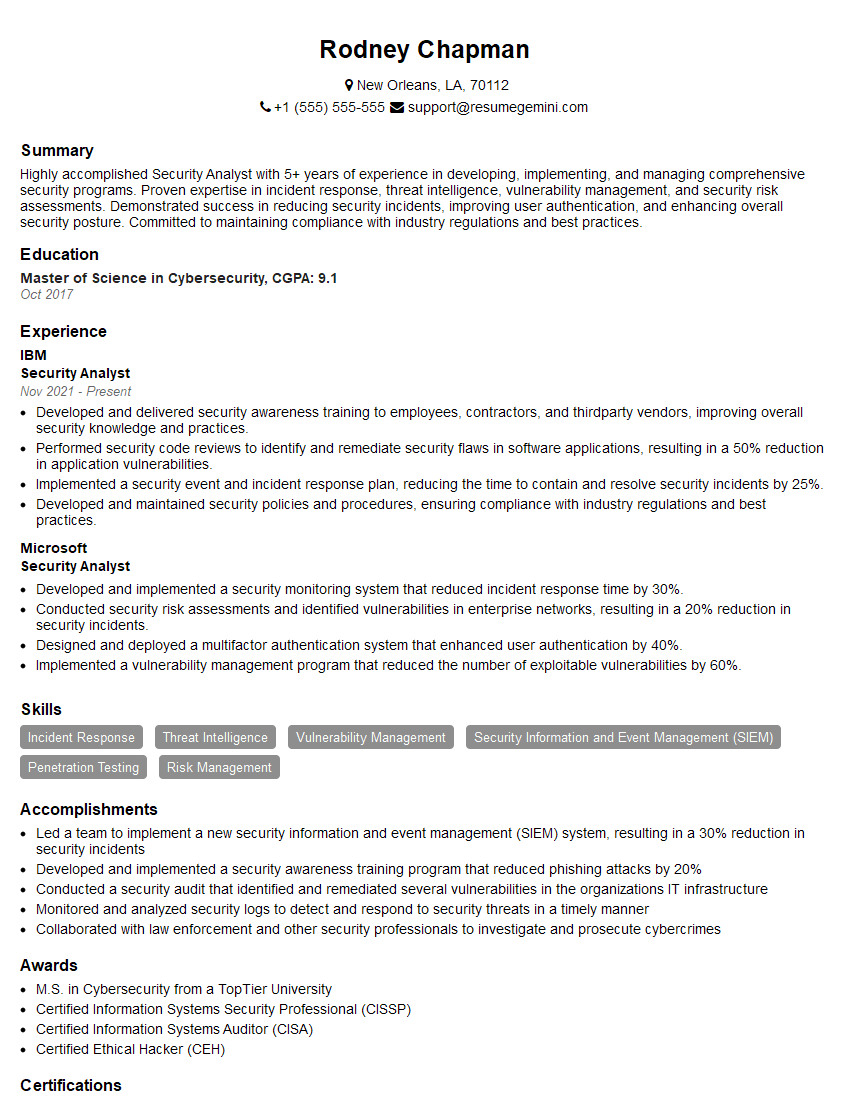
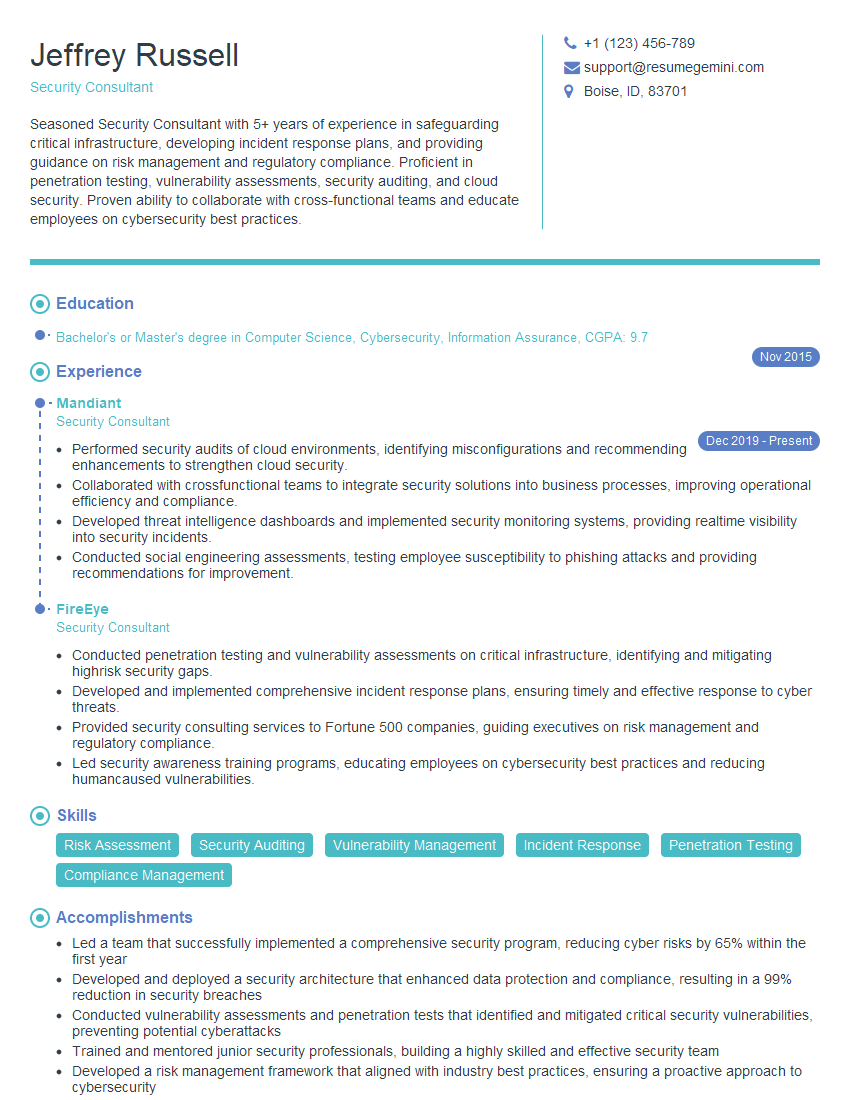
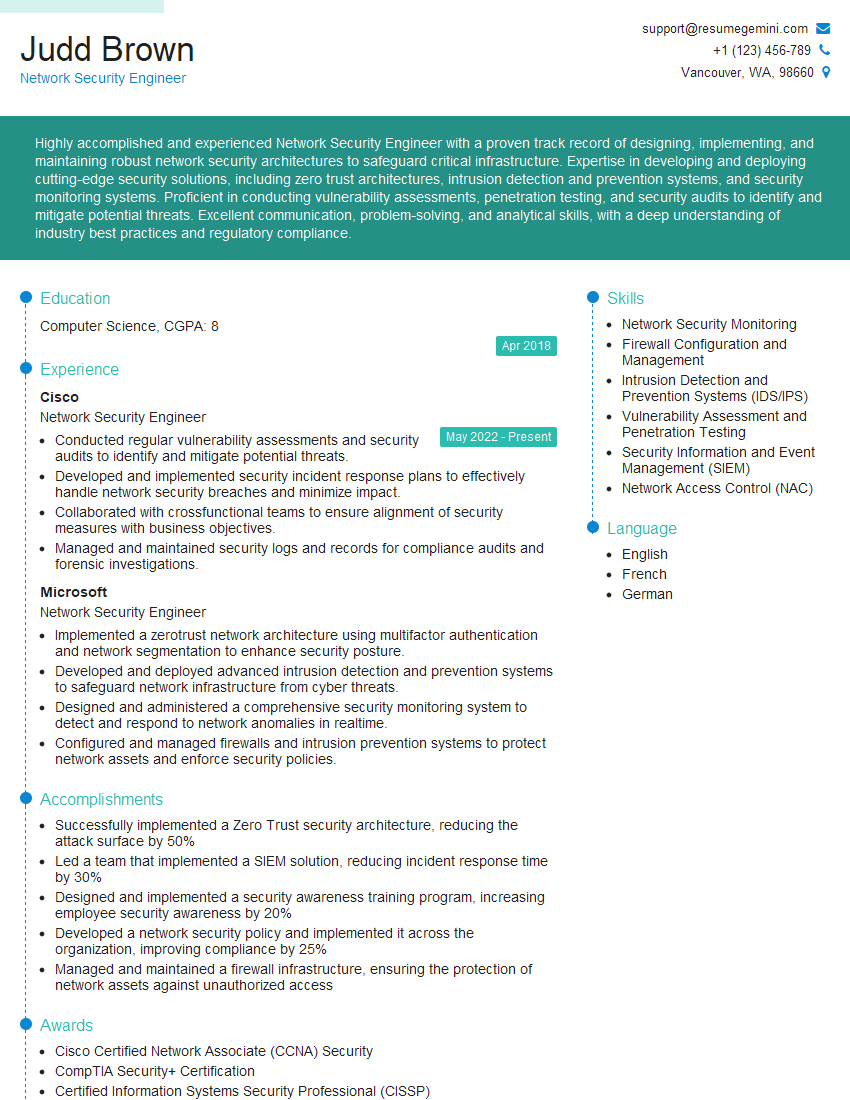
Mastering breaching techniques is crucial for career advancement in cybersecurity, opening doors to high-demand roles with significant earning potential. To maximize your job prospects, it’s essential to present your skills effectively. Creating an ATS-friendly resume is key to getting your application noticed. We recommend using ResumeGemini to build a professional and impactful resume that highlights your unique skills and experience in breaching. ResumeGemini provides examples of resumes tailored to Breaching roles to help you craft a compelling application. Take the next step towards your dream cybersecurity career today!

Explore more articles
Users Rating of Our Blogs
Share Your Experience
We value your feedback! Please rate our content and share your thoughts (optional).
What Readers Say About Our Blog
Very informative content, great job.
good