Cracking a skill-specific interview, like one for Stretching and Installation, requires understanding the nuances of the role. In this blog, we present the questions you’re most likely to encounter, along with insights into how to answer them effectively. Let’s ensure you’re ready to make a strong impression.
Questions Asked in Stretching and Installation Interview
Q 1. Explain the different types of stretching techniques used in your field.
Stretching techniques are crucial for achieving optimal tension and aesthetics in various installations, from fabric banners to cable management. The choice of technique depends heavily on the material and the desired outcome.
- Static Stretching: This involves applying a slow, constant force to the material until the desired tension is achieved. It’s common with materials that have a high degree of elasticity, like certain fabrics. Think of stretching a canvas before painting – a slow, deliberate pull to ensure even tension.
- Dynamic Stretching: This method utilizes rhythmic movements and controlled oscillations to gradually stretch the material. It’s ideal for materials that are less elastic or more prone to tearing under static load, like some types of wire mesh. Imagine carefully stretching a thin wire mesh to fit a frame; a gentle back-and-forth motion is more appropriate than a single forceful pull.
- Heat-Assisted Stretching: For certain materials, heat can be employed to increase elasticity, making stretching easier and allowing for tighter installations. This is commonly used with some plastics or specialized fabrics. Think of shrink-wrapping – the heat allows the film to conform tightly to the object.
Choosing the right technique minimizes material damage and ensures a professional, long-lasting installation.
Q 2. Describe your experience with various installation methods.
My experience encompasses a wide range of installation methods, adapting my approach to the specific material and application. For example:
- Surface Mounting: This is common for signage, where adhesives or mechanical fasteners are used to attach the material to a substrate. I’m experienced in selecting the appropriate adhesive based on the surface material and environmental conditions to ensure a strong, long-lasting bond.
- Tensioning Systems: I’ve worked extensively with cable and fabric tensioning systems. This involves using specialized hardware like turnbuckles, pulleys, and clamps to create uniform tension and achieve a neat, aesthetically pleasing finish. For instance, working with a large fabric banner requires precise tensioning to avoid sagging or wrinkles.
- Embedded Installations: This involves integrating materials into existing structures. I’ve handled installations where cables or wires are carefully routed and secured within walls or ceilings. Safety and careful planning are paramount in such installations.
I’m adept at troubleshooting and problem-solving, finding creative solutions for challenging installations.
Q 3. How do you ensure proper tension during stretching?
Ensuring proper tension is vital for a successful installation; it affects aesthetics, durability, and functionality. My approach is multifaceted:
- Tension Meters: I use calibrated tension meters to measure the force applied to the material, ensuring it falls within the manufacturer’s recommended range. This provides objective data and consistency.
- Visual Inspection: Experienced observation plays a key role. I look for signs of unevenness, sagging, or excessive stretching. A trained eye can detect subtle variations in tension.
- Iterative Adjustment: Tensioning is often an iterative process. I’ll make adjustments, re-measure, and re-assess until the optimal tension is achieved. This might involve fine-tuning turnbuckles or repositioning fasteners.
- Material Properties: I always take into account the specific properties of the material. Different materials have different tolerances to stretching and will behave differently under tension. Knowing these properties beforehand allows for more precise control.
This meticulous approach guarantees a high-quality, durable, and visually appealing installation, minimizing the risk of failure.
Q 4. What safety precautions do you take during stretching and installation?
Safety is my top priority. My safety protocols include:
- Personal Protective Equipment (PPE): This includes safety glasses, gloves, and appropriate footwear depending on the task and materials used. For example, working with sharp objects mandates the use of cut-resistant gloves.
- Fall Protection: When working at heights, I utilize appropriate fall protection equipment, like harnesses and lifelines, in accordance with all safety regulations.
- Tool Safety: Proper maintenance and use of tools are critical. I ensure tools are sharp, in good working order, and used according to the manufacturer’s instructions. Regular inspections and maintenance are a key part of my routine.
- Site Awareness: I’m always aware of my surroundings. This includes identifying potential hazards like electrical wires, sharp objects, or unstable surfaces.
- Emergency Procedures: I’m familiar with emergency procedures and know how to respond in case of an accident or injury.
Prioritizing safety avoids accidents and ensures a successful project.
Q 5. How do you handle material defects or inconsistencies during installation?
Handling material defects or inconsistencies requires a systematic approach:
- Inspection: Thorough inspection of materials before installation is critical. This helps identify defects like tears, discoloration, or inconsistencies in thickness.
- Documentation: Any defects found are documented with photographs and notes. This is important for communication with clients and suppliers.
- Repair or Replacement: Depending on the severity and nature of the defect, the material may be repaired or replaced. Minor defects might be addressed with appropriate patching, while major defects require replacement of the entire component.
- Communication: Open communication with clients or supervisors is crucial to discuss repair or replacement options and their impact on the project timeline and budget.
- Quality Control: Strict quality control is maintained throughout the installation process to prevent the introduction of new defects during the process.
This approach ensures that the finished installation meets the required standards of quality.
Q 6. What tools and equipment are you proficient with?
I’m proficient with a wide array of tools and equipment, adapting my choices to the specific demands of each project. This includes:
- Measuring Tools: Tape measures, rulers, laser measuring devices for precise measurements.
- Cutting Tools: Utility knives, shears, specialized cutting tools appropriate for different materials.
- Fasteners: A variety of screws, bolts, nails, and adhesives, selected to suit the material and installation requirements.
- Tensioning Equipment: Turnbuckles, ratchets, tensioning clamps, and specialized tools for various tensioning systems.
- Power Tools: Drills, impact drivers, and other power tools for efficient and precise work. I am properly trained and certified to operate all power tools.
My proficiency extends to the safe and efficient use of all the equipment, ensuring the integrity of the installation.
Q 7. Describe your experience with measuring and cutting materials for installation.
Accurate measuring and cutting are foundational for successful installations. My process is meticulous:
- Precise Measurement: I employ a combination of tape measures and laser measuring devices for accurate measurements. Multiple measurements are taken to verify accuracy and account for potential variations.
- Material Consideration: The type of material and its properties significantly influence the cutting method. For instance, softer materials might require a sharp utility knife for clean cuts, while harder materials may need specialized cutting tools.
- Layout and Marking: Careful layout and marking are critical, particularly for complex installations. I use chalk lines, pencils, or other appropriate marking tools to ensure precision.
- Cutting Techniques: I utilize various techniques to achieve clean, precise cuts. This may involve using specialized cutting guides or jigs for consistent results.
- Waste Management: I prioritize responsible waste management, sorting and disposing of materials according to appropriate regulations.
My experience ensures precise and efficient cutting, minimizing waste and maximizing the quality of the final installation.
Q 8. How do you troubleshoot common installation problems?
Troubleshooting installation problems begins with a systematic approach. I start by visually inspecting the area, identifying any discrepancies between the installation plan and the actual site conditions. This could involve anything from incorrect measurements to unexpected obstacles like hidden pipes or electrical wiring.
- Step 1: Identify the Problem: Is the material not adhering properly? Are there gaps or inconsistencies? Is the final product not meeting specifications?
- Step 2: Check the Material: Examine the material itself for defects. Is it damaged? Has it been stored incorrectly, affecting its adhesive properties? For example, if using adhesive, was it applied correctly and allowed sufficient drying time?
- Step 3: Review Installation Technique: Did I follow the manufacturer’s instructions precisely? This often includes specific preparation steps for the surface, like cleaning or priming. For instance, using the wrong type of primer on a particular surface can lead to adhesion failure.
- Step 4: Assess Environmental Factors: Temperature and humidity play a significant role in adhesive bonding. Extreme temperatures or high humidity can affect the curing process of adhesives.
- Step 5: Consult Resources: If the problem persists, I consult technical documentation, manufacturer guidelines, and even seek expert advice if necessary.
For example, once I encountered a problem where a newly installed vinyl flooring was bubbling in sections. Through methodical troubleshooting, I discovered the subfloor wasn’t adequately cleaned and contained residual moisture, preventing proper adhesion. Solving the problem involved removing the affected sections, properly cleaning and drying the subfloor, and reinstalling the vinyl.
Q 9. Explain your process for adhering materials to different surfaces.
Adhering materials to different surfaces requires understanding the properties of both the material and the substrate. Preparation is key! I always start by thoroughly cleaning the surface to remove dust, debris, grease, or any other contaminants that could prevent proper adhesion. The type of adhesive and the application method depend heavily on the surface type.
- Concrete: Often requires a specialized concrete adhesive, sometimes needing a primer for optimal bonding. Proper surface preparation, including grinding to create a more porous surface, is crucial.
- Wood: Requires adhesives suitable for wood, considering the type of wood and its moisture content. Pre-drilling pilot holes for screws is usually recommended to prevent splitting.
- Metal: Often requires strong adhesives specifically designed for metal surfaces. Surface preparation may involve cleaning with a solvent to remove oil or grease.
- Glass: Uses adhesives designed for glass; strong bonding is essential to avoid slippage.
- Plastics: Requires an understanding of the type of plastic; adhesives vary based on the plastic’s chemical composition.
For example, when installing ceramic tiles on a concrete wall in a bathroom, I use a high-quality modified thin-set mortar specifically designed for wet environments. I ensure the concrete is clean, primed if necessary, and the mortar is applied correctly. This guarantees a durable and water-resistant installation.
Q 10. How do you ensure the quality of your work after installation is complete?
Quality assurance after installation is a critical step in my process. It goes beyond simply completing the task; it involves verifying the work meets or exceeds the required standards. I perform a thorough inspection, checking for alignment, adherence, and overall appearance.
- Visual Inspection: I carefully examine the entire installation for any imperfections such as gaps, misalignments, or damage.
- Functionality Test: Where applicable, I test the functionality of the installed material to ensure everything works as intended. This could involve checking for proper sealing, smooth operation of moving parts, or load-bearing capabilities.
- Measurement Verification: I re-check critical measurements to ensure they match the specifications.
- Documentation: I document the completed installation, including any relevant notes or observations. This documentation can prove invaluable in the future.
A recent example was a large commercial wallcovering project. After completing the installation, I conducted a final walk-through with the client, pointing out any minor touch-ups needed and clearly explaining the maintenance instructions. This proactive approach ensured client satisfaction and minimized potential future issues.
Q 11. Describe your experience with working from blueprints or technical drawings.
I possess extensive experience interpreting and working from blueprints and technical drawings. My skills include understanding scale, dimensions, materials specifications, and detailed installation instructions provided within these documents. I’m adept at identifying potential challenges or conflicts early on in the process.
For example, when working on a recent renovation project, the blueprints indicated a slight discrepancy between the existing structure and the proposed design. By carefully analyzing the drawings and conducting a thorough site survey, I identified the conflict and proposed a solution that maintained the integrity of the design while accommodating the existing structure. This prevented costly mistakes during the installation process.
Q 12. How do you manage your time effectively during installations?
Effective time management during installations is vital. I use a combination of meticulous planning and on-site adaptability. I begin with a careful review of the project specifications, creating a detailed schedule that outlines tasks, timelines, and resource allocation. I often break down large projects into smaller, manageable tasks.
- Prioritization: I prioritize tasks based on their dependencies and criticality. This ensures that essential steps are completed first.
- Resource Management: I efficiently manage materials and tools, ensuring they are readily available when needed, minimizing downtime.
- Communication: I maintain clear communication with the project stakeholders to address any potential delays or issues promptly.
For example, on a recent project with a tight deadline, I used a Kanban-style board to visualize the workflow and track progress, allowing me to identify and address potential bottlenecks before they significantly impacted the schedule.
Q 13. What is your experience with working at heights or in confined spaces?
I have significant experience working at heights and in confined spaces, always adhering to strict safety protocols. This includes using appropriate safety equipment like harnesses, fall protection systems, and respirators when necessary. I’m certified in relevant safety training and comfortable operating within established safety guidelines. My approach prioritizes safety above all else.
I recently worked on a project requiring installation of exterior cladding on a multi-story building. I used proper fall protection equipment, and followed all safety procedures to ensure my team and I worked safely and efficiently at height. We also implemented a thorough risk assessment and communication plan to ensure a safe work environment.
Q 14. How do you handle unexpected challenges or changes during an installation?
Handling unexpected challenges is a crucial aspect of installation work. My approach involves a calm, problem-solving mindset. I first assess the situation thoroughly, identifying the root cause of the unexpected change. This might involve re-evaluating measurements, checking material compatibility, or consulting with the project team.
- Adaptability: I adapt my approach to accommodate the changes, making necessary adjustments to the schedule and resource allocation.
- Communication: I communicate the changes to the relevant stakeholders, keeping them informed of the situation and any potential impact on the project timeline or budget.
- Creative Solutions: I strive to find creative solutions that minimize disruption and ensure the overall quality of the installation isn’t compromised.
For instance, I once encountered an unexpected change in material specifications midway through a project. By working closely with the supplier and the project manager, we found a suitable replacement material without significant delays or cost overruns. We clearly documented these changes and their impact to avoid future issues.
Q 15. Describe your experience with different types of materials (e.g., fabrics, membranes, etc.).
My experience spans a wide range of materials used in stretching and installation projects. I’ve worked extensively with various fabrics, from lightweight silks and delicate linens to heavy-duty canvas and industrial-strength textiles. Understanding the unique properties of each material is crucial for successful installation. For instance, lightweight fabrics require careful handling to avoid tearing, while heavier fabrics demand robust stretching techniques to achieve a taut, wrinkle-free finish.
Membrane materials, such as those used in architectural applications or tensile structures, present a different set of challenges. I have experience with PVC-coated polyester, PTFE, and ETFE membranes. These materials require specialized tools and techniques due to their rigidity and potential for stretching under tension. Careful consideration of seam sealing and weatherproofing is critical for long-term durability. I’m also proficient with working with composite materials that combine the strength of fibers with the flexibility of resin, these often require very precise measurements and installation procedures.
For example, installing a delicate silk banner requires a gentler approach compared to stretching a heavy-duty tarp. My experience allows me to adapt my techniques and choose the right tools for each material, ensuring optimal results and minimizing risk of damage.
Career Expert Tips:
- Ace those interviews! Prepare effectively by reviewing the Top 50 Most Common Interview Questions on ResumeGemini.
- Navigate your job search with confidence! Explore a wide range of Career Tips on ResumeGemini. Learn about common challenges and recommendations to overcome them.
- Craft the perfect resume! Master the Art of Resume Writing with ResumeGemini’s guide. Showcase your unique qualifications and achievements effectively.
- Don’t miss out on holiday savings! Build your dream resume with ResumeGemini’s ATS optimized templates.
Q 16. How do you maintain a clean and organized work area during and after installation?
Maintaining a clean and organized workspace is paramount for efficiency and safety. Before starting any installation, I meticulously clear the area of any obstructions. I use designated areas for tools, materials, and waste. During the installation, I regularly tidy up, disposing of scrap materials immediately. This prevents tripping hazards and keeps the work area clutter-free, enhancing precision and minimizing mistakes.
After completion, I thoroughly clean the workspace, removing all tools, debris, and leftover materials. I always leave the site cleaner than I found it, leaving a positive impression on the client. Think of it like baking a cake – a clean workspace ensures a perfect final product. This systematic approach not only ensures safety but also contributes to a professional image.
Q 17. What is your understanding of relevant safety regulations and standards?
Safety is my top priority. I am fully aware of and strictly adhere to all relevant OSHA (Occupational Safety and Health Administration) regulations and industry best practices. This includes proper use of personal protective equipment (PPE) such as safety glasses, gloves, and harnesses, as needed. I am trained in safe handling and disposal of hazardous materials, and I ensure all work is performed in accordance with relevant building codes and fire safety regulations.
For example, when working at heights, I always use appropriate fall protection equipment. Regular safety checks of tools and equipment are a part of my routine. I conduct thorough risk assessments before undertaking any project, identifying potential hazards and implementing preventative measures. I am also fully aware of the specific safety regulations that may apply to the particular materials I am working with.
Q 18. How do you communicate effectively with clients and colleagues during the installation process?
Effective communication is the cornerstone of successful installations. I maintain clear and consistent communication with clients, keeping them informed of progress, potential challenges, and any necessary changes to the project timeline or scope. I use a variety of communication methods, such as regular updates (email, phone calls), site visits and project meetings. This keeps everyone on the same page and prevents misunderstandings.
With colleagues, I foster teamwork through open and respectful communication. This involves clear task assignments, regular updates, and collaboration to overcome obstacles. I actively listen to suggestions and ideas to ensure that we collectively achieve the best possible outcome. A collaborative atmosphere breeds creative problem-solving and improves the final result. Consider it a team effort, where open communication ensures synergy and success.
Q 19. Describe your experience with pre-installation planning and site assessment.
Pre-installation planning and site assessment are critical to ensure a smooth and efficient installation. I begin by thoroughly reviewing the project specifications and blueprints, noting critical dimensions, material requirements, and potential challenges. I then conduct a detailed site assessment to verify measurements, assess access points, and identify any potential obstacles, such as existing structures, uneven surfaces, or environmental factors.
This assessment informs the development of a detailed installation plan, including material layout, tool selection, and safety procedures. This methodical approach minimizes on-site surprises and ensures the project proceeds according to plan. For example, identifying a lack of sufficient access could prompt me to suggest using smaller equipment or to adjust the installation sequence to overcome this issue. Thorough planning translates to a successful and hassle-free installation.
Q 20. How do you resolve conflicts or disagreements with colleagues or clients?
Conflict resolution is a vital skill. When disagreements arise, whether with colleagues or clients, I prioritize open and respectful dialogue. I actively listen to understand all perspectives, focusing on identifying the root cause of the conflict, not simply the symptoms. I encourage collaboration to find mutually acceptable solutions. My approach emphasizes finding common ground and building consensus, rather than imposing solutions.
For example, if a client has concerns about the project timeline, I’ll work with them to explore options, such as adjusting the scope or bringing in additional resources. If a disagreement occurs with a colleague, I will address it privately, focusing on factual information and collaborative problem-solving. My aim is to preserve professional relationships while finding an effective solution that benefits the project.
Q 21. Explain your process for documenting and reporting installation progress.
Meticulous documentation is crucial. I maintain detailed records throughout the entire installation process. This includes photographic evidence of the pre-installation site assessment, material quantities used, progress reports, and any modifications made during the installation. I regularly update the client on progress through photos and written reports, highlighting completed tasks and the overall project schedule.
At the project’s conclusion, I compile a comprehensive final report, including all relevant documentation. This ensures transparency and provides a detailed record of the completed work, which is essential for warranty claims and future reference. Imagine it as a detailed blueprint of the installation process, a useful resource for future maintenance or similar projects. This thorough documentation ensures accuracy and accountability throughout the project.
Q 22. How do you ensure proper alignment and positioning of materials during installation?
Ensuring proper alignment and positioning is paramount for a successful installation. It’s like building a house – if the foundation isn’t straight, the whole structure suffers. My approach involves a multi-step process:
- Precise Measurement: Before anything else, I meticulously measure and double-check all dimensions. I use laser measuring tools for accuracy, especially on large-scale projects. For instance, installing a large format tile requires precise measurements to avoid uneven grout lines.
- Layout Planning: I create a detailed layout plan, often using CAD software, to visualize the material placement and identify potential challenges beforehand. This helps prevent costly mistakes later on. Think of it as creating a blueprint before construction.
- Reference Points: I establish clear reference points – plumb lines, laser levels – to ensure everything is perfectly aligned. These act as guides, much like a carpenter uses a level to ensure walls are straight.
- Incremental Installation: I work in stages, constantly checking alignment as I go. This allows for immediate correction of any minor deviations, preventing cumulative errors. Think of it like building a brick wall, checking each layer to ensure it’s perfectly aligned.
- Leveling and Adjustment Tools: I utilize shims, wedges, and other leveling tools to make fine adjustments as needed, ensuring a perfectly flush and level surface.
By combining precise planning with careful execution and the use of appropriate tools, I consistently achieve accurate alignment and positioning, resulting in high-quality installations.
Q 23. What is your experience with using specialized software or tools for installation?
Throughout my career, I’ve become proficient in using various specialized software and tools, significantly enhancing both efficiency and accuracy. For example:
- CAD Software: I utilize AutoCAD and SketchUp for creating detailed installation plans, especially for complex projects. This helps visualize the final outcome and anticipate potential challenges.
- Laser Measuring Tools: These tools are crucial for precise measurements, ensuring perfect alignment and minimizing waste. I frequently use them for everything from setting tile layouts to installing large-scale signage.
- Leveling and Alignment Tools: Beyond the basic spirit level, I’m skilled in using laser levels, digital inclinometers, and various shims and wedges to ensure perfect alignment.
- Project Management Software: I use software like Asana or Trello to manage projects, track progress, and ensure timely completion. This helps maintain organization and accountability.
My familiarity with these technologies directly translates to higher-quality installations, better time management, and reduced errors, leading to greater client satisfaction.
Q 24. How do you handle waste materials and ensure proper disposal?
Responsible waste management is an integral part of my work ethic. It’s not just about cleanliness; it’s about environmental responsibility. My approach involves:
- Waste Minimization: Accurate pre-installation planning and precise cutting techniques minimize material waste. This is achieved through careful measurement, utilizing efficient cutting tools, and optimizing material usage. Think of it as carefully planning a recipe to avoid leftover ingredients.
- Material Sorting: I meticulously sort waste materials – separating recyclables (like cardboard and plastic) from non-recyclables. This makes recycling easier and ensures proper disposal.
- Proper Disposal: I adhere strictly to local regulations for waste disposal. This often involves partnering with licensed waste removal companies for hazardous materials or large volumes of waste. It’s important to be aware of what materials require specialized handling.
- Donation and Reuse: Whenever possible, I donate reusable materials to local charities or reuse them for smaller projects. This minimizes waste and promotes sustainability.
My commitment to environmentally responsible waste management reflects my broader dedication to sustainability and responsible business practices.
Q 25. Describe your experience with different types of adhesives and sealants.
Experience with various adhesives and sealants is essential for successful installations. My expertise spans a wide range of products, each chosen based on specific project needs. Just like choosing the right paint for a surface, choosing the right adhesive depends on the materials being bonded and the environmental conditions.
- Epoxy Adhesives: Excellent for high-strength bonding, particularly in demanding applications like structural bonding or fixing heavy components.
- Acrylic Adhesives: Versatile, water-based adhesives suitable for various materials and applications, offering good strength and ease of use.
- Silicone Sealants: Primarily used for sealing gaps and joints, offering excellent weather resistance and flexibility. These are crucial for waterproofing and preventing leaks.
- Polyurethane Sealants: Similar to silicone but offering greater strength and adhesion, ideal for applications requiring high durability and resistance to chemicals.
I carefully select the right adhesive or sealant based on factors such as the materials being joined, the environmental conditions (temperature, humidity), and the required bonding strength and durability. Proper application techniques, including surface preparation and curing times, are crucial for optimal results. My knowledge extends to understanding the limitations of each product and choosing alternatives when needed.
Q 26. How do you ensure the longevity and durability of your installations?
Ensuring longevity and durability is achieved through a holistic approach, starting from the initial planning phase and extending to the post-installation care. Think of it as building a structure designed to last.
- High-Quality Materials: I prioritize using high-quality, durable materials suited for the intended application and environmental conditions. This is the foundation of a long-lasting installation.
- Proper Preparation: Thorough surface preparation is crucial. This includes cleaning, priming, and ensuring proper alignment before the installation begins. A smooth, clean surface ensures good adhesion.
- Correct Installation Techniques: Adhering strictly to manufacturer’s instructions and best practices for adhesive and sealant application ensures proper bonding and prevents premature failure.
- Environmental Considerations: I account for environmental factors like temperature, humidity, and UV exposure when selecting materials and implementing installation strategies. This avoids material degradation and extends lifespan.
- Post-Installation Care: I provide clients with clear instructions on post-installation maintenance, such as cleaning procedures and protection against environmental stressors.
By addressing these aspects, I significantly increase the longevity and durability of my installations, minimizing the need for future repairs and replacements. The result is a more sustainable and cost-effective solution for my clients.
Q 27. What steps do you take to protect installed materials during and after installation?
Protecting installed materials is crucial to preserve their quality and appearance. This involves a multi-layered approach:
- Protective Covering: During installation, I use protective coverings like drop cloths, plastic sheeting, and masking tape to shield surfaces from damage, scratches, or spills. Think of it as putting protective layers on a freshly painted wall.
- Careful Handling: I handle materials with utmost care to avoid scratches, dents, or breakage. This involves using appropriate lifting techniques, protective gloves, and specialized handling tools.
- Environmental Protection: After installation, I take steps to protect the materials from environmental factors like UV radiation, moisture, and extreme temperatures. This could involve applying protective coatings or recommending appropriate maintenance strategies to the client.
- Post-Installation Cleaning: A thorough cleaning after installation removes any debris or residue, leaving the installed materials looking their best.
This proactive protection ensures the longevity and pristine condition of the installed materials, contributing to client satisfaction and long-term value.
Q 28. Describe a time you had to adapt your methods due to unforeseen circumstances during installation.
During a recent large-scale tile installation in a historic building, we encountered unforeseen structural irregularities in the subfloor. The original plans didn’t account for these variations, which threatened to compromise the integrity of the tile work.
Instead of proceeding according to the original plan, I immediately convened a meeting with the project manager and the client. We carefully assessed the situation and explored several options:
- Option 1 (Refurbishment): Complete subfloor refurbishment was one option, but this would have caused significant delays and budget overruns.
- Option 2 (Adaptive Installation): I proposed an adaptive installation technique involving the use of self-leveling compound and flexible tile adhesive to accommodate the uneven surface. This approach minimized disruptions and maintained the project timeline.
We chose Option 2, and I meticulously implemented the plan. The self-leveling compound addressed the unevenness, and the flexible adhesive ensured the tiles wouldn’t crack under stress. The end result was a successful installation that met the client’s expectations, despite the initial setbacks. This experience highlighted my ability to think critically, adapt to unexpected challenges, and find creative solutions while prioritizing project success and client satisfaction.
Key Topics to Learn for Stretching and Installation Interview
- Material Properties and Selection: Understanding the characteristics of various materials used in stretching and installation (e.g., elasticity, tensile strength, durability) and selecting the appropriate material for specific applications.
- Installation Techniques and Methodologies: Mastering different installation techniques, including proper anchoring, tensioning, and securing methods. This includes understanding the implications of various installation approaches on project timelines and budgets.
- Safety Procedures and Regulations: Knowing and adhering to all relevant safety regulations and best practices for working with stretching and installation equipment and materials. This includes risk assessment and mitigation strategies.
- Troubleshooting and Problem Solving: Developing skills in identifying and resolving common issues encountered during the stretching and installation process, such as material defects, improper tensioning, or environmental factors.
- Measurement and Precision: Understanding the importance of accurate measurements and precision in ensuring successful installation and avoiding costly rework. This includes proficiency with various measuring tools and techniques.
- Project Planning and Management: Familiarity with project planning, scheduling, and resource allocation, considering factors like material availability, labor costs, and potential delays.
- Quality Control and Inspection: Implementing quality control measures throughout the installation process to ensure adherence to specifications and standards. This includes understanding inspection procedures and documentation requirements.
Next Steps
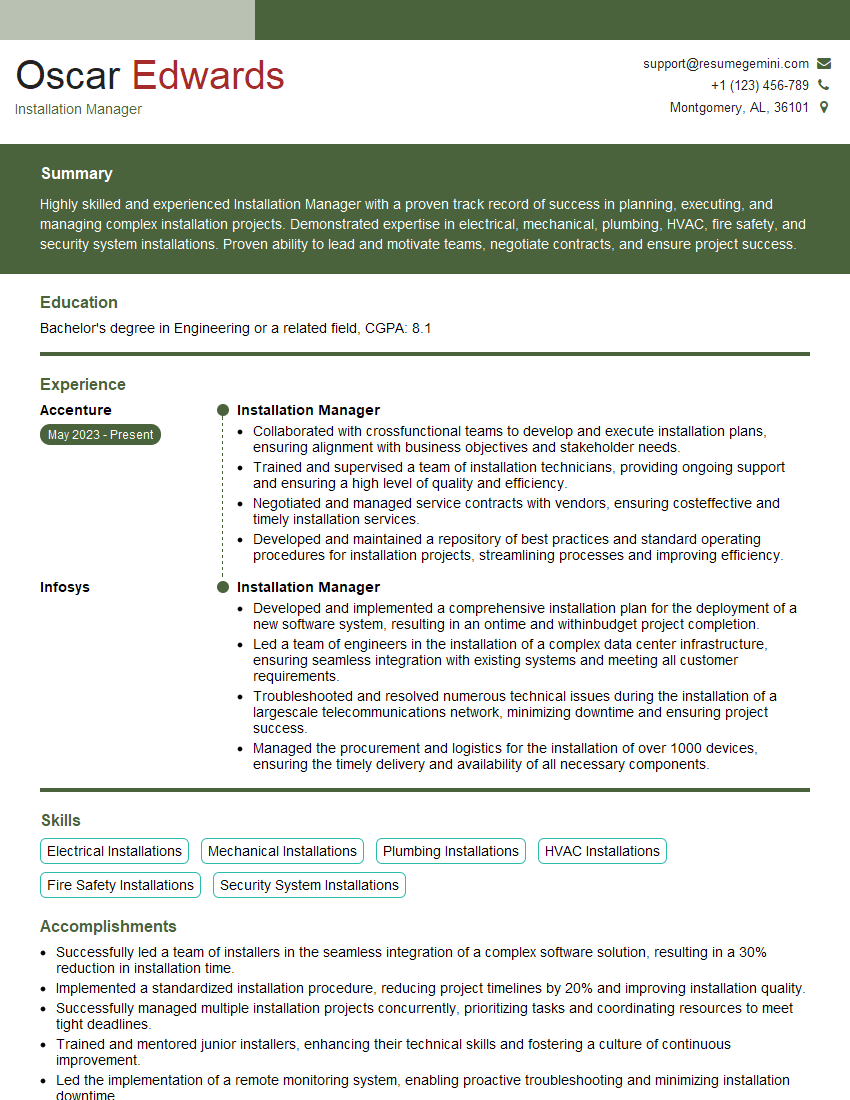
Mastering stretching and installation opens doors to diverse and rewarding career opportunities in various industries. A strong understanding of these skills demonstrates technical proficiency and problem-solving capabilities, making you a highly valuable asset to any team. To maximize your job prospects, create an ATS-friendly resume that highlights your skills and experience effectively. ResumeGemini is a trusted resource to help you build a professional and impactful resume. We provide examples of resumes tailored specifically to Stretching and Installation to guide you in showcasing your qualifications. Invest the time to craft a compelling resume – it’s your first impression to potential employers.
Explore more articles
Users Rating of Our Blogs
Share Your Experience
We value your feedback! Please rate our content and share your thoughts (optional).
What Readers Say About Our Blog
Very informative content, great job.
good