Feeling uncertain about what to expect in your upcoming interview? We’ve got you covered! This blog highlights the most important Bridge Construction Execution interview questions and provides actionable advice to help you stand out as the ideal candidate. Let’s pave the way for your success.
Questions Asked in Bridge Construction Execution Interview
Q 1. Describe your experience with different bridge construction methods (e.g., precast, cast-in-place, segmental).
My experience encompasses a wide range of bridge construction methods, each with its own advantages and challenges. Let’s look at three prominent ones:
- Precast Construction: This involves manufacturing bridge components (beams, girders, deck panels) off-site in a controlled factory environment. These prefabricated elements are then transported to the construction site and assembled. This method offers faster construction times, improved quality control due to the controlled factory setting, and less disruption at the construction site. I’ve worked on several projects using precast concrete segments for both highway overpasses and railway bridges, significantly reducing the overall project duration compared to traditional methods.
- Cast-in-Place Construction: In this method, concrete is poured and cured directly on the construction site, forming the bridge elements in their final position. It offers flexibility in design and is suitable for complex geometries or situations where prefabrication is impractical. However, it typically requires more on-site time and is more susceptible to weather delays. I was involved in a large cast-in-place concrete bridge project where the unique curvature of the design made precasting unfeasible. We meticulously managed the formwork and curing process to achieve the desired quality.
- Segmental Construction: This is a hybrid approach combining elements of precasting and cast-in-place. Precast segments are manufactured off-site and then lifted into place and joined together to form the bridge structure. This allows for the construction of long-span bridges and complex curves with high precision. I have supervised projects utilizing this method, where we carefully monitored the alignment and joining of segments to ensure structural integrity and aesthetics.
Each method has its place depending on factors like span length, site accessibility, budget, and project timeline. My experience allows me to assess the optimal approach for each specific project.
Q 2. Explain your understanding of bridge foundation design and construction.
Bridge foundation design and construction are critical for the overall stability and longevity of the structure. The foundation type is determined by several factors, including soil conditions, hydrological considerations, and the bridge’s load requirements. Common foundation types include:
- Shallow Foundations: These are suitable for stable soil conditions and include spread footings, which distribute the load over a larger area, and combined footings, which support multiple columns. I’ve used spread footings successfully in projects with strong bedrock nearby.
- Deep Foundations: These are necessary when dealing with weak or unstable soil, transferring the load to deeper, stronger strata. Examples include piles (driven or cast-in-place), caissons (large, hollow cylinders sunk into the ground), and piers. A challenging project involved the design and installation of driven piles in a densely populated area, requiring careful planning and execution to minimize disruption and maintain safety.
The construction process typically involves geotechnical investigations to determine soil characteristics, detailed design of the foundation elements, and meticulous execution of the construction sequence, including excavation, foundation placement, and backfilling. Quality control at every stage is paramount, and we employ methods like soil testing, load testing, and regular inspections to ensure the foundation meets the design specifications and provides the necessary stability.
Q 3. How do you manage risks and challenges in bridge construction projects?
Risk management is an integral part of every bridge construction project. We employ a proactive approach using a combination of techniques:
- Risk Identification: We conduct thorough risk assessments, identifying potential hazards related to weather, site conditions, materials, equipment, and personnel. For example, we might identify the risk of flooding during construction in a riverine environment.
- Risk Analysis: We evaluate the likelihood and potential impact of each identified risk, prioritizing those with high probability and severe consequences. A quantitative analysis is performed, assigning probabilities and impact scores for each risk.
- Risk Mitigation: We develop strategies to mitigate these risks, which could include implementing stringent safety protocols, using specialized equipment, procuring high-quality materials, and employing contingency plans. In the flooding example, we’d implement measures like real-time monitoring of river levels and temporary flood barriers.
- Risk Monitoring: Throughout the project, we continually monitor risks and their potential impact. Regular progress meetings are held, and the risks are re-evaluated based on current conditions.
Communication and collaboration are key to effective risk management. Regular updates and open dialogue between the project team, subcontractors, and stakeholders are crucial to anticipate and respond to challenges swiftly.
Q 4. What are your key strategies for ensuring quality control in bridge construction?
Quality control is a cornerstone of successful bridge construction. We implement a multi-layered approach:
- Material Testing: Rigorous testing of all materials (concrete, steel, aggregates) is conducted to ensure they meet specified quality standards. This involves compression tests for concrete, tensile tests for steel, and grading for aggregates. We maintain detailed records of all testing results.
- Workmanship Inspection: Regular inspections are carried out during each stage of construction, verifying that work is being performed according to the design specifications and safety standards. This includes checks on formwork, reinforcement placement, concrete pouring, and welding. Certified inspectors oversee all major aspects of the construction.
- Non-Destructive Testing (NDT): NDT methods, such as ultrasonic testing and radiography, are used to detect internal flaws in the concrete and steel without causing damage to the structure. NDT helps ensure the structural integrity of critical components.
- Third-Party Audits: Independent audits are often performed to provide an objective assessment of the quality control procedures and the overall project quality.
Maintaining detailed documentation and records is crucial. This ensures that we can trace any potential issues back to their source and learn from past experiences to further improve our quality control processes.
Q 5. Describe your experience with scheduling and resource allocation in bridge projects.
Effective scheduling and resource allocation are paramount in bridge construction projects. I typically use a combination of techniques:
- Critical Path Method (CPM): This scheduling technique identifies the critical path—the sequence of activities that determine the shortest possible project duration. We use software like Primavera P6 to create a detailed CPM schedule, which helps us identify potential delays and bottlenecks. This helps us prioritize tasks and resources effectively.
- Resource Leveling: This technique optimizes the allocation of resources (labor, equipment, materials) to minimize resource conflicts and ensure efficient utilization. It involves adjusting the project schedule while minimizing delays.
- Resource Smoothing: This adjusts activities’ timing without affecting the critical path to create a more level usage of resources.
- Regular Monitoring and Updates: The schedule is constantly monitored and updated based on actual progress, accounting for unforeseen delays or changes. Regular progress meetings and reports keep everyone informed of the project’s status.
Careful planning and regular monitoring are essential for managing resources effectively and maintaining the project timeline. This includes forecasting material needs, securing equipment, and coordinating subcontractors’ schedules, all while considering potential weather-related delays.
Q 6. How do you handle cost overruns and budget constraints in bridge construction?
Cost overruns and budget constraints are common challenges in bridge construction. We employ several strategies to address them:
- Detailed Cost Estimation: At the outset of the project, we create a comprehensive cost estimate, considering all aspects of the project, from materials and labor to permits and contingencies. We use sophisticated cost estimating software and historical data to generate accurate estimations.
- Value Engineering: This involves analyzing the design and construction methods to identify potential cost savings without compromising quality or safety. For example, we might explore alternative materials or construction techniques that are more cost-effective.
- Change Management: Any changes to the original scope of work are carefully evaluated and managed to minimize their cost impact. Change orders are meticulously documented and approved by all relevant stakeholders.
- Contract Negotiation: Strong negotiation skills are crucial in securing favorable contracts with subcontractors and material suppliers. We negotiate competitive pricing while ensuring quality standards are met.
- Contingency Planning: A contingency fund is established to absorb unexpected costs. This fund acts as a buffer to mitigate the impact of unforeseen events, like unexpected site conditions or material price fluctuations.
Open communication with the client is crucial in managing budget constraints. Transparent reporting and proactive discussions about potential cost overruns help avoid surprises and facilitate informed decision-making.
Q 7. Explain your knowledge of relevant safety regulations and standards in bridge construction.
Safety regulations and standards are paramount in bridge construction. My knowledge encompasses a range of relevant codes and regulations, including OSHA (Occupational Safety and Health Administration) guidelines in the US, and internationally recognized standards like those from ISO and the relevant national standards organizations. We adhere to:
- Fall Protection: Implementing stringent fall protection measures on elevated work platforms and using appropriate safety harnesses and guardrails.
- Confined Space Entry: Following strict procedures for entering and working in confined spaces, like caissons or tunnels, including proper ventilation and atmospheric monitoring.
- Heavy Equipment Operation: Ensuring safe operation of heavy equipment, such as cranes and excavators, through training, inspections, and adherence to safe operating procedures.
- Traffic Control: Implementing comprehensive traffic control plans to protect workers and the public during construction near roadways and other transportation routes.
- Hazard Communication: Providing clear communication regarding hazards, including safety training for workers, clear signage, and the provision of personal protective equipment (PPE).
We conduct regular safety audits and toolbox talks to maintain a strong safety culture on the site. Proactive safety measures, such as pre-task planning and risk assessments, are vital in preventing accidents and creating a safe working environment for everyone involved.
Q 8. Describe your experience with different types of bridge materials (e.g., steel, concrete, composite).
My experience spans a wide range of bridge materials, each with its unique strengths and challenges. Steel bridges offer high strength-to-weight ratios, making them ideal for long spans and complex designs. I’ve worked on several projects utilizing high-strength steel, employing advanced fabrication techniques to ensure precision and minimize on-site welding. Concrete, on the other hand, provides excellent compressive strength and durability, often used in shorter spans and structures requiring significant mass. I’ve overseen projects using high-performance concrete mixes designed to resist harsh environmental conditions and minimize cracking. Composite bridges, combining the benefits of both steel and concrete, are increasingly popular. My experience includes working on projects using steel-concrete composite girders, where the steel provides tensile strength and the concrete provides compressive strength and fire protection. This synergistic approach often leads to more efficient and cost-effective designs. For instance, on a recent project, we successfully utilized a composite design to reduce material costs by 15% while maintaining structural integrity.
- Steel: High tensile strength, long spans, requires skilled fabrication and welding.
- Concrete: High compressive strength, durable, susceptible to cracking, requires careful mix design.
- Composite: Combines steel and concrete strengths, efficient and cost-effective, requires careful design and construction detailing.
Q 9. How do you manage communication and collaboration among different stakeholders in bridge construction?
Effective communication and collaboration are paramount in bridge construction, involving a complex web of stakeholders including engineers, contractors, subcontractors, inspectors, and regulatory bodies. My approach centers around establishing a clear communication plan from the outset, utilizing various tools and techniques. This includes regular project meetings, documented minutes, and a dedicated communication platform like a project management software. I champion transparency, ensuring all stakeholders have access to relevant information in a timely manner. For example, on one project, we utilized a cloud-based document management system to allow all stakeholders to access the most up-to-date drawings and specifications, which reduced conflicts and expedited the decision-making process. Furthermore, I foster open communication channels, encouraging questions and feedback to prevent misunderstandings. Regularly scheduled meetings with stakeholders, including open forums for subcontractors, allow for early identification and resolution of issues, which is crucial in minimizing delays and cost overruns.
Q 10. Explain your experience with using construction software and technology in bridge projects.
I have extensive experience utilizing various construction software and technologies to streamline bridge projects. This includes Building Information Modeling (BIM) software for 3D modeling, design coordination, and clash detection. Using BIM on a recent project, we were able to identify and resolve potential clashes between structural members and utilities before construction, saving time and reducing rework. We also use project management software for scheduling, resource allocation, and progress tracking. For example, I’ve used Primavera P6 to create detailed project schedules, track progress against milestones, and manage resource allocation effectively. Furthermore, I’m proficient in using GPS-enabled surveying equipment and drone technology for site surveying, monitoring progress, and generating accurate as-built drawings. The integration of technology has proven instrumental in enhancing efficiency and accuracy throughout the project lifecycle.
Q 11. Describe your experience with contract administration and change management in bridge construction.
Contract administration and change management are critical aspects of bridge construction. I manage contracts by meticulously reviewing and understanding their terms and conditions, ensuring all parties are aware of their responsibilities and obligations. I use a systematic approach to track contract deliverables, payments, and variations. For change management, I have established a formal process involving detailed documentation, cost estimation, impact assessment, and approval procedures. This ensures that all changes are properly documented, reviewed by the relevant stakeholders, and agreed upon before implementation. In one project, a significant change in design was managed efficiently through this process, minimizing disruptions and avoiding disputes. This involved meticulously documenting the changes, obtaining approvals from the client and relevant authorities, and updating the project schedule and budget accordingly.
Q 12. How do you address unforeseen site conditions during bridge construction?
Unforeseen site conditions are inevitable in bridge construction. My approach involves proactive risk assessment during the planning phase to identify potential challenges. This includes detailed geotechnical investigations and environmental assessments. When unforeseen conditions arise, I employ a structured process of assessment, documentation, and mitigation. This starts with a thorough investigation to determine the nature and extent of the problem, followed by documenting the findings and notifying relevant stakeholders. Next, a collaborative effort involving engineers, geologists, and contractors develops a suitable mitigation plan. This might include design modifications, additional ground improvement work, or revised construction methods. For example, discovering unexpected bedrock during excavation on a recent project required a modified foundation design, expertly managed through a formal change order process, ensuring project completion without significant delay or cost escalation.
Q 13. What are your methods for monitoring project progress and ensuring timely completion?
Monitoring project progress and ensuring timely completion requires a robust system of tracking key performance indicators (KPIs). I utilize various methods, including regular site inspections, progress reports, and critical path analysis. I employ project management software to track milestones, monitor resource utilization, and identify potential delays. Through regular meetings with the project team, I ensure everyone is aware of the project’s status, challenges, and mitigation strategies. For example, a regularly updated Gantt chart helps visualize progress and identify potential schedule conflicts. Any deviations from the plan are promptly addressed through proactive communication and problem-solving. This proactive approach, coupled with strong teamwork and commitment to timely completion, ensures that projects remain on track and are delivered within the stipulated timeframe.
Q 14. Explain your experience with quality assurance and quality control procedures.
Quality assurance and quality control (QA/QC) are integral to bridge construction. My approach involves a multi-layered system encompassing planning, implementation, and verification. During the planning phase, comprehensive QA/QC plans are developed detailing inspection procedures, testing requirements, and acceptance criteria. During construction, regular inspections are conducted to ensure materials and workmanship meet the specified standards. This involves a rigorous testing program, including material testing and in-situ inspections, to ensure compliance with relevant codes and standards. We also utilize advanced techniques like non-destructive testing (NDT) to detect any internal defects without compromising the structure’s integrity. All inspection findings are meticulously documented, and non-conformances are promptly addressed through corrective actions and preventative measures to guarantee that the final product is of the highest quality and meets all safety standards.
Q 15. How do you ensure the safety of workers and the public during bridge construction?
Worker and public safety during bridge construction is paramount. It’s not just about complying with regulations; it’s about fostering a culture of safety. We achieve this through a multi-pronged approach.
- Comprehensive Safety Plans: Before any work begins, we develop detailed safety plans specific to the project. These plans outline potential hazards, mitigation strategies, emergency procedures, and roles and responsibilities for all personnel. For example, a plan might detail specific procedures for working at heights on a high-rise bridge, including the use of fall arrest systems and harnesses.
- Regular Safety Training: All workers receive thorough training on relevant safety protocols, including hazard identification, risk assessment, and the use of personal protective equipment (PPE). This training is regularly reviewed and updated. We often use interactive simulations to reinforce learning and highlight real-world scenarios.
- Site Supervision and Monitoring: Experienced safety officers monitor the construction site continuously, enforcing safety regulations and promptly addressing any hazards. They conduct regular safety inspections and toolbox talks to reinforce safety awareness. For instance, a safety officer might stop work if they notice a worker not using proper PPE.
- Public Safety Measures: We implement measures to protect the public, such as traffic management plans, pedestrian detours, and clear signage. This often includes the use of temporary barriers, speed restrictions and regular communication updates to the public on potential delays or disruptions.
- Incident Reporting and Investigation: A robust system for reporting and investigating accidents is critical for identifying root causes and implementing corrective actions to prevent recurrence. We analyze each incident thoroughly to identify systemic issues and implement changes to improve safety practices going forward.
Essentially, safety isn’t an add-on; it’s integrated into every aspect of our project management from planning and design through to completion. We believe a proactive, comprehensive approach is the best way to protect lives and minimize risks.
Career Expert Tips:
- Ace those interviews! Prepare effectively by reviewing the Top 50 Most Common Interview Questions on ResumeGemini.
- Navigate your job search with confidence! Explore a wide range of Career Tips on ResumeGemini. Learn about common challenges and recommendations to overcome them.
- Craft the perfect resume! Master the Art of Resume Writing with ResumeGemini’s guide. Showcase your unique qualifications and achievements effectively.
- Don’t miss out on holiday savings! Build your dream resume with ResumeGemini’s ATS optimized templates.
Q 16. Describe your experience with environmental regulations and mitigation strategies in bridge projects.
Environmental regulations are a core component of every bridge project. My experience encompasses a wide range of regulations, including those related to water quality, air quality, noise pollution, and the protection of endangered species. We employ several key mitigation strategies:
- Environmental Impact Assessments (EIAs): We always begin with a thorough EIA to identify potential environmental impacts and develop mitigation strategies. For instance, an EIA might assess the potential impact on a nearby river ecosystem during piling operations, leading to the implementation of erosion control measures and turbidity curtains.
- Permitting and Compliance: We navigate the complex permitting process, ensuring compliance with all relevant local, state, and federal environmental regulations. This requires close coordination with regulatory agencies and proactive engagement throughout the project lifecycle.
- Waste Management: We implement strict waste management plans to minimize waste generation and properly dispose of construction debris in accordance with environmental regulations. This includes recycling programs, waste segregation, and the use of environmentally friendly construction materials.
- Erosion and Sediment Control: We employ various techniques to prevent soil erosion and control sediment runoff, protecting water bodies from pollution. This might involve the use of silt fences, erosion control blankets, and temporary sediment basins.
- Habitat Protection: When working near sensitive habitats, we take extra precautions to protect local flora and fauna. This could range from relocating species to implementing construction methods that minimize disturbance to the habitat.
In one particular project, we had to adapt our construction schedule to accommodate the nesting season of a protected bird species near the construction site. This required careful planning and coordination to ensure the birds weren’t disturbed and their habitat was preserved. This demonstrates our commitment to both project success and environmental responsibility.
Q 17. Explain your understanding of different types of bridge inspections and maintenance.
Bridge inspections and maintenance are crucial for ensuring the long-term safety and functionality of these critical structures. There are several types of inspections, each with its own purpose:
- Routine Inspections: These are regular, visual inspections performed to identify minor defects early on. They are usually done by trained inspectors who visually assess the bridge for any signs of distress, damage, or deterioration.
- Detailed Inspections: These are more comprehensive inspections conducted at intervals determined by the bridge’s age, condition, and traffic load. They may involve non-destructive testing (NDT) methods such as ultrasonic testing to assess the internal condition of the bridge components.
- Special Inspections: These are conducted following significant events like earthquakes, floods, or collisions, or when specific concerns arise. Special inspections are often thorough and might involve advanced diagnostic tools.
- Load Tests: These are conducted to verify the structural capacity of the bridge and often involve applying controlled loads to the structure to observe its response. This provides valuable data on the bridge’s condition and residual strength.
Maintenance activities range from simple repairs like crack sealing and joint replacement to major rehabilitation work such as deck replacement or substructure repairs. The maintenance strategy is often based on the inspection findings and aims to extend the service life of the bridge while ensuring safety. Regular maintenance can significantly reduce the risk of major failures and prevent costly repairs in the future.
For example, proactive maintenance, such as timely crack sealing, can prevent water ingress and corrosion that can lead to more substantial and expensive repairs later.
Q 18. How do you manage conflicts and disputes among contractors and stakeholders?
Conflict resolution is a key skill in bridge construction, where multiple contractors, subcontractors, stakeholders (government agencies, landowners), and design teams interact. My approach involves:
- Open Communication: I foster open and transparent communication channels among all parties. Regular meetings, clear documentation, and prompt responses to queries help prevent misunderstandings and address concerns early on.
- Collaborative Problem-Solving: I encourage collaborative problem-solving to find mutually acceptable solutions. This often involves brainstorming sessions to explore different options and find the best path forward.
- Mediation and Negotiation: When conflicts arise, I use mediation and negotiation techniques to facilitate discussions, identify common ground, and reach mutually agreeable solutions. I strive to be fair and impartial, ensuring that all parties feel heard and understood.
- Formal Dispute Resolution: In situations where negotiations fail, I am prepared to utilize formal dispute resolution methods such as arbitration or litigation. However, this is always a last resort, as it can be costly and time-consuming.
- Contractual Agreements: Thoroughly defined and well-drafted contracts with clear terms and conditions help avoid many conflicts. The inclusion of dispute resolution clauses can streamline the process should disagreements arise.
In one instance, a dispute arose between the structural steel contractor and the concrete contractor regarding the sequencing of their work. Through open communication and collaborative problem-solving, we developed a revised schedule that accommodated both parties’ needs and maintained the project timeline.
Q 19. Describe your experience with value engineering and cost optimization in bridge construction.
Value engineering and cost optimization are crucial for delivering bridge projects within budget without compromising quality or safety. My experience includes:
- Early Value Engineering Workshops: We actively involve all stakeholders in value engineering workshops during the design phase to identify opportunities for cost savings without sacrificing performance or functionality.
- Material Selection Optimization: We carefully evaluate different construction materials, considering their cost, durability, and environmental impact. For example, choosing high-performance concrete can reduce the overall amount of concrete needed, leading to cost savings and environmental benefits.
- Construction Methodologies: We explore different construction methods to identify the most efficient and cost-effective approach. This could involve using prefabricated components or innovative construction techniques.
- Lifecycle Cost Analysis: We consider the lifecycle costs of the bridge, taking into account maintenance and repair costs over the bridge’s lifespan. This approach can help prioritize investments in higher quality, longer-lasting materials that might have a higher upfront cost but ultimately reduce long-term expenses.
- Risk Management: By proactively identifying and mitigating potential risks, we can avoid costly delays and rework. A robust risk management plan considers potential challenges and incorporates contingencies to keep the project on track and within budget.
In a recent project, we successfully implemented value engineering measures that reduced the overall project cost by 15% without affecting the structural integrity or lifespan of the bridge. This involved exploring alternative materials and construction techniques, ultimately delivering a cost-effective and high-quality solution.
Q 20. What is your experience with the use of BIM (Building Information Modeling) in bridge construction?
Building Information Modeling (BIM) has revolutionized bridge construction, enhancing collaboration, improving accuracy, and reducing errors. My experience encompasses the use of BIM throughout the project lifecycle:
- Design Coordination: BIM facilitates seamless coordination between different design disciplines (structural, architectural, mechanical, electrical, plumbing), preventing clashes and improving design efficiency.
- 4D BIM for Scheduling: We use 4D BIM (incorporating time into the model) to optimize the construction schedule, identify potential conflicts, and improve resource allocation.
- 5D BIM for Cost Estimation: 5D BIM (incorporating cost data into the model) allows for more accurate cost estimations, facilitating better budget control.
- Clash Detection and Resolution: BIM’s clash detection capabilities help identify potential clashes between different elements early in the design process, saving time and money during construction.
- Construction Simulation: We use BIM to simulate the construction process, allowing us to identify potential logistical challenges and develop more effective construction sequences.
In one project, the use of BIM helped us identify and resolve a significant clash between the bridge’s utility lines and the foundation system, preventing costly rework during construction. The detailed 3D model allowed us to anticipate and resolve the issue proactively during design.
Q 21. Describe your experience with different types of bridge decks and their construction.
Bridge decks are the load-bearing surfaces of bridges, and there’s a variety of types, each with its own construction method:
- Cast-in-place Concrete Decks: These are constructed by pouring concrete directly onto the bridge girders. This method is common, offering durability and strength. Formwork is crucial for achieving the desired shape and dimensions of the deck.
- Precast Concrete Decks: These are constructed off-site and transported to the construction site for installation. Precasting offers faster construction times and better quality control. Specialized equipment is needed for lifting and setting the precast elements into place.
- Steel Decks: Steel decks are often used in conjunction with steel girders. They are lighter than concrete decks and allow for faster construction. Steel decks require welding and proper protection against corrosion.
- Composite Decks: These decks combine steel and concrete, leveraging the advantages of both materials. They are strong, durable and often efficient in terms of construction time and costs.
The choice of deck type depends on factors such as the bridge’s span, design requirements, budget, and environmental considerations. Each type requires specialized techniques, equipment, and skilled labor for proper construction. For instance, ensuring proper curing of a cast-in-place concrete deck is crucial for preventing cracking and ensuring its long-term performance.
Q 22. How do you manage logistics and transportation of materials in bridge construction?
Managing logistics and transportation in bridge construction is a complex undertaking requiring meticulous planning and execution. It’s akin to orchestrating a massive, precisely timed symphony where every instrument (material) must arrive at the right place (construction site) at the right time.
- Pre-Construction Planning: This involves detailed analysis of material quantities, delivery schedules, and optimal transportation routes. We utilize specialized software to model material flow, identifying potential bottlenecks and optimizing delivery times.
- Material Sourcing and Procurement: We carefully select suppliers based on reliability, quality, and proximity to the site. This minimizes transportation costs and lead times.
- Transportation Management: This includes choosing the appropriate mode of transport (trucks, barges, trains) based on material type, distance, and accessibility. We often use a combination of methods for efficiency. For instance, heavy prefabricated components might arrive by barge, while smaller materials are transported by truck.
- On-Site Management: Once materials arrive, efficient storage and handling are crucial. Designated storage areas are established, and materials are organized to prevent damage and ensure easy access. We use barcodes and RFID technology to track materials and manage inventory.
- Waste Management: Effective waste management is integrated into the logistics plan. We identify recycling and disposal options from the outset, ensuring environmental compliance and minimizing site clutter.
For example, on a recent project spanning a wide river, we utilized barges to transport pre-cast concrete segments, significantly reducing road congestion and transportation time compared to trucking alone. This optimized our schedule and reduced project costs.
Q 23. Explain your experience with working in challenging geographical locations or weather conditions.
Working in challenging geographical locations and weather conditions requires adaptability and robust planning. It’s like navigating a complex terrain, requiring you to anticipate and overcome obstacles before they impact the project.
- Site Assessment: Thorough site assessments are paramount, identifying potential hazards such as unstable ground, extreme temperatures, or high winds. This informs the selection of appropriate construction methods and equipment.
- Specialized Equipment: In mountainous regions, we might employ helicopters for transporting materials to hard-to-reach areas. In extremely cold climates, we use heated enclosures and specialized concrete mixes to counter freezing temperatures.
- Safety Protocols: Enhanced safety protocols are implemented to account for the unique challenges. This could include additional safety training for workers, specialized personal protective equipment (PPE), and contingency plans for extreme weather events.
- Contingency Planning: We develop detailed contingency plans to address potential disruptions due to unforeseen weather conditions or geographical limitations. This ensures minimal project delays.
For instance, during a bridge project in a remote mountainous area, we faced unpredictable weather patterns. We implemented a robust weather monitoring system and adjusted our work schedule daily to maximize productivity while ensuring worker safety. This proactive approach minimized delays and kept the project on track.
Q 24. How do you ensure compliance with relevant building codes and standards?
Compliance with building codes and standards is non-negotiable in bridge construction. It’s the cornerstone of safety and structural integrity. Think of it as building with a detailed blueprint, following every instruction to ensure a sturdy and long-lasting structure.
- Code Research: We thoroughly research and understand all applicable local, state, and national building codes, including those pertaining to structural design, materials, and construction practices.
- Design Review: All design documents undergo rigorous review to ensure compliance with relevant codes. We often engage independent third-party inspectors to provide an unbiased assessment.
- Material Testing: All materials used are subjected to strict quality control testing to verify their conformity to specified standards. This includes compressive strength tests for concrete and tensile strength tests for steel.
- Inspection and Documentation: Regular inspections are conducted throughout the construction process, with meticulous documentation of all activities. This provides a verifiable audit trail, ensuring compliance.
- Third-Party Audits: We frequently engage independent third-party auditing firms to conduct comprehensive audits of our compliance procedures. This ensures objectivity and enhances confidence in our adherence to regulations.
In one project, we discovered a discrepancy between the initial design and a newly updated code. We proactively addressed the issue, redesigning the relevant components and ensuring compliance before proceeding. This proactive approach prevented potential delays and safety issues.
Q 25. Describe your experience with project closeout procedures in bridge construction.
Project closeout in bridge construction is a thorough process, akin to meticulously packing away a complex jigsaw puzzle after it’s been successfully completed. Every piece needs to be accounted for and documented.
- Final Inspection: A comprehensive final inspection is conducted, verifying that the completed structure meets all design specifications and code requirements.
- Documentation Review: All project documentation, including drawings, specifications, test results, and inspection reports, is reviewed for completeness and accuracy.
- As-Built Drawings: As-built drawings reflecting the actual construction are prepared and submitted to relevant authorities. These are crucial for future maintenance and repairs.
- Warranty and Maintenance Information: Information regarding warranties on materials and equipment, as well as ongoing maintenance requirements, is compiled and provided to the owner.
- Final Payment and Closeout Meeting: A final payment is processed, and a closeout meeting is held with all stakeholders to officially conclude the project and address any outstanding issues.
For example, after a recent project, we meticulously documented all aspects of the construction process, including unforeseen changes and modifications. This comprehensive documentation proved invaluable during the final inspection and facilitated a smooth project closeout.
Q 26. Explain your understanding of different types of bridge bearings and their installation.
Bridge bearings are critical components that facilitate movement between the bridge superstructure and substructure, allowing for expansion and contraction due to temperature changes and other factors. They’re like flexible joints, ensuring the bridge’s structural integrity.
- Types of Bearings: Common types include elastomeric bearings (rubber-based), pot bearings (with a sliding element), and rocker bearings (allowing for rocking motion).
- Selection Criteria: Bearing selection is based on factors such as bridge type, span length, anticipated movement, and environmental conditions.
- Installation: Careful installation is essential to ensure proper functionality and long-term performance. Bearings are typically installed with precision using specialized tools and equipment to maintain proper alignment and prevent damage.
- Inspection and Maintenance: Regular inspection and maintenance are crucial to identify potential issues and prevent premature failure. This includes checking for signs of wear, damage, or misalignment.
On a recent project, we utilized pot bearings for a long-span bridge due to their capacity to accommodate significant expansion and contraction. Precise installation was critical to ensure smooth functionality and prevent premature wear. We used laser alignment systems to ensure perfect placement.
Q 27. How do you manage the procurement of materials and equipment in bridge construction?
Procurement of materials and equipment is a vital process, akin to assembling a meticulously chosen orchestra for a grand performance. The right instruments are essential for the symphony’s success.
- Material Specifications: We begin with detailed material specifications, ensuring that all materials meet stringent quality standards.
- Supplier Selection: We carefully select suppliers based on their reputation, experience, and ability to meet our requirements. This includes evaluating their capacity to deliver materials on time and within budget.
- Bidding and Negotiation: A competitive bidding process is typically employed to secure the best possible pricing and terms. Negotiation plays a key role in finalizing contracts.
- Quality Control: Strict quality control measures are implemented throughout the procurement process, ensuring that all materials and equipment meet the specified standards.
- Inventory Management: Effective inventory management is crucial to avoid shortages or excesses. We use sophisticated inventory management systems to track material usage and ensure timely ordering.
For a recent project involving specialized high-strength steel, we engaged in extensive pre-qualification of suppliers to ensure they could meet our stringent quality requirements and tight delivery deadlines. This careful selection avoided potential delays and cost overruns.
Q 28. Describe your experience with post-tensioning and prestressing of concrete in bridge construction.
Post-tensioning and prestressing of concrete are crucial techniques used to enhance the strength and durability of concrete structures, particularly in bridges. Think of it as adding pre-emptive support to the structure’s skeleton.
- Post-tensioning: Involves tensioning steel tendons after the concrete has cured. This creates compressive forces within the concrete, improving its resistance to cracking and bending.
- Pre-stressing: Similar to post-tensioning, but the tendons are tensioned before the concrete is poured. This adds initial compressive stress, enhancing strength and reducing long-term deflection.
- Equipment and Procedures: Specialized equipment is used to tension the tendons and anchor them securely. This involves precise measurements and careful control of tensioning forces.
- Safety Measures: Rigorous safety precautions are essential during post-tensioning and prestressing operations, due to the high forces involved.
- Monitoring and Testing: Regular monitoring and testing are conducted to ensure the effectiveness of the prestressing system throughout the service life of the bridge.
On a recent project, we employed post-tensioning in a long-span concrete bridge. The precise tensioning of the tendons was crucial to ensure the bridge’s structural integrity and long-term performance. We employed advanced monitoring technology to track tendon forces throughout the process.
Key Topics to Learn for Bridge Construction Execution Interview
- Project Planning & Scheduling: Understanding critical path method (CPM), resource allocation, and risk management in the context of bridge construction timelines and dependencies.
- Construction Methods & Sequencing: Familiarity with various bridge construction techniques (e.g., precast, cast-in-place, incremental launching), their applications, and the logistical considerations involved in sequencing activities.
- Quality Control & Assurance: Knowledge of quality management systems, inspection procedures, and the importance of adherence to safety regulations and industry best practices throughout the construction process.
- Cost Management & Budgeting: Experience with cost estimation, tracking expenses, and managing potential cost overruns during bridge construction projects. Understanding value engineering principles.
- Safety & Risk Management: Deep understanding of OSHA regulations and implementing proactive safety measures to mitigate risks associated with heavy machinery, heights, and hazardous materials on bridge construction sites.
- Material Selection & Procurement: Knowledge of different materials used in bridge construction (concrete, steel, etc.), their properties, and the procurement processes involved in ensuring timely delivery and quality control.
- Stakeholder Management & Communication: Experience in effectively communicating with clients, engineers, subcontractors, and other stakeholders to manage expectations, address concerns, and maintain project progress.
- Troubleshooting & Problem-Solving: Ability to identify and resolve unforeseen challenges, delays, or technical issues during the construction phase, ensuring project completion within budget and timeline.
- Technology & Innovation in Bridge Construction: Familiarity with emerging technologies and innovative practices (e.g., Building Information Modeling (BIM), advanced construction materials) and their potential impact on project efficiency and sustainability.
Next Steps
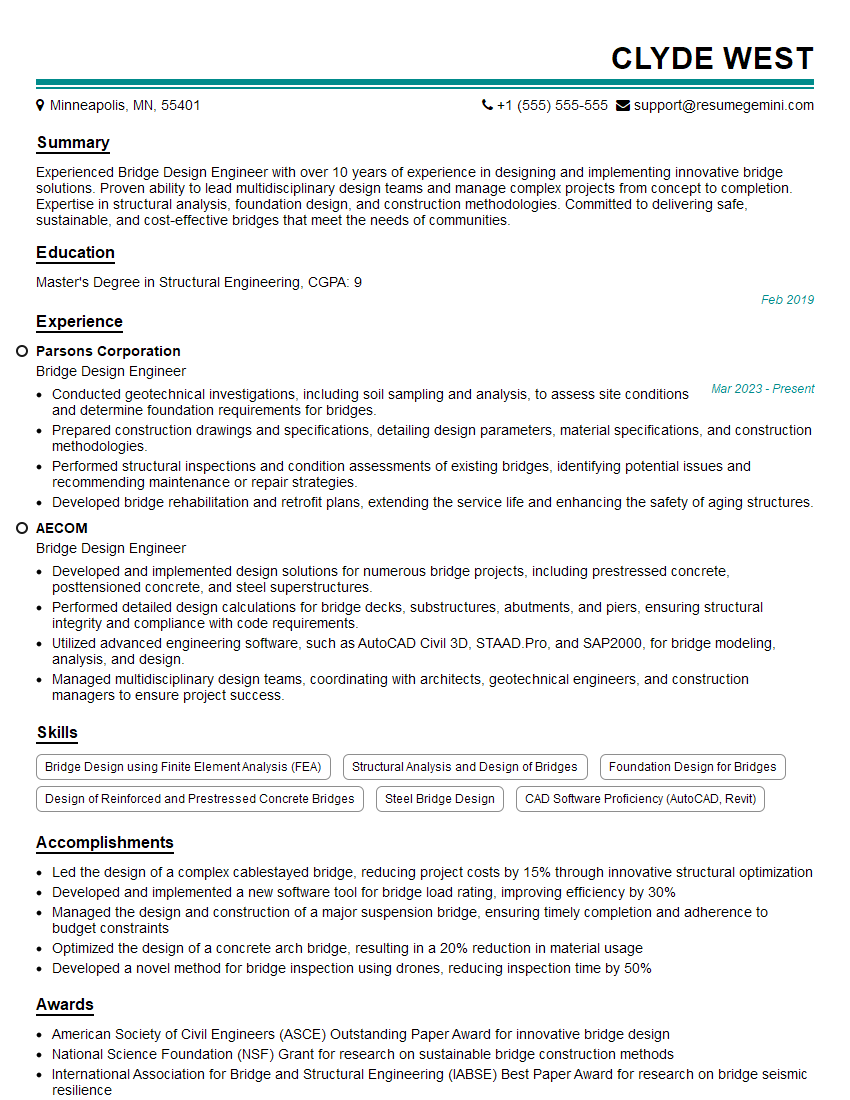
Mastering Bridge Construction Execution is crucial for career advancement in this specialized field. A strong understanding of these concepts demonstrates competence and positions you for leadership roles. To significantly increase your chances of landing your dream job, focus on creating an ATS-friendly resume that highlights your skills and experience effectively. ResumeGemini is a trusted resource that can help you build a professional and impactful resume tailored to the specific requirements of Bridge Construction Execution roles. Examples of resumes specifically crafted for this field are available to guide you.
Explore more articles
Users Rating of Our Blogs
Share Your Experience
We value your feedback! Please rate our content and share your thoughts (optional).
What Readers Say About Our Blog
Very informative content, great job.
good