Unlock your full potential by mastering the most common Bridge Maintenance Management interview questions. This blog offers a deep dive into the critical topics, ensuring you’re not only prepared to answer but to excel. With these insights, you’ll approach your interview with clarity and confidence.
Questions Asked in Bridge Maintenance Management Interview
Q 1. Describe your experience with different bridge inspection methods (visual, non-destructive testing, etc.).
Bridge inspection is crucial for ensuring safety and extending lifespan. My experience encompasses a range of methods, starting with the fundamental visual inspection. This involves a detailed, on-site examination of the bridge’s components – deck, substructure, superstructure, abutments, etc. – to identify visible signs of distress like cracks, corrosion, spalling, or displacement. I’m skilled in using checklists and standardized reporting formats to document findings accurately.
Beyond visual inspection, I’m proficient in various non-destructive testing (NDT) methods. These techniques allow us to assess the internal condition of bridge elements without causing damage. For example, I’ve extensively used ground-penetrating radar (GPR) to detect subsurface voids or deterioration in concrete decks. Ultrasonic testing (UT) helps determine the thickness and integrity of concrete members, while magnetic particle inspection (MPI) and dye penetrant inspection (DPI) are invaluable for detecting surface cracks in steel components. I’m also experienced with using chain drag testing to check for delamination in bridge decks.
Finally, I understand the application of more advanced techniques such as infrared thermography, which uses heat signatures to detect internal defects, and acoustic emission testing, which monitors stress waves within a structure to identify potential failure points. The choice of method depends on the specific bridge type, its age, and the suspected type of damage.
Q 2. Explain your understanding of bridge deterioration mechanisms and common causes of bridge failure.
Bridge deterioration is a complex process driven by a combination of factors. Understanding these mechanisms is key to effective maintenance planning. Corrosion, particularly in steel bridges, is a major culprit, weakening members and reducing load-bearing capacity. This is often exacerbated by exposure to de-icing salts and environmental pollutants.
Concrete deterioration is another significant concern. Factors such as freeze-thaw cycles, alkali-aggregate reaction, and sulfate attack can cause cracking, spalling, and loss of strength. Fatigue cracking occurs due to repeated stress cycles from traffic loads, especially in areas of high stress concentration.
Settlement of the foundation can lead to misalignment and overloading of bridge components. Scour, the erosion of soil around bridge foundations by flowing water, poses a serious threat to stability. Finally, impact damage from collisions or extreme events like earthquakes can cause significant damage.
Bridge failures often result from a combination of these deterioration mechanisms. For example, a bridge might collapse due to advanced corrosion in its supporting steel girders, compounded by foundation settlement and scour that further destabilized the structure. Regular inspection and proactive maintenance are vital to mitigate these risks.
Q 3. How do you prioritize bridge maintenance projects based on risk assessment and budget constraints?
Prioritizing bridge maintenance projects requires a structured approach combining risk assessment and budget constraints. I typically employ a risk-based prioritization framework. This involves:
- Identifying potential failure modes: Analyzing the bridge’s condition, assessing deterioration mechanisms, and determining potential consequences of failure (e.g., loss of life, economic disruption).
- Assessing the likelihood and severity of each failure mode: Using historical data, inspection reports, and engineering judgment to quantify the probability and impact of each failure scenario.
- Calculating risk scores: Multiplying the likelihood and severity scores to obtain a quantitative measure of risk for each bridge element or system.
- Prioritizing projects based on risk scores: Focusing on the highest-risk items first, allocating budget accordingly.
- Considering budget limitations: Developing a phased approach to address high-risk issues while strategically incorporating lower-risk projects within budget limitations.
This framework allows for data-driven decision-making, ensuring resources are allocated efficiently to address the most critical issues first. Software tools and asset management systems are indispensable for managing this process and tracking progress.
Q 4. What software and tools are you proficient in for bridge maintenance management (e.g., BIM software, asset management systems)?
I’m proficient in various software and tools used for bridge maintenance management. My experience includes using Building Information Modeling (BIM) software such as Autodesk Revit and Bentley AECOsim Building Designer to create and manage 3D models of bridges, facilitating detailed inspection planning and documenting repair work. I am also adept at utilizing various asset management systems (AMS), including specialized bridge management software packages. These systems allow for efficient data management, tracking of inspection results, scheduling of maintenance activities, and generating reports for stakeholders.
Furthermore, I’m skilled in using GIS software (Geographic Information Systems) like ArcGIS to visualize bridge locations, integrate spatial data with inspection findings, and perform spatial analysis to identify patterns in bridge deterioration. I’m also familiar with various data analysis tools for processing and interpreting NDT data and creating informative visualizations.
Q 5. Describe your experience with developing and managing bridge maintenance budgets.
Developing and managing bridge maintenance budgets requires careful planning and forecasting. My approach involves:
- Detailed cost estimation: Accurately estimating the costs associated with each maintenance activity, considering materials, labor, equipment, and other relevant expenses.
- Prioritization based on risk and cost: Balancing risk assessment findings with budgetary limitations to optimize resource allocation.
- Phased budgeting: Developing multi-year budget plans to accommodate large-scale projects and ensure long-term financial sustainability.
- Performance monitoring and tracking: Regularly monitoring actual expenses against the budget, making adjustments as needed, and providing periodic reports to stakeholders.
- Contingency planning: Incorporating a contingency fund to address unforeseen issues or cost overruns.
I’ve successfully managed budgets ranging from small-scale repairs to multi-million dollar rehabilitation projects, consistently delivering projects within budget and on schedule. This includes justifying budget requests to stakeholders by demonstrating the long-term cost savings associated with proactive maintenance.
Q 6. How do you ensure compliance with relevant safety regulations and industry standards during bridge maintenance?
Ensuring compliance with safety regulations and industry standards is paramount in bridge maintenance. This involves strict adherence to:
- Occupational Safety and Health Administration (OSHA) regulations: Implementing safety protocols for all maintenance activities, including fall protection, confined space entry procedures, and proper use of personal protective equipment (PPE).
- Relevant state and local regulations: Understanding and complying with specific requirements regarding permits, traffic control, and environmental protection.
- Industry standards: Following guidelines established by organizations like the American Association of State Highway and Transportation Officials (AASHTO) to ensure the quality and safety of maintenance work.
- Developing and implementing safety plans: Creating detailed safety plans for each maintenance project, including risk assessments, hazard identification, and control measures.
- Regular safety training and audits: Providing comprehensive training to maintenance crews and conducting regular safety audits to identify and address potential hazards.
My experience encompasses the full spectrum of safety compliance, ensuring that all work is executed safely and efficiently while meeting all legal and regulatory requirements.
Q 7. What is your experience with different bridge repair techniques (e.g., patching, strengthening, replacement)?
My experience encompasses a wide range of bridge repair techniques, selected based on the type and extent of damage. Patching is frequently used for addressing minor cracks or spalling in concrete decks. This involves removing damaged concrete, cleaning the surface, and applying a suitable repair material. Strengthening techniques are employed when structural members have deteriorated and need reinforcement. This can include adding steel plates, carbon fiber reinforced polymers (CFRP), or other materials to increase load-carrying capacity.
In cases of severe damage or significant deterioration, replacement of entire bridge components or even the entire structure might be necessary. This can involve replacing damaged girders, decks, or abutments. The selection of the appropriate repair technique is a critical decision, requiring thorough assessment of the damage, structural analysis, and consideration of cost-effectiveness. For instance, while patching might be cost-effective for minor damage, a comprehensive strengthening or replacement might be necessary for more extensive issues to ensure long-term structural integrity and safety.
I have experience with various specialized techniques such as epoxy injections for crack repair, shotcrete application for erosion control, and grouting for foundation stabilization. The choice of repair method depends on factors such as the type of material, the extent of damage, and the overall condition of the bridge.
Q 8. How do you manage and interpret bridge inspection reports?
Managing and interpreting bridge inspection reports is crucial for proactive bridge maintenance. It involves a systematic approach, starting with understanding the report’s structure and the terminology used. A typical report details the bridge’s condition using rating scales (e.g., AASHTO condition rating) for various components like the deck, superstructure, substructure, and approaches. It also identifies deficiencies, assigns severity levels, and suggests recommendations for repairs or replacements.
My interpretation process includes:
- Data Verification: I cross-reference the report’s findings with previous inspection data to identify trends and track deterioration rates. This helps predict future maintenance needs.
- Severity Assessment: I prioritize deficiencies based on their severity, potential impact on safety and serviceability, and urgency of repair. A cracked beam, for example, might warrant immediate attention, while minor surface cracking could be scheduled for a later maintenance cycle.
- Risk Management: I assess the risk associated with each deficiency, considering factors like traffic volume, bridge functionality, and potential consequences of failure. This risk assessment informs the prioritization of repair work.
- Cost-Benefit Analysis: I evaluate the cost-effectiveness of various repair options, balancing immediate expenses with long-term cost savings and lifecycle implications.
- Report Summarization: I prepare concise summaries highlighting key findings, recommended actions, and estimated costs, tailored to the audience (e.g., engineers, management, policymakers).
For example, if an inspection reveals significant corrosion on steel girders, I would prioritize immediate action, possibly including accelerated corrosion mitigation strategies, to prevent structural compromise.
Q 9. Explain your understanding of life-cycle costing for bridge infrastructure.
Life-cycle costing (LCC) in bridge infrastructure considers all costs associated with a bridge over its entire lifespan, from design and construction to maintenance, rehabilitation, and eventual replacement. It’s a holistic approach that goes beyond immediate capital costs to ensure long-term economic efficiency and sustainability.
Understanding LCC involves:
- Identifying all Costs: This includes initial construction, routine maintenance (inspections, cleaning, minor repairs), major rehabilitation (deck overlays, substructure repairs), and ultimate replacement.
- Estimating Costs: Accurate cost estimation for each stage, considering inflation, material price fluctuations, and potential unforeseen issues, is crucial.
- Time Value of Money: Future costs are discounted to their present value to facilitate comparison with current expenses. This accounts for the fact that a dollar today is worth more than a dollar in the future.
- Risk Assessment: Incorporating uncertainty and risk into cost projections, such as the possibility of unexpected repairs or material degradation, is vital for accurate LCC.
- Optimization: LCC analysis helps optimize maintenance strategies by comparing different maintenance scenarios and selecting the most cost-effective approach over the bridge’s lifetime.
For example, using LCC, we might find that investing in a more expensive, durable material for a bridge deck during construction results in lower long-term maintenance costs compared to using a cheaper material that requires frequent repairs.
Q 10. Describe your experience with managing contractors and subcontractors during bridge maintenance projects.
Managing contractors and subcontractors during bridge maintenance projects requires strong leadership, clear communication, and robust contract management. My experience involves:
- Pre-qualification and Selection: Rigorous pre-qualification processes ensure contractors have the necessary experience, expertise, and resources to handle the project. This includes reviewing safety records, financial stability, and previous performance.
- Contract Negotiation: Detailed contracts outline project scope, timelines, payment schedules, and performance expectations. This minimizes ambiguity and potential disputes.
- Project Monitoring: Regular site visits, progress reports, and quality control checks are crucial for ensuring work is completed to specifications and within budget. This includes monitoring the work of subcontractors engaged by the prime contractor.
- Conflict Resolution: Addressing conflicts promptly and fairly, through mediation or other methods, is essential for maintaining positive working relationships and project momentum.
- Documentation: Thorough documentation of all communication, changes, and inspections serves as a record for payment, performance evaluation, and dispute resolution.
In one project, a subcontractor experienced delays. Through proactive communication, we identified the root cause – a shortage of specialized materials – and collaborated to find alternative solutions, ensuring the project remained on schedule.
Q 11. How do you communicate effectively with stakeholders regarding bridge maintenance needs and progress?
Effective communication with stakeholders – including residents, businesses, commuters, and government agencies – is paramount during bridge maintenance projects. My approach includes:
- Transparency: Providing clear and timely information about project plans, timelines, potential disruptions, and anticipated benefits. This builds trust and reduces anxiety.
- Accessibility: Offering multiple communication channels (e.g., public meetings, websites, newsletters, social media) to reach different stakeholder groups and accommodate varied communication preferences.
- Responsiveness: Promptly addressing stakeholder concerns, questions, and feedback. This demonstrates respect and willingness to engage.
- Collaboration: Engaging stakeholders early in the planning process to incorporate their input and build consensus. This helps manage expectations and build support for the project.
- Visual Communication: Utilizing maps, diagrams, and images to communicate complex information clearly and concisely.
For instance, during a major bridge rehabilitation project, we utilized a dedicated website and regular community meetings to keep the public informed about lane closures, traffic detours, and project progress. This transparency minimized disruptions and increased public support.
Q 12. What is your experience with developing and implementing bridge maintenance plans?
Developing and implementing bridge maintenance plans requires a systematic approach that combines technical expertise, data analysis, and strategic planning. My experience involves:
- Bridge Inventory: Creating a comprehensive inventory of all bridges under management, including detailed information on their age, condition, material type, and traffic load.
- Condition Assessment: Regular inspections and condition assessments, using standardized rating systems, are critical for evaluating the health of each bridge.
- Risk Assessment: Identifying potential hazards and prioritizing maintenance activities based on the risk of failure or deterioration.
- Maintenance Strategies: Developing different maintenance strategies ranging from preventive (routine inspections and cleaning) to corrective (repairing identified deficiencies) and rehabilitative (major repairs or replacements).
- Budgeting and Scheduling: Allocating resources and scheduling maintenance activities based on their priority, cost, and available funding.
- Performance Monitoring: Tracking the effectiveness of maintenance activities and adjusting the plan as needed based on performance data and new information.
I once developed a five-year maintenance plan for a network of over 100 bridges, using a computerized maintenance management system (CMMS) to track inspections, prioritize repairs, and manage budgets efficiently.
Q 13. Describe your experience with different bridge materials (concrete, steel, timber) and their maintenance requirements.
Different bridge materials – concrete, steel, and timber – each have unique maintenance requirements. Understanding these differences is crucial for effective bridge management:
- Concrete: Concrete bridges require regular inspection for cracking, spalling, and corrosion of embedded steel reinforcement. Maintenance includes crack sealing, patching, and protective coatings to prevent further deterioration.
- Steel: Steel bridges are susceptible to corrosion, particularly in harsh environments. Maintenance includes regular inspection for rust, painting, and possibly cathodic protection to mitigate corrosion.
- Timber: Timber bridges are vulnerable to decay, insect infestation, and weathering. Maintenance includes regular inspection, treatment with preservatives, and timely replacement of deteriorated members.
For example, in coastal areas, steel bridges require more frequent inspections and protective coatings due to the corrosive effects of salt spray compared to those in inland areas. Similarly, timber bridges in humid climates require more frequent treatment with preservatives to prevent decay.
Q 14. How do you handle unexpected bridge maintenance issues or emergencies?
Handling unexpected bridge maintenance issues or emergencies requires a swift and well-coordinated response. My approach includes:
- Rapid Assessment: Immediately dispatching qualified personnel to assess the extent of the damage and identify any immediate safety hazards.
- Emergency Repairs: Implementing temporary repairs to ensure safety and prevent further damage, while coordinating with relevant authorities (e.g., traffic management, emergency services).
- Detailed Investigation: Conducting a thorough investigation to determine the root cause of the issue and prevent future occurrences.
- Communication: Maintaining clear communication with stakeholders about the situation, planned actions, and anticipated impacts.
- Documentation: Maintaining comprehensive records of the incident, repairs undertaken, and lessons learned.
In one instance, a sudden collapse of a small section of a bridge deck necessitated an immediate closure. We implemented emergency traffic management, conducted a thorough investigation, and secured funding for prompt and effective repairs, ensuring public safety and minimal disruption.
Q 15. What is your experience with using predictive maintenance techniques for bridges?
Predictive maintenance uses data analysis and advanced technologies to anticipate potential bridge failures before they occur, unlike reactive maintenance which only addresses problems after they manifest. This approach significantly reduces repair costs and improves bridge longevity.
In my experience, I’ve successfully implemented several predictive maintenance programs. For instance, on a project involving a network of aging highway overpasses, we integrated sensor data (strain gauges, accelerometers, etc.) into a real-time monitoring system. This allowed us to detect subtle changes in bridge behavior – like increased vibration or deflection under load – that might indicate developing cracks or fatigue. These early warnings enabled us to schedule timely inspections and preventative repairs, avoiding more extensive and costly interventions later. We also utilized machine learning algorithms to analyze historical maintenance data, predicting future failure rates and prioritizing maintenance efforts effectively. This data-driven approach helped us allocate our resources optimally, maximizing the lifespan and safety of our bridges.
Career Expert Tips:
- Ace those interviews! Prepare effectively by reviewing the Top 50 Most Common Interview Questions on ResumeGemini.
- Navigate your job search with confidence! Explore a wide range of Career Tips on ResumeGemini. Learn about common challenges and recommendations to overcome them.
- Craft the perfect resume! Master the Art of Resume Writing with ResumeGemini’s guide. Showcase your unique qualifications and achievements effectively.
- Don’t miss out on holiday savings! Build your dream resume with ResumeGemini’s ATS optimized templates.
Q 16. Explain your understanding of bridge load rating and capacity analysis.
Bridge load rating and capacity analysis are crucial for ensuring a bridge can safely carry its intended traffic. Load rating determines the maximum load a bridge can withstand considering its current condition, while capacity analysis assesses the bridge’s structural ability to bear loads based on design specifications and material properties. It’s like understanding the weight limit of a truck versus the actual amount of cargo it can handle accounting for wear and tear.
My experience involves using finite element analysis (FEA) software to model bridge structures and evaluate their response to various load scenarios. This includes analyzing the effects of live loads (vehicles), dead loads (bridge weight), and environmental loads (wind, snow). I’ve also been involved in updating load ratings following damage assessments, incorporating factors like material degradation and crack propagation. For instance, I worked on a project where a bridge showed signs of deterioration after a flood. By performing a detailed capacity analysis using FEA, we determined the bridge’s reduced load-carrying capacity and implemented traffic restrictions until repairs could be completed. This prevented a potential catastrophic failure and ensured public safety.
Q 17. How do you ensure the safety of workers during bridge maintenance operations?
Worker safety is paramount during bridge maintenance. A robust safety program involves meticulous planning, risk assessments, and the use of appropriate safety equipment and procedures. Think of it as a layered approach to security, ensuring that every aspect is considered.
My approach starts with a thorough risk assessment of the specific task, including identification of potential hazards like falls, electrocution, and traffic collisions. We then develop detailed safety plans that address these hazards. These plans include measures like providing appropriate personal protective equipment (PPE), implementing traffic control measures, erecting scaffolding and safety nets, and establishing clear communication protocols between workers. Regular safety meetings and training sessions reinforce safe work practices, ensuring everyone is aware of and adheres to the established safety protocols. Furthermore, I always ensure compliance with all relevant safety regulations and standards.
Q 18. What is your experience with bridge rehabilitation projects?
Bridge rehabilitation projects aim to extend the service life of aging bridges by repairing or replacing deteriorated components. This often involves addressing issues like cracking, corrosion, and spalling (surface deterioration) which commonly happen over time and from harsh weather conditions.
I’ve led and participated in numerous rehabilitation projects, ranging from minor repairs to major overhauls. One significant project involved the rehabilitation of a historic suspension bridge. The project required a comprehensive assessment of the bridge’s condition, followed by detailed design and engineering to address structural issues while preserving its historical character. The rehabilitation included replacing deteriorated cables and suspenders, repairing the deck, and strengthening the pier foundations. The successful completion of this project involved careful coordination with heritage preservation specialists and strict adherence to preservation standards. The result was a safe and structurally sound bridge that maintained its historical significance.
Q 19. Describe your experience with the use of drones or other advanced technologies for bridge inspections.
Drones and other advanced technologies are revolutionizing bridge inspections, offering increased safety, efficiency, and data accuracy. Drones provide a cost-effective and efficient way to reach hard-to-access areas, allowing for detailed visual inspections and data collection.
I have extensive experience using drones equipped with high-resolution cameras and thermal imaging to inspect bridge structures. This technology provides detailed images of the bridge’s components, allowing for the early detection of cracks, corrosion, and other defects. The drone-collected data is then integrated with other inspection data such as 3D laser scanning, providing a comprehensive picture of the bridge’s condition. For example, on a recent project, drones detected a significant crack in a hidden section of a girder that would have been missed during a traditional inspection. This early detection allowed for timely repairs, preventing potential collapse and saving significant costs.
Q 20. How do you stay current with advancements in bridge maintenance technologies and practices?
Staying current in this rapidly evolving field requires continuous learning and engagement with industry developments. This is done through a multifaceted approach.
I actively participate in professional organizations like the American Society of Civil Engineers (ASCE) and attend industry conferences and workshops to learn about the latest techniques and technologies. I regularly review relevant technical journals and publications, and I actively participate in online communities and forums to share knowledge and learn from other experts. Moreover, I pursue professional development courses and certifications to stay updated on new standards and regulations. This ensures that my knowledge and practices align with current best practices, leading to safer and more effective bridge maintenance strategies.
Q 21. Describe your experience with managing bridge maintenance documentation and records.
Meticulous bridge maintenance documentation and records are critical for tracking the bridge’s history, informing future maintenance decisions, and ensuring accountability. This data is vital for everything from insurance purposes to making sure warranty work is tracked accurately.
My experience involves developing and implementing comprehensive documentation systems for bridge maintenance records. This includes creating and maintaining digital databases that store all relevant information such as inspection reports, repair records, load rating data, and material specifications. We utilize a robust system that ensures data integrity, accessibility, and searchability. The system also incorporates features to automate report generation, facilitate data analysis, and assist in predictive maintenance planning. The clear and organized documentation enables efficient decision-making, streamlines communication among stakeholders, and aids in meeting regulatory requirements.
Q 22. How do you ensure the quality of bridge maintenance work?
Ensuring the quality of bridge maintenance work is paramount for safety and longevity. It’s a multi-faceted process involving meticulous planning, skilled execution, and rigorous inspection.
- Pre-work Planning: This includes detailed assessments of the bridge’s condition using techniques like visual inspections, non-destructive testing (NDT), and structural analysis. We define clear objectives, specifying materials, methods, and acceptable tolerances for each task. For example, before repainting a bridge, we’d carefully specify the type of paint, surface preparation methods, and the required number of coats.
- Qualified Personnel: Employing certified and experienced technicians and engineers is essential. Regular training updates on new techniques, safety protocols, and material handling are crucial to maintain high standards. I always ensure my team participates in continuing professional development programs relevant to bridge maintenance.
- Quality Control & Inspections: Thorough inspections during and after each maintenance phase are vital. This includes documenting every step with photos, reports, and digital records. This documentation serves as a valuable resource for future maintenance and troubleshooting. We often use checklists and standardized forms to ensure consistency and completeness. For instance, after a concrete repair, a thorough visual inspection would be done, followed by a potential strength test to verify the repair’s success.
- Material Quality: Using high-quality, durable materials that meet specified standards is non-negotiable. Proper storage and handling of materials are also crucial to prevent degradation before use. This includes regular checks on certifications and expiration dates of materials like sealants or protective coatings.
By combining rigorous planning, skilled workforce, comprehensive inspections, and high-quality materials, we create a robust system that guarantees the quality of bridge maintenance.
Q 23. What are some common challenges in bridge maintenance management, and how have you overcome them?
Bridge maintenance management faces various challenges. One significant hurdle is budget constraints. Balancing the need for timely repairs with limited funding often necessitates prioritizing maintenance tasks based on risk assessment and structural integrity analysis. I’ve overcome this by developing optimized maintenance schedules focusing on preventative measures rather than solely reactive repairs, thereby maximizing the lifespan of bridge components.
Another challenge is access limitations, especially for bridges in remote locations or with heavy traffic. This requires careful planning, using specialized equipment (like scaffolding systems that minimize traffic disruption), and implementing efficient work schedules to minimize the impact on traffic flow. For example, during a recent project on a busy highway overpass, we employed night-time maintenance to reduce traffic disruptions.
Aging infrastructure poses another major challenge. Many bridges are nearing or exceeding their design life, requiring more frequent and extensive repairs. Addressing this requires proactive strategies such as regular inspections, advanced diagnostic techniques, and timely interventions to prevent catastrophic failures. I frequently use bridge management systems to track assets and prioritize maintenance needs, based on factors like age, condition, and traffic volume.
Finally, unexpected events such as extreme weather, accidents, and natural disasters can disrupt carefully planned maintenance schedules. We mitigate this through robust contingency plans and flexible scheduling.
Q 24. Describe your experience with environmental considerations in bridge maintenance.
Environmental considerations are integral to bridge maintenance. Minimizing disruption to the surrounding ecosystem is crucial. This involves careful selection of materials with low environmental impact, implementing erosion control measures during construction and repair, and adhering to strict environmental regulations.
For example, when working near waterways, we utilize containment measures to prevent pollutants from entering the water bodies. We also prioritize the use of environmentally friendly cleaning agents and paints to reduce water contamination. Proper waste management is another critical aspect; we ensure all construction debris and hazardous materials are disposed of responsibly according to local and national environmental guidelines. Furthermore, noise pollution during maintenance activities is managed by utilizing quieter equipment and strategically scheduling work to minimize disruption to the community.
I’ve been involved in projects where we conducted environmental impact assessments before commencing maintenance work, ensuring compliance with all relevant environmental permits and regulations. This proactive approach is essential to protecting the environment and maintaining the integrity of the surrounding ecosystems.
Q 25. How do you integrate sustainability principles into bridge maintenance practices?
Integrating sustainability into bridge maintenance practices involves a holistic approach. It goes beyond simply complying with environmental regulations and focuses on long-term economic and environmental viability.
- Lifecycle Cost Analysis: We consider the entire lifecycle cost of materials and techniques, factoring in factors like energy consumption, maintenance frequency, and eventual replacement costs. This often leads us to choose more sustainable, though sometimes more expensive upfront, options that pay off in the long run.
- Material Selection: Prioritizing recycled or sustainably sourced materials, such as recycled steel or concrete made with supplementary cementitious materials (SCMs), reduces the environmental footprint of our work.
- Waste Reduction: Implementing strategies to minimize waste generation throughout the maintenance process. This could include efficient material handling, re-use of salvaged materials, and responsible recycling of construction debris.
- Energy Efficiency: Considering energy consumption in the maintenance process itself. For example, using energy-efficient lighting and equipment during night-time repairs.
- Carbon Footprint Reduction: We evaluate and minimize carbon emissions throughout the entire maintenance lifecycle. This involves considering the transportation of materials and personnel, the energy used during maintenance activities, and the embodied carbon in the materials used.
By adopting these strategies, we ensure that our bridge maintenance practices are not only effective but also contribute towards a more sustainable future.
Q 26. Explain your understanding of bridge scour and its mitigation.
Bridge scour is the erosion of soil around bridge foundations, weakening their support and potentially leading to catastrophic failures. It’s primarily caused by flowing water, but other factors like ice and wave action can contribute.
Scour mitigation strategies are crucial for bridge safety. They include:
- Regular Inspections: Monitoring for signs of scour using techniques such as visual inspections, sonar, and flow measurements. Early detection is key to preventing significant damage.
- Scour Protection Measures: Implementing protective measures at the bridge foundation, such as riprap (stone or rock), gabions (wire cages filled with rock), or other specialized scour countermeasures. The choice of measure depends on the flow conditions and soil characteristics at each specific bridge site.
- Foundation Design: Designing bridge foundations with sufficient depth and stability to withstand potential scour. This often involves detailed geotechnical investigations and hydraulic modelling to predict scour potential.
- Monitoring Systems: Installing monitoring systems to continuously track scour progression. This could involve sensors embedded in the riverbed that measure changes in depth or flow velocity around bridge foundations.
Effective scour mitigation requires a multi-faceted approach combining preventative measures, regular inspections, and timely intervention when scour is detected. Failing to address scour can have devastating consequences, leading to bridge collapse and loss of life.
Q 27. Describe your experience with developing and managing a bridge maintenance database.
My experience with bridge maintenance databases includes designing, implementing, and managing systems to track bridge assets, maintenance schedules, repair histories, and associated costs. I’ve used various database management systems (DBMS), including relational databases like SQL Server and Oracle, as well as cloud-based solutions.
A well-designed bridge maintenance database should include:
- Bridge Inventory: Detailed information about each bridge, including location, structural details, materials, and construction date.
- Inspection Data: Results from regular inspections, including photographs, NDT results, and condition ratings.
- Maintenance History: Records of all past maintenance activities, including the date, type of work, materials used, and costs involved.
- Budget Tracking: Information on allocated budgets and expenditures for each bridge and maintenance activity.
- Reporting Capabilities: Tools for generating reports on bridge conditions, maintenance needs, and budget utilization. This is crucial for decision-making and resource allocation.
I’ve used these databases to optimize maintenance schedules, prioritize repairs based on risk assessment, and track the overall condition of the bridge network. I’ve also integrated GIS (Geographic Information System) data to visualize bridge locations and assess the network’s vulnerability to hazards. The key is to create a user-friendly system with comprehensive data entry and efficient reporting tools.
Q 28. What are your salary expectations for this role?
My salary expectations for this role are commensurate with my experience and qualifications in bridge maintenance management. Considering my extensive expertise in bridge asset management, developing optimized maintenance strategies, and implementing sustainable practices, I am seeking a competitive salary within the range of $110,000 to $135,000 per year. This range reflects the market value for professionals with my level of skills and accomplishments.
Key Topics to Learn for Bridge Maintenance Management Interview
- Bridge Inspection & Assessment: Understanding various inspection methods (visual, non-destructive testing), data analysis, and reporting on bridge condition. Practical application: Interpreting inspection reports to prioritize maintenance activities.
- Structural Analysis & Design: Fundamental knowledge of bridge structural components, load calculations, and common distress mechanisms. Practical application: Evaluating the structural integrity of a bridge and recommending necessary repairs.
- Maintenance Planning & Scheduling: Developing and implementing effective maintenance strategies, including preventative and corrective maintenance, budgeting, and resource allocation. Practical application: Optimizing maintenance schedules to minimize downtime and maximize bridge lifespan.
- Material Selection & Repair Techniques: Understanding the properties of various materials used in bridge construction and repair (concrete, steel, etc.), and proficiency in different repair methodologies. Practical application: Selecting appropriate materials and techniques for specific bridge repairs.
- Risk Management & Safety Protocols: Implementing safety procedures for bridge maintenance work, identifying potential hazards, and mitigating risks. Practical application: Developing safety plans for bridge maintenance projects and ensuring compliance with regulations.
- Budgeting & Cost Control: Managing maintenance budgets effectively, tracking expenses, and optimizing resource utilization. Practical application: Preparing and presenting a cost-effective maintenance plan for a given bridge.
- Project Management & Communication: Managing bridge maintenance projects effectively, coordinating with various stakeholders (engineers, contractors, inspectors), and ensuring clear communication. Practical application: Leading a team to complete a bridge repair project on time and within budget.
- Regulatory Compliance: Understanding and adhering to relevant regulations, codes, and standards related to bridge maintenance. Practical application: Ensuring that all maintenance activities comply with applicable regulations.
Next Steps
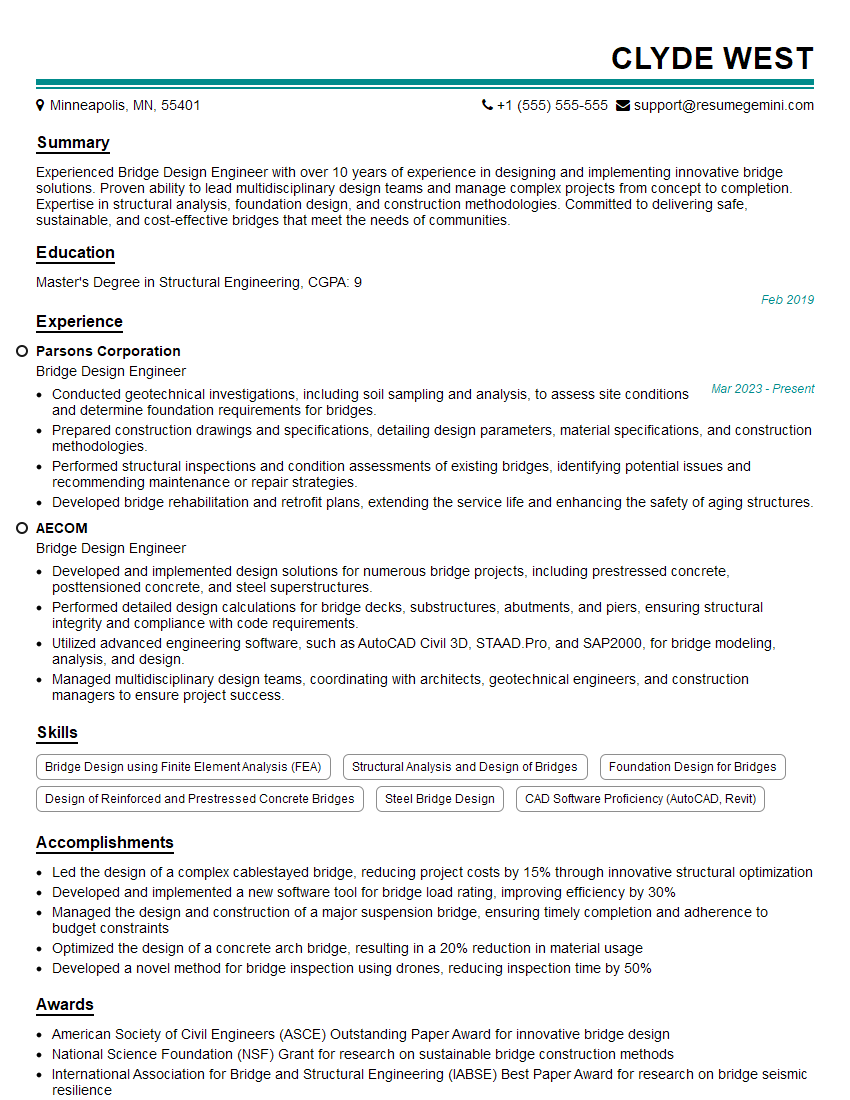
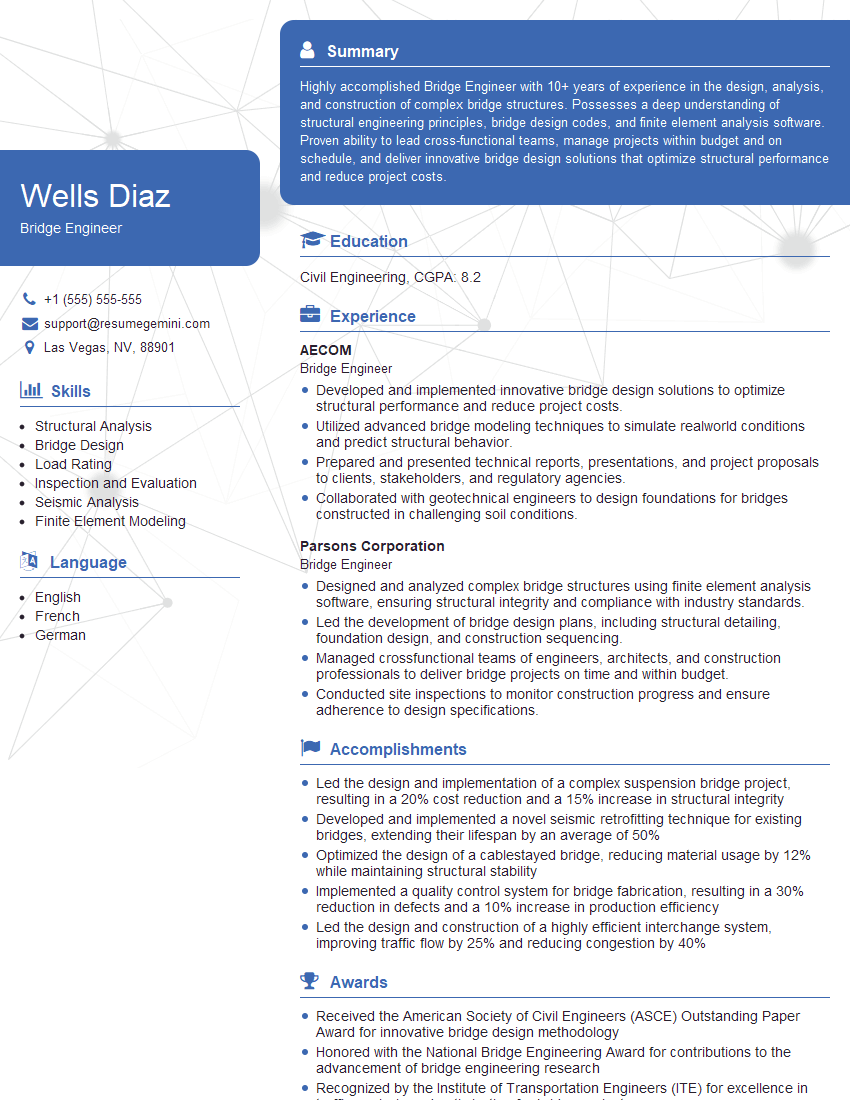
Mastering Bridge Maintenance Management opens doors to exciting career advancements, offering opportunities for increased responsibility, higher earning potential, and greater impact on infrastructure longevity. To significantly boost your job prospects, crafting an ATS-friendly resume is crucial. ResumeGemini is a trusted resource that can help you build a professional, impactful resume tailored to the specific requirements of Bridge Maintenance Management positions. Examples of resumes specifically designed for this field are available to guide you.
Explore more articles
Users Rating of Our Blogs
Share Your Experience
We value your feedback! Please rate our content and share your thoughts (optional).
What Readers Say About Our Blog
Hello,
we currently offer a complimentary backlink and URL indexing test for search engine optimization professionals.
You can get complimentary indexing credits to test how link discovery works in practice.
No credit card is required and there is no recurring fee.
You can find details here:
https://wikipedia-backlinks.com/indexing/
Regards
NICE RESPONSE TO Q & A
hi
The aim of this message is regarding an unclaimed deposit of a deceased nationale that bears the same name as you. You are not relate to him as there are millions of people answering the names across around the world. But i will use my position to influence the release of the deposit to you for our mutual benefit.
Respond for full details and how to claim the deposit. This is 100% risk free. Send hello to my email id: [email protected]
Luka Chachibaialuka
Hey interviewgemini.com, just wanted to follow up on my last email.
We just launched Call the Monster, an parenting app that lets you summon friendly ‘monsters’ kids actually listen to.
We’re also running a giveaway for everyone who downloads the app. Since it’s brand new, there aren’t many users yet, which means you’ve got a much better chance of winning some great prizes.
You can check it out here: https://bit.ly/callamonsterapp
Or follow us on Instagram: https://www.instagram.com/callamonsterapp
Thanks,
Ryan
CEO – Call the Monster App
Hey interviewgemini.com, I saw your website and love your approach.
I just want this to look like spam email, but want to share something important to you. We just launched Call the Monster, a parenting app that lets you summon friendly ‘monsters’ kids actually listen to.
Parents are loving it for calming chaos before bedtime. Thought you might want to try it: https://bit.ly/callamonsterapp or just follow our fun monster lore on Instagram: https://www.instagram.com/callamonsterapp
Thanks,
Ryan
CEO – Call A Monster APP
To the interviewgemini.com Owner.
Dear interviewgemini.com Webmaster!
Hi interviewgemini.com Webmaster!
Dear interviewgemini.com Webmaster!
excellent
Hello,
We found issues with your domain’s email setup that may be sending your messages to spam or blocking them completely. InboxShield Mini shows you how to fix it in minutes — no tech skills required.
Scan your domain now for details: https://inboxshield-mini.com/
— Adam @ InboxShield Mini
Reply STOP to unsubscribe
Hi, are you owner of interviewgemini.com? What if I told you I could help you find extra time in your schedule, reconnect with leads you didn’t even realize you missed, and bring in more “I want to work with you” conversations, without increasing your ad spend or hiring a full-time employee?
All with a flexible, budget-friendly service that could easily pay for itself. Sounds good?
Would it be nice to jump on a quick 10-minute call so I can show you exactly how we make this work?
Best,
Hapei
Marketing Director
Hey, I know you’re the owner of interviewgemini.com. I’ll be quick.
Fundraising for your business is tough and time-consuming. We make it easier by guaranteeing two private investor meetings each month, for six months. No demos, no pitch events – just direct introductions to active investors matched to your startup.
If youR17;re raising, this could help you build real momentum. Want me to send more info?
Hi, I represent an SEO company that specialises in getting you AI citations and higher rankings on Google. I’d like to offer you a 100% free SEO audit for your website. Would you be interested?
Hi, I represent an SEO company that specialises in getting you AI citations and higher rankings on Google. I’d like to offer you a 100% free SEO audit for your website. Would you be interested?
good