The right preparation can turn an interview into an opportunity to showcase your expertise. This guide to Brushwork and Detailing interview questions is your ultimate resource, providing key insights and tips to help you ace your responses and stand out as a top candidate.
Questions Asked in Brushwork and Detailing Interview
Q 1. Describe your experience with different brush types and their applications.
My experience with brushes spans decades and encompasses a wide variety of types, each suited to specific applications. Think of it like having a toolbox filled with specialized tools – each designed for a particular job. For example:
- Synthetic Brushes: These are fantastic for water-based paints like acrylics and latex. Their synthetic filaments are less absorbent than natural bristles, making them less likely to leave brushstrokes. I often use these for smooth, even coats on walls or furniture.
- Natural Bristle Brushes (hog bristle, sable): These are superb for oil-based paints. Their ability to hold more paint allows for richer application and better blending, crucial for achieving depth and texture in artwork or fine furniture finishing. Hog bristle is more affordable and durable while sable offers ultimate softness and precision for detail work.
- Specialty Brushes: This includes fan brushes (excellent for blending and creating soft effects), liner brushes (for precise lines and details), and various sizes of round and flat brushes, each ideal for different brushstrokes and surface areas. For example, a small round brush might be used for fine detailing on a miniature, while a wide flat brush is better suited for painting large canvas sections.
Choosing the right brush depends entirely on the paint, the surface, and the desired effect. It’s a crucial decision that impacts the final quality significantly.
Q 2. How do you achieve a smooth, even finish with a brush?
Achieving a smooth, even finish with a brush requires a combination of technique and preparation. It’s less about the brush itself and more about your approach. Here’s my process:
- Proper Paint Consistency: The paint shouldn’t be too thick (resulting in visible brushstrokes) or too thin (leading to uneven coverage). Thinning the paint appropriately, often using the recommended thinner for the specific type of paint, is key.
- Brush Loading: Don’t overload the brush! Load only enough paint to cover the surface in a thin, even coat. Too much paint will result in drips and unevenness.
- Consistent Brushstrokes: Use long, smooth, overlapping strokes in one direction. Avoid dabbing or short, jerky strokes, as they will create texture rather than smoothness.
- Multiple Thin Coats: Apply multiple thin coats rather than one thick coat. This allows each layer to dry properly, preventing cracking or other imperfections, and building a more even overall finish.
- Brush Technique: The way you hold the brush matters! A firm but relaxed grip helps maintain even pressure throughout the stroke.
Think of it like baking a cake – multiple thin layers are better than one thick, uneven one. The same applies to paint application.
Q 3. Explain your process for cleaning and maintaining brushes.
Cleaning and maintaining brushes is essential for their longevity and the quality of your work. Neglecting this will ruin your brushes and lead to poor results. My process is thorough and consistent:
- Immediate Cleaning: As soon as you finish painting, clean the brushes thoroughly before the paint dries.
- Appropriate Solvent: Use the correct solvent for your paint type (water for water-based paints, mineral spirits for oil-based paints). For acrylics, it’s often a simple soap and water rinse, followed by conditioning if needed. For oil paints, a more rigorous cleaning with turpentine or mineral spirits is necessary.
- Gentle Washing: Wash the brushes gently under running water, working the solvent into the bristles to remove all paint residue.
- Reshaping: After cleaning, reshape the bristles gently and allow them to air dry completely, ideally laid flat. Avoid leaving brushes upright in containers, as this can warp the bristles over time.
- Storage: Store clean, dry brushes in a safe place to prevent damage.
Regular cleaning is a preventative measure. It safeguards the investment in your brushes and ensures that your work looks its best.
Q 4. What techniques do you use to achieve fine details with a brush?
Achieving fine details with a brush requires patience, precision, and the right tools. Here are some techniques I use:
- Fine-tipped Brushes: Using brushes with extremely fine tips (like liner brushes or very small round brushes) is crucial for delicate details.
- Controlled Pressure: Applying the right pressure is equally important. Light pressure is needed for finer lines; heavier pressure adds more pigment. The control over pressure is crucial to achieving precision.
- Using the Tip: Focus on using only the very tip of the brush for the most precise application.
- Pointing Technique: Practice using the ‘pointing’ technique where you apply paint with only the very edge of the brush to create thin, even lines.
- Layering: Sometimes achieving fine details requires multiple layers of paint, allowing each one to dry slightly before adding another.
Think of it like writing with a pen – it takes practice to control the flow and pressure to write legibly. The same applies to using a brush for fine details.
Q 5. How do you handle different paint viscosities during brushwork?
Handling different paint viscosities requires adaptability. Too thick, and the paint won’t flow smoothly; too thin, and it will be watery and lack opacity. Here’s my approach:
- Assessing the Paint: First, I carefully assess the paint’s consistency. If it’s too thick, I add the appropriate thinner (water for water-based, mineral spirits for oil-based, etc.) in small amounts, mixing thoroughly to avoid clumping.
- Testing: I always test the thinned paint on a scrap surface first to ensure the desired consistency is reached before applying it to the main project.
- Brush Selection: Brush choice also plays a role. For thicker paints, I use brushes with thicker, more absorbent bristles; for thinner paints, I often choose synthetic brushes with finer bristles.
- Adjusting as Needed: The viscosity might need adjustments during the process. If the paint becomes too thick as I’m working, I add more thinner; if it becomes too thin, I might let it sit for a few minutes to slightly thicken.
It’s a balancing act, requiring close attention to the paint’s behavior and constant adjustments as needed.
Q 6. Describe your experience with various detailing techniques (e.g., polishing, waxing).
My experience with detailing techniques extends beyond brushwork and includes polishing and waxing. These are crucial for enhancing the final look and protection of any surface:
- Polishing: This involves using polishing compounds and tools (buffing machines, polishing pads) to remove minor imperfections, scratches, and haze from surfaces. The choice of compound and pad depends on the material and the level of correction needed. For example, a fine polish on a car would require a different approach than polishing a piece of furniture.
- Waxing: Waxing adds a protective layer that shields the surface from environmental elements, enhancing its shine and durability. Different types of waxes (carnauba, paste, liquid) offer varying levels of protection and shine. The application techniques differ depending on the type of wax used – some require careful hand application while others can be applied with a machine.
- Combination: Often, I combine polishing and waxing for optimal results. Polishing creates a flawless base, and waxing adds protection and shine.
Polishing and waxing are like skincare for your project – they bring out its best features and offer lasting protection.
Q 7. How do you identify and correct common brushwork defects?
Identifying and correcting brushwork defects is a crucial part of the process. Common issues include:
- Visible Brushstrokes: This usually indicates paint that was too thick or uneven application. The solution is to lightly sand the affected area (if appropriate for the surface) and reapply thin coats, ensuring smooth overlapping strokes.
- Runs and Drips: These are often caused by overloaded brushes or inconsistent application. The solution involves carefully removing excess paint with a clean, dry brush, and then letting it dry completely before lightly sanding and reapplying.
- Uneven Coverage: This means that some areas received less paint than others. The solution is to apply additional thin coats to those areas until the coverage is even.
- Sagging: This happens when too much paint is applied to a vertical surface, causing it to drip downwards. Carefully scrape off the excess paint before it dries and then start again with thinner layers.
Careful observation during each step, using appropriate thinning, and maintaining control over the application are preventative measures. However, addressing defects is a normal part of the process. Knowing how to remedy these imperfections is paramount for a high-quality finish.
Q 8. What safety precautions do you take when working with paints and solvents?
Safety is paramount when working with paints and solvents. My approach is multifaceted, starting with proper ventilation. I always work in a well-ventilated area, ideally with an air filtration system, to minimize exposure to fumes. This is especially crucial when using oil-based paints or strong solvents. Next, I prioritize personal protective equipment (PPE). This includes wearing gloves – nitrile gloves for water-based paints and more resistant materials like neoprene for oil-based paints and solvents – safety glasses to protect my eyes from splashes, and a respirator to prevent inhalation of paint particles or fumes. I also ensure I have readily available fire safety equipment, including a fire extinguisher, and know how to handle spills safely, using absorbent materials to contain them and properly disposing of them according to local regulations. Finally, I carefully read and follow the safety instructions provided by the paint and solvent manufacturers. Ignoring these precautions can lead to serious health issues, and I prioritize my health and safety above all else.
Q 9. How do you prepare a surface for optimal brushwork and detailing?
Surface preparation is the foundation of successful brushwork and detailing. A poorly prepared surface will compromise the final result, regardless of the skill applied. My process typically begins with cleaning the surface thoroughly. This involves removing any dust, dirt, grease, or previous coatings using appropriate cleaners and degreasers. For instance, I might use a mild detergent and water for a wooden surface, followed by a thorough rinsing and drying. Next, I assess the surface for any imperfections, such as scratches, dents, or cracks. Minor scratches may be sanded lightly with fine-grit sandpaper, followed by a thorough cleaning. For larger imperfections, I may use fillers, followed by sanding and priming. The choice of primer is also crucial and depends on the type of paint being used and the surface material. Finally, I apply a thin coat of high-quality primer to create a uniform, smooth surface that ensures optimal paint adhesion. This creates a perfect base layer for achieving crisp lines and impeccable detailing.
Q 10. Explain your understanding of color mixing and matching.
Color mixing and matching is both an art and a science. Understanding color theory – the relationships between primary, secondary, and tertiary colors – is essential. I use a color wheel as a guide, understanding that complementary colors (colors opposite each other on the wheel) create vibrant contrasts, while analogous colors (colors next to each other) create harmonious blends. I start with a small amount of paint, gradually adding small increments of other colors until I achieve the desired hue, value (lightness or darkness), and saturation (intensity). I always mix my paints thoroughly to ensure a consistent color throughout the entire batch. For instance, if I need to create a specific shade of green, I might start with a base of yellow and gradually add blue, adjusting the proportions until I reach the desired tone. Practice and experience play a huge role; I frequently practice mixing and matching colors to develop my intuition and precision. Digital color matching tools can also be valuable in assisting with consistency and achieving accurate colors.
Q 11. Describe your experience with different types of paint (e.g., acrylic, oil, lacquer).
I have extensive experience with various paint types, each with its own unique properties and applications. Acrylic paints are water-based, making them easy to clean up and relatively low in odor. They offer excellent versatility, suitable for many surfaces. Oil paints, on the other hand, offer richness of color and a longer drying time, allowing for more blending and manipulation. However, they require solvents for cleanup and have a stronger odor. Lacquer paints offer a fast drying time and a hard, durable finish, often preferred for furniture and fine detailing. My experience enables me to select the most appropriate paint type for the job at hand, considering factors like drying time, durability, and the desired finish. For example, when working on a delicate piece requiring fine detail and smooth blending, I might opt for oil paints, while for a quick-drying, durable finish on a larger piece of furniture, I’d prefer lacquer. Each type demands a different approach to brushwork, demanding specific knowledge of their characteristics.
Q 12. How do you manage your time effectively when working on a detailing project?
Effective time management is crucial in detailing projects. I start by creating a detailed plan, breaking down the project into smaller, manageable tasks. This allows me to prioritize tasks based on their complexity and urgency. I allocate specific time slots for each task, setting realistic deadlines. I also account for potential delays or unexpected issues. For instance, I always include buffer time in my schedule. Throughout the process, I regularly check my progress against my plan and make adjustments as needed. Furthermore, maintaining an organized workspace is critical; it saves time searching for tools and materials. Using efficient techniques and tools accelerates the process. By maintaining focus and working methodically, I ensure efficient completion of projects without compromising on quality. Time tracking apps or simple checklists can be useful tools for this.
Q 13. How do you handle challenging or complex detailing tasks?
Challenging detailing tasks often require a systematic approach. I begin by thoroughly analyzing the task, identifying the specific challenges and potential obstacles. I consult reference materials or seek advice from experienced colleagues when necessary. Breaking down complex tasks into smaller, more manageable steps helps in tackling them strategically. I may employ different techniques depending on the nature of the challenge; for example, masking techniques can isolate areas to prevent unwanted paint from interfering. Precision and patience are key in overcoming intricate detailing. I utilize a variety of tools and techniques, including specialized brushes, stencils, and airbrushing, depending on the specific need. Thorough preparation and a well-defined plan are crucial in executing challenging tasks successfully. For instance, if I had to recreate a very fine detail from a photograph, I might use magnified images to guide my work, employing small brushes and multiple thin coats of paint.
Q 14. What are your preferred methods for removing scratches and imperfections?
Removing scratches and imperfections requires careful consideration of the surface and the severity of the damage. For minor scratches on smooth surfaces, I might use fine-grit sandpaper (e.g., 2000-grit) followed by polishing compounds to restore the finish. For deeper scratches, I might need to use progressively coarser sandpaper, carefully working up to finer grits. It’s crucial to avoid excessive sanding pressure to prevent further damage. For larger imperfections or gouges, wood fillers or specialized repair compounds may be necessary. After filling, the surface requires careful sanding and smoothing to ensure a seamless transition. In some cases, a professional paint touch-up might be required. The choice of method depends on the surface material, the depth of the scratch, and the desired level of restoration. For instance, on a lacquered surface, I’d be far more cautious about sanding than I would on a wooden surface. Always test methods on a less visible area first.
Q 15. Describe your experience with applying clear coats and protective coatings.
Applying clear coats and protective coatings is a crucial final step in many finishing processes, ensuring durability and enhancing the aesthetic appeal of the underlying work. My experience encompasses a wide range of coatings, from automotive clear coats to high-end furniture finishes. I’m proficient in various application techniques, including spraying, brushing, and rolling, selecting the optimal method based on the project’s specific requirements and the characteristics of the coating itself.
For instance, spraying provides a flawlessly even finish, ideal for large, smooth surfaces like car bodies. However, for intricate details on furniture or smaller projects, brush application offers superior control and precision. I understand the importance of proper surface preparation – ensuring cleanliness and appropriate levels of adhesion – to prevent issues like peeling or bubbling. I’m also experienced in managing the curing process, considering factors like temperature and humidity to achieve optimal hardness and gloss.
With protective coatings, I’ve worked with numerous types, including UV-resistant varnishes, water-based sealants, and specialized epoxy coatings, each selected according to the specific needs of the substrate and its intended use. My focus is always on achieving a durable, long-lasting, and visually stunning finish that protects the underlying work from environmental damage and wear.
Career Expert Tips:
- Ace those interviews! Prepare effectively by reviewing the Top 50 Most Common Interview Questions on ResumeGemini.
- Navigate your job search with confidence! Explore a wide range of Career Tips on ResumeGemini. Learn about common challenges and recommendations to overcome them.
- Craft the perfect resume! Master the Art of Resume Writing with ResumeGemini’s guide. Showcase your unique qualifications and achievements effectively.
- Don’t miss out on holiday savings! Build your dream resume with ResumeGemini’s ATS optimized templates.
Q 16. How do you ensure consistent quality in your brushwork and detailing?
Maintaining consistent quality in brushwork and detailing relies on a combination of meticulous technique, proper tool selection, and a keen eye for detail. It’s less about speed and more about precision. I begin with thorough preparation, ensuring the surface is clean, properly primed (if needed), and ready for the application. This prevents inconsistencies later on. My brushwork technique involves controlled strokes, maintaining consistent pressure and angle throughout. I also pay close attention to brush loading, ensuring there’s enough material to achieve a uniform coat without excess dripping or sagging.
Regular maintenance of my brushes is paramount. Cleaning brushes thoroughly after each use prevents the buildup of dried material, which can significantly impact the quality of future work. I also regularly inspect my brushes for wear and replace them as needed. To achieve consistent color and finish, I use meticulous color matching and blending techniques. In larger projects, I might create sample areas to ensure color consistency throughout. Finally, I use consistent lighting to easily spot imperfections during and after application.
Q 17. What software or tools do you use to assist with your work (if any)?
While my work is primarily hands-on, I do utilize certain tools to assist my processes. This doesn’t include sophisticated software in the traditional sense, but rather tools that enhance precision and efficiency. For example, I use calibrated mixing cups to ensure accurate color mixing, especially when dealing with complex color formulas. A variety of specialized brushes, each designed for specific tasks and material types, are essential.
Precision measuring instruments help ensure even coats and consistent application. For example, I regularly employ a digital scale to weigh materials for mixing, ensuring accurate proportions. Magnifying glasses assist in close-up inspection for quality control, allowing me to detect minor imperfections that might be missed with the naked eye. These tools ensure accuracy, reproducibility, and high-quality results.
Q 18. How do you stay updated on new techniques and technologies in your field?
Staying updated in this field involves a multi-pronged approach. I regularly attend industry workshops and seminars, which provide valuable hands-on training and exposure to the latest techniques and technologies. Trade publications and online forums are essential resources; I actively participate in discussions and follow leading experts in the field. Many manufacturers also offer training programs, and I make use of these resources to stay abreast of new product developments. This continuous learning ensures I remain at the cutting edge of the field.
Q 19. Describe your experience working independently and as part of a team.
I’m equally comfortable working independently and as part of a team. Independent work requires self-motivation, strong organizational skills, and the ability to manage time effectively. I thrive in independent settings, as it allows me to maintain a high level of control over my work quality. However, I also appreciate the collaborative aspect of teamwork; on larger projects, effective communication and coordination are key. I’m adept at contributing my expertise to a team while also respecting and incorporating the perspectives of others.
For example, I recently worked on a large-scale restoration project where teamwork was crucial. My role focused on the intricate detailing, while others handled the larger-scale applications. Open communication ensured we maintained a cohesive and high-quality finished product. My experience highlights my ability to adapt to different working environments and contribute effectively in various contexts.
Q 20. How do you handle customer feedback and address concerns?
Customer feedback is invaluable for improvement. I always approach feedback with an open mind, regardless of whether it’s positive or negative. I actively listen to concerns, ask clarifying questions, and seek to fully understand the client’s perspective. Constructive criticism is viewed as an opportunity to learn and refine my approach. If a problem arises, I work diligently to find a solution, whether it involves reworking a section, making adjustments, or offering a suitable compromise. My goal is always to ensure customer satisfaction.
For example, I once received feedback that a certain finish was slightly less glossy than the client expected. Instead of being defensive, I investigated the issue, determining that slight variations in humidity during the curing process had been the cause. I explained this to the client, and, although the initial finish was acceptable, we agreed to a minor rework to achieve the desired gloss level. This transparent and proactive approach built trust and strengthened the client relationship.
Q 21. What are your strengths and weaknesses in brushwork and detailing?
One of my greatest strengths is my attention to detail and precision in brushwork and finishing. I’m meticulous in my work, striving for perfection in every detail. I’m also adept at adapting my techniques to different materials and styles. However, like any skilled professional, I also have areas where I continually strive for improvement. While I’m generally efficient, I sometimes find myself spending extra time on perfecting seemingly minor details, which can occasionally impact project timelines. I’m working on improving my time management skills to better balance precision with efficiency.
Another area for improvement is staying updated with very niche or highly specialized techniques that may not be covered in mainstream training programs. I address this by seeking out specialized publications, workshops, and mentorship from experienced professionals in those highly specialized areas. Through ongoing self-assessment and continuous learning, I am committed to refining my skills and addressing my weaknesses.
Q 22. What are your salary expectations?
My salary expectations are in the range of $75,000 to $90,000 annually, depending on the specifics of the benefits package and the overall responsibilities of the role. This range reflects my extensive experience and proven expertise in brushwork and detailing, coupled with my commitment to delivering high-quality results.
Q 23. Why are you interested in this position?
I’m deeply interested in this position because it offers a unique opportunity to leverage my passion for precision and artistry in a challenging and rewarding environment. My skills in brushwork and detailing are highly developed, and I’m confident I can make a significant contribution to your team. The chance to work on [mention specific projects or aspects of the job that excite you] is particularly appealing.
Q 24. Where do you see yourself in 5 years?
In five years, I envision myself as a leading expert in brushwork and detailing within your organization, possibly mentoring junior team members and contributing to the development of new techniques or processes. I aim to be recognized for my consistent high-quality work and innovative problem-solving abilities. I’m also keen to expand my expertise into [mention a specific area of growth, e.g., specialized finishing techniques or project management].
Q 25. Describe a time you had to solve a challenging problem related to brushwork or detailing.
During a recent project involving the restoration of a classic car, I encountered a significant challenge with the paintwork on the hood. The previous attempts at repair had left uneven texture and discoloration. To solve this, I first meticulously analyzed the problem, determining the root cause was inconsistent application of filler and subsequent sanding. My solution involved carefully removing the existing filler using specialized tools, applying a new layer using multiple thin coats, and employing a multi-stage wet-sanding process with progressively finer grits. I carefully monitored the surface at each stage, ensuring even application and a smooth, consistent finish. The final result was flawless, exceeding the client’s expectations.
Q 26. What is your understanding of different surface preparation methods?
My understanding of surface preparation methods is comprehensive and encompasses various techniques depending on the substrate and desired finish. This includes:
- Mechanical methods: Sanding (wet and dry), grinding, and media blasting are used to remove old coatings, level surfaces, and create a suitable profile for adhesion. The choice of abrasive and technique depends on factors such as the material’s hardness and the desired surface roughness.
- Chemical methods: These involve using solvents, degreasers, and etching agents to clean, prepare, and improve the surface properties of materials like metals and plastics. For example, etching a metal surface before painting enhances adhesion.
- Thermal methods: Heat can be applied to remove old paint or coatings, though care must be taken to avoid damaging the underlying substrate. This method is often used for delicate or intricate pieces.
Selecting the appropriate method is crucial for achieving a durable and aesthetically pleasing final finish.
Q 27. How do you assess the condition of a surface before beginning work?
Assessing the condition of a surface before beginning work is paramount. My assessment process involves a thorough visual inspection, checking for:
- Damage: Scratches, dents, cracks, and other imperfections need to be identified and documented.
- Contamination: Dust, grease, oil, and other contaminants can negatively impact adhesion and the final finish.
- Existing coatings: The type and condition of any pre-existing coatings (paint, varnish, etc.) must be determined to select the appropriate preparation methods.
- Material type: Knowing the substrate (wood, metal, plastic, etc.) is crucial for choosing the right tools and techniques.
I often use tools such as a magnifying glass and various test kits to aid in my assessment. This comprehensive evaluation informs the selection of appropriate preparation methods and materials, ensuring optimal results.
Q 28. What is your experience with specialized detailing tools and equipment?
My experience with specialized detailing tools and equipment is extensive. I’m proficient in using a wide range of tools, including:
- Airbrushes: For applying fine details and creating smooth, even coatings.
- Spray guns: For efficient application of larger areas and various types of coatings.
- Sanding tools: Both manual and powered tools for different sanding stages and materials.
- Polishing machines: For achieving a high-gloss finish.
- Specialized brushes: A variety of brushes (synthetic, natural hair) for various applications and finishes.
- Measuring instruments: Thickness gauges, colorimeters, and other precision instruments to ensure consistency and quality.
I am also familiar with safety procedures and maintenance requirements for all equipment used. My knowledge allows me to select and utilize the most effective tools for any given project, maximizing efficiency and minimizing potential damage.
Key Topics to Learn for Brushwork and Detailing Interview
- Understanding Paint Properties: Explore different paint types (acrylics, oils, watercolors), their application techniques, and drying times. Consider the impact of different mediums on brushwork.
- Brush Control and Technique: Master various brushstrokes (e.g., scumbling, dry brushing, impasto) and their effects on texture and visual impact. Practice controlling pressure and flow for precise application.
- Color Mixing and Theory: Understand color harmony, value, and temperature. Develop skills in mixing accurate and consistent colors for desired effects. Practice creating color palettes and gradients.
- Composition and Design Principles: Learn how to effectively arrange elements within a piece to create visual interest and balance. Understand principles like rule of thirds and focal points.
- Detailing Techniques: Explore methods for creating fine details and textures, including highlighting, shading, and layering. This includes understanding the relationship between brush size, paint consistency, and detail level.
- Practical Application and Problem-Solving: Discuss your experience tackling challenges in brushwork or detailing, such as correcting mistakes, achieving specific textures, or working with different surfaces.
- Cleaning and Maintenance of Brushes: Demonstrate understanding of proper brush care and maintenance to prolong their lifespan and maintain their performance.
- Health and Safety: Discuss relevant health and safety precautions related to working with paints and solvents.
Next Steps
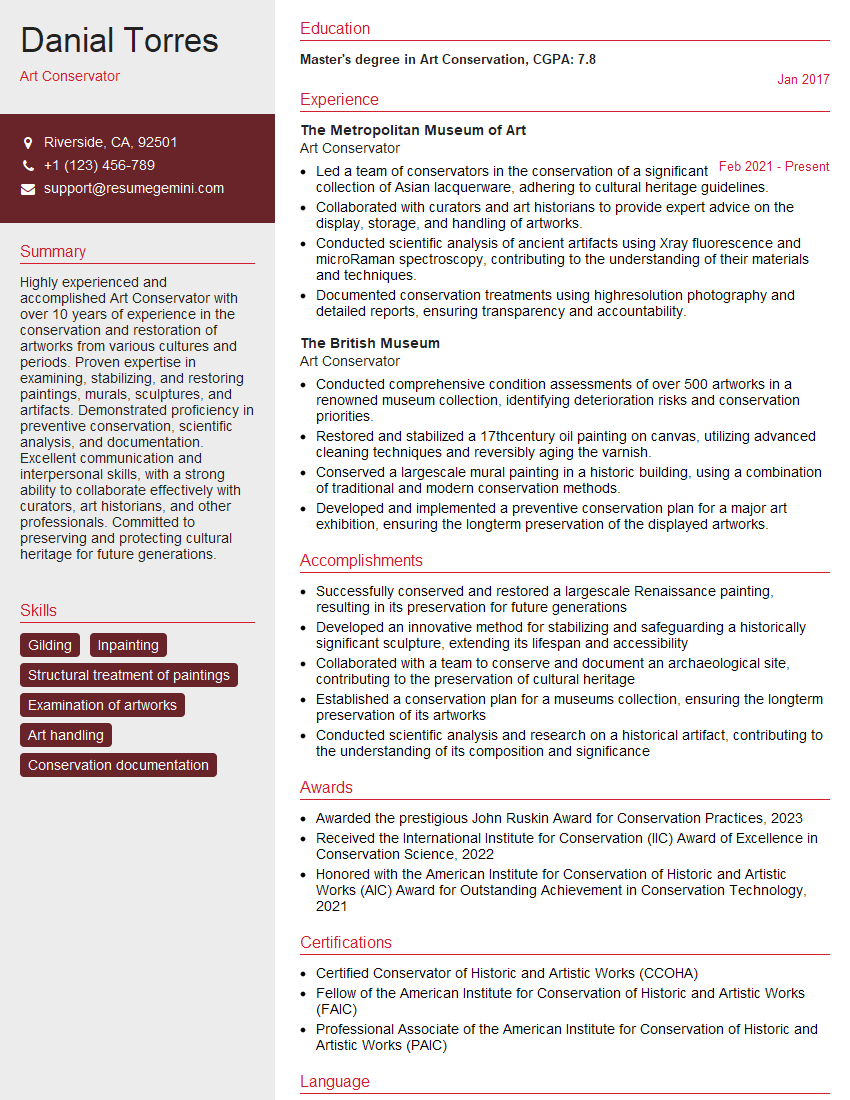
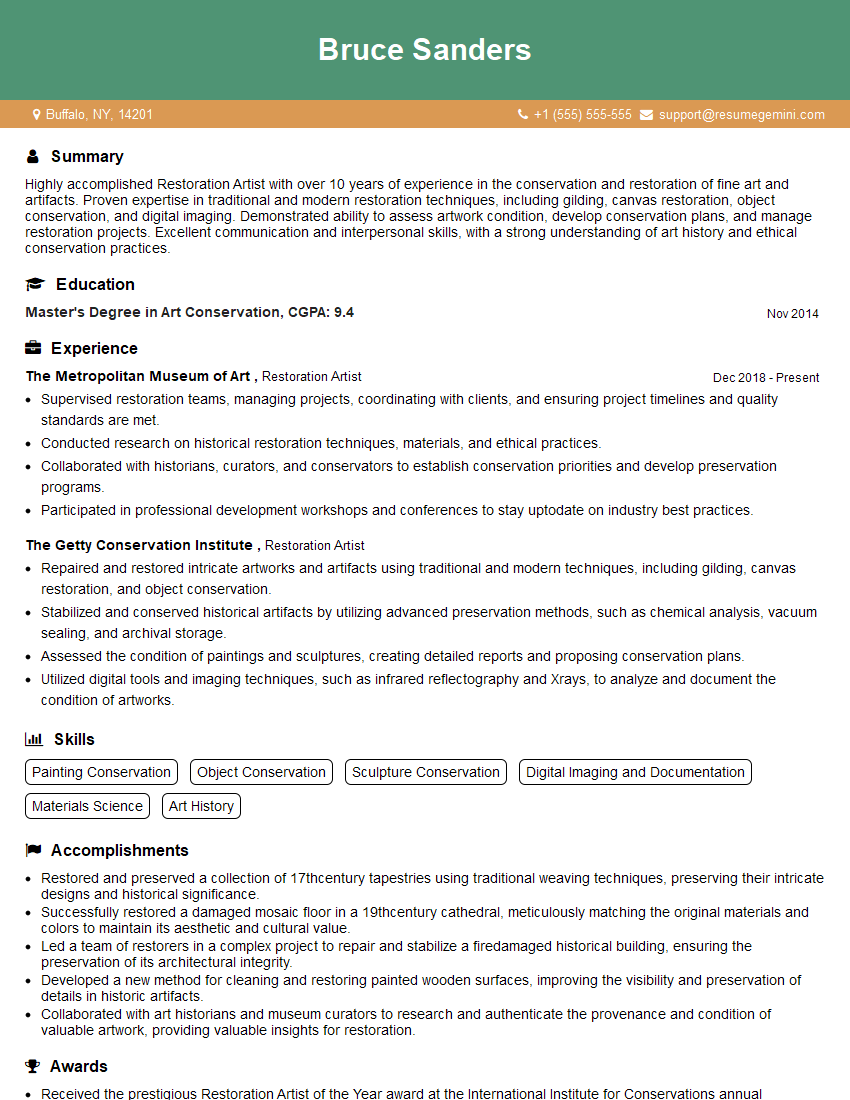
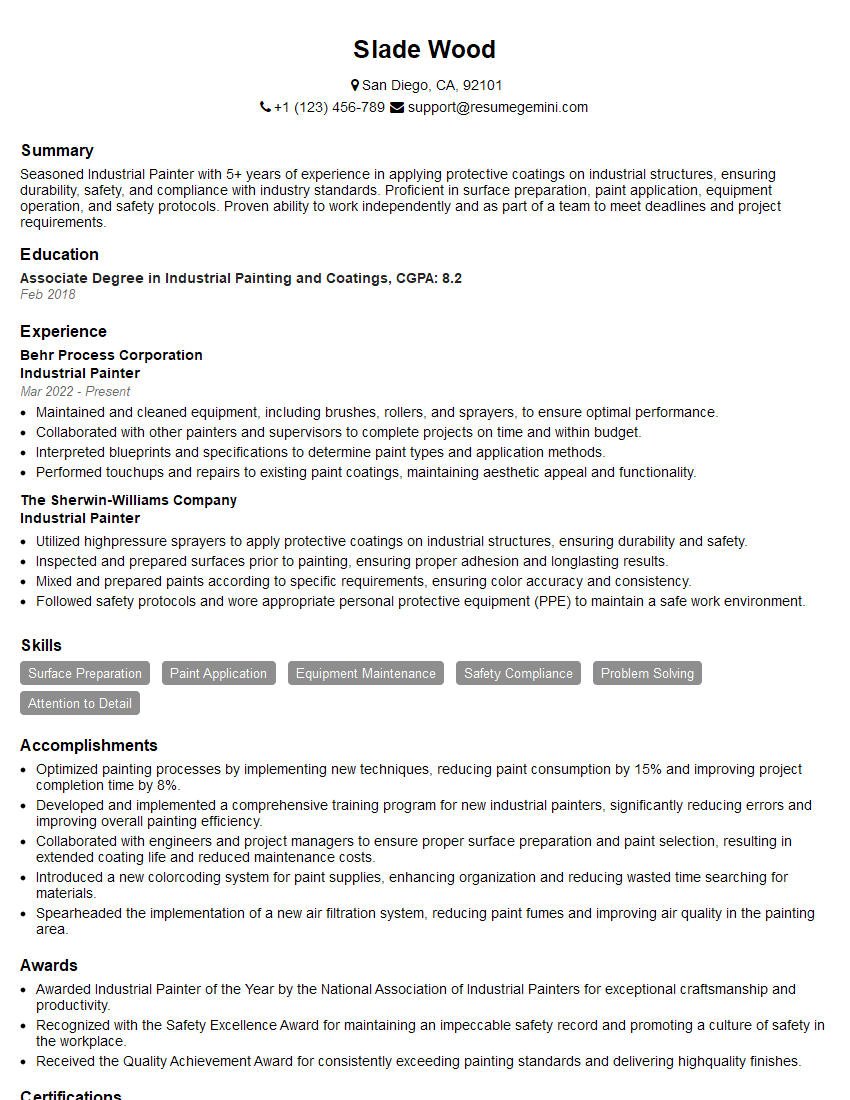
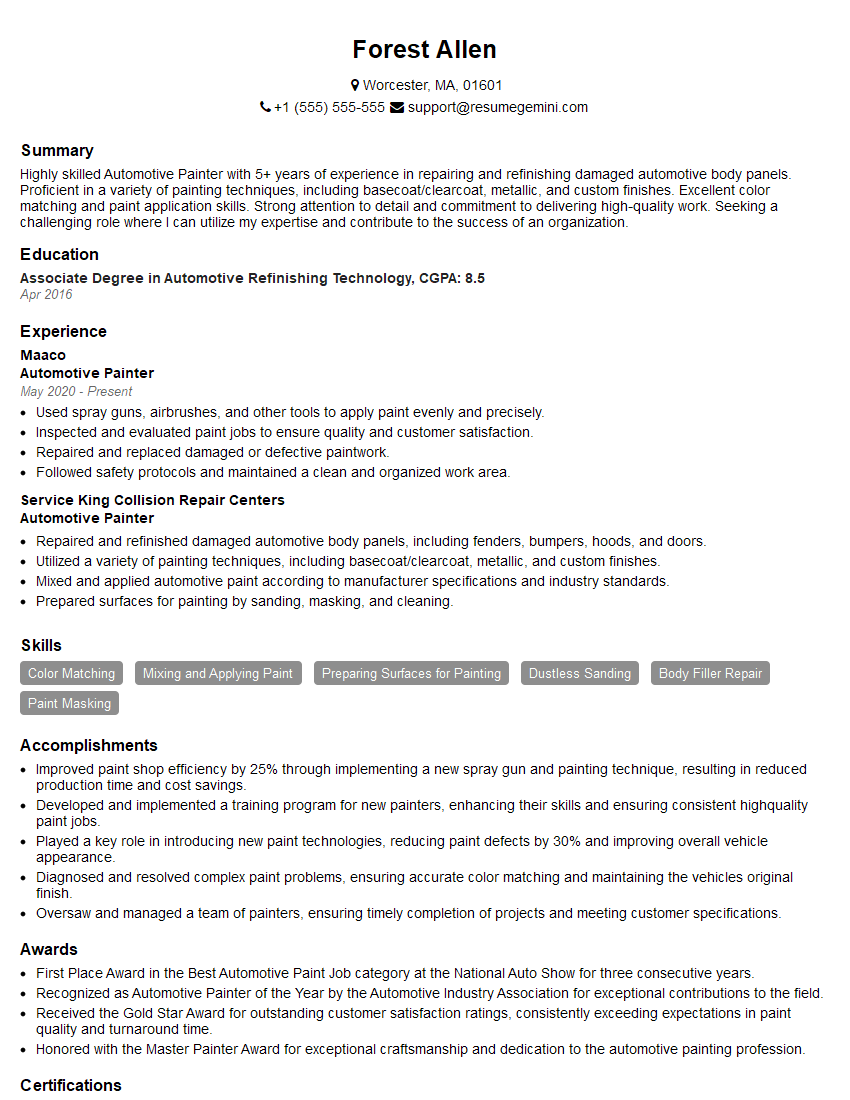
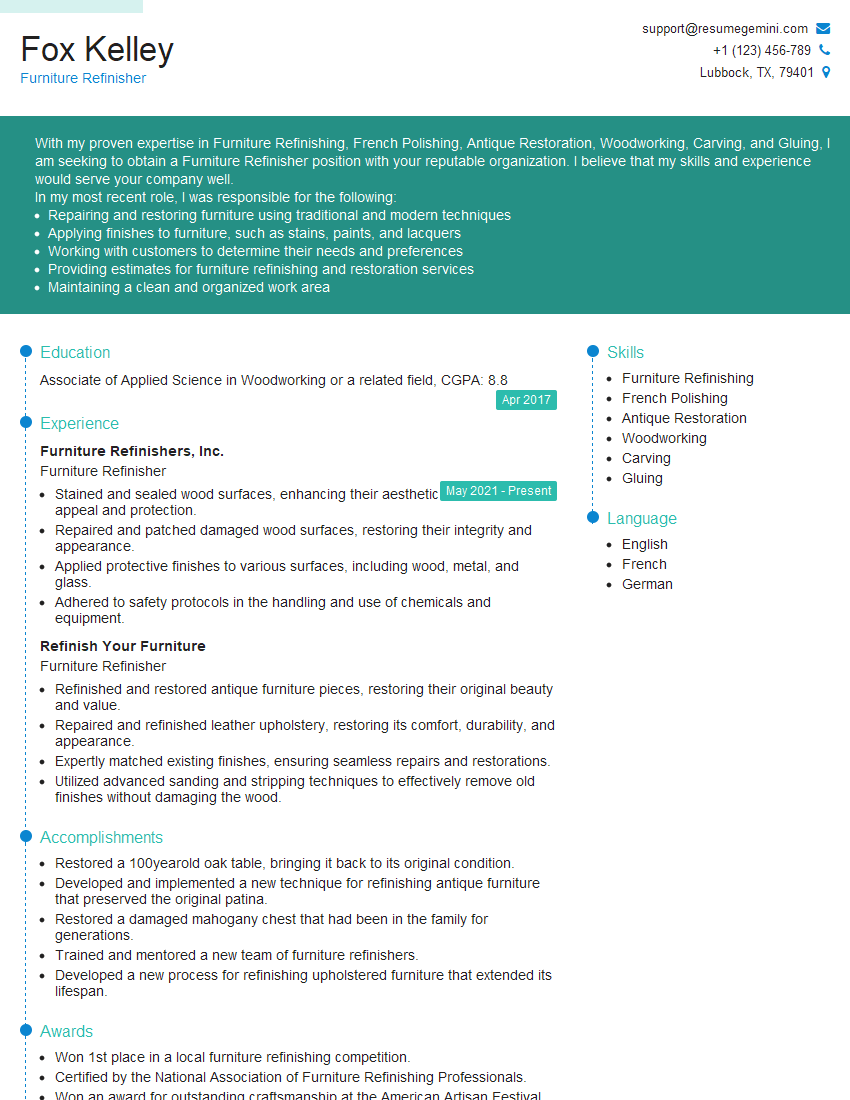
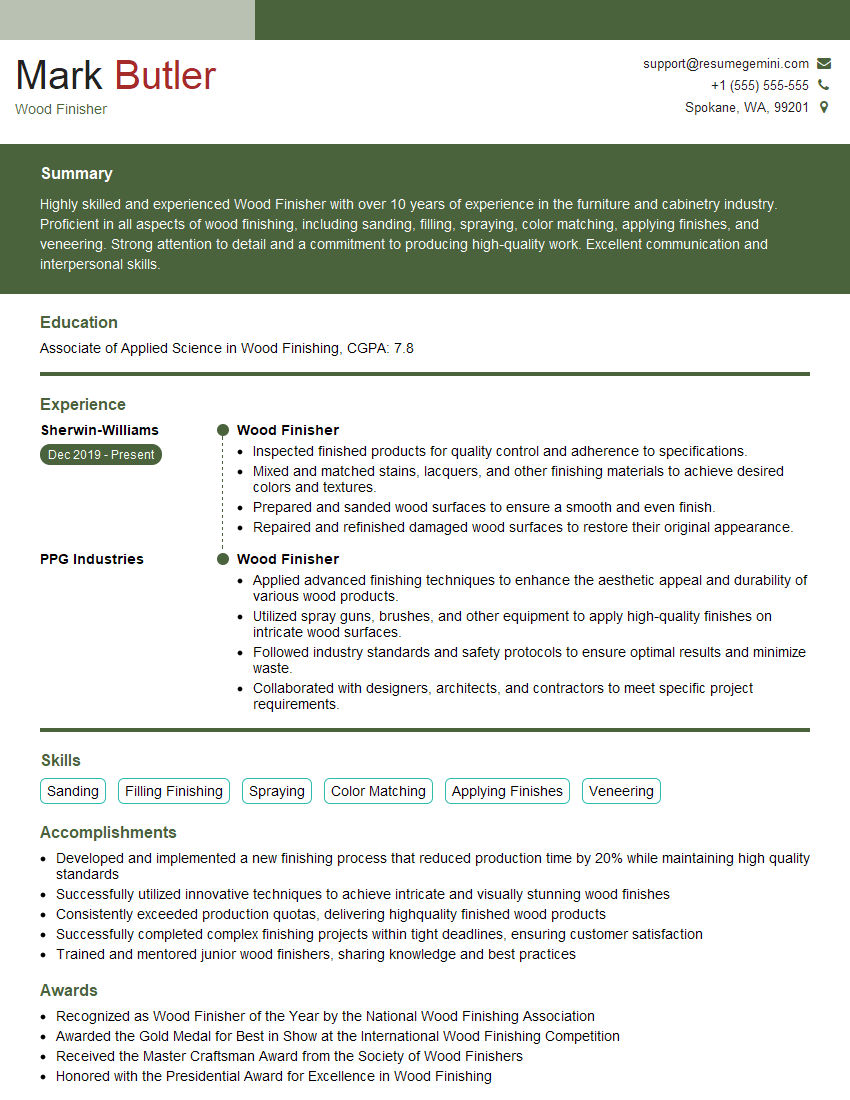
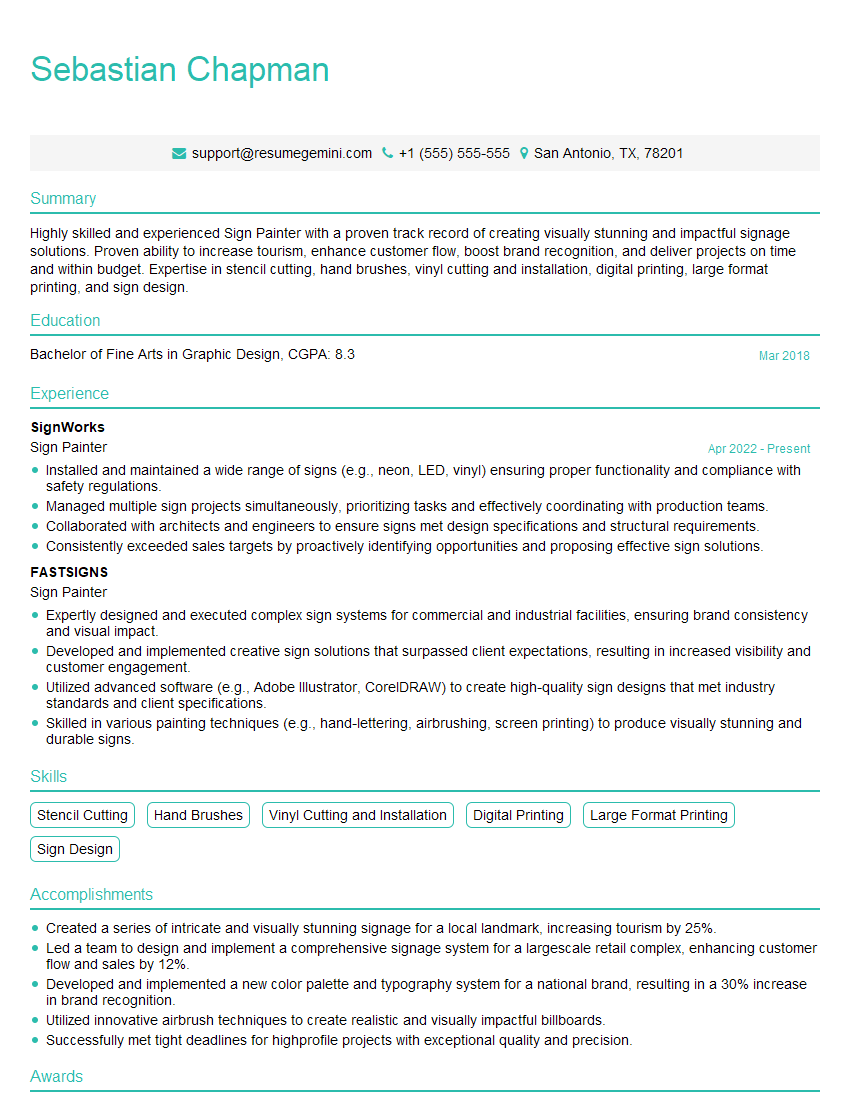
Mastering brushwork and detailing is crucial for career advancement in many creative fields, opening doors to exciting opportunities and higher earning potential. A strong resume is your key to unlocking these possibilities. An ATS-friendly resume, optimized for applicant tracking systems, significantly increases your chances of getting your application noticed. To ensure your resume makes a lasting impression, we strongly recommend using ResumeGemini, a trusted resource for building professional and effective resumes. ResumeGemini provides examples of resumes tailored to Brushwork and Detailing to help guide you in creating a compelling application that showcases your skills and experience.

Explore more articles
Users Rating of Our Blogs
Share Your Experience
We value your feedback! Please rate our content and share your thoughts (optional).
What Readers Say About Our Blog
Very informative content, great job.
good