Every successful interview starts with knowing what to expect. In this blog, we’ll take you through the top Budget Management and Estimation interview questions, breaking them down with expert tips to help you deliver impactful answers. Step into your next interview fully prepared and ready to succeed.
Questions Asked in Budget Management and Estimation Interview
Q 1. Explain the difference between budgeting and forecasting.
Budgeting and forecasting are both crucial financial planning tools, but they differ significantly in their purpose and scope. Budgeting is the process of creating a detailed plan for how resources will be allocated over a specific period (e.g., a fiscal year). It’s essentially a roadmap of planned expenses and revenues, serving as a control mechanism. Think of it as setting a target. Forecasting, on the other hand, is the process of predicting future financial outcomes based on historical data, trends, and assumptions. It’s a projection, not a rigid plan, used to anticipate potential challenges and opportunities. It’s like estimating where you’ll be on the road, given your current speed and direction.
For example, a company might budget $1 million for marketing in the next year, allocating specific amounts to different campaigns. Concurrently, they might forecast that their sales revenue will reach $5 million based on market analysis and past performance. The budget dictates how resources are spent, while the forecast anticipates what the financial results might be.
Q 2. Describe your experience with different budgeting methods (e.g., zero-based, incremental).
I have extensive experience with various budgeting methods, adapting my approach to the specific needs of the organization and project. Incremental budgeting, a common approach, builds upon the previous year’s budget, adjusting for inflation and anticipated changes. It’s efficient but can perpetuate inefficiencies if not critically reviewed. I’ve used this effectively for managing operational budgets where consistent year-over-year operations are expected. Zero-based budgeting (ZBB), conversely, requires justifying every expense from scratch, starting with a ‘zero’ base. While more time-consuming, ZBB forces a thorough evaluation of all expenditures, uncovering potential cost savings. I employed ZBB successfully during a company restructuring, identifying significant areas for optimization. Finally, activity-based budgeting aligns budget allocation with specific activities and their costs, providing a more accurate reflection of resource consumption. This is particularly useful in projects with numerous interdependent tasks.
The choice of method depends entirely on the context. Incremental budgeting is best for stable environments, while ZBB is excellent for change management and cost reduction. Activity-based budgeting offers a granular view of costs, perfect for complex projects.
Q 3. How do you handle budget variances?
Budget variances, the differences between planned and actual figures, are inevitable. My approach to handling them involves a three-step process: investigation, analysis, and corrective action. First, I meticulously investigate the cause of the variance, whether it’s due to unforeseen circumstances (e.g., material price increases), inaccurate estimations, or operational inefficiencies. I use variance analysis techniques, comparing actual results with the budgeted figures and identifying significant deviations. Second, I analyze the root cause, using data visualization and trend analysis to pinpoint the contributing factors. This may involve collaborating with department heads and project managers to understand the reasons behind deviations. Finally, corrective actions are implemented to mitigate future variances. This might include adjusting future budgets, implementing cost-saving measures, or improving forecasting accuracy. For example, if a project’s labor costs exceeded the budget, I would analyze whether it’s due to unforeseen complexities, underestimation of hours required, or poor project management. The solution might involve refining project estimation techniques or implementing tighter project controls.
Q 4. What software or tools are you proficient in for budget management?
I’m proficient in a range of budget management software and tools. My expertise includes using Microsoft Excel for advanced budgeting, forecasting, and variance analysis. I’m also highly skilled in utilizing enterprise resource planning (ERP) systems like SAP and Oracle for integrated budget management and reporting. Additionally, I have experience with specialized project management software such as Microsoft Project and Asana, which integrate budget tracking and control directly into project workflows. Furthermore, I’m comfortable using data visualization tools such as Tableau and Power BI to present budget data effectively to stakeholders.
Q 5. How do you prioritize projects within a constrained budget?
Prioritizing projects under budgetary constraints requires a structured approach. I typically employ a multi-criteria decision analysis (MCDA) framework, considering factors like strategic alignment, return on investment (ROI), risk, and deadlines. I’ll often use a scoring system, assigning weights to each criterion based on their importance to the organization’s objectives. For instance, a project with high strategic importance and a strong ROI might receive a higher score than one with lower impact, even if the latter has a lower initial cost. This allows for a quantitative comparison of projects and facilitates informed decision-making. Visual tools, such as a decision matrix or prioritization chart, can help visualize the results and communicate the rationale clearly to stakeholders.
Q 6. Explain your process for developing a project budget.
Developing a robust project budget involves a phased approach: First, I define the project scope meticulously, detailing all deliverables and tasks. Then, I break down the project into smaller, manageable work packages. For each package, I estimate the resource requirements (labor, materials, equipment) and their associated costs. This often includes consulting with subject matter experts to obtain accurate cost estimates. Next, I incorporate contingency reserves to account for unforeseen issues or risks, usually a percentage of the total estimated cost. Finally, I consolidate the cost estimates for all work packages and add contingency to arrive at the total project budget. Throughout the process, I maintain meticulous documentation and use version control to track changes and revisions. Regular reviews with stakeholders are crucial to ensure alignment and address any discrepancies. For example, creating a detailed Work Breakdown Structure (WBS) is instrumental in this process, allowing for accurate cost estimations at each level of the project.
Q 7. How do you identify and mitigate potential budget risks?
Identifying and mitigating budget risks is paramount. I begin by conducting a thorough risk assessment, identifying potential issues that could impact the budget, such as scope creep, cost overruns, schedule delays, and external factors (e.g., inflation, supply chain disruptions). For each identified risk, I assess its probability and potential impact on the budget. This allows me to prioritize mitigation strategies, focusing on high-probability, high-impact risks. Mitigation strategies might include developing contingency plans, negotiating fixed-price contracts with vendors, implementing robust change management processes, and securing insurance coverage. Regular monitoring and reporting of budget performance, along with proactive communication with stakeholders, are essential for early detection and timely response to emerging risks. This proactive approach minimizes the impact of unforeseen events on the project’s financial viability.
Q 8. Describe a time you had to make difficult budget cuts. What was your approach?
Budget cuts are unfortunately a necessary part of responsible financial management. In one instance, my team faced a 15% budget reduction midway through a project. My approach was methodical and involved several key steps. First, I prioritized projects based on their strategic alignment with organizational goals and their impact on key performance indicators (KPIs). This involved a collaborative session with stakeholders to identify which aspects were non-negotiable and which could be scaled back or deferred. Second, I analyzed each line item meticulously, exploring opportunities for cost optimization without compromising quality. This included negotiating better rates with vendors, identifying areas of redundancy, and exploring alternative solutions. Third, I presented a revised budget with clear justifications for each cut, emphasizing the long-term strategic benefits of the decisions made. Transparency and open communication were crucial in gaining buy-in from the team and ensuring a smooth transition. For example, instead of abruptly cutting marketing expenses, we prioritized digital marketing over print advertising, which offered greater cost-effectiveness while still achieving our marketing goals.
Q 9. How do you communicate budget information to stakeholders?
Communicating budget information effectively is paramount. My strategy involves tailoring the communication to the audience. For senior management, I focus on high-level summaries, key financial metrics, and the overall financial health of the project or department. I often use visuals like charts and graphs to illustrate trends and highlight key areas of concern or success. For team members, the communication needs to be more detailed, providing insights into individual budget allocations, expenditure tracking, and opportunities for cost savings. I encourage open dialogue and questions to ensure everyone is informed and on board. Regular budget meetings and updates, both formal and informal, are essential. Using a combination of written reports and presentations fosters clear communication and helps maintain transparency.
Q 10. How do you ensure budget accuracy and transparency?
Budget accuracy and transparency are foundational principles. I employ several strategies to achieve this. First, I use robust budgeting software that provides real-time tracking and reporting capabilities. This allows for immediate identification of variances and potential issues. Second, I implement a rigorous approval process for all expenses, ensuring that all transactions are properly documented and justified. Third, I regularly reconcile accounts and conduct thorough audits to identify any inconsistencies or errors. Fourth, I promote a culture of transparency by making budget information readily accessible to relevant stakeholders. This includes providing clear explanations of budget allocations and actively soliciting feedback to identify potential areas for improvement. Finally, regular reporting and analysis of budget performance help to identify and address any deviations from the plan proactively.
Q 11. What are some key performance indicators (KPIs) you use to monitor budget performance?
Key Performance Indicators (KPIs) are essential for monitoring budget performance. Some critical KPIs I use include:
- Budget Variance: The difference between the actual and planned budget. A high variance signals a need for investigation.
- Cost per Unit: This helps track the efficiency of resource utilization. A rising cost per unit may indicate inefficiencies.
- Return on Investment (ROI): Measures the profitability of projects or initiatives. A low ROI might necessitate budget reallocation.
- Project Completion Rate: Monitors the progress of projects against the planned timeline and budget.
- Spending against Forecast: Tracks how actual spending compares to the forecasted budget, providing early warning signs of potential overruns.
By regularly monitoring these KPIs and analyzing trends, I can identify potential problems early and take corrective action, ensuring the budget stays on track.
Q 12. How do you deal with unexpected expenses?
Unexpected expenses are inevitable. My approach involves a structured process. First, I carefully assess the nature and urgency of the expense. If the expense is critical and time-sensitive, I explore immediate solutions, such as reallocating funds from less critical areas or seeking emergency funding. If the expense is not immediately critical, I thoroughly analyze the situation to understand the root cause and prevent similar occurrences in the future. Secondly, I communicate the unexpected expense to relevant stakeholders immediately and transparently. This allows for collaborative problem-solving and ensures everyone is informed. Third, I implement contingency plans to mitigate the impact of future unforeseen expenses. This may involve building a small contingency fund or reviewing budget allocations to identify areas that can absorb potential overruns. For example, if an unforeseen repair is needed, I would first explore cost-effective solutions before requesting additional funding, clearly documenting the justification for the additional expense.
Q 13. Explain your understanding of cost-benefit analysis.
Cost-benefit analysis (CBA) is a systematic approach to evaluating the merits of a project or decision by comparing its costs to its benefits. It helps in making informed decisions by quantifying the trade-offs involved. A CBA involves identifying all relevant costs (both direct and indirect) and all associated benefits (both tangible and intangible). These are then expressed in monetary terms, allowing for a direct comparison. The result is often expressed as a net present value (NPV), which takes into account the time value of money. A positive NPV indicates that the benefits outweigh the costs, suggesting the project is worthwhile. For instance, when deciding whether to invest in new software, a CBA would involve comparing the cost of the software, training, and implementation with the anticipated increase in efficiency, reduced errors, and potential revenue gains. The goal is to determine whether the investment will generate a sufficient return to justify the expenditure.
Q 14. Describe your experience with variance analysis.
Variance analysis is a crucial tool for evaluating the performance of a budget. It involves comparing the actual results to the planned budget to identify any deviations or variances. These variances are then analyzed to determine their causes, helping to improve future budget planning and control. For example, a variance analysis might reveal that marketing expenses exceeded the budget due to unexpected increases in advertising costs. This information can then be used to negotiate better rates with vendors or to explore more cost-effective marketing strategies. Variance analysis is usually categorized into favorable (positive) and unfavorable (negative) variances. Favorable variances indicate better-than-expected performance, while unfavorable variances signal potential issues that need to be addressed. The analysis should always explore the underlying reasons for variances to provide insights and prevent future discrepancies.
Q 15. How do you use historical data to inform future budget estimations?
Historical data is crucial for accurate budget forecasting. It provides a baseline understanding of past spending patterns, allowing us to identify trends and make informed projections. I typically analyze historical data using several methods. First, I examine trends over several years, looking for seasonal variations or growth patterns. For instance, if sales consistently spike during the holiday season, I’ll factor that into the next year’s budget. Second, I drill down into specific expense categories, analyzing variances between budgeted and actual amounts. This helps pinpoint areas of overspending or underspending and understand the underlying reasons. Finally, I use statistical methods like regression analysis to model relationships between different variables (e.g., sales volume and marketing expenses) and predict future costs more accurately.
For example, if we’re budgeting for marketing next year, I’d look at past marketing spend in relation to sales growth. If we invested $100,000 last year and saw a 10% increase in sales, and are projecting 15% sales growth next year, I wouldn’t simply increase the marketing budget proportionally. Instead, I’d consider factors such as market competition and potential changes in marketing strategies, adjusting my projections accordingly. This approach ensures that budget estimations are data-driven and realistic.
Career Expert Tips:
- Ace those interviews! Prepare effectively by reviewing the Top 50 Most Common Interview Questions on ResumeGemini.
- Navigate your job search with confidence! Explore a wide range of Career Tips on ResumeGemini. Learn about common challenges and recommendations to overcome them.
- Craft the perfect resume! Master the Art of Resume Writing with ResumeGemini’s guide. Showcase your unique qualifications and achievements effectively.
- Don’t miss out on holiday savings! Build your dream resume with ResumeGemini’s ATS optimized templates.
Q 16. How do you incorporate contingency planning into your budgets?
Contingency planning is essential for robust budgeting. It’s about anticipating potential risks and allocating funds to mitigate their impact. I typically identify potential risks through brainstorming sessions with department heads and thorough risk assessments. These risks might include unexpected economic downturns, supply chain disruptions, or increased material costs. For each identified risk, I estimate the potential financial impact and assign a percentage as a contingency buffer. This percentage varies depending on the risk’s likelihood and severity.
For instance, if a project has a high probability of experiencing material cost inflation, I may allocate an extra 10-15% of the project budget to absorb these potential increases. This contingency isn’t simply a ‘just in case’ fund; it’s a proactive measure to ensure project completion even under adverse conditions. It’s crucial to clearly document all contingency allocations, specifying the associated risk and rationale behind the allocation. Regular monitoring of the contingency fund is also crucial, allowing for reallocation if some risks materialize less than anticipated, or for adjustments if new unforeseen risks emerge.
Q 17. How familiar are you with different cost accounting methods?
I’m proficient in several cost accounting methods, including absorption costing, variable costing, and activity-based costing. Absorption costing includes both fixed and variable manufacturing overhead in the cost of goods sold, while variable costing only includes variable manufacturing costs. This difference in cost calculation can impact profitability analysis and inventory valuation. Activity-based costing (ABC) provides a more granular approach by assigning costs based on specific activities and drivers, providing a more accurate representation of costs associated with various products or services.
Choosing the right method depends on the organization’s context and goals. For example, absorption costing might be preferred for financial reporting purposes due to its compliance with Generally Accepted Accounting Principles (GAAP), while variable costing offers better insights into cost behavior for internal management decisions. ABC is particularly useful in complex organizations with diverse product lines to optimize pricing and resource allocation.
Q 18. Describe your experience with capital budgeting.
My experience with capital budgeting involves evaluating long-term investments, such as purchasing new equipment or building facilities. This requires a thorough understanding of various capital budgeting techniques, including Net Present Value (NPV), Internal Rate of Return (IRR), Payback Period, and Discounted Payback Period. I use these methods to assess the profitability and financial viability of proposed projects.
For example, when evaluating the purchase of a new machine, I’d calculate the NPV by discounting the expected future cash flows (increased production, reduced labor costs) back to their present value. A positive NPV indicates that the investment is expected to generate more value than its cost. Similarly, the IRR represents the discount rate that makes the NPV zero. I would compare both NPV and IRR to the company’s hurdle rate (minimum acceptable rate of return) to make an informed investment decision. Beyond financial analysis, I also consider factors like the project’s strategic alignment with business goals, technical feasibility, and potential risks.
Q 19. How do you manage budget conflicts between different departments?
Budget conflicts are inevitable in multi-departmental organizations. My approach is collaborative and data-driven. I start by facilitating open communication between the conflicting departments, encouraging them to clearly articulate their needs and priorities. I then analyze the underlying causes of the conflict – is it a matter of limited resources, differing priorities, or misunderstandings? I work to find common ground and build consensus. If necessary, I use data to support decisions, showing the relative impact of each department’s request on overall organizational goals.
Sometimes, compromise is necessary. This might involve prioritizing projects based on strategic alignment, using a weighted scoring system to evaluate the merits of each department’s request, or re-allocating resources based on performance metrics. Throughout the process, transparency and fairness are paramount, ensuring all departments understand the rationale behind the final decisions. I also establish a clear escalation path for unresolved conflicts to ensure timely resolution.
Q 20. What is your process for reviewing and approving budget requests?
My process for reviewing and approving budget requests begins with a clear understanding of the organization’s strategic goals. Budget requests must demonstrate alignment with these goals. I review requests for completeness and accuracy, ensuring they include detailed justifications, supporting documentation, and realistic cost estimations. I use a standardized template to streamline the process and ensure consistency across departments. I examine each request against historical data, benchmarking performance against similar initiatives and industry standards. Finally, I schedule meetings with department heads to discuss requests, addressing any concerns or ambiguities.
Approval is based on a combination of factors: alignment with strategic goals, financial feasibility, and the potential return on investment. Requests are prioritized based on their importance and impact. After approval, I communicate the decision to the respective departments, providing clear explanations and rationale for any adjustments made. A well-documented approval process helps ensure accountability and transparency.
Q 21. How do you ensure compliance with budgeting regulations and policies?
Compliance with budgeting regulations and policies is critical. I ensure compliance by staying updated on relevant laws, regulations, and internal policies. This includes understanding accounting standards (like GAAP or IFRS) and internal control frameworks (like COSO). I incorporate these standards into the budgeting process, from the initial planning stages to the final reporting. Regular internal audits are conducted to identify any compliance gaps. Training is provided to staff on budgeting procedures and compliance requirements.
Furthermore, I implement robust internal controls to prevent fraud and ensure accuracy. This includes segregation of duties, authorization controls, and regular reconciliation of budget data. Maintaining detailed documentation of all budget-related transactions is crucial for audits and compliance reviews. Proactive monitoring helps in identifying and addressing potential compliance issues before they escalate. A strong compliance culture is fostered through clear communication and ongoing education within the organization.
Q 22. How do you measure the success of a budget?
Measuring budget success isn’t simply about staying under budget; it’s about achieving strategic goals within the budget constraints. We assess success through a combination of factors, focusing on both financial and operational performance.
- Financial Metrics: This includes comparing actual spending to the budgeted amounts across different categories (e.g., personnel, marketing, research & development). We look at variances—were we under or over budget, and why? Key ratios like profit margin and return on investment (ROI) are vital indicators of financial health.
- Operational Metrics: Budget success is also evaluated based on the achievement of operational targets. Did the marketing budget successfully increase brand awareness? Did the R&D budget deliver the anticipated innovation? Did the sales team meet its revenue targets? We track key performance indicators (KPIs) relevant to each department and project.
- Efficiency & Effectiveness: We analyze cost efficiency. Did we achieve our objectives with the allocated resources? Were there areas where we could have optimized spending? Did we effectively manage risks and uncertainties?
For example, a marketing campaign might have slightly exceeded its budget, but if it significantly increased sales and brand recognition beyond initial projections, it would be considered successful. Conversely, a project that came in under budget but failed to meet its objectives would be deemed a failure.
Q 23. How do you adapt your budgeting approach to different business environments?
My budgeting approach is adaptable to various business environments. I tailor my strategy based on factors like the industry, company size, growth stage, and risk tolerance.
- Startups: Startups often operate with limited resources and focus on rapid growth. Here, agile budgeting, with frequent revisions and adjustments, is essential. We prioritize key performance indicators (KPIs) related to customer acquisition and revenue generation, using a flexible budgeting model that can adapt to evolving market conditions.
- Established Businesses: Established businesses often use more structured budgeting methods, such as zero-based budgeting or incremental budgeting. These provide a solid foundation for longer-term financial planning and control. They might also incorporate various budgeting techniques based on specific departments and objectives.
- Non-Profit Organizations: Non-profits require a different approach, emphasizing transparency and accountability. Budgets highlight program impact and align expenditures with the organization’s mission. Detailed reporting and grant compliance are critical aspects.
Regardless of the environment, my approach always involves collaboration with stakeholders, thorough data analysis, and a clear understanding of the organization’s strategic goals. The method employed is selected to provide the greatest flexibility and accuracy for the particular organization’s needs.
Q 24. Explain your experience with long-term financial planning.
Long-term financial planning is crucial for sustainable growth. My experience includes developing multi-year financial forecasts that integrate strategic objectives, anticipated market changes, and potential risks. This involves:
- Strategic Alignment: Connecting the long-term financial plan with the organization’s overall strategic goals, ensuring that financial resources are allocated to support key initiatives.
- Scenario Planning: Developing multiple financial projections based on different economic scenarios (best-case, worst-case, and most-likely scenarios) to prepare for various possibilities.
- Key Performance Indicators (KPIs): Establishing a comprehensive set of KPIs to track progress against the long-term financial plan and make necessary adjustments along the way.
- Capital Budgeting: Assessing significant investments, including their potential ROI and impact on future cash flows.
- Risk Management: Identifying and mitigating potential financial risks that could derail the long-term plan.
For instance, I once developed a five-year financial plan for a technology company, incorporating projections for product development, market expansion, and potential acquisitions. The plan also included contingency measures to address potential economic downturns or unexpected competition. This meticulous planning helped the company secure substantial investment and achieve its long-term growth targets.
Q 25. Describe a time you had to revise a budget significantly. Why and how did you do it?
During the launch of a new product, we faced unforeseen manufacturing delays resulting in higher-than-anticipated costs. This necessitated a significant budget revision.
Why: The initial budget underestimated the complexities of the manufacturing process, leading to inaccurate cost projections. We underestimated the time and resources required for quality control and troubleshooting.
How: First, I conducted a thorough analysis of the variances, pinpointing the specific factors contributing to the cost overruns. Then, I collaborated with the manufacturing, procurement, and engineering teams to identify cost-saving measures. This included negotiating better rates with suppliers, streamlining the manufacturing process, and delaying less critical features in the initial product release. The revised budget prioritized completing the product launch while minimizing additional expenditures. We presented a revised budget, explaining the reasons for the changes and the cost-saving measures implemented. We also revised our project timeline and key performance indicators (KPIs) to reflect the adjusted plan.
The situation highlighted the importance of robust risk management and contingency planning in budgeting.
Q 26. How do you use technology to improve budget management efficiency?
Technology significantly enhances budget management efficiency. I utilize various tools and software to streamline processes and improve accuracy.
- Budgeting Software: Software like
Anaplan,Adaptive Insights, orVenaautomate many budgeting tasks, from data entry to reporting and analysis, reducing manual effort and improving accuracy. - Data Analytics Tools: Tools like
TableauorPower BIhelp visualize budget data, providing insights into spending patterns and identifying potential areas for improvement. - Cloud-Based Solutions: Cloud-based platforms offer enhanced accessibility and collaboration, allowing team members to access and update budget information in real-time, regardless of location.
- Automation: Automating repetitive tasks such as data entry and report generation frees up time for more strategic activities, like analysis and decision-making.
For instance, using budgeting software, we can track spending against budget in real-time, generate automated reports, and quickly identify variances, allowing for proactive intervention and adjustments.
Q 27. Explain your understanding of Return on Investment (ROI) and its role in budgeting.
Return on Investment (ROI) is a crucial metric in budgeting, representing the ratio of net profit to the cost of an investment. It’s a key tool for evaluating the effectiveness of various budget allocations.
Formula: ROI = (Net Profit / Cost of Investment) x 100%
In budgeting, ROI helps prioritize projects and initiatives based on their potential to generate returns. For example, when comparing two marketing campaigns, we’d allocate more resources to the campaign with a projected higher ROI. It helps justify budget requests and demonstrates the financial value of different projects. A low ROI might suggest a need for reevaluation of a strategy or a reallocation of funds.
It’s important to note that calculating ROI requires accurate cost estimation and realistic profit projections. Sometimes, qualitative factors beyond purely financial metrics, such as brand awareness or market share improvements, also need to be considered.
Q 28. How do you build consensus among stakeholders regarding budget allocation?
Building consensus around budget allocation requires clear communication, data-driven decision-making, and a collaborative approach.
- Transparency and Communication: Clearly articulate the budget process, rationale behind resource allocation, and the expected outcomes. This fosters understanding and trust among stakeholders.
- Data-Driven Justification: Support budget requests with data and evidence, demonstrating the value proposition of each initiative. Use KPIs and ROI projections to demonstrate the potential return on investments.
- Stakeholder Engagement: Involve stakeholders in the budget development process early on. Solicit their input and feedback, addressing their concerns and questions.
- Prioritization and Negotiation: If resources are limited, prioritize initiatives based on strategic goals and potential ROI. Be prepared to negotiate and compromise to reach a mutually acceptable solution.
- Regular Review and Updates: Regularly review and update the budget based on performance and changing circumstances. This demonstrates accountability and flexibility.
For example, I once facilitated a budgeting process for a marketing team with diverse objectives. By using a collaborative platform and open communication, we were able to align the team around key performance indicators (KPIs) and reach a consensus on budget allocations that satisfied all stakeholders’ needs while aligning with the company’s overall goals.
Key Topics to Learn for Budget Management and Estimation Interview
- Budgeting Fundamentals: Understanding different budgeting methods (zero-based, incremental, etc.), budget cycles, and key performance indicators (KPIs) used to track budget performance.
- Cost Estimation Techniques: Mastering various estimation methods like parametric estimation, bottom-up estimation, and analogous estimation. Practice applying these techniques to different scenarios and understanding their limitations.
- Variance Analysis and Reporting: Learn to identify and analyze budget variances, interpret financial reports, and effectively communicate findings to stakeholders. This includes understanding the root causes of variances and suggesting corrective actions.
- Risk Management in Budgeting: Explore techniques for identifying and mitigating potential risks that could impact the budget. This involves contingency planning and scenario analysis.
- Software and Tools: Familiarize yourself with commonly used budgeting and financial planning software (mentioning specific software is generally avoided in generalized advice). Understand how these tools can streamline the budgeting process.
- Financial Statement Analysis: Develop a strong understanding of how to interpret key financial statements (income statement, balance sheet, cash flow statement) to inform budget planning and decision-making.
- Communication and Collaboration: Effective budget management requires strong communication skills. Practice explaining complex financial information clearly and concisely to both technical and non-technical audiences.
Next Steps
Mastering budget management and estimation is crucial for career advancement in finance, accounting, and project management. These skills demonstrate your ability to plan strategically, manage resources efficiently, and contribute significantly to an organization’s financial success. To maximize your job prospects, create an ATS-friendly resume that highlights your relevant skills and experience. ResumeGemini is a trusted resource that can help you build a compelling and effective resume. They provide examples of resumes tailored to Budget Management and Estimation to help guide you in creating a standout application.
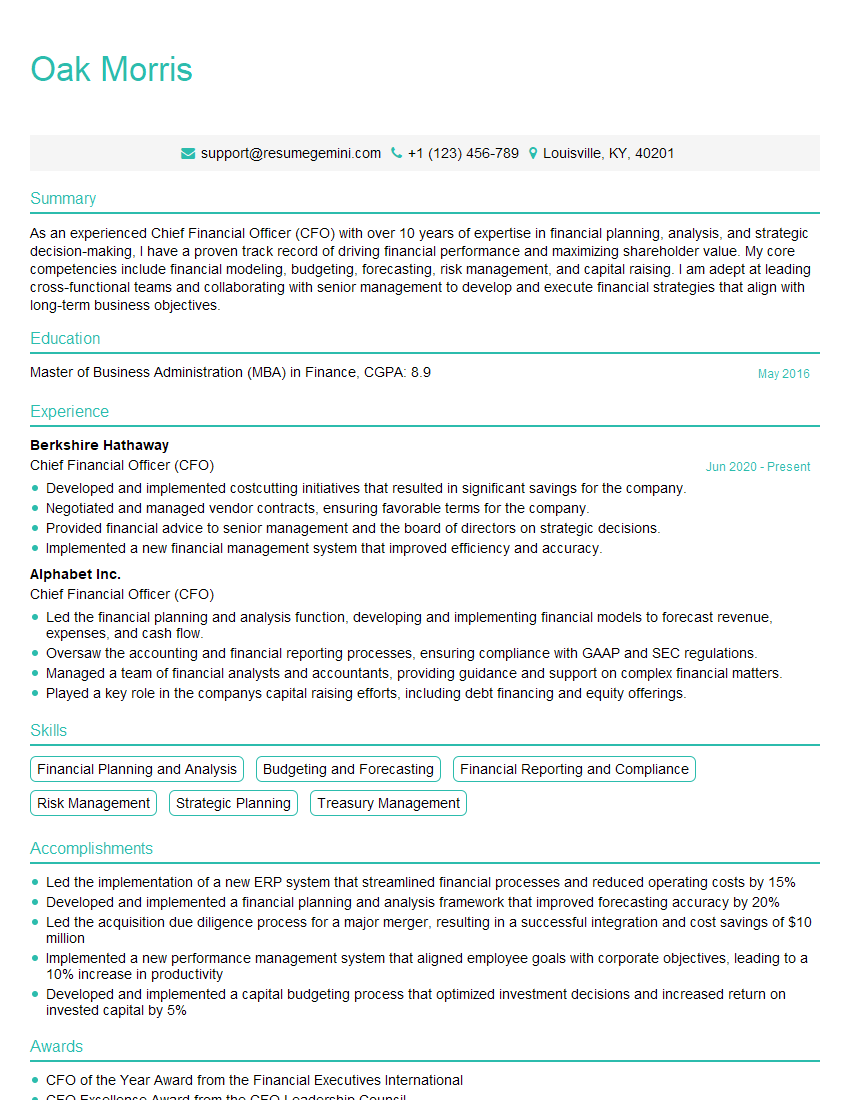
Chief Financial Officer (CFO) Resume Sample
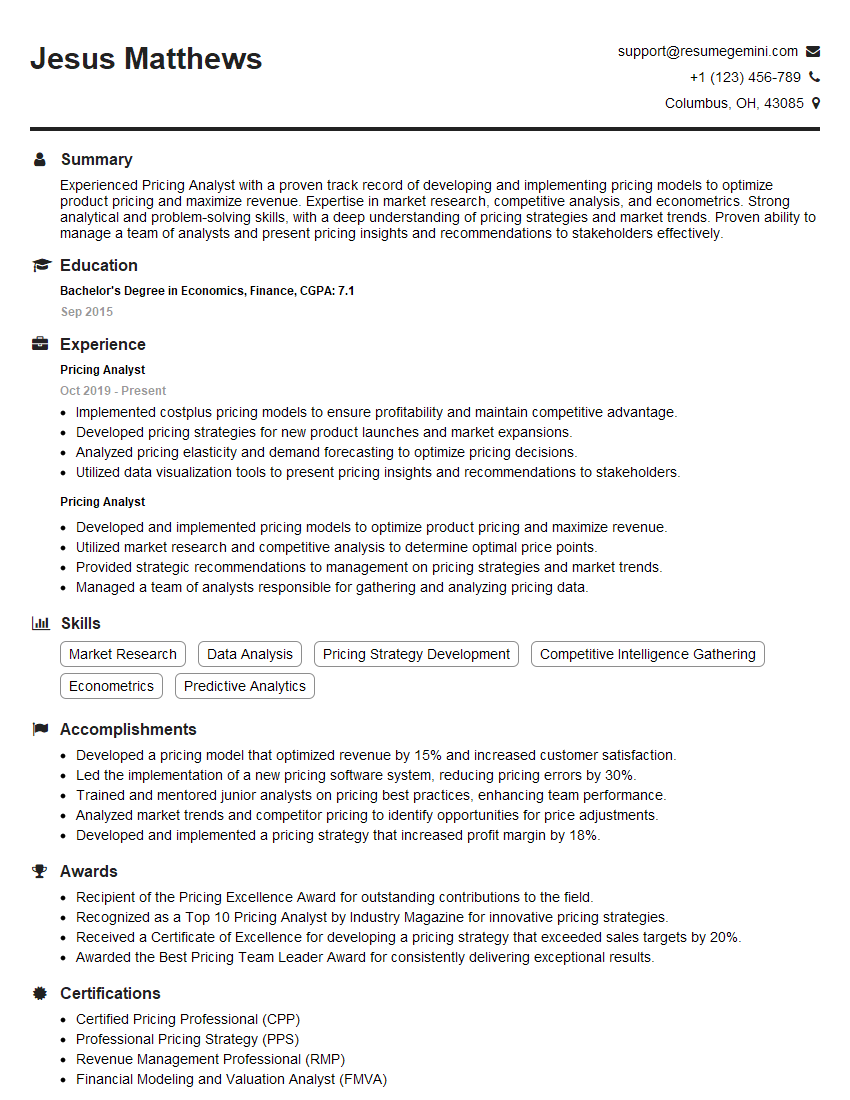
Pricing Analyst Resume Sample
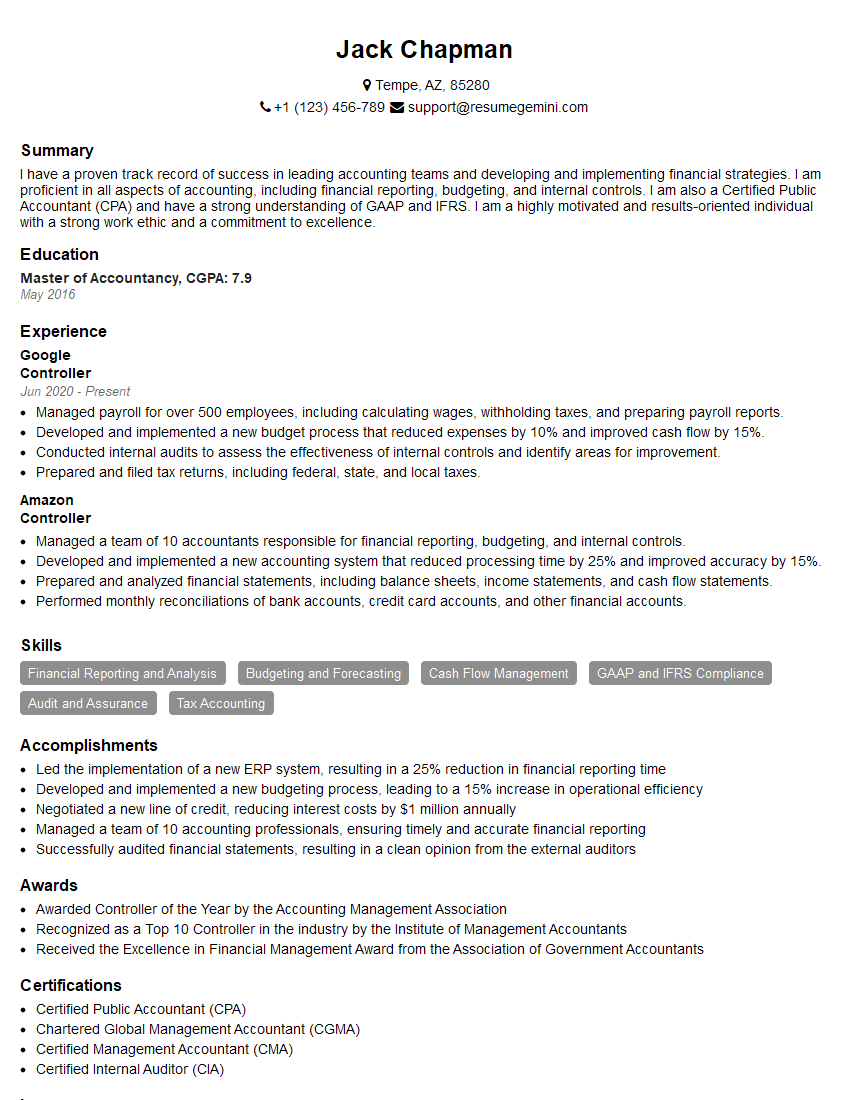
Controller Resume Sample
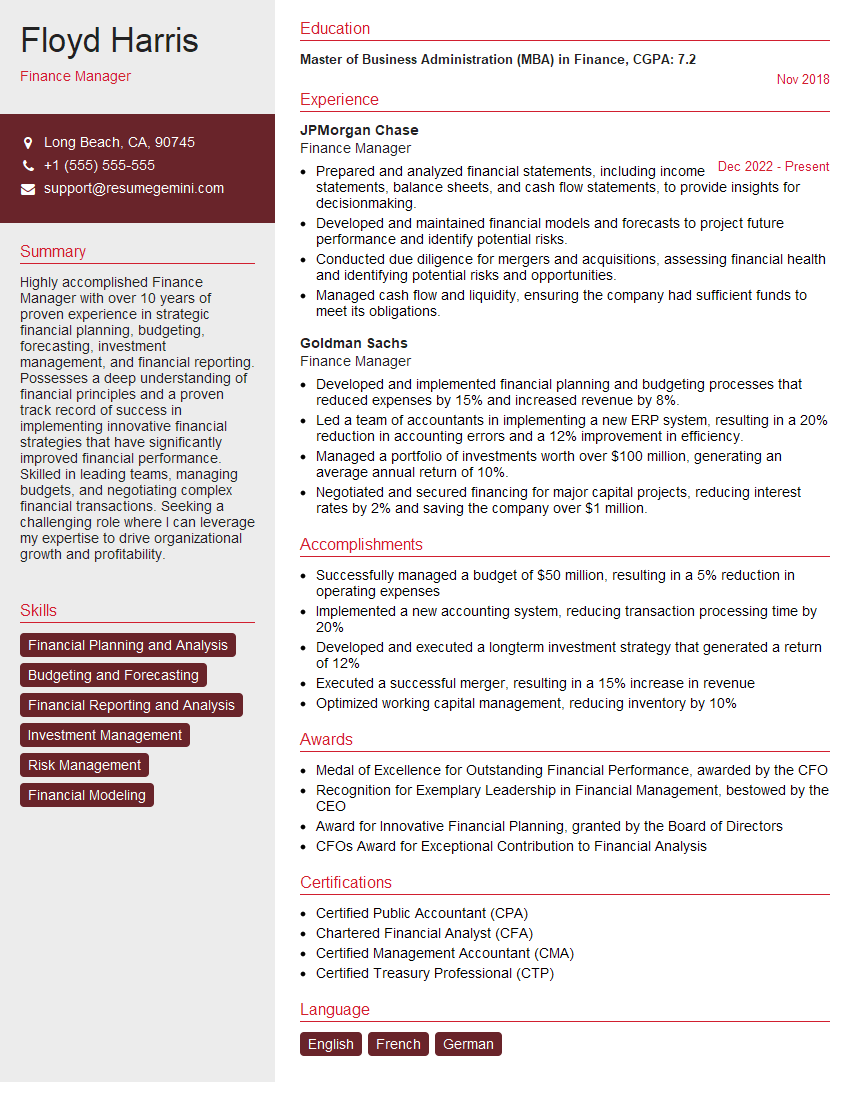
Finance Manager Resume Sample

Budget Manager Resume Sample
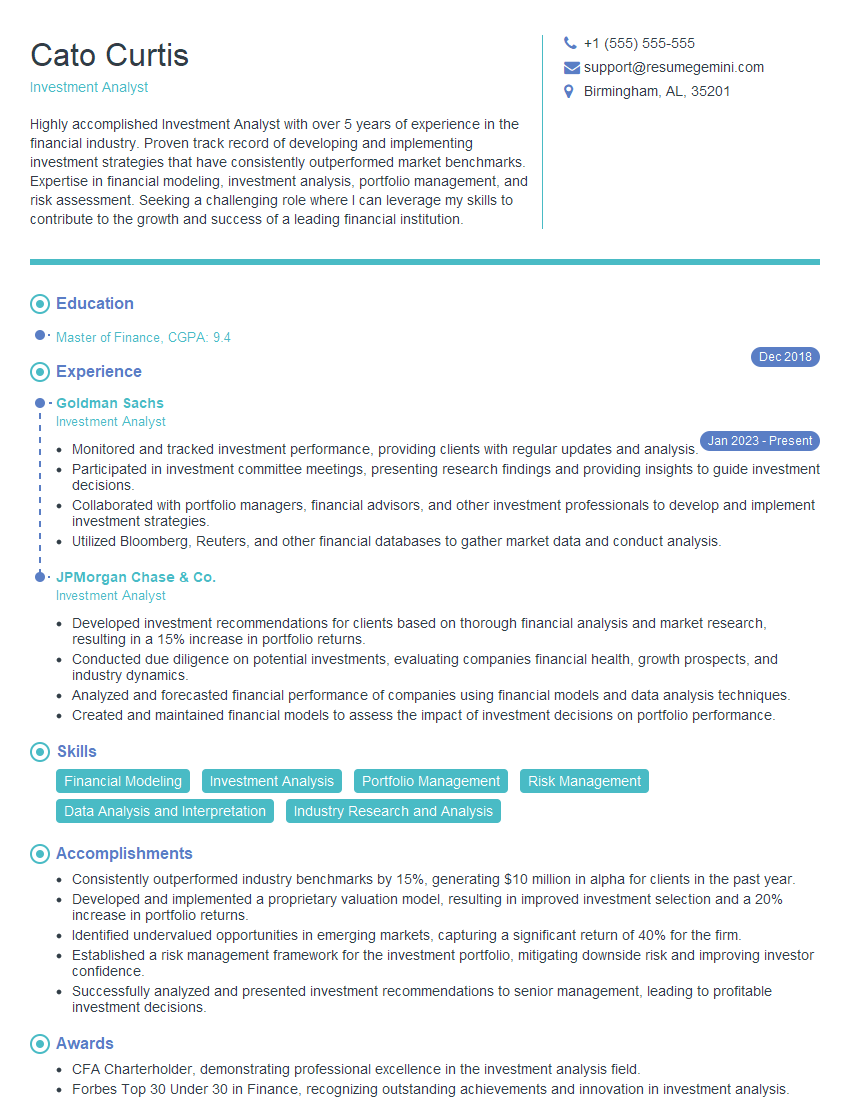
Investment Analyst Resume Sample
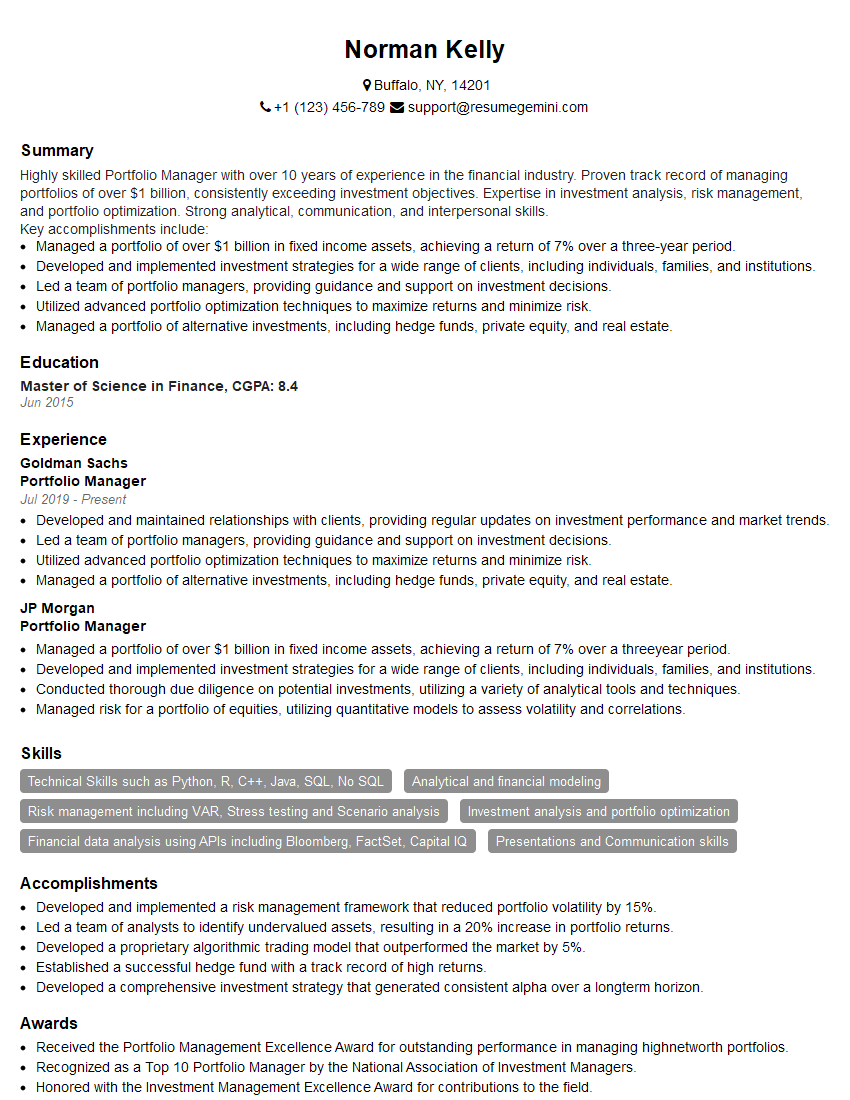
Portfolio Manager Resume Sample
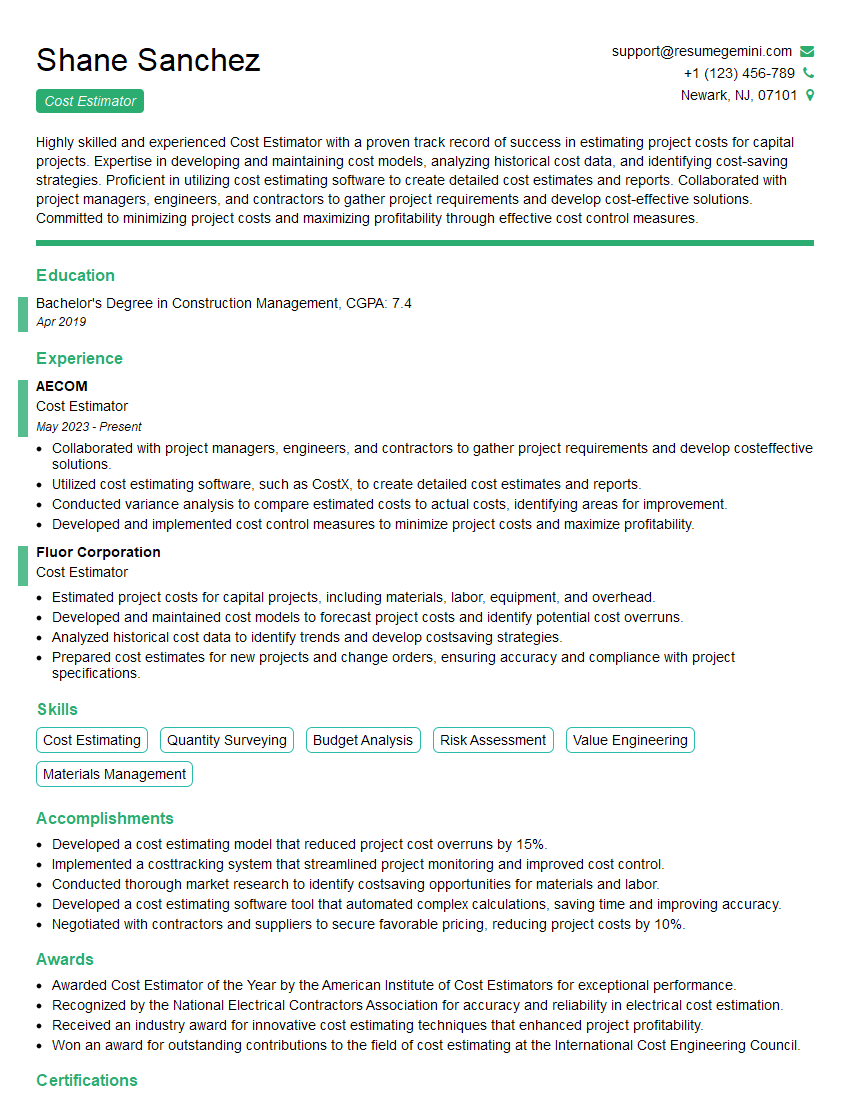
Cost Estimator Resume Sample
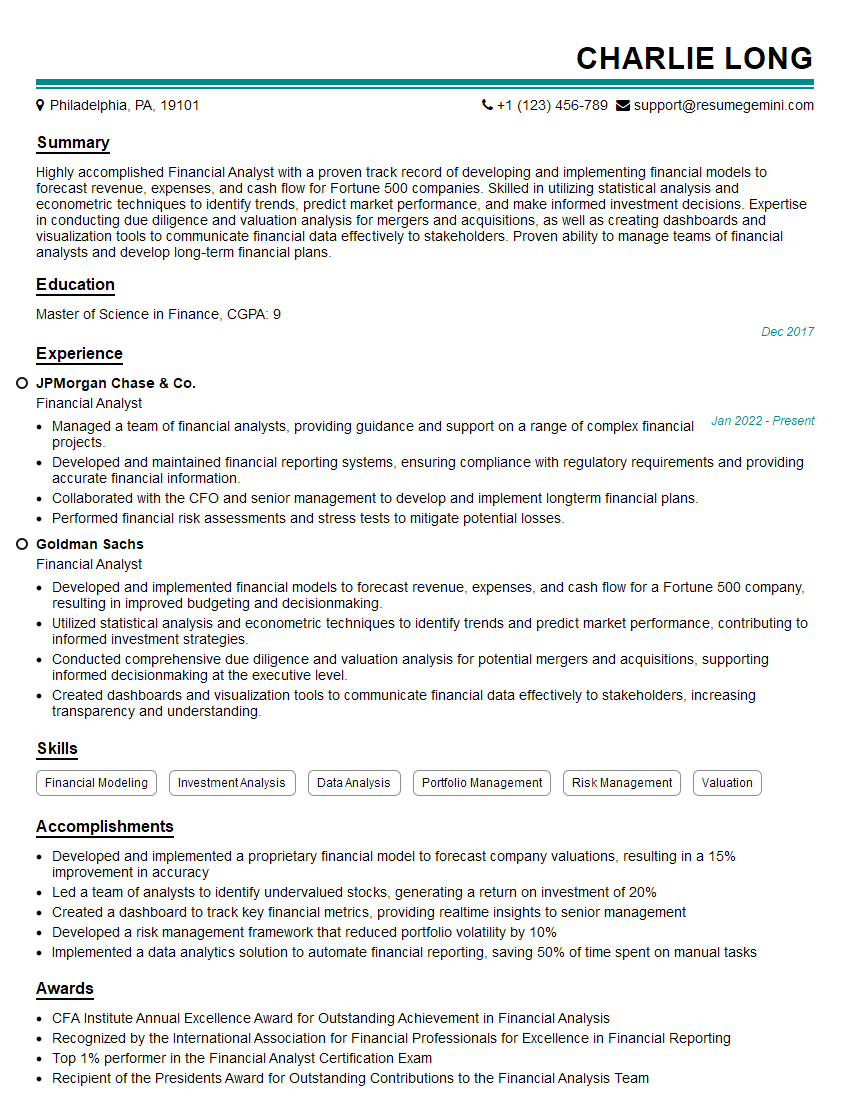
Financial Analyst Resume Sample
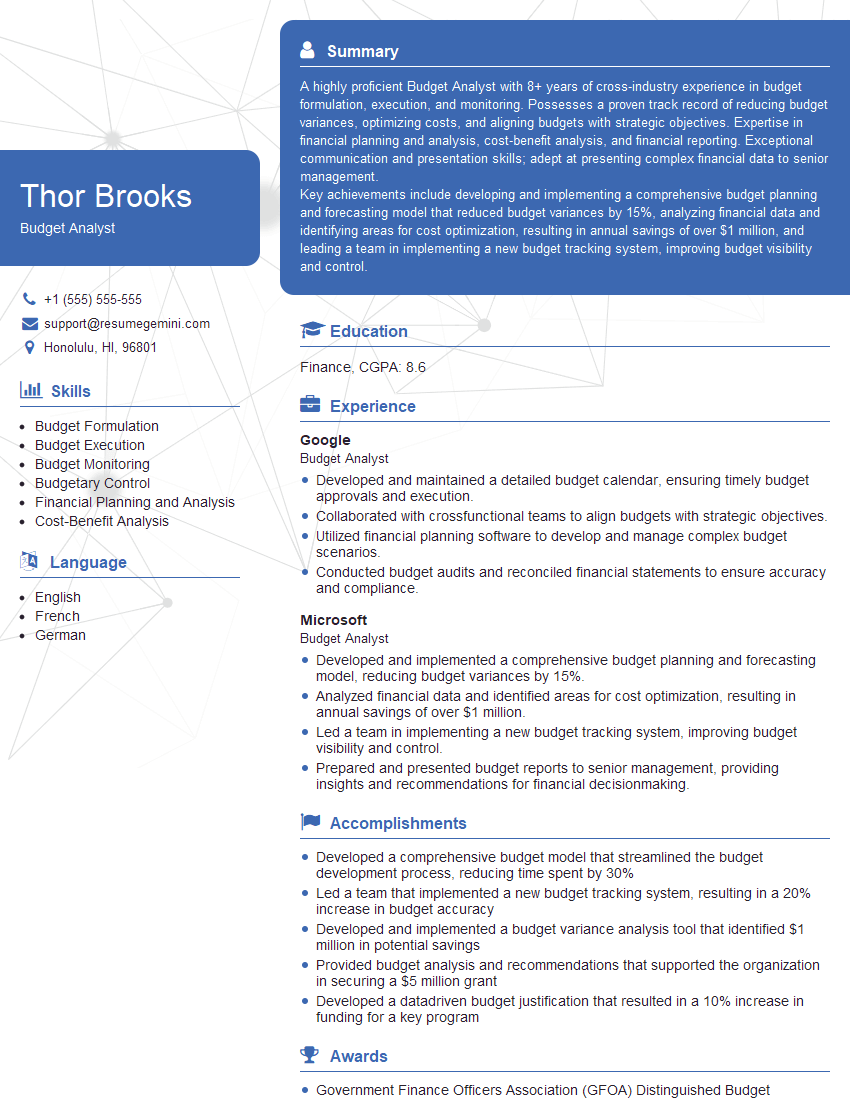
Budget Analyst Resume Sample
Explore more articles
Users Rating of Our Blogs
Share Your Experience
We value your feedback! Please rate our content and share your thoughts (optional).
What Readers Say About Our Blog
Very informative content, great job.
good