Interviews are opportunities to demonstrate your expertise, and this guide is here to help you shine. Explore the essential Building Codes and Standards (NEC, IEC) interview questions that employers frequently ask, paired with strategies for crafting responses that set you apart from the competition.
Questions Asked in Building Codes and Standards (NEC, IEC) Interview
Q 1. Explain the difference between the NEC and the IEC.
The National Electrical Code (NEC) and the International Electrotechnical Commission (IEC) are both crucial in setting standards for electrical safety, but they differ in scope and application. The NEC is a nationally recognized standard in the United States, developed by the National Fire Protection Association (NFPA), focusing primarily on electrical safety within buildings and related structures. It’s legally enforceable in most US jurisdictions. In contrast, the IEC is an international organization that develops global standards for various electrical and electronic technologies, including electrical installations. The IEC standards are often adopted by individual countries and adapted to meet their specific needs, resulting in variations across different regions. Think of it like this: the NEC is a detailed rulebook specific to the US, while the IEC provides a broader framework used globally, with countries adding their own interpretations.
For example, while both might address wiring methods, the NEC might have very specific rules on cable types permitted in certain applications within a US building, whereas the IEC would provide more general guidance that national standards (like the NEC) would then detail.
Q 2. Describe the process for obtaining a building permit.
The process of obtaining a building permit typically involves several steps. First, you’ll need to submit a complete application to your local building department, including detailed plans and specifications for the project, ensuring they comply with all applicable codes and regulations. This includes architectural, structural, mechanical, plumbing, and electrical plans, each needing separate review and approval. The department will then review the submitted documents for compliance. This review may involve several inspections during different stages of the construction. Once the plans are approved, the permit will be issued, authorizing the commencement of construction. Remember, a permit is not a guarantee that your construction is in compliance; it simply allows you to legally begin work. Regular inspections throughout the process are essential to verify ongoing compliance with approved plans.
During construction, inspectors will visit the site to verify that work matches the approved plans. Failing to meet the codes could lead to stop-work orders until corrections are made.
Q 3. What are the key safety requirements for electrical installations according to the NEC?
The NEC prioritizes safety through several key requirements for electrical installations. These focus on preventing electrical hazards like shocks, fires, and arc flash. Some crucial aspects include:
- Proper Grounding and Bonding: Ensuring effective grounding to prevent dangerous voltage buildup and protect against electrical shocks.
- Overcurrent Protection: Using circuit breakers and fuses to interrupt excessive current flow and prevent overheating, which can cause fires.
- Wiring Methods and Materials: Specifying acceptable wiring methods and materials to ensure safe installation and prevent hazards.
- Arc Flash Mitigation: Implementing measures to reduce the risk of arc flash incidents, particularly in high-voltage systems.
- GFCI and AFCI Protection: Using Ground Fault Circuit Interrupters (GFCIs) to protect against ground faults and Arc Fault Circuit Interrupters (AFCIs) to detect and interrupt arcing faults in branch circuits.
For example, the NEC dictates specific wire gauges for different current loads to prevent overheating and fires. Using the wrong gauge wire can be a serious safety violation.
Q 4. How do you ensure compliance with building codes during construction?
Ensuring compliance with building codes during construction is a multifaceted process demanding proactive planning and diligent monitoring. It begins with selecting qualified professionals, including architects, engineers, and contractors, who are familiar with the applicable codes. The construction process needs to be meticulously documented, with records kept for all materials used, inspections undertaken, and any modifications to the original approved plan. Regular site inspections by qualified personnel are crucial to identify and resolve any deviations from the approved plans early on. Compliance also necessitates maintaining open communication between the project team, the building inspectors, and the relevant authorities. This collaborative approach ensures that any identified issues are addressed promptly and effectively. Finally, maintaining complete and accurate records throughout the project lifecycle is essential for demonstration of compliance. This may include daily logs, inspection reports, material certificates, and test results.
Q 5. What are the common violations you encounter during building inspections?
Common violations observed during building inspections vary depending on the system, but some frequent issues include:
- Improper Grounding: Inadequate or missing grounding connections, which poses a serious shock hazard.
- Overloaded Circuits: Circuits carrying more current than designed, increasing the risk of overheating and fires.
- Unprotected Wiring: Exposed or inadequately protected wiring, creating a risk of physical damage and electrical shocks.
- Lack of GFCI/AFCI Protection: Absence of required GFCI protection in wet locations or AFCI protection in bedrooms.
- Incorrect Wiring Methods: Using inappropriate wiring methods or materials for specific applications.
- Improper Installation of Electrical Equipment: Faulty or improper installation of lighting fixtures, receptacles, or other electrical equipment.
These violations often stem from shortcuts taken during construction to save time or money, sometimes due to lack of knowledge of building codes. It’s critical that contractors understand and adhere to the strict requirements for electrical safety.
Q 6. Explain the importance of grounding and bonding in electrical systems.
Grounding and bonding are fundamental to electrical safety, offering critical protection against electrical shocks and fires. Grounding connects non-current-carrying metal parts of an electrical system to the earth, providing a low-resistance path for fault currents. This path safely diverts fault currents to the ground, preventing dangerous voltage buildup on equipment and reducing the risk of electric shock. Bonding, on the other hand, interconnects metal parts within an electrical system to ensure they are at the same electrical potential. This prevents voltage differences between these parts, reducing the risk of dangerous voltage gradients and electric shock.
Imagine a scenario where a faulty appliance has a short circuit. Grounding provides a safe path for the current to flow into the earth, tripping the breaker and preventing electrocution. Bonding ensures that all the metal parts of the appliance are at the same potential, preventing a voltage difference that could lead to a dangerous shock.
Q 7. How do you handle discrepancies between local building codes and the NEC/IEC?
Discrepancies between local building codes and the NEC/IEC need careful consideration. Generally, the most restrictive code prevails. This means that if a local code imposes stricter requirements than the NEC or an adopted IEC standard, the local code must be followed. This approach ensures that the highest level of safety is maintained within the jurisdiction. However, it’s crucial to document these discrepancies, including the relevant code sections, and obtain clarification from the local building authority to ensure consistent interpretation and enforcement. This documentation safeguards against misunderstandings and ensures projects comply with the legally applicable requirements, preventing potential delays and disputes during construction and inspections. It’s important to remember that the goal is always to prioritize safety, and that sometimes, more stringent local codes reflect specific regional needs or hazard profiles.
Q 8. Describe your experience with plan review and code interpretation.
Plan review and code interpretation are fundamental aspects of my work. My experience encompasses meticulously reviewing construction plans to ensure complete compliance with the National Electrical Code (NEC) and other relevant standards like the International Electrotechnical Commission (IEC) standards where applicable. This involves not just identifying code violations but also understanding the intent behind the code and offering practical solutions for any discrepancies. For instance, I’ve worked on projects involving complex industrial setups and large commercial buildings, where interpreting the nuances of code articles related to grounding, overcurrent protection, and power distribution was crucial for project safety and compliance. I frequently use code-specific software to cross-reference requirements, ensure proper calculations, and maintain a detailed record of the review process. One recent project involved a proposed data center; my review identified a potential grounding issue that could have led to significant equipment damage. By applying my knowledge of NEC Article 250, we implemented a more robust grounding system, preventing a costly problem.
Q 9. What are the different types of electrical inspections?
Electrical inspections are critical for ensuring safety and compliance. Several types exist depending on the stage of construction and the system being inspected. These include:
- Rough-in inspections: These occur before the walls and ceilings are closed. Inspectors verify that wiring, conduits, and other components are correctly installed according to code before they are concealed. This stage is critical for catching and correcting errors early, preventing more costly revisions later.
- Final inspections: Conducted once all the electrical work is complete and ready for occupancy, these inspections ensure the system functions correctly and meets all code requirements, including proper grounding, labeling, and testing.
- Periodic inspections: For existing buildings, regular inspections help identify and address potential hazards like deteriorated wiring or overloaded circuits. This is especially crucial in older structures.
- Special inspections: These address specific systems or concerns such as fire alarm systems, emergency lighting, or specialized industrial equipment.
Each inspection type has its own checklist based on the applicable codes and standards. A thorough inspection report is essential, documenting any issues found and outlining necessary corrective actions.
Q 10. Explain the concept of arc flash hazard and its mitigation.
An arc flash hazard occurs when a short circuit or fault in an electrical system produces a significant release of energy in the form of an arc. These arcs can generate intense heat, light, and pressure, resulting in severe burns, eye injuries, and even fatalities. The severity depends on factors like voltage level, available fault current, and the system’s impedance.
Mitigation strategies are crucial. They include:
- Proper system design: Employing appropriate overcurrent protective devices, such as circuit breakers and fuses, sized correctly to quickly interrupt the fault current. Proper grounding and bonding are also vital.
- Arc flash hazard analysis: This involves specialized software and calculations that determine the potential arc flash incident energy for various points within the electrical system. This analysis is used to assign appropriate personal protective equipment (PPE).
- Engineering controls: These include installing arc flash reduction equipment, such as arc flash relays, and using proper cable management practices to reduce the potential for arcing faults.
- Administrative controls: These focus on training personnel to recognize hazards, follow safety procedures, and use proper PPE. Lockout/Tagout procedures are essential when working on energized electrical equipment.
A recent project involved an upgrade to a high-voltage switchgear. Through arc flash analysis and the implementation of engineering and administrative controls, we significantly reduced the risk, ensuring the safety of the workers.
Q 11. What are the requirements for emergency lighting systems?
Emergency lighting systems are designed to provide illumination during power outages, ensuring safe evacuation and preventing panic. Requirements vary depending on the building’s occupancy and use, but generally include:
- Adequate illumination levels: Code specifies minimum light levels for exit routes, stairwells, and other critical areas. These levels must be maintained for a specific duration after a power failure.
- Battery backup: Emergency lights must have sufficient battery backup to provide illumination for a minimum time specified by the code, typically 90 minutes.
- Proper signage: Exit signs must be clearly visible and illuminated, guiding occupants to safe exits.
- Testing and maintenance: Regular testing and maintenance, including battery checks and inspections, are essential to ensure the system functions properly.
- Redundancy: In some cases, multiple power sources or backup generators may be required to ensure continuous operation.
Failure to meet these requirements could lead to significant safety hazards during emergencies.
Q 12. Describe your experience with code enforcement.
Code enforcement is a critical aspect of my role. It involves ensuring compliance with all relevant building codes and standards throughout the entire construction process. This includes reviewing plans, conducting inspections, and addressing violations. I have experience working with contractors, owners, and other stakeholders to resolve code issues, sometimes requiring negotiation and collaboration to achieve a safe and compliant outcome. One instance involved a contractor who had deviated from the approved plans. Rather than issuing immediate penalties, I worked collaboratively to explain the violations and guided them to make the necessary corrections, ultimately leading to a compliant installation and a strengthened contractor-inspector relationship. My emphasis is always on educating and fostering a culture of compliance, ensuring that safety remains paramount.
Q 13. How do you stay updated on changes to building codes and standards?
Staying current with building codes and standards is crucial. I accomplish this through a multi-pronged approach:
- Subscription to code updates: I subscribe to organizations like the NFPA (National Fire Protection Association) and ICC (International Code Council) to receive timely notifications of code changes and updates.
- Professional development courses: I regularly attend seminars, workshops, and conferences focused on electrical codes and standards. This allows me to learn about code revisions and interpretations from experts in the field.
- Networking with peers: Engaging with other professionals in the industry provides valuable insights into real-world code applications and evolving interpretations.
- Review of relevant publications: I maintain a commitment to reading industry publications, journals, and technical articles to stay abreast of new technologies and their implications for code compliance.
This ongoing learning process ensures I possess the most up-to-date knowledge, enhancing my effectiveness and competence.
Q 14. What software or tools do you use to manage code compliance?
Several software tools and applications facilitate code compliance management. These include:
- Plan review software: These programs allow for the electronic review of construction documents, including identifying code violations through automated checks.
- Calculation software: Dedicated software calculates things like short-circuit current, voltage drop, and wire sizing, ensuring compliance with code requirements.
- Database management systems: These tools help track inspection reports, project details, and code violations effectively. They also streamline the process of generating reports and sharing information.
- Mobile applications: Some apps are useful for quickly accessing code references during field inspections. This streamlines the on-site review process.
I typically use a combination of these depending on the specifics of the project. Selecting the appropriate tools optimizes efficiency and accuracy while supporting thorough code compliance.
Q 15. Explain the role of a building official.
Building officials are the gatekeepers of public safety, ensuring that all structures adhere to established building codes and standards. They’re responsible for reviewing plans, conducting inspections during various stages of construction, and ensuring that the final product meets the required safety and quality standards. Think of them as the referees of the construction game, making sure everyone plays by the rules to protect the community.
Their roles encompass plan review, where they scrutinize blueprints to verify compliance; field inspections, where they physically check the work in progress to identify any deviations from the approved plans; issuing permits, which authorize the commencement of construction; and enforcing compliance, which might involve issuing stop-work orders or citations for violations. Essentially, they’re the crucial link between regulations and the built environment, protecting the public’s health and welfare.
Career Expert Tips:
- Ace those interviews! Prepare effectively by reviewing the Top 50 Most Common Interview Questions on ResumeGemini.
- Navigate your job search with confidence! Explore a wide range of Career Tips on ResumeGemini. Learn about common challenges and recommendations to overcome them.
- Craft the perfect resume! Master the Art of Resume Writing with ResumeGemini’s guide. Showcase your unique qualifications and achievements effectively.
- Don’t miss out on holiday savings! Build your dream resume with ResumeGemini’s ATS optimized templates.
Q 16. Describe your experience with investigating building code violations.
In my experience investigating building code violations, a systematic approach is crucial. It usually starts with a complaint or a routine inspection revealing a potential problem. I begin by carefully documenting the violation, including photographic evidence and detailed notes. Next, I review the approved plans and permits to understand the original design intent. This helps to determine whether the violation is a simple oversight or a deliberate attempt to circumvent regulations. Then, I contact the contractor or property owner to discuss the issue, offering opportunities for correction. This collaborative approach often yields the most effective results. If corrective actions are not taken, I follow the established procedures, which might include issuing notices of violation, imposing fines, or even initiating legal action. For example, I once investigated a case where a contractor improperly installed electrical wiring in a residential building. My investigation involved detailed inspection, photographic evidence, and consultation with electrical engineers. The contractor was required to rectify the issue, and subsequently attended a code compliance training session.
Q 17. How do you handle conflict resolution with contractors regarding code compliance?
Conflict resolution with contractors often requires a blend of diplomacy and firmness. I begin by actively listening to the contractor’s perspective, understanding their concerns and challenges. Then, I clearly explain the code requirements, using visual aids and technical documentation whenever necessary. This ensures a shared understanding of the problem. I emphasize the importance of compliance, not only for safety but also for legal reasons. If the disagreement persists, I might involve a third party, such as a qualified expert or a mediator, to help facilitate a solution. Maintaining a professional demeanor and demonstrating respect are crucial throughout this process. My goal is always to find a mutually acceptable solution that ensures code compliance while minimizing disruption to the project. For example, I recently mediated a dispute over the installation of fire-rated doors. By collaboratively reviewing the code requirements and exploring alternative solutions with both the contractor and the homeowner, we found a compromise that satisfied all parties involved.
Q 18. Explain the importance of proper documentation in building code enforcement.
Proper documentation is the cornerstone of effective building code enforcement. It provides an auditable trail of all activities, decisions, and communications related to a project. This includes detailed inspection reports with photographic evidence, copies of approved plans and permits, correspondence with contractors and property owners, and records of any corrective actions taken. Thorough documentation protects both the building official and the public. It safeguards against future disputes or legal challenges by providing irrefutable proof of compliance or non-compliance. It also assists in identifying trends and patterns that might indicate systemic issues within the construction industry, allowing for proactive improvements in code enforcement. In essence, it’s the backbone of transparency and accountability in the building code enforcement process. For instance, meticulous records are invaluable in situations where there are delays or disputes. They prove that the correct procedures were followed, and support decisions regarding timelines, fees, and penalties.
Q 19. What are the consequences of non-compliance with building codes?
The consequences of non-compliance with building codes can range from minor to severe. Minor violations might result in stop-work orders until the problem is corrected or fines imposed. More serious violations, such as those posing significant safety hazards, can lead to substantial fines, legal action, and even demolition of the structure, depending on the severity of the violation and the jurisdiction’s regulations. Beyond legal ramifications, non-compliance can also result in increased insurance premiums, liability issues for owners and contractors, and, most importantly, a significant risk to public safety. For instance, improper electrical wiring can lead to fires, while inadequate structural support can result in collapses, causing injuries or even fatalities.
Q 20. Describe your experience with working on large-scale construction projects and code compliance.
My experience with large-scale construction projects has highlighted the importance of proactive code compliance. These projects often involve multiple contractors, complex designs, and intricate scheduling, requiring a high level of coordination and communication. I typically start by establishing clear communication channels with all stakeholders, including architects, engineers, contractors, and project managers. Regular inspections, tailored to the specific phases of construction, are crucial to identify and address potential issues early on. This proactive approach helps to prevent costly delays and revisions later in the project. For example, I was involved in the construction of a large commercial building, where my team worked closely with the design and construction teams from the initial planning stages, ensuring that the project met all relevant building codes. This collaboration resulted in the project’s completion on schedule and within budget, without any major code compliance issues.
Q 21. What are the specific requirements for electrical installations in hazardous locations (NEC 500)?
NEC 500, covering electrical installations in hazardous locations, mandates stringent requirements to prevent fires and explosions. The specific requirements depend heavily on the classification of the hazardous area (Class I, II, or III, further divided by Divisions 1 and 2 based on likelihood and frequency of hazardous material presence). These classifications dictate the type of equipment permitted, wiring methods, installation techniques, and safety measures. For example, Class I, Division 1 locations (e.g., areas with flammable gases or vapors that are present continuously or frequently) necessitate explosion-proof or intrinsically safe equipment. This means that the equipment’s design prevents the ignition of flammable materials, even if a spark or high temperature occurs internally. Wiring must be in conduit, sealed tightly, and further protected to prevent the propagation of an explosion. Similarly, Class II, Division 1 locations (combustible dusts) require dust-ignition-proof enclosures and specific ventilation strategies. Thorough planning and expert knowledge of NEC 500 are essential for ensuring safety in such environments, avoiding potential catastrophic events.
Example: In a Class I, Division 1 location, you might see the use of explosion-proof motors with hermetically sealed enclosures and special conduit fittings designed to contain internal explosions.
Q 22. Explain the different classes of hazardous locations and their implications for electrical design.
Hazardous locations, as defined in the NEC (National Electrical Code) and IEC (International Electrotechnical Commission) standards, are areas where flammable gases, vapors, dusts, or fibers may exist in sufficient quantities to cause an explosion or fire. These locations are classified to guide appropriate electrical equipment selection and installation to minimize ignition risks.
- Class I: Locations containing flammable gases or vapors. Subdivided into Divisions 1 (hazardous conditions frequently present) and 2 (hazardous conditions infrequently present). Think refineries, gas stations, or paint spray booths. Electrical equipment in Class I locations must be explosion-proof or intrinsically safe.
- Class II: Locations containing combustible dust. Also subdivided into Divisions 1 and 2 based on frequency of hazardous conditions. Examples include grain elevators, wood-working shops, and textile mills. Equipment needs to prevent ignition from dust accumulation and sparking.
- Class III: Locations containing easily ignitable fibers or flyings. Again, Divisions 1 and 2 exist based on hazard frequency. Think cotton gins or textile mills. Equipment needs to prevent accumulation and minimize ignition sources.
The implications for electrical design are significant. For example, in a Class I, Division 1 location, you’d use explosion-proof enclosures (Type ‘d’ per NEC), ensuring that any potential internal arc or spark cannot ignite the surrounding atmosphere. In less hazardous areas (Class I, Division 2), you might use dust-tight and gas-tight enclosures (Types ‘e’ and ‘n’ per NEC) or intrinsically safe equipment, which limits energy levels to prevent ignition.
Q 23. How do you interpret and apply the NEC’s requirements for grounding electrodes?
Grounding electrodes are crucial for safety, ensuring a low-impedance path to the earth in case of a ground fault. The NEC outlines several methods for creating effective grounding systems, depending on soil conditions and the size of the building. Interpretation involves careful analysis of the specific site conditions.
The process generally includes:
- Identifying suitable electrodes: This could include ground rods driven into the earth, metal water pipes, or concrete-encased electrodes.
- Determining the required number and size of electrodes: NEC 250 provides tables and calculations to help determine the appropriate size and spacing based on soil resistivity.
- Verifying the grounding resistance: A ground resistance tester is used to measure the resistance of the grounding system. NEC requirements specify acceptable limits for this resistance.
- Connecting electrodes to the grounding system: Appropriate sized conductors must be used to connect the electrodes to the main grounding bus bar. These connections must be corrosion-resistant.
For example, if soil resistivity is high, you might need multiple ground rods to achieve the required low resistance. A poor ground connection can lead to dangerous voltage potentials on equipment casings, increasing the risk of electric shock.
Example Calculation (Simplified): Required grounding resistance = 5 ohms. Measured resistance with one electrode = 15 ohms. Solution: Add more electrodes until the combined resistance falls below 5 ohms.Q 24. What are the key differences between the NEC and other international electrical codes?
While both the NEC and IEC aim for electrical safety, they differ in their structure, approach, and specific requirements. The NEC is prescriptive, providing detailed rules and specifications, while the IEC is more performance-based, focusing on achieving safety goals through various methods.
- Scope and application: The NEC primarily applies to the United States and some parts of Canada, while the IEC standards are international, adopted by many countries worldwide. This leads to differences in voltage levels, wiring methods, and equipment certifications.
- Harmonization Efforts: There’s ongoing effort to harmonize NEC and IEC standards, but significant differences remain. For example, the NEC often specifies exact equipment types, whereas IEC standards might allow for alternative approaches that meet equivalent safety levels.
- Enforcement: Enforcement varies significantly. The NEC is often enforced at the local authority level, while IEC standards are adopted and enforced by individual countries according to their local regulations.
An example is the grounding system requirements. The NEC provides specific details on grounding electrode resistance, while the IEC might emphasize the need for a low impedance path to earth, allowing for different implementation methods based on local conditions.
Q 25. How do you determine the appropriate size of conductors for a given electrical load?
Determining conductor size depends on several factors: the load current, the voltage drop, the ambient temperature, and the installation method. The NEC Table 310.16 provides ampacity data—the current a conductor can carry continuously without exceeding its temperature rating.
Here’s a step-by-step process:
- Calculate the total load current: Add up the currents of all the connected appliances or equipment.
- Apply appropriate demand factors (if applicable): NEC allows reducing the total load in some cases, reflecting the unlikely event that all devices will run simultaneously.
- Determine the voltage drop: Excessive voltage drop can affect equipment performance. NEC recommends keeping voltage drop within acceptable limits (usually 3% for branch circuits and 5% for feeders).
- Consult NEC Table 310.16: Based on the calculated current and the installation conditions (e.g., conduit type, ambient temperature), find the minimum allowable conductor size that satisfies the ampacity requirement and voltage drop limit. Always round up to the next larger standard size.
For example, if the calculated load is 25 amps, and Table 310.16 shows that a 10 AWG conductor has an ampacity of 30 amps in your conditions, that’s the minimum acceptable size.
Q 26. Explain the concept of overcurrent protection and the role of circuit breakers and fuses.
Overcurrent protection is essential to prevent overheating, fire, and equipment damage in electrical circuits. Circuit breakers and fuses are the primary devices used for this protection. They interrupt the current flow when it exceeds a predetermined threshold.
- Circuit Breakers: These are reusable devices that automatically trip when they detect an overcurrent condition. They offer different trip characteristics (e.g., thermal, magnetic) to respond to different fault types (e.g., overloads, short circuits).
- Fuses: These are one-time use devices that melt and open the circuit when the current exceeds their rated value. They are simpler than circuit breakers but must be replaced after they blow.
The selection of the right overcurrent protection device (OCPD) is crucial. An OCPD must be rated for a current that’s at least as high as the ampacity of the conductor it protects, yet not significantly higher to ensure effective fault detection.
For instance, a 15-amp circuit breaker protects a 14 AWG conductor, whose ampacity is 15 amps, ensuring the conductor’s temperature stays within safe limits. A fuse with a lower rating would unnecessarily interrupt the circuit under normal operating conditions while a much larger rating would fail to protect the wire from overheating in a fault.
Q 27. Describe your experience with fire alarm system inspections and code compliance.
My experience with fire alarm system inspections involves verifying compliance with codes like NFPA 72 (National Fire Alarm Code), a widely accepted standard. Inspections typically include checking for:
- Proper placement of smoke detectors and heat detectors: Ensuring adequate coverage according to occupancy type and building layout.
- Functionality of alarm signaling devices: Testing horns, strobes, and annunciator panels.
- Integrity of wiring and connections: Checking for damage, proper grounding, and correct wiring methods.
- Battery backup systems: Verifying the capacity and functionality of backup power sources.
- Maintenance records: Reviewing documentation to ensure regular testing and maintenance of the system.
During inspections, I identify discrepancies between the existing system and code requirements, documenting the findings with photographs and detailed reports. This often involves proposing corrective actions to ensure system compliance and building occupant safety. For instance, I’ve encountered instances where smoke detectors were improperly spaced, leading to recommendations for additional detectors. I also address issues such as incorrect wiring or low battery levels and ensure they are rectified promptly.
Q 28. How do you ensure the safety of workers during building inspections?
Worker safety is paramount during building inspections. My approach emphasizes proactive measures to mitigate risks. This includes:
- Personal Protective Equipment (PPE): Ensuring that all inspectors wear appropriate PPE such as hard hats, safety glasses, and high-visibility clothing, depending on the site conditions.
- Site-Specific Hazards Assessment: Completing a thorough assessment before commencing the inspection to identify potential hazards like exposed wires, fall risks, and confined spaces. This often involves reviewing blueprints and pre-inspection site walks.
- Lockout/Tagout Procedures: If working near energized electrical equipment, we strictly adhere to lockout/tagout procedures to prevent accidental energization.
- Communication and Coordination: Maintaining clear communication with building staff and other workers on site to avoid interfering with their work or creating unsafe situations.
- Emergency Preparedness: Ensuring access to emergency exits and knowing the location of first aid kits and emergency contact information.
For example, if inspecting a high-rise building, using harnesses and fall protection is mandatory. Similarly, during electrical inspections, employing proper lockout/tagout procedures is essential to prevent electrical shocks. A proactive approach to safety not only ensures the safety of inspectors but also fosters a positive and productive work environment.
Key Topics to Learn for Building Codes and Standards (NEC, IEC) Interview
- NEC Code Organization and Structure: Understanding the logical flow and hierarchy of the National Electrical Code, including articles, sections, and tables.
- Wiring Methods and Installation: Practical knowledge of various wiring methods (conduit, cable, etc.) and their applications based on NEC requirements, including troubleshooting common installation issues.
- Overcurrent Protection: Theoretical understanding of fuses, circuit breakers, and their role in protecting circuits and equipment, alongside practical application in sizing and selection.
- Grounding and Bonding: Mastering the principles of grounding and bonding systems to ensure safety and compliance with NEC standards. This includes understanding different grounding electrode systems and their applications.
- Electrical Calculations: Ability to perform basic electrical calculations (e.g., voltage drop, power calculations) to ensure proper sizing of conductors and equipment.
- IEC Standards and Harmonization: Familiarization with key IEC standards and their relationship to NEC, understanding the global perspective of electrical safety standards.
- Code Interpretation and Application: Developing skills in interpreting code requirements and applying them to real-world scenarios, including understanding exceptions and allowances.
- Safety Regulations and Compliance: Deep understanding of safety regulations surrounding electrical work and how they intersect with NEC and IEC standards. This includes OSHA regulations and best practices for safety on the job site.
- Emerging Technologies and Best Practices: Familiarity with evolving technologies and best practices in the field, including energy efficiency, renewable energy integration, and smart building technologies.
- Problem-Solving and Analytical Skills: Demonstrating the ability to diagnose and solve electrical problems effectively by applying building codes and standards principles. This involves analyzing scenarios, identifying potential hazards, and suggesting solutions.
Next Steps
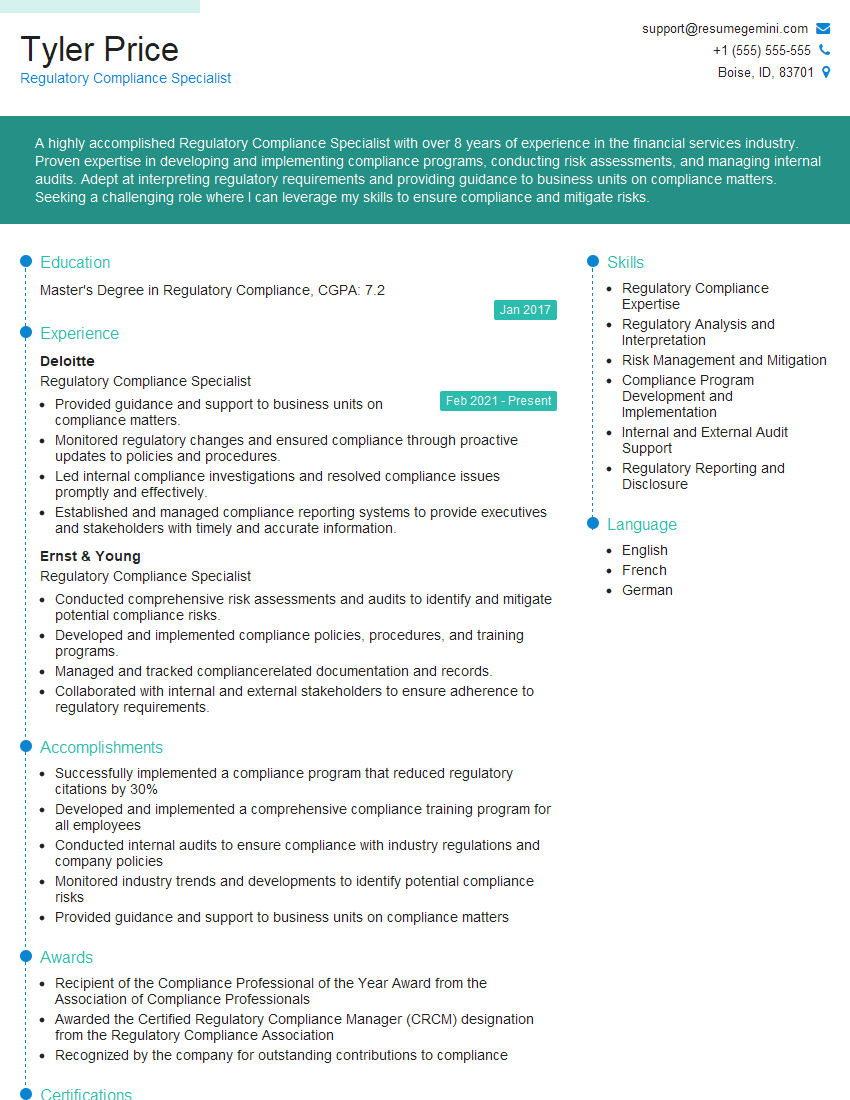
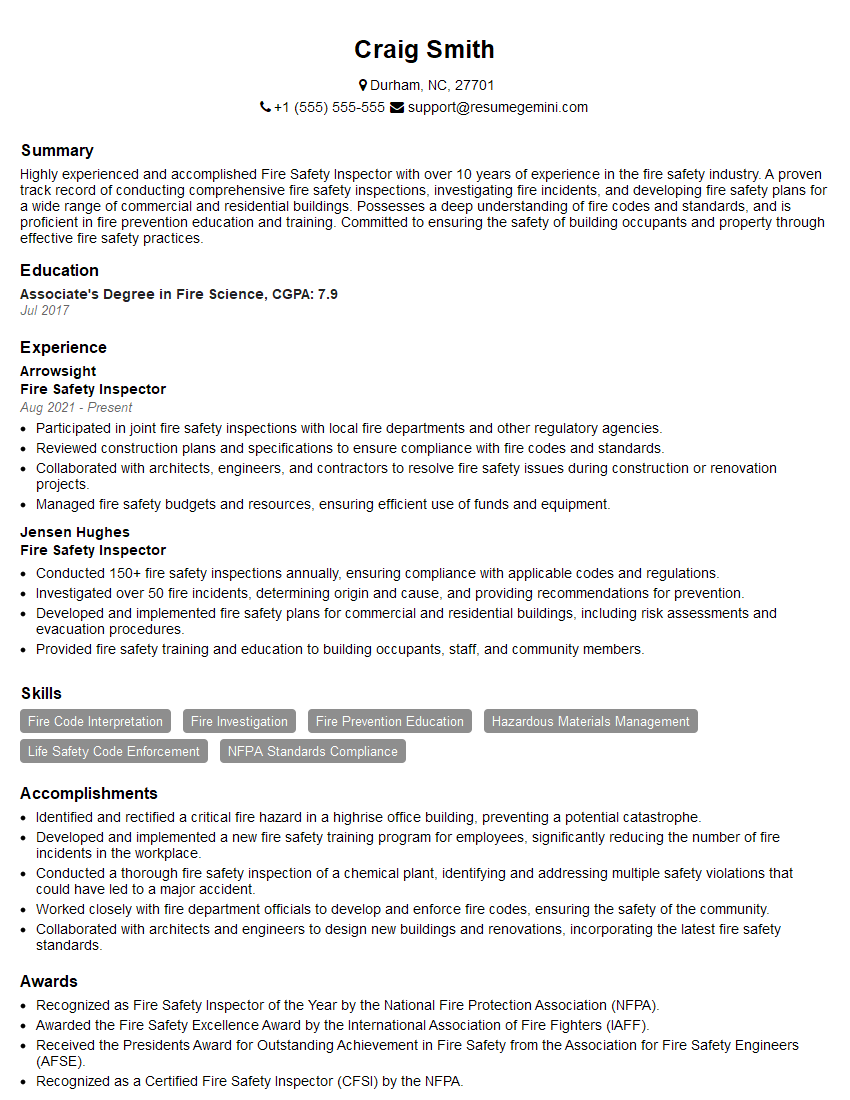
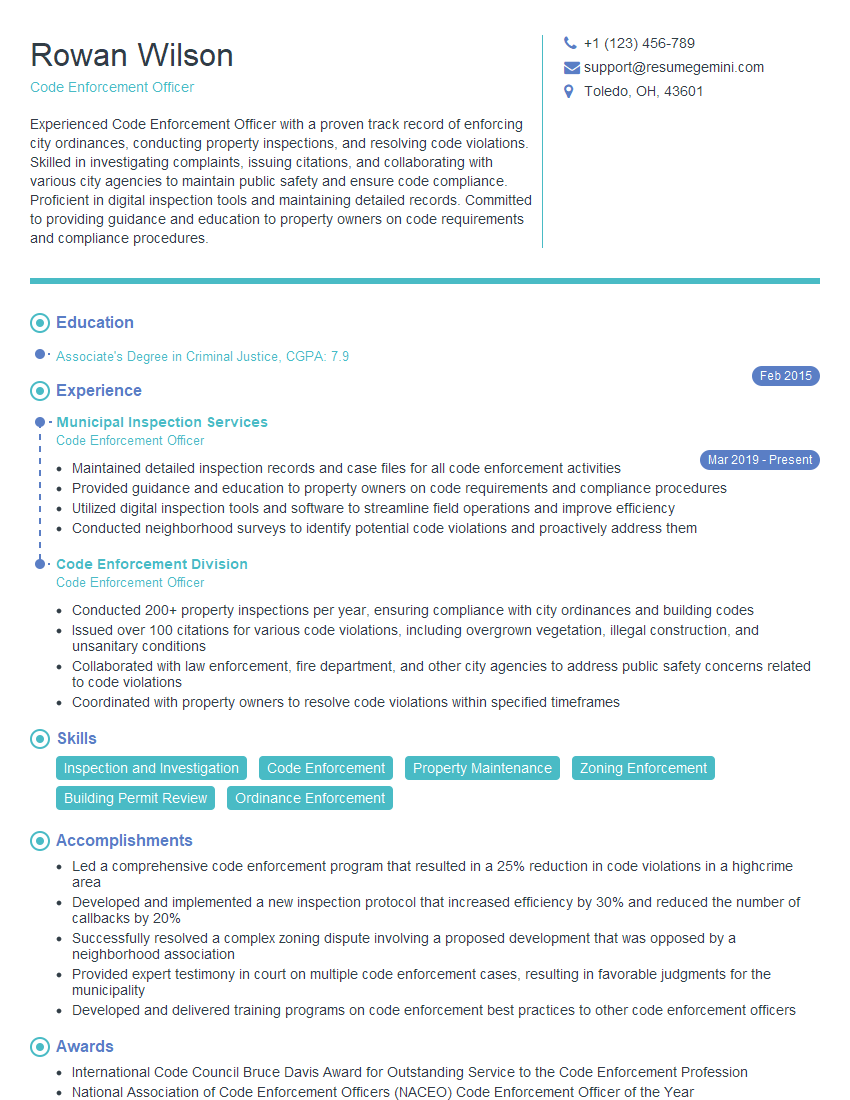
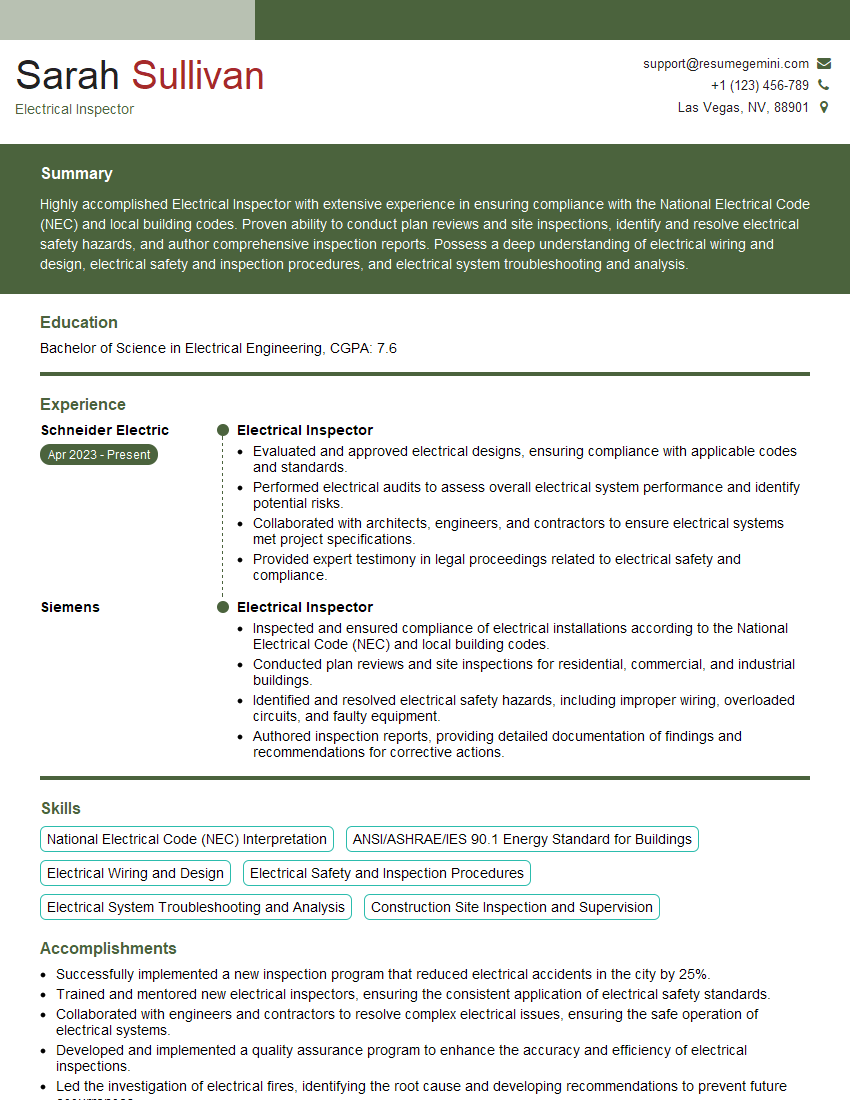
Mastering Building Codes and Standards (NEC, IEC) is crucial for career advancement in the electrical and construction industries. A strong understanding of these codes demonstrates professionalism, competence, and a commitment to safety. To significantly enhance your job prospects, create an ATS-friendly resume that effectively highlights your skills and experience. ResumeGemini is a trusted resource that can help you build a compelling and professional resume tailored to the specific demands of the Building Codes and Standards field. Examples of resumes tailored to Building Codes and Standards (NEC, IEC) roles are available to help you get started.

Explore more articles
Users Rating of Our Blogs
Share Your Experience
We value your feedback! Please rate our content and share your thoughts (optional).
What Readers Say About Our Blog
Very informative content, great job.
good