Are you ready to stand out in your next interview? Understanding and preparing for Environmental Compliance and Conservation interview questions is a game-changer. In this blog, we’ve compiled key questions and expert advice to help you showcase your skills with confidence and precision. Let’s get started on your journey to acing the interview.
Questions Asked in Environmental Compliance and Conservation Interview
Q 1. Explain the key components of an Environmental Management System (EMS).
An Environmental Management System (EMS) is a framework that helps organizations systematically manage their environmental impacts. Think of it as a roadmap for sustainability. It’s not a one-size-fits-all solution; it needs to be tailored to the specific context of the organization and its activities.
- Environmental Policy: This is the foundation – a formal statement of the organization’s commitment to environmental protection. It outlines its goals, objectives, and principles. For example, a policy might commit to reducing carbon emissions by 20% within five years.
- Planning: This involves identifying environmental aspects (elements of the organization’s activities that can interact with the environment) and impacts (any changes to the environment resulting from those activities). A manufacturing plant might identify wastewater discharge as an aspect and water pollution as a potential impact. Based on these, objectives and targets are set, such as reducing wastewater pollutants to specific limits.
- Implementation and Operation: This phase focuses on putting the plan into action. It involves establishing roles and responsibilities, providing training, and implementing procedures to control environmental aspects. This might include installing new pollution control equipment, implementing a waste segregation program, or training employees on proper chemical handling.
- Checking and Corrective Action: Regular monitoring and measurement are crucial to track progress toward targets. Audits, inspections, and data analysis help to identify non-conformances. If issues arise, corrective actions are implemented to prevent recurrence. For instance, if an audit reveals a spill, the organization will investigate, implement corrective measures, and review procedures to prevent future spills.
- Management Review: This is a high-level review of the EMS performance. Management examines the effectiveness of the system, considers opportunities for improvement, and ensures the system remains aligned with the organization’s overall strategy. The management review might identify areas where resource allocation needs to be adjusted or where improvements in technology are needed.
Q 2. Describe your experience with ISO 14001 or other environmental standards.
I have extensive experience with ISO 14001, having led the implementation and certification process for several organizations across diverse sectors. My involvement spanned all stages, from initial gap analysis and documentation development to internal audits, management reviews, and ultimately, successful certification. I’ve worked with manufacturing companies to reduce their waste generation, construction firms to manage their emissions, and even with agricultural businesses to improve their water management practices. In each case, the key was understanding the specific environmental challenges and tailoring the EMS to address those challenges effectively. I’m also familiar with other environmental standards such as EMAS (Eco-Management and Audit Scheme) in Europe, and understand the nuances between these different frameworks and how to navigate the respective requirements.
For example, in one project, we identified significant energy waste in a manufacturing facility’s production process. By implementing ISO 14001 principles, we were able to identify and implement energy-saving measures, resulting in a 15% reduction in energy consumption and a considerable cost saving for the company. This was achieved through a combination of improved process efficiency, equipment upgrades, and employee training.
Q 3. How do you conduct an environmental audit?
Conducting an environmental audit involves a systematic examination of an organization’s environmental performance against established standards, regulations, or internal objectives. It’s akin to a health check for the environment. The process typically involves these steps:
- Planning: Defining the scope, objectives, and methodology. This stage specifies which areas will be audited, the relevant regulations and standards, and the audit team’s expertise.
- Document Review: Examining environmental policies, permits, procedures, and records to understand the organization’s environmental management system.
- Site Visit and Interviews: Conducting on-site observations, inspections, and interviews with personnel to gather evidence and verify compliance. This might involve checking equipment operation, waste management practices, and pollution control measures.
- Data Analysis: Analyzing collected data to identify non-conformances, areas for improvement, and overall environmental performance.
- Reporting: Preparing a comprehensive audit report outlining findings, conclusions, and recommendations for corrective actions. The report should clearly identify non-compliances, significant observations, and best practice suggestions.
- Follow-up: Verifying that corrective actions are implemented and effective.
A well-conducted audit helps organizations identify environmental risks, improve their performance, and ensure compliance with legal requirements. The findings of an audit should be used constructively to develop an action plan for continuous environmental improvement.
Q 4. What are the main environmental regulations in [relevant region/country]?
(This answer will need to be customized to a specific region/country. The following is a general example for the United States.)
The main environmental regulations in the United States are complex and multifaceted, varying by state and local jurisdictions. Key federal regulations include:
- Clean Air Act (CAA): Regulates air emissions from stationary and mobile sources. It sets standards for pollutants like sulfur dioxide, nitrogen oxides, and particulate matter.
- Clean Water Act (CWA): Regulates the discharge of pollutants into waters of the United States. It establishes water quality standards and regulates wastewater treatment.
- Resource Conservation and Recovery Act (RCRA): Governs the management of hazardous and non-hazardous waste, from generation to disposal. It includes regulations on waste handling, storage, transportation, and disposal.
- Comprehensive Environmental Response, Compensation, and Liability Act (CERCLA): Also known as Superfund, it addresses the cleanup of hazardous waste sites.
- Endangered Species Act (ESA): Protects endangered and threatened species and their habitats.
Beyond these federal laws, states have their own environmental regulations that often add more stringent requirements. It is crucial to be aware of all applicable federal, state, and local regulations to ensure full compliance.
Q 5. How do you ensure compliance with environmental permits and licenses?
Ensuring compliance with environmental permits and licenses is paramount. This involves a proactive and systematic approach. First, we need to meticulously identify all applicable permits and licenses required for the organization’s operations. This may involve engaging with regulatory agencies to ensure complete understanding of the requirements.
Then, a robust monitoring and reporting system should be in place to track key parameters defined in the permits, such as emission levels, wastewater discharge volumes and quality, and waste generation quantities. Any deviations from permitted limits need to be investigated promptly and documented. Regular internal audits and self-inspections are crucial for identifying potential non-compliances before they escalate into major problems. This involves reviewing operational procedures, maintaining accurate records, and conducting regular equipment checks.
Finally, effective communication with regulatory agencies is essential. Regular reporting, prompt notification of any incidents or deviations, and proactive engagement with inspectors are all crucial for maintaining a positive relationship and demonstrating a commitment to compliance. Think of it like a partnership with the regulatory agency – it’s not just about complying with their rules; it’s about showing that you are actively working towards environmental protection.
Q 6. Describe your experience with environmental impact assessments (EIAs).
My experience with Environmental Impact Assessments (EIAs) is extensive. I’ve been involved in numerous EIAs across various project types, from large-scale infrastructure projects like highway construction to smaller developments such as industrial plant expansions. My role typically includes leading the EIA team, conducting baseline studies, assessing potential environmental impacts, developing mitigation measures, and preparing the EIA report for regulatory review.
A typical EIA process involves:
- Scoping: Defining the project’s scope and identifying potential environmental impacts.
- Baseline Studies: Collecting data on the existing environmental conditions.
- Impact Assessment: Predicting the likely environmental impacts of the project.
- Mitigation Measures: Developing strategies to minimize or avoid negative impacts.
- Public Consultation: Engaging with stakeholders and the public to obtain feedback.
- Report Preparation: Compiling the assessment findings into a comprehensive report for regulatory review.
In one project involving a new hydropower dam, we identified potential impacts on fish populations and aquatic habitats. Our EIA developed a comprehensive mitigation strategy that included fish passage facilities, habitat restoration plans, and flow management protocols. The result was a project design that minimized environmental impact while still meeting its energy production goals.
Q 7. Explain the process of obtaining environmental permits.
Obtaining environmental permits is a complex process that varies depending on the project, location, and type of permit. It typically involves:
- Application Preparation: Gathering all necessary information and completing the permit application forms. This requires a thorough understanding of the relevant regulations and often involves extensive documentation, including technical reports and environmental studies.
- Regulatory Agency Submission: Submitting the completed application to the appropriate regulatory agency.
- Agency Review: The agency reviews the application, may request additional information, and conducts its own assessment of the project’s potential environmental impacts.
- Public Comment Period: In many cases, there’s a public comment period, allowing stakeholders and the public to provide feedback on the project.
- Permit Issuance or Denial: Based on the review, the agency issues a permit with specific conditions or denies the application.
- Compliance Monitoring: Once the permit is issued, the organization must adhere to its terms and conditions, and this will often involve ongoing monitoring and reporting requirements.
The process can be lengthy and requires detailed attention to detail. Working with experienced environmental consultants is often beneficial, particularly for complex projects, to navigate the regulatory landscape and ensure a smooth and successful permit application process.
Q 8. How do you handle environmental non-compliance incidents?
Handling environmental non-compliance incidents requires a swift, systematic approach prioritizing immediate corrective action and preventing recurrence. My process begins with immediate assessment of the situation to determine the extent of the non-compliance, potential environmental impact, and any immediate safety hazards. This includes identifying the root cause of the incident, whether it’s equipment malfunction, inadequate training, or procedural failure.
Next, I implement corrective actions to address the immediate problem. This might involve shutting down operations, containing a spill, or initiating emergency response protocols. Simultaneously, I begin a thorough investigation, documenting all aspects of the incident, interviewing personnel involved, and reviewing relevant records. This investigation helps to pinpoint the exact cause and contributing factors.
Once the immediate problem is addressed, I develop and implement a comprehensive corrective action plan (CAP). This CAP outlines specific steps to prevent similar incidents from happening again, including improved training, updated Standard Operating Procedures (SOPs), equipment upgrades, or enhanced monitoring systems. The CAP is meticulously documented and reviewed for effectiveness. Finally, I ensure proper reporting to relevant regulatory agencies, following all legally mandated reporting timelines and procedures. I have successfully managed numerous non-compliance events throughout my career, consistently prioritizing environmental protection, regulatory compliance, and employee safety.
For example, during my time at [Previous Company Name], a minor chemical spill occurred due to a faulty valve. My immediate response involved containment, cleanup, and notification of the EPA. Following a thorough investigation, we implemented a preventative maintenance schedule for valves and updated our spill response plan, which successfully prevented any future incidents.
Q 9. What is your experience with environmental monitoring and reporting?
Environmental monitoring and reporting are crucial for ensuring regulatory compliance and assessing the effectiveness of environmental management programs. My experience encompasses designing, implementing, and managing comprehensive environmental monitoring programs across various industries. This involves selecting appropriate sampling methods, analyzing data, and preparing detailed reports for regulatory agencies and internal stakeholders. I’m proficient in using a range of monitoring equipment, from basic field instruments to sophisticated analytical tools.
My reporting experience covers various regulatory frameworks, including but not limited to the Clean Water Act, Clean Air Act, and Resource Conservation and Recovery Act (RCRA). I have prepared numerous reports, including discharge monitoring reports (DMRs), air emissions reports, waste characterization reports, and environmental audits. I utilize data management software to organize, analyze, and visualize data effectively, ensuring accurate and timely reporting.
For instance, at [Previous Company Name], I developed and managed a comprehensive air emissions monitoring program, ensuring compliance with state and federal regulations. This involved overseeing the installation and calibration of monitoring equipment, collecting and analyzing samples, and preparing and submitting the required reports to the regulatory agencies. The program significantly improved our understanding of our environmental footprint and enabled us to proactively address any potential issues.
Q 10. Describe your experience with waste management and disposal practices.
Waste management and disposal are critical components of environmental compliance. My experience spans diverse waste streams, including hazardous and non-hazardous waste. I am adept at implementing and managing waste minimization programs, selecting appropriate waste disposal methods based on waste characteristics and regulatory requirements, and ensuring the safe and legal disposal of all waste generated. This involves working with waste haulers, ensuring proper documentation, and managing waste manifests.
I have practical experience with various waste management techniques, including recycling, reuse, treatment, and disposal. My expertise also covers the selection of appropriate disposal facilities, ensuring compliance with all permits and regulations. I’m familiar with regulatory requirements under RCRA, including the proper classification, labeling, storage, and transportation of hazardous waste.
At [Previous Company Name], I led a waste reduction initiative that resulted in a 20% reduction in hazardous waste generation over two years. This involved implementing a comprehensive waste audit, training employees on proper waste segregation, and negotiating contracts with waste recycling facilities to improve cost-effectiveness.
Q 11. How do you manage environmental risks and liabilities?
Managing environmental risks and liabilities involves a proactive approach aimed at preventing incidents and mitigating potential consequences. My strategy involves identifying potential environmental risks through a combination of site-specific assessments, regulatory reviews, and best practices evaluations. I utilize risk assessment methodologies like HAZOP (Hazard and Operability Study) and FMEA (Failure Mode and Effects Analysis) to determine potential hazards and their likelihood and severity. This helps in prioritizing risk mitigation efforts.
Risk mitigation strategies I employ include implementing preventative controls such as engineering controls (equipment upgrades, process modifications), administrative controls (training, procedures), and personal protective equipment (PPE). I also develop contingency plans to address potential incidents, outlining emergency response protocols and cleanup procedures. Furthermore, I ensure adequate environmental insurance coverage and maintain accurate records for tracking environmental liabilities.
In my experience at [Previous Company Name], I identified and mitigated the risk of soil contamination from a leaking underground storage tank (UST). This involved conducting a site assessment, remediating the contaminated soil, and implementing a comprehensive monitoring plan to prevent future contamination. This proactive approach prevented potential costly legal liabilities and environmental damage.
Q 12. Explain your understanding of pollution prevention strategies.
Pollution prevention is a cornerstone of responsible environmental management, focusing on preventing pollution at its source rather than merely treating it after it’s generated. This approach is fundamentally more cost-effective and environmentally sound than dealing with pollution after it occurs. My understanding of pollution prevention encompasses various strategies, including process modifications, equipment upgrades, material substitution, and improved operational practices.
Examples of pollution prevention strategies include implementing closed-loop systems to recycle materials, using less hazardous chemicals, optimizing energy efficiency to reduce emissions, and implementing better waste management practices. Implementing these strategies requires a deep understanding of the processes involved, material flow analysis, and an assessment of the potential environmental impacts of different materials and processes.
During my work at [Previous Company Name], we implemented a pollution prevention project that focused on reducing water consumption and wastewater discharge. By upgrading our processing equipment and implementing water-saving measures, we significantly reduced our water footprint and minimized the discharge of pollutants into the environment. This not only met our environmental goals but also led to cost savings.
Q 13. What are your experiences with remediation of contaminated sites?
Remediation of contaminated sites requires a detailed understanding of the type and extent of contamination, applicable regulatory requirements, and various remediation technologies. My experience involves overseeing all phases of site remediation, from initial site characterization and investigation to the implementation of remedial actions and long-term monitoring. This includes managing contractors, ensuring compliance with regulatory permits, and reporting progress to regulatory agencies.
I’m familiar with a wide range of remediation technologies, including excavation and disposal, bioremediation, phytoremediation, soil vapor extraction, and pump and treat systems. The selection of appropriate technologies depends on several factors, including the type of contaminant, site geology, hydrogeology, and regulatory requirements. A thorough understanding of these factors is critical for successful remediation.
A notable example from my career involved the remediation of a site contaminated with petroleum hydrocarbons. This required conducting a detailed site assessment, implementing soil vapor extraction, and monitoring groundwater quality. The project was successfully completed on time and budget, resulting in the site’s successful redevelopment.
Q 14. Describe your knowledge of relevant environmental legislation.
My knowledge of environmental legislation is comprehensive, encompassing federal, state, and local regulations. I am intimately familiar with key environmental laws, including the Clean Air Act (CAA), Clean Water Act (CWA), Resource Conservation and Recovery Act (RCRA), Comprehensive Environmental Response, Compensation, and Liability Act (CERCLA or Superfund), and the Endangered Species Act (ESA). My understanding goes beyond simply knowing the laws; it includes understanding their practical implications for various industries and situations.
I stay updated on changes in legislation and regulatory guidance through continuous professional development and engagement with regulatory agencies. This ensures that my environmental management strategies remain compliant and effective. I also understand the importance of interpreting and applying these regulations within the context of specific industrial operations and site-specific conditions.
For example, I have successfully guided numerous clients through the permitting processes required under the CWA and RCRA, ensuring their operations remain in full compliance with the law. My knowledge of these regulations has consistently been instrumental in preventing environmental violations and protecting the environment.
Q 15. How do you stay updated on changes in environmental regulations?
Staying current with environmental regulations requires a multi-pronged approach. It’s not enough to simply read a law once; the regulatory landscape is constantly evolving. I utilize a combination of strategies to ensure I’m always up-to-date.
Subscription services: I subscribe to reputable legal and environmental news sources that provide updates and analysis on changes in regulations. These services often offer alerts for relevant changes in specific jurisdictions.
Professional organizations: Active membership in organizations like the Environmental Law Institute (ELI) or the Society of Environmental Toxicology and Chemistry (SETAC) provides access to webinars, conferences, and publications highlighting the latest developments.
Government websites: I regularly check the websites of relevant environmental agencies – like the EPA in the US, or equivalent agencies in other countries – for updates to regulations, guidance documents, and enforcement actions. This includes monitoring the Federal Register (or similar publications) for proposed and finalized rules.
Networking: Attending industry conferences and workshops, and maintaining relationships with colleagues and experts in the field, allows for the exchange of information and insights on current challenges and evolving regulations.
For example, recently, I tracked changes in California’s water quality regulations through the State Water Resources Control Board website and relevant newsletters, enabling proactive adjustments to a client’s discharge permits.
Career Expert Tips:
- Ace those interviews! Prepare effectively by reviewing the Top 50 Most Common Interview Questions on ResumeGemini.
- Navigate your job search with confidence! Explore a wide range of Career Tips on ResumeGemini. Learn about common challenges and recommendations to overcome them.
- Craft the perfect resume! Master the Art of Resume Writing with ResumeGemini’s guide. Showcase your unique qualifications and achievements effectively.
- Don’t miss out on holiday savings! Build your dream resume with ResumeGemini’s ATS optimized templates.
Q 16. What is your experience with environmental due diligence?
Environmental due diligence is a critical process for identifying and assessing potential environmental liabilities associated with a property or business transaction. My experience encompasses all phases of this process, from initial site reconnaissance to remediation planning. I’ve conducted due diligence for various clients, including real estate developers, corporations undergoing mergers and acquisitions, and lenders.
Phase I Environmental Site Assessments (ESAs): I’ve managed numerous Phase I ESAs, involving historical records review, site inspections, and interviews with stakeholders to identify potential environmental concerns. This includes interpreting historical maps, researching past industrial uses, and recognizing potential sources of contamination.
Phase II ESAs: When Phase I reveals potential contamination, I’ve overseen the design and execution of Phase II investigations. This includes soil and groundwater sampling, laboratory analysis, and interpretation of results to determine the extent and nature of contamination.
Remediation planning: Based on the findings of Phase II investigations, I’ve helped develop remediation plans that comply with applicable environmental regulations and industry best practices. These plans may involve various technologies, from soil excavation and treatment to in-situ remediation techniques.
For instance, during a recent acquisition, my due diligence identified a former dry cleaning facility on the property. This led to a Phase II investigation that confirmed soil contamination requiring remediation, ultimately impacting the transaction’s price and terms.
Q 17. How do you communicate complex environmental information to diverse audiences?
Communicating complex environmental information effectively requires tailoring the message to the specific audience. I utilize various strategies to ensure clear and concise understanding, regardless of the audience’s background.
Plain language: Avoiding technical jargon and using clear, concise language ensures accessibility for all audiences. I replace complex terms with simple explanations where appropriate.
Visual aids: Charts, graphs, maps, and infographics can simplify complex data and make it easier to understand. I use these visual aids to highlight key findings and trends.
Interactive presentations: Engaging presentations with interactive elements can maintain audience interest and promote understanding. I use storytelling techniques to make the information more relatable and memorable.
Targeted communication channels: Using the most appropriate communication channel is crucial. A technical report is appropriate for experts, whereas a concise fact sheet might be better for the general public. I choose channels strategically based on the audience.
For example, when communicating with a community about a proposed landfill, I used a combination of infographics explaining potential environmental impacts, interactive maps showcasing the project’s location, and community meetings to address concerns directly.
Q 18. How do you prioritize environmental projects and initiatives?
Prioritizing environmental projects and initiatives requires a strategic approach that balances urgency, impact, and resource availability. I typically use a framework that considers several key factors:
Regulatory compliance: Projects addressing immediate regulatory deadlines or potential non-compliance issues are prioritized to avoid penalties and maintain legal standing.
Environmental risk: Projects mitigating significant environmental risks (e.g., potential contamination, habitat loss) are given high priority due to potential long-term consequences.
Cost-benefit analysis: Weighing the potential environmental benefits against the costs involved helps to prioritize projects that offer the greatest return on investment.
Stakeholder input: Incorporating input from relevant stakeholders (e.g., community members, regulatory agencies) ensures that the selected projects align with broader community needs and goals.
Resource availability: Considering available funding, personnel, and time constraints ensures that projects are feasible and can be completed effectively.
For instance, if a company faces imminent regulatory fines due to outdated equipment, addressing this issue would be prioritized over a long-term sustainability project, even if the latter holds greater long-term benefits.
Q 19. What are your experience with environmental data analysis and reporting?
My experience with environmental data analysis and reporting involves collecting, cleaning, analyzing, and presenting environmental data to support decision-making and regulatory compliance. I’m proficient in using various software tools and statistical methods to manage and interpret this data.
Data collection and management: I have experience collecting data from various sources including field measurements, laboratory analyses, and environmental databases. I employ data management techniques to ensure data quality and integrity.
Statistical analysis: I use statistical software (e.g., R, SPSS) to analyze environmental data, identifying trends, correlations, and significant differences. This helps to inform decision-making and support conclusions.
Data visualization: I create clear and concise visualizations (charts, graphs, maps) to effectively communicate complex environmental data to both technical and non-technical audiences.
Report writing: I’ve authored numerous environmental reports summarizing data analysis, findings, and recommendations. These reports comply with relevant regulatory requirements and industry best practices.
For example, I recently analyzed water quality data from multiple monitoring wells to assess the effectiveness of a groundwater remediation project. This involved statistical modeling to predict future contaminant levels and inform ongoing remediation efforts.
Q 20. Describe your experience with stakeholder engagement on environmental matters.
Stakeholder engagement is crucial for successful environmental projects. My experience involves building strong relationships and fostering open communication with diverse stakeholders to gain their support and address their concerns.
Identifying stakeholders: I begin by identifying all relevant stakeholders, including community members, regulatory agencies, NGOs, and affected businesses. This ensures that no group is overlooked.
Communication strategies: I tailor communication approaches to specific stakeholders, using appropriate channels and language to effectively convey information and address concerns. This might involve public meetings, workshops, or individual consultations.
Conflict resolution: I’m experienced in resolving conflicts between stakeholders, facilitating discussions, and finding common ground. This requires active listening, empathy, and a willingness to compromise.
Collaboration and partnerships: I build collaborative partnerships with stakeholders, leveraging their expertise and perspectives to improve project design and implementation. This helps to ensure that projects are socially acceptable and environmentally sound.
For instance, during a community consultation for a renewable energy project, I successfully addressed concerns regarding potential noise pollution and visual impacts through open dialogue, data transparency, and collaborative mitigation strategies.
Q 21. What is your experience with environmental training and awareness programs?
Developing and delivering effective environmental training and awareness programs is essential for fostering a culture of environmental responsibility. My experience includes designing, implementing, and evaluating various training initiatives for diverse audiences.
Needs assessment: I start by assessing the specific training needs of the target audience. This involves identifying knowledge gaps, skill deficiencies, and areas for improvement.
Curriculum development: I develop comprehensive training curricula that are engaging, informative, and tailored to the specific learning objectives. This might involve interactive workshops, online modules, or on-the-job training.
Training delivery: I deliver training using various methods, including presentations, group discussions, case studies, and simulations. I use different approaches to cater to different learning styles.
Evaluation and improvement: I evaluate the effectiveness of training programs through post-training assessments, feedback surveys, and observation of on-the-job performance. This information informs future training program improvements.
For example, I developed a comprehensive environmental awareness program for a manufacturing plant, covering topics such as waste management, pollution prevention, and regulatory compliance. This program significantly improved the plant’s environmental performance and employee engagement.
Q 22. How would you address a conflict between environmental compliance and production targets?
Balancing environmental compliance with production targets often presents a significant challenge. It’s not a matter of choosing one over the other, but rather finding innovative solutions that minimize environmental impact without compromising production goals. My approach involves a three-pronged strategy:
- Optimization: Identifying areas within the production process where environmental impact can be reduced without significantly affecting output. This could involve implementing more efficient energy consumption methods, reducing waste generation through process improvement, or adopting cleaner production technologies. For example, a manufacturing plant might switch to a closed-loop water system, recycling water used in production rather than constantly drawing fresh water and discharging wastewater.
- Technological Innovation: Investing in and implementing technologies that enhance both environmental performance and productivity. This could range from advanced pollution control systems to automation that minimizes human error and resource consumption. A great example is the use of renewable energy sources, like solar panels, to power production facilities, simultaneously reducing carbon emissions and energy costs.
- Strategic Planning and Communication: Integrating environmental considerations into the overall business strategy from the outset. This requires open communication between environmental compliance teams, production teams, and upper management to identify and resolve potential conflicts proactively. Clear metrics and targets, regularly reviewed and adjusted, are essential to track progress and maintain accountability. Regular environmental audits are invaluable in this process.
Ultimately, a successful approach focuses on viewing environmental compliance not as a constraint, but as an opportunity to improve efficiency and create a more sustainable and ultimately more profitable business model.
Q 23. Explain your understanding of lifecycle assessment (LCA).
Lifecycle Assessment (LCA) is a comprehensive methodology used to evaluate the environmental impacts associated with a product, process, or service throughout its entire life cycle. This ‘cradle-to-grave’ perspective includes raw material acquisition, manufacturing, transportation, use, and end-of-life disposal or recycling. It’s a critical tool for making informed decisions about sustainability.
An LCA typically involves several stages:
- Goal and Scope Definition: Clearly defining the product’s boundaries, the intended use of the LCA, and the specific environmental impacts to be assessed (e.g., greenhouse gas emissions, water consumption, waste generation).
- Inventory Analysis: Quantifying the inputs and outputs of energy, materials, and emissions associated with each stage of the life cycle. This often requires data collection from various sources and potentially modeling.
- Impact Assessment: Evaluating the environmental significance of the identified inputs and outputs, using standardized methods to categorize and weigh the different impacts. This might involve using software tools to model environmental impacts.
- Interpretation: Analyzing the results of the impact assessment to identify the ‘hotspots’ or stages of the life cycle that contribute most significantly to the overall environmental burden and provide recommendations for improvement.
For example, an LCA of a plastic bottle would consider the energy used to extract and process petroleum, the manufacturing of the bottle, transportation to stores, consumer use, and finally, its disposal or recycling. The results might reveal that a significant portion of the environmental impact stems from the production of the plastic itself, leading to recommendations for exploring alternative materials or recycling strategies.
Q 24. How do you measure the effectiveness of environmental programs?
Measuring the effectiveness of environmental programs requires a multifaceted approach that combines quantitative and qualitative data. Simply put, we need to know *what* we’re doing, and *if* it is working.
- Key Performance Indicators (KPIs): Establishing specific, measurable, achievable, relevant, and time-bound (SMART) KPIs is crucial. These metrics will vary depending on the specific program’s goals. Examples include reductions in greenhouse gas emissions, improvements in waste diversion rates, decreases in water consumption, or increases in the number of employees participating in environmental training programs. The success is measured against established baseline values.
- Compliance Audits: Regular audits ensure that environmental regulations are being met and identify areas needing improvement. These audits would need to be conducted by trained and impartial individuals or teams.
- Employee Surveys and Feedback: Gathering input from employees involved in or affected by the programs provides valuable qualitative data and identifies potential barriers to success. Understanding employee attitudes and participation levels is crucial to the ongoing success of any program. Regular feedback mechanisms help address any concerns promptly.
- Environmental Monitoring: Conducting environmental monitoring (e.g., air and water quality testing) to verify the program’s impact on the environment. This provides verifiable evidence of progress toward established targets.
The use of data visualization tools and reporting dashboards allow for regular evaluation of KPI performance and allow for timely adjustments to the environmental programs to improve their overall effectiveness.
Q 25. Describe your experience with environmental sustainability initiatives.
Throughout my career, I’ve been actively involved in a wide range of environmental sustainability initiatives. One notable example involved leading a project to reduce greenhouse gas emissions at a large manufacturing facility. This involved a comprehensive assessment of energy consumption, identifying areas for improvement through process optimization and technological upgrades, and negotiating contracts for renewable energy sources. This resulted in a 20% reduction in emissions within two years, exceeding initial targets.
Another significant experience involved developing and implementing a corporate sustainability policy for a multinational company. This encompassed establishing clear environmental goals, integrating sustainability into supply chain management, promoting employee engagement in environmental initiatives, and regularly reporting progress to stakeholders. This initiative earned the company several awards and enhanced its brand reputation.
In a smaller project, I worked with a local community group to implement a composting program, diverting organic waste from landfills and promoting sustainable waste management practices. This demonstrated the importance of engaging local communities in environmental initiatives to achieve long-term success.
Q 26. What is your approach to solving environmental problems using a multidisciplinary approach?
Solving complex environmental problems requires a truly multidisciplinary approach, drawing on expertise from various fields. My approach involves:
- Collaboration: Establishing effective communication and collaboration channels between scientists, engineers, economists, policymakers, and community members. This facilitates the sharing of knowledge, expertise, and perspectives, leading to more comprehensive and effective solutions.
- Systems Thinking: Understanding the interconnectedness of environmental issues and avoiding a narrow, siloed approach. Recognizing that environmental problems rarely exist in isolation, requires considering their wider implications and cascading effects. For instance, deforestation can lead to soil erosion, water pollution, and climate change, requiring a multifaceted strategy.
- Data Integration and Analysis: Using diverse data sources (e.g., remote sensing, environmental monitoring, socioeconomic data) to develop a holistic understanding of the problem, identify key drivers, and evaluate the effectiveness of proposed solutions. This requires understanding how different data sources can provide complementary insights.
- Adaptive Management: Recognizing that environmental systems are dynamic and complex. Implementing solutions that are flexible and adaptable, allowing for adjustments based on monitoring and feedback. This adaptive cycle ensures that the program constantly evaluates its effectiveness.
For example, addressing water scarcity requires collaboration between hydrologists, engineers, economists, and policymakers to develop strategies that balance water supply, demand management, and environmental protection. A multidisciplinary team can ensure that various aspects, from infrastructure development to public awareness campaigns, are all taken into consideration.
Q 27. How familiar are you with the use of environmental databases and software?
I am highly familiar with various environmental databases and software. My experience includes working with:
- Environmental data management systems: I’m proficient in using software to manage, analyze, and visualize large datasets related to air and water quality, waste management, and emissions inventory.
- Geographic Information Systems (GIS): I regularly utilize GIS software to map environmental data, analyze spatial patterns, and model environmental processes. This includes using ArcGIS and QGIS to visualize environmental impact and potential risks.
- Lifecycle Assessment (LCA) software: I have extensive experience using LCA software packages such as SimaPro and GaBi to conduct comprehensive environmental impact assessments of products and processes.
- Statistical software packages: I am proficient in using software like R and Python for data analysis, statistical modeling, and visualization of environmental data.
My experience with these tools allows me to effectively collect, analyze, and interpret environmental data to inform decision-making and monitor the effectiveness of environmental programs.
Q 28. Describe your experience with environmental permitting software and processes
My experience with environmental permitting software and processes is extensive. I’m familiar with various software platforms used for permit applications, tracking, and compliance management. This includes using software to streamline the preparation of permit applications, ensuring they meet regulatory requirements. I am comfortable navigating the complexities of environmental regulations and understand how to prepare the necessary documentation for various permits, such as air permits, water discharge permits, and waste management permits.
I have experience in:
- Electronic submission portals: I know how to use online platforms for submitting permit applications and interacting with regulatory agencies.
- Permit tracking and management systems: I’m adept at using software to track permit deadlines, ensure compliance with permit conditions, and generate compliance reports.
- Data analysis and reporting: I utilize the data within these systems to generate reports demonstrating compliance with environmental regulations.
Furthermore, I understand the importance of maintaining accurate records, complying with reporting requirements, and proactively addressing any permit-related issues to avoid penalties or enforcement actions. I consider maintaining good relationships with regulatory agencies essential for efficient permit processing.
Key Topics to Learn for Environmental Compliance and Conservation Interview
- Environmental Regulations and Legislation: Understanding key national and international environmental laws (e.g., Clean Water Act, Endangered Species Act) and their practical implications for businesses and industries.
- Permitting and Licensing: Navigating the process of obtaining and maintaining environmental permits, understanding compliance requirements, and addressing permit violations.
- Environmental Impact Assessment (EIA): Conducting and interpreting EIAs, understanding their role in project planning and decision-making, and mitigating potential environmental impacts.
- Pollution Prevention and Control: Implementing strategies to minimize pollution across various media (air, water, soil), including waste management, emission control, and pollution remediation techniques.
- Environmental Monitoring and Auditing: Designing and implementing environmental monitoring programs, analyzing data, conducting audits to ensure compliance, and reporting findings.
- Sustainable Resource Management: Applying principles of sustainable development to resource management, including water conservation, renewable energy, and sustainable forestry practices.
- Environmental Risk Assessment and Management: Identifying, assessing, and mitigating environmental risks associated with various activities, including chemical handling, hazardous waste management, and climate change adaptation.
- Stakeholder Engagement and Communication: Effectively communicating environmental compliance and conservation initiatives to diverse stakeholders, including government agencies, the public, and community groups.
- Data Analysis and Reporting: Proficiency in using data analysis tools to interpret environmental data, prepare compliance reports, and present findings to relevant audiences.
- Emerging Environmental Challenges: Understanding and addressing current and future environmental challenges, such as climate change, biodiversity loss, and plastic pollution.
Next Steps
Mastering Environmental Compliance and Conservation opens doors to a fulfilling and impactful career, offering diverse opportunities in both the public and private sectors. To maximize your job prospects, crafting an ATS-friendly resume is crucial. This ensures your application gets noticed by recruiters and hiring managers. ResumeGemini is a trusted resource to help you build a professional and impactful resume that highlights your skills and experience effectively. Examples of resumes tailored to Environmental Compliance and Conservation are available to help guide you in creating yours.
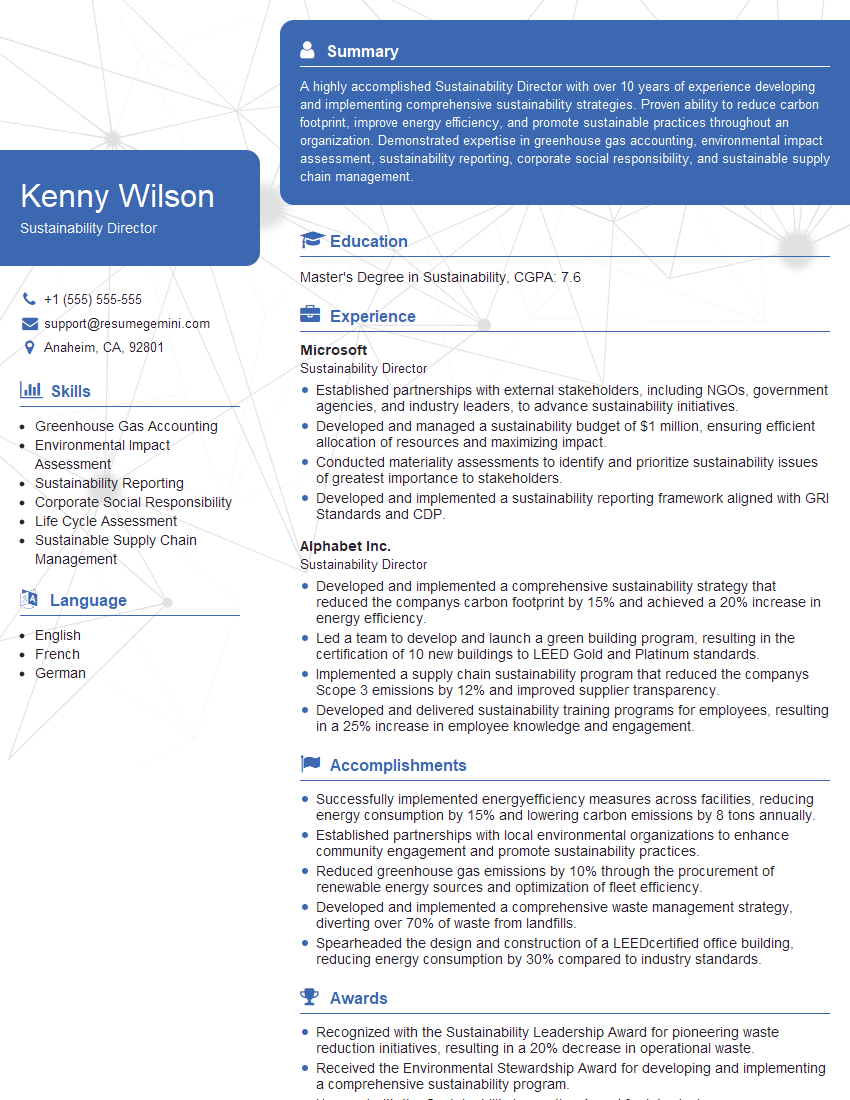
Sustainability Director Resume Sample
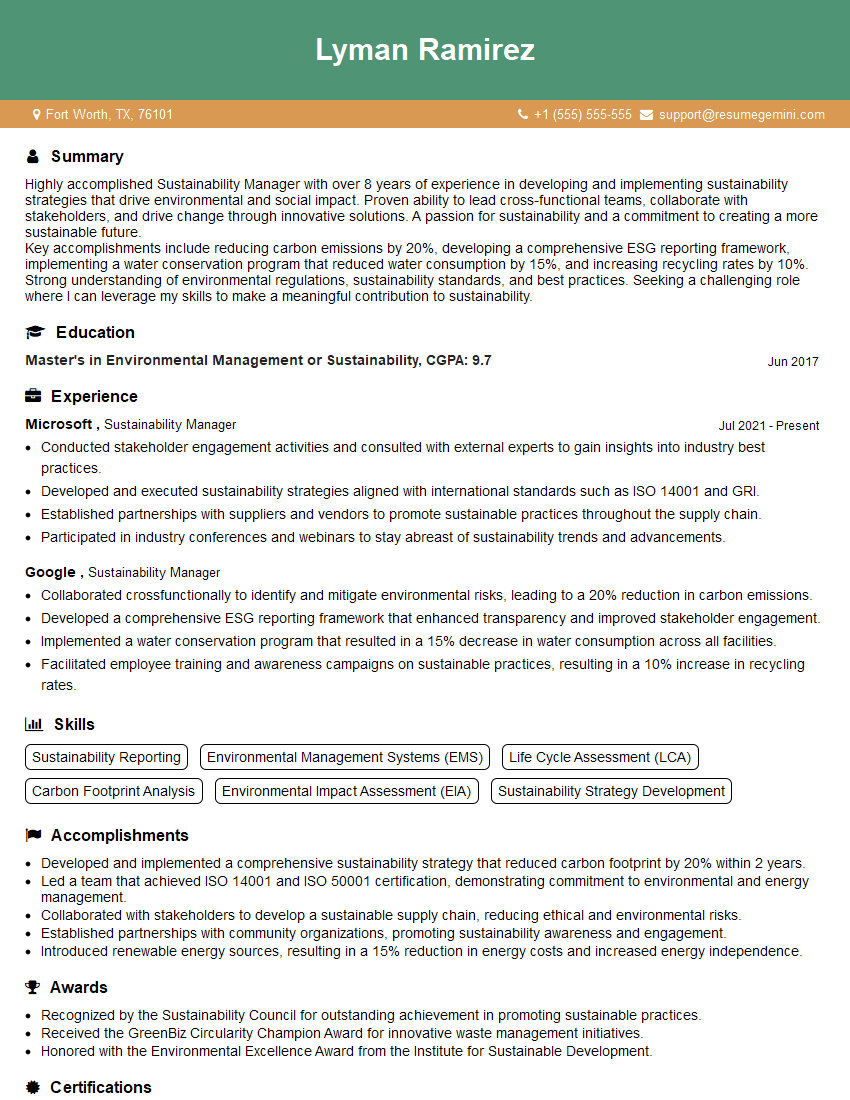
Sustainability Manager Resume Sample
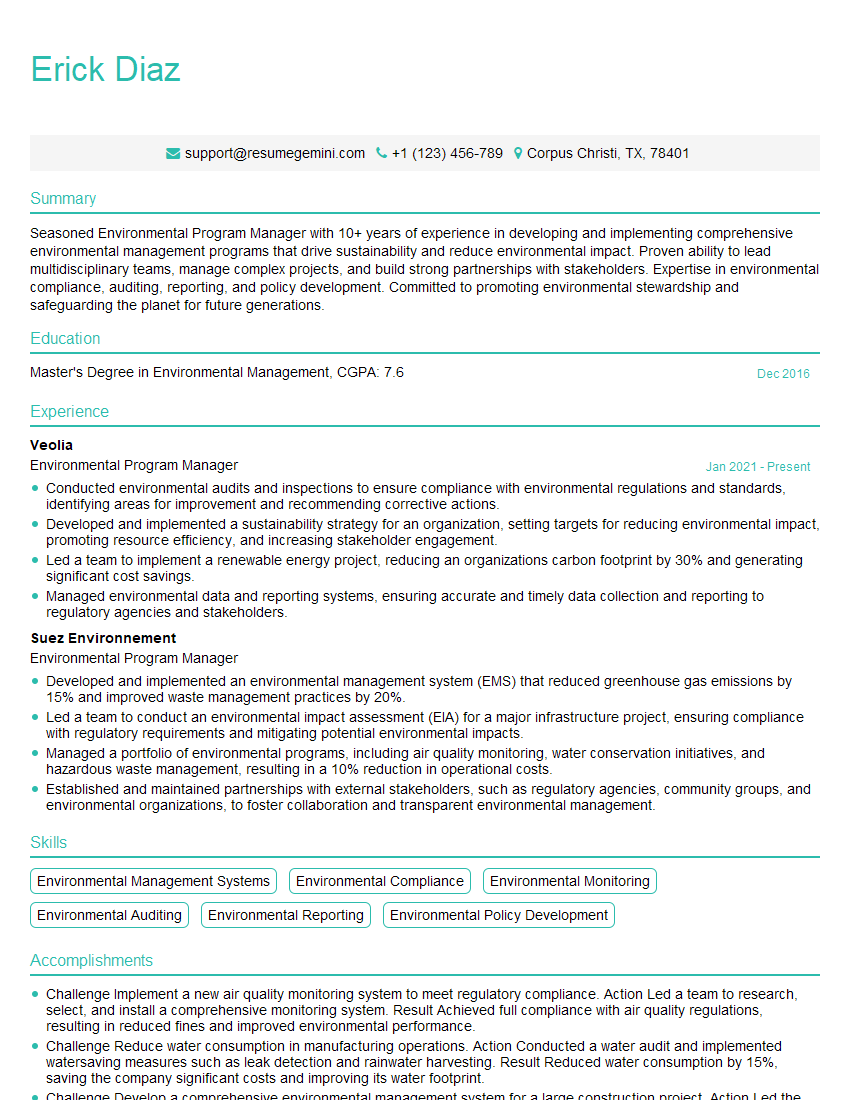
Environmental Program Manager Resume Sample
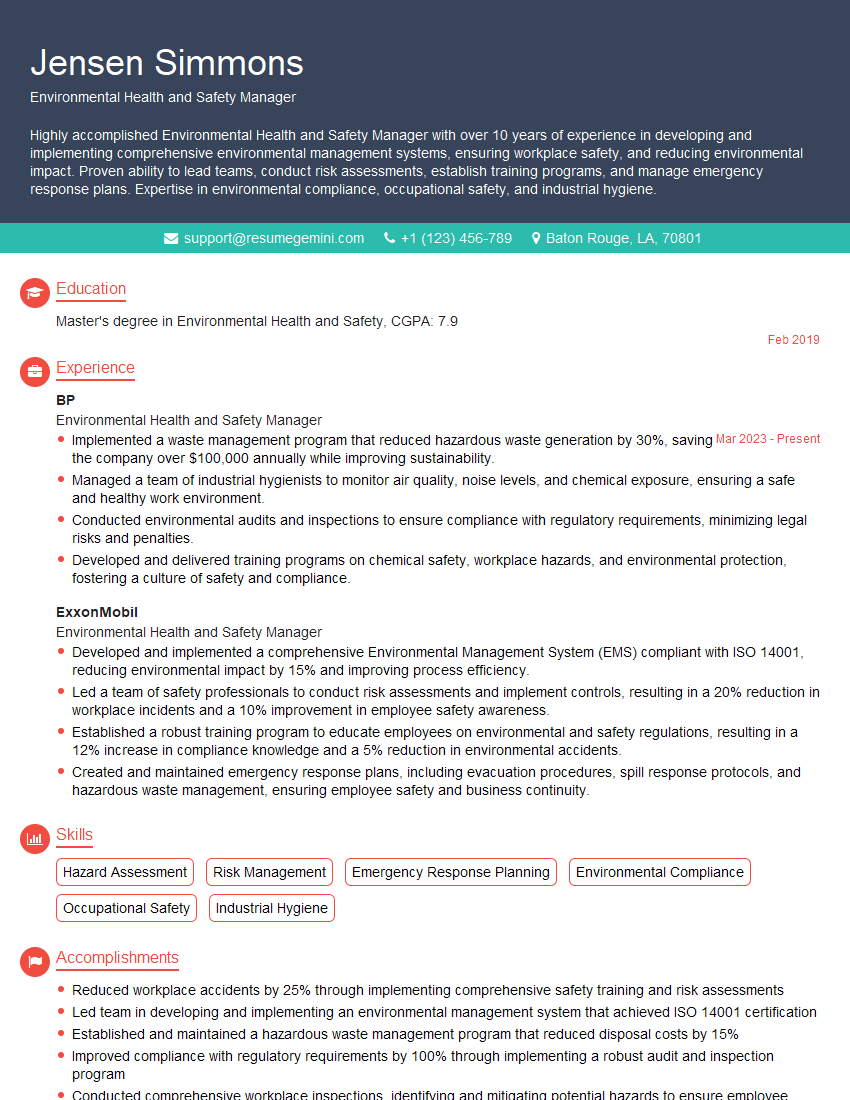
Environmental Health and Safety Manager Resume Sample
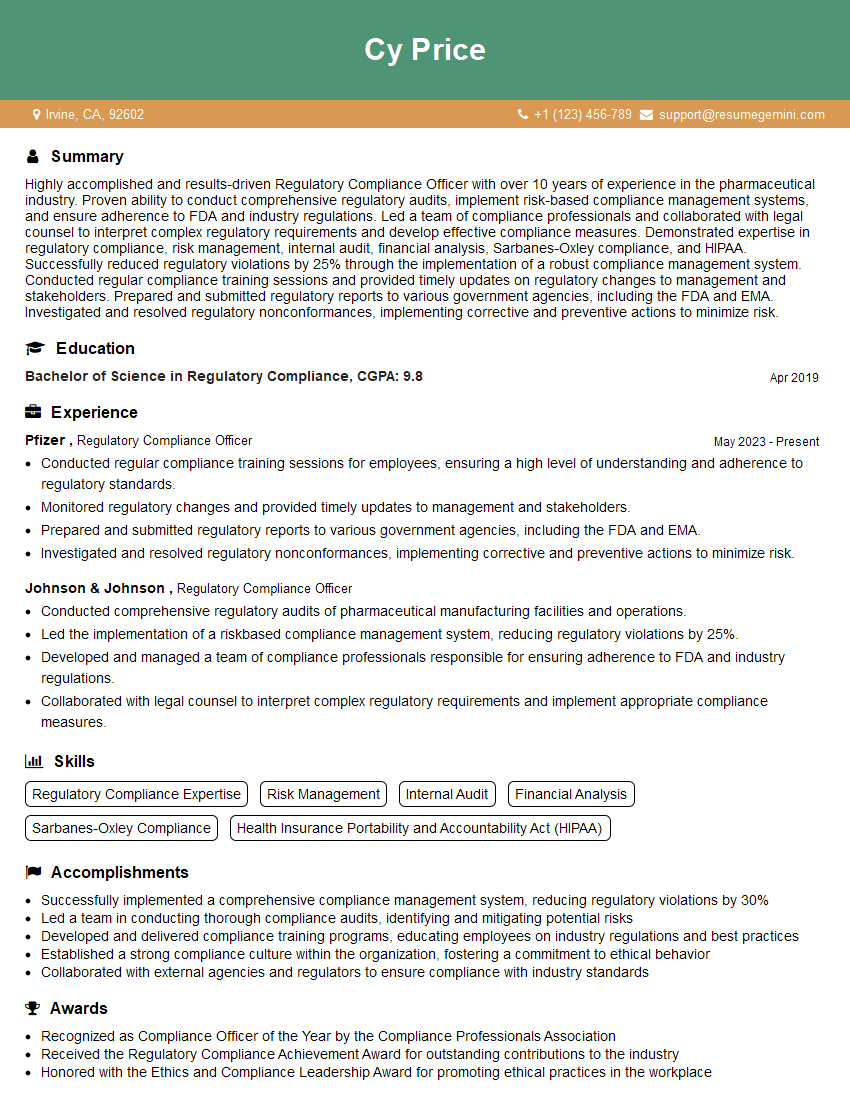
Regulatory Compliance Officer Resume Sample
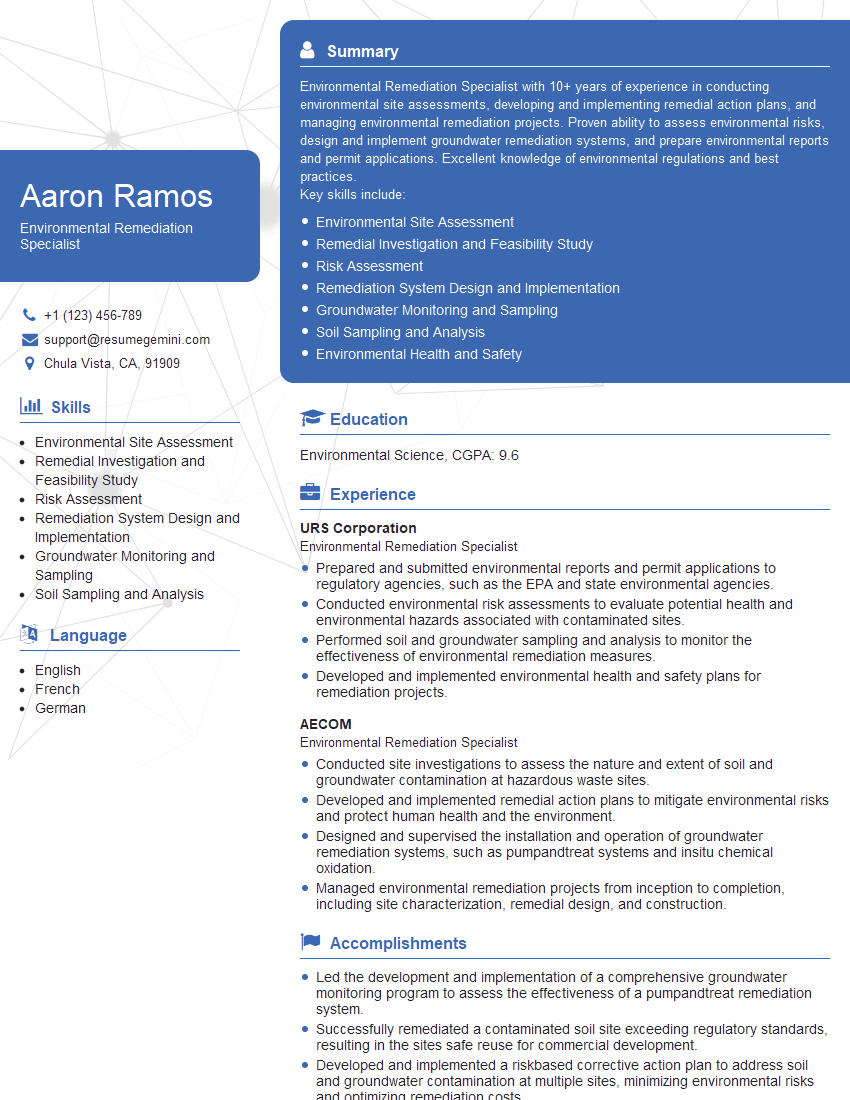
Environmental Remediation Specialist Resume Sample
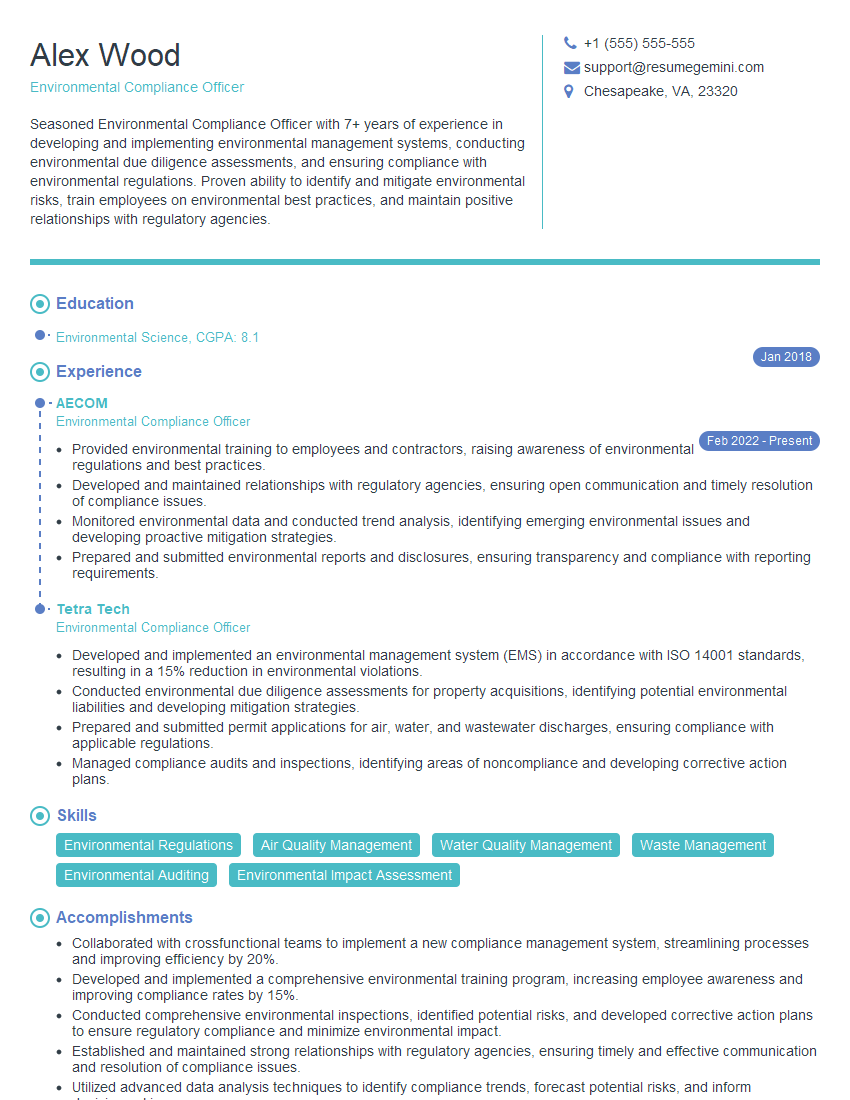
Environmental Compliance Officer Resume Sample
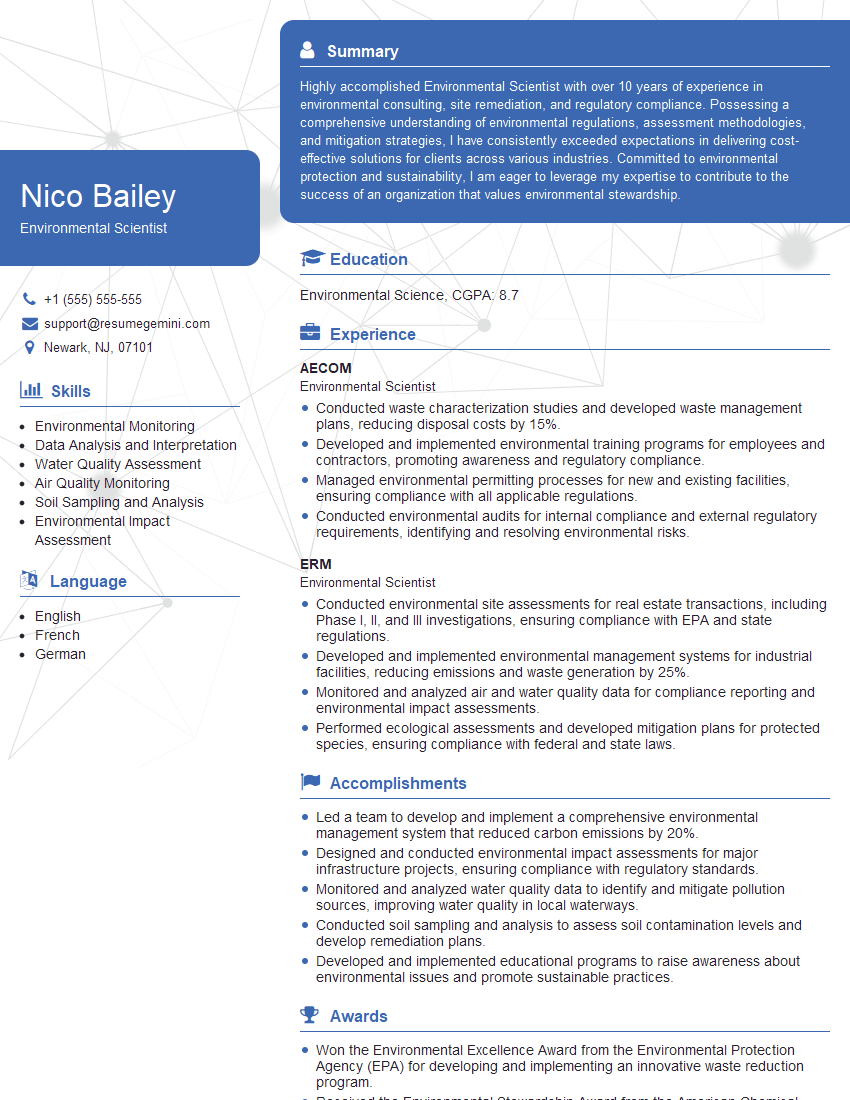
Environmental Scientist Resume Sample
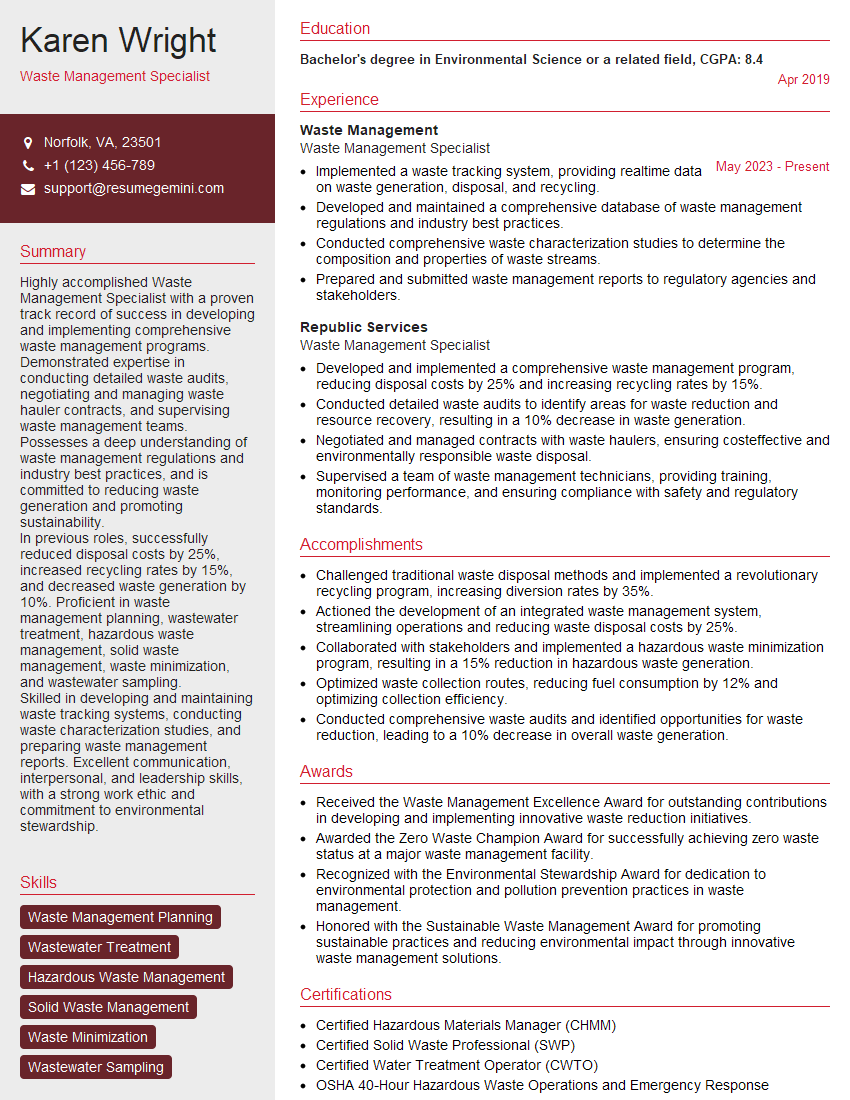
Waste Management Specialist Resume Sample

Sustainability Consultant Resume Sample
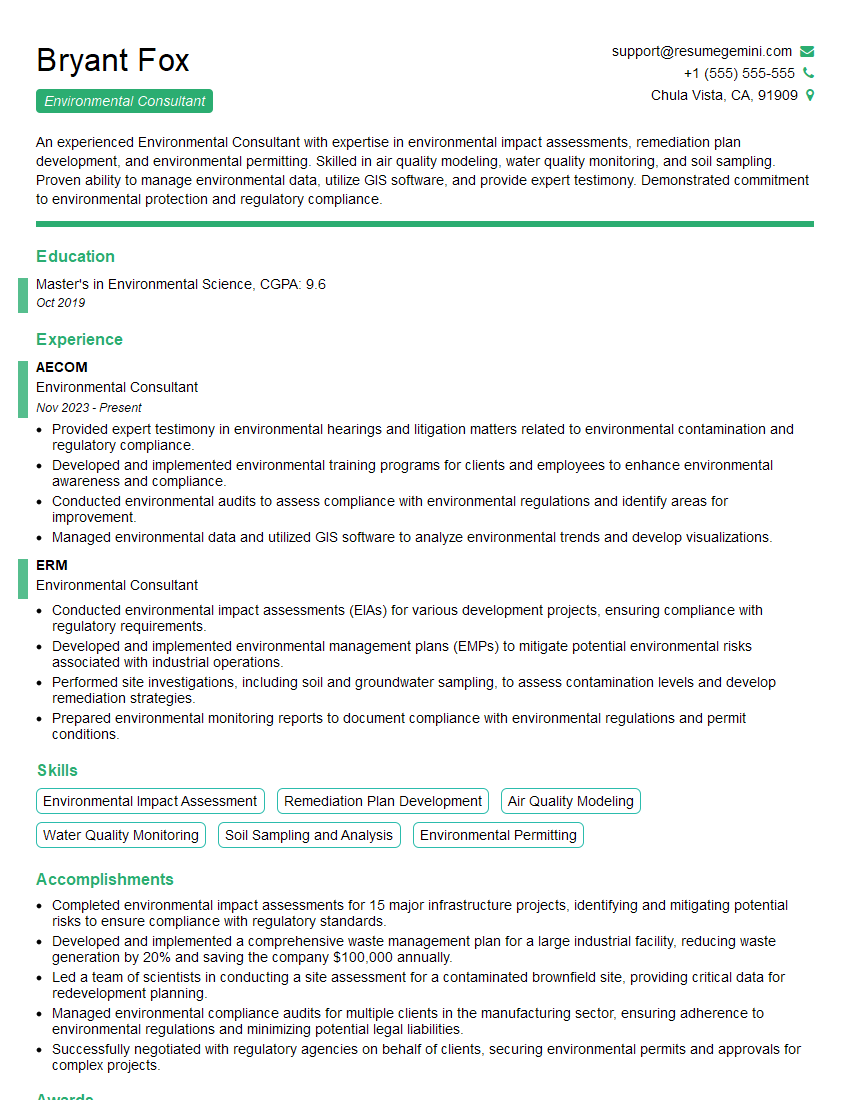
Environmental Consultant Resume Sample
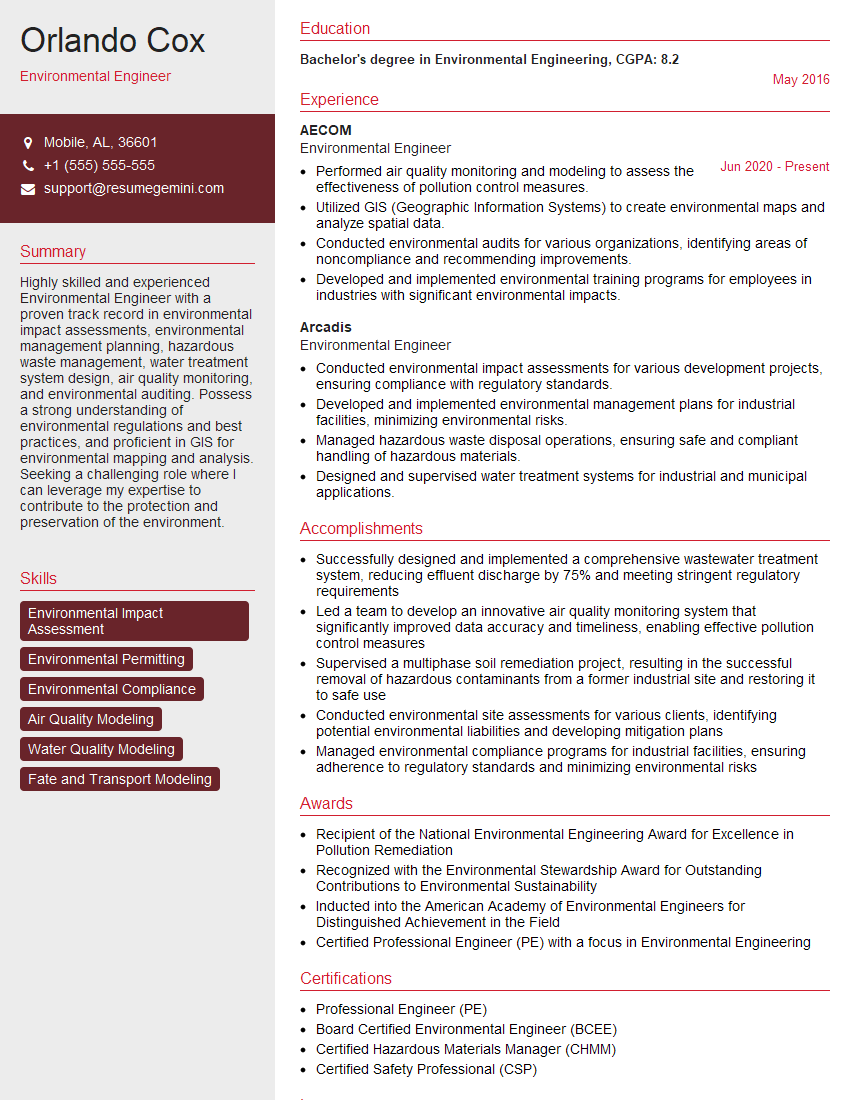
Environmental Engineer Resume Sample

Wildlife Biologist Resume Sample
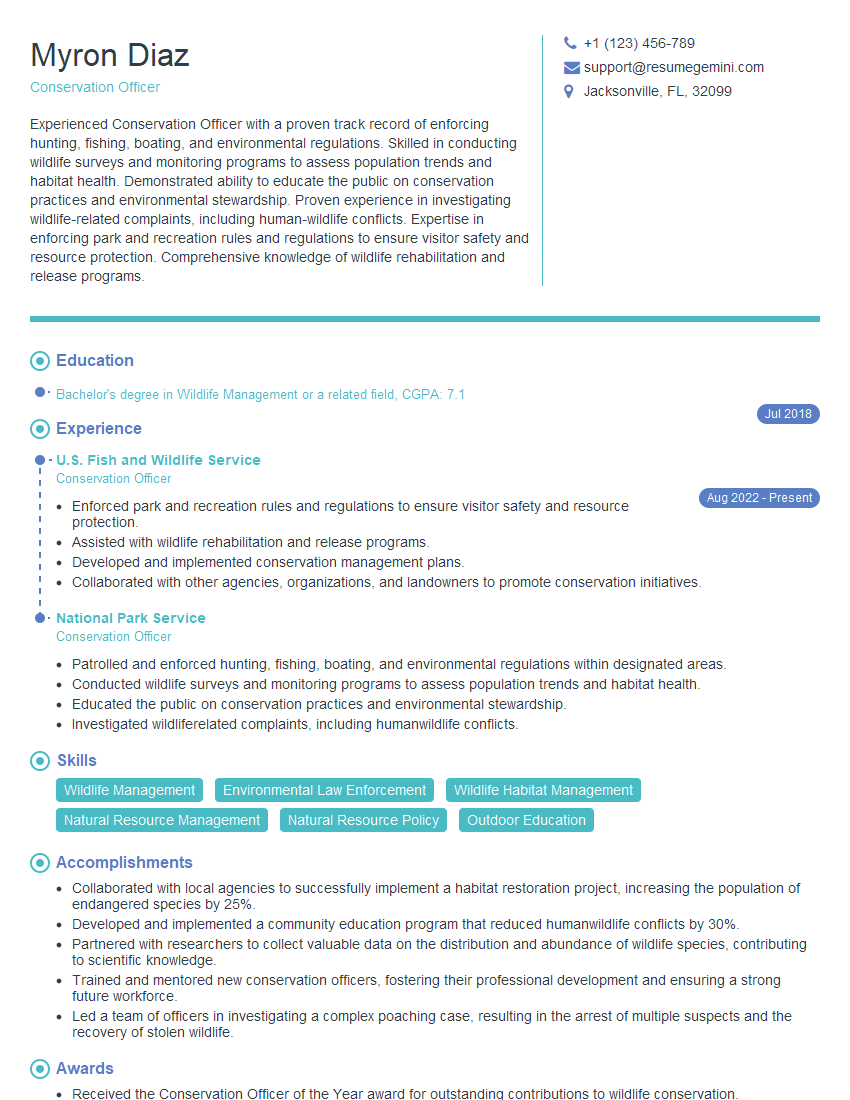
Conservation Officer Resume Sample
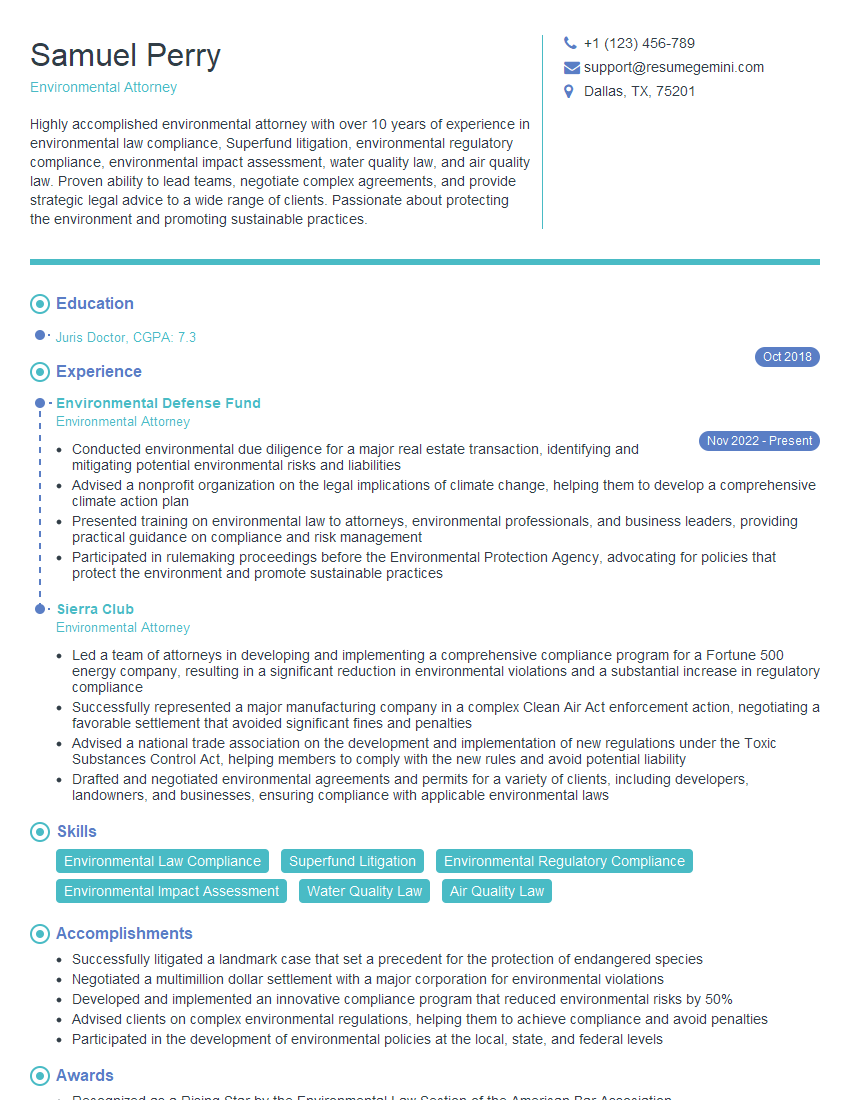
Environmental Attorney Resume Sample
- Sustainability Director
- Sustainability Manager
- Environmental Program Manager
- Environmental Health and Safety Manager
- Regulatory Compliance Officer
- Environmental Remediation Specialist
- Environmental Compliance Officer
- Environmental Scientist
- Waste Management Specialist
- Sustainability Consultant
- Environmental Consultant
- Environmental Engineer
- Wildlife Biologist
- Conservation Officer
- Environmental Attorney
Explore more articles
Users Rating of Our Blogs
Share Your Experience
We value your feedback! Please rate our content and share your thoughts (optional).
What Readers Say About Our Blog
Very informative content, great job.
good