Preparation is the key to success in any interview. In this post, we’ll explore crucial Building Energy Performance interview questions and equip you with strategies to craft impactful answers. Whether you’re a beginner or a pro, these tips will elevate your preparation.
Questions Asked in Building Energy Performance Interview
Q 1. Explain the difference between building energy modeling and energy auditing.
Building energy modeling and energy auditing are both crucial for improving a building’s energy efficiency, but they differ significantly in their approach and goals.
Building energy modeling is a predictive process. We use specialized software to create a virtual representation of a building, incorporating its design, construction materials, and systems (HVAC, lighting, etc.). This model simulates the building’s energy performance under various scenarios (e.g., different climate conditions, operational schedules). The goal is to predict energy consumption before construction or renovation, allowing for optimized design choices that minimize energy waste. Think of it like a test flight for an airplane before it ever takes off.
Energy auditing, on the other hand, is a diagnostic process focused on existing buildings. It involves a physical inspection, data collection (energy bills, equipment information), and analysis to identify energy-wasting practices and equipment. The goal is to pinpoint areas for immediate improvement and quantify potential energy savings through retrofits or operational changes. It’s like a post-flight inspection identifying areas for maintenance and upgrades.
In short: Modeling is predictive and used for design; auditing is diagnostic and used for existing buildings.
Q 2. Describe your experience with different energy modeling software (e.g., EnergyPlus, eQUEST).
I have extensive experience with several leading energy modeling software packages. My expertise includes EnergyPlus, a highly detailed and versatile engine capable of simulating complex building systems with great accuracy, and eQUEST, known for its user-friendly interface and efficient simulation capabilities for rapid assessments. I’ve also worked with smaller, specialized software for particular tasks like daylighting analysis.
With EnergyPlus, I’ve successfully modeled high-performance buildings, incorporating advanced features like thermal mass, radiant heating/cooling, and integrated renewable energy systems. For example, I used EnergyPlus to optimize the design of a net-zero energy school, resulting in a 70% reduction in projected energy consumption compared to a baseline model. My work with eQUEST has often involved rapid energy assessments of existing buildings to quickly identify potential energy savings opportunities before committing to more detailed modeling. I find that the choice of software depends heavily on the project’s scope, timeline, and required level of detail.
Q 3. How do you identify and quantify energy savings opportunities in existing buildings?
Identifying and quantifying energy savings opportunities in existing buildings involves a systematic approach.
- Walkthrough and Data Collection: We begin with a thorough site visit to inspect the building’s condition, equipment, and systems. We collect data from energy bills, operational logs, and equipment specifications. This establishes a baseline energy consumption profile.
- Energy Audits and Data Analysis: We then conduct a detailed energy audit, employing tools like infrared thermography to detect thermal leaks and airflow patterns. We analyze the collected data to identify significant energy consumers and areas of inefficiency (e.g., outdated HVAC equipment, poor insulation, excessive lighting).
- Modeling and Simulation: For more complex projects, we create a simplified energy model of the building using software like eQUEST to simulate the impact of potential retrofits. This allows us to quantify the projected energy savings associated with different upgrade options.
- Reporting and Recommendations: Finally, we prepare a comprehensive report detailing our findings, including prioritized recommendations for energy efficiency improvements, estimated costs, and payback periods. This report provides the building owner with a clear roadmap for implementing cost-effective energy-saving measures.
For example, in a recent project, we identified that faulty HVAC controls were responsible for 25% of a commercial building’s energy consumption. Implementing a simple control system upgrade resulted in significant cost savings and improved occupant comfort.
Q 4. What are the key performance indicators (KPIs) for building energy performance?
Key Performance Indicators (KPIs) for building energy performance are crucial for tracking progress and assessing the effectiveness of energy-saving measures.
- Energy Use Intensity (EUI): Expressed as kBtu/ft²/year or kWh/m²/year, it represents the total energy consumed per square foot or square meter of building area. Lower EUI indicates better energy efficiency.
- Annual Energy Consumption (AEC): The total amount of energy consumed by the building in a year, typically measured in kBtu or kWh.
- Carbon Footprint: The total greenhouse gas emissions associated with the building’s energy consumption, usually expressed in tons of CO2 equivalent per year.
- Operational Costs: The total cost of energy used by the building, including electricity, heating fuel, and water heating costs.
- Return on Investment (ROI): For energy efficiency projects, ROI measures the financial return relative to the initial investment costs.
- Occupant Satisfaction: Qualitative measures assessing the comfort and satisfaction of building occupants, as energy efficiency improvements often lead to better indoor environmental quality.
Monitoring these KPIs allows building owners to assess the effectiveness of their energy management strategies and to identify areas requiring further attention.
Q 5. What are the main components of a building energy audit?
A comprehensive building energy audit typically includes these main components:
- Pre-audit planning and site visit: Initial review of available data and a site walkthrough to gather information about the building’s systems and operational characteristics.
- Data collection: Gathering information on energy bills, building operation schedules, equipment specifications, and occupant behavior.
- Energy use analysis: Analyzing energy consumption patterns to identify peak loads, major energy consumers, and areas of high energy waste. This can include reviewing utility bills, meter readings and using energy modeling software.
- Building system evaluation: Assessing the efficiency of HVAC systems, lighting, and other building systems. This could involve infrared thermography, blower door tests, and commissioning documentation reviews.
- Recommendations and reporting: Developing a detailed report summarizing the audit findings, including prioritized recommendations for energy efficiency improvements, estimated cost savings, and payback periods.
The thoroughness of each component depends on the building’s size, type, and the goals of the audit.
Q 6. Explain the concept of building commissioning and its benefits.
Building commissioning is a quality assurance process intended to verify that building systems are designed, installed, and operated to meet the owner’s project requirements. It’s like a final inspection and testing phase before the building is turned over to its occupants.
The process typically involves a series of inspections and tests performed by a qualified commissioning agent (CxA) throughout the design, construction, and start-up phases of a project. The CxA works with the design team and contractors to ensure that systems are properly installed and functioning according to design specifications. They verify that all components are correctly connected, calibrated, and that the systems operate as intended.
Benefits of commissioning include:
- Improved Energy Efficiency: Commissioning ensures that building systems operate at peak efficiency, leading to lower energy bills and reduced greenhouse gas emissions.
- Reduced Operational Costs: By identifying and rectifying problems early, commissioning helps avoid costly repairs and downtime in the future.
- Enhanced Indoor Environmental Quality: Commissioning ensures that HVAC systems provide optimal temperature and humidity levels, promoting occupant comfort and productivity.
- Extended Equipment Lifespan: Proper commissioning can extend the lifespan of building equipment by preventing premature wear and tear.
Commissioning is an investment that yields significant long-term returns in terms of reduced operational costs, enhanced building performance, and improved occupant satisfaction.
Q 7. Describe your experience with retro-commissioning projects.
Retro-commissioning (RCx) is a systematic process of identifying and correcting operational problems in existing buildings to improve their energy efficiency and performance. It’s like a tune-up for a building. My experience with RCx projects involves leading teams to diagnose, repair, and optimize the performance of HVAC systems, lighting, and other building systems.
The RCx process typically includes:
- Data Analysis: Review of utility bills and operational data to identify trends and areas of concern.
- System Surveys: Detailed inspections of building systems to assess their functionality and identify potential problems.
- Functional Testing: Testing and verifying that building systems are performing as intended and complying with design specifications.
- Troubleshooting and Repair: Addressing operational problems and implementing corrective actions to optimize energy performance.
- Commissioning Documentation: Creating and maintaining updated documentation of the building’s systems and operational parameters.
I’ve worked on numerous RCx projects, resulting in significant energy and cost savings. In one case, an RCx project resulted in a 20% reduction in energy consumption for an office building, significantly reducing the building’s operational costs and carbon footprint.
Q 8. How do you determine the optimal building envelope design for energy efficiency?
Determining the optimal building envelope design for energy efficiency is a multifaceted process requiring a holistic approach. It involves minimizing heat transfer through walls, roofs, windows, and foundations, thus reducing heating and cooling loads. This is achieved by selecting appropriate materials with high thermal resistance (R-value) and low thermal transmittance (U-value).
Factors to consider include:
- Climate Zone: The design must be tailored to the specific climatic conditions. A building in a hot, arid climate will require different envelope design choices than one in a cold, snowy climate.
- Building Orientation: Optimizing building orientation to minimize solar heat gain in summer and maximize it in winter is crucial. This often involves using shading devices and strategic window placement.
- Material Selection: High-performance insulation (e.g., spray foam, fiberglass batts), air-tight construction techniques, and high-performance windows (low-E coatings, gas fills) are vital for reducing heat transfer.
- Thermal Bridging: Minimizing thermal bridging – where heat flows through materials with higher thermal conductivity – is critical. This requires careful detailing around windows, doors, and connections between different building components.
- Air Leakage: A well-sealed building envelope prevents air infiltration, reducing heat loss in winter and heat gain in summer. Air sealing techniques like caulking, weatherstripping, and sealing penetrations are essential.
Example: In a cold climate, a building might utilize a thick layer of high-R-value insulation in the walls, triple-pane windows, and a well-insulated roof to minimize heat loss. Conversely, in a hot climate, a lighter-colored roof, high-albedo materials, and shading devices might be prioritized to reduce solar heat gain.
Q 9. What are the key factors influencing HVAC system energy consumption?
HVAC system energy consumption is influenced by several key factors, broadly categorized into system design, operation, and building characteristics. Understanding these factors allows for optimization and significant energy savings.
- System Efficiency: The efficiency of the HVAC equipment itself is paramount. This is measured by metrics like SEER (Seasonal Energy Efficiency Ratio) for air conditioners and AFUE (Annual Fuel Utilization Efficiency) for furnaces. Higher ratings indicate greater efficiency.
- Building Load: The building’s heating and cooling load – determined by the building envelope’s thermal performance and internal heat gains – directly impacts energy use. A well-insulated building will have a smaller load, requiring less energy to maintain a comfortable temperature.
- System Sizing: An improperly sized HVAC system will be less efficient. An oversized system cycles on and off frequently, leading to increased energy consumption and reduced comfort. Conversely, an undersized system struggles to maintain temperature, consuming more energy and failing to meet the comfort demands.
- Control Strategies: Smart thermostats, occupancy sensors, and zoned climate control can significantly reduce energy consumption by only conditioning occupied spaces or adjusting temperatures based on occupancy and time of day.
- Maintenance: Regular maintenance, including filter changes, cleaning coils, and checking refrigerant levels, is critical for maintaining optimal system performance and energy efficiency.
- Indoor Air Quality (IAQ): Systems designed to improve IAQ often have added energy consumption, for example, with added filtration or ventilation.
Example: Implementing a variable refrigerant flow (VRF) system allows for zoned climate control, reducing energy waste by only cooling or heating occupied areas. Regular maintenance can prevent small issues from becoming large, energy-wasting problems.
Q 10. Explain the principles of passive solar design.
Passive solar design leverages the sun’s energy to heat and light buildings without active mechanical systems. It focuses on minimizing energy consumption by optimizing building design, orientation, and material selection to harness solar energy effectively.
Key Principles:
- Orientation: Positioning the building to maximize solar gain in winter and minimize it in summer. South-facing windows (in the Northern Hemisphere) are crucial for maximizing winter sun.
- Window Placement and Sizing: Strategic window placement allows for optimal solar heat gain in winter while minimizing overheating in summer. Consider window size, type of glazing (low-E coatings), and shading devices.
- Thermal Mass: Incorporating materials with high thermal mass (e.g., concrete, brick, stone) helps absorb and store solar heat during the day, releasing it slowly at night, reducing temperature fluctuations.
- Shading Devices: Overhangs, awnings, and deciduous trees can effectively shade windows during the summer, preventing overheating. In winter, the low sun angle allows sunlight to penetrate.
- Insulation and Air Sealing: Maintaining a well-insulated and air-sealed building envelope is essential to prevent heat loss in winter and heat gain in summer, maximizing the effectiveness of passive solar gains.
Example: A house designed with a large south-facing window, combined with a substantial thermal mass in the floor and walls, can capture and store solar heat during the day. Overhangs can provide effective shade during the summer months.
Q 11. How do you interpret and analyze energy consumption data?
Interpreting and analyzing energy consumption data is a critical step in identifying opportunities for energy efficiency improvements. This process often involves several steps:
- Data Acquisition: Gather energy consumption data from various sources, such as utility bills, building management systems (BMS), and smart meters. The data should be as granular as possible, ideally including hourly or even sub-hourly readings.
- Data Cleaning and Validation: Ensure data accuracy and consistency. Identify and correct outliers or errors. This often involves comparing data against expected patterns and historical trends.
- Data Analysis: Analyze the data to identify trends, patterns, and anomalies. This might involve using statistical methods, data visualization techniques, and energy modeling software. Focus on identifying periods of high energy consumption and potential contributing factors.
- Benchmarking: Compare the building’s energy performance against similar buildings or industry benchmarks. This helps to understand whether the building’s performance is above or below average.
- Identifying Energy-Saving Opportunities: Based on the analysis, identify potential areas for energy savings, such as improving HVAC efficiency, optimizing lighting, or upgrading the building envelope.
Example: Analyzing hourly electricity consumption data might reveal a consistent peak in energy usage during the afternoon, indicating potential for improving HVAC control strategies or reducing internal heat gains.
Q 12. Describe your experience with energy management systems (EMS).
My experience with Energy Management Systems (EMS) spans various projects, from retrofits of existing systems to the design and implementation of new EMS in high-performance buildings. My expertise includes:
- System Selection and Integration: I’ve worked with a range of EMS platforms, from basic building automation systems to sophisticated cloud-based platforms. This involves evaluating system capabilities, integrating various building subsystems (HVAC, lighting, security), and developing system architectures.
- Data Monitoring and Analysis: I am proficient in using EMS data for performance monitoring, troubleshooting, and identifying energy-saving opportunities. This includes configuring data dashboards, creating custom reports, and interpreting data to identify trends and anomalies.
- Control Strategies Development: I’ve developed and implemented sophisticated control strategies to optimize energy consumption, enhance occupant comfort, and improve building operations. This includes developing schedules, setting setpoints, and using advanced algorithms for predictive control.
- Commissioning and Verification: I’m experienced in commissioning and verifying the performance of EMS to ensure they meet design specifications and deliver expected energy savings. This involves rigorous testing and validation.
Example: In one project, I implemented a cloud-based EMS in a large office building, integrating data from various building subsystems and developing a custom dashboard to monitor energy consumption and identify operational inefficiencies. This resulted in a significant reduction in energy usage.
Q 13. What are some common energy-efficient lighting strategies?
Energy-efficient lighting strategies focus on reducing energy consumption while maintaining adequate illumination levels. This involves a combination of technological advancements and thoughtful design.
- High-Efficiency Lighting Fixtures: Switching to LED lighting is crucial. LEDs consume significantly less energy than traditional incandescent or fluorescent lights and have longer lifespans.
- Lighting Controls: Implementing lighting controls like occupancy sensors, daylight harvesting systems, and timers can significantly reduce energy waste by only illuminating occupied spaces or turning off lights when not needed.
- Daylight Optimization: Maximizing natural daylight penetration reduces the need for artificial lighting. This can be achieved through strategic window placement, light shelves, and light tubes.
- Proper Lighting Design: Well-designed lighting schemes optimize light distribution to minimize energy consumption while ensuring adequate illumination levels. This includes selecting appropriate luminaire types and positioning.
- Regular Maintenance: Cleaning light fixtures and replacing burned-out lamps promptly maintains lighting efficiency and prevents energy waste.
Example: Installing occupancy sensors in office spaces automatically turns off lights when no one is present, while daylight harvesting systems adjust artificial lighting levels based on available daylight, drastically reducing energy usage.
Q 14. Explain the role of building codes in improving energy performance.
Building codes play a vital role in improving energy performance by setting minimum requirements for energy efficiency in new and renovated buildings. These codes evolve over time to reflect advancements in technology and a growing understanding of the impact of buildings on the environment.
Impact of Building Codes:
- Setting Minimum Standards: Codes establish minimum requirements for building envelope performance, HVAC systems, lighting, and other energy-consuming components. This ensures that new buildings meet a baseline level of energy efficiency.
- Driving Technological Innovation: By mandating the use of more efficient technologies, building codes encourage innovation and wider adoption of energy-saving solutions.
- Reducing Energy Consumption: Compliance with building codes leads to significant reductions in energy consumption at a community and national level, contributing to reduced greenhouse gas emissions and improved energy security.
- Promoting Sustainable Practices: Many codes incorporate sustainable design principles, promoting the use of renewable energy sources and environmentally friendly materials.
- Lifespan Cost Savings: While upfront costs might be higher, adherence to codes results in long-term energy cost savings for building owners.
Example: Many jurisdictions have adopted energy codes based on the International Energy Conservation Code (IECC), which sets requirements for insulation levels, window performance, and HVAC system efficiency. These codes are continuously updated to incorporate new technologies and improved energy efficiency measures.
Q 15. How do you address the trade-offs between initial costs and long-term energy savings?
Balancing initial costs and long-term energy savings is crucial in building energy performance. It’s like choosing between buying a fuel-efficient car with a higher upfront price or a less efficient one that’s cheaper initially but costs more in fuel over time. We use Life Cycle Cost Analysis (LCCA) to address this. LCCA considers all costs associated with a building element or system over its lifespan, including initial investment, operation, maintenance, and eventual replacement.
For example, installing high-performance windows may have a higher upfront cost than standard windows, but the long-term savings on heating and cooling will often outweigh this initial expense. We’ll often use software tools that model energy consumption and cost projections to demonstrate the return on investment (ROI) for various energy-efficient upgrades. This allows clients to make informed decisions based on both immediate expenses and future benefits.
We also explore financing options like green loans or energy performance contracts (EPCs) which can make high-performance upgrades more accessible by spreading the cost over time. The savings in energy bills often offset the loan payments, making the investment financially viable even with higher initial capital expenditure.
Career Expert Tips:
- Ace those interviews! Prepare effectively by reviewing the Top 50 Most Common Interview Questions on ResumeGemini.
- Navigate your job search with confidence! Explore a wide range of Career Tips on ResumeGemini. Learn about common challenges and recommendations to overcome them.
- Craft the perfect resume! Master the Art of Resume Writing with ResumeGemini’s guide. Showcase your unique qualifications and achievements effectively.
- Don’t miss out on holiday savings! Build your dream resume with ResumeGemini’s ATS optimized templates.
Q 16. What are some strategies to improve the energy performance of HVAC systems?
Improving HVAC (Heating, Ventilation, and Air Conditioning) system energy performance involves a multifaceted approach. It’s like tuning up a car engine for optimal efficiency.
- Upgrades to equipment: Replacing outdated, inefficient HVAC equipment with high-efficiency models (like heat pumps with SEER ratings above 20 and AFUE ratings above 95%) significantly reduces energy consumption.
- Improved controls: Implementing smart thermostats and advanced control systems allows for optimized operation based on occupancy and weather conditions. This could include scheduling, zoning, and demand-controlled ventilation.
- Regular maintenance: Regular maintenance, including filter changes, cleaning coils, and checking refrigerant levels, ensures optimal performance and prevents premature failure.
- Improved ductwork: Sealing leaks and ensuring proper ductwork design minimizes energy loss due to air infiltration and pressure imbalances. A well-sealed and properly sized duct system ensures that conditioned air reaches its intended destination efficiently.
- Variable Refrigerant Flow (VRF) systems: For larger buildings, VRF systems provide precise temperature control in individual zones, reducing energy waste associated with over-cooling or over-heating.
For example, in one project, we implemented a building automation system (BAS) which optimized the HVAC scheduling based on real-time occupancy data and weather forecasts, resulting in a 15% reduction in energy consumption.
Q 17. Describe your experience with renewable energy integration in buildings.
I have extensive experience integrating renewable energy sources into buildings. My work has encompassed various technologies, focusing on maximizing the synergies between renewable energy generation and building energy performance. This is like adding solar panels to the roof of your house to produce your own clean energy.
- Photovoltaic (PV) systems: I’ve designed and overseen the installation of rooftop and facade-integrated PV systems, optimizing their placement to maximize solar gain and minimize shading effects.
- Solar thermal systems: I’ve worked with solar thermal collectors for domestic hot water heating and space heating, integrating them effectively with existing HVAC systems.
- Wind turbines: In appropriate contexts, I’ve explored the feasibility and integration of small-scale wind turbines for generating electricity.
- Geothermal systems: I’ve utilized ground-source heat pumps (GSHPs) for heating and cooling, leveraging the stable temperature of the earth to improve energy efficiency.
A recent project involved integrating a rooftop PV system with a battery storage solution to reduce reliance on the grid and improve energy resilience. This not only reduced the building’s carbon footprint but also provided cost savings through lower electricity bills.
Q 18. How familiar are you with LEED certification and its energy performance requirements?
I am very familiar with LEED (Leadership in Energy and Environmental Design) certification and its energy performance requirements. LEED is a widely recognized green building rating system, and its energy efficiency requirements are crucial for achieving certification.
I understand the intricacies of the various LEED rating systems (LEED BD+C, LEED O+M, etc.) and their energy-related credits, including energy modeling, commissioning, and the use of renewable energy sources. I’m proficient in using energy modeling software like EnergyPlus and IES VE to demonstrate compliance with LEED’s energy performance targets.
For example, I helped a client achieve LEED Gold certification by meticulously documenting their energy modeling results, commissioning their HVAC systems, and incorporating energy-efficient lighting fixtures throughout the building. Understanding LEED’s requirements is essential for optimizing building performance and achieving sustainability goals.
Q 19. What are the challenges in implementing energy efficiency measures in existing buildings?
Implementing energy efficiency measures in existing buildings presents several unique challenges compared to new construction. It’s like retrofitting an old car versus building a new one from scratch.
- Budget constraints: Retrofits often involve higher costs per unit of energy saved compared to new construction.
- Space limitations: Incorporating new technologies or equipment may be constrained by limited space within existing building structures.
- Disruptions to occupants: Construction work can disrupt occupants’ activities, making careful planning and coordination essential.
- Building code compliance: Existing buildings may not meet current building codes, requiring additional work to comply with updated standards.
- Uncertainty about building performance: Without detailed building data, it can be challenging to accurately predict the effectiveness of retrofit measures.
We address these challenges using phased approaches, prioritizing cost-effective measures and utilizing non-invasive technologies where possible. Careful project planning and communication with building occupants are critical for successful implementation.
Q 20. Describe a project where you overcame a significant challenge related to building energy performance.
In one project, we faced a significant challenge with an existing office building that had persistent issues with high energy consumption despite previous upgrades. After a thorough energy audit, we discovered that the building’s envelope was significantly deficient. This meant air was leaking in and out, negating the benefits of any other upgrades to the HVAC system.
Initially, it seemed cost-prohibitive to undertake a major envelope renovation. However, by working closely with the building owner, we developed a phased approach, focusing on the most critical areas first—the windows and roof. Using advanced air sealing techniques and high-performance insulation, we were able to drastically improve the building’s thermal performance. This resulted in significant energy savings and a considerable improvement in occupant comfort. The phased approach allowed us to demonstrate success early, securing further funding to complete additional phases of the work.
Q 21. How do you stay up-to-date with the latest advancements in building energy performance technologies?
Staying current in the rapidly evolving field of building energy performance requires a proactive and multi-pronged approach. It’s like keeping your finger on the pulse of new innovations in automotive technology.
- Professional organizations: Active membership in organizations like ASHRAE (American Society of Heating, Refrigerating and Air-Conditioning Engineers) and USGBC (U.S. Green Building Council) provides access to the latest research, standards, and networking opportunities.
- Industry publications and journals: Regularly reading industry publications and journals keeps me abreast of new technologies and best practices.
- Conferences and workshops: Attending industry conferences and workshops allows for direct engagement with experts and exposure to cutting-edge research.
- Online resources and training: Utilizing online platforms and training programs offers continuous learning opportunities on specialized topics.
- Collaboration and knowledge sharing: Engaging in collaborations and knowledge-sharing with colleagues and peers from around the world promotes innovation.
I also maintain a professional network and actively participate in online forums and communities dedicated to building energy performance. This dynamic approach ensures that I remain at the forefront of this ever-changing field.
Q 22. Explain your understanding of building thermal comfort and its impact on energy use.
Building thermal comfort refers to the conditions of the indoor environment that occupants perceive as satisfying. It’s a complex interplay of air temperature, humidity, air speed, and mean radiant temperature. When occupants are thermally comfortable, they are more productive and satisfied. Conversely, discomfort leads to reduced productivity, increased complaints, and potentially higher energy consumption as occupants try to adjust the environment using heating, cooling, or ventilation systems.
For instance, imagine an office where the air conditioning is set too low. Employees may wear extra layers, complain about the cold, and increase energy use by using personal heaters, ultimately negating some of the energy savings from the central cooling system. Effective building design balances thermal comfort with energy efficiency by incorporating passive strategies (like proper building orientation and shading) and active strategies (like efficient HVAC systems and smart controls).
Q 23. How do you incorporate occupant behavior into your energy modeling analysis?
Incorporating occupant behavior into energy modeling is crucial for accurate predictions and effective building design. Occupants’ actions significantly impact energy use, often exceeding the influence of the building’s physical attributes. We use several techniques:
- Agent-based modeling: Simulates individual occupant behavior, such as window opening and lighting usage, based on schedules, preferences, and environmental conditions.
- Data-driven approaches: Analyzing historical energy consumption data in conjunction with occupancy data (e.g., smart meter readings, sensor data) to understand usage patterns and predict future energy demand.
- Surveys and interviews: Gathering information on occupant preferences, habits, and building usage patterns to parameterize the energy model.
For example, in a school building, we might use agent-based modeling to simulate students opening windows for ventilation during breaks, even if the HVAC system is running. This provides a much more realistic energy simulation compared to a model that assumes perfectly compliant occupants following a pre-defined schedule.
Q 24. What is your experience with life-cycle cost analysis of building energy systems?
Life-cycle cost analysis (LCCA) is essential for evaluating the long-term economic viability of building energy systems. It considers all costs associated with a system over its lifespan, including initial investment, operation, maintenance, and replacement costs. My experience includes using specialized software tools such as EnergyPlus and LCC software to perform LCCA.
For example, while a high-efficiency heat pump may have a higher initial cost than a conventional system, its lower operating costs and longer lifespan can result in significant long-term savings. LCCA helps determine the optimal system by comparing the total cost of ownership of different options, factoring in factors like energy prices, interest rates, and the system’s expected lifetime.
Q 25. Describe your experience with different types of energy audits (e.g., walk-through, detailed).
I have extensive experience conducting both walk-through and detailed energy audits. A walk-through audit is a visual inspection of the building, identifying readily observable energy-saving opportunities. This involves examining building envelope components, HVAC systems, lighting, and equipment to identify immediate improvements.
A detailed energy audit goes further, involving more in-depth instrumentation and data analysis. It uses energy measurement tools to quantify energy consumption and losses. This may include blower door tests for air leakage, infrared thermography to identify thermal bridges, and detailed measurements of HVAC system performance. Detailed audits provide a more precise understanding of energy use and inform more comprehensive retrofit strategies. I’ve used the findings from both types of audits to develop cost-effective energy-saving plans for various building types, from commercial offices to residential homes.
Q 26. What are some key considerations when designing energy-efficient building systems?
Designing energy-efficient building systems requires a holistic approach, considering several key factors:
- Building envelope optimization: Minimizing heat transfer through walls, roofs, windows, and foundations using high-performance insulation, air sealing, and high-performance glazing.
- High-efficiency HVAC systems: Selecting appropriately sized and high-efficiency heating, ventilation, and air conditioning equipment, such as heat pumps, and incorporating features like variable refrigerant flow (VRF) and demand-controlled ventilation (DCV).
- Energy-efficient lighting: Utilizing LED lighting with advanced control systems that optimize lighting levels based on occupancy and daylight availability.
- Renewable energy integration: Incorporating renewable energy sources such as solar photovoltaic (PV) systems, solar thermal collectors, and geothermal energy.
- Building management systems (BMS): Implementing intelligent control systems to monitor and optimize building performance in real time.
For instance, a project might involve designing a building with a super-insulated envelope, a highly efficient heat recovery ventilation system, and a solar PV array, all integrated through a BMS to optimize energy use and create a comfortable and sustainable environment.
Q 27. How do you evaluate the effectiveness of implemented energy-saving measures?
Evaluating the effectiveness of energy-saving measures requires a combination of methods:
- Post-retrofit monitoring: Measuring energy consumption after implementing the measures to compare it to pre-retrofit consumption. This is done using utility bills and building energy management systems.
- Key performance indicator (KPI) tracking: Monitoring relevant KPIs such as energy consumption per square foot, energy intensity, and occupant comfort levels.
- Energy modeling validation: Comparing post-retrofit energy consumption with the predictions from the energy model used during the design phase to assess the accuracy of the model and the effectiveness of the implemented measures.
- Occupant surveys: Obtaining feedback from occupants on their perception of thermal comfort and overall building performance.
For example, after implementing LED lighting and occupancy sensors, we would compare the electricity consumption of the lighting system before and after the upgrade, and also conduct occupant surveys to assess satisfaction levels with the lighting.
Q 28. What is your understanding of net-zero energy buildings?
A net-zero energy building produces as much renewable energy as it consumes over a year. This means that the building’s energy needs are met entirely by on-site renewable energy generation, typically solar PV. Achieving net-zero requires careful design and implementation of energy-efficient measures to minimize energy demand in the first place, coupled with sufficient renewable energy generation capacity.
It’s important to note that ‘net-zero’ is typically calculated on an annual basis. There will be periods where the building consumes more energy than it generates, and other times where it generates a surplus. The goal is to balance these out over the entire year. Achieving net-zero requires a holistic approach incorporating passive design strategies, high-efficiency systems, and careful energy management.
Key Topics to Learn for Building Energy Performance Interview
- Building Envelope Performance: Understanding insulation, air sealing, window performance, and their impact on energy consumption. Practical application: Analyzing building plans to identify areas for energy efficiency improvements.
- HVAC Systems & Efficiency: Knowledge of various HVAC technologies (e.g., heat pumps, chillers, VRF systems), their operational principles, and energy optimization strategies. Practical application: Troubleshooting inefficient HVAC systems and proposing cost-effective solutions.
- Energy Modeling & Simulation: Proficiency in using energy modeling software (e.g., EnergyPlus, eQUEST) to predict building energy performance and evaluate design alternatives. Practical application: Creating energy models to compare different building design options and optimize energy efficiency.
- Renewable Energy Integration: Understanding the integration of renewable energy sources (solar, wind, geothermal) into building systems and their impact on overall energy performance. Practical application: Designing a building with integrated solar panels and evaluating their energy contribution.
- Energy Auditing & Retrofits: Conducting energy audits, identifying energy waste, and developing retrofit strategies to improve building performance. Practical application: Developing a cost-effective plan to reduce energy consumption in an existing building.
- Building Codes & Standards: Familiarity with relevant building codes and energy efficiency standards (e.g., LEED, ASHRAE). Practical application: Ensuring building designs comply with energy regulations and achieving energy efficiency certifications.
- Data Analysis & Reporting: Analyzing energy consumption data, identifying trends, and generating reports to track energy performance and identify areas for improvement. Practical application: Using data to demonstrate the effectiveness of energy efficiency measures implemented in a building.
Next Steps
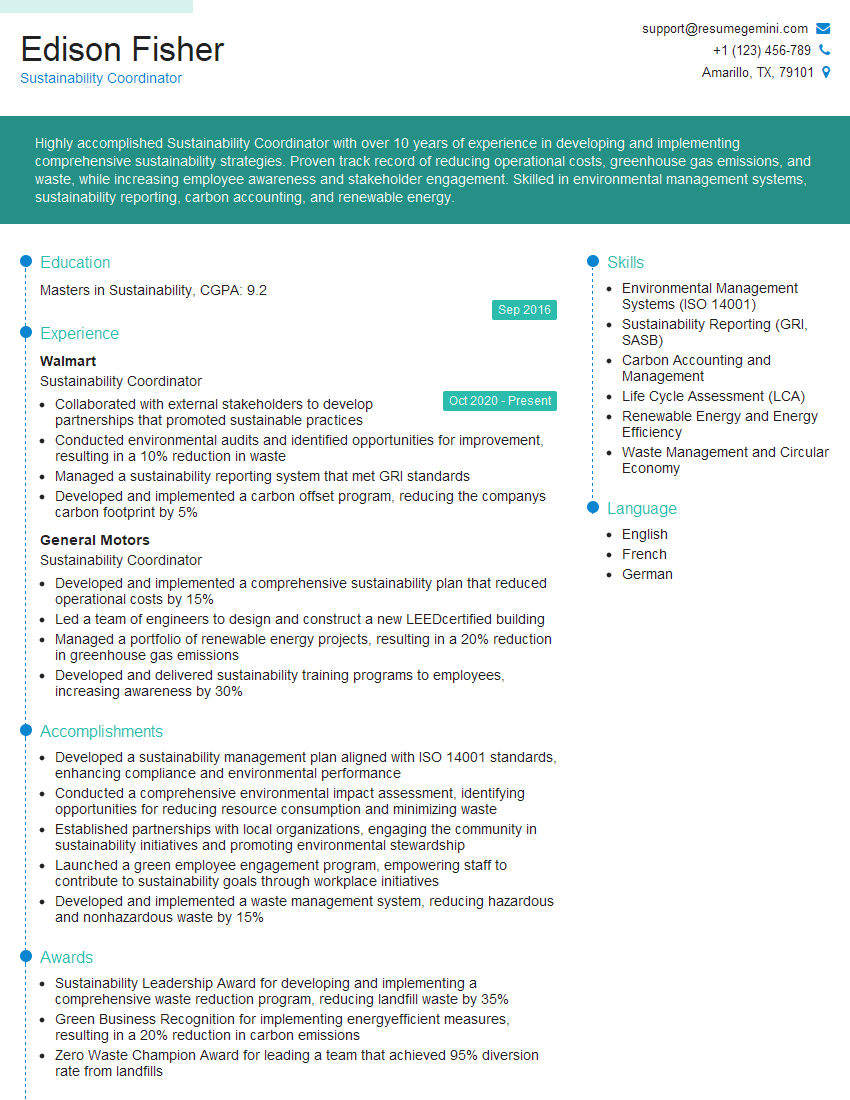
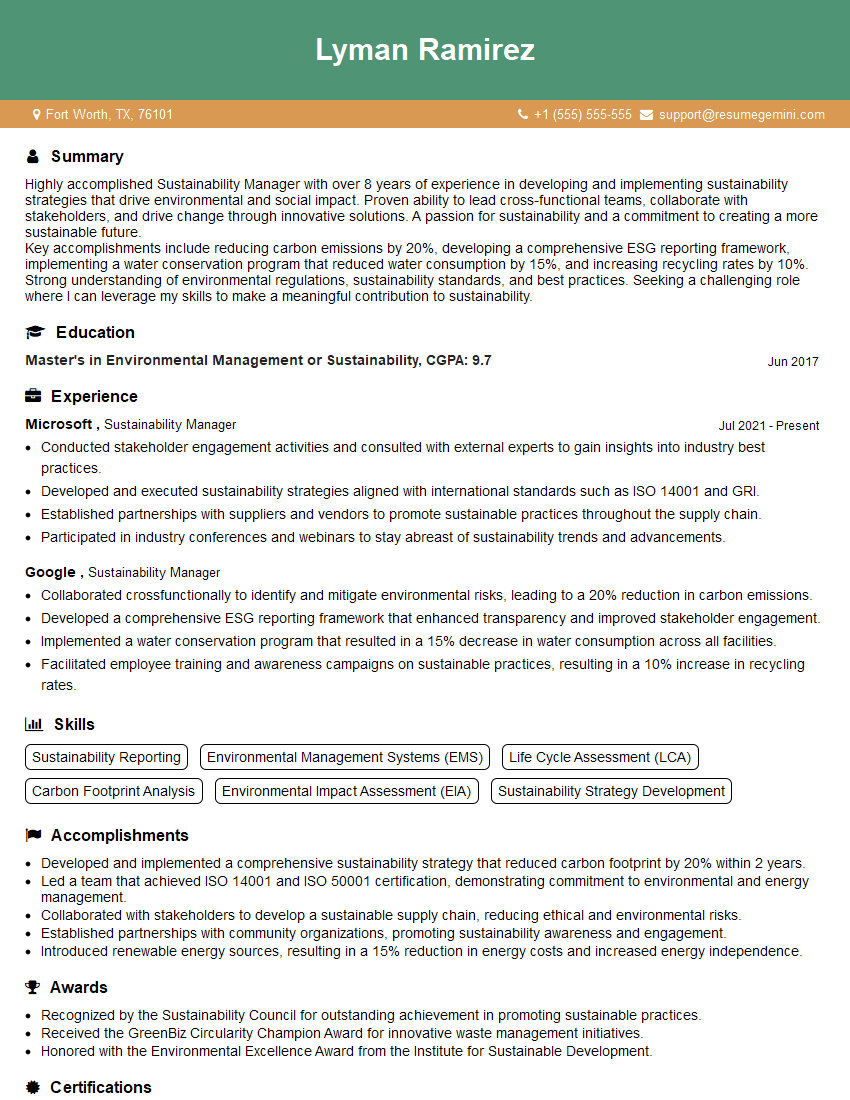
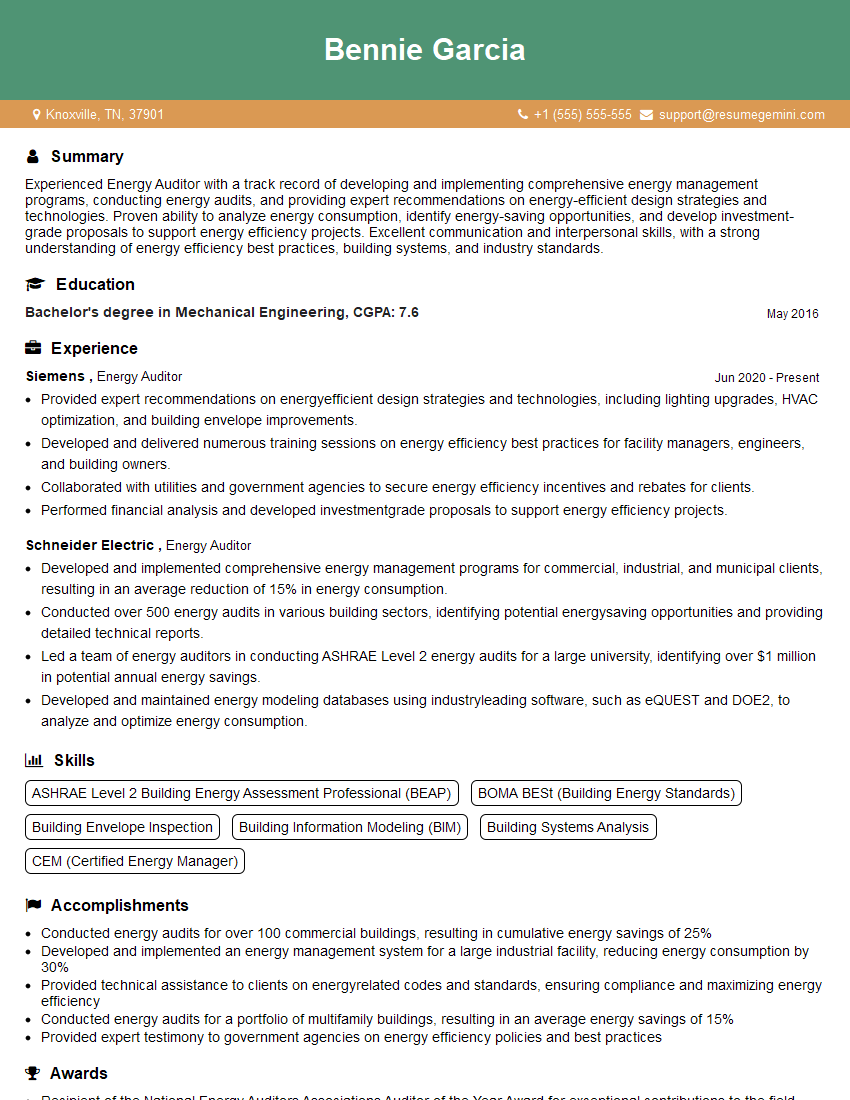
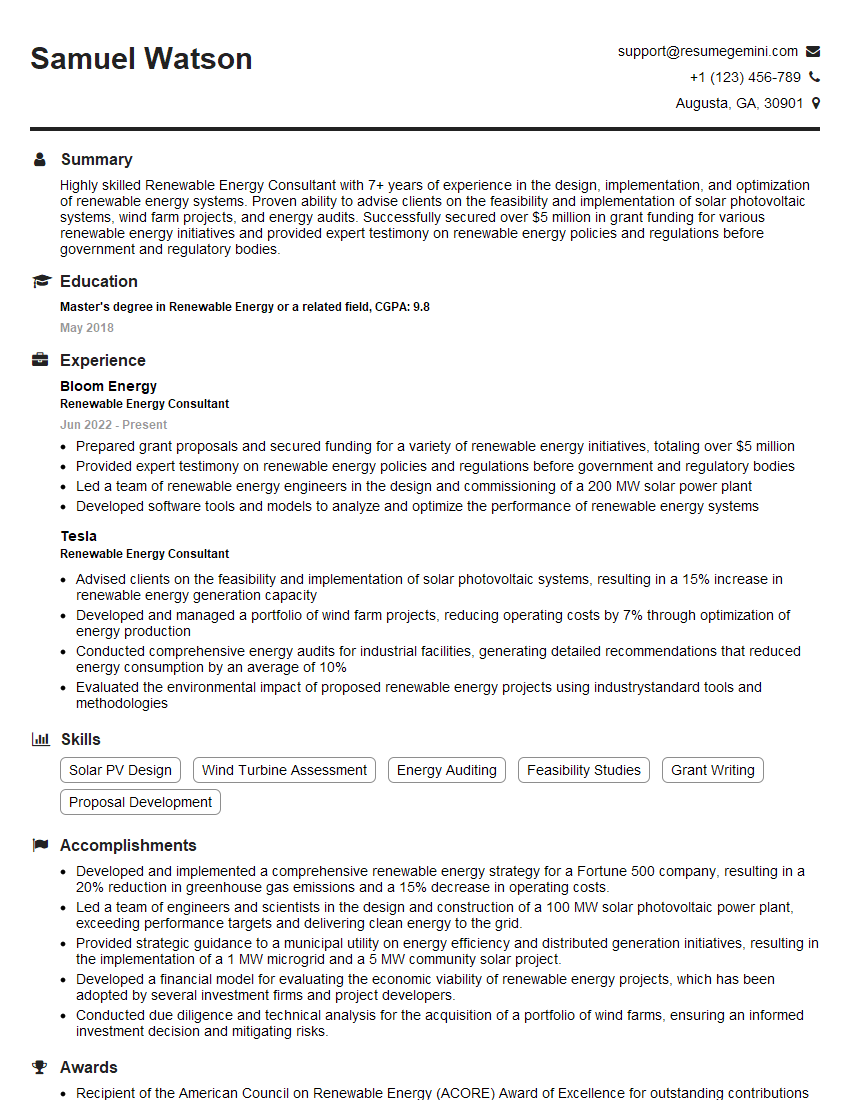
Mastering Building Energy Performance is crucial for a successful and rewarding career in a rapidly growing field. Demonstrating your expertise through a strong resume is the first step. Creating an ATS-friendly resume is vital to getting your application noticed by potential employers. ResumeGemini is a trusted resource to help you build a professional and impactful resume that highlights your skills and experience. Examples of resumes tailored to Building Energy Performance are available to guide you. Take this opportunity to craft a compelling document that showcases your qualifications and sets you apart from the competition.

Explore more articles
Users Rating of Our Blogs
Share Your Experience
We value your feedback! Please rate our content and share your thoughts (optional).
What Readers Say About Our Blog
Very informative content, great job.
good