Every successful interview starts with knowing what to expect. In this blog, we’ll take you through the top Business Process Reengineering and Improvement interview questions, breaking them down with expert tips to help you deliver impactful answers. Step into your next interview fully prepared and ready to succeed.
Questions Asked in Business Process Reengineering and Improvement Interview
Q 1. Describe your experience with Lean methodologies.
Lean methodologies focus on eliminating waste and maximizing value from the customer’s perspective. My experience encompasses applying Lean principles across various industries, from manufacturing to service sectors. I’ve successfully implemented Lean tools like Value Stream Mapping to visualize and analyze processes, identifying areas for improvement. For instance, in a recent project with a logistics company, we used Value Stream Mapping to pinpoint bottlenecks in their order fulfillment process, leading to a 20% reduction in delivery times. We also utilized 5S methodology (Sort, Set in Order, Shine, Standardize, Sustain) to create a more organized and efficient warehouse environment. Furthermore, I’ve extensive experience with Kaizen, a continuous improvement philosophy, facilitating workshops and implementing small, incremental changes that cumulatively lead to significant gains in efficiency and productivity. In a previous role, we used Kaizen events to streamline a customer service call center, resulting in a 15% reduction in average handling time.
Q 2. Explain the DMAIC methodology.
DMAIC, which stands for Define, Measure, Analyze, Improve, Control, is a structured problem-solving methodology used within the Six Sigma framework. It’s a data-driven approach to process improvement, ideally suited for tackling complex issues systematically.
- Define: Clearly define the problem, project goals, and customer requirements. This involves identifying the critical to quality (CTQ) characteristics of the process.
- Measure: Gather data to quantify the current process performance. This often includes identifying key performance indicators (KPIs) and establishing baseline metrics.
- Analyze: Analyze the collected data to identify the root causes of the problem using tools like Pareto charts, fishbone diagrams, and process capability analysis.
- Improve: Develop and implement solutions to address the root causes. This might involve redesigning processes, implementing new technologies, or improving employee training.
- Control: Monitor the improved process to ensure that the gains are sustained over time. This often involves implementing control charts and other monitoring mechanisms.
For example, I used DMAIC to improve the accuracy of order fulfillment in an e-commerce business. By carefully measuring error rates, analyzing root causes like data entry errors and inventory management issues, and implementing solutions like improved data entry training and inventory tracking systems, we significantly reduced order fulfillment errors and improved customer satisfaction.
Q 3. What is the difference between BPR and process improvement?
While both BPR (Business Process Reengineering) and process improvement aim to enhance efficiency, they differ significantly in scope and approach. BPR is a radical, transformational approach involving a complete overhaul of existing processes. It’s typically undertaken when facing significant challenges and involves questioning fundamental assumptions about how work is done. Think of it as rebuilding the entire house. Process improvement, on the other hand, focuses on incremental changes and optimizations to existing processes. It’s like renovating a specific room in the house, improving functionality without a full reconstruction. BPR is more disruptive and requires a greater investment of time and resources, while process improvement is often a more agile and sustainable approach for ongoing optimization.
Q 4. How do you identify process bottlenecks?
Identifying process bottlenecks involves a combination of data analysis and observation. I typically start by mapping the process using tools like flowcharts or value stream maps. This provides a visual representation of the process flow, highlighting areas where work piles up or delays occur. Then, I use data analysis techniques to quantify the impact of potential bottlenecks. This may include analyzing cycle times, resource utilization, and error rates. For instance, I might analyze the throughput of each step in a manufacturing process or examine wait times at different points in a customer service process. Direct observation of the process in action is also crucial; observing workflow and identifying areas where employees seem to spend excessive time or face significant challenges can reveal hidden bottlenecks.
Q 5. What tools and techniques do you use for process mapping?
I utilize a variety of tools and techniques for process mapping, selecting the most appropriate ones based on the specific process and context. These include:
- Flowcharts: These provide a visual representation of the sequence of steps in a process. I often use standard flowchart symbols to illustrate decision points, inputs, outputs, and process steps.
- Swimlane Diagrams: These show the flow of work across different departments or teams, highlighting handoffs and responsibilities.
- Value Stream Maps: These maps visualize the entire process from beginning to end, including all activities and value added and non-value-added steps. They’re especially useful for identifying waste and inefficiencies.
- Process Modeling Software: Tools like ARIS or Visio provide more sophisticated capabilities for creating and analyzing process models, often supporting collaboration and version control.
For example, in mapping a customer onboarding process, I would use a swimlane diagram to illustrate the interactions between the sales team, the onboarding team, and the IT department, clarifying handoffs and responsibilities. For a manufacturing process, a value stream map would be more useful to highlight the flow of materials and identify areas of waste and delays.
Q 6. Describe your experience with root cause analysis.
Root cause analysis (RCA) is crucial for ensuring that process improvements address the underlying issues rather than just treating symptoms. My experience includes using several RCA techniques, including:
- 5 Whys: This iterative questioning technique helps to drill down to the root cause by repeatedly asking “Why?” until the underlying issue is uncovered.
- Fishbone Diagrams (Ishikawa Diagrams): These diagrams visually represent potential causes of a problem, categorized by factors like people, materials, methods, machines, environment and measurement. This facilitates brainstorming and identification of potential root causes.
- Fault Tree Analysis: This deductive approach uses a tree-like structure to identify all possible causes of a failure, allowing for systematic investigation of complex problems.
In a recent project involving recurring software bugs, we utilized fault tree analysis to systematically identify the underlying causes, which included issues with code integration and insufficient testing protocols. This detailed analysis allowed for targeted solutions, preventing future recurrences of similar problems.
Q 7. How do you measure the success of a process improvement initiative?
Measuring the success of a process improvement initiative requires establishing clear, measurable goals beforehand. Key performance indicators (KPIs) should be defined to track progress towards these goals. These might include metrics such as:
- Cycle time reduction: How much faster does the process run?
- Cost reduction: How much money is saved?
- Error rate reduction: How many fewer errors are made?
- Customer satisfaction improvement: How much more satisfied are customers?
- Throughput increase: How much more output is achieved?
After implementing improvements, I regularly monitor these KPIs to assess the effectiveness of changes and identify any areas needing further attention. Data visualization tools, such as dashboards and reports, are vital for effective monitoring and communication of results. For example, in a project to improve customer service response times, we tracked average handling time, customer satisfaction scores, and the number of abandoned calls. The consistent monitoring of these KPIs allowed us to demonstrate the tangible impact of the process improvements and sustain the gains achieved.
Q 8. Explain your experience with process automation.
Process automation involves using technology to perform tasks previously done manually. My experience spans various automation techniques, including Robotic Process Automation (RPA), workflow management systems, and integrating different software applications through APIs. For example, in a previous role, I automated a highly manual invoice processing system using RPA. This involved configuring software robots to extract data from invoices, validate it against our system, and automatically generate payments, reducing processing time by 70% and eliminating a significant backlog.
Another project involved automating the onboarding process for new employees using a workflow management system. This automated tasks like creating accounts, assigning managers, and sending welcome packages, streamlining the process and improving the employee experience. I’m proficient in selecting the right automation tools based on the specific needs of the process and the available technology infrastructure.
Q 9. How do you handle resistance to change during process reengineering?
Resistance to change is a common hurdle in process reengineering. I address it through a multi-pronged approach focusing on communication, participation, and demonstrating value. Firstly, transparent and consistent communication is key. I explain the why behind the changes, highlighting the benefits for the individuals and the organization as a whole. This includes showcasing improved efficiency, reduced workload, and opportunities for skill development.
Secondly, I actively involve employees in the reengineering process. This could involve workshops, feedback sessions, or pilot programs where they can test and provide input on the new process. This fosters a sense of ownership and reduces feelings of being imposed upon. Finally, I focus on demonstrating the value of the improvements through clear metrics and data. Showing tangible results – like reduced processing times or improved accuracy – helps to build confidence and overcome resistance.
For instance, in one project, initial resistance stemmed from employees fearing job losses due to automation. Through open communication, demonstrating that automation was designed to free them from repetitive tasks to focus on higher-value work, and offering training on new skills, we successfully minimized resistance and even increased employee satisfaction.
Q 10. What is your experience with different process modeling notations (e.g., BPMN) ?
I’m proficient in various process modeling notations, most notably BPMN (Business Process Model and Notation). BPMN allows for clear visualization and understanding of processes, facilitating communication among stakeholders and providing a basis for analysis and improvement. I also have experience with other notations like UML activity diagrams, but BPMN is my preferred choice due to its industry standard status and wide adoption.
My experience includes creating BPMN models for diverse processes, from order fulfillment to customer service workflows. I utilize tools like [mention specific tools you used, e.g., draw.io, Bizagi Modeler] to create, edit, and share these models. I use BPMN elements like events, gateways, and tasks to precisely represent the flow of activities, decision points, and data within a process. Beyond creating models, I also leverage them to identify bottlenecks, inefficiencies, and opportunities for automation.
Q 11. Describe a time you improved a business process. What were the results?
In a previous role, I improved the customer complaint resolution process. The existing process was fragmented, leading to long resolution times and customer dissatisfaction. Using BPMN, I mapped the existing process and identified several bottlenecks, including a lack of clear ownership, inconsistent communication, and redundant steps.
My improvement plan involved: 1) Centralizing complaint management, 2) Implementing a standardized communication protocol using a CRM system, 3) Streamlining the escalation process, and 4) Introducing automated notifications at key stages. The results were significant: complaint resolution time reduced by 60%, customer satisfaction scores increased by 20%, and the overall efficiency of the customer service team improved significantly. We also saw a reduction in escalated complaints, indicating a more effective process for resolving issues at the initial point of contact.
Q 12. How do you prioritize process improvement projects?
Prioritizing process improvement projects requires a structured approach. I typically use a framework that considers factors like business impact, feasibility, and cost. A common method I employ is a scoring system, where each project is assessed based on these key factors. For instance:
- Business Impact: This considers the potential financial benefits (e.g., cost savings, revenue increase) and strategic alignment with organizational goals. A higher impact receives a higher score.
- Feasibility: This involves assessing the technical feasibility, availability of resources, and potential risks. Projects that are easier to implement and carry less risk receive a higher score.
- Cost: The implementation cost, both in terms of time and money, is considered. Projects with a lower cost relative to their potential benefit receive a higher score.
After scoring, projects are ranked according to their total score, allowing for a data-driven prioritization. This ensures that resources are allocated to projects that deliver the maximum value to the organization. This approach allows for a transparent and objective approach to prioritization, making it easier to secure buy-in from stakeholders.
Q 13. What are some common challenges in business process reengineering?
Business process reengineering faces several challenges. One common challenge is resistance to change, as discussed earlier. Another key challenge is the difficulty in accurately capturing the current state of the process. Processes are often undocumented, informal, or poorly understood, making it difficult to model and analyze them effectively. This requires careful investigation, interviews with stakeholders, and thorough observation to accurately understand the ‘as-is’ state.
Furthermore, insufficient resources, both in terms of time and budget, can hinder the success of reengineering projects. This can lead to compromises in the implementation, resulting in less than optimal outcomes. Finally, the complexity of integrating changes across different departments and systems can be a major hurdle. Successful reengineering requires careful coordination and collaboration across different teams and functions.
Q 14. How do you ensure process improvements are sustainable?
Sustainability of process improvements is crucial. I ensure sustainability by focusing on several key areas. First, I incorporate change management strategies from the outset. This involves actively engaging stakeholders, providing training, and ensuring that the new processes are properly documented and communicated. This helps build a culture of continuous improvement rather than a one-time fix.
Second, I establish clear metrics and monitoring systems to track the effectiveness of the improved processes. This allows for early detection of any issues and allows for timely corrective action. Third, I embed the improved processes into the organization’s standard operating procedures (SOPs). This formalizes the processes, making them part of the organization’s established practices. Finally, I build the capacity for continuous improvement within the team by providing ongoing training and support. This ensures that employees can maintain and further improve the processes over time.
Q 15. What is your experience with Kaizen events?
Kaizen events, also known as Kaizen workshops, are focused improvement activities designed to rapidly identify and implement process improvements. They are typically short-term, intensive events involving a cross-functional team working collaboratively to solve a specific problem or improve a particular process. Think of it like a highly focused brainstorming session with immediate action planning.
My experience includes leading and participating in numerous Kaizen events across various industries. For example, in a recent project with a manufacturing client, we held a three-day Kaizen event to reduce production line bottlenecks. The team, comprised of production line workers, supervisors, engineers, and quality control personnel, identified and implemented several small, incremental changes, resulting in a 15% increase in throughput within a week. These changes included optimizing equipment placement, streamlining material handling procedures, and standardizing work instructions. Another event involved improving the customer onboarding process for a software company.
A key aspect of successful Kaizen events is a strong focus on data collection and analysis to identify the root causes of problems. This data-driven approach ensures that implemented changes are effective and sustainable.
Career Expert Tips:
- Ace those interviews! Prepare effectively by reviewing the Top 50 Most Common Interview Questions on ResumeGemini.
- Navigate your job search with confidence! Explore a wide range of Career Tips on ResumeGemini. Learn about common challenges and recommendations to overcome them.
- Craft the perfect resume! Master the Art of Resume Writing with ResumeGemini’s guide. Showcase your unique qualifications and achievements effectively.
- Don’t miss out on holiday savings! Build your dream resume with ResumeGemini’s ATS optimized templates.
Q 16. Explain your understanding of value stream mapping.
Value stream mapping is a lean methodology used to visually represent the steps involved in a business process, from beginning to end, with the goal of identifying and eliminating waste (Muda). It’s like creating a detailed roadmap of your process, highlighting every step, including those that don’t add value. This visual representation makes it easy to see where inefficiencies exist.
The map typically includes different symbols to represent various activities, such as processing, transportation, inventory, waiting, and inspection. By analyzing the value stream map, we can identify bottlenecks, delays, and unnecessary steps. For instance, a value stream map might reveal that a significant amount of time is spent waiting for approvals or that materials are being moved unnecessarily between departments.
In a recent project for a logistics company, we used value stream mapping to analyze their order fulfillment process. The map highlighted a significant amount of wasted time due to inefficient warehouse layout and manual data entry. Based on the map, we proposed improvements that reduced order fulfillment time by 20%.
Q 17. How do you use data analytics to drive process improvement?
Data analytics plays a crucial role in driving process improvement by providing objective insights into process performance. Instead of relying on gut feeling, we leverage data to identify areas for improvement and measure the effectiveness of implemented changes. This involves collecting, cleaning, and analyzing data from various sources, such as process logs, CRM systems, and ERP systems.
For example, we might analyze customer service call data to identify common issues and areas where agents are spending excessive time. This data can then be used to improve training materials, develop new processes, or implement new technologies to address the root causes of those issues. We also use statistical process control (SPC) charts to monitor process stability and identify anomalies that may signal problems.
Furthermore, predictive analytics can be used to forecast future process performance and identify potential problems before they occur. By proactively addressing potential issues, we can prevent costly disruptions and maintain process efficiency.
Q 18. Describe your experience with change management methodologies.
Change management is critical for ensuring that process improvements are successfully implemented and adopted. My experience encompasses various change management methodologies, including Kotter’s 8-Step process, ADKAR model, and Prosci’s methodology. The key is to understand and address the human element of change.
I typically start by assessing the impact of the proposed changes on different stakeholders and develop a communication plan to address their concerns and build support. This includes providing training, coaching, and ongoing support to ensure a smooth transition. Effective change management involves a careful balance between driving the change forward while addressing resistance and promoting buy-in.
For example, in a recent project involving the implementation of a new CRM system, we utilized a phased approach with extensive training and ongoing support. This minimized disruptions and ensured a successful transition.
Q 19. How do you communicate process improvements to stakeholders?
Communicating process improvements to stakeholders effectively is crucial for achieving buy-in and successful implementation. My approach involves tailoring the communication to the audience and using different channels to reach everyone. I use clear, concise language and avoid technical jargon whenever possible.
For executive stakeholders, I focus on high-level results, such as cost savings, improved efficiency, and increased customer satisfaction. For operational staff, I focus on the practical implications of the changes, addressing their concerns and ensuring that they have the necessary tools and training to perform their jobs effectively. I often use visual aids, like charts and graphs, to communicate data and trends clearly.
Feedback is essential; I regularly solicit feedback to ensure that everyone is informed and that any issues are addressed promptly. This iterative approach ensures transparency and promotes collaboration throughout the process improvement journey.
Q 20. What is your experience with different process improvement frameworks (e.g., ITIL)?
I’ve worked extensively with various process improvement frameworks, including ITIL (Information Technology Infrastructure Library), Lean, Six Sigma, and Agile. Each framework offers a unique approach to process improvement, and the best choice often depends on the specific context and organizational needs.
ITIL, for example, is a widely used framework for IT service management. My experience with ITIL includes implementing ITSM best practices, improving incident management processes, and optimizing service level agreements. Lean focuses on eliminating waste and maximizing efficiency, while Six Sigma emphasizes reducing variation and improving quality. Agile methodologies promote iterative development and flexibility. I adapt my approach based on the specific project and client needs, often blending elements from different frameworks for optimal results.
The selection and application of a framework depend on numerous factors including industry, organizational structure, and project goals.
Q 21. How do you handle conflicting priorities when improving processes?
Handling conflicting priorities is a common challenge in process improvement. My approach involves prioritizing initiatives based on their impact, feasibility, and alignment with strategic goals. I typically use a prioritization matrix that considers factors such as business value, risk, and effort required. Open and honest communication is essential to ensure that all stakeholders understand the rationale behind the prioritization decisions.
For instance, if faced with two competing projects, one with high impact but low feasibility and another with moderate impact but high feasibility, I might initially focus on the latter to build momentum and demonstrate quick wins. This early success can create support for tackling the more challenging, higher-impact project later. Regularly reviewing and adjusting priorities is also crucial to ensure they remain aligned with evolving business needs.
Ultimately, successful conflict resolution often involves a blend of data-driven decision making, diplomatic communication, and decisive action.
Q 22. What are the key performance indicators (KPIs) you typically track in process improvement projects?
Key Performance Indicators (KPIs) are crucial for measuring the success of process improvement projects. They provide quantifiable metrics that track progress towards goals and identify areas needing attention. The specific KPIs chosen depend heavily on the project’s objectives, but some common examples include:
- Cycle Time: The time taken to complete a process from start to finish. For example, reducing the time it takes to process a customer order from 5 days to 3 days.
- Throughput: The number of units processed within a given time frame. Increasing the number of customer orders processed per week demonstrates improved efficiency.
- Defect Rate: The percentage of flawed outputs. Reducing the number of incorrect invoices from 5% to 1% highlights improved quality control.
- Cost per Unit: The cost associated with processing each unit. Lowering the cost of processing each customer order through automation indicates cost savings.
- Customer Satisfaction: Measured through surveys or feedback, this reflects the impact on the end-user. A higher customer satisfaction score indicates a successful process improvement.
- Employee Satisfaction: Improvements should streamline workflows, reducing employee stress and increasing job satisfaction.
Tracking these KPIs allows for data-driven decision-making, demonstrating the project’s return on investment (ROI) and guiding future improvements. Regular monitoring and reporting are essential to ensure the project stays on track.
Q 23. Describe your experience with process simulation or modeling tools.
I have extensive experience using process simulation and modeling tools like ARIS, Bizagi, and Simio. These tools are invaluable for visualizing processes, identifying bottlenecks, and testing different improvement scenarios before implementation. For instance, I used ARIS to model a complex order fulfillment process for a large e-commerce client. The model allowed us to simulate the impact of various changes, such as adding more warehouse staff or implementing a new inventory management system. We were able to identify the optimal solution that minimized processing time and costs without disrupting operations. Simio, on the other hand, was useful for simulating queuing systems and resource allocation in a manufacturing environment, helping to optimize production scheduling and reduce idle time.
My experience extends to using these tools not just for analysis but also for communication. The visual representations generated by these tools are incredibly effective for presenting findings to stakeholders and building consensus around proposed changes. They translate complex processes into easily understandable diagrams, making it easier to gain buy-in from all levels of the organization.
Q 24. How do you ensure that process improvements align with overall business strategy?
Aligning process improvements with the overall business strategy is paramount to ensure that efforts are focused on achieving organizational goals. I begin by thoroughly understanding the company’s strategic objectives. This usually involves reviewing strategic plans, conducting interviews with key stakeholders, and analyzing market trends. Once the strategic direction is clear, I identify processes that directly support these objectives. For example, if the business strategy focuses on enhancing customer experience, I would prioritize processes directly impacting customer interactions, such as order fulfillment or customer service.
I then use a framework like the Balanced Scorecard to map process improvement initiatives to strategic goals. This framework ensures that KPIs for the process improvements are directly linked to higher-level strategic objectives. By clearly demonstrating this connection, we can secure buy-in from stakeholders and justify the investment in process improvement initiatives.
Q 25. What are your strengths and weaknesses in the context of business process reengineering?
My strengths lie in my analytical abilities, my experience with a wide range of process improvement methodologies, and my ability to effectively communicate complex ideas to diverse audiences. I excel at identifying root causes of process inefficiencies and developing practical solutions. I am also adept at building strong relationships with stakeholders at all levels of an organization, which is crucial for successful implementation of process changes.
One area I am constantly working on is my delegation skills. While I have a strong understanding of the entire process, effectively delegating tasks and empowering team members to own specific areas is something I actively refine. I aim to achieve a balance between personal oversight and effective delegation to ensure efficiency and foster team growth.
Q 26. How do you stay updated on best practices in process improvement?
Staying updated on best practices in process improvement requires a multifaceted approach. I regularly attend industry conferences and webinars, subscribe to relevant journals and publications (like the APQC’s Process Excellence Journal), and actively participate in online communities and forums dedicated to business process management. I also actively seek out case studies and best-practice examples from leading organizations. Moreover, I actively engage in continuous learning through online courses and certifications to keep my knowledge current with emerging technologies and methodologies within this dynamic field.
Q 27. Explain your experience with agile methodologies in process improvement.
My experience with agile methodologies in process improvement has been largely positive. I find that the iterative nature of agile, with its emphasis on frequent feedback loops and adaptation, is particularly well-suited to process improvement projects. Instead of large-scale, upfront design, we adopt a more incremental approach. This allows for flexibility and reduces the risk of significant rework later in the project.
In practice, I’ve used Scrum and Kanban to manage process improvement projects. For example, in one project involving the streamlining of a customer onboarding process, we used Scrum to break down the project into smaller, manageable sprints. Each sprint focused on a specific aspect of the process, allowing us to gather feedback and iterate on the design throughout the project. This iterative approach led to a more effective and user-friendly onboarding process than a traditional, waterfall approach would have likely yielded.
Q 28. What is your approach to identifying and managing risks in process improvement projects?
Risk management is integral to successful process improvement projects. My approach involves a proactive, systematic process starting with risk identification. This involves brainstorming sessions with stakeholders to identify potential risks, using tools such as SWOT analysis and Failure Mode and Effects Analysis (FMEA).
Once identified, risks are analyzed based on their likelihood and potential impact. This allows for prioritization and the development of mitigation strategies. For instance, a high likelihood, high impact risk might involve developing a contingency plan. A low likelihood, high impact risk might require careful monitoring. Throughout the project, risks are continuously monitored, and the mitigation plan is updated as needed. This ensures that the project remains on track and potential problems are addressed promptly and effectively.
Key Topics to Learn for Business Process Reengineering and Improvement Interview
- Understanding Business Process Reengineering (BPR): Grasp the core principles of BPR, its goals (efficiency, effectiveness, cost reduction), and its fundamental differences from process improvement.
- Process Mapping and Analysis Techniques: Master techniques like SIPOC, swim lane diagrams, and value stream mapping to effectively analyze existing processes and identify areas for improvement. Practice applying these methods to real-world scenarios.
- Process Improvement Methodologies: Become familiar with Lean, Six Sigma, and other methodologies. Understand their core principles, tools (e.g., 5S, Kaizen, DMAIC), and how to select the appropriate methodology for a given situation.
- Change Management Strategies: Learn about various change management models and how to effectively implement changes within an organization, addressing potential resistance and ensuring successful adoption.
- Technology’s Role in BPR: Understand how technology (automation, AI, data analytics) can be leveraged to streamline processes and enhance efficiency. Be prepared to discuss specific examples.
- Metrics and Measurement: Learn how to define and measure Key Performance Indicators (KPIs) to track the success of BPR initiatives and demonstrate the value delivered.
- Root Cause Analysis: Develop strong skills in identifying the root causes of process inefficiencies using tools like the “5 Whys” and fishbone diagrams.
- Project Management in BPR: Demonstrate your understanding of project management principles relevant to BPR, including scope management, risk management, and resource allocation.
- Communication and Stakeholder Management: Highlight your ability to effectively communicate complex information to various stakeholders and manage their expectations throughout the BPR process.
Next Steps
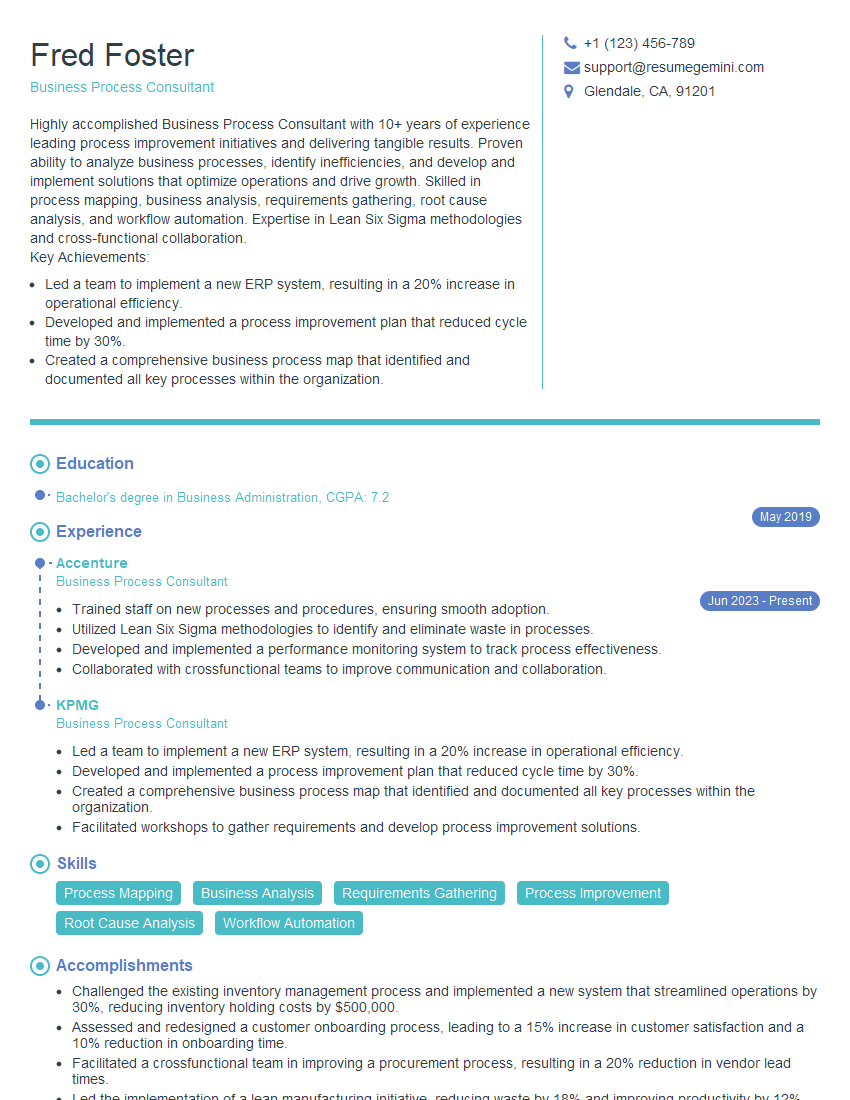
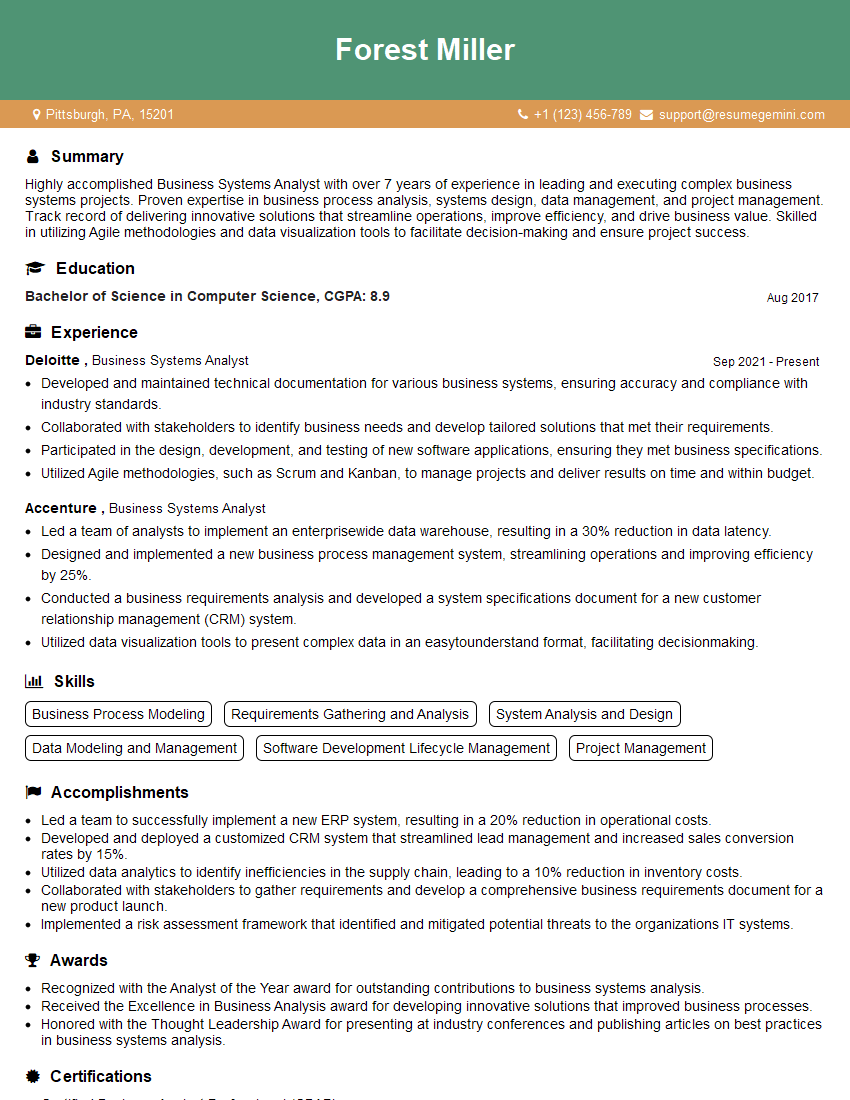
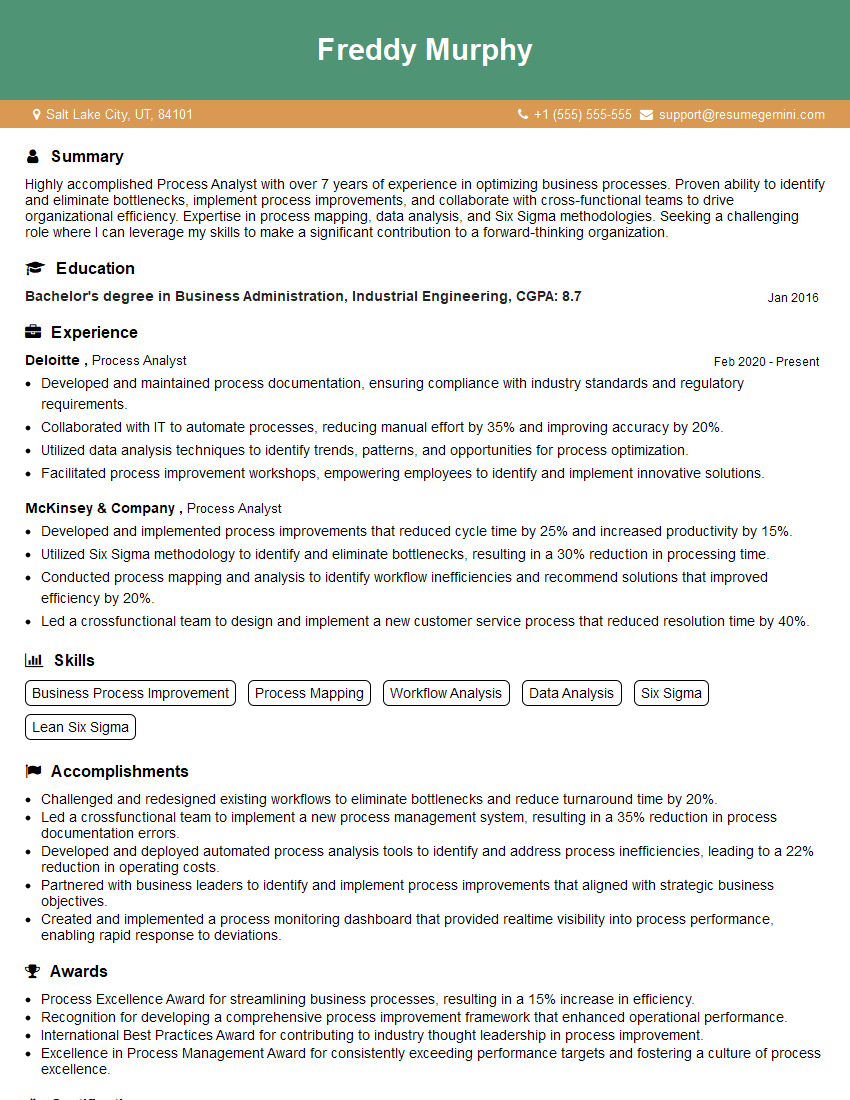
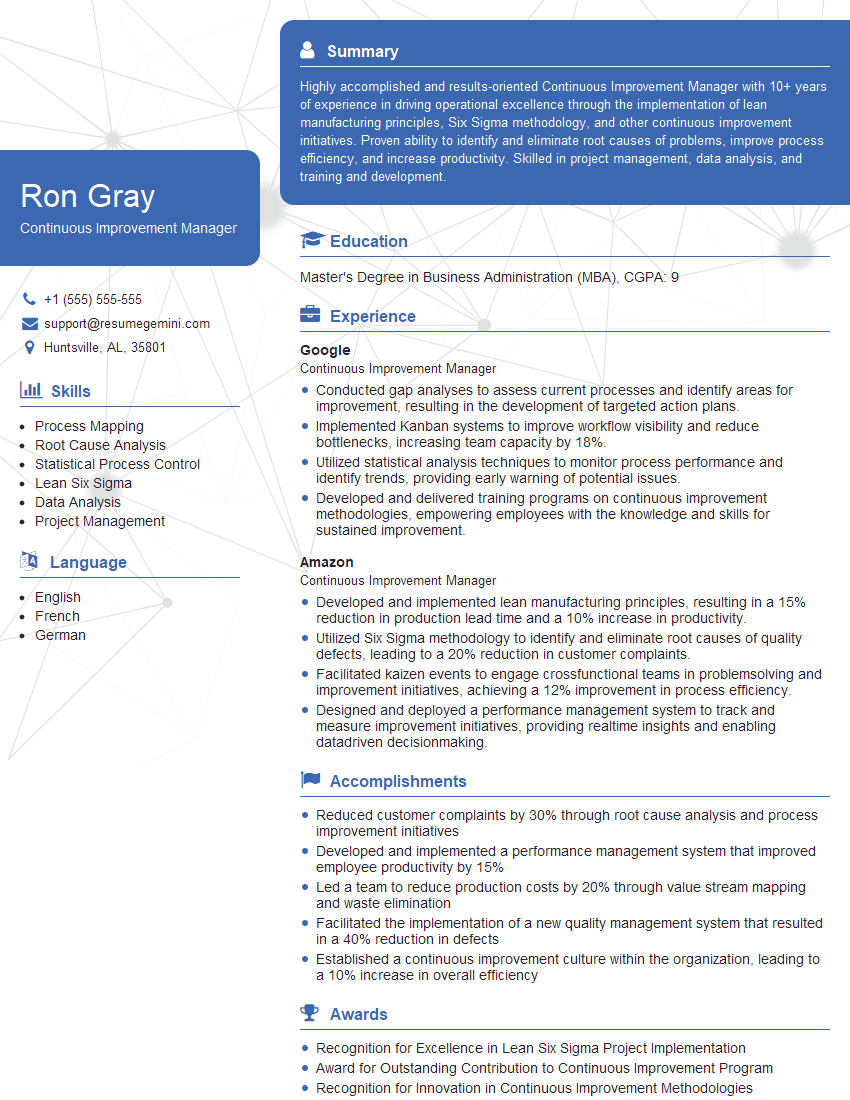
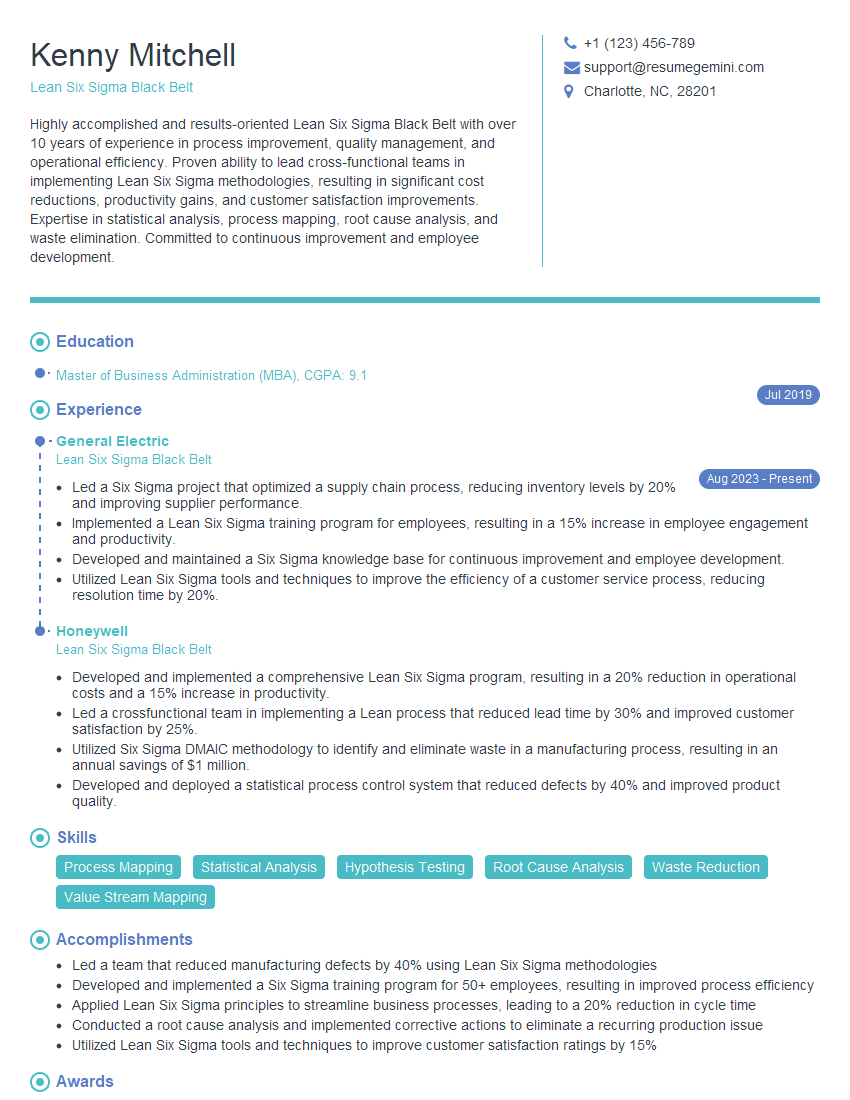
Mastering Business Process Reengineering and Improvement opens doors to exciting career advancements, offering higher responsibility and increased earning potential. A strong resume is crucial in showcasing your skills and experience to prospective employers. Building an ATS-friendly resume is key to getting your application noticed. We recommend using ResumeGemini, a trusted resource, to create a professional and effective resume that highlights your capabilities. ResumeGemini provides examples of resumes tailored to Business Process Reengineering and Improvement roles, to guide you in creating a compelling application. Invest the time to craft a resume that accurately reflects your expertise and helps you land your dream job.
Explore more articles
Users Rating of Our Blogs
Share Your Experience
We value your feedback! Please rate our content and share your thoughts (optional).
What Readers Say About Our Blog
Very informative content, great job.
good