Cracking a skill-specific interview, like one for Cabinetry Installation, requires understanding the nuances of the role. In this blog, we present the questions you’re most likely to encounter, along with insights into how to answer them effectively. Let’s ensure you’re ready to make a strong impression.
Questions Asked in Cabinetry Installation Interview
Q 1. What types of cabinet materials are you familiar with (e.g., wood, laminate, thermofoil)?
Cabinet materials significantly impact the project’s aesthetics, durability, and cost. I’m experienced with a wide range of materials, each with its own properties and advantages.
- Wood: This is a classic choice, offering unparalleled beauty and durability. Different wood types, like cherry, maple, oak, and hickory, offer varying grain patterns, colors, and hardness. Solid wood cabinets are expensive but highly valued for their longevity and potential for refinishing.
- Laminate: A cost-effective option that simulates the look of wood or other materials. Laminate is durable and easy to clean, making it a popular choice for kitchens and bathrooms. However, it’s less resistant to damage than solid wood and can be susceptible to chipping or peeling at the edges if not installed carefully.
- Thermofoil: A PVC-based material that is applied to a substrate, typically MDF (Medium-Density Fiberboard). Thermofoil is very durable, moisture-resistant, and relatively inexpensive. It offers a smooth, consistent finish in various colors and textures, making it a practical option for high-humidity environments.
- MDF (Medium-Density Fiberboard): This engineered wood product is commonly used as a substrate for other materials like laminate and thermofoil. It’s strong, stable, and relatively inexpensive, but it’s not as water-resistant as solid wood.
For instance, I recently completed a project using high-end cherry wood for a client who valued the natural beauty and richness of the material. For another client on a tighter budget, I successfully used a durable laminate that mimicked the look of oak. Understanding the nuances of each material allows me to make informed recommendations based on a client’s budget and desired aesthetic.
Q 2. Describe your experience with different cabinet installation methods.
Cabinet installation methods depend on the cabinet type (face-frame vs. frameless), wall construction, and client preferences. My experience spans several approaches:
- Face-Frame Cabinets: These cabinets have a decorative frame around the doors and drawers. Installation involves attaching the cabinets to the wall studs using screws and ensuring proper alignment with shims and levelers.
- Frameless Cabinets (European Style): These cabinets lack a face frame, offering a sleek, modern look. Installation often involves using concealed hinges and relies heavily on precise measurements and alignment to achieve a clean finish.
- Wall-Mounted Cabinets: These are hung directly on the wall studs using screws and appropriate mounting hardware. Precise measurements are crucial to ensure even spacing and a level installation.
- Base Cabinets: These sit on the floor and require accurate leveling to ensure proper functionality and prevent sagging. Shims and adjustable legs are used to achieve a perfectly level surface.
In one project, we encountered uneven walls, requiring creative solutions like using thicker shims and carefully adjusting the cabinet positions to compensate. The key is adaptability; I always strive to find the most suitable method based on the situation at hand.
Q 3. How do you ensure accurate cabinet alignment and leveling?
Accurate cabinet alignment and leveling are paramount for a professional installation. I use a multi-step process to achieve this:
- Precise Measurements: Start with incredibly detailed measurements of the space and adjust for any discrepancies in the walls or floor.
- Wall Stud Location: Carefully locate the wall studs to ensure cabinets are securely mounted. Using a stud finder is essential.
- Leveling: Utilize a level and shims to ensure that each cabinet is perfectly level both horizontally and vertically. Shims are placed strategically to compensate for uneven walls or floors.
- Plumb Bob: For added accuracy, especially with tall cabinets, a plumb bob can be used to verify vertical alignment.
- Alignment: Check the alignment of cabinets with each other, ensuring consistent spacing and a straight, uniform line across the entire run.
Think of it like building a brick wall – each brick (cabinet) needs to be perfectly placed to avoid instability. Any deviation in leveling or alignment will lead to problems later on, such as doors that don’t close properly or drawers that stick.
Q 4. What tools and equipment are essential for efficient cabinet installation?
Having the right tools is crucial for efficient and accurate cabinet installation. My toolkit includes:
- Measuring Tools: Tape measure (preferably 25ft), laser measure, level (both 2ft and 4ft), square, plumb bob
- Power Tools: Drill (cordless with various drill bits), impact driver, circular saw (for cutting countertops or adjustments), jigsaw (for intricate cuts), router (for special cuts or trim work)
- Hand Tools: Screwdrivers (Phillips and flathead), hammer, utility knife, pliers, wrench set
- Other Essential Tools: Shims, levelers, safety glasses, work gloves, caulk gun, cabinet installation screws, and clamps.
Investing in high-quality tools is worthwhile. They save time, improve accuracy, and ultimately lead to a better finish. I always ensure my equipment is well-maintained and ready for the job.
Q 5. Explain your process for measuring and planning a cabinet installation project.
Measuring and planning are the most critical steps. A meticulous approach avoids costly mistakes and delays.
- Initial Consultation: Discuss client needs, desired style, and budget. Take detailed notes.
- Accurate Measurements: Thoroughly measure the space, including wall dimensions, ceiling height, floor irregularities, window and door locations, and existing plumbing or electrical installations.
- Cabinet Design: Based on measurements, create a detailed cabinet layout plan, taking into account the placement of appliances, sink, and other key elements. Often I utilize CAD software to create a visual representation.
- Material Selection: Finalize the selection of materials (wood type, laminate, etc.) considering the client’s budget and preferences.
- Order Cabinets: Place a precise order with the cabinet supplier based on the finalized plan.
- Final Walkthrough: Before the installation, conduct a final walkthrough with the client to review the plan, ensure accuracy, and address any concerns.
A detailed plan is essential; it’s like creating blueprints for a house. Skipping this stage often leads to complications and rework during the installation process. I’ve learned the hard way that taking extra time at this stage saves time and money in the long run.
Q 6. How do you handle unexpected issues or challenges during installation?
Unexpected issues are inevitable in any construction project. My approach involves:
- Assessment: Calmly assess the situation and identify the exact nature of the problem.
- Problem-Solving: Determine the best solution, considering the impact on the project schedule and budget. Often this involves creative solutions and thinking outside the box.
- Communication: Communicate clearly with the client about the issue, the proposed solution, and any potential impact on the project timeline or cost.
- Implementation: Implement the chosen solution efficiently and effectively.
- Documentation: Document the issue, solution, and any changes made to the project plan.
For example, I once discovered a hidden electrical conduit during a project. Instead of panicking, I carefully adjusted the cabinet layout to avoid the conduit, minimizing disruption to the project. Proactive communication with the client was key to ensuring their understanding and approval of the adjustments.
Q 7. Describe your experience with cabinet hardware installation.
Cabinet hardware installation is the finishing touch that elevates the project. It requires precision and attention to detail.
- Door and Drawer Hinges: Accurate placement of hinges is essential for proper door and drawer alignment. This often requires precise drilling and adjustments.
- Handles and Knobs: Different types of handles and knobs require specific installation methods. I make sure that they are securely attached and aligned correctly.
- Soft-Close Mechanisms: For a smoother and quieter operation, I often install soft-close hinges and drawer slides. Proper installation is crucial for their functionality.
- Drawer Slides: Drawer slides are available in various styles, including undermount, side-mount, and full-extension. Proper installation ensures smooth and effortless operation.
A small detail like an incorrectly installed handle can detract from the overall look. I pay close attention to every detail, ensuring that the hardware is not only functional but also aesthetically pleasing and contributes to the overall project’s quality.
Q 8. How do you ensure the safety of yourself and others during installation?
Safety is paramount in cabinetry installation. It’s not just about following regulations; it’s about creating a culture of safety on every job. My approach is multi-faceted.
Personal Protective Equipment (PPE): I always use appropriate PPE, including safety glasses, work gloves, hearing protection (especially with power tools), and sturdy work boots. This protects me from injuries caused by falling objects, sharp edges, dust, and loud noises.
Proper Tool Usage: I meticulously maintain my tools and ensure they’re in perfect working order. I understand and follow the manufacturer’s instructions for each tool, avoiding shortcuts that could compromise safety. For instance, I always use the correct blade for my saw, and I never force a tool beyond its capabilities.
Work Area Safety: Before starting, I clear the work area of any obstacles and ensure adequate lighting. I use caution tape or barriers to keep the area safe from people who may wander in. I also regularly inspect the stability of ladders and scaffolding.
Lifting Techniques: Cabinetry can be heavy! I utilize proper lifting techniques to prevent back injuries, often using assistance where necessary, rather than risking a strain or drop.
Communication: Clear and consistent communication with my team and clients is essential. We discuss potential hazards and establish safe work practices before beginning any task. This is particularly crucial when working in confined spaces or at heights.
For example, on a recent job, we discovered unexpected wiring behind a wall. Instead of proceeding blindly, we immediately contacted the electrician to ensure the safety of both our team and the electrical system.
Q 9. What are your preferred methods for securing cabinets to walls and floors?
Securing cabinets properly is crucial for longevity and safety. My preferred methods depend on the cabinet type, wall material, and the overall project design.
Walls: For most wall installations, I use a combination of heavy-duty screws and wall anchors appropriate for the wall material (e.g., toggle bolts for drywall, masonry anchors for brick). I always pre-drill pilot holes to prevent cracking and ensure a snug fit. The number and placement of screws vary depending on the cabinet’s weight and size, adhering strictly to manufacturer recommendations.
Floors: Floor-mounted cabinets are secured using heavy-duty floor anchors and appropriate fasteners that penetrate the subfloor or concrete slab. Again, pre-drilling is essential to prevent splitting and ensure proper fastening. I always level the cabinets precisely before securing them to avoid unevenness.
Adhesives: In some situations, I will use construction adhesive in conjunction with mechanical fasteners. This provides extra strength and stability, especially on uneven surfaces or with heavier cabinets. I choose adhesives specifically formulated for wood and the relevant substrates.
Imagine trying to hang a heavy medicine cabinet. Using just nails or small screws would be risky. Instead, I would use appropriate anchors that engage properly with the wall studs to ensure it remains secure and doesn’t fall.
Q 10. What is your experience with installing different cabinet styles (e.g., frameless, framed)?
My experience encompasses a wide range of cabinet styles, each requiring a slightly different approach to installation.
Framed Cabinets: These cabinets feature a face frame around the doors and drawers. They are generally more robust and easier to align, making them suitable for more traditional settings. The installation process involves careful alignment of the face frames and precise screw placement to maintain uniformity and prevent sagging.
Frameless Cabinets (European Style): These cabinets have concealed hinges and drawer slides, presenting a sleek, modern aesthetic. They require precise measurements and careful adjustment of the hinges and slides to ensure proper fit and function. The lack of face frame demands higher precision during installation.
In-set and Overlay Cabinets: I’m also experienced with different door mounting styles. In-set cabinets require precise rabbeting, while overlay cabinets allow for various degrees of overlap.
For example, while the basic principles of leveling and securing remain consistent, the hinge adjustments needed for frameless cabinets require more fine-tuning and expertise. The difference in installation procedures highlights the need for experience with diverse styles.
Q 11. How do you manage your time and prioritize tasks during a cabinet installation project?
Effective time management is crucial in cabinetry installation. I utilize a combination of strategies to ensure projects are completed efficiently and on schedule.
Detailed Planning: Before starting any project, I carefully review the blueprints or plans, identifying any potential challenges or complexities. This allows me to create a realistic timeline and order materials in advance.
Task Prioritization: I prioritize tasks based on their dependency. For example, I will first install the base cabinets, followed by the wall cabinets, and then countertops, completing tasks in a logical order to avoid delays.
Efficient Workflow: I maintain a clean and organized workspace, keeping all necessary tools and materials within easy reach. This reduces wasted time searching for items.
Teamwork: When working with a team, I assign tasks based on individual skills and experience, ensuring optimal efficiency. Clear communication is essential to coordinate efforts effectively.
Contingency Planning: I always build buffer time into my schedule to account for unexpected delays, such as material shortages or unforeseen structural issues.
For instance, on a recent kitchen remodel, we encountered an unexpected plumbing issue. Because we had built in buffer time, we were able to address the problem without significantly impacting the overall project timeline.
Q 12. What is your experience with cabinet modifications or custom work?
I have extensive experience with cabinet modifications and custom work, often tailoring designs to meet clients’ unique needs and space constraints.
Custom Cuts and Modifications: I’m proficient in using various woodworking tools (jigsaw, router, etc.) to make precise cuts and modifications to cabinets, ensuring a perfect fit in unusual spaces or around obstacles.
Custom Designs: I can collaborate with clients and designers to build cabinets from scratch based on custom specifications, incorporating unique features or materials.
Problem-Solving: Often, clients require modifications to accommodate existing features, like oddly-placed outlets or unusual ceiling heights. I approach each challenge with a creative, problem-solving mindset.
One client needed a custom cabinet built to fit around a curved wall in their bathroom. By combining precise measurements and innovative joinery techniques, we created a functional and aesthetically pleasing solution, showcasing my capabilities in custom work.
Q 13. Describe your experience working from blueprints or plans.
Working from blueprints and plans is a crucial aspect of my work. My experience ensures I can accurately interpret these documents and translate them into a successful installation.
Blueprint Interpretation: I’m adept at reading and interpreting various types of architectural plans, including cabinet elevations, floor plans, and detailed drawings. I understand how to extract critical information, such as cabinet dimensions, placement, and material specifications.
Dimensional Accuracy: I use precise measuring techniques to verify the plans’ accuracy and make any necessary adjustments. I always double-check measurements to avoid errors.
Material Selection: I can identify appropriate materials based on the plans’ specifications, ensuring compatibility with the overall design and construction.
Problem Identification: I can identify potential issues or conflicts in the plans before they become major problems, communicating any concerns to the client or designer promptly.
For instance, on one project, the blueprints didn’t account for an existing ductwork. By identifying this discrepancy early on, I was able to adjust the cabinet layout to accommodate the ductwork without significant delays or modifications.
Q 14. How do you troubleshoot common cabinet installation problems?
Troubleshooting is an essential skill in cabinetry installation. I approach problems systematically, using my experience and knowledge to identify and resolve issues efficiently.
Uneven Cabinets: If cabinets are uneven, I’ll check the levelness of the floor or wall, adjusting shims as needed to ensure proper alignment.
Door or Drawer Problems: Problems with doors or drawers are often caused by incorrect adjustment of hinges or slides. I’ll carefully check and adjust these components to restore proper functionality.
Gaps or Misalignments: Gaps between cabinets indicate potential issues with measurements or installation. I will carefully re-measure and adjust the position of the cabinets to ensure a flush fit.
Structural Issues: If the problem involves structural elements like a weak wall, I won’t attempt to force a solution; I’ll consult with the appropriate professionals (e.g., structural engineer) to remedy the underlying issue before proceeding.
For example, if a cabinet door doesn’t close properly, I wouldn’t simply force it. I’d systematically check the hinge screws, the alignment of the hinges themselves, and then the door’s alignment with the frame before adjusting or replacing components as needed. This methodical approach ensures that the problem is solved correctly, rather than masked.
Q 15. What is your understanding of building codes and regulations relevant to cabinet installation?
Building codes and regulations concerning cabinet installation vary by location but generally focus on safety, structural integrity, and accessibility. Understanding these codes is paramount to ensure legal compliance and prevent potential hazards. For example, codes often specify minimum clearances around appliances, proper ventilation for preventing moisture damage, and the use of appropriate fasteners for weight-bearing applications. I regularly consult local building department resources, including websites and published codes, to stay up-to-date on requirements. A common code relates to the placement of cabinets near gas lines – requiring a specific distance and fire-resistant materials. Ignoring these codes can result in failed inspections, costly rework, and potential safety risks.
- Load-bearing capacity: Codes often specify the required weight-bearing capacity of wall studs and the appropriate fasteners to securely affix cabinets, preventing collapse.
- Accessibility: ADA (Americans with Disabilities Act) guidelines dictate minimum clearances beneath cabinets and countertops to accommodate wheelchairs.
- Fire safety: Codes dictate the type of materials allowed near heat sources and the proper installation of fire-rated cabinets.
Career Expert Tips:
- Ace those interviews! Prepare effectively by reviewing the Top 50 Most Common Interview Questions on ResumeGemini.
- Navigate your job search with confidence! Explore a wide range of Career Tips on ResumeGemini. Learn about common challenges and recommendations to overcome them.
- Craft the perfect resume! Master the Art of Resume Writing with ResumeGemini’s guide. Showcase your unique qualifications and achievements effectively.
- Don’t miss out on holiday savings! Build your dream resume with ResumeGemini’s ATS optimized templates.
Q 16. How do you maintain a clean and organized worksite?
Maintaining a clean and organized worksite is crucial for efficiency, safety, and professionalism. My approach involves a multi-step process. Before starting, I thoroughly plan the layout, ensuring clear pathways for movement. I use a designated area for storing tools and materials, preventing clutter and potential hazards. Regularly throughout the day, I sweep away debris and dispose of waste responsibly. All tools are cleaned and put away at the end of each work day. Protecting the customer’s property is also key, using drop cloths and edge protectors to avoid damage. Think of it like preparing for surgery – a clean and organized space allows for precision, focus, and reduces the chance of mistakes.
- Designated areas: Specific zones for tools, materials, and waste.
- Regular cleaning: Frequent sweeping and debris removal.
- Protective measures: Drop cloths and floor protection.
- Tool organization: Proper storage of tools to prevent loss or damage.
Q 17. Describe your experience with using different types of fastening systems.
My experience encompasses a wide range of fastening systems, each suited to different materials and applications. I commonly use screws for attaching cabinets to walls and framing, selecting appropriate lengths and diameters based on the materials and load requirements. For example, using longer screws for heavier cabinets and drywall anchors where studs are unavailable. I also utilize specialized fasteners like cabinet clips and cam locks for assembling cabinet boxes, which offer both strength and adjustability. Finally, I use adhesive for applications like attaching countertops or backsplashes. The right fastener ensures a strong, reliable, and long-lasting installation.
- Screws: Wood screws, drywall screws, and self-tapping screws for various applications.
- Cabinet Clips & Cam Locks: For efficient assembly of cabinet boxes.
- Adhesives: Construction adhesive for countertops and backsplashes.
- Anchors: Drywall anchors, toggle bolts, and expansion anchors for securing cabinets to various wall types.
Q 18. What is your experience with installing countertops in conjunction with cabinets?
Installing countertops in conjunction with cabinets requires precision and careful measurement. My approach begins with precise cabinet installation, ensuring level and plumb surfaces. Once the cabinets are perfectly aligned and secured, I take accurate measurements for the countertop, accounting for any overhangs or cutouts. I work closely with countertop fabricators to ensure a seamless transition between the cabinets and countertops. A common issue I address is uneven cabinet installation leading to gaps or inconsistencies with the countertop. Careful attention to detail in the initial cabinet installation is crucial for a beautiful finished product.
- Precise Measurements: Accurate measurements are critical for a perfect fit.
- Level and Plumb Cabinets: Ensuring level and plumb cabinet installation is crucial for a seamless countertop.
- Coordination with Fabricators: Collaboration with countertop installers to ensure a smooth process.
- Template Creation: Precise templates are created for the fabrication of countertops.
Q 19. How do you handle customer concerns or complaints during an installation?
Handling customer concerns is a critical aspect of my job. I always prioritize open communication and actively listen to the customer’s perspective. I calmly explain the situation and offer solutions. If there’s a legitimate issue, I take responsibility and work to rectify it promptly. Even minor concerns are addressed professionally to maintain a positive customer relationship. Remember, the goal is not only to solve the problem, but also to restore trust and build rapport. One time a customer was concerned about a slight gap between the countertop and backsplash. I explained the cause, offered a quick and easy solution, and the customer was satisfied with my response and professionalism.
- Active Listening: Understanding the customer’s concerns.
- Clear Communication: Explaining the issue and proposed solutions.
- Prompt Action: Addressing the issue efficiently and effectively.
- Professionalism: Maintaining a calm and respectful demeanor throughout the process.
Q 20. Describe your experience with installing cabinet lighting.
Installing cabinet lighting enhances both functionality and aesthetics. My experience covers various lighting types, including under-cabinet lighting, puck lights, and integrated LED strips. I carefully consider the type of lighting, placement, and power source based on the design and customer preferences. Proper wiring and adherence to electrical codes are essential for safety and compliance. For example, I often use low-voltage LED systems for under-cabinet lighting to reduce energy consumption and improve safety. Before installation, I always confirm the electrical wiring and ensure compliance with all relevant codes.
- Lighting Types: LED strips, puck lights, under-cabinet lighting.
- Wiring: Proper wiring and connections to ensure functionality and safety.
- Electrical Codes: Compliance with all relevant electrical codes and regulations.
- Placement: Strategic placement for optimal illumination and aesthetics.
Q 21. How do you ensure the structural integrity of installed cabinets?
Ensuring structural integrity is paramount in cabinet installation. This involves carefully selecting appropriate fasteners and anchoring methods based on the cabinet weight, wall material, and load-bearing capacity of the structure. I always double-check wall studs before installation and use appropriate anchors when studs aren’t readily available. Leveling and aligning cabinets accurately is vital; poorly leveled cabinets can lead to stress and failure over time. I regularly inspect my work throughout the installation process to catch and rectify any issues before they escalate. Think of it as building a sturdy foundation for the entire kitchen design – a solid base ensures stability and longevity.
- Fastener Selection: Choosing the correct screws and anchors for the load and material.
- Wall Stud Location: Verifying the presence of studs before drilling.
- Leveling & Alignment: Precise leveling and alignment of cabinets to prevent stress and strain.
- Regular Inspection: Frequent checks during installation to maintain structural integrity.
Q 22. What safety precautions do you take when working with power tools?
Safety is paramount in cabinetry installation. My approach to power tool safety is multifaceted and begins before I even switch on a machine. I always inspect tools for damage before each use – checking cords for fraying, blades for sharpness and alignment, and ensuring all guards are securely in place. This preventative maintenance is crucial.
- Personal Protective Equipment (PPE): I consistently wear safety glasses, hearing protection, and a dust mask, especially when dealing with fine wood particles. For certain tasks, I also utilize work gloves and a respirator.
- Proper Tool Handling: I maintain a firm grip on tools, use the correct tool for the job, and never rush. I also ensure the work area is clear of obstructions and well-lit. A cluttered space increases the risk of accidents.
- Machine Operation: I’m meticulous about following the manufacturer’s instructions for each tool. This includes understanding speed settings, blade types, and safety features. I never operate a tool if I’m unsure of its operation.
- Emergency Procedures: I’m familiar with the location of first-aid kits and emergency contact information on each job site. I’m also trained in basic first aid and CPR.
For instance, when using a table saw, I always use a push stick to avoid hand injuries. With a router, I use a router table to better control the tool and ensure safety. These practices aren’t just rules; they’re habits ingrained through years of experience. Safety is not just about avoiding injury; it’s about ensuring consistent, high-quality work. A safe worker is a productive worker.
Q 23. What is your experience with working in both residential and commercial settings?
I possess extensive experience in both residential and commercial cabinetry installation. My residential projects range from small-scale kitchen renovations in private homes to complete custom cabinetry solutions for luxury properties. In these settings, I collaborate closely with homeowners, understanding their unique styles and preferences, and often working within existing structures and architectural limitations. I’m adept at managing client expectations and ensuring a seamless integration of the cabinetry within their homes.
My commercial experience includes working on large-scale projects such as restaurants, office buildings, and retail spaces. These projects require a different approach, focusing on efficiency, adherence to strict deadlines, and coordination with other tradespeople. I have a proven track record of managing complex installations involving multiple cabinet types and large quantities of materials, while maintaining the highest quality standards.
The key difference lies in the scale and complexity of projects. Residential work often involves more personalized design elements and a higher degree of client interaction, while commercial projects demand efficiency, precision, and adherence to building codes and regulations. I’m comfortable and successful in both environments.
Q 24. How do you manage waste disposal during a cabinet installation?
Waste management is a critical part of responsible cabinetry installation. My approach is threefold: Reduce, Reuse, Recycle.
- Reduce: I begin by carefully planning cuts and utilizing materials efficiently to minimize waste. Accurate measurements and precise cutting techniques are essential. I always prioritize using pre-fabricated components whenever possible.
- Reuse: Whenever feasible, I reuse scrap wood for smaller projects or packaging. For example, smaller pieces might be used for custom shelving or drawer dividers.
- Recycle: All wood scraps, packaging materials (cardboard, plastic), and metal components are sorted and disposed of properly according to local regulations. I often work with local recycling centers or waste management companies to ensure proper disposal.
On larger projects, I maintain detailed records of waste generation and disposal. This is important for both environmental responsibility and potential auditing purposes. This systematic approach to waste management ensures that installations are not only beautiful but also environmentally conscious.
Q 25. Describe your understanding of different cabinet finishing techniques.
Cabinet finishing significantly impacts both the aesthetics and durability of the final product. My experience encompasses a range of techniques, including:
- Painting: I’m proficient in various painting techniques, from applying primers and base coats to achieving smooth, high-gloss finishes. I understand the importance of proper surface preparation, ensuring a flawless finish that’s resistant to chipping and scratches.
- Staining: I’m skilled in applying stains to enhance the natural wood grain. This involves understanding different stain types (oil-based, water-based), application methods, and techniques for achieving the desired level of color saturation and depth.
- Lacquering/Varnishing: I use high-quality lacquers and varnishes to protect the cabinet surfaces from moisture and damage, enhancing their durability and longevity. The choice of finish depends on the desired look and the environment where the cabinets will be installed.
- Distressing Techniques: For projects requiring a more rustic or antique look, I can apply distressing techniques such as glazing, antiquing, and distressing to create unique and visually appealing finishes.
Understanding the properties of each finish and the proper application techniques is crucial for a long-lasting, beautiful result. For example, I select oil-based finishes for durability in high-moisture areas like bathrooms, while water-based finishes might be preferable for low-VOC (volatile organic compounds) environments.
Q 26. What is your experience with installing specialized cabinet features (e.g., pull-outs, lazy susans)?
Installing specialized cabinet features, such as pull-outs, lazy Susans, and other organizational solutions, requires precision and attention to detail. I’ve worked extensively with a variety of these features.
My experience includes installing different types of pull-out shelves (including those with soft-close mechanisms), various designs of lazy Susans (both full and half-circle), and custom built-in organizational systems tailored to client needs. I am familiar with the installation requirements for each system and am adept at ensuring proper functionality and alignment within the cabinet frame. This often includes precise measurements, careful drilling, and meticulous adjustments for smooth operation.
For example, installing a soft-close mechanism requires careful attention to the placement of the dampening components to ensure that the drawers close smoothly and silently. Similarly, installing a lazy Susan necessitates precise alignment to ensure smooth rotation and prevent binding. This level of precision guarantees functionality and enhances user satisfaction.
Q 27. How do you ensure that your work meets the client’s expectations and specifications?
Meeting client expectations and specifications is my top priority. This starts with a clear and detailed initial consultation. I meticulously review blueprints, sketches, or design renderings to fully grasp the client’s vision. I ask clarifying questions and offer suggestions based on my expertise. This collaborative approach allows for the development of a precise plan and minimizes potential misunderstandings.
During the installation process, I maintain open communication with the client, providing regular updates and addressing any questions or concerns that may arise. I also encourage client feedback throughout the project, allowing for adjustments and modifications as needed. For example, if during installation, we discover an unexpected issue, I proactively contact the client to discuss solutions and ensure their approval before proceeding. This transparent approach fosters trust and strengthens the client-contractor relationship.
Before project completion, I conduct a thorough walk-through with the client, ensuring that the cabinets meet their expectations. This is an opportunity to address any final adjustments and ensure complete satisfaction. A satisfied client is testament to a job well done.
Q 28. Explain your experience with post-installation inspection and quality control.
Post-installation inspection and quality control are essential for ensuring the longevity and functionality of the installed cabinetry. My quality control process begins during the initial installation and continues through the final walk-through.
- Functionality Checks: I meticulously check the functionality of all doors, drawers, hinges, and other mechanisms, ensuring smooth operation and proper alignment. I also verify that all shelves and accessories are securely installed and functioning correctly.
- Alignment and Leveling: I use precision measuring tools to verify that the cabinets are properly aligned and leveled, ensuring a professional and aesthetically pleasing finish. Any misalignment is promptly corrected.
- Surface Inspection: I carefully inspect the surfaces for any damage, imperfections, or inconsistencies. This includes checking for scratches, dents, and ensuring the finish is consistent and flawless.
- Final Walk-Through: I conduct a final walk-through with the client, addressing any remaining concerns and ensuring their complete satisfaction with the installation.
My commitment to quality control is reflected in the long-lasting beauty and functionality of my installations. I aim for perfection and take pride in the high standard of my work. It’s not just about completing the job; it’s about creating a lasting, high-quality result for my clients.
Key Topics to Learn for Cabinetry Installation Interview
- Cabinetry Design & Blueprint Reading: Understanding cabinet specifications, dimensions, and installation drawings. Practical application: Accurately interpreting blueprints to ensure proper installation.
- Installation Techniques & Methods: Mastering various installation methods for different cabinet types (e.g., wall cabinets, base cabinets, corner units). Practical application: Knowing when to use different fastening techniques and adjusting to unique wall structures.
- Tools & Equipment: Familiarity with power tools (drills, saws, etc.), hand tools, and measuring instruments essential for efficient and safe installation. Practical application: Selecting the appropriate tools for each task and maintaining them properly.
- Material Handling & Safety Procedures: Safe and efficient handling of cabinet materials, adherence to safety regulations, and understanding of potential hazards. Practical application: Preventing injury and damage to materials through proper lifting techniques and safety protocols.
- Troubleshooting & Problem Solving: Identifying and resolving common installation issues (e.g., uneven walls, misaligned cabinets). Practical application: Developing creative solutions to overcome unexpected challenges on the job site.
- Finishing & Detail Work: Understanding cabinet finishing techniques, door/drawer alignment, and ensuring a professional, high-quality finish. Practical application: Creating a seamless and aesthetically pleasing final product.
- Code Compliance & Building Regulations: Familiarity with relevant building codes and regulations related to cabinetry installation. Practical application: Ensuring installations meet safety and regulatory standards.
Next Steps
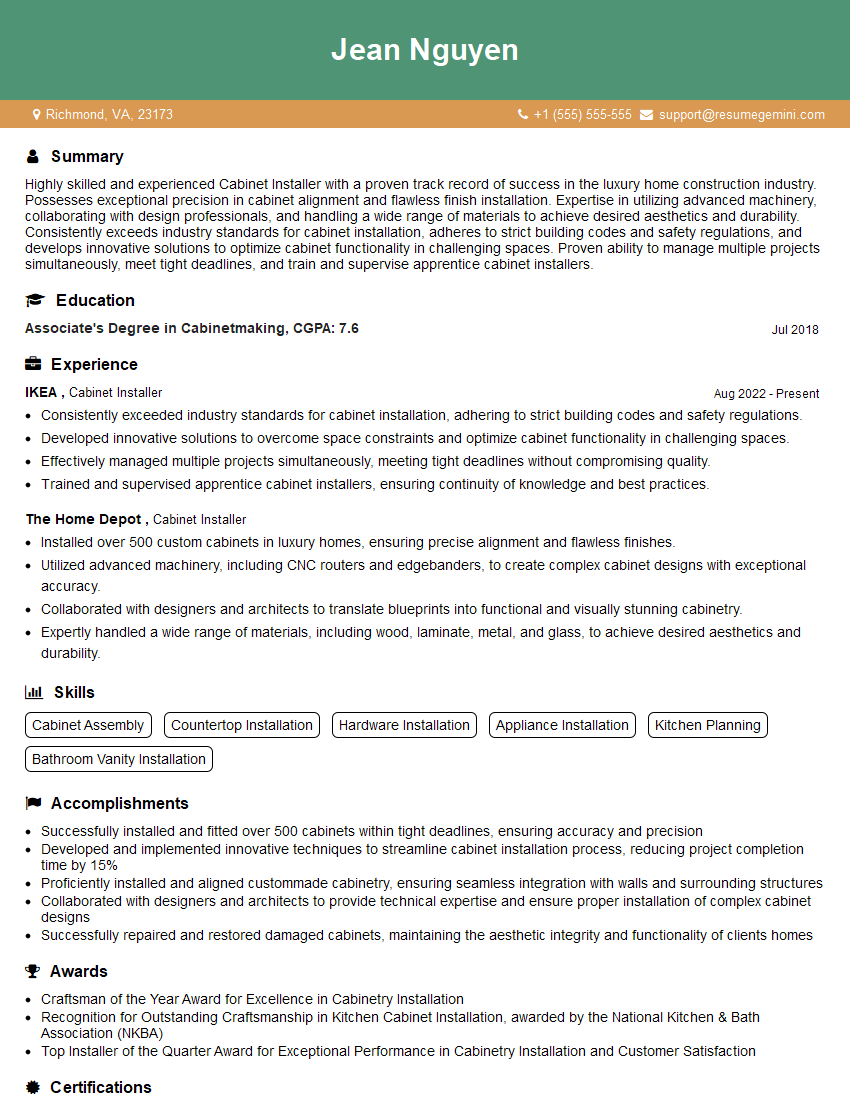
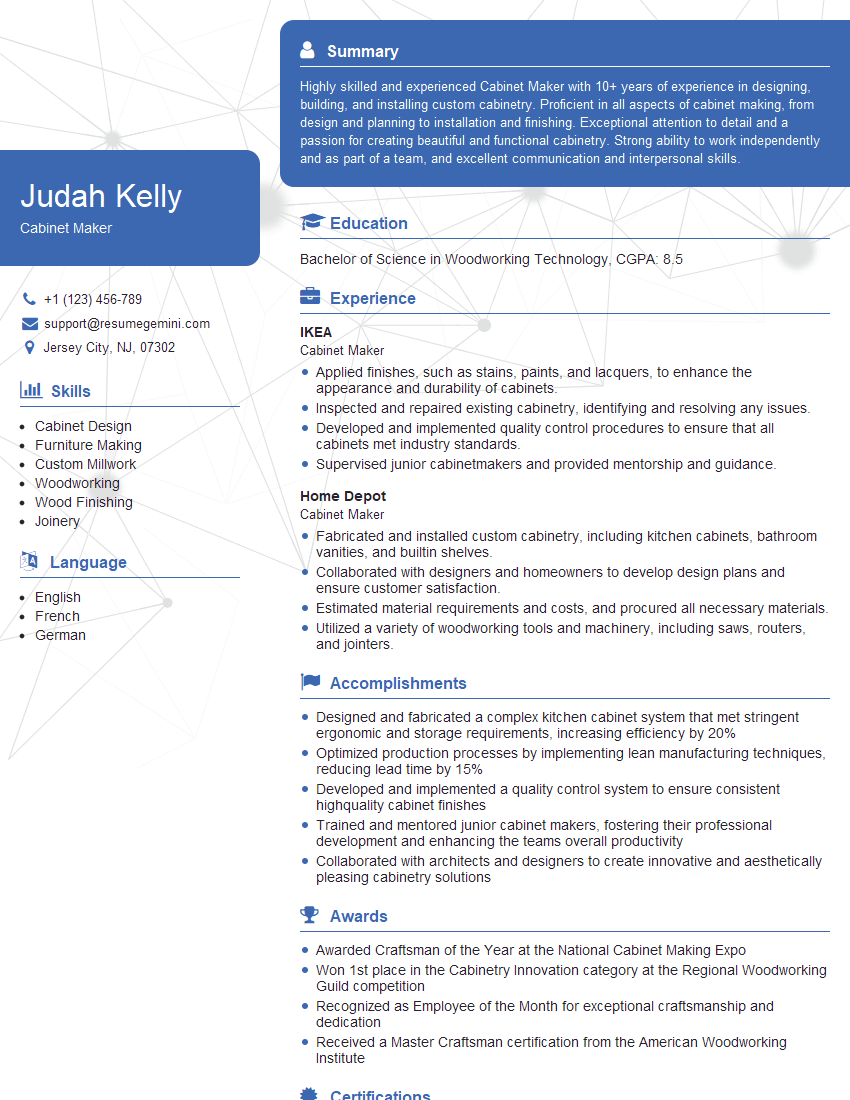
Mastering cabinetry installation opens doors to a rewarding career with excellent growth potential, offering opportunities for specialization and increased earning power. To maximize your job prospects, creating an ATS-friendly resume is crucial. ResumeGemini is a trusted resource to help you build a professional and impactful resume that highlights your skills and experience effectively. Examples of resumes tailored to Cabinetry Installation are provided to guide you in crafting your application materials.
Explore more articles
Users Rating of Our Blogs
Share Your Experience
We value your feedback! Please rate our content and share your thoughts (optional).
What Readers Say About Our Blog
Very informative content, great job.
good