The right preparation can turn an interview into an opportunity to showcase your expertise. This guide to Floodplain Mapping and Regulation interview questions is your ultimate resource, providing key insights and tips to help you ace your responses and stand out as a top candidate.
Questions Asked in Floodplain Mapping and Regulation Interview
Q 1. Describe the different types of floodplain maps and their applications.
Floodplain maps are crucial tools for understanding and managing flood risks. Different types cater to various needs and scales. Common types include:
- Regulatory Flood Insurance Rate Maps (FIRMs): These are the most widely known, produced by FEMA (Federal Emergency Management Agency). They delineate flood hazard areas, influencing insurance rates and development regulations. Think of them as the ‘official’ map for flood risk within a community. For example, a FIRM would show the 100-year floodplain, indicating areas with a 1% annual chance of flooding.
- Flood Inundation Maps: These maps show the extent of flooding for various flood events (e.g., 25-year, 50-year, 100-year floods). They provide a visual representation of how deep and far the water could reach under different flood scenarios, useful for emergency planning and evacuation routes.
- Hydrologic Floodplain Maps: These maps focus on the water flow characteristics of a floodplain, providing information on water depth, velocity, and flow direction during a flood. This data is critical for engineers designing bridges, culverts, and other infrastructure that interacts with floodwaters.
- High-Resolution Floodplain Maps: Using advanced techniques like LiDAR (Light Detection and Ranging), these maps provide significantly more detail than traditional maps, accurately capturing subtle elevation changes crucial for precise flood modeling.
Applications range from community planning and infrastructure development (avoiding construction in high-risk zones) to insurance rating, emergency response planning (identifying evacuation routes and vulnerable populations), and environmental impact assessments.
Q 2. Explain the process of flood hazard delineation.
Flood hazard delineation is the process of identifying and mapping areas prone to flooding. It’s a multi-step process involving:
- Data Collection: Gathering topographic data (elevation), rainfall data, stream gauge information, historical flood records, and land use data. This is like gathering all the clues to solve a mystery.
- Hydraulic Modeling: Using software to simulate water flow within a river basin. This involves defining the river channel geometry, roughness, and the inflow hydrographs (volume of water over time) to predict water levels and extent during floods. This is like creating a virtual flood.
- Statistical Analysis: Determining the probability of different flood events (e.g., 100-year flood). This involves analyzing historical flood data and using statistical methods to predict the likelihood of future events. This is like calculating the odds of a certain outcome.
- Map Creation: Creating a map that visually represents the areas that are likely to be inundated during various flood events. This often includes different flood zones according to their risk level.
- Validation and Review: The mapped areas are checked against historical flood data and on-site observations to ensure accuracy and reliability.
Imagine a city near a river. Delineating flood hazard helps the city plan for construction, infrastructure, and emergency services, ensuring safety and minimizing future flood damage. Poor delineation could lead to devastating consequences.
Q 3. What are the key components of a comprehensive floodplain management plan?
A comprehensive floodplain management plan is a long-term strategy aimed at minimizing flood risk and its impacts. Key components include:
- Floodplain Mapping and Analysis: Accurate identification of flood-prone areas using various mapping techniques and hydraulic modeling.
- Regulatory Measures: Implementing zoning regulations to restrict development in high-risk areas, requiring elevation of structures, and enforcing building codes designed to withstand flooding. Think of it as creating building guidelines to avoid problems.
- Flood Mitigation Measures: Implementing structural measures (e.g., levees, dams, retention ponds) and non-structural measures (e.g., early warning systems, land acquisition, floodplain buyouts) to reduce flood risk.
- Emergency Preparedness and Response: Developing plans for evacuation, rescue, and recovery during flood events. This is about preparedness and reacting quickly to a crisis.
- Public Awareness and Education: Educating the public about flood risks and encouraging responsible land use practices.
- Financial Resources: Securing funding for implementing the plan and managing flood events.
A well-crafted plan ensures the safety of the community while enabling sustainable development. It’s a balancing act between allowing for progress and protecting the environment.
Q 4. How do you incorporate LiDAR data into floodplain mapping?
LiDAR (Light Detection and Ranging) is a powerful remote sensing technology that provides highly accurate elevation data. Incorporating LiDAR data into floodplain mapping significantly improves accuracy and detail:
- Data Acquisition: LiDAR surveys collect millions of elevation points across a floodplain, creating a detailed digital elevation model (DEM).
- Preprocessing: The raw LiDAR data undergoes processing to remove noise and errors, creating a clean DEM suitable for hydrological modeling.
- Integration with Hydraulic Models: The DEM is integrated into hydraulic models as the topographic base, providing a much more accurate representation of the floodplain’s geometry.
- Flood Inundation Modeling: The models then simulate the flood’s extent and depth based on the high-resolution elevation data.
- Map Generation: The results are visualized on maps showing precise flood extents and depths.
For instance, LiDAR can detect subtle elevation changes that might be missed by traditional surveying, improving the accuracy of flood predictions in complex terrains. This is particularly helpful in urban areas with complex drainage systems.
Q 5. What are the limitations of hydraulic modeling in floodplain analysis?
While hydraulic modeling is invaluable in floodplain analysis, limitations exist:
- Data Uncertainty: Inaccurate input data (e.g., rainfall, river roughness) will lead to inaccurate model outputs. Garbage in, garbage out!
- Model Simplifications: Models simplify complex natural processes, leading to potential errors. For example, they might not fully account for overbank flow or complex interactions between water and vegetation.
- Computational Limitations: High-resolution modeling of large areas can be computationally intensive and time-consuming.
- Lack of Real-World Validation: Models need to be validated against real-world observations (e.g., historical flood events) to ensure accuracy.
- Uncertainty in Future Climate Change Impacts: Predicting future flood risk accurately requires understanding the uncertainties associated with climate change and its effect on rainfall patterns and river flows.
It’s crucial to acknowledge these limitations and use multiple sources of information and model validation techniques to ensure the reliability of the results.
Q 6. Describe different flood mitigation strategies and their effectiveness.
Flood mitigation strategies aim to reduce the impact of floods. These can be categorized as structural or non-structural:
- Structural Measures: These involve physical structures that control or redirect floodwaters. Examples include levees, dams, retention ponds, floodwalls, and channel improvements. They are effective in protecting specific areas but can be expensive and have environmental impacts.
- Non-Structural Measures: These focus on reducing vulnerability to flooding through regulations, policies, and public awareness. Examples include floodplain zoning regulations, building codes, early warning systems, flood insurance, land acquisition (buying out properties in flood-prone areas), and public education programs. These can be more cost-effective in the long run, especially for larger floodplains, and reduce the environmental impact.
The effectiveness of a strategy depends on the specific context (e.g., size of the floodplain, community resources, and environmental considerations). Often, a combination of both is the most effective approach.
For instance, building a levee might protect a town from river flooding but could increase the risk downstream. A comprehensive plan might involve a levee coupled with land acquisition upstream to reduce the overall flood volume. This balanced approach recognizes the complexities of flood management.
Q 7. Explain the role of FEMA in floodplain management.
The Federal Emergency Management Agency (FEMA) plays a pivotal role in U.S. floodplain management. Key roles include:
- Floodplain Mapping: FEMA produces and updates the National Flood Insurance Program (NFIP) maps (FIRMs) – the regulatory maps discussed earlier. These maps delineate flood hazard areas, guiding development and influencing insurance rates.
- National Flood Insurance Program (NFIP): FEMA administers the NFIP, providing affordable flood insurance to homeowners and businesses in participating communities. This helps mitigate financial losses from flooding.
- Risk Assessment and Mitigation: FEMA provides guidance and resources to communities to help them assess and reduce flood risks. This includes technical assistance, training, and funding for mitigation projects.
- Disaster Response and Recovery: FEMA plays a crucial role in responding to and recovering from major flood disasters, providing emergency assistance to affected individuals and communities.
Essentially, FEMA acts as a central authority, setting standards, providing resources, and supporting communities in their efforts to manage flood risk. Their involvement is critical for national-level coordination and consistency in flood management across the country. FEMA’s influence is deeply woven into the fabric of floodplain management in the US.
Q 8. How do you interpret flood insurance rate maps (FIRMs)?
Flood Insurance Rate Maps (FIRMs) are the cornerstone of the National Flood Insurance Program (NFIP). They depict the areas subject to inundation from various flood events. Interpreting a FIRM involves understanding its different components. First, you identify the base flood elevation (BFE) for a specific location, which represents the height to which floodwaters are projected to reach during a base flood event (typically a 1% annual chance flood). This is crucial for determining flood risk and required building elevations. The map also shows flood zones, like A (areas with minimal elevation data), AE (areas with detailed elevation data and specifically defined base flood elevations), X (areas determined to be outside the 100-year floodplain), and others. Each zone has specific requirements for building and development. For instance, a property in an AE zone will have stricter elevation requirements than a property in an X zone. Finally, the FIRM legend provides essential details regarding its creation date, the methodology used, and any limitations. Understanding this legend is crucial for proper interpretation, as FIRMs are updated periodically.
Imagine you’re buying a house. Consulting the FIRM allows you to determine your flood risk and the potential cost of flood insurance. If the property is within a high-risk zone, you’ll need to comply with specific building codes to minimize flood damage and obtain insurance.
Q 9. What are the legal and regulatory requirements for floodplain development?
Legal and regulatory requirements for floodplain development vary by location but generally stem from the NFIP and local ordinances. At the federal level, the NFIP mandates compliance with building codes designed to reduce flood damage. This often involves elevating structures above the BFE, using flood-resistant materials, and incorporating drainage systems. Local jurisdictions frequently impose stricter regulations, including zoning restrictions that limit development in high-risk areas or mandate certain types of development (e.g., parks or open spaces) in floodplains. These regulations aim to minimize flood damage, protect human life, and preserve natural floodplain functions.
For example, a developer planning a residential subdivision in a floodplain might need to obtain permits from various agencies, demonstrating compliance with FEMA’s requirements and local ordinances. Failure to comply can lead to hefty fines, project delays, or even project denial.
Q 10. Describe the National Flood Insurance Program (NFIP) and its requirements.
The National Flood Insurance Program (NFIP) is a partnership between the federal government and communities to reduce the impact of flooding through a comprehensive approach to flood risk management. It offers affordable flood insurance to property owners in participating communities. To participate, communities must adopt and enforce floodplain management ordinances that meet or exceed NFIP standards. These ordinances typically require that new construction and substantial improvements in high-risk flood zones meet minimum elevation requirements. Furthermore, the NFIP emphasizes mitigation strategies, such as floodplain acquisition and restoration, to reduce the overall flood risk.
A key requirement is the adoption and enforcement of floodplain management ordinances. These ordinances are tailored to specific community needs but must meet minimum NFIP standards to ensure that development occurs safely and responsibly within the floodplain. These ordinances might involve regulations on land use, construction standards, and elevation requirements.
Q 11. How do you assess the accuracy and reliability of floodplain data?
Assessing the accuracy and reliability of floodplain data involves a multi-faceted approach. We examine the source data, methodology used for creating the flood maps (e.g., hydraulic modeling, hydrological analysis), and the age of the data. Recent advancements in remote sensing, lidar, and high-resolution digital elevation models (DEMs) have greatly improved the accuracy of floodplain mapping. However, even with advanced technology, uncertainties remain. We often find discrepancies in different datasets or inconsistencies in elevation data.
We use several strategies to evaluate accuracy. We compare the data against ground surveys, historical flood records, and other independent datasets. We assess the uncertainty associated with the modeling parameters and input data and incorporate these uncertainties in our assessment of the accuracy. We also look for inconsistencies and anomalies in the data and investigate their potential causes. Furthermore, the date of the map’s creation is critical; older data might not reflect current conditions due to changes in land cover and development.
Q 12. What are the environmental impacts of floodplain development?
Floodplain development carries significant environmental impacts. Construction disrupts natural habitats, leading to loss of biodiversity and ecosystem services. Impervious surfaces from roads and buildings increase runoff, exacerbating flooding in downstream areas. Fill material used for development alters soil characteristics and can contaminate groundwater. Changes to the natural flow of water can affect aquatic life, water quality, and sediment transport. Furthermore, the destruction of riparian vegetation reduces the floodplain’s natural ability to absorb floodwaters, increasing flood risk. These impacts can disrupt natural cycles, reduce resilience to future floods, and compromise the long-term health of the ecosystem.
For example, the construction of a shopping mall on a floodplain might destroy wetlands, impacting numerous bird species and decreasing the area’s capacity to absorb floodwaters, thus increasing the risk of flooding for neighboring communities.
Q 13. Explain the difference between base flood elevation (BFE) and floodway.
The base flood elevation (BFE) is the height to which floodwaters are projected to reach during a base flood event (typically a 1% annual chance flood). It’s a crucial parameter used in determining building elevations and flood insurance rates. The floodway, on the other hand, is the channel of a river or stream and the adjacent land areas that must remain largely unobstructed to effectively convey floodwaters. Development restrictions are typically much stricter within the floodway compared to other areas of the floodplain.
Think of it like this: the BFE is the water level, and the floodway is the path that water takes. Buildings must be elevated above the BFE to avoid flood damage, and the floodway must be kept clear to allow for efficient passage of floodwaters, preventing backups and increased flooding in other areas.
Q 14. Describe your experience with GIS software used in floodplain mapping.
I have extensive experience using GIS software, including ArcGIS and QGIS, for floodplain mapping and analysis. My expertise encompasses data acquisition, processing, and analysis, as well as map creation and visualization. I’m proficient in using various spatial datasets, including DEMs, LiDAR data, hydrological models, and FIRM data. I routinely use GIS tools to perform hydrological modeling, delineate floodplains, create flood inundation maps, and assess the impact of development scenarios on flood risk. I also utilize geoprocessing tools to automate repetitive tasks and improve efficiency. For instance, I’ve used ArcGIS to model flood inundation based on various flood scenarios, integrating data from LiDAR and hydrological models. This helped stakeholders understand the potential impact of different development proposals and inform better decision-making.
I can give specific examples of projects where I integrated various datasets using spatial analysis techniques. This allowed us to model the flow of water, identify areas vulnerable to flooding, and incorporate the results into comprehensive floodplain maps, making them readily accessible and understandable to all relevant stakeholders.
Q 15. How do you analyze and interpret hydrological data?
Analyzing hydrological data for floodplain mapping involves understanding the flow of water within a watershed. This begins with gathering data from various sources, including stream gauges (measuring water levels and discharge), rainfall stations, and historical flood records. We then use this data to perform several key analyses:
Hydrograph analysis: This involves plotting the water level or discharge over time. It helps identify peak flows, recurrence intervals (how often a given flood magnitude occurs), and the timing and duration of flood events. For example, we might see a hydrograph showing a rapid rise in water level during a heavy rainfall event, followed by a slower decline.
Frequency analysis: Using statistical methods, we determine the probability of floods of different magnitudes occurring within a certain time period. This is often expressed as a recurrence interval (e.g., a 100-year flood has a 1% chance of occurring in any given year). This informs the design of flood protection measures.
Rainfall-runoff modeling: We use hydrological models to simulate the relationship between rainfall and streamflow. These models incorporate factors like soil type, land use, and topography to predict runoff volumes and peak flows under different rainfall scenarios. A common example is the HEC-HMS model.
Hydraulic modeling: Software like HEC-RAS is used to simulate water flow in rivers and channels. This allows us to determine water depths and velocities under various flood scenarios, essential for floodplain delineation.
Interpreting the results requires a thorough understanding of the limitations of the data and the models. We need to consider data uncertainties, model assumptions, and potential biases to draw robust conclusions and avoid oversimplification.
Career Expert Tips:
- Ace those interviews! Prepare effectively by reviewing the Top 50 Most Common Interview Questions on ResumeGemini.
- Navigate your job search with confidence! Explore a wide range of Career Tips on ResumeGemini. Learn about common challenges and recommendations to overcome them.
- Craft the perfect resume! Master the Art of Resume Writing with ResumeGemini’s guide. Showcase your unique qualifications and achievements effectively.
- Don’t miss out on holiday savings! Build your dream resume with ResumeGemini’s ATS optimized templates.
Q 16. How do you incorporate uncertainty into floodplain analysis?
Uncertainty is inherent in floodplain analysis due to limitations in data availability, model accuracy, and the inherent variability of hydrological processes. We incorporate uncertainty through several methods:
Sensitivity analysis: We systematically vary input parameters (e.g., rainfall intensity, roughness coefficients) to assess their impact on model outputs (e.g., water depth, flood extent). This helps identify the most influential factors and quantify the uncertainty associated with them.
Monte Carlo simulation: We use probabilistic methods to generate multiple model runs with randomly sampled input parameters, creating a distribution of possible outcomes. This provides a range of possible flood extents, reflecting the uncertainty in our predictions.
Ensemble forecasting: Using multiple hydrological models to predict flood events provides a range of potential outcomes, accounting for different model assumptions and uncertainties. A consensus among models increases confidence in the forecast, while disagreement highlights uncertainty.
Error propagation: We quantify the uncertainty in the input data and propagate it through the models to estimate the uncertainty in the final results. This ensures that the uncertainty in the floodplain map accurately reflects the uncertainty in the underlying data and analyses.
Communicating uncertainty transparently is crucial. We use probabilistic statements (e.g., ‘there is a 90% chance that the flood will not exceed this level’) rather than deterministic statements (e.g., ‘the flood will reach this level’) to reflect the inherent uncertainty involved.
Q 17. Explain different methods of flood forecasting and warning.
Flood forecasting and warning systems rely on a combination of real-time data monitoring and hydrological modeling. Methods include:
Hydrological forecasting models: These models use real-time rainfall data and streamflow measurements to predict future water levels and flows. Examples include the National Weather Service’s Advanced Hydrologic Prediction Service (AHPS).
Rainfall-based forecasting: simpler models that primarily use rainfall data and empirical relationships to estimate flood potential. These are useful in areas with limited streamflow data.
Ensemble forecasting: combining predictions from multiple models to provide a broader range of possible outcomes, accounting for model uncertainties.
Early warning systems: These combine forecasting models with communication networks to disseminate flood warnings to vulnerable populations. These may include automated alerts, public announcements, and community outreach programs. Effective warning systems depend on timely information delivery, clear communication, and community preparedness.
Remote Sensing: Utilizing satellite imagery and radar data to monitor rainfall, water levels and flood extent in real-time. This is particularly useful in remote or data-scarce areas.
The choice of method depends on several factors, including data availability, computational resources, lead time requirements, and the specific characteristics of the river basin.
Q 18. What are the challenges of managing floodplains in urban areas?
Managing floodplains in urban areas presents unique challenges due to high population densities, extensive infrastructure, and competing land uses. These challenges include:
Conflicting land use demands: Urban areas often have high demand for land, leading to development in floodplains despite the inherent risks. Balancing development needs with flood safety is a major challenge.
Infrastructure vulnerability: Existing infrastructure like roads, buildings, and utilities is often vulnerable to flooding, causing significant damage and disruption. Retrofitting or relocating infrastructure can be costly and complex.
Increased runoff: Impervious surfaces (e.g., roads, buildings) increase runoff, leading to more frequent and severe flooding. Managing this increased runoff requires strategies like stormwater management systems.
Limited space for flood mitigation: Urban areas often have limited space for implementing flood control measures like detention basins or levees, increasing the reliance on other methods like floodproofing.
Social equity considerations: The impacts of flooding disproportionately affect vulnerable populations, raising social equity concerns in floodplain management strategies.
Effective floodplain management in urban areas requires integrated approaches that consider these challenges. This includes stringent land-use regulations, effective stormwater management, robust infrastructure design, and community preparedness programs.
Q 19. How do you communicate complex floodplain information to non-technical audiences?
Communicating complex floodplain information to non-technical audiences requires clear, concise, and relatable language. We avoid technical jargon and use visual aids such as maps, charts, and infographics to convey information effectively. For example:
Simplified maps: Instead of showing detailed hydraulic data, we use maps that clearly delineate floodplains and show areas at different risk levels. We might use color-coded zones (e.g., low risk, moderate risk, high risk) to visually communicate risk.
Analogies and real-world examples: We use analogies to explain complex concepts. For example, we might explain recurrence intervals by saying, ‘a 100-year flood has a 1% chance of happening each year, similar to flipping a coin and getting heads 100 times in a row’.
Interactive tools: Websites and apps that allow users to input their address and see their flood risk can be highly effective. These tools personalize the information and make it readily accessible.
Community engagement: Public meetings and workshops can foster dialogue and address community concerns. Active listening and responding to questions can enhance understanding and build trust.
Effective communication builds public awareness and encourages responsible behavior, leading to better floodplain management.
Q 20. Describe your experience with stakeholder engagement in floodplain management.
Stakeholder engagement is crucial for successful floodplain management. My experience involves collaborating with a wide range of stakeholders, including:
Government agencies: Working with agencies responsible for planning, permitting, and emergency management to ensure that floodplain management policies are integrated into broader land use planning.
Local communities: Conducting public meetings, workshops, and surveys to gather feedback, address concerns, and build consensus around floodplain management strategies. This involves actively listening to diverse perspectives and addressing concerns about property rights, economic impacts, and community resilience.
Private landowners and developers: Engaging with landowners and developers to explain regulations, guide development practices, and find mutually agreeable solutions that balance development and flood safety. This often requires creative solutions like building setbacks, elevated foundations, and permeable paving.
Environmental organizations: Collaborating with environmental organizations to consider the ecological aspects of floodplain management, promoting nature-based solutions and maintaining ecological integrity.
Effective stakeholder engagement requires active listening, transparent communication, and a collaborative approach to find solutions that meet the needs of all stakeholders. My approach is to focus on building trust, facilitating dialogue, and finding common ground.
Q 21. What are the economic impacts of flooding and floodplain regulation?
Flooding has significant economic impacts, both directly and indirectly. Direct impacts include damage to property, infrastructure, and businesses. Indirect impacts include disruption to commerce, loss of productivity, and increased insurance premiums.
Direct economic losses: These can be substantial, particularly in high-value areas. The cost of repairing or replacing damaged infrastructure, businesses, and homes can run into millions or even billions of dollars depending on the severity of the flood.
Indirect economic losses: These include lost business revenue, decreased tourism, and higher insurance costs. Disruptions to supply chains and transportation networks can have cascading effects throughout the economy.
Floodplain regulation: While regulation may limit development in floodplains, it ultimately reduces long-term economic losses by preventing construction in high-risk areas. The upfront costs of regulation are often far outweighed by the avoided costs of future flood damage.
Cost-benefit analysis: Cost-benefit analysis is used to evaluate the economic feasibility of flood mitigation projects and land-use regulations. This involves comparing the costs of implementing measures with the potential benefits of reducing flood damage.
Effective floodplain management policies strive to balance the economic benefits of development with the need to protect communities and the economy from the devastating consequences of flooding. A proactive approach, while involving upfront costs, minimizes long-term economic risks.
Q 22. How do you prioritize flood mitigation projects?
Prioritizing flood mitigation projects requires a multi-faceted approach, balancing risk, cost, and societal impact. I typically employ a risk-based prioritization framework. This involves:
- Assessing vulnerability: Identifying areas with high population density, critical infrastructure (hospitals, schools, power plants), and valuable assets within floodplains. For instance, a hospital located in a 100-year floodplain would rank higher than a sparsely populated agricultural field in the same zone.
- Analyzing flood hazard: Using hydrological models like HEC-RAS to simulate various flood scenarios and determine the potential extent and depth of flooding. Higher probability and more severe flood events get higher priority.
- Evaluating cost-benefit analysis: Comparing the cost of implementing different mitigation measures (e.g., levees, green infrastructure, buyouts) with the potential economic and social benefits of reducing flood damage. Projects with the highest return on investment (ROI) are prioritized.
- Considering stakeholder engagement: Involving communities, government agencies, and other stakeholders in the decision-making process to ensure the selected projects align with local needs and priorities. For example, community input might lead to prioritizing projects that protect vulnerable populations over those that protect primarily commercial interests.
This comprehensive approach ensures that limited resources are allocated to projects that yield the greatest reduction in flood risk and societal impact.
Q 23. Describe your experience with different types of flood events.
My experience encompasses a wide range of flood events, including:
- Riverine floods: These are the most common type of flood I’ve encountered, caused by overflowing rivers due to heavy rainfall or snowmelt. I’ve worked on projects involving major rivers across various geographical regions, each presenting unique challenges relating to channel morphology, sediment transport, and upstream watershed characteristics. One particular project involved analyzing the impact of upstream dam releases on downstream flood levels.
- Coastal floods: These floods are driven by storm surges, high tides, and tsunamis. I’ve been involved in assessing the vulnerability of coastal communities to hurricane impacts and designing resilient infrastructure. For example, we modeled the effect of sea-level rise on coastal floodplains, which dramatically altered the flood boundaries.
- Flash floods: These are rapid, intense floods typically triggered by intense rainfall in localized areas. My experience includes developing early warning systems and designing stormwater management systems to mitigate the impact of flash floods, particularly in urban settings.
Understanding the unique characteristics of each flood type is crucial for effective flood risk management, as mitigation strategies need to be tailored to the specific causes and impacts of the event.
Q 24. How do you assess the risk of flooding in a specific area?
Assessing flood risk involves integrating several factors into a comprehensive analysis. The process typically involves:
- Hydrological analysis: Determining the frequency and magnitude of past flood events using historical data and statistical methods. This includes analyzing rainfall data, streamflow data, and flood extent data.
- Hydraulic modeling: Using software like HEC-RAS to simulate flood inundation under different scenarios, considering factors such as rainfall intensity, river discharge, and topography. This provides detailed maps of flood depths and velocities. For example, we used HEC-RAS to simulate the impact of a potential dam failure on a downstream community.
- Vulnerability assessment: Identifying the assets and populations at risk within the floodplain, considering factors such as building type, elevation, and proximity to waterways. This includes population density, value of infrastructure, and presence of sensitive ecosystems.
- Risk calculation: Combining hazard (likelihood and severity of flooding) and vulnerability (potential damage) to calculate overall flood risk. The formula is often: Risk = Hazard x Vulnerability
This integrated approach allows for a nuanced understanding of the flood risk and facilitates targeted mitigation efforts. A high-risk area might be designated for buyouts, while a moderately high-risk area might require stricter building codes.
Q 25. What is your experience with floodplain restoration and preservation efforts?
Floodplain restoration and preservation efforts are essential for enhancing natural flood defenses and protecting ecosystem services. My experience in this area includes:
- Wetland restoration: I’ve participated in projects restoring degraded wetlands to increase flood storage capacity and improve water quality. These projects often involve removing invasive species, re-establishing native vegetation, and restoring natural hydrological processes. We restored a degraded riparian wetland, which demonstrably reduced downstream flood peaks.
- River channel restoration: This involves removing artificial constraints on river flow, such as levees and channelization, to restore natural river dynamics and increase floodplain connectivity. We worked on a project removing a section of an outdated levee to allow for natural floodplain inundation.
- Instream habitat restoration: Projects aimed at improving aquatic habitats, such as creating riffles and pools to enhance biodiversity and improve stream health, which also often indirectly improve flood resilience.
- Land acquisition and conservation easements: I’ve been involved in securing conservation easements on floodplains to prevent development and maintain natural flood storage areas.
These efforts are crucial not only for flood risk reduction but also for environmental sustainability and enhancing the overall ecological health of the floodplain.
Q 26. How do climate change projections affect floodplain management?
Climate change projections significantly impact floodplain management by increasing the frequency and intensity of extreme weather events, leading to more frequent and severe floods. This necessitates a shift towards more proactive and adaptive management strategies.
- Increased rainfall intensity: Climate models predict increases in both the amount and intensity of precipitation, leading to higher peak flows and increased flood risks. We need to design infrastructure that can withstand more frequent and intense rainfall events.
- Sea level rise: Rising sea levels exacerbate coastal flooding, requiring adjustments to coastal flood defenses and land-use planning. We’ve incorporated sea-level rise projections into our coastal flood modeling to understand future risk.
- Changes in snowmelt patterns: Altered snowmelt patterns due to warmer temperatures can lead to earlier and more intense spring floods. Adapting water management strategies to account for these changes is crucial.
- Increased uncertainty: Climate change introduces increased uncertainty into flood risk assessments. We need to consider the range of possible future climate scenarios and develop robust management plans that adapt to evolving conditions. This means incorporating uncertainties into our hydraulic modeling and risk assessments.
Climate change necessitates a proactive approach to floodplain management, emphasizing adaptation measures such as nature-based solutions and resilient infrastructure design. We must move beyond simply reacting to floods to proactively preparing for more frequent and severe events.
Q 27. Describe your experience using HEC-RAS or similar hydraulic modeling software.
I have extensive experience using HEC-RAS (Hydrologic Engineering Center’s River Analysis System) and other hydraulic modeling software for floodplain analysis and design. HEC-RAS allows for sophisticated modeling of water flow in rivers, streams, and other channels.
- Steady-flow modeling: Used to simulate water surface elevations under steady-state conditions, which is useful for evaluating the effects of various design alternatives on flood levels. For example, we used steady flow modeling to assess the impact of a proposed levee on downstream properties.
- Unsteady-flow modeling: Used to simulate dynamic water surface elevations under unsteady-flow conditions, such as those caused by dam releases or intense rainfall. This allows us to simulate the propagation of flood waves through a river system.
- 2D modeling: Using HEC-RAS 2D to model water flow across the entire floodplain, providing a more detailed representation of flow patterns and inundation areas. This improves the accuracy of flood inundation maps.
- Data integration: My expertise extends to integrating various data sources, including digital elevation models (DEMs), cross-sections, and rainfall data into the HEC-RAS model, to create an accurate representation of the study area. We use LiDAR data to develop high-resolution DEMs for our models.
I’m proficient in using HEC-RAS to conduct detailed flood hazard analyses, design flood control structures, and evaluate the effectiveness of mitigation measures. This capability is critical for accurate flood risk assessments and informed decision-making.
Q 28. How do you ensure compliance with floodplain regulations in a development project?
Ensuring compliance with floodplain regulations in a development project requires careful planning and adherence to local, state, and federal regulations. This usually involves:
- Floodplain delineation: Accurately determining the boundaries of the floodplain using topographic maps, hydrological data, and hydraulic modeling. We must ensure the development footprint stays outside the regulated floodplain.
- Permitting: Obtaining necessary permits from relevant agencies, demonstrating compliance with applicable regulations, and submitting detailed plans for review. Permits often require demonstrating compliance with building codes and mitigation measures.
- Mitigation measures: Implementing appropriate mitigation measures to minimize the impact of flooding on the development and surrounding areas. These might include elevating structures, using flood-resistant materials, or incorporating green infrastructure.
- Elevation certification: Verifying the elevation of structures to ensure they are above the base flood elevation (BFE). This often involves surveying and providing documentation to demonstrate compliance.
- Construction monitoring: Ensuring construction activities comply with approved plans and mitigation measures, and potentially employing a qualified inspector to verify compliance throughout the construction process.
Failure to comply with floodplain regulations can result in significant penalties, including fines, project delays, and legal action. A thorough understanding of the regulations and proactive implementation of mitigation measures are crucial to ensure compliance and minimize risks.
Key Topics to Learn for Floodplain Mapping and Regulation Interview
- Hydrological Processes: Understanding rainfall-runoff relationships, flood frequency analysis, and hydrological modeling techniques.
- Floodplain delineation methods: Experience with various techniques including hydraulic modeling (HEC-RAS, etc.), LiDAR data analysis, and map interpretation.
- Regulatory Frameworks: Familiarity with relevant federal, state, and local regulations concerning floodplain management (e.g., NFIP).
- GIS and Remote Sensing Applications: Proficiency in using GIS software for floodplain mapping, analysis, and visualization; experience with remote sensing data interpretation for flood assessment.
- Risk Assessment and Mitigation Strategies: Understanding flood risk assessment methodologies and the development of effective mitigation strategies (e.g., levees, floodproofing).
- Data Analysis and Interpretation: Ability to analyze and interpret hydrological data, elevation data, and statistical outputs to support decision-making.
- Communication and Collaboration: Experience communicating technical information clearly and effectively to both technical and non-technical audiences; ability to collaborate with multidisciplinary teams.
- Project Management: Understanding of project planning, execution, and reporting within the context of floodplain management projects.
- Practical Applications: Experience with real-world applications, such as permitting processes, development review, and post-flood recovery efforts.
- Problem-solving approaches: Demonstrate your ability to analyze complex problems, identify solutions, and make informed decisions under pressure. Think about how you’ve approached challenges in past projects.
Next Steps
Mastering Floodplain Mapping and Regulation opens doors to a rewarding career with significant impact on community safety and environmental protection. To maximize your job prospects, it’s crucial to present your skills effectively. An ATS-friendly resume is key to getting your application noticed by recruiters and hiring managers. We strongly encourage you to leverage ResumeGemini to craft a compelling resume that highlights your expertise in this specialized field. ResumeGemini offers a user-friendly platform and provides examples of resumes tailored to Floodplain Mapping and Regulation to help guide you. Invest the time to create a professional resume that accurately reflects your capabilities – it’s an investment in your future.
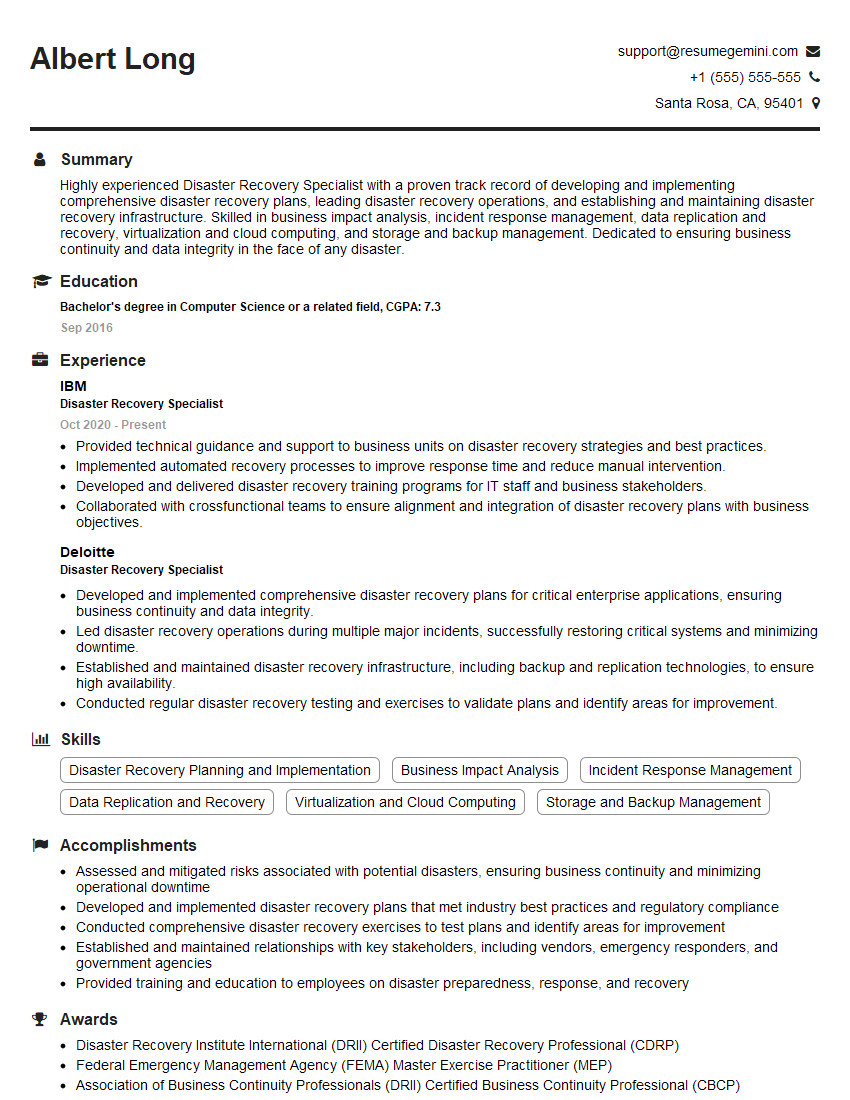
Disaster Recovery Specialist Resume Sample
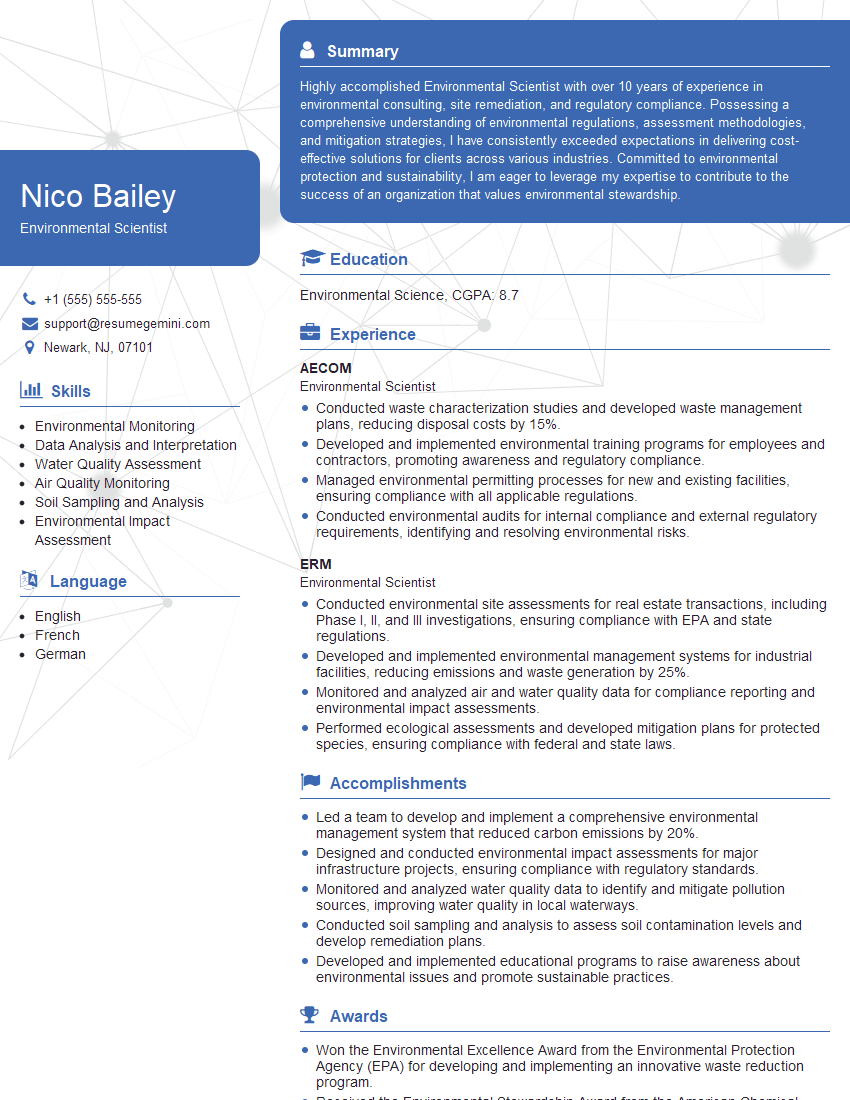
Environmental Scientist Resume Sample
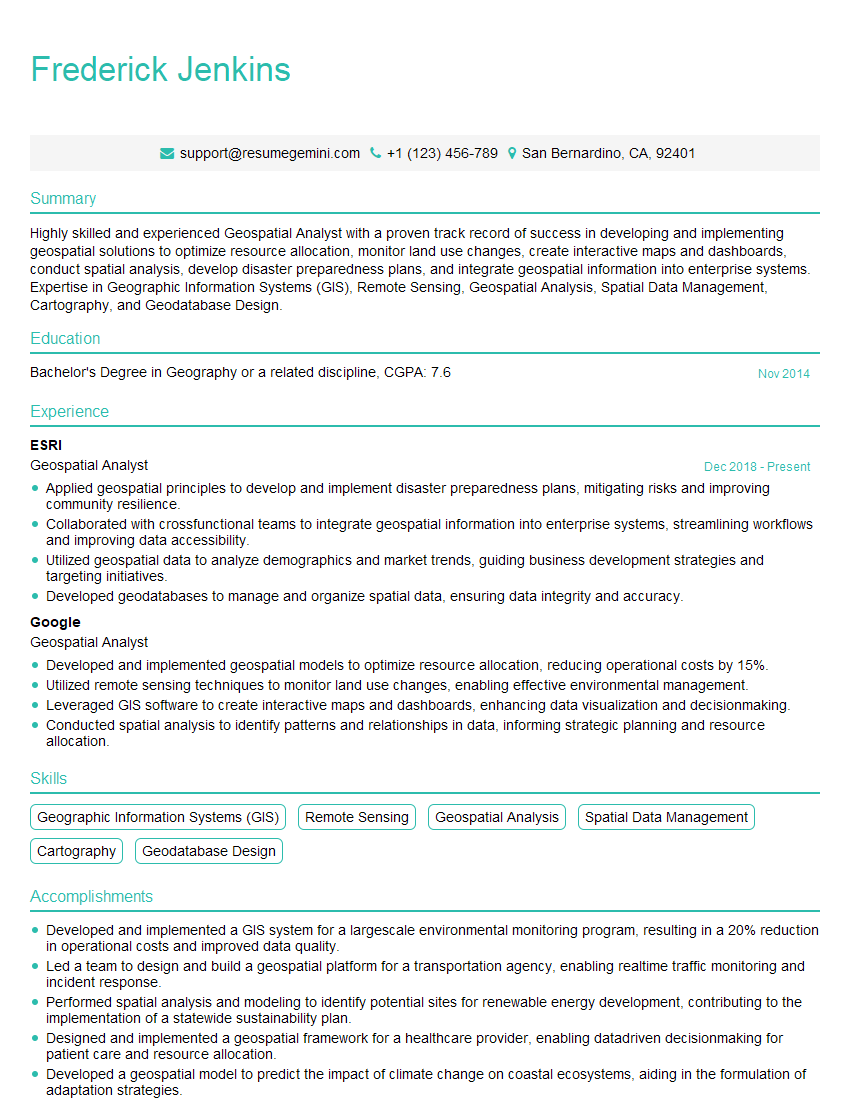
Geospatial Analyst Resume Sample
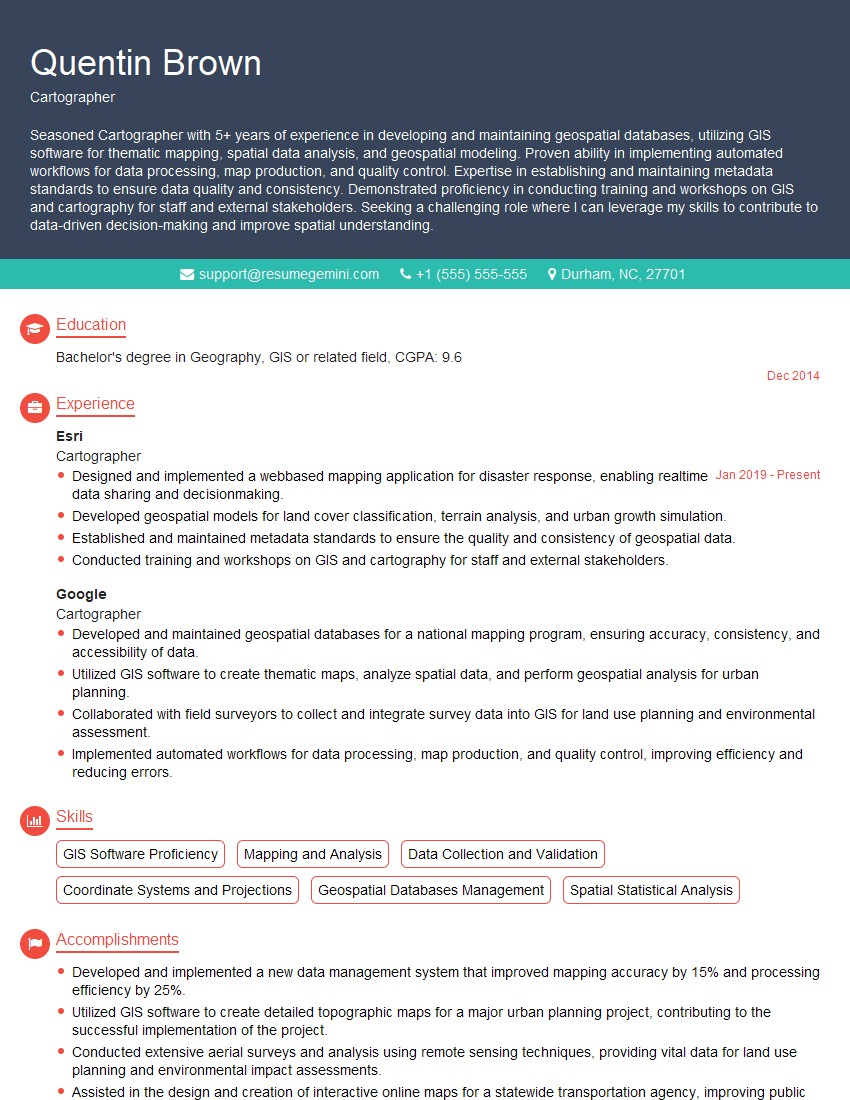
Cartographer Resume Sample
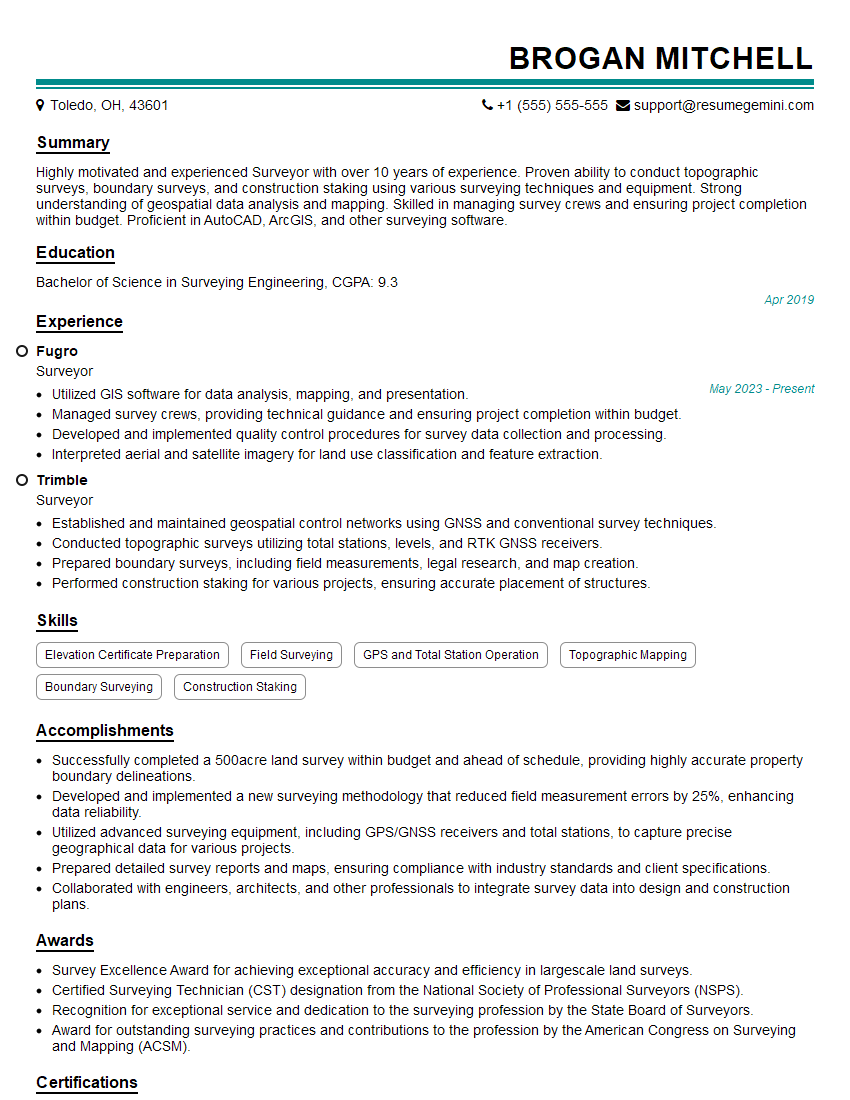
Surveyor Resume Sample
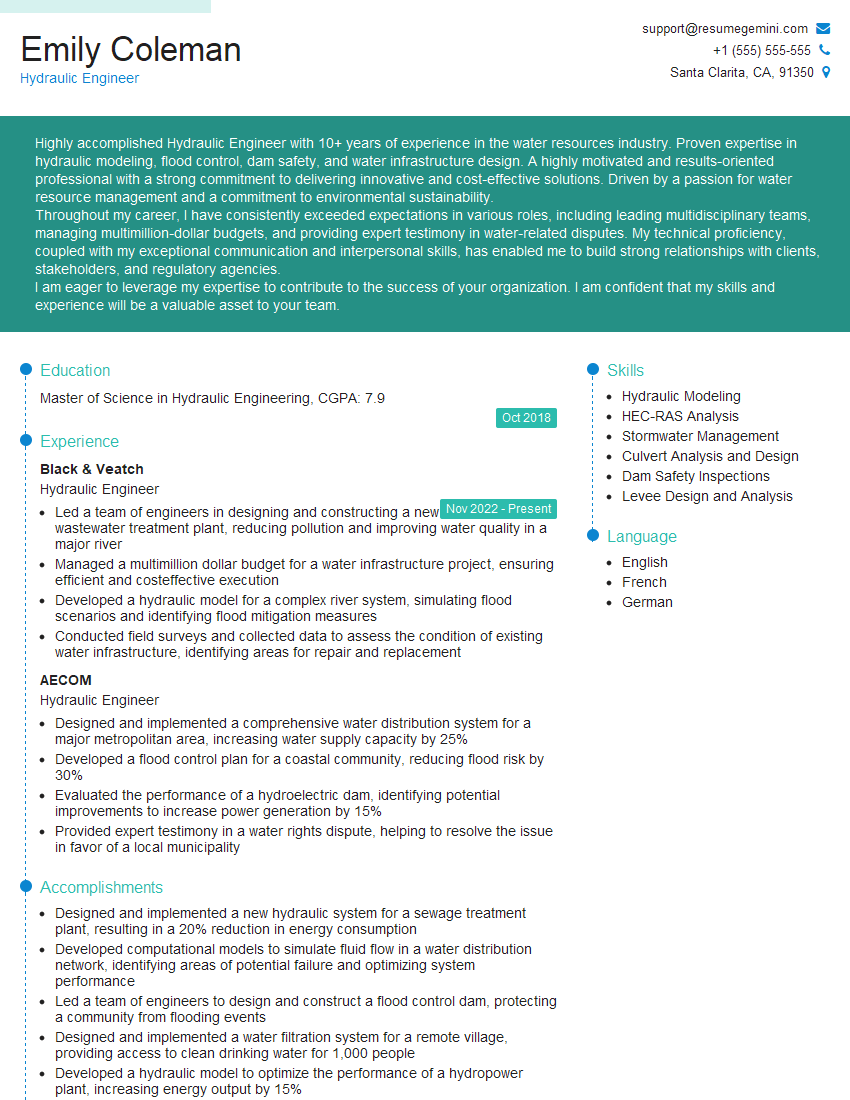
Hydraulic Engineer Resume Sample
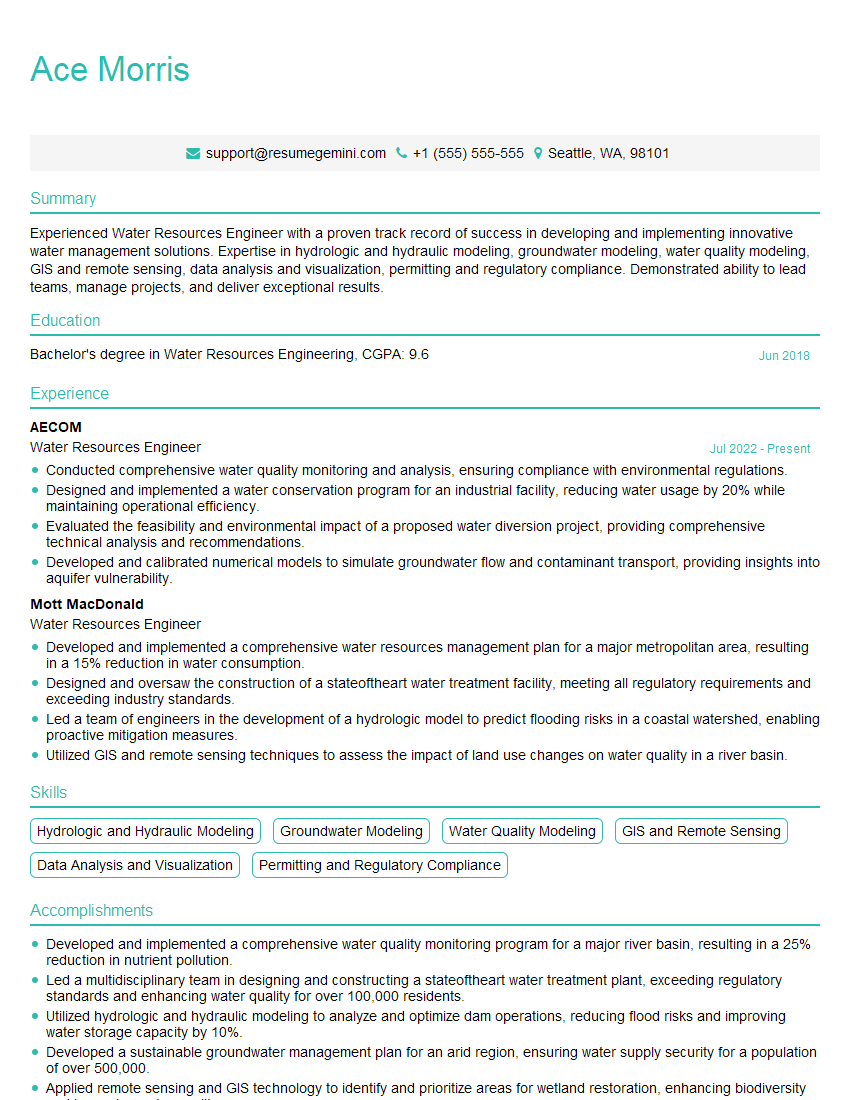
Water Resources Engineer Resume Sample
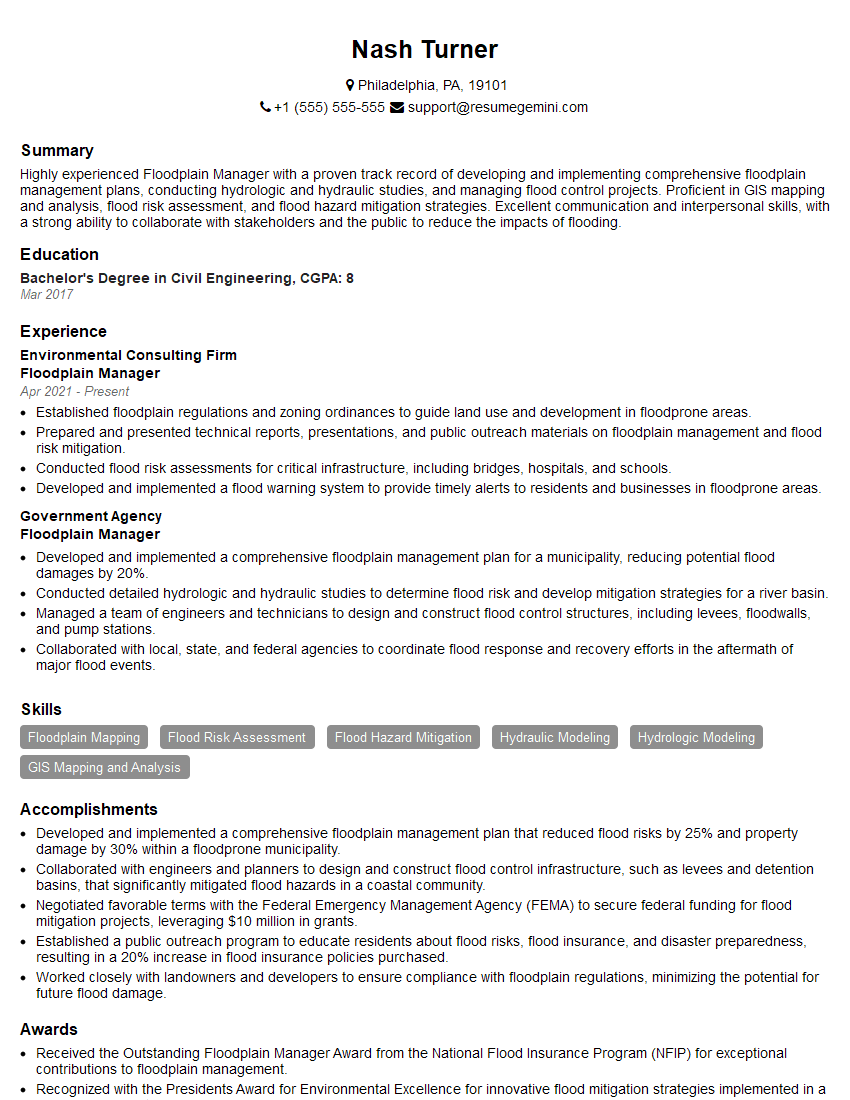
Floodplain Manager Resume Sample

Hydrologist Resume Sample
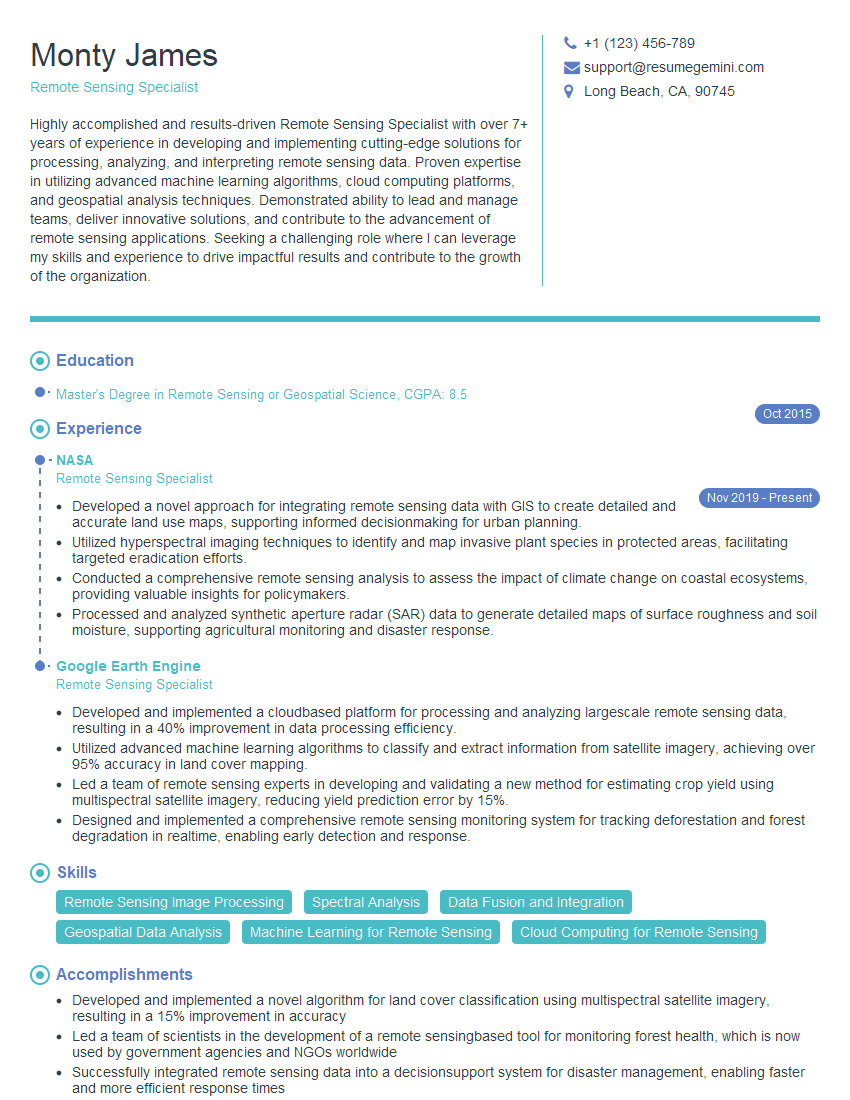
Remote Sensing Specialist Resume Sample
Explore more articles
Users Rating of Our Blogs
Share Your Experience
We value your feedback! Please rate our content and share your thoughts (optional).
What Readers Say About Our Blog
Very informative content, great job.
good