Are you ready to stand out in your next interview? Understanding and preparing for Cable Tray and Conduit Installation interview questions is a game-changer. In this blog, we’ve compiled key questions and expert advice to help you showcase your skills with confidence and precision. Let’s get started on your journey to acing the interview.
Questions Asked in Cable Tray and Conduit Installation Interview
Q 1. Explain the different types of cable trays and their applications.
Cable trays come in various types, each suited for different applications. The choice depends on factors like cable weight, environment, and budget.
- Ladder-type trays: These are the most common, featuring side rails with rungs. They offer good ventilation and are ideal for lighter cables and where inspection is important. Think of them like a ladder for your cables. Imagine installing them in a server room with numerous network cables.
- Channel trays: These are basically open troughs, offering good cable support and protection. They’re commonly used for heavier cables or where a more streamlined appearance is preferred, perhaps in a cleanroom environment.
- Solid bottom trays: These completely enclose the cables, providing superior protection from physical damage and environmental factors. They’re perfect for situations where cables need extra shielding, such as in areas with potential for dripping liquids.
- Wire mesh trays: These are lightweight and provide excellent ventilation, making them suitable for applications where heat dissipation is crucial. Think of them as a metal grid, allowing air to flow freely, often used in outdoor installations.
- Trough trays: Similar to channel trays but often deeper to accommodate larger cable bundles. They provide more protection than ladder trays but less than solid bottom trays.
Selecting the right tray type involves careful consideration of cable weight, environmental factors, and the level of protection required.
Q 2. Describe the various methods for bending conduit.
Bending conduit requires specialized tools and techniques to avoid kinks and damage. Several methods exist:
- Hand bending: This method uses a hand bender, a tool with a hinged shoe that allows precise bends. It’s ideal for smaller conduit and simpler bends but can be physically demanding for larger sizes. It’s like shaping a piece of wire carefully.
- Hydraulic benders: These are more powerful and efficient, especially for larger conduit and more complex bends. They provide consistent and accurate results. Think of this as a powerful machine doing the heavy lifting for you.
- Electric benders: These are automated benders that can handle even the most challenging conduit bends quickly and accurately. They are crucial for large-scale projects or repetitive bending jobs. This is the automated approach to bending that gives you the most consistent and quick results.
Regardless of the method, accurate measurements and careful technique are vital to ensure smooth bends and prevent damage to the conduit. Always consult the conduit manufacturer’s specifications for bending radii.
Q 3. What are the safety regulations you must adhere to when installing cable trays and conduits?
Safety is paramount in cable tray and conduit installation. Adhering to OSHA regulations and best practices is crucial. This includes:
- Fall protection: Using harnesses and guardrails when working at heights.
- Personal protective equipment (PPE): Wearing safety glasses, hard hats, gloves, and steel-toed boots.
- Lockout/Tagout procedures: De-energizing electrical circuits before working on them.
- Proper lifting techniques: Using hoists or other lifting equipment for heavy cable trays and conduit.
- Awareness of surroundings: Being mindful of other workers, potential hazards (like overhead power lines), and the environment around you.
- Following all local codes and regulations: This will vary from region to region and must be diligently followed.
Ignoring safety regulations can lead to serious injuries or even fatalities. A proactive safety-first approach is essential in this type of work.
Q 4. How do you determine the proper size of cable tray or conduit for a given application?
Determining the correct size involves considering several factors:
- Cable fill: The percentage of the conduit or tray filled with cables. Overfilling can lead to heat buildup and damage. Generally, you should aim for 40-50% fill, but this can vary based on the cable type and environmental considerations.
- Future expansion: Allowing for additional cables to be added in the future is crucial to avoid costly rework. A common practice is to provide additional capacity (15-20%) beyond current needs.
- Cable type and size: Different cable types have different size and bend radii requirements. This influences the choice of conduit or tray size.
- Environmental factors: Temperature, humidity, and potential for chemical exposure all need to be considered.
Manufacturers provide charts and calculators to help determine the correct size based on these factors. It’s best to overestimate rather than underestimate to avoid future problems.
Q 5. Explain the importance of proper grounding and bonding in cable tray and conduit installations.
Proper grounding and bonding are essential for safety and to prevent electrical hazards. Grounding connects the metallic components of the system to earth, providing a path for fault currents. Bonding connects metallic parts together, ensuring electrical continuity. This prevents voltage buildup and protects personnel and equipment.
Failure to properly ground and bond can lead to shock hazards, equipment damage, and even fires. These processes are crucial in any electrical installation and are particularly important in cable tray and conduit systems. Think of it as creating a safety net for your electrical system.
Q 6. What are the common causes of cable tray and conduit failures?
Several factors can lead to cable tray and conduit failures:
- Improper installation: This includes incorrect bending radii, insufficient support, and inadequate grounding/bonding.
- Overloading: Exceeding the rated capacity of the tray or conduit can lead to damage and potential hazards.
- Corrosion: Exposure to moisture and other corrosive elements can weaken the system over time.
- Physical damage: Impacts, vibrations, or other physical stresses can cause failures. A dropped tool on an improperly installed tray, for instance, could lead to a significant hazard.
- Improper maintenance: Lack of regular inspection and maintenance can allow minor problems to escalate into major failures.
Regular inspections, adherence to installation standards, and proper maintenance are key to preventing failures.
Q 7. How do you handle cable tray and conduit installations in hazardous locations?
Hazardous locations require special considerations. These are areas with flammable or explosive atmospheres, such as refineries or chemical plants.
In such locations, special cable trays and conduits made of non-combustible materials are used. Explosion-proof fittings and other safety features are incorporated to prevent ignition. Strict adherence to applicable codes and regulations, such as those from NFPA, is crucial. Proper ventilation is also essential to mitigate the risks.
The installation process itself needs to be carefully managed to minimize the risk of sparks or other ignition sources. This may involve specialized training and equipment.
Q 8. Describe your experience with different types of conduit fittings and connectors.
My experience encompasses a wide range of conduit fittings and connectors, crucial for ensuring a safe and effective electrical system. These fittings are essential for making turns, branching, and connecting different conduit sections. I’m proficient with various types, including:
- Couplings: Used to join straight sections of conduit, ensuring a continuous and secure pathway for the cables. I often use compression couplings for their ease of installation and secure grip.
- Elbows: These allow for changes in direction, typically 90 or 45 degrees. The choice between rigid and flexible elbows depends on the application and space constraints; flexible elbows offer greater flexibility during installation and are useful in tight spaces.
- Tees and Crosses: These allow for branching connections, permitting cables to split off into different routes. They are critical in complex wiring systems, often seen in larger industrial settings.
- Bushings: These protect cables as they enter conduit or other enclosures. They prevent abrasion and improve safety, particularly important when working with delicate control cables.
- Conduit Bodies: Provide access points for pulling cables and installing fittings. They’re crucial for maintaining access for troubleshooting and future maintenance.
- Set Screw Connectors: Used for joining metallic conduit. These provide a robust mechanical connection and are suitable for high-vibration environments.
Selecting the appropriate fitting depends on the conduit material (steel, aluminum, PVC), cable type, and environmental conditions. For instance, in corrosive environments, I’d opt for fittings made from corrosion-resistant materials like stainless steel or PVC.
Q 9. How do you manage cable congestion in a cable tray?
Managing cable congestion in a cable tray is vital for safety, accessibility, and preventing overheating. A poorly managed tray can lead to installation difficulties, future maintenance issues, and even fire hazards. My approach involves a multi-pronged strategy:
- Proper Planning and Design: Before installation, I carefully analyze cable counts, sizes, and routing to determine the appropriate tray size and type. Overestimating capacity is always better than underestimating.
- Cable Management Accessories: Utilizing cable ties, separators, and clamps keeps cables organized and prevents tangling. This allows for easier identification and maintenance access.
- Appropriate Tray Size and Type: Selecting the right tray size and type is critical. For instance, perforated trays promote better airflow, while ladder trays provide good support for heavier cables.
- Load Balancing: Ensuring the weight of the cables is evenly distributed across the tray supports prevents uneven stress and potential sagging.
- Regular Inspections: Periodic inspections of installed trays help identify potential congestion issues before they become major problems.
For example, in a recent project, we used perforated cable trays and strategically placed cable separators to prevent congestion in a densely packed server room. This ensured adequate airflow and simplified cable maintenance.
Q 10. What are the different methods for supporting cable trays and conduits?
Supporting cable trays and conduits is crucial for ensuring system stability and preventing damage. The methods employed depend on factors like weight capacity, environmental conditions, and building structure. Common methods include:
- Direct Attachment to Building Structures: Using bolts, straps, or weldments to securely attach trays and conduits to structural members like beams, columns, and walls. This is common in robust building environments.
- Suspension Systems: Utilizing various types of hangers, clamps, and supports to suspend trays and conduits from ceilings or other overhead structures. This method allows for flexibility in routing and is commonly used in high-ceiling areas.
- Strut Systems: Using strut channels and fittings as a framework to support the cable tray system. Struts offer versatility and strength, especially for complex installations. This approach is suitable for both horizontal and vertical tray runs.
- Trapeze Hangers: Hangers used to support cable trays in mid-air, ensuring stability and minimizing interference with other building elements. These are especially useful for long runs or where floor space is limited.
- Sleeves and Conduit Supports: For individual conduits, using sleeves to protect the conduit and conduit supports for maintaining a secure and spaced arrangement.
The choice of support method always involves careful consideration of the load bearing capacity of the chosen support system, factoring in the weight of the cables, the distance between supports, and any potential environmental stresses.
Q 11. Explain your experience with various cable tray and conduit materials (e.g., steel, aluminum, PVC).
My experience covers a range of cable tray and conduit materials, each with its own advantages and disadvantages:
- Steel: Strong, durable, and readily available. It’s suitable for heavy-duty applications but susceptible to corrosion unless properly coated (galvanized or powder-coated). Steel is often preferred for industrial settings.
- Aluminum: Lighter than steel, offering easier handling and installation. It’s also more resistant to corrosion than uncoated steel. Aluminum is often chosen for outdoor applications where corrosion resistance is paramount.
- PVC: Lightweight, corrosion-resistant, and non-conductive, making it ideal for less demanding applications and environments where corrosion is a concern. However, it has lower strength and temperature limits compared to metal trays.
Material selection depends on factors like load-bearing requirements, environmental conditions (indoor vs. outdoor, corrosive atmosphere), budget, and aesthetics. For example, in a corrosive chemical plant, PVC or stainless steel would be preferred over standard steel.
Q 12. How do you ensure proper ventilation in cable tray installations?
Proper ventilation in cable tray installations is crucial to prevent overheating, which can lead to cable damage, fires, and system failure. My strategies for ensuring adequate ventilation include:
- Perforated Trays: Choosing perforated trays allows for better airflow, dissipating heat generated by the cables. This is particularly important for high-power circuits.
- Sufficient Spacing: Maintaining adequate spacing between cables and between the cables and the tray walls allows for better air circulation.
- Airflow Channels: Designing the cable tray system with sufficient space to allow for natural convection air currents. This is especially crucial in large installations.
- Fans or Ventilation Systems: In high-heat applications or congested installations, using fans or forced ventilation systems ensures effective heat dissipation. This might involve incorporating exhaust fans or integrated cooling systems.
- Cable Fill Considerations: Keeping the tray fill below the maximum recommended capacity prevents excessive heat buildup. Overfilling leads to poor air circulation.
For instance, in a data center with high-density cabling, we used perforated trays and strategically incorporated fans to maintain optimal operating temperatures and prevent overheating.
Q 13. What are the NEC (National Electrical Code) requirements for cable tray and conduit installations?
The NEC (National Electrical Code) outlines strict requirements for cable tray and conduit installations to ensure safety and compliance. Key aspects include:
- Grounding: All metal cable trays and conduits must be properly grounded to prevent electrical shock hazards.
- Support Spacing: Supports must be spaced according to the tray’s loading capacity and span, preventing sagging and ensuring stability.
- Bending Radius: Conduits must not be bent with a radius smaller than the specified minimum, preventing damage to the cables.
- Cable Fill: The amount of cable in a tray or conduit must not exceed the manufacturer’s recommended fill percentage to ensure adequate ventilation and prevent overheating.
- Clearances: Minimum clearances must be maintained around the cable tray and conduit systems, providing access for inspection and maintenance.
- Marking and Identification: Cables within the trays and conduits must be properly marked and identified for easy traceability.
- Specific Requirements for Hazardous Locations (Class I, II, III): Installations in hazardous locations require specialized materials, fittings, and techniques to prevent ignition hazards.
Adherence to NEC requirements is non-negotiable and is crucial for obtaining necessary permits and approvals. I always ensure strict adherence to the current NEC code during the entire process of designing, installing, and inspecting the installations.
Q 14. Describe your experience with cable tray and conduit installation in different environments (e.g., indoor, outdoor, underground).
My experience includes cable tray and conduit installations across various environments:
- Indoor Installations: These typically involve less stringent environmental protection requirements compared to outdoor installations, although considerations for fire safety and accessibility remain crucial.
- Outdoor Installations: Outdoor installations require materials resistant to weather and corrosion, such as galvanized steel, aluminum, or PVC conduits and trays. UV protection and proper grounding are key considerations.
- Underground Installations: Underground installations necessitate robust conduits, often using direct-buried conduit, to protect cables from physical damage and moisture. Careful planning is needed to avoid disrupting other underground utilities.
Each environment presents unique challenges. For example, in an outdoor installation near a coastline, I would prioritize corrosion-resistant materials like stainless steel or appropriately coated steel. In an underground installation, meticulous planning is necessary to accurately locate and avoid existing utilities.
Q 15. How do you handle cable tray and conduit installations in tight spaces?
Working in tight spaces requires meticulous planning and specialized techniques. It’s like assembling a complex puzzle where every piece needs to fit perfectly. We start by thoroughly assessing the space, measuring all dimensions, and creating a detailed installation plan. This plan will often incorporate smaller, more maneuverable cable trays and conduits, possibly using flexible conduits where appropriate. We might also utilize specialized tools such as mini-benders or flexible conduit pullers. In extreme cases, pre-fabricated sections of cable tray or conduit might be assembled off-site and then carefully inserted into the tight space.
For example, in a retrofit project within an existing building, we might encounter a small crawl space. Instead of using standard size cable trays, we’d opt for smaller, more compact ones that can navigate the tight corners and limited headroom. Careful consideration is given to the cable routing, ensuring we minimize bends to avoid stress on the cables and to prevent damage during installation. We also use high-quality lubrication on cables and conduit to aid with pulling.
Career Expert Tips:
- Ace those interviews! Prepare effectively by reviewing the Top 50 Most Common Interview Questions on ResumeGemini.
- Navigate your job search with confidence! Explore a wide range of Career Tips on ResumeGemini. Learn about common challenges and recommendations to overcome them.
- Craft the perfect resume! Master the Art of Resume Writing with ResumeGemini’s guide. Showcase your unique qualifications and achievements effectively.
- Don’t miss out on holiday savings! Build your dream resume with ResumeGemini’s ATS optimized templates.
Q 16. Explain your experience with using different tools and equipment for cable tray and conduit installation.
My experience spans a wide range of tools and equipment, from basic hand tools to advanced power equipment. Think of it as a toolbox filled with the right instruments for each job. For cable tray installation, this includes things like measuring tapes, levels, drills, saws, and various types of fasteners. We also use cable tray benders for creating custom bends and fitting the trays to the space. For conduit installation, we rely on conduit benders, threaders, reamers, and pullers. For larger projects, we use hydraulic benders for accurate and consistent bends. Safety equipment, like harnesses and fall protection, is always integral to the toolbox, especially when working at heights.
Power tools greatly increase efficiency, but we always prioritize safety. For instance, when using a power drill to install fasteners, I always make sure to use appropriate safety glasses and wear gloves to avoid injury. The selection of tools is also project-specific; a small residential project might only need basic hand tools, while a large industrial installation will require heavier-duty equipment.
Q 17. How do you troubleshoot problems with existing cable tray and conduit installations?
Troubleshooting existing installations involves a systematic approach, much like diagnosing a medical condition. We begin with a visual inspection, looking for obvious problems such as loose connections, damaged conduits or trays, and signs of overheating. We then use testing equipment, like a multimeter, to check for voltage, continuity, and grounding issues. Identifying the specific problem allows us to create a targeted solution.
For example, if we discover a section of conduit is significantly corroded, this could indicate grounding problems or moisture ingress. The solution might involve replacing the damaged section and ensuring proper grounding practices moving forward. We might also use thermal imaging cameras to detect overheating, which could signal a problem with cable sizing or current draw.
Q 18. Describe your experience with working from heights and using fall protection equipment.
Safety is paramount, especially when working at heights. I’m experienced in using various fall protection systems, including harnesses, lanyards, and anchor points. Before starting any work at height, we conduct a thorough risk assessment, identifying potential hazards and implementing appropriate safety measures. This includes ensuring that all equipment is properly inspected and that our team members are trained in the safe use of fall protection gear. It’s like having a second safety net, ensuring that if a mistake happens, the consequences are minimized.
For instance, before working on a cable tray installation on a high scaffold, we always ensure that the scaffold is properly secured and that our harnesses are securely attached to appropriate anchor points. We also conduct regular safety briefings to reinforce safe work practices and to discuss any potential hazards that might arise.
Q 19. How do you ensure the proper labeling and identification of cables in a cable tray?
Proper labeling is crucial for maintainability and safety. Think of it as creating a map for future work. We use clearly marked cable labels, often with color-coded systems, indicating the cable’s function, voltage, and destination. These labels are securely attached to the cables, preferably at multiple points along their route, to prevent misidentification. This information is also documented in detailed as-built drawings, which are kept for easy reference.
For instance, a network cable might be labeled as ‘Network – 10Gb – Server Room,’ clearly indicating its purpose and destination. We use heat-shrink tubing or other durable labeling methods that can withstand the harsh conditions of the environment, to ensure that the labels remain legible and intact for the lifespan of the installation. Clear labeling avoids the time and expense involved in troubleshooting issues caused by incorrect identification.
Q 20. What are the advantages and disadvantages of using different types of cable tray support systems?
Various cable tray support systems offer unique advantages and disadvantages. It’s like choosing the right tool for the right job. Let’s consider three common types: Ladder, Channel, and Trough. Ladder trays provide good ventilation, which is crucial for heat dissipation, but might not offer as much protection from physical damage as a trough. Channel trays are versatile and space-saving, ideal for smaller cable bundles, but might not provide the same capacity as a trough. Trough trays offer excellent cable protection and higher capacity, but can be more expensive and have less ventilation.
The choice depends on factors like cable density, required ventilation, and environmental considerations. For instance, in an environment with potential for dust or debris, an enclosed trough tray might be preferred for better protection. In a heat-sensitive environment, a ladder tray is usually more appropriate. Ultimately, the best system is the one that meets the specific needs of the application and adheres to all applicable codes and standards.
Q 21. How do you calculate the bending radius for conduit?
Calculating the bending radius for conduit is essential to avoid kinking or damaging the conduit, which could affect its structural integrity and potentially damage the cables inside. The minimum bending radius is typically specified by the manufacturer of the conduit and is usually expressed as a multiple of the conduit’s diameter. For example, a conduit with a 1-inch diameter might have a minimum bending radius of 5 times its diameter, or 5 inches. This means you should use a conduit bender that allows for a bend with a radius of at least 5 inches.
Failure to follow these guidelines can result in weakening of the conduit, causing stress cracks, resulting in cable damage or even complete failure of the system. Always consult the manufacturer’s specifications and adhere to industry best practices to ensure a safe and effective installation.
Q 22. What are some common mistakes to avoid during cable tray and conduit installation?
Common mistakes during cable tray and conduit installation often stem from overlooking crucial details. Improper planning is a major culprit, leading to insufficient tray capacity, inadequate support structures, and incorrect bending radii. For example, failing to account for future cable growth can quickly overcrowd trays, compromising safety and accessibility. Another frequent error is neglecting proper grounding and bonding, creating a significant electrical hazard. Incorrectly sized conduits can lead to cable damage and installation difficulties. Finally, disregarding local codes and standards can result in project delays and potential safety violations.
- Insufficient Tray Capacity: Plan for future expansion – always add a safety margin (e.g., 20-30%).
- Poor Support Structure: Ensure adequate support spacing based on tray type, load, and span.
- Incorrect Bending Radius: Sharp bends damage cables; use proper bending tools and adhere to manufacturer specifications.
- Neglecting Grounding and Bonding: This is vital for safety – ensure proper connections according to electrical codes.
- Improper Conduit Sizing: Choose conduits that provide sufficient space for cables, allowing for easy pulling and preventing damage.
Q 23. Explain your understanding of load calculations for cable trays.
Load calculations for cable trays are essential for ensuring structural integrity and safety. They involve determining the total weight of cables, tray, and supports to select appropriately sized trays and supports. This includes accounting for the weight of the cables themselves, fittings, and any potential future additions. We typically use a combination of manufacturer’s data, industry standards (like NEC in the US), and software tools to accurately calculate the load. The process involves identifying all cables and their weights, calculating the total weight per tray section, and comparing it to the tray’s load capacity. For example, a tray carrying heavy power cables requires sturdier supports and may necessitate a heavier-duty tray compared to one carrying low-voltage communication cables. If the calculated load exceeds the tray’s capacity, adjustments are made, such as adding more support points or using a larger tray.
The formula can be simplified as: Total Load = (Weight of Cables) + (Weight of Tray) + (Weight of Fittings). Each element needs careful consideration; for instance, the weight of cables can be obtained from manufacturer specifications or cable tables.
Q 24. How do you ensure the proper alignment and spacing of conduits and cable trays?
Maintaining proper alignment and spacing is crucial for a clean, efficient, and safe installation. This begins with careful planning and accurate measurements. We use laser levels and measuring tapes to ensure that trays and conduits are installed straight and level. Spacing is determined by factors such as cable type, heat dissipation requirements, and access needs. For instance, sufficient spacing prevents overheating and allows for easier cable installation and maintenance. We regularly check alignment during the installation process, making adjustments as needed. To maintain consistent spacing, we often utilize pre-fabricated support structures or use spacers that maintain the required distances. Regular visual inspections and the use of specialized tools, like alignment clamps, are critical to ensure that conduits are not only aligned but also correctly spaced and securely fixed.
Think of it like building a brick wall: each brick (conduit/tray) needs to be placed precisely to create a structurally sound and visually appealing outcome. Sloppy alignment and spacing creates a mess and potentially safety hazards.
Q 25. Describe your experience with working on large-scale projects involving cable tray and conduit installations.
I have extensive experience in large-scale projects, including a recent data center build where we installed over 10 kilometers of cable tray and conduit. This involved coordinating with multiple subcontractors, managing complex logistics, and adhering to strict deadlines. On another project, a large industrial facility expansion, we had to navigate challenging environments with limited access and integrate with pre-existing infrastructure. These projects required meticulous planning, strong communication, and proficient problem-solving. For instance, on the data center project, we had to carefully plan the tray routing to minimize interference with other systems and optimize cable management.
These experiences honed my skills in project management, coordination, and problem-solving within a large-scale environment, consistently demanding precise execution and meticulous attention to detail.
Q 26. How do you manage your time effectively during cable tray and conduit installation projects?
Effective time management is critical in cable tray and conduit installation. I use a combination of techniques, including detailed planning, prioritization, and regular progress monitoring. Before starting a project, I create a detailed schedule that breaks down the work into manageable tasks with assigned timelines. This allows me to accurately estimate resource needs and allocate work effectively. I regularly monitor progress and make adjustments as needed, proactively identifying and addressing potential delays. Furthermore, I regularly communicate with the team and stakeholders to keep everyone informed and aligned.
Imagine it like baking a cake – you wouldn’t just throw all the ingredients together; you’d follow a recipe (plan) carefully. Following a detailed schedule prevents unforeseen delays and ensures timely project completion.
Q 27. What are your strategies for maintaining a safe and organized workspace during cable tray and conduit installation?
Safety and organization are paramount. We maintain a clean and organized workspace through strict adherence to safety protocols and disciplined practices. This includes regular cleanup, proper tool storage, and the use of safety equipment like hard hats and safety glasses. We implement a system for labeling cables and trays, clearly marking locations and identifying contents. This facilitates easy identification and reduces the risk of errors. Designated walkways are maintained, preventing tripping hazards and ensuring safe passage for personnel. Regular safety meetings emphasize safe working practices and address potential hazards.
A safe and organized workspace is not just about looking good; it is crucial for preventing accidents and improving efficiency. A cluttered environment is a hazardous environment.
Q 28. Describe your experience with documenting cable tray and conduit installations.
Thorough documentation is crucial for maintaining a record of the installation, facilitating future maintenance and troubleshooting. Our documentation process includes detailed as-built drawings, cable schedules, and material takeoffs. These drawings accurately reflect the final installation, including tray routing, conduit locations, and cable terminations. The cable schedules list each cable, its type, size, and termination points. Material takeoffs provide a comprehensive record of all materials used. Digital documentation, using software such as AutoCAD or specialized cable management software, is increasingly common for easier accessibility and sharing.
Accurate documentation is like an insurance policy – it protects against future issues and simplifies maintenance tasks. Without proper documentation, finding a specific cable or troubleshooting a problem can become a significant challenge.
Key Topics to Learn for Cable Tray and Conduit Installation Interview
- Cable Tray Selection and Sizing: Understanding load capacity, material properties (steel, aluminum, fiberglass), and choosing the appropriate tray type for different applications (e.g., ladder, trough, channel).
- Conduit Selection and Bending: Knowing conduit types (rigid, EMT, flexible), appropriate bending techniques, and the importance of proper bending radius to avoid damage.
- Installation Methods and Best Practices: Familiarity with proper grounding and bonding techniques, safe handling of cabling, and adherence to relevant electrical codes (NEC, etc.).
- Support Structures and Anchoring: Understanding different methods for securing cable trays and conduits to walls, ceilings, and structural members, ensuring stability and safety.
- Cable Management and Organization: Techniques for efficiently routing cables within trays and conduits, minimizing congestion, and improving accessibility for maintenance.
- Troubleshooting and Problem Solving: Identifying and resolving common installation issues, such as cable routing conflicts, insufficient support, or grounding problems.
- Safety Regulations and Procedures: Knowledge of relevant OSHA safety standards and best practices for working at heights, using proper PPE, and preventing electrical hazards.
- Tools and Equipment: Familiarity with common tools used in cable tray and conduit installation, including bending tools, measuring devices, and installation hardware.
- Estimating and Material Takeoffs: Ability to interpret blueprints and specifications to accurately estimate materials needed for a project.
- Drawing Interpretation and Blueprint Reading: Understanding electrical schematics and drawings to determine proper cable routing and installation methods.
Next Steps
Mastering Cable Tray and Conduit Installation opens doors to rewarding careers in the electrical and construction industries, offering opportunities for growth and specialization. A strong resume is crucial for highlighting your skills and experience to potential employers. Creating an ATS-friendly resume is key to getting your application noticed. ResumeGemini is a trusted resource that can help you build a professional and effective resume, ensuring your qualifications shine. ResumeGemini provides examples of resumes tailored to Cable Tray and Conduit Installation to help guide you through the process.
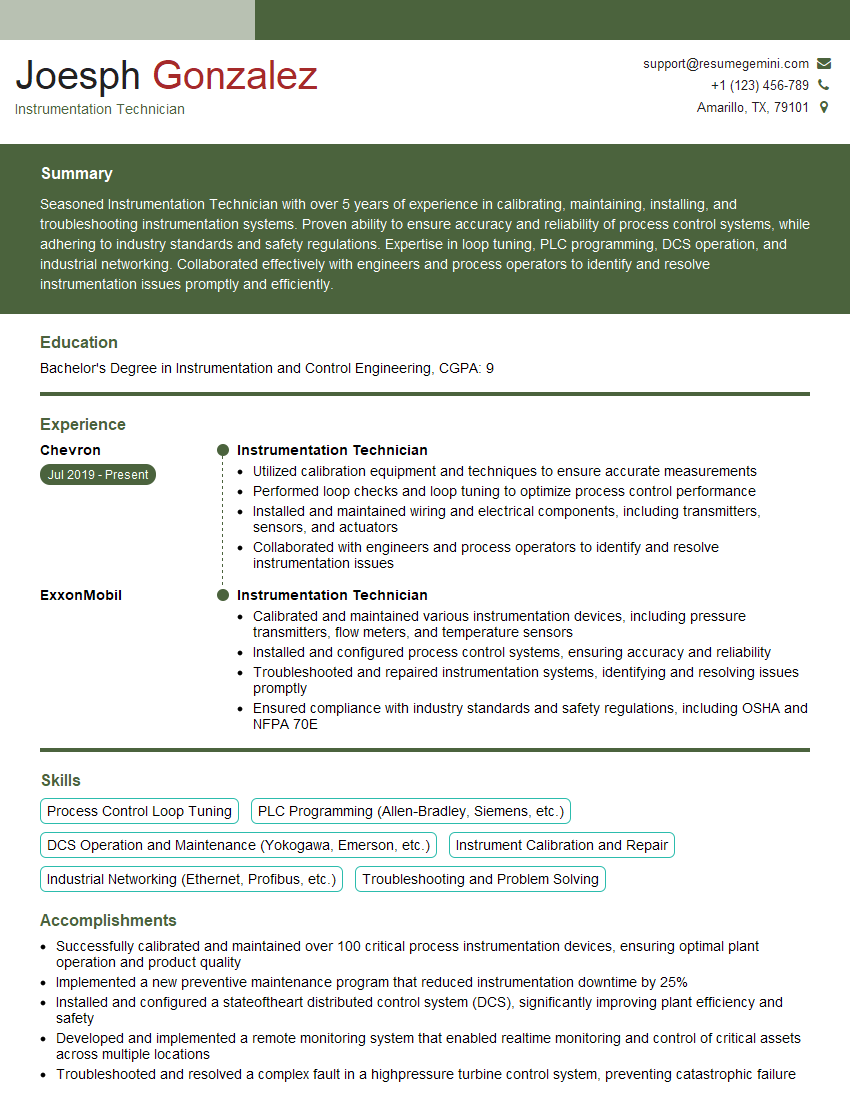
Instrumentation Technician Resume Sample

Electrical Foreman Resume Sample
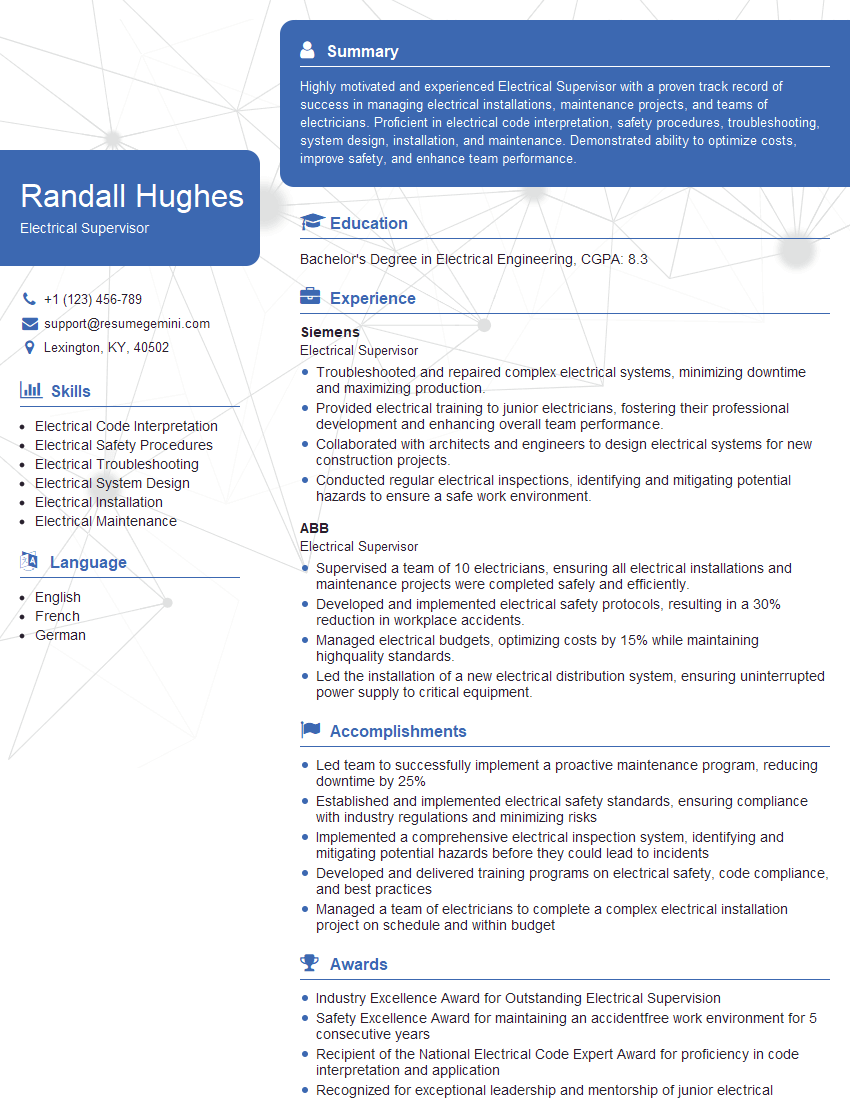
Electrical Supervisor Resume Sample
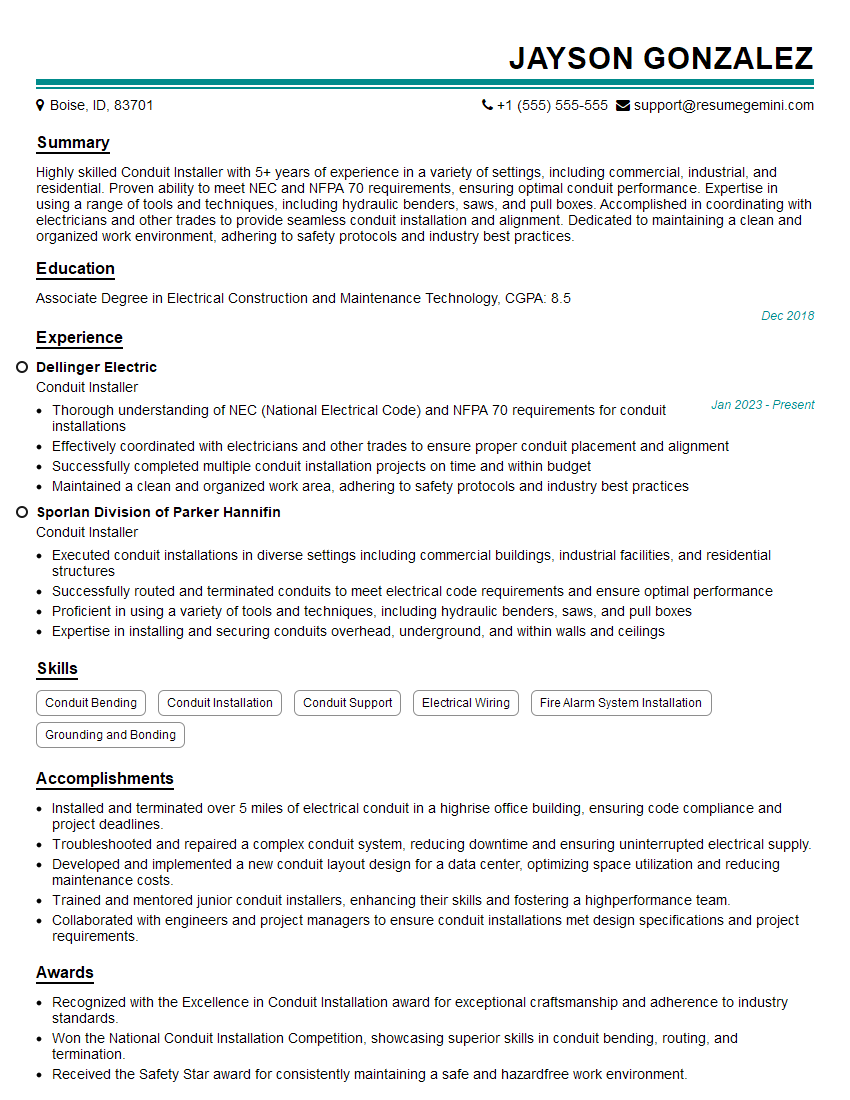
Conduit Installer Resume Sample

Construction Electrician Resume Sample

Electrical Installer Resume Sample
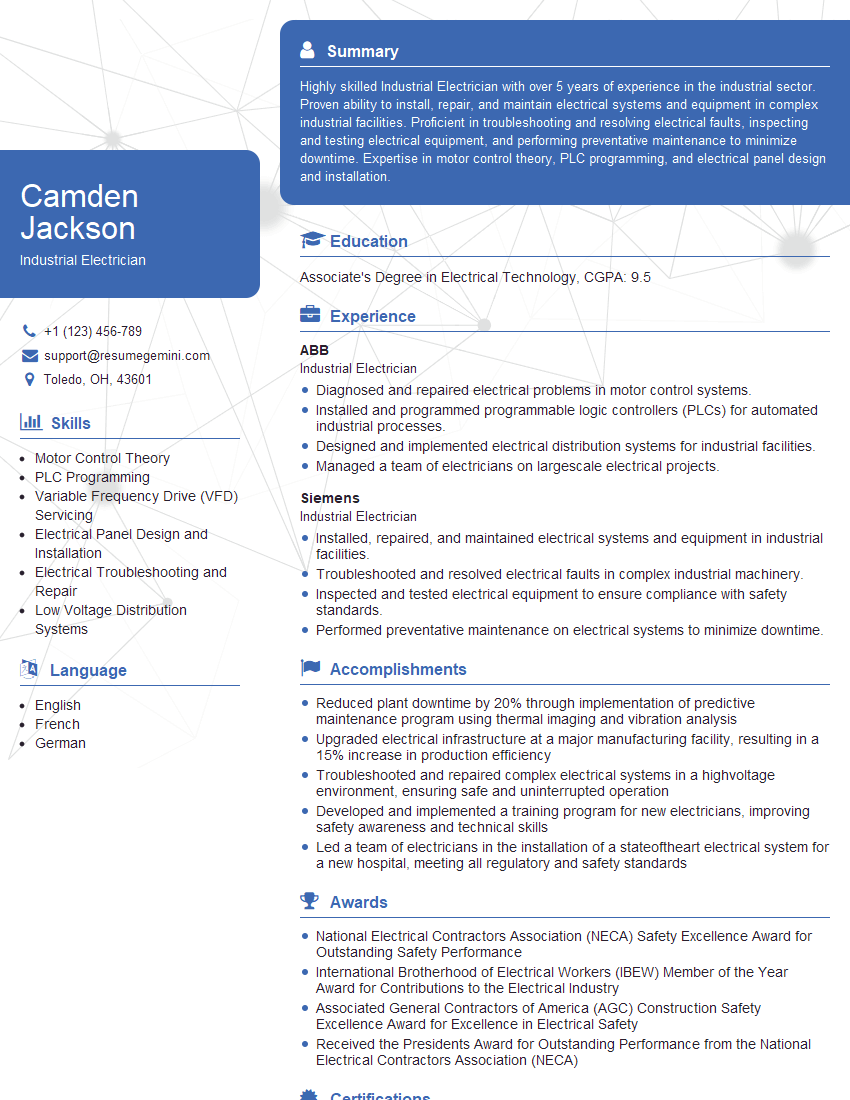
Industrial Electrician Resume Sample

Journeyman Electrician Resume Sample

Maintenance Electrician Resume Sample

Apprentice Electrician Resume Sample

Electrical Inspector Resume Sample

Control Systems Technician Resume Sample

Conduit Bender Resume Sample
Explore more articles
Users Rating of Our Blogs
Share Your Experience
We value your feedback! Please rate our content and share your thoughts (optional).
What Readers Say About Our Blog
Very informative content, great job.
good