Are you ready to stand out in your next interview? Understanding and preparing for Strong Musicianship and Instrumental Proficiency interview questions is a game-changer. In this blog, we’ve compiled key questions and expert advice to help you showcase your skills with confidence and precision. Let’s get started on your journey to acing the interview.
Questions Asked in Strong Musicianship and Instrumental Proficiency Interview
Q 1. Describe your experience with sight-reading.
Sight-reading, the ability to interpret and perform music at first glance, is a cornerstone of musical proficiency. My experience spans decades, encompassing various genres and levels of complexity. I’ve developed a systematic approach that involves quickly assessing the key, time signature, and overall structure before diving into the melodic and rhythmic details. I prioritize understanding the harmonic context, recognizing patterns and phrasing to aid in a fluid performance. For example, when tackling a challenging orchestral excerpt, I’ll initially focus on the overall shape and direction of the melody, then gradually work on precise articulation and dynamics. Regular, dedicated practice with varied materials – from simple exercises to complex scores – has significantly improved my speed and accuracy in sight-reading.
Q 2. Explain your approach to practicing a new piece of music.
My approach to practicing a new piece hinges on a multi-stage process that emphasizes both technical mastery and artistic interpretation. It begins with a thorough analysis of the score – understanding the structure, harmony, and intended mood. Then I’ll break down the piece into manageable sections, focusing on individual technical challenges like difficult passages or complex rhythmic patterns. I use a combination of slow, deliberate practice to build accuracy and speed-building exercises to enhance fluency. I regularly record myself to identify areas for improvement and track my progress. Once technical proficiency is established, I dedicate time to shaping the phrasing, dynamics, and articulation to express the emotional depth of the composition. For instance, when learning a sonata, I’ll spend considerable time working on legato transitions in slow movements and exploring different dynamic gradations in the faster sections to achieve expressive contrast.
Q 3. What are your strengths and weaknesses as a musician?
My strengths lie in my versatility across various musical styles and my strong theoretical understanding. I’m adept at quickly learning new material and adapting to different performance contexts. My ability to collaborate effectively within ensembles is also a significant asset. However, like any musician, I have areas for development. While I’m proficient in many styles, I could further refine my improvisational skills in certain genres like jazz or blues. Also, I’m always striving to improve my ability to fully convey the subtle nuances and emotional depth of a composition. Continuous learning and exploration are crucial to overcoming weaknesses and maintaining musical growth.
Q 4. How do you handle performance anxiety?
Performance anxiety is a common challenge among musicians. My approach is multifaceted, encompassing mental and physical preparation. Thorough practice and rehearsal are fundamental to building confidence. I also employ relaxation techniques such as deep breathing exercises and mindfulness practices to manage pre-performance jitters. Visualizing a successful performance, focusing on positive self-talk, and maintaining a positive mindset are equally important. In challenging situations, I’ve found that breaking the performance down into smaller, less intimidating segments helps to reduce overall anxiety. Finally, focusing on the music itself and connecting with the audience allows me to channel nervous energy into a powerful performance.
Q 5. Discuss your experience with different musical styles.
My experience encompasses a broad spectrum of musical styles. From the Baroque elegance of Bach to the Romantic passion of Beethoven, I’ve explored various classical periods. I’ve also delved into contemporary compositions, which require a different approach, focusing on understanding the composer’s unique vocabulary. My experience extends beyond classical music; I’ve performed and studied jazz standards, experimented with improvisation, and even explored folk music traditions. This exposure to diverse styles has broadened my musical understanding and enhanced my adaptability as a performer.
Q 6. Describe your understanding of music theory.
My understanding of music theory is comprehensive, extending beyond basic concepts to encompass advanced harmonic analysis, counterpoint, and compositional techniques. I’m proficient in reading and writing scores, analyzing musical forms, understanding chord progressions, and recognizing various melodic and rhythmic patterns. This theoretical foundation is essential for my ability to interpret music effectively, understand the composer’s intent, and effectively communicate my own artistic vision. For example, understanding counterpoint allows me to appreciate the interplay of independent melodic lines within a composition, and harmonic analysis helps me understand the underlying structure and emotional impact of the music.
Q 7. Explain your approach to ensemble playing.
Ensemble playing demands a high level of collaboration, active listening, and responsiveness. My approach centers on clear communication, mutual respect, and a shared artistic vision. I actively listen to my fellow musicians, adapting my playing to maintain balance and blend seamlessly within the ensemble. I believe in open communication – addressing any technical or interpretive challenges proactively. I also value the individual contributions of each member, recognizing that diverse perspectives enhance the overall performance. For instance, in a string quartet, I emphasize precise intonation, careful phrasing and articulation, and active listening to achieve a unified and harmonious sound.
Q 8. How do you maintain your instrument?
Maintaining my instrument is paramount to its longevity and my ability to produce high-quality sound. This involves a multi-faceted approach, depending on the specific instrument. For example, with a violin, this includes regular cleaning of the body and strings with a soft cloth, using a specialized cleaning solution for the strings, and ensuring proper humidity control to prevent warping. For a wind instrument like a clarinet, regular swabbing after each playing session is crucial to prevent moisture damage to the pads and wood. Additionally, periodic professional maintenance by a qualified luthier or technician is essential for adjustments, repairs, and overall instrument health. This might involve replacing worn-out pads on a clarinet, adjusting the bridge on a violin, or a complete overhaul after years of use. Neglecting routine maintenance can lead to significant damage and costly repairs down the line, ultimately hindering performance.
Think of it like maintaining a car – regular oil changes, tire rotations, and check-ups prevent major breakdowns. Similarly, consistent care ensures your instrument remains in optimal condition, ready to perform at its best.
Q 9. What software or technology are you proficient in?
In today’s musical landscape, technological proficiency is a significant asset. I’m proficient in several software applications relevant to music production and performance. This includes Digital Audio Workstations (DAWs) such as Logic Pro X and Ableton Live, which I use for recording, editing, mixing, and mastering audio. I’m also comfortable with notation software like Sibelius and Finale for creating and editing musical scores. Beyond this, I use audio editing software such as Audacity for basic editing tasks and various plugins for effects processing and virtual instruments. My familiarity extends to audio interfaces and MIDI controllers, enabling seamless integration between my instruments and digital tools. I am also conversant with various music management and collaboration platforms to effectively share files and collaborate on projects.
Q 10. Describe a challenging musical project and how you overcame it.
One particularly challenging project involved performing a challenging contemporary composition for solo cello which required extended techniques and intense emotional expression. The piece incorporated elements of microtonality, unusual bowing techniques, and extended ranges, pushing the boundaries of traditional cello performance. Initially, I struggled to achieve the fluidity and accuracy demanded by the rapid and complex passages. My approach involved breaking down the piece into smaller, manageable sections. I meticulously practiced each section individually, focusing on accuracy and tone production. I then gradually combined the sections, ensuring seamless transitions. I also incorporated various physical exercises to improve my dexterity and stamina. The extended techniques required focused study and experimentation. I consulted recordings of other performers and collaborated with a specialist cello teacher experienced in contemporary music. By breaking down the challenges, focusing on consistent practice, and seeking external guidance, I successfully overcame these obstacles and delivered a powerful, nuanced performance that showcased the composer’s vision.
Q 11. How do you adapt your playing style to different musical contexts?
Adapting my playing style to different musical contexts is a fundamental skill. It’s about understanding the nuances of each genre and responding accordingly. For example, playing classical music requires a refined, technically precise approach, emphasizing articulation and dynamics. In contrast, playing jazz necessitates improvisation, a deeper understanding of harmony and rhythm, and a more expressive, spontaneous approach. When working with a rock band, my focus shifts towards heavier rhythms, distorted tones, and powerful phrasing. I approach each context by actively listening, understanding the harmonic language, and adapting my phrasing and articulation to complement the overall musical style. It’s not simply about technical skill, but an understanding of the musical narrative and the role my instrument plays within that context. I visualize myself as a chameleon – seamlessly changing to fit the surroundings while maintaining my own musical identity.
Q 12. What is your experience with improvisation?
Improvisation is a cornerstone of my musical abilities. It’s a process of spontaneous musical creation, relying on a deep understanding of musical theory, harmony, and rhythm. My improvisation is built on a foundation of scales, modes, chord progressions, and rhythmic patterns. But it goes beyond just technical proficiency; it involves developing an intuitive musical language, listening carefully to other musicians and responding creatively to the musical conversation. I often practice improvisation by using backing tracks or jamming with other musicians to improve my ability to react in real time, explore new ideas, and develop a unique improvisational voice. This continual refinement through practice and real-world performance is what sets truly strong improvisation apart.
Q 13. How do you approach learning a new instrument or technique?
Learning a new instrument or technique involves a systematic and patient approach. I start by understanding the instrument’s basic mechanics and foundational techniques. This could include learning proper posture, finger placement, and basic scales. I then gradually increase the complexity, focusing on accuracy and building a solid technical foundation. I supplement this with regular practice, breaking down complex passages into manageable segments. I utilize various learning resources like instructional books, online videos, and lessons from experienced teachers. Regular self-assessment and performance feedback are crucial for identifying areas for improvement and refining my skills. Furthermore, I find that setting realistic goals and celebrating small victories keeps the process engaging and motivating. Learning is an ongoing process, and embracing challenges fosters growth and mastery.
Q 14. Describe your understanding of musical dynamics.
Musical dynamics are the variations in loudness and softness throughout a piece of music. They play a crucial role in shaping the emotional impact and narrative of a composition. Understanding dynamics extends beyond simply knowing the terms pianissimo (very soft) and fortissimo (very loud). It involves a nuanced control over volume, creating subtle gradations and shaping phrases with expressive crescendos (gradual increases in volume) and diminuendos (gradual decreases in volume). Dynamics are deeply connected to the overall emotional arc of a piece. A sudden forte can convey excitement or surprise, while a gentle piano might create a sense of intimacy or vulnerability. The effective use of dynamics requires careful listening, a deep understanding of the music’s emotional context, and considerable technical control over the instrument to precisely shape the sound. Mastering dynamics enhances the expressivity and emotional depth of any musical performance.
Q 15. How do you interpret musical notation accurately?
Accurately interpreting musical notation requires a deep understanding of its various components. It’s like reading a foreign language – you need to know the alphabet (notes and rests), grammar (meter, rhythm, key signature), and vocabulary (symbols indicating dynamics, articulation, and expression).
Firstly, I begin by identifying the clef, key signature, and time signature. The clef tells me the pitch range, the key signature indicates the sharps or flats, and the time signature sets the meter (e.g., 4/4, 3/4). Then, I carefully examine each note, rest, and symbol, translating them into their corresponding pitch, duration, and articulation. For instance, a quarter note in 4/4 time receives one beat, while a half note receives two. I meticulously follow dynamics markings (crescendo, diminuendo), articulation indications (legato, staccato), and tempo instructions (allegro, adagio) to fully comprehend the composer’s intentions.
I often use mnemonic devices and practice visualizing the musical score in my mind’s eye, creating a mental representation of the melody, harmony, and rhythm before I actually play it. For complex passages, I might break them down into smaller, more manageable sections, practicing each section separately before combining them.
Career Expert Tips:
- Ace those interviews! Prepare effectively by reviewing the Top 50 Most Common Interview Questions on ResumeGemini.
- Navigate your job search with confidence! Explore a wide range of Career Tips on ResumeGemini. Learn about common challenges and recommendations to overcome them.
- Craft the perfect resume! Master the Art of Resume Writing with ResumeGemini’s guide. Showcase your unique qualifications and achievements effectively.
- Don’t miss out on holiday savings! Build your dream resume with ResumeGemini’s ATS optimized templates.
Q 16. How do you collaborate effectively with other musicians?
Effective collaboration with other musicians hinges on clear communication, mutual respect, and a shared artistic vision. It’s like a team sport where each member needs to play their role to achieve a harmonious outcome. I believe active listening is paramount. I pay close attention to my fellow musicians, understanding their interpretations and adjusting my playing accordingly to achieve a cohesive ensemble sound.
Before a performance or recording session, I always participate in thorough rehearsals, focusing on ensemble blend, intonation, and articulation. I’m proactive in offering constructive feedback and readily accepting suggestions from others. I’m also mindful of maintaining a positive and supportive atmosphere, fostering an environment of trust and creative freedom. During rehearsals, I’m always ready to adapt my part, whether it involves subtle adjustments to dynamics, tempo, or phrasing, to complement the performance of other musicians.
For example, in a recent chamber music project, I noticed one violinist struggled with a particularly challenging passage. Instead of simply pointing out the mistake, I offered a different fingering suggestion that made it easier for them to play accurately. This collaborative approach ensured a successful performance.
Q 17. What is your experience with recording and mixing music?
My experience with recording and mixing music encompasses various aspects, from basic track recording to more advanced mixing and mastering techniques. It’s a multifaceted process requiring technical skills, artistic sensibility, and a keen ear for detail. I’m proficient in using Digital Audio Workstations (DAWs) such as Pro Tools and Logic Pro X.
I’ve recorded various instrumental parts, both solo and ensemble performances. My approach involves meticulous preparation, ensuring my instrument is properly tuned and mic’d. I pay close attention to microphone placement, signal levels, and overall sound quality during recording. Once the tracks are recorded, I proceed with the mixing process, balancing levels, applying EQ and compression, and adding effects to achieve the desired sonic character. I have a strong understanding of signal flow and audio processing, enabling me to shape the sound to its fullest potential.
In a recent project, I recorded a solo cello piece. I experimented with different microphone techniques to capture the nuances of my instrument, eventually choosing a combination of close and ambient miking to achieve a balance of intimacy and spaciousness. During the mixing stage, I carefully adjusted EQ and compression to enhance clarity and warmth, while subtle reverb added a sense of ambience to the overall sound.
Q 18. Explain your understanding of rhythm and meter.
Rhythm and meter are fundamental elements of music, providing its structural framework. Think of rhythm as the heartbeat and meter as the organizational structure of that heartbeat. Rhythm refers to the patterned arrangement of sounds and silences in time; meter is the systematic grouping of beats into measures.
Meter is usually expressed using time signatures, for example, 4/4 (common time), which means four beats per measure, with the quarter note receiving one beat. Understanding the time signature is crucial for interpreting the rhythmic content accurately. Rhythm, on the other hand, can be complex and varied, incorporating dotted notes, triplets, and syncopation (accents on weak beats). I can confidently identify and perform various rhythmic patterns, including complex polyrhythms (simultaneous use of two or more different rhythmic patterns).
My understanding extends to subdividing beats, understanding rhythmic notation (e.g., dotted notes, tuplets), and recognizing the rhythmic relationships between different voices within a musical texture. This skill is essential for playing any genre, from classical to jazz, and for accurately performing both simple and complex rhythms.
Q 19. How do you approach ear training exercises?
Ear training exercises are vital for developing musicality and aural skills. It’s like training your musical muscles to recognize and reproduce sounds accurately. My approach involves a systematic progression from simple to complex exercises, starting with interval recognition and melodic dictation.
I regularly practice identifying intervals (distance between two pitches) and recognizing melodic contours (the overall shape of a melody). I use various tools, including interval training apps and online resources, focusing on both perfect and imperfect intervals. I also practice dictating melodies, transcribing simple melodies played on an instrument, or even humming or singing them from memory. This trains my ability to not only recognize musical intervals but also to internalize and reproduce them.
Further exercises focus on recognizing chords and harmonic progressions, which are critical for understanding the underlying harmony of a piece. This includes identifying major, minor, dominant, and other chord types and the way those chords progress through a musical composition. I find consistent, dedicated practice to be most effective, focusing on accuracy and gradually increasing the difficulty of the exercises.
Q 20. Describe your experience with conducting or leading a musical group.
My experience with conducting and leading musical groups is substantial, encompassing both formal and informal settings. It involves a blend of musical expertise, leadership skills, and interpersonal communication. It is about effectively conveying the musical vision to the ensemble. It’s like being a director of an orchestra, ensuring each section performs its role seamlessly to create a unified sonic landscape.
I have led various ensembles, including chamber groups and orchestras, focusing on achieving precise rhythmic and dynamic control and a unified musical interpretation. My approach involves clear and concise communication, establishing a supportive and collaborative environment, and ensuring everyone feels empowered to contribute their unique skills and perspective. This includes working with individual musicians to improve their technique and encouraging creativity and collaboration within the group.
Before any rehearsal or performance, I prepare meticulously, studying the score thoroughly and planning my approach to conducting technique and expressive communication. During rehearsals, I provide clear instructions, use gestures that are both precise and expressive, and facilitate open communication to ensure clarity and alignment amongst the musicians. My goal is to inspire the group to realize the composer’s vision, creating an engaging and moving performance.
Q 21. How do you critique your own performances?
Critiquing my own performances is a crucial aspect of continuous improvement. It’s like reviewing a project and identifying areas for enhancement. I approach this process systematically, using a framework of self-assessment. I start by reviewing recordings of my performance, focusing on aspects of technique, musicality, and interpretation.
I pay close attention to areas such as intonation, rhythm, phrasing, dynamics, and overall balance. I ask myself, did I achieve the intended musical expression? Were there moments where the technique was compromised? Were there instances of intonation problems or rhythmic inaccuracies? I’m objective, acknowledging both strengths and weaknesses, with a focus on specific areas needing improvement.
Based on my self-assessment, I develop a plan for targeted practice, focusing on specific technical challenges or musical issues identified during the critique. For example, if I noticed intonation issues in a particular passage, I might dedicate extra practice time to scales and exercises that address that specific area. This process of self-reflection and improvement is continuous, making each performance an opportunity to grow and refine my artistry.
Q 22. What is your understanding of musical form and structure?
Musical form and structure refer to the organization of musical ideas within a composition. Think of it as the architecture of a song or piece. It dictates how different sections—like verses, choruses, bridges, and outros—interrelate and create a cohesive whole. Understanding form is crucial for both performance and composition.
Binary Form (AB): A simple structure with two distinct sections. The first section (A) is presented, then a contrasting section (B) follows, often with a return to A (ABA form) or a completely different ending. Think of many folk songs or simple popular tunes following this structure.
Ternary Form (ABA): This is a three-part structure where A is presented, followed by a contrasting section B, and finally a return to A. This is a very common structure in classical and popular music. A famous example is the first movement of Beethoven’s ‘Moonlight Sonata’.
Rondo Form (ABACA): A more complex form characterized by a recurring theme (A) interspersed with contrasting episodes (B, C, etc.). This creates a sense of unity and variety. Mozart frequently used Rondo form in his piano sonatas.
Sonata Form: This is a more sophisticated structure common in classical music, typically consisting of an exposition (introducing the main themes), a development (exploring and transforming the themes), and a recapitulation (restatement of the themes).
Analyzing a piece’s form helps us understand the composer’s intentions and how they’ve crafted the emotional arc of the music. It’s essential for effective interpretation and performance, allowing musicians to shape phrasing, dynamics, and articulation according to the structural plan.
Q 23. Explain your approach to teaching music.
My approach to teaching music is highly individualized and emphasizes a holistic understanding. I don’t just focus on technical skills; I aim to nurture a student’s love for music, their musicality, and their ability to communicate effectively through their instrument. My teaching philosophy includes:
Assessment of Individual Needs: I start by understanding each student’s unique learning style, strengths, and weaknesses. This allows me to tailor my teaching to their specific requirements.
Building a Solid Foundation: Regardless of the student’s experience level, I prioritize building a solid foundation in music theory, ear training, and technical proficiency. This ensures that they can understand music at a deeper level and develop a strong sense of musicality.
Progressive Curriculum: I create a structured and progressive curriculum, gradually introducing new concepts and challenges while ensuring that each step builds upon the previous one. The progress is tracked and adjusted based on the student’s growth.
Performance and Application: Regular performance opportunities are incorporated into the learning process to build confidence, stage presence and practical experience. Students learn to apply their musical skills in diverse contexts.
Encouraging Creativity and Expression: I actively encourage students to explore their creativity and develop their own musical voice. This involves improvisation exercises, composition projects, and exploring different musical styles.
For example, I might use a student’s favorite song as a starting point for teaching a particular rhythmic concept, making the learning process more engaging and relevant.
Q 24. What is your experience with music history?
My understanding of music history encompasses a broad spectrum, from the medieval period to contemporary music. I’m familiar with the major composers, stylistic periods, and social-cultural influences that shaped the evolution of music. I have a particular interest in the Baroque and Romantic eras, and have also studied the development of various genres like jazz and classical music.
This knowledge allows me to provide a richer context for understanding music, helping students appreciate the historical evolution of musical styles, techniques, and forms. For instance, understanding the historical context of a Baroque concerto helps students better interpret its stylistic features and perform it authentically.
I believe that a comprehensive knowledge of music history fosters a deeper understanding of musical elements such as harmony, melody, and rhythm, making students more well-rounded and insightful musicians.
Q 25. How do you handle constructive criticism?
I view constructive criticism as an invaluable tool for growth and improvement. I embrace it as an opportunity to refine my skills and enhance my performance. I have developed strategies to effectively handle criticism:
Active Listening: I listen attentively to the feedback, seeking to understand the critic’s perspective and the reasoning behind their comments.
Self-Reflection: I take time for self-reflection to assess the validity of the criticism and identify areas where improvement is needed.
Seeking Clarification: If there is anything unclear, I ask clarifying questions to gain a better understanding of the feedback.
Implementation: I thoughtfully consider how to implement the suggestions into my practice and performance.
Maintaining Professionalism: I maintain a professional demeanor throughout the process, even if the criticism is difficult to hear.
Ultimately, constructive criticism allows me to continuously refine my technique, interpret music with greater depth, and present my best self as a musician.
Q 26. Describe your experience with composing or arranging music.
I possess significant experience in composing and arranging music across various genres. My compositional work has involved writing for solo instruments, chamber ensembles, and even small orchestras. My arranging experience focuses on adapting existing pieces for different ensembles and instrumentation. For instance, I’ve adapted several classical pieces for string quartets and wind quintets.
The process typically starts with a concept or an idea – a melody, a harmony, or even a particular emotional feeling I want to convey. I then develop this idea through sketching, experimenting with different melodic and harmonic structures, and refining the arrangement to ensure a balanced and cohesive sound. I utilize music notation software such as Sibelius or Finale to compose and arrange my music. The process is iterative, involving multiple revisions and refinements until I’m satisfied with the final product.
Composing and arranging has significantly enhanced my understanding of music theory and orchestration, and it complements my instrumental proficiency, allowing me to approach performance with a more comprehensive understanding of the musical texture and context.
Q 27. How do you stay current with trends in music?
Staying current with musical trends is crucial for any musician. I employ several strategies to stay abreast of the latest developments:
Active Listening: I actively listen to a wide range of contemporary music across various genres, discovering new artists and exploring different styles.
Attending Concerts and Festivals: I regularly attend live concerts and music festivals to experience music in a dynamic setting and engage with the musical community.
Reading Music Publications: I read music magazines, journals, and online publications to stay updated on music news, reviews, and industry trends.
Networking: I actively engage with other musicians and music professionals to learn about new developments and emerging trends.
Online Platforms: I utilize online music platforms like Spotify, Apple Music, and YouTube Music to discover new artists and explore different musical styles.
This continuous engagement ensures that my musical knowledge remains relevant and fresh, influencing my teaching and performance.
Q 28. What are your long-term career goals as a musician?
My long-term career goals involve a multifaceted approach combining my passion for performance, teaching, and composition. I aim to establish myself as a respected performer, actively participating in concerts, recitals, and chamber music groups. Simultaneously, I aspire to develop a thriving teaching practice, mentoring aspiring musicians and nurturing their musical talents.
Beyond performance and teaching, I wish to continue composing and arranging music, creating works that push artistic boundaries and resonate with audiences. My ultimate goal is to contribute meaningfully to the musical landscape, inspiring others through my music and fostering a vibrant musical community.
I envision collaborating extensively with other musicians, creating innovative musical experiences, and potentially pursuing opportunities for recording and publishing my compositions. The core of my long-term vision is to dedicate my life to the creation, performance, and sharing of music.
Key Topics to Learn for Strong Musicianship and Instrumental Proficiency Interview
- Technical Proficiency: Demonstrate a deep understanding of your instrument’s mechanics, including scales, chords, arpeggios, and various playing techniques. Be prepared to discuss your approach to practicing and maintaining technical skill.
- Musical Theory: Showcase your knowledge of music theory, including rhythm, harmony, melody, form, and analysis. Be ready to discuss how theoretical concepts inform your performance and compositional choices.
- Sight-Reading and Aural Skills: Practice your ability to read music at sight and identify musical elements by ear. Prepare examples to highlight your proficiency in these areas.
- Performance Practice: Discuss your understanding of stylistic nuances and historical contexts relevant to your instrument and chosen repertoire. Be ready to explain your interpretative choices.
- Improvisation and Creativity: Demonstrate your ability to improvise within different styles and contexts. Highlight your creative process and ability to generate musical ideas.
- Ensemble Playing: If applicable, be prepared to discuss your experience in ensemble settings, highlighting your ability to collaborate effectively and contribute to the overall musical outcome. Discuss your understanding of ensemble dynamics and balance.
- Problem-Solving & Adaptability: Prepare examples showcasing your ability to overcome technical challenges, adapt to different musical situations, and learn from mistakes. This demonstrates valuable skills beyond just instrumental ability.
Next Steps
Mastering strong musicianship and instrumental proficiency is crucial for career advancement in the competitive music industry. It opens doors to diverse opportunities, from orchestral positions and solo performances to teaching and composing. To maximize your job prospects, create an ATS-friendly resume that effectively highlights your skills and experience. ResumeGemini is a trusted resource that can help you build a professional and impactful resume, ensuring your qualifications stand out. Examples of resumes tailored to showcasing Strong Musicianship and Instrumental Proficiency are available to guide you through the process.
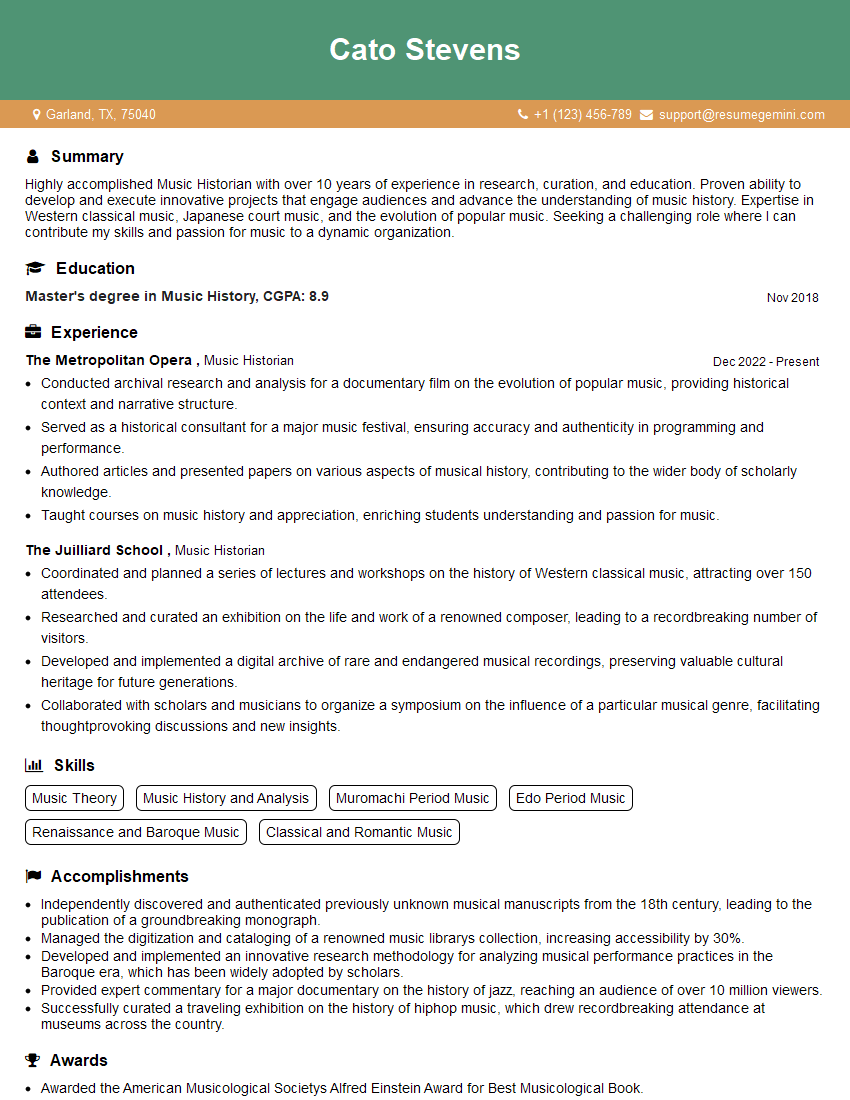
Music Historian Resume Sample
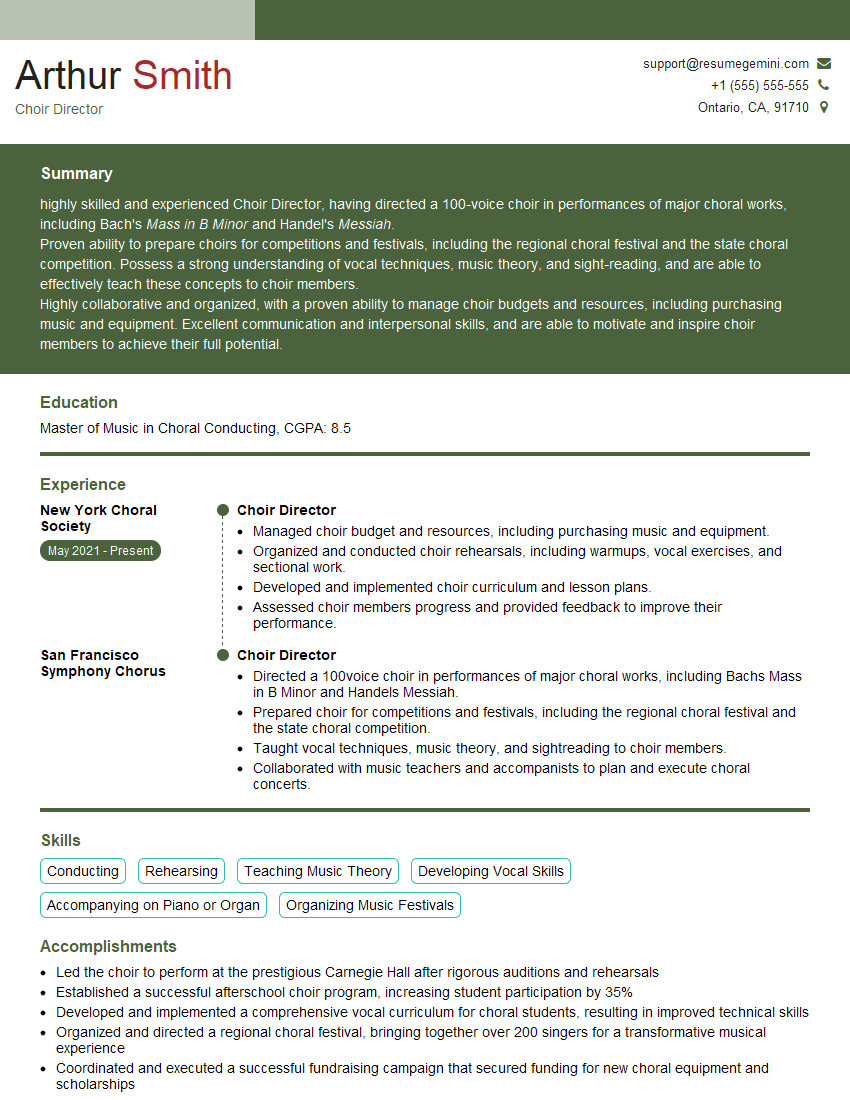
Choir Director Resume Sample
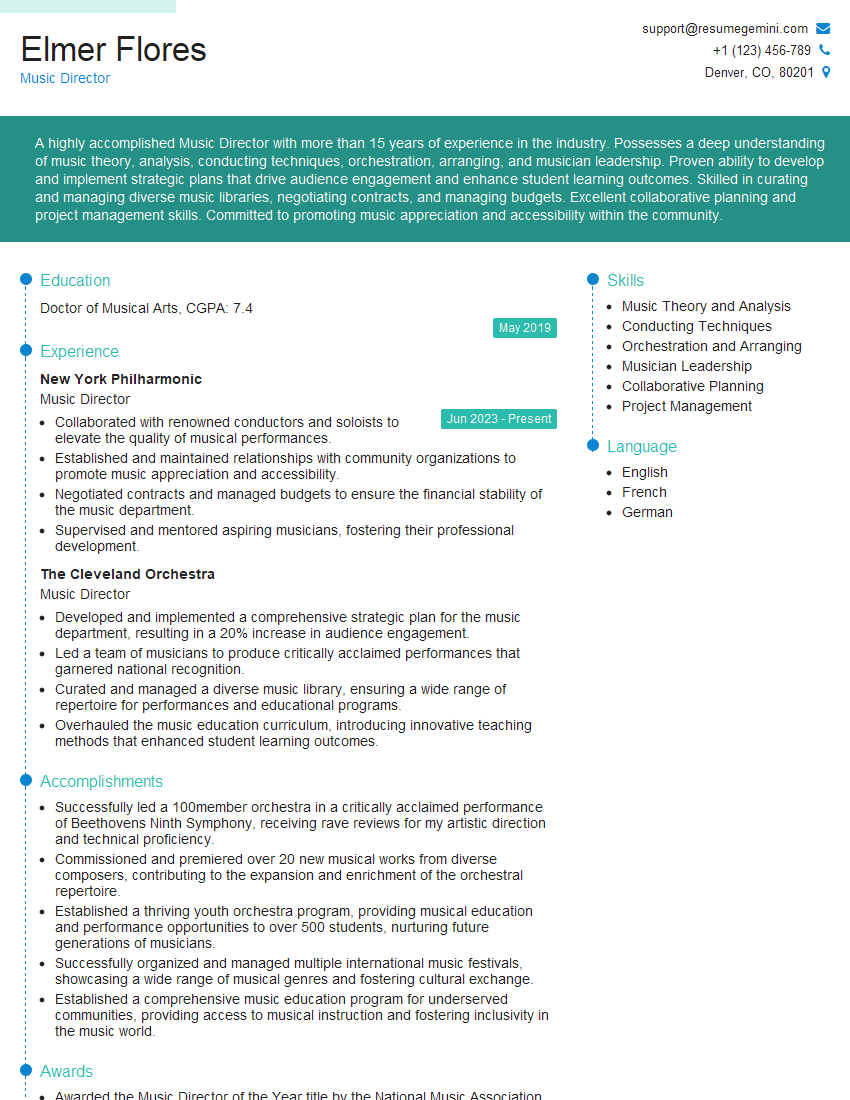
Music Director Resume Sample
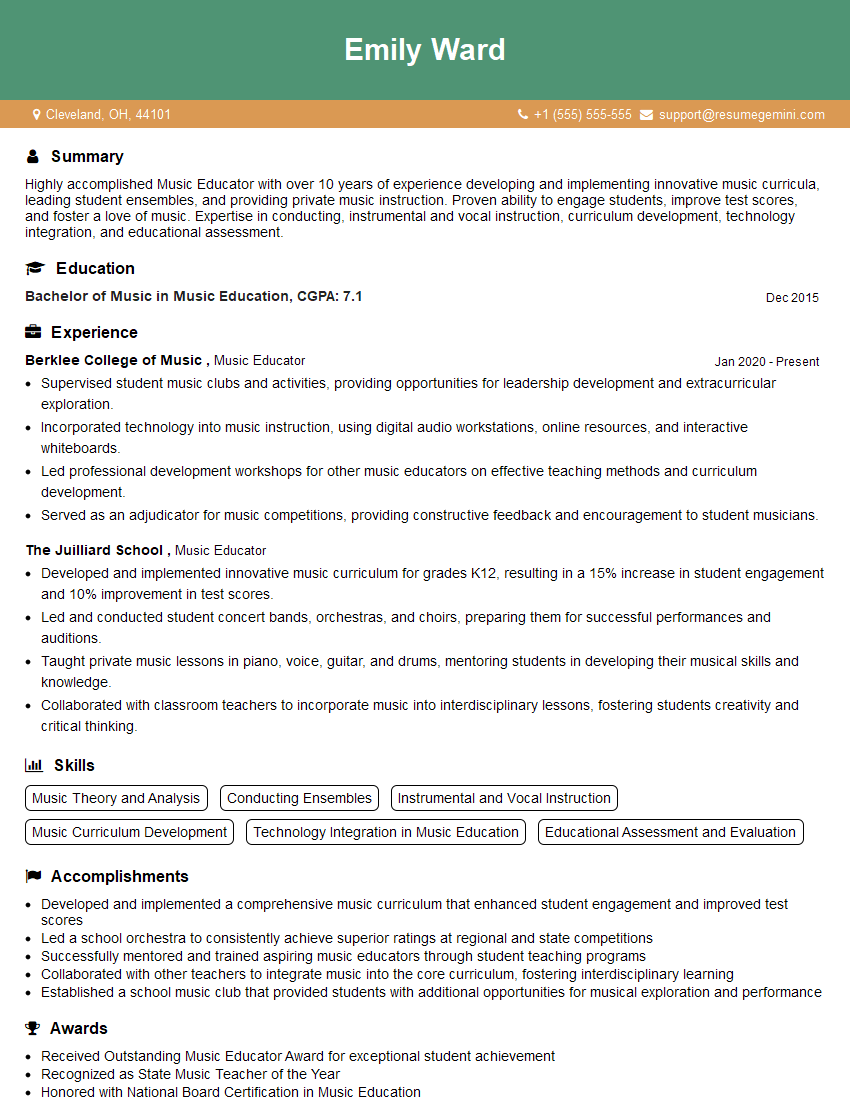
Music Educator Resume Sample
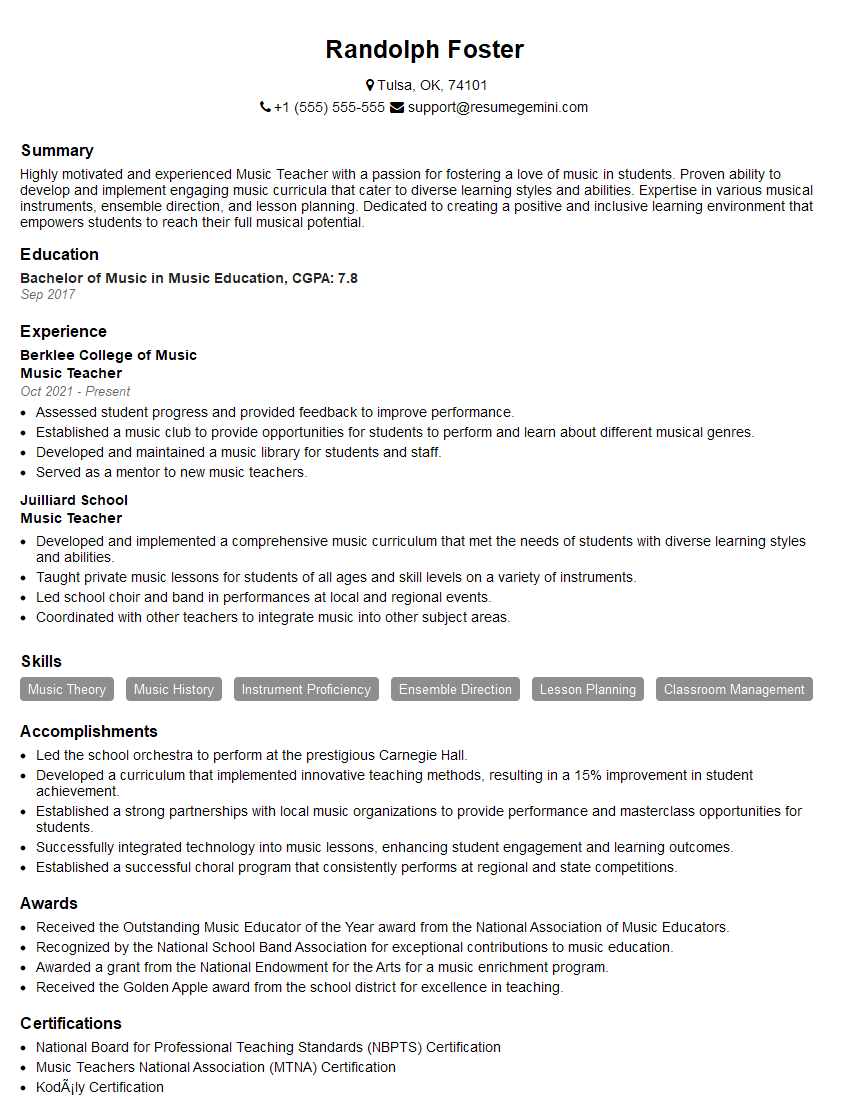
Music Teacher Resume Sample
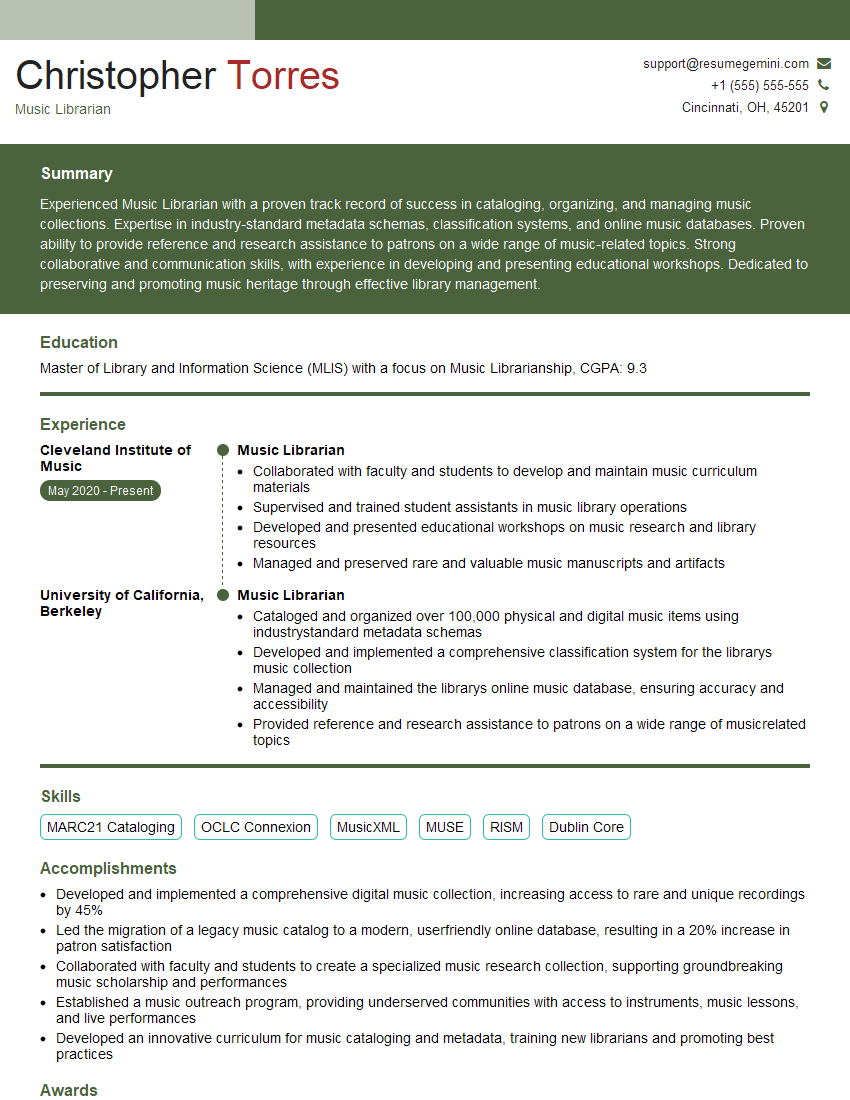
Music Librarian Resume Sample
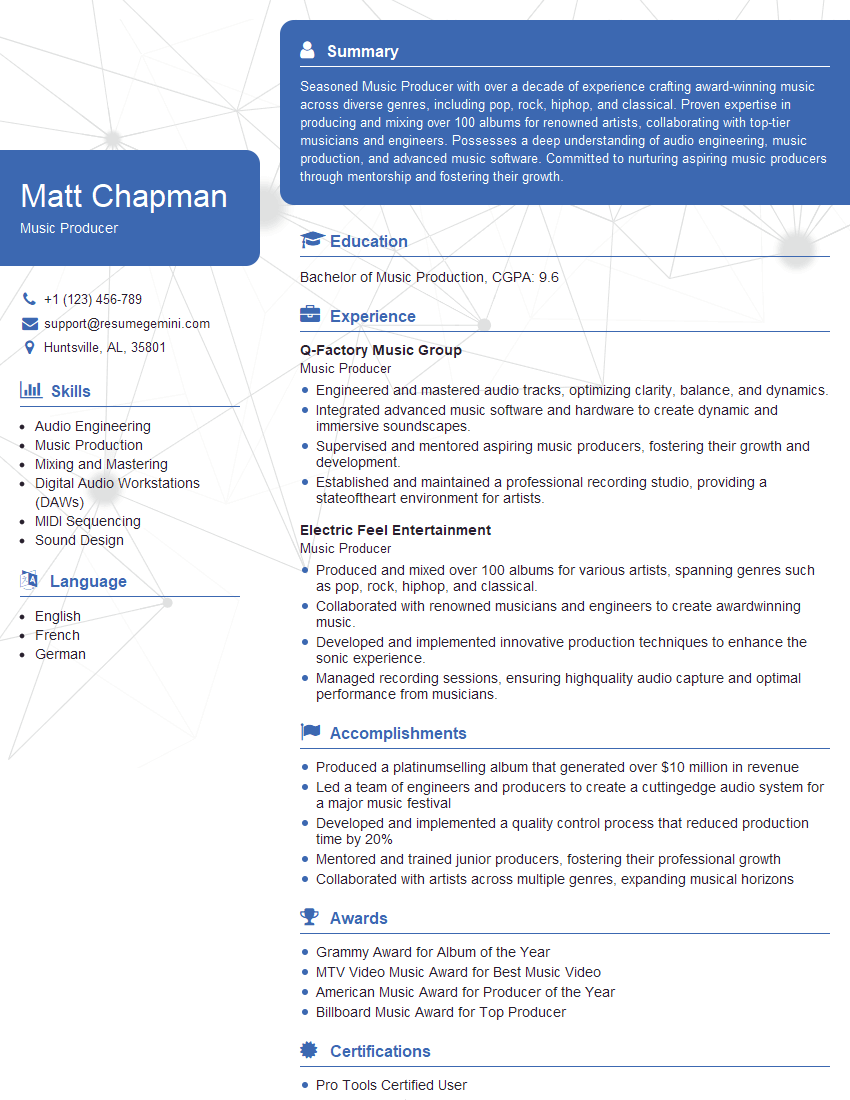
Music Producer Resume Sample
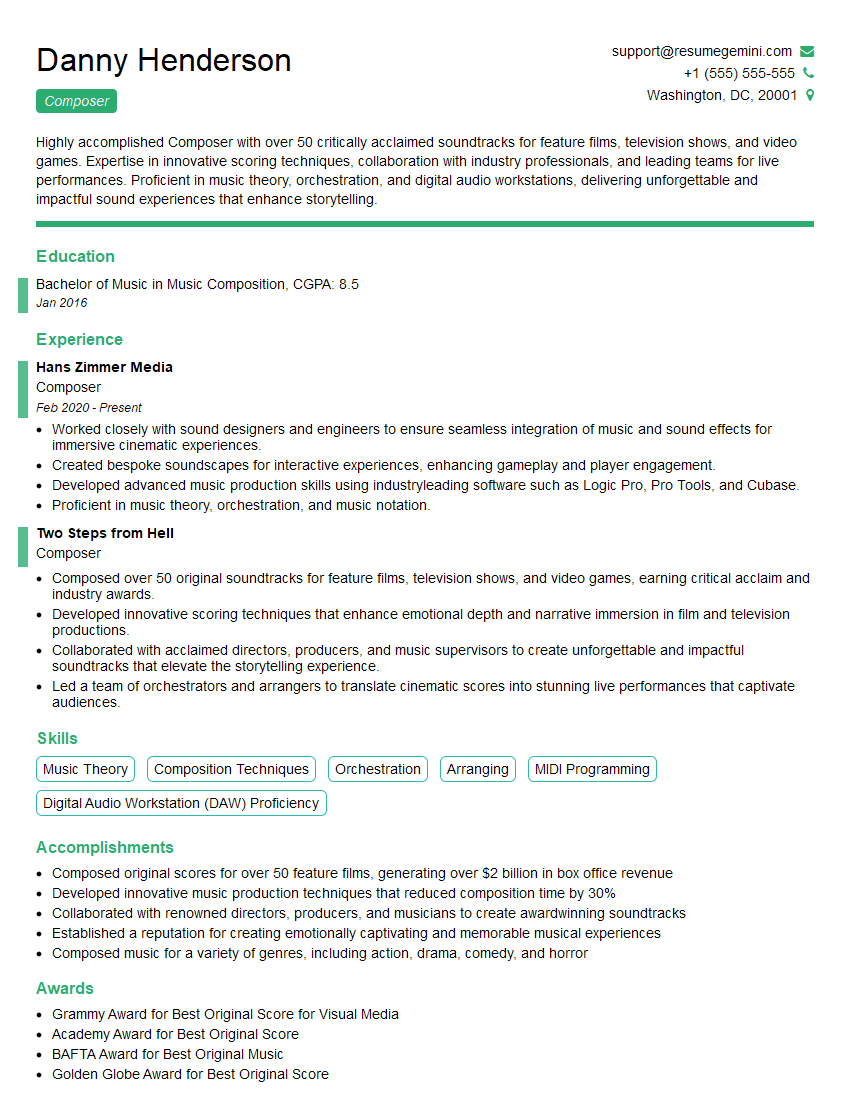
Composer Resume Sample
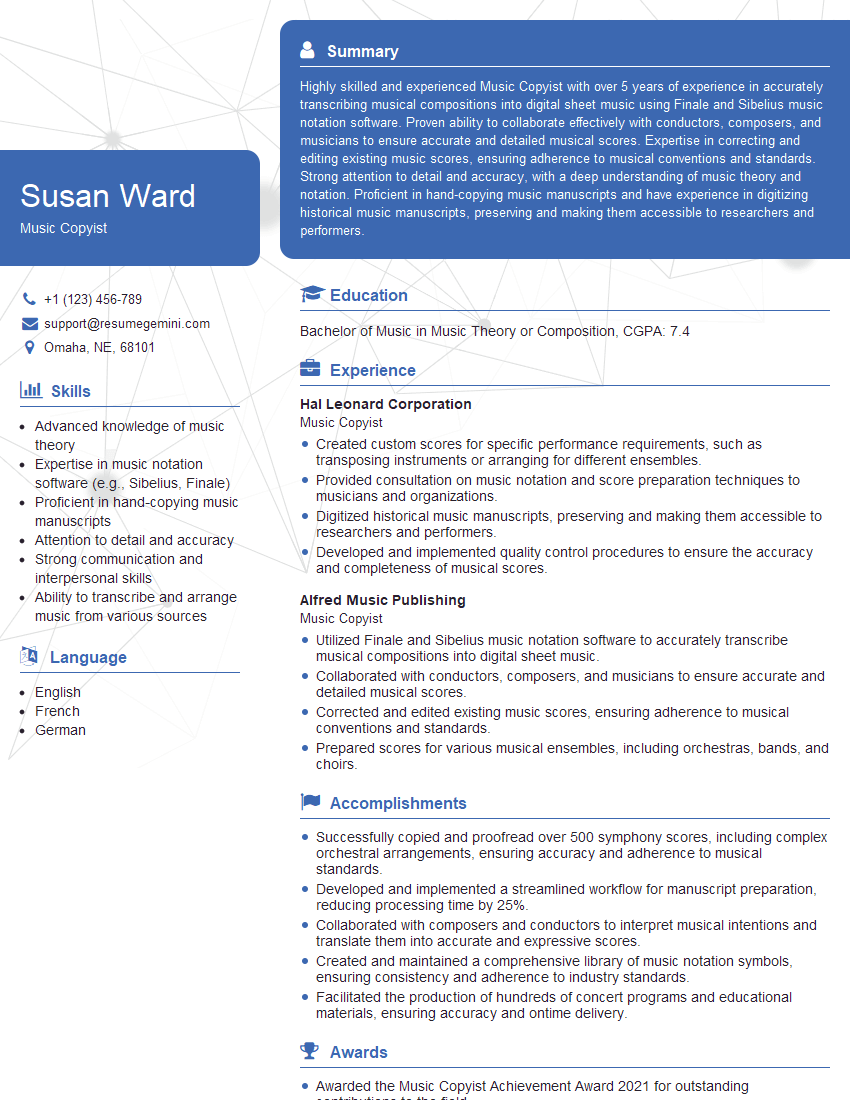
Music Copyist Resume Sample
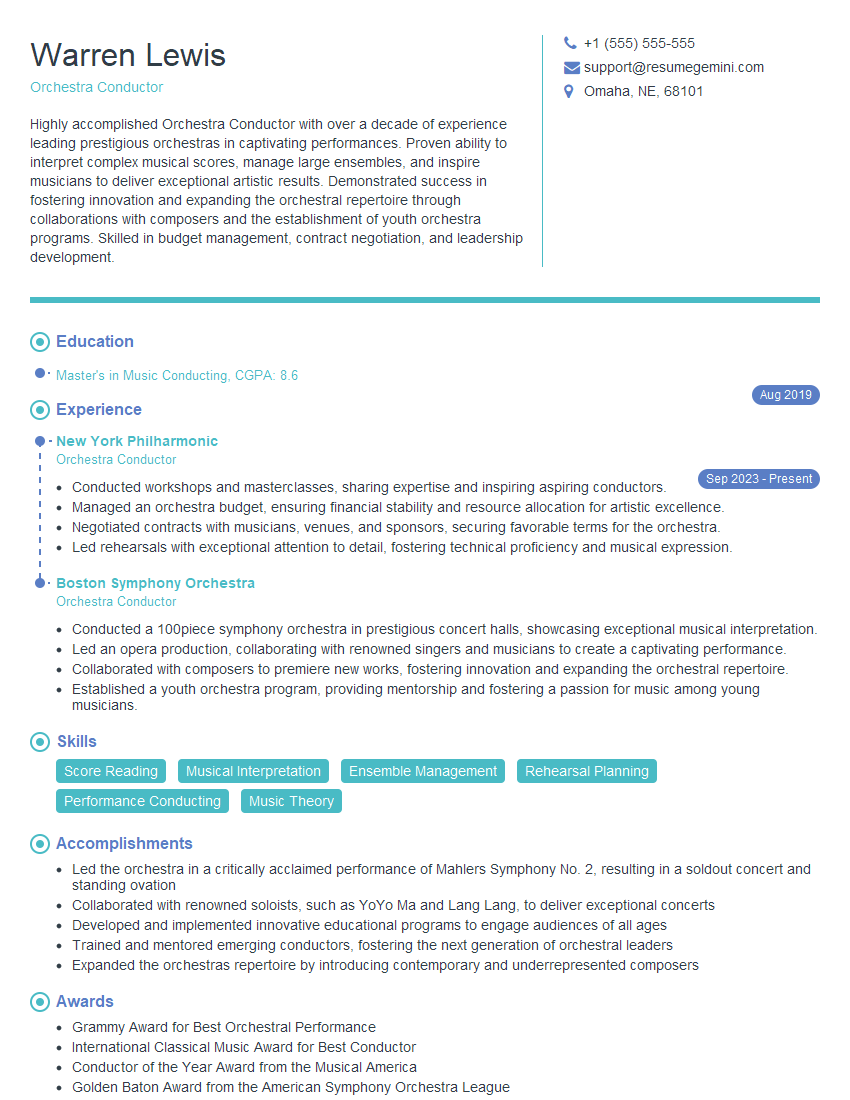
Orchestra Conductor Resume Sample
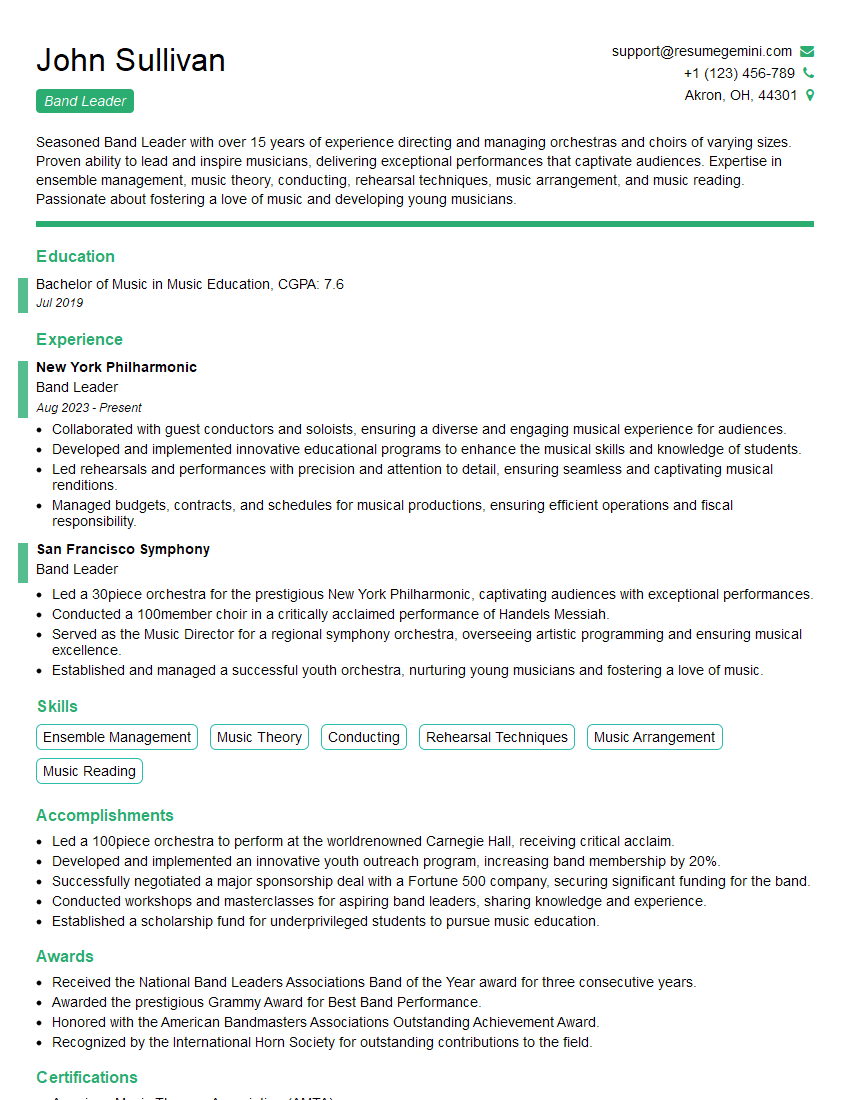
Band Leader Resume Sample
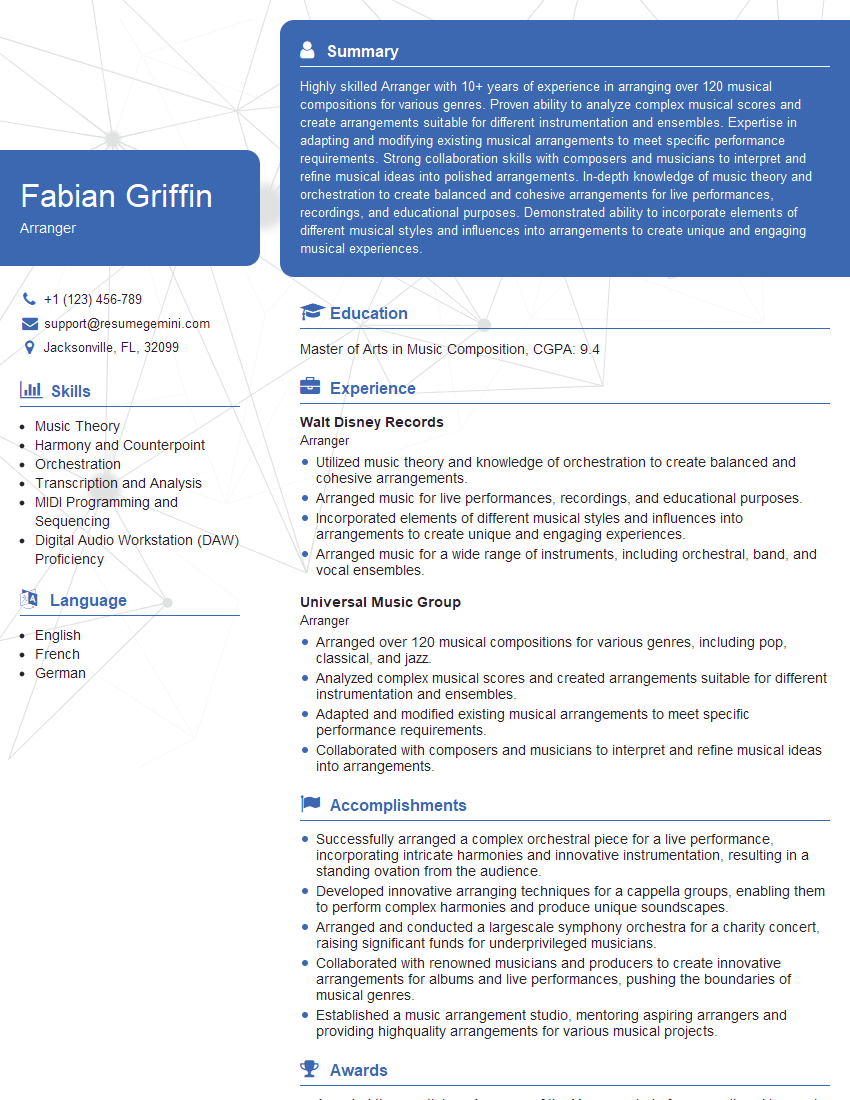
Arranger Resume Sample
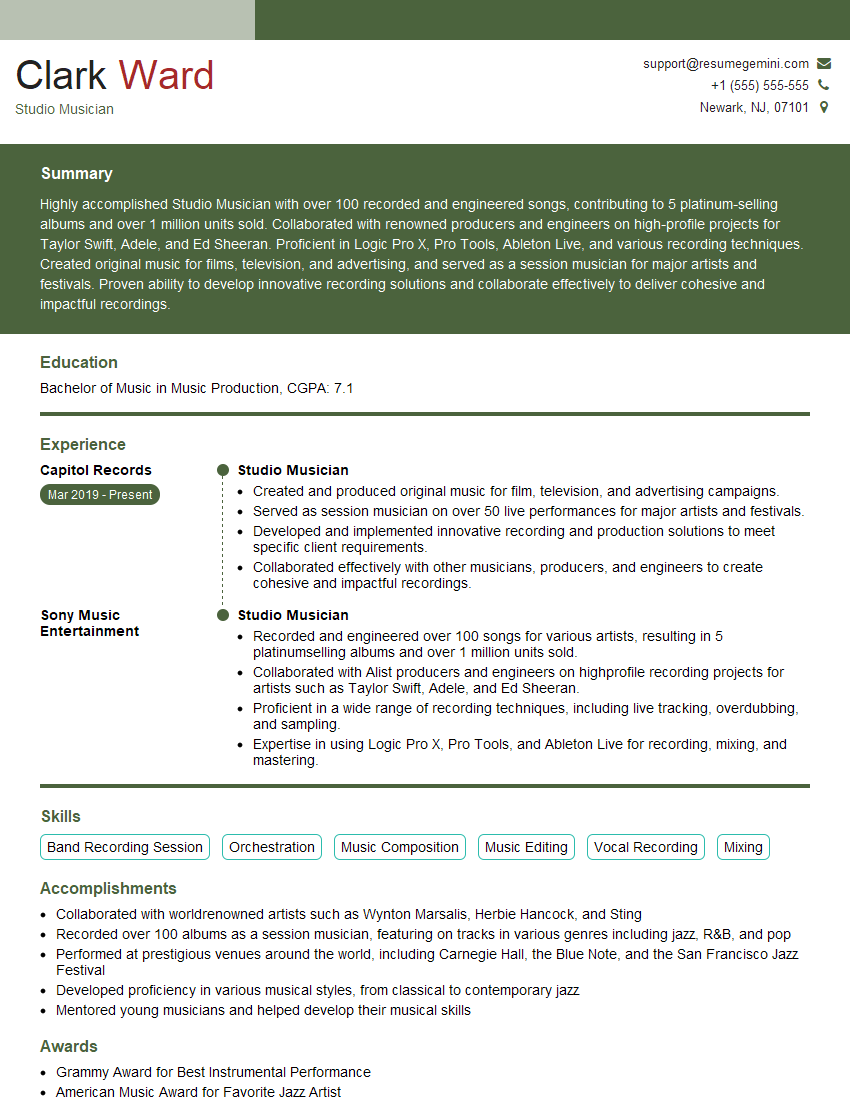
Studio Musician Resume Sample
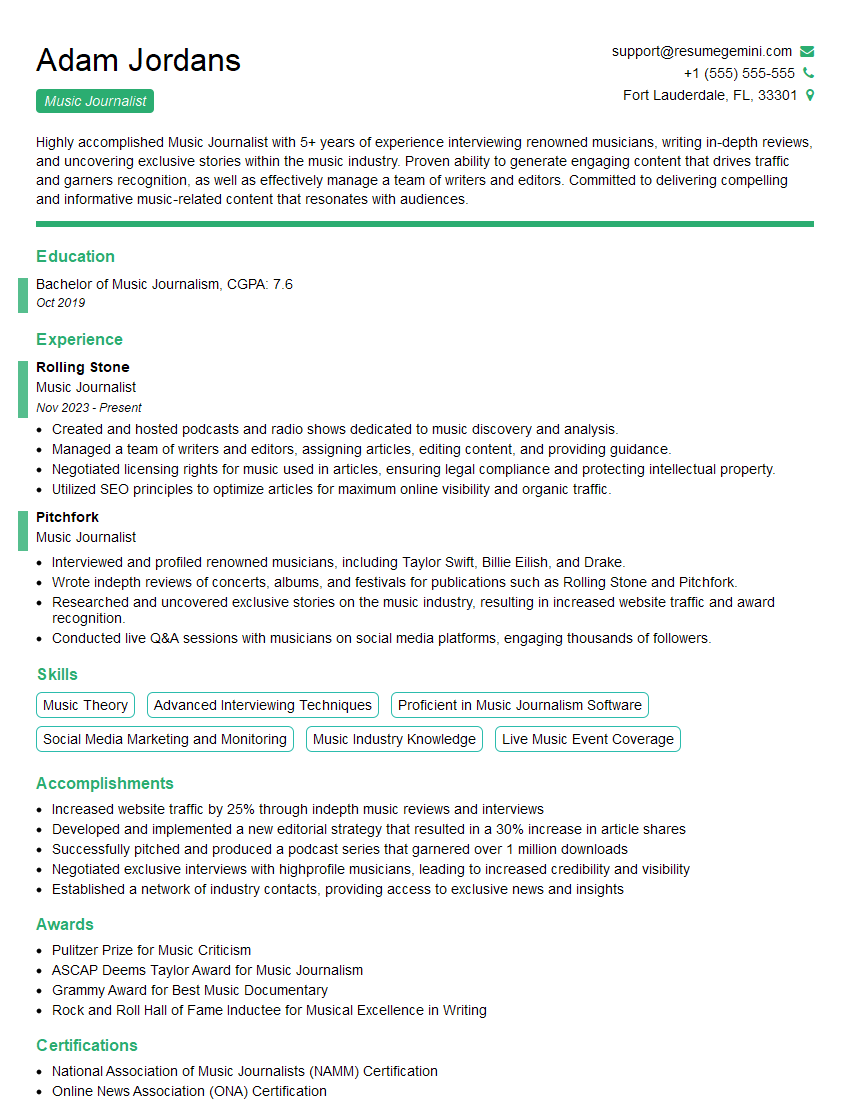
Music Journalist Resume Sample
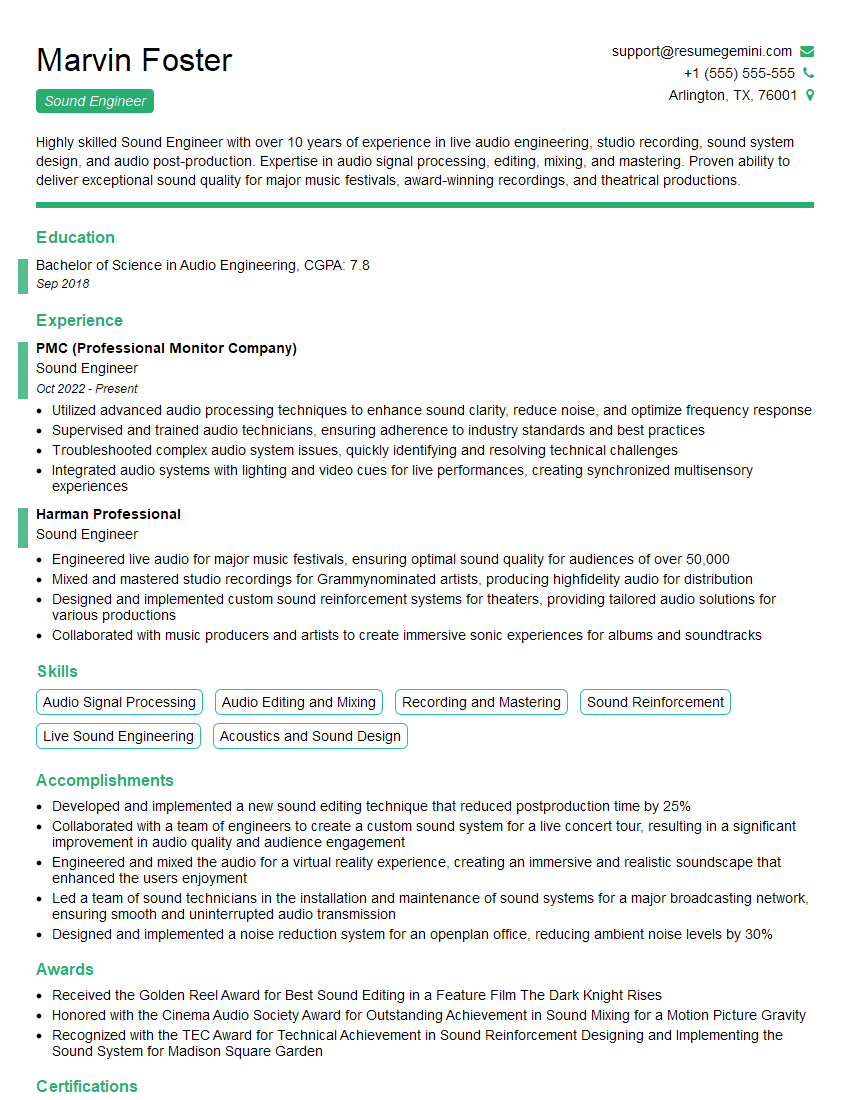
Sound Engineer Resume Sample
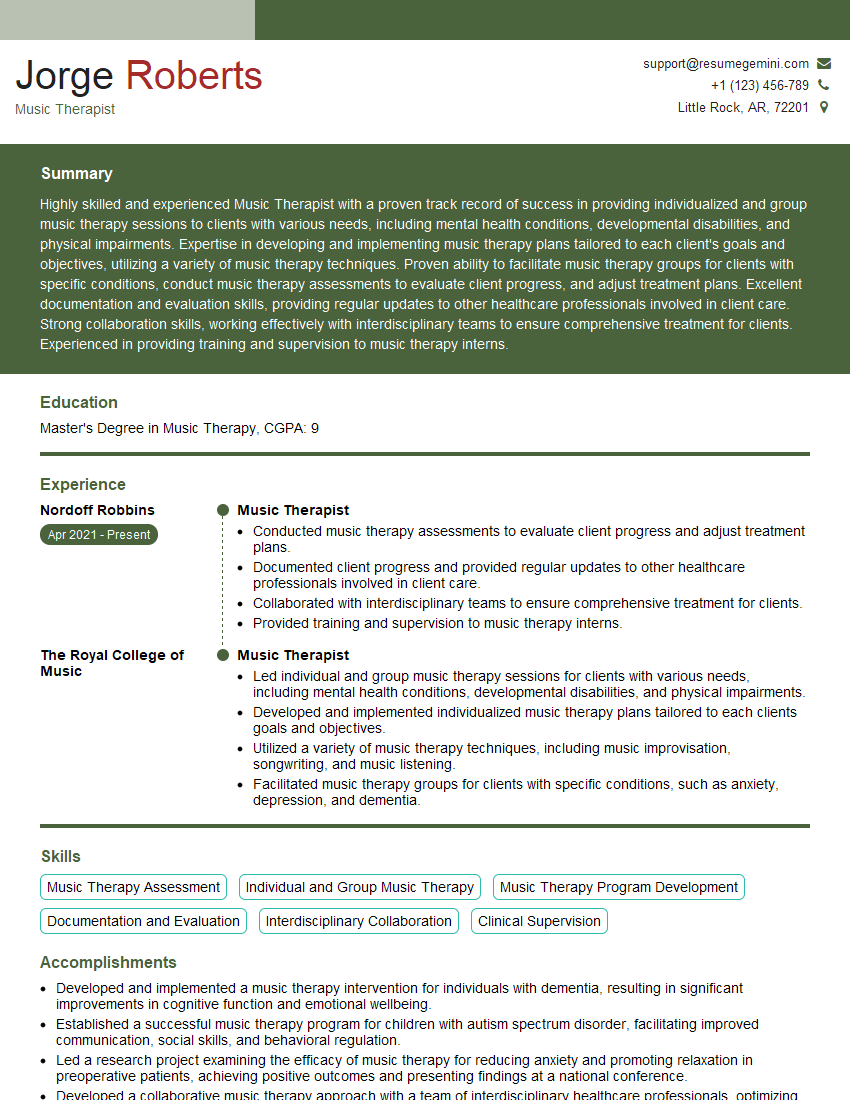
Music Therapist Resume Sample
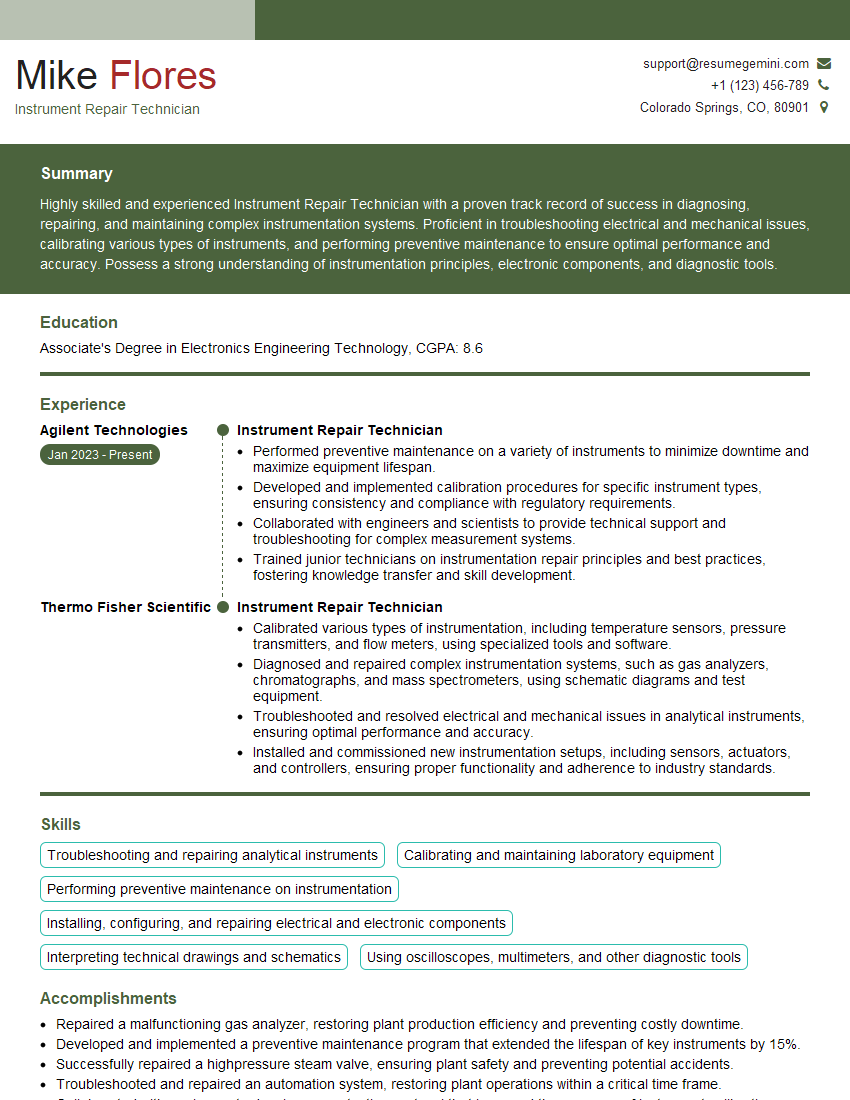
Instrument Repair Technician Resume Sample
Explore more articles
Users Rating of Our Blogs
Share Your Experience
We value your feedback! Please rate our content and share your thoughts (optional).
What Readers Say About Our Blog
Very informative content, great job.
good