Unlock your full potential by mastering the most common Cake Icing and Decoration interview questions. This blog offers a deep dive into the critical topics, ensuring you’re not only prepared to answer but to excel. With these insights, you’ll approach your interview with clarity and confidence.
Questions Asked in Cake Icing and Decoration Interview
Q 1. Describe your experience with various icing types (buttercream, fondant, royal icing).
My experience encompasses a wide range of icings, each with its unique properties and applications. Buttercream, a classic choice, offers a creamy, delicious texture and is incredibly versatile. I’m proficient in various buttercream recipes, from American (using shortening) which is great for stability and intricate piping, to Swiss meringue buttercream, known for its smooth, glossy finish and intense flavor. Fondant, on the other hand, is a sugar paste ideal for creating smooth, flawless surfaces and intricate decorations. Its pliable nature allows for sculpting and detailed modeling. Finally, royal icing, a stiff icing made with egg whites and powdered sugar, is perfect for delicate designs, lacework, and cookie decoration. I’ve mastered the art of achieving different consistencies of royal icing for various techniques. My experience with these icings allows me to select the most appropriate one depending on the cake design and client’s preferences.
Q 2. What are the different piping techniques you are proficient in?
My piping techniques are extensive, ranging from basic to advanced styles. I’m adept at creating classic rosettes, stars, shells, and leaves. I can execute more intricate techniques like basketweave, petal designs, and writing using different piping tips. My experience extends to using various piping bags, from disposable to reusable, and I understand how the size and shape of the tip significantly impact the final design. I regularly practice and experiment to expand my piping repertoire. For instance, I recently mastered creating realistic-looking roses using a combination of tips and techniques, a skill that really elevates the cake’s aesthetic appeal.
Q 3. Explain your process for creating a tiered cake.
Creating a tiered cake involves careful planning and execution. First, I bake and level the cake layers, ensuring each tier is structurally sound. Then, I prepare the fillings and frost each layer individually before stacking them. The key is to use dowels or support structures within each tier, especially for larger cakes, to prevent collapse. I use a sturdy cake board for each tier, and often use cardboard circles between layers to reinforce stability. Each tier is then carefully frosted and finished, with the final decorations added last. For instance, recently I created a three-tiered wedding cake. The bottom tier was a rich chocolate cake, the middle was vanilla, and the top was a delicate lemon cake. Each tier was carefully leveled, frosted, and decorated to create a harmonious yet distinct look.
Q 4. How do you ensure structural integrity in large or elaborate cakes?
Structural integrity in large or elaborate cakes is paramount. I use a combination of techniques to achieve this, including using sturdy cake boards, dowels, and support structures. For instance, for tall cakes, I’ll insert long dowels vertically through the center of each layer. For very large or heavy cakes, I may use additional support columns around the perimeter. I often use a combination of buttercream and ganache to create a sturdy base layer and prevent the cake from shifting or collapsing. This meticulous approach ensures the cake remains stable and beautiful throughout its presentation and transportation.
Q 5. Describe your experience with working with fondant, including covering cakes and creating decorations.
My experience with fondant is extensive. I can cover cakes flawlessly, achieving a smooth, wrinkle-free surface. This involves kneading the fondant to the right consistency, rolling it to an even thickness, and carefully draping it over the cake, smoothing out any air bubbles or imperfections. Beyond covering cakes, I also create a wide range of fondant decorations, including flowers, figurines, and intricate designs. I’m skilled in creating realistic textures and using food coloring to achieve the desired shades. For example, I recently sculpted a life-like fondant swan for a client’s anniversary cake. This required careful attention to detail, the use of various tools and techniques, and patience in achieving the desired level of realism.
Q 6. How do you troubleshoot common cake decorating problems (e.g., cracks, uneven icing)?
Troubleshooting is a crucial aspect of cake decorating. Cracks in fondant can often be repaired with a little extra fondant and smoothing, or by using edible glue to seamlessly blend the repair. Uneven icing can be addressed by using a bench scraper or a cake smoother to create a perfectly flat surface. Crumb coats are essential in preventing crumbs from showing through the final layer of icing. If the cake is too crumbly, consider using additional frosting or ganache to add moisture and structure. Each problem requires a specific approach, and my experience allows me to quickly identify the issue and implement an effective solution. For instance, I once had a tiered cake where the top layer started to lean. I quickly re-supported it with additional dowels and adjusted the positioning to ensure stability. Prevention is key, so proper cake preparation and handling are paramount.
Q 7. What are your preferred tools and equipment for cake decorating?
My preferred tools and equipment are essential to my work. This includes a variety of piping tips, both large and small, for creating a range of designs. I rely on different sizes of offset spatulas for frosting and smoothing, and a bench scraper is a must-have for creating perfectly straight edges. I also use a turntable for easier cake decorating, making the process more efficient and precise. Fondant tools, like rolling pins, cutters, and modeling tools, are indispensable for creating fondant decorations. Other essentials include various types of piping bags, cake boards of different sizes, and a wide selection of food colorings and edible dusts to add extra flair. Maintaining my tools is crucial, cleaning and storing them properly after each use ensures their longevity and continued functionality.
Q 8. How do you maintain a hygienic and organized workspace while decorating cakes?
Maintaining a hygienic and organized workspace is paramount in cake decorating. It’s not just about aesthetics; it directly impacts food safety and the final product’s quality. Think of it like a surgeon preparing for an operation – precision and cleanliness are non-negotiable.
- Dedicated workspace: I always use a designated area solely for cake decorating, free from clutter and potential contaminants. This prevents cross-contamination from other food items or household materials.
- Regular cleaning: Before I start, I thoroughly clean and sanitize my surfaces – tables, countertops, and equipment – with food-grade disinfectant. I also maintain a clean apron and regularly wash my hands.
- Organized tools: All my tools – spatulas, piping bags, tips, etc. – are neatly organized and readily accessible. This reduces the risk of spills or accidental contamination, and speeds up my workflow. I use separate containers for different icings to avoid mixing flavors.
- Waste management: I have designated areas for discarding waste, ensuring quick and efficient disposal. This prevents build-up and keeps the environment tidy and safe.
For example, I recently had a client who ordered a very intricate wedding cake. Maintaining a clean workspace allowed me to focus on the delicate details without worrying about accidentally introducing crumbs or dust into the design.
Q 9. Describe your experience with airbrushing or other advanced cake decorating techniques.
Airbrushing is a fantastic technique that adds a professional, polished touch to cakes. I’ve used it extensively for creating gradients, fine details, and even photographic-quality images on cakes. It allows for incredible precision and control, unattainable with other methods. I also have experience with other advanced techniques like isomalt work, creating sugar flowers, and hand-painting with edible paints.
For airbrushing, I use food-grade airbrush colors and ensure proper ventilation to avoid inhaling the fine mist. I practice with stencils to create consistent designs and achieve the desired level of opacity and blending. One project where airbrushing really shone was when I created a cake depicting a sunset over a tropical beach; the gradient of colors was incredibly realistic thanks to airbrushing.
Beyond airbrushing, mastering sugar flower-making added a whole new dimension to my work. The detail and realism achievable with these handcrafted elements elevate the overall aesthetic significantly. I also enjoy hand-painting with edible paints to add intricate designs which adds a personal touch to designs.
Q 10. How do you translate a client’s vision into a cake design?
Translating a client’s vision into a cake design involves a collaborative process. It’s about actively listening, asking clarifying questions, and visualizing their ideas to create a tangible design that meets and exceeds their expectations.
- Initial consultation: I begin with a thorough consultation, discussing the occasion, theme, color scheme, and any specific elements they envision. This is crucial to understand their preferences and aesthetic.
- Mood boards and sketches: I often create mood boards – a collection of images, textures, and colors – to help visually represent the client’s vision. I then use these to create sketches, translating the ideas into a realistic cake design.
- Refining the design: I present the initial design to the client, and we iterate on it together. I incorporate their feedback, making adjustments until we’ve finalized a design that perfectly captures their vision.
- Detailed briefing: Finally, I provide a detailed briefing which includes specifications on cake flavor, size, icing, and any specific design elements. This ensures we are both on the same page before commencing the project.
For instance, I recently worked with a couple who wanted a cake that reflected their love for vintage cars. Through a series of discussions, sketches, and revisions, we finally created a stunning three-tier cake that perfectly embodied their style and story.
Q 11. How do you handle last-minute changes or requests from clients?
Handling last-minute changes requires flexibility and efficient problem-solving skills. Communication is key to managing expectations and ensuring a positive client experience.
- Assess the feasibility: I evaluate the request’s impact on the timeline and resources. Some changes can be easily accommodated, while others may require more time or adjustments.
- Transparent communication: I openly discuss the implications of the changes with the client, explaining any potential challenges or additional costs. Transparency builds trust and prevents misunderstandings.
- Prioritize and adjust: If the changes are feasible, I re-prioritize tasks and adjust my schedule to incorporate the new requests. Sometimes, this might mean extending the deadline or making minor design compromises.
- Manage expectations: If the changes are impossible to implement within the existing constraints, I explain the situation clearly and offer alternative solutions. Open communication avoids disappointment.
For example, a client once requested a change in color scheme just a day before the event. By openly discussing the implications and adjusting my schedule, we managed to accommodate the request without compromising the cake’s quality or sacrificing other aspects of the design.
Q 12. Describe your experience with cake sculpting or modeling.
Cake sculpting and modeling is a rewarding aspect of cake decorating that allows for incredibly creative and personalized designs. It’s a more demanding technique requiring patience, precision and specific skills.
My experience includes sculpting characters, animals, and even intricate architectural designs. I use a variety of techniques including carving, molding, and assembling different pieces to create the final model. The materials commonly used include fondant, gum paste, and modeling chocolate. Each requires different handling and skill set. Fondant is easy to work with but can be prone to cracking; gum paste allows for incredible detail but requires more precision. Modeling chocolate offers a unique texture and is often used for creating realistic-looking details.
One of my proudest creations was a life-size sculpted dog for a client’s birthday. It took several days and careful planning but the final result was extremely rewarding.
Q 13. What are your methods for storing and preserving decorated cakes?
Proper storage and preservation are crucial for maintaining the quality and safety of decorated cakes. This involves understanding the cake’s ingredients and using appropriate storage techniques.
- Temperature control: Most cakes are best stored in a cool, dry place, ideally between 35°F and 40°F (2°C and 4°C). A refrigerator is ideal, but ensure the cake is properly covered to prevent it from drying out or absorbing odors.
- Airtight containers: Using airtight containers helps maintain freshness and prevents the cake from drying out. The container’s size should be appropriate to avoid squashing delicate decorations.
- Freezing: For longer-term storage, freezing is an excellent option. Wrap the cake well in plastic wrap and then in aluminum foil to prevent freezer burn. Thaw the cake in the refrigerator slowly before serving.
- Shelf life: The shelf life depends on the ingredients and decorations used. Cream-based fillings have a shorter shelf life than buttercream or fondant-covered cakes.
For example, a wedding cake usually needs to last for a day or two after the event. I always advise clients on the best storage methods to ensure the cake remains fresh and delicious.
Q 14. How do you ensure food safety regulations are met during cake production?
Food safety is an absolute priority in my cake production. I strictly adhere to all relevant regulations to guarantee the safety and quality of my products.
- Hygiene practices: I maintain meticulous hygiene throughout the entire process, from handwashing and surface sanitization to proper storage and handling of ingredients.
- Ingredient sourcing: I source my ingredients from reputable suppliers, ensuring they meet all food safety standards and are fresh and of high quality.
- Temperature control: I meticulously monitor temperatures during all stages of cake production, ensuring that ingredients are stored and handled at appropriate temperatures to prevent bacterial growth.
- Allergen awareness: I’m highly aware of common allergens and take all necessary precautions to prevent cross-contamination. I clearly label products containing allergens.
- Equipment maintenance: I regularly clean and sanitize all my equipment, including mixers, ovens, and decorating tools, to prevent cross-contamination and ensure proper hygiene.
By following these procedures, I ensure that my cakes are not only delicious but also safe for consumption.
Q 15. Explain your process for designing and executing a custom cake order.
Designing and executing a custom cake order is a meticulous process that begins with a thorough consultation with the client. We discuss their vision, including the occasion, desired flavors, size, design elements (theme, colors, characters, etc.), and budget. I then create a detailed sketch or digital design, incorporating their preferences and offering suggestions based on my expertise. This design acts as a blueprint for the entire process. Once approved, I source high-quality ingredients, bake the cake layers, prepare the fillings and frostings, and finally, execute the design using various techniques like piping, sculpting, airbrushing, or fondant work, depending on the complexity. Throughout, meticulous attention to detail is key. For instance, for a recent wedding cake featuring intricate sugar flowers, we spent several days perfecting each blossom, ensuring they were not only visually stunning but also structurally sound.
- Consultation: Understanding the client’s vision and requirements.
- Design: Creating a visual representation (sketch or digital design).
- Preparation: Sourcing ingredients and preparing cake layers and fillings.
- Decoration: Applying chosen techniques and adding finishing touches.
- Delivery/Pickup: Ensuring safe and timely delivery or pickup arrangements.
Career Expert Tips:
- Ace those interviews! Prepare effectively by reviewing the Top 50 Most Common Interview Questions on ResumeGemini.
- Navigate your job search with confidence! Explore a wide range of Career Tips on ResumeGemini. Learn about common challenges and recommendations to overcome them.
- Craft the perfect resume! Master the Art of Resume Writing with ResumeGemini’s guide. Showcase your unique qualifications and achievements effectively.
- Don’t miss out on holiday savings! Build your dream resume with ResumeGemini’s ATS optimized templates.
Q 16. What is your experience with different cake flavor profiles and fillings?
My experience with cake flavor profiles and fillings is extensive. I’ve mastered a wide range, from classic vanilla bean and chocolate to more adventurous options like lavender honey, salted caramel, and pistachio rosewater. My fillings similarly vary greatly; I use fresh fruit compotes, creamy ganaches, custards, and even flavored curd fillings. I constantly experiment with new combinations to offer unique and delicious experiences. For example, I recently created a cake with layers of spiced chai cake, cardamom mascarpone cream filling, and a spiced rum buttercream frosting. This allowed for a complex flavor profile that was both sophisticated and festive. I also consider dietary restrictions and allergies, providing options like gluten-free, vegan, or dairy-free versions of my popular flavors.
Q 17. How do you price your cake designs?
Pricing my cake designs is a multi-faceted process involving several factors. Primarily, it depends on the cake’s size, complexity of the design, flavor selections, and the overall time investment. Simple, single-layer cakes with basic frosting are priced differently from intricately designed multi-tiered cakes requiring extensive sculpting, airbrushing, or sugar flower work. I provide detailed quotes that break down the costs for each element, ensuring transparency and client satisfaction. For example, a small single-tiered cake might be priced based on a per-serving rate, while a large multi-tiered wedding cake would be priced based on a combination of size, design complexity, and the number of servings.
Q 18. How do you manage your time effectively when working on multiple cake orders simultaneously?
Managing multiple cake orders simultaneously requires careful planning and organization. I use a project management system that outlines deadlines, tasks, and specific requirements for each order. This allows me to prioritize tasks effectively, ensuring that all orders are completed on time and meet the expected level of quality. I also allocate specific time blocks for each stage of the process, whether it’s baking, frosting, or decorating. This minimizes interruptions and allows for focused work. Furthermore, I often delegate tasks to my team when applicable, which is crucial for managing the workflow efficiently.
Q 19. What is your experience with using edible images or other printed decorations?
I have considerable experience with edible images and other printed decorations. Edible images are a fantastic way to personalize cakes, incorporating photos, logos, or custom designs. I work with reputable printers that use food-safe inks and edible paper. However, it’s crucial to ensure the image is properly applied to the cake to avoid smudging or damage. I also utilize other printed decorations like wafer paper cutouts or personalized toppers. The key is to ensure the quality of the printing and the proper application techniques to maintain the vibrancy of the colors and crispness of the details. I often combine printed decorations with hand-piping or other decorative elements to create a more cohesive and visually appealing result.
Q 20. How do you stay up-to-date with the latest cake decorating trends and techniques?
Staying updated with the latest trends and techniques in cake decorating is vital. I actively participate in online cake decorating communities, attend workshops and conferences, and subscribe to industry publications. I also follow renowned cake artists on social media platforms like Instagram and Pinterest for inspiration and new ideas. Reading books and watching tutorials on cake decorating techniques are integral to expanding my skillset. This constant learning ensures I can provide my clients with innovative and contemporary designs. For example, recently I incorporated isomalt work and geometric designs into my repertoire, adding a modern flair to my cakes.
Q 21. Describe your experience with using specific tools such as gum paste, isomalt, or chocolate.
My experience with gum paste, isomalt, and chocolate is extensive. Gum paste is perfect for creating intricate flowers, figurines, and delicate decorations. Isomalt, a type of sugar, allows for the creation of stunning, clear, and hard candy decorations. I use it to create various designs, from delicate spun sugar to intricate structures. Chocolate, in its various forms, is essential for sculpting, molding, and creating decorative elements. I’m proficient in tempering chocolate to achieve a glossy finish and use it to make everything from chocolate shards to intricate chocolate showpieces. For example, a recent cake featured isomalt spheres and gum paste roses, creating a visually striking contrast of textures and finishes.
Q 22. What is your experience in designing cakes for different occasions (weddings, birthdays, etc.)?
Designing cakes for various occasions is a passion of mine, requiring a blend of artistic vision and technical skill. For weddings, I focus on elegance and sophistication, often incorporating intricate lacework piping, cascading flowers made from fondant, and personalized details reflecting the couple’s style. I’ve designed cakes ranging from classic tiered beauties to modern geometric masterpieces. For birthdays, the designs are more playful and personalized. I’ve created cakes shaped like favorite characters, incorporating vibrant colors, fun toppers, and age-appropriate designs. I always begin by consulting with the client to understand their vision, the theme, the number of guests, and any specific requests, ensuring the final product perfectly reflects the occasion’s mood and celebration.
For example, for a recent 50th birthday celebration, the client requested a cake reflecting the celebrant’s love of gardening. I created a three-tiered cake, shaped like a flower pot, with edible flowers cascading down the sides, intricately piped leaves, and realistic-looking soil texture at the base.
Q 23. How do you handle customer complaints or dissatisfaction with a cake?
Customer satisfaction is paramount. If a complaint arises, I approach it with empathy and professionalism. First, I actively listen to their concerns without interruption, acknowledging their feelings. Then, I thoroughly investigate the issue, looking for potential causes such as inconsistencies in baking, issues with delivery, or miscommunication about the design. Depending on the problem, I may offer a partial refund, a remake of the cake, or a complementary dessert. Open communication is crucial; I explain my steps clearly, reassuring the customer that their satisfaction is my priority. I view every complaint as an opportunity to improve my service and prevent similar issues in the future.
For instance, I once received a complaint about the color of the frosting being slightly different than what the client envisioned. I apologized for the discrepancy and offered to recreate the cake with the desired shade, ensuring perfect color matching this time. This demonstrates my commitment to excellence and customer service.
Q 24. What are your strengths and weaknesses as a cake decorator?
My strengths lie in my artistic ability, attention to detail, and ability to translate a client’s vision into a stunning cake. I excel at creating intricate designs, using various techniques like fondant sculpting, gum paste modeling, and airbrushing to achieve a polished finish. I’m also highly organized and efficient, able to manage multiple orders simultaneously while maintaining high standards. A weakness I’m actively working on is delegation. As a perfectionist, I sometimes struggle to let others assist in certain aspects of the cake-making process. I am actively trying to improve this by learning to trust and train other members of my team.
Q 25. Describe your experience working under pressure and meeting deadlines.
Working under pressure and meeting deadlines is an integral part of this profession. I’ve handled many situations requiring swift action and precise execution, such as last-minute orders or unexpected technical challenges. My organizational skills and experience in project management help me prioritize tasks, allocate time effectively, and ensure timely completion. I maintain a calm demeanor under pressure, focusing on efficient workflows and problem-solving to meet every deadline without compromising quality.
For example, I once had to create a large wedding cake within 48 hours of receiving the order due to an unforeseen circumstance with the original baker. By meticulously planning each step, delegating tasks where possible, and working extended hours, I successfully delivered a beautiful and flawless cake on time. The positive feedback from the couple validated the effectiveness of my approach under high-pressure situations.
Q 26. How do you maintain the quality and consistency of your cake designs?
Maintaining consistent quality and design involves a multi-faceted approach. I meticulously follow standardized recipes and procedures for baking and frosting, ensuring uniformity in taste and texture. I utilize high-quality ingredients and maintain strict hygiene standards throughout the process. Regularly calibrating my equipment and employing precise measurements helps to guarantee consistent results. I also invest in continuing education, attending workshops, and experimenting with new techniques to keep my skills sharp and innovative. A detailed checklist and standardized processes ensure consistency across all my cake creations.
For instance, I use a digital scale for precise ingredient measurements, minimizing variations in the final product. I also maintain a detailed recipe notebook with exact instructions and notes, ensuring each cake is made to the same high standard.
Q 27. What are your salary expectations?
My salary expectations are commensurate with my experience and skillset, reflecting the industry standards for a cake decorator with my level of expertise. I am open to discussing a competitive compensation package based on a detailed review of the role and responsibilities.
Q 28. Do you have a portfolio of your work you can share?
Yes, I have a comprehensive portfolio showcasing my work. It includes high-resolution images and descriptions of cakes I’ve designed for various occasions, highlighting the different techniques and styles employed. I can share this portfolio digitally or provide a printed version for your review.
Key Topics to Learn for Your Cake Icing and Decoration Interview
- Icing Techniques: Understanding different icing types (buttercream, fondant, royal icing), their properties, and application methods. This includes mastering techniques like smooth frosting, piping, and creating various textures.
- Cake Construction and Structure: Knowing how to properly level and fill cakes for stability and a professional finish. This involves understanding different cake structures (layer cakes, sculpted cakes) and their structural requirements.
- Design and Aesthetics: Demonstrating knowledge of color theory, design principles, and current trends in cake design. This includes understanding how to translate client visions into reality and create visually appealing designs.
- Decorating Tools and Equipment: Familiarity with various decorating tools (piping bags, spatulas, airbrush, etc.) and their proper usage. This also includes understanding the maintenance and cleaning of these tools.
- Troubleshooting and Problem Solving: Being able to identify and address common issues during the icing and decorating process, such as cracked icing, uneven surfaces, or color inconsistencies. This includes demonstrating a proactive approach to problem-solving.
- Food Safety and Hygiene: Understanding and adhering to food safety regulations and best practices to ensure the safety and quality of your creations. This includes proper handling of ingredients and maintaining a clean workspace.
- Pricing and Business Acumen: Understanding the cost of ingredients and labor to determine appropriate pricing for your services. This also includes having a basic understanding of running a cake decorating business (if applicable).
Next Steps
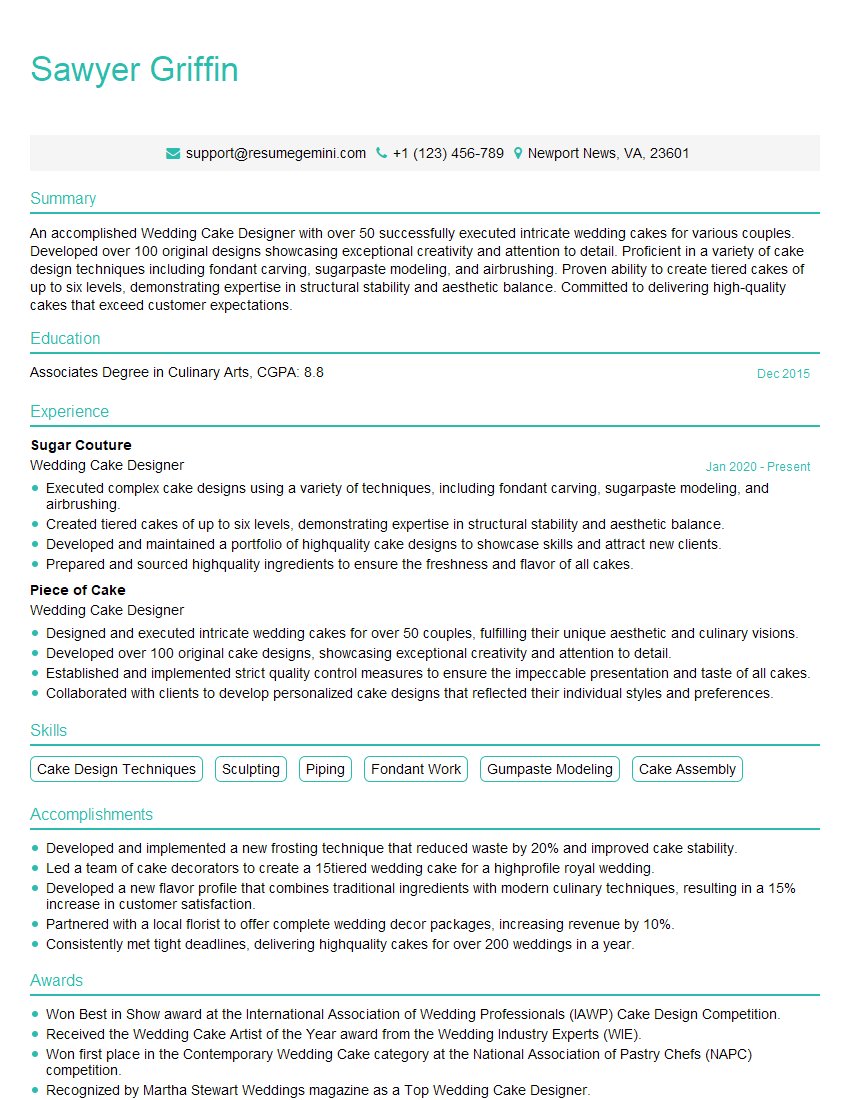
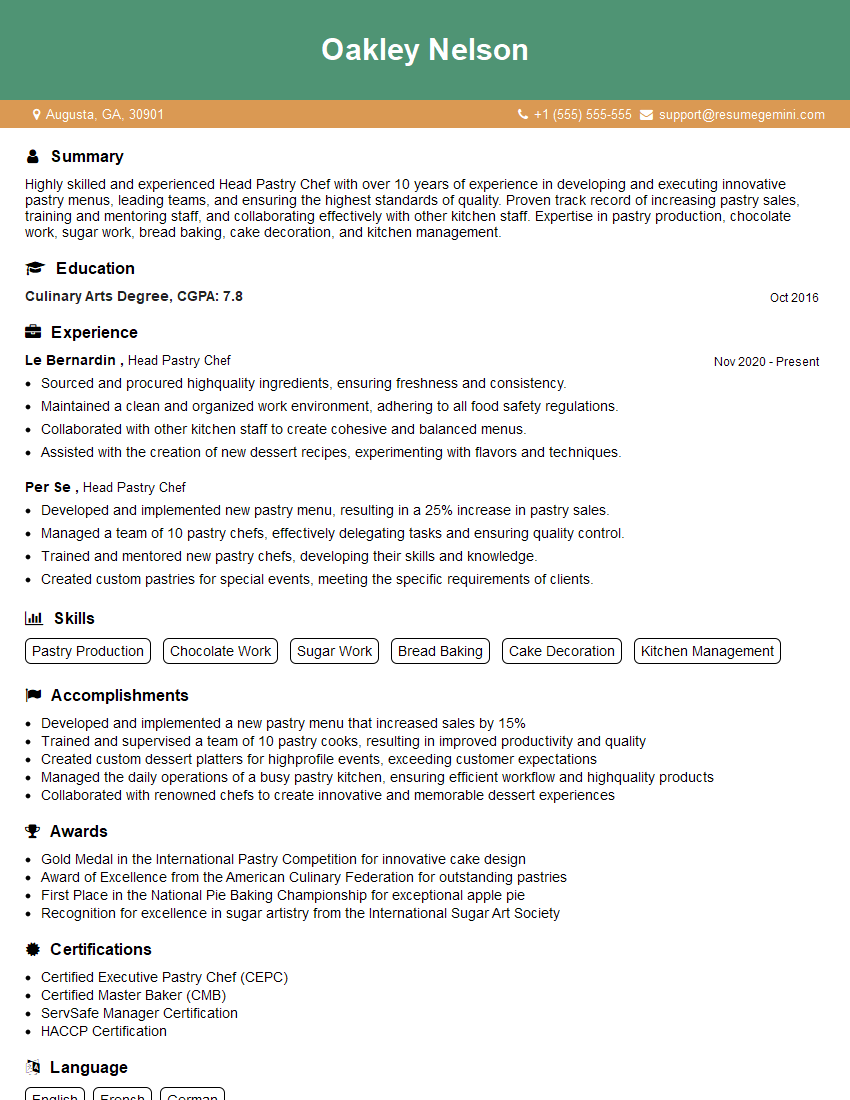
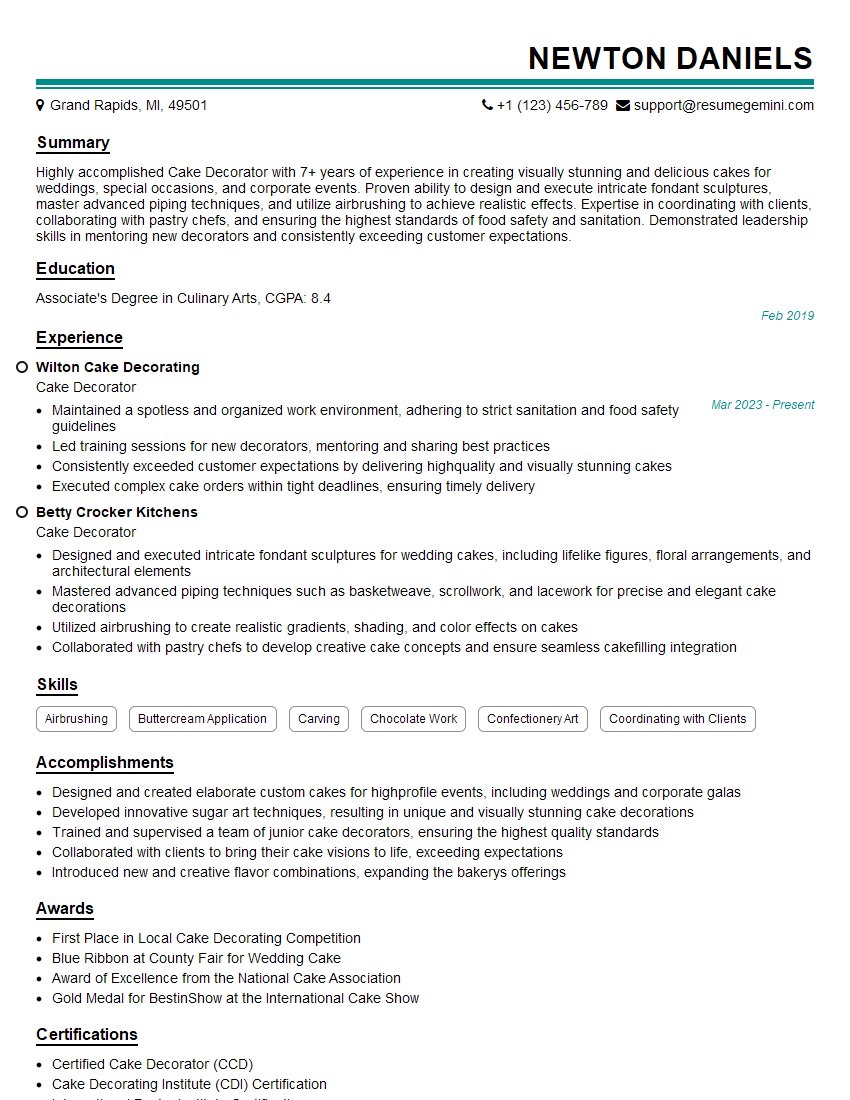
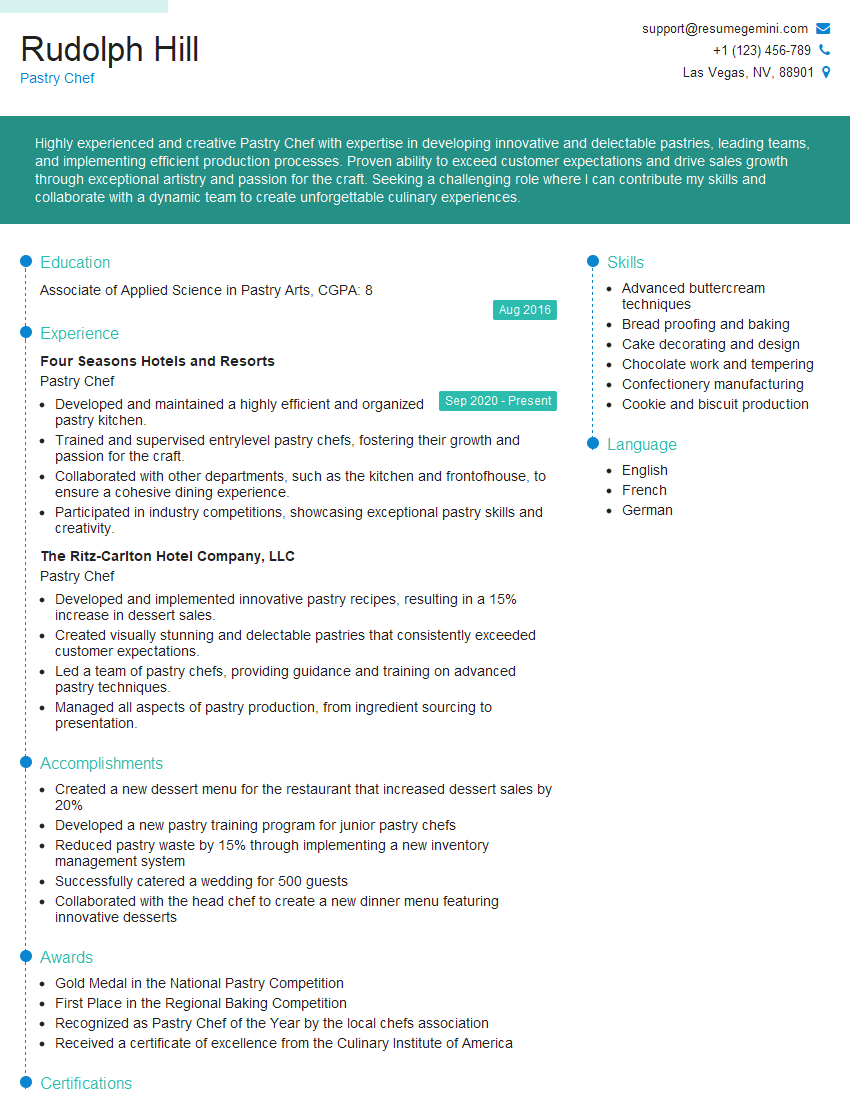
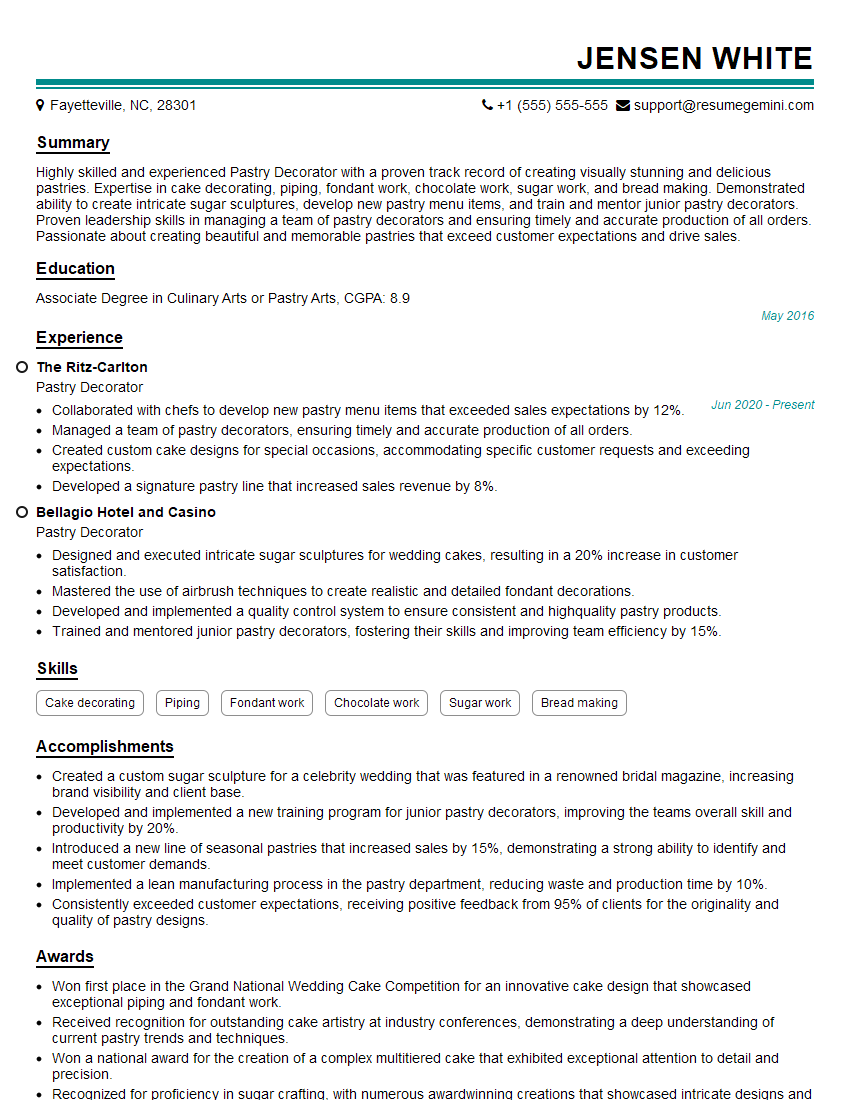
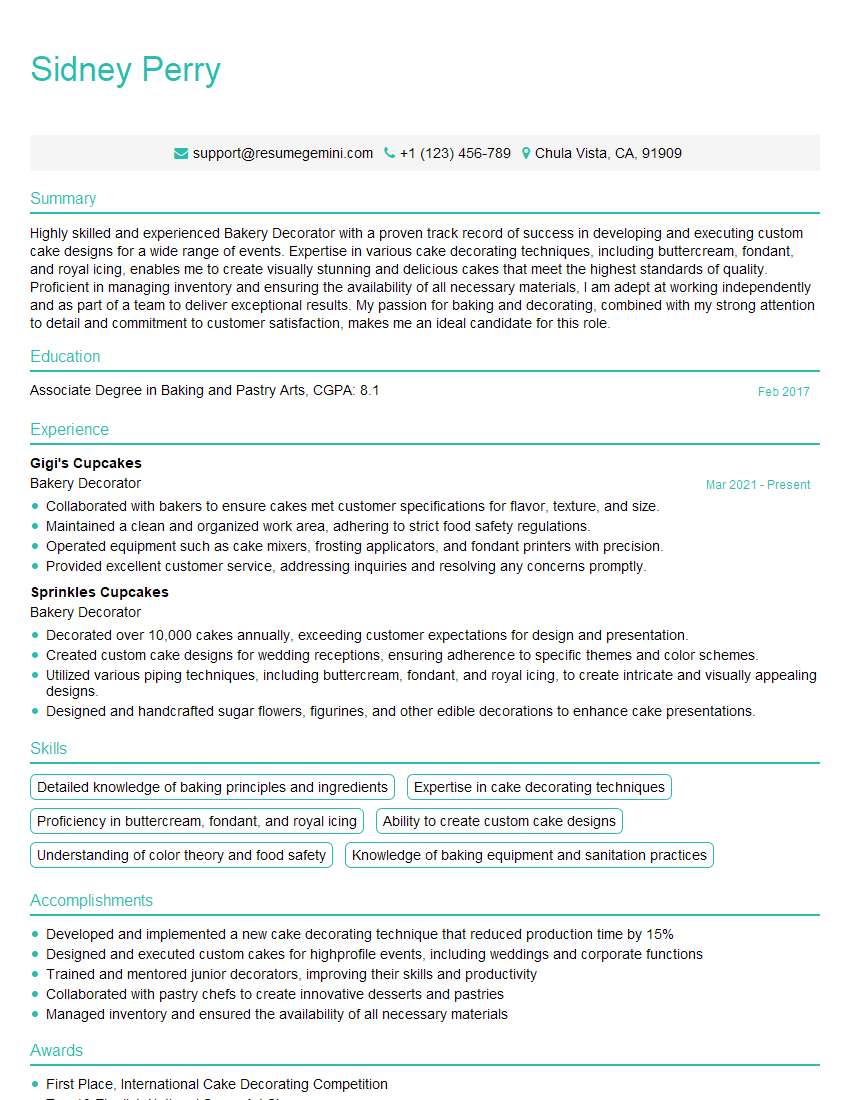
Mastering cake icing and decoration is key to a thriving career in this creative and in-demand field. A strong portfolio showcases your skills, but a well-crafted resume is your first impression. An ATS-friendly resume is crucial to getting your application noticed by potential employers. To ensure your resume stands out, we highly recommend leveraging the power of ResumeGemini. ResumeGemini offers a streamlined process for creating professional, impactful resumes. Examples of resumes tailored to Cake Icing and Decoration professionals are available to help guide you. Take the next step towards your dream career today!
Explore more articles
Users Rating of Our Blogs
Share Your Experience
We value your feedback! Please rate our content and share your thoughts (optional).
What Readers Say About Our Blog
Very informative content, great job.
good