Are you ready to stand out in your next interview? Understanding and preparing for Calibration and repair interview questions is a game-changer. In this blog, we’ve compiled key questions and expert advice to help you showcase your skills with confidence and precision. Let’s get started on your journey to acing the interview.
Questions Asked in Calibration and repair Interview
Q 1. Explain the difference between calibration and repair.
Calibration and repair are distinct but related processes in ensuring the accuracy and reliability of equipment. Calibration is the process of adjusting an instrument to a known standard to ensure its accuracy. Think of it like setting your watch to the correct time using an atomic clock. It doesn’t fix any malfunctions, it simply verifies and corrects the instrument’s output. Repair, on the other hand, involves fixing malfunctions or breakdowns in equipment to restore its functionality. This could involve replacing broken parts, fixing electrical faults, or resolving mechanical issues. Repair often precedes or follows calibration, as a broken instrument cannot be reliably calibrated.
For example, imagine a digital thermometer. Calibration would involve comparing its readings to a traceable standard thermometer under various conditions. If its readings are consistently off, adjustments are made to ensure accuracy. Repair, however, would be necessary if the display fails to work, or the probe is damaged.
Q 2. Describe your experience with different calibration methods (e.g., traceability, comparison).
My experience encompasses various calibration methods, primarily traceability and comparison. Traceability involves establishing an unbroken chain of comparisons between the instrument being calibrated and national or international standards. This ensures the accuracy of the calibration is demonstrably linked to a recognized authority. For example, I’ve calibrated pressure gauges using a deadweight tester, whose accuracy is traceable to national standards through a series of calibrations performed by accredited laboratories. Comparison calibration involves comparing the instrument under test to a known standard, typically a high-precision instrument. This method is commonly used when traceability is less critical or when direct traceability is impractical. I often use this method for calibrating smaller tools where a full traceability chain is not necessary. Both methods require meticulous documentation and adherence to established procedures.
Q 3. What are the common sources of error in calibration?
Common sources of error in calibration include:
- Environmental factors: Temperature fluctuations, humidity, and even air pressure can affect the accuracy of measurements. I always carefully control and monitor these conditions during calibration.
- Instrument limitations: Every instrument has inherent limitations, such as resolution and linearity. Understanding these limitations is vital in assessing the uncertainty of the calibration.
- Operator error: Incorrect handling, improper connections, or misinterpreting readings can lead to significant errors. This is why detailed training and strict adherence to procedures are critical.
- Equipment wear and tear: Over time, instruments degrade and become less accurate, so regular calibration and maintenance are essential.
- Improper calibration procedures: Using inaccurate standards, improper techniques, or inadequate documentation can also introduce significant errors.
Q 4. How do you ensure the traceability of your calibration procedures?
Traceability is paramount in calibration. I ensure traceability by:
- Using traceable standards: All standards used in my calibration procedures are themselves calibrated by accredited laboratories with documented traceability to national or international standards. We have a robust system of calibration certificates for all our standards.
- Maintaining meticulous records: Every calibration is meticulously documented, including the date, time, environmental conditions, equipment used, results, and any corrective actions taken. This data creates a clear and verifiable audit trail.
- Employing accredited methods: I follow established calibration procedures and standards to ensure consistency and reliability. This often includes documented methods and work instructions.
- Participating in proficiency testing schemes: Periodic participation in proficiency testing programs provides independent verification of our calibration processes and competence.
Q 5. What is the significance of ISO 17025 in calibration?
ISO 17025 is an internationally recognized standard for testing and calibration laboratories. It outlines the requirements for competence, impartiality, and consistent operation. Its significance in calibration is profound because it provides a framework for demonstrating the quality and reliability of calibration results. Compliance with ISO 17025 shows customers that a laboratory operates to a high standard, ensuring the credibility of their calibration certificates. It also facilitates international recognition and acceptance of calibration data.
Q 6. Describe your experience with different types of calibration equipment.
My experience spans various types of calibration equipment, including:
- Multi-meters: Calibrating their voltage, current, and resistance measurements to ensure accuracy and safety.
- Temperature devices: Calibrating thermometers, thermocouples, and RTDs using dry-block calibrators and temperature baths.
- Pressure gauges: Calibrating pressure gauges of various ranges using deadweight testers.
- Weighing scales: Calibrating scales using certified weights and ensuring linearity across the scales’ range.
- Dimensional measuring equipment: Calibrating micrometers, calipers, and other precision measurement devices using traceable gauge blocks.
Q 7. How do you troubleshoot common calibration issues?
Troubleshooting calibration issues involves a systematic approach. I start by reviewing the calibration procedure to identify any deviations or mistakes. Then, I examine the equipment itself, checking for any obvious signs of damage or wear. I’ll inspect connections, ensure power supply integrity, and verify the stability of environmental conditions. If the problem persists, I might consult calibration records to identify potential recurring issues. If the problem involves a more complex instrument, I’ll typically consult the instrument’s technical manual for further guidance. In the case of persistent errors, I may need to investigate deeper, sometimes requiring advanced diagnostic equipment to pinpoint the root cause. Effective troubleshooting requires a blend of technical expertise, methodical analysis, and good documentation practices.
Q 8. What is your experience with different types of measurement instruments?
My experience encompasses a wide range of measurement instruments, from simple hand-held devices like calipers and micrometers to sophisticated electronic instruments such as digital multimeters, pressure gauges, and temperature sensors. I’ve also worked extensively with specialized equipment used in various industries, including analytical balances in pharmaceutical settings, optical instruments in manufacturing, and flow meters in process control. My expertise extends to understanding the underlying principles of each instrument’s operation, their limitations, and the best practices for their use and maintenance. For instance, I’m proficient in using laser interferometers for high-precision linear measurements, requiring a deep understanding of optical principles and environmental control to minimize error.
- Example 1: I successfully troubleshooted a malfunctioning spectrophotometer by identifying a degraded light source, resulting in a significant improvement in the accuracy of absorbance measurements.
- Example 2: During a calibration of a high-pressure gauge, I detected a small but significant hysteresis effect, leading to a more thorough calibration procedure to address this and improve repeatability.
Q 9. Explain your process for documenting calibration procedures.
My calibration documentation process is rigorous and adheres to ISO 17025 standards. Each calibration procedure follows a standardized format, including a unique identification number, instrument description, date of calibration, reference standards used, and detailed measurement results. We use a comprehensive electronic system, ensuring traceability and preventing data loss. The documentation includes:
- Instrument details: Serial number, manufacturer, model, and any relevant specifications.
- Calibration standards: Detailed information on the reference standards used, including their calibration certificates and traceability to national standards.
- Procedure: A step-by-step description of the calibration process, including the specific measurement points and methods.
- Results: A clear presentation of the obtained measurement data, including any deviations from the expected values.
- Analysis: An assessment of the results, including an analysis of any uncertainties and the determination of the instrument’s accuracy and precision.
- Corrective actions: Documentation of any corrective actions taken if discrepancies are found, along with verification of the effectiveness of these actions.
- Approval: Signatures and dates from the calibrating technician and a supervisor to validate the process.
All documents are securely stored and easily accessible through the calibration management software, ensuring that a complete audit trail is maintained for each instrument.
Q 10. How do you handle calibration discrepancies?
Handling calibration discrepancies requires a systematic approach. The first step is to carefully review the entire calibration process to identify potential sources of error. This might involve checking the calibration standards, the instrumentation, and the environmental conditions. Once the source of error is identified, corrective actions are undertaken. This could involve adjustments to the instrument, replacement of faulty components, or even re-calibration with higher accuracy standards. Each step is thoroughly documented. If the discrepancy cannot be resolved, the instrument may need to be removed from service and sent to the manufacturer for repair. The process for handling discrepancies includes:
- Investigation: Thorough examination of the calibration data and the process to pinpoint the discrepancy’s cause.
- Verification: Using independent methods or equipment to confirm the findings.
- Corrective action: Implementing the necessary steps to correct the issue.
- Re-calibration: Recalibrating the instrument after corrective actions to ensure accuracy.
- Reporting: Documenting the entire process, including the discrepancy, its cause, corrective actions, and verification results, with signatures from the authorized personnel.
For example, a recent discrepancy in a temperature sensor’s readings was traced to a faulty thermocouple. Replacing the thermocouple resolved the issue, and the sensor was recalibrated and verified.
Q 11. Describe your experience with preventative maintenance of calibration equipment.
Preventative maintenance is crucial for ensuring the accuracy and longevity of calibration equipment. This involves regular cleaning, inspection, and functional testing. For example, we perform scheduled checks on the power supply of electronic instruments to prevent voltage fluctuations from affecting accuracy. We also regularly check the cleanliness of precision balances to ensure accurate weighings. The frequency and scope of preventative maintenance vary depending on the instrument type and its usage, but it’s usually based on manufacturer recommendations and our internal best practices. A detailed log of all maintenance activities is kept, including dates, actions taken, and technician signatures. This ensures that the equipment remains in optimal condition and minimizes unexpected downtime.
- Example: We implement a regular cleaning schedule for precision balances to prevent dust accumulation which affects weighing accuracy.
- Example: We also conduct annual inspections on temperature calibration baths, checking for leaks, calibration fluid degradation and the integrity of the temperature sensors.
Q 12. What software or tools are you familiar with for calibration management?
I’m proficient in several software and tools for calibration management, including industry-standard Computerized Maintenance Management Systems (CMMS) such as Maximo and SAP PM. These systems allow for effective scheduling, tracking, and reporting of calibration activities. I also have experience with dedicated calibration software packages, which offer features like data analysis, certificate generation, and audit trail management. Beyond specific software, I am also comfortable using spreadsheets for data analysis and tracking, and utilize various laboratory information management systems (LIMS) for data integration and reporting. Proficiency in these tools allows me to manage large datasets, generate comprehensive reports, and maintain compliance with regulatory requirements.
Q 13. How do you determine the appropriate calibration interval?
Determining the appropriate calibration interval is critical for ensuring measurement accuracy and compliance. Several factors influence this decision, including:
- Instrument type and usage: High-usage instruments often require more frequent calibration than those used less frequently.
- Environmental conditions: Harsh environments can affect instrument stability, requiring more frequent calibration.
- Instrument stability: Some instruments are more stable than others and may require less frequent calibration.
- Regulatory requirements: Industry standards and regulations often specify minimum calibration intervals.
- Historical data: Analysis of past calibration data can reveal trends and patterns that inform future calibration intervals.
We usually start with manufacturer recommendations as a baseline and then adjust the interval based on historical data and risk assessment. For instance, a frequently used pressure gauge in a demanding industrial setting might require monthly calibration, while a less frequently used laboratory balance might only need annual calibration.
Q 14. What safety precautions do you take when working with calibration equipment?
Safety is paramount when working with calibration equipment. My approach involves a multi-layered strategy that addresses potential hazards at each stage of the calibration process. This includes:
- Risk assessment: Identifying potential hazards associated with specific instruments and developing appropriate control measures.
- Personal protective equipment (PPE): Using appropriate PPE, such as safety glasses, gloves, and lab coats, as needed.
- Safe handling procedures: Following established procedures for handling and operating each instrument, and adhering to manufacturer’s instructions.
- Environmental controls: Ensuring a safe and stable work environment, addressing factors like proper ventilation and electrical safety.
- Emergency procedures: Understanding and practicing emergency procedures, including how to handle spills or equipment malfunctions.
- Regular equipment inspections: Performing regular inspections to ensure equipment is in safe working condition and free of damage.
For example, when working with high-voltage equipment, we always ensure the power is disconnected before handling, and we use insulated tools to prevent electrical shocks. Similarly, when handling hazardous materials, we follow strict protocols for safe handling, disposal, and personal protection.
Q 15. Explain your experience with statistical process control (SPC) in calibration.
Statistical Process Control (SPC) is crucial for ensuring consistent and accurate calibration processes. It involves using statistical methods to monitor and control the variation in a process over time. In calibration, this means tracking the measurements from calibration activities to identify trends, shifts, or special causes of variation that might impact the accuracy of our measurements. I’ve extensively used control charts, such as X-bar and R charts, and individuals and moving range charts (I-MR charts), to monitor the performance of our calibration equipment and technicians. For example, we monitor the calibration results of a specific pressure gauge over several calibration cycles. If the data points consistently fall outside the control limits, it signals a problem – perhaps the gauge needs repair or recalibration, or our calibration procedure needs review. By analyzing these charts, we can proactively identify potential issues before they affect the accuracy of measurements used in production or other critical processes.
Furthermore, I leverage capability analysis tools like Cp and Cpk to assess the overall performance of our calibration process and determine if it meets pre-defined specifications. A low Cpk value, for example, indicates that our calibration process is not capable of consistently meeting the required tolerances and needs improvement, whether it be through improved equipment, technician training, or a revised procedure.
Career Expert Tips:
- Ace those interviews! Prepare effectively by reviewing the Top 50 Most Common Interview Questions on ResumeGemini.
- Navigate your job search with confidence! Explore a wide range of Career Tips on ResumeGemini. Learn about common challenges and recommendations to overcome them.
- Craft the perfect resume! Master the Art of Resume Writing with ResumeGemini’s guide. Showcase your unique qualifications and achievements effectively.
- Don’t miss out on holiday savings! Build your dream resume with ResumeGemini’s ATS optimized templates.
Q 16. Describe your experience with root cause analysis for calibration failures.
Root cause analysis is critical for preventing calibration failures from recurring. When a failure happens, I employ structured methods like the 5 Whys or fishbone diagrams to systematically investigate the underlying causes. For instance, if a temperature sensor consistently reports inaccurate readings, I wouldn’t simply replace the sensor; I’d delve deeper. The 5 Whys might look like this:
- Why is the temperature sensor inaccurate? – Because it’s outside its calibration range.
- Why is it outside its calibration range? – Because it wasn’t calibrated within the required timeframe.
- Why wasn’t it calibrated on time? – Because the calibration schedule wasn’t properly followed.
- Why wasn’t the schedule followed? – Because the responsible technician was overloaded with other tasks.
- Why was the technician overloaded? – Because of insufficient staffing levels.
The fishbone diagram would visually represent these contributing factors. Identifying the root cause (insufficient staffing) allows me to propose effective solutions, such as adjusting staffing levels or implementing a more robust scheduling system. This proactive approach significantly reduces the likelihood of similar failures in the future.
Q 17. How do you ensure the accuracy of your calibration results?
Ensuring the accuracy of calibration results is paramount. We achieve this through a multi-faceted approach. Firstly, we use traceable standards: our calibration equipment is regularly calibrated against national or international standards, creating a chain of traceability back to fundamental units. This guarantees that our measurements are accurate and comparable across different labs. Secondly, we rigorously maintain our equipment. Regular preventative maintenance, including cleaning and adjustments, prevents degradation and ensures consistent performance. Thirdly, our technicians are highly skilled and undergo continuous training to ensure they follow established procedures precisely. Finally, we employ robust statistical methods, as discussed previously, to monitor the calibration process and detect any deviations from expected performance. In essence, it’s a combination of meticulous procedures, well-maintained equipment, and skilled personnel working together.
Q 18. What is your experience with different calibration standards?
My experience encompasses a wide range of calibration standards, including those from NIST (National Institute of Standards and Technology), ISO (International Organization for Standardization), and various national metrology institutes. I’m familiar with standards for different physical quantities, such as temperature, pressure, voltage, current, mass, and length. I understand the importance of selecting the appropriate standard for a specific calibration task, considering factors like uncertainty, range, and resolution. For example, calibrating a high-precision pressure transducer requires a standard with a significantly lower uncertainty than one used for a simple pressure gauge. Moreover, I’m adept at interpreting and applying these standards to ensure our calibration processes meet the highest accuracy and traceability requirements.
Q 19. How do you manage calibration records and certificates?
Calibration records and certificates are meticulously managed using a computerized maintenance management system (CMMS). This system allows for electronic recording of all calibration activities, including instrument details, calibration dates, results, and technician information. Certificates are generated automatically upon completion of calibration, and both electronic and hard copies are securely archived. The CMMS allows us to easily track calibration due dates, generate reports, and ensure compliance with regulatory requirements. We adhere to a robust data management system with version control and audit trails to guarantee data integrity and traceability. The system allows for easy retrieval of calibration history for any instrument, providing a complete audit trail.
Q 20. How do you handle calibration equipment failures?
Calibration equipment failures are handled promptly and systematically. First, the faulty equipment is immediately taken out of service to prevent inaccurate measurements. Next, the failure is documented, including details of the malfunction and any potential contributing factors. A thorough investigation, utilizing root cause analysis techniques as mentioned earlier, is conducted to identify the root cause of the failure. Depending on the nature of the failure, the equipment may be repaired in-house or sent to an authorized service center. Upon repair or replacement, the equipment undergoes a rigorous recalibration process to verify its accuracy before being returned to service. All actions taken are meticulously documented, including repair details and recalibration results.
Q 21. Describe your experience with different types of sensors and transducers.
I have extensive experience with various sensor and transducer types, including temperature sensors (thermocouples, RTDs, thermistors), pressure transducers (strain gauge, capacitive, piezoelectric), flow sensors (turbine, ultrasonic, vortex shedding), and various other types of sensors. My understanding covers not only their operating principles but also their calibration methodologies, common failure modes, and appropriate handling procedures. For example, I understand the importance of proper thermocouple compensation techniques and the impact of ambient temperature on RTD measurements. I’m equally comfortable calibrating high-precision sensors used in critical applications as I am calibrating more general purpose sensors. This broad range of experience allows me to adapt to a variety of calibration challenges and provide effective solutions.
Q 22. How do you verify the integrity of calibration equipment?
Verifying the integrity of calibration equipment is crucial for ensuring accurate and reliable measurements. This involves a multi-faceted approach, combining visual inspection with rigorous testing and documentation.
Visual Inspection: I begin with a thorough visual check for any physical damage, such as cracks, dents, or loose connections. This is especially important for delicate components like probes or sensors. I also check for cleanliness and proper labeling.
Calibration Traceability: I verify that the equipment has a valid calibration certificate from a recognized calibration laboratory, indicating its traceability to national or international standards. This certificate provides documented evidence of its accuracy and performance.
Performance Verification: I perform a series of tests using known standards or reference materials to check the equipment’s performance against its specifications. For example, I might use a certified weight to verify the accuracy of a balance or a known voltage source to check a multimeter. Any deviations outside the acceptable tolerance range indicate the need for recalibration or repair.
Regular Maintenance: Regular maintenance, as outlined in the manufacturer’s instructions, is critical. This includes cleaning, replacing worn parts, and ensuring proper operation. Proper maintenance minimizes wear and tear, extending the lifespan of the equipment and maintaining its accuracy.
For example, if I am verifying a temperature calibration bath, I would check its temperature uniformity using multiple sensors, compare the readings to a certified reference thermometer, and ensure the bath is clean and functioning as intended.
Q 23. Explain your experience with calibration of pressure, temperature, and flow instruments.
My experience with calibrating pressure, temperature, and flow instruments spans over [Number] years, encompassing a wide range of instruments and applications.
Pressure: I’m proficient in calibrating various pressure instruments, including pressure gauges, transmitters, and transducers, using deadweight testers, electronic calibrators, and pressure pumps. I understand the importance of considering factors like temperature compensation and the different pressure units (psi, bar, MPa, etc.). I’ve worked with both low and high-pressure applications, ranging from vacuum systems to high-pressure hydraulics.
Temperature: My temperature calibration experience covers a broad spectrum, from thermocouples and RTDs to resistance thermometers and infrared thermometers. I’m familiar with different calibration techniques, including dry-block calibrators, temperature baths, and fixed-point calibration using melting ice and boiling water. Accuracy and traceability to national standards are always paramount.
Flow: I have experience calibrating flow meters of various types, including mass flow meters, volumetric flow meters, and turbine flow meters. I understand the importance of selecting the appropriate calibration method and standards based on the fluid properties and flow range. This involves meticulous attention to detail in setting up the calibration system, such as ensuring leak-free connections and stable flow conditions.
In all instances, I meticulously document the calibration process, including the equipment used, the results, and any deviations from the expected values. This documentation ensures traceability and provides a record of the instrument’s performance over time.
Q 24. What is your experience with repairing electronic and mechanical components?
My expertise extends to the repair of both electronic and mechanical components. I possess a strong understanding of the principles of electronics and mechanics, allowing me to diagnose and resolve issues effectively.
Electronic Components: I am experienced in troubleshooting and repairing electronic circuits, replacing faulty components such as resistors, capacitors, integrated circuits (ICs), and transistors. I utilize multimeters, oscilloscopes, and other diagnostic tools to identify and rectify problems. For example, I’ve successfully repaired faulty signal conditioning circuitry in temperature transmitters by replacing a damaged operational amplifier.
Mechanical Components: My mechanical repair skills include diagnosing and fixing problems in mechanical devices, such as pumps, valves, and actuators. This involves understanding basic mechanical principles, including lubrication, wear, and tear. I’ve performed repairs ranging from simple adjustments to more complex overhauls, often involving the replacement of worn parts.
Safety is always a priority during repair. I follow established safety procedures and use appropriate personal protective equipment (PPE) to minimize risks.
Q 25. Describe your experience with troubleshooting and repairing electrical circuits.
Troubleshooting and repairing electrical circuits requires a systematic approach combining theoretical knowledge with practical skills. My experience involves systematically isolating problems and utilizing appropriate testing equipment.
Systematic Approach: I begin by carefully examining the circuit diagram and the physical layout of the circuit. I then use a multimeter to check for continuity, voltage, and current at various points in the circuit, comparing the readings to the expected values. This helps to isolate the faulty section.
Testing Equipment: I utilize various diagnostic tools, such as multimeters, oscilloscopes, and logic analyzers, depending on the complexity of the circuit. The oscilloscope is invaluable in identifying waveform abnormalities, while a logic analyzer aids in debugging digital circuits.
Component Level Repair: Once the faulty component is identified, I replace it with a new component of the correct specifications. I carefully solder the new component, ensuring a secure connection to prevent further damage.
Safety Precautions: Working with electrical circuits demands strict adherence to safety precautions. I always ensure the power is disconnected before working on a circuit and use appropriate PPE, such as insulated tools and safety glasses.
For instance, I once repaired a faulty control circuit in a process plant by tracing a short circuit to a damaged relay, replacing the relay restored the system’s functionality.
Q 26. How do you prioritize calibration tasks?
Prioritizing calibration tasks requires a structured approach that considers several factors. I use a combination of methods to ensure that the most critical instruments are calibrated first.
Criticality: Instruments used in safety-critical applications or those directly impacting product quality receive the highest priority. These are often checked more frequently.
Calibration Due Dates: Instruments nearing their due calibration date are prioritized to avoid exceeding the acceptable calibration interval.
Usage Frequency: Instruments used more frequently are generally calibrated more often than those used infrequently.
Regulatory Requirements: Compliance with regulatory standards and industry best practices plays a crucial role in determining the priority of calibration tasks.
Risk Assessment: A formal risk assessment can be implemented to assess the potential impact of an instrument’s inaccuracy on safety and product quality, helping to inform prioritization.
I often use a computerized maintenance management system (CMMS) to track calibration due dates, instrument usage, and calibration history. This system helps me to manage the workload and ensure timely calibration of all instruments.
Q 27. How do you stay updated on the latest calibration techniques and standards?
Staying updated on the latest calibration techniques and standards is essential for maintaining professional competence and ensuring the accuracy and reliability of calibrations. I actively engage in several strategies to achieve this.
Professional Organizations: I am a member of [Name of Professional Organization(s)], participating in conferences, workshops, and training courses to stay informed about emerging technologies and best practices. These events provide opportunities to network with other professionals and learn from their experiences.
Industry Publications and Journals: I regularly read industry publications and journals to stay abreast of new research, advancements, and updates in calibration techniques and standards.
Manufacturer Training: I participate in training programs offered by manufacturers of calibration equipment and instruments to enhance my knowledge and skills on specific equipment.
Online Resources and Webinars: I utilize online resources and participate in webinars to stay updated on the latest developments in the field. This allows for continuous learning and professional development.
Standards Bodies: I follow the updates and revisions issued by relevant standards bodies such as NIST (National Institute of Standards and Technology) or ISO to ensure compliance.
Continuous learning ensures that I am equipped to handle the challenges presented by evolving technologies and standards.
Q 28. Describe a time you had to solve a complex calibration problem.
One particularly challenging calibration issue involved a pressure transmitter used in a critical process. The transmitter was consistently producing readings outside of its acceptable tolerance, despite multiple attempts at recalibration.
Initially, I suspected a problem with the transmitter itself. However, after meticulously checking the transmitter’s calibration, I expanded the investigation to the entire system. I systematically checked each component of the system, including the pressure lines, valves, and associated instrumentation.
Through careful testing and analysis using pressure gauges of known accuracy, I discovered that a small leak in the pressure line was causing fluctuating pressure readings, leading to inaccurate readings from the transmitter. Once the leak was identified and repaired, the pressure transmitter’s readings returned to within the acceptable tolerance. This experience highlighted the importance of not only focusing on the instrument itself, but also on the entire measurement system.
This case reinforced the importance of a systematic approach and thorough investigation when dealing with complex calibration problems. It demonstrated the necessity of examining all possible contributing factors before concluding that the instrument is faulty.
Key Topics to Learn for Calibration and Repair Interview
- Understanding Calibration Principles: Grasp the fundamental concepts of accuracy, precision, traceability, and uncertainty in measurement systems. Explore different calibration methods and standards.
- Practical Application of Calibration Techniques: Learn how to calibrate various instruments (e.g., pressure gauges, temperature sensors, scales) using different methods, including manual and automated calibration procedures. Understand the documentation and record-keeping involved.
- Troubleshooting and Repair of Instruments: Develop your ability to diagnose malfunctions, identify faulty components, and perform repairs on various measuring instruments. Practice systematically isolating and resolving problems.
- Calibration Standards and Traceability: Familiarize yourself with relevant industry standards (e.g., ISO 17025) and the importance of maintaining a traceable calibration chain. Understand how to interpret calibration certificates.
- Safety Procedures and Regulations: Learn about relevant safety protocols and regulations for handling measuring equipment and working in a calibration lab. Demonstrate a commitment to safe work practices.
- Data Analysis and Reporting: Understand how to analyze calibration data, interpret results, and generate comprehensive reports. This includes understanding statistical concepts relevant to calibration.
- Common Calibration Equipment: Become familiar with the operation and maintenance of various calibration instruments and tools. Understand their limitations and capabilities.
Next Steps
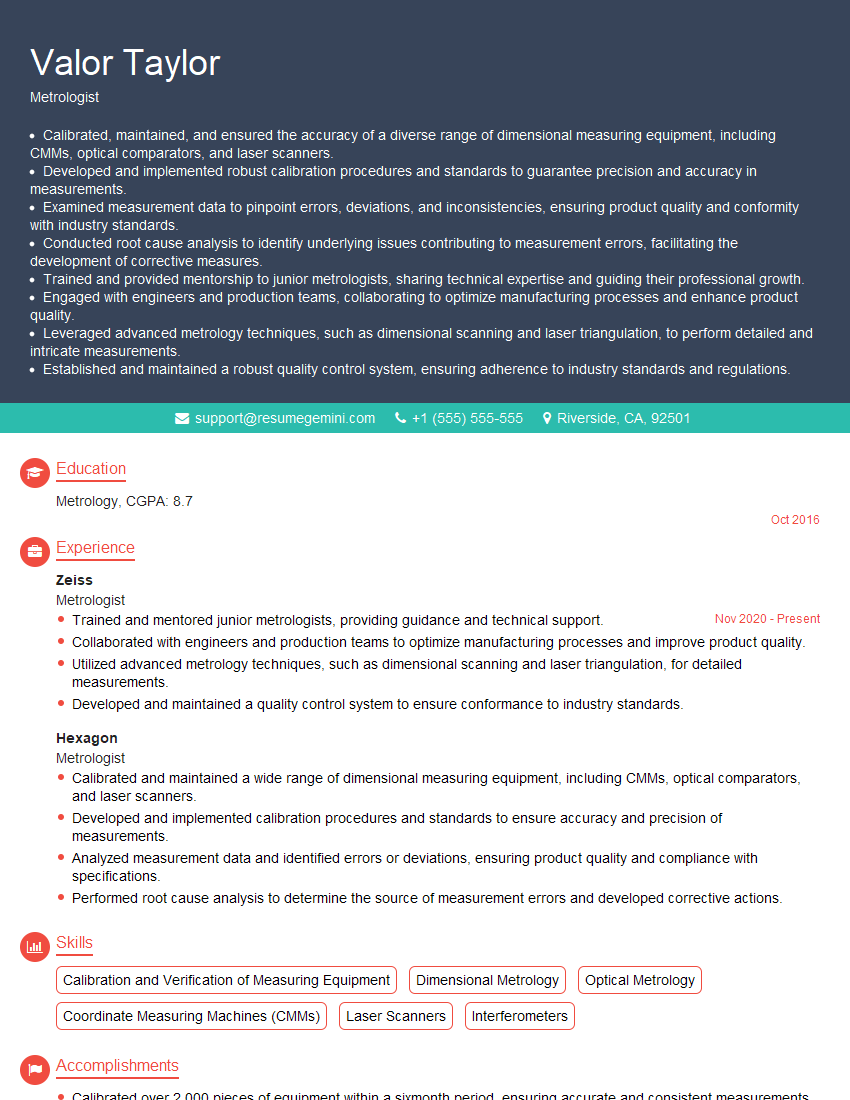
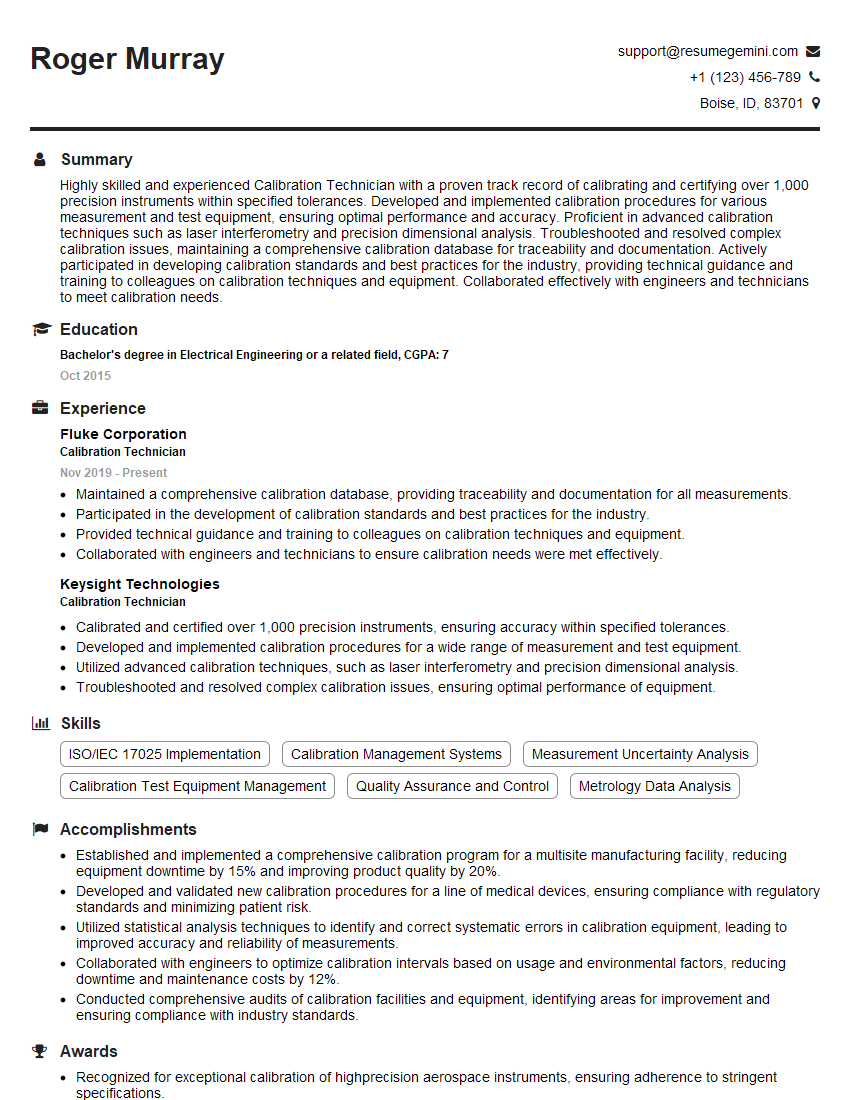
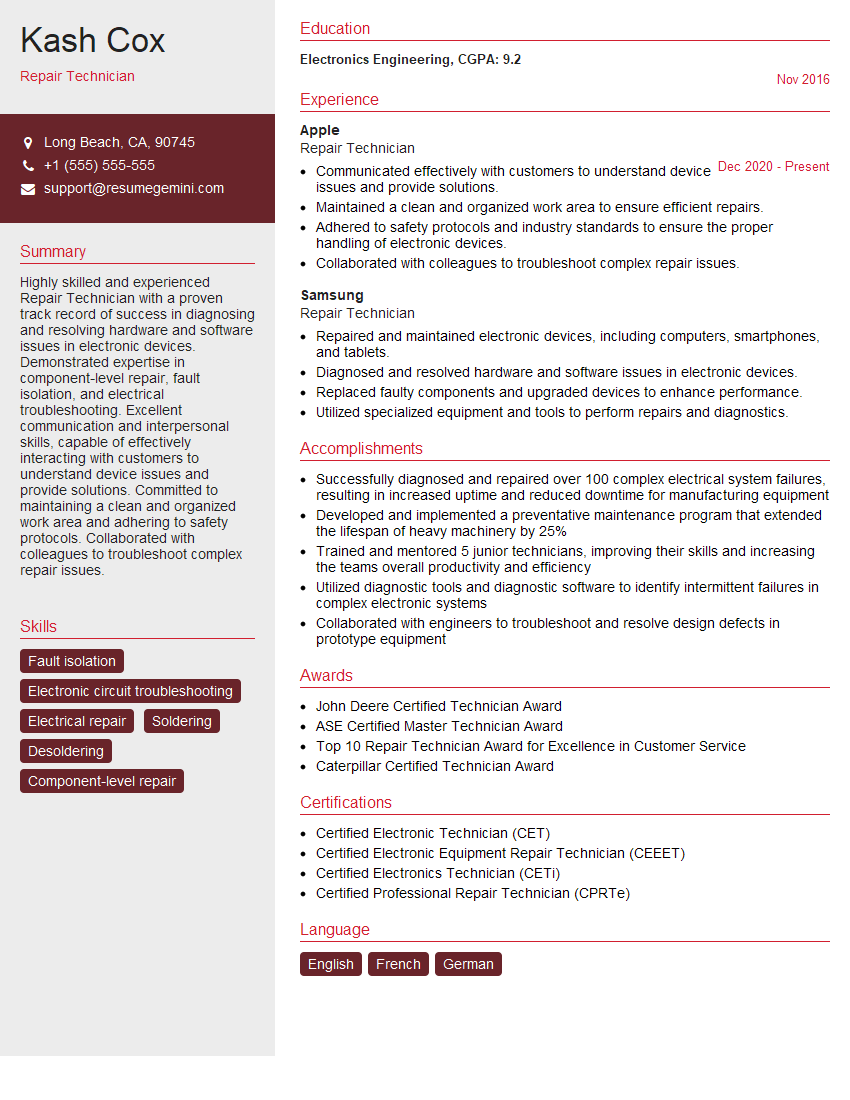
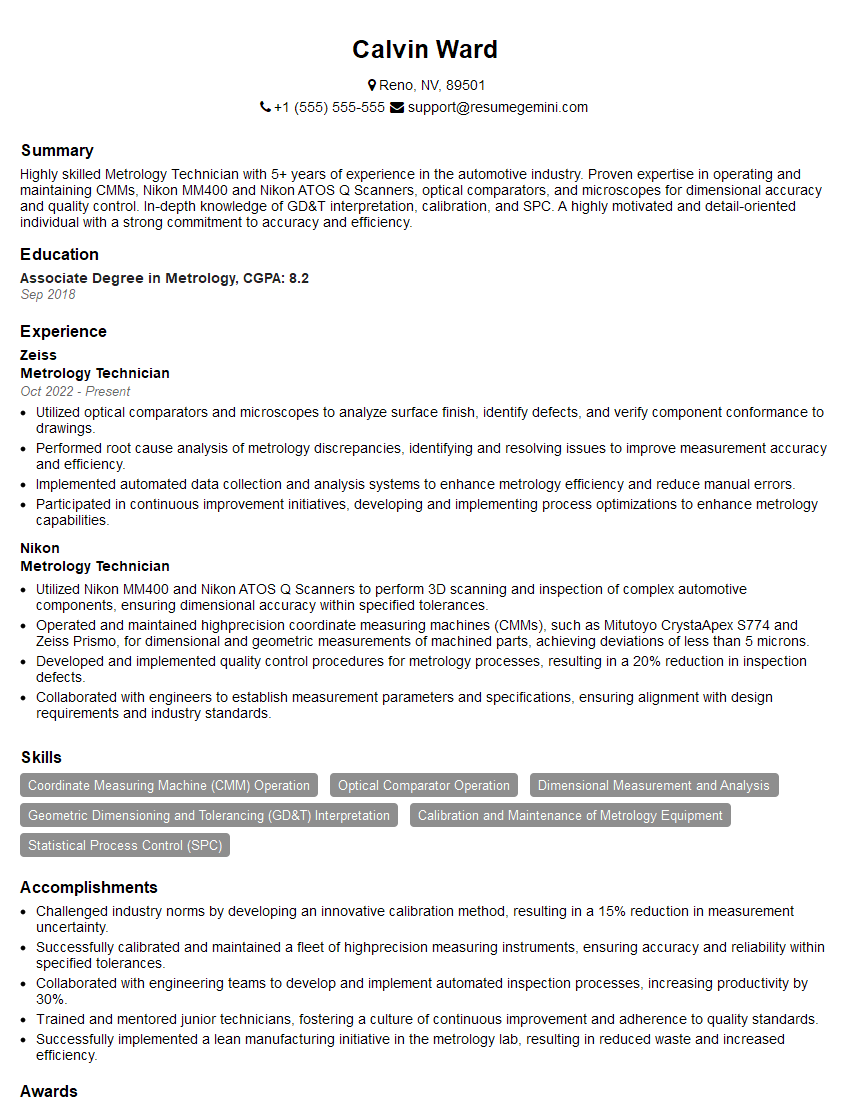
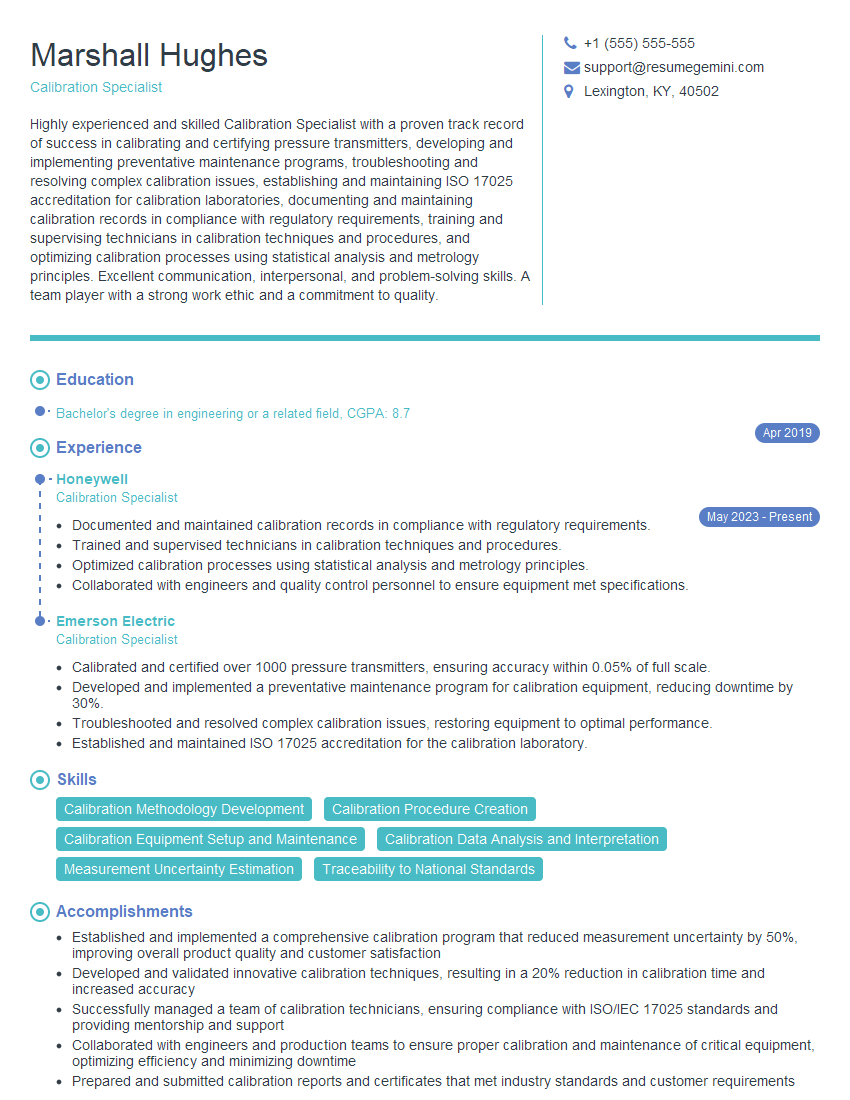
Mastering calibration and repair skills opens doors to diverse and rewarding career opportunities in various industries. A strong foundation in these areas ensures career growth and increased earning potential. To maximize your job prospects, creating an ATS-friendly resume is crucial. ResumeGemini can help you build a professional and impactful resume that highlights your skills and experience effectively. We provide examples of resumes tailored to Calibration and Repair professionals to guide you in crafting a compelling application. Invest time in building a strong resume – it’s your first impression with potential employers.
Explore more articles
Users Rating of Our Blogs
Share Your Experience
We value your feedback! Please rate our content and share your thoughts (optional).
What Readers Say About Our Blog
Very informative content, great job.
good