Interviews are more than just a Q&A session—they’re a chance to prove your worth. This blog dives into essential FCC Licensing (e.g., General Radiotelephone Operator License) interview questions and expert tips to help you align your answers with what hiring managers are looking for. Start preparing to shine!
Questions Asked in FCC Licensing (e.g., General Radiotelephone Operator License) Interview
Q 1. Explain the difference between a ship station and a coast station license.
The key difference between a ship station and a coast station license lies in their location and purpose. A ship station license authorizes the operation of a radio station onboard a vessel, primarily for communication with other ships and coast stations. Think of it as the vessel’s ‘voice’ at sea. It allows for safety communications, navigation updates, and general ship-to-shore contact. A coast station license, on the other hand, permits the operation of a radio station located on land, specifically designed to communicate with ships at sea. It acts as the ‘listening post’ and communication hub for maritime traffic, relaying messages, providing navigational assistance, and handling distress calls. Essentially, the ship station is mobile, while the coast station is a fixed land-based facility.
Imagine a cruise ship needing to report its position. The ship uses its ship station license to contact a coast station, which then relays that information to relevant authorities. Both licenses are crucial for safe and efficient maritime operations and are subject to strict regulations by the FCC to avoid interference and maintain a clear communication channel.
Q 2. What are the requirements for maintaining a General Radiotelephone Operator License?
Maintaining a General Radiotelephone Operator License (GMDSS) requires ongoing compliance with FCC rules and regulations. This is vital for ensuring the safety of life and property at sea. While there isn’t a formal ‘renewal’ process like with a driver’s license, your license remains valid indefinitely unless the FCC revokes it due to violations. However, maintaining proficiency is crucial. This means staying updated on:
- Changes in regulations: The FCC regularly updates its rules. Staying informed about these changes is essential to avoid unintentional violations.
- Technological advancements: Radio communication technology evolves. Keeping abreast of new technologies and their implications for operation is a vital part of maintaining competency.
- Operational procedures: Effective communication relies on standardized procedures. Continuing to practice and refine your skills ensures safe and efficient radio operation.
- Safety protocols: Understanding and adhering to distress and emergency procedures is paramount. Regular review of these procedures is crucial for quick and effective response during critical situations.
Essentially, responsible operation and staying informed demonstrate continued competency. Failure to maintain awareness of updated regulations or demonstrating unsafe operating procedures can lead to license revocation.
Q 3. Describe the process for obtaining a restricted operator permit.
Obtaining a Restricted Operator Permit is simpler than a full General Radiotelephone Operator License. It’s designed for specific, limited radio operations. The process usually involves:
- Application Submission: Complete the FCC Form 605, providing accurate information about yourself and the intended use of the radio equipment.
- Fee Payment: Pay the required filing fee to the FCC.
- Verification: The FCC reviews your application to ensure you meet the eligibility criteria, which generally involves no prior violations and the need to prove the type of device you will be using.
- Issuance (or Denial): If approved, the FCC will issue your Restricted Operator Permit. This permit grants authorization only for the specific type of radio operation stated in your application, which is typically very limited in scope and purpose. For instance, it may authorize operation of a specific type of low-power device for a specific purpose, such as a very low-power wireless microphone at a local event.
The process is generally straightforward and less demanding than obtaining a General Radiotelephone Operator License, as it involves less stringent technical knowledge requirements.
Q 4. What are the emission limitations for various classes of radio stations?
Emission limitations for radio stations are complex and vary significantly depending on the class of station, frequency band, and intended use. The FCC strictly regulates these limitations to prevent interference and ensure efficient use of the radio spectrum. Emission limitations are often specified using a system of codes (e.g., A1A, A3E, F1B) which specify various aspects of the transmission’s modulation, bandwidth, and emissions. These are highly technical, and a complete listing is beyond the scope of this interview. However, it’s crucial to understand that exceeding the permitted emission limits can lead to significant penalties, including fines and license revocation. Consult the FCC’s rules and regulations for detailed information specific to the class of radio station and its operating frequency. A good analogy would be a car’s emissions standards – exceeding the limit leads to penalties.
For example, a ship station operating in the VHF marine band will have specific limits on its power output and bandwidth to avoid interfering with other maritime traffic and aeronautical communications. Similarly, a coast station will have different emission limits tailored to its function and geographic location.
Q 5. Explain the concept of frequency coordination.
Frequency coordination is the process of ensuring that different radio stations operating in close proximity do not interfere with each other. It’s essential for preventing harmful interference and maintaining the integrity of radio communications. This involves careful planning and assignment of frequencies, often through a process overseen by a regulatory body like the FCC. It’s like arranging seating in a crowded restaurant—carefully ensuring everyone has sufficient space and isn’t unduly affected by their neighbours. For example, two radio stations using adjacent frequencies might experience interference if their signals overlap. Frequency coordination ensures that stations use frequencies that minimize the potential for interference.
Several techniques are used in frequency coordination, including frequency planning software, analysis of propagation characteristics, and coordination with other users of the radio spectrum. The goal is to create a radio frequency environment where everyone can communicate effectively without undue disruption.
Q 6. How do you handle a distress call?
Handling a distress call requires immediate and decisive action. The priority is to relay the information quickly and accurately to the appropriate authorities. The steps involved are:
- Acknowledge the call: Immediately acknowledge the distress call and confirm receipt of the message.
- Record the details: Carefully record all pertinent information including the time, location, nature of the distress, vessel name, and any other details relayed.
- Relay the message: Relay the distress call to the nearest coast station or other appropriate authority, such as the Coast Guard. Use the appropriate channels and frequencies.
- Maintain contact: Continue to monitor the situation and provide any further assistance that may be required. Remain on the frequency.
- Follow up: Following the initial relay of the distress signal, keep a log of your communication and actions.
The GMDSS (Global Maritime Distress and Safety System) provides a standardized framework for handling distress calls, ensuring that all parties involved follow a clear set of procedures. Remember, in a distress situation, prompt and accurate action can be lifesaving.
Q 7. What are the responsibilities of a radio operator during an emergency?
During an emergency, a radio operator’s responsibilities are paramount. They extend beyond merely transmitting and receiving messages. They are critical to ensure effective communication and coordination among rescue and support teams. This includes:
- Accurate and timely communication: Relaying accurate information promptly to the relevant authorities is crucial.
- Maintaining clear channels: Ensuring clear communication channels are free from interference is essential for efficient coordination.
- Following emergency procedures: Adhering to established emergency procedures, such as those outlined in the GMDSS, is crucial for effective response.
- Coordination with other responders: Coordinating with other radio operators, rescue teams, and authorities is key for a successful rescue operation.
- Maintaining a detailed log: Keeping a detailed log of all communications and actions taken during the emergency is essential for post-incident analysis and reporting.
Think of a radio operator as the crucial link connecting the distressed party with the help they need. Their calm and professional conduct under pressure are vital to the success of any rescue operation.
Q 8. What are the different types of radio waves and their propagation characteristics?
Radio waves, a form of electromagnetic radiation, are categorized by their frequency, which directly impacts their propagation characteristics. Think of it like this: different musical notes have different pitches; similarly, different radio waves have different frequencies.
- Very Low Frequency (VLF): These long wavelengths (10-100 km) can penetrate seawater and earth, making them suitable for submarine communication, but their bandwidth is limited, leading to slow data transfer rates.
- Low Frequency (LF): Also with long wavelengths (1-10 km), they share similar propagation characteristics with VLF but are more susceptible to atmospheric interference.
- Medium Frequency (MF): These waves (100-1000 m) are used for AM radio broadcasting. They propagate via ground waves and sky waves, meaning they travel along the Earth’s surface and reflect off the ionosphere. This allows for relatively long-range communication, but their signal can be affected by terrain and atmospheric conditions.
- High Frequency (HF): (10-100 m) These waves are commonly used for long-distance shortwave radio communication. Their propagation relies heavily on sky wave reflection from the ionosphere, making them susceptible to ionospheric variations (sunspot activity) affecting their reliability.
- Very High Frequency (VHF): (1-10 m) These waves are used for FM radio, television broadcasting, and some aircraft communications. They propagate primarily via direct line-of-sight; therefore, the range is limited by the curvature of the Earth and obstacles. Think of the clear reception you get from your local FM station – this is a perfect example.
- Ultra High Frequency (UHF): (0.1-1 m) UHF waves are used extensively for television broadcasting, mobile phone communication, and satellite communication. Similar to VHF, their propagation is mostly line-of-sight.
- Super High Frequency (SHF) and Extremely High Frequency (EHF): (less than 0.1 m) These frequencies are used for satellite communications, radar, and microwave links. They are highly directional and experience significant attenuation due to atmospheric absorption.
Understanding these propagation characteristics is crucial for choosing the appropriate frequency for a specific communication application.
Q 9. Explain the importance of proper antenna tuning.
Proper antenna tuning is essential for efficient and effective radio communication. It ensures that the antenna resonates at the desired frequency, maximizing power transfer and minimizing signal loss. Imagine trying to push a swing: If you push it at the right moment (the resonant frequency), it will swing high. Push it at the wrong time, and it barely moves. That’s analogous to antenna tuning.
Improper tuning leads to several issues:
- Reduced range: The signal strength will be significantly weaker, limiting the distance the signal can travel.
- Poor signal quality: The signal may be distorted or interfered with by other signals.
- Excessive SWR (Standing Wave Ratio): High SWR can damage the transmitter.
Antenna tuning involves matching the impedance of the antenna to the impedance of the transmitter or receiver. This is typically done using an antenna tuner, a device that adjusts the impedance matching network to achieve the optimal SWR (ideally close to 1:1).
Q 10. Describe the function of a radio receiver and transmitter.
A radio transmitter converts audio or other signals into radio waves that are transmitted through space. Think of it as a voice-to-wave translator. It takes your voice or data, processes it, and translates it into an electromagnetic signal that can travel over the airwaves. The process involves modulation, where the information is superimposed onto a carrier wave.
Conversely, a radio receiver does the opposite. It receives the radio waves, extracts the information from the carrier wave (demodulation), and converts it back into an understandable signal, such as audio or data. It’s like the wave-to-voice translator, reconstructing the original message sent by the transmitter.
Both are crucial components of any radio communication system; one sends, the other receives. They work together in a harmonious dance of information transmission and reception.
Q 11. How do you troubleshoot common radio communication problems?
Troubleshooting radio communication problems often involves a systematic approach. Here’s a general framework:
- Identify the Problem: What exactly is wrong? Is there no signal, poor reception, static, or distorted audio? Is the problem intermittent or constant?
- Check the Obvious: Verify that the equipment is turned on and properly connected. Check the power supply, batteries, and cables. Ensure the antenna is correctly installed and connected.
- Antenna and Propagation Checks: Evaluate antenna integrity (damage, proper grounding). Consider propagation conditions; atmospheric noise, interference from other sources, or line-of-sight limitations can severely impact signal strength.
- Signal Strength and SWR Measurement: Use a signal strength meter or SWR meter to assess the effectiveness of the transmission and reception. High SWR often points to an antenna mismatch issue.
- Frequency Verification: Ensure that both the transmitter and receiver are tuned to the same frequency and channel. A simple mistake can cause significant problems.
- Interference Hunting: Investigate possible sources of interference: other radio equipment, electrical devices, or even atmospheric conditions. Sometimes, a slight frequency adjustment can alleviate interference problems.
- Component Testing: If problems persist, isolate and test individual components (transmitter, receiver, antenna) to pinpoint the malfunctioning part.
Remember, troubleshooting is an iterative process. It’s common to need to check and recheck several points. Thoroughness is key to effective resolution.
Q 12. What safety precautions should be taken when working with radio equipment?
Safety when working with radio equipment is paramount. High-power transmitters can emit significant RF energy, posing potential health hazards.
- RF Exposure Limits: Adhere to FCC guidelines and safety standards related to RF exposure limits. Maintain a safe distance from high-power transmitters.
- Proper Grounding: Ensure proper grounding of all equipment to prevent electrical shocks and minimize RF interference.
- Antenna Safety: When climbing to install or maintain antennas, use appropriate safety gear and follow established safety procedures. Antennas can be hazardous at height.
- Emergency Shutdown: Familiarize yourself with the emergency shutdown procedures for all equipment. In case of malfunction or an emergency, know how to quickly shut down the equipment to prevent hazards.
- Eye Protection: When working with lasers used in some radio systems, use appropriate eye protection to safeguard vision.
- Training and Documentation: Receive proper training on safe handling procedures before operating any radio equipment. Consult manuals and documentation for specific safety precautions related to your equipment.
Neglecting safety precautions can have serious consequences, from minor injuries to significant health problems. Always prioritize safety.
Q 13. What are the legal implications of operating a radio station without a license?
Operating a radio station without a license carries significant legal implications. The FCC is responsible for regulating radio communications within the United States. Operating unlicensed equipment can result in several penalties, including:
- Fines: Substantial fines can be imposed for violating FCC regulations. These fines can range from thousands to tens of thousands of dollars.
- Equipment Seizure: The FCC may seize unlicensed equipment being used for illegal transmissions.
- Criminal Prosecution: In extreme cases, particularly if intentional or involving malicious intent, criminal prosecution may be pursued.
- Civil Penalties: Suing for damages related to the interference caused by the unlicensed operation is also a possibility.
Obtaining the appropriate license is a crucial step for legal and responsible operation of any radio station. It demonstrates compliance with the regulations and ensures that the radio spectrum is used efficiently and safely.
Q 14. Explain the concept of selective calling.
Selective calling is a technique used to address specific receivers without causing unnecessary interference to other devices. This is particularly important in scenarios with multiple radios operating in the same frequency band. Imagine a crowded party – you wouldn’t want to shout a message to one person and have everyone else hear it. Selective calling addresses the same need.
It works by using unique identification codes. Each radio is assigned a specific code, and only the receivers programmed with that code will respond to the transmission. The transmission is effectively “targeted,” avoiding unwanted responses or interference from other devices.
This improves efficiency and prevents unnecessary congestion of the communication channel. It is widely used in maritime, aviation, and other professional communication systems where efficient and precise communication is paramount.
Q 15. How does the FCC enforce its regulations?
The FCC enforces its regulations through a multi-pronged approach combining preventative measures, monitoring, and punitive actions. Preventative measures include educational outreach, providing clear guidelines and resources to licensees, and conducting pre-licensing checks. Monitoring involves utilizing sophisticated technology to detect violations, such as unauthorized broadcasts or interference. This includes spectrum monitoring stations and analysis of reported interference complaints. When violations are detected, the FCC initiates an investigation. This may involve contacting the licensee, requesting information, and conducting on-site inspections. If a violation is confirmed, the FCC can impose a range of penalties, from warnings and fines to license revocation, depending on the severity of the offense and the licensee’s history. For example, operating a radio station without a license or outside of authorized parameters can result in substantial fines and even criminal prosecution in serious cases. The FCC also works collaboratively with other agencies, both nationally and internationally, to address transborder interference issues and enforce global communication standards.
Career Expert Tips:
- Ace those interviews! Prepare effectively by reviewing the Top 50 Most Common Interview Questions on ResumeGemini.
- Navigate your job search with confidence! Explore a wide range of Career Tips on ResumeGemini. Learn about common challenges and recommendations to overcome them.
- Craft the perfect resume! Master the Art of Resume Writing with ResumeGemini’s guide. Showcase your unique qualifications and achievements effectively.
- Don’t miss out on holiday savings! Build your dream resume with ResumeGemini’s ATS optimized templates.
Q 16. What is the role of the FCC in managing the radio frequency spectrum?
The FCC plays a crucial role in managing the radio frequency spectrum, a finite and valuable national resource. Its primary function is to allocate specific portions of the spectrum to different users and services, ensuring efficient and non-interfering use. This includes licensing various services, from broadcast radio and television to amateur radio, cellular networks, and satellite communications. They establish technical standards and regulations to prevent harmful interference between different users and services sharing the same frequency bands. The FCC constantly monitors spectrum use to identify and resolve interference issues, and they auction off spectrum licenses to generate revenue and promote the development of new technologies and services. Efficient spectrum management is essential for the smooth functioning of modern society, and the FCC’s role in this process is absolutely critical.
Q 17. Describe your experience with different types of radio equipment.
My experience encompasses a wide range of radio equipment, from vintage analog systems to modern digital technologies. I’ve worked extensively with VHF and UHF marine radios, both single-sideband (SSB) and amplitude modulation (AM) systems. I’m proficient in operating and maintaining HF transceivers, often utilized for long-range communications. This includes experience with various antenna systems, including whip antennas, directional antennas, and satellite communication systems. I’ve also had hands-on experience with various types of receivers, including those used for scanning, monitoring, and specialized applications such as direction finding. Furthermore, my experience includes working with digital radio systems, encompassing digital selective calling (DSC) and automatic identification systems (AIS), crucial for modern maritime safety and communication.
Q 18. Explain the different modes of communication (e.g., AM, FM, SSB).
AM (Amplitude Modulation) varies the amplitude of the carrier wave to encode information. It’s relatively simple to implement but susceptible to noise and interference. Think of it like speaking louder and softer to convey meaning. FM (Frequency Modulation) varies the frequency of the carrier wave, offering better noise immunity and higher fidelity than AM. It’s like changing the pitch of your voice to convey information. SSB (Single Sideband) transmits only one sideband of the modulated signal, conserving bandwidth and power. It’s highly efficient for long-distance communication and often used in HF radio. Imagine it as speaking concisely, only transmitting the essential information needed for understanding.
Q 19. How familiar are you with the Radio Regulations of the International Telecommunication Union (ITU)?
I am very familiar with the Radio Regulations of the International Telecommunication Union (ITU). These regulations are a cornerstone of international cooperation in radio communication, providing a framework for global spectrum allocation, technical standards, and operating procedures. My understanding includes the allocation tables, frequency bands, emission types, and operational procedures defined by the ITU. This knowledge is vital for ensuring compliance when operating internationally and understanding the global context of spectrum management. The ITU regulations are crucial for avoiding interference between different countries’ radio services and for promoting seamless international communication. Staying abreast of these regulations is a key aspect of maintaining professional competence in radio communication.
Q 20. What are the different classes of ship stations and their operational requirements?
Ship stations are categorized into different classes based on their communication capabilities and operational requirements. These classes typically include various levels such as Class A, B, and C, each having specific operational requirements, such as power output, frequency ranges, and required equipment. Class A ship stations typically have the most extensive capabilities and are required for larger vessels, offering a greater range and communication options. Class B and C stations are typically found on smaller vessels and have more limited capabilities, reflecting their size and operational needs. Specific requirements vary and often depend on the vessel’s size, type, and the trading area it operates in. Compliance with these requirements is crucial for maintaining safety at sea and adhering to international maritime regulations. Understanding these classifications and associated operational requirements is fundamental for anyone working in maritime radio communications.
Q 21. Describe your experience with radio maintenance and repair.
My experience in radio maintenance and repair spans several years and includes troubleshooting and repairing various types of radio equipment. I’m proficient in diagnosing and repairing faults in both analog and digital systems, encompassing everything from basic component-level repairs to more complex system-level troubleshooting. This includes experience with aligning transmitters and receivers, replacing faulty components, and performing preventative maintenance. I understand the importance of proper calibration and testing procedures to ensure the reliable operation of radio equipment. Furthermore, I am familiar with the safety procedures involved in working with high-voltage equipment and RF radiation, prioritizing safety in all maintenance tasks. My experience extends to documenting repairs and maintaining service records, ensuring traceability and accountability.
Q 22. How do you ensure compliance with FCC regulations?
Ensuring FCC compliance is paramount for any operation involving radio frequencies. It’s a multifaceted process that begins with understanding the specific regulations relevant to your equipment and operation. This involves carefully reviewing the FCC rules and regulations pertaining to the type of license held, the frequencies used, and the power output. For example, a General Radiotelephone Operator License (GROL) has specific stipulations on permissible transmissions and operational procedures.
Compliance is maintained through meticulous record-keeping. This includes documenting all equipment modifications, operational logs detailing transmissions, and maintenance records. Regular equipment testing is crucial to ensure compliance with emission standards. Any deviations or malfunctions need to be immediately addressed and reported according to FCC guidelines. Finally, staying updated on regulatory changes is essential through regular review of the FCC website and relevant industry publications.
Consider a scenario where a marine radio operator fails to log transmissions. This omission, while seemingly minor, can lead to severe penalties if an incident requiring investigation occurs. Comprehensive logging helps establish operational integrity and compliance.
Q 23. Explain your understanding of radio frequency interference (RFI) and its mitigation.
Radio Frequency Interference (RFI) occurs when unwanted radio signals interfere with desired signals, causing degradation of signal quality, distortion, or complete signal loss. Think of it like a noisy conversation – the unwanted signals are the background noise drowning out the important message. Sources of RFI can be diverse, including other radio transmissions, electrical equipment, and even natural phenomena like solar flares.
RFI mitigation involves a multi-pronged approach. Proper frequency coordination is crucial – selecting frequencies less prone to interference and avoiding congested bands. Proper equipment grounding and shielding are critical to prevent unwanted signals from entering or escaping the system. Using directional antennas to focus transmissions and receive signals reduces interference from unwanted directions. Employing filters can effectively block specific frequencies causing interference. Careful site selection, considering the presence of potential RFI sources, is also paramount.
For instance, locating a radio base station near a powerful AM radio transmitter would almost certainly result in severe RFI. Strategic site planning and using appropriate filtering to minimize this interference are critical for reliable communication.
Q 24. Describe your experience with digital radio communication systems.
My experience with digital radio communication systems is extensive. I’ve worked with various systems, from VHF and UHF digital trunked radio systems to more sophisticated technologies such as TETRA and DMR. I understand the advantages of digital systems, including improved audio quality, enhanced security through encryption, and efficient spectrum usage compared to analog systems. I’m familiar with the protocols used in digital radio, such as TDMA and FDMA, and I understand the importance of proper system configuration and maintenance to ensure optimal performance.
For example, I’ve been involved in the implementation of a DMR system for a large industrial complex. This involved careful frequency planning, the selection of appropriate repeaters and base stations, and training personnel on the system’s operation. The resulting system delivered significantly improved communication clarity and efficiency, leading to a safer and more productive work environment.
Q 25. How do you handle a situation where equipment malfunctions during an important communication?
Equipment malfunction during crucial communication is a serious issue. My immediate response focuses on troubleshooting the problem and establishing alternate communication methods. First, I attempt to identify the cause of the malfunction. Is it a power issue? Antenna problem? Internal equipment failure? This often involves visual inspection, system diagnostics, and checks of power sources and connections.
Simultaneously, I would implement backup communication systems. This could involve switching to a secondary radio, using a satellite phone, or utilizing alternative communication methods, such as text messaging. I would then report the malfunction to the relevant authorities, following established reporting procedures. Once the primary system is repaired and back online, a full report documenting the malfunction, its cause, and the steps taken to resolve the issue, would be filed.
Imagine a situation where a ship’s main VHF radio fails during a storm. Quickly switching to a satellite phone for emergency communication can prove life-saving. This emphasizes the importance of having readily available backup solutions.
Q 26. What is your understanding of the different types of antennas and their applications?
Antennas are essential components of any radio communication system. Their design and selection significantly impact signal strength, range, and directionality. There’s a wide variety, each suited to specific applications. Some common types include:
- Dipole antennas: Simple, half-wave antennas providing omnidirectional coverage.
- Yagi antennas: Directional antennas with high gain, ideal for point-to-point communication.
- Helical antennas: Used for circular polarization, which is less susceptible to fading.
- Patch antennas: Compact antennas often integrated into devices.
The choice of antenna depends on factors such as frequency, desired coverage area, and environmental conditions. For example, a long-range communication system might employ a high-gain Yagi antenna, while a mobile radio might use a shorter, more compact antenna.
Q 27. How would you explain complex technical information to a non-technical audience?
Explaining complex technical information to a non-technical audience requires clear and concise communication, avoiding jargon. I use analogies and relatable examples to illustrate key concepts. For instance, when explaining radio wave propagation, I might use the analogy of throwing a stone into a pond – the ripples represent the expanding radio waves.
I break down complex topics into smaller, manageable chunks, using visuals like diagrams or charts to aid understanding. I also encourage questions and actively listen to ensure the audience comprehends the information. The goal is to make the explanation accessible and engaging, enabling the audience to grasp the core ideas without getting bogged down in technical details.
Q 28. What are your strategies for staying up-to-date with changes in FCC regulations?
Staying updated on FCC regulations requires a proactive approach. I regularly monitor the FCC website for updates, announcements, and rule changes. Subscription to relevant newsletters and industry publications keeps me informed about regulatory developments and interpretations. Attendance at industry conferences and workshops provides opportunities to network with other professionals and learn about current best practices and regulatory changes.
Networking with other licensed operators and participating in professional organizations further enhances my awareness of evolving regulations. This combination of proactive monitoring, professional engagement, and peer interaction allows me to remain current on all relevant FCC regulatory changes, guaranteeing consistent compliance.
Key Topics to Learn for FCC Licensing (e.g., General Radiotelephone Operator License) Interview
Ace your FCC licensing interview with a thorough understanding of these key areas. Remember, practical application is key!
- Radio Wave Propagation: Understand the principles governing how radio waves travel, including factors affecting range and signal strength. Consider scenarios involving different frequencies and terrain.
- Radio Equipment Operation and Maintenance: Become familiar with the operation and troubleshooting of various radio communication systems. Practice describing procedures for common maintenance tasks.
- FCC Rules and Regulations: Master the relevant regulations pertaining to your specific license. Focus on understanding the implications of non-compliance and best practices for adhering to the rules.
- Emergency Procedures: Know the proper procedures for handling emergencies, including distress calls and coordinating with emergency services. Be prepared to discuss different scenarios.
- Communication Techniques: Develop clear and concise communication skills essential for effective radio operation. Practice using standard radio terminology and procedures.
- Troubleshooting and Problem Solving: Develop your ability to identify and solve common radio communication problems. Consider practical scenarios and how you would approach troubleshooting.
- Safety Regulations: Understand and be able to explain relevant safety regulations concerning radio operation and equipment handling.
Next Steps
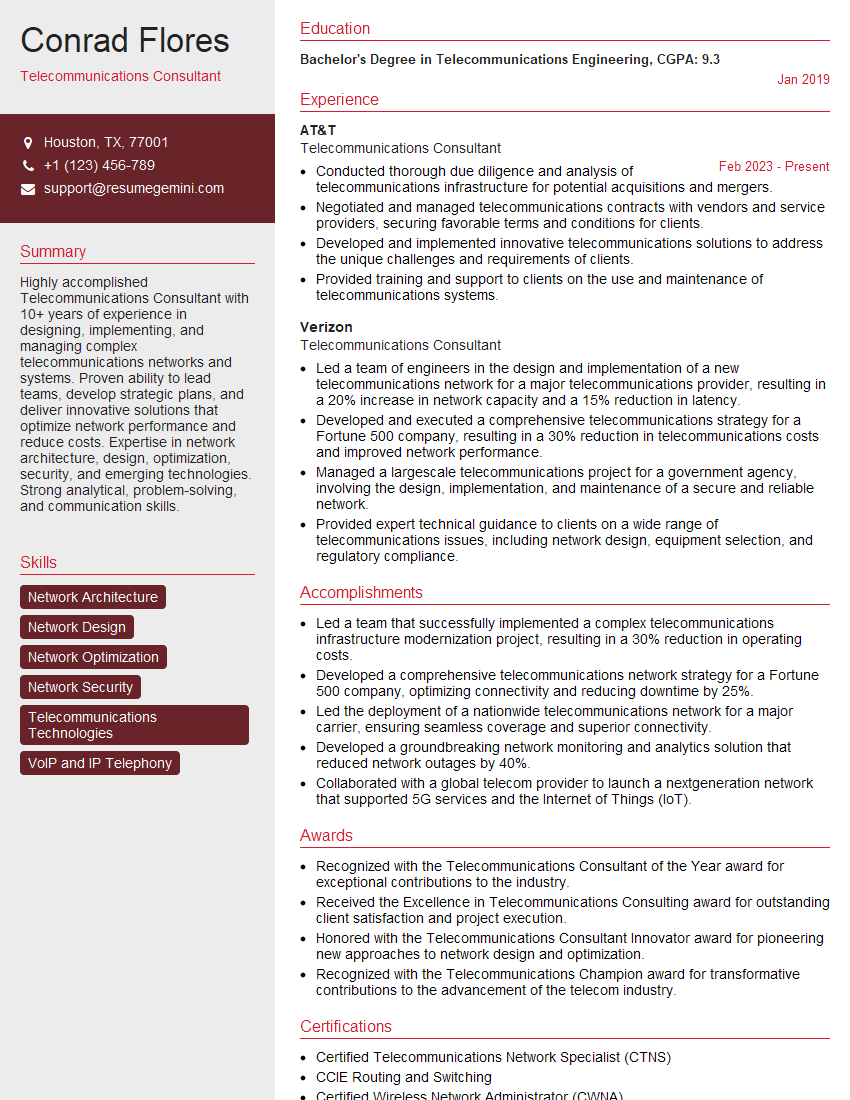
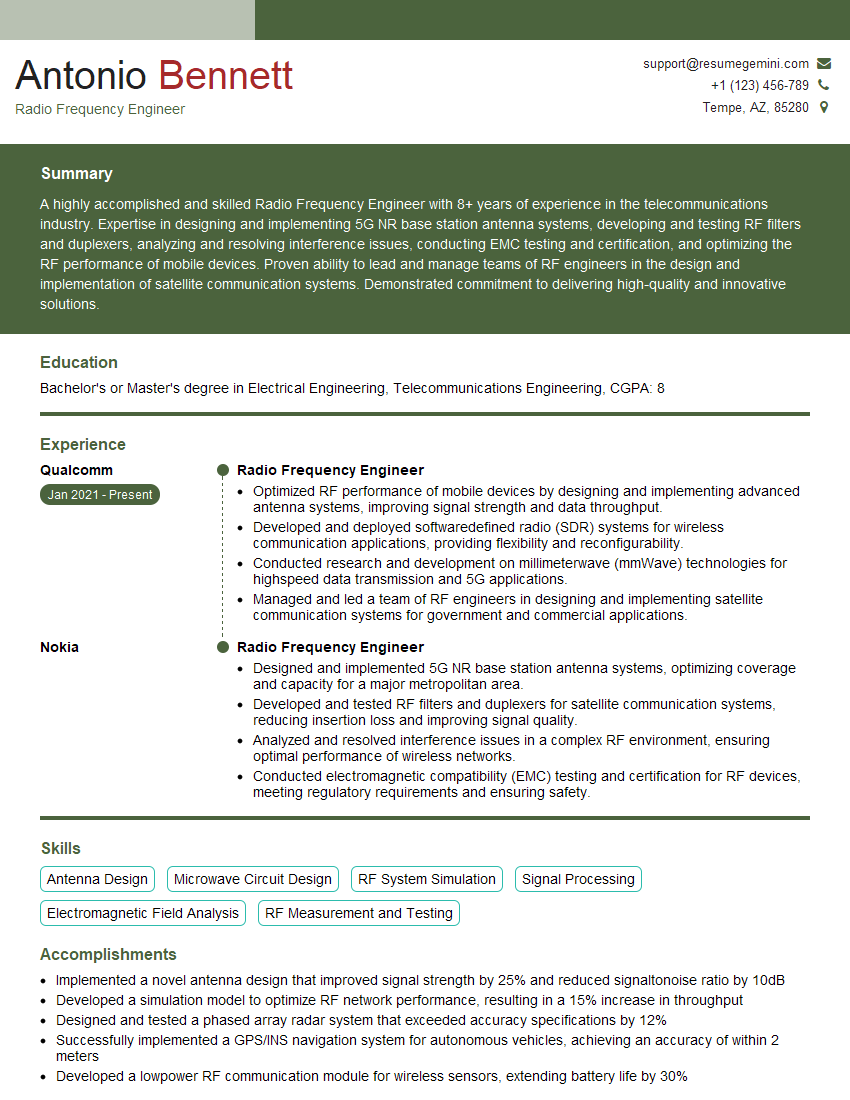
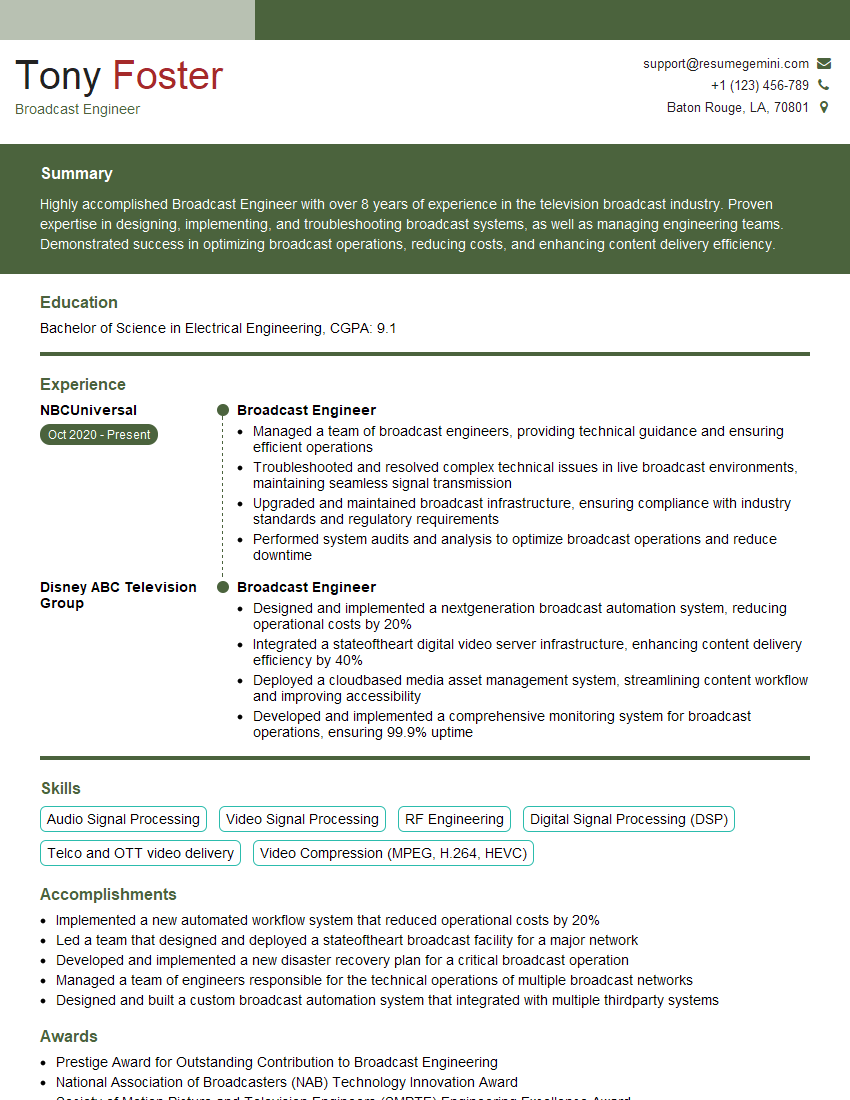
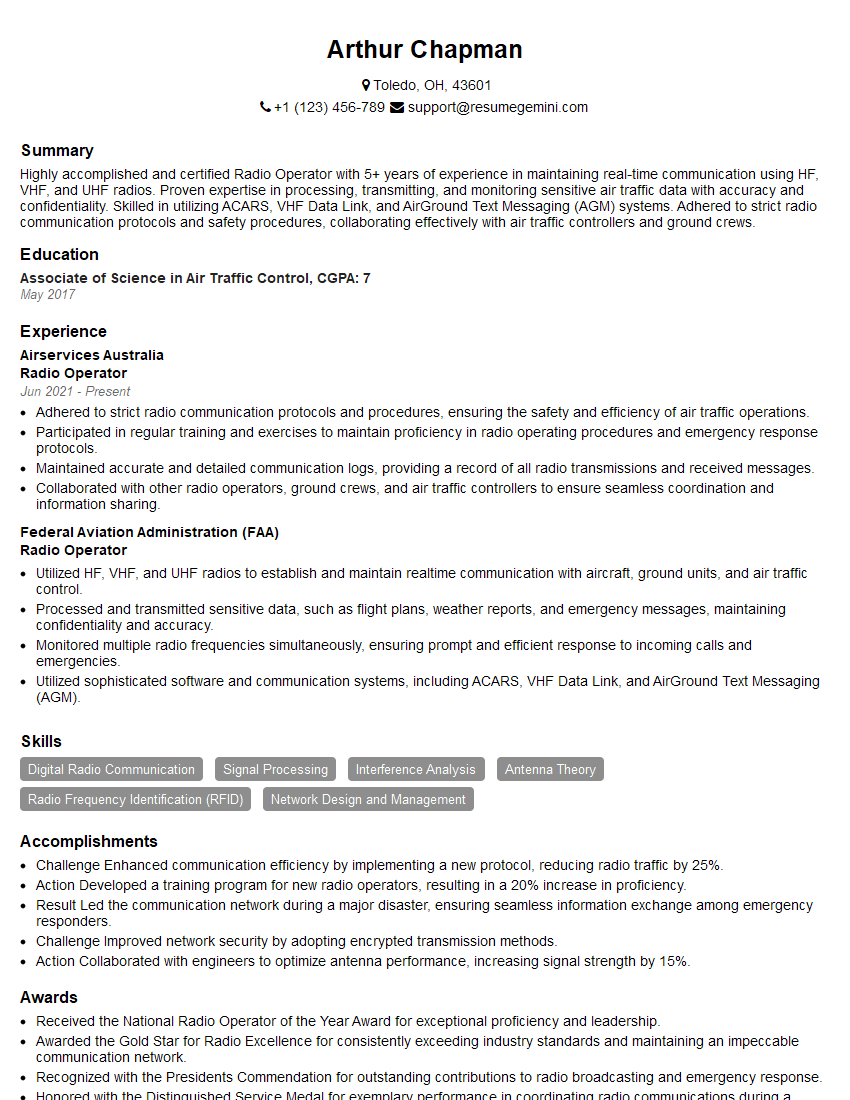
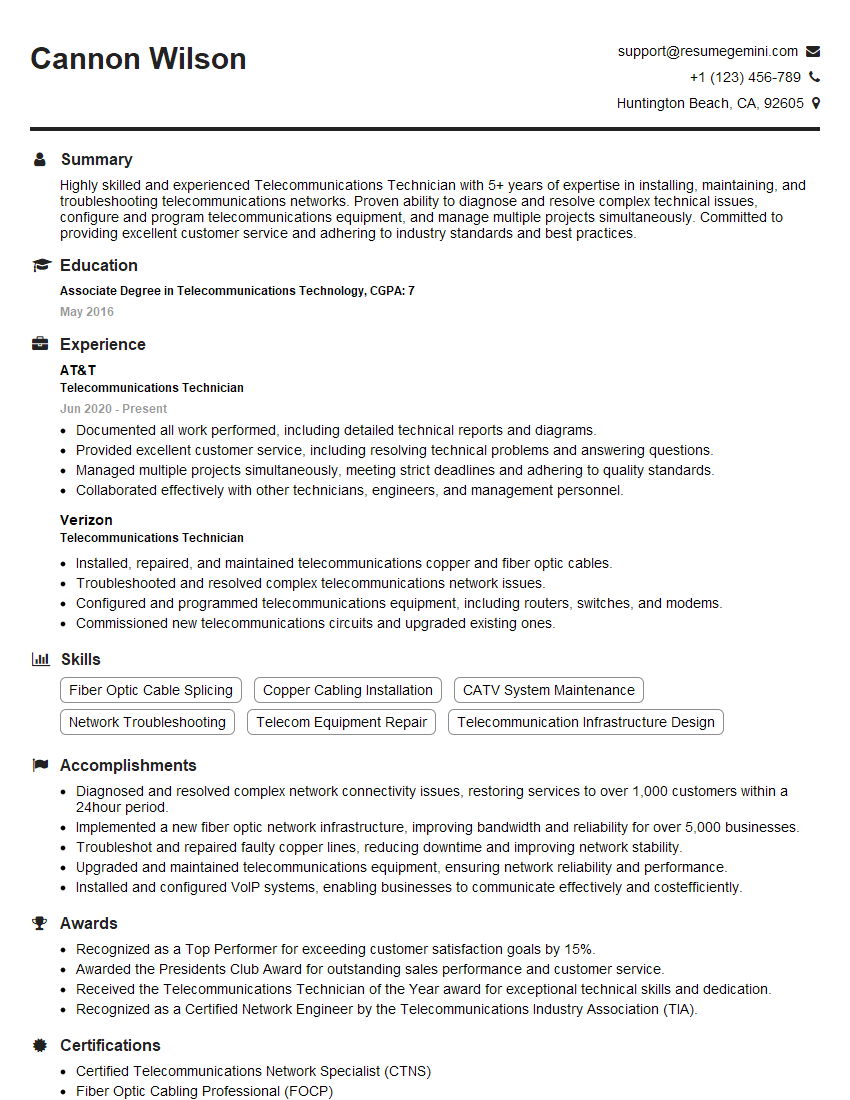
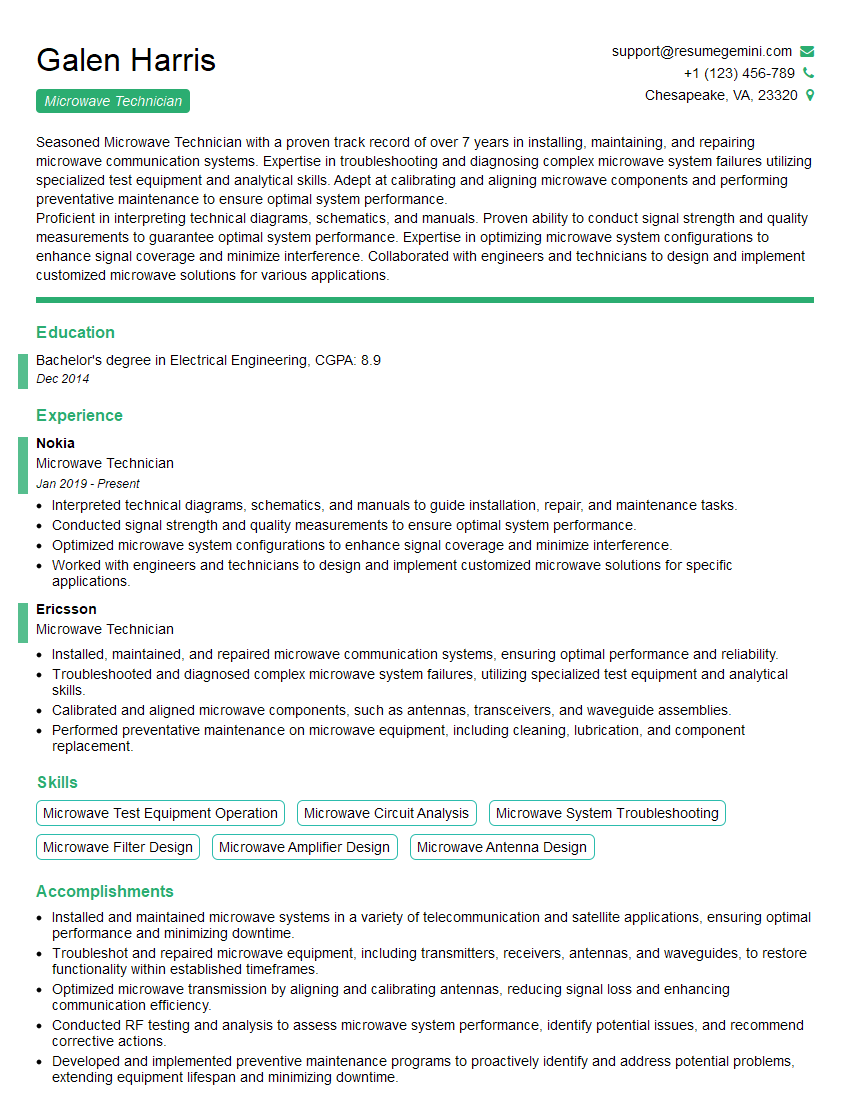
Securing an FCC license opens doors to exciting career opportunities in maritime, aviation, and other communication-intensive industries. To maximize your job prospects, invest time in creating a compelling, ATS-friendly resume that showcases your skills and experience. ResumeGemini is a trusted resource that can help you build a professional resume that stands out from the competition. We provide examples of resumes tailored to FCC Licensing (e.g., General Radiotelephone Operator License) to guide you. Take the next step towards your dream career – build your best resume with ResumeGemini today!
Explore more articles
Users Rating of Our Blogs
Share Your Experience
We value your feedback! Please rate our content and share your thoughts (optional).
What Readers Say About Our Blog
Very informative content, great job.
good