Every successful interview starts with knowing what to expect. In this blog, we’ll take you through the top Camping and Survival Skills interview questions, breaking them down with expert tips to help you deliver impactful answers. Step into your next interview fully prepared and ready to succeed.
Questions Asked in Camping and Survival Skills Interview
Q 1. Describe your experience with various fire starting techniques.
Fire starting is fundamental to survival. My experience encompasses a wide range of techniques, from traditional methods to modern tools. I’m proficient in using friction-based methods like the hand drill and bow drill, which require skill and practice to generate the necessary heat. These techniques are reliable but time-consuming. I also have extensive experience with flint and steel, a classic method that relies on striking a piece of flint against steel to create sparks that ignite tinder. Modern fire starters, such as ferro rods and magnesium fire starters, offer a more reliable and quicker ignition source, especially in wet conditions. I’m also adept at using various tinder materials, such as birch bark, dry grasses, and commercial fire starters, to catch the initial spark and build a sustainable flame. I have practical experience in various environmental contexts, building fires in both dry and wet climates, and adjusting my techniques based on available materials and weather conditions.
For example, during a recent wilderness expedition, I successfully started a fire in a heavy downpour using a ferro rod and some carefully gathered dry cedar bark tucked inside a larger, waterproof piece of birch bark as a shelter. The key to success across all methods lies in having dry tinder and understanding how to effectively manage airflow.
Q 2. Explain the process of purifying water in a survival situation.
Water purification is crucial for survival. Contaminated water can transmit serious diseases. My preferred methods prioritize boiling, as it’s the most reliable way to eliminate harmful bacteria, viruses, and protozoa. Boiling water for at least one minute at a rolling boil is essential. If a fire isn’t feasible, I utilize water purification tablets or a reliable water filter. These are lightweight and portable, making them ideal for backpacking or emergency situations. It’s crucial to follow the instructions on any purification tablets carefully and to note that filters may require pre-filtering to remove larger debris. Improvised methods, such as solar distillation, are possible in emergency situations but are less efficient. Solar distillation involves collecting rainwater or creating a makeshift still from plastic sheeting and containers to evaporate and condense water. However, these methods take longer and are less reliable than boiling or using purification tablets/filters.
When using water filters, you should always follow manufacturer instructions and regularly clean or replace filter elements to maintain effectiveness.
Q 3. What are the three most important elements of building a shelter in the wilderness?
The three most critical elements when building a wilderness shelter are protection from the elements, insulation, and drainage. Protection from the elements means shielding yourself from wind, rain, snow, and sun. This can involve finding natural shelter like a rock overhang, or constructing a lean-to or debris hut using branches and natural materials. Insulation is equally important for maintaining body temperature. Natural materials like leaves, pine boughs, and moss provide excellent insulation, creating an air pocket between your body and the outside environment. Finally, drainage is vital to prevent hypothermia. The ground needs to be relatively dry, so it is important to raise the shelter off the ground using natural materials such as logs, branches, or rocks to prevent moisture from seeping in. A well-built shelter prioritizes all three and can drastically increase survival chances.
For instance, during a survival training exercise, we constructed a lean-to against a large tree trunk, using branches to form a frame and covering it with pine boughs for insulation. We raised the lean-to slightly off the ground using smaller logs. This approach protected us from wind and rain, provided insulation, and prevented moisture buildup.
Q 4. How would you navigate using a map and compass in unfamiliar terrain?
Navigating with a map and compass requires understanding map symbols, compass orientation, and terrain association. First, orient the map to the terrain by matching features on the map to features you see in the landscape. Then, using your compass, determine your current location and your intended destination. Take bearings (compass directions) to your destination, and walk along this bearing, regularly checking your compass to stay on course. Remember to take into account declination, the difference between magnetic north and true north, found on most maps. It’s also critical to be aware of how the terrain might affect your course, and to make regular adjustments based on what you see on the ground.
For example, if you encounter a steep incline, you might need to adjust your bearing to account for the change in elevation to stay on the correct azimuth. Regularly checking your location on the map and comparing it with your compass bearing will help you avoid getting lost. In situations with limited visibility, following contour lines can prove helpful.
Q 5. Describe your experience with identifying edible plants.
Identifying edible plants is a critical survival skill, but it requires extensive knowledge and caution. Never consume a plant unless you are 100% certain of its identity. I’ve spent years studying plant identification, focusing on regional flora. My training includes hands-on experience, participation in guided plant walks, and studying field guides specific to my areas of expertise. I utilize a multi-step identification process starting with visual characteristics such as leaf shape, flower structure, stem type, and overall plant architecture. I then cross-reference these characteristics with multiple reputable field guides. It’s crucial to note that similar-looking plants can have vastly different properties, so positive identification is paramount.
It’s crucial to start with easily identifiable plants and avoid consuming any part of a plant if there is any doubt. The consequences of misidentification can be severe, even fatal. I always start with small quantities to check for any allergic reactions before consuming larger amounts.
Q 6. What are the signs and symptoms of hypothermia, and how would you treat it?
Hypothermia is a dangerous drop in body temperature, and recognizing its signs is crucial. Initial symptoms can include shivering, confusion, slurred speech, and fatigue. As hypothermia progresses, shivering may stop, and the person may become unresponsive and lose consciousness. Treatment involves getting the person out of the cold and into a warm environment. If possible, remove any wet clothing, and gently warm the person. Provide warm drinks if the person is conscious, but avoid alcohol. In serious cases, immediate medical attention is vital.
In a wilderness setting, building a fire and getting the victim into dry clothing and a sheltered area are top priorities. Skin-to-skin contact with warm bodies can also aid rewarming. It’s critical to act quickly, as hypothermia can be fatal. Preventing hypothermia involves dressing in layers, staying dry, and consuming enough calories for energy.
Q 7. How would you handle a wildlife encounter, such as a bear or mountain lion?
Wildlife encounters require a calm and measured approach. The best strategy is prevention; avoid areas where animals are known to frequent, and store food properly. If you encounter a bear or mountain lion, never run; running triggers their predatory instincts. Make yourself appear large, make noise, and slowly back away. If the animal attacks, fight back aggressively using whatever tools are at your disposal.
Specific actions depend on the animal and the situation. For bears, it might involve playing dead in a certain manner, depending on the type of bear, while with mountain lions, maintaining eye contact and appearing assertive is key. Carrying bear spray is a recommended precaution in bear country, and knowing how to use it effectively can be life-saving.
Q 8. Explain your understanding of Leave No Trace principles.
Leave No Trace (LNT) principles are a set of guidelines designed to minimize the impact of human activities on the natural environment. Think of it like being a mindful guest in nature’s home. The core idea is to leave an area as you found it, or even better.
- Plan Ahead and Prepare: Know your route, pack appropriately, and obtain necessary permits. This prevents unnecessary impact from unpreparedness.
- Travel and Camp on Durable Surfaces: Stick to established trails and campsites to avoid damaging vegetation. Imagine how much damage thousands of people would cause if they all walked off-trail.
- Dispose of Waste Properly: Pack out everything you pack in, including food scraps and toilet paper. Leave nothing but footprints behind. Using a WAG bag (waste alleviation bag) for human waste is a must in remote locations.
- Leave What You Find: Resist the urge to collect rocks, plants, or artifacts. These items are part of the ecosystem and deserve to remain undisturbed. Let future visitors enjoy the same beauty.
- Minimize Campfire Impacts: Use existing fire rings whenever possible and keep fires small. Remember to completely extinguish your fire before leaving. It’s better to use a camp stove to ensure fire safety and minimize environmental damage.
- Respect Wildlife: Observe animals from a distance, never feed them, and store food properly to avoid attracting them to your campsite. Wildlife needs to maintain its natural behavior.
- Be Considerate of Other Visitors: Keep noise levels down and yield to others on the trail. Sharing the outdoors fosters a positive experience for everyone.
Q 9. What first aid procedures are you familiar with?
My first aid training encompasses a wide range of procedures, including:
- Wound care: Cleaning, dressing, and bandaging various types of wounds, from minor abrasions to more serious lacerations.
- Fracture management: Immobilizing suspected fractures using splints and slings, ensuring proper alignment and stability.
- Treating burns: Cooling the burn, applying sterile dressings, and assessing the severity to determine the need for further medical attention.
- Managing hypothermia and hyperthermia: Recognizing the symptoms and implementing appropriate measures to restore body temperature.
- Treating allergic reactions: Administering epinephrine (if trained and certified) and managing airway issues.
- CPR and rescue breathing: Performing cardiopulmonary resuscitation and providing rescue breaths in cases of cardiac arrest.
- Basic wound assessment and triage: Prioritizing injuries and addressing life-threatening conditions first.
I am certified in Wilderness First Aid and CPR, and continually refresh my skills through training and practical application.
Q 10. How would you assess and treat a minor injury in a remote location?
Assessing a minor injury in a remote location requires a systematic approach. First, I would perform a quick assessment, checking for bleeding, swelling, deformity, and pain (often abbreviated as B-S-D-P).
- Clean the wound: Using clean water and a sterile dressing, gently clean the wound to remove dirt and debris. Improvised cleaning methods may include using clean snow or even filtering water through a cloth.
- Control bleeding: If bleeding is present, apply direct pressure to the wound using a clean cloth. Elevate the injured limb if possible.
- Dress the wound: Apply a sterile dressing to protect the wound and prevent infection. If a proper dressing is not available, I would improvise with a clean piece of cloth.
- Immobilize if necessary: If there’s any suspicion of a fracture or sprain, I’d improvise a splint using available materials like sticks, branches, and clothing to immobilize the injured area.
- Monitor for infection: Keep an eye on the wound for signs of infection (increased pain, swelling, redness, pus). Even minor infections can become life-threatening in a remote environment.
- Pain management: Over-the-counter pain relievers, if available, can provide temporary relief. Rest and elevation are crucial.
- Evacuation if necessary: If the injury is severe or complications arise, I’d initiate an evacuation plan, contacting emergency services or seeking help from fellow campers if possible.
Throughout the process, I would prioritize maintaining the patient’s warmth and comfort and provide regular updates and reassurance.
Q 11. Describe your experience with different types of knots and their applications.
Knot tying is fundamental to camping and survival. My experience encompasses a variety of knots, each suited to different purposes:
- Bowline: A strong and reliable knot, perfect for creating a loop that won’t slip, ideal for attaching a rope to a ring or tree.
- Clove Hitch: A quick and easy knot used for attaching a rope to a post or ring, often used as a base for more complex knots.
- Figure Eight Knot: Used primarily to secure the end of a rope, preventing it from slipping through a carabiner or other anchoring point.
- Prusik Knot: Used for climbing or ascending ropes, it grips a rope strongly under tension but can be easily loosened.
- Taut-line hitch: An adjustable knot ideal for adjusting the tension on tent lines, guy ropes, or other similar applications.
- Square Knot: Simple to tie but should only be used for joining two ropes of similar diameter.
The practical application of these knots ranges from setting up tents and shelters to building rope bridges or securing gear. Understanding their strengths and weaknesses is critical to ensure safety and efficacy in various situations.
Q 12. How would you build a raft using available materials?
Building a raft from available materials requires resourcefulness and an understanding of buoyancy principles. The materials will dictate the design, but the basic principle is creating a buoyant platform able to support weight. This will rely on readily available materials and the water’s conditions.
- Material Selection: Identify buoyant materials like large logs, bamboo, or even tightly bundled reeds or driftwood. Avoid anything brittle or rotten.
- Framing: Construct a frame using stronger, longer materials – likely logs – to form the base of your raft. The raft’s stability will depend on the frame’s strength.
- Securing Buoyant Materials: Attach the buoyant materials (logs, bamboo, etc.) securely to the frame using strong vines, ropes, or even sturdy branches. The goal is to distribute the weight evenly.
- Testing & Adjustment: Before launching, test the raft’s stability in shallow water and make any necessary adjustments. Adjust the distribution of buoyant materials for better balance.
- Launching: Launch into calmer waters and carefully test the raft’s stability, possibly moving items around to distribute weight.
Remember, safety is paramount. Always assess the water conditions and your ability to manage a makeshift raft before venturing onto a body of water. The success depends entirely on the materials available and their quality.
Q 13. What are the key considerations when selecting a campsite?
Selecting a campsite involves careful consideration of several factors:
- Safety: Choose a location away from hazards like dead trees, steep slopes, and floodplains. Consider potential wildlife encounters and plan accordingly.
- Water source: Access to a clean and reliable water source is essential. Ensure the source is downhill from your camp to prevent contaminating your water supply. Water purification is crucial.
- Level ground: Choose a relatively level area for comfortable sleeping and cooking. This minimizes the amount of digging or preparation required.
- Shelter: Consider natural windbreaks or the ability to easily set up a tent or shelter. Wind and rain are significant factors.
- Impact: Choose an area that minimizes impact on the surrounding environment. Opt for durable surfaces, avoid sensitive areas, and try to camp in existing campsites when possible.
- Distance from trails: If appropriate, choose a campsite close to established trails, particularly when dealing with a group. This offers easier navigation in and out of the camp.
Remember that these factors must be balanced against each other to find the optimal spot for your specific needs and the conditions.
Q 14. How do you plan for different types of weather conditions while camping?
Planning for different weather conditions is crucial for a safe and enjoyable camping trip. This involves multiple layers of preparation:
- Check the Forecast: Obtain accurate weather information before your trip and monitor changes during your stay. Unexpected changes can easily derail a trip.
- Layering Clothing: Pack clothing suitable for a wide range of temperatures and conditions. Layers allow you to adjust your warmth as needed. This is especially crucial during variable mountain weather.
- Shelter Selection: Choose a tent or shelter appropriate for the expected conditions. A sturdy tent is crucial for wind and rain. Look for weather-resistant features.
- Emergency Supplies: Pack extra food, water, and warm clothing in case of unexpected delays or emergencies. It’s better to have more than you need than to be caught short.
- Safety Precautions: Be prepared to deal with extreme weather conditions such as heavy rain, snow, or extreme heat. Know what to do if caught in a storm or other extreme weather.
- Communication Plan: Have a plan for communication in case of emergency, particularly if you’re in a remote location. This could include satellite messengers or pre-planned check-in times.
Adaptability is key. Be prepared to modify your plans as needed, and always prioritize safety.
Q 15. Describe your experience with using a GPS device for navigation.
GPS devices are indispensable for navigation, especially in challenging terrains. My experience spans years of utilizing various models, from basic handheld units to more advanced mapping systems. I’m proficient in using waypoints to mark locations, creating routes, and tracking progress. I understand the importance of understanding the device’s limitations, such as signal loss in dense forests or canyons, and always carry a backup map and compass.
For instance, during a recent expedition in the Rockies, I used my GPS to navigate a challenging off-trail route. The device allowed me to precisely track our position, ensuring we stayed on course and avoided potential hazards. When we encountered an unexpected river crossing, the GPS helped us locate a safer ford based on the elevation data and surrounding terrain depicted on the topographic map within the device.
Beyond basic navigation, I utilize GPS to record detailed tracks of my journeys, which are invaluable for planning future trips and sharing information with others. This allows me to meticulously examine the route, noting challenging sections and potential points of interest for future exploration.
Career Expert Tips:
- Ace those interviews! Prepare effectively by reviewing the Top 50 Most Common Interview Questions on ResumeGemini.
- Navigate your job search with confidence! Explore a wide range of Career Tips on ResumeGemini. Learn about common challenges and recommendations to overcome them.
- Craft the perfect resume! Master the Art of Resume Writing with ResumeGemini’s guide. Showcase your unique qualifications and achievements effectively.
- Don’t miss out on holiday savings! Build your dream resume with ResumeGemini’s ATS optimized templates.
Q 16. What are the essential items in your survival kit?
My survival kit is meticulously organized and tailored for various situations. The essentials are grouped into categories for easy access and to maximize efficiency. It’s built around the acronym SHELTER (Shelter, Heat, Emergency signaling, Light, Water, Essential tools, Repair, and other supplies).
- Shelter: Lightweight emergency blanket, tarp, and paracord for constructing a basic shelter.
- Heat: Waterproof matches, fire starter, and a small lighter. Extra clothing for layering.
- Emergency Signaling: Whistle, mirror for signaling, and a high-visibility emergency blanket.
- Light: Headlamp with extra batteries, or a robust hand-crank flashlight.
- Water: Water filter or purification tablets, and a collapsible water bottle.
- Essential Tools: Fixed-blade knife, multi-tool, and duct tape.
- Repair: Needle and thread, and a small first-aid kit.
- Other supplies: High-energy food bars, sunscreen, insect repellent, and a map and compass.
The kit’s weight is carefully considered; the goal is to maximize utility while minimizing unnecessary weight.
Q 17. How would you create a signal fire for rescue?
Creating a signal fire for rescue requires careful preparation and execution. The most effective signal fires are large and create significant smoke, visible from a distance. The location is critical – a clearing with a good view is essential.
- Gather materials: Tinder (dry leaves, birch bark, etc.), kindling (small twigs and branches), and fuelwood (larger logs).
- Prepare the tinder nest: Create a small, loosely packed pile of tinder.
- Build the kindling structure: Arrange kindling over the tinder nest, forming a teepee or lean-to structure to ensure adequate airflow.
- Light the tinder: Use a waterproof match or fire starter to ignite the tinder nest. Protect the flame from wind.
- Gradually add kindling: As the kindling catches fire, gradually add larger pieces, maintaining airflow.
- Add fuelwood: Once a good fire is established, add fuelwood to maintain the fire’s size and duration. For maximum smoke, add green vegetation.
- Maintain the fire: Regularly add fuelwood to keep the fire burning brightly. Structure the fire to maximize the amount of smoke produced.
Remember that safety is paramount. Keep the fire contained and away from flammable materials. Never leave a fire unattended.
Q 18. Describe your experience with various shelter building materials.
My experience with shelter building materials is extensive. The best choice depends on the available resources and the environment. I’ve used everything from natural materials to commercially produced shelters.
- Natural Materials: Fallen branches and leaves for lean-tos, natural debris for debris huts, snow for snow caves (requires specific skills and knowledge).
- Commercial Materials: Tents, tarps, and emergency blankets offer quicker shelter setup, especially in unfavorable conditions.
I’ve constructed various shelters, each tailored to the specific conditions. For example, a debris hut is ideal in a temperate forest, offering good insulation. In snowy environments, a quinzee (a snow cave) is a superior choice for warmth and protection from the elements. However, constructing a quinzee requires significant skill and knowledge of snow conditions. I’ve also mastered the art of using a tarp, a versatile material adaptable to various scenarios, for both temporary and more permanent shelters.
Q 19. What are the dangers of consuming wild mushrooms?
Consuming wild mushrooms is incredibly dangerous due to the presence of numerous toxic species. Many poisonous mushrooms closely resemble edible ones, making identification extremely difficult, even for experts. Misidentification can result in severe illness or even death.
The toxins in poisonous mushrooms affect various organs. Some cause gastrointestinal distress, while others can damage the liver, kidneys, or nervous system. There is no universal antidote, and treatment often depends on the specific toxin ingested. The effects can range from mild nausea and vomiting to liver failure and death.
Never consume wild mushrooms unless you are absolutely certain of their identification by a trained mycologist. Even experienced foragers sometimes make mistakes. When in doubt, always err on the side of caution.
Q 20. How would you treat frostbite?
Frostbite is a serious condition caused by freezing of body tissues. Immediate treatment is critical to minimize damage and prevent permanent injury.
- Gentle Rewarming: Gently rewarm the affected area using lukewarm water (around 104-107°F). Never use hot water, as this can cause further tissue damage.
- Protect the Area: Loosely bandage the affected area to protect it and prevent further injury. Do not rub the affected area.
- Pain Management: Over-the-counter pain relievers can help manage discomfort.
- Medical Attention: Seek immediate medical attention, as frostbite can lead to serious complications such as amputation.
Prevention is key. Dress warmly in layers, stay dry, and protect exposed skin. Be aware of the symptoms of frostbite – numbness, tingling, and discoloration of the skin.
Q 21. What are your strategies for preventing altitude sickness?
Altitude sickness, or acute mountain sickness (AMS), occurs due to the reduced oxygen levels at high altitudes. Prevention involves acclimatization, which means gradually increasing altitude to allow your body to adapt.
- Ascend Gradually: Avoid rapid ascents. Spend several days at each altitude level to allow your body to adjust.
- Hydration: Drink plenty of water to prevent dehydration, a common factor in AMS.
- Rest: Avoid strenuous activity, particularly in the first few days at high altitude.
- Monitor Symptoms: Be aware of the symptoms of AMS, including headache, nausea, dizziness, and shortness of breath. Descend immediately if symptoms worsen.
- Medication: Acetazolamide is a medication that can help prevent AMS; consult with your doctor before use.
For serious cases of High Altitude Pulmonary Edema (HAPE) or High Altitude Cerebral Edema (HACE), immediate descent is critical. It’s always crucial to be prepared and aware of the risks before venturing to high altitudes.
Q 22. Explain your understanding of weather patterns and their impact on outdoor activities.
Understanding weather patterns is paramount for safe and enjoyable outdoor activities. It’s not just about checking a forecast; it’s about interpreting that forecast within the context of your specific location and planned activities. Factors like elevation, proximity to water bodies, and terrain all influence local weather conditions significantly. For example, a forecast predicting rain in a valley might mean torrential downpours while the surrounding hills remain relatively dry.
The impact of weather is multifaceted. Heavy rain can lead to flash floods, making river crossings dangerous or impossible. Strong winds can make setting up a tent difficult or even damage it. Extreme cold can lead to hypothermia, while intense heat can cause dehydration and heatstroke. Understanding these potential impacts allows you to make informed decisions – from adjusting your itinerary to packing appropriate gear.
- Before any trip: I always check multiple weather forecasts from reputable sources and compare them to historical data for the specific region.
- During the trip: I pay close attention to changing conditions, observing cloud formations, wind direction, and temperature fluctuations. I carry a reliable barometer and thermometer.
- Adaptability is key: Being able to adjust plans based on changing weather is crucial. This might involve seeking shelter, altering a route, or delaying an activity.
Q 23. How do you manage risk in wilderness settings?
Risk management in wilderness settings is a systematic process. It involves identifying potential hazards, assessing their likelihood and severity, developing mitigation strategies, and implementing those strategies throughout the trip. This isn’t just about avoiding danger; it’s about making informed decisions that maximize the chances of a safe and successful experience.
- Pre-trip planning: This is where most risk mitigation happens. I meticulously research the area, including potential hazards like wildlife, weather patterns, and terrain difficulties. I’ll also develop contingency plans for various scenarios.
- Appropriate gear and training: Carrying appropriate gear, including navigation tools, first-aid supplies, and emergency communication devices, is vital. Furthermore, having the skills to use that gear effectively is equally important. I always ensure participants have received appropriate training for the planned activities.
- Teamwork and communication: Open and honest communication within the group is critical. Everyone should be aware of the potential risks and the mitigation strategies. Regular check-ins help monitor for issues and allow early interventions.
- Constant vigilance: Even with the best planning, unexpected events can occur. Maintaining a high level of awareness, paying attention to environmental cues, and adapting to changing conditions are essential elements of successful risk management.
For example, if a thunderstorm approaches while hiking, I’d immediately look for shelter, ideally away from tall trees and open areas. If a member of the group gets injured, I’d follow a pre-planned emergency response protocol.
Q 24. Describe your experience with different types of camping stoves and fuel.
My experience encompasses a range of camping stoves and fuels, each with its pros and cons. The choice depends heavily on the specific trip’s requirements – length, location, weight restrictions, and personal preferences.
- White gas stoves: These are powerful and reliable, ideal for longer trips in colder conditions. They offer high BTU output, but require more care and cleaning. Fuel is relatively inexpensive and readily available.
- Canister stoves: Convenient and lightweight, these are perfect for backpacking trips. They are easy to use and require minimal setup. However, fuel canisters are less environmentally friendly and may be harder to find in remote locations.
- Alcohol stoves: Lightweight and simple, these are great for minimalist backpacking. They’re inexpensive and use readily available fuel, however they have a lower BTU output, making them less suitable for cold weather.
- Solid fuel stoves: These stoves offer a compact and relatively stable heat source; however, they are generally slow and less efficient than other options. They are best suited for simpler cooking tasks.
Fuel considerations are equally important. White gas offers consistent performance across a wide temperature range, while canister fuel has a shorter shelf life. Alcohol is easy to find, but its performance is temperature-dependent. Selecting appropriate fuel and stove depends on the environment, the length of the trip and the nature of the cooking needs.
Q 25. How do you plan for food storage and preservation on a multi-day trip?
Food storage and preservation on multi-day trips require careful planning to ensure food safety, prevent spoilage, and minimize weight and bulk. The key is a multi-pronged approach.
- Planning the menu: Choose non-perishable foods like dehydrated meals, rice, pasta, oats, nuts, and dried fruits. These are lightweight, compact, and require minimal preparation.
- Appropriate containers: Use airtight, waterproof containers to protect food from moisture and pests. Bear-resistant canisters are essential in bear country.
- Food preservation techniques: Consider dehydrating fruits and vegetables or using freeze-dried meals to extend shelf life and reduce weight. Properly storing and sealing all foods is crucial.
- Bear and rodent precautions: In bear country, food must be stored in appropriate bear canisters or hung from trees. Rodents can also be a problem, so sealing food securely is critical.
- Waste management: Properly disposing of food waste is essential to avoid attracting animals. This may involve packing out all waste, or employing techniques such as burying food waste deeply and away from the camp site.
For example, I might pack dehydrated backpacking meals for dinner, supplemented by trail mix and energy bars for snacks. Breakfast could be oatmeal, prepared with water heated on my stove. All food would be stored in airtight containers within a bear canister.
Q 26. How would you manage a group in a stressful wilderness situation?
Managing a group in a stressful wilderness situation requires strong leadership, clear communication, and decisive action. Maintaining calm and order is paramount.
- Pre-trip briefings: Before the trip, discuss potential emergencies and assign roles and responsibilities. This ensures everyone understands their role in handling various situations.
- Clear and concise communication: In stressful situations, calm and clear communication is key. Use simple, direct language to avoid confusion.
- Delegation of tasks: Divide tasks efficiently to reduce stress and improve efficiency. Ensure that each member knows their responsibilities.
- Prioritize tasks: Focus on immediate needs first – securing shelter, tending to injuries, finding water.
- Maintaining morale: Stressful situations can negatively impact morale. Encourage teamwork, provide positive reinforcement, and maintain a sense of hope.
- Decision-making: Decisions must be made swiftly, based on the available information and the group’s best interests.
For example, if someone gets injured, I’d immediately assess the situation, assign someone to call for help (if possible), and another to provide first aid while the rest of the group provides support and maintains a safe perimeter.
Q 27. What are your strategies for maintaining physical and mental well-being during an outdoor adventure?
Maintaining physical and mental well-being during an outdoor adventure is just as crucial as technical skills. Neglecting this can lead to poor decision-making and even injury.
- Physical well-being: Adequate food, water, and rest are essential. Prioritize nutrition, staying hydrated, and getting enough sleep. Regular exercise helps maintain strength and endurance.
- Mental well-being: Manage stress through mindfulness techniques like deep breathing or meditation. Embrace the beauty of nature. Connecting with nature often has a calming effect. Setting achievable goals and celebrating accomplishments helps maintain a positive mindset.
- Sun protection: Protecting your skin from harmful UV rays is vital through use of sunscreen and protective clothing.
- Hygiene: Maintaining personal hygiene, where feasible, helps prevent illness and increase comfort.
For example, I always start my day with some light stretching, ensure I drink plenty of water throughout the day, and take breaks to appreciate the views and rest. I often carry a small journal to reflect on my experiences and process my thoughts.
Q 28. How do you stay updated on current best practices for wilderness safety and survival?
Staying updated on current best practices for wilderness safety and survival is a continuous process. The field is constantly evolving, and new techniques and equipment are frequently developed.
- Professional certifications and training: I regularly update my certifications through additional training courses. These courses offer valuable insights into the latest safety procedures and techniques.
- Reading and research: I stay current with the latest research and articles in journals and books related to wilderness medicine, survival, and outdoor safety.
- Professional organizations: Membership in professional organizations provides access to the latest safety guidelines, best practices and ongoing training.
- Online resources: Reputable websites and online forums provide valuable information and discussions about best practices. However, it’s essential to critically evaluate information found online.
- Networking: Engaging with experienced professionals through conferences and workshops allows for continuous learning and exchanging valuable knowledge and insights.
For example, I recently participated in a workshop on advanced wilderness first aid, which updated my knowledge on treating hypothermia and other cold-weather injuries.
Key Topics to Learn for Camping and Survival Skills Interview
- Shelter Building: Understanding various shelter construction techniques (e.g., tarp shelters, debris huts) and their suitability for different environments. Practical application includes assessing available materials and building a safe, weather-resistant shelter.
- Fire Starting: Mastering multiple fire-starting methods (e.g., friction, flint and steel, lighter/matches) and understanding the importance of fire safety and responsible fire management. Practical application includes demonstrating proficiency in various techniques and explaining safety precautions.
- Navigation & Orienteering: Utilizing map and compass skills, GPS devices, and natural navigation techniques. Practical application includes planning a route, following a bearing, and understanding map symbols and terrain features.
- Water Procurement & Purification: Identifying safe water sources, employing various water purification methods (e.g., boiling, filtration, chemical treatment), and understanding waterborne illnesses. Practical application involves demonstrating knowledge of water safety and purification techniques.
- First Aid & Wilderness Medicine: Knowledge of basic first aid and wilderness medical practices, including wound care, treating hypothermia/hyperthermia, and recognizing signs of various injuries or illnesses. Practical application includes demonstrating the ability to assess a situation and provide appropriate first aid.
- Wilderness Safety & Risk Management: Understanding Leave No Trace principles, wildlife awareness and avoidance, and risk assessment in outdoor environments. Practical application includes explaining safety protocols and risk mitigation strategies.
- Knot Tying & Rope Work: Proficiency in tying essential knots (e.g., bowline, clove hitch, figure eight) and their applications in various situations. Practical application involves demonstrating knot-tying skills and explaining their uses.
- Food Procurement & Preparation: Understanding foraging techniques (if applicable), food preservation methods, and safe food handling in the wilderness. Practical application includes explaining the principles of food safety and preservation.
Next Steps
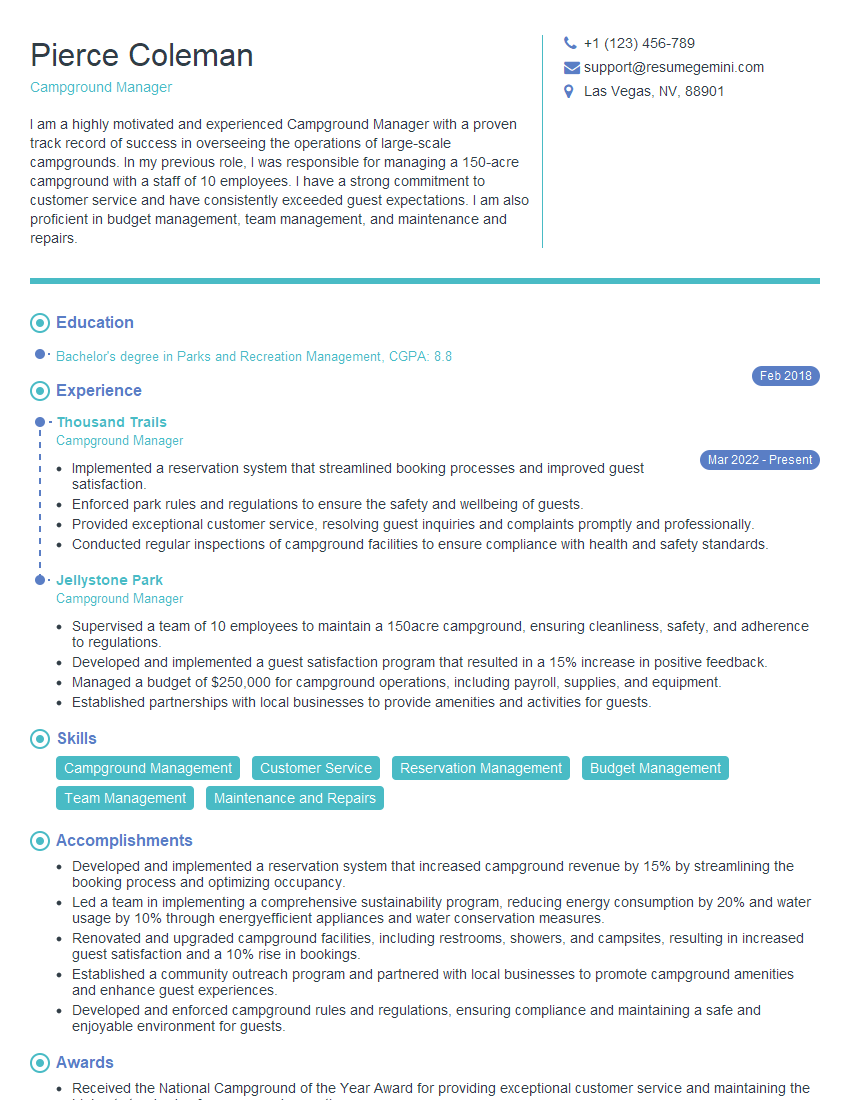
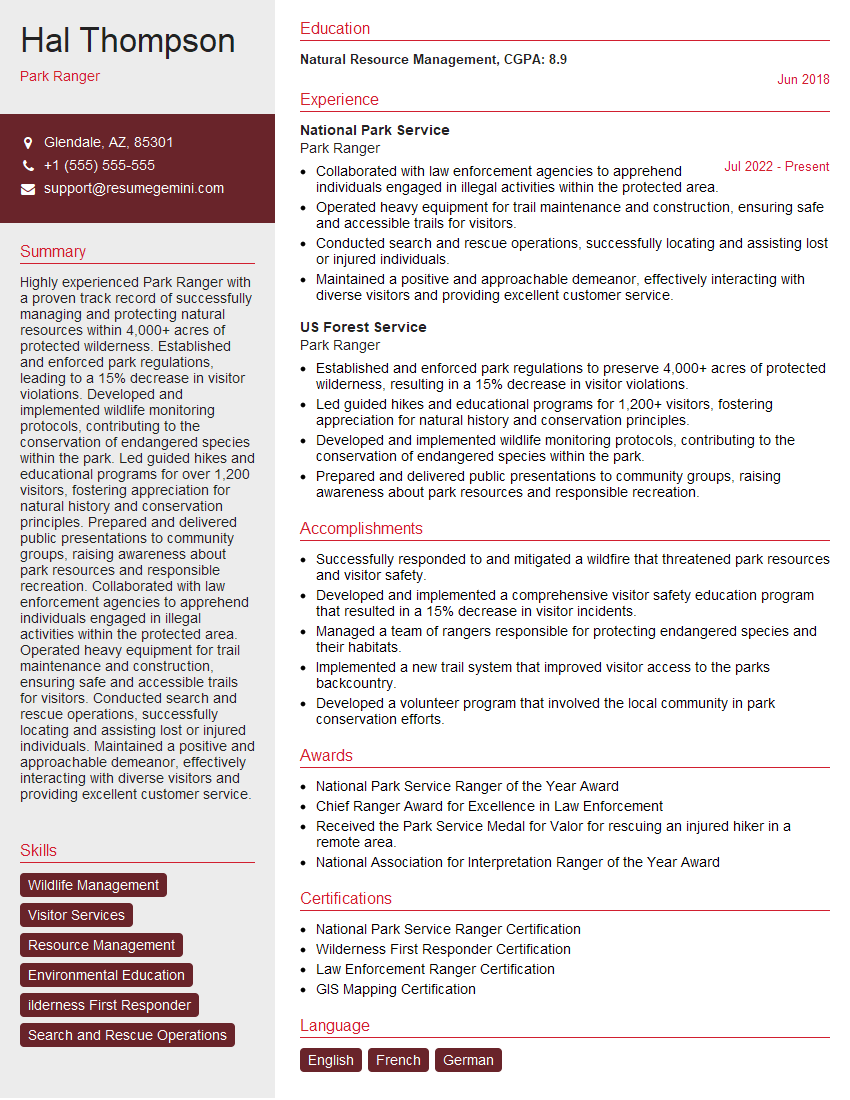
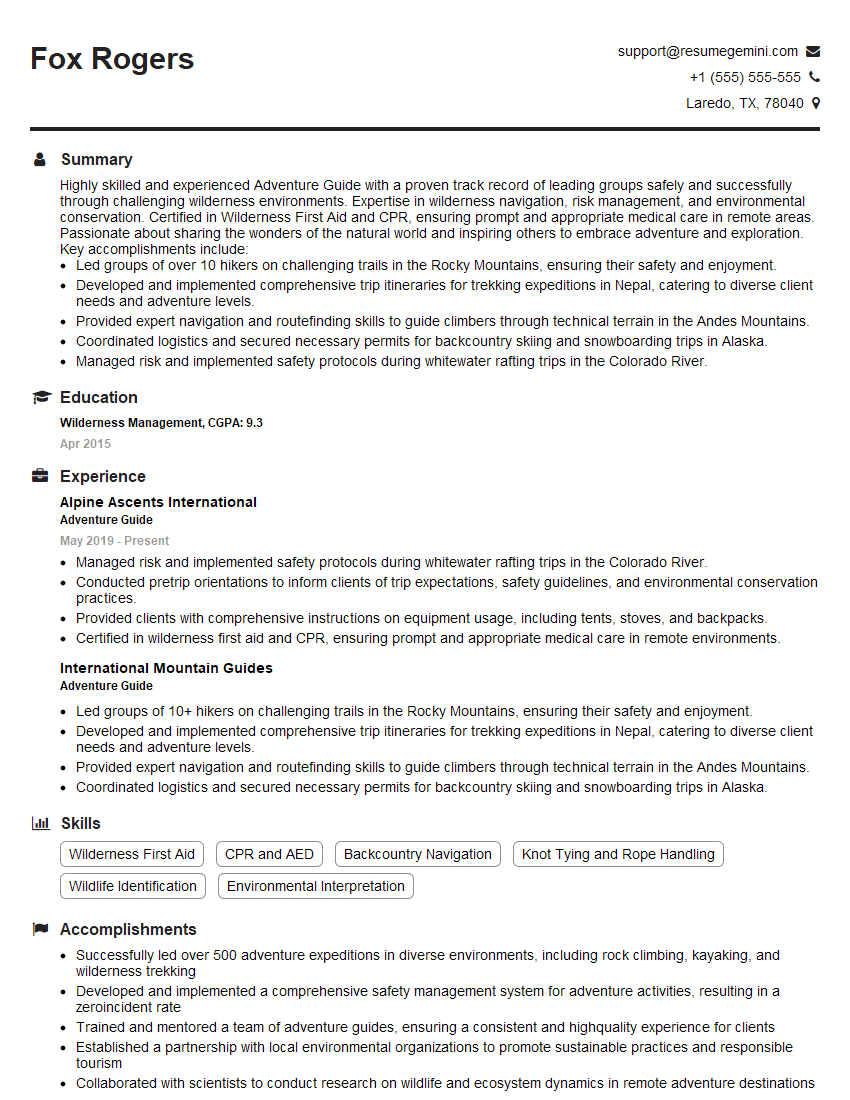
Mastering camping and survival skills demonstrates valuable attributes like problem-solving, adaptability, resourcefulness, and teamwork – highly sought-after qualities in many professions. To maximize your job prospects, create an ATS-friendly resume that clearly highlights these skills and your relevant experience. ResumeGemini is a trusted resource to help you build a professional and impactful resume that gets noticed. We provide examples of resumes tailored to camping and survival skills backgrounds to help you get started.

Explore more articles
Users Rating of Our Blogs
Share Your Experience
We value your feedback! Please rate our content and share your thoughts (optional).
What Readers Say About Our Blog
Very informative content, great job.
good