Preparation is the key to success in any interview. In this post, we’ll explore crucial Canvas Mounting and Installation interview questions and equip you with strategies to craft impactful answers. Whether you’re a beginner or a pro, these tips will elevate your preparation.
Questions Asked in Canvas Mounting and Installation Interview
Q 1. What types of canvases are best suited for different mounting methods?
The best canvas for mounting depends heavily on the desired mounting method and the final artwork’s intended use. Linen canvases, for example, are prized for their texture, durability, and ability to handle high tension, making them ideal for gallery wrapping (where the edges are wrapped around the stretcher bars) and for large-scale pieces that require a strong, stable base. Cotton canvases, being more affordable, are excellent for less demanding projects or for artists who prefer a smoother painting surface. They work well with both gallery wrapping and simpler methods. For a project requiring extreme durability, such as a canvas intended for outdoor display, a canvas made from a synthetic blend or a specially treated cotton canvas would be more suitable to resist the elements.
- Gallery Wrapping: Linen or heavy cotton canvases are best.
- Standard Stapling: Cotton or linen can work well, depending on the canvas weight and size.
- Outdoor Use: UV-resistant treated cotton or synthetic blends are necessary.
Q 2. Describe the process of stretching a canvas onto a stretcher bar.
Stretching a canvas onto stretcher bars is a precise process requiring care and attention to detail. First, lay the canvas face down on a clean, flat surface. Position the stretcher bars to form a rectangle, ensuring the corners are perfectly aligned. Then, carefully begin stretching the canvas, starting with one side and working your way around. Use a staple gun to secure the canvas to the bars, ensuring even tension across the surface. It’s crucial to keep the canvas taut to prevent sagging or wrinkles, working in small sections and pulling the canvas evenly as you go. Once all four sides are stapled, inspect for wrinkles or loose areas. Any imperfections should be addressed immediately. The final step involves trimming the excess canvas along the edges.
Think of it like carefully wrapping a gift – you want to maintain even tension to create a neat, professional-looking finish.
Q 3. What tools and materials are essential for canvas mounting?
Essential tools and materials for canvas mounting include:
- Stretcher bars: Available in various sizes and wood types (pine, poplar, etc.).
- Canvas: Choose the type appropriate for your project and mounting method.
- Staple gun: A pneumatic staple gun is recommended for efficiency and consistent staple depth.
- Staples: Select staples of appropriate length for the stretcher bars and canvas thickness.
- Measuring tape and pencil: For accurate measurements and marking.
- Utility knife or scissors: For trimming excess canvas.
- Rubber mallet or hammer: To help secure the stretcher bars together and get the canvas taut.
- Canvas pliers (optional): For added leverage while stretching the canvas.
- Gloves: Protect your hands from splinters and staples.
Having the right tools significantly impacts the quality and efficiency of the mounting process. I always recommend investing in quality tools; they make all the difference.
Q 4. How do you handle different canvas sizes and shapes during mounting?
Handling different canvas sizes and shapes requires adaptability. For larger canvases, additional support might be needed during stretching, perhaps using assistants. For irregular shapes, you’ll need to carefully measure and mark the canvas before stretching to ensure accurate alignment. Pre-assembling stretcher bars for complex shapes, like circles or ovals, might be helpful. Remember to always prioritize precision. Measuring twice, cutting once, applies here.
I once worked on a large, panoramic canvas for a museum exhibit. It required a team effort, specialized stretcher bars, and careful planning to ensure even tension across the entire piece, given its size and the need for perfect alignment with its frame.
Q 5. Explain the importance of proper canvas alignment and tension.
Proper canvas alignment and tension are critical for a professional finish and the longevity of the artwork. Improper alignment can lead to a distorted image or a visually unappealing piece. Uneven tension can cause the canvas to sag over time, potentially damaging the artwork. Maintaining even tension across the entire surface ensures a flat, taut canvas that will preserve the artwork’s integrity for years to come. It is the hallmark of quality craftsmanship.
Think of it as building a house—a strong foundation (even tension) and straight walls (proper alignment) are essential for a sturdy, long-lasting structure.
Q 6. How do you address wrinkles or imperfections in a canvas during mounting?
Addressing wrinkles or imperfections during mounting often involves carefully re-stretching the affected area. This might require removing staples, gently smoothing out the wrinkle, and then re-stapling. If there are stubborn creases, a small amount of steam or a damp cloth can help relax the fibers. However, you must be cautious; too much moisture can damage the canvas. For significant imperfections, the best approach may involve starting again with a new canvas. Prevention is always better than cure.
It’s important to maintain a consistent, gentle pressure while stretching the canvas to reduce the likelihood of such issues.
Q 7. What are the different types of stretcher bars available, and when would you choose one over another?
Several stretcher bar types exist, each with its own advantages and disadvantages:
- Wooden Stretcher Bars: These are the most common, offering a good balance of cost, durability, and aesthetic appeal. Pine and poplar are popular choices. The choice between them often comes down to budget and desired weight.
- Aluminum Stretcher Bars: Lighter and less prone to warping than wood, aluminum bars are ideal for large canvases that might be difficult to handle. However, they are typically more expensive.
- Gallery Wrap Stretcher Bars: These have a slightly deeper profile, allowing for a cleaner gallery wrap finish where the canvas edges are wrapped around the bars.
The choice depends on the project. For small to medium sized artworks, wooden bars usually suffice. For larger, heavier works or when weight is a major concern, aluminum is preferred. Gallery wrap bars are selected when a clean, professionally finished edge is required.
Q 8. Describe your experience with different adhesives or mounting techniques.
Choosing the right adhesive is crucial for successful canvas mounting. My experience encompasses a wide range, from traditional methods to modern, archival-quality options. I’ve worked extensively with:
- Acid-free PVA (Polyvinyl Acetate) Adhesives: These are my go-to for archival mounting, offering excellent adhesion while being safe for the artwork. They’re flexible enough to accommodate the canvas’s natural expansion and contraction with humidity changes.
- Pressure-Sensitive Adhesives: These are quicker and easier for less-sensitive pieces or temporary displays, but careful selection is vital to avoid residue or damage. I often use these for smaller canvases or when speed is paramount, ensuring compatibility with the canvas material beforehand.
- Hot Melt Adhesives: Used sparingly, and only for specific applications where a strong, fast bond is required and archival considerations aren’t a top priority. This might be used in the context of mounting a smaller canvas to a board, not for museum-grade work.
- Stretcher Bar Mounting (Traditional): This isn’t strictly an adhesive method, but it’s fundamental. I’m proficient in stretching canvases onto stretcher bars, ensuring the fabric is taut and evenly distributed for optimal presentation.
The selection depends heavily on the artwork’s value, the type of canvas, and the intended display environment. For instance, a delicate watercolor on canvas requires a far gentler approach than a thick oil painting on heavy linen.
Q 9. How do you ensure the longevity and preservation of a mounted canvas?
Longevity and preservation are paramount. My approach involves a multi-faceted strategy:
- Archival Materials: I always use acid-free materials – adhesives, backing boards, and mounting boards – to prevent yellowing and degradation over time. Think of it like using the best quality ingredients for a recipe that needs to last.
- Proper Environmental Control: UV protection is critical. I advise clients on appropriate lighting and framing choices to mitigate UV exposure. Temperature and humidity are also important; fluctuating conditions can cause damage.
- Careful Handling: Gentle handling is essential at all stages, from transportation to installation. This includes using gloves to avoid transferring oils or dirt.
- Regular Inspection: Periodically checking the mounted canvas for any signs of deterioration (e.g., delamination, discoloration) allows for timely intervention.
For instance, I once preserved a valuable family portrait by recommending a UV-filtering glazing for its frame, significantly extending its lifespan. The details matter; even the choice of a suitable storage environment can be vital in preserving art for generations.
Q 10. What are the safety precautions you take when handling canvases and materials?
Safety is my top priority. My practices include:
- Protective Gear: I always use gloves to protect both the artwork and my hands from adhesives, solvents, or sharp objects. Safety glasses are used when handling tools or potentially hazardous materials.
- Proper Ventilation: When working with solvents or adhesives that release fumes, I ensure adequate ventilation to prevent inhalation hazards. This often involves working in a well-ventilated area or using respirators when necessary.
- Ergonomics: I maintain proper posture and utilize ergonomic tools to minimize the risk of strain or injury. Working with large canvases can be physically demanding, so safe practices are crucial.
- Secure Workspace: I maintain a clean and organized workspace to avoid tripping hazards and accidental damage to the artwork.
A small cut or a spill can easily compromise a project, so proactive safety measures are essential for efficiency and to avoid causing any further damage to the piece itself.
Q 11. How do you handle damaged or torn canvases?
Handling damaged canvases requires a nuanced approach. The repair strategy depends on the extent and type of damage:
- Minor Tears: Small tears can often be repaired with archival-quality adhesive and careful stitching, using conservation-grade materials to seamlessly blend the repair. Think of it like a fine tailor mending a precious garment.
- Larger Tears or Losses: More extensive damage may require more complex solutions, potentially involving inpainting (carefully recreating lost portions of the painting) by a qualified art conservator. This is a specialized skill set beyond simple mounting.
- Deterioration: For canvases with significant deterioration, stabilization might be the primary concern. This could involve techniques to prevent further damage before considering any aesthetic repair.
I always assess the damage thoroughly before proposing a solution, consulting with art conservators when necessary. The goal is to stabilize the artwork and, where possible, restore it aesthetically while respecting its historical integrity.
Q 12. How do you prepare a canvas for archival mounting?
Preparing a canvas for archival mounting is a meticulous process:
- Assessment: I begin by carefully examining the canvas for any existing damage, cleaning (if needed), and assessing its overall condition.
- Cleaning: Gentle cleaning is sometimes necessary to remove dust or surface grime, using appropriate conservation-grade cleaning materials.
- Support: If the canvas is fragile, I might apply a lightweight, archival-quality lining to provide additional support before mounting. This adds stability and prolongs its life.
- Material Selection: I select acid-free backing board and adhesives appropriate for the artwork’s dimensions, weight, and material.
This preparation is critical for ensuring that the mounting process doesn’t introduce further damage. Each step is designed to protect the artwork and ensure its longevity.
Q 13. Describe your experience with various hanging systems.
My experience with hanging systems is broad, encompassing various methods based on the artwork’s size, weight, and the wall’s construction:
- Traditional Wire and D-rings: This is a classic and effective method for most canvases, ensuring a secure and aesthetically pleasing hang. I always assess the weight and size of the canvas when choosing the type and strength of wire.
- Gallery Hanging Systems: For heavier pieces or multiple canvases, gallery systems offer a robust and versatile solution. I carefully measure and install the system to ensure stability and a professional look.
- French Cleats: These are excellent for very large or heavy canvases, offering a secure and adjustable hanging method. They also help to maintain a flat, even surface.
- Z-bars or L-brackets: These are used for smaller canvases and are easy to install for DIY enthusiasts or in simpler situations.
I tailor the hanging system to each artwork, always prioritizing security and minimizing visible hardware for an aesthetically pleasing presentation. Safety and stability are essential here.
Q 14. How do you determine the appropriate mounting method for a specific artwork?
Determining the appropriate mounting method hinges on several factors:
- Artwork Size and Weight: Larger, heavier canvases might require more substantial mounting boards and hanging systems.
- Canvas Material and Condition: Delicate or fragile canvases necessitate gentler, more archival methods to avoid damage.
- Artwork Value and Preservation Needs: High-value artworks usually require archival-quality materials and techniques to ensure longevity.
- Intended Display Environment: The environment’s humidity and temperature fluctuations affect the choice of adhesives and backing boards.
I thoroughly assess these factors before recommending a mounting method. For example, a fragile antique canvas would require a different approach than a modern, sturdily constructed piece. Consultation and clear communication with the client are key here to achieve the best result.
Q 15. What are your preferred methods for cleaning and preparing canvas surfaces?
Preparing a canvas for mounting is crucial for a professional finish and longevity. My preferred method begins with a gentle dust-off using a soft brush or compressed air to remove loose debris. This prevents any grit from scratching the surface during cleaning. Then, I use a clean, lint-free cloth slightly dampened with distilled water – tap water can leave mineral deposits – to gently wipe the surface. For stubborn stains, I might use a very mild soap solution (like a drop of Ivory dish soap in a cup of distilled water), but always test it in an inconspicuous area first. The key is to avoid over-wetting the canvas, as this can damage the paint or fibers. After cleaning, I allow the canvas to dry completely before proceeding with the mounting process. This careful approach ensures the artwork is protected and looks its best.
Career Expert Tips:
- Ace those interviews! Prepare effectively by reviewing the Top 50 Most Common Interview Questions on ResumeGemini.
- Navigate your job search with confidence! Explore a wide range of Career Tips on ResumeGemini. Learn about common challenges and recommendations to overcome them.
- Craft the perfect resume! Master the Art of Resume Writing with ResumeGemini’s guide. Showcase your unique qualifications and achievements effectively.
- Don’t miss out on holiday savings! Build your dream resume with ResumeGemini’s ATS optimized templates.
Q 16. How do you ensure the canvas remains taut and flat after mounting?
Maintaining canvas tautness is paramount. I achieve this primarily through proper stretching techniques during the mounting process. For gallery wraps, carefully stretching the canvas over the stretcher bars is key, ensuring even tension across the entire surface. I use stretcher bars that are appropriately sized for the canvas and often employ a specialized stretcher bar key to further ensure tightness. After mounting, any residual wrinkles or imperfections can be addressed using a low-heat, handheld heat gun. I apply the heat carefully and evenly, moving the gun slowly across the surface to relax any tension points and smooth out the canvas without damaging the paint. I never apply intense heat directly to the canvas, as this could harm the paintwork. For canvas mounted on boards or panels, the use of an acid-free adhesive ensures the canvas stays flat and prevents warping.
Q 17. What are some common problems encountered during canvas mounting, and how do you solve them?
Common problems include wrinkles, sagging, and tears. Wrinkles, as mentioned earlier, can usually be resolved with careful heat application. Sagging often points to uneven tension during the initial stretching or using inappropriate stretcher bars. The solution is to remount the canvas using appropriately sized bars and ensuring even tension throughout. Tears, unfortunately, require more careful attention. Small tears can sometimes be mended using archival-quality canvas repair tape, but significant tears often necessitate professional restoration work. Another issue is the use of incorrect adhesives; using an acidic adhesive can lead to damage to the canvas over time. Always opt for acid-free materials.
Q 18. Describe your experience working with different types of frames.
My experience encompasses a broad range of frames, from simple wooden stretcher bars to ornate gilded frames. I’m proficient in working with various wood types, including pine, oak, and maple, each requiring slightly different handling and finishing techniques. I also have experience with metal frames, understanding how to securely attach the canvas without causing damage or leaving visible marks. My work includes both traditional frames and more contemporary options, like floating frames or shadow boxes. Each type requires a nuanced approach to ensure the perfect fit and presentation of the artwork. I always prioritize using frames that are appropriate for the style and size of the artwork, considering weight, stability, and aesthetic harmony.
Q 19. What are the different ways to attach a canvas to a wall?
Several methods exist for attaching a canvas to a wall, depending on the size, weight, and fragility of the piece. For lighter pieces, using picture hooks or small nails directly into the wall is often sufficient. For larger or heavier canvases, I’d recommend using sturdy D-rings or wire attached to the back of the frame, and hanging the artwork from picture wire using strong hooks designed for heavier pieces. For especially valuable pieces, or those in high-traffic areas, I’d suggest using museum-grade hanging systems which can be fine-tuned to provide even weight distribution and prevent damage from vibrations or impacts.
Q 20. What is your experience with gallery wrapping?
Gallery wrapping, where the canvas is wrapped around the stretcher bars and stapled to the back, is a technique I’m very familiar with. It gives a clean, modern look and eliminates the need for a separate frame. I’m skilled in creating clean, even wraps with minimal visible staples, paying attention to detail like consistent tension and mitered corners. I also understand the importance of choosing appropriately sized stretcher bars for the specific canvas size and thickness to achieve a professional-looking result. I always use acid-free materials during this process to ensure the longevity of the artwork.
Q 21. How do you handle large or heavy canvases?
Handling large or heavy canvases requires careful planning and the right equipment. For transport, I utilize specialized canvas carrying cases or sturdy, padded supports to prevent damage during movement. For installation, I often employ assistance, using two-person lifts to minimize strain and potential accidents. For very large canvases, I would utilize a professional picture hanging service to ensure the safe installation with the proper equipment.
Q 22. How do you ensure the safety and security of artwork during installation?
Ensuring artwork safety during installation is paramount. It begins with a careful assessment of the piece itself – its size, weight, fragility, and any unique characteristics. I always use appropriate handling techniques, like wearing cotton gloves to prevent fingerprints or smudging, and employing soft, padded supports to cradle the artwork during transport and positioning.
For canvases specifically, I utilize sturdy, properly sized carrying cases or custom-built crates for transit, and I always use a two-person lift for larger or heavier pieces. Once on-site, I carefully inspect the wall for structural integrity, ensuring that the chosen hanging method – whether it’s a traditional wire system or a more specialized mounting solution – is secure and will support the artwork’s weight without risk of damage or falling. I frequently use safety straps as an added precaution, particularly for larger or valuable canvases. Think of it like a mountaineer using multiple safety lines – redundancy is key to preventing accidents.
After installation, I always perform a final check to ensure stability and look for any signs of stress on the canvas or the mounting hardware. I’ll even leave a small card with aftercare instructions to further protect the client’s investment.
Q 23. What are your strategies for efficiently mounting multiple canvases?
Efficiently mounting multiple canvases involves meticulous planning and a streamlined workflow. I start by creating a detailed layout, considering the gallery or space’s dimensions and the size of each piece. This ensures a visually appealing and balanced arrangement, avoiding awkward gaps or overlaps. I then pre-select the appropriate hanging hardware – consistent wire systems or French cleats, for instance, can save time and ensure uniformity. Next, I group similar-sized canvases to optimize transport and handling, minimizing the risk of damage. Using a digital level throughout is crucial for professional alignment.
Once everything is prepped, the actual mounting follows a well-defined process: I start with a central anchor point, and work outwards, strategically positioning each canvas with accuracy and efficiency. Teamwork is vital here; having a second person assisting greatly speeds up the process while ensuring that each canvas hangs correctly and safely.
I’ve learned that preparation is 90% of the battle. The smoother the pre-installation planning, the more efficient and risk-free the installation process becomes.
Q 24. How do you adapt your techniques to different environments (e.g., museum, gallery, home)?
Adapting techniques to different environments requires a high level of adaptability. Museums, for instance, often require specialized hanging systems to mitigate environmental risks like UV damage and fluctuations in temperature and humidity. These systems might include climate-controlled cases or UV-filtering glazing. Galleries usually have more flexibility, but still demand clean, consistent installation that aligns with the overall aesthetic of the space. Home installations, while less restrictive, demand a focus on safe, user-friendly hanging solutions appropriate to the residential setting.
My approach to different environments focuses on understanding the unique requirements of each space and making choices accordingly. For example, I would choose archival-quality mounting materials for a museum, while opting for a more accessible solution for a home, always prioritizing the safety and longevity of the artwork. The overall goal is to install the artwork perfectly, whether it is in a home, a gallery, or a museum.
Q 25. Describe your experience with custom-sized stretcher bars.
I have extensive experience with custom-sized stretcher bars. This often comes up when dealing with non-standard canvas sizes or artworks with specific dimensional requirements. I work closely with frame shops and custom woodworking businesses to source these bars. Accurate measurements are critical here; a slight error can ruin the entire piece. I use high-quality, kiln-dried wood to minimize warping and ensure long-term stability. Different wood types offer varying advantages – some are lighter, some are stronger. The selection depends on the canvas size and the weight of the artwork.
The process involves providing detailed specifications, including bar dimensions, wood type, and corner joinery preferences. I ensure that the bars are appropriately braced and that the joining is robust to withstand the tension of the canvas. Often this requires more advanced techniques than simple ready-made bars; I ensure appropriate clamping and gluing of the wooden stretchers. I’ve even worked on projects where I’ve integrated specialized components into the stretcher bars, like hidden mounting systems for enhanced security. It’s all about precision and attention to detail. I always consider humidity as well.
Q 26. Explain your understanding of canvas preparation for painting.
Canvas preparation for painting is a crucial step often overlooked. It directly impacts the final outcome, the painting’s longevity, and how well the paint adheres. The process typically involves sizing the canvas, which is essentially preparing the fabric to accept the paint. Sizing helps to prevent the paint from being absorbed too quickly by the fabric, resulting in a smoother, more even application. Different types of size are used, depending on the medium. A traditional method uses rabbit skin glue. Acrylic gesso is also popular due to its easy handling and adaptability.
After sizing, I apply gesso, a primer that further prepares the canvas, providing a smooth, even surface with good tooth (texture) for the paint to adhere. Multiple coats of gesso are usually applied to achieve the desired texture and opacity. The process allows the canvas to remain taut, ready for application.
Proper preparation ensures the painting lasts much longer and doesn’t damage easily.
Q 27. What is your experience with different types of fabrics used in canvases?
My experience encompasses a range of canvas fabrics, each with its own characteristics: Linen is a high-end option known for its durability, texture, and ability to absorb paint beautifully. It’s ideal for archival-quality work and often used by professional artists. Cotton is a more affordable alternative, offering a smoother surface and being more readily available. It’s a good choice for less demanding projects. I’ve also worked with synthetic blends that offer varying levels of durability and texture, depending on their composition.
The choice of fabric depends on the artwork, budget, and artist’s preferences. Linen, for example, can be more expensive and requires more care, whereas cotton is easier to manage and is budget friendly. Choosing the right fabric impacts the appearance of the work.
Q 28. How would you deal with a client who requests an unconventional mounting method?
Dealing with unconventional mounting requests requires a collaborative approach. I would start by actively listening to the client’s vision and understanding their reasoning behind the unique method. We would then have a thorough discussion about the feasibility of the request, considering factors such as safety, structural integrity, and the artwork’s preservation. If the proposed method poses risks or is impractical, I will explain the potential issues clearly and suggest alternative solutions, always backing up my recommendations with technical reasoning and safety considerations. For example, a floating mount might look modern and attractive but present problems with support and stability, which I would thoroughly address.
The goal is not to dismiss the client’s idea outright but to guide them toward a solution that preserves the artwork and meets their aesthetic objectives. Open communication and a focus on finding a mutually agreeable compromise are crucial. It’s often about finding a ‘yes, and…’ solution rather than a simple ‘no’. Collaboration is key.
Key Topics to Learn for Canvas Mounting and Installation Interview
- Canvas Stretching Techniques: Understanding different stretching methods (gallery wrap, float mount, etc.) and their applications based on canvas size, weight, and desired aesthetic.
- Material Selection and Compatibility: Choosing appropriate materials like stretcher bars (wood type, thickness), adhesives, and fabrics for various canvas types and project requirements. Knowing the properties of different canvas materials and their suitability for different environments.
- Installation Methods: Mastering various installation techniques, including hanging methods for different wall types (drywall, brick, concrete), utilizing appropriate hardware (wire, D-rings, hanging systems), and understanding weight distribution for optimal stability.
- Troubleshooting and Problem-Solving: Identifying and resolving common issues such as canvas wrinkles, sagging, uneven stretching, and damage during installation. Demonstrating practical problem-solving skills is crucial.
- Safety Procedures and Best Practices: Understanding and adhering to safety regulations related to working at heights, using tools, and handling materials. This includes safe lifting techniques and proper disposal of materials.
- Tools and Equipment: Familiarity with essential tools and equipment used in canvas mounting and installation, including staple guns, hammers, measuring tools, and specialized clamps. Understanding their proper use and maintenance.
- Understanding Client Needs and Expectations: Demonstrating an ability to communicate effectively with clients, understand their project requirements, and provide professional advice.
Next Steps
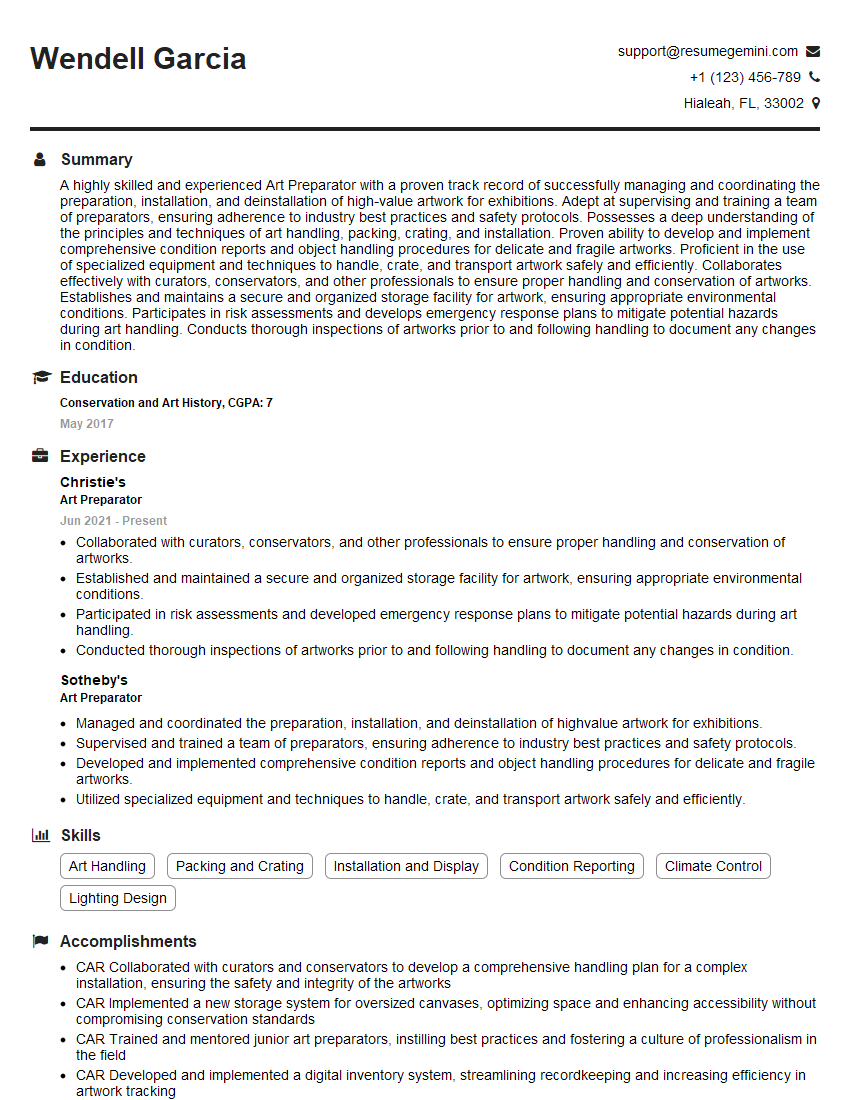
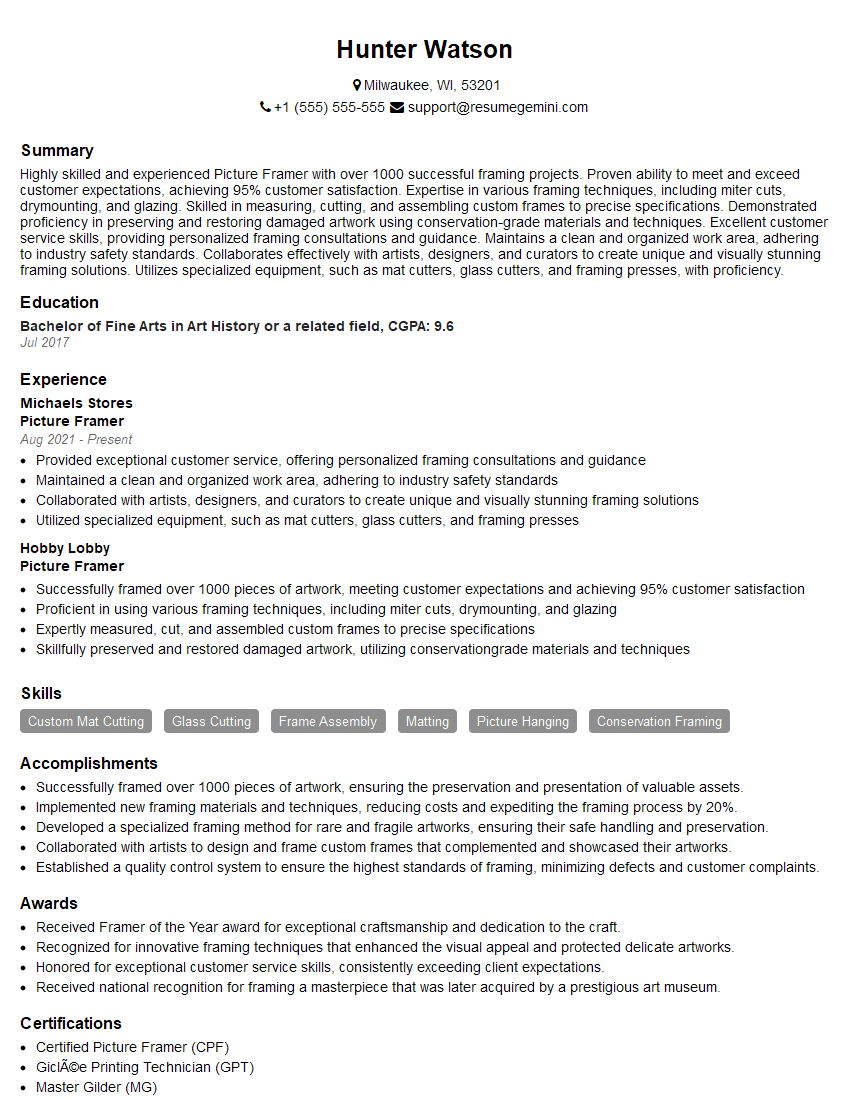
Mastering canvas mounting and installation opens doors to exciting opportunities in the art handling, framing, and design industries. To maximize your job prospects, a well-crafted resume is essential. Building an ATS-friendly resume ensures your qualifications are highlighted and easily identified by hiring managers. ResumeGemini is a trusted resource that can significantly enhance your resume-building experience. We provide examples of resumes tailored to Canvas Mounting and Installation to help you present your skills effectively. Take the next step towards your dream career – create a compelling resume that showcases your expertise.
Explore more articles
Users Rating of Our Blogs
Share Your Experience
We value your feedback! Please rate our content and share your thoughts (optional).
What Readers Say About Our Blog
Very informative content, great job.
good