Every successful interview starts with knowing what to expect. In this blog, we’ll take you through the top Culling and Grading Oysters interview questions, breaking them down with expert tips to help you deliver impactful answers. Step into your next interview fully prepared and ready to succeed.
Questions Asked in Culling and Grading Oysters Interview
Q 1. Describe the different grading categories for oysters.
Oyster grading categorizes oysters based on size and sometimes shape. The specific categories vary by region and market demands but generally involve size designations. For example, a common system uses numbers (e.g., size 1, size 2, size 3) representing successively larger oysters. Larger oysters often command higher prices. Some grading systems might also incorporate shape classifications, prioritizing those with a deep cup and symmetrical form. Premium markets might have even more nuanced grading, considering factors like shell color and overall aesthetic appeal.
- Size Grading: This is the most common method, using measurements like length or width to sort oysters into size classes.
- Shape Grading: This often accompanies size grading and considers the oyster’s form, favoring deep cups and symmetrical shells.
- Market-Specific Grading: Certain markets may have unique grading standards based on local preferences and culinary traditions.
Q 2. What are the visual indicators of a high-quality oyster?
A high-quality oyster displays several key visual characteristics. The shell should be heavy, indicating a well-developed oyster, and should be tightly closed, showing the oyster is alive and healthy. The shell should be clean, free from excessive fouling organisms (barnacles, algae). Its color can vary depending on the species and growing environment, but an even coloring is generally preferred. The overall shape should be deep-cupped and relatively symmetrical. When opened, the oyster should have a plump and moist appearance; a dull, dry appearance suggests poor quality. The liquor (liquid surrounding the oyster) should be clear and abundant. A strong, pleasant, briny odor also indicates freshness.
Q 3. How do you identify and cull oysters with defects?
Culling, the process of removing defective oysters, involves careful visual inspection. Defective oysters might show signs of disease, damage, or poor condition. This includes shells that are broken or severely damaged, oysters that are gaping (open and won’t close when tapped), shells with significant fouling or discoloration indicating poor water quality, and oysters that show signs of disease such as lesions, unusual coloration, or abnormal tissue.
Example: An oyster with a gaping shell likely indicates it is dead and should be immediately discarded to prevent contamination.
Process: Oysters are inspected individually, usually after being removed from their growing environment. Those with defects are immediately separated from the good quality ones, ensuring no cross-contamination.
Q 4. Explain the process of culling oysters for size and shape.
Size and shape culling involves sorting oysters into various size categories based on pre-determined measurements (e.g., length, width). Specialized tools such as grading templates or sieves are often used for efficient and accurate sizing. Shape culling involves sorting based on the oyster’s form. Oysters with deep, symmetrical shells are generally preferred. Those with irregular shapes, excessive elongation, or deformities might be culled for aesthetic or market value reasons.
Process: This often involves a combination of manual sorting and mechanical sieving. Oysters that don’t meet the specifications for a particular size or shape category are separated and may be used for different markets (e.g., smaller oysters for shucking houses, irregular ones for processing).
Q 5. What are the common diseases or defects found in oysters?
Oysters are susceptible to various diseases and defects. These include:
- Dermo (Perkinsus marinus): A parasite that causes lesions and tissue damage.
- MSX (Haplosporidium nelsoni): Another parasite causing similar symptoms to Dermo.
- Oyster herpes virus: Can cause mortality and shell deformities.
- Bacterial infections: Various bacterial infections can lead to tissue damage and death.
- Shell disease: Various types of shell damage caused by environmental factors and pests.
Identifying these requires experience and sometimes laboratory analysis, as many symptoms might only be visible microscopically. Many of these diseases impact the oyster’s marketability, even if not causing immediate mortality.
Q 6. How do you ensure the sanitary handling of oysters during culling and grading?
Sanitary handling is crucial to maintain oyster quality and prevent foodborne illnesses. This begins with the culling environment itself. Clean, sanitized equipment (gloves, utensils, containers) should be used. Workers should adhere to strict hygiene protocols, including handwashing and wearing appropriate protective gear. The culling area should be free from contamination, protected from pests and debris. Oysters should be kept refrigerated at appropriate temperatures to prevent bacterial growth. Regular sanitation of the entire culling process and facility is essential. Proper water management and disposal of waste are also important aspects of maintaining sanitation.
Q 7. What are the legal regulations surrounding oyster handling and processing?
Legal regulations for oyster handling and processing vary significantly by location, often governed at state or regional levels. These regulations commonly address:
- Water quality standards: Regulations regarding acceptable levels of contamination in growing waters.
- Harvesting practices: Regulations governing allowable harvest methods and quantities.
- Sanitation procedures: Rules regarding hygiene practices in handling and processing.
- Disease monitoring and control: Requirements for testing for and managing diseases.
- Labeling and traceability: Regulations concerning labeling information and traceability of oysters.
- Shellfish tagging and certification: Requirements for tagging oysters to track origin and ensure compliance.
Operators must be aware of and adhere to all applicable regulations to ensure legal compliance and consumer safety.
Q 8. Describe your experience with different oyster varieties and their unique characteristics.
My experience spans a wide range of oyster varieties, each with its unique characteristics impacting grading and culling. For example, Kumamotos are known for their small size and intensely sweet, buttery flavor. Their delicate shells require extra care during handling. Conversely, Pacific oysters are larger, have a more robust shell, and possess a briny, saline taste. Their larger size makes them easier to handle, but their thicker shells might need more force to open. I’ve also worked extensively with Olympia oysters, a native species prized for their small size and unique flavor profile; their fragility necessitates gentle handling throughout the entire process. Understanding these variations is crucial for proper grading, as size, shell condition, and meat quality expectations differ across species.
Another key difference lies in their growth habits. Some oysters grow faster and may reach market size quicker, while others take longer. This influences their overall quality and affects the timing of harvest and subsequent grading.
Q 9. How do you maintain consistent grading standards throughout the process?
Maintaining consistent grading standards is paramount. We use a combination of standardized size charts, clear visual guides illustrating meat quality and shell condition, and regular calibration of our grading equipment. All our graders receive extensive training and undergo periodic reassessments to ensure consistency. We employ a system of checks and balances, with supervisors regularly auditing the grading process to catch any discrepancies. For example, we might use calipers to measure oyster size against our pre-defined grade parameters and utilize grading trays that have clearly marked size divisions. This multi-layered approach minimizes bias and guarantees consistent high quality across all batches.
Additionally, regular staff meetings are held to discuss any inconsistencies observed and refine the grading process, continuously improving our quality control. This could involve reviewing specific oyster examples or adjusting our grading criteria if needed. This constant review and adaptation are critical to maintain top quality.
Q 10. What is your experience with oyster depuration techniques?
Oyster depuration, or purification, is a crucial step in ensuring food safety. My experience encompasses various depuration techniques, including the use of flow-through systems and recirculating systems. Flow-through systems utilize a continuous flow of clean, filtered seawater to cleanse the oysters, while recirculating systems utilize a closed loop where the water is constantly treated and filtered. The choice of system depends on factors such as water quality, oyster volume, and environmental regulations. For example, I’ve used flow-through systems in areas with consistently high water quality, while in other locations I’ve utilized recirculating systems to manage water usage more effectively and reduce environmental impact. Each system requires monitoring of parameters like water temperature, salinity, and dissolved oxygen levels. We also regularly test the oysters for bacterial contamination throughout the depuration process to confirm the efficacy of the purification.
Effective depuration not only removes harmful bacteria and contaminants but also improves the overall quality and taste of the oysters by enhancing their plumpness.
Q 11. How do you handle damaged or broken oysters?
Damaged or broken oysters are handled according to a strict protocol to ensure food safety and minimize waste. Oysters with broken shells or significant damage to the meat are immediately removed from the processing line and segregated from acceptable oysters. They are usually processed separately for other products such as oyster liquor and other food applications or properly disposed of to avoid environmental contamination. The exact method of disposal depends on local regulations and might involve composting or other environmentally sound practices. It is crucial to prevent cross-contamination from damaged oysters to healthy ones during handling and processing, so proper sanitation and hygiene are critical steps in this part of the process.
Q 12. How do you manage and dispose of oyster waste responsibly?
Responsible waste management is a top priority. Oyster shells are a valuable resource and are often recycled or repurposed. We partner with local organizations and businesses that use oyster shells for various purposes, such as creating oyster reef habitats or using them as a soil amendment. This not only diverts waste from landfills but also contributes to environmental restoration efforts. Any remaining organic waste is composted, following all local environmental regulations. Our goal is to minimize our environmental impact while maximizing the utilization of by-products.
Q 13. What are the key factors affecting oyster quality?
Several factors critically affect oyster quality. Water quality is paramount; clean, nutrient-rich water is essential for healthy oyster growth. Temperature fluctuations can also affect oyster growth rates and meat quality. Salinity levels must be optimal; too much or too little salt can negatively impact growth and flavor. The presence of predators and diseases can dramatically impact the oyster population and their overall health. Finally, the handling practices during harvesting, processing, and storage significantly influence the final product’s quality. Careful handling helps to minimize damage and preserve the oysters’ freshness and overall appeal.
Q 14. What safety precautions do you take while handling oysters?
Oyster handling requires strict adherence to safety protocols to prevent injuries and ensure food safety. We use cut-resistant gloves to protect against sharp oyster shells. Proper sanitation practices are followed throughout the process to prevent the spread of bacteria. Employees are trained on proper lifting techniques to avoid strains and injuries. First-aid kits are readily available, and all employees receive training on basic first-aid procedures. Furthermore, we adhere to all relevant food safety regulations and regularly monitor our processes for compliance. This multi-faceted approach ensures a safe and healthy work environment and reduces the potential for workplace accidents or contamination.
Q 15. How do you use different tools and equipment for culling and grading oysters?
Culling and grading oysters involves a range of tools, each suited to a specific stage. Think of it like a chef using different knives for different tasks – precision is key!
- Gloves: Essential for hygiene and protecting hands from sharp shells.
- Measuring devices: Calipers or rulers are crucial for accurately determining oyster size, ensuring consistent grading according to market standards (e.g., ‘selects’, ‘standards’, ‘culls’).
- Sorting trays and containers: These are used to separate oysters into different grades. Different sizes and shapes of containers might be used depending on the oyster size and handling method.
- Knives and shucking tools: While not directly used for *grading*, these are essential for opening oysters for quality checks, especially for identifying internal damage that might lead to culling.
- Conveyor belts (for larger operations): Automate the flow of oysters, boosting efficiency. These are often incorporated into automated grading systems.
- Brushes: Used for gently cleaning oysters before grading to remove debris and improve the assessment of the shell’s condition.
For example, when grading Pacific oysters, the use of calipers is crucial for precise measurement to meet market demands for specific size ranges. Conversely, a simple visual inspection suffices for culling heavily damaged or diseased oysters.
Career Expert Tips:
- Ace those interviews! Prepare effectively by reviewing the Top 50 Most Common Interview Questions on ResumeGemini.
- Navigate your job search with confidence! Explore a wide range of Career Tips on ResumeGemini. Learn about common challenges and recommendations to overcome them.
- Craft the perfect resume! Master the Art of Resume Writing with ResumeGemini’s guide. Showcase your unique qualifications and achievements effectively.
- Don’t miss out on holiday savings! Build your dream resume with ResumeGemini’s ATS optimized templates.
Q 16. Explain your experience with automated oyster grading systems (if any).
My experience includes working with several automated oyster grading systems. These systems typically use a combination of optical sensors, image processing, and size measurement devices to rapidly and accurately sort oysters by size and shape. This reduces labor costs and improves consistency, particularly beneficial for high-volume processing plants.
One system I’m familiar with uses a conveyor belt that feeds oysters past cameras. The cameras capture images, software algorithms analyze these images, measuring dimensions and detecting defects (like broken shells or significant shell irregularities). Then, based on pre-programmed parameters, the system directs each oyster to the appropriate grading bin using pneumatic diverters. This minimizes human intervention, leading to significant efficiency improvements. The accuracy is remarkable – the error rate is significantly lower compared to manual grading, resulting in less waste and improved product quality.
Q 17. How do you ensure accurate and efficient oyster grading?
Accurate and efficient oyster grading hinges on standardization and meticulousness. It’s not just about size; it’s about quality. Think of it as a quality control process.
- Standardized Grading Scales: Adhering to established size and quality standards (e.g., those set by regulatory bodies or industry associations) is paramount.
- Regular Calibration: Equipment like calipers and automated systems require regular calibration to ensure accuracy. This involves comparison against known standards to detect and correct any drift.
- Multiple Check Points: Incorporating multiple checks throughout the process helps catch errors. This might involve manual spot checks on automated lines or having multiple graders verify results.
- Trained Personnel: Properly trained graders are crucial for accurately identifying quality defects that aren’t easily detectable by automated systems, such as disease signs or unusual shell formations.
- Documentation and Record-Keeping: Detailed records of grading results are essential for traceability, quality control, and improving efficiency. Data analysis helps to identify bottlenecks or areas for process improvement.
For instance, we regularly conduct internal audits to compare manual grading results against automated system results, helping identify and address potential discrepancies.
Q 18. What is your knowledge of different oyster harvesting methods?
Oyster harvesting methods vary depending on the species and environment. Some common methods include:
- Hand Harvesting: Divers or workers wade into shallow waters to collect oysters by hand. This is common for smaller operations and specific oyster varieties.
- Dredging: A dredge, a metal rake-like device, is dragged along the seabed to collect oysters. This is more efficient for large-scale operations but can cause environmental damage if not managed properly.
- Tongs: Long-handled tongs are used to collect oysters from the seabed. This method is less damaging than dredging but less efficient for large-scale harvesting.
- Hydraulic Clam Dredges: These are specifically designed for oyster harvesting in deeper waters and can harvest larger quantities in less time than traditional dredges.
My experience encompasses both hand harvesting and dredge operations. The choice of method involves careful consideration of environmental impact, oyster density, and economic feasibility. Sustainable harvesting practices are always prioritized.
Q 19. Describe the chain of custody for oysters from harvest to market.
The chain of custody for oysters is crucial for ensuring food safety and traceability. It’s a documented trail from harvest to market, like a detective’s case file.
- Harvesting: Oysters are harvested and initially identified with the location and date of harvest.
- Culling and Grading: Oysters are inspected, culled, and graded based on size and quality. Records of this process are carefully maintained.
- Washing and Processing: Oysters might undergo washing and other processing steps. These are also documented.
- Packaging and Labeling: Oysters are packaged and labeled with relevant information, including harvest location, date, and grading information. This ensures that consumers know the source and quality.
- Distribution and Transportation: The oysters are transported to distribution centers and then to retailers or restaurants, with proper temperature control and handling.
- Retail Sale: Final sale to consumers. The labeling must conform to relevant regulatory guidelines.
Each step in the chain involves clear documentation, allowing for complete traceability in case of any issues. This is vital for ensuring consumer safety and responding to potential contamination events.
Q 20. How do you identify and prevent cross-contamination during processing?
Preventing cross-contamination is paramount in oyster processing, just like preventing the spread of germs in a hospital. We employ several strategies:
- Dedicated Equipment: Separate equipment is used for different oyster sizes or grades to prevent mixing. This also minimizes the risk of transferring pathogens between batches.
- Thorough Cleaning and Sanitization: All equipment and surfaces are thoroughly cleaned and sanitized using appropriate food-grade chemicals between batches and at the end of each day. This includes regular checks for any sign of biofilm buildup.
- Proper Waste Disposal: Oyster shells and other waste are disposed of promptly and safely to prevent contamination.
- Personal Hygiene: Workers follow strict hygiene protocols, including the use of gloves, protective clothing, and frequent handwashing.
- Traceability Systems: Maintaining accurate records of all processing steps enables rapid tracing of any contaminated batches, minimizing the impact of any contamination events.
We follow strict HACCP (Hazard Analysis and Critical Control Points) principles, identifying potential hazards and implementing measures to control them. This includes regular training for personnel on safe handling procedures.
Q 21. How do you maintain proper hygiene and sanitation during oyster handling?
Maintaining proper hygiene and sanitation throughout oyster handling is crucial for food safety. It’s about preventing the spread of pathogens. Think of it as maintaining a sterile operating room for shellfish.
- Clean Water Supply: A clean and reliable water supply is essential for washing oysters. Water quality is regularly tested to ensure it meets standards.
- Appropriate Sanitation Chemicals: Food-grade sanitizers are used to clean and disinfect equipment and surfaces.
- Regular Equipment Cleaning: Equipment is thoroughly cleaned and sanitized between batches and at the end of each processing day to prevent biofilm growth.
- Protective Clothing and Equipment: Workers wear gloves, aprons, and other protective clothing to prevent contamination.
- Employee Training: Employees receive comprehensive training on proper hygiene practices and food safety regulations.
- Temperature Control: Maintaining proper temperatures throughout processing and storage is essential to prevent bacterial growth.
For example, we regularly conduct swab tests of surfaces and equipment to check for bacterial contamination, ensuring our practices are effectively preventing pathogen growth.
Q 22. What are the signs of spoilage in oysters?
Spoilage in oysters is easily identified through several key indicators. Think of it like this: a fresh oyster is a vibrant, healthy organism, while a spoiled one shows signs of distress.
- Unpleasant Odor: A strong, unpleasant smell, often described as ammonia-like or rotten, is a major red flag. Fresh oysters have a slightly salty, briny scent, not a pungent one.
- Open Shells: While some oysters may naturally open slightly, a consistently wide gap or an inability to close when tapped indicates the oyster is dead and likely spoiled. This is because the oyster’s muscle has relaxed.
- Discolored Liquid: The liquid within a fresh oyster should be clear or slightly milky. A cloudy, discolored, or excessively watery liquid suggests spoilage. Muddy or unusually colored liquid might also be indicative of environmental contamination.
- Soft or Mushy Flesh: The oyster’s flesh should be firm and plump. A soft, mushy texture points to decay. A slightly dry texture could indicate being kept out of its natural environment too long.
- Unusual Appearance: Look for discoloration. Healthy oyster flesh is typically creamy white to a grayish-white. Yellowing, browning, or the presence of black spots indicates a problem.
Remember, even if an oyster *looks* okay, a bad smell is the ultimate giveaway. When in doubt, throw it out!
Q 23. How do you handle customer complaints about oyster quality?
Handling customer complaints about oyster quality requires a calm, professional, and empathetic approach. My first step is always to listen carefully to the customer’s concern, validating their experience. I would then ask for specifics: What exactly was wrong? When did they purchase the oysters? Was there a particular oyster or batch affected?
Based on their description, I would investigate. This may involve examining any remaining oysters, checking our records for that batch’s source and handling, and reviewing our quality control procedures during that timeframe. If I find a legitimate quality issue, I would immediately apologize, offer a full refund or replacement, and document the issue for further investigation to prevent similar incidents.
Transparency is key. I would explain what steps I’m taking to address the problem and ensure it doesn’t happen again. Even if the complaint is not directly related to a quality issue in our handling (e.g., improper cooking), a respectful and prompt response is crucial in maintaining customer satisfaction. This includes explaining best practices for oyster handling and storage.
Q 24. Describe your experience with oyster storage and preservation.
Oyster storage and preservation are critical for maintaining quality and safety. I’ve extensive experience with various methods, prioritizing the HACCP principles (Hazard Analysis and Critical Control Points). Fresh oysters are highly perishable, and their optimal temperature needs to be strictly maintained throughout the supply chain.
Upon arrival, oysters are immediately assessed for their condition, with any showing signs of spoilage immediately rejected. We then store the oysters in refrigerated conditions at 33-40°F (0.5-4.4°C), ensuring proper humidity levels to prevent them from drying out. The storage area should be clean and well-maintained to prevent contamination.
For longer-term preservation, techniques like flash freezing can be used, but it’s essential to follow strict protocols to ensure the quality and safety of the product post-thawing. Proper labeling is critical: we indicate the source, harvesting date, and other key details.
Regular temperature monitoring and meticulous record-keeping are non-negotiable to ensure that the cold chain remains unbroken. Any deviation is immediately investigated to determine root cause and prevent future incidents.
Q 25. How would you troubleshoot a grading issue with inconsistent quality?
Troubleshooting inconsistent oyster quality requires a systematic approach. First, I’d identify the specific inconsistencies: Are they size-related? Are they related to meat quality? Is it flavor? Is it something else?
Next, I’d trace the oysters back through the process. This includes reviewing all steps, from harvesting and handling, sorting, grading to storage and transport. This might involve checking the harvesting location’s environmental factors (water quality, salinity, temperature), examining the oyster’s growth period and reviewing our sorting and grading procedures for potential flaws. Are we using consistent grading criteria across different batches? Is our equipment properly calibrated?
Data analysis is important here. Reviewing temperature logs, salinity readings, and growth data could indicate a recurring pattern or root cause. Once the problem is identified, corrective actions are implemented, which could be improvements to harvesting techniques, changes to storage and handling procedures, modifications to our grading system, or even replacing equipment.
Finally, a post-implementation review will be conducted to confirm the effectiveness of the corrective actions and the consistency of the oyster quality. Continuous monitoring and improvement is essential.
Q 26. What are the environmental factors affecting oyster growth and quality?
Numerous environmental factors significantly impact oyster growth and quality. Water quality is paramount. Oysters are filter feeders, so pollutants, excessive nutrients (eutrophication), and harmful algal blooms directly affect their health and taste. Salinity levels are also vital; oysters thrive within a specific salinity range, and deviations can lead to stunted growth or mortality.
Water temperature plays a major role in oyster growth and reproduction. Extremely high or low temperatures can cause stress, impacting their growth rate and shell development. The availability of food (phytoplankton) is another crucial element. Insufficient food sources lead to slower growth and poorer meat quality.
Sedimentation can smother oysters, reducing their access to food and oxygen. Disease outbreaks caused by various pathogens can devastate oyster populations. Finally, extreme weather events like storms and hurricanes can physically damage oyster beds and negatively affect water quality.
Understanding these factors is crucial for sustainable oyster farming and maintaining consistent product quality. For example, monitoring water quality parameters through regular testing and implementing measures to mitigate pollution or mitigate the effects of climate change are key strategies.
Q 27. What is your understanding of HACCP principles in oyster processing?
HACCP (Hazard Analysis and Critical Control Points) is a crucial food safety management system that I am well-versed in. It’s a proactive approach that focuses on identifying and controlling potential hazards throughout the entire oyster processing chain, from harvesting to consumption.
In oyster processing, key HACCP principles include:
- Hazard Analysis: Identifying biological, chemical, and physical hazards such as bacterial contamination (Vibrio spp.), biotoxins, or foreign objects.
- Critical Control Points (CCPs): Determining steps where control is essential to prevent or eliminate hazards, for example, proper refrigeration, sanitation, and shell-stock tagging.
- Critical Limits: Establishing measurable criteria for each CCP (e.g., temperature limits, acceptable bacterial counts).
- Monitoring: Regularly monitoring CCPs to ensure critical limits are met. This includes thorough temperature monitoring, regular sanitation practices, and vigilant checks for shell-stock compliance.
- Corrective Actions: Having procedures in place to address deviations from critical limits. This could involve discarding contaminated batches, implementing improved sanitation procedures, or adjusting refrigeration settings.
- Record-Keeping: Maintaining detailed records of all monitoring and corrective actions to demonstrate compliance with HACCP.
- Verification: Regularly verifying the effectiveness of the HACCP system through audits and reviews.
Adherence to HACCP ensures consumer safety and protects the reputation of the business. It’s not just about meeting regulations; it’s about a culture of food safety.
Q 28. What are your salary expectations for this position?
My salary expectations for this position are commensurate with my experience and the responsibilities involved. Considering my expertise in oyster culling, grading, and food safety management, including my demonstrated understanding of HACCP principles and commitment to quality control, I am seeking a salary in the range of [Insert Salary Range]. I am open to discussing this further based on the specifics of the role and the overall compensation package.
Key Topics to Learn for Culling and Grading Oysters Interview
- Oyster Biology and Life Cycle: Understanding oyster growth stages, shell characteristics, and factors influencing quality is crucial for effective culling and grading.
- Shell Quality Assessment: Learn to identify defects, such as cracks, deformities, and discoloration, and their impact on marketability. Practical experience in visually inspecting oysters is highly beneficial.
- Size and Weight Grading: Master the techniques and tools used to accurately sort oysters into different size categories based on industry standards and customer requirements. This includes understanding the relationship between size, weight, and market value.
- Meat Quality Assessment: Develop your skills in judging the plumpness, color, and overall condition of the oyster meat. This often involves opening oysters and evaluating their interior quality.
- Safety and Sanitation Protocols: Demonstrate your understanding of food safety regulations and best practices for handling oysters to prevent contamination and maintain high hygiene standards. This includes proper handling, storage, and cleaning procedures.
- Grading Standards and Terminology: Familiarize yourself with industry-specific terminology and grading scales used to classify oysters based on size, shape, and quality. Understanding these standards is key to consistent and accurate grading.
- Equipment and Technology: Learn about the different types of equipment used in oyster culling and grading, including scales, sizing tools, and automated systems. Understanding their operation and limitations is valuable.
- Problem-Solving and Decision-Making: Be prepared to discuss scenarios where you had to make quick decisions regarding oyster quality and grading, highlighting your ability to assess situations and make sound judgments.
Next Steps
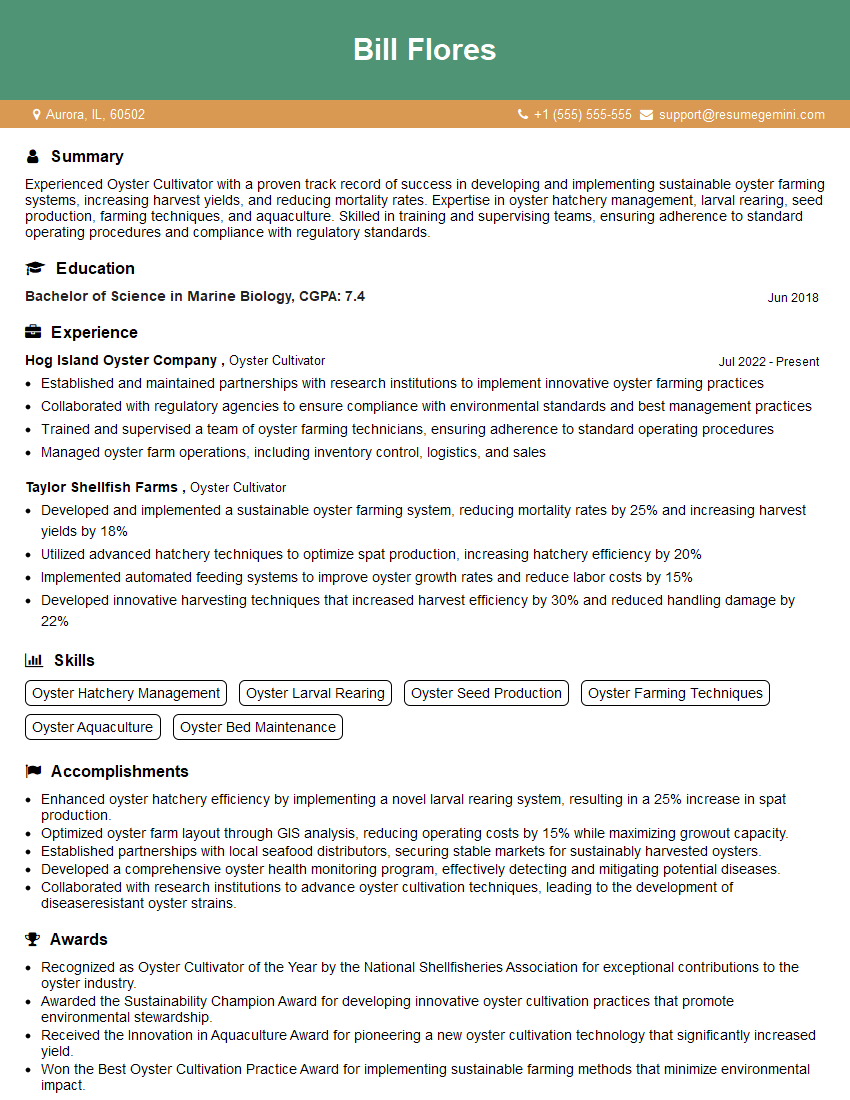
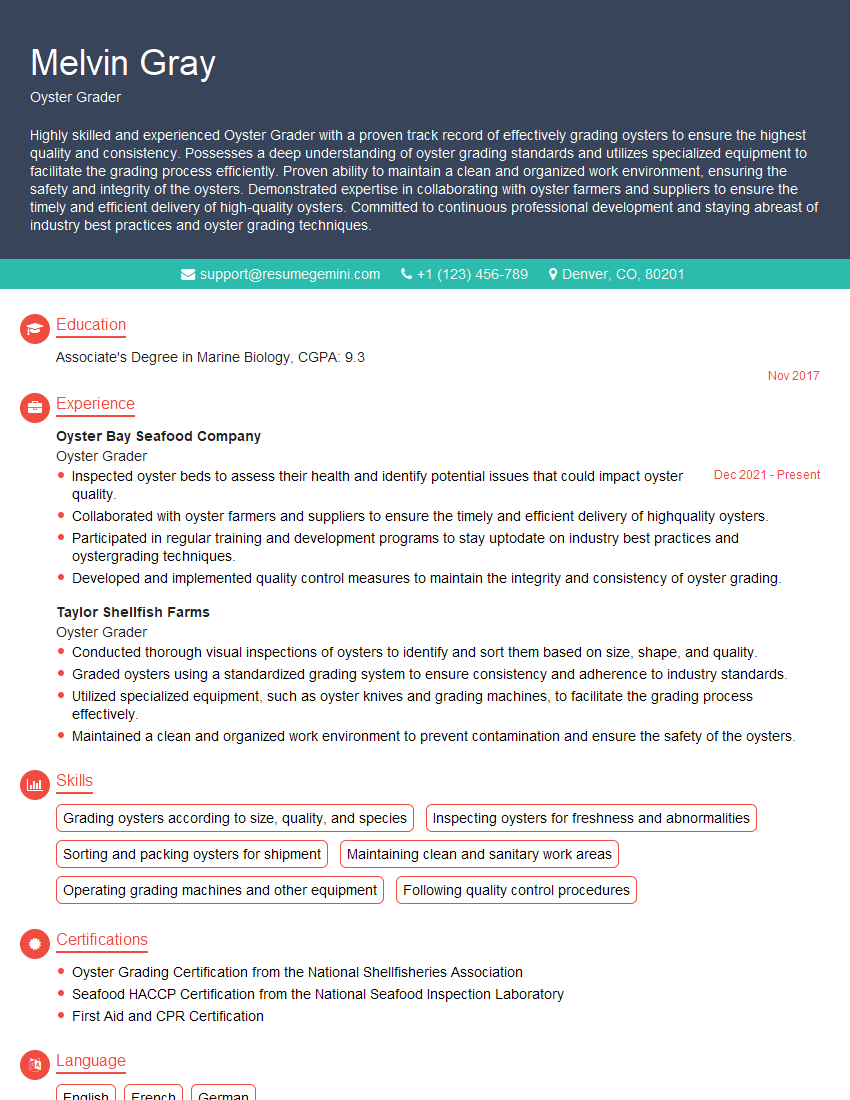
Mastering the art of culling and grading oysters opens doors to a rewarding career in the aquaculture and seafood industry. It demonstrates a keen eye for detail, a commitment to quality, and the ability to work efficiently within established standards. To significantly improve your job prospects, focus on creating an ATS-friendly resume that highlights your skills and experience. ResumeGemini is a trusted resource that can help you build a professional and impactful resume, ensuring your application stands out. Examples of resumes tailored to Culling and Grading Oysters are available to further guide you in showcasing your qualifications.
Explore more articles
Users Rating of Our Blogs
Share Your Experience
We value your feedback! Please rate our content and share your thoughts (optional).
What Readers Say About Our Blog
Very informative content, great job.
good