Are you ready to stand out in your next interview? Understanding and preparing for Cargo Manifestation interview questions is a game-changer. In this blog, we’ve compiled key questions and expert advice to help you showcase your skills with confidence and precision. Let’s get started on your journey to acing the interview.
Questions Asked in Cargo Manifestation Interview
Q 1. Explain the importance of accurate cargo manifestation.
Accurate cargo manifestation is paramount for efficient and secure global trade. Think of it as a detailed inventory list for everything onboard a vessel or aircraft. Without it, imagine the chaos: delays at customs, missing cargo, potential security breaches, and increased operational costs. Accuracy ensures smooth passage through customs, reduces the risk of penalties, and prevents logistical nightmares.
For example, an inaccurate manifest listing the wrong weight of hazardous materials could lead to a serious safety incident. Conversely, a complete and accurate manifest allows customs officials to quickly verify the contents, expediting the process and preventing costly delays.
Q 2. What are the key components of a cargo manifest?
A cargo manifest typically includes several key components: the shipper and consignee details (who is sending and receiving the goods), the mode of transport (air, sea, rail, road), a detailed description of each item (including weight, dimensions, quantity, and HS Code), the declared value of the goods, the packaging details, and any special handling instructions (e.g., fragile, hazardous materials). It also often includes the origin and destination points and relevant documentation such as the bill of lading or air waybill.
- Shipper and Consignee Information: Full names, addresses, and contact details.
- Cargo Description: Precise details of each item, including quantity, weight, dimensions, and HS code (Harmonized System code for classification).
- Marks and Numbers: Unique identifiers for tracking individual packages.
- Packaging Details: Type of packaging used for each item (e.g., cartons, pallets).
- Declared Value: Insured value of the goods for insurance and customs purposes.
- Special Handling Instructions: Any specific requirements for handling the cargo.
Q 3. Describe the different types of cargo manifests.
Cargo manifests aren’t one-size-fits-all; they vary depending on the mode of transport. For instance, an air waybill serves as the manifest for air freight, while ocean freight uses a more extensive document.
- Air Waybill (AWB): This acts as both the receipt for the shipper and the contract of carriage between the shipper and the airline. It contains all the necessary cargo information.
- Ocean Bill of Lading (B/L): A crucial document for sea freight, serving as a receipt for goods, a contract of carriage, and a document of title. It’s more detailed than an AWB, particularly for larger shipments.
- Sea Waybill (SWB): Similar to a B/L, but doesn’t function as a document of title.
- Rail Manifest: Used for cargo transported by rail, detailing the shipments and their routing.
- Road Manifest: Used for goods transported by road, often more concise than other types of manifests.
The specific requirements may also vary based on the type of cargo, with hazardous materials requiring more extensive documentation and stricter adherence to regulations.
Q 4. How do you ensure compliance with international regulations regarding cargo manifestation?
Compliance is crucial. It requires careful attention to detail and a thorough understanding of the regulations governing the specific type of cargo and the route of transport. This involves staying updated on international regulations set by organizations like the International Maritime Organization (IMO) for sea freight, the International Civil Aviation Organization (ICAO) for air freight, and relevant national customs authorities. Implementing a robust cargo management system, using standardized data formats, and providing adequate training to personnel are essential strategies. Regular audits and internal checks help maintain compliance. Failure to comply can lead to severe penalties.
For example, the International Ship and Port Facility Security (ISPS) Code requires specific security measures for vessels and ports, and cargo manifests are vital in complying with these measures. Accurate and timely submission of manifests to customs authorities is also a key part of compliance.
Q 5. What are the consequences of inaccurate or incomplete cargo manifests?
The repercussions of inaccurate or incomplete manifests can be far-reaching. They can range from minor delays and extra paperwork to severe penalties and legal ramifications. Inaccurate information may cause cargo to be held up at customs, leading to significant financial losses due to delays in delivery and storage costs. Incorrectly declared hazardous materials pose serious safety risks. In extreme cases, penalties can include substantial fines, legal action, and even reputational damage for the involved parties.
Imagine a shipment of pharmaceuticals with an incorrect temperature requirement stated in the manifest. The resulting spoilage could lead to substantial financial losses and potential legal liabilities for the shipper.
Q 6. Explain the process of creating a cargo manifest for air freight.
Creating an air freight manifest typically starts with the shipper providing a detailed cargo list to the freight forwarder or airline. This list includes all the necessary information mentioned earlier. The forwarder then verifies the information, ensuring compliance with regulations. This often involves checking hazardous materials declarations, dimensions, and weight. The information is then input into the airline’s system, often electronically, and the AWB is generated. The AWB serves as the air freight manifest, and several copies are prepared—one for the shipper, one for the consignee, and others for customs and the airline.
It’s crucial to use accurate and consistent units of measurement, description, and weight. Any discrepancies can lead to delays and penalties.
Q 7. Explain the process of creating a cargo manifest for ocean freight.
The process for ocean freight is more complex. It begins with the shipper providing a detailed cargo list to the freight forwarder or shipping line. The forwarder then prepares the necessary documentation, including the bill of lading. The shipping line verifies the details, ensuring compliance with regulations and checks for dangerous goods declarations. The B/L, acting as the primary document, includes a detailed description of the cargo, packaging, weight, and handling instructions. Multiple copies are issued: one for the shipper, one for the consignee, and several for customs and the shipping line. This process often involves a pre-carriage and on-carriage element, adding to the complexity.
Accuracy is paramount in avoiding delays at port, potential fines, and ensuring the safe and timely delivery of goods. Any discrepancy can lead to significant delays and costs.
Q 8. How do you handle discrepancies between the cargo manifest and the actual shipment?
Discrepancies between the cargo manifest and the actual shipment are a serious issue, potentially leading to delays, fines, and even safety hazards. Handling them requires a systematic approach. First, we identify the discrepancy – is it a missing item, an incorrect weight, a different quantity than declared, or a mismatch in description? The process then involves a thorough investigation. This includes checking the original documentation provided by the shipper, physically verifying the cargo against the manifest, and potentially reviewing CCTV footage or other tracking data, if available. Depending on the nature and severity of the discrepancy, we then work with the shipper and carrier to rectify the situation. This might involve issuing a correction note, amending the manifest electronically, or even physically adjusting the shipment. Documentation of every step is crucial for auditing purposes and to avoid future issues.
For example, if a shipment of electronics lists 100 units but only 98 are found, we’d investigate. Was there a packing error? Were two units damaged and discarded? We would document our findings, contact the shipper, and agree on a resolution, possibly issuing a credit note for the missing units. Transparent communication with all parties is key throughout the process.
Q 9. What are the different data elements included in a cargo manifest?
A cargo manifest is a comprehensive inventory of goods being transported. It’s essentially a detailed record of everything on board a vessel, aircraft, or other mode of transport. The data elements included are varied, but generally cover:
- Shipper and Consignee Details: Full names, addresses, and contact information.
- Carrier Information: Name and identification of the transporting company.
- Cargo Description: Precise and detailed description of each item, including HS Codes (Harmonized System codes for customs classification).
- Quantity: Number of units, weight (gross and net), volume.
- Packaging Details: Type of packaging, number of packages.
- Marks and Numbers: Identification marks and numbers on individual packages.
- Origin and Destination: Locations of the shipment’s start and end points.
- Freight Details: Type of freight, terms of shipment, and any special handling instructions.
- Dangerous Goods Declaration (if applicable): Detailed information about hazardous materials.
- Documents: References to accompanying shipping documents, such as bills of lading or commercial invoices.
Think of it like a detailed shopping list, but instead of groceries, it’s everything that is being shipped, meticulously described for tracking and customs compliance.
Q 10. How do you manage hazardous materials in a cargo manifest?
Managing hazardous materials (HazMat) in a cargo manifest is critical for safety and legal compliance. It requires adherence to strict regulations like those set by the International Maritime Organization (IMO) or International Air Transport Association (IATA). The manifest must clearly identify each hazardous item using its proper UN number and class, as per the Globally Harmonized System of Classification and Labelling of Chemicals (GHS). Additionally, it must specify the quantity, packaging type, and any special handling requirements, such as ventilation or temperature control. Emergency response information and safety data sheets (SDS) must also be readily available. Failure to properly declare and manage HazMat can result in significant penalties, delays, and potentially serious accidents.
For example, a shipment containing lithium batteries would require a detailed description including the UN number (UN 3480), the correct class (Class 9 – Miscellaneous dangerous goods), and specific packaging details that meet IATA standards. The manifest would also clearly indicate the quantity of batteries and any special handling requirements for air transport, such as preventing short circuits.
Q 11. Describe your experience with electronic cargo manifest systems.
My experience with electronic cargo manifest systems is extensive. I’ve worked with various platforms, from simple database systems to highly sophisticated, integrated solutions that interface with customs and other regulatory bodies. These systems offer significant advantages over paper-based manifests, including increased efficiency, reduced errors, improved traceability, and enhanced security. I’m proficient in data entry, validation, and reporting within these systems, ensuring accuracy and compliance. I understand the importance of data integrity and have experience in troubleshooting technical issues and ensuring data backup and recovery processes are in place.
For example, I’ve used systems that automate the generation of manifests, integrate with shipping schedules and tracking systems, and provide real-time updates on shipment status. This reduces manual data entry, minimizes errors, and provides a complete audit trail, improving overall efficiency and transparency.
Q 12. How do you ensure the security and integrity of cargo manifests?
Ensuring the security and integrity of cargo manifests is paramount. This involves a multi-layered approach. First, access control to the manifest system is crucial, with user authentication and authorization mechanisms in place to limit access based on roles and responsibilities. Data encryption during transmission and storage is necessary to protect sensitive information from unauthorized access. Regular data backups and disaster recovery plans are essential to prevent data loss. Furthermore, digital signatures and blockchain technology can be implemented to enhance the authenticity and tamper-proof nature of the manifest. Regular audits and system checks help identify and address any vulnerabilities.
Think of it like securing a bank vault – multiple layers of protection are needed. Strong passwords, encryption, regular backups, and access controls are all part of safeguarding the information within the manifest.
Q 13. Explain the role of the shipper, carrier, and consignee in cargo manifestation.
The shipper, carrier, and consignee all play distinct yet interconnected roles in cargo manifestation.
- Shipper: The shipper is responsible for creating the initial cargo manifest, providing accurate and complete information about the goods being shipped. They are ultimately responsible for the accuracy of the information provided.
- Carrier: The carrier (e.g., shipping line, airline) is responsible for transporting the cargo and verifying the accuracy of the manifest against the actual shipment. They may also make adjustments to the manifest as needed, but always with appropriate documentation and authorization from the shipper.
- Consignee: The consignee is the recipient of the goods. While they are not directly involved in the creation of the manifest, they are stakeholders in ensuring its accuracy, as any discrepancies can impact the receipt and condition of their goods.
Imagine a relay race: The shipper provides the initial information; the carrier carries the baton (cargo) and updates the information; and the consignee receives the final result. Each party plays a crucial role in ensuring the smooth transfer and accuracy of the information.
Q 14. What are the best practices for data entry in cargo manifestation?
Best practices for data entry in cargo manifestation focus on accuracy, consistency, and efficiency. This involves:
- Using standardized formats and templates: This ensures consistency and reduces errors.
- Double-checking all entries: Independent verification helps minimize mistakes.
- Using data validation tools: These tools help ensure accuracy and consistency.
- Providing adequate training to staff: Training on proper data entry procedures is essential.
- Regularly reviewing and updating the manifest: Any changes or corrections should be documented.
- Employing barcode or RFID scanning technology: This can automate data entry and reduce manual errors.
Data entry is often the foundation of the entire process, so rigorous attention to detail, standard operating procedures, and use of technology are essential to ensuring the overall accuracy and success of cargo shipment.
Q 15. How do you handle amendments or corrections to a cargo manifest?
Amendments or corrections to a cargo manifest are handled through a formal process, ensuring accuracy and regulatory compliance. This typically involves issuing an amendment document, clearly referencing the original manifest number and date. The amendment details the specific changes, whether it’s a correction to the description of goods, weight, quantity, or consignee details. Crucially, all parties involved – shipper, carrier, and receiver – need to be notified and agree upon the amendment. For example, if a shipment of electronics originally listed as 100 units is corrected to 98 due to damage, a formal amendment will be created and signed off by all stakeholders. Failure to properly document amendments can lead to significant delays and potential legal issues. The process usually involves using a standardized form, often provided by the carrier or dictated by relevant regulations, like those from the International Maritime Organization (IMO).
The amended manifest replaces the original, or at least functions as a vital addendum to it. In electronic systems, this might involve overwriting the previous manifest version with the amended one, keeping a clear audit trail of all changes. Digital systems often have version control to track every modification easily.
Career Expert Tips:
- Ace those interviews! Prepare effectively by reviewing the Top 50 Most Common Interview Questions on ResumeGemini.
- Navigate your job search with confidence! Explore a wide range of Career Tips on ResumeGemini. Learn about common challenges and recommendations to overcome them.
- Craft the perfect resume! Master the Art of Resume Writing with ResumeGemini’s guide. Showcase your unique qualifications and achievements effectively.
- Don’t miss out on holiday savings! Build your dream resume with ResumeGemini’s ATS optimized templates.
Q 16. What are the common challenges you face in cargo manifestation?
Common challenges in cargo manifestation include inaccurate or incomplete data provided by shippers, leading to delays and discrepancies. Data entry errors are another significant hurdle, often amplified by manual processes. Keeping up with constantly evolving regulations across different countries and jurisdictions presents a substantial challenge, requiring continuous learning and adaptation. Integration issues between different systems used by various stakeholders (shippers, carriers, customs) can create bottlenecks and inconsistencies. For example, a mismatch between the data in the shipper’s system and the carrier’s system could delay customs clearance. Finally, managing large volumes of data, especially during peak seasons, can strain resources and require sophisticated IT infrastructure and processes.
Another frequent problem is dealing with last-minute changes or unforeseen circumstances during transit, necessitating quick and accurate amendment of the manifest. For instance, a sudden need to reroute a shipment due to weather conditions would necessitate a swift manifest adjustment.
Q 17. Describe your experience with different cargo manifest formats.
My experience encompasses a variety of cargo manifest formats, including both paper-based and electronic systems. Paper-based manifests, while still used in some contexts, are susceptible to errors and are harder to manage efficiently. Electronic manifests, on the other hand, offer superior speed, accuracy, and trackability. I have worked extensively with formats like XML, JSON, and various carrier-specific proprietary formats. Each format has its own structure and data fields, demanding careful attention to detail to ensure compliance. For instance, some formats may include specific fields for hazardous materials declaration or temperature-sensitive goods, requiring meticulous accuracy to comply with safety and transportation regulations. Understanding these nuances is critical to ensuring seamless processing across different systems.
Q 18. How do you manage large volumes of cargo manifests efficiently?
Managing large volumes of cargo manifests efficiently requires a combination of technology and well-defined processes. This begins with implementing a robust Cargo Management System (CMS). A well-designed CMS automates many tasks, such as data validation, error checking, and report generation. Data entry automation, where feasible, significantly reduces manual labor and potential errors. Implementing barcode and RFID technologies can speed up handling and improve data accuracy. Furthermore, employing data analytics tools allows us to identify trends and potential issues, improving future processing efficiency. Finally, clear communication and collaboration between departments and stakeholders are vital to ensure smooth workflow and avoid bottlenecks.
An example might be using an automated system to match inbound shipping documents with their corresponding manifest entries. This reduces manual verification time and speeds up cargo clearance.
Q 19. How do you prioritize tasks to ensure timely processing of cargo manifests?
Prioritizing cargo manifest processing involves several strategies. Time-sensitive shipments, like perishable goods or those with strict delivery deadlines, always take precedence. High-value cargo or those with potential customs complications also demand immediate attention. This often involves employing a task management system that clearly indicates urgency and prioritization levels. The use of a system that allows for real-time tracking allows for immediate response to potential issues. In some cases, a combination of first-in, first-out (FIFO) and priority-based task allocation is employed to balance efficiency with urgency. Regular review and adjustment of prioritization strategies based on performance data and seasonal variations are crucial.
A scenario might involve prioritizing a shipment of medical supplies destined for a disaster relief area over other, less urgent shipments.
Q 20. How do you stay updated on changes in cargo manifestation regulations?
Staying updated on changes in cargo manifestation regulations requires a multi-pronged approach. This involves regularly monitoring government websites and regulatory bodies such as the IMO for updates and new legislation. Subscription to industry publications and newsletters provides valuable insights into emerging trends and compliance requirements. Attending industry conferences and workshops offers opportunities for networking and learning from experienced professionals. Maintaining a strong network of contacts within the industry ensures quick access to essential information. Finally, regular internal training sessions help keep our team informed about the latest developments and best practices.
Q 21. Explain your understanding of Incoterms and their relevance to cargo manifestation.
Incoterms (International Commercial Terms) are a set of standardized trade terms published by the International Chamber of Commerce (ICC). They define the responsibilities of buyers and sellers in an international transaction, including aspects related to cargo delivery and risk transfer. Incoterms directly impact cargo manifestation because they dictate who is responsible for various aspects of the shipping process, including insurance, freight costs, and documentation. For instance, an Incoterm like ‘CIF’ (Cost, Insurance, and Freight) means the seller is responsible for arranging the shipment and insurance up to the named port of destination, influencing the information included in the cargo manifest. Conversely, an Incoterm like ‘EXW’ (Ex Works) places greater responsibility on the buyer for arranging the transport, impacting the manifest data accordingly.
Understanding the relevant Incoterm is critical for accurate manifest creation as it determines the party responsible for providing specific data and ensures the manifest accurately reflects the agreed-upon terms of the sale contract. For example, a manifest for a shipment under ‘CIF’ will include details of the insurance policy while a manifest under ‘EXW’ may not.
Q 22. How do you use cargo manifest data for reporting and analysis?
Cargo manifest data is a goldmine for reporting and analysis, providing crucial insights into operational efficiency, cost management, and compliance. We use this data to generate a variety of reports, from simple shipment summaries to complex analyses of shipping patterns and trends.
- Shipment Tracking and Performance: We track shipment arrival and departure times, identifying delays and bottlenecks. This helps pinpoint areas needing improvement in our logistics chain, potentially saving time and money.
- Inventory Management: Analyzing manifest data allows us to accurately track inventory levels, predict future demand, and optimize storage space. This prevents stockouts and minimizes warehousing costs.
- Cost Analysis: We can analyze transportation costs per shipment, identifying patterns and opportunities for negotiation with carriers. We also compare different transportation modes to determine the most cost-effective solutions.
- Compliance Reporting: Cargo manifests are essential for customs and regulatory compliance. We use the data to generate reports demonstrating adherence to relevant regulations, preventing potential fines and delays.
- Predictive Analytics: By using sophisticated data analysis techniques, we can predict future shipping demands, optimize resource allocation, and improve overall supply chain planning.
For example, a sudden surge in delays from a specific port might indicate a need to explore alternative routes or negotiate improved service level agreements with the carrier.
Q 23. What software or systems are you familiar with for cargo manifestation?
My experience encompasses a range of software and systems used for cargo manifestation. This includes:
- Enterprise Resource Planning (ERP) systems: Systems like SAP and Oracle often integrate cargo manifestation modules, centralizing data and streamlining processes.
- Transportation Management Systems (TMS): TMS platforms like Blue Yonder and Oracle Transportation Management provide functionalities for creating, managing, and tracking cargo manifests, often with integrated reporting and analytics.
- Customs and Border Protection (CBP) systems: I’m proficient in using various CBP portals and systems for submitting electronic manifests and complying with import/export regulations. This includes systems like Automated Commercial Environment (ACE).
- Specialized Cargo Manifest Software: Many specialized software solutions cater specifically to cargo manifestation needs, offering features like automated data entry, validation, and tracking.
- Spreadsheet Software (Excel, Google Sheets): While not ideal for large-scale operations, spreadsheets can be useful for basic manifest creation and analysis in smaller organizations.
The specific system used often depends on the size and complexity of the organization and its integration needs.
Q 24. How do you collaborate with other departments to ensure smooth cargo manifestation processes?
Collaboration is paramount in ensuring smooth cargo manifestation processes. I actively engage with various departments, including:
- Operations: Close coordination with operations ensures accurate data entry and timely submission of manifests. We regularly discuss challenges and optimize processes to improve efficiency.
- Sales & Customer Service: Working with these departments ensures that customer requirements are incorporated into manifest creation, avoiding discrepancies and delays.
- Finance: Collaboration with finance is crucial for cost tracking and analysis, allowing us to identify areas for cost savings and optimize budgeting.
- Legal & Compliance: Regular communication with legal ensures compliance with all relevant regulations and minimizes the risk of penalties.
- IT: IT support is vital for maintaining and updating software systems, ensuring data security, and troubleshooting technical issues.
For instance, I might work with operations to implement a new barcode scanning system to reduce manual data entry errors, or with legal to ensure compliance with new international regulations.
Q 25. Describe a time you had to solve a problem related to a cargo manifest discrepancy.
Once, a significant discrepancy arose in a shipment of perishable goods to a major retailer. The manifest indicated 1000 crates, but the receiving warehouse reported only 950. This posed a significant problem as the missing crates contained time-sensitive products.
My approach involved a methodical investigation:
- Verification: I immediately verified the manifest data against the shipping documentation and the warehouse’s receiving reports.
- Communication: I contacted the carrier and the warehouse to gather further information and ascertain the status of the missing crates.
- Tracking: Using the shipment tracking number, I followed the shipment’s journey to identify potential points of loss or damage.
- Analysis: I analyzed all available data to identify the most likely cause—in this case, it turned out to be a loading error at the origin warehouse.
- Resolution: I worked with all involved parties to find the missing crates, ultimately leading to their recovery and the timely delivery of the remaining goods.
This experience highlighted the importance of meticulous record-keeping, robust communication, and a systematic approach to resolving discrepancies.
Q 26. How do you handle situations with missing or incomplete information in cargo manifests?
Missing or incomplete information in cargo manifests is a serious issue that can lead to delays, penalties, and even the loss of goods. Our protocol involves several steps:
- Immediate Investigation: We immediately investigate the source of the missing data, contacting relevant parties such as the shipper, carrier, or consignee.
- Data Recovery: We attempt to recover the missing information through various means, such as reviewing supporting documentation, contacting the shipper for clarification, or using tracking information to piece together the details.
- Documentation: We document all communication and efforts to rectify the situation. This ensures accountability and aids in future problem prevention.
- Escalation: If the missing information remains unobtainable, we escalate the issue to relevant stakeholders and determine the best course of action (potential delays, alternative solutions, etc.).
- Preventive Measures: Following resolution, we review our processes to identify the root cause of the missing data and implement changes to prevent recurrence. This could involve enhancing data entry protocols or improving communication channels.
This systematic approach minimizes the impact of missing information while improving overall process efficiency.
Q 27. What are your strategies for preventing errors in cargo manifestation?
Error prevention in cargo manifestation requires a multi-faceted approach focusing on both process improvement and technological solutions:
- Data Validation: Implementing data validation rules and checks during data entry to ensure data accuracy and consistency. For example, checks for correct weight, dimensions, and HS codes.
- Automated Data Entry: Utilizing technologies like barcode scanners and automated data capture systems to reduce manual data entry and minimize human error.
- Regular Audits: Conducting regular audits of manifest data to identify and correct discrepancies before they escalate into major issues.
- Training and Education: Providing comprehensive training to staff involved in cargo manifestation, ensuring they understand the importance of accuracy and the procedures involved.
- Standardized Procedures: Establishing and implementing clear, standardized procedures for creating and managing cargo manifests. This ensures consistency and reduces ambiguity.
- System Integrations: Integrating cargo manifestation systems with other relevant systems to automate data flow and reduce manual intervention. This reduces errors caused by data transfers between different systems.
A proactive, multi-pronged approach like this is significantly more effective than simply reacting to errors after they occur.
Key Topics to Learn for Cargo Manifestation Interview
- Understanding Cargo Manifest Structure: Learn the components of a cargo manifest, including shipper and consignee details, cargo description, weight, volume, and relevant documentation. Understand the different types of manifests (e.g., air, sea, rail).
- Cargo Handling Processes: Familiarize yourself with the entire process, from cargo acceptance and documentation to loading, tracking, and delivery. Understand the roles and responsibilities of different stakeholders involved.
- International Regulations and Compliance: Gain knowledge of relevant international regulations and conventions (e.g., customs procedures, safety regulations, dangerous goods handling) related to cargo manifestation.
- Data Entry and Accuracy: Master the techniques for accurate and efficient data entry into cargo manifest systems. Understand the importance of data validation and error correction.
- Manifest Management Systems: Become familiar with different software and technologies used for managing cargo manifests. Understanding the functionalities and limitations of these systems is crucial.
- Problem-Solving and Troubleshooting: Practice identifying and resolving common issues related to cargo manifestation, such as discrepancies in documentation, missing information, and delays in cargo handling.
- Security and Safety Procedures: Understand the security protocols and safety measures related to cargo handling and manifest management. This includes recognizing and mitigating potential risks.
- Reporting and Analysis: Learn how to generate reports from manifest data and analyze this information to identify trends and improve efficiency.
Next Steps
Mastering cargo manifestation opens doors to exciting opportunities in logistics and international trade. A strong understanding of these processes is highly valued by employers, leading to career advancement and increased earning potential. To maximize your job prospects, create an ATS-friendly resume that highlights your skills and experience effectively. ResumeGemini is a trusted resource to help you build a professional and impactful resume. They provide examples of resumes tailored to Cargo Manifestation to give you a head start. Take the next step towards your dream career today!
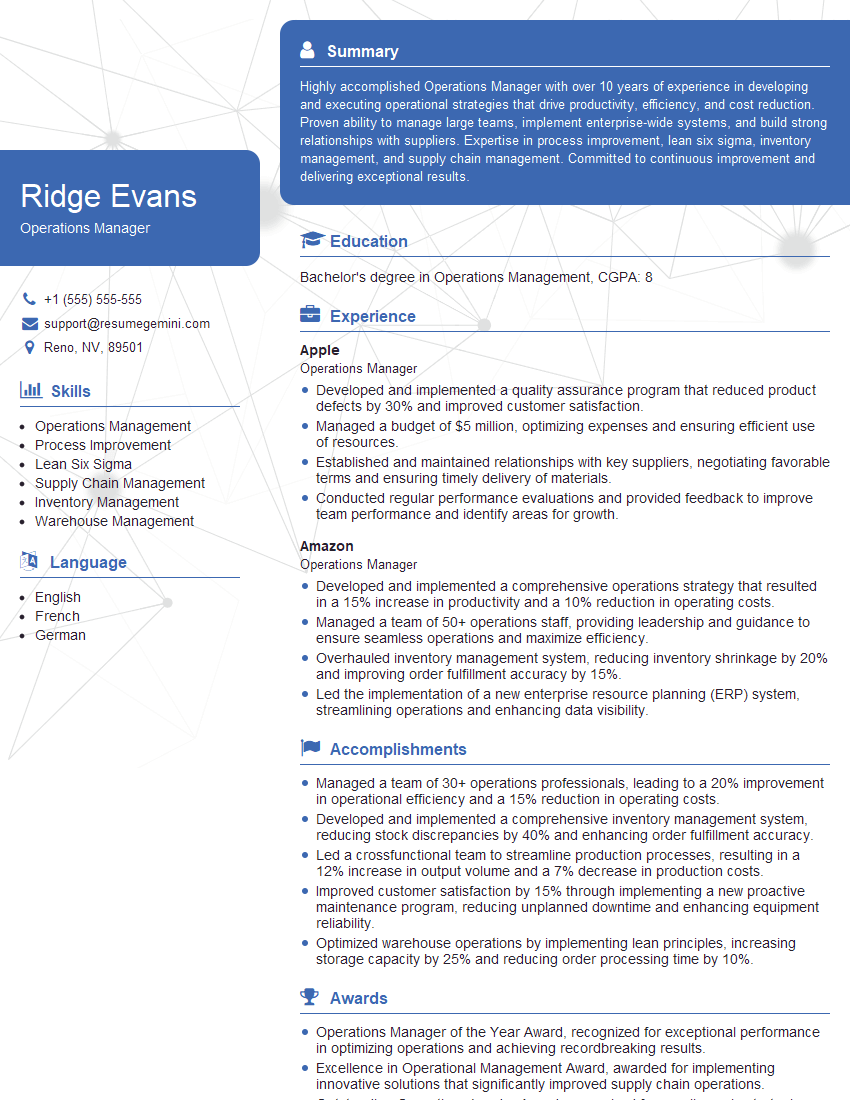
Operations Manager Resume Sample
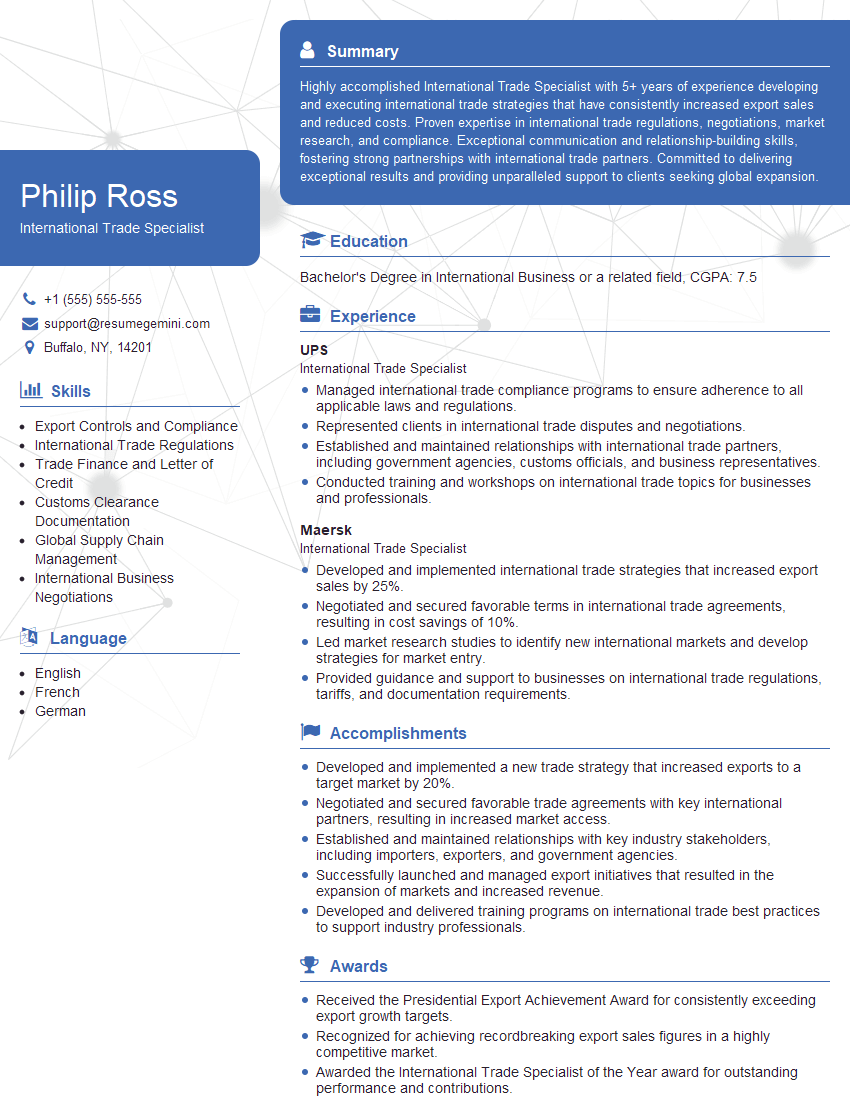
International Trade Specialist Resume Sample

Logistics Manager Resume Sample
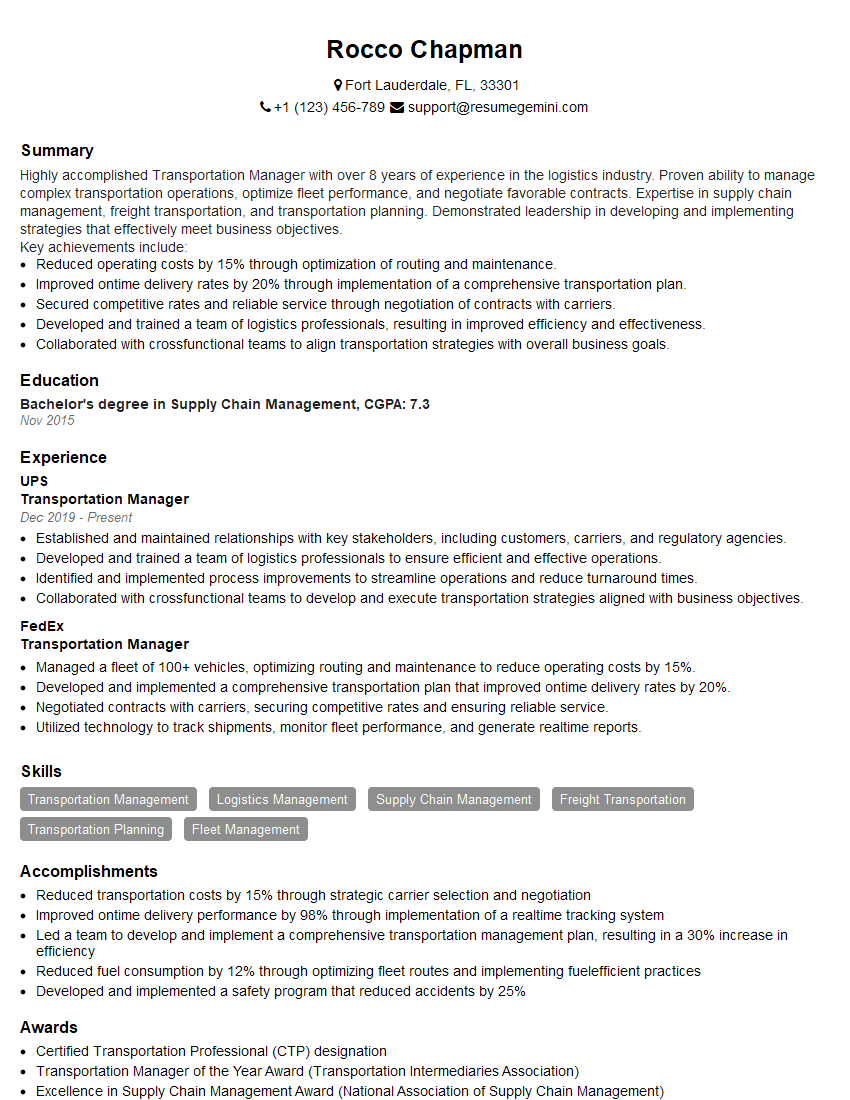
Transportation Manager Resume Sample

Warehouse Manager Resume Sample
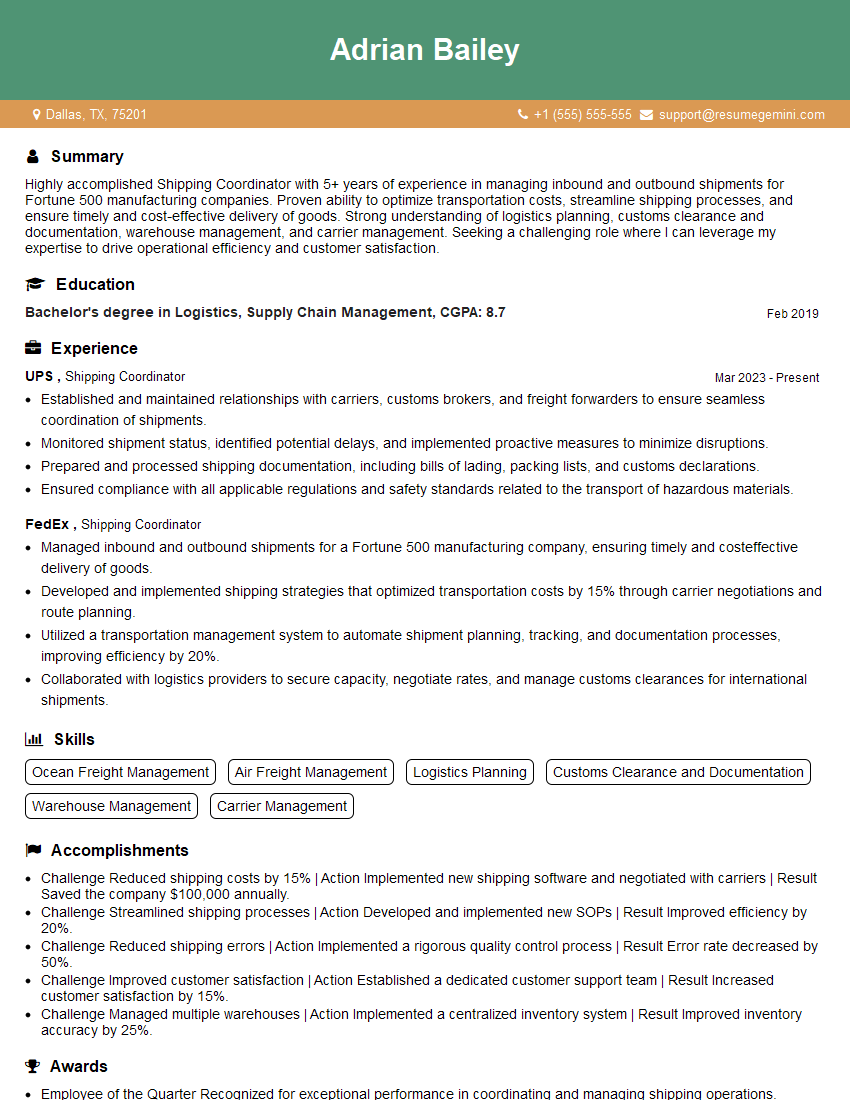
Shipping Coordinator Resume Sample
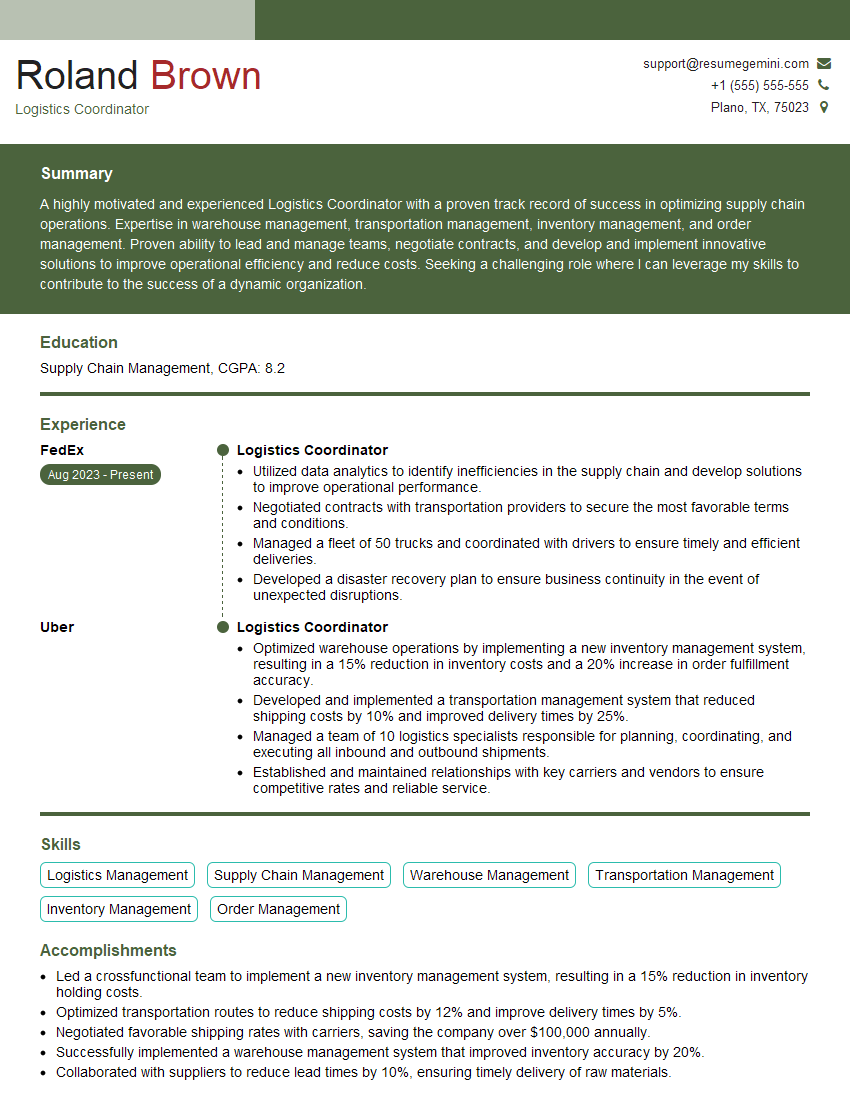
Logistics Coordinator Resume Sample
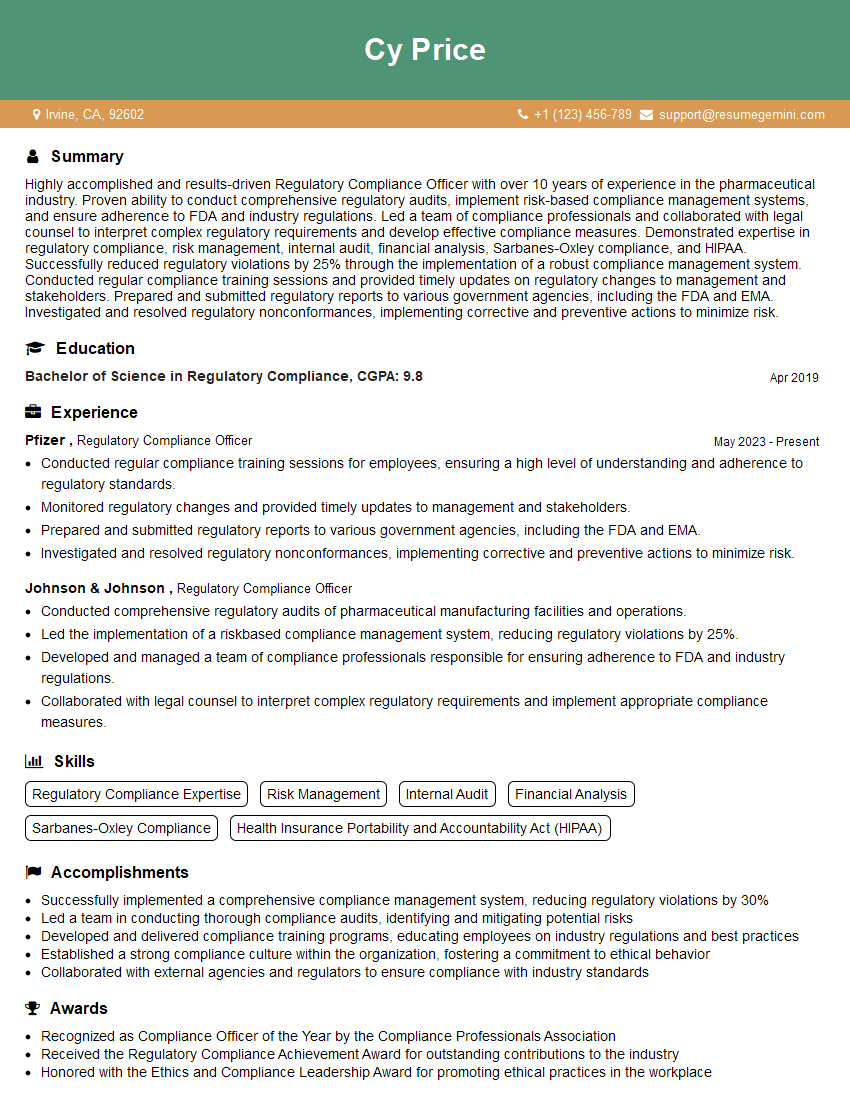
Regulatory Compliance Officer Resume Sample
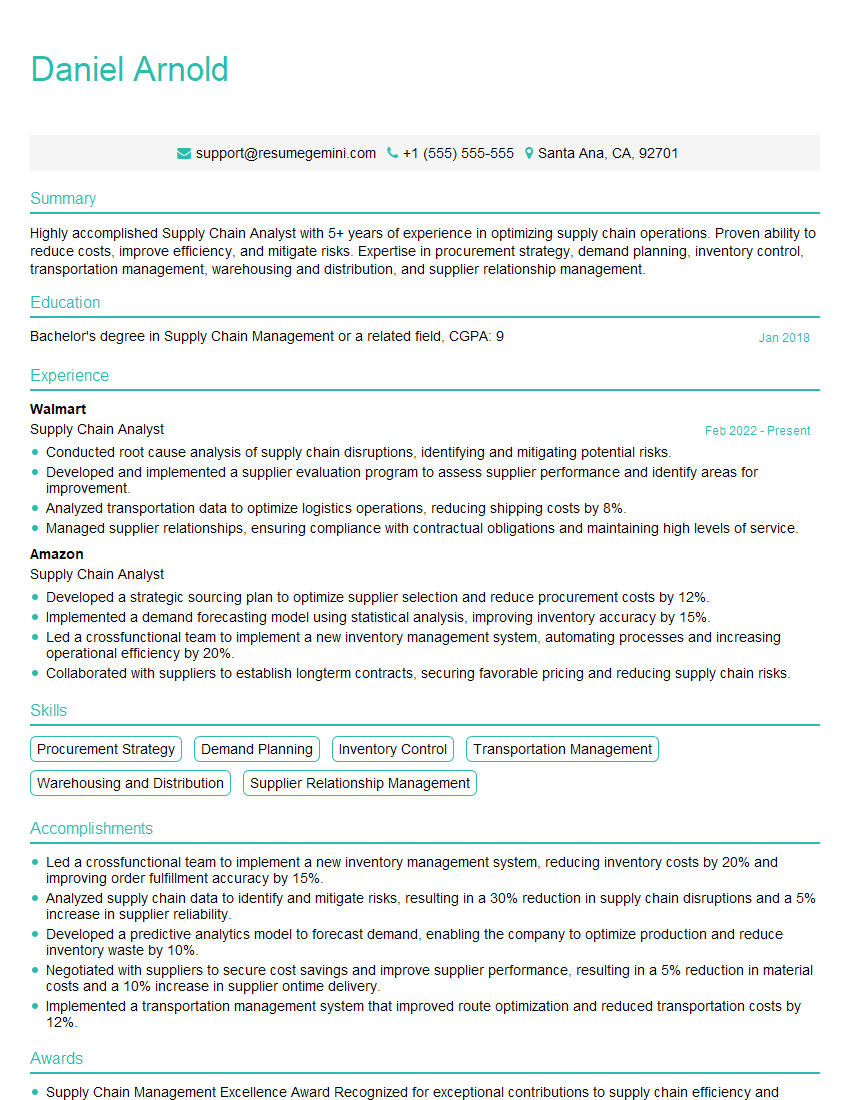
Supply Chain Analyst Resume Sample

Customs Broker Resume Sample
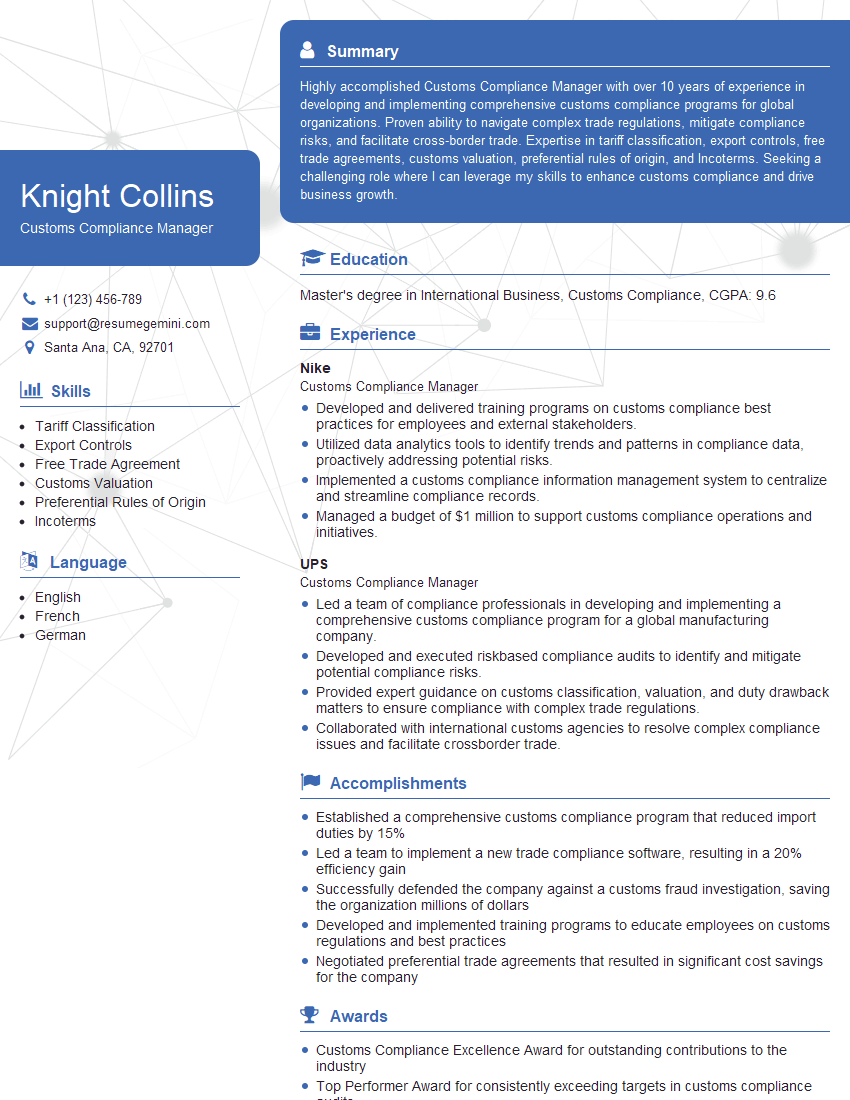
Customs Compliance Manager Resume Sample
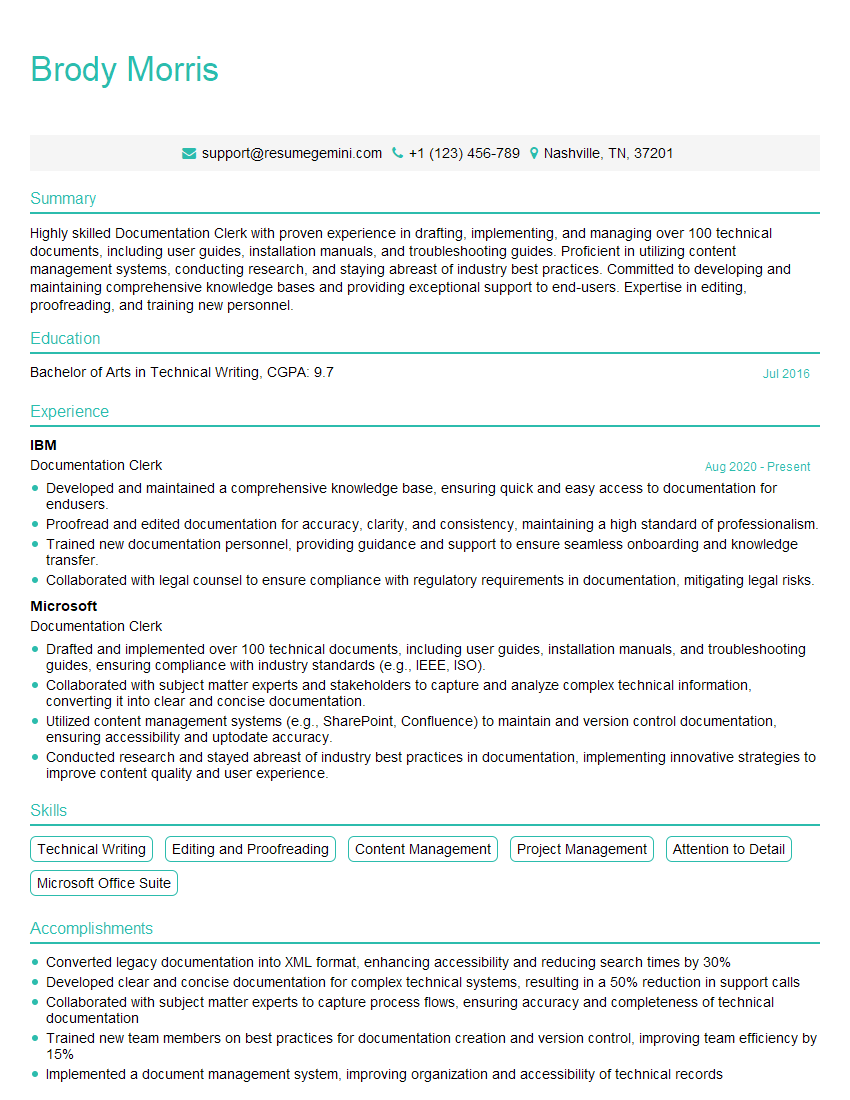
Documentation Clerk Resume Sample
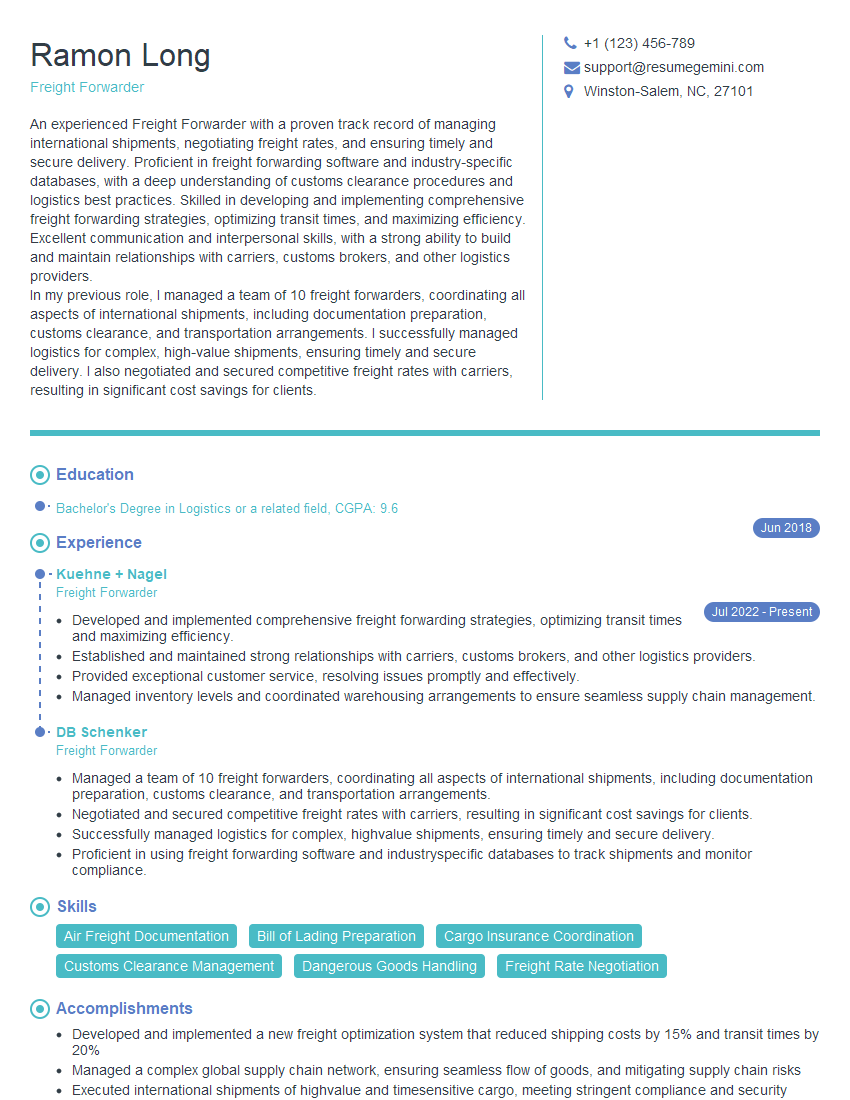
Freight Forwarder Resume Sample
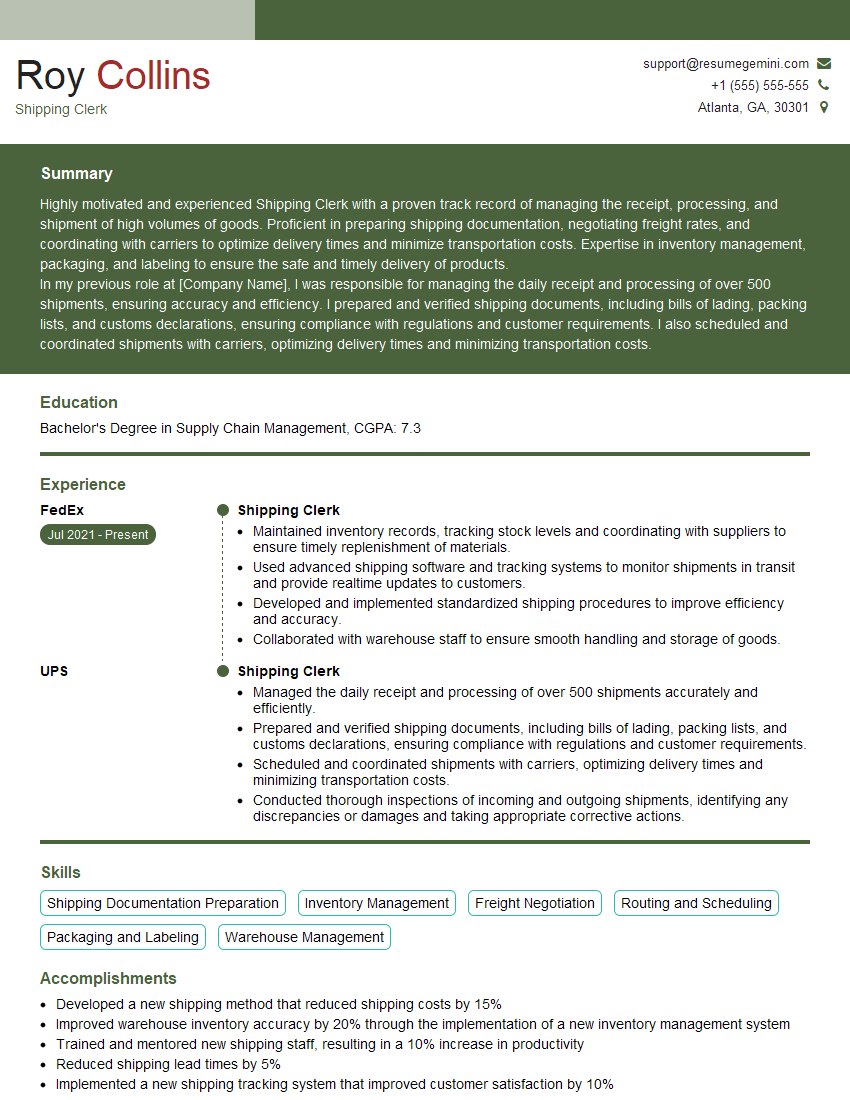
Shipping Clerk Resume Sample
Explore more articles
Users Rating of Our Blogs
Share Your Experience
We value your feedback! Please rate our content and share your thoughts (optional).
What Readers Say About Our Blog
Very informative content, great job.
good