Feeling uncertain about what to expect in your upcoming interview? We’ve got you covered! This blog highlights the most important Carpentry Tools and Techniques interview questions and provides actionable advice to help you stand out as the ideal candidate. Let’s pave the way for your success.
Questions Asked in Carpentry Tools and Techniques Interview
Q 1. What are the different types of wood commonly used in carpentry?
The choice of wood in carpentry depends heavily on the project’s requirements – strength, durability, aesthetics, and budget. Some commonly used woods include:
- Hardwoods: These are denser and more durable, ideal for furniture and flooring. Examples include oak (strong, durable, beautiful grain), maple (hard, smooth, light-colored), cherry (rich reddish-brown, attractive grain), walnut (dark, luxurious, strong), and mahogany (rich reddish-brown, prized for its beauty and workability).
- Softwoods: Generally less dense and easier to work with, often used for framing, construction, and less demanding projects. Examples include pine (affordable, versatile, readily available), fir (strong, durable, good for framing), spruce (lightweight, strong, resonant, used for musical instruments), and cedar (naturally resistant to rot and insects, used for outdoor projects).
Choosing the right wood involves considering factors like the project’s intended use, the desired aesthetic, and your budget. For example, you wouldn’t use expensive mahogany for a simple workbench but might for a fine piece of furniture. Similarly, pine’s affordability makes it suitable for many projects, but its softness limits its use in high-wear areas.
Q 2. Explain the purpose and use of a hand saw versus a power saw.
Hand saws and power saws both cut wood, but they differ significantly in their power source, precision, and application.
- Hand Saw: A hand saw relies on manual effort. It’s great for precise cuts in intricate work, where a power saw’s speed and power could be detrimental. They are more portable and require no electricity. Think of intricate dovetails – a hand saw’s finesse is essential. Different hand saws exist for various cuts (rip, crosscut, coping).
- Power Saw: Power saws use electricity or a gas engine for power. This significantly increases cutting speed and efficiency, making them ideal for larger projects or repetitive cutting. However, they require safety precautions and careful handling to prevent accidents. Examples include circular saws (for straight cuts), jigsaws (for curves), and miter saws (for angled cuts).
The choice between a hand saw and a power saw depends on the project. For delicate work or where precision is paramount, a hand saw is better. For speed and efficiency on larger-scale projects, a power saw is more practical. Many carpenters use both regularly, combining their respective advantages.
Q 3. Describe the proper techniques for using a chisel and mallet.
Chisels and mallets are essential hand tools for shaping and carving wood. Proper technique is crucial for safety and efficiency.
- Preparing the wood: Ensure the wood is securely clamped to prevent movement during cutting.
- Chisel grip: Hold the chisel firmly, close to the blade, with your index finger resting on the bevel for control. The grip should be relaxed but firm.
- Mallet strike: Use a mallet made of hardwood or rubber to strike the chisel’s head. Aim for a controlled, even blow, avoiding glancing blows which can cause the chisel to slip or break.
- Cutting angle: The cutting angle of the chisel varies depending on the type of cut; always maintain the appropriate angle.
- Paring cuts: For shaping, use a series of small, controlled cuts to gradually remove wood. Avoid forcing the chisel, which can lead to damage or injury.
- Safety: Always use sharp chisels. Dull chisels require more force, increasing the risk of accidents. Wear safety glasses to protect your eyes from flying wood chips.
Imagine sculpting wood – small, precise cuts with the chisel are essential to achieve the desired shape. The mallet delivers the controlled force to accomplish this without damaging the workpiece or injuring yourself.
Q 4. What safety precautions should be taken when operating power tools?
Safety is paramount when using power tools. Negligence can lead to serious injury. Key precautions include:
- Eye protection: Always wear safety glasses or a face shield to protect your eyes from flying debris.
- Hearing protection: Power tools can be very loud; earplugs or earmuffs are essential to protect your hearing.
- Dust mask or respirator: Wood dust is a health hazard; use a dust mask, especially when working with hardwoods or using power sanders.
- Proper clothing: Wear close-fitting clothing that won’t get caught in moving parts. Avoid loose sleeves, jewelry, or scarves.
- Secure footing: Ensure you have a stable working area and a firm footing to prevent falls.
- Tool maintenance: Keep tools sharp and properly maintained. A dull tool requires more force, increasing the risk of kickback.
- Disconnect power: Always disconnect the power tool before making adjustments, changing blades, or cleaning.
- Familiarization: Thoroughly read and understand the manufacturer’s instructions before operating any power tool.
I always remind my apprentices that safety isn’t just about following rules; it’s a mindset. A relaxed attitude around power tools can have devastating consequences. Safety first is not a slogan; it’s a commitment.
Q 5. How do you select the appropriate nails or screws for a specific application?
Selecting the right fasteners—nails or screws—depends on the wood type, thickness, application, and desired holding power.
- Wood type: Harder woods require stronger fasteners, often longer screws or larger nails.
- Wood thickness: The length of the fastener should be long enough to penetrate the wood sufficiently but not protrude through the other side.
- Application: Fine woodworking might use small, fine-threaded screws to minimize visible holes, whereas framing uses larger nails for strength and speed.
- Holding power: Screws generally offer better holding power than nails, especially in softer woods, due to their threads which grip the wood fibres.
For example, thin plywood might use small brads or finishing nails, while a sturdy wooden frame would benefit from thicker, longer nails or structural screws. I always consider the long-term strength required – a loose fastener can compromise the entire project.
Q 6. Explain the process of measuring and cutting lumber accurately.
Accurate measuring and cutting are fundamental to carpentry. Imprecise cuts result in sloppy work.
- Measuring: Use a measuring tape to accurately determine the required length. Always double-check your measurements to avoid mistakes. Marking the cut line clearly on the lumber is also important.
- Marking: Use a pencil or marking gauge to create a clear and precise cut line. A sharp pencil makes a thin line for more precise cutting.
- Cutting: Choose the appropriate saw (hand saw or power saw) based on the type of cut required. Follow the cut line carefully, and maintain a consistent pace.
- Checking: After cutting, double-check the length of the cut piece to ensure accuracy. Minor adjustments can sometimes be necessary.
Imagine building a cabinet. A slight error in the width of one piece will affect the entire assembly. Precise measuring and cutting are not optional but are core components of successful carpentry.
Q 7. Describe your experience with different joinery techniques (e.g., mortise and tenon, dovetail).
Joints are the heart of carpentry; they determine the strength and aesthetics of a project. My experience includes various joinery techniques:
- Mortise and Tenon: This is a strong, traditional joint where a tenon (projection) fits into a mortise (hole). It’s perfect for table legs, chair construction, and sturdy frames. I’ve used it extensively in building furniture, appreciating its simplicity and strength.
- Dovetail: This interlocking joint, renowned for its strength and beauty, is often used in drawer construction and high-quality cabinetry. The interlocking nature prevents the joint from coming apart, adding substantial strength and a distinctive aesthetic. I find it satisfying to create a perfect dovetail joint.
- Butt Joint: A simple joint created by placing two pieces of wood end-to-end. While less strong, it’s widely used when reinforced with glue and screws or dowels, particularly in framing applications.
- Lap Joint: This joint overlaps two pieces of wood, creating a strong and often concealed joint. I frequently use variations of the lap joint in building boxes and frames.
Selecting the appropriate joint is key to the project’s success. A strong mortise and tenon joint is suitable for structural applications while the beauty of a dovetail joint adds to the aesthetics of fine furniture. Each joint has its purpose and mastering various techniques adds to a carpenter’s skillset.
Q 8. How do you ensure the squareness and accuracy of framing members?
Ensuring squareness and accuracy in framing is paramount for structural integrity and a visually appealing finished product. It’s achieved through a combination of careful measuring, precise cutting, and the skillful use of tools. Think of it like building a house of cards – if one card isn’t perfectly aligned, the whole structure is at risk.
Using a Speed Square: This versatile tool is indispensable. I use it to mark precise 45 and 90-degree angles on lumber, ensuring that each cut is perfectly square. For example, when cutting studs for a wall, I’ll use the speed square to mark the cut lines, guaranteeing that the studs are perfectly perpendicular to the top and bottom plates.
Checking with a Framing Square: A larger framing square allows for checking longer lengths and verifying squareness across larger assemblies. After assembling a wall section, I’ll use the framing square to diagonally measure from corner to corner. If the measurements are equal, the wall is square; otherwise, adjustments need to be made.
Employing a Level: A level isn’t just for ensuring horizontal surfaces. It’s crucial for verifying that walls are plumb (vertical) and that floor joists are level. This prevents unevenness and structural instability. Imagine a leaning wall; it’s dangerous and looks unprofessional.
Using a laser level (for larger projects): For larger framing projects, laser levels significantly improve efficiency and accuracy, especially when working alone or on larger structures. The laser’s horizontal and vertical lines allow for accurate positioning of framing members across distances
Double-checking measurements: I always double-check all measurements before making cuts. It’s better to take a few extra seconds to ensure accuracy than to have to redo work later.
Q 9. Explain your experience with different types of wood finishes.
My experience encompasses a wide range of wood finishes, each with its unique properties and applications. The choice of finish depends heavily on the type of wood, the desired aesthetic, and the intended use of the finished piece. I’ve worked with everything from simple stains to sophisticated polyurethane systems.
Stains: These penetrate the wood, enhancing the natural grain and color. Oil-based stains are richer and deeper, while water-based stains are easier to clean up and faster drying. I’ve used stains to bring out the beauty of oak in a kitchen project and to create a rustic look with cedar siding.
Varnishes: Varnishes provide a hard, protective coating, ideal for high-traffic areas or outdoor applications. I’ve used them on dining room tables to protect against scratches and spills and on exterior trim to withstand the elements. They offer different levels of gloss, allowing for customization.
Polyurethanes: Polyurethanes offer excellent durability and protection, with variations in gloss level. They’re suitable for floors, furniture, and any area that requires a resilient finish. I’ve used polyurethane on hardwood floors to provide a smooth, long-lasting surface.
Lacquers: Lacquers dry rapidly and provide a smooth, hard finish. They’re often used for furniture and cabinetry where a fast turnaround is needed. I prefer them for detailed work because of their quick drying time.
Shellac: A natural resin finish that provides a warm, amber tone. It’s often used for antique restoration or when a more traditional look is desired. This finish requires more skill and careful application.
Q 10. What is the importance of proper wood preservation?
Proper wood preservation is crucial for extending the lifespan of a carpentry project and preventing costly repairs or replacements. Ignoring this can lead to rot, insect infestation, and structural damage, ultimately compromising safety and aesthetics. It’s like protecting your investment – why wouldn’t you?
Preventing Rot and Decay: Using pressure-treated lumber for exterior applications and applying wood preservatives to all exposed wood prevents moisture absorption, which is the primary cause of rot and decay.
Protecting against Insects: Wood preservatives containing insecticides protect against termites, carpenter ants, and other wood-boring insects. These insects can cause significant structural damage, making preventative measures essential.
Improving Durability: Preservatives enhance the wood’s resistance to weathering, UV degradation, and fungal attack, ensuring its longevity and reducing the need for frequent maintenance. This is especially vital for outdoor structures like decks and fences.
Maintaining Aesthetics: Properly treated wood maintains its appearance for a longer period. Untreated wood fades, cracks, and becomes unsightly over time, requiring costly repairs or replacements.
Q 11. How do you read and interpret architectural blueprints?
Reading architectural blueprints requires a systematic approach and a strong understanding of construction terminology and symbols. It’s like deciphering a code, but one that translates directly into a physical structure.
Understanding the Scale: The first step is to identify the scale of the drawings. This typically indicates how many inches on the blueprint represent a foot in real life (e.g., 1/4″ = 1′).
Identifying Key Views: Blueprints generally include floor plans, elevations, sections, and details. Each view provides specific information about the building’s design. Floor plans show the layout, elevations show the exterior and interior wall heights, sections show internal structures, and details show specific components at a larger scale.
Interpreting Symbols and Annotations: Familiarize yourself with standard architectural symbols (e.g., doors, windows, plumbing fixtures) and understand the annotations provided by the architect. These notes provide crucial details about dimensions, materials, and construction methods.
Checking Dimensions and Specifications: Carefully verify dimensions to ensure accuracy and consistency. Misinterpretations can lead to significant errors during construction.
Utilizing software (if applicable): Many architects now provide digital blueprints. Using software such as Autodesk AutoCAD or similar can help visualize and understand the blueprints more efficiently.
Q 12. Describe your experience with using various measuring tools (e.g., tape measure, level, square).
Accurate measurement is fundamental to carpentry. My experience spans the use of various measuring tools, each chosen based on the specific task and required precision. It’s like having a toolbox of precision instruments, each with its specific purpose.
Tape Measure: This is my everyday tool for measuring lengths, widths, and depths. I’m proficient in reading both standard and metric measurements and using the lock mechanism to hold the measurement in place.
Level: I use levels to ensure that surfaces are perfectly horizontal or vertical. I have both standard levels and torpedo levels for different applications. A laser level is also used on larger projects, providing a higher degree of accuracy.
Square: Squares, both speed squares and framing squares, are essential for marking 90-degree angles and verifying squareness. I regularly use these tools to ensure accurate cuts and precise assembly.
Combination Square: The combination square offers versatility with its adjustable blade, allowing for marking angles, checking depths, and scribing lines.
Digital Measuring Tools: For highly precise measurements or intricate work, I also utilize digital measuring tools that provide highly accurate readings down to fractions of an inch or millimeter.
Q 13. How do you handle unexpected challenges or problems on a construction site?
Unexpected challenges are a common occurrence on any construction site. My approach is to remain calm, assess the situation systematically, and employ problem-solving skills honed over years of experience. It’s about adapting and finding creative solutions, just like improvising a musical piece.
Assessment and Analysis: The first step is to thoroughly assess the problem. This includes identifying the cause, the extent of the issue, and any potential safety risks.
Develop Solutions: Once the problem is understood, I brainstorm potential solutions. This often involves consulting with other tradespeople or referring to relevant codes and standards.
Implement the Solution: I choose the most practical and effective solution based on safety, efficiency, and cost. It’s vital to document the entire process.
Review and Learn: After the problem has been resolved, I reflect on what happened to learn from the experience. This ensures that similar issues are less likely to occur in the future. This step is crucial for professional growth.
Example: On a recent project, unexpected plumbing issues delayed the installation of a floor. I worked with the plumber to resolve the issue and adjust the flooring schedule to maintain the project timeline, preventing unnecessary delays.
Q 14. What are the different types of fasteners used in carpentry?
The selection of fasteners depends on the specific application, the type of wood, and the required strength. Using the wrong fastener can compromise the structural integrity of the project. It’s like choosing the right tool for the job.
Nails: Common nails are used for general construction, while specialized nails, like finish nails or brads, are used for more refined work. The choice depends on wood type and project needs.
Screws: Screws offer superior holding power compared to nails, especially in hardwoods or when greater strength is required. Different screw types are used for different applications (e.g., wood screws, drywall screws, lag bolts).
Bolts: Bolts provide the strongest fastening method, often used in structural applications or when high tensile strength is needed. They are commonly used in heavy-duty projects or where significant stress is expected.
Connectors: Metal connectors, such as joist hangers, rafter ties, and hurricane straps, provide structural support and reinforcement. Their use is crucial in modern construction techniques.
Adhesives: Wood glue is often used in conjunction with other fasteners to improve strength and prevent wood movement. It adds robustness and durability to the joints.
Q 15. Explain your experience with installing different types of doors and windows.
My experience encompasses a wide range of door and window installations, from standard pre-hung units to custom-designed, intricate installations. I’m proficient in installing various materials, including wood, fiberglass, vinyl, and aluminum. For example, I’ve installed numerous exterior French doors, requiring precise measurements and careful attention to weather sealing to prevent drafts and leaks. This involved creating accurate jamb extensions, using shims to ensure plumb and level installation, and meticulously caulking and weatherstripping for a tight, energy-efficient seal. I also have experience with installing impact-resistant windows in coastal areas, which requires specific techniques to meet stringent building codes and withstand high winds. The process involves using specialized fasteners, ensuring proper flashing, and adhering to manufacturers’ instructions to guarantee a secure and durable installation. With interior doors, my expertise includes installing pocket doors, bi-fold doors, and barn doors, each requiring unique techniques and hardware.
Career Expert Tips:
- Ace those interviews! Prepare effectively by reviewing the Top 50 Most Common Interview Questions on ResumeGemini.
- Navigate your job search with confidence! Explore a wide range of Career Tips on ResumeGemini. Learn about common challenges and recommendations to overcome them.
- Craft the perfect resume! Master the Art of Resume Writing with ResumeGemini’s guide. Showcase your unique qualifications and achievements effectively.
- Don’t miss out on holiday savings! Build your dream resume with ResumeGemini’s ATS optimized templates.
Q 16. Describe your experience with building decks or other exterior structures.
I have extensive experience building various exterior structures, including decks, patios, pergolas, and gazebos. For instance, I recently completed a large composite deck project that involved designing the layout, choosing appropriate materials, preparing the foundation, and ensuring proper drainage. This required accurate grading, constructing a robust frame, and installing pressure-treated footings to meet local building codes. The project also involved incorporating intricate details like built-in seating, lighting, and railings, all while maintaining structural integrity and aesthetic appeal. Another significant project involved building a pergola over a patio, requiring precise cuts and joinery to create a visually appealing and structurally sound structure. This included carefully calculating load-bearing capacity, selecting appropriate fasteners, and using weather-resistant finishes to protect the wood from the elements.
Q 17. How do you ensure that your work meets building codes and safety regulations?
Adhering to building codes and safety regulations is paramount in my work. I begin every project by thoroughly reviewing local codes and obtaining necessary permits. I’m familiar with International Building Code (IBC) standards and understand the implications of various safety regulations related to structural integrity, fire safety, and accessibility. For example, when installing decks, I ensure proper spacing between railings, using appropriate fasteners and materials for load-bearing members, and following guidelines for stair construction to prevent accidents. In window installations, I meticulously check for proper flashing and sealing to prevent water damage, a common cause of structural issues and mold growth. I regularly update my knowledge on building codes and best practices through continuing education and professional organizations. Before finalizing any project, I conduct a thorough self-inspection to ensure compliance with all relevant regulations.
Q 18. What software or applications are you familiar with for design or planning?
I’m proficient in using SketchUp for 3D modeling and design visualization. This allows me to create detailed models of projects, enabling clients to visualize the final product and making it easier to identify potential problems early in the design process. I also use software like Microsoft Excel for managing material lists, budgets, and scheduling. I can create accurate cut lists based on project designs, ensuring material efficiency and minimizing waste. While I don’t currently use CAD software extensively, I’m familiar with its principles and can interpret plans created by architects or engineers.
Q 19. How do you manage your time and prioritize tasks effectively on a job site?
Effective time management is crucial on any job site. I utilize a combination of strategies to prioritize tasks. I start by creating a detailed schedule based on project scope, breaking down the work into manageable steps. This involves creating daily or weekly task lists with realistic time estimates. I use a Kanban-style system for tracking progress and identifying potential bottlenecks. I prioritize tasks based on urgency and dependency, focusing on critical path activities first. This approach helps prevent delays and ensures the project stays on schedule. Furthermore, I proactively communicate with clients and subcontractors to ensure coordination and prevent unforeseen issues from impacting timelines. I also utilize technology like project management apps to track progress, assign responsibilities, and maintain communication.
Q 20. Describe your experience working as part of a team.
I thrive in team environments. My experience includes working with contractors, subcontractors, designers, and clients on numerous projects. I am adept at communicating effectively, collaborating, and coordinating efforts to achieve common goals. I value teamwork because it fosters a collaborative atmosphere that encourages problem-solving, innovation, and high-quality outcomes. For instance, on a recent large-scale renovation project, I worked seamlessly with an electrician and plumber to coordinate tasks, ensuring that all work was completed safely and efficiently. This involved clearly communicating schedules, ensuring that each trade had adequate access, and maintaining open communication to address any unexpected challenges that arose. I believe in respecting each team member’s expertise and contributions and always strive to foster a positive and productive work environment.
Q 21. Explain your understanding of different types of wood joints.
My understanding of wood joints is extensive, ranging from basic to highly specialized techniques. I’m proficient with various types, including:
- Butt Joints: Simple, but require strong glue and possibly reinforcing elements like screws or dowels for strength.
- Lap Joints: Offer increased strength and stability over butt joints, particularly useful for frames and structural elements. Variations include half-lap, dado, and mortise and tenon joints.
- Mortise and Tenon Joints: Known for their exceptional strength and durability. The tenon (projection) fits precisely into the mortise (hole), creating a strong, rigid connection. This is a classic technique used in furniture making and structural carpentry.
- Dovetail Joints: Interlocking finger-like projections create an incredibly strong and visually appealing joint, commonly used in drawers and fine woodworking.
- Miter Joints: Used for joining angled pieces, such as picture frames. Requires precise cuts and often needs glue and reinforcing elements for durability.
Choosing the right joint depends on the specific application, required strength, and aesthetic considerations. My selection process always prioritizes structural integrity, durability, and the overall design requirements of the project.
Q 22. What are some common problems encountered when working with wood, and how do you address them?
Working with wood presents various challenges. One common issue is wood movement due to changes in humidity. Wood expands and contracts with moisture fluctuations, leading to warping, cracking, and joints coming loose. To address this, I always acclimate lumber to the environment where the finished piece will reside for several days before starting the project. This allows the wood to reach equilibrium with the surrounding humidity levels. Another common problem is knot holes and imperfections in the wood itself. These require careful planning and sometimes creative solutions. For example, a knot hole might become a design feature if properly filled and sealed, or it may require cutting out the section of wood containing the problematic knot and replacing it with a sound piece. Finally, wood can be prone to splitting, particularly during the joining process. This can be minimized by using the correct fasteners and drilling pilot holes before driving screws or nails, and by using appropriate wood glues to support the joint. Choosing the right type of wood for the project also helps; hardwood is more stable and less prone to splitting than softwood.
Q 23. How do you ensure the structural integrity of your work?
Structural integrity is paramount in carpentry. I achieve this by adhering to established joinery techniques, using appropriate fasteners, and selecting lumber of sufficient quality and dimensions for the intended load. For instance, when building a shelf, I wouldn’t just nail the shelves to the supports. I’d use strong joinery like mortise and tenon joints to ensure the connection remains rigid even under significant weight. Similarly, for larger structures like tables or frames, I pay close attention to the grain direction and ensure that stresses are distributed properly, minimizing weak points. Using quality wood glue complements the mechanical joinery, adding to the strength and longevity of the structure. Regular inspections during the construction process are key; a small issue caught early can prevent a bigger problem later. I always over-engineer slightly, adding a safety margin to ensure structural integrity far exceeds the expected load.
Q 24. What are your preferred methods for finishing wood surfaces?
My preferred finishing methods depend on the project and desired aesthetic. For a natural look, I often use oil finishes like linseed oil or tung oil. These penetrate the wood, enhancing the grain and providing a durable, water-resistant finish. For a smoother, more protective finish, I might use a polyurethane varnish or lacquer. These create a hard, clear coat that protects against scratches and moisture. I always sand the wood thoroughly between coats, achieving a smooth, even finish. For a more rustic look, I might use a stain to add color, followed by a clear top coat for protection. Before applying any finish, it’s crucial to clean and prepare the surface properly, removing any dust or debris that could compromise the quality of the finish.
Q 25. What is your experience with using different types of adhesives?
I have extensive experience with various adhesives, including wood glues like yellow carpenter’s glue (polyvinyl acetate or PVA), polyurethane glue, and epoxy. Yellow glue is my go-to for most woodworking projects because of its ease of use, strong bond, and relatively inexpensive cost. It’s ideal for most common wood-to-wood joints. Polyurethane glue is superior for outdoor projects or where water resistance is crucial. Epoxy is my choice for filling gaps, repairing broken pieces, and for applications requiring high strength and chemical resistance. Choosing the right adhesive is crucial; using the wrong glue can lead to joint failure. The type of wood, the joint design, and the intended use all influence my adhesive selection. I always follow manufacturer instructions carefully to ensure proper application and curing time, maximizing the strength and durability of the bond.
Q 26. Describe your experience with using hand planes.
Hand planes are indispensable tools for achieving fine surfaces and precise shaping. I’m proficient in using various types, including smoothing planes, jack planes, and block planes, each suited to different tasks. I understand the importance of proper sharpening and setup for achieving a consistent, smooth finish. Sharpening a hand plane is a skill that requires patience and practice, but the ability to create a flawless surface with a hand plane is incredibly rewarding. My experience includes planing both hardwoods and softwoods, understanding the varying demands of each type of wood and adjusting my technique and plane accordingly. I use hand planes not only for smoothing but also for creating complex curves and shapes, showing a comprehensive understanding of the tool’s capabilities beyond simple surface preparation.
Q 27. How do you maintain and care for your tools?
Maintaining my tools is a crucial part of my workflow. After each use, I clean my tools thoroughly, removing sawdust and debris. Sharp tools are essential for safety and efficiency, so I regularly sharpen my blades, using honing guides and sharpening stones to maintain a keen edge. I oil my metal tools to prevent rust and lubricate moving parts. Wooden tool handles are regularly checked for cracks and maintained with appropriate wood oils or finishes to protect against dryness and cracking. I store my tools in a clean, dry place, organized for easy access. This prevents damage and ensures that my tools remain in optimal condition for years of reliable service. A well-maintained tool is an efficient tool and contributes significantly to the quality and speed of my work.
Q 28. What are your strategies for improving your carpentry skills?
I continually seek ways to improve my skills. I regularly study woodworking techniques, books, and videos to learn new skills and refine existing ones. I actively seek feedback on my work, which helps me identify areas for improvement. I also enjoy taking on challenging projects that push my abilities. Learning new joinery techniques, experimenting with different woods and finishes, and collaborating with other skilled craftspeople are all part of my continuous learning process. Participating in workshops and competitions provides valuable opportunities for skill development and feedback. Woodworking is a constantly evolving field, and continuous learning is essential to remain at the top of my game.
Key Topics to Learn for Carpentry Tools and Techniques Interview
- Hand Tools: Understanding the function, proper use, and maintenance of common hand tools like hammers, saws (hand saws, circular saws), chisels, planes, levels, squares, and measuring tapes. Practical application: Explain how to choose the right tool for a specific task and describe safety procedures.
- Power Tools: Safe and effective operation of power tools such as drills, routers, nail guns, and table saws. Practical application: Describe the safety precautions and techniques for using each tool, including understanding kickback and safety mechanisms.
- Wood Selection and Preparation: Identifying different types of wood, understanding their properties (hardness, grain, etc.), and preparing wood for construction (measuring, cutting, planing). Practical application: Explain how wood selection impacts the final product and discuss methods for preventing wood damage during preparation.
- Joints and Fasteners: Knowledge of various types of wood joints (e.g., mortise and tenon, dovetail, butt joint) and fasteners (nails, screws, bolts). Practical application: Explain the strengths and weaknesses of different joint types and how to choose appropriate fasteners for specific applications.
- Blueprint Reading and Construction Techniques: Interpreting construction drawings and translating them into practical steps. Practical application: Describe the process of building a simple structure from a blueprint, outlining the necessary tools and techniques.
- Safety Procedures and Regulations: Understanding and adhering to safety regulations and best practices in carpentry. Practical application: Describe various safety measures and potential hazards in a carpentry workshop.
- Problem-Solving and Troubleshooting: Identifying and resolving common carpentry problems, such as warped wood or improperly aligned joints. Practical application: Describe methods for troubleshooting common issues encountered during construction.
Next Steps
Mastering Carpentry Tools and Techniques is crucial for career advancement in the construction industry. A strong understanding of these skills demonstrates competence and professionalism, leading to better job opportunities and higher earning potential. To stand out, create an ATS-friendly resume that highlights your expertise. ResumeGemini is a trusted resource that can help you build a professional and effective resume tailored to the carpentry industry. Examples of resumes specifically designed for showcasing Carpentry Tools and Techniques expertise are available to guide you.
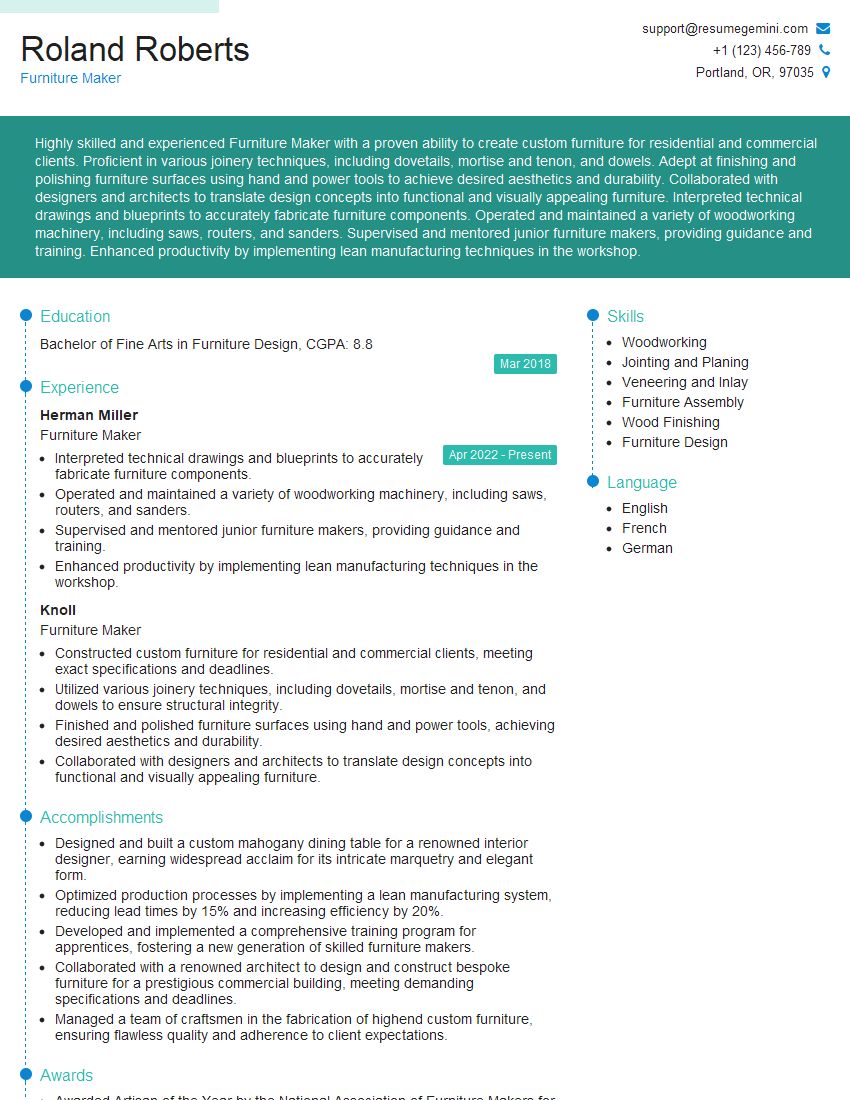
Furniture Maker Resume Sample
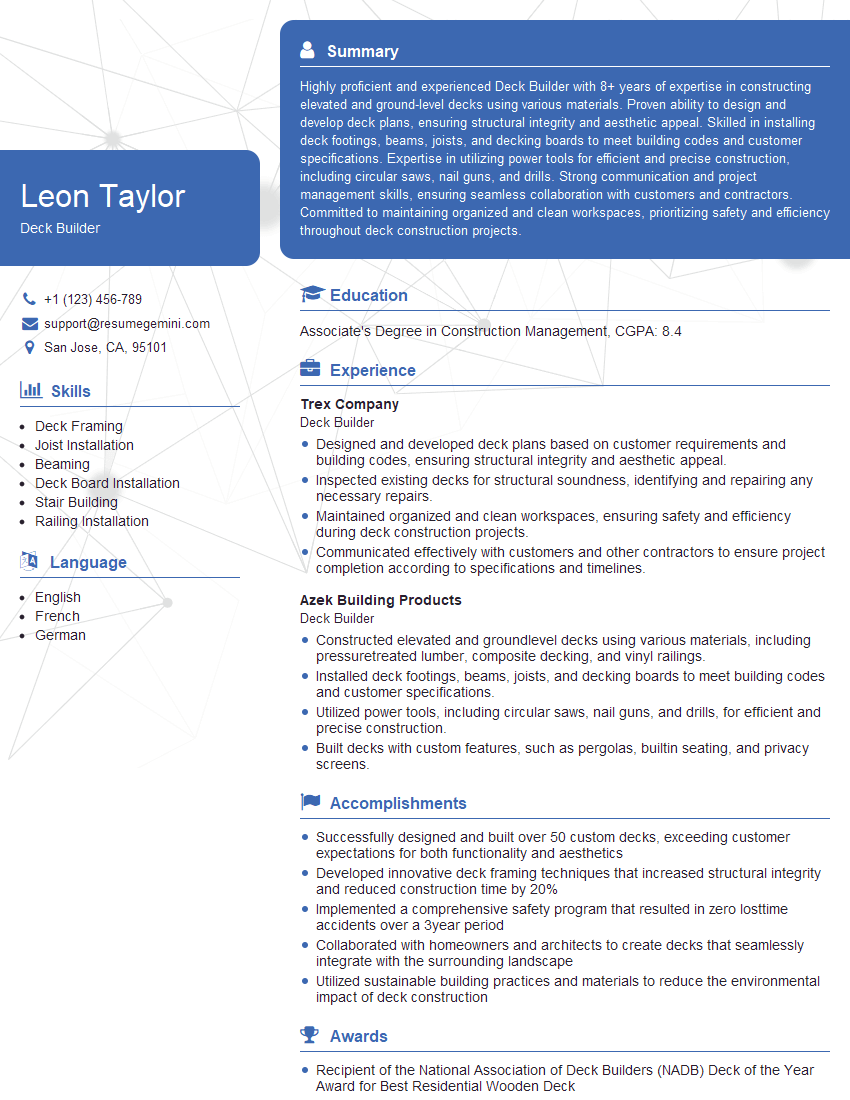
Deck Builder Resume Sample
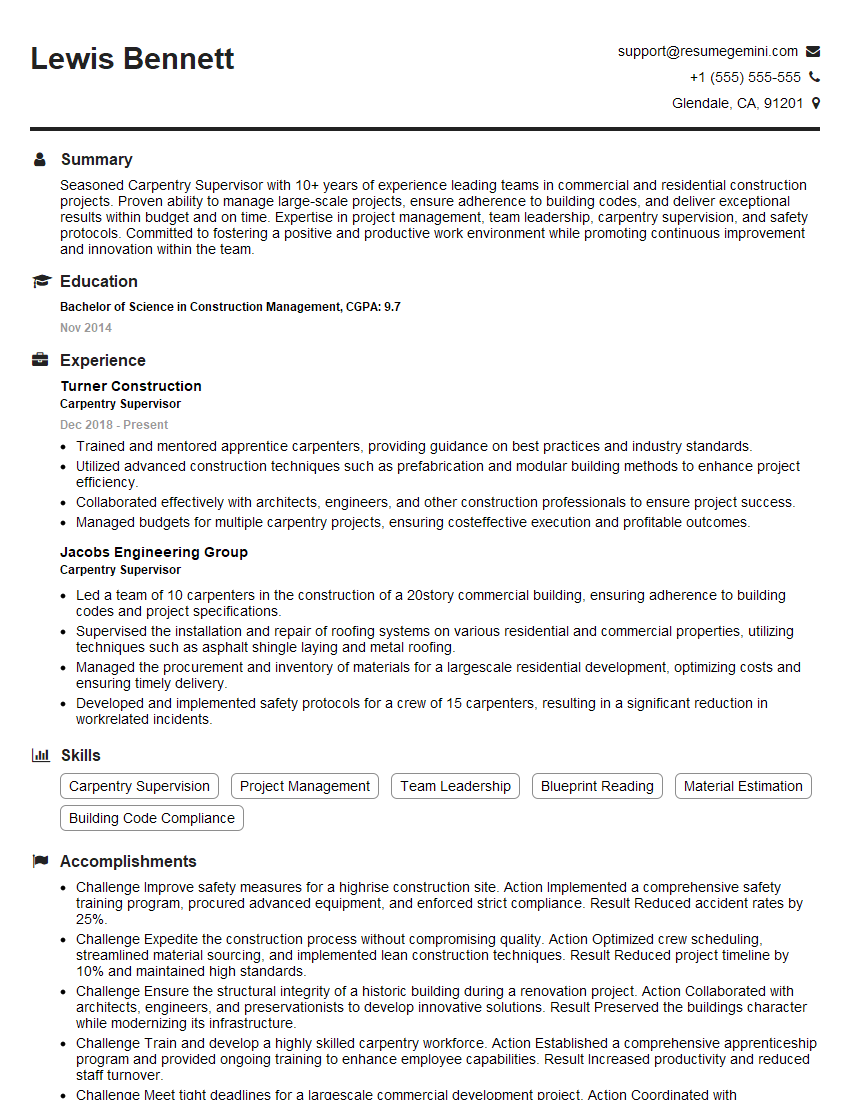
Carpentry Supervisor Resume Sample
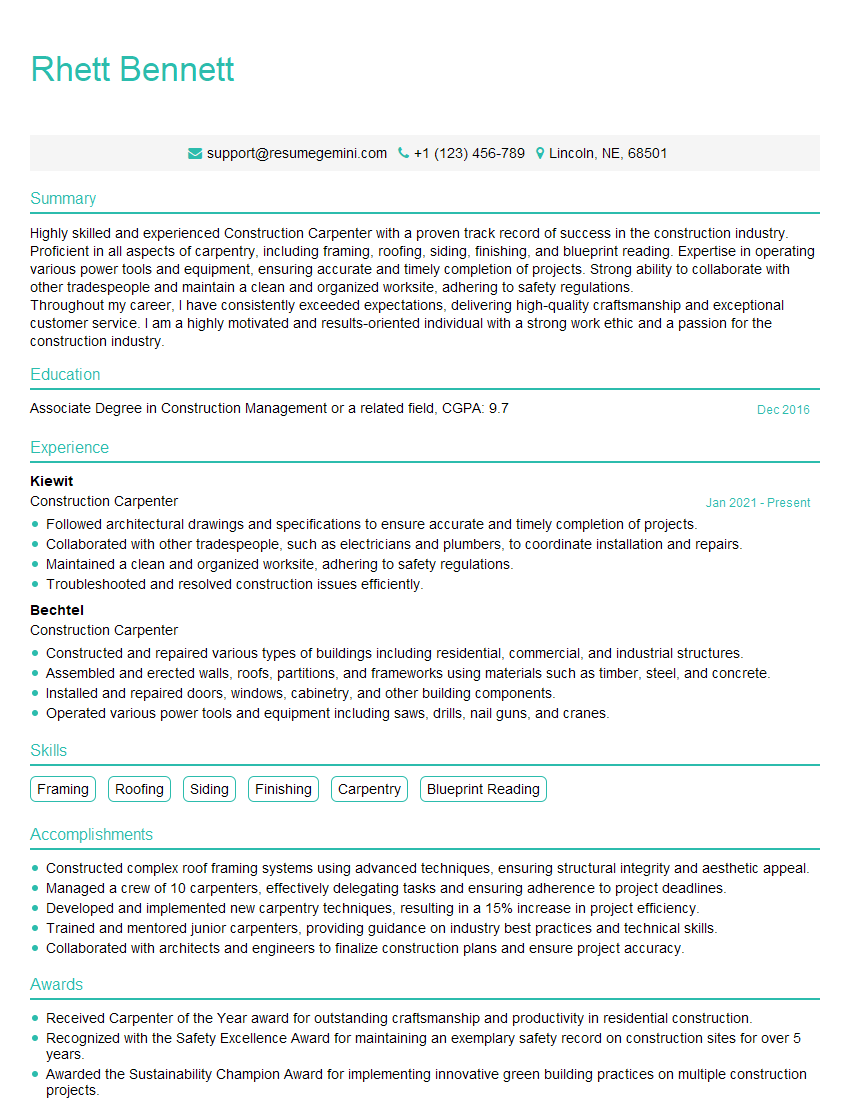
Construction Carpenter Resume Sample
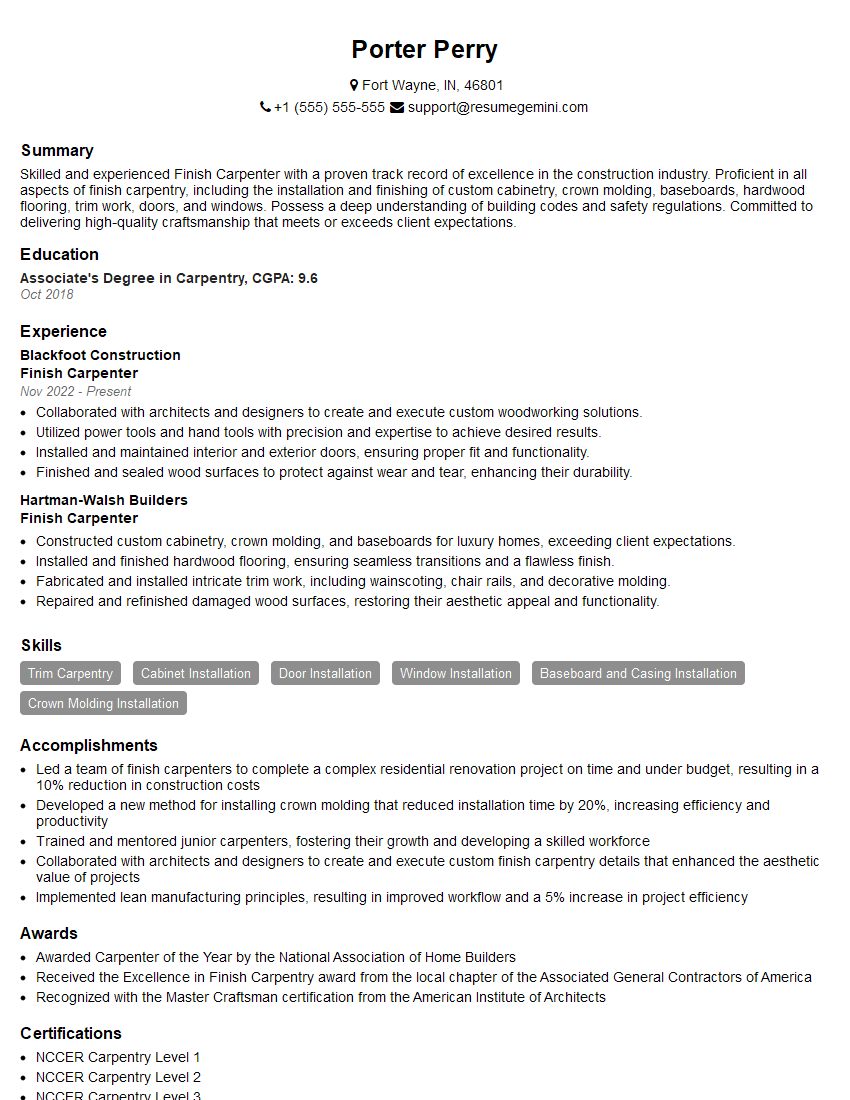
Finish Carpenter Resume Sample
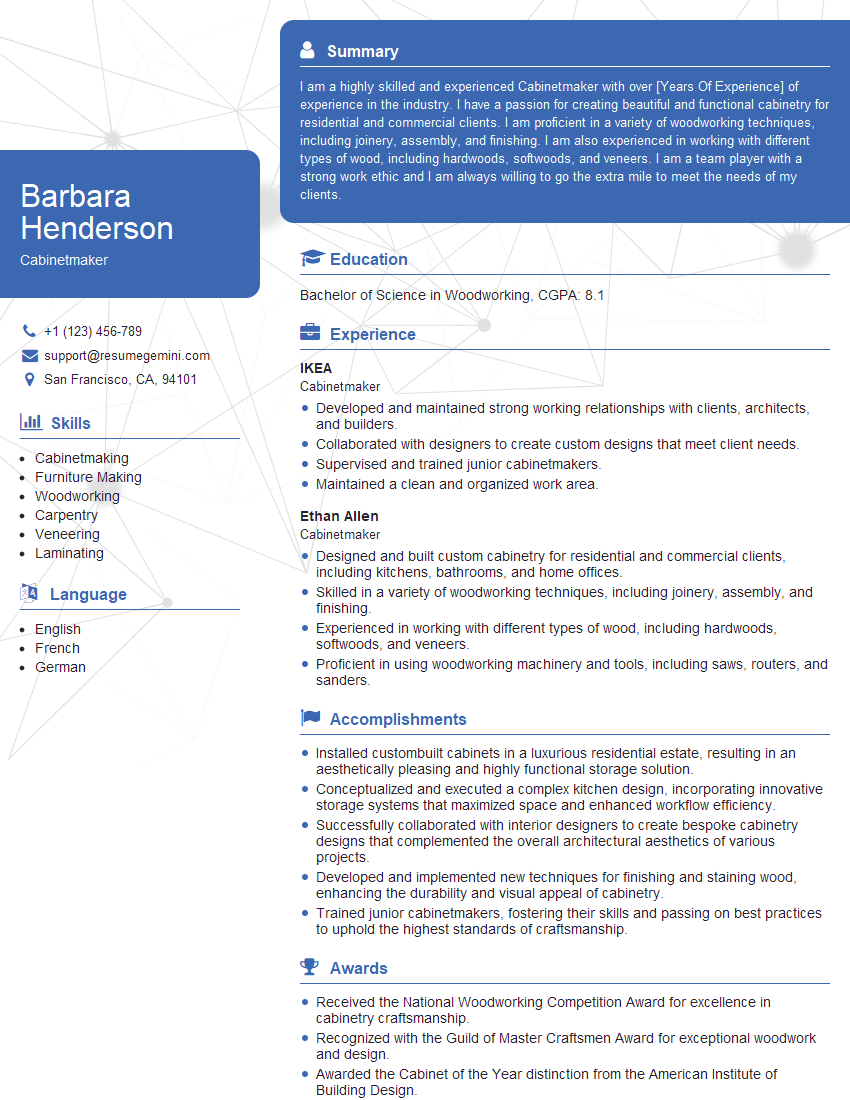
Cabinetmaker Resume Sample
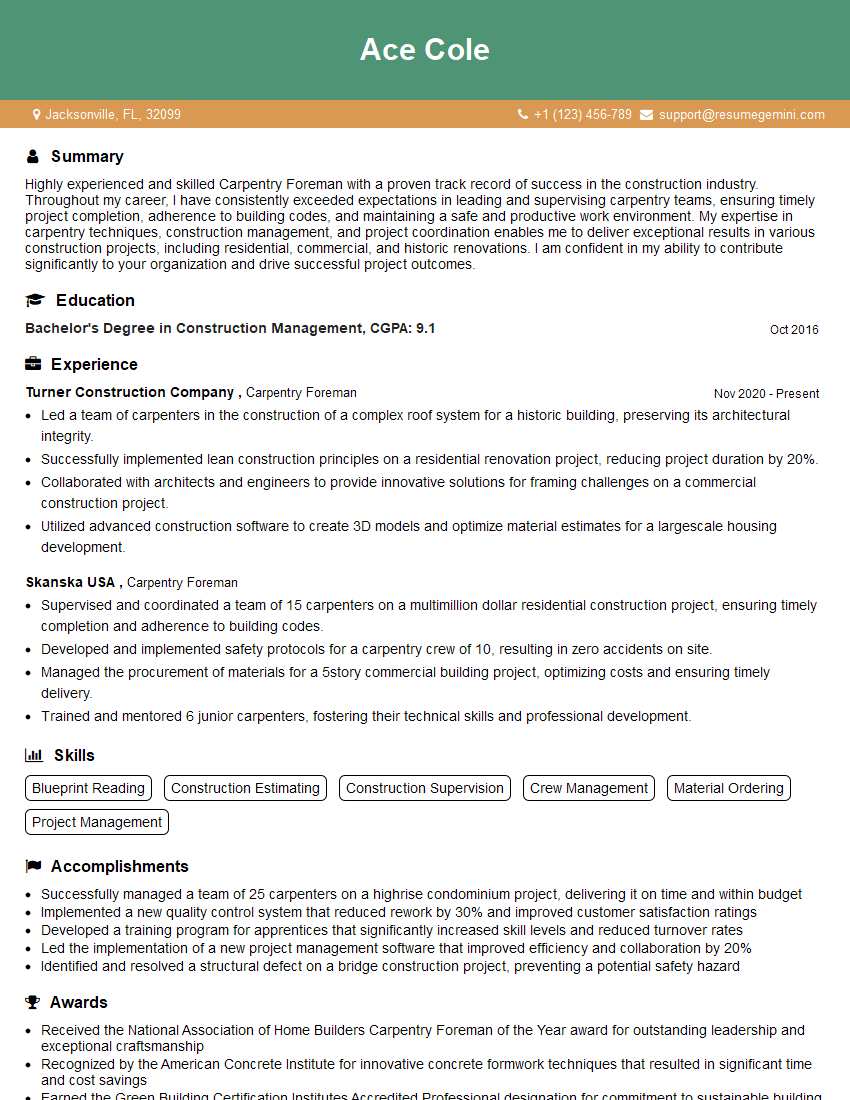
Carpentry Foreman Resume Sample
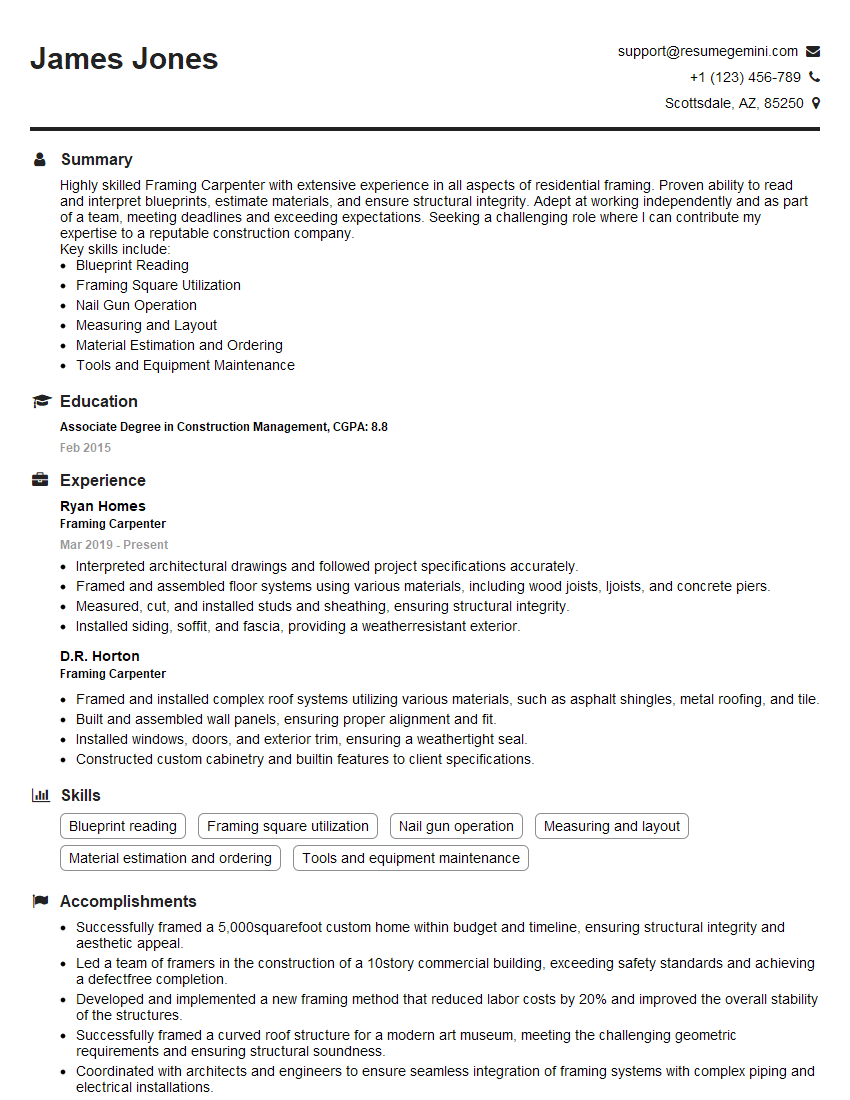
Framing Carpenter Resume Sample
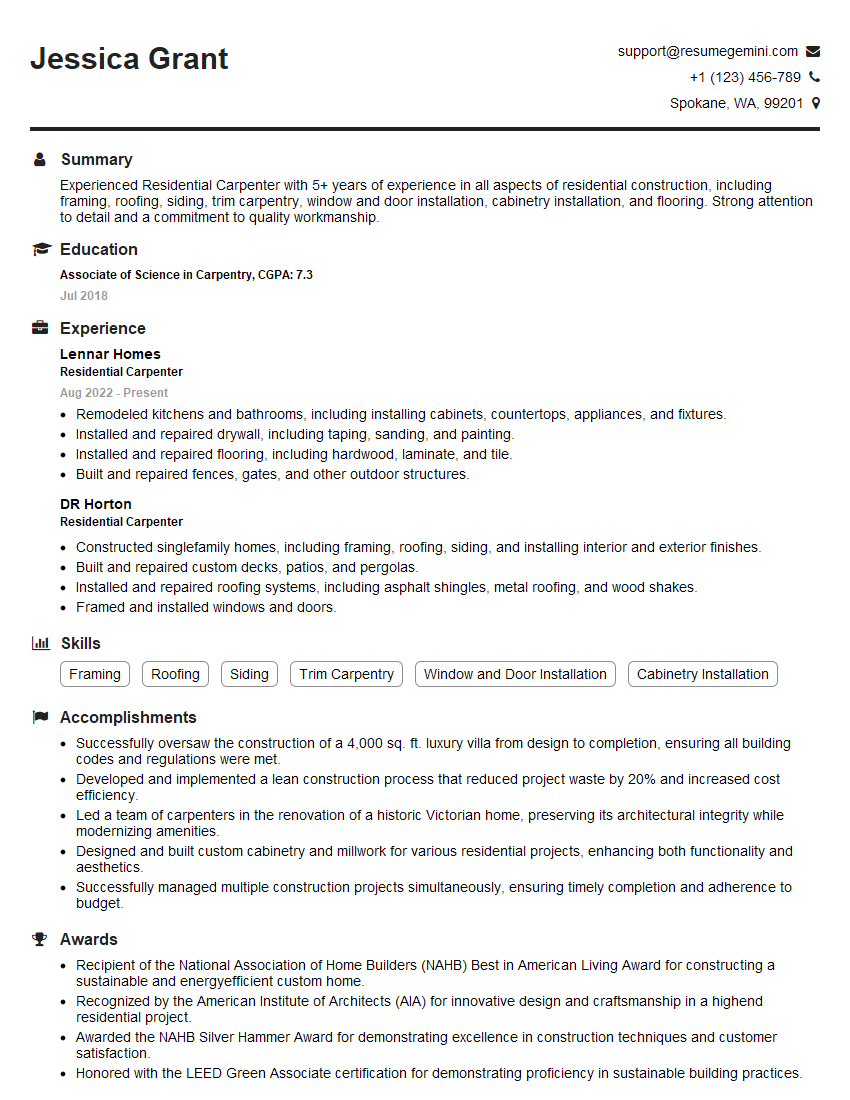
Residential Carpenter Resume Sample
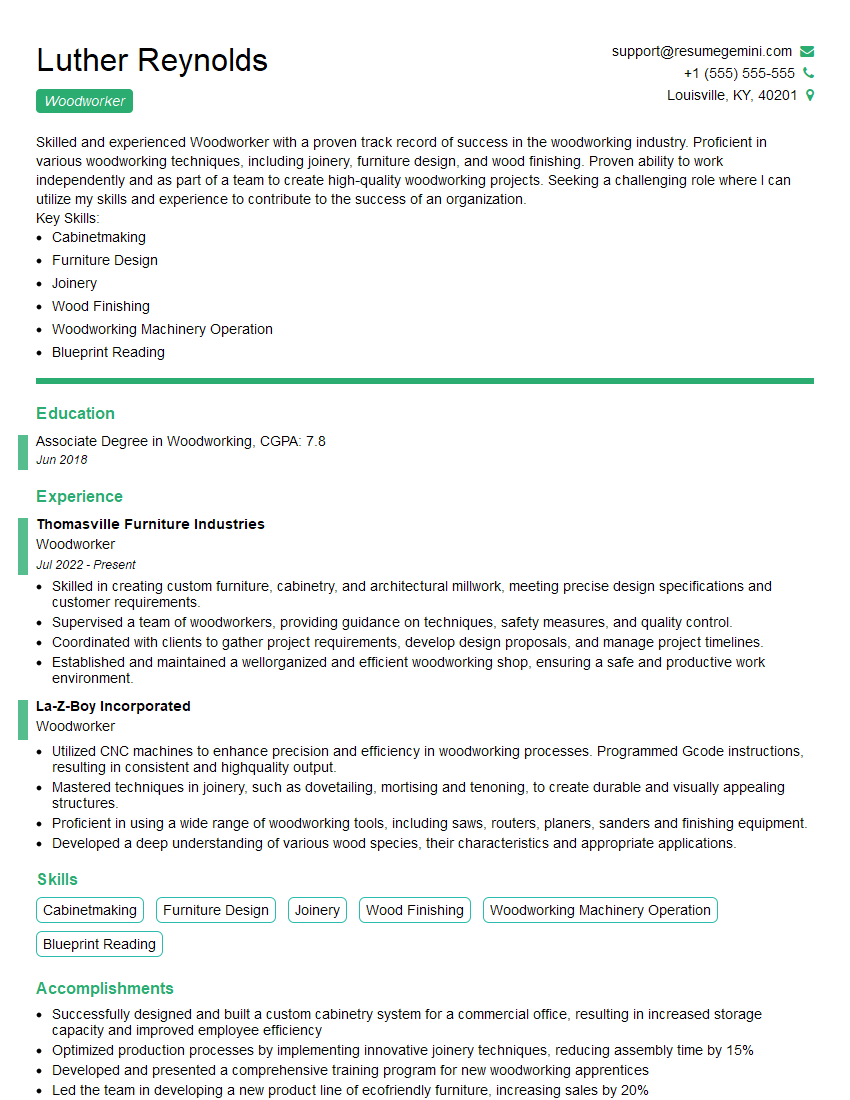
Woodworker Resume Sample
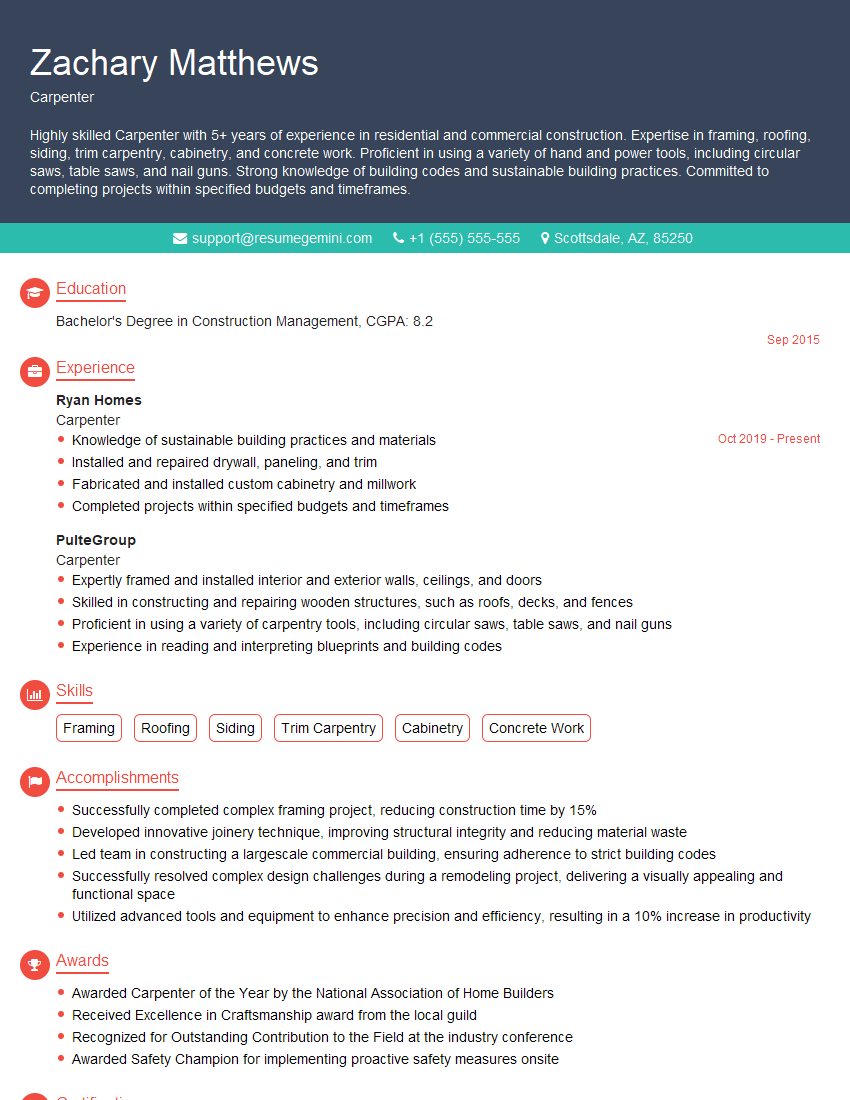
Carpenter Resume Sample
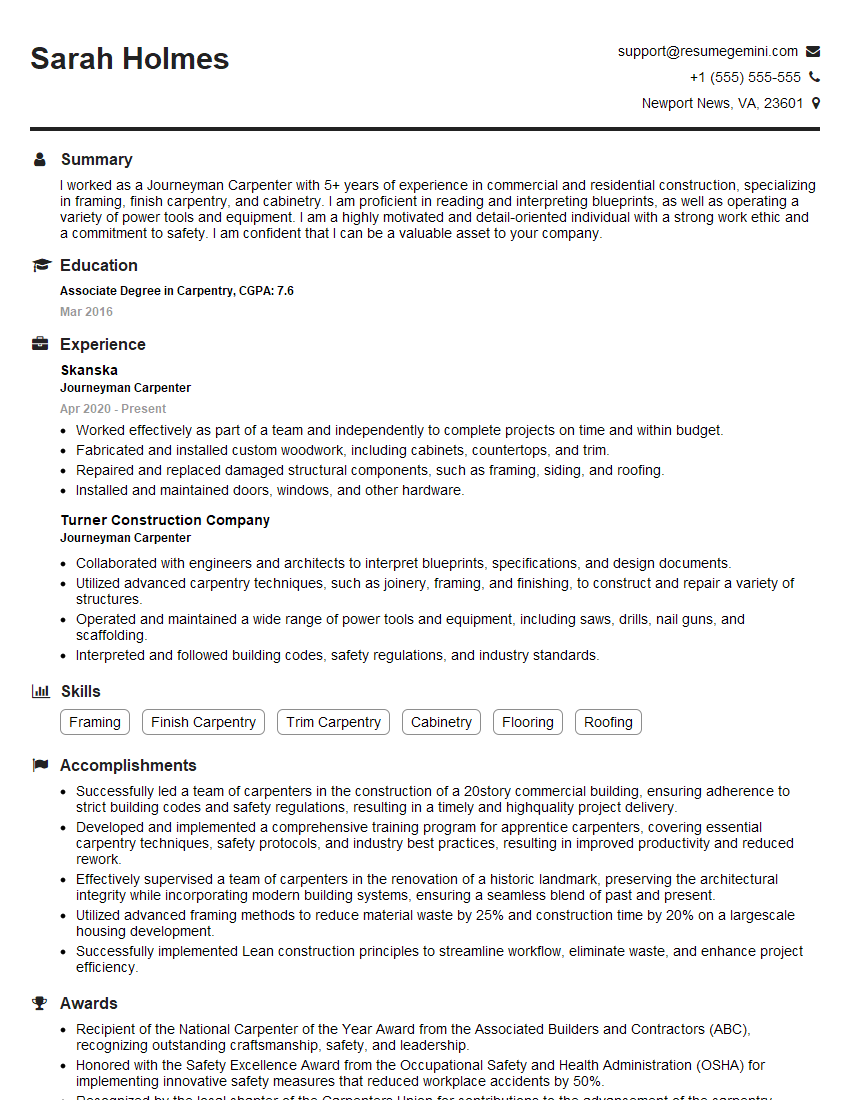
Journeyman Carpenter Resume Sample
Explore more articles
Users Rating of Our Blogs
Share Your Experience
We value your feedback! Please rate our content and share your thoughts (optional).
What Readers Say About Our Blog
Very informative content, great job.
good