Every successful interview starts with knowing what to expect. In this blog, we’ll take you through the top Carpet Laying. interview questions, breaking them down with expert tips to help you deliver impactful answers. Step into your next interview fully prepared and ready to succeed.
Questions Asked in Carpet Laying. Interview
Q 1. Describe your experience with different types of carpet fibers (nylon, polyester, wool).
My experience spans across a wide range of carpet fibers, each with its unique properties and applications. Nylon is a popular choice due to its durability, stain resistance, and resilience. I’ve worked extensively with various nylon types, from solution-dyed nylon, which offers superior fade resistance, to heat-set nylon, known for its plush texture. Polyester offers a softer feel and is often more budget-friendly. However, it’s generally less durable than nylon and more prone to matting. I’ve found it ideal for low-traffic areas. Wool, the natural fiber, is the ultimate in luxury and comfort, providing excellent insulation and a naturally resilient texture. However, it commands a higher price point and requires more specialized cleaning. I’ve worked with several wool blends incorporating nylon for increased durability. Choosing the right fiber is crucial, as it directly impacts the carpet’s longevity, maintenance requirements, and overall feel underfoot.
For example, I recently installed a high-traffic commercial space with solution-dyed nylon for its unsurpassed durability and stain resistance, while a residential project in a child’s playroom opted for a softer, more forgiving polyester blend. The selection always depends on the client’s needs and budget.
Q 2. Explain the process of measuring a room for carpet installation.
Accurate room measurement is paramount for a successful carpet installation. I always begin by sketching the room’s dimensions, carefully noting any irregularities, such as alcoves or recesses. I then use a measuring wheel to obtain precise measurements of the length and width, taking multiple readings to ensure accuracy. For irregular shapes, I’ll break down the room into smaller, easily measurable sections. Crucially, I account for any doorways, windows, or built-in features that might require extra cuts or adjustments. After obtaining these measurements, I’ll always add at least 5% to 10% for waste, accommodating for cuts and pattern matching. This extra material ensures I have enough carpet to complete the job flawlessly. Always double-checking measurements is crucial to avoid costly errors.
For instance, on a recent project with an L-shaped living room, I divided the space into two rectangles, measured each individually, and then added the areas together, ensuring accurate calculation of the total square footage required. Failing to account for such intricacies can lead to insufficient carpet and, ultimately, project delays and increased costs.
Q 3. What are the different carpet installation methods (direct glue, stretch-in, etc.)?
Several carpet installation methods exist, each suited to different situations and carpet types. Direct glue-down involves applying adhesive directly to the subfloor and then adhering the carpet. This method creates a seamless, level surface and is ideal for areas needing a robust, permanent installation. However, it requires a perfectly smooth subfloor. The stretch-in method, also known as power-stretching, uses a specialized tool to stretch the carpet tightly over a tackless strip installed around the perimeter of the room. This method is widely used for its relatively straightforward execution and is suitable for various carpet types. Another approach involves using carpet tiles, which provide a modular solution for quick and easy installation. This method offers significant benefits for replacement or repair as individual tiles can be easily replaced.
I often recommend stretch-in for residential projects due to its efficiency and cost-effectiveness, while direct glue-down is preferred for commercial settings demanding superior durability and a flat surface. Carpet tiles are excellent for areas needing easy maintenance or high levels of customization.
Q 4. How do you calculate the amount of carpet needed for a room, including waste?
Calculating carpet needs goes beyond simple area calculation. First, I meticulously measure the room as described earlier. Once I have the total square footage, I add a waste factor. This is usually 5-10% for rectangular rooms but can be higher (10-15% or even more) for rooms with complex shapes or many obstacles. This waste accounts for cuts, pattern matching, and potential errors. For example, a 10×12 foot room has 120 square feet. With a 10% waste factor, you’d need 132 square feet of carpet (120 x 1.10 = 132). Always round up to the nearest whole square yard when ordering from the supplier to ensure sufficient material.
Remember, underestimating carpet needs can result in seams in unexpected places or needing to reorder material, causing delays and extra costs. Overestimating is less problematic as any extra can be used for repairs or future needs.
Q 5. Describe your experience with carpet padding selection and installation.
Carpet padding, or underlayment, is crucial for comfort, insulation, and the longevity of the carpet. I consider several factors when selecting padding: density, thickness, and type. High-density padding offers better cushioning and support, prolonging the carpet’s life, while thicker padding provides more insulation and comfort. Types range from foam to rebond (recycled fibers), each with its pros and cons. Foam padding is generally more comfortable, while rebond is more cost-effective. The installation process involves evenly spreading the padding across the subfloor and securing it with tape to prevent shifting. Accurate fitting is key for preventing wrinkles and bumps that would show through the carpet.
For instance, in a high-traffic area, I’d choose a high-density padding for durability. In a bedroom, a softer, more comfortable foam padding might be preferred.
Q 6. How do you handle transitions between different flooring types?
Transitions between different flooring types require careful planning and execution. Common methods include using transition strips or reducers. These strips are designed to smoothly bridge the gap between different floor heights and materials, creating a neat and professional finish. The choice of transition depends on the height difference and the materials involved. For example, a simple reducer might suffice for a small height difference between carpet and hardwood, while a more substantial threshold might be needed for a larger transition. Accurate measurements and precise cutting are crucial for a seamless transition.
Careful planning is essential to ensure a visually appealing and functional transition. I’ve always considered the client’s preferences and the overall design of the space. A poorly done transition detracts from the overall quality of the installation.
Q 7. Explain the process of installing carpet around stairs and other challenging areas.
Installing carpet around stairs and challenging areas requires precision and specialized techniques. Stairs often involve cutting and fitting carpet pieces to conform to the stair’s shape, often employing a combination of stretching and tacking to secure it properly. I frequently use stair rods or metal edges to provide a clean finish and protect the carpet from wear and tear. Challenging areas, such as around pipes or unusual angles, demand careful planning and measuring. These areas might need custom cuts and seams, ensuring a neat and professional finish. The overall goal is to create a smooth, safe transition while blending the carpet seamlessly with the surrounding area.
For example, when installing on a winding staircase, accurate pattern matching and cutting angles are paramount. It’s all about meticulous work and attention to detail to create a professional result.
Q 8. What tools and equipment are essential for carpet installation?
Proper carpet installation requires a range of tools and equipment. Think of it like a surgeon needing the right instruments for a successful operation. Here’s a breakdown of the essentials:
- Measuring Tools: Measuring tapes (both standard and long-reach), a chalk line for marking straight lines, and a square to ensure accurate cuts.
- Cutting Tools: A sharp utility knife with extra blades is crucial for precise cuts. Carpet knives with a hook blade are also useful for trimming around obstacles.
- Installation Tools: A knee kicker for stretching the carpet, a power stretcher for larger areas (providing even tension and preventing wrinkles), a seam sealer, and a carpet stretcher to firmly secure the carpet into place. A kicker helps with stretching into corners.
- Finishing Tools: A carpet kicker, a seaming iron to ensure strong bonds, tack strips to secure the edges of the carpet, and a mallet for hammering tack strips into place.
- Other Essentials: Protective gear (safety glasses, gloves, knee pads), a heavy-duty carpet pad (underlayment) to provide cushioning and insulation, and a utility knife with various blades for making precise cuts.
The specific tools might vary depending on the type of carpet and the job’s complexity. For instance, installing commercial carpet often requires specialized equipment for heavier-duty stretching.
Q 9. How do you ensure accurate carpet seaming and avoid visible seams?
Seamless carpet installation is key to a professional finish. Imagine a beautiful painting marred by visible brushstrokes – the same principle applies to carpet seams. To minimize visible seams, several techniques are essential:
- Accurate Measurement and Cutting: Precise measurements are paramount. Using a chalk line and a square helps ensure straight cuts. Any deviation from accuracy will show up at the seam.
- Careful Seam Placement: Strategically placing seams in inconspicuous areas (e.g., under furniture or closets) minimizes their visual impact.
- Proper Seam Matching: Matching carpet patterns at the seam is crucial, especially with patterned carpets. Take your time and meticulously align the patterns before securing the seam.
- Using Seam Sealer: A high-quality seam sealer is essential for creating a strong, invisible bond between the carpet pieces. Applying it evenly is key to achieving a seamless finish.
- Seam Ironing (if applicable): Using a hot seam iron (not a regular iron!) helps melt the adhesive fibers of the seam sealer, fusing the two pieces together, which removes ripples and wrinkles. Improper heat can damage the carpet.
- Power Stretcher Techniques: Using a power stretcher ensures consistent carpet tension across the entire area. Uneven tension can lead to visible seams. A well-stretched seam is less noticeable.
The goal is to create a transition so smooth that the seam is virtually invisible. This requires precision, attention to detail, and using the right tools.
Q 10. How do you deal with uneven subfloors before carpet installation?
Uneven subfloors are the enemy of a quality carpet installation. Imagine trying to lay a smooth sheet on a bumpy surface – it simply won’t work. Addressing subfloor issues before installation is crucial. Here’s how:
- Assessment: Thoroughly inspect the subfloor using a straight edge and a level to identify high and low spots. Significant dips or humps need to be addressed.
- Leveling Compounds: For minor imperfections, self-leveling compounds can be used to fill in gaps and create a smooth surface. Follow the manufacturer’s instructions carefully.
- Plywood Patching: For larger areas requiring leveling, installing plywood patches, that are securely fastened and level with the surrounding surface, is essential. This is crucial for supporting the underlayment and carpet.
- Sanding: After leveling compounds have dried, sanding is necessary to achieve a smooth, uniform surface. This removes any excess material.
- Underlayment: A high-quality carpet pad (underlayment) serves as a buffer between the subfloor and the carpet, helping to absorb minor imperfections and improve the overall feel and comfort.
Ignoring uneven subfloors will lead to wrinkles, bumps, and an unsatisfactory finished product. Taking the time to properly level the subfloor is an investment in the longevity and quality of the carpet installation.
Q 11. What are the common problems encountered during carpet installation, and how do you solve them?
Carpet installation can present several challenges. Here are some common problems and their solutions:
- Wrinkles and Buckles: These often result from improper stretching, uneven subfloors, or inadequate carpet pad. The solution is often re-stretching using a power stretcher. Addressing subfloor issues is essential for long term results.
- Seaming Issues: Poor seam matching or inadequate sealing can lead to visible seams or separation over time. Re-sealing, and better attention to matching are necessary solutions.
- Uneven Carpet Height: This can happen if the carpet isn’t stretched evenly. Re-stretching using the correct tools will provide better results.
- Tack Strip Problems: Improperly installed tack strips can cause the carpet to ripple. Removing the existing strip and properly reinstalling the new one is needed.
- Carpet Stretching Challenges in Tight Spaces: Power stretchers may not reach all areas; hand-stretching and power stretchers used together are necessary in this case.
Experience and attention to detail are key to avoiding these problems. Proactive measures, like assessing the subfloor and using the right tools, are crucial for a seamless installation.
Q 12. Describe your experience with different types of carpet adhesives and their applications.
Carpet adhesives play a vital role in ensuring a secure and long-lasting installation. Different adhesives are suited for various carpet types and subfloors. I’ve worked with several types:
- Water-Based Adhesives: These are environmentally friendly and relatively easy to use. They offer good adhesion, are less prone to fumes and require less drying time than solvent-based options. They’re ideal for residential projects.
- Solvent-Based Adhesives: These offer superior bonding strength, particularly for commercial applications or heavy traffic areas. However, they have strong fumes and require more ventilation. These adhesives provide stronger holds.
- Pressure-Sensitive Adhesives (PSA): These are often used with carpet tiles or modular carpets. They’re convenient for quick installation but may not be suitable for all types of carpet or subfloors. They’re usually less strong than solvent based.
Choosing the right adhesive is crucial for the longevity and quality of the installation. Consider the type of carpet, the subfloor, the traffic level, and environmental concerns when making the selection.
Q 13. How do you ensure proper ventilation during and after carpet installation?
Proper ventilation is crucial throughout the carpet installation process, particularly when using solvent-based adhesives. These adhesives release strong fumes that can cause health problems. Here’s how to ensure proper ventilation:
- Before Installation: Open all windows and doors to allow for maximum airflow. Using fans to create cross-ventilation is highly beneficial.
- During Installation: Continue to maintain good ventilation throughout the installation process. Use fans to exhaust fumes from the work area. Avoid working in poorly ventilated spaces, especially while the adhesive is curing.
- After Installation: Maintain ventilation for at least 24-48 hours after installation to allow the adhesive to fully cure and dissipate any remaining fumes. The adhesives may release dangerous vapors for several days after installation. This allows for the safest possible environment.
Always prioritize safety and follow the manufacturer’s instructions regarding ventilation for the adhesive and underlayment that are being used.
Q 14. Explain your understanding of safety regulations related to carpet installation.
Safety is paramount in carpet installation. Neglecting safety protocols can lead to accidents and injuries. My understanding of safety regulations includes:
- Personal Protective Equipment (PPE): Always wear safety glasses, gloves, and sturdy footwear to protect against cuts, abrasions, and chemical exposure. Knee pads are also crucial to minimize knee strain.
- Proper Tool Handling: Use tools correctly and safely. Sharp knives and power stretchers require extra care to prevent accidental cuts or injuries. Power tools should be properly maintained.
- Working at Heights: When working at heights, always use appropriate safety measures, such as scaffolding or fall protection systems.
- Handling Adhesives Safely: Follow the manufacturer’s safety instructions carefully when handling adhesives, particularly solvent-based adhesives. Use proper ventilation and avoid inhaling fumes.
- Waste Disposal: Dispose of waste materials (e.g., carpet scraps, adhesive containers) according to local regulations. This is crucial for environmental reasons.
Prioritizing safety ensures a safe and productive work environment, protecting both myself and my clients.
Q 15. How do you manage your time and prioritize tasks on a carpet installation project?
Time management on a carpet installation project is crucial for meeting deadlines and staying within budget. I use a combination of techniques. First, I meticulously review the blueprints and specifications before starting the job, identifying potential challenges and planning accordingly. This includes estimating material needs, calculating labor hours, and scheduling deliveries. Next, I create a detailed task list, breaking down the project into smaller, manageable steps. This allows me to track progress and identify any potential delays early on. I prioritize tasks based on their dependencies – for example, subfloor preparation must be completed before carpet installation can begin. Finally, I utilize project management tools or a simple checklist to monitor progress and ensure that all tasks are completed on time and to the client’s specifications. For instance, on a recent large-scale project, I created a Gantt chart to visualize task dependencies and deadlines, allowing me to proactively address any potential scheduling conflicts.
Career Expert Tips:
- Ace those interviews! Prepare effectively by reviewing the Top 50 Most Common Interview Questions on ResumeGemini.
- Navigate your job search with confidence! Explore a wide range of Career Tips on ResumeGemini. Learn about common challenges and recommendations to overcome them.
- Craft the perfect resume! Master the Art of Resume Writing with ResumeGemini’s guide. Showcase your unique qualifications and achievements effectively.
- Don’t miss out on holiday savings! Build your dream resume with ResumeGemini’s ATS optimized templates.
Q 16. Describe your experience working with different clients and contractors.
I’ve had the pleasure of working with a diverse range of clients, from homeowners undertaking small renovations to large property management companies overseeing multiple apartment complexes. This has given me valuable experience in adapting my communication and project management styles to different needs and expectations. Similarly, my experience collaborating with various contractors, such as electricians and plumbers, has honed my ability to coordinate schedules effectively and resolve any potential conflicts. For instance, I once worked with a homeowner who was very detail-oriented, requiring frequent updates and approvals throughout the project. In contrast, I worked with a property management company that preferred a more hands-off approach, focusing primarily on meeting deadlines and adhering to strict budget constraints. Adapting my approach based on the client’s preferences ensures a smooth and successful project every time.
Q 17. How do you handle customer complaints or issues related to carpet installation?
Handling customer complaints is a critical aspect of my job. My approach is always professional and empathetic. First, I actively listen to the client’s concerns, ensuring I fully understand the issue. Then, I calmly explain the situation, outlining the steps taken during the installation process. If a legitimate issue exists (e.g., faulty materials, installation error), I take immediate responsibility, outlining the steps to rectify the problem. This may involve re-doing a section of the installation, replacing damaged materials, or offering a partial refund. I maintain transparent communication throughout the resolution process, providing regular updates to the client. For example, one client noticed some slight wrinkling in the carpet after a few weeks. After examining the issue, I determined that it was due to insufficient acclimation of the carpet to the room’s humidity. I explained the situation, re-stretched the carpet, and provided advice on maintaining humidity levels in the room to prevent this issue from reoccurring. The client was very satisfied with my prompt and thorough response.
Q 18. What are your skills in reading blueprints and following installation instructions?
Reading blueprints and following installation instructions are fundamental skills for a carpet installer. I am proficient in interpreting architectural drawings, identifying relevant dimensions, and understanding the specific requirements of each project. I pay close attention to details, such as seam placement, transition requirements, and the type of underlayment specified. Following manufacturer’s instructions meticulously is vital for ensuring the carpet’s longevity and warranty coverage. I often use a combination of measuring tapes, levels, and other tools to ensure precision during the installation process. I always double-check measurements before proceeding to ensure accuracy and prevent costly mistakes. For example, on a recent project with complex geometric patterns, I carefully reviewed the blueprints to ensure proper seam alignment, creating a flawless installation that matched the client’s expectations perfectly.
Q 19. Explain your experience with carpet stretching and power stretching techniques.
Carpet stretching and power stretching are crucial techniques for achieving a smooth, wrinkle-free finish. Manual stretching utilizes specialized tools like knee kickers and carpet stretchers to gradually stretch the carpet to fit the room precisely. This technique is suitable for smaller rooms or areas with fewer obstacles. Power stretching, on the other hand, employs a power stretcher, a machine that provides more significant pulling force, making it ideal for larger rooms or when dealing with particularly tight stretches. Both techniques require expertise in manipulating the carpet fibers while avoiding damage. I have extensive experience in both, choosing the appropriate technique depending on the project’s specific requirements and the type of carpet being installed. For example, on a recently completed project in a large living room with a particularly snug fit, the power stretcher was instrumental in eliminating wrinkles and achieving a professional finish. Understanding the nuances of fiber type and its reaction to stretching techniques is critical for success.
Q 20. How do you maintain the cleanliness and organization of your work area?
Maintaining a clean and organized work area is paramount for safety and efficiency. Before starting a project, I clearly define the work area, protecting the surrounding areas with drop cloths or other protective materials. Throughout the installation, I keep tools organized and readily accessible, minimizing wasted time searching for equipment. I regularly dispose of waste materials, ensuring that the work area remains clutter-free and safe. At the end of each day, I thoroughly clean the work area, removing all debris and ensuring that the space is safe and tidy for the next day’s work. This attention to cleanliness minimizes the risk of accidents and ensures that the client’s property is treated with respect. I’ve even developed a system to label and segregate waste for easier and more efficient disposal at the end of each project.
Q 21. Describe your experience with carpet trimming and finishing techniques.
Carpet trimming and finishing are crucial for creating a neat and professional appearance. I utilize specialized tools like sharp utility knives and trimming tools to ensure precise cuts along walls, doorways, and other transitions. This includes creating seamless transitions between different carpet types or materials. Proper finishing techniques are essential for preventing fraying and ensuring a long-lasting installation. I’m proficient in various techniques for finishing edges, including using binding, seaming tape, and other specialized methods depending on the carpet’s material and the project requirements. I meticulously inspect all cut edges and seams after finishing to ensure quality and accuracy. For instance, on a project involving multiple carpet types in a large home, I skillfully blended the seams and trimmed the edges, leaving a nearly invisible transition that enhanced the room’s overall aesthetic.
Q 22. What is your understanding of warranty and guarantee related to carpet installation?
Warranty and guarantee in carpet installation are crucial for both the installer and the client. A warranty typically covers defects in the installation itself – things like improper stretching, seaming issues, or loose edges. This is usually offered by the installer and covers their workmanship. The length and specifics vary greatly depending on the installer and the type of installation. A guarantee, on the other hand, often refers to the carpet material itself. This is provided by the carpet manufacturer and covers things like wear and tear, fading, or manufacturing defects. It’s essential to distinguish between the two; a problem with the carpet’s fibers is covered under the manufacturer’s guarantee, while a poorly stretched seam falls under the installer’s warranty.
For example, imagine a customer notices a significant seam separation a year after installation. If this is due to faulty installation (e.g., improper use of adhesive), the installer’s warranty should cover repair or replacement. However, if the carpet fibers are prematurely wearing down due to a manufacturing flaw, that would fall under the manufacturer’s guarantee.
Q 23. How do you dispose of carpet waste responsibly?
Responsible disposal of carpet waste is paramount for environmental consciousness and compliance with local regulations. My process involves several key steps. First, I separate the different types of waste – carpet padding, tack strips, and the carpet itself. Carpet padding often contains recyclable materials, and many municipalities have recycling programs for it. Tack strips, while usually not recyclable in the same way, can be collected as metal scrap. For the carpet itself, I explore options like carpet recycling facilities. Many facilities can reclaim fibers from old carpets, repurposing them into new products. If recycling isn’t feasible, I ensure the carpet goes to a landfill that manages waste responsibly. Accurate record-keeping is important to demonstrate adherence to environmental guidelines.
I’ve had experiences where a customer was particularly concerned about eco-friendly disposal. In one instance, I coordinated with a local recycling center that specialized in carpet reclamation, ensuring the old carpet was processed sustainably rather than simply ending up in a landfill. This commitment to responsible disposal helps protect the environment and builds trust with my clients.
Q 24. What safety measures do you take to protect yourself and others during carpet installation?
Safety is my top priority on every job. This begins with proper personal protective equipment (PPE). This includes sturdy work boots with steel toes to prevent injuries from dropped objects or sharp tacks, safety glasses to protect my eyes from dust and debris, and knee pads to prevent strain and injury during prolonged kneeling. I also utilize dust masks, especially when working with older carpets that may contain asbestos fibers. For client safety, I carefully barricade work areas to prevent accidents and clearly communicate my work schedule to minimize disruptions. I make sure to cover furniture and protect floors to the best of my ability to minimize damage. Finally, I regularly inspect my tools and equipment to ensure they are in good working condition, minimizing the risk of malfunctions that could lead to injury.
For instance, before starting a project, I always take time to assess the environment for potential hazards like uneven floors or exposed electrical wires. I never hesitate to use additional safety measures if the situation requires it.
Q 25. Explain your experience with different types of carpet tack strips and their applications.
My experience encompasses various carpet tack strip types, each suited to specific applications. Standard tack strips, with their simple design and relatively low cost, are commonly used for most residential installations. Heavy-duty tack strips are essential for high-traffic areas or commercial spaces, providing superior grip and longevity. Double-sided tack strips are helpful for creating a neater installation, especially with thicker carpets where traditional strips might create a noticeable ridge. Lastly, grip strips (often metal) are used in situations where there is a need for extra secure carpet hold, or under resilient flooring.
Choosing the right tack strip is crucial for a successful installation. Using standard tack strips in a high-traffic area would likely result in premature carpet loosening. Similarly, overusing heavy-duty strips in a low-traffic setting may be unnecessary and costly. The selection process takes into account the carpet type, the area’s usage, and the subfloor’s condition.
Q 26. How do you handle difficult situations, such as unexpected problems during installation?
Unforeseen issues during installation are inevitable. My approach involves a systematic problem-solving methodology. First, I carefully assess the nature of the problem – Is it a subfloor issue? A carpet defect? A measurement error? Once identified, I consult relevant resources, like manufacturer specifications or industry best practices. I then explore different solutions, prioritizing those that are safe, effective, and minimize disruption to the project timeline. If the solution is beyond my expertise, I don’t hesitate to consult with more experienced colleagues or suppliers. Open communication with the client throughout the process is crucial, ensuring transparency and building trust.
I recall a project where a hidden water pipe unexpectedly hindered the installation. After carefully assessing the situation and consulting with a plumber, we safely relocated the pipe, ensuring minimal disruption to the project. This collaborative approach ensured the final result met the client’s expectations and, more importantly, avoided any potential damage or injury.
Q 27. What are your salary expectations for this position?
My salary expectations are competitive and aligned with my experience and skills in carpet installation. Considering my expertise in various carpet types, my proven ability to manage complex projects efficiently, and my commitment to delivering high-quality work, I am seeking a salary in the range of [Insert Salary Range Here]. I am flexible and open to discussing this further, taking into consideration the specific responsibilities and benefits of the position.
Q 28. Why are you interested in this specific carpet laying position?
I am highly interested in this specific carpet laying position because of [Company Name]’s reputation for quality workmanship and its commitment to customer satisfaction. The opportunity to work with a team of experienced professionals, and contribute to high-profile projects aligns with my career goals. Furthermore, [mention specific aspects of the job description that particularly appeal – e.g., company culture, project types, opportunities for growth] resonates strongly with my professional aspirations. I am confident that my skills and experience would be a valuable asset to your team.
Key Topics to Learn for Your Carpet Laying Interview
- Understanding Different Carpet Types: Learn the characteristics, installation methods, and suitability of various carpet fibers (nylon, polyester, wool) and backing types (foam, felt, rubber).
- Accurate Measurement and Estimation: Mastering precise room measurements, calculating carpet yardage, and accounting for waste are crucial for successful installations and accurate quoting.
- Preparation and Subfloor Assessment: Understand how to properly prepare the subfloor, identify and address issues like uneven surfaces, moisture problems, and existing flooring removal.
- Installation Techniques: Familiarize yourself with various installation methods including stretching, seaming, and trimming, paying attention to best practices for achieving a smooth, wrinkle-free finish.
- Carpet Stretching and Power Stretching: Develop a strong understanding of the tools and techniques used for achieving a tight, wrinkle-free fit, addressing common stretching challenges.
- Seaming and Trimming: Learn proper techniques for creating seamless transitions and achieving clean, precise cuts around doorways and other obstacles.
- Tack Strip Installation and Use: Understand the purpose and proper installation of tack strips to secure the carpet edges and ensure a professional finish.
- Problem-Solving and Troubleshooting: Be prepared to discuss how you would handle common installation challenges, such as uneven subfloors, difficult transitions, or carpet imperfections.
- Safety Procedures and Regulations: Demonstrate knowledge of relevant safety protocols, including proper tool handling, workplace safety, and adherence to industry regulations.
- Tools and Equipment Knowledge: Familiarity with common carpet installation tools, their functions, and appropriate usage is essential.
Next Steps
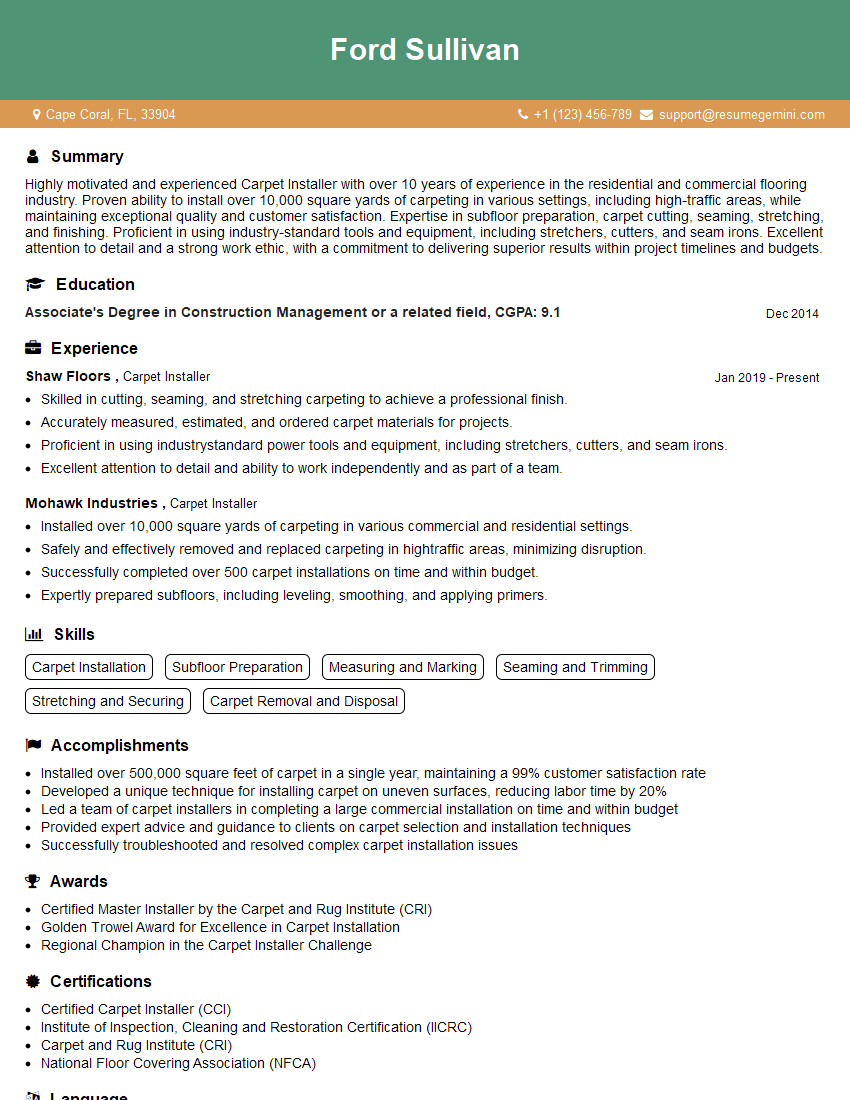
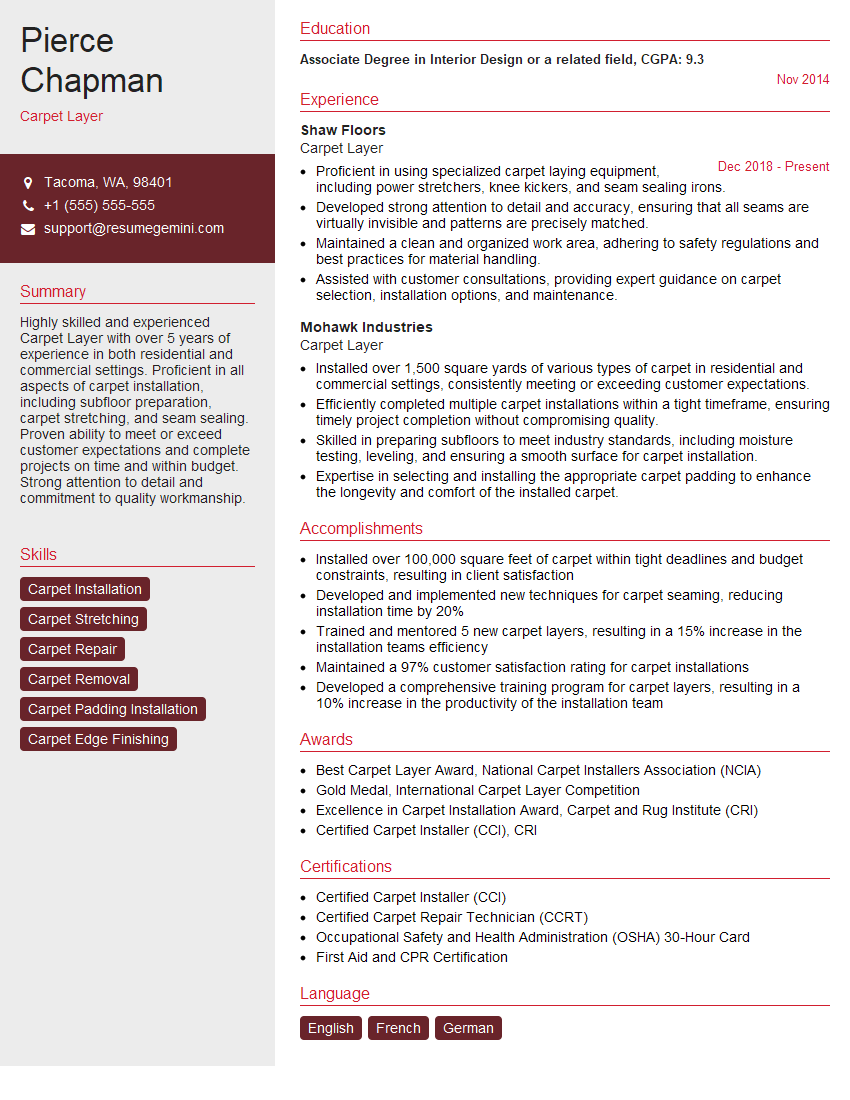
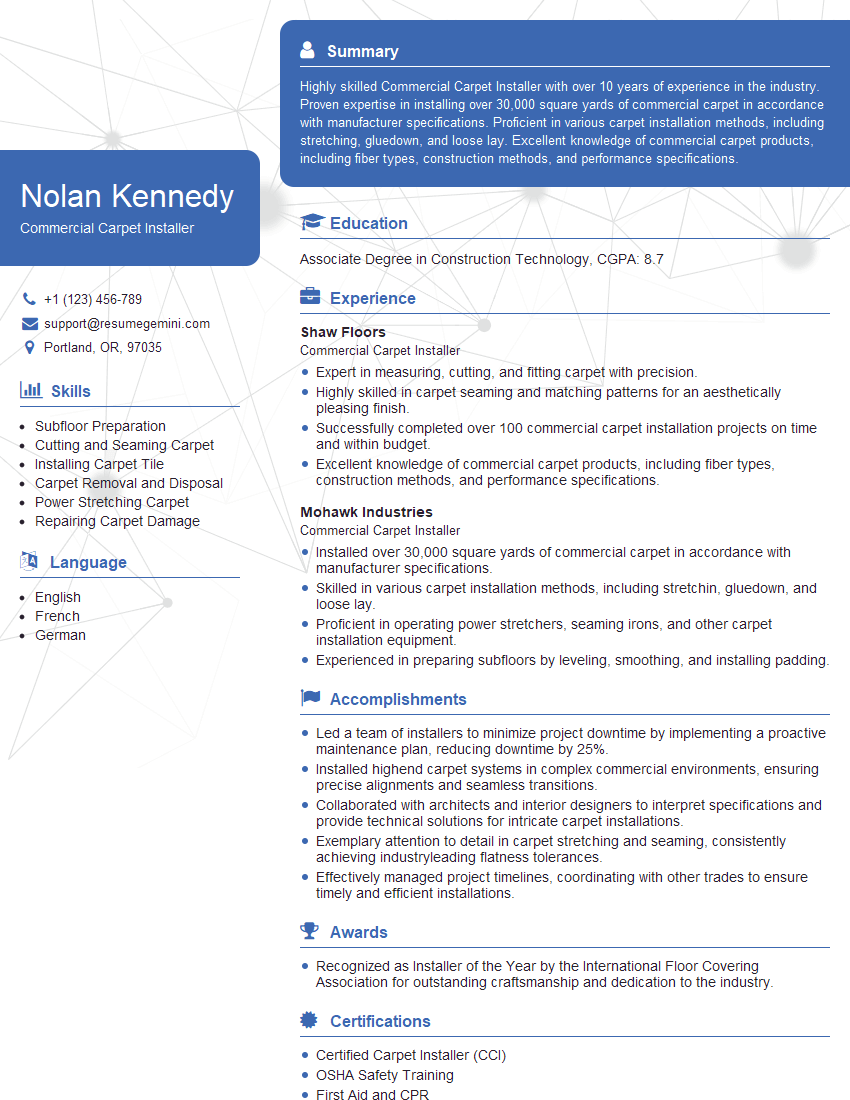
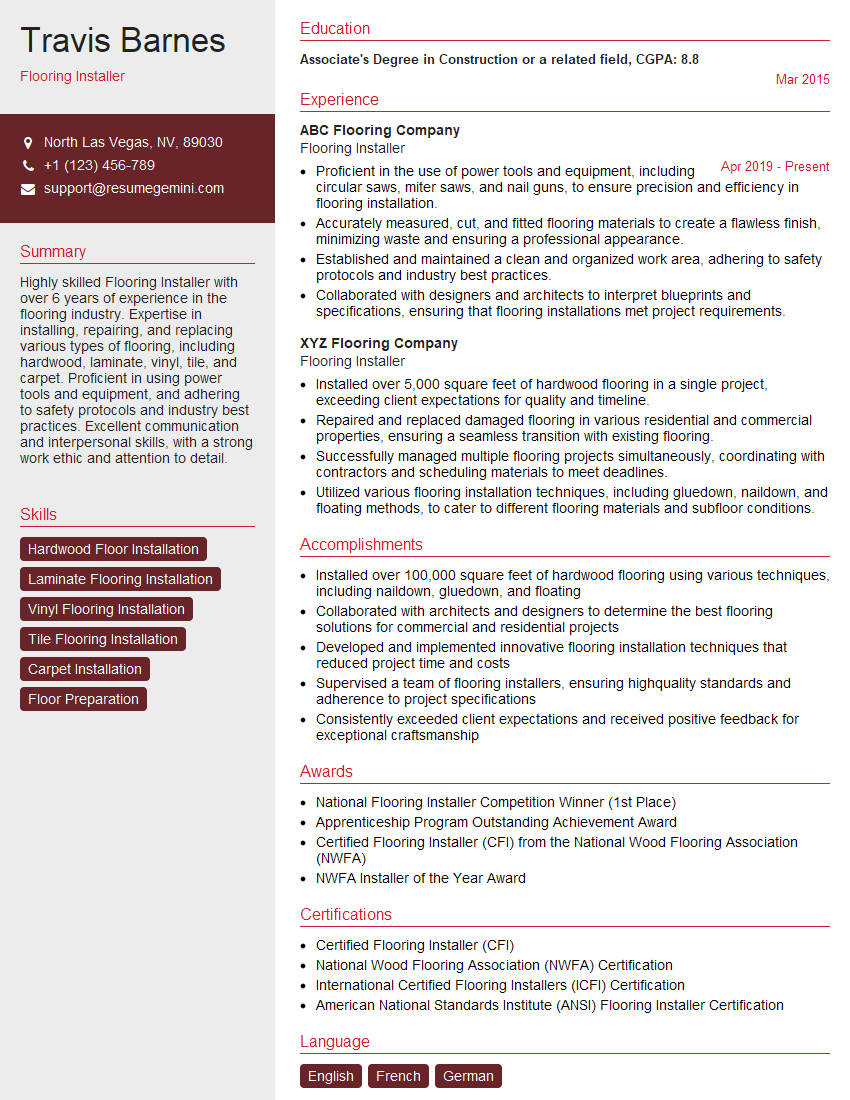
Mastering carpet laying techniques opens doors to a rewarding career with excellent growth potential. Building a strong, ATS-friendly resume is key to showcasing your skills and experience to potential employers. To maximize your job prospects, we highly recommend using ResumeGemini to craft a compelling and effective resume. ResumeGemini offers a user-friendly platform and provides examples of resumes tailored specifically to the carpet laying industry, giving you a head start in your job search.


Explore more articles
Users Rating of Our Blogs
Share Your Experience
We value your feedback! Please rate our content and share your thoughts (optional).
What Readers Say About Our Blog
Very informative content, great job.
good