Every successful interview starts with knowing what to expect. In this blog, we’ll take you through the top Carpet Plank Installation interview questions, breaking them down with expert tips to help you deliver impactful answers. Step into your next interview fully prepared and ready to succeed.
Questions Asked in Carpet Plank Installation Interview
Q 1. What types of carpet plank substrates are you familiar with?
Carpet plank substrates are the underlying surfaces onto which the planks are installed. Choosing the right substrate is crucial for a successful installation and the longevity of your flooring. The most common types I work with include:
- Concrete: This is a very common substrate, especially in basements or ground-level floors. Proper preparation, including cleaning and potentially using a self-leveling compound to address unevenness, is key.
- Plywood: Plywood subfloors provide a relatively stable base, but it’s essential to ensure the plywood is securely fastened and in good condition. Any gaps or loose boards need addressing before installation.
- Wood subfloors: Similar to plywood, existing wood subfloors need to be inspected for squeaks, loose boards, or significant damage. Repairing these issues is crucial for a successful installation.
- Underlayment: This isn’t technically the *substrate* itself, but a critical layer placed *on* the substrate. Underlayment provides cushioning, sound insulation, and moisture protection, significantly improving comfort and the overall lifespan of the carpet planks. I often use foam underlayment or high-density felt underlayment depending on the project’s requirements.
The selection of the appropriate substrate depends greatly on the existing floor conditions and the desired outcome. For instance, in a high-traffic area, I might recommend a robust plywood subfloor with a high-quality underlayment for extra durability.
Q 2. Describe your experience with different carpet plank installation methods.
My experience encompasses various carpet plank installation methods, each tailored to the specific project and substrate. The primary methods I employ are:
- Floating Installation: This involves installing the carpet planks directly onto an appropriate underlayment, without adhering them to the substrate. It’s a popular choice for its ease of installation and potential for future removal or replacement. This method is perfect for scenarios where the substrate might not be perfectly level or when the homeowner might want to replace the flooring later.
- Glue-Down Installation: In this method, a specialized adhesive is used to firmly bond the carpet planks to the subfloor. This creates a very strong, stable floor ideal for high-traffic areas and situations where a completely seamless look is desired. However, this method requires a very flat and prepared subfloor.
The choice between these methods depends on factors like the type of substrate, the level of subfloor preparation, the desired level of permanence, and the client’s budget. I always discuss the pros and cons of each method with the client before commencing the installation.
Q 3. How do you measure and calculate the required amount of carpet planks for a project?
Accurately measuring and calculating the required amount of carpet planks is crucial to avoid material waste or shortages. My process involves these steps:
- Detailed Room Measurements: I begin by carefully measuring the length and width of each room where the carpet planks will be installed, documenting these measurements in a clear and organized manner.
- Area Calculation: I calculate the area of each room by multiplying the length and width. For irregular shapes, I break the room into smaller, manageable rectangular areas, calculating each separately and summing them up.
- Waste Factor: I always add a waste factor to account for cuts, imperfections, and potential mistakes. This percentage varies depending on the complexity of the room layout and the plank size; typically, I add 5-10%, but it can be higher for intricate designs or rooms with many obstacles.
- Plank Quantity Calculation: Once I have the total area with the waste factor added, I divide this by the area of a single carpet plank to determine the number of planks needed. Remember to always round up to the nearest whole number.
For example: If a room measures 12ft x 10ft, the area is 120 sq ft. With a 10% waste factor, the total needed is 132 sq ft. If each plank covers 1 sq ft, I would need 132 planks.
Q 4. Explain the process of acclimating carpet planks before installation.
Acclimating carpet planks before installation is crucial to prevent issues like expansion, contraction, and buckling after installation. This process allows the planks to adjust to the temperature and humidity of the room where they will be installed.
The acclimation process involves leaving the unopened packages of carpet planks in the room for at least 24-48 hours, ideally in the same temperature and humidity conditions as during the installation. This allows the planks to reach equilibrium with the surrounding environment, minimizing the risk of dimensional changes after installation. I always emphasize the importance of acclimation to clients; it’s a small step that greatly contributes to a long-lasting installation.
Q 5. What tools and equipment are essential for efficient carpet plank installation?
Efficient carpet plank installation relies on having the right tools and equipment. My essential toolkit includes:
- Measuring Tape: Accurate measurements are crucial for material calculations and proper cutting.
- Utility Knife: For precise cutting of the planks.
- Carpet Knee Kicker: A helpful tool to gently tap the planks into place during floating installations.
- Rubber Mallet: For tapping the planks to ensure tight joins without damaging them.
- Spacer Blocks: These maintain consistent expansion gaps between the planks and walls.
- Notched Trowel (for glue-down installations): To apply adhesive evenly.
- Safety Glasses and Gloves: For protection during the installation process.
- Moisture Meter (optional but recommended): Checking the moisture content of the subfloor before installation can prevent future problems.
Having all these tools readily available ensures a smooth and efficient installation process. A well-equipped installer reduces mistakes and completes the project quicker.
Q 6. How do you handle uneven subfloors during carpet plank installation?
Uneven subfloors are a common challenge in carpet plank installations. Ignoring this can lead to uneven flooring, poor plank adhesion, and premature wear. My approach involves a multi-step process:
- Assessment: I thoroughly assess the unevenness using a straight edge and level to identify high and low points.
- Repair or Leveling: For minor unevenness, sanding or patching might suffice. For significant irregularities, I often recommend the use of a self-leveling compound. This compound self-levels to create a perfectly smooth surface.
- Underlayment Selection: For slightly uneven floors, a thicker underlayment with good cushioning properties can help compensate for minor imperfections.
- Floating Installation (if appropriate): In situations where leveling the entire subfloor isn’t feasible, a floating installation might be the more practical solution, as it’s less sensitive to minor subfloor imperfections.
Remember that investing the time and effort in preparing the subfloor properly is crucial; it saves time and frustration in the long run and guarantees a high-quality, long-lasting result.
Q 7. What are the common challenges encountered during carpet plank installation, and how do you overcome them?
Several challenges can arise during carpet plank installation. Some common ones include:
- Uneven Subfloors: As previously discussed, this requires careful assessment and addressing with leveling compounds or other methods.
- Improper Acclimation: Failure to acclimate the planks properly can lead to expansion or contraction issues after installation.
- Incorrect Cutting: Precise cuts are essential for a clean and professional finish. Using the correct tools and techniques is crucial.
- Poor Adhesive Application (for glue-down installations): Uneven or insufficient adhesive can lead to lifting or buckling.
- Difficult Room Layouts: Rooms with many obstacles or intricate shapes require careful planning and precise cutting to avoid mistakes.
Overcoming these challenges involves meticulous planning, proper preparation, using the correct tools and materials, and paying close attention to detail throughout the entire installation process. My experience allows me to anticipate and address these potential issues proactively, leading to a successful outcome.
Q 8. Describe your experience with various carpet plank underlayments and their purpose.
Carpet plank underlayment is crucial for a successful installation; it provides cushioning, insulation, and moisture protection. My experience spans various types, each with specific benefits.
- Foam Underlayment: This is the most common type, offering good cushioning and sound insulation. Different thicknesses provide varying levels of comfort and impact absorption. I’ve found that higher-density foam provides better longevity and resists compression better than lower-density options.
- Felt Underlayment: A more traditional choice, felt offers moisture resistance and good sound absorption, but it’s not as plush or resilient as foam. It’s a good budget-friendly option, though it can compress over time. I typically recommend this for areas with moderate foot traffic.
- Rubber Underlayment: This offers superior sound dampening, making it ideal for apartments or homes with noise-sensitive neighbors. It’s more durable than foam, but also more expensive.
- Combination Underlayments: Many manufacturers offer products combining foam and felt or rubber and foam, aiming to provide the best of both worlds. I often choose these for projects demanding the best of both cushioning and sound insulation. For instance, a combination of high-density foam and a thin layer of rubber provides excellent comfort and sound reduction.
The choice of underlayment depends on factors such as budget, desired level of comfort, the subfloor condition, and the intended use of the space. In my experience, properly selecting the underlayment significantly impacts the overall quality and lifespan of the carpet plank installation.
Q 9. How do you ensure proper seam alignment and minimize visible seams during installation?
Precise seam alignment is essential for a professional-looking finish. I achieve this through meticulous planning and precise cutting.
- Accurate Measurement and Planning: Before starting, I carefully measure the room and plan the plank layout to minimize seams and waste. I try to avoid having short pieces along high-traffic areas. This planning phase greatly reduces the need for significant trimming and adjustments later.
- Using a Straight Edge and Utility Knife: To ensure clean cuts, I use a sharp utility knife guided by a long, straight metal edge. This allows for precise cuts, ensuring a tight fit between planks. I find that this is much more accurate than attempting to cut planks freehand.
- Staggering Seams: I avoid placing seams directly above one another in adjacent rows. This staggering helps distribute stress more evenly and prevents the formation of visible lines running through the floor. I aim for a staggered offset of at least 6-12 inches, which often results in an aesthetically pleasing arrangement.
- Taping Seams (for certain adhesives): With some adhesive types, carefully applying seam tape before bonding the planks provides additional strength and prevents gaps.
By employing these methods, I create seamless-looking installations that enhance the overall aesthetic appeal of the room. Any minor imperfections are easily addressed during the installation process.
Q 10. What are your preferred methods for cutting and trimming carpet planks?
Selecting the right cutting method depends on the specific situation. For straight cuts, I usually use a sharp utility knife and a metal straight edge. But I always prioritize safety.
- Utility Knife and Straight Edge: This is my go-to method for straight cuts, particularly for trimming planks to fit around walls or other obstacles. A fresh blade is essential for clean, precise cuts.
- Carpet Plank Shears (for certain planks): Some carpet plank styles benefit from using specialized carpet shears. This is especially relevant for thicker, more dense plank types.
- Jigsaw or Circular Saw (for curved cuts): For curved cuts around pipes or oddly shaped spaces, a jigsaw or circular saw (with the right blade) is necessary. It requires more precision and skill but is often needed for a perfect fit.
Regardless of the method used, I always measure twice and cut once. Accuracy and precision minimize waste and ensure a professional finish. I also always remember to wear appropriate safety gear, such as safety glasses and gloves, to prevent accidents.
Q 11. Explain the process of installing transition strips and molding around doorways and other features.
Transition strips and molding are essential for a smooth transition between different flooring types or around doorways and other features. I’ve perfected my installation process to ensure seamless transitions.
- Measuring and Cutting: Accurate measurements are paramount. I carefully measure the length required for the transition strip or molding and cut it to fit precisely, ensuring a snug fit. Using a miter saw provides precise 45-degree angles for corners.
- Securing the Transition Strip/Molding: I use appropriate fasteners, such as nails or adhesive, to secure the transition strip or molding to the subfloor. The method depends on the material and the type of flooring involved. Pre-drilling pilot holes prevents splitting of wood moldings.
- Types of Transitions: I use various transition types depending on the situation. For example, a T-molding connects two flooring types of similar height, whereas a reducer molding is used when there’s a height difference between flooring materials. Thresholds provide a smooth transition across doorways.
- Finishing Touches: After installation, I inspect the transitions carefully. I ensure that everything aligns perfectly, and that the finished look is smooth and clean. I pay attention to detail to create a professional finish. Caulking can help seal any gaps, providing a finished, water-resistant seal.
Proper installation of transition strips and molding ensures a polished look and prevents tripping hazards. Attention to detail is key.
Q 12. How do you manage waste material during and after carpet plank installation?
Managing waste material is crucial for environmental responsibility and maintaining a clean worksite. I follow a structured process.
- Careful Planning and Cutting: Minimizing waste starts with thorough planning and precise cutting. Efficient layout planning reduces the amount of scrap material produced.
- Waste Recycling and Disposal: I separate recyclable materials like cardboard packaging from non-recyclable waste. I then follow local regulations for the disposal of construction waste and carpet remnants.
- Clean Up: After installation, I thoroughly clean the work area, removing all debris and leftover materials. I often use a vacuum cleaner to pick up small carpet particles and dust. This ensures a tidy and safe environment for the customer and prevents potential hazards.
- Carpet Remnant Usage: Whenever possible, I try to reuse carpet remnants for smaller projects or donate them to local organizations that can use them.
Sustainable waste management is integral to my work ethic. It’s not just about tidiness; it’s about respecting the environment and being mindful of the overall impact of our work.
Q 13. How do you adhere to safety regulations during carpet plank installation?
Safety is my top priority during every installation. I adhere to all relevant safety regulations and take necessary precautions.
- Personal Protective Equipment (PPE): I always wear appropriate PPE, including safety glasses, work gloves, and dust masks to protect myself from potential hazards. This includes eye protection from flying debris and respiratory protection when dealing with adhesives.
- Proper Tool Handling: I handle tools correctly and ensure that power tools are in good working order and used according to manufacturer guidelines. This reduces the risk of accidents and injury. Sharp blades and proper handling is emphasized to prevent injuries.
- Worksite Safety: I maintain a clean and organized worksite, free from tripping hazards. I use warning signs to alert homeowners and other individuals to potential dangers. Clear work areas also prevent accidental damage to the property during the installation.
- Adherence to Local Regulations: I am familiar with and comply with all local safety regulations and building codes relevant to carpet plank installation. This ensures that the work meets legal standards and protects both me and the customer.
Safety is not just a checklist; it’s an integral part of my professional approach, reflecting my dedication to both my well-being and the safety of those around me.
Q 14. Describe your experience with different types of carpet plank adhesives.
My experience includes working with various carpet plank adhesives, each with its strengths and weaknesses.
- Water-Based Adhesives: These are generally low-VOC (Volatile Organic Compound), making them environmentally friendly and easier to clean up. However, they often require a longer drying time.
- Solvent-Based Adhesives: These offer strong adhesion and faster drying times, but they have higher VOCs and require more careful handling, including appropriate ventilation. I always wear a respirator when working with these.
- Pressure-Sensitive Adhesives (PSA): These are commonly found on self-adhesive carpet planks. They offer convenience and ease of installation, but may not be as durable or suitable for all subfloors or high-traffic areas. Their suitability is dependent on the climate and floor conditions.
- Modified Acrylic Adhesives: These adhesives offer a good balance between strength, drying time, and VOC content. They represent a good all-around solution for many applications.
The choice of adhesive depends on various factors, including the type of carpet plank, the subfloor condition, the desired drying time, and environmental considerations. I always carefully read the manufacturer’s instructions and choose the most suitable adhesive for each specific project, taking into account the environmental impact and health implications.
Q 15. What are the different types of carpet planks, and their characteristics?
Carpet planks offer a fantastic alternative to traditional carpeting, providing a durable and stylish flooring solution. They come in a variety of types, each with its own set of characteristics. Let’s explore some of the most common:
- Nylon Carpet Planks: These are known for their resilience and stain resistance. Nylon is a strong fiber, making it ideal for high-traffic areas. They’re relatively easy to clean and maintain, making them a popular choice for homes with children or pets. Different nylon types exist, offering variations in softness and durability. For example, solution-dyed nylon is exceptionally fade-resistant.
- Polyester Carpet Planks: Often softer than nylon, polyester planks are known for their luxurious feel underfoot. They’re also more affordable, making them a budget-friendly option. However, they might not be as durable as nylon, particularly in high-traffic areas. They are also more susceptible to staining, requiring more careful cleaning.
- Wool Carpet Planks: A premium choice, wool planks offer unparalleled softness, natural stain resistance, and excellent insulation. Wool is a naturally breathable fiber, which can contribute to a more comfortable indoor environment. However, they are typically more expensive and require specialized cleaning methods.
- Blends: Many manufacturers create blends of different fibers to combine the best qualities of each. For example, a nylon and polyester blend might provide a balance of durability and softness at a more affordable price point.
The choice of carpet plank type depends heavily on the intended use, budget, and desired aesthetic. Considering factors like traffic levels, desired softness, and maintenance preferences is crucial for selecting the right type of plank.
Career Expert Tips:
- Ace those interviews! Prepare effectively by reviewing the Top 50 Most Common Interview Questions on ResumeGemini.
- Navigate your job search with confidence! Explore a wide range of Career Tips on ResumeGemini. Learn about common challenges and recommendations to overcome them.
- Craft the perfect resume! Master the Art of Resume Writing with ResumeGemini’s guide. Showcase your unique qualifications and achievements effectively.
- Don’t miss out on holiday savings! Build your dream resume with ResumeGemini’s ATS optimized templates.
Q 16. How do you inspect the quality of your work and ensure customer satisfaction?
Quality control and customer satisfaction are paramount in my work. My inspection process is multi-phased, starting even before installation. I carefully check the planks for any defects upon delivery. During the installation, I meticulously ensure proper alignment, secure fastening, and consistent seam lines. This includes using precision measuring tools and techniques to achieve a professional finish.
After installation, I conduct a thorough final inspection, checking for any imperfections, loose planks, or inconsistencies in the overall appearance. I also walk the customer through the completed project, answering any questions and addressing any concerns. I provide clear instructions on care and maintenance to ensure the longevity of the flooring. Finally, I always follow up after a few days to ensure the customer is completely satisfied with the work and to address any unforeseen issues.
I often take before and after photos to document the transformation and provide visual evidence of the quality of my work. Positive customer feedback and referrals are my best measure of success and a testament to my commitment to quality.
Q 17. What is your experience with carpet plank repairs and replacements?
Repairing and replacing carpet planks is a common part of my job. Causes can range from accidental damage (e.g., furniture scratches, pet damage) to issues arising from improper installation (e.g., loose planks, uneven seams). My approach involves first identifying the problem’s root cause. If it’s a minor issue like a loose plank, I can often re-secure it using appropriate adhesive and techniques. For more significant damage, replacement planks are necessary.
When replacing planks, I carefully match the color and texture to the existing flooring. I utilize specialized tools and techniques to ensure a seamless transition and a visually consistent floor. This might require removing and reinstalling adjacent planks to achieve a perfect blend. The goal is always to make the repair virtually invisible to maintain the overall aesthetic integrity of the installation.
I always aim for a seamless repair – matching the plank to the existing ones so it looks as though the replacement was always there. This involves meticulous attention to detail and ensuring the surrounding planks are not disturbed unnecessarily.
Q 18. How do you maintain a clean and organized worksite during the installation process?
Maintaining a clean and organized worksite is crucial for efficiency and safety. Before I begin, I always cover the surrounding areas with drop cloths to protect them from dust, debris, and potential damage. I organize my tools and materials efficiently, ensuring easy access to what I need without cluttering the work area. As I work, I regularly sweep or vacuum up debris, ensuring a safe working environment and minimizing disruption to the home. I use designated containers for waste materials and dispose of them properly at the end of each day.
This systematic approach minimizes the disruption to the client’s home, allowing them to continue their daily routines with minimal inconvenience. A clean and well-organized space also helps prevent accidents and ensures a smooth, efficient workflow, leading to a higher-quality installation.
Q 19. Describe your experience working with different types of flooring materials alongside carpet planks.
My experience extends beyond just carpet planks. I’ve worked alongside various flooring materials, including hardwood, laminate, tile, and vinyl. Understanding the properties and installation methods of these different materials allows me to effectively integrate carpet planks into a wider flooring plan. For example, I’ve worked on projects where carpet planks were used as an accent in a larger space predominantly covered in hardwood, or as a transition area between tile and hardwood.
This understanding is crucial for transitions between materials. Knowing how to properly prepare the subfloor and create smooth, even transitions between different flooring types ensures a professional and aesthetically pleasing final product. Each material requires specific preparation, and this knowledge prevents future problems, such as unevenness or cracking.
Q 20. How do you handle unexpected problems or changes during a carpet plank installation project?
Unexpected problems are a part of any installation project. I’ve encountered situations ranging from discovering subfloor irregularities to finding inconsistencies in the carpet plank shipment itself. My approach is systematic: First, I assess the situation, identifying the root cause of the problem. Then, I communicate clearly with the client about the issue, outlining potential solutions and their impact on the timeline and budget.
For example, if I discover uneven subflooring, I’ll discuss the need for subfloor repair with the client before proceeding. If a shipment is flawed, I’ll coordinate with the supplier for replacements. Open communication is key, ensuring the client is fully informed and involved in the decision-making process. Flexibility and problem-solving skills are essential in these situations. My goal is always to find a solution that satisfies the client and maintains the quality of the final product.
Q 21. What is your experience using laser levels or other precision measuring tools?
Laser levels and other precision measuring tools are essential for achieving accurate and professional carpet plank installations. I use laser levels to ensure perfectly straight lines and consistent heights across the entire floor, especially important when working with large areas. This eliminates unevenness and ensures a professional finish. I also utilize measuring tapes, speed squares, and other tools to accurately measure and cut planks, minimizing waste and ensuring a precise fit.
My experience with these tools allows for precise measurements, resulting in a perfectly aligned and even floor, enhancing the overall quality and aesthetic of the installation. Accuracy is critical, particularly when transitioning between different floor types or working with complex room layouts. The use of precision tools allows me to deliver a consistent level of quality across all of my projects.
Q 22. How do you ensure the proper moisture content of the subfloor prior to installation?
Ensuring proper subfloor moisture content is paramount for successful carpet plank installation. Excessive moisture can lead to mold growth, buckling, and premature failure of the flooring. The ideal moisture level depends on the type of subfloor and the adhesive used, but generally, it should be below 6% for concrete and below 12% for wood.
To measure moisture, I typically use a moisture meter. This device provides a quick and accurate reading. For concrete, I might use a pin-type meter, while for wood, a surface-type meter is often sufficient. I always take multiple readings in different areas of the subfloor to get a representative average. If the moisture content is too high, I would recommend allowing the subfloor to dry naturally or using a dehumidifier, or in extreme cases, professional remediation.
For example, during a recent installation in a basement, the concrete subfloor read 9% moisture. Rather than proceed, we used a dehumidifier for 48 hours and retested. The moisture level then dropped to 4%, which was acceptable, allowing us to proceed with the installation without fear of future problems.
Q 23. What are the common causes of carpet plank buckling or lifting, and how can they be prevented?
Carpet plank buckling or lifting is a common issue usually caused by improper installation or subfloor problems. Key culprits include:
- Excessive subfloor moisture: As discussed earlier, moisture expands the subfloor, causing the planks to lift or buckle.
- Improper acclimation: Carpet planks need time to adjust to the room’s temperature and humidity before installation. Failing to acclimate them can lead to shrinkage or expansion issues.
- Poor adhesive application: Inadequate coverage or incorrect adhesive type can result in poor bonding, leading to lifting.
- Uneven subfloor: An uneven surface prevents proper adhesion and causes stress on the planks, leading to buckling.
- Heavy objects or impacts: Concentrated weight on certain areas can compress the planks and cause surrounding areas to lift.
Preventing these issues involves meticulous preparation. This includes proper moisture testing (as mentioned above), ensuring the subfloor is level and clean, correctly acclimating the carpet planks, and using the correct adhesive in proper amounts. Moreover, it’s crucial to follow the manufacturer’s guidelines for all materials and installation procedures. For example, using a self-leveling compound on an uneven concrete subfloor provides a smooth, even base.
Q 24. How do you communicate effectively with clients, contractors, and other team members?
Clear and consistent communication is essential for successful project outcomes. I believe in proactive, open communication with clients, contractors, and my team. With clients, I explain the process, answer questions patiently, manage expectations realistically and keep them updated on progress. This builds trust and rapport. I often use visual aids like samples and sketches to clarify technical details.
With contractors, I ensure clear specifications are given, and the appropriate materials are sourced timely. Open communication channels (email, phone) helps ensure everyone is on the same page. With team members, I foster a collaborative atmosphere through regular briefings, clearly defined roles, and open feedback.
For example, during a large commercial project, I created a shared online document that updated daily with project information, including photos and notes. This kept all parties informed and eliminated many potential issues early on.
Q 25. What safety measures do you take to prevent injuries during carpet plank installation?
Safety is my top priority. I adhere strictly to OSHA guidelines and use appropriate personal protective equipment (PPE). This includes safety glasses, gloves, knee pads, and dust masks. I work in well-ventilated areas and use appropriate tools to prevent injuries. Proper lifting techniques are essential, and I encourage team members to take breaks as needed to avoid fatigue.
Before starting any project, I conduct a thorough site survey to identify potential hazards, such as trip hazards or electrical wiring. I establish a safe work area with proper lighting and clear walkways. Furthermore, I ensure all tools and equipment are in good working order and used correctly. I regularly remind my team of safety procedures to instill a strong safety culture.
For instance, I always use a utility knife with a retractable blade to avoid accidental cuts. I also teach my team the proper ways to handle and dispose of sharp objects.
Q 26. Describe your experience working with different types of adhesives and their application methods.
My experience encompasses various adhesives, each suited to different subfloors and carpet plank types. Water-based adhesives are popular for their low VOC emissions and easy cleanup but may have longer drying times. Pressure-sensitive adhesives (PSA) are convenient and quick but may not be suitable for all subfloors. Solvent-based adhesives are known for their strong bond but require careful handling due to their fumes.
Application methods vary depending on the adhesive. Water-based adhesives are typically applied using a notched trowel, creating ridges that ensure adequate coverage and prevent air bubbles. PSA adhesives are applied directly to the subfloor. Solvent-based adhesives often need specific application tools and techniques dictated by the manufacturer’s guidelines. Proper adhesive application is crucial for achieving a long-lasting and secure installation.
For example, for a wood subfloor and a high-density carpet plank, I would choose a high-performance, moisture-resistant adhesive and apply it with a serrated trowel, ensuring consistent coverage. Conversely, for a concrete subfloor and a thinner plank, a PSA adhesive might be suitable.
Q 27. How do you estimate the time required for a carpet plank installation project?
Estimating installation time depends on several factors: the size of the area, the complexity of the layout (e.g., many corners, curves, or obstacles), the condition of the subfloor, the type of carpet plank, and the experience level of the installation team.
I typically break down the estimation process into several components:
- Area Measurement: Calculate the square footage of the area to be covered.
- Subfloor Preparation: Estimate the time needed for cleaning, leveling, and moisture remediation (if required).
- Plank Installation: Estimate based on the square footage and complexity of the layout. Consider factors such as number of cuts, transitions and unusual shapes.
- Finishing Touches: Account for time needed for trimming, baseboard installation, and cleanup.
I use my experience to adjust these estimates, often basing them on past projects of similar scope and complexity. I also consider the possibility of unexpected delays and build in a buffer. For example, a project of 500 square feet with a simple layout might be estimated at 2-3 days, while a 1000-square-foot project with many obstacles might take a week or more.
Q 28. What are your strategies for managing your time and resources effectively during large-scale projects?
Managing time and resources effectively on large projects requires a structured approach. I typically use a project management framework, which might include:
- Detailed Project Plan: A clear timeline outlining tasks, deadlines, and responsibilities.
- Resource Allocation: Careful planning of materials, tools, and personnel to ensure the right resources are available when needed.
- Regular Progress Monitoring: Tracking progress against the timeline and addressing any potential delays proactively. This frequently involves daily or weekly meetings with the team.
- Communication and Coordination: Maintaining open communication among all stakeholders to prevent miscommunication or misunderstandings. This can involve a variety of tools like project management software, shared online documents, and regular team check-ins.
- Contingency Planning: Anticipating potential problems and developing strategies to mitigate their impact. This might include identifying backup sources for materials and having a plan for unexpected delays.
For example, in a recent large-scale project, we used project management software to track our progress daily. This allowed us to catch a potential delay in material delivery and resolve it quickly by sourcing an alternative supplier. Such proactive management is key to staying on schedule and within budget.
Key Topics to Learn for Carpet Plank Installation Interview
- Understanding Carpet Plank Types: Learn the differences between various carpet plank materials (nylon, polyester, etc.), their properties, and suitability for different applications (e.g., high-traffic areas vs. bedrooms).
- Subfloor Preparation: Master the techniques for assessing and preparing subfloors for optimal carpet plank installation, including leveling, moisture testing, and addressing existing imperfections.
- Measuring and Cutting: Develop proficiency in accurate measurement techniques and precise cutting methods to minimize waste and ensure a seamless installation.
- Installation Techniques: Familiarize yourself with different installation methods, including adhesive application, proper plank alignment, and effective transition techniques around doorways and obstacles.
- Tack Strip & Underlayment: Understand the purpose and proper installation of tack strips and underlayment for creating a secure and comfortable finished floor.
- Finishing Touches: Learn about trimming excess material, using appropriate tools, and addressing common installation issues like seam imperfections or uneven transitions.
- Troubleshooting Common Problems: Develop problem-solving skills to diagnose and fix common installation issues such as buckling, ripples, or loose planks. Consider how you would approach these scenarios on a job site.
- Safety Procedures and Best Practices: Demonstrate a strong understanding of safety regulations and best practices related to carpet plank installation, including proper use of tools and personal protective equipment (PPE).
- Estimating and Project Management: Gain knowledge of how to effectively estimate materials, labor costs, and project timelines for carpet plank installations.
Next Steps
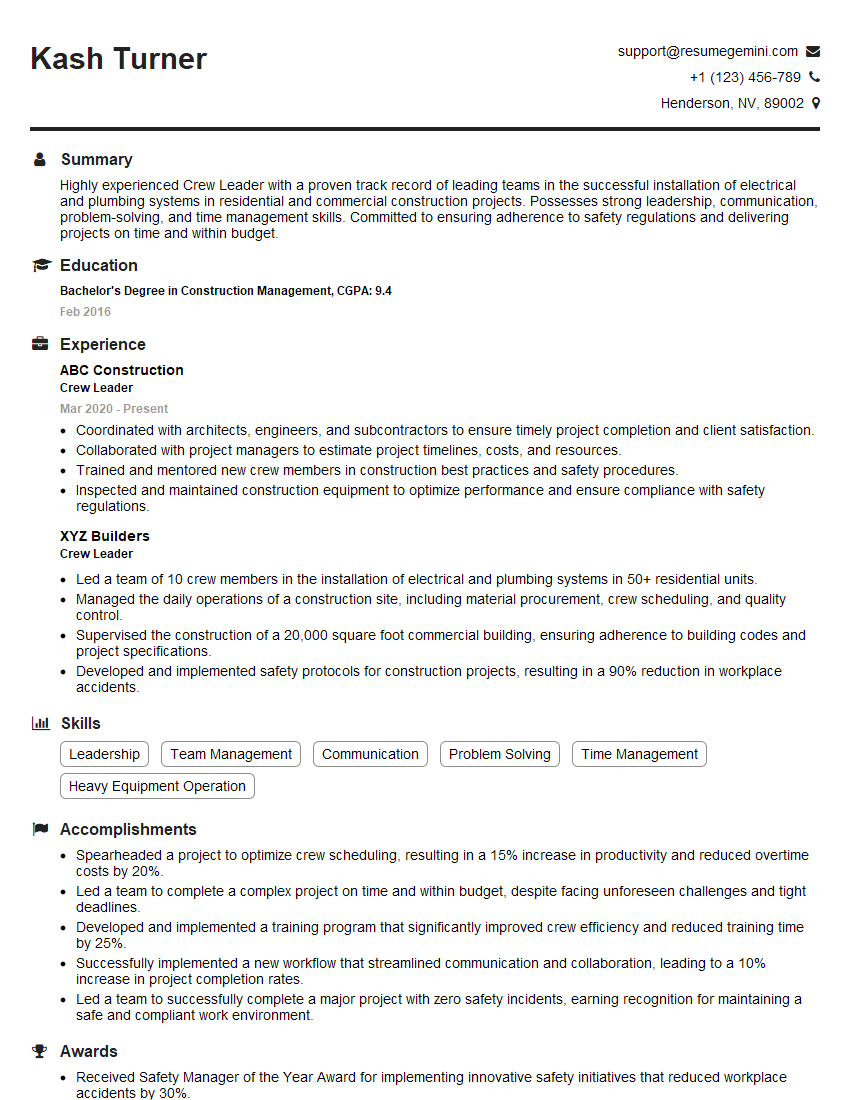
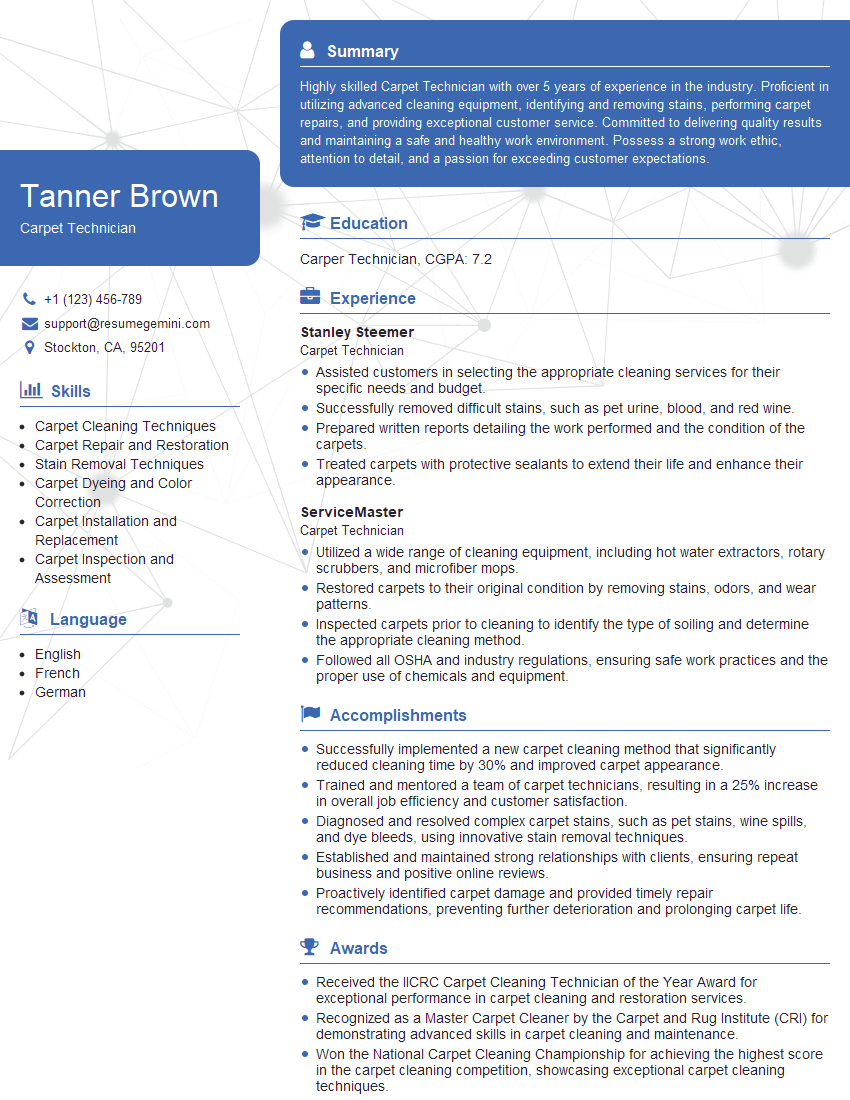
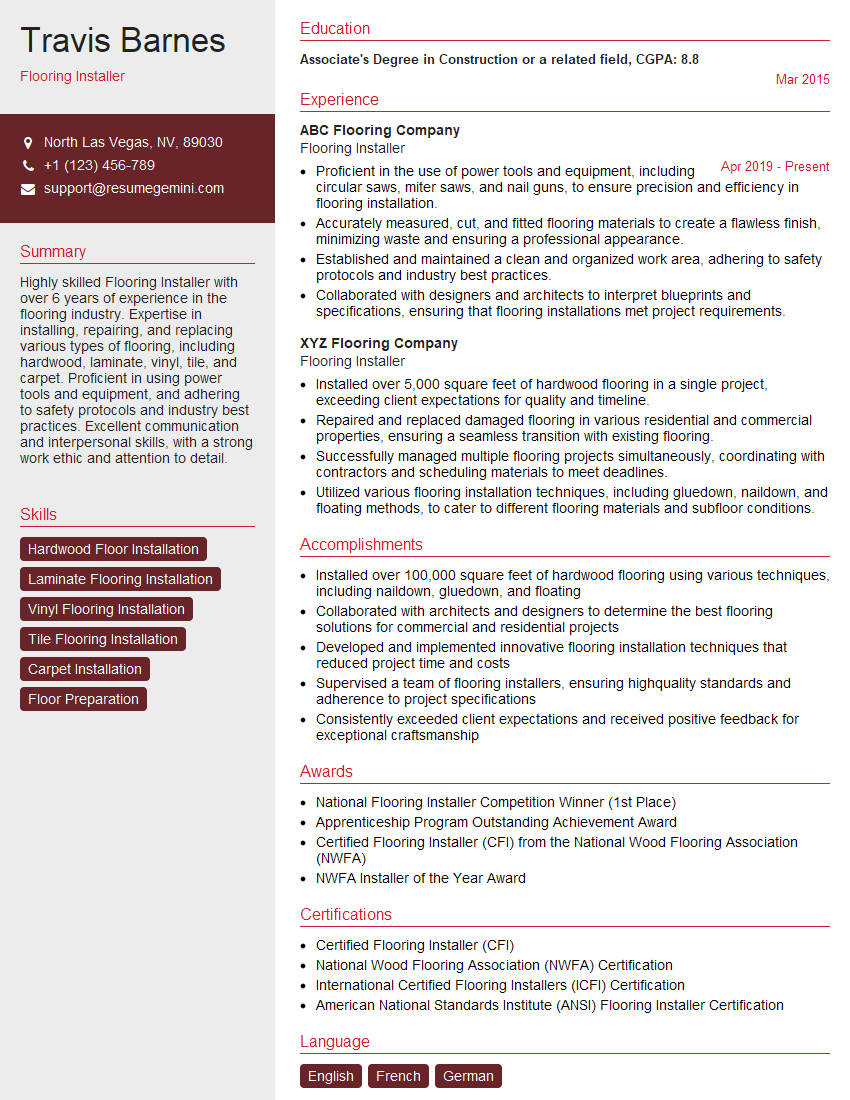
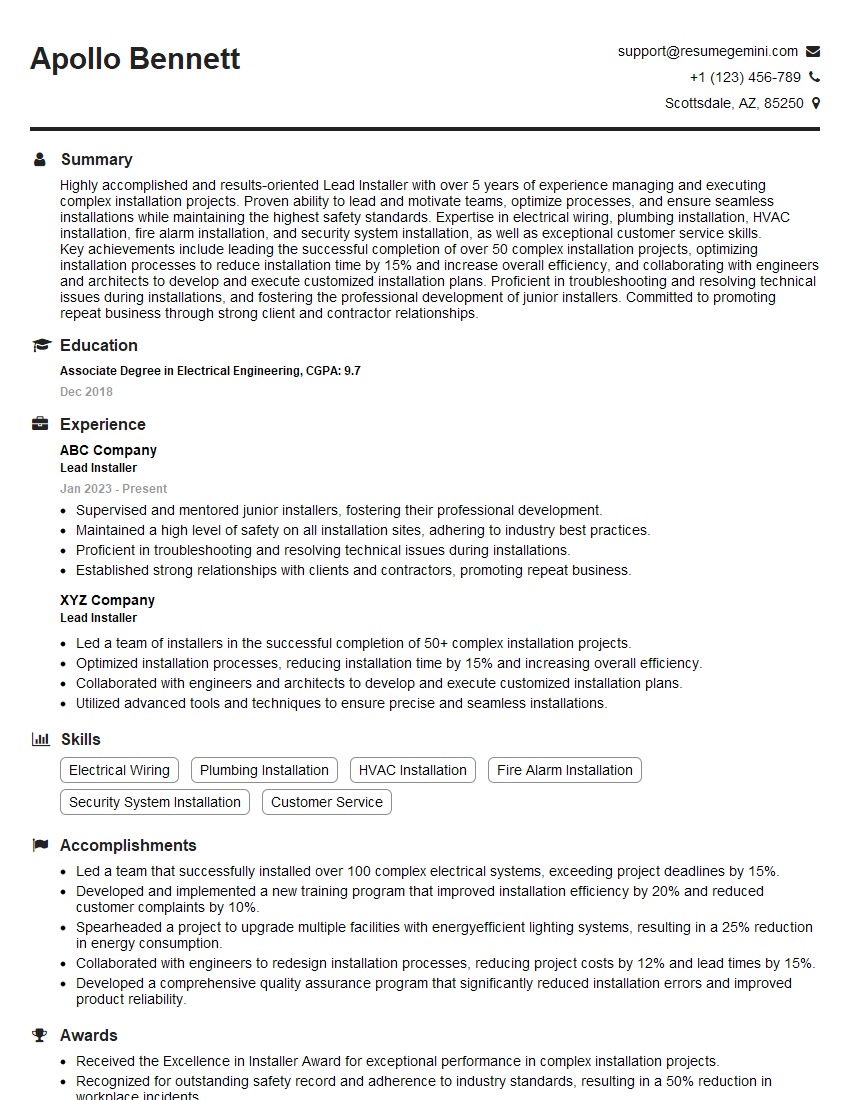
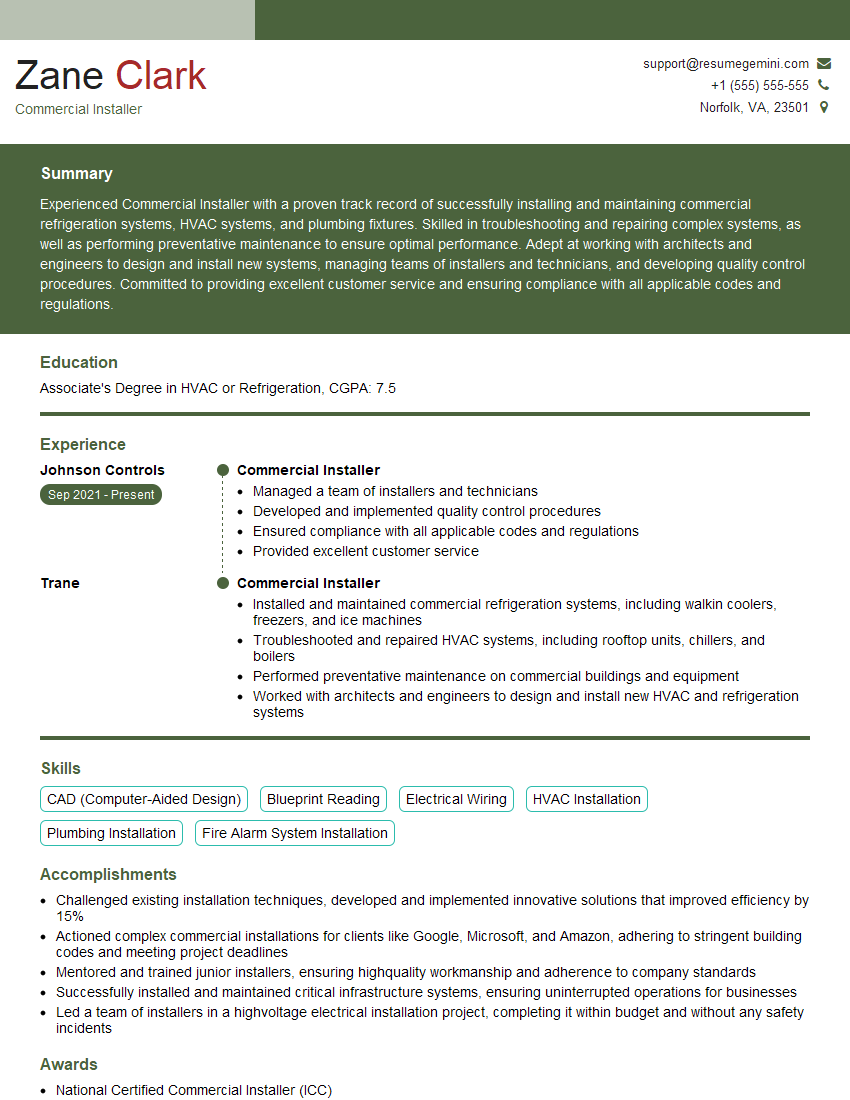
Mastering carpet plank installation opens doors to a rewarding career with excellent growth potential. From entry-level installer to team lead and beyond, your skills are highly valuable in the construction and flooring industries. To maximize your job prospects, create an ATS-friendly resume that highlights your abilities and experience. ResumeGemini is a trusted resource to help you build a professional resume that stands out. They provide examples of resumes tailored to Carpet Plank Installation to guide you, ensuring your application effectively showcases your qualifications. Invest in crafting a strong resume – it’s your first impression on potential employers.

Explore more articles
Users Rating of Our Blogs
Share Your Experience
We value your feedback! Please rate our content and share your thoughts (optional).
What Readers Say About Our Blog
Very informative content, great job.
good