Interviews are opportunities to demonstrate your expertise, and this guide is here to help you shine. Explore the essential Carpet Seam Sealing interview questions that employers frequently ask, paired with strategies for crafting responses that set you apart from the competition.
Questions Asked in Carpet Seam Sealing Interview
Q 1. What types of adhesives are commonly used for carpet seam sealing?
The choice of adhesive for carpet seam sealing depends heavily on the type of carpet fibers and the specific application. However, some commonly used adhesives include water-based latex sealers, hot melt adhesives, and pressure-sensitive tapes. Water-based latex sealers are popular for their flexibility, ease of cleanup, and relatively low odor. They are suitable for most carpet types. Hot melt adhesives provide a strong, quick bond, ideal for high-traffic areas, but require specialized equipment and careful application to avoid burning the carpet fibers. Pressure-sensitive tapes offer a quick and easy solution for smaller seams or temporary repairs, but they may not provide the same long-term durability as other methods.
- Water-based latex: Think of this as the ‘go-to’ choice for many professionals due to its versatility and ease of use.
- Hot melt: This is like a super glue for carpets, offering exceptional strength, but demanding precision.
- Pressure-sensitive tape: This is your quick fix – perfect for minor repairs, but not ideal for long-lasting solutions.
Q 2. Describe the process of preparing a carpet seam for sealing.
Preparing the carpet seam is crucial for successful sealing. It’s like preparing a canvas before painting; a smooth surface ensures better adhesion. The process involves several key steps: First, thoroughly clean the seam area to remove any dirt, debris, or loose fibers using a vacuum cleaner with a crevice tool. Next, use a seam opener or a utility knife to carefully lift the carpet edges, creating a clean and even seam. This exposes the underlying padding and allows for better penetration of the adhesive. Finally, ensure the carpet fibers are laying flat and neatly aligned along the seam before applying the sealer. Any bumps or irregularities will lead to weaknesses in the sealed joint. Think of it as carefully setting two puzzle pieces together before gluing them – the better the fit, the stronger the bond.
Q 3. What are the different methods for applying carpet seam sealer?
There are primarily two methods for applying carpet seam sealer: using a caulking gun and using a seam sealer applicator. A caulking gun is suitable for applying water-based latex sealers. It’s a straightforward, controlled method. For hot melt adhesives, a specialized seam sealer applicator is necessary. This applicator melts the adhesive and applies it evenly to the seam, ensuring a smooth, consistent seal. The selection of the method is heavily influenced by the type of adhesive being used. The caulking gun works well for water-based solutions but the hot melt applicator is essential for the hot melt option.
Q 4. How do you ensure proper adhesion of the seam sealer?
Proper adhesion depends on several factors. Firstly, the proper preparation of the seam is paramount, as already discussed. Secondly, the correct amount of adhesive must be applied; too little will result in weak adhesion, and too much will cause the adhesive to squeeze out excessively and potentially damage the carpet fibers. Thirdly, appropriate pressure is needed after application to ensure thorough bonding. Use a seam roller or a heavy object to firmly press the seam together for the time recommended by the adhesive manufacturer’s instructions, allowing for good contact between the adhesive and the carpet backing. Think of it like pressing two pieces of wood together with glue – the better the contact, the stronger the bond.
Q 5. What tools and equipment are essential for effective carpet seam sealing?
Essential tools and equipment include a vacuum cleaner with crevice tool, seam opener or utility knife, a caulking gun (for water-based sealers), a hot melt adhesive applicator (for hot melt sealers), seam roller or heavy object, measuring tape, and protective gear like gloves and eye protection. For larger jobs, a knee kicker or carpet stretcher may also be beneficial to ensure proper alignment of the carpet before sealing. Choosing the right tools enhances the efficiency and quality of the sealing process. Its like a surgeon having the right tools to perform a complex operation
Q 6. How do you handle different carpet fibers and textures during the sealing process?
Different carpet fibers and textures require careful consideration. For example, delicate fibers like wool or silk might require a gentler approach, possibly using a lower-pressure seam roller and a water-based adhesive to avoid damage. Thick or plush carpets may necessitate more adhesive to ensure proper penetration. Always test the adhesive on an inconspicuous area first to ensure compatibility and avoid potential staining or discoloration. Consider the carpet as a patient – knowing its specific needs allows for better treatment and outcome.
Q 7. What are the common problems encountered during carpet seam sealing?
Common problems include improper seam preparation leading to weak adhesion, using the wrong type of adhesive for the carpet fibers, applying too much or too little adhesive, and not using enough pressure during the bonding process. Other problems can include incorrect tool usage, poor alignment of the carpet before sealing, and inadequate cleaning of the seam. Prevention is key; always adhere to best practices and pay close attention to details. It’s like baking a cake; one wrong step, and the entire thing might be ruined. Careful attention to each step reduces potential problems significantly.
Q 8. How do you troubleshoot uneven seams or adhesive bleed-through?
Uneven seams or adhesive bleed-through are common issues in carpet seam sealing, often stemming from improper preparation or application. Troubleshooting involves identifying the root cause and addressing it systematically.
Uneven Seams: This usually indicates inconsistent application of adhesive, inadequate seam alignment before sealing, or insufficient pressure during the bonding process. To fix this, you might need to carefully lift and realign the carpet sections (if possible without causing further damage), then reapply the adhesive, ensuring even distribution and pressure. A seam roller is crucial for this step. In extreme cases, you might need to remove and reseal the seam.
Adhesive Bleed-through: This occurs when excess adhesive seeps through the carpet fibers. This can be caused by using too much adhesive, using an inappropriate adhesive type for the carpet material, or applying it too thickly. The solution involves carefully removing the excess adhesive using a clean cloth and a mild solvent (always test the solvent in an inconspicuous area first to avoid damaging the carpet). Using a thinner adhesive, applying it in smaller, more controlled amounts, or choosing an adhesive specifically designed for minimal bleed-through can prevent future incidents.
Remember, prevention is key. Proper seam preparation—which I’ll discuss later—goes a long way in avoiding these problems.
Q 9. What safety precautions should be taken during carpet seam sealing?
Safety is paramount in carpet seam sealing. The materials used can be hazardous, and improper handling can lead to accidents. Always work in a well-ventilated area to minimize exposure to fumes from the adhesive. Wear appropriate personal protective equipment (PPE), including safety glasses to protect your eyes from splashes, gloves to prevent skin irritation, and a respirator to filter out any harmful particles or fumes.
Proper Ventilation: Open windows and doors to ensure good air circulation.
PPE Usage: Don’t skimp on safety gear. The health consequences of neglecting PPE can be significant.
Fire Safety: Some seam sealers are flammable. Keep away from open flames and sparks.
Material Disposal: Dispose of all materials according to local regulations.
Think of safety as an investment. It protects you, your clients, and your business.
Q 10. What are the industry standards and best practices for carpet seam sealing?
Industry standards and best practices for carpet seam sealing focus on achieving strong, durable, and invisible seams. Key elements include:
Proper Seam Preparation: This involves thoroughly cleaning the seam area, removing any loose fibers or debris, and ensuring the carpet edges are properly aligned.
Appropriate Adhesive Selection: Choosing an adhesive compatible with both the carpet fibers and the subfloor is crucial for adhesion and preventing bleed-through.
Consistent Adhesive Application: Using the correct amount of adhesive evenly distributed along the seam is essential for a strong bond.
Proper Pressure Application: Using a seam roller to apply consistent pressure across the seam ensures proper bonding.
Appropriate Drying Time: Allowing sufficient drying time before placing furniture or heavy objects on the newly sealed seam prevents disruption.
Quality Control: Inspecting the completed seam for unevenness, bleed-through, or other issues ensures a professional finish.
Adhering to these best practices leads to superior results and client satisfaction. Think of it like baking a cake – the right ingredients and technique are critical for success.
Q 11. How do you determine the appropriate amount of seam sealer to use?
Determining the appropriate amount of seam sealer depends on several factors including the type of seam sealer, the type of carpet, and the width of the seam. Generally, you don’t want to overdo it. Too much adhesive can lead to bleed-through, and too little can result in a weak seam.
Manufacturers usually provide guidelines on the product label. Start with a small amount and gradually increase until you achieve a smooth, even bead along the seam. A thin, consistent application is key. Practice on a scrap piece of similar carpet before working on the actual job to find the right technique and amount.
It’s better to err on the side of caution and apply a slightly smaller amount than you think you need; you can always add more, but you can’t easily remove excess adhesive without damaging the carpet.
Q 12. What is the drying time for different types of seam sealers?
Drying time varies significantly depending on the type of seam sealer, the ambient temperature, and humidity levels. Always refer to the manufacturer’s instructions for specific drying times.
Generally, water-based sealers tend to dry faster than solvent-based sealers. However, factors such as high humidity can increase drying time, while warm, dry conditions will speed it up. Allowing sufficient drying time is crucial for preventing problems later on – a rushed job is never a good job.
A good rule of thumb is to wait at least 24 hours, but often 48 hours or longer is recommended, before placing heavy furniture or allowing foot traffic on the newly sealed seam. This ensures the adhesive has fully cured, creating a robust and long-lasting bond.
Q 13. How do you clean up excess seam sealer?
Cleaning up excess seam sealer requires prompt action. The best approach depends on the type of sealer used. For water-based sealers, a damp cloth is often sufficient. Gently wipe away any excess before it dries completely. For solvent-based sealers, you may need a mild solvent specific to the adhesive. Again, always test the solvent in an inconspicuous area first. Avoid harsh scrubbing to prevent carpet damage.
Speed is important. The quicker you clean up the excess, the easier it will be. Dried seam sealer can be much harder, if not impossible, to remove without causing carpet damage.
Remember to dispose of used cloths and cleaning materials appropriately. Always follow the manufacturer’s cleaning recommendations on the sealer packaging.
Q 14. Explain the importance of proper seam preparation in preventing future problems.
Proper seam preparation is the foundation for a successful and long-lasting carpet seam seal. Neglecting this crucial step often leads to future problems such as loose seams, uneven surfaces, and adhesive bleed-through.
Preparation involves several steps:
Thorough Cleaning: Remove any dust, debris, or loose fibers from the seam area. A vacuum cleaner with a crevice tool is highly effective for this.
Edge Preparation: Make sure the carpet edges are neatly trimmed and aligned to ensure a smooth, even seam. Using a sharp utility knife for trimming is recommended.
Surface Treatment: In some cases, a primer or surface treatment may be necessary to improve adhesion, particularly on certain subfloor materials.
Think of it as building a house—you wouldn’t start constructing the walls before laying a solid foundation. Similarly, proper preparation ensures a strong, durable, and aesthetically pleasing carpet seam that will last for years.
Q 15. How do you handle difficult-to-reach seams?
Reaching those tricky seams, tucked away under furniture or in tight corners, requires a combination of skill and the right tools. I’ve always found that using a combination of specialized tools makes all the difference. For instance, a narrow seam sealer applicator, sometimes even a modified caulking gun with a thin nozzle, allows for precise application in confined spaces. Flexible seam sealer tubes also make navigating around obstacles significantly easier. In more challenging situations, I might even use a small mirror or a flexible camera to ensure complete visibility of the seam before and during application. Think of it like a surgeon delicately working on a patient – precision and care are key to a perfect seal, no matter how inaccessible the location.
I often use a technique where I apply the sealer in short, controlled bursts, allowing the adhesive to flow into the seam naturally. This helps prevent messy build-up, especially in tight areas. Then I gently work the sealer into the seam with a small, flat tool, ensuring even distribution and full contact with the carpet fibers. This approach avoids any excessive build-up of sealer that could create a noticeable ridge.
Career Expert Tips:
- Ace those interviews! Prepare effectively by reviewing the Top 50 Most Common Interview Questions on ResumeGemini.
- Navigate your job search with confidence! Explore a wide range of Career Tips on ResumeGemini. Learn about common challenges and recommendations to overcome them.
- Craft the perfect resume! Master the Art of Resume Writing with ResumeGemini’s guide. Showcase your unique qualifications and achievements effectively.
- Don’t miss out on holiday savings! Build your dream resume with ResumeGemini’s ATS optimized templates.
Q 16. What are the signs of a poorly sealed carpet seam?
A poorly sealed carpet seam is like a weak link in a chain – it can compromise the entire floor’s integrity and aesthetic appeal. You’ll often see tell-tale signs such as noticeable ridges or bumps along the seam. These imperfections create an uneven surface that can be uncomfortable to walk on and visually unappealing. The seam might also be noticeably discolored or show signs of fraying and fiber separation. More significantly, you’ll see gaps or openings where the seam sealer hasn’t bonded properly, potentially leading to tripping hazards and issues with vacuuming. Sometimes, you’ll notice a noticeable discoloration along the seam which can indicate inadequate preparation of the surface before sealing. Over time, these imperfections can worsen, leading to increased wear and tear and creating an entry point for dust mites and other allergens.
Q 17. How do you maintain the quality and longevity of a sealed carpet seam?
Maintaining a quality sealed seam is less about extensive maintenance and more about careful preventative measures. Proper initial application is paramount. The quality of the seam sealer itself also plays a vital role. Using a high-quality, durable sealer designed for the specific carpet type greatly extends the lifespan of the bond. Avoiding excessive moisture in the area is essential as dampness can weaken the adhesive bond. This is especially important after cleaning. Ensure that the carpet is thoroughly dry before allowing heavy foot traffic on the newly sealed seam. Regular vacuuming is also key to prevent debris accumulation and prolong the seal’s integrity. The goal is to keep the seam clean and dry, minimizing any stress that could eventually compromise the seal.
Q 18. What are the different types of seam sealers available in the market?
The market offers a variety of seam sealers, each with its own set of properties. There are hot-melt sealers, which require a specialized heating iron to activate the adhesive. Then there are cold-set sealers which cure without the need for heat. We also have water-based sealers, solvent-based sealers, and even sealers specifically designed for certain carpet materials, like wool or synthetic fibers. The choice often depends on the type of carpet, the installer’s preference, and the job’s specific requirements. Some sealers are designed for high-traffic areas, while others might be more suitable for low-traffic areas. The choice should always prioritize durability and compatibility with the carpet’s material.
Q 19. What is the difference between hot-melt and cold-set seam sealers?
The primary difference lies in their application and curing process. Hot-melt sealers require a specialized heating iron to melt and activate the adhesive, creating an immediate, strong bond. This method is known for its speed and durable results, but it demands precision and experience to avoid scorching or damaging the carpet fibers. Cold-set sealers, on the other hand, cure at room temperature. They are generally easier to apply and require less specialized equipment, but they may take longer to reach their full bonding strength. Think of it like this: hot-melt is like welding two pieces of metal together, a fast and strong bond, while cold-set is more like using epoxy glue – it takes a bit longer, but creates a solid bond eventually. The choice depends on the project’s demands; quick installation might favor hot-melt, while ease of application might favour cold-set.
Q 20. How do you choose the appropriate seam sealer for a specific carpet type?
Choosing the right sealer is critical for a long-lasting, aesthetically pleasing result. First, identify the carpet fiber type – nylon, polyester, wool, etc. – as different sealers are formulated for optimal adhesion with specific fibers. A sealer designed for nylon carpet might not bond as effectively with wool, resulting in a weaker and less durable seam. Secondly, consider the carpet’s color. Some sealers, especially those containing dyes, might slightly alter the carpet’s color, so matching the sealer’s color to the carpet is vital to avoid visual discrepancies. Lastly, assess the location of the carpet and anticipated foot traffic. High-traffic areas demand a robust, durable sealer capable of withstanding significant wear and tear. Using a high-quality sealer suitable for the specific carpet and location is the key to a long-lasting, invisible seam.
Q 21. Describe your experience with different types of carpet seaming equipment.
Over the years, I’ve worked with various seaming equipment, from basic hand-held seam sealers to advanced, electrically powered units. The hand-held sealers are versatile for small jobs and tight spaces, offering good control over the application process. Electrically powered sealers, however, are more efficient for larger projects, especially in commercial settings. They offer consistent heat and faster application rates, reducing labor time. I’ve also used specialized applicator guns that ensure uniform sealer distribution, helping prevent messy application and producing a cleaner finish. The type of equipment I choose largely depends on the project’s scale, the carpet type, and accessibility of the seams. Regardless of the equipment, proper training and experience are crucial to achieving optimal results and avoiding potential damage to the carpet.
Q 22. How do you ensure consistent seam quality across large projects?
Maintaining consistent seam quality across large projects requires a methodical approach and attention to detail throughout the entire process. It’s like baking a large cake – you need to follow the recipe precisely each time to get consistent results.
Preparation is Key: Before starting, I thoroughly inspect the carpet rolls to identify any potential issues like variations in thickness or texture. This helps me plan the seam placement strategically to minimize challenges.
Precise Measurement and Cutting: Accurate measurements are crucial. I use a measuring wheel and straight edge to ensure perfectly aligned seams, minimizing visible discrepancies. Any deviation will be magnified on a large scale.
Consistent Adhesive Application: I use a calibrated adhesive applicator to maintain consistent adhesive flow. This prevents uneven bonding, which can lead to weak seams or visible ridges. I always follow the manufacturer’s instructions for the specific adhesive being used.
Proper Seam Pressing: After applying the adhesive, I use a heavy-duty seam roller to firmly press the seams together, ensuring complete adhesion. I employ a consistent pressure and overlap to guarantee a strong, even bond across the entire length of the seam.
Quality Control Checks: Throughout the process, and especially after completion, I conduct regular quality checks. This involves visually inspecting the seams for inconsistencies and using a seam tester (where applicable) to verify adhesion strength. Any imperfections are addressed immediately.
Q 23. How do you work effectively as part of a team during carpet installation?
Effective teamwork during carpet installation is essential for completing projects efficiently and to a high standard. It’s like a well-oiled machine; each member plays a crucial role.
Clear Communication: Open and constant communication is paramount. This includes regular updates on progress, identifying potential roadblocks, and ensuring everyone understands their individual roles and responsibilities.
Coordination and Collaboration: We coordinate our efforts to ensure a smooth workflow. For example, while one team member lays the carpet, another focuses on seam sealing, and a third might handle the finishing touches. This prevents bottlenecks and ensures timely completion.
Mutual Respect and Support: A positive and supportive team environment fosters collaboration. We help each other, share expertise, and offer constructive feedback. We also ensure that safety protocols are rigorously followed.
Problem Solving as a Team: When challenges arise, we work together to find the best solutions. We brainstorm ideas and leverage our collective knowledge and skills to overcome obstacles quickly and effectively.
Q 24. How do you manage your time effectively to meet project deadlines?
Time management on carpet installation projects is crucial for meeting deadlines and staying within budget. Think of it like managing a complex schedule for a large event.
Detailed Project Planning: Before starting, I create a detailed project plan that includes a timeline, resource allocation, and potential challenges. This provides a clear roadmap for the project and helps in identifying potential delays early on.
Prioritization and Task Sequencing: I prioritize tasks based on their urgency and importance. This allows me to focus on critical aspects of the project while still managing less important tasks efficiently. Seam sealing usually needs to happen before other finishing tasks.
Efficient Workflow: I optimize the workflow by organizing materials and tools strategically, minimizing unnecessary movement and ensuring everything is within easy reach.
Regular Monitoring and Adjustments: I monitor progress regularly and make adjustments to the plan as needed. Unexpected issues might arise, so flexibility is key. If I foresee potential delays, I immediately communicate with the project manager and the client.
Q 25. Describe a time you had to solve a challenging problem during carpet seam sealing.
Once, I encountered a challenging situation involving a very thick, plush carpet with incredibly difficult seams to align. The material was unusually difficult to work with; it shifted easily, and the seams kept bunching up despite my best efforts.
My initial approach of using standard methods failed. The seams continued to bulge and look unprofessional. To resolve this, I implemented a multi-step strategy:
Pre-seaming preparation: I used a heavier-duty seam tape to temporarily hold the seams together before applying adhesive. This prevented the carpet from shifting during the application process.
Strategic adhesive application: I applied a smaller amount of adhesive and allowed it to partially cure for a short period to develop a more workable consistency. This prevented the seam from sinking and the plush from collapsing around the seams.
Gradual pressing: I used a lighter roller initially to press the sections together to avoid shifting the edges, only then using the heavier roller to firmly set the adhesive.
By carefully implementing these steps, I finally achieved perfectly flat and aligned seams that met the high standards expected of the project. The client was extremely satisfied with the end result, emphasizing the importance of perseverance and adaptability in problem-solving.
Q 26. How do you handle customer complaints or concerns regarding seam sealing?
Handling customer complaints or concerns regarding seam sealing requires a professional and empathetic approach. It’s about building trust and finding a solution that leaves the customer feeling valued.
Active Listening: I begin by actively listening to the customer’s concerns without interruption. This shows that I value their feedback and am committed to finding a solution.
Thorough Inspection: I conduct a thorough inspection of the seams to understand the nature of the problem. This helps in identifying the cause of the issue and determining the appropriate course of action.
Honest and Transparent Communication: I communicate my findings honestly and transparently, explaining the cause of the problem in a way that the customer can easily understand. I never make excuses.
Solution-Oriented Approach: I work collaboratively with the customer to find a mutually acceptable solution. This may involve re-sealing the seams, offering a partial refund, or providing other compensation.
Follow-up: After resolving the issue, I follow up with the customer to ensure they are satisfied with the outcome. This demonstrates my commitment to customer service and helps build long-term relationships.
Q 27. How do you stay updated on the latest industry trends and techniques?
Staying updated on the latest industry trends and techniques in carpet seam sealing is vital for maintaining my expertise and providing clients with the best possible service. It’s like staying current with the latest cooking techniques to make the best dishes.
Industry Publications: I regularly read trade magazines and journals related to flooring and carpet installation to stay abreast of new products, techniques, and best practices.
Professional Development: I participate in industry conferences, workshops, and training programs to enhance my skills and knowledge. These events often showcase cutting-edge products and techniques.
Networking: I actively network with other professionals in the field through industry associations and online forums. This enables me to exchange ideas, learn from others’ experiences, and stay informed about new trends.
Manufacturer Resources: I engage directly with manufacturers of carpet and adhesive products. This ensures I am using the most up-to-date and effective materials and am familiar with their latest advancements.
Q 28. What are your career goals and aspirations related to carpet seam sealing?
My career goals involve establishing myself as a leading expert in carpet seam sealing, known for my meticulous work and commitment to customer satisfaction. I aim to continue to grow my skills and contribute to the advancement of this crucial aspect of flooring.
Specialization: I aim to specialize in complex carpet seam sealing projects, working on high-end residential and commercial installations. This will allow me to leverage my skills and expertise to the fullest extent.
Mentorship: I want to mentor and train others in the field, sharing my knowledge and passion for carpet seam sealing to elevate the standards within the industry.
Innovation: I aim to continue exploring innovative techniques and technologies that improve efficiency and quality in carpet seam sealing.
Leadership: In the longer term, I see myself taking on a leadership role, perhaps managing a team of skilled seam sealers, ensuring that we consistently deliver superior workmanship across all our projects.
Key Topics to Learn for Your Carpet Seam Sealing Interview
- Understanding Seam Types: Learn to identify and differentiate between various carpet seam types (e.g., straight seams, L-seams, etc.) and their unique sealing requirements.
- Seam Preparation Techniques: Master the crucial steps involved in preparing seams for optimal sealing, including cleaning, trimming, and proper substrate preparation.
- Adhesive Selection and Application: Understand the properties of different adhesives used in carpet seam sealing and learn best practices for application to achieve strong, durable bonds.
- Seam Sealing Equipment and Tools: Familiarize yourself with the various tools and equipment used in the process, including seam irons, knives, and adhesive applicators. Understand their proper maintenance and operation.
- Quality Control and Inspection: Learn techniques for inspecting sealed seams for flaws, ensuring a professional and long-lasting finish. Understand how to identify and rectify common problems.
- Health and Safety Procedures: Demonstrate knowledge of relevant safety regulations and practices related to adhesive handling, equipment operation, and workplace safety.
- Troubleshooting Common Issues: Be prepared to discuss common problems encountered during the seam sealing process (e.g., adhesive failure, bubbling, uneven seams) and how to effectively resolve them.
- Estimating and Project Management: Understand how to accurately estimate materials and labor costs for seam sealing projects. Demonstrate knowledge of efficient project planning and execution.
Next Steps: Launch Your Carpet Seam Sealing Career
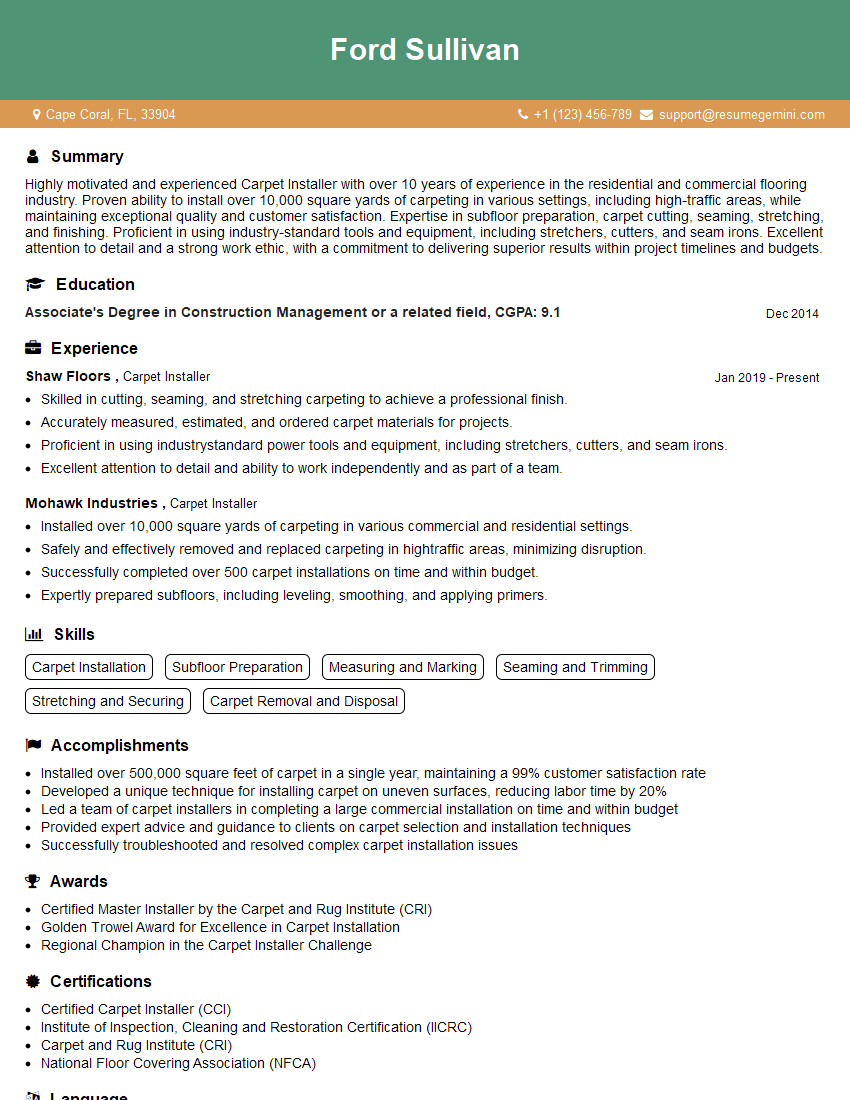
Mastering carpet seam sealing opens doors to a rewarding career with excellent growth potential. To maximize your job prospects, create a professional, ATS-friendly resume that highlights your skills and experience effectively. ResumeGemini is a trusted resource for building compelling resumes that get noticed by recruiters. We offer examples of resumes tailored specifically to the carpet seam sealing industry to help you showcase your qualifications and land your dream job. Take the next step towards your successful career today!
Explore more articles
Users Rating of Our Blogs
Share Your Experience
We value your feedback! Please rate our content and share your thoughts (optional).
What Readers Say About Our Blog
Very informative content, great job.
good