Interviews are opportunities to demonstrate your expertise, and this guide is here to help you shine. Explore the essential Case binding interview questions that employers frequently ask, paired with strategies for crafting responses that set you apart from the competition.
Questions Asked in Case binding Interview
Q 1. What are the different types of case binding?
Case binding encompasses several methods for attaching a cover to a book’s text block. The choice depends on factors like the book’s size, page count, and desired durability. Here are some key types:
- Perfect Binding: This is the most common and cost-effective method for paperback books. The edges of the pages are glued together to form a spine, and then the cover is wrapped around. Think of your average mass-market paperback.
- Saddle Stitch Binding: Pages are folded in half and stapled through the spine. Ideal for magazines, brochures, or booklets with a low page count. It’s recognizable by the staples along the spine.
- Case Binding: This is a more robust method used for hardcover books and high-quality publications. It involves creating a separate cover (the ‘case’) which is then attached to the prepared text block. This is what we will focus on in many of the subsequent questions.
- Spiral Binding/Coil Binding: Pages are punched with holes and bound using a plastic or metal coil. Often seen in notebooks, calendars, and manuals.
- Wire-O Binding: Similar to spiral binding, but uses double-loop wire for a more professional and durable finish. Frequently used for high-end notebooks or calendars.
- Thread Sewing (e.g., Smyth Sewing): A highly durable method where the pages are sewn together through the spine using thread. This results in a lay-flat book suitable for detailed artworks and reference books. Often seen in high quality Bibles or large art books.
Q 2. Describe the process of case binding a hardcover book.
Case binding a hardcover book is a multi-step process requiring precision and expertise. Imagine building a house – each step is crucial for a strong and beautiful final product. Here’s a breakdown:
- Gathering and Sewing (or Adhesion): The printed and folded sections are gathered in the correct order. For durability, they might be sewn together using thread (e.g., Smyth sewing) or adhered using a strong adhesive.
- Pressing: The sewn or glued text block is pressed to ensure a flat and even spine, preparing it for the next stage.
- Trimming: The edges of the text block are trimmed to create a clean, straight edge.
- Cover Board Preparation: The cover boards (often heavy chipboard) are cut to the precise size and shape. The cover material (cloth, leather, etc.) is applied.
- Case Making: The cover boards and cover material are carefully formed into a case, often using specialized machinery.
- Attaching the Case: The prepared text block is carefully glued into the case. The glue needs to be the right type and carefully applied to ensure the spine stays securely attached.
- Headbands and Endpapers: Headbands (decorative fabric strips) are applied to the top and bottom of the spine, providing reinforcement and an attractive finish. Endpapers (heavy sheets of paper) are attached to connect the text block to the cover, ensuring a smooth transition.
- Finishing: Final touches like case stamping (using gold foil or other materials) and jacket application might be added. The finished product undergoes a final quality check.
Q 3. What are the common materials used in case binding?
The materials used in case binding are carefully selected to ensure durability and aesthetics. The choices often reflect the budget and desired quality. Here are some common ones:
- Cover Boards: Chipboard (a type of heavy cardboard), binder’s board (made from various materials like recycled paper pulp), and even rigid plastics. The thickness and density will vary based on the book’s size and intended use.
- Cover Materials: Cloth (e.g., linen, buckram), leather, synthetic leather (vinyl), and paper are commonly used. The choice will depend on the desired look and feel. Cloth covers are relatively inexpensive and versatile; leather offers a luxury feel and is very durable.
- Adhesives: Various types of glue are used, including animal-based glues (more traditional), hot melt adhesives (fast setting), and PVA (polyvinyl acetate) adhesives. The best adhesive will depend on the materials and required bond strength.
- Headbands: These decorative and functional elements are usually made of cotton or linen fabric, reinforcing the spine.
- Endpapers: These are often made from heavy-weight paper stock.
Q 4. Explain the role of adhesives in case binding.
Adhesives are critical in case binding, acting as the ‘glue’ that holds the entire book together. The wrong adhesive can lead to a weak spine and premature failure. Consider them the mortar in our ‘book-building’ analogy.
The selection of the correct adhesive depends on several factors:
- Type of Binding: Perfect binding requires a flexible adhesive, whereas case binding often uses a more rigid adhesive to attach the cover.
- Materials Used: The adhesive must be compatible with both the text block and cover materials (paper, cloth, leather etc.).
- Open Time: This is the amount of time the adhesive remains workable before setting, allowing sufficient time for accurate application.
- Bond Strength: The adhesive must create a strong, long-lasting bond to ensure the book’s durability.
Improper adhesive use leads to common problems such as spine cracking, cover detachment, or pages falling out.
Q 5. How do you ensure the quality of the spine in case binding?
Ensuring spine quality is paramount in case binding. A weak spine compromises the entire book. Here’s how to address it:
- Proper Text Block Preparation: Careful sewing (if applicable) or adhesive application ensures a solid foundation. Using the correct amount of pressure during the pressing stage is vital to ensure a flat spine and prevent the text block from bowing.
- Appropriate Adhesive Choice: Using a high-quality adhesive suitable for the chosen materials is crucial. The adhesive must hold firmly but not be too rigid, allowing the book to open easily.
- Accurate Adhesive Application: Consistent and even adhesive application across the spine is essential. Too much adhesive weakens the spine and can result in seepage, while too little might result in a weak bond.
- Correct Pressing Techniques: Applying the right amount of pressure after the case is attached helps to create a strong, even bond between the spine and cover and prevents the spine from being uneven or weak.
- Quality Control Checks: Thorough inspection during and after the binding process is essential to identify any defects early on. Regular checks ensure that potential issues can be caught and corrected before the book is finished.
Q 6. What are the different types of cover boards used?
Cover boards provide the structural support for the cover of a case-bound book. The selection impacts durability, cost, and the overall feel of the finished product.
- Chipboard: This is the most common type, made from recycled paper pulp and other materials. It’s relatively inexpensive and comes in various thicknesses.
- Binder’s Board: A higher-quality board made from various materials, often offering improved strength and stiffness. It’s denser than chipboard, leading to a more robust cover.
- Bristol Board: A type of thick, high-quality paperboard that’s suitable for lighter books or where a smoother surface is needed.
- Plastic Boards: Used in certain applications, especially for books requiring extra protection against moisture or damage.
The choice of cover board depends on the book’s size, weight, and the desired level of durability.
Q 7. How do you troubleshoot common case binding issues?
Troubleshooting case binding issues requires a systematic approach. It’s like detective work, identifying clues to solve the mystery of a faulty bind. Here’s a framework:
- Identify the Problem: Is the spine weak? Is the cover detaching? Are the pages falling out? Precise problem definition guides the solution.
- Analyze the Process: Carefully examine each stage of the binding process – was there an error in the preparation of the text block? Was the adhesive application uneven? Was the correct pressure used during pressing?
- Examine the Materials: Were the correct materials used? Was the adhesive compatible with all materials? Were the cover boards the correct thickness and quality?
- Adjust the Process: Based on the analysis, adjustments can be made to the binding process to rectify the problem. This might involve using a different type of adhesive, adjusting pressing pressure, or improving the quality of materials.
- Prevention is Key: Regular maintenance of equipment, consistent quality checks throughout the process, and employee training can prevent many of these issues.
For example, if the spine is weak, you might need to investigate the adhesive used, the pressing process, or potential inconsistencies in the text block preparation. A systematic approach ensures effective resolution.
Q 8. What are the safety precautions involved in operating case binding machinery?
Safety is paramount in case binding. Operating these machines involves heavy machinery with moving parts, sharp blades, and potentially hazardous materials like adhesives. Therefore, a strict adherence to safety protocols is crucial.
- Personal Protective Equipment (PPE): Always wear appropriate PPE, including safety glasses, gloves, hearing protection, and closed-toe shoes. This protects against flying debris, chemical splashes, and noise exposure.
- Machine Guards: Ensure all safety guards are in place and functioning correctly before operating any machine. Never bypass safety mechanisms.
- Lockout/Tagout Procedures: Follow proper lockout/tagout procedures before performing any maintenance or repairs. This prevents accidental start-up and injuries.
- Training and Certification: Operators should receive thorough training on the specific machines they operate, including safety procedures. Certification programs often exist to validate competence.
- Regular Inspections: Machines should be inspected regularly for any signs of wear, damage, or malfunction. Report any issues immediately to prevent accidents.
- Housekeeping: Maintaining a clean and organized workspace minimizes the risk of slips, trips, and falls. Proper disposal of waste materials is also important.
For example, I once witnessed a near-miss where a colleague’s loose clothing got caught in a rotating part of the casemaking machine. Fortunately, the emergency stop button was quickly activated, preventing a serious injury. This reinforced the importance of always wearing appropriate PPE and maintaining awareness around moving parts.
Q 9. Describe your experience with different types of casemaking machines.
My experience encompasses a wide range of casemaking machines, from basic manual models to fully automated, high-speed systems. I’m proficient with various types, including:
- Casemaking Machines (different types): I’ve worked extensively with different casemaking machine models that vary in their automation level, from simple hand-fed machines to fully automated lines that perform multiple operations simultaneously.
- Covering Machines: I have experience with both high-speed, automated covering machines and those with manual processes that allow for more bespoke work or smaller projects.
- Book Binding Lines: I’m familiar with integrating casemaking processes into complete bookbinding production lines. This involves coordinating the seamless transfer of materials between different stages of the binding process.
Each machine type presents unique challenges and opportunities. For instance, while automated machines boost productivity, they require more stringent maintenance schedules and a greater understanding of their intricate programming. Manual machines offer more flexibility for custom jobs but are inherently slower. I’ve successfully adapted my approach to optimize efficiency across different systems.
Q 10. How do you maintain case binding equipment?
Maintaining case binding equipment is critical for ensuring consistent quality, maximizing lifespan, and preventing costly downtime. My approach follows a preventative maintenance schedule, combining regular inspections with proactive cleaning and lubrication.
- Regular Cleaning: Daily cleaning removes dust, paper scraps, and adhesive residue. This prevents build-up that can interfere with machine performance and cause malfunctions.
- Lubrication: Regular lubrication of moving parts minimizes friction and wear, extending the life of the machine. The type of lubricant used varies depending on the machine component.
- Blade Sharpening: Sharpening cutting blades regularly ensures clean cuts and prevents damage to the materials. Dull blades can lead to inconsistent results and increased material waste.
- Scheduled Maintenance: Following the manufacturer’s recommended maintenance schedule is crucial. This typically involves more thorough inspections, adjustments, and potential part replacements.
- Documentation: Maintaining detailed records of maintenance performed is vital for tracking machine history and troubleshooting any issues.
Think of it like maintaining a car – regular oil changes, tire rotations, and inspections prevent major breakdowns and ensure long-term performance. Similarly, proactive maintenance in case binding prevents expensive repairs and production delays.
Q 11. What are the key quality control checks during case binding?
Quality control is paramount in case binding. Throughout the process, I perform several checks to ensure the finished product meets the required standards. These include:
- Case Construction: Inspection for accurate sizing, squareness, and proper gluing of the case components. Any imperfections in the case will affect the final book’s appearance and durability.
- Covering Accuracy: Verification that the book cover is correctly aligned and neatly adhered to the case boards. Misalignments or wrinkles can significantly impact the aesthetic quality.
- Spine Alignment: Checking the spine for proper alignment, ensuring the text blocks are centered and that the spine is consistently smooth.
- Adhesive Application: Evaluation of adhesive application, ensuring sufficient bonding strength without excess adhesive that could cause issues. Consistent and even adhesive application is key to successful binding.
- Headband and Tailband Attachment: Checking for the even and secure application of headbands and tailbands, if applicable, ensuring they are correctly aligned and securely fastened to the book’s spine.
- Visual Inspection: A final visual inspection for any visible defects such as scratches, smudges, or loose components. This final quality check is vital to catch any potential issues before the product is finalized.
A systematic approach to quality control helps identify and rectify problems early, preventing large-scale defects and ensuring customer satisfaction.
Q 12. How do you handle variations in paper stock during case binding?
Variations in paper stock present a common challenge in case binding. Different papers have varying thicknesses, textures, and absorbency, which can impact the machine settings and the final product’s quality.
To handle these variations effectively, I adjust the machine settings based on the specific paper characteristics. This may involve:
- Adjusting feed rollers and pressure settings: Ensuring proper paper feeding and preventing jams or misalignments. Thicker papers require greater pressure.
- Modifying adhesive application: Some papers require more or less adhesive depending on their absorbency. Excessive adhesive could cause bleed-through while insufficient adhesive leads to weak binding.
- Calibrating cutting blades: Different paper thicknesses necessitate adjustments to blade settings. Incorrect settings lead to inaccurate cuts or damage to the material.
- Testing and Fine-tuning: Running small test batches to fine-tune machine settings before large-scale production ensures consistent results.
For example, a heavier cover stock requires different pressure settings on the covering machine compared to a lighter weight paper. Failing to adjust these settings could lead to cover wrinkles or tearing.
Q 13. What are the environmental considerations in case binding?
Environmental considerations are increasingly important in case binding. The industry strives to minimize its environmental footprint through sustainable practices:
- Waste Reduction: Implementing efficient material handling and waste reduction strategies to minimize the amount of paper and adhesive waste generated.
- Recycled Materials: Utilizing recycled paper and other materials whenever possible. This reduces the demand on virgin resources and minimizes landfill waste.
- Solvent-Based Adhesives: Minimizing the use of solvent-based adhesives by utilizing environmentally friendly water-based alternatives. This reduces volatile organic compound (VOC) emissions.
- Energy Efficiency: Employing energy-efficient machinery and practices to lower energy consumption and reduce carbon emissions.
- Responsible Disposal: Proper disposal of waste materials according to environmental regulations. This includes separating recyclable materials from non-recyclable waste.
Many companies are now adopting certifications such as FSC (Forest Stewardship Council) to ensure responsible sourcing of materials and environmentally sound practices across the entire supply chain.
Q 14. Explain the concept of ‘headbands’ in case binding.
Headbands are decorative fabric strips, typically cloth or leather, attached to the top and bottom of a book’s spine before case binding. They are a traditional finishing touch that enhances the book’s aesthetic appeal and offer structural reinforcement.
They provide a functional role beyond mere decoration, acting as a buffer between the book cover and text block. This protects the spine from wear and tear, especially during repeated opening and closing. They also add a professional, finished look to the bound book.
The type of headband material, color, and width can be customized to suit the overall design of the book. The process involves carefully attaching the headbands to the text block using appropriate adhesive, ensuring even adhesion and alignment to prevent any imperfections.
Q 15. What is the significance of the cover’s ‘case’ in case binding?
The ‘case’ in case binding refers to the rigid cover that protects the book’s inner pages. It’s not just a decorative element; it’s the structural foundation that holds the entire book together. Think of it as the book’s skeleton—giving it shape, strength, and durability. The case is created separately from the book’s text block (the pages themselves) and then meticulously attached. Its significance lies in its ability to provide a robust, lasting protection for the valuable content within, enhancing the book’s overall presentation and lifespan. Without a properly constructed case, the pages would be vulnerable to damage, bending, and overall deterioration.
Career Expert Tips:
- Ace those interviews! Prepare effectively by reviewing the Top 50 Most Common Interview Questions on ResumeGemini.
- Navigate your job search with confidence! Explore a wide range of Career Tips on ResumeGemini. Learn about common challenges and recommendations to overcome them.
- Craft the perfect resume! Master the Art of Resume Writing with ResumeGemini’s guide. Showcase your unique qualifications and achievements effectively.
- Don’t miss out on holiday savings! Build your dream resume with ResumeGemini’s ATS optimized templates.
Q 16. How do you ensure proper alignment of pages during case binding?
Ensuring proper page alignment during case binding is crucial for a professional-looking and functional book. The process begins even before the binding stage. Accurate trimming and gathering of the pages are fundamental. We utilize sophisticated guillotine cutters to ensure precisely cut pages. Then, careful sewing or adhesive binding creates a consistent text block. To maintain alignment, we employ specialized machinery—like three-knife trimmers—that accurately trim the spine for a perfectly straight edge. During the casing-in process (attaching the cover to the text block), the spine is carefully aligned and adhered, ensuring the pages sit squarely within the case. Regular quality checks throughout the process—visual inspections and measurements—help identify and rectify any misalignments early on. A slight misalignment can make a book look unprofessional, which is why precision is paramount.
Q 17. What are some common defects found in case binding and how to prevent them?
Common defects in case binding can range from minor aesthetic issues to major structural flaws. Some common ones include:
- Loose sections: Pages or signatures that come loose from the spine, often caused by insufficient adhesive or improper sewing. Prevention: Use high-quality adhesives and ensure consistent pressure and drying time during the binding process.
- Skewed covers: The cover is not aligned perfectly with the text block, creating a visually unappealing asymmetry. Prevention: Precise alignment during casing-in and careful quality checks.
- Poor spine adhesion: The cover doesn’t adhere properly to the spine of the text block, resulting in a weak bond. Prevention: Using appropriate adhesives, adequate drying time, and proper pressure application.
- Cover wrinkles or imperfections: Wrinkles or other blemishes on the cover material. Prevention: Careful handling of cover boards and proper pressing techniques.
Regular maintenance of the binding machinery is also key to preventing defects. A proactive approach to quality control—implementing rigorous inspection stages—minimizes these issues.
Q 18. Describe your experience with different types of cover materials (cloth, leather, etc.)
My experience encompasses a wide variety of cover materials, each presenting unique challenges and opportunities. Cloth covers offer a balance of durability, affordability, and aesthetic appeal. I’ve worked extensively with different cloth types—from linen to buckram—each demanding specific handling and finishing techniques to achieve the desired texture and finish. Leather covers, on the other hand, represent a higher level of craftsmanship and luxury. The process requires careful attention to detail—from selecting the right type of leather to ensuring precise stitching and finishing to create a beautifully durable and elegant book. I’ve also worked with various synthetic materials that offer cost-effective alternatives with durable properties. Each material demands a slightly different approach in terms of adhesive selection, pressing techniques, and finishing processes to ensure a high-quality, professional result. For instance, the choice of adhesive needs to be carefully chosen to ensure it doesn’t damage or discolor the material. Experience allows for recognizing how the different material’s characteristics affect the entire binding process.
Q 19. How do you handle large-scale case binding projects?
Handling large-scale case binding projects requires meticulous planning and efficient resource management. This often involves breaking down the project into smaller, manageable tasks with defined timelines. We utilize project management software to track progress, manage materials, and allocate resources effectively. Automation plays a crucial role. Our advanced machinery handles significant volumes while maintaining consistency and accuracy. A robust quality control system with multiple checkpoints throughout the process ensures that the large volume doesn’t compromise quality. Efficient communication with clients and the production team is key to timely completion. A strong team with specialized skills—from skilled machinists to quality control personnel—is essential for successful large-scale projects. For instance, we might use a conveyor belt system to move books through various stages of the binding process smoothly and efficiently. Proper inventory management is also essential to avoid delays.
Q 20. How do you manage deadlines and production schedules in case binding?
Managing deadlines and production schedules requires a proactive approach. We start by creating a detailed project timeline, considering all aspects of the production process—from material procurement to final finishing. This timeline is then broken down into smaller tasks, each with its own deadline. We use project management tools to track progress and identify any potential bottlenecks. Regular meetings with the team help keep everyone on track. We always build in buffer time to accommodate unforeseen delays or challenges. This is particularly important for larger projects where even a minor setback can significantly impact the overall timeline. Effective communication with clients is also critical to manage expectations and maintain transparency on project progress and potential adjustments.
Q 21. How do you ensure that the finished product meets customer specifications?
Ensuring the finished product meets customer specifications is paramount. We start with a thorough review of the client’s specifications, confirming every detail—from paper stock and cover material to the type of binding and finishing requirements. We maintain detailed records of these specifications throughout the process. Rigorous quality control checks are implemented at every stage of production. This includes visual inspections, measurements, and sometimes even specialized tests to ensure adherence to the required standards. Any deviation from the specifications is promptly addressed and rectified. A final quality assurance check ensures the final product meets the client’s approval before delivery. Maintaining open communication with clients throughout the project enables us to clarify any questions or concerns and make necessary adjustments to ensure complete client satisfaction.
Q 22. Explain your understanding of color matching in case binding.
Color matching in case binding is crucial for ensuring the final product is visually appealing and consistent with the design specifications. It involves precisely matching the colors of the cover materials (cloth, paperboard, etc.) with the inks used for printing the cover and any spine labeling. This is particularly important for high-quality books where even subtle color discrepancies can be noticeable and detract from the overall impression.
The process typically involves using color matching systems like Pantone or other standardized color systems to specify the exact colors needed. This requires careful attention to the substrate (the material the color is applied to) as the same color ink might appear slightly different on various types of cloth or paperboard. Experienced case binders understand the nuances of substrate interaction with ink and lighting conditions.
For instance, I once worked on a project where the client insisted on a very specific shade of burgundy for the cloth cover. Slight variations in the cloth’s texture led to minute color shifts. To solve this, we conducted multiple test runs with different ink formulations and lighting conditions, ultimately finding the perfect match through meticulous color adjustment and proofing.
Q 23. What experience do you have with different types of sewing methods in case binding?
My experience encompasses a range of sewing methods used in case binding, including Smyth-sewing, perfect binding, and saddle stitching. Smyth-sewing, the most common for case-bound books, involves sewing the sections together through the fold using a sewing machine with multiple needles. I’m proficient in adjusting the machine settings for various paper weights and section thicknesses. Perfect binding uses adhesive instead of stitching, suitable for books with fewer sections. I’ve worked with both automated and manual perfect binding machines, understanding their strengths and limitations.
Saddle stitching is often used for smaller publications like booklets or magazines. I have experience troubleshooting jams and maintaining the necessary equipment for these methods. The choice of sewing method is dictated by factors like page count, desired durability, and overall book design. For example, a high-page-count novel might necessitate Smyth-sewing for robustness, while a thin magazine might only require saddle stitching.
Q 24. How do you calculate the amount of materials needed for a case binding project?
Calculating material requirements for case binding necessitates careful consideration of several factors. First, accurate measurements of the book block (the assembled pages) are crucial. This includes the height, width, and thickness. The cover boards need to be slightly larger than the book block to accommodate the spine and allow for proper gluing. Then, we need to determine the amount of cover material needed, factoring in the size and the potential for waste due to cutting and fitting. Additional material is also necessary for the spine lining and headbands.
The calculation usually involves simple geometry: for instance, calculating the area of the cover boards and adding extra for overlapping and trimming. Experience plays a significant role in accurately estimating waste and adjusting the calculations for different material types and book sizes. We often use specialized software for more complex projects to optimize material usage and minimize waste.
For example, before ordering materials for a 500-copy project, I would meticulously calculate the area needed for each cover board, adding a 5-10% margin for waste and taking into account the thickness of the paperboard and the type of glue used, allowing for potential expansion or contraction during the binding process.
Q 25. Describe your troubleshooting experience with case binding machinery malfunctions.
Troubleshooting case binding machinery malfunctions is a critical part of my role. My experience involves diagnosing and resolving problems in Smyth-sewing machines, perfect binding machines, and other related equipment. This includes understanding the mechanical components, electrical systems, and hydraulic systems within the machines. I’m adept at identifying the source of a malfunction through systematic observation and testing, focusing on possible issues from thread breakage to mechanical jams.
One memorable instance involved a recurring jam in the Smyth-sewing machine. After systematically checking the various components, I realized the problem stemmed from a slight misalignment of the needle plate, causing the thread to snag. A simple adjustment resolved the issue, preventing significant production delays. I am also familiar with preventative maintenance techniques, helping to avoid breakdowns and prolong the lifespan of the equipment.
Q 26. Explain your experience working with different types of book sizes and formats.
I’ve worked with a wide variety of book sizes and formats, from small pocket-sized notebooks to large-format art books. My experience includes working on different page counts, paper types, and cover materials. Each book size and format requires adjustments to the binding process, such as altering sewing settings for Smyth-sewing or adjusting the adhesive application for perfect binding. This understanding is essential for creating high-quality, durable books regardless of their size or complexity.
For example, binding a large coffee table book requires different considerations compared to a small paperback novel. The large format necessitates robust cover boards and might require specialized machinery for handling its weight. Conversely, a small paperback novel may call for a simpler and more cost-effective binding method.
Q 27. How familiar are you with industry standards and best practices for case binding?
I’m very familiar with industry standards and best practices in case binding. I adhere to guidelines regarding material specifications, ensuring the chosen materials meet the required durability and quality standards. I also follow safety protocols, maintain a clean and organized workspace, and am knowledgeable about relevant regulations concerning workplace safety and environmental considerations. I am familiar with standards established by organizations like the Book Manufacturers’ Institute (BMI) and adhere to best practices for efficient and high-quality production. This includes understanding the importance of consistent quality control throughout the entire binding process.
Q 28. What are your salary expectations for this Case Binding position?
My salary expectations for this Case Binding position are in the range of [Insert Salary Range] per year. This is based on my experience, skills, and the requirements of the role. I am confident that my contributions will greatly benefit your company, and I am open to discussing this further.
Key Topics to Learn for Case Binding Interview
- Case Binding Types: Understanding the different types of case binding (e.g., hardcover, softcover, perfect binding) and their applications. Consider the advantages and disadvantages of each.
- Materials and Processes: Familiarize yourself with the various materials used (e.g., paper stock, cover boards, adhesives) and the steps involved in the case binding process. Be prepared to discuss quality control measures at each stage.
- Equipment and Machinery: Gain a working knowledge of the machinery used in case binding, including their operation, maintenance, and troubleshooting. This could range from sewing machines to casemaking machines.
- Production Planning and Scheduling: Understand the principles of efficient production planning, including job scheduling, material management, and workflow optimization within a case binding environment.
- Quality Control and Assurance: Learn about the importance of quality control in case binding, including identifying and addressing defects, and implementing preventative measures to maintain high standards.
- Cost Estimation and Budgeting: Develop an understanding of how to estimate costs associated with case binding projects, factoring in materials, labor, and overhead.
- Health and Safety: Be prepared to discuss relevant health and safety regulations and practices within a case binding workplace. This includes the safe handling of materials and machinery.
- Problem-Solving and Troubleshooting: Practice identifying and resolving common problems encountered during the case binding process. Think about how you would approach unexpected challenges.
Next Steps
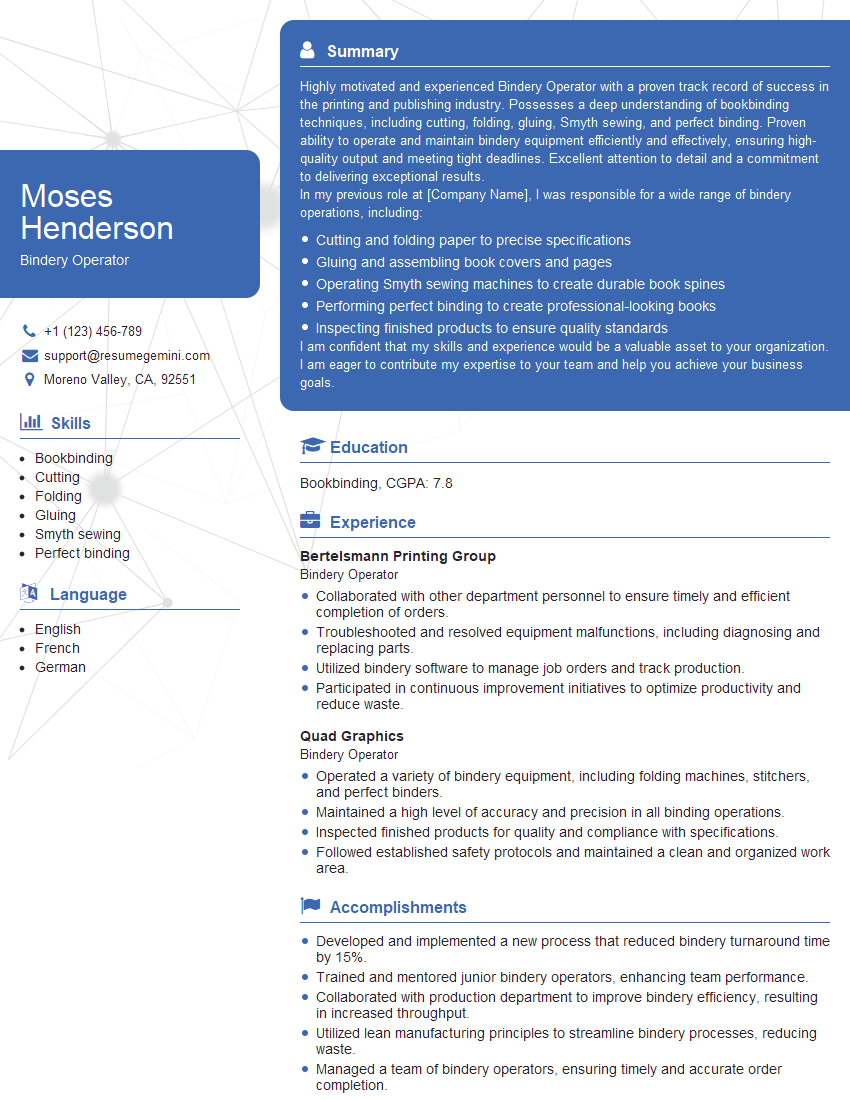
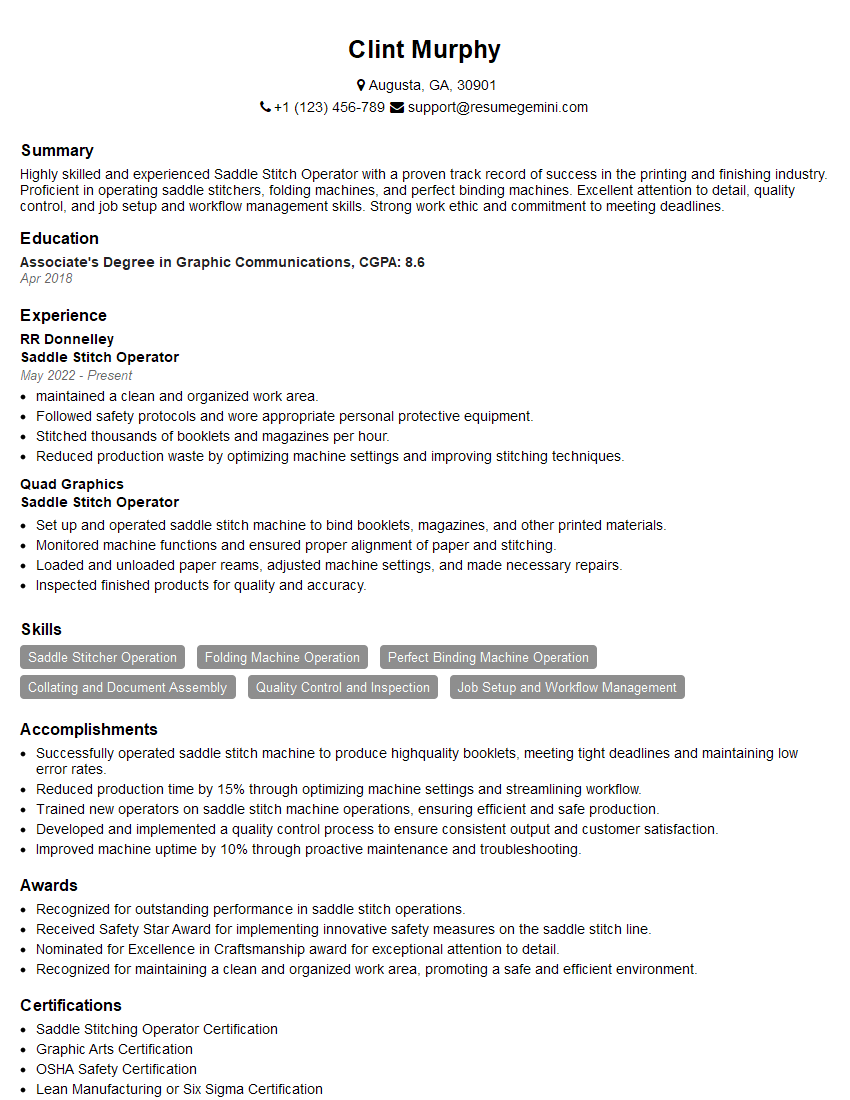
Mastering case binding opens doors to exciting career opportunities in the publishing, printing, and packaging industries. To maximize your job prospects, create a compelling and ATS-friendly resume that showcases your skills and experience effectively. ResumeGemini is a trusted resource to help you build a professional resume that stands out. We provide examples of resumes tailored to the case binding industry to guide you in crafting the perfect application.

Explore more articles
Users Rating of Our Blogs
Share Your Experience
We value your feedback! Please rate our content and share your thoughts (optional).
What Readers Say About Our Blog
Very informative content, great job.
good