Are you ready to stand out in your next interview? Understanding and preparing for CDL-A interview questions is a game-changer. In this blog, we’ve compiled key questions and expert advice to help you showcase your skills with confidence and precision. Let’s get started on your journey to acing the interview.
Questions Asked in CDL-A Interview
Q 1. Explain the difference between a pre-trip inspection and a post-trip inspection.
Pre-trip and post-trip inspections are crucial for ensuring the safe operation of a commercial vehicle. A pre-trip inspection is a thorough examination of your vehicle before you start your trip, while a post-trip inspection is done after you complete your trip.
Think of it like this: pre-trip is like a doctor’s checkup before a big game – you want to make sure everything is in top condition to prevent problems during the game. Post-trip is the post-game analysis; you check for any damage incurred during the trip and note any maintenance needs.
- Pre-trip Inspection: This involves checking tires, lights, brakes, fluids (oil, coolant, brake fluid, power steering fluid), wipers, mirrors, and more. I meticulously examine every component, ensuring everything is functioning correctly and securely. I document any issues found in my pre-trip inspection report.
- Post-trip Inspection: This focuses on identifying any damage or wear and tear that occurred during the trip. I check for leaks, loose parts, tire pressure changes, and any other potential issues that might need attention. Again, I meticulously document everything in my post-trip report.
Both inspections are mandatory and are vital for safety and preventing costly roadside breakdowns. Failing to conduct these inspections can lead to serious accidents and hefty fines.
Q 2. Describe your experience with ELDs (Electronic Logging Devices).
Electronic Logging Devices (ELDs) have become an integral part of my daily operations. I’m proficient in using ELDs to accurately record my hours of service (HOS), ensuring compliance with federal regulations. I’ve used several different ELD brands and am comfortable with their various functionalities, including automatic recording of driving time, on-duty time, and off-duty time. I understand the importance of properly logging my activities to avoid violations.
I understand how to use the ELD to accurately record my driving time, including making corrections when necessary. I also know how to access and download my RODS (Record of Duty Status) data for compliance audits or in case of an inspection. For example, if I take an unexpected break due to a traffic jam, I’ll immediately log that time correctly in my ELD, making sure I understand the different status options (driving, on-duty, off-duty, sleeper berth). I’ve never had any issues with ELD compliance because I understand the importance of accuracy and maintain diligent logging practices.
Q 3. How do you maintain a safe following distance while driving a Class A vehicle?
Maintaining a safe following distance is paramount when driving a Class A vehicle. The increased size and weight require significantly more stopping distance compared to a passenger car. The 3-second rule is a good guideline, but in adverse conditions, it needs to be significantly increased.
Here’s how I apply it:
- Ideal Conditions: I choose a fixed object like a sign or landmark and count three seconds after the vehicle in front of me passes it. If I haven’t passed the same object by the time I finish counting, my following distance is sufficient.
- Adverse Conditions (Rain, Snow, Ice, Fog): In these situations, I increase the following distance to at least 6-8 seconds, or even more depending on the severity of the weather. Reduced visibility and slick roads significantly increase stopping distances.
- Heavy Traffic: In heavy traffic, I maintain an even greater distance to allow for extra reaction time and to reduce the risk of rear-end collisions. I’m constantly aware of the traffic flow and adjust my speed and following distance accordingly.
Remembering that reaction time increases exponentially in adverse conditions is key. A seemingly small increase in speed or a slightly reduced following distance can drastically increase the risk of accidents in heavy or inclement weather.
Q 4. What are the regulations regarding hours of service (HOS)?
Hours of Service (HOS) regulations are designed to prevent driver fatigue and improve road safety. They dictate how long a commercial driver can operate a vehicle within a given period. These regulations are strictly enforced, and violations can lead to severe penalties.
Key aspects include:
- Maximum Driving Time: The maximum driving time within a 24-hour period is generally 11 hours, provided you have not exceeded the 60 or 70 hour weekly limits.
- 30-Minute Break Requirement: After 8 consecutive hours of driving, I am required to take a 30-minute break.
- Daily Limit: The maximum number of hours I can be on-duty (driving and not driving) is 14 hours.
- Weekly Limit: I can’t drive more than 60 or 70 hours in a 7 or 8-day period, respectively depending on the cycle I’m operating under. The 7-day cycle restarts every 7 days, whereas the 8-day cycle has a rolling 8-day period.
- Rest Periods: There are mandatory rest periods as well. Specifically, I must have 34 hours off-duty in a 7 or 8-day period.
Understanding these regulations is crucial to avoid violations. I always meticulously plan my trips to account for HOS regulations, and use my ELD to carefully track my hours.
Q 5. Explain your understanding of different types of endorsements (Hazmat, Tanker, etc.).
Endorsements on a Commercial Driver’s License (CDL) authorize a driver to operate specific types of vehicles or transport hazardous materials. Some common endorsements include:
- Hazmat (Hazardous Materials): This endorsement allows me to transport hazardous materials. It requires additional training and a thorough understanding of handling, storage, and safety regulations for various hazardous materials.
- Tanker: This endorsement allows for the operation of vehicles that transport liquids or gases in bulk tankers. This requires specific knowledge of handling liquids and gases under pressure and maintaining stability of the load.
- Doubles/Triples: This endorsement permits the operation of vehicles towing two or more trailers. This necessitates specialized skills in maneuvering longer vehicle combinations.
- Passenger (P): This endorsement allows me to operate vehicles designed to carry 16 or more passengers (including the driver).
I currently hold a Hazmat endorsement, which involved completing a thorough background check, specialized training, and testing. I understand the strict regulations and safety procedures associated with transporting hazardous materials, including proper paperwork, emergency response, and security protocols. The tanker endorsement is something I’m considering pursuing in the future to expand my career options.
Q 6. How do you handle challenging weather conditions while driving?
Driving in challenging weather conditions demands extra caution and skill. My approach involves a multi-faceted strategy:
- Preparation: Before setting out, I always check the weather forecast and adjust my route or schedule if necessary. I make sure my vehicle is properly equipped with chains (if required), sufficient fluids, and that all lights and wipers are working correctly.
- Reduced Speed: I significantly reduce my speed, leaving ample space between my vehicle and others. I’m very cautious about approaching curves and intersections.
- Increased Following Distance: As mentioned earlier, the 3-second rule is a minimum, and it’s crucial to significantly increase following distance in adverse conditions.
- Awareness: I remain hyper-vigilant, constantly scanning my surroundings for hazards, paying close attention to road conditions, and anticipating the actions of other drivers. I reduce distractions to a minimum.
- Safe Parking: If conditions become too severe, I do not hesitate to pull over to a safe location and wait for the weather to improve. Safety always comes first.
Driving in snow or rain is not just about maintaining a slow speed, it’s about maintaining adequate control of the vehicle. I carefully monitor my speed and braking to avoid skidding and ensure stability. This experience has taught me the importance of situational awareness and proactive safety measures in challenging environments.
Q 7. Describe your experience with different types of trailers (e.g., dry van, reefer, flatbed).
My experience encompasses various trailer types, each demanding unique handling techniques and safety considerations:
- Dry Van: This is the most common type, used for general cargo. I’m proficient in securing cargo properly using straps and other equipment, ensuring the load is balanced and stable.
- Reefer (Refrigerated): I have extensive experience operating reefers, which require monitoring the temperature settings to maintain the integrity of temperature-sensitive goods. I’m familiar with troubleshooting potential issues with the refrigeration unit.
- Flatbed: Flatbed trailers necessitate secure load placement and proper tarping. I understand the importance of weight distribution and securing the load to prevent shifting during transit.
- Tanker (specific mention due to previous endorsement): I’m experienced in handling the complexities of tanker trailers, understanding the loading and unloading procedures, proper documentation and ensuring the stability of liquid loads.
Understanding the specific characteristics of each trailer type is crucial for safe and efficient operations. For example, a flatbed load requires a different securing technique than a dry van load. Each type requires a different set of skills, and maintaining a clear understanding of these differences is critical to safe operation and compliance with industry regulations.
Q 8. How do you secure a load to prevent shifting or damage during transit?
Securing a load properly is paramount for safety and preventing damage. It’s like building a sturdy house – each step is crucial. My approach involves several key steps, starting with a thorough inspection of the cargo and the trailer. I ensure the trailer is clean and free of debris that could interfere with securing straps.
- Proper Placement: I distribute the weight evenly to avoid overloading one side. Heavier items go at the bottom, lighter items on top. Think of it like stacking bricks – the heaviest ones form a solid base.
- Appropriate Tie-downs: I use the correct number and type of tie-downs for the specific cargo and weight. I ensure they’re appropriately rated and properly tensioned – too loose and the load shifts, too tight and you risk damage. I always double-check that the straps are properly anchored to the trailer’s D-rings or other secure points.
- Blocking and Bracing: Where needed, I use blocks and boards to prevent shifting. This is especially important with oddly shaped or unstable items. Imagine using wooden blocks to secure a stack of oddly shaped boxes to stop them from leaning.
- Final Inspection: Before driving, I perform a final walk-around inspection, checking all tie-downs, blocks, and bracing to ensure everything is securely in place. This is a crucial final step to avoid potential problems on the road.
Failing to properly secure a load can lead to accidents, damage, and delays, so thoroughness is key.
Q 9. What is your experience with navigating using GPS and maps?
I’m highly proficient with GPS and map navigation. I use both in-cab navigation systems and dedicated GPS devices, regularly updating my maps to ensure accuracy. I don’t solely rely on technology, though. I also know how to interpret paper maps and use visual cues, like road signs and landmarks.
For example, I once experienced a GPS malfunction in a remote area with poor cell service. My familiarity with paper maps and my ability to orient myself using the landscape allowed me to navigate safely to the nearest town, where I could get the GPS issue resolved.
My experience extends to planning routes based on traffic conditions, weather forecasts, and delivery deadlines. I always have backup routes in mind in case of unexpected road closures or construction.
Q 10. How do you handle unexpected mechanical issues on the road?
Handling mechanical issues is a critical aspect of long-haul trucking. My first step is always safety – securing the vehicle safely off the road, away from traffic, and using hazard lights.
- Assessment: I assess the situation – is it something minor I can handle myself (e.g., a flat tire), or do I need professional assistance?
- Communication: I immediately contact my dispatcher and provide them with precise location, details of the issue, and the condition of the load.
- Emergency Procedures: If necessary, I follow appropriate emergency protocols and ensure the safety of myself and other drivers. This includes knowing how to use warning triangles and emergency communication systems.
- Roadside Assistance: For major issues, I utilize roadside assistance services, following their instructions carefully. I also document the entire incident for insurance purposes.
- Temporary Fixes: In some situations, I might have to make temporary repairs to allow the truck to be moved to a safe location for a more complete repair, if deemed safe to do so.
Proactive maintenance is key to minimizing mechanical issues. I regularly inspect my vehicle and adhere to recommended maintenance schedules.
Q 11. What are your strategies for managing fatigue while on long hauls?
Fatigue management is essential for safety. It’s not just about getting enough sleep; it’s about planning and prioritizing rest.
- Planning: I plan my trips carefully, factoring in realistic driving times and sufficient breaks. I avoid driving for extended periods without rest.
- Regular Breaks: I adhere strictly to the Hours of Service regulations, taking mandatory breaks and avoiding fatigue. Short breaks every couple of hours are just as important as longer rest periods.
- Healthy Habits: I maintain a healthy lifestyle. This includes regular exercise, a balanced diet, and sufficient hydration. These habits contribute to better alertness and reduce fatigue.
- Sleep Hygiene: I prioritize quality sleep. This means creating a comfortable sleep environment when I’m off-duty and sticking to a regular sleep schedule as much as possible.
- Awareness: I am acutely aware of the signs of fatigue—yawning, drowsiness, difficulty concentrating—and I never drive when I feel tired. If necessary, I will pull over at a safe location and rest.
Driving tired is dangerous. My safety, and the safety of others, is my top priority.
Q 12. Describe your experience with managing paperwork and delivery documentation.
Paperwork and delivery documentation are integral to my job. Accuracy and organization are key.
- Electronic Logging Devices (ELDs): I’m proficient in using ELDs to accurately record my hours of service and maintain compliance.
- Bill of Lading (BOL): I meticulously check the BOL for accuracy before pickup and delivery, ensuring that the details match the cargo. Any discrepancies are immediately reported to the dispatcher.
- Delivery Receipts: I obtain and properly complete delivery receipts, ensuring they’re signed by the recipient and any necessary additional information is included.
- Other Documents: I carefully handle any other required documents, such as proof of delivery, inspection reports, or customs forms.
- Organization: I maintain organized files, both physical and digital, ensuring all documents are easily accessible and readily available should they be requested.
Accurate and timely paperwork is critical for accurate payment and prevents potential disputes.
Q 13. How do you communicate effectively with dispatchers and clients?
Effective communication is crucial in this job. I strive to be clear, concise, and professional in all my interactions.
- Clear and Concise Communication: I use clear and concise language, avoiding jargon when speaking to dispatchers and clients. I provide updates on my location, estimated time of arrival (ETA), and any potential delays promptly.
- Professionalism: I maintain a professional demeanor in all communications, regardless of the circumstances. I am respectful and courteous even during challenging situations.
- Active Listening: I actively listen to instructions and respond appropriately. If there’s something I don’t understand, I ask clarifying questions.
- Proactive Communication: I proactively communicate with dispatchers and clients, keeping them informed about my progress, potential issues, or changes in plans.
- Multiple Communication Methods: I’m comfortable using various communication methods, including phone, text, and email, depending on the situation and the preferred method of the dispatcher or client.
Open and honest communication prevents misunderstandings and ensures efficient operations.
Q 14. What is your approach to maintaining a clean and organized truck?
Maintaining a clean and organized truck is not just about aesthetics; it’s about safety and efficiency.
- Regular Cleaning: I regularly clean my truck’s interior and exterior, removing trash and debris. A clean workspace enhances focus and helps prevent accidents caused by clutter.
- Organized Storage: I organize my belongings and supplies in designated areas. This makes it easier to find what I need quickly without hindering movement or hindering safety.
- Pre-Trip Inspections: As part of my pre-trip inspection, I clean the truck’s windshield and mirrors ensuring clear visibility.
- Preventative Maintenance: Regular cleaning also helps to identify potential issues early, reducing the risk of unexpected breakdowns.
- Safe Disposal: I properly dispose of any hazardous waste according to regulations.
A clean and organized truck contributes to a safer and more efficient working environment.
Q 15. How do you prioritize safety while driving?
Safety is my top priority, and it’s woven into every aspect of my driving. It’s not just about following the rules; it’s about a proactive, defensive mindset.
- Pre-Trip Inspections: I meticulously perform pre-trip inspections, checking everything from tire pressure and lights to fluid levels and brake systems. Think of it as a thorough health check for my truck before every journey. A missed detail could lead to a breakdown or, worse, an accident.
- Defensive Driving Techniques: I practice defensive driving, anticipating potential hazards and maintaining a safe following distance. I’m constantly scanning my surroundings, anticipating the actions of other drivers, and adjusting my speed and position accordingly. Imagine it like playing chess on the road – I’m always thinking several moves ahead.
- Weather Awareness: I monitor weather conditions closely and adjust my driving accordingly. Heavy rain, snow, or fog requires reduced speed and increased following distance. I’m prepared to pull over and wait out severe weather if necessary. Safety trumps time.
- Vehicle Maintenance: I’m diligent about vehicle maintenance, ensuring my truck is always in optimal condition. Regular servicing and prompt attention to any mechanical issues are vital for preventing breakdowns and ensuring safe operation. A well-maintained truck is a safe truck.
- Fatigue Management: I prioritize sufficient rest and avoid driving when fatigued. Driving tired is as dangerous as driving drunk. I adhere strictly to hours-of-service regulations and plan my routes accordingly to avoid burnout.
Career Expert Tips:
- Ace those interviews! Prepare effectively by reviewing the Top 50 Most Common Interview Questions on ResumeGemini.
- Navigate your job search with confidence! Explore a wide range of Career Tips on ResumeGemini. Learn about common challenges and recommendations to overcome them.
- Craft the perfect resume! Master the Art of Resume Writing with ResumeGemini’s guide. Showcase your unique qualifications and achievements effectively.
- Don’t miss out on holiday savings! Build your dream resume with ResumeGemini’s ATS optimized templates.
Q 16. What are your strengths and weaknesses as a commercial truck driver?
My strengths lie in my experience, safety consciousness, and ability to adapt to challenging situations. I’ve consistently maintained a clean driving record, demonstrating my commitment to safe and efficient operation. My experience includes navigating various terrains and weather conditions, handling diverse cargo types, and effectively managing time constraints. I’m also highly proficient in pre-trip inspections and complying with DOT regulations.
My weakness is sometimes being overly meticulous, leading to longer-than-average pre-trip inspections. However, I am actively working on improving my efficiency in this area while maintaining my commitment to thoroughness, knowing that a few extra minutes of inspection can prevent hours, or even days, of downtime caused by a preventable issue.
Q 17. Describe your experience with using air brakes.
I possess extensive experience with air brakes, understanding their fundamental components and operational principles. I know how to perform pre-trip inspections, check air pressure, and troubleshoot common air brake issues.
- Pre-trip Inspections: I always check the air pressure, air lines, and brake chambers for leaks and damage. Low air pressure is a critical safety concern.
- Operational Knowledge: I understand how to properly apply and release the brakes, using the appropriate techniques for various driving conditions. I understand the importance of gradual braking and avoiding sudden stops.
- Troubleshooting: I know how to identify and address common air brake problems, such as low air pressure, leaks, or brake malfunctions. In case of an issue, I know when to immediately pull over and call for assistance.
- Emergency Procedures: I’m well-versed in emergency braking procedures and know how to handle situations such as brake failure.
My experience ensures I can safely and efficiently operate a commercial vehicle, equipped with air brakes, in various situations.
Q 18. Explain your understanding of different types of cargo and their specific handling requirements.
My experience encompasses handling various cargo types, each with its unique requirements. For example:
- Dry Van: This involves securing the load properly using straps, ensuring it’s balanced and won’t shift during transit. I understand the importance of weight distribution to maintain stability.
- Refrigerated Cargo: This needs temperature monitoring throughout the journey. I understand how to set and monitor the reefer unit to maintain the required temperature range to protect the integrity of the goods.
- Hazardous Materials: This requires specialized handling and documentation. I’m familiar with the regulations and safety protocols associated with transporting hazardous materials, including proper placarding, securing, and emergency response procedures. I’d never transport HazMat without the appropriate training and endorsements.
- Oversized/Overweight Loads: These require special permits and careful planning. I am familiar with the regulations surrounding oversized loads and understand the importance of route planning to ensure safe transit, including appropriate escorts where necessary.
Understanding the specific needs of each cargo type is paramount for ensuring safety and delivering goods in optimal condition.
Q 19. How familiar are you with DOT regulations and compliance?
I am thoroughly familiar with DOT regulations and compliance. I understand the importance of adhering to hours-of-service regulations, vehicle maintenance requirements, and driver qualification standards. I maintain all necessary documentation, including my CDL, medical certification, and logs. I am also familiar with regulations concerning hazardous materials, vehicle inspections, and weight limits. Non-compliance can lead to serious penalties, including fines and loss of license.
Regularly reviewing updates to these regulations is crucial for maintaining compliance and ensuring safe operation. This commitment to staying informed allows me to contribute to a safe and efficient transportation environment.
Q 20. Describe your experience working independently.
My experience as a commercial truck driver has heavily emphasized independent work. I am comfortable working autonomously, managing my time effectively, and planning my routes efficiently. I am adept at troubleshooting issues that arise on the road independently and making timely decisions, considering my workload and overall schedule. I’m used to being accountable for the successful and timely completion of my assigned tasks without direct supervision.
This independence is crucial for long-haul driving, as I regularly spend extended periods on the road without direct oversight. Trustworthiness and self-reliance are key traits for any CDL-A driver. For example, I’ve successfully managed delivery schedules in remote areas with limited communication while adhering to all regulations and safety protocols.
Q 21. How do you handle stressful situations on the road?
Stressful situations on the road are inevitable. My approach is focused and methodical. I address stressful situations with a calm and collected demeanor, prioritizing safety and problem-solving.
- Assess the Situation: The first step is to calmly assess the situation, identifying the immediate problem and potential risks.
- Develop a Solution: Once the problem is identified, I develop a plan to address it, considering all available options and prioritizing safety.
- Take Action: I then take appropriate action, following established procedures and exercising sound judgment.
- Learn from the Experience: After resolving the situation, I take the time to reflect on what happened, identifying what I could have done differently to prevent or mitigate the stress in the future.
For example, if I encounter a sudden traffic jam, I’ll maintain a safe distance, avoid sudden braking, and consider an alternative route if necessary. I would never panic or make rash decisions. Experience has taught me that a calm approach is always the best strategy for navigating stressful road situations.
Q 22. What are your salary expectations?
My salary expectations are commensurate with my experience and the demands of the role. Considering my extensive experience with CDL-A driving, including safe driving record and specialized cargo handling, I am seeking a competitive compensation package in the range of [Insert Salary Range]. I am open to discussing this further based on the specifics of the benefits package and the overall responsibilities.
Q 23. What is your availability to work?
My availability is highly flexible. I am available to work immediately and am prepared to work a consistent schedule that meets the needs of the company. I understand the demands of long-haul trucking and am committed to maintaining a reliable and punctual work ethic. Whether it’s a regular day shift, night shift, or even varied schedules, I am adaptable and readily available to meet the company’s operational requirements. I am also available for overtime as needed.
Q 24. Explain your understanding of chain of custody for cargo.
Chain of custody refers to the meticulous documentation and tracking of cargo from the moment it’s picked up to the time it’s delivered. It’s crucial for ensuring the cargo’s integrity and security, particularly for sensitive or high-value goods. This involves a series of signed documents and electronic records at every stage of the transportation process. For example, the initial pickup requires a signed bill of lading, which is then updated at each transfer point. Any discrepancies or issues must be immediately documented. Failure to maintain proper chain of custody can lead to significant legal and financial ramifications for the company and potentially myself. I have a proven track record of meticulously maintaining accurate chain of custody documentation throughout my career. I understand the importance of using electronic logging devices (ELDs) to support the paper trail and ensure all information is readily available and accurate.
Q 25. How do you adapt to changing driving conditions and routes?
Adapting to changing driving conditions and routes is a fundamental skill for a professional CDL-A driver. I use a combination of pre-trip planning, real-time navigation and weather updates, and my own driving experience to handle unexpected circumstances. For instance, if I encounter severe weather, I’ll utilize my GPS to reroute safely, taking into account road closures and traffic conditions. If I encounter unexpected road construction, I will adjust my speed accordingly, increase my following distance, and communicate any delays to dispatch. My ability to remain calm and focused in changing circumstances is crucial for maintaining a safe and efficient operation. I am always attentive to weather reports and traffic alerts to plan my routes proactively, minimizing disruptions and delays.
Q 26. Describe your experience with accident prevention and reporting procedures.
Accident prevention is my top priority. I am a firm believer in proactive driving, adhering strictly to speed limits, maintaining a safe following distance, and always being aware of my surroundings. My driving record demonstrates my commitment to safety. In the unlikely event of an accident, I am trained to follow established reporting procedures, beginning with securing the scene and ensuring the safety of everyone involved. This includes contacting emergency services and my dispatch, completing an accident report form accurately and thoroughly, and cooperating fully with any investigations. I am also well-versed in post-accident procedures, such as obtaining witness statements and taking photographs of the accident scene. Throughout my career, I have maintained a clean driving record and have been recognized for my safe driving practices.
Q 27. What is your understanding of different types of coupling devices?
Understanding coupling devices is essential for safe and efficient cargo handling. Different types of coupling devices are used depending on the type of trailer and the cargo being transported. I am familiar with various types, including:
- Fifth-wheel couplings: The most common type, used for semi-trailers.
- Pintle hooks: Often used for smaller trailers and heavy-duty applications.
- Gooseneck hitches: Used for connecting gooseneck trailers to pickup trucks or other vehicles.
I am proficient in inspecting these devices before each trip to ensure they are securely connected and in good working order. A failure in coupling devices can lead to serious accidents, so proper inspection and maintenance are paramount. I understand the importance of proper lubrication and regular checks for wear and tear.
Q 28. How do you maintain a professional appearance and demeanor?
Maintaining a professional appearance and demeanor is critical in representing the company and ensuring a positive interaction with clients and the public. This includes dressing neatly in clean, presentable clothing, exhibiting courteous and respectful behavior, and conducting myself with professionalism in all interactions. I always maintain a clean and organized truck, representing the company’s image in a positive manner. I understand that my actions and appearance directly reflect on the company, and I am committed to maintaining a high standard of professionalism in my interactions both on and off the road. I always conduct myself according to the highest ethical standards, which I believe is crucial for building trust and reputation.
Key Topics to Learn for Your CDL-A Interview
- Vehicle Inspection: Understand the pre-trip inspection process thoroughly. Be prepared to discuss specific components and potential issues, and how you’d address them safely and efficiently.
- Safe Driving Practices: Go beyond basic rules. Discuss defensive driving techniques, hazard perception, and how you maintain situational awareness on the road. Be ready to explain how you handle challenging driving conditions like inclement weather or heavy traffic.
- Regulations and Compliance: Familiarize yourself with relevant federal and state regulations regarding hours of service (HOS), weight limits, and logbook maintenance. Explain how you ensure compliance and understand the consequences of non-compliance.
- Vehicle Operation & Maintenance: Discuss your understanding of basic vehicle mechanics, including understanding different types of trailers, coupling procedures, and routine maintenance checks. Be ready to discuss troubleshooting minor mechanical issues.
- Map Reading & Navigation: Demonstrate your ability to interpret maps, follow directions, and plan efficient routes. Discuss how you utilize GPS technology and handle unexpected route changes.
- Communication & Teamwork: Explain how you communicate effectively with dispatchers, colleagues, and customers. Describe situations where teamwork was crucial for successful delivery.
- Emergency Procedures: Discuss your knowledge of emergency response protocols, including accident procedures and how to handle hazardous materials situations.
Next Steps
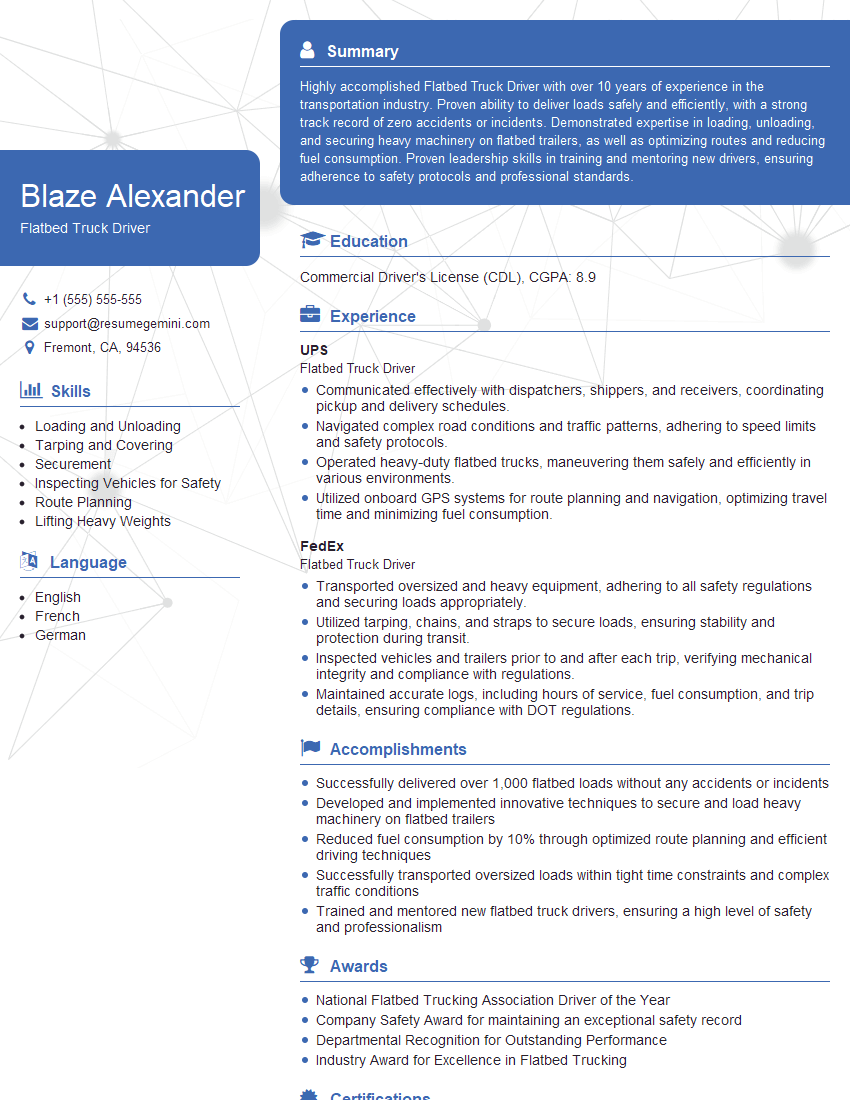
Mastering the CDL-A certification opens doors to a rewarding and well-paying career in the transportation industry. To maximize your job prospects, it’s crucial to present your skills and experience effectively. Building an ATS-friendly resume is key to getting your application noticed by recruiters. ResumeGemini is a trusted resource to help you craft a professional and impactful resume that highlights your CDL-A qualifications. We offer examples of resumes tailored specifically to CDL-A positions to guide you. Take the next step towards your dream job today!
Explore more articles
Users Rating of Our Blogs
Share Your Experience
We value your feedback! Please rate our content and share your thoughts (optional).
What Readers Say About Our Blog
Very informative content, great job.
good