Cracking a skill-specific interview, like one for Patina Creation, requires understanding the nuances of the role. In this blog, we present the questions you’re most likely to encounter, along with insights into how to answer them effectively. Let’s ensure you’re ready to make a strong impression.
Questions Asked in Patina Creation Interview
Q 1. Describe the different types of patina you can create.
Patina is essentially a surface layer that forms on a metal over time due to oxidation or other chemical reactions. There’s a huge variety, and the type you get depends heavily on the metal itself and its environment. We can broadly categorize patinas into:
- Natural Patinas: These develop naturally through exposure to the elements (air, moisture, pollutants). They’re often unpredictable in color and texture, lending a unique character. Think of the weathered green of a copper roof or the grey-brown of an old wrought iron fence.
- Chemical Patinas: These are created using chemical solutions or processes to accelerate and control the patination process, resulting in more predictable and consistent results. This is frequently used in artistic and restoration work to achieve a specific aesthetic, like the deep blues and greens of a verdigris finish.
- Artificial Patinas: This broader category includes techniques that mimic natural patinas using paints, pigments, or other coatings. While they don’t involve the actual chemical transformation of the metal, they create the visual effect of a patina.
Within each category, there’s a huge range of colors and textures achievable, depending on the metal, chemicals used, and application techniques.
Q 2. Explain the process of creating a verdigris patina on copper.
Creating a verdigris patina on copper is a process that utilizes the natural oxidation of copper in a controlled manner. The most common method involves applying a solution containing acids and other chemicals that accelerate the formation of copper carbonates and other compounds, resulting in the characteristic blue-green hues of verdigris. Here’s a simplified step-by-step process:
- Surface Preparation: Thoroughly clean the copper surface to remove any grease, dirt, or other contaminants. A light sanding or polishing might be necessary depending on the surface condition.
- Solution Application: Several chemical solutions can be used; a common one involves a mixture of acetic acid (vinegar), salt, and hydrogen peroxide. The precise ratio and application method vary depending on the desired effect – some solutions require heating or prolonged exposure. The solution is applied using a brush, spray bottle, or immersion.
- Oxidation Process: The copper reacts with the solution, slowly changing color. This process can take hours, days, or even weeks, depending on the concentration of the solution and environmental factors such as temperature and humidity.
- Rinsing and Neutralization: Once the desired color is achieved, rinse the copper thoroughly with clean water to remove any remaining chemical residue. It’s important to neutralize any remaining acid to prevent further, uncontrolled oxidation.
- Sealing (Optional): A clear sealant can be applied to protect the patina and prevent further changes.
Remember that the exact recipe and process are adjusted based on the desired color depth and nuance. Experimentation and careful observation are key to mastering this technique.
Q 3. What are the safety precautions involved in working with patina chemicals?
Working with patina chemicals requires a serious approach to safety. Many chemicals are corrosive, toxic, or both. Always:
- Wear appropriate Personal Protective Equipment (PPE): This includes gloves (nitrile or neoprene are recommended), eye protection (goggles or a face shield), and a respirator to prevent inhalation of fumes. The specific PPE will depend on the chemicals you are using.
- Work in a well-ventilated area: Many patina chemicals release harmful fumes, so ensuring good ventilation or using a respirator is crucial. Ideally, work outdoors or in a well-equipped workshop with exhaust fans.
- Handle chemicals carefully: Avoid spills and splashes. Read the Safety Data Sheets (SDS) for all chemicals before use. These sheets provide detailed information about hazards, handling, storage, and emergency procedures.
- Proper Storage: Store chemicals in labeled containers away from heat and incompatible substances, keeping them out of reach of children and pets.
- Emergency Preparedness: Know the location of emergency eyewash stations and showers. Have a plan for spills and know how to respond to chemical exposure. This includes having access to neutralizing agents and medical advice.
Safety should always be the top priority when working with any chemical materials. Neglecting these precautions can lead to serious health risks.
Q 4. How do you control the color and depth of a patina?
Controlling the color and depth of a patina involves several factors. The most significant are:
- Chemical Composition: The type and concentration of chemicals used in the patina solution directly affect the final color. Experimenting with different ratios is crucial to achieving desired results. For example, higher concentrations of certain acids can lead to deeper, richer colors, while lower concentrations might result in lighter shades.
- Application Method: Brushing, spraying, or dipping the metal will yield different effects. Brushing can create streaks and variations in color, while spraying might provide a more even coat. Dipping allows for complete immersion, leading to a uniform patina.
- Exposure Time: Leaving the metal in the solution for longer periods allows for a deeper and more intense patina. This is a key control point for developing depth of color.
- Environmental Conditions: Temperature and humidity play a role. Higher temperatures generally accelerate the chemical reactions, leading to faster patination.
- Multiple Applications: Applying multiple layers of patina solution, or switching between different solutions, can build complexity and depth of color.
Developing an understanding of these factors and the interactions between them is critical for precisely controlling the final look.
Q 5. What are the differences between chemical and natural patination?
The main difference lies in predictability and control.
- Natural Patination relies solely on the natural environment. It’s a slow, unpredictable process affected by numerous environmental factors (pollution levels, humidity, temperature, etc.). The result is unique but often uncontrolled. Think of a naturally weathered copper statue; its color and texture are largely determined by chance.
- Chemical Patination is a controlled process. Using specific chemicals and techniques, the artist or craftsman can precisely determine the color, texture, and depth of the patina. This offers a far greater degree of predictability and repeatability.
In essence, natural patination is a long-term process driven by the environment, while chemical patination is a shorter, more controlled process driven by the artist’s intent. Sometimes, artists combine both approaches; initiating a chemical process to build a base patina, and then allowing for subtle natural aging to add depth.
Q 6. How do you prepare a metal surface for patina application?
Proper surface preparation is critical for successful patination. A clean, consistent surface ensures even color and prevents uneven reactions with the patina solution. The process typically includes these steps:
- Cleaning: Thoroughly remove any dirt, grease, oil, or other contaminants from the metal surface. This can be achieved using solvents, detergents, or abrasive cleaners, depending on the type of metal and the level of soiling. Degreasing is very important.
- Deburring and Sanding (If Necessary): Remove any sharp edges, burrs, or imperfections from the metal surface. Sanding or polishing might be necessary to achieve a smooth, even finish. The grit of sandpaper used depends on the desired final smoothness.
- Pickling (For Some Metals): Some metals, such as steel, require a pickling process to remove oxides or other surface contaminants before patination. This usually involves immersing the metal in an acid bath.
- Drying: After cleaning, ensure the metal surface is completely dry before applying the patina solution. Any residual moisture can affect the patination process.
The specific cleaning and preparation methods will depend on the type of metal being treated. For example, copper might be cleaned with a mild acid solution and a soft brush, while steel might need a more aggressive process involving sandblasting or pickling.
Q 7. Describe your experience with various patina application methods (brushing, spraying, dipping).
I have extensive experience with various patina application methods. Each has its advantages and disadvantages:
- Brushing: This is a versatile technique allowing for control over the application and creation of textured effects. It’s suitable for smaller projects and detailed work, but can be time-consuming for large surfaces. You can achieve varied effects by adjusting brush strokes, pressure, and the amount of solution applied.
- Spraying: Spraying offers efficient coverage for larger areas and results in a more uniform patina. It requires specialized equipment (spray guns, air compressors), and careful control is needed to avoid excessive application or runs in the patina. Spraying is ideal for achieving even, consistent color.
- Dipping: This method is ideal for achieving a consistent patina across the entire surface. It’s efficient for smaller, regularly shaped pieces but can be less suitable for large or intricate objects. It’s a clean and effective way to get complete coverage.
In my practice, I often combine methods. For example, I might use spraying for base coat coverage and then follow up with brushing for highlights or textural detail. The best method always depends on the piece, the desired effect, and practical constraints.
Q 8. What are the challenges in achieving a consistent patina on large surfaces?
Achieving a consistent patina on large surfaces presents significant challenges primarily due to the inherent variability in environmental factors and the material’s surface itself. Think of it like trying to evenly bake a giant cake – some parts might get more heat than others, leading to inconsistencies. For large surfaces, ensuring uniform exposure to the patinating agents (chemicals or natural elements) becomes incredibly difficult.
- Uneven surface temperature: Variations in temperature across the surface can lead to different reaction rates and thus, inconsistent color and texture.
- Differential exposure: Areas might be shielded from the elements (e.g., rain, sun) resulting in patchy development.
- Material inconsistencies: Even slight variations in the base material’s composition can impact the patina formation.
- Application challenges: Achieving even application of chemical treatments on a large scale requires specialized equipment and techniques.
To mitigate these challenges, we often use a combination of strategies, including pre-treating the surface for uniformity, employing controlled environmental chambers for certain processes, and using specialized spraying equipment for even application of chemicals. For outdoor patination, careful placement and monitoring are crucial.
Q 9. How do you address imperfections or unevenness in a patina finish?
Addressing imperfections or unevenness in a patina finish requires a multi-faceted approach depending on the severity of the issue. Think of it like fixing a painting that’s not quite right – sometimes a touch-up is sufficient, other times a complete rework is necessary.
- Minor imperfections: Small blemishes can often be addressed through targeted application of patinating agents, careful polishing, or strategic brushing to blend the color and texture.
- Moderate unevenness: More significant inconsistencies might necessitate localized removal of the patina followed by re-application, potentially with adjusted concentrations or application techniques.
- Severe issues: In cases of widespread unevenness, a complete stripping of the patina and a fresh start might be required. This is a last resort, but sometimes the most effective.
The choice of remediation method depends entirely on the severity of the defect, the type of patina, and the material. Careful planning and skilled execution are critical to success.
Q 10. What types of sealants or protective coatings do you use for patina?
The choice of sealant or protective coating for a patina depends heavily on the material, the desired finish, and the environment. Just like different types of paint require different sealants, so do different patinas.
- Wax: Provides a subtle level of protection, enhancing the patina’s luster and depth. It’s relatively easy to apply and maintain, but offers limited durability.
- Acrylic sealants: Offer good protection against UV degradation and environmental damage, maintaining the color and texture. They are generally less durable than more specialized coatings.
- Varnishes: Provide a harder, more durable surface protection. However, they may alter the look of the patina, sometimes changing the appearance and potentially yellowing over time.
- Specialized coatings: For more demanding environments, or materials with specific requirements, we might use specialized coatings designed to offer superior protection against corrosion, UV radiation, or other environmental factors.
The selection process often involves considering the long-term impact on the patina’s appearance and the practicality of maintaining the chosen coating. Careful evaluation of different options is vital to ensure long-term protection without compromising aesthetic appeal.
Q 11. How do you maintain and preserve a patina over time?
Maintaining and preserving a patina requires a delicate balance of protection and minimal intervention. It’s a bit like caring for an antique – you want to protect it from the elements, but avoid overly aggressive cleaning methods.
- Regular Inspection: Regularly inspect the surface for any signs of damage, corrosion, or discoloration.
- Gentle Cleaning: Use soft cloths and mild cleaning solutions to remove dust and dirt. Avoid abrasive materials that could damage the patina.
- Protective Measures: Depending on the environment and patina type, this may involve protective coatings, coverings during inclement weather, or even controlled environmental conditions.
- Periodic Maintenance: Depending on the sealant used, periodic reapplication might be necessary to maintain its protective capabilities.
The key is to prevent further damage and deterioration while still letting the patina evolve naturally. It’s all about finding that perfect balance of preservation and letting nature do its thing.
Q 12. Explain your understanding of the chemical reactions involved in patina formation.
Patina formation is a complex process that involves a series of chemical reactions, mainly oxidation and reduction. Think of it as a slow, controlled rusting process, but often aesthetically pleasing. The specific reactions depend largely on the base material and the environmental factors.
For example, the classic green patina on copper is primarily copper carbonate and copper sulfate, formed through the reaction of copper with oxygen, carbon dioxide, and water in the atmosphere. The chemical equations are complex and vary depending on the environment, but generally involve the oxidation of copper:
2Cu + O₂ + CO₂ + H₂O → Cu₂(OH)₂CO₃ (Copper Carbonate)Other metals undergo similar reactions, resulting in diverse colors and textures. The formation of various metal oxides, sulfides, and chlorides contributes to the rich variety of patinas observable in nature.
Q 13. How do environmental factors influence patina development?
Environmental factors play a pivotal role in patina development, acting as catalysts and influencers in the chemical reactions. Think of the environment as the artist’s brushstrokes—different environments produce different effects.
- Humidity: Higher humidity accelerates the reaction rate, leading to faster patina development. Dry climates result in slower, more subtle patinas.
- Temperature: Temperature fluctuations affect the rate of chemical reactions. Warmer temperatures generally speed up the process.
- Pollution: Air pollutants such as sulfur dioxide can significantly influence the color and composition of the patina, often leading to darker and richer hues. This is why patinas in industrial areas often differ from those in rural settings.
- Sunlight (UV radiation): UV radiation can accelerate the aging process, affecting the color and integrity of the patina, sometimes resulting in fading or discoloration.
Understanding these factors is crucial for controlling and predicting the outcome of the patination process. A controlled environment can yield a specific outcome, while natural exposure results in unpredictable results. Therefore, careful consideration of the environment is critical for both planned and natural patination.
Q 14. What are the common problems encountered during patina creation, and how do you solve them?
Many problems can arise during patina creation. Some of the most common ones and their solutions are:
- Uneven Patina: Caused by uneven application of chemicals, inconsistent surface preparation, or variations in environmental factors. Solutions include better surface preparation, controlled application techniques, and controlled environment chambers.
- Unwanted Color: Can result from inappropriate chemicals or environmental interactions. Solutions involve selecting the right chemicals for the desired outcome, carefully controlling environmental factors, and possibly removing and re-applying the patina.
- Pitting or Corrosion: Sometimes results from aggressive chemical treatments or improper surface preparation. Solutions include careful selection and control of chemicals and appropriate surface pre-treatments.
- Cracking or Flaking: Can occur if the patina layer is not adequately bonded to the substrate or due to excessive thickness. Solutions include proper surface preparation and controlling patina thickness.
Problem-solving in patina creation often involves a combination of careful planning, precise execution, and a willingness to adapt as needed. It is an iterative process that requires both experience and a thorough understanding of materials science and chemistry.
Q 15. Describe your experience working with different metals (copper, bronze, brass, etc.).
My experience spans a broad range of metals, each presenting unique challenges and rewards in patina development. Copper, with its inherent reactivity, readily forms a captivating array of patinas, from vibrant greens to deep browns, depending on the environment and applied techniques. Bronze, an alloy of copper and tin, offers a similar range but often with a warmer, more earth-toned palette. Brass, a copper-zinc alloy, tends towards golds and yellows, requiring different approaches to achieve darker, richer patinas. I’ve also worked extensively with iron, which develops a fascinating spectrum of rust-toned patinas, from delicate oranges to deep, almost black hues.
For example, achieving a deep verdigris patina on copper might involve exposing it to a humid environment, possibly accelerated with chemical treatments. On bronze, a similar effect might require a slightly different chemical blend due to the presence of tin. Brass often requires more aggressive chemical treatment or prolonged exposure to achieve darker patinas, as its zinc content affects the oxidation process.
Career Expert Tips:
- Ace those interviews! Prepare effectively by reviewing the Top 50 Most Common Interview Questions on ResumeGemini.
- Navigate your job search with confidence! Explore a wide range of Career Tips on ResumeGemini. Learn about common challenges and recommendations to overcome them.
- Craft the perfect resume! Master the Art of Resume Writing with ResumeGemini’s guide. Showcase your unique qualifications and achievements effectively.
- Don’t miss out on holiday savings! Build your dream resume with ResumeGemini’s ATS optimized templates.
Q 16. How do you adapt your techniques for different metal alloys?
Adapting techniques to different metal alloys is crucial for successful patina creation. The key lies in understanding the metallurgical composition of each alloy. Different metals react differently to various chemicals and environmental conditions. For instance, the zinc content in brass significantly impacts its oxidation rate compared to pure copper. Similarly, the tin in bronze influences the resulting patina’s color and texture.
My approach involves a combination of experimentation and research. I begin by analyzing the alloy’s composition to predict its likely reaction to various patina-inducing agents. Then, I conduct controlled experiments, varying the concentration of chemicals, exposure time, and environmental conditions to achieve the desired effect. This iterative process, combining theoretical knowledge with hands-on experimentation, is critical for mastering the art of creating custom patinas on various metal alloys. For instance, a high-zinc brass might require a stronger oxidizing agent and longer exposure time to achieve a dark patina compared to a low-zinc brass.
Q 17. What is your experience with restoring existing patinas?
Restoring existing patinas is a delicate and intricate process requiring a deep understanding of both the patina itself and the underlying metal. It’s not simply about applying a new layer; it’s about stabilizing the existing patina and reversing any damage. This often involves careful cleaning to remove dirt, grime, and pollutants without harming the fragile patina layer. Sometimes, minor repairs are necessary, carefully filling in any losses with compatible materials.
For example, I once worked on a corroded bronze sculpture. The initial cleaning involved gentle brushing with soft brushes and specialized cleaning solutions. Once stabilized, the treatment involved consolidating the fragmented patina with a consolidant, and then carefully touching up any areas of significant loss with a color matched to the original. The entire process needed to be monitored closely to ensure the restoration was both accurate and long-lasting, respecting the integrity and age of the piece.
Q 18. How do you match an existing patina on an antique piece?
Matching an existing patina on an antique piece is a significant challenge, often requiring a combination of scientific analysis and artistic skill. The first step is to carefully analyze the existing patina’s composition and color using techniques like spectroscopy or microscopic examination. This reveals the chemical composition of the patina layer and provides valuable insight into its creation. This analysis helps guide the selection of chemicals and techniques used for replicating the patina on a new piece or repairing a damaged section.
Next, I create small test samples using various chemical solutions and techniques, adjusting the process until a satisfactory match is achieved. This trial-and-error process can be lengthy, requiring patience and a keen eye for detail. The final step is a careful application of the matched patina to the antique piece, ensuring a seamless transition and avoiding any jarring discontinuities.
Q 19. Can you explain the difference between oxidizing and patination?
While both oxidation and patination involve chemical reactions with the metal’s surface, they are distinct processes. Oxidation is a broad term referring to the reaction of a metal with oxygen, often leading to the formation of metal oxides. Rust on iron is a classic example of oxidation. Patination, on the other hand, is a more specific term referring to the intentional creation of a surface layer (the patina) on a metal through a controlled chemical or environmental process. It’s an aesthetic treatment that can enhance the beauty and durability of the metal.
Therefore, oxidation is a natural process that can happen spontaneously, while patination is a deliberate artistic process aimed at achieving a specific aesthetic result. Many patinas involve oxidation as a key step, but not all oxidation results in a desirable patina. A patina is a carefully controlled oxidation (and other reactions).
Q 20. Describe your process for creating a specific type of patina (e.g., a dark brown patina on iron).
Creating a dark brown patina on iron involves a multi-step process that relies on controlled oxidation and chemical reactions. The first step is surface preparation, including cleaning the iron to remove any contaminants. Then, I apply a solution containing chemicals that promote the formation of iron oxides. This can include solutions containing acetic acid, ferric chloride, or other suitable compounds, often in combination. The concentrations and exposure times are carefully controlled to achieve the desired brown tone.
Following the chemical treatment, the iron is often exposed to humid conditions or a controlled environment to accelerate the oxidation process. The final step may involve sealing the patina with a protective layer to enhance its durability and prevent further uncontrolled oxidation. The exact recipe and process steps need to be tailored to the specific iron type and desired finish. The entire process involves careful monitoring, regular inspections, and sometimes experimentation to achieve the perfect balance of color and depth.
Q 21. How do you determine the appropriate patina for a given project?
Determining the appropriate patina for a given project requires a holistic approach, considering several factors. First, the intended aesthetic is key—does the project require a rustic, antique look, or a more modern, sleek finish? The metal type also plays a critical role, as different metals naturally develop different patinas. Copper, for example, lends itself well to vibrant green patinas, while iron tends towards rust tones.
The surrounding environment is also a factor. An outdoor sculpture will experience weathering that an indoor piece won’t, influencing the patina’s development. Finally, the client’s vision and preferences must be taken into account. A collaborative discussion allows for a shared understanding of the desired outcome, leading to a beautiful and fitting patina that complements the project’s overall design and purpose.
Q 22. What tools and equipment are essential for your work?
The tools and equipment I use for patina creation are diverse and depend on the specific project, but some essentials include:
- Brushes: A variety of brushes, from fine detail brushes to larger ones for broad application, are crucial. Different bristle types (natural or synthetic) affect the texture and application.
- Spray Equipment: Airbrushes and spray guns allow for even and controlled application, particularly beneficial for large-scale projects or achieving specific effects like gradients.
- Mixing Vessels: Glass or plastic containers are essential for mixing chemicals accurately. Avoiding metal containers prevents potential reactions.
- Protective Gear: This is paramount! Gloves, eye protection, and respirators are non-negotiable when handling chemicals.
- Safety Equipment: This includes fire extinguishers, spill kits, and appropriate ventilation to mitigate risks.
- Heating Elements: Some patina processes require heat to accelerate the reaction or achieve specific colors. This might involve heat guns or controlled ovens.
- Measuring Tools: Accurate measuring tools (scales, graduated cylinders) are essential for precise chemical mixing, which directly impacts the final patina.
- Cleaning Supplies: Thorough cleaning is vital. I use specific cleaners for brushes and equipment to prevent cross-contamination.
For instance, when creating a deep verdigris patina on copper, I might start with an airbrush for a base layer, then transition to a brush for textural details.
Q 23. How do you manage your inventory of chemicals and materials?
Inventory management for patina chemicals is crucial for safety, consistency, and efficiency. I utilize a meticulous system that includes:
- Dedicated Storage: Chemicals are stored in a cool, dry, and well-ventilated area, away from incompatible materials. Each chemical is clearly labeled with its name, concentration, and date of acquisition.
- Inventory Database: I maintain a digital database tracking the quantity, purchase date, expiry date, and location of each chemical. This allows for easy tracking and ordering of supplies.
- FIFO System: I follow a ‘First-In, First-Out’ system to ensure older chemicals are used first, minimizing the risk of degradation.
- SDS Access: Safety Data Sheets (SDS) for all chemicals are readily accessible, ensuring I have the latest information on safe handling, storage, and disposal.
- Regular Audits: Periodic inventory audits verify quantities, check for expiry dates, and identify potential storage issues.
For example, recently I noticed one of my liver of sulfur batches was nearing its expiry date. My database alerted me to this, allowing me to prioritize its use before it lost potency.
Q 24. Explain your understanding of color theory as it relates to patina creation.
Color theory plays a pivotal role in patina creation. Understanding color mixing, hue, saturation, and value allows me to achieve specific colors and effects. It’s not just about mixing chemicals; it’s about predicting how the patina will evolve over time.
- Additive vs. Subtractive Mixing: Patinas are often created using subtractive mixing – where colors are achieved by layering and selectively removing or changing the base metal’s surface. Understanding this is key to controlling the final hue.
- Base Metal Influence: The base metal significantly influences the final color. Copper will create different patinas compared to bronze or brass, meaning that the starting point significantly affects color choices.
- Chemical Interactions: Different chemicals will yield diverse results. Some create warm browns, others cool blues and greens. The combination of chemicals and their application techniques profoundly impact the final coloration.
- Oxidation and Time: Oxidation plays a significant role. A patina’s color can subtly change over time and exposure to the elements; understanding these natural color shifts is crucial for creating realistic and long-lasting results.
For example, to achieve a deep, reddish-brown patina on bronze, I might use a combination of chemicals that initially create a dark base, and then introduce another agent to enhance the red tones and deepen the overall hue.
Q 25. How do you ensure the safety of yourself and others while working with patina chemicals?
Safety is paramount in my work. Handling patina chemicals requires strict adherence to safety protocols:
- Personal Protective Equipment (PPE): Always wearing appropriate PPE, including gloves, eye protection, and respirators, is essential. The type of PPE will depend on the specific chemicals being used.
- Ventilation: Working in a well-ventilated area, or using a respirator, is critical to prevent inhaling harmful fumes.
- Spill Response: Having a prepared spill kit readily available and knowing how to handle spills correctly is crucial to minimize risks and potential damage.
- Chemical Compatibility: Understanding the compatibility of chemicals is crucial to prevent dangerous reactions. I avoid mixing incompatible chemicals.
- Proper Disposal: Patina chemicals need to be disposed of according to local regulations and safety guidelines.
- Training: Regular refresher courses and training on handling chemicals help to stay up-to-date with best safety practices.
For instance, when using strong acids, I always work under a fume hood with appropriate respirators, ensuring adequate ventilation and protection from harmful fumes.
Q 26. Describe your experience with different types of brushes and application techniques.
My experience with brushes and application techniques is extensive. Different brushes yield unique effects:
- Natural Bristle Brushes: These brushes offer a softer, more textured application, ideal for creating organic-looking patinas.
- Synthetic Bristle Brushes: Synthetic brushes are often more durable and easier to clean, and they’re useful for finer details and smoother applications.
- Application Techniques: I employ various techniques like dry brushing, wet-on-wet blending, stippling, and layering to achieve specific effects. Dry brushing creates a more textured surface, while wet-on-wet creates softer transitions. Stippling creates a dotted texture. Layering multiple colors produces depth and complexity.
- Brush Care: Proper cleaning of brushes after each use prolongs their lifespan and prevents cross-contamination of chemicals.
For example, when creating a rustic patina on a metal sculpture, I’d use a dry-brushing technique with a natural bristle brush to highlight certain areas and achieve a textured effect.
Q 27. How do you document your work and the materials used for future reference?
Documentation is crucial for reproducibility and future reference. My methods include:
- Detailed Notes: I maintain a detailed logbook for each project, recording materials used (exact quantities and brands), application techniques, time elapsed, environmental conditions (temperature, humidity), and any observations or challenges encountered.
- Photography: Thorough photographic documentation is essential. I capture images at different stages of the process, highlighting color changes and textural effects.
- Sample Creation: I often create small samples using various techniques and materials, archiving them for future reference.
- Digital Database: I also use a digital database to organize project information and images, making it easy to search and retrieve data.
This comprehensive documentation allows me to recreate the same patinas consistently, even if months or years have passed.
Q 28. What are your professional development goals related to Patina Creation?
My professional development goals focus on expanding my expertise and staying at the forefront of the field:
- Exploring New Techniques: I plan to further explore advanced patination techniques, such as those involving electrochemical processes or specialized chemical treatments.
- Material Research: I aim to expand my knowledge of new and innovative materials that can enhance the range of colors, textures, and durability of my patinas.
- Sustainable Practices: I’m committed to incorporating more sustainable practices into my work, exploring eco-friendly chemicals and reducing waste.
- Advanced Training: I intend to participate in workshops and training courses to learn from experts and stay updated on the latest advancements in the field.
My long-term goal is to contribute to the knowledge base of patina creation through publications and sharing my expertise with others.
Key Topics to Learn for Patina Creation Interview
- Understanding Patina Formation: Explore the chemical and physical processes involved in patina development on various materials (metals, wood, etc.). Consider the influence of environmental factors.
- Patina Reproduction Techniques: Learn about different methods used to artificially create or replicate patina effects, including chemical treatments, mechanical techniques, and painting methods. Be prepared to discuss the advantages and disadvantages of each.
- Material Selection and Compatibility: Understand the impact of material properties on patina formation and longevity. Discuss how different materials react to various patina-inducing agents.
- Color Theory and Patina Aesthetics: Explore the principles of color mixing and application in achieving desired patina effects. Discuss how to create realistic and visually appealing patinas.
- Preservation and Maintenance of Patinas: Understand the methods for protecting and maintaining artificially created and naturally occurring patinas to ensure longevity and prevent deterioration.
- Troubleshooting and Problem Solving: Be prepared to discuss common challenges encountered during patina creation, such as uneven color application, undesirable chemical reactions, or premature deterioration. Outline your problem-solving approaches.
- Safety Precautions and Environmental Considerations: Discuss the safety protocols and environmental considerations related to the chemicals and techniques used in patina creation.
- Patina Styles and Historical Context: Familiarize yourself with different styles of patina across various historical periods and artistic movements. This demonstrates a broader understanding of the field.
Next Steps
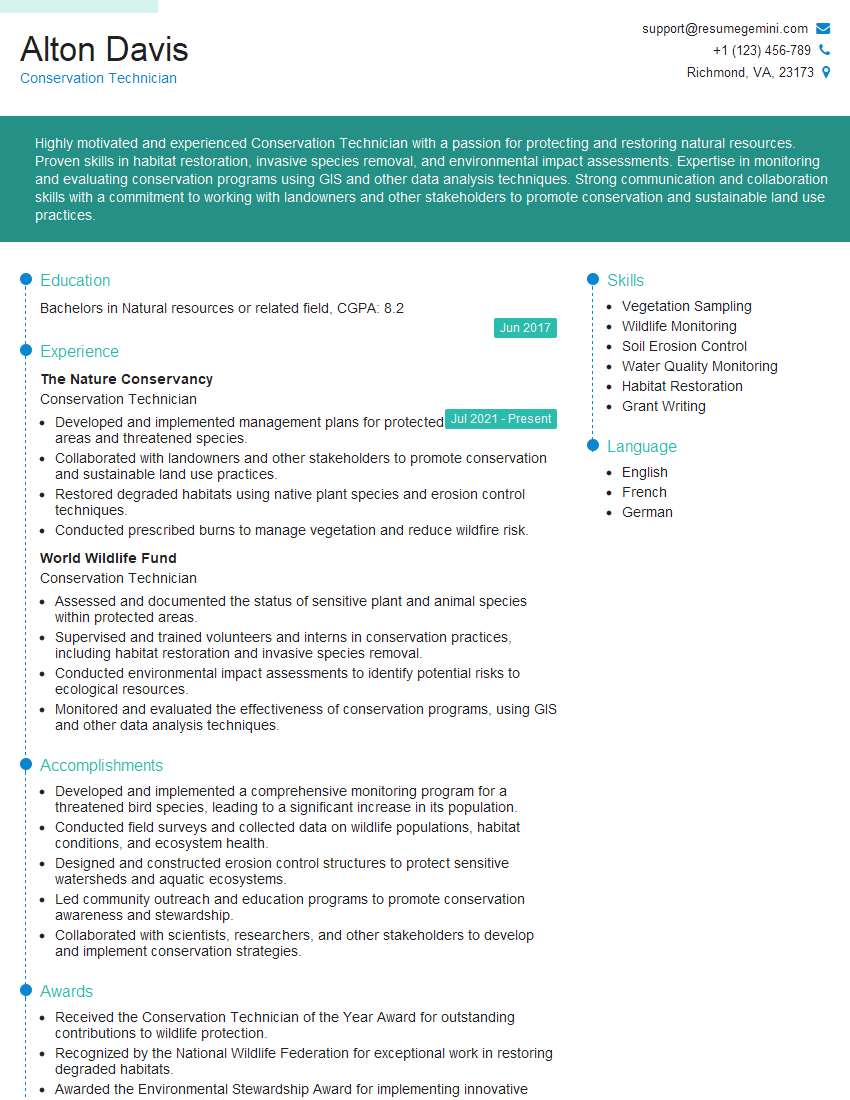
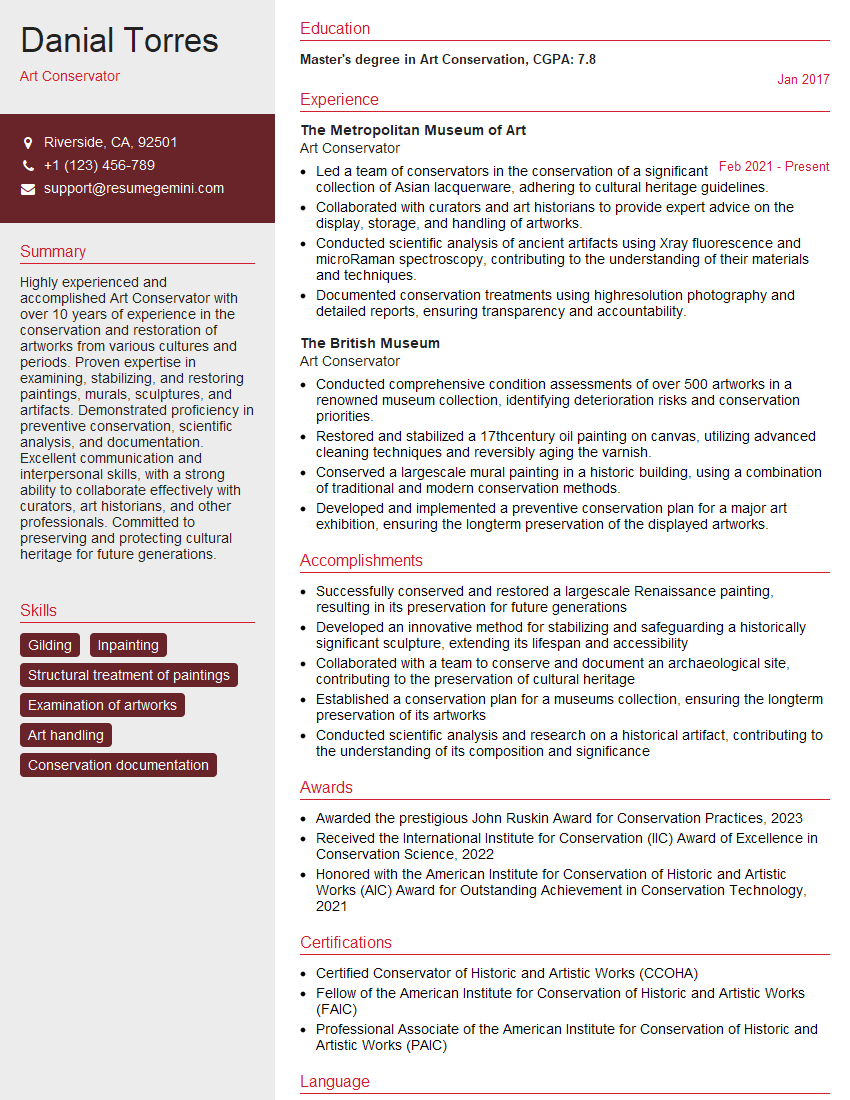
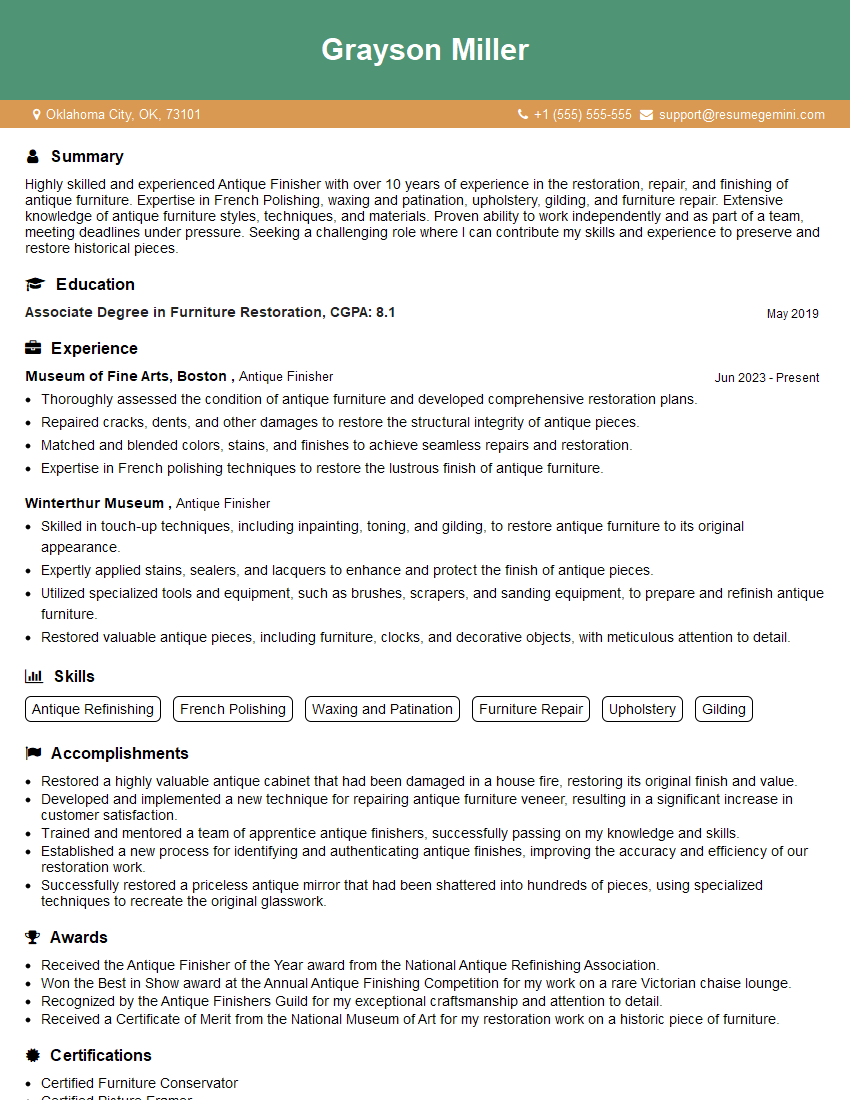
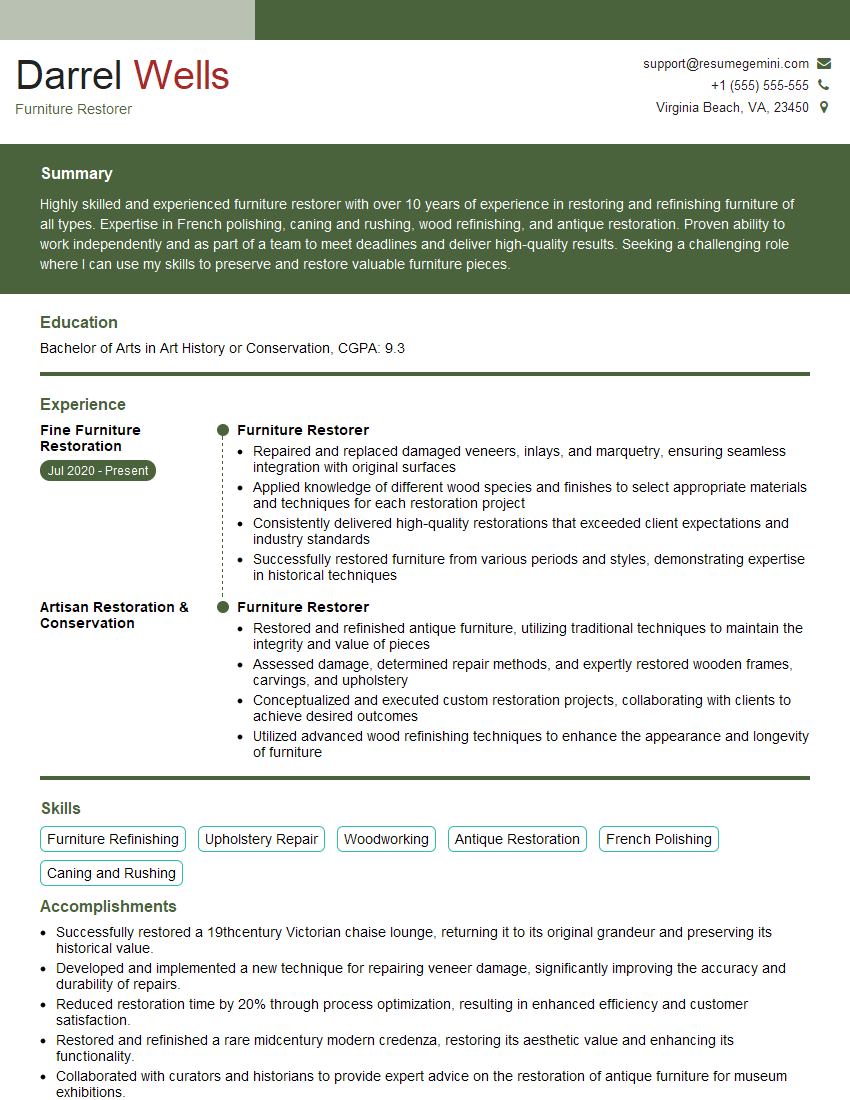
Mastering Patina Creation opens doors to exciting career opportunities in art conservation, restoration, and artistic design. A strong understanding of these techniques significantly enhances your value to potential employers. To maximize your chances of securing your dream role, creating a compelling and ATS-friendly resume is crucial. We highly recommend utilizing ResumeGemini, a trusted resource for building professional resumes that stand out. ResumeGemini provides examples of resumes tailored to the Patina Creation field to guide you in creating a document that showcases your skills and experience effectively.



Explore more articles
Users Rating of Our Blogs
Share Your Experience
We value your feedback! Please rate our content and share your thoughts (optional).
What Readers Say About Our Blog
Very informative content, great job.
good