Interviews are opportunities to demonstrate your expertise, and this guide is here to help you shine. Explore the essential Cement Preparation interview questions that employers frequently ask, paired with strategies for crafting responses that set you apart from the competition.
Questions Asked in Cement Preparation Interview
Q 1. Explain the process of cement hydration.
Cement hydration is the chemical reaction that occurs when cement powder is mixed with water. It’s a complex process that leads to the hardening and strengthening of concrete. Think of it like baking a cake – the water activates the ingredients (cement particles), triggering a chain reaction that transforms the mixture into a solid mass.
The process begins with the dissolution of cement components, primarily calcium silicates (C3S and C2S), in water. These components react with water to form calcium silicate hydrates (C-S-H), which is the primary binding agent responsible for concrete’s strength. Simultaneously, other compounds like tricalcium aluminate (C3A) and tetracalcium aluminoferrite (C4AF) react to form various hydrates, contributing to different aspects of concrete properties such as setting time and durability. The entire process is exothermic, meaning it releases heat. The heat of hydration plays a significant role in the setting and strength development of cement.
The rate of hydration is influenced by several factors, including the fineness of cement, water-cement ratio, temperature, and the presence of admixtures. A higher temperature generally accelerates hydration, while a lower temperature slows it down. A higher water-cement ratio leads to faster initial setting but can compromise long-term strength.
Q 2. Describe the different types of cement and their applications.
There are several types of cement, each designed for specific applications:
- Ordinary Portland Cement (OPC): This is the most common type, used in general construction like buildings and roads. It offers a good balance of strength and workability.
- Portland Pozzolana Cement (PPC): This type incorporates pozzolana, a siliceous or siliceous-aluminous material, which enhances durability and reduces heat generation during hydration. This is beneficial in massive concrete structures where excessive heat can cause cracking.
- Rapid Hardening Cement: As the name suggests, this cement sets and gains strength faster than OPC, which is helpful in situations where quick turnaround is required.
- High-Strength Cement: This cement is engineered to achieve higher compressive strengths than OPC, suitable for applications requiring exceptional strength, such as high-rise buildings or specialized structures.
- Sulfate-Resisting Cement: This type is specifically designed to resist sulfate attack, a common problem in environments with high sulfate concentrations in soil or water. It’s crucial for structures exposed to such conditions.
- Low Heat Cement: This minimizes heat generation during hydration, crucial for large structures to prevent cracking due to temperature differentials.
The choice of cement depends on the specific project requirements, such as strength, durability, setting time, and the environmental conditions.
Q 3. What are the key quality parameters for cement?
Key quality parameters for cement ensure its performance and consistency. These parameters are rigorously monitored and tested throughout the production process:
- Compressive Strength: Measures the cement’s ability to withstand crushing forces, a key indicator of its strength.
- Fineness: The fineness, usually expressed as the specific surface area, affects the rate of hydration and, consequently, the setting time and strength development. Finer cement hydrates faster.
- Setting Time: Refers to the initial and final setting times, which determine the workability window for concrete. Controlled setting time is crucial for efficient construction.
- Soundness: Indicates the cement’s resistance to expansion after setting, which is critical to prevent cracking. Expansion can be caused by excessive amounts of free lime.
- Chemical Composition: The proportions of various oxides (e.g., CaO, SiO2, Al2O3, Fe2O3) influence cement properties. Their levels are carefully controlled.
These parameters are determined through standardized laboratory tests, ensuring that the cement meets the required specifications.
Q 4. How do you ensure the consistency of cement quality?
Consistency in cement quality is crucial for reliable concrete performance. This is achieved through a multi-faceted approach:
- Strict Raw Material Control: Maintaining consistent chemical composition and particle size distribution of raw materials (limestone, clay, etc.) is paramount. This is achieved through rigorous quality checks at the quarry and during the blending process.
- Precise Manufacturing Process Control: The entire manufacturing process, from raw material grinding to clinker burning and cement grinding, is closely monitored and controlled using automated systems and real-time data analysis.
- Quality Control Testing at Every Stage: Samples are taken at various stages of production and rigorously tested against specified quality parameters. This includes chemical composition, fineness, setting time, strength, soundness, and other relevant parameters.
- Statistical Process Control (SPC): SPC techniques are employed to monitor process variability and identify potential issues before they impact product quality.
- Regular Equipment Calibration and Maintenance: Proper maintenance of equipment ensures its proper functioning and consistent output.
This integrated approach ensures that the final cement product consistently meets or exceeds the specified quality requirements.
Q 5. What are the common problems encountered in cement production?
Cement production can encounter several common problems:
- Raw Material Variability: Variations in the chemical composition and particle size distribution of raw materials can lead to inconsistencies in cement quality.
- Clinker Burning Issues: Problems in the kiln, such as insufficient temperature, incorrect residence time, or fuel fluctuations, can lead to under-burned or over-burned clinker, affecting cement properties.
- Grinding Problems: Problems with the grinding mill, like wear and tear or improper operation, can affect the fineness of the cement.
- Energy Consumption: Cement production is energy-intensive, and optimizing energy efficiency is a critical concern.
Addressing these issues requires careful monitoring, process optimization, and timely maintenance.
Q 6. How do you troubleshoot issues related to raw material quality?
Troubleshooting raw material quality issues requires a systematic approach:
- Identify the Problem: First, identify the specific problem related to the raw material. For example, is it variation in chemical composition, particle size distribution, or contamination?
- Analyze the Raw Material: Thorough laboratory analysis is crucial. This involves chemical analysis to determine the oxide composition and physical tests to determine the particle size distribution.
- Investigate the Source: Trace the source of the problem. Is it from the quarry, the transportation process, or the storage facility?
- Implement Corrective Actions: Based on the root cause analysis, implement corrective actions. This might involve adjustments to the mining operations, changes in transportation methods, or improved storage practices.
- Monitor and Control: Continuously monitor the raw material quality to ensure the corrective actions are effective and to prevent future issues.
This process requires close collaboration between the quarry, transportation, and cement plant personnel to ensure the consistent supply of high-quality raw materials.
Q 7. Explain the role of different additives in cement manufacturing.
Various additives are used in cement manufacturing to modify its properties or improve the efficiency of the process. These include:
- Grinding Aids: These reduce energy consumption during cement grinding by improving the efficiency of the grinding process.
- Water Reducers: These increase the workability of concrete without increasing the water-cement ratio, leading to higher strength and durability.
- Set Retarders: These slow down the setting time of cement, allowing more time for placing and finishing concrete, especially in hot weather.
- Set Accelerators: These speed up the setting time, beneficial in cold weather or when quick construction is required.
- Air-Entraining Agents: These incorporate tiny air bubbles into the concrete, improving its freeze-thaw resistance and workability.
- Pozzolanas and Fly Ash: These supplementary cementitious materials enhance the durability, reduce heat of hydration, and improve the long-term performance of concrete.
The selection of additives depends on the desired properties of the cement and the specific application. Proper use of additives is crucial to obtain the desired performance characteristics of the concrete.
Q 8. Describe the operation of a rotary kiln.
A rotary kiln is a long, cylindrical furnace that is inclined slightly and rotates slowly. It’s the heart of cement production, responsible for the crucial clinkerization process. Imagine a giant, slowly turning metal barrel. Raw materials, a carefully proportioned mixture of limestone, clay, and other additives, are fed into the upper end of the kiln. As the kiln rotates, these materials slowly move down the incline, encountering progressively increasing temperatures.
The process begins with drying and preheating, where moisture evaporates and the raw materials are heated to several hundred degrees Celsius. As the materials progress down the kiln, the temperature continues to rise, ultimately reaching temperatures around 1450°C in the burning zone. At these high temperatures, a chemical reaction known as calcination occurs, releasing carbon dioxide and forming calcium oxide. Finally, in the clinkerization zone, this calcium oxide reacts with other components to form clinker, the intermediate product in cement manufacturing. The clinker is then cooled and subsequently ground into cement powder.
The efficiency of a rotary kiln is highly dependent on several factors including the feed rate, temperature profile, fuel type (typically coal, natural gas, or alternative fuels), and the kiln’s maintenance. For example, uneven heating or insufficient rotation speed can lead to poor clinker quality and decreased efficiency. This is why continuous monitoring and optimization using sensors and advanced control systems are critical.
Q 9. What are the safety procedures in a cement plant?
Safety in a cement plant is paramount. It’s a high-risk environment with heavy machinery, high temperatures, and potentially hazardous materials. A robust safety program includes multiple layers of protection. Think of it as a chain, where each link represents a crucial safety measure. If one link breaks, the entire system could fail.
- Personal Protective Equipment (PPE): This is the first line of defense. Workers must wear appropriate PPE, including hard hats, safety glasses, gloves, high-visibility clothing, and respiratory protection in designated areas.
- Lockout/Tagout Procedures (LOTO): Before performing maintenance or repairs on any machinery, it’s essential to use LOTO procedures to ensure that the equipment is completely de-energized and locked to prevent accidental starting.
- Regular Inspections and Maintenance: Frequent inspections and scheduled maintenance of equipment are crucial to prevent breakdowns and accidents. This extends to the entire plant, including structural elements and the dust collection system.
- Emergency Response Plan: A well-defined emergency response plan, with clear procedures for handling various scenarios (fires, spills, injuries), is essential, and regular drills are necessary to ensure preparedness.
- Training and Education: Continuous training and education for employees about safety procedures, hazard recognition, and emergency response are critical. This includes regular refresher courses and awareness programs.
- Dust Control: Cement plants generate significant amounts of dust, which can be both a respiratory hazard and an environmental concern. Effective dust suppression systems are needed, along with regular monitoring of dust levels.
Ignoring any of these safety procedures can result in serious injury or fatality. The entire plant operation relies on a culture that puts safety first.
Q 10. Explain the importance of quality control in cement production.
Quality control in cement production is absolutely vital. The properties of the final cement product directly impact the durability and strength of concrete structures. Think of building a skyscraper; the strength and longevity of the building depend on the cement quality. A single batch of substandard cement can have devastating consequences.
Quality control starts with the raw materials. Careful monitoring of the chemical composition of limestone, clay, and other additives is crucial. The next step involves stringent control of the clinkerization process in the rotary kiln. Temperature monitoring, kiln rotation speed, and fuel management all directly impact clinker quality. Then, thorough testing of the finished cement powder follows, measuring properties like fineness, setting time, and compressive strength.
A modern cement plant uses sophisticated analytical techniques like X-ray fluorescence (XRF) and particle size analyzers to continuously monitor and adjust the production process. Statistical process control (SPC) helps track key parameters and identify any deviations from the desired quality standards. Regular testing of cement samples from each batch ensures consistency and compliance with relevant standards.
Without rigorous quality control, the cement plant risks producing sub-standard product, leading to customer dissatisfaction, structural failures, and legal liability. A robust quality control system is not merely about meeting minimum standards; it’s about producing a consistently high-quality product that meets or exceeds customer expectations.
Q 11. How do you maintain the efficiency of cement grinding mills?
Cement grinding mills are high-energy consumers and maintaining their efficiency is crucial for profitability and minimizing environmental impact. Regular maintenance and optimization strategies are key.
- Regular Inspections: Regular inspections of the mill liners, rollers, and other components are crucial to identify wear and tear and prevent major breakdowns. This includes visual checks and measurements using precision instruments.
- Optimized Grinding Parameters: Fine-tuning the mill’s operating parameters, such as the feed rate, grinding speed, and air flow, can significantly impact efficiency. This often involves using advanced control systems and process optimization techniques.
- Classifier Optimization: The classifier separates the fine cement powder from coarser particles. Optimizing the classifier’s performance ensures that only the desired fineness of cement is produced, minimizing energy wasted on over-grinding.
- Preventive Maintenance: A planned preventive maintenance schedule minimizes unexpected downtime and costly repairs. This includes lubrication of moving parts, cleaning of the mill, and checking for any leaks or vibrations. This type of maintenance is far more economical and efficient in the long run.
By implementing these strategies, cement plants can significantly improve the grinding mill’s energy efficiency, reduce operational costs, and extend the lifespan of the equipment.
Q 12. Describe the process of cement packing and dispatch.
Cement packing and dispatch are the final stages of cement production, involving efficiently filling cement into bags or silos for transport. The process must be automated and controlled to ensure minimal waste and damage.
Cement is typically packed into paper bags or bulk transported in cement silos. The packaging process itself might involve automated filling, weighing, and sealing machines. These machines must be regularly calibrated to ensure that the bags are filled to the correct weight and sealed properly to avoid leakage during transport. Bulk cement is typically transported using specialized tankers or trains. Before dispatch, the cement is carefully weighed and documented to maintain quality control and transparency.
Efficient dispatch involves well-organized loading bays, optimized transport scheduling, and clear communication with transportation providers. Tracking systems such as RFID tags or barcodes are commonly used to monitor the movement of cement from the factory to the customer. The whole process is overseen by a logistics team who coordinates the entire operation, optimizing delivery routes to ensure timely arrival at customer destinations, reducing transport costs and improving delivery efficiency. In short, the packing and dispatch stage is critical for cost-effective and timely delivery of high quality cement products to the market.
Q 13. What are the environmental concerns related to cement production?
Cement production has significant environmental impacts. The primary concerns include:
- Greenhouse Gas Emissions: Cement production is a significant source of carbon dioxide (CO2) emissions, primarily from the calcination of limestone. This contributes to climate change.
- Air Pollution: The process releases particulate matter (dust), nitrogen oxides (NOx), and sulfur oxides (SOx) into the atmosphere, contributing to air pollution and impacting air quality in surrounding areas.
- Water Consumption: Cement plants require large amounts of water for various processes, potentially stressing local water resources.
- Waste Generation: The process generates significant amounts of waste materials, including gypsum, kiln dust, and other by-products. Disposal of this waste can pose environmental challenges if not managed properly.
- Biodiversity Loss: Quarrying of raw materials, particularly limestone, can lead to habitat destruction and biodiversity loss.
Addressing these environmental concerns is crucial for the sustainable development of the cement industry.
Q 14. How do you minimize the environmental impact of cement manufacturing?
Minimizing the environmental impact of cement manufacturing requires a multi-pronged approach focusing on several key areas:
- Alternative Fuels and Raw Materials: Replacing fossil fuels with alternative fuels, such as biomass or waste-derived fuels, can significantly reduce CO2 emissions. Using industrial by-products as supplementary cementitious materials (SCMs) can reduce the need for raw materials and decrease the environmental footprint of the production process.
- Improved Kiln Technology: Investing in advanced kiln technologies, such as pre-heater kilns and waste heat recovery systems, improves energy efficiency and reduces emissions.
- Dust Control and Emission Abatement: Installing and maintaining efficient dust collection systems and emission abatement technologies, such as electrostatic precipitators and bag filters, minimizes air pollution.
- Water Management: Implementing water-efficient technologies, such as closed-loop water systems and recycling processes, can significantly reduce water consumption.
- Waste Management: Developing sustainable waste management strategies, such as recycling or beneficial reuse of waste materials, minimizes the environmental impact of waste disposal.
- Carbon Capture and Storage (CCS): While still under development, CCS technologies offer the potential to capture and store CO2 emissions from cement plants, preventing their release into the atmosphere.
These measures, when implemented effectively, can significantly reduce the environmental footprint of cement production, leading to a more sustainable cement industry.
Q 15. What are the different types of cement mills?
Cement mills are the crucial machinery responsible for grinding the hard clinker produced in the cement kiln into the fine powder we know as cement. Different types cater to varying production capacities and desired product characteristics. The primary types include:
Ball Mills: These are the most common type. They consist of a rotating cylinder containing steel balls that grind the clinker through impact and attrition. Think of it like a giant tumbling rock polisher, but instead of rocks, we’re polishing cement clinker.
Vertical Roller Mills (VRMs): VRMs are more energy-efficient and offer higher throughput compared to ball mills. They use heavy rollers that rotate and grind the clinker against a stationary grinding table. This is a more controlled grinding process, resulting in a more consistent product.
Roller Presses: These are used for pre-grinding, reducing the size of the clinker before it enters a secondary grinding mill (often a ball mill or VRM). They use rollers to compress and fracture the clinker, making the subsequent grinding process more efficient.
The choice of mill depends on factors like the desired fineness of the cement, production capacity, energy costs, and maintenance requirements. For example, a large cement plant might opt for a combination of roller presses and VRMs for maximum efficiency, while a smaller operation might utilize ball mills due to their lower initial investment cost.
Career Expert Tips:
- Ace those interviews! Prepare effectively by reviewing the Top 50 Most Common Interview Questions on ResumeGemini.
- Navigate your job search with confidence! Explore a wide range of Career Tips on ResumeGemini. Learn about common challenges and recommendations to overcome them.
- Craft the perfect resume! Master the Art of Resume Writing with ResumeGemini’s guide. Showcase your unique qualifications and achievements effectively.
- Don’t miss out on holiday savings! Build your dream resume with ResumeGemini’s ATS optimized templates.
Q 16. Explain the concept of fineness in cement.
Fineness in cement refers to the particle size distribution of the ground clinker. It’s a critical factor influencing the cement’s properties, particularly its reactivity and setting time. Finer cement particles have a larger surface area, leading to faster hydration (the chemical reaction with water) and consequently, faster strength development. However, excessively fine cement can lead to increased energy consumption during grinding and potential issues with handling and transportation due to increased dust generation.
Fineness is typically measured using methods like Blaine’s air permeability test (discussed further in the next question), sieve analysis, or laser diffraction. The results are usually expressed as the specific surface area (e.g., in m²/kg), indicating the total surface area of cement particles per unit mass. A higher specific surface area indicates finer cement.
Q 17. What is the significance of Blaine’s air permeability test?
Blaine’s air permeability test is a widely used method for determining the fineness of cement. It measures the resistance to air flow through a compacted bed of cement powder. The principle is that finer cement particles create a denser bed, resulting in higher resistance to airflow. This resistance is directly related to the specific surface area of the cement.
The significance lies in its direct correlation with the cement’s reactivity and strength development. Knowing the Blaine value allows cement producers to control the grinding process to achieve the desired fineness and ensure consistent quality. Furthermore, it’s a crucial quality control parameter that ensures compliance with relevant standards. For instance, if the Blaine value falls below specifications, it may signal the need for adjustments to the mill settings or investigation into potential problems in the raw materials.
Q 18. How do you interpret the results of a compressive strength test?
The compressive strength test is a fundamental assessment of cement’s strength. A standard-sized cement cube or cylinder is prepared, cured under controlled conditions (temperature and humidity), and then subjected to a compressive load until failure. The maximum load at failure is then used to calculate the compressive strength in units like MPa (megapascals) or psi (pounds per square inch).
Interpretation involves comparing the measured compressive strength with the required standards for the specific cement type and age of curing. For example, a 28-day compressive strength is often considered a crucial indicator of the final strength. If the compressive strength is lower than the specified value, it suggests potential problems with the cement’s composition, fineness, or the curing process. This could necessitate investigation of raw materials, mill operation parameters, or curing practices. A consistent pattern of lower strength may indicate a more systemic problem requiring a comprehensive review of the entire cement production process.
Q 19. Describe the role of a cement chemist in quality control.
A cement chemist plays a vital role in quality control, ensuring that the final cement product meets the required specifications and standards. Their responsibilities include:
Raw Material Analysis: Analyzing the chemical composition of raw materials (limestone, clay, etc.) to optimize the clinker’s properties.
Clinker Analysis: Assessing the clinker’s mineralogical composition and physical properties to identify potential issues and guide adjustments to the kiln operation.
Cement Composition Control: Determining the optimal mix of clinker and other additives to achieve the desired cement properties (strength, setting time, etc.).
Quality Control Testing: Overseeing and interpreting the results of various tests (compressive strength, fineness, setting time, etc.) to ensure consistent quality.
Troubleshooting: Identifying and solving issues related to cement quality, such as setting time problems or strength deficiencies.
Essentially, the cement chemist acts as the guardian of cement quality, ensuring that the final product is fit for its intended purpose and meets the necessary industry standards. They use their expertise in chemistry and materials science to maintain consistency and improve the overall quality of the cement produced.
Q 20. What are the common causes of cement setting time problems?
Problems with cement setting time (the time it takes for the cement paste to harden) can stem from several factors:
Clinker Composition: Variations in the mineralogical composition of the clinker, particularly the amounts of C3A (tricalcium aluminate) and C4AF (tetracalcium aluminoferrite), significantly influence setting time. High C3A can lead to rapid setting, while low C3A can lead to slow setting.
Fineness of Cement: As mentioned earlier, finer cement particles hydrate faster, leading to shorter setting times. Conversely, coarser cement results in slower setting.
Gypsum Content: Gypsum (calcium sulfate) is added to control the setting time. Insufficient gypsum can lead to flash setting (extremely rapid setting), while excessive gypsum can cause excessively slow setting.
Presence of Impurities: Certain impurities in the raw materials or added during the production process can affect the setting time.
Mixing Water: The water used for mixing can also play a role. Water containing high levels of certain chemicals can affect the hydration process and hence the setting time.
Addressing these issues involves careful monitoring of raw materials, precise control of the grinding process, precise addition of gypsum, and thorough water quality control.
Q 21. How do you handle issues with cement clinker quality?
Issues with cement clinker quality can significantly impact the final cement’s performance. Addressing these problems requires a systematic approach:
Identify the Problem: Thorough testing of the clinker is essential to pinpoint the exact nature of the quality issue. This might involve chemical analysis, mineralogical analysis, and physical testing.
Investigate the Cause: Once the problem is identified, the underlying cause must be determined. This may involve reviewing the kiln operation parameters, analyzing the raw materials, or investigating potential equipment malfunctions.
Implement Corrective Actions: Based on the identified cause, appropriate corrective actions must be taken. This might involve adjusting the kiln operating conditions, modifying the raw material blend, or repairing or replacing faulty equipment.
Monitor and Adjust: Continuous monitoring of the clinker quality is crucial to ensure the effectiveness of the corrective actions and to make any necessary adjustments.
For example, if the clinker is found to be under-burned (insufficiently reacted), the kiln temperature or residence time might need adjustment. If the clinker shows excessive amounts of certain minerals, the raw material blend could be modified. In essence, handling clinker quality issues demands a robust quality control system and a thorough understanding of the cement manufacturing process.
Q 22. Explain the importance of proper raw material blending.
Proper raw material blending in cement production is crucial for achieving the desired clinker properties and ultimately, the quality of the final cement product. Think of it like baking a cake – you need the precise ratio of flour, sugar, eggs, etc. to get the right texture and taste. Similarly, cement requires a specific chemical composition, primarily calcium, silicon, aluminum, and iron oxides, obtained from limestone, clay, and other materials. Inaccurate blending can lead to variations in clinker quality, impacting its strength, setting time, and durability. Variations can also lead to increased energy consumption during clinkering and reduced production efficiency. The process involves precise weighing and mixing of raw materials to achieve a homogenous mix conforming to a pre-determined chemical composition, typically controlled through a sophisticated computer system managing the proportions of raw materials fed into the mill.
For example, insufficient limestone will result in a clinker lacking sufficient calcium, leading to lower strength and potentially unsound cement. Conversely, an excess of clay might introduce too much silica, resulting in difficulty during clinkering and a less efficient production process.
Q 23. Describe the function of different components in a cement raw mill.
A cement raw mill is a complex system with several key components working together. Imagine it as a giant blender preparing the raw materials for the kiln. The main components and their functions include:
- Hoppers and Feeders: These store and regulate the flow of raw materials into the mill, ensuring a consistent feed rate.
- Ball Mill or Roller Press: This is the primary grinding unit. Ball mills use steel balls to grind the material, while roller presses use rollers to compress and grind. Both reduce the raw materials to a fine powder, increasing their surface area for efficient chemical reactions in the kiln.
- Classifier: This separates the finely ground material from any larger particles, ensuring the desired fineness of the raw meal. It recycles coarser particles back to the mill for further grinding.
- Fans and Cyclone Separators: These remove the fine powder from the mill’s exhaust air, preventing dust emissions and recovering valuable material.
- Blending System: The raw meal is blended thoroughly to ensure homogeneity, which is essential for consistent clinker quality.
The interplay of these components ensures that the raw materials are efficiently processed into a finely ground, uniformly blended powder, ready for the kiln.
Q 24. How do you monitor and control the temperature in a rotary kiln?
Temperature control in a rotary kiln is critical for efficient clinkering and the production of high-quality cement. The process requires precise control at various stages, from preheating to burning. It’s like controlling the heat in an oven to bake a cake perfectly. Several methods are used to monitor and control the temperature:
- Sensors and Thermocouples: These are strategically placed along the kiln’s length to measure the temperature at various points. They provide real-time data to the control system.
- Process Control System (PCS): This computer-based system utilizes the temperature data from the sensors to adjust operational parameters like fuel flow, air supply, and kiln speed, maintaining the desired temperature profile.
- Exhaust Gas Analysis: Analyzing the composition of the exhaust gases helps to understand the combustion process and indirectly monitor the temperature within the kiln. It allows for adjustments to optimize combustion efficiency and reduce emissions.
- Burner Management: The system carefully controls the fuel (coal, gas, etc.) and air supply to the burners, allowing precise adjustments to the temperature inside the kiln.
In essence, the system works on a continuous feedback loop: sensors monitor, the PCS analyzes, and actuators adjust, ensuring optimal temperature throughout the kiln for high-quality cement production.
Q 25. What are the potential hazards associated with cement dust?
Cement dust poses significant hazards to both human health and the environment. The fine particles can cause various respiratory problems, including silicosis (a serious lung disease related to silica exposure), asthma, and bronchitis, along with eye irritation. Prolonged exposure to cement dust can lead to severe lung damage. From an environmental perspective, it can contribute to air pollution, affecting air quality and potentially harming ecosystems. The hazards are related to the respirable nature of the dust, meaning it can deeply penetrate the lungs.
Specific hazards include:
- Respiratory Issues: Irritation, inflammation, and chronic lung diseases.
- Eye Irritation: Cement dust can cause discomfort and inflammation of the eyes.
- Environmental Pollution: Contribution to air and water pollution.
Therefore, rigorous dust control measures are essential in cement plants to mitigate these hazards.
Q 26. How do you ensure the safety of workers in a cement plant?
Ensuring worker safety in a cement plant requires a multi-faceted approach that prioritizes prevention and comprehensive safety procedures. This involves establishing a strong safety culture, implementing strict safety protocols, providing adequate training, and utilizing appropriate safety equipment. It’s about creating a work environment where safety is paramount.
- Personal Protective Equipment (PPE): Providing and enforcing the use of respirators, safety glasses, gloves, and protective clothing is crucial.
- Regular Safety Training: Workers need ongoing training on safe work practices, hazard recognition, and emergency procedures.
- Maintenance and Inspections: Regular inspection and maintenance of equipment are essential to prevent accidents. This reduces risks from mechanical failures.
- Emergency Preparedness: Clear emergency plans, including evacuation procedures, first-aid response, and communication protocols, are necessary.
- Strict Adherence to Regulations: Compliance with all relevant occupational safety and health regulations is paramount.
In short, a proactive and comprehensive safety program, backed by a committed management team and engaged workforce, is essential to minimizing risks and creating a safe working environment in a cement plant.
Q 27. Explain the principles of cement storage and handling.
Cement storage and handling are critical for maintaining its quality and preventing degradation. Proper storage prevents clumping, caking, and deterioration, maintaining the cement’s properties for optimal use. Think of it like storing food – proper conditions are essential to prevent spoilage.
- Storage Structures: Cement is typically stored in silos or covered storage areas to protect it from moisture and contamination. Silos offer efficient storage and regulated dispensing. Covered storage minimizes exposure to the elements.
- Material Handling: Pneumatic conveying or screw conveyors are often used to transfer cement, minimizing dust generation and ensuring efficient movement without causing degradation.
- First-In-First-Out (FIFO) System: This is crucial to minimize the time cement remains in storage, reducing the risk of deterioration.
A well-designed storage and handling system ensures that the cement retains its quality and is readily available for use, minimizing waste and maximizing efficiency.
Q 28. How do you manage waste materials generated during cement production?
Waste management in cement production focuses on minimizing waste generation and responsibly handling unavoidable byproducts. This involves several strategies aimed at environmental protection and resource efficiency.
- Waste Reduction: Optimizing the production process to minimize raw material waste and energy consumption is a priority. This often involves process control improvements and better material handling.
- Recycling: Reusing waste materials, such as dust collected from the air, in the production process can reduce waste disposal and conserve resources. In some cases, this recycled material can partially replace virgin raw materials.
- Landfill Management: Minimizing the amount of waste sent to landfills is crucial. Careful selection and treatment of waste materials before disposal are essential to minimize environmental impact.
- Dust Control and Emissions Reduction: Implementing effective measures to capture and control dust emissions significantly reduces environmental pollution.
A holistic approach to waste management in cement production is vital for environmental sustainability and responsible manufacturing practices.
Key Topics to Learn for Cement Preparation Interview
- Raw Material Handling and Quality Control: Understanding the properties of raw materials (limestone, clay, etc.), their sourcing, and quality assessment methods crucial for consistent cement production.
- Mixing and Blending Processes: Explore the different mixing techniques (dry, wet, semi-wet) and their impact on cement quality, energy efficiency, and environmental considerations. Analyze case studies of optimizing blend proportions for desired cement properties.
- Grinding and Milling Operations: Learn about different grinding technologies (ball mills, roller presses), their efficiency, and maintenance. Understand the impact of particle size distribution on cement performance.
- Quality Control and Assurance: Mastering the methods used to monitor and ensure the quality of cement throughout the preparation process, including chemical analysis and physical testing. Familiarize yourself with relevant industry standards and regulations.
- Process Optimization and Troubleshooting: Develop problem-solving skills related to identifying and resolving issues in cement preparation, such as variations in raw material quality, equipment malfunctions, and deviations from target specifications. Explore lean manufacturing principles and their application in this context.
- Safety and Environmental Considerations: Understand the safety protocols and environmental regulations surrounding cement preparation, including dust control, waste management, and emission control.
- Instrumentation and Process Control: Familiarize yourself with the instrumentation and control systems used in modern cement plants for monitoring and automating the preparation process. This includes understanding process sensors, data acquisition, and control algorithms.
Next Steps
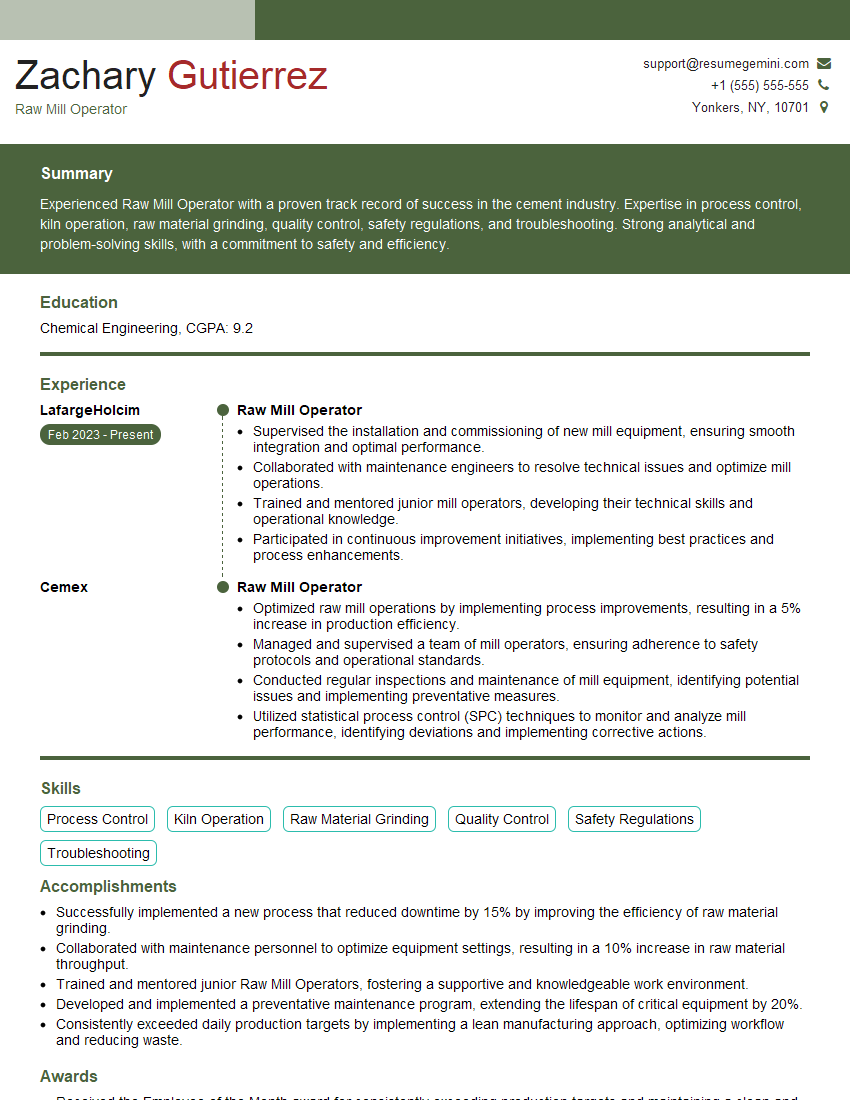
Mastering cement preparation is key to unlocking exciting career opportunities in the construction materials industry. A strong understanding of these processes demonstrates valuable technical expertise and problem-solving capabilities, significantly enhancing your job prospects. To stand out, create an ATS-friendly resume that highlights your skills and experience effectively. ResumeGemini is a trusted resource to help you build a professional and impactful resume. We provide examples of resumes tailored to Cement Preparation to guide you through the process, ensuring your qualifications shine through to potential employers.
Explore more articles
Users Rating of Our Blogs
Share Your Experience
We value your feedback! Please rate our content and share your thoughts (optional).
What Readers Say About Our Blog
Very informative content, great job.
good