Unlock your full potential by mastering the most common Communication and Security Awareness interview questions. This blog offers a deep dive into the critical topics, ensuring you’re not only prepared to answer but to excel. With these insights, you’ll approach your interview with clarity and confidence.
Questions Asked in Communication and Security Awareness Interview
Q 1. Explain the importance of multi-factor authentication (MFA).
Multi-factor authentication (MFA) significantly enhances security by requiring multiple forms of verification to access an account. Think of it like this: your password is like a key to your house, but MFA adds a second lock, maybe a security code from your phone, or a fingerprint scan. This makes it exponentially harder for unauthorized individuals to gain access, even if they obtain your password.
The importance lies in its layered approach to security. Even if one authentication factor is compromised (e.g., a stolen password), the attacker still needs to overcome the others. This drastically reduces the risk of successful breaches. Common MFA methods include one-time passwords (OTPs) via SMS or authenticator apps, security keys, biometrics (fingerprint, facial recognition), and even questions about your life.
In a professional setting, MFA protects sensitive company data, customer information, and intellectual property. Implementing MFA across all systems – from email and cloud storage to internal networks – is a crucial step in minimizing the impact of cyber threats.
Q 2. Describe the difference between phishing and spear phishing.
While both phishing and spear phishing involve deceptive attempts to obtain sensitive information, spear phishing is a far more targeted and sophisticated attack.
Phishing is like sending a mass email to everyone in a neighborhood, hoping someone will bite. It uses generic greetings and often relies on creating a sense of urgency (e.g., ‘Your account is compromised!’).
Spear phishing is more like sending a personalized letter to one specific individual, carefully crafted to exploit their specific circumstances and relationships. It involves extensive research on the target, using their name, company, and potentially personal details to make the message more believable and increase the chances of success. For example, a spear phishing email might impersonate a colleague or a client, requesting financial information or access credentials under a plausible pretext.
The key difference lies in the level of personalization and targeting. Spear phishing attacks are harder to detect because they appear legitimate and exploit the trust that already exists between the attacker and the target.
Q 3. What are the key elements of a successful security awareness training program?
A successful security awareness training program should be engaging, relevant, and regularly updated. Key elements include:
Engaging Content: Use interactive modules, videos, and real-world examples to keep employees interested. Avoid lengthy, dry presentations.
Relevant Scenarios: Tailor training to the specific risks faced by the organization and the roles of employees. A training program for a financial institution will differ significantly from one for a retail company.
Regular Reinforcement: Security awareness is not a one-time event. Regular refresher training, simulations, and quizzes are essential to maintain employee vigilance.
Clear Communication: Use simple language, avoid jargon, and make the training accessible to all employees, regardless of their technical expertise.
Actionable Steps: Provide clear guidelines and procedures that employees can follow to protect themselves and the organization. This includes reporting suspected security incidents.
Gamification: Incorporate elements of game mechanics, such as points, badges, and leaderboards, to make the training more fun and engaging.
Metrics and Feedback: Track completion rates, quiz scores, and other metrics to measure the effectiveness of the training and identify areas for improvement.
Q 4. How would you measure the effectiveness of a security awareness campaign?
Measuring the effectiveness of a security awareness campaign requires a multi-faceted approach. You can’t just rely on completion rates of training modules. Here are some key metrics:
Phishing Simulation Results: Conduct regular simulated phishing attacks to assess employees’ ability to identify and report suspicious emails. Track the click-through rate and the number of employees who reported the phishing email.
Security Incident Reports: Monitor the number and type of security incidents reported by employees. A decrease in incidents suggests improved awareness.
Employee Surveys: Conduct regular surveys to gauge employee understanding of security policies and procedures. This provides valuable qualitative data.
Password Strength Analysis: Assess the complexity and strength of employee passwords to see if they have adopted better password hygiene practices.
Data Loss Prevention (DLP) Metrics: Track the number of sensitive data leaks or attempts to leak data from the organization’s network. A decline indicates success.
By combining quantitative and qualitative data, you can gain a comprehensive understanding of the campaign’s success and make adjustments as needed.
Q 5. What are some common social engineering tactics?
Social engineering tactics manipulate human psychology to trick individuals into revealing sensitive information or performing actions that compromise security. Some common tactics include:
Pretexting: Creating a believable scenario to gain trust and information. For example, posing as a technical support representative to obtain login credentials.
Baiting: Offering something tempting (e.g., a free gift card) in exchange for personal information or access to a system.
Quid Pro Quo: Offering a service or favor in exchange for something from the victim. For example, promising to help with a computer problem in exchange for remote access.
Tailgating: Following closely behind someone who has legitimate access to a secure area, hoping to gain unauthorized entry.
Phishing and Spear Phishing (as explained above): Using deceptive emails or messages to trick individuals into revealing sensitive information.
Watering Hole Attacks: Compromising a website that the target frequently visits to deliver malware or malicious code.
These tactics rely on exploiting human vulnerabilities such as trust, curiosity, and fear of missing out. Security awareness training should help employees recognize and avoid these common pitfalls.
Q 6. Explain the concept of a security incident response plan.
A security incident response plan (SIRP) is a documented process that outlines how an organization will respond to and recover from a security incident, such as a data breach, malware infection, or denial-of-service attack. It’s a critical component of any robust security posture.
A comprehensive SIRP includes:
Preparation: Identifying potential threats, vulnerabilities, and assets. This involves risk assessments and defining roles and responsibilities.
Detection and Analysis: Establishing mechanisms for detecting security incidents and analyzing their impact.
Containment: Implementing steps to isolate the affected systems and prevent the incident from spreading.
Eradication: Removing the root cause of the incident and restoring affected systems.
Recovery: Restoring systems and data to their pre-incident state.
Post-Incident Activity: Reviewing the incident to identify lessons learned and implement improvements to prevent future incidents.
Regular testing and updates of the SIRP are essential to ensure its effectiveness in real-world scenarios. It’s not just a document – it’s a living, breathing plan that needs to be refined based on the organization’s changing needs and the evolving threat landscape.
Q 7. How would you communicate a security breach to stakeholders?
Communicating a security breach to stakeholders requires a swift, transparent, and well-coordinated approach. The communication plan should be pre-defined as part of the SIRP.
Key considerations include:
Speed and Accuracy: Communicate the breach as soon as possible, once a preliminary investigation determines the scope and impact. The information should be factual and avoid speculation.
Targeted Messaging: Tailor communication to the specific needs and expectations of different stakeholder groups (e.g., employees, customers, regulators, investors). For example, employees might need detailed instructions on password changes, while customers might only require a summary of the impact on their data.
Transparency and Honesty: Be upfront about what happened, what information was affected, and what steps are being taken to address the situation. Avoid downplaying the issue or withholding information.
Remediation and Mitigation: Clearly explain what actions are being taken to remedy the situation and prevent future incidents. This might involve patching vulnerabilities, implementing new security controls, or providing credit monitoring services.
Communication Channels: Use appropriate communication channels (e.g., email, phone calls, website updates, press releases) to reach all stakeholders effectively.
Ongoing Updates: Provide regular updates to stakeholders as the situation develops. Transparency throughout the process builds trust and minimizes damage.
Following a well-defined communication plan during a security breach minimizes panic, maintains stakeholder confidence, and facilitates a quicker recovery.
Q 8. What is the role of risk assessment in security awareness?
Risk assessment is the cornerstone of any effective security awareness program. It’s the process of identifying vulnerabilities and threats within an organization, analyzing their potential impact, and prioritizing the risks. Without a thorough risk assessment, your security awareness training might focus on the wrong areas, leaving your organization vulnerable to significant threats. For example, if a risk assessment reveals that phishing attacks are a major concern, the awareness training should heavily emphasize phishing recognition and prevention techniques. Conversely, if the primary risk is insider threats, the training needs to address appropriate data handling and access control procedures.
A comprehensive risk assessment should consider various factors, including:
- Asset identification: What valuable data or systems need protection?
- Threat identification: What are the potential threats (e.g., malware, phishing, insider threats)?
- Vulnerability identification: What weaknesses in systems or processes make the organization susceptible to these threats?
- Likelihood and impact analysis: How likely is each threat to occur, and what would be the impact if it did?
- Risk ranking and prioritization: Based on likelihood and impact, which risks need to be addressed first?
The results of a risk assessment directly inform the content and focus of your security awareness training, ensuring it’s tailored to the organization’s specific needs and vulnerabilities.
Q 9. What are the best practices for creating secure passwords?
Creating strong passwords is crucial for protecting accounts and data. Think of your password as the key to your digital life – a weak key makes it easy for intruders to get in. Here are best practices:
- Length: Aim for at least 12 characters. Longer passwords are exponentially harder to crack.
- Complexity: Use a mix of uppercase and lowercase letters, numbers, and symbols. Avoid easily guessable sequences like ‘12345’ or ‘password.’
- Uniqueness: Don’t reuse passwords across different accounts. If one account is compromised, attackers can try that same password on others.
- Password manager: Utilize a reputable password manager to generate and securely store strong, unique passwords for all your accounts. This removes the burden of remembering many complex passwords.
- Avoid personal information: Don’t use names, birthdays, or other easily discoverable information in your passwords.
Consider this analogy: a simple padlock is easily broken, while a complex, high-security lock requires significantly more effort to bypass. Similarly, a long, complex password acts as a strong digital lock protecting your accounts.
Q 10. How would you handle a situation where an employee ignores security policies?
Ignoring security policies is a serious issue that needs to be addressed promptly and professionally. A multi-step approach is necessary:
- Understanding the cause: First, try to understand *why* the employee is ignoring the policies. Is it due to lack of understanding, inconvenience, or intentional disregard? A private conversation is crucial here.
- Education and retraining: If the reason is lack of understanding, provide additional training and clarification on the relevant policies. Emphasize the importance of compliance and the potential consequences of non-compliance.
- Disciplinary action: For repeated or intentional violations, progressive disciplinary action should be taken, following company policy. This could range from verbal warnings to written reprimands, suspension, or termination.
- Strengthening policies: Consider whether the policy itself needs improvement. Is it overly complex, unclear, or impractical? Making policies user-friendly and effective increases the likelihood of compliance.
- Monitoring and enforcement: Regularly monitor compliance with security policies and take prompt action to address any violations. Consistency is key.
Remember, the goal is not to punish employees but to ensure the organization’s security. A fair, consistent, and educational approach is most effective.
Q 11. Explain the importance of data loss prevention (DLP).
Data Loss Prevention (DLP) is a critical security strategy designed to prevent sensitive data from leaving the organization’s control. It involves implementing technologies and processes to identify, monitor, and protect confidential information across all channels—email, cloud storage, USB drives, and more. Think of DLP as a security perimeter that extends beyond the traditional network boundaries.
The importance of DLP stems from the potential consequences of data breaches: financial losses, reputational damage, legal penalties, and loss of customer trust. For instance, a healthcare organization losing patient records faces severe penalties under HIPAA. A financial institution leaking customer account details could face massive fines and lawsuits.
DLP solutions typically involve:
- Data discovery and classification: Identifying where sensitive data resides and classifying its sensitivity level.
- Monitoring and alerting: Detecting attempts to access, copy, or transfer sensitive data.
- Prevention and protection: Blocking or encrypting data transfers that violate security policies.
By implementing robust DLP measures, organizations can significantly reduce the risk of data breaches and protect their valuable information assets.
Q 12. What are some common types of malware?
Malware is a broad term for malicious software designed to damage, disrupt, or gain unauthorized access to computer systems. There are many types, including:
- Viruses: Self-replicating programs that spread by infecting other files or programs.
- Worms: Self-replicating programs that spread over networks without needing a host program.
- Trojans: Programs disguised as legitimate software that perform malicious actions once installed.
- Ransomware: Malware that encrypts a victim’s files and demands a ransom for their release.
- Spyware: Software that secretly monitors a user’s activities and collects personal information.
- Adware: Software that displays unwanted advertisements.
- Rootkits: Programs that hide their presence on a system, allowing attackers to maintain persistent access.
Understanding these different types is crucial for developing effective security awareness training that equips employees to recognize and avoid malware threats. For example, training should teach users to identify phishing emails (often vectors for malware) and to avoid downloading files from untrusted sources.
Q 13. How can you educate employees about the risks of using personal devices for work?
Educating employees about the risks of using personal devices for work requires a clear and concise communication strategy. The key is to explain the potential security vulnerabilities and the potential consequences for both the individual and the organization.
Here’s a structured approach:
- Explain the risks: Detail the security risks associated with using personal devices for work, such as malware infection, data breaches, loss or theft of sensitive information, and potential violation of company policy. Use real-world examples of data breaches caused by personal device use.
- Highlight the consequences: Emphasize the potential consequences of security breaches, including disciplinary actions, financial losses, legal liabilities, and reputational damage for both the employee and the company.
- Provide alternative solutions: Offer alternatives, such as using company-provided devices or adhering to strict guidelines for using personal devices, including strong passwords, up-to-date security software, and avoiding risky websites.
- Implement clear policies: Establish and communicate a clear and comprehensive policy regarding the use of personal devices for work, outlining permitted uses, restrictions, and consequences of violations.
- Regular reinforcement: Regularly reinforce the importance of these policies through communication, training, and awareness campaigns.
Imagine a scenario where an employee uses their personal phone to access company emails and then loses the phone. The consequences could be severe if sensitive data is compromised.
Q 14. What is the importance of regular security awareness training updates?
Regular security awareness training updates are essential for maintaining a strong security posture in an ever-evolving threat landscape. Cybersecurity threats are constantly changing, with new techniques and vulnerabilities emerging regularly. Out-of-date training leaves employees vulnerable to these new threats.
Updates are important for several reasons:
- Addressing new threats: Updates should cover emerging threats, such as new types of malware or sophisticated phishing techniques.
- Reinforcing best practices: Regular reinforcement keeps best practices top-of-mind for employees, reducing complacency.
- Addressing policy changes: If company security policies change, training needs to be updated to reflect these changes.
- Maintaining engagement: Frequent updates keep the training engaging and relevant, preventing employee boredom and disengagement.
- Adapting to technology changes: As technology changes, training needs to adapt to ensure employees are familiar with the security implications of new systems and software.
Think of it like this: a car needs regular maintenance to run smoothly. Similarly, security awareness training requires regular updates to remain effective and protect your organization from emerging threats.
Q 15. Describe different communication channels used in security awareness programs.
Effective security awareness programs utilize a multi-channel approach to reach employees effectively. Different communication styles resonate with different people, and a diverse strategy ensures maximum impact.
- Email: A common channel for announcements, reminders, and phishing simulations. However, overuse can lead to fatigue. Employing strong subject lines and concise content is crucial.
- Intranet/Company Portal: A central hub for security policies, training modules, and announcements. It allows for easy accessibility and searchability of information.
- Videos: Short, engaging videos can convey complex information concisely, holding attention better than lengthy documents. They’re particularly good for illustrating social engineering tactics.
- Posters and Flyers: Physical reminders in common areas can reinforce key messages, especially for quick tips or reminders about safe practices.
- Newsletters/Blogs: Regularly published updates on current threats, best practices, and company security initiatives keep employees informed and engaged.
- Team Meetings and Workshops: Interactive sessions provide a platform for Q&A, discussion, and personalized feedback, fostering a stronger sense of community around security.
- Gamification: Incorporating elements of games, such as quizzes, points, and leaderboards, can increase engagement and friendly competition.
- Social Media (Internal): For companies using internal social networks, this can be an effective platform for disseminating security news, promoting training, and fostering discussion.
The key is to create a blended communication strategy that leverages the strengths of each channel and avoids overwhelming employees with excessive messaging.
Career Expert Tips:
- Ace those interviews! Prepare effectively by reviewing the Top 50 Most Common Interview Questions on ResumeGemini.
- Navigate your job search with confidence! Explore a wide range of Career Tips on ResumeGemini. Learn about common challenges and recommendations to overcome them.
- Craft the perfect resume! Master the Art of Resume Writing with ResumeGemini’s guide. Showcase your unique qualifications and achievements effectively.
- Don’t miss out on holiday savings! Build your dream resume with ResumeGemini’s ATS optimized templates.
Q 16. How do you tailor security messaging for different audiences?
Tailoring security messaging requires understanding your audience’s technical proficiency, roles, and responsibilities. A security message for a software engineer will differ significantly from one for a receptionist.
- Technical Users: These individuals can handle more technical details, understanding concepts like encryption, firewalls, and vulnerabilities. Messaging should be precise, detail-oriented, and perhaps include technical examples.
- Non-Technical Users: Focus on clear, concise language, avoiding jargon. Use relatable scenarios and analogies to illustrate risks, emphasizing the impact on their daily work and personal lives. Visual aids are particularly helpful.
- Executive Level: Focus on business impact, risk mitigation, and ROI of security initiatives. Present information concisely with key metrics and potential financial implications.
Example: When explaining phishing, a message for technical users might discuss email headers and malicious links, while a message for non-technical users might focus on recognizing suspicious emails from unknown senders or unexpected requests for sensitive data. For executives, the focus might be on the potential financial losses from a data breach.
Q 17. What are some effective ways to encourage employee participation in security awareness training?
Encouraging employee participation requires creating engaging and rewarding experiences.
- Make it Relevant: Highlight how security directly impacts their work and personal lives. Real-world examples of breaches and their consequences can be impactful.
- Gamification and Rewards: Incorporate elements of games, such as points, badges, and leaderboards, to increase engagement. Offer small rewards for completion of training or participation in simulations.
- Bite-sized Training: Short, modular training sessions are more manageable and less daunting than lengthy programs. Microlearning, focusing on one specific topic at a time, improves retention.
- Make it Convenient: Offer training at various times and locations, including online, mobile access, and during work hours. Flexible access caters to diverse schedules.
- Positive Reinforcement: Regularly acknowledge and appreciate employee participation and efforts in improving security practices. Highlight successes and celebrate achievements.
- Feedback and Improvement: Collect feedback after each training module and adjust the program accordingly. Show that employee input is valued.
- Leadership Buy-in: Visible support from senior management demonstrating the importance of security reinforces employee participation.
Remember, consistent and engaging communication is key. Avoid making security training feel like a chore.
Q 18. Explain the concept of zero trust security.
Zero Trust Security operates on the principle of ‘never trust, always verify.’ It assumes that no user or device, whether inside or outside the network perimeter, should be implicitly trusted. Every access request is verified before granting access, regardless of the user’s location.
Instead of relying on a traditional network perimeter, Zero Trust uses micro-segmentation, continuous authentication, and least privilege access control. This means that access is granted only to specific resources and only for the time necessary, limiting the potential damage from a compromised account or device.
Key Components:
- Strong Authentication: Multi-factor authentication (MFA) is crucial for verifying user identity.
- Authorization: Access control lists (ACLs) and role-based access control (RBAC) are implemented to restrict access based on user roles and permissions.
- Device Posture Assessment: Checks the security status of devices before granting access, ensuring they meet security standards.
- Micro-segmentation: Dividing the network into smaller, isolated segments limits the impact of a breach.
- Continuous Monitoring: Real-time monitoring of user activity and network traffic helps detect and respond to threats quickly.
Zero Trust is a fundamental shift in security philosophy, moving away from implicit trust towards explicit verification for every access attempt.
Q 19. How can you assess the security awareness level of your employees?
Assessing employee security awareness requires a multi-faceted approach combining various methods.
- Phishing Simulations: Controlled phishing campaigns test employees’ ability to identify and report malicious emails. Analysis of the results reveals the effectiveness of training and highlights areas needing improvement.
- Security Awareness Quizzes and Tests: Regular quizzes assess knowledge of security policies, best practices, and common threats. These should be tailored to different roles and levels of technical expertise.
- Vulnerability Assessments: Scanning for vulnerabilities on employee devices can identify weaknesses and gaps in security practices.
- Security Audits: Regular audits of systems and processes assess overall security posture and highlight areas for improvement in awareness and practices.
- Incident Response Analysis: Analyzing reported incidents, such as phishing attempts or malware infections, can reveal patterns and weaknesses in employee behavior and training.
- Surveys and Feedback: Gathering employee feedback on training effectiveness, perceived risks, and security practices provides valuable insights.
The combination of these methods provides a comprehensive picture of employee security awareness, identifying gaps and informing training and policy improvements.
Q 20. What is your understanding of GDPR or CCPA compliance related to communications?
GDPR (General Data Protection Regulation) and CCPA (California Consumer Privacy Act) are regulations focusing on data privacy and individual rights. They significantly impact how organizations communicate with individuals about data collection, use, and sharing.
Key Considerations for Communications:
- Transparency and Consent: Communications must be clear, concise, and easily understandable, detailing how personal data is collected, processed, and protected. Explicit consent must be obtained before processing personal data.
- Data Subject Rights: Individuals have rights to access, rectify, erase, and restrict their personal data. Communications must outline these rights and provide mechanisms for exercising them.
- Data Breach Notifications: In case of a data breach, organizations must notify affected individuals within the legally mandated timeframe, explaining the breach and steps taken to mitigate its impact.
- Privacy Policies: Clear and accessible privacy policies are mandatory, outlining how data is collected, used, and protected.
- Communication Preferences: Organizations must respect individual preferences regarding communication methods and channels.
Non-compliance can result in significant fines and reputational damage. Organizations must ensure their communication practices are compliant with these regulations by implementing robust data protection measures and clear, transparent communication strategies.
Q 21. How do you balance security with user productivity?
Balancing security and user productivity requires finding a middle ground that minimizes disruption while maximizing protection. Overly restrictive security measures can hinder productivity, while lax security can expose the organization to risks.
Strategies for Balancing Security and Productivity:
- User-Friendly Security Tools: Implement security solutions that are intuitive and easy to use, minimizing friction and frustration for employees.
- Clear Communication and Training: Proper training and clear communication about security policies and procedures can help employees understand the ‘why’ behind security measures, increasing compliance and reducing resistance.
- Automation and Streamlining: Automate security tasks wherever possible, such as password management and software updates, reducing the burden on employees.
- Context-Aware Security: Employ security solutions that adapt to the user’s context, allowing for more flexibility and less disruption. For example, allowing access to company resources from trusted devices without excessive authentication prompts.
- Continuous Improvement: Regularly review security measures and processes to identify areas where improvements can enhance productivity without compromising security. Employee feedback is crucial.
- Least Privilege Access: Granting users only the necessary permissions minimizes the impact of a potential breach.
The goal is to create a secure environment that doesn’t hinder daily operations, but rather empowers employees to work efficiently while understanding and participating in maintaining security.
Q 22. What metrics would you use to track the success of a security awareness program?
Measuring the success of a security awareness program requires a multi-faceted approach, going beyond simple completion rates. We need to track leading indicators (proactive engagement) and lagging indicators (reactive results).
- Leading Indicators: These show program effectiveness before incidents occur. Examples include:
- Training Completion Rates: Percentage of employees who completed training modules. However, simply completing a course doesn’t guarantee understanding. We’d look at time spent on modules and scores achieved.
- Phishing Campaign Simulation Results: Percentage of employees who didn’t click on phishing links. This directly reflects the impact of training on practical threat identification.
- Quiz Scores & Knowledge Retention: Regular quizzes assess knowledge retention and identify areas needing improvement. We analyze trends to see if knowledge is decaying over time.
- Engagement Metrics: Participation in interactive elements (e.g., games, forums) shows interest and understanding.
- Lagging Indicators: These measure the program’s effectiveness after incidents, providing insights into its impact. Examples include:
- Number of Security Incidents: A decrease in phishing attempts, malware infections, and data breaches indicates program success. We analyze the *type* of incidents to understand if our program is addressing the right threats.
- Mean Time to Resolution (MTTR): Faster resolution of security incidents suggests employees are better equipped to identify and report issues.
- Cost Savings: Reduced costs associated with data breaches, legal fees, and remediation efforts are a key metric.
By combining leading and lagging indicators, we get a comprehensive view of the program’s effectiveness and areas for improvement. For example, if completion rates are high but phishing simulation results are low, it indicates a need for more engaging and practical training content.
Q 23. Explain the difference between technical and non-technical security controls.
Technical and non-technical security controls are two sides of the same coin, working together to protect an organization’s assets.
- Technical Security Controls: These are implemented using technology and involve hardware or software solutions. Examples include:
- Firewalls: Control network traffic, preventing unauthorized access.
- Intrusion Detection/Prevention Systems (IDS/IPS): Monitor network traffic for malicious activity and block or alert on suspicious patterns.
- Antivirus Software: Detects and removes malware from computers and servers.
- Data Loss Prevention (DLP) tools: Prevent sensitive data from leaving the network without authorization.
- Multi-Factor Authentication (MFA): Adds an extra layer of security beyond passwords.
- Non-Technical Security Controls: These rely on human behavior, policies, and procedures. Examples include:
- Security Awareness Training: Educates employees about security threats and best practices.
- Security Policies and Procedures: Define acceptable use of company resources and outline incident response procedures.
- Background Checks: Verify the trustworthiness of employees and contractors.
- Access Control Lists (ACLs): Define who has access to specific systems and data, even if the technology is in place.
- Regular Security Audits: Assess the effectiveness of security controls and identify vulnerabilities.
Think of it like a house: technical controls are the locks and alarm systems, while non-technical controls are the rules about locking doors and what to do if you see a suspicious person. Both are crucial for comprehensive security.
Q 24. How would you handle a suspected insider threat?
Handling a suspected insider threat requires a careful and methodical approach to protect the organization and ensure fairness to the employee.
- Gather Evidence: Discreetly collect evidence of the suspected malicious activity. This might involve reviewing logs, monitoring network traffic, and interviewing colleagues (without revealing suspicions).
- Initiate Investigation: Depending on the severity and nature of the suspected threat, this could involve internal security personnel, HR, and even external forensic investigators. We need to follow legal and ethical guidelines.
- Maintain Confidentiality: Keep the investigation confidential to avoid damaging the reputation of the employee and to prevent the threat from escalating.
- Secure Systems and Data: Immediately take steps to secure affected systems and data to minimize further damage. This might involve revoking access privileges.
- Consult Legal Counsel: Legal counsel should be involved from the early stages of the investigation to ensure compliance with relevant laws and regulations.
- Document Everything: Maintain detailed records of the investigation, including all evidence, interviews, and actions taken. This is crucial for potential legal proceedings.
- Disciplinary Action: Based on the findings of the investigation, appropriate disciplinary action should be taken, ranging from warnings and retraining to termination of employment. This should be consistent with company policies and legal requirements.
It’s vital to remember that accusations alone aren’t sufficient for action; we need concrete evidence. False accusations can have serious consequences.
Q 25. What is your experience with security awareness tools and platforms?
I have extensive experience with various security awareness tools and platforms, including both commercial and open-source solutions. My experience spans different functionalities, from phishing simulations and training modules to vulnerability scanning and incident response platforms.
- Phishing Simulation Platforms: I’ve worked with platforms like KnowBe4 and PhishSim, designing and deploying targeted phishing campaigns to assess employee susceptibility and reinforce training. Analyzing the results allows us to tailor future campaigns and training materials.
- Security Awareness Training Platforms: I’m familiar with platforms offering various training modules, including interactive scenarios, gamified learning, and microlearning formats. These help cater to different learning styles and keep employees engaged. Examples include platforms like SafeGuard and Cybrary.
- Vulnerability Scanners and Security Information and Event Management (SIEM) systems: While not strictly security awareness tools, understanding how these platforms detect and report vulnerabilities provides context for shaping our awareness campaigns. I’ve worked with Nessus, Qualys, and Splunk.
- Incident Response Platforms: These platforms aid in tracking and managing security incidents, which is crucial for understanding the impact of our awareness programs and identifying areas for improvement.
My experience extends beyond simply using these tools; I understand their underlying mechanisms and can effectively integrate them into a comprehensive security awareness program.
Q 26. Describe your approach to creating engaging and effective security awareness materials.
Creating engaging and effective security awareness materials requires understanding the audience and tailoring the message accordingly. My approach involves several key elements:
- Know Your Audience: Different departments and roles have different security needs and technical literacy. Materials should be tailored to specific audiences, using appropriate language and examples.
- Storytelling and Real-World Examples: Instead of dry facts and figures, I use relatable stories and real-world examples of security incidents to make the information more memorable and impactful. People connect better with narratives.
- Interactive and Gamified Learning: Interactive elements like quizzes, simulations, and games can significantly increase engagement and knowledge retention compared to passive learning methods.
- Microlearning: Breaking down training into short, focused modules makes it easier for employees to consume and retain information. Short, frequent sessions are better than one long one.
- Regular and Consistent Communication: Security awareness isn’t a one-time event; it’s an ongoing process. Regular communication through newsletters, email updates, and posters helps reinforce key messages and keep security top-of-mind.
- Multi-Channel Approach: Utilizing various channels – email, intranet, posters, and even team meetings – ensures that the message reaches everyone, regardless of their preferred communication style.
- Feedback and Iteration: Regularly evaluating the effectiveness of the materials and gathering feedback from employees allows for continuous improvement and adaptation.
For example, I might create a short video showcasing a common phishing scam, followed by a quiz to test understanding. This makes the training more engaging and less like a chore.
Q 27. How would you respond to a phishing email yourself?
My response to a suspicious email would follow a structured approach, prioritizing caution and verification.
- Don’t Click Anything: I would avoid clicking any links or downloading any attachments. Phishing emails often use malicious links or attachments to compromise systems.
- Examine the Sender’s Address and Email Content Carefully: I would scrutinize the sender’s email address for inconsistencies or suspicious domains. Poor grammar, urgent requests, or unusual salutations are red flags.
- Verify the Sender Independently: I wouldn’t rely solely on the email; I would contact the supposed sender through a known legitimate channel (phone number or company directory) to confirm the authenticity of the message. This directly eliminates ambiguity.
- Report the Email: I would report the suspicious email to my organization’s security team or IT department. Many organizations have specific procedures for reporting potential phishing attempts.
- Delete the Email: Once verified as suspicious, I’d delete the email immediately and ensure it’s not recoverable from the trash.
My response wouldn’t be based on instinct; rather, it’s a systematic approach that minimizes risk. This highlights the effectiveness of our training and the importance of following established procedures.
Key Topics to Learn for Communication and Security Awareness Interview
- Effective Communication Strategies: Understanding how to clearly convey complex security information to diverse audiences (technical and non-technical). Consider different communication channels and their effectiveness.
- Security Awareness Training Principles: Familiarize yourself with the design and implementation of successful security awareness programs. Think about how to engage employees and foster a security-conscious culture.
- Risk Communication and Management: Learn how to assess, analyze, and communicate security risks to stakeholders. Practice explaining technical vulnerabilities in a way that’s easily understood.
- Incident Response Communication: Understand the importance of clear and timely communication during security incidents. Prepare examples of how you would communicate with different stakeholders (e.g., management, employees, law enforcement).
- Phishing and Social Engineering Awareness: Develop a strong understanding of common social engineering tactics and how to identify and report suspicious activity. Be ready to discuss practical examples and mitigation strategies.
- Data Security and Privacy Best Practices: Understand the importance of data protection and privacy regulations. Be prepared to discuss how to communicate these regulations effectively within an organization.
- Vulnerability Management and Remediation Communication: Learn how to effectively communicate vulnerabilities and remediation steps to relevant teams. Focus on clear, actionable steps and timelines.
- Metrics and Reporting: Understand how to measure the effectiveness of security awareness programs and communicate progress to stakeholders. Practice presenting data clearly and concisely.
Next Steps
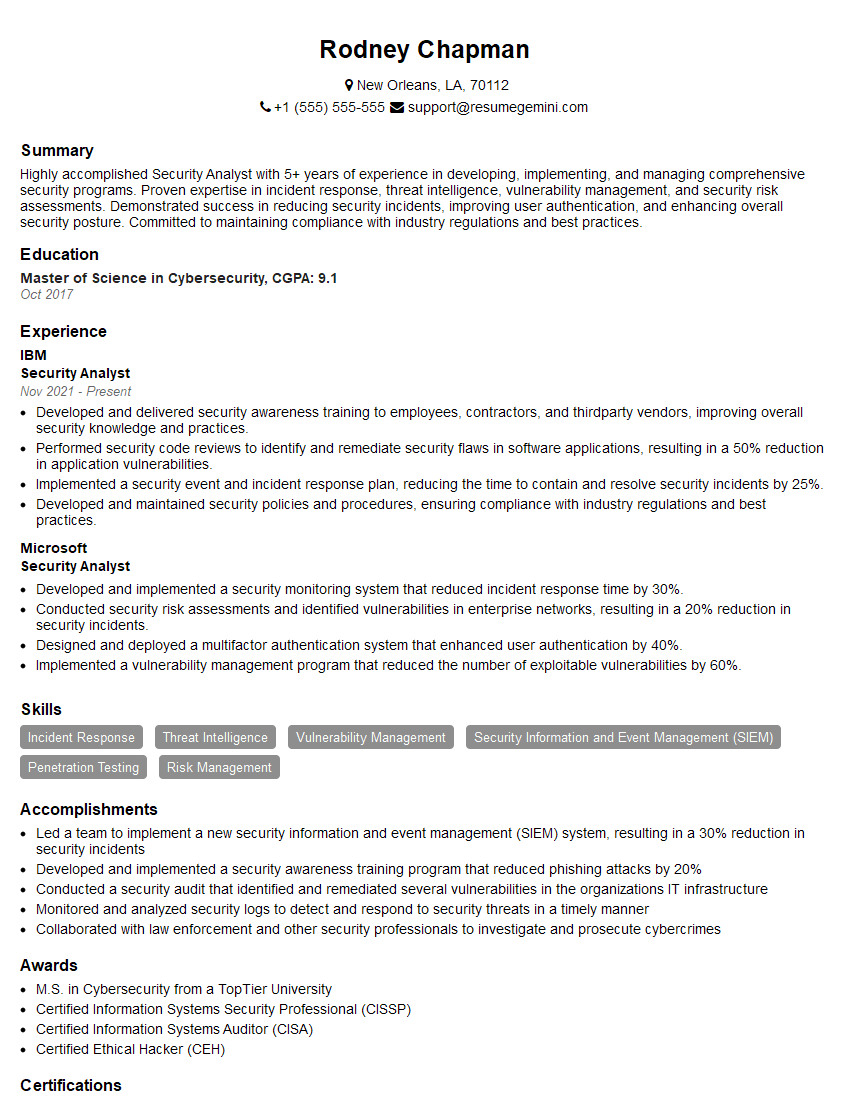
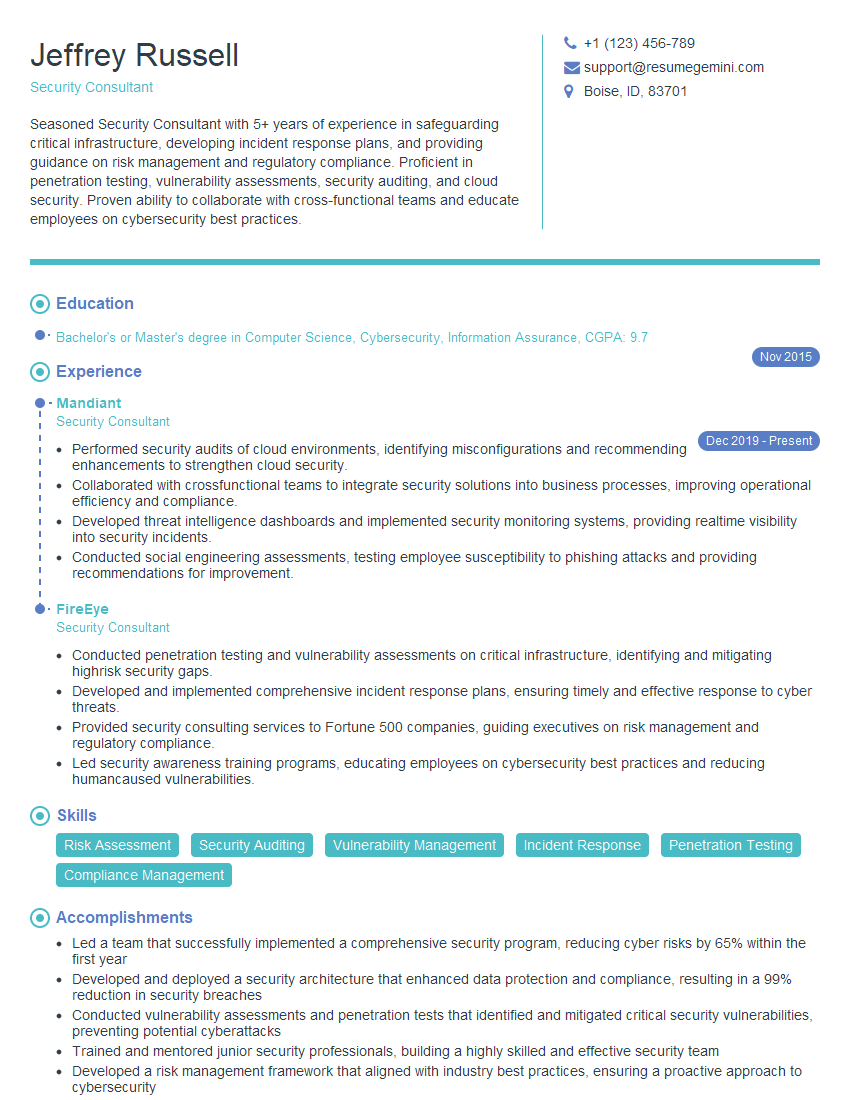
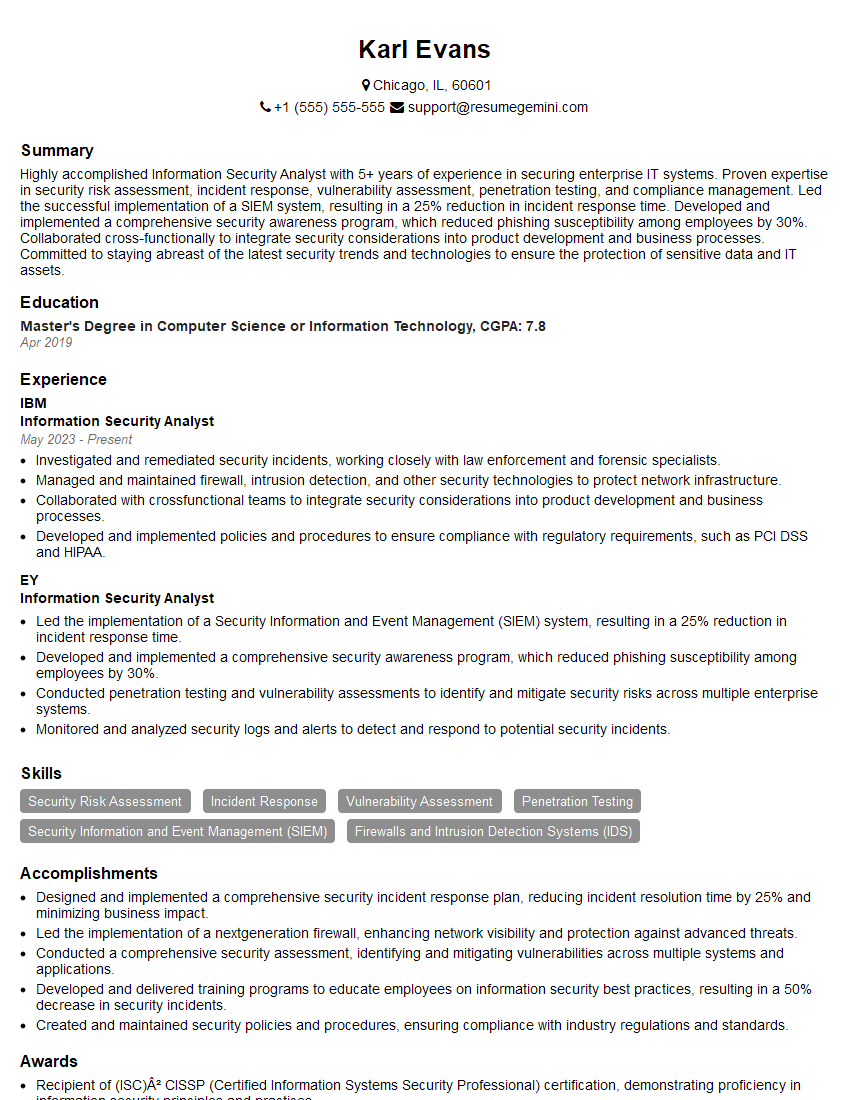
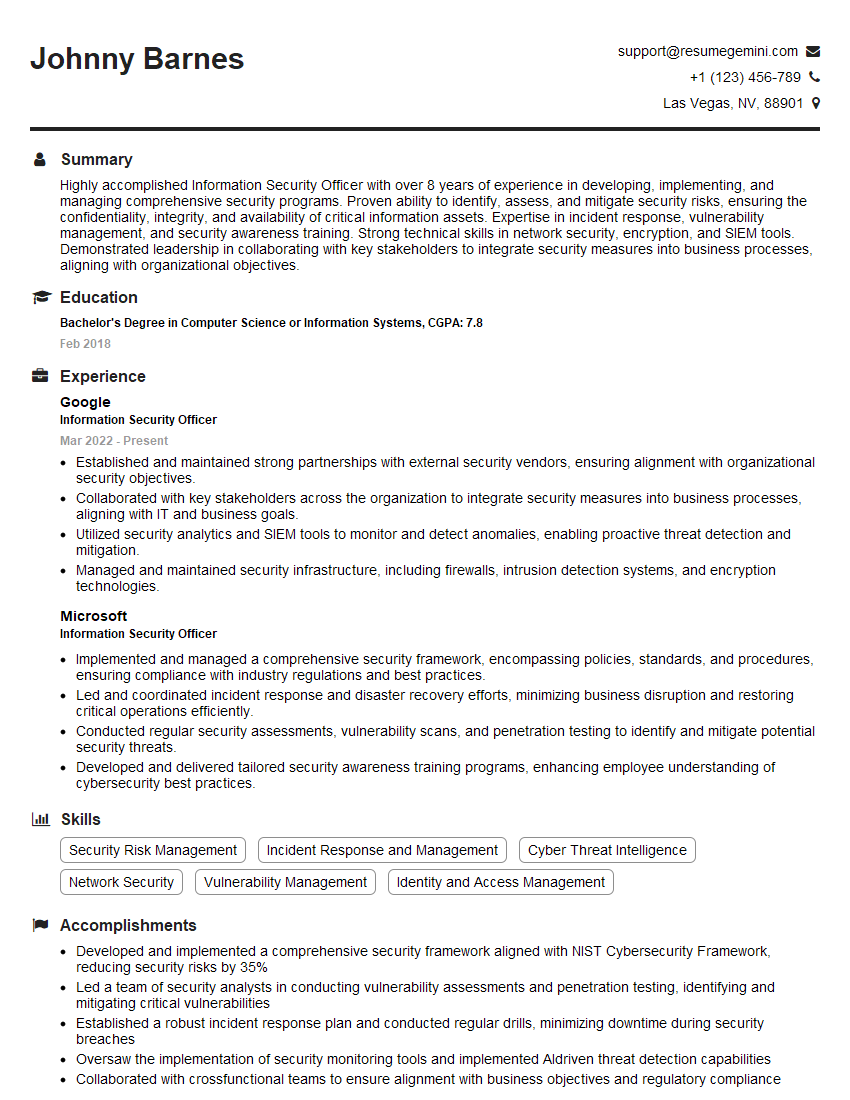
Mastering Communication and Security Awareness is crucial for career advancement in today’s increasingly digital world. Strong communication skills are essential for effectively conveying complex security concepts and building a strong security culture. An ATS-friendly resume is key to getting your application noticed. To enhance your job prospects, consider crafting a compelling resume that highlights your skills and experience in this field. ResumeGemini is a trusted resource to help you build a professional and effective resume. Examples of resumes tailored to Communication and Security Awareness are available to help guide your process.
Explore more articles
Users Rating of Our Blogs
Share Your Experience
We value your feedback! Please rate our content and share your thoughts (optional).
What Readers Say About Our Blog
Very informative content, great job.
good