Are you ready to stand out in your next interview? Understanding and preparing for Change Management and Release Engineering interview questions is a game-changer. In this blog, we’ve compiled key questions and expert advice to help you showcase your skills with confidence and precision. Let’s get started on your journey to acing the interview.
Questions Asked in Change Management and Release Engineering Interview
Q 1. Explain the difference between Change Management and Release Management.
Change Management and Release Management are closely related but distinct disciplines. Think of it like this: Change Management focuses on the people side of change, ensuring a smooth transition and adoption of new systems or processes. Release Management, on the other hand, focuses on the technical side, managing the deployment of those changes into production.
Change Management encompasses planning, implementing, and managing the people-side of organizational change to achieve the desired outcomes. It involves communicating the rationale for the change, addressing concerns, providing training, and ensuring buy-in from stakeholders. It’s about minimizing disruption and maximizing user adoption.
Release Management is the process of planning, scheduling, and controlling the movement of releases to different environments (e.g., development, testing, production). It involves coordinating activities across teams, managing dependencies, and ensuring that releases are deployed successfully and meet quality standards. It’s the technical execution of the change.
In short: Change Management is about the why and how of getting people to adapt, while Release Management is about the what and when of deploying the technical changes.
Q 2. Describe your experience with different Change Management methodologies (e.g., ADKAR, Prosci).
I’ve had extensive experience with several Change Management methodologies, most notably ADKAR and Prosci. Both are valuable frameworks, but their approach differs slightly.
- ADKAR (Awareness, Desire, Knowledge, Ability, Reinforcement) focuses on the individual’s journey through change. It’s a highly practical model that helps guide managers in understanding the individual steps required for successful change adoption. I’ve used this extensively when implementing new CRM systems, where individualized training and ongoing support were crucial for user buy-in.
- Prosci offers a more comprehensive, organization-wide approach. It provides a structured methodology for managing change across teams and departments, emphasizing change sponsorship, communication planning, and stakeholder engagement. In a large-scale ERP implementation I led, the Prosci methodology helped us align communication, manage resistance effectively, and track progress across multiple project teams.
My experience shows that the best approach often involves a hybrid model, adapting elements from both ADKAR and Prosci to fit the specific context of each change initiative.
Q 3. How do you prioritize competing change requests?
Prioritizing competing change requests requires a structured approach. I typically use a multi-criteria decision analysis (MCDA) method that considers several factors:
- Business Value: What is the potential return on investment (ROI) of each change? High-ROI changes should take precedence.
- Urgency: How critical is the change? Is it addressing a critical bug, a security vulnerability, or a major business need?
- Risk: What are the potential risks and impacts of delaying or implementing the change? High-risk changes often require faster action.
- Dependencies: Are there dependencies between different change requests? Some changes might need to be completed before others can begin.
- Resource Availability: Do we have the necessary resources (people, time, budget) to implement all the requests simultaneously?
I often use a weighted scoring system to quantify these factors, allowing for objective comparison and ranking of change requests. This ensures that we focus on the changes that deliver the most value while managing risk effectively.
Q 4. What tools and technologies have you used for Release Management?
Throughout my career, I’ve utilized a range of tools for Release Management, focusing on those that support automation and collaboration. This includes:
- Jira: For issue tracking, project management, and release planning.
- Confluence: For documentation and knowledge sharing within the team and across stakeholders.
- ServiceNow: For IT service management (ITSM), change management, and release orchestration.
- Azure DevOps: For continuous integration/continuous delivery (CI/CD) pipelines, build automation, and release management.
The choice of tools depends on the specific needs of the project and the organization’s infrastructure. My focus is always on selecting tools that improve collaboration, automate processes, and provide visibility into the release process.
Q 5. Describe your experience with automated deployment tools (e.g., Jenkins, GitLab CI).
I have extensive experience with automated deployment tools, primarily Jenkins and GitLab CI. Both are powerful CI/CD platforms that allow for automated building, testing, and deployment of software.
Jenkins is a highly customizable and versatile tool, suitable for complex deployments and integrations with various other tools. I used Jenkins to build a robust CI/CD pipeline for a large e-commerce platform, automating the deployment process across multiple environments (development, staging, production).
GitLab CI offers a more integrated approach, leveraging GitLab’s repository management capabilities. Its user-friendly interface and built-in features make it suitable for smaller projects or teams getting started with CI/CD. I’ve implemented GitLab CI for several smaller projects, streamlining the development and deployment workflow.
My expertise lies in designing and implementing CI/CD pipelines that ensure code quality, reduce deployment errors, and enable faster release cycles.
Q 6. How do you handle failed deployments?
Handling failed deployments requires a structured incident management process. My approach involves the following steps:
- Immediate Containment: The first priority is to stop the bleeding – identify and mitigate the immediate impact of the failed deployment. This might involve rolling back the changes, isolating affected systems, or implementing temporary workarounds.
- Root Cause Analysis: Once the immediate impact is contained, a thorough root cause analysis is conducted to determine what caused the failure. This involves reviewing logs, monitoring data, and interviewing involved personnel.
- Remediation: Based on the root cause analysis, we develop and implement a fix to prevent future failures. This might involve code changes, infrastructure improvements, or process adjustments.
- Post-Incident Review: A post-incident review is crucial to learn from the experience and prevent similar incidents in the future. This involves documenting the incident, identifying areas for improvement, and updating processes accordingly.
Communication throughout the process is key. Keeping stakeholders informed about the situation, the recovery efforts, and the expected timeline is critical for maintaining trust and minimizing disruption.
Q 7. Explain your experience with rollback procedures.
Rollback procedures are an essential part of any robust release management strategy. They are the ‘escape hatch’ in case a deployment goes wrong. A well-defined rollback plan ensures that we can quickly revert to a known good state, minimizing downtime and disruption.
My experience involves implementing rollback plans that consider both technical and procedural aspects. Technically, this might involve using version control systems (e.g., Git) to easily revert to previous code versions, or employing automated rollback scripts that can quickly undo deployment changes. Procedurally, it involves defining clear steps, assigning responsibilities, and ensuring that the rollback process is tested regularly.
For example, in one project we used a blue/green deployment strategy. This allowed us to quickly switch traffic between two identical environments. If a deployment to the ‘green’ environment failed, we could instantly switch back to the ‘blue’ environment, minimizing disruption.
A well-defined rollback plan is not merely a ‘just in case’ measure; it’s an integral part of a proactive risk management strategy. It ensures that we’re prepared for the unexpected and can quickly recover from failures.
Q 8. How do you ensure communication and transparency throughout the release process?
Effective communication and transparency are the cornerstones of a successful release process. Think of it like building a bridge – everyone needs to know the plan, the progress, and any potential roadblocks.
I employ a multi-pronged approach:
- Regular Status Updates: These aren’t just email blasts; they’re interactive sessions (virtual or in-person) involving all key stakeholders. I use visual aids like dashboards and progress trackers to keep everyone informed. For example, I might use a Kanban board to show the progress of each task in the release pipeline.
- Dedicated Communication Channels: We utilize a collaborative platform (like Slack or Microsoft Teams) for quick updates, questions, and issue escalation. This ensures real-time communication and fosters a sense of community.
- Detailed Release Notes: These are not just technical documents; they’re written in clear, concise language accessible to all stakeholders, regardless of technical expertise. I always include a summary of the changes, the impact, and any known issues.
- Transparent Issue Tracking: We utilize a bug tracking system (like Jira or Azure DevOps) to openly track issues, their status, and resolutions. This promotes accountability and allows stakeholders to monitor progress in resolving problems.
- Post-Release Reviews: These are crucial for identifying areas for improvement in communication and the overall release process. We gather feedback from all stakeholders and use it to refine our strategies for future releases.
By consistently implementing these strategies, I ensure everyone is informed, engaged, and feels valued throughout the entire release lifecycle.
Q 9. How do you manage stakeholder expectations during a major change initiative?
Managing stakeholder expectations during major change is like navigating a ship through a storm. You need a clear roadmap and a strong communication strategy to keep everyone on board and prevent them from feeling seasick.
My approach involves:
- Setting Clear Expectations Early: I begin by clearly articulating the goals, timelines, and potential risks associated with the change initiative. This includes outlining what success looks like and what stakeholders can expect throughout the process.
- Regular Progress Reports: I provide regular updates on the progress of the change, highlighting achievements and proactively addressing any challenges. Transparency builds trust and reduces anxieties.
- Proactive Communication: I anticipate potential concerns and address them before they escalate. For example, if a major delay is anticipated, I communicate that early, explain the reasons, and offer alternative solutions.
- Feedback Mechanisms: I establish regular channels for gathering feedback from stakeholders, ensuring their voices are heard and their concerns are addressed. This shows respect for their perspectives and creates a sense of ownership.
- Change Champions: I identify and engage key stakeholders who can advocate for the change and help to build support within their teams. These individuals act as bridges between the project team and the broader organization.
By actively engaging with stakeholders and keeping them informed, I create a shared understanding and build their confidence in the successful execution of the change initiative.
Q 10. Describe your experience with incident management and its relationship to change management.
Incident management and change management are two sides of the same coin – they’re both about managing disruptions, but from different perspectives. Incident management is about reacting to unexpected events, while change management is about proactively planning and implementing changes.
My experience shows a strong correlation: Effective change management minimizes the likelihood of incidents. Poorly planned or executed changes are often the root cause of incidents. I’ve seen firsthand how insufficient testing or inadequate communication can lead to major disruptions.
For instance, a poorly communicated software update that impacts user functionality can trigger a flurry of support tickets and service disruptions. This is where incident management comes into play – resolving the immediate issue and minimizing the impact on users. However, a thorough change management process, including robust testing and communication, could have prevented the incident altogether.
I always incorporate lessons learned from incident management into future change initiatives. For example, if an incident highlights a weakness in our monitoring system, we’ll address that weakness as part of the change management process for subsequent releases.
Q 11. How do you measure the success of a change or release?
Measuring the success of a change or release requires a multi-faceted approach, going beyond simply checking off boxes on a checklist. It’s about assessing whether the change delivered the intended value and met stakeholder expectations.
I use a combination of metrics, including:
- Business Value Delivered: Did the change achieve its intended business goals? This could involve quantifiable metrics like increased efficiency, reduced costs, or improved customer satisfaction.
- User Adoption Rate: Was the change readily adopted by users? Low adoption rates might indicate usability issues or lack of communication.
- Incident Rate: Did the change lead to an increase or decrease in incidents? A significant increase suggests problems with the change implementation.
- Stakeholder Satisfaction: Were stakeholders satisfied with the process and the outcome? Feedback surveys and interviews can provide valuable insights.
- Time to Market: Was the change delivered within the planned timeframe and budget?
By analyzing these metrics, I gain a comprehensive understanding of the change’s success and identify areas for improvement in future releases. For example, if user adoption is low, I would investigate reasons behind the poor adoption and implement corrective measures. This could include additional user training, simplified user interfaces, or improved communication.
Q 12. What is your experience with risk management in change and release processes?
Risk management is a critical component of any change or release process. It’s about identifying potential problems before they occur and developing strategies to mitigate those risks. Imagine building a house without considering the weather – it’s a recipe for disaster.
My approach to risk management involves:
- Risk Identification: We brainstorm potential risks throughout the project lifecycle using techniques like SWOT analysis and risk registers. This includes technical risks, schedule risks, resource risks, and business risks.
- Risk Assessment: We evaluate the likelihood and impact of each identified risk. This helps prioritize which risks require the most attention.
- Risk Mitigation Strategies: We develop strategies to reduce the likelihood or impact of each risk. This could include contingency plans, additional testing, or improved communication.
- Risk Monitoring and Control: We continuously monitor the identified risks throughout the project, adjusting mitigation strategies as needed. Regular risk reviews are essential to track progress and identify emerging risks.
- Risk Documentation: All identified risks, assessments, and mitigation strategies are documented for transparency and accountability.
By proactively managing risks, I ensure that potential problems are addressed before they can derail the project. This reduces the likelihood of delays, cost overruns, and negative impacts on stakeholders.
Q 13. How do you handle resistance to change?
Handling resistance to change is a common challenge in any organization. People naturally resist change for various reasons, from fear of the unknown to concerns about job security. It’s crucial to approach this with empathy and understanding.
My strategy involves:
- Understanding the Root Cause: I begin by understanding the reasons behind the resistance. This often involves open communication and active listening. Sometimes it’s about fear of job loss; other times, it’s about a lack of understanding of the benefits of the change.
- Addressing Concerns: Once the root causes are identified, I address them directly and transparently. This might involve providing additional training, clarifying the benefits of the change, or offering support during the transition.
- Active Participation: I involve resistant individuals in the change process. Giving them a voice and making them feel heard often reduces resistance.
- Incentivization: In some cases, offering incentives for adopting the change can be helpful. This could be financial incentives, recognition, or professional development opportunities.
- Pilot Programs: Starting with a pilot program allows for testing and refining the change in a controlled environment, reducing the risk and gaining valuable feedback from a smaller group before widespread implementation.
By addressing concerns, engaging resistant individuals, and creating a supportive environment, I help foster acceptance and facilitate a smoother transition.
Q 14. Explain your experience with capacity planning for releases.
Capacity planning for releases is about ensuring that the infrastructure and resources are available to support the release without causing performance issues or disruptions. This is like planning a large party – you need to ensure you have enough space, food, drinks, and entertainment for all your guests.
My experience includes:
- Resource Assessment: I assess the required resources for the release, including server capacity, network bandwidth, storage space, and personnel. I utilize tools to monitor and predict system resource utilization and identify potential bottlenecks.
- Performance Testing: We conduct thorough performance testing to ensure the application can handle the expected load under various conditions. This includes load testing, stress testing, and soak testing.
- Scalability Planning: We design the system to be scalable, allowing us to easily increase capacity if needed. This might involve utilizing cloud-based infrastructure or implementing auto-scaling mechanisms.
- Contingency Planning: We develop contingency plans to handle unexpected spikes in demand or system failures. This might involve having backup servers or deploying additional resources quickly.
- Monitoring and Optimization: After the release, we monitor system performance closely to identify any bottlenecks or areas for optimization. This ensures the system continues to perform optimally and can handle future growth.
By proactively planning and managing capacity, I ensure a smooth and successful release, minimizing the risk of performance issues and maximizing user experience.
Q 15. How do you ensure compliance with regulatory requirements during releases?
Ensuring compliance during releases hinges on proactive planning and meticulous execution. We begin by thoroughly understanding the applicable regulations, whether it’s HIPAA for healthcare data, GDPR for European user data, or industry-specific standards like PCI DSS for payment processing. This understanding informs the entire release process.
For instance, if we’re releasing an update that handles sensitive customer information, we’d need to ensure that all data encryption, access control, and audit logging mechanisms are functioning correctly and compliant with the relevant regulations. This requires rigorous testing, documented procedures, and potentially external audits.
We integrate compliance checks into our CI/CD pipeline. Automated tests verify data encryption, access controls, and logging. Manual reviews by compliance officers ensure adherence to policies and procedures. Comprehensive documentation, including impact assessments, risk registers, and compliance matrices, are maintained throughout the release lifecycle. Any non-compliance is flagged as a critical issue, halting the release until remediation is complete. Failure to adhere to compliance requirements could lead to hefty fines, reputational damage, and legal repercussions. Proactive compliance is crucial for maintaining trust and avoiding significant business risks.
Career Expert Tips:
- Ace those interviews! Prepare effectively by reviewing the Top 50 Most Common Interview Questions on ResumeGemini.
- Navigate your job search with confidence! Explore a wide range of Career Tips on ResumeGemini. Learn about common challenges and recommendations to overcome them.
- Craft the perfect resume! Master the Art of Resume Writing with ResumeGemini’s guide. Showcase your unique qualifications and achievements effectively.
- Don’t miss out on holiday savings! Build your dream resume with ResumeGemini’s ATS optimized templates.
Q 16. Describe your experience with different release strategies (e.g., canary, blue-green).
I have extensive experience with various release strategies, each tailored to the specific application and risk tolerance. Canary releases, for instance, involve deploying the new version to a small subset of users. This allows us to monitor performance and identify any critical bugs in a controlled environment before a wider rollout. Imagine releasing a new feature to only 1% of users first – this lets us quickly address problems before impacting the majority.
Blue-green deployments involve maintaining two identical environments: a ‘blue’ (live) and a ‘green’ (staging). The new release is deployed to the green environment, thoroughly tested, and then traffic is switched from blue to green, minimizing downtime. This is like having two identical stores; we update one while the other continues to serve customers, then seamlessly switch customers to the updated store.
Other strategies I’ve utilized include rolling releases (gradually updating instances), phased rollouts (releasing to different regions sequentially), and feature flags (enabling/disabling features without deploying new code). The choice depends on factors such as system complexity, risk tolerance, and application characteristics.
Q 17. How do you manage dependencies between different teams and systems during a release?
Managing inter-team and system dependencies is paramount for successful releases. We use a combination of techniques to achieve this. First, we establish clear communication channels and collaboration processes. Daily stand-ups, shared project management tools (like Jira), and regular coordination meetings ensure that teams are aware of each other’s progress and potential roadblocks.
Dependency mapping is essential. We meticulously document all dependencies between teams and systems, identifying potential conflicts or bottlenecks upfront. This allows us to create a release plan that accounts for these dependencies, scheduling tasks strategically to avoid conflicts. For instance, if team A needs output from team B before proceeding, team B’s task is scheduled earlier in the release plan.
Version control is another crucial element. Using a robust system like Git, we track changes and maintain a clear history of all code deployments. This allows us to easily revert to previous versions if issues arise. Automated testing and integration tests help ensure that changes in one system do not negatively impact others.
Q 18. How do you track and manage release progress?
Tracking and managing release progress requires a multi-faceted approach. We use a combination of tools and methodologies to monitor progress and identify potential issues proactively.
Project management tools such as Jira or Azure DevOps are essential. These tools allow us to track tasks, milestones, and dependencies. We create detailed release plans with defined timelines and responsibilities. Regular status meetings ensure all stakeholders are aligned and aware of any deviations from the plan.
Automated monitoring and reporting systems provide real-time insights into the release progress. These systems track key metrics such as deployment success rates, error rates, and performance indicators. Dashboards provide a clear visual representation of the release status, allowing for quick identification of potential problems.
Post-release monitoring is just as important. We continuously monitor application performance and stability after the release to identify and address any lingering issues. This feedback loop informs future releases and improves our overall release process.
Q 19. How do you ensure the quality of releases?
Ensuring release quality is a continuous process, not a one-time event. It starts long before the release itself. We employ a rigorous quality assurance (QA) process that integrates testing throughout the software development lifecycle (SDLC).
This includes unit testing (individual components), integration testing (interacting components), system testing (entire system), and user acceptance testing (UAT) with end-users. Automated testing plays a crucial role, significantly reducing manual testing efforts and improving efficiency. We utilize various testing frameworks and tools to ensure thorough test coverage.
Code reviews are an integral part of our process. Peers review code changes before merging them into the main branch, catching potential bugs and ensuring code quality. Static code analysis tools automatically identify potential issues, such as security vulnerabilities or coding style inconsistencies.
A comprehensive rollback plan is crucial for mitigating risks. We need to have a clear process for reverting to a previous stable version if any critical issues are discovered after release.
Q 20. What is your experience with continuous integration and continuous delivery (CI/CD)?
Continuous Integration/Continuous Delivery (CI/CD) is the backbone of our release process. CI involves regularly integrating code changes into a shared repository, followed by automated builds and tests. This early detection of integration issues dramatically reduces the risk of problems later in the release cycle.
CD extends CI by automating the release process. This includes automated deployment to various environments (development, testing, staging, production), enabling faster and more frequent releases. We leverage tools like Jenkins, GitLab CI, or Azure DevOps to implement our CI/CD pipeline.
For example, every commit triggers an automated build, followed by unit tests and integration tests. Successful builds are then automatically deployed to the staging environment for further testing. Once approved, the release is deployed to production with minimal manual intervention. This automated approach speeds up release cycles, reduces human error, and allows for more frequent releases, enabling faster innovation.
Q 21. Describe your experience with different version control systems (e.g., Git).
Git is our primary version control system. I have extensive experience with its branching strategies, merging techniques, and collaborative workflows. We typically use a Gitflow workflow or a variation thereof, which promotes a structured approach to managing different branches for development, feature releases, and bug fixes.
git branch develop (creating a development branch)git checkout -b feature/new-feature (creating a feature branch)git merge develop (merging feature branch into development)git tag v1.0.0 (tagging a release)
This approach ensures code stability and allows for parallel development. We utilize Git’s features for code reviews, conflict resolution, and tracking changes. Robust branching strategies help isolate changes and reduce the risk of introducing bugs into the main codebase. We also leverage Git’s ability to revert to previous commits if necessary.
Q 22. How do you handle unplanned changes?
Unplanned changes, often called emergency changes, are a fact of life in software development. My approach focuses on minimizing their impact and preventing them whenever possible. First, we rigorously assess the urgency and risk. Is this a critical production issue requiring immediate attention, or can it be deferred to a planned release? This triage is crucial. For immediate fixes, a well-defined emergency change management process is essential. This typically involves a strict approval chain, thorough risk assessment, and rollback planning. The change is implemented quickly but with meticulous documentation, including the reason for the change, steps taken, and any potential risks. Post-implementation, a thorough review is crucial to understand the root cause of the unplanned change and prevent similar incidents in the future. This often involves reviewing monitoring data, logs, and developer feedback. For example, a critical bug affecting user logins would necessitate an immediate fix, while a minor UI tweak could be postponed. A robust monitoring system and proactive alerting are key to early detection, allowing quicker response to potential issues before they escalate into unplanned changes.
Q 23. How do you ensure the security of your releases?
Release security is paramount. My approach is layered and comprehensive, starting with secure coding practices enforced throughout the development lifecycle. This includes regular security audits, penetration testing, and static and dynamic code analysis. We employ secure configuration management, ensuring all servers and applications are hardened against known vulnerabilities. Furthermore, we utilize a strong access control system to restrict access to production environments, employing least privilege principles. All releases undergo rigorous security scans before deployment, using automated tools to detect malware and vulnerabilities. Finally, we implement robust logging and monitoring to detect suspicious activities post-release. A multi-factor authentication system and regular security awareness training for the team are also essential components. For instance, a recent project involved integrating a Security Information and Event Management (SIEM) system to provide real-time threat detection and response capabilities.
Q 24. Describe your experience with monitoring and logging of releases.
Monitoring and logging are integral parts of my release engineering process. We use a combination of tools to achieve comprehensive visibility into our releases. This includes application performance monitoring (APM) tools that track key metrics like response times, error rates, and resource utilization. We also use centralized logging systems that aggregate logs from various sources, allowing us to easily search and analyze them. These logs include crucial information about the release process itself—who deployed what, when, and the outcome. For example, if a release causes a performance degradation, we can use APM data to pinpoint the bottleneck. Similarly, if a critical error occurs, the logs can help us understand the root cause. Dashboards provide real-time insights into the health of our systems, allowing us to proactively identify and address potential issues. Key metrics are tracked and reported, often automatically, to assess release success and identify areas for improvement. This information feeds directly into post-implementation reviews.
Q 25. Explain your understanding of rollback strategies and their implications.
Rollback strategies are critical for mitigating the risk associated with deployments. They define how to quickly revert to a previously stable state in case of a failed release. The choice of rollback strategy depends on the architecture and complexity of the system. Common strategies include:
- Blue/Green Deployment: Running two identical environments, switching traffic between them. Rollback involves simply switching back to the previous version.
- Canary Deployment: Gradually releasing the new version to a subset of users. Rollback is easier as only a small portion of users are affected.
- Rolling Backout: Reversing the deployment process, undoing the changes made during the release. This requires careful planning and version control.
The implications of a poorly planned rollback can be severe, leading to extended downtime, data loss, or further instability. Therefore, meticulous planning, thorough testing of the rollback process, and robust version control are crucial. For example, in a recent project, we used a Blue/Green deployment strategy with automated rollback scripts, significantly reducing downtime in case of a failed release.
Q 26. How do you collaborate with development, testing, and operations teams?
Collaboration is the cornerstone of successful release management. I believe in establishing a strong communication channel and shared understanding across development, testing, and operations teams. This often involves daily stand-up meetings, shared dashboards, and collaborative tools. Development provides release artifacts, while testing validates them, and operations handles deployment and monitoring. I facilitate this communication, ensuring everyone is informed, aligned, and working towards the same goals. Regular meetings, collaborative tools like Jira and Slack, and well-defined roles and responsibilities are vital. Open and honest communication, active listening, and mutual respect are essential for success. For instance, a recent project required a cross-functional team to resolve a critical bug blocking deployment. Through transparent communication and collaborative troubleshooting, we overcame the challenge effectively.
Q 27. What is your approach to automating repetitive tasks in Release Management?
Automation is key to efficiency and reducing human error in release management. We utilize various tools and techniques to automate repetitive tasks, including:
- Continuous Integration/Continuous Deployment (CI/CD): Automating the build, test, and deployment process.
- Infrastructure as Code (IaC): Defining and managing infrastructure through code, enabling automated provisioning and configuration.
- Automated Testing: Automating various testing phases, including unit, integration, and system tests.
- Configuration Management Tools (e.g., Ansible, Chef): Automating the configuration and management of servers and applications.
By automating these tasks, we reduce lead times, improve consistency, and minimize the risk of human error. For example, our CI/CD pipeline automatically builds, tests, and deploys new code whenever changes are committed to the repository, accelerating the release cycle significantly.
Q 28. Describe your experience with post-implementation reviews and lessons learned.
Post-implementation reviews (PIRs) are crucial for continuous improvement. These reviews involve a structured analysis of the entire release process, from planning to post-deployment monitoring. We gather data from various sources, including logs, metrics, and stakeholder feedback, to assess the success of the release and identify areas for improvement. Key questions we address include: Did we meet our objectives? Were there any unexpected issues? What went well, and what could be improved? The lessons learned from PIRs are then incorporated into our processes, helping us to avoid similar issues in future releases. These reviews aren’t just about identifying problems; they also celebrate successes and foster a culture of continuous learning. For example, one PIR revealed a bottleneck in our testing process, leading us to invest in additional automation and improve our testing strategy.
Key Topics to Learn for Change Management and Release Engineering Interviews
- Change Management Fundamentals: Understanding change management methodologies (e.g., ADKAR, Kotter’s 8-Step Process), stakeholder analysis, communication planning, and risk assessment.
- Practical Application of Change Management: Developing and implementing change management plans for software releases, organizational restructuring, or process improvements. Discussing strategies for overcoming resistance to change.
- Release Engineering Principles: Mastering continuous integration/continuous delivery (CI/CD) pipelines, automation tools (e.g., Jenkins, GitLab CI), deployment strategies (blue/green, canary), and infrastructure as code (IaC).
- Practical Application of Release Engineering: Explaining experience with building and maintaining automated deployment pipelines, troubleshooting deployment issues, and optimizing release processes for speed and reliability.
- Version Control & Collaboration: Demonstrating proficiency with Git, branching strategies, code reviews, and collaborative development workflows.
- Monitoring & Incident Management: Discussing experience with monitoring tools, incident response processes, and post-mortem analysis to improve future releases.
- Testing & Quality Assurance: Understanding different testing methodologies (unit, integration, system, user acceptance testing) and their role in ensuring successful releases.
- Security Considerations: Highlighting experience integrating security best practices into the release process, including vulnerability scanning and security automation.
- Problem-Solving & Troubleshooting: Be prepared to discuss scenarios where you’ve identified and resolved critical issues during a release process, demonstrating your analytical and problem-solving abilities.
Next Steps
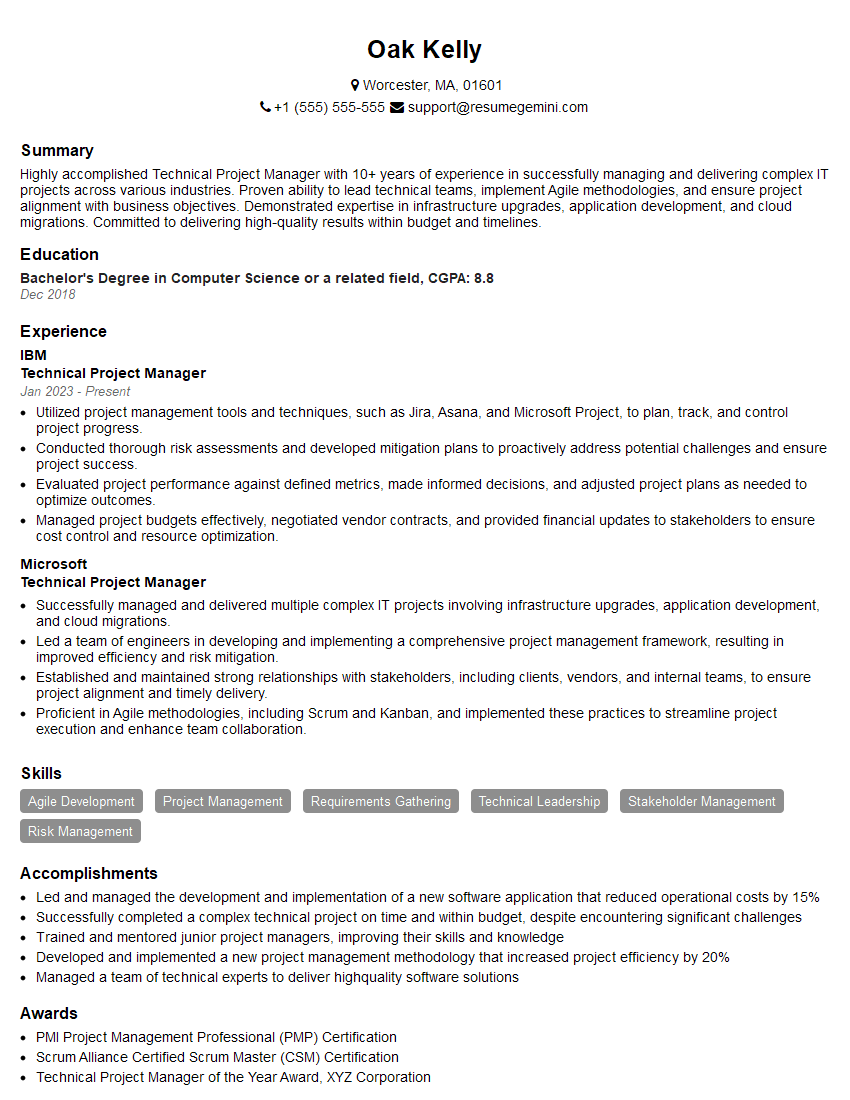
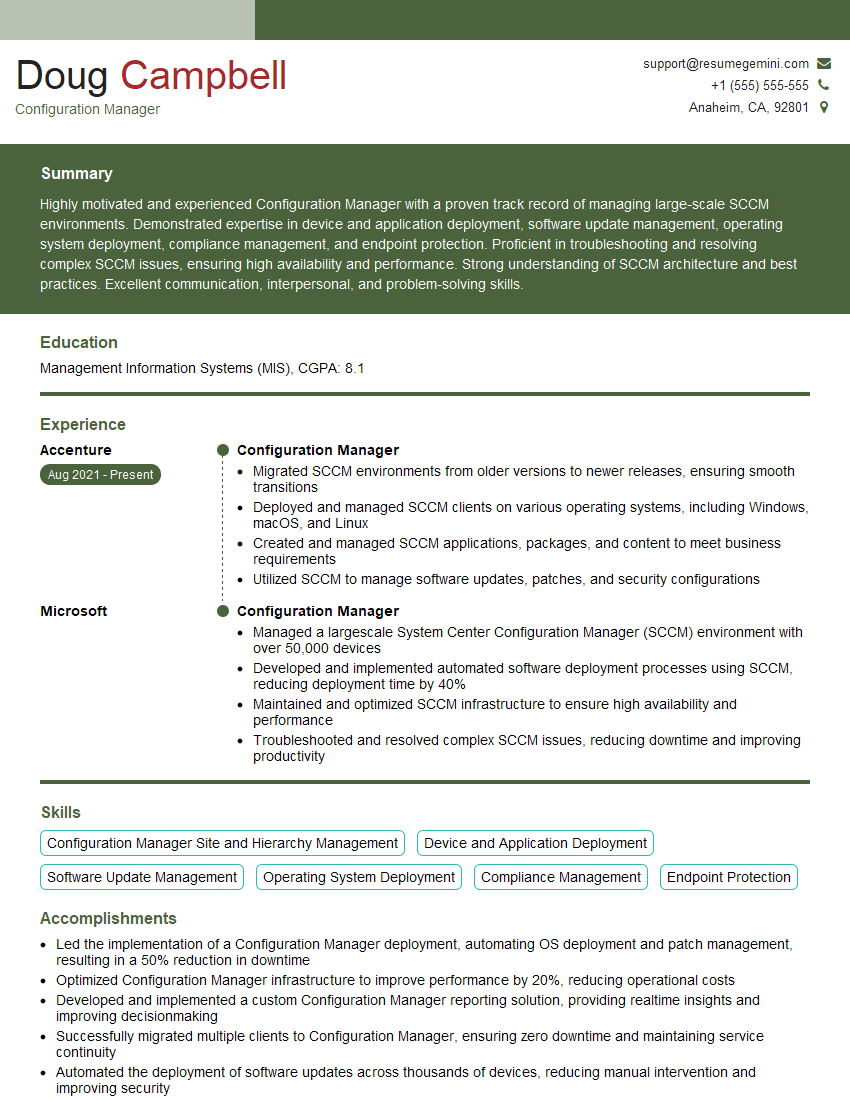
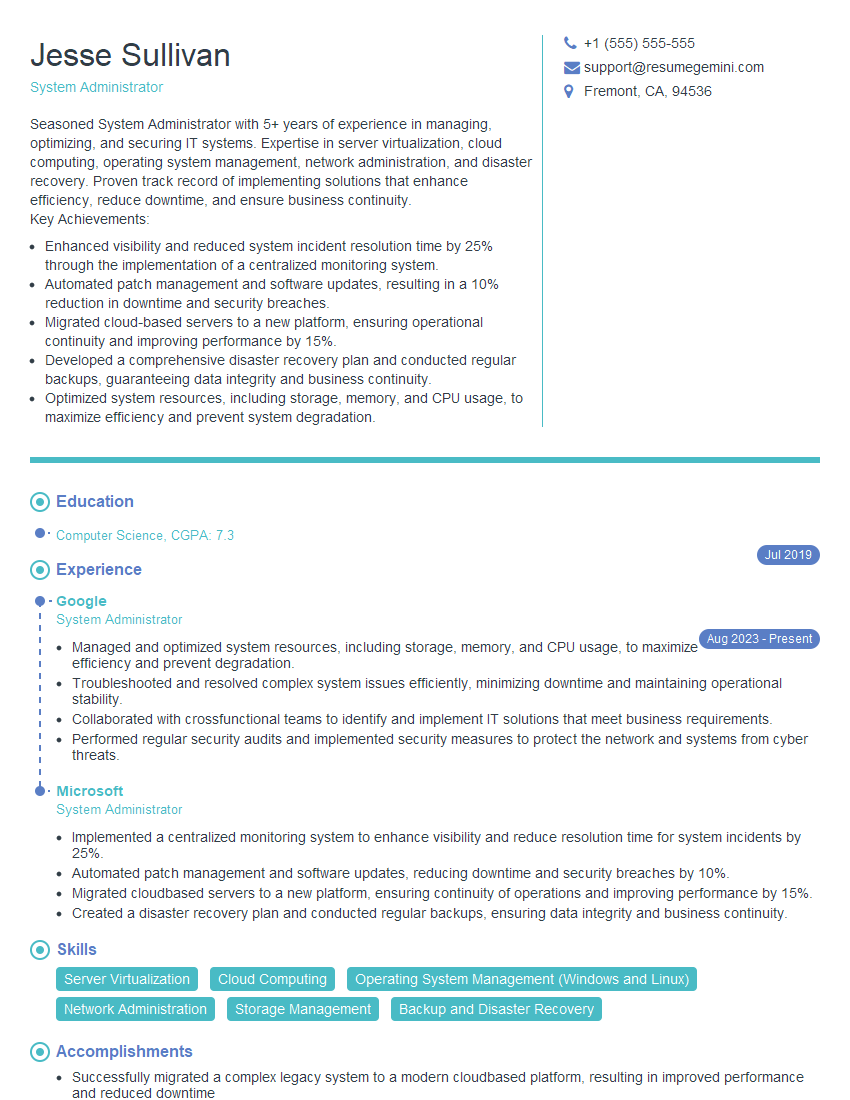
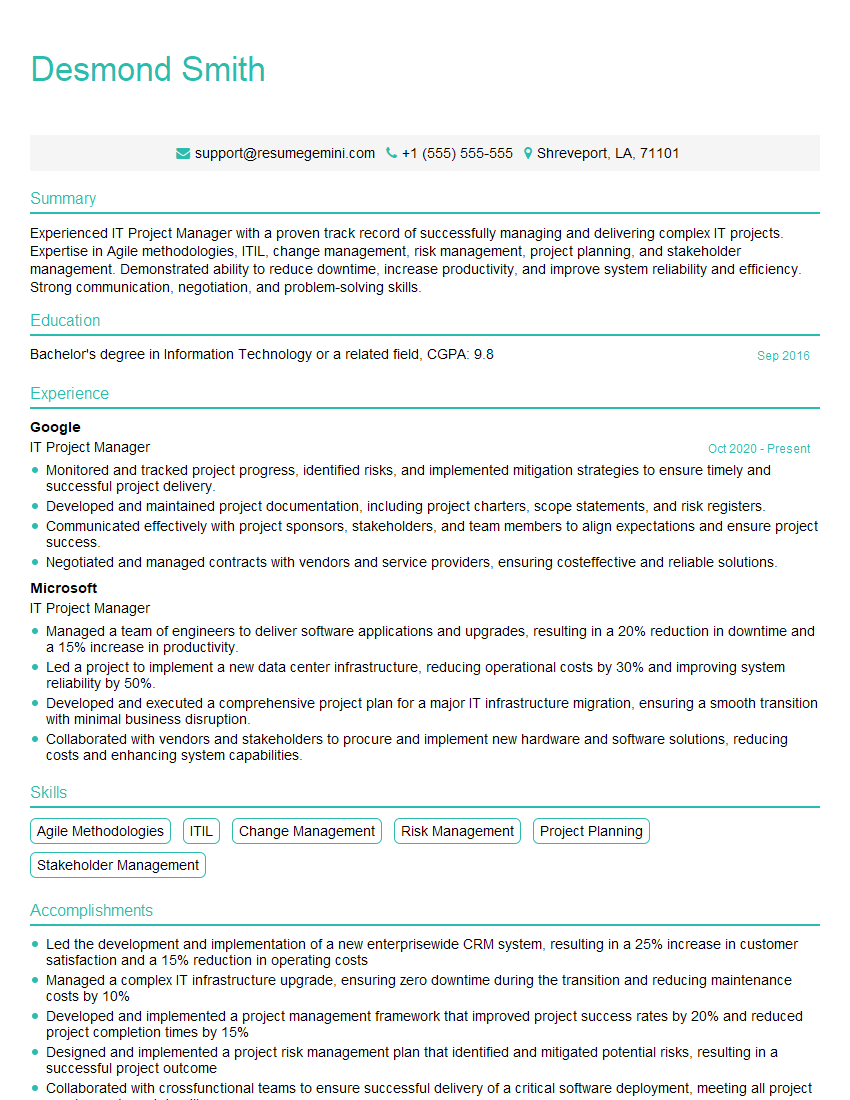
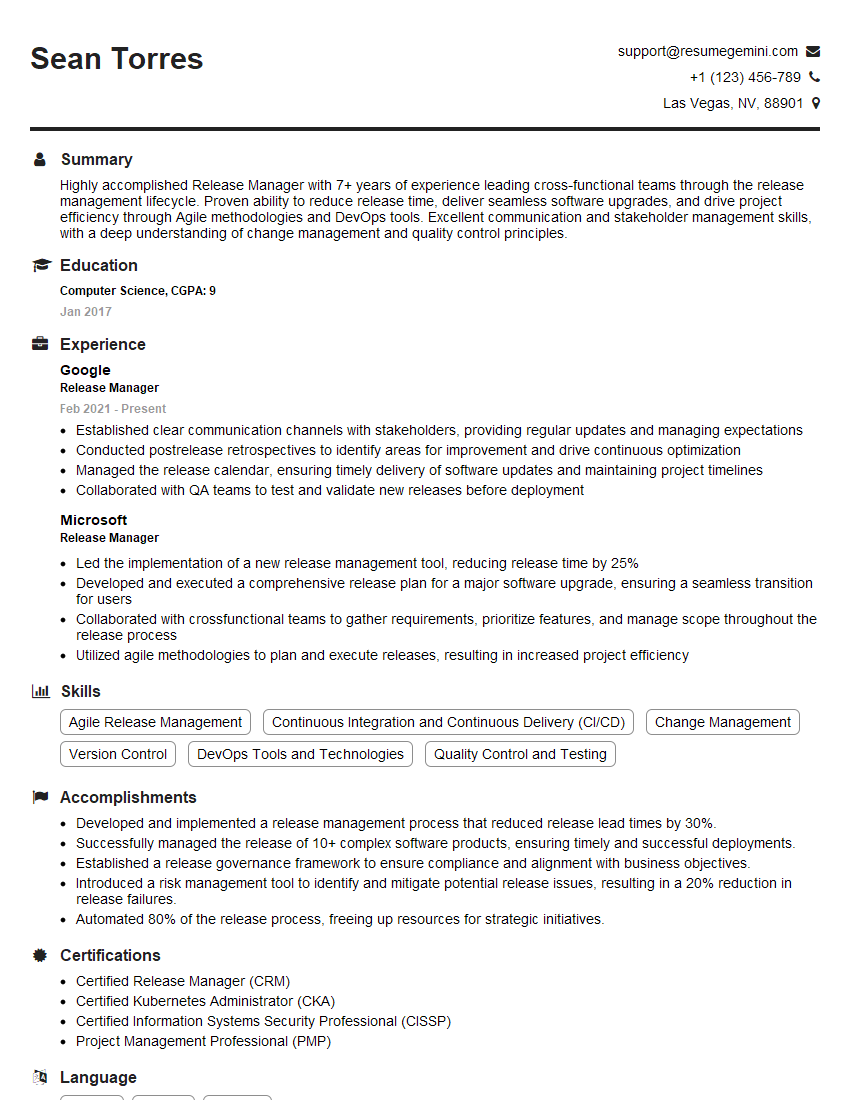
Mastering Change Management and Release Engineering is crucial for career advancement in today’s dynamic technology landscape. These skills are highly sought after, opening doors to leadership roles and significant salary increases. To maximize your job prospects, crafting an ATS-friendly resume is paramount. ResumeGemini is a trusted resource to help you build a professional and impactful resume that showcases your skills effectively. We provide examples of resumes tailored specifically to Change Management and Release Engineering roles to help you get started. Take the next step towards your dream career today!
Explore more articles
Users Rating of Our Blogs
Share Your Experience
We value your feedback! Please rate our content and share your thoughts (optional).
What Readers Say About Our Blog
Very informative content, great job.
good