Are you ready to stand out in your next interview? Understanding and preparing for Cyber Attack Simulation interview questions is a game-changer. In this blog, we’ve compiled key questions and expert advice to help you showcase your skills with confidence and precision. Let’s get started on your journey to acing the interview.
Questions Asked in Cyber Attack Simulation Interview
Q 1. Explain the difference between black box, white box, and grey box penetration testing.
Penetration testing comes in three main flavors: black box, white box, and grey box. These refer to the level of knowledge the tester has about the target system.
- Black Box Testing: This is like being a real-world attacker. The tester has no prior knowledge of the system’s architecture, configuration, or code. They must rely on publicly available information and their own skills to find vulnerabilities. Think of it like trying to break into a house with only the address. This approach often reveals vulnerabilities that might be missed by internal teams who are familiar with the system.
- White Box Testing: This is the opposite of black box. The tester has full access to the system’s source code, architecture diagrams, and network configurations. They can precisely pinpoint vulnerabilities in the code or design. Imagine having the blueprints of the house before trying to break in; you’d know exactly where the weak points are.
- Grey Box Testing: This is a middle ground. The tester has some information about the system, but not complete access. For instance, they might know the network topology but not the specifics of individual server configurations. It’s like knowing there’s a weak window on the south side of the house but not the exact location or security measures.
Each approach has its advantages. Black box tests simulate real-world attacks; white box tests ensure thorough coverage of the codebase; and grey box tests offer a balance between realism and efficiency.
Q 2. Describe your experience with different attack simulation methodologies (e.g., MITRE ATT&CK).
My experience with attack simulation methodologies heavily incorporates the MITRE ATT&CK framework. It provides a structured and comprehensive understanding of adversary tactics and techniques. I use it in two primary ways:
- Informative Planning: Before any simulation, I leverage the ATT&CK framework to map potential attack paths based on the organization’s specific risk profile and industry. This helps me tailor the simulation to realistically mimic the most likely attack scenarios, rather than just running generic scans. For instance, if the organization handles financial data, I’ll prioritize techniques related to data exfiltration and credential theft as described in the ATT&CK framework.
- Evaluation and Reporting: Post-simulation, I map the identified vulnerabilities against the ATT&CK matrix. This allows for clear communication of the impact of each finding. The reporting clearly shows which ATT&CK techniques were successfully exploited, allowing the organization to understand where their security posture is weak and prioritize remediation efforts accordingly. This provides actionable insights, not just a list of vulnerabilities.
Beyond MITRE ATT&CK, I’ve also utilized other frameworks like the Cyber Kill Chain to structure simulations and provide a timeline of events, aiding in identifying the points of failure within the organization’s security controls.
Q 3. How do you prioritize vulnerabilities identified during a penetration test?
Prioritizing vulnerabilities involves a multi-faceted approach. I use a risk-based approach, considering the following factors:
- Exploitability: How easy is it for an attacker to exploit this vulnerability? A vulnerability requiring complex exploit code is less critical than one that can be exploited with a simple script.
- Impact: What would be the consequences if this vulnerability were exploited? A vulnerability allowing access to sensitive data is obviously higher priority than one that only causes a minor service interruption.
- Likelihood: How likely is it that an attacker would attempt to exploit this vulnerability? This depends on things like the attacker’s motivation and the vulnerability’s public exposure.
I often use a scoring system that combines these factors to create a prioritized list. For example, a vulnerability with high exploitability, high impact, and high likelihood would score highest and require immediate attention. The widely adopted CVSS (Common Vulnerability Scoring System) provides a standardized method for this scoring.
Q 4. What are the key metrics you use to measure the effectiveness of a cyber attack simulation?
Measuring the effectiveness of a cyber attack simulation requires looking beyond simply the number of vulnerabilities found. Key metrics I use include:
- Number of successful attack paths: How many different ways could an attacker compromise the system? This reflects the overall resilience of the security posture.
- Time to compromise: How long did it take to successfully exploit a critical vulnerability? A shorter time indicates a more serious weakness.
- Number of critical vulnerabilities identified: This highlights the severity of the identified weaknesses and their potential impact on the organization.
- Breach simulation success rate: Did the simulation achieve its objectives, such as data exfiltration or system compromise?
- Mean Time To Detect (MTTD) and Mean Time To Respond (MTTR): How quickly were simulated attacks detected and responded to? These metrics assess the effectiveness of the security monitoring and incident response capabilities.
These metrics, when combined, give a comprehensive picture of the organization’s security effectiveness and the areas needing the most attention.
Q 5. Explain your understanding of the kill chain model and how it applies to attack simulation.
The Cyber Kill Chain is a model that describes the stages of a cyberattack, from initial reconnaissance to achieving the attacker’s objective. It’s crucial in attack simulation because it provides a structured way to design and evaluate simulations, identifying weaknesses at each stage.
- Reconnaissance: The attacker gathers information about the target.
- Weaponization: The attacker develops a malicious payload.
- Delivery: The attacker delivers the payload to the target.
- Exploitation: The attacker uses a vulnerability to gain access.
- Installation: The attacker installs malware or other tools.
- Command and Control: The attacker maintains control of the compromised system.
- Actions on Objectives: The attacker achieves their goal (data exfiltration, system disruption, etc.).
In attack simulation, I use the Cyber Kill Chain to design realistic scenarios, mapping each stage to specific techniques within the MITRE ATT&CK framework. By simulating attacks at each stage, I can assess the effectiveness of security controls at different points in the process. This granular level of testing allows for a more comprehensive understanding of the organization’s weaknesses and enables the development of more focused and efficient remediation strategies.
Q 6. How do you handle unexpected findings or critical vulnerabilities during a simulation?
Unexpected findings and critical vulnerabilities during a simulation require immediate and careful handling. My approach follows these steps:
- Verification: First, I thoroughly verify the finding to ensure it’s not a false positive. This might involve repeating the test using different methods or tools.
- Impact Assessment: I determine the potential impact of the vulnerability. This involves considering factors like the sensitivity of the affected data, the potential for disruption, and the ease of exploitation.
- Escalation: For critical vulnerabilities, I immediately escalate the issue to the appropriate stakeholders (e.g., security leadership, incident response team). Clear and concise communication is key during this phase.
- Mitigation: Depending on the severity and immediacy of the threat, I may recommend temporary mitigation strategies, such as implementing access controls or firewall rules, while a permanent solution is developed.
- Documentation: I meticulously document all findings, including the steps taken to identify the vulnerability, its impact, and the mitigation strategies implemented. This documentation forms a critical part of the final report.
The key is to maintain clear communication and collaboration throughout the process. Transparency ensures the organization understands the risk and can prioritize remediation efforts effectively. In some cases, a simulation might even need to be paused to address an exceptionally critical vulnerability before continuing.
Q 7. Describe your experience with automated penetration testing tools.
I have extensive experience with a range of automated penetration testing tools, including both open-source and commercial solutions. These tools significantly improve the efficiency and scalability of penetration testing, allowing me to cover more ground in less time.
- OpenVAS: A powerful vulnerability scanner for identifying known vulnerabilities in systems and applications.
- Nessus: Another popular commercial vulnerability scanner offering comprehensive scanning capabilities.
- Metasploit: A penetration testing framework that provides a vast library of exploits and tools for simulating various attack scenarios.
- Burp Suite: A comprehensive web application security testing tool for identifying vulnerabilities in web applications.
While automated tools are invaluable, they are not a replacement for human expertise. They can identify known vulnerabilities, but a skilled penetration tester is needed to interpret the results, validate findings, and develop more complex, creative attack scenarios that are not easily detected by automated scans. I leverage these tools strategically, supplementing them with manual techniques to ensure comprehensive and accurate results.
Q 8. How do you ensure the ethical and legal compliance of your attack simulations?
Ethical and legal compliance is paramount in cyber attack simulations. Before any simulation, we obtain explicit written permission from the organization, clearly defining the scope, objectives, and limitations of the exercise. This includes specifying which systems and data will be targeted, and importantly, which will be excluded. We adhere strictly to all applicable laws and regulations, including data privacy acts like GDPR and CCPA. We also employ techniques that minimize risk, such as using anonymized or synthetic data whenever possible, and limiting the duration and intensity of the simulations. We maintain comprehensive logs and documentation of all activities, ensuring transparency and accountability. Think of it like a controlled scientific experiment; we need to ensure we’re not causing unintended harm while still gathering valuable data.
Furthermore, we regularly review our methodologies and processes to ensure alignment with evolving ethical guidelines and legal frameworks. Our team undergoes regular training on ethical hacking and legal compliance, reinforcing best practices. Finally, we always include a detailed post-simulation review to identify any areas for improvement in our ethical and legal compliance procedures.
Q 9. Explain your experience with different attack vectors (e.g., phishing, SQL injection, malware).
My experience spans a broad range of attack vectors. I’ve extensively utilized phishing simulations, crafting realistic emails and websites to assess employee susceptibility to social engineering. I’ve also conducted numerous SQL injection attacks against various database systems, identifying vulnerabilities through carefully crafted queries. In the realm of malware, I’ve employed both commercially available and custom-built malware samples, focusing on their propagation mechanisms, payload delivery, and evasion techniques. This involves understanding how malware exploits vulnerabilities, such as buffer overflows, to gain unauthorized access and execute malicious code.
For example, in one engagement, we simulated a sophisticated phishing campaign that successfully compromised several employee accounts, highlighting the need for enhanced security awareness training. In another, we uncovered a critical SQL injection vulnerability allowing potential attackers to access sensitive customer data. This underscores the importance of rigorous input validation and database security protocols.
Q 10. How do you document your findings and report them to stakeholders?
Documentation and reporting are critical aspects of attack simulations. We meticulously document every step of the process, from the initial planning phase to the final remediation recommendations. This includes detailed descriptions of the attack vectors used, the systems targeted, the vulnerabilities discovered, and the impact of each attack. We use a standardized reporting framework, which typically includes:
- Executive Summary: A high-level overview of the findings and recommendations.
- Methodology: A detailed description of the attack simulation process.
- Vulnerability Details: A comprehensive list of identified vulnerabilities, including their severity, location, and potential impact.
- Remediation Recommendations: Specific steps to mitigate the identified vulnerabilities.
- Appendix: Supporting documentation such as logs, screenshots, and technical reports.
The final report is presented to stakeholders using clear and concise language, avoiding technical jargon wherever possible. We tailor the report to the audience, ensuring the information is easily understandable and actionable. We often present findings visually, using charts and graphs to highlight key insights and areas of concern. This approach fosters collaboration and ensures that everyone involved understands the risks and potential solutions.
Q 11. Describe your experience with vulnerability scanning tools.
I have extensive experience with a variety of vulnerability scanning tools, including Nessus, OpenVAS, QualysGuard, and Nexpose. Each tool has its strengths and weaknesses, and I tailor my choice of tool based on the specific needs of the engagement. For example, Nessus is excellent for comprehensive vulnerability scans, while QualysGuard provides strong reporting and compliance features. My expertise encompasses not only running scans but also interpreting the results, prioritizing vulnerabilities based on their severity and potential impact, and correlating scan results with other security data sources.
Beyond the commercial tools, I’m also proficient in using open-source tools like Nmap for network discovery and port scanning. The ability to combine commercial and open-source tools is crucial for a comprehensive assessment. Understanding false positives and negative is essential; often, manual verification is necessary to confirm the validity of scan findings. This avoids unnecessary remediation efforts and ensures the accuracy of our conclusions.
Q 12. What is your experience with Security Information and Event Management (SIEM) systems in the context of attack simulation?
SIEM systems are invaluable in the context of attack simulation. They provide a centralized view of security events across the entire organization, allowing us to monitor the simulated attacks in real-time. During simulations, we configure the SIEM to collect and analyze logs from various sources, such as firewalls, intrusion detection systems, and endpoint security agents. This allows us to observe the attack progression, identify which security controls are effective, and pinpoint weaknesses in our defenses.
After a simulation, the SIEM data provides valuable insights into the effectiveness of our security controls. We can analyze the alerts generated, correlate them with the simulated attacks, and assess the speed and accuracy of our incident response. This allows us to fine-tune our security controls and optimize our incident response plan based on real-world simulation data, closing gaps exposed during simulated attacks.
Q 13. How do you measure the effectiveness of security controls based on attack simulation results?
Measuring the effectiveness of security controls is a key objective of attack simulations. We use a combination of quantitative and qualitative metrics. Quantitative metrics might include the number of successful attacks, the time taken to detect and respond to attacks, and the overall impact of the attacks on the organization. Qualitative metrics assess the effectiveness of the incident response team, the quality of security awareness training, and the overall maturity of the organization’s security posture.
For example, if a simulated phishing attack successfully compromises a significant number of user accounts, it highlights the need for better security awareness training. If the organization fails to detect a simulated intrusion quickly, it suggests improvements are needed to intrusion detection and response capabilities. By analyzing these metrics, we can identify specific areas for improvement and prioritize remediation efforts, enhancing the overall effectiveness of the organization’s security program.
Q 14. Explain your understanding of different types of malware and their impact on attack simulations.
My understanding of malware encompasses various types, including viruses, worms, Trojans, ransomware, and spyware. Each type has unique characteristics and impacts attack simulations differently. For instance, viruses rely on infecting executable files, while worms propagate through network vulnerabilities. Trojans disguise themselves as legitimate software, facilitating unauthorized access. Ransomware encrypts data, demanding a ransom for its release, and spyware monitors user activity and steals sensitive information. The choice of malware type during a simulation depends on the specific objective, targeting vulnerabilities, and desired impact.
In a simulation, different malware types can reveal various aspects of an organization’s security posture. For example, simulating a ransomware attack can test the effectiveness of data backups and recovery procedures, while simulating a spyware attack can reveal vulnerabilities in endpoint protection and data leakage controls. Understanding how various malware operates helps us create realistic and impactful simulations, providing valuable insights into the organization’s security weaknesses and strengthening its overall resilience.
Q 15. How do you integrate attack simulation with other security processes, such as incident response?
Integrating attack simulations with incident response is crucial for building a robust security posture. Think of attack simulations as a ‘fire drill’ for your cybersecurity defenses. They help identify weaknesses before a real attack occurs, allowing you to refine your incident response plan.
The integration works in several ways:
- Identifying vulnerabilities: Attack simulations pinpoint exploitable weaknesses, informing the development of preventative measures and improving the effectiveness of detection systems. This directly feeds into the prevention aspect of incident response.
- Testing response plans: Simulations allow you to test your incident response plan’s efficacy. This includes validating procedures, communication channels, and the capabilities of your security tools. We can simulate a ransomware attack, for example, to evaluate the speed and effectiveness of data recovery and containment.
- Training and awareness: The insights gleaned from simulations provide valuable training material for the security team, improving their incident handling skills. This might involve a tabletop exercise based on simulation results, highlighting communication failures or slow response times.
- Measuring effectiveness: By regularly simulating attacks, you can measure the effectiveness of your security controls and the maturity of your incident response processes. We can track key metrics like Mean Time To Detect (MTTD) and Mean Time To Respond (MTTR) to see how these metrics improve over time.
For example, if a simulation reveals a vulnerability in your web application, the findings directly inform your incident response plan, outlining steps to mitigate the threat if a similar attack were to occur in a real-world scenario. This continuous feedback loop ensures that your incident response is proactive and efficient.
Career Expert Tips:
- Ace those interviews! Prepare effectively by reviewing the Top 50 Most Common Interview Questions on ResumeGemini.
- Navigate your job search with confidence! Explore a wide range of Career Tips on ResumeGemini. Learn about common challenges and recommendations to overcome them.
- Craft the perfect resume! Master the Art of Resume Writing with ResumeGemini’s guide. Showcase your unique qualifications and achievements effectively.
- Don’t miss out on holiday savings! Build your dream resume with ResumeGemini’s ATS optimized templates.
Q 16. What are the limitations of attack simulations?
While attack simulations are incredibly valuable, they have limitations:
- Limited Scope: Simulations are often constrained to specific attack vectors or systems. A simulation focusing on phishing might not uncover vulnerabilities in your network infrastructure.
- False Negatives: A simulation might fail to identify a real vulnerability due to limitations in the simulation tools or the scope of the test. Think of this as a fire drill where a crucial emergency exit is overlooked.
- Cost and Time: Comprehensive simulations can be resource-intensive, requiring specialized tools, skilled personnel, and significant time investment. It’s a tradeoff between the cost and the potential damage from a successful real-world attack.
- Evolving Threats: The ever-changing landscape of cyber threats means that the attacks simulated today may not accurately reflect the threats of tomorrow. Regular updates and adjustments to simulations are vital.
- Over-reliance: Relying solely on simulations can create a false sense of security. It’s essential to combine simulations with other security practices, such as vulnerability scanning and penetration testing.
To mitigate these limitations, we employ a multi-layered approach, combining attack simulations with other security measures and constantly updating our simulation strategies to account for emerging threats. For instance, regularly updating our simulation environment to include the latest zero-day exploits helps address the ever-evolving threat landscape.
Q 17. How do you stay up-to-date on the latest attack techniques and technologies?
Staying current in the dynamic field of cyberattacks requires a multi-pronged approach:
- Threat Intelligence Platforms: I actively monitor threat intelligence platforms such as those from reputable vendors (e.g., CrowdStrike, FireEye) to receive regular updates on emerging threats, vulnerabilities, and attack techniques. These provide early warnings of newly discovered exploits.
- Security Conferences and Webinars: Attending industry conferences like Black Hat and DEF CON, and participating in webinars from leading security experts, provides invaluable insights into the latest attack trends and methodologies. Networking with other professionals is also beneficial.
- Security Blogs and Publications: I regularly read security blogs, research papers, and publications from organizations like SANS Institute and NIST to stay informed about the newest research and advancements in threat detection and response.
- Capture The Flag (CTF) Competitions: Participating in CTFs allows me to experience and learn from real-world attack scenarios, enhancing my understanding of attacker methodologies and improving my own skills in a controlled environment.
- Certifications and Training: Pursuing relevant certifications like OSCP (Offensive Security Certified Professional) keeps my skills sharp and demonstrates my commitment to continuous learning. This demonstrates a commitment to professional development.
This continuous learning process helps me develop effective attack simulations that accurately reflect current threats, ensuring that our security strategies remain relevant and up-to-date.
Q 18. Describe your experience with using cloud-based attack simulation platforms.
My experience with cloud-based attack simulation platforms has been overwhelmingly positive. These platforms offer scalability, cost-effectiveness, and access to a wider range of simulation tools compared to on-premises solutions.
Specifically, I have worked extensively with platforms that provide:
- Automated vulnerability scanning: These platforms automatically scan for vulnerabilities across various systems and applications, significantly reducing manual effort and accelerating the simulation process.
- Pre-built attack scenarios: Many cloud-based platforms offer a library of pre-built attack scenarios covering various attack vectors, saving valuable time and effort in designing simulations from scratch.
- Real-time reporting and analytics: These platforms provide detailed reports and analytics on the simulation results, offering insights into the effectiveness of security controls and areas for improvement.
- Scalability and flexibility: Cloud-based platforms easily scale to accommodate growing needs, allowing for larger and more complex simulations as our security footprint expands.
For example, I recently used a cloud-based platform to simulate a sophisticated phishing campaign against our organization. The platform provided real-time data on the success rate of the phishing emails and highlighted vulnerabilities in our employee training and security awareness programs. This revealed the human element as a significant vulnerability, allowing us to prioritize user training.
Q 19. How do you handle false positives during a penetration test?
Handling false positives in penetration testing requires a methodical and rigorous approach. False positives – alerts indicating a security breach when none exists – can waste valuable time and resources.
My process involves:
- Verification: I carefully review the alert, examining the evidence provided by the security tools. This might involve checking logs, network traffic, or system activity.
- Contextual Analysis: I analyze the alert in the context of the overall penetration test and the system’s normal behavior. This helps distinguish between legitimate vulnerabilities and false positives.
- Reproducibility: I attempt to reproduce the alert, confirming whether it is a genuine vulnerability or a false positive caused by a misconfiguration or a bug in the security tools.
- Correlation: I correlate the alert with other findings from the penetration test. If multiple alerts point to the same vulnerability, it’s more likely to be a true positive.
- Prioritization: Based on the validation process, I prioritize the alerts, focusing on the most critical and likely vulnerabilities first.
For instance, if an intrusion detection system triggers an alert due to unusual network traffic during a penetration test, I thoroughly investigate the traffic to see if it’s related to the test or indicative of an actual compromise. If I can demonstrate that the unusual activity is a direct result of my test actions, it’s classified as a false positive. We document all findings and their verification process.
Q 20. Explain the importance of incorporating human factors into attack simulations.
Incorporating human factors is paramount in attack simulations. Cybersecurity isn’t just about technology; it’s about people. Humans are often the weakest link in the security chain.
We integrate human factors through:
- Social Engineering Simulations: Simulating phishing attacks or other social engineering techniques helps assess the susceptibility of employees to manipulation, revealing vulnerabilities in security awareness training.
- Simulated Insider Threats: Simulations can model insider threats, where malicious or negligent employees cause security breaches. This highlights the need for access controls and employee monitoring.
- Human-in-the-Loop Simulations: These simulations involve human attackers who interact with the target system, providing a more realistic assessment of vulnerabilities than purely automated simulations. This is where real-world attacker methodologies are tested.
- Training and Awareness Programs: The results of simulations directly inform the development of training and awareness programs, targeting specific vulnerabilities identified in human behavior.
For example, a simulated phishing campaign can reveal which employees are most likely to click on malicious links. This data allows us to tailor security awareness training to address the specific weaknesses identified, ultimately improving the overall security posture.
Q 21. What is your experience with developing custom attack simulations?
Developing custom attack simulations is a significant part of my expertise. Off-the-shelf solutions often lack the specificity needed to thoroughly assess unique organizational vulnerabilities.
My process for developing custom simulations includes:
- Defining Objectives: Clearly defining the goals of the simulation is crucial. What specific vulnerabilities are we trying to identify? What systems are in scope? What attack vectors are relevant?
- Threat Modeling: A detailed threat model is developed, identifying potential threats and attack vectors relevant to the organization’s specific environment and business processes.
- Scenario Design: Based on the threat model, realistic attack scenarios are designed. These scenarios should mimic real-world attacks as closely as possible, considering factors such as attacker motivations and capabilities.
- Tool Selection and Development: Appropriate tools are selected or developed to execute the attack scenarios. This might involve scripting tools, penetration testing frameworks, or custom-built tools.
- Execution and Monitoring: The simulations are carefully executed, with ongoing monitoring to track progress, identify unexpected events, and adjust the simulation as needed.
- Reporting and Analysis: A comprehensive report is generated, summarizing the findings, identifying vulnerabilities, and recommending mitigation strategies. This provides actionable information for security improvements.
For example, I recently developed a custom simulation to assess the security of a new cloud-based application. This involved developing custom scripts to simulate various attack vectors, including SQL injection and cross-site scripting. The results highlighted several critical vulnerabilities that were successfully remediated before the application was deployed to production, preventing potential security breaches.
Q 22. Describe your experience with different types of network topologies and their impact on penetration testing.
Understanding network topologies is crucial for effective penetration testing. Different topologies present unique vulnerabilities. For instance, a star topology, common in most organizations, is vulnerable if the central switch or hub is compromised. A ring topology, less common now, can be disrupted by a single node failure. Bus topologies, while simpler, are susceptible to broadcast storms.
Star Topology: In a penetration test, I’d focus on compromising the central switch or hub, potentially using techniques like ARP poisoning or exploiting vulnerabilities in the switch’s firmware. Success here would grant access to the entire network.
Ring Topology: Testing would involve identifying weak points in individual nodes, as failure or compromise of any node can disrupt the entire network.
Bus Topology: My focus would be on intercepting data transmitted on the shared bus, potentially through techniques like network sniffing or denial-of-service attacks to disrupt communication.
Mesh Topology: These are more resilient, requiring the compromise of multiple nodes. Testing here involves identifying the most critical paths and focusing attacks on those, possibly utilizing social engineering to gain access to crucial network devices.
I always map the network topology during the reconnaissance phase, informing my testing strategy and prioritizing targets based on their criticality and vulnerabilities within the specific topology.
Q 23. How do you ensure the confidentiality, integrity, and availability of data during attack simulations?
Confidentiality, integrity, and availability (CIA triad) are paramount. We use several strategies to ensure these are maintained during attack simulations:
Confidentiality: Data is encrypted both in transit and at rest. We employ strong encryption protocols like AES-256, and all sensitive data within the simulated environment is carefully handled and anonymized where possible. Access is strictly controlled through role-based access controls and multi-factor authentication.
Integrity: We utilize hashing algorithms (like SHA-256) to ensure data integrity. Any changes made to the system are meticulously tracked and logged. Regular backups are crucial to revert to a known good state if necessary. Version control is also vital.
Availability: We design simulations with redundancy and failover mechanisms in mind. We carefully consider the impact of the simulation on real systems, opting for isolated testing environments whenever feasible. Our test plans include clear escalation procedures to minimize downtime in case of unintended consequences.
Regular audits and penetration testing of our own security controls are essential to ensure the effectiveness of our measures. It’s a continuous process of improvement and risk mitigation.
Q 24. Explain your understanding of the different phases of the penetration testing lifecycle.
The penetration testing lifecycle typically involves these phases:
Planning & Scoping: We define objectives, target systems, timelines, and acceptable risks. This crucial step involves thorough communication with the client and outlining the rules of engagement.
Reconnaissance: We gather information about the target systems and network. This involves passive techniques like port scanning and OS fingerprinting, as well as active techniques like vulnerability scanning. The goal is to map the attack surface.
Vulnerability Analysis: We identify and analyze potential vulnerabilities within the target systems, both through automated tools and manual analysis. We prioritize the vulnerabilities based on their severity and exploitability.
Exploitation: We attempt to exploit the identified vulnerabilities to gain unauthorized access. This phase meticulously documents the steps required for each successful exploit. This is where we simulate real-world attacks.
Post-Exploitation: Once access is obtained, we explore the extent of the compromise, looking to escalate privileges, move laterally, and identify sensitive data or systems. We document the methods used and impact.
Reporting: We compile a comprehensive report detailing the findings, including vulnerabilities discovered, exploited vulnerabilities, recommendations for remediation, and the overall security posture of the target systems.
This is a cyclical process. Findings from one penetration test often inform future testing cycles.
Q 25. How do you handle scope creep during an attack simulation?
Scope creep is a common challenge. To mitigate this, we establish a clear and concise scope of work before the simulation begins. This is detailed in a well-defined Statement of Work (SOW) and signed by all parties involved. The SOW clearly identifies the in-scope and out-of-scope systems, applications, and functionalities. Changes to the scope require a formal change request process. This involves discussing the new requirements, assessing their impact on the timeline and budget, and obtaining client approval before proceeding.
Regular communication throughout the project is key to identifying potential scope creep early on. We establish clear reporting mechanisms and proactively address any requests for deviations from the original scope.
Q 26. Describe your experience with different operating systems and their security implications.
Operating systems vary significantly in their security architecture and vulnerabilities. My experience spans Windows, Linux, macOS, and various embedded systems.
Windows: Well-established, but susceptible to malware and requires robust patching and security software. Its wide usage makes it a frequent target. Exploiting vulnerabilities in its services and applications is common.
Linux: Generally more secure due to its open-source nature and community scrutiny, but still vulnerable to specific kernel exploits and misconfigurations. Exploiting vulnerabilities requires a deeper understanding of the system’s internals.
macOS: Similar to Linux in that it is considered more secure than Windows, but still susceptible to malware and misconfigurations. Exploitation methods often involve social engineering or vulnerabilities in third-party applications.
Embedded Systems: These often have limited resources and outdated software, making them especially vulnerable to attacks. Exploitation usually involves discovering and exploiting weaknesses in their firmware or communication protocols.
Knowledge of these different OSes allows me to tailor my testing approach to maximize effectiveness and realism.
Q 27. How do you balance the need for realistic attack simulations with the need to protect the organization’s systems?
Balancing realistic simulations with system protection is critical. We achieve this through several key strategies:
Phased Approach: We start with less intrusive techniques like vulnerability scanning and move to more aggressive exploitation only after getting explicit approval and after ensuring appropriate safeguards are in place.
Isolated Environments: Wherever possible, we conduct simulations in isolated, virtual environments that mirror the production systems. This protects the organization’s live systems from any unintended damage.
Rules of Engagement (ROE): A clear ROE document is crucial. It defines acceptable activities, targets, and limitations to prevent accidental damage or data breaches.
Regular Checkpoints and Communication: We establish clear communication channels and provide regular updates to the client so they can monitor progress and approve or adjust the scope as necessary. This collaborative approach ensures that the tests remain realistic while managing risk effectively.
Ethical Hacking Principles: We always adhere to ethical hacking principles and prioritize the safety and security of the organization’s systems.
The goal is not to cause damage, but to identify and highlight weaknesses in order to enable improvement.
Key Topics to Learn for Cyber Attack Simulation Interview
- Network Security Fundamentals: Understanding network topologies, protocols (TCP/IP, UDP), and common vulnerabilities is crucial. Practical application: Explain how a simulated attack might exploit a specific network weakness.
- Vulnerability Assessment & Exploitation: Mastering techniques to identify and exploit vulnerabilities in systems and applications. Practical application: Describe your experience with penetration testing tools and methodologies.
- Threat Modeling & Risk Assessment: Learn to identify potential threats, assess their likelihood and impact, and develop mitigation strategies. Practical application: Explain how you would approach threat modeling for a specific organization or system.
- Incident Response & Forensics: Develop skills in incident handling, evidence collection, and analysis. Practical application: Describe your approach to investigating a simulated security incident.
- Security Information and Event Management (SIEM): Understand how SIEM systems collect, analyze, and correlate security logs. Practical application: Explain how you would use SIEM data to detect and respond to a cyber attack.
- Cloud Security: Familiarize yourself with cloud security architectures and common vulnerabilities in cloud environments (AWS, Azure, GCP). Practical application: Discuss securing applications and data in a cloud environment.
- Ethical Hacking & Penetration Testing Methodologies: Understand the ethical considerations and legal frameworks surrounding penetration testing. Practical application: Explain the difference between black box, white box, and grey box penetration testing.
- Automation and Scripting: Demonstrate your ability to automate security tasks using scripting languages like Python. Practical application: Describe how automation can improve efficiency in security operations.
Next Steps
Mastering Cyber Attack Simulation is vital for career advancement in the rapidly evolving cybersecurity landscape. Proficiency in this area demonstrates a critical understanding of real-world threats and effective response strategies, making you a highly valuable asset to any organization. To maximize your job prospects, creating a strong, ATS-friendly resume is essential. We highly recommend using ResumeGemini to build a professional and impactful resume that showcases your skills and experience effectively. ResumeGemini provides examples of resumes tailored specifically to Cyber Attack Simulation roles, helping you present yourself in the best possible light.
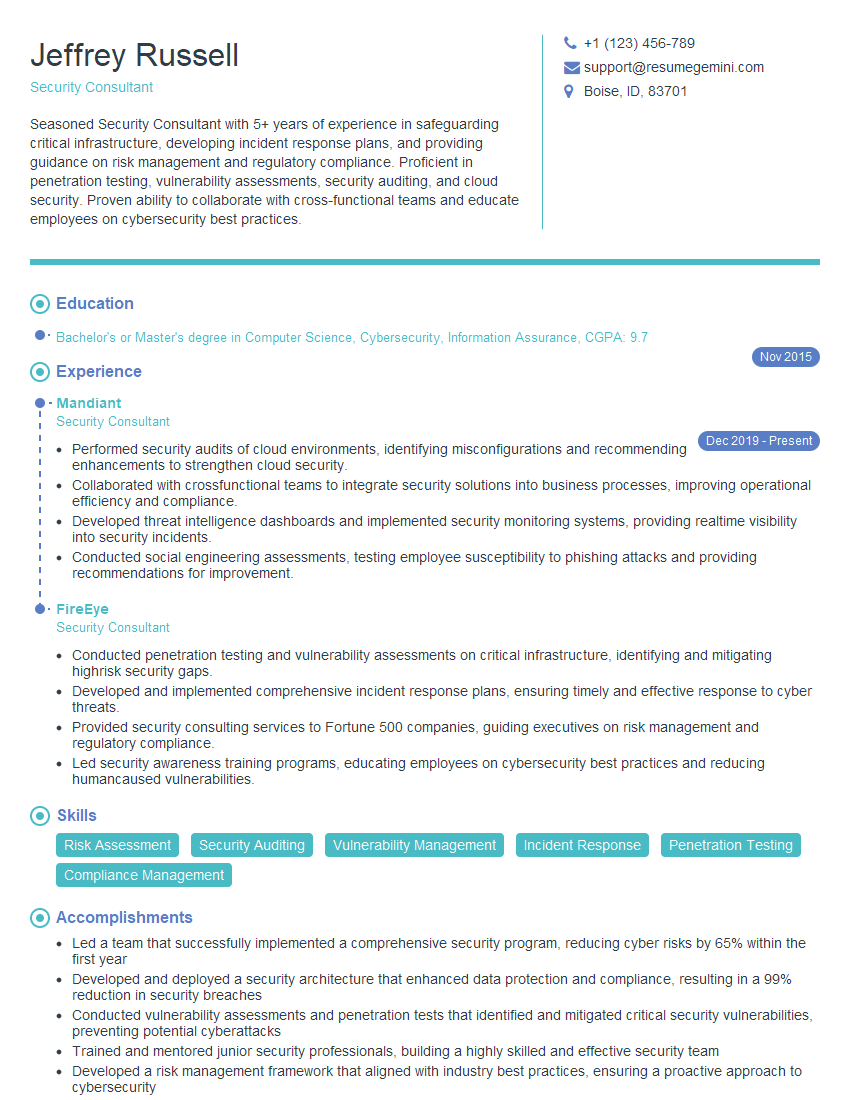
Security Consultant Resume Sample
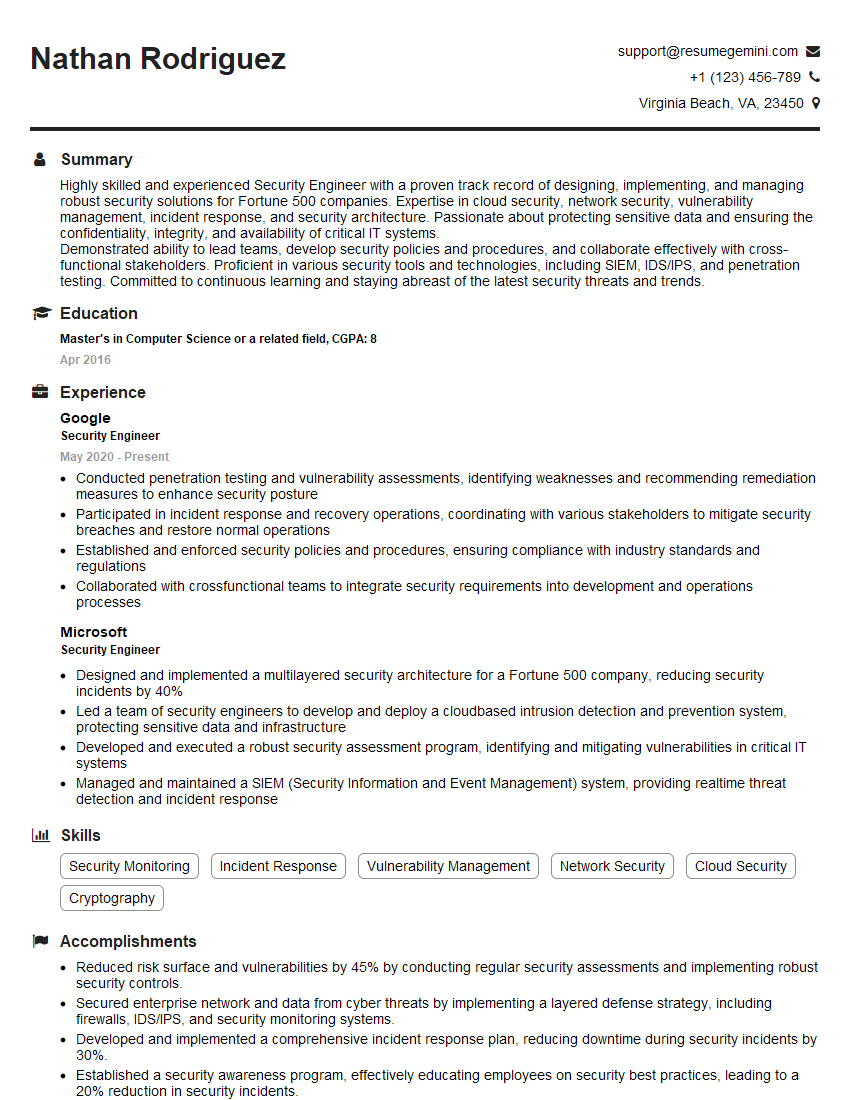
Security Engineer Resume Sample
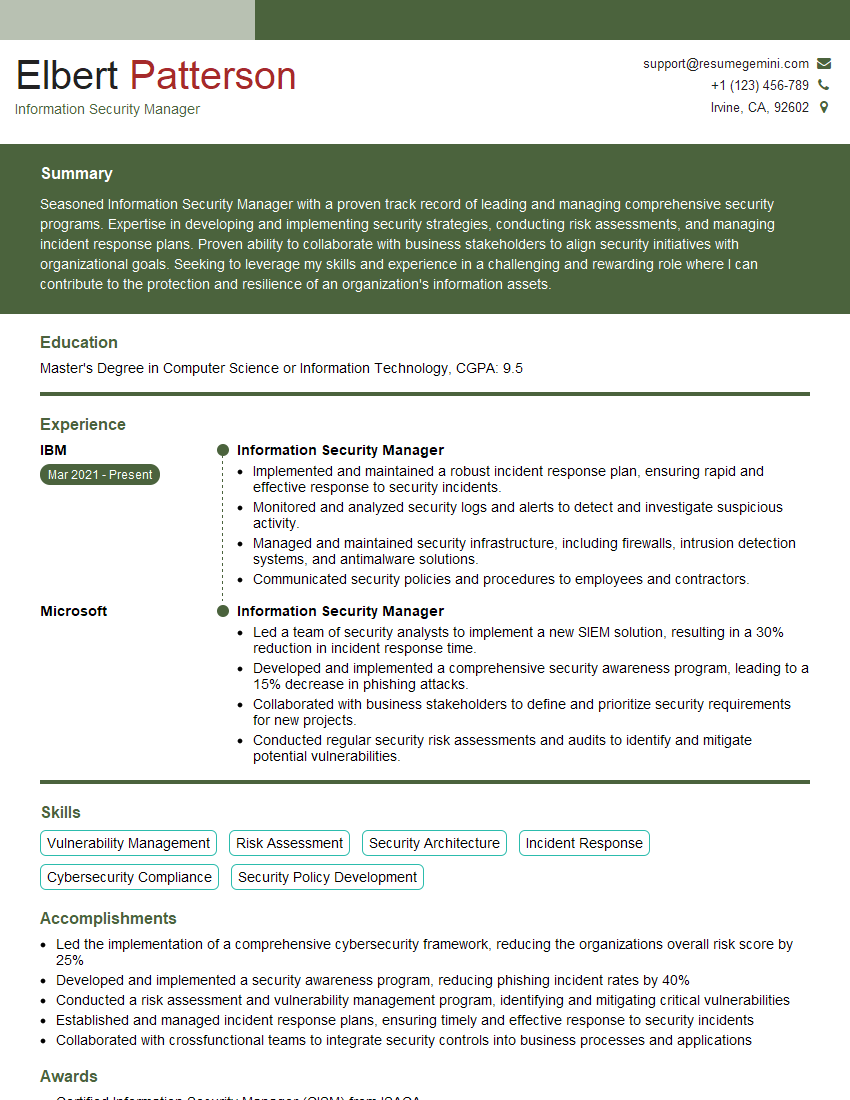
Information Security Manager Resume Sample
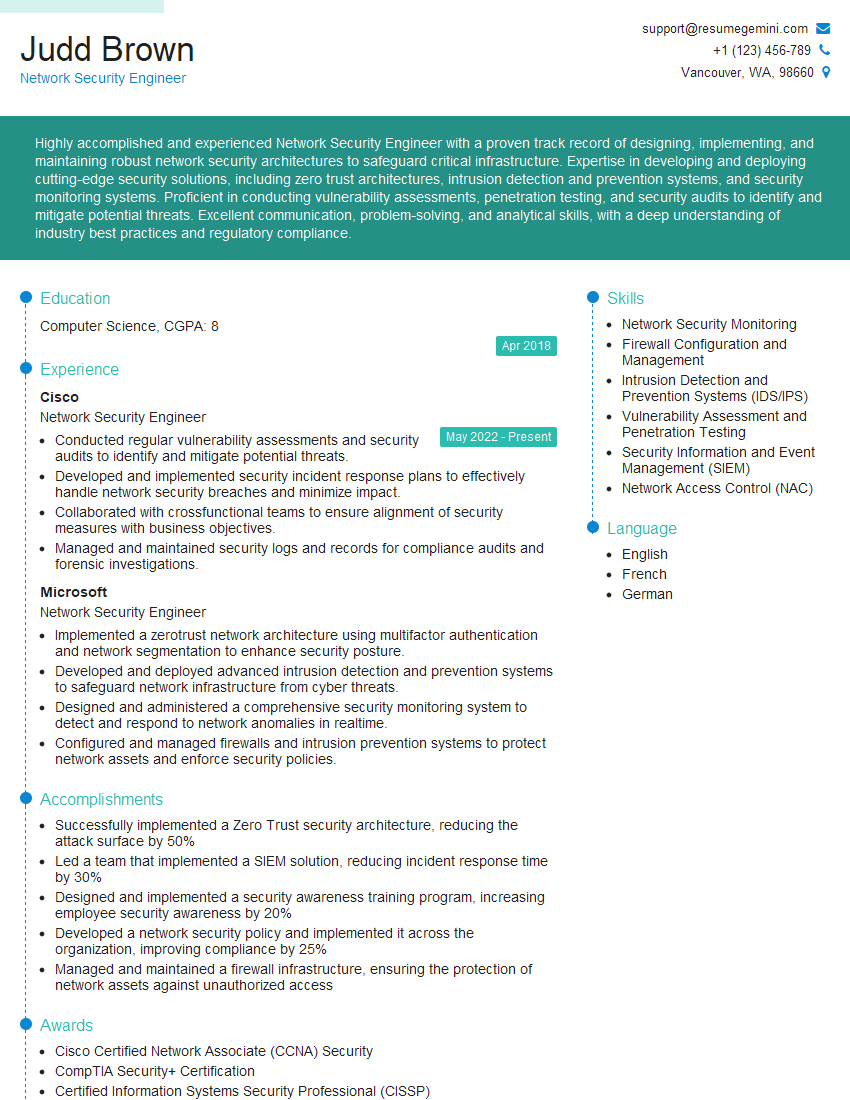
Network Security Engineer Resume Sample
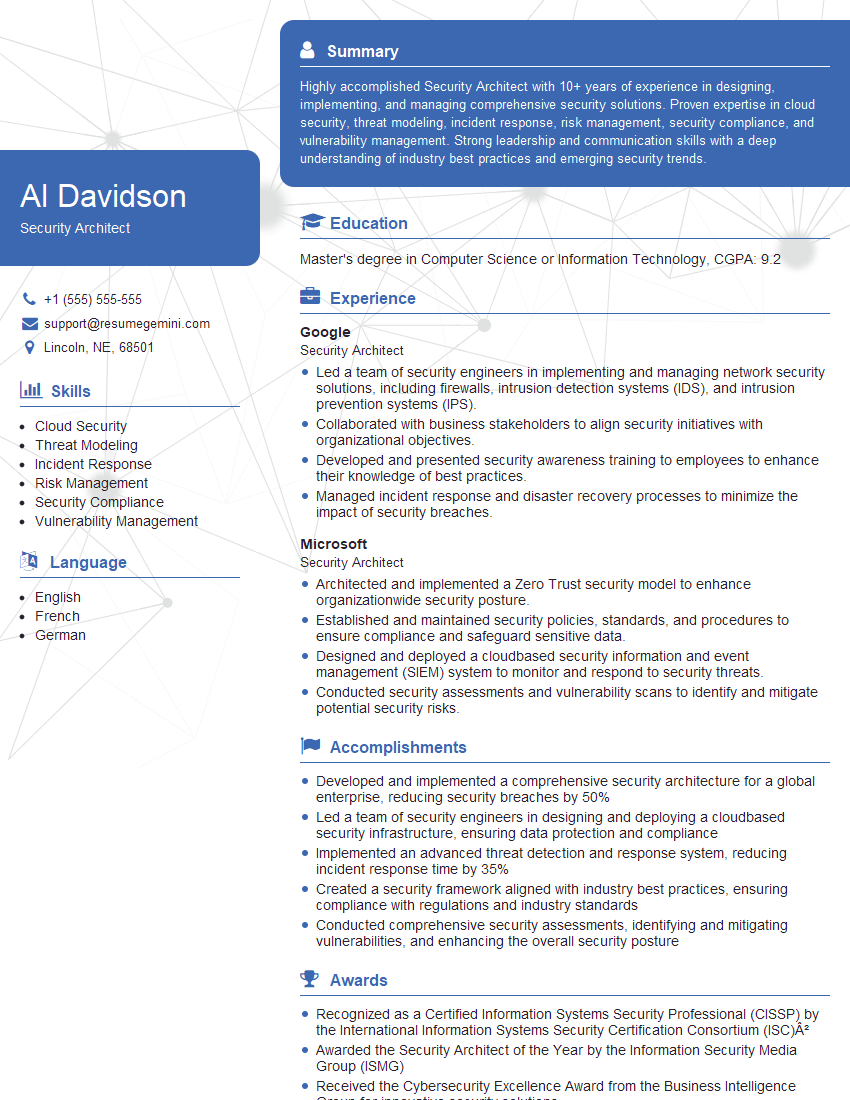
Security Architect Resume Sample

IT Security Specialist Resume Sample
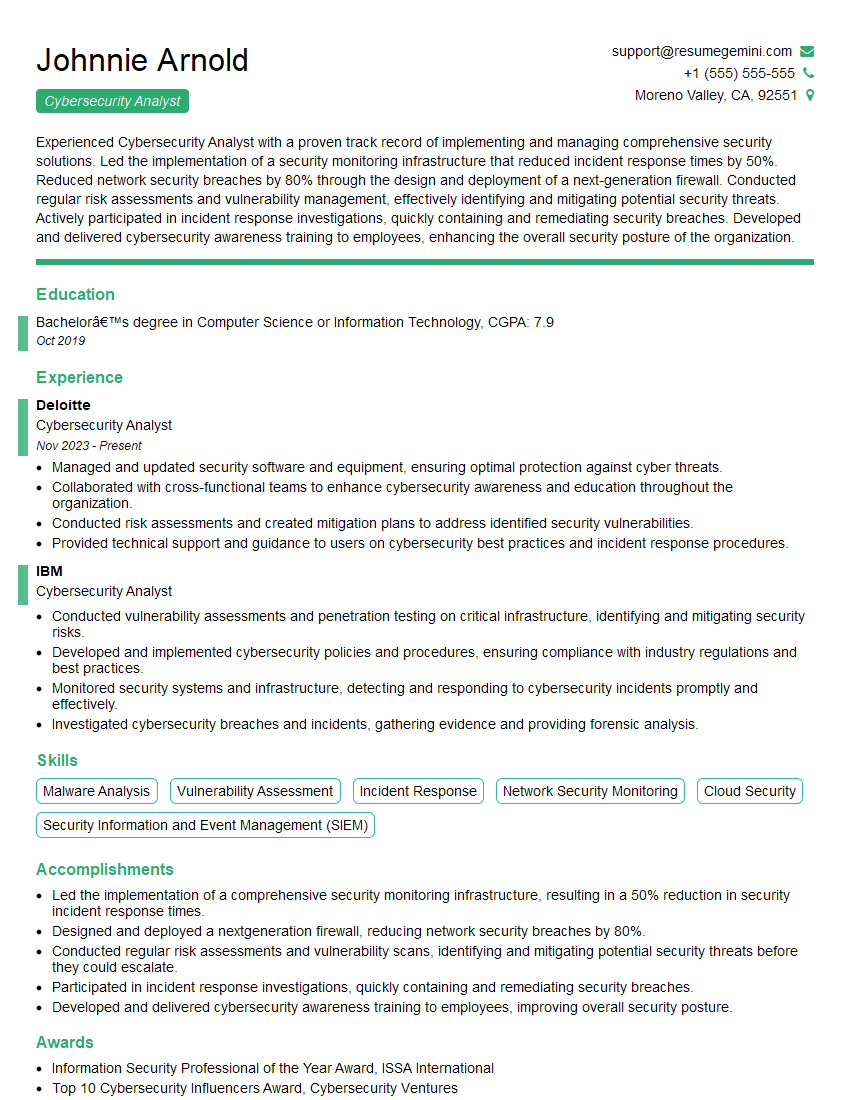
Cybersecurity Analyst Resume Sample
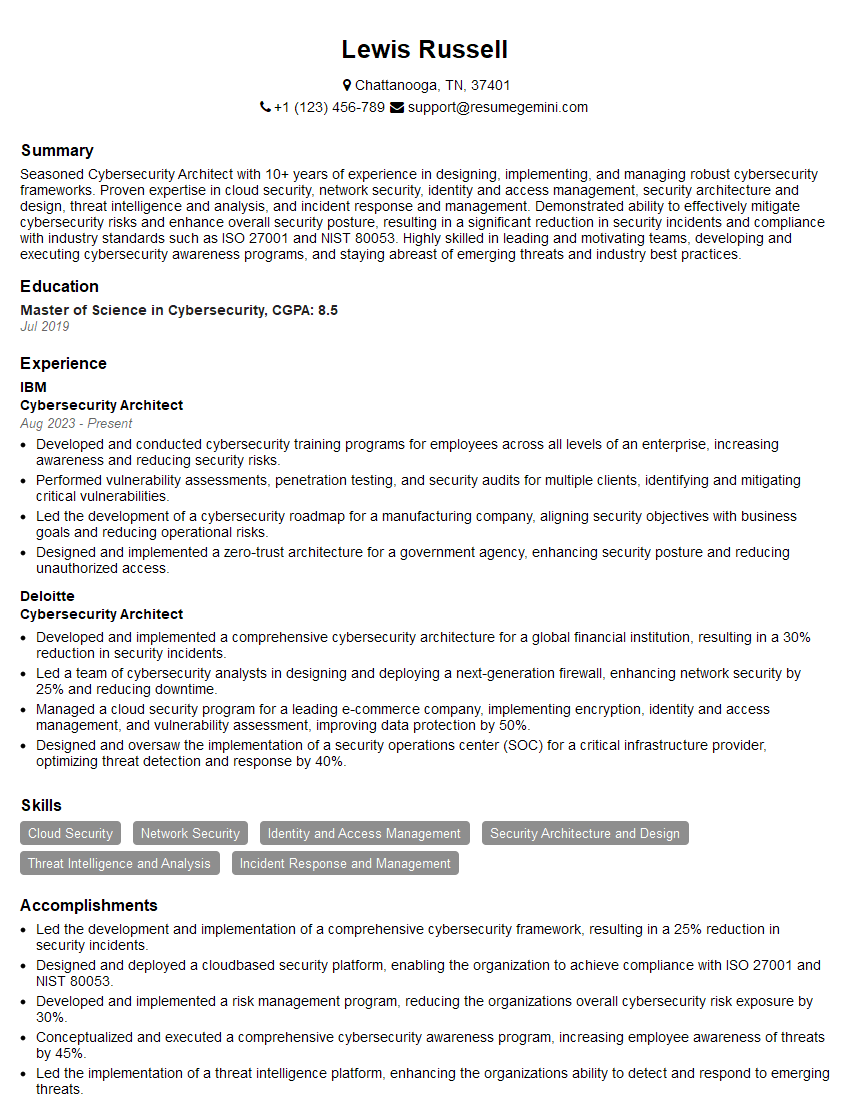
Cybersecurity Architect Resume Sample
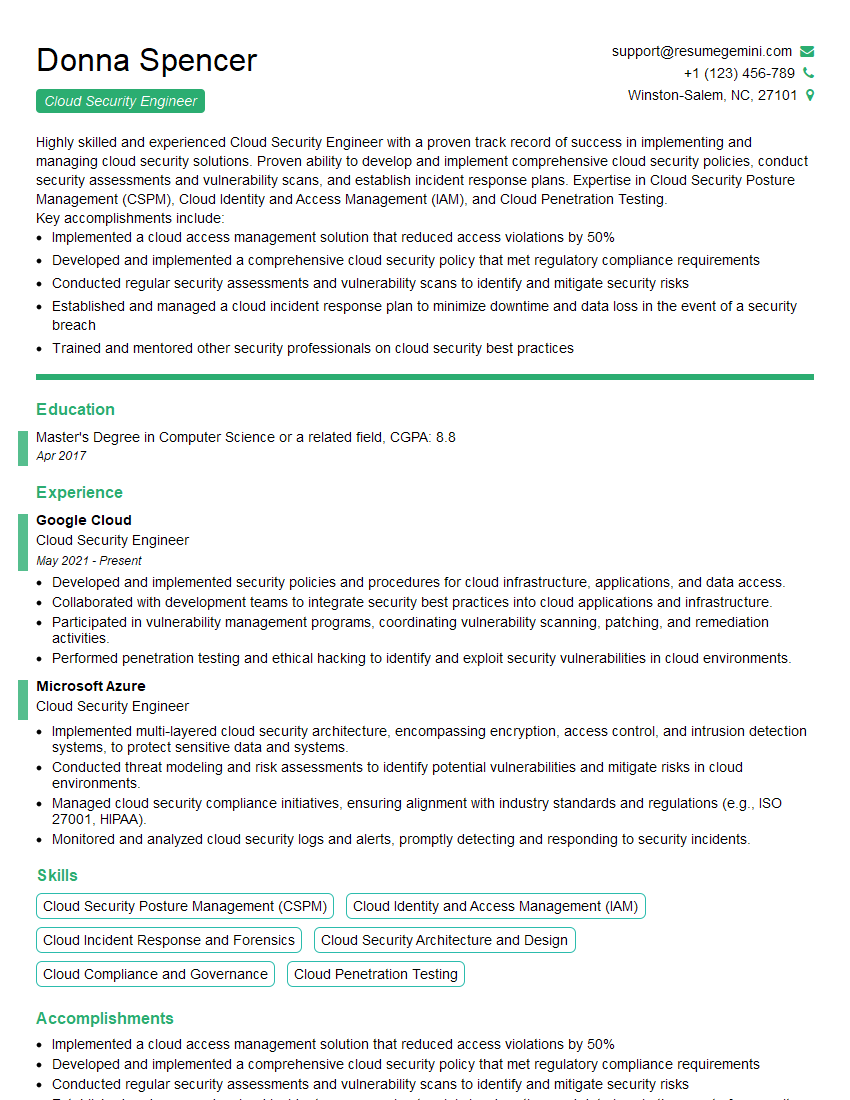
Cloud Security Engineer Resume Sample
Explore more articles
Users Rating of Our Blogs
Share Your Experience
We value your feedback! Please rate our content and share your thoughts (optional).
What Readers Say About Our Blog
Very informative content, great job.
good