Unlock your full potential by mastering the most common Character and Leadership Development interview questions. This blog offers a deep dive into the critical topics, ensuring you’re not only prepared to answer but to excel. With these insights, you’ll approach your interview with clarity and confidence.
Questions Asked in Character and Leadership Development Interview
Q 1. Describe your experience designing and implementing a leadership development program.
Designing and implementing a leadership development program requires a structured approach focusing on identifying needs, developing content, delivering training, and evaluating impact. I begin by conducting a thorough needs assessment, interviewing stakeholders and analyzing existing performance data to pinpoint specific leadership gaps. This informs the program’s curriculum, which I then design to be modular and flexible, catering to diverse learning styles. For example, one program I developed for a mid-sized tech company integrated a blend of workshops, simulations, mentoring, and 360-degree feedback. The workshops covered crucial topics like strategic thinking, emotional intelligence, and effective communication. Simulations allowed participants to practice decision-making under pressure in a safe environment. Mentoring provided individualized coaching and support. The 360-degree feedback offered insights from multiple perspectives, fostering self-awareness. Finally, post-program evaluation, using metrics like participant satisfaction surveys and observed behavioral changes, is crucial to ensure the program’s effectiveness and inform future iterations. The program resulted in a measurable improvement in team performance and increased employee engagement.
Q 2. How would you measure the effectiveness of a character development initiative?
Measuring the effectiveness of a character development initiative requires a multifaceted approach going beyond simple satisfaction surveys. We need to assess changes in individual behavior and organizational culture. Key performance indicators (KPIs) should include quantitative data, like a reduction in workplace conflict or an increase in ethical conduct reporting. Qualitative data, gathered through observations, interviews, and focus groups, is equally vital to understand the ‘why’ behind the changes. For instance, we might track improvements in teamwork through project completion times and employee feedback. We can also assess changes in ethical behavior by analyzing the number of reported ethical violations before and after the initiative. Furthermore, analyzing the shift in organizational culture – for example, through employee surveys measuring trust, fairness, and respect – is essential to gauge the long-term success of the initiative. A combination of these quantitative and qualitative measures provides a holistic evaluation.
Q 3. What leadership styles are most effective in diverse teams?
In diverse teams, the most effective leadership styles are those that are adaptable and inclusive. A transformational leadership style, characterized by inspiring and motivating team members, works well, but it must be paired with a strong emphasis on empathy and cultural sensitivity. This means understanding and valuing the diverse perspectives, experiences, and communication styles of each team member. Servant leadership, where the leader prioritizes the needs of the team, is also incredibly effective, fostering collaboration and trust. The key is to actively listen to team members, create opportunities for open communication, and tailor leadership approaches to individual needs. For example, a leader might provide more structured guidance to some team members while offering more autonomy to others, depending on their experience and preferences. A rigid, top-down approach is less effective; flexible and inclusive leadership fosters stronger relationships and better outcomes in diverse groups.
Q 4. Explain your approach to conflict resolution within a team.
My approach to conflict resolution emphasizes collaboration and finding mutually beneficial solutions. I start by creating a safe and neutral space for open communication, encouraging all parties to express their perspectives without interruption. Active listening is crucial – truly understanding each person’s concerns and feelings before attempting to resolve the issue. I then facilitate a structured discussion focusing on the underlying issues, not just the symptoms. This often involves identifying shared goals and exploring different options for resolving the conflict. My goal is not to assign blame but to find a solution that meets the needs of all involved, as much as possible. If necessary, I might employ mediation techniques to help parties communicate effectively and reach a compromise. The emphasis is always on rebuilding relationships and promoting a positive team dynamic post-conflict.
Q 5. How do you foster ethical behavior in a workplace environment?
Fostering ethical behavior starts with establishing a strong ethical code of conduct, clearly communicated and readily accessible to all employees. This code must be more than just a document; it needs to be integrated into the organizational culture. This can be achieved through leadership modeling ethical behavior, consistent enforcement of the code, and ongoing ethics training. Transparency and open communication are vital – creating a culture where employees feel comfortable reporting ethical concerns without fear of retaliation. An anonymous reporting system, coupled with prompt and thorough investigations of reported violations, shows a commitment to ethical standards. Regular reinforcement of ethical values through company communications and recognition of ethical behavior will build a strong foundation of integrity within the workplace. Essentially, ethical behavior needs to be ingrained into the fabric of the organization.
Q 6. Describe a time you mentored someone. What was the outcome?
I once mentored a young manager struggling with delegating tasks and managing her time effectively. She was highly competent but overwhelmed by her responsibilities, leading to burnout. My approach focused on providing structured support and guidance. We started by identifying her strengths and weaknesses, then created a personalized development plan. This involved practical exercises, such as breaking down complex tasks into smaller, manageable components, and practicing delegation techniques. We also explored time management strategies and stress-reduction techniques. Regular check-ins allowed me to monitor her progress, offer encouragement, and address any challenges she encountered. The outcome was significant. She developed greater confidence in her abilities, improved her time management skills, and learned to effectively delegate, ultimately enhancing her productivity and reducing her stress levels. She was subsequently promoted to a senior management role.
Q 7. How do you identify and develop leadership potential within individuals?
Identifying and developing leadership potential involves a multi-stage process. I start by observing individuals’ behavior in various contexts, looking for traits like initiative, problem-solving skills, communication ability, and a commitment to teamwork. Assessment tools, including personality tests and 360-degree feedback, provide further insights. Crucially, I also look for individuals who demonstrate a desire to learn and grow. Once potential leaders are identified, I provide them with opportunities for development, including mentorship, challenging assignments, and participation in leadership training programs. Regular feedback, focusing on both strengths and areas for improvement, is essential. Providing challenging but achievable goals allows them to practice and develop their leadership skills in a supportive environment. This proactive approach fosters leadership growth and helps build a strong pipeline of future leaders within the organization.
Q 8. What are some common challenges in leadership development, and how do you address them?
Leadership development is rife with challenges. One common hurdle is the resistance to change. Individuals may be comfortable with existing processes and hesitant to adopt new strategies or technologies. Another significant challenge is the lack of self-awareness amongst leaders. Without understanding their strengths and weaknesses, leaders struggle to develop effectively. Finally, inadequate feedback mechanisms hinder growth. Without constructive criticism and regular performance reviews, leaders may not identify areas needing improvement.
To address these, I employ a multi-pronged approach. For resistance to change, I focus on clear communication, demonstrating the benefits of the new approach, and involving team members in the implementation process. To enhance self-awareness, I utilize 360-degree feedback, personality assessments (like Myers-Briggs or DISC), and coaching sessions. Finally, I establish regular performance reviews coupled with mentorship programs to ensure continuous feedback and development. For example, in a past role, I implemented a peer-to-peer feedback system, where team members provided constructive criticism to each other, fostering a culture of continuous improvement and addressing the challenge of inadequate feedback.
Q 9. What frameworks or models do you use for assessing leadership competencies?
I utilize a variety of frameworks for assessing leadership competencies. The Competency Model is a cornerstone, focusing on identifying specific skills and behaviors crucial for success in a given role. I typically tailor this model to the organization’s needs. I also incorporate the Leadership Pipeline Model, which helps identify the skills needed at different levels of leadership. This helps map career progression and training needs. Finally, I often employ behavioral event interviews, asking candidates to describe past situations where they’ve demonstrated specific leadership skills. This allows for a more concrete and insightful evaluation.
For instance, when assessing a candidate for a project management role, I might use a competency model focusing on planning, delegation, communication, and conflict resolution. I’d then use behavioral event interviews to assess their practical experience in these areas. The Leadership Pipeline Model would help me understand if the candidate possesses the skills for future leadership roles within the organization.
Q 10. How do you encourage accountability and responsibility within a team?
Encouraging accountability and responsibility requires a clear understanding of expectations and a supportive yet firm approach. I start by establishing clear goals and roles with measurable outcomes. This ensures everyone understands their contributions and responsibilities. I then implement regular progress updates and open communication channels to address challenges proactively. Furthermore, I foster a culture of transparency and trust, where individuals feel comfortable admitting mistakes and seeking help without fear of reprimand.
I use techniques like OKR (Objectives and Key Results) to establish measurable goals, and regular check-ins to monitor progress. If a team member fails to meet their responsibilities, I approach it with a coaching mindset, understanding the root causes and offering support. However, if the behavior persists, disciplinary measures are implemented, ensuring consistency and fairness. For example, I once worked with a team member consistently missing deadlines. After several coaching sessions that failed to improve the situation, we implemented a performance improvement plan with specific steps and deadlines to rectify the situation.
Q 11. Describe your experience in creating a positive and inclusive work environment.
Creating a positive and inclusive work environment is paramount. I achieve this through several strategies. First, I promote open communication and active listening, ensuring that every voice is heard and valued, regardless of background or position. Second, I emphasize respectful interactions and a zero-tolerance policy for discrimination or harassment. Third, I foster a culture of collaboration and teamwork, promoting shared responsibility and mutual support.
For instance, I’ve instituted regular team-building activities, diversity and inclusion training, and implemented anonymous feedback mechanisms to gauge employee satisfaction and identify areas needing improvement. I also actively seek diverse perspectives when making decisions, ensuring that all voices are considered and no one feels marginalized. In one instance, I noticed a team member was consistently left out of social gatherings. Through one-on-one conversations, I discovered they felt excluded and after addressing this with the team, we were able to ensure they felt more included and welcomed.
Q 12. How do you handle situations where team members demonstrate a lack of integrity?
Addressing a lack of integrity is a serious matter, requiring a thoughtful and decisive approach. My first step is to gather all the facts objectively. I then conduct a private meeting with the team member to discuss the situation calmly and professionally. I use restorative justice principles, focusing on understanding the root cause of the behavior rather than simply punishing it. Depending on the severity and context, the outcome could range from a verbal warning to termination of employment. Transparency is crucial; if the issue affects the team, I will address it appropriately, ensuring that the focus is on restoring trust and maintaining a positive work environment.
For example, if a team member is found to have falsified data, I would gather all the relevant evidence, confront the individual, and take appropriate disciplinary action. I would also communicate with the team about the situation, emphasizing the importance of honesty and integrity, and outlining measures to prevent similar incidents in the future.
Q 13. How do you build trust and rapport with team members?
Building trust and rapport is an ongoing process built on mutual respect and understanding. I begin by actively listening to my team members, showing genuine interest in their perspectives and concerns. I encourage open communication, creating a safe space where individuals feel comfortable sharing ideas and concerns without fear of judgment. I also strive to be approachable and transparent in my own actions, consistently acting with integrity and demonstrating commitment to the team’s success.
I utilize regular one-on-one meetings to build personal connections, understanding their career aspirations and personal goals. I also celebrate successes, both big and small, recognizing individual and team contributions. Through consistent effort and genuine care, I build strong, trusting relationships with my team members.
Q 14. Explain your understanding of emotional intelligence and its role in leadership.
Emotional intelligence (EQ) is the ability to understand and manage one’s own emotions, as well as recognize and influence the emotions of others. It’s a crucial component of effective leadership. Leaders with high EQ are better able to build strong relationships, motivate teams, navigate conflict, and make sound decisions under pressure. They demonstrate self-awareness, self-regulation, empathy, and social skills.
Self-awareness allows leaders to understand their own emotional state and its impact on others. Self-regulation helps them manage their impulses and reactions effectively. Empathy allows them to understand and share the feelings of others. Social skills enable them to build and maintain positive relationships. In essence, a leader with high EQ understands and effectively manages their own emotions, influencing the emotions and behaviors of the team in a positive way. This often translates into increased productivity, improved team morale, and a more collaborative environment. For example, a leader with high EQ can recognize when a team member is stressed and adapt their communication style accordingly, preventing potential conflicts and fostering a supportive atmosphere.
Q 15. What are some key indicators of successful leadership development?
Successful leadership development isn’t solely about acquiring new skills; it’s about fostering a holistic transformation in individuals, enabling them to effectively navigate complex challenges and inspire others. Key indicators include demonstrable improvements in self-awareness, enhanced emotional intelligence, a growth mindset, and the ability to build strong, collaborative teams.
- Improved Self-Awareness: Leaders demonstrate a deeper understanding of their strengths, weaknesses, biases, and impact on others. For example, a leader might actively seek 360-degree feedback and use it to refine their communication style.
- Enhanced Emotional Intelligence: They effectively manage their own emotions and understand and respond appropriately to the emotions of others. This translates to improved conflict resolution and empathetic leadership.
- Growth Mindset: They embrace challenges as opportunities for learning and development, fostering a culture of continuous improvement within their teams. They view setbacks as learning experiences rather than failures.
- Strong Team Building: They consistently build high-performing teams characterized by trust, open communication, and shared goals. This is evidenced by increased team cohesion and productivity.
- Measurable Results: Ultimately, successful leadership development should lead to tangible positive outcomes, such as improved team performance, increased innovation, and enhanced organizational effectiveness.
Career Expert Tips:
- Ace those interviews! Prepare effectively by reviewing the Top 50 Most Common Interview Questions on ResumeGemini.
- Navigate your job search with confidence! Explore a wide range of Career Tips on ResumeGemini. Learn about common challenges and recommendations to overcome them.
- Craft the perfect resume! Master the Art of Resume Writing with ResumeGemini’s guide. Showcase your unique qualifications and achievements effectively.
- Don’t miss out on holiday savings! Build your dream resume with ResumeGemini’s ATS optimized templates.
Q 16. How do you adapt your leadership style to different situations and individuals?
Adapting my leadership style is crucial for maximizing team effectiveness. I employ a situational leadership approach, tailoring my style based on the specific needs of the individual and the context. This involves understanding the individual’s developmental level (competence and commitment) and adjusting my approach accordingly.
- Directing: For individuals who lack both competence and commitment, I provide clear instructions and close supervision.
- Coaching: When individuals have low competence but high commitment, I offer support and guidance, focusing on skill development.
- Supporting: With individuals who possess high competence but low commitment, I focus on motivation and empowerment, providing autonomy and recognition.
- Delegating: For individuals with both high competence and commitment, I delegate tasks and responsibilities, trusting their ability to perform effectively.
For example, with a new team member (low competence, high commitment), I might provide detailed training and frequent check-ins. Conversely, with a seasoned expert (high competence, high commitment), I would delegate a significant project with minimal oversight, fostering their independence and creativity.
Q 17. Describe your experience in coaching individuals through challenging situations.
I’ve had extensive experience coaching individuals through challenging situations, often involving performance issues, conflict resolution, or career transitions. My approach involves active listening, empathetic understanding, collaborative problem-solving, and the identification of actionable steps. I create a safe space for open communication, ensuring the individual feels heard and supported.
In one instance, a team member was struggling with a particularly complex project and exhibiting signs of burnout. Through one-on-one coaching sessions, we identified the root causes of their stress, including unrealistic deadlines and a lack of clarity on responsibilities. We collaboratively redefined the project scope, adjusted the timeline, and implemented strategies for improved time management and stress reduction. The result was a significant improvement in their performance and morale, and successful project completion.
Q 18. How do you facilitate communication and collaboration within a team?
Facilitating communication and collaboration requires a multifaceted approach. I prioritize building trust and psychological safety within the team, encouraging open dialogue and active listening. This involves creating a shared understanding of team goals, establishing clear communication channels, and utilizing collaborative tools and techniques.
- Regular Team Meetings: I facilitate structured meetings with clear agendas, focusing on both task-oriented discussions and team-building activities.
- Open Communication Channels: I encourage the use of various communication platforms (e.g., email, instant messaging, project management software) to ensure efficient information sharing.
- Conflict Resolution: I address conflicts proactively and constructively, using mediation techniques to find mutually acceptable solutions.
- Team Building Activities: I organize team-building exercises to foster relationships, enhance trust, and improve collaboration.
For example, I might use a collaborative project management tool to track progress, assign tasks, and facilitate communication among team members. Regular feedback sessions allow for open discussion and addressing challenges early on.
Q 19. How do you provide constructive feedback to improve performance?
Providing constructive feedback is crucial for performance improvement. My approach focuses on being specific, balanced, and solution-oriented. I avoid generalizations and personal attacks, instead focusing on observable behaviors and their impact. I structure my feedback using the SBI (Situation-Behavior-Impact) model, clearly outlining the context, the observed behavior, and its consequences.
For instance, instead of saying “You’re not a team player,” I might say, “During the recent project meeting (Situation), you interrupted your colleagues several times (Behavior), which made it difficult for others to share their ideas and contributed to a less productive discussion (Impact). Let’s discuss strategies for improving your active listening skills.” This approach encourages self-reflection and improvement without creating defensiveness.
Q 20. What strategies do you use to motivate and inspire team members?
Motivating and inspiring team members involves understanding individual needs and aspirations, and aligning them with team goals. I focus on creating a positive and supportive work environment, celebrating successes, providing recognition, and fostering a sense of purpose.
- Recognition and Rewards: I acknowledge individual and team accomplishments publicly and privately, providing both tangible and intangible rewards.
- Empowerment and Autonomy: I empower team members by providing them with ownership and control over their work, fostering their sense of responsibility and initiative.
- Meaningful Work: I help team members understand the bigger picture and how their work contributes to the overall success of the organization.
- Growth Opportunities: I provide opportunities for professional development, encouraging learning and skill enhancement.
For example, I might implement a peer recognition program where team members can acknowledge each other’s contributions. Regularly highlighting individual and team accomplishments boosts morale and reinforces desired behaviors.
Q 21. How do you handle performance issues within a team?
Handling performance issues requires a systematic and compassionate approach. My process involves clearly documenting the issue, having a private and direct conversation with the individual, collaboratively developing a performance improvement plan, and providing ongoing support and monitoring.
- Documentation: I maintain detailed records of performance issues, including specific examples and dates.
- Private Conversation: I schedule a private meeting with the individual to discuss the performance concerns in a calm and respectful manner.
- Performance Improvement Plan: We collaboratively develop a plan outlining specific goals, timelines, and support mechanisms.
- Monitoring and Support: I provide regular feedback and support, adjusting the plan as needed.
- Progressive Discipline: If the performance issues persist despite the improvement plan, I follow established organizational procedures for progressive discipline.
It’s crucial to remember that performance issues are often multifaceted, and a supportive approach that focuses on improvement, rather than solely punishment, is most effective. The goal is to help the individual succeed and contribute positively to the team.
Q 22. Describe your experience in developing and delivering leadership training programs.
My experience in developing and delivering leadership training programs spans over 15 years, encompassing a wide range of industries and organizational structures. I’ve designed and facilitated programs for everything from entry-level managers to executive teams. My approach is highly customized, focusing on the specific needs and challenges of each client. This includes needs assessments, developing learning objectives aligned with business goals, and selecting appropriate methodologies like simulations, case studies, role-playing, and mentoring programs. For example, I recently developed a program for a tech startup focused on agile leadership, emphasizing adaptability and collaborative decision-making. For a larger financial institution, I created a leadership development track designed to cultivate ethical decision-making and risk management skills. I always incorporate feedback mechanisms throughout the training process to ensure maximum effectiveness and relevance.
My programs typically include a blend of theoretical frameworks, practical exercises, and opportunities for peer-to-peer learning and coaching. The emphasis is always on translating learned concepts into tangible actions and behaviors that participants can immediately implement in their workplace. Post-training support and follow-up coaching are also integral components of my programs, ensuring sustained impact and skill development.
Q 23. How do you measure the ROI of leadership development initiatives?
Measuring the ROI of leadership development initiatives requires a multi-faceted approach. It’s not just about quantifiable metrics; it’s also about assessing qualitative improvements. I typically employ a balanced scorecard approach, considering various factors.
- Behavioral Changes: Pre- and post-training assessments can track improvements in leadership behaviors, such as delegation, communication, conflict resolution, and decision-making. 360-degree feedback is invaluable here.
- Performance Metrics: Improvements in team performance, employee engagement, productivity, and project success rates are key indicators. We track metrics like employee turnover, customer satisfaction, and sales figures to correlate with leadership development programs.
- Business Outcomes: Ultimately, the ROI is linked to the impact on the organization’s bottom line. This could include increased profitability, improved efficiency, or enhanced market share. We often use a cost-benefit analysis to weigh the investment in leadership development against the return.
- Employee Satisfaction and Engagement: High levels of employee engagement and satisfaction indirectly reflect the effectiveness of leadership development, demonstrating a positive workplace culture.
For example, in one project, we measured the ROI by tracking a decrease in employee turnover after implementing a leadership development program focused on improving employee engagement. The cost savings associated with reduced recruitment and training expenses were significant.
Q 24. What are your thoughts on the importance of servant leadership?
Servant leadership is a crucial and increasingly relevant leadership philosophy. It prioritizes the needs of team members and empowers them to achieve their full potential. Servant leaders act as facilitators, mentors, and coaches rather than autocratic figures. They focus on building trust, creating a positive work environment, and fostering a sense of community.
The core tenets of servant leadership include listening empathetically, building community, and fostering personal growth. In practice, this translates to actively seeking input from team members, providing opportunities for professional development, and supporting their individual aspirations. A servant leader leads by example, demonstrating humility, integrity, and a commitment to serving others.
Consider a scenario where a team faces a significant challenge. A servant leader wouldn’t dictate solutions; instead, they’d facilitate a collaborative problem-solving process, empowering team members to contribute their expertise and perspectives. This approach fosters innovation, strengthens team cohesion, and builds ownership.
Q 25. How do you promote a culture of continuous learning and development?
Promoting a culture of continuous learning and development requires a strategic and multifaceted approach. It’s not enough to simply offer training; it’s about creating an environment where learning is valued, expected, and actively supported.
- Leadership Commitment: Leaders must champion continuous learning by modeling the behavior themselves and clearly communicating its importance.
- Learning Opportunities: Provide access to a diverse range of learning resources, including online courses, workshops, conferences, mentoring programs, and job shadowing opportunities.
- Feedback Mechanisms: Establish regular feedback systems, including 360-degree reviews, performance appraisals, and peer feedback, to identify areas for improvement and track progress.
- Knowledge Sharing: Encourage knowledge sharing through internal forums, communities of practice, and mentorship programs.
- Time Allocation: Dedicate specific time for learning activities, recognizing that learning is not an add-on but an integral part of the job.
- Recognition and Rewards: Recognize and reward employees who actively participate in learning and development initiatives. This shows that the company values their commitment to growth.
For instance, I once worked with a company that established a ‘learning hour’ every week, where employees were given time to pursue professional development activities of their choice. This simple yet impactful initiative significantly increased employee engagement in learning.
Q 26. Describe a time you failed as a leader. What did you learn?
In my early career, I made the mistake of micromanaging a team during a high-pressure project. I believed that close supervision was necessary to ensure quality and deadlines. However, this approach stifled creativity, undermined team morale, and ultimately led to decreased productivity and increased stress among team members. The project was completed, but the process was far from ideal.
I learned a valuable lesson: true leadership is about empowering and trusting your team. Micromanagement is counterproductive. Since then, I’ve focused on delegating effectively, providing clear expectations, fostering open communication, and offering support and guidance instead of constant oversight. I’ve learned the importance of creating a collaborative and trusting environment where team members feel ownership and responsibility.
Q 27. What is your philosophy on ethical leadership?
My philosophy on ethical leadership centers on integrity, transparency, and accountability. Ethical leaders act with fairness, honesty, and respect for all stakeholders. They uphold high moral standards, even when faced with difficult decisions. They foster a culture of ethical conduct within their teams and organizations.
This means creating clear ethical guidelines, providing regular ethics training, and consistently holding themselves and their team members accountable for their actions. It also involves actively listening to concerns, addressing ethical dilemmas openly and transparently, and taking responsibility for mistakes. Ethical leadership is not just about following rules; it’s about creating a culture where ethical considerations are woven into every aspect of decision-making.
For example, if a leader discovers unethical behavior within their team, they should address it promptly and fairly, following established procedures and ensuring that the appropriate consequences are applied. Ignoring such behavior would damage trust and compromise the ethical culture of the organization.
Q 28. How do you build resilience within a team?
Building resilience within a team requires a holistic approach that addresses both individual and team-level factors. Resilience is the ability to bounce back from adversity, and building it within a team involves cultivating psychological safety, fostering strong relationships, and developing problem-solving skills.
- Psychological Safety: Create an environment where team members feel comfortable taking risks, expressing themselves openly, and admitting mistakes without fear of judgment or retribution.
- Team Cohesion: Foster strong relationships among team members through team-building activities, collaborative projects, and open communication. A strong sense of camaraderie provides support during challenging times.
- Problem-Solving Skills: Equip team members with effective problem-solving and decision-making skills. This empowers them to handle challenges confidently and proactively.
- Stress Management Techniques: Introduce strategies for managing stress, such as mindfulness techniques, stress reduction workshops, and encouraging work-life balance.
- Learning from Failure: Encourage a culture where failures are viewed as learning opportunities rather than setbacks. Conduct post-mortems to analyze what went wrong and what can be learned to improve future performance.
For instance, I’ve used team-building exercises that simulate challenging situations to help teams practice their problem-solving skills and learn how to support each other under pressure. This experiential learning is highly effective in building team resilience.
Key Topics to Learn for Character and Leadership Development Interview
- Self-Awareness and Emotional Intelligence: Understanding your strengths, weaknesses, values, and how your emotions impact your actions and leadership style. Practical application: Reflect on past experiences where your emotional intelligence influenced a team’s success or a challenging situation.
- Ethical Decision-Making & Integrity: Applying moral principles to leadership challenges, navigating ethical dilemmas, and maintaining consistency between values and actions. Practical application: Prepare examples demonstrating your commitment to ethical conduct, even under pressure.
- Communication & Collaboration: Mastering effective communication strategies (verbal, written, non-verbal) and building strong collaborative relationships within teams. Practical application: Practice articulating complex ideas concisely and persuasively, showcasing your ability to build consensus.
- Resilience & Adaptability: Developing the ability to bounce back from setbacks, manage stress effectively, and adapt to changing circumstances. Practical application: Share instances where you demonstrated resilience in the face of adversity, outlining your coping mechanisms and problem-solving approaches.
- Motivation & Inspiration: Understanding various motivational theories and applying them to inspire and empower individuals and teams. Practical application: Prepare examples illustrating how you’ve motivated others to achieve shared goals.
- Conflict Resolution & Negotiation: Developing skills to effectively manage and resolve conflicts constructively, fostering positive relationships. Practical application: Describe your approach to conflict resolution, highlighting successful outcomes.
- Mentorship & Development: Understanding the importance of mentorship and developing strategies to foster the growth of others. Practical application: Discuss experiences where you mentored or supported colleagues’ professional development.
Next Steps
Mastering Character and Leadership Development is crucial for career advancement, unlocking opportunities for increased responsibility and influence. A strong, ATS-friendly resume is your key to opening those doors. To make your application stand out, leverage ResumeGemini to craft a compelling resume that highlights your unique skills and experiences in Character and Leadership Development. ResumeGemini provides examples of resumes tailored specifically to this area, giving you a head start in showcasing your capabilities to potential employers. Invest time in crafting a professional resume—it’s an investment in your future success.
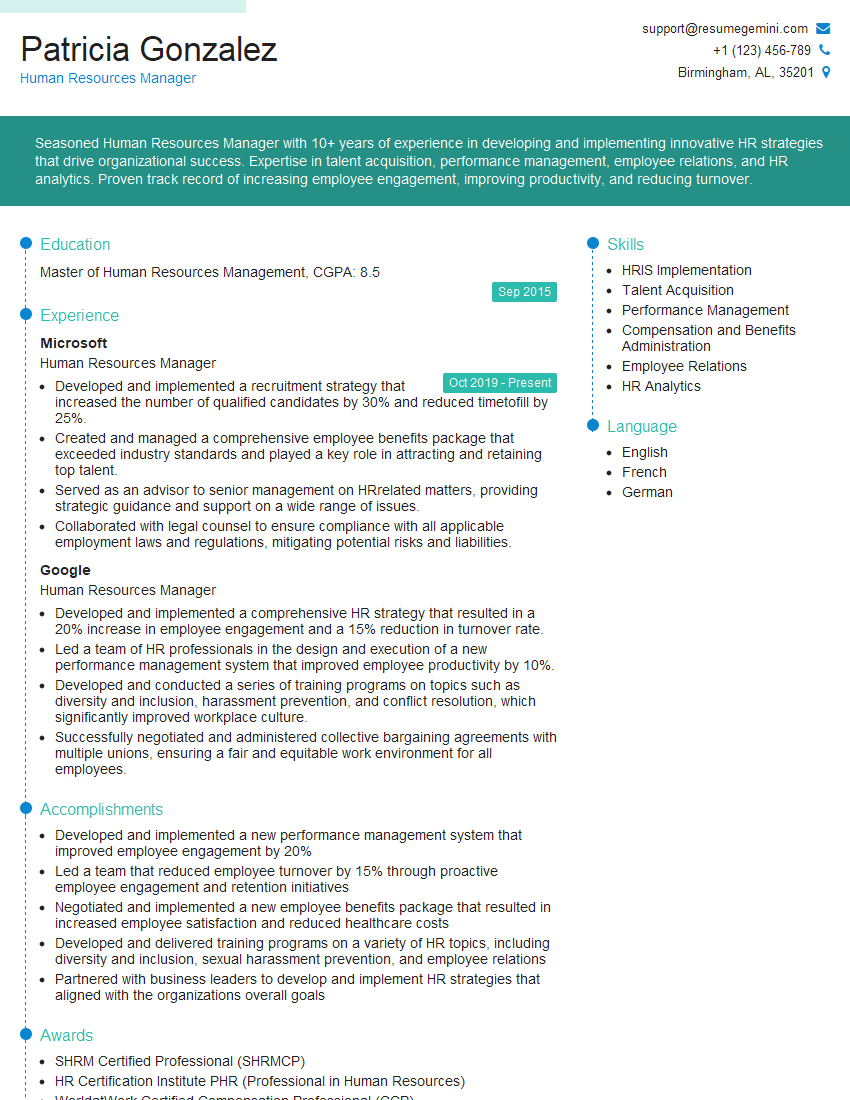
Human Resources Manager Resume Sample
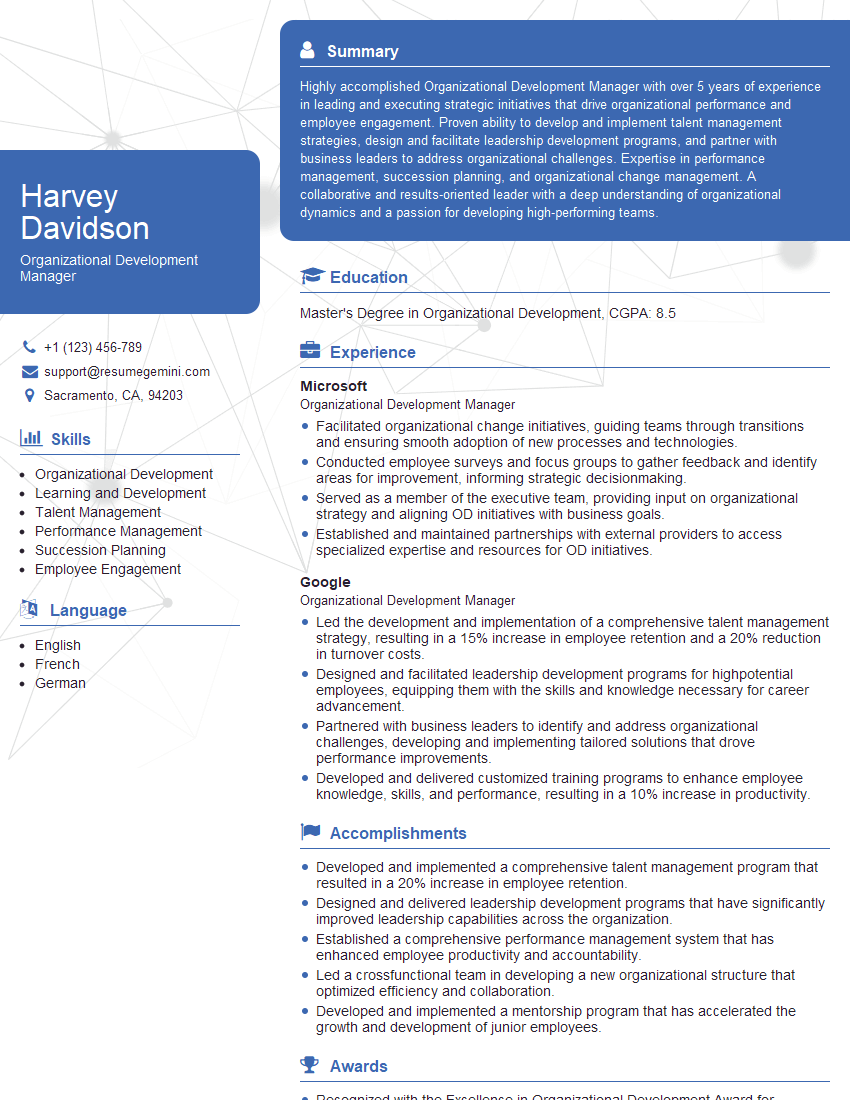
Organizational Development Manager Resume Sample
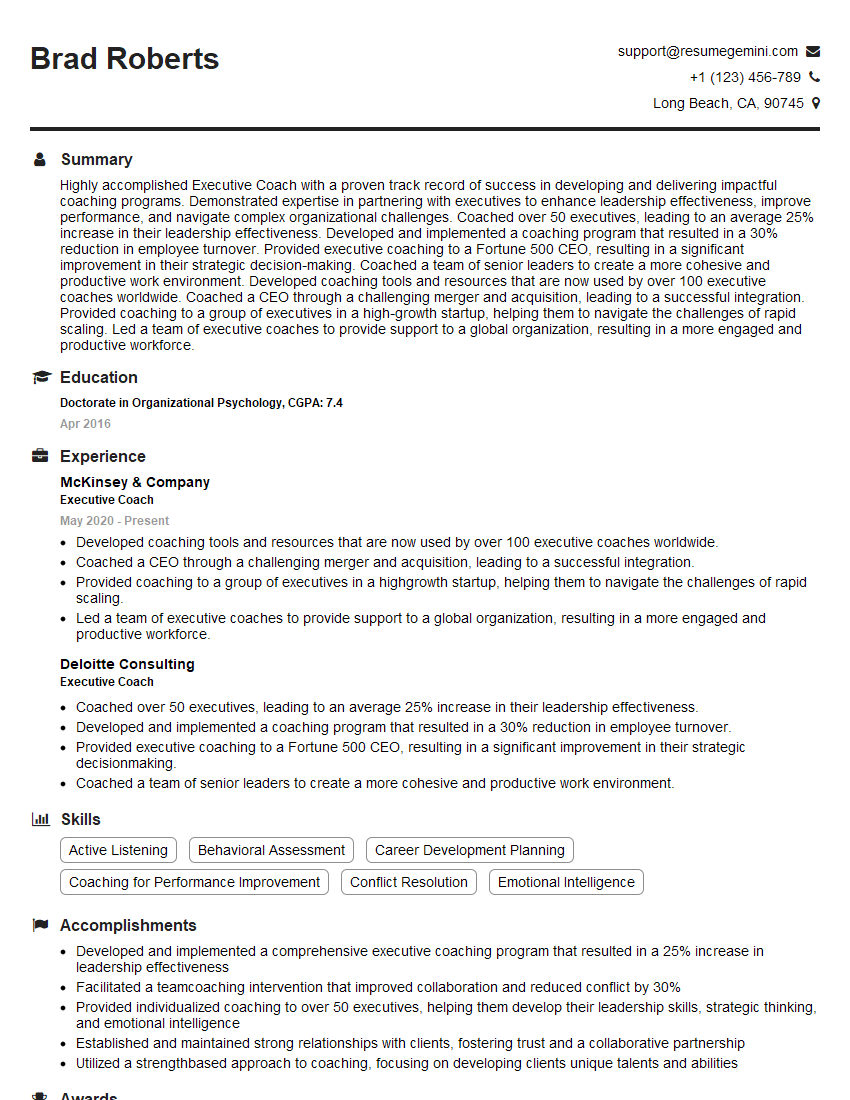
Executive Coach Resume Sample
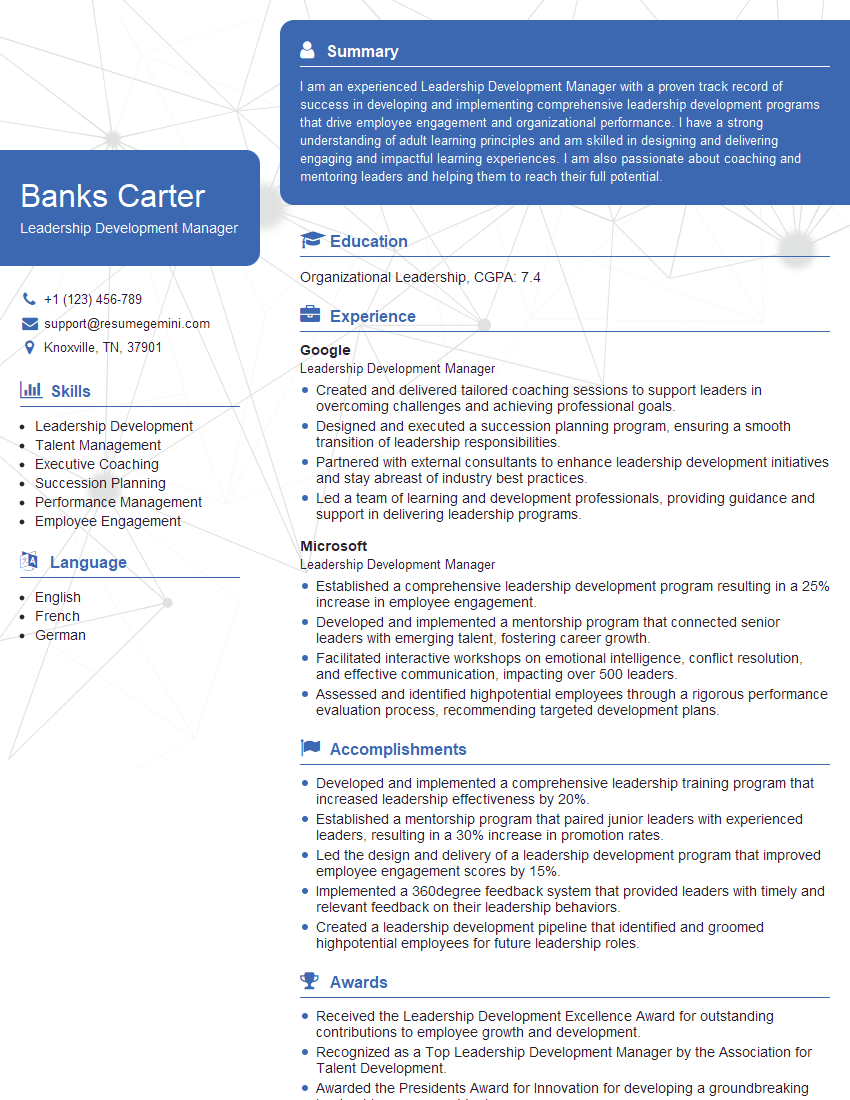
Leadership Development Manager Resume Sample
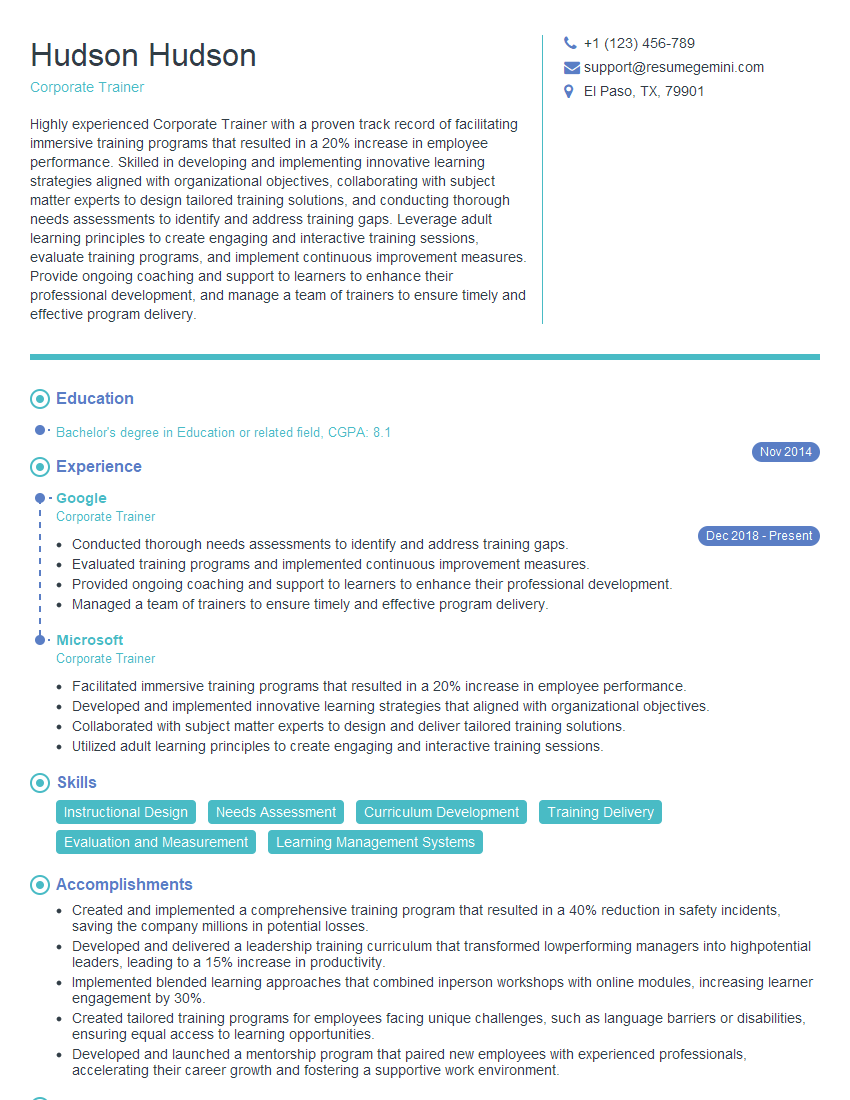
Corporate Trainer Resume Sample
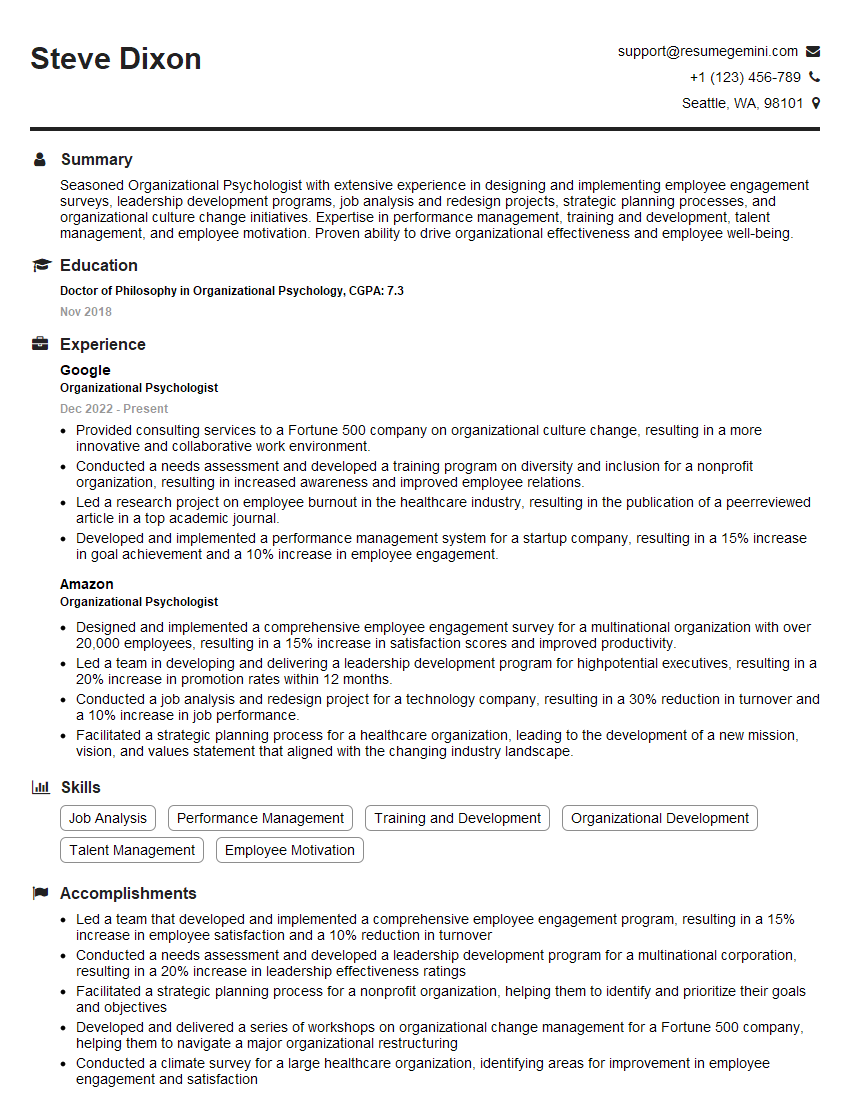
Organizational Psychologist Resume Sample
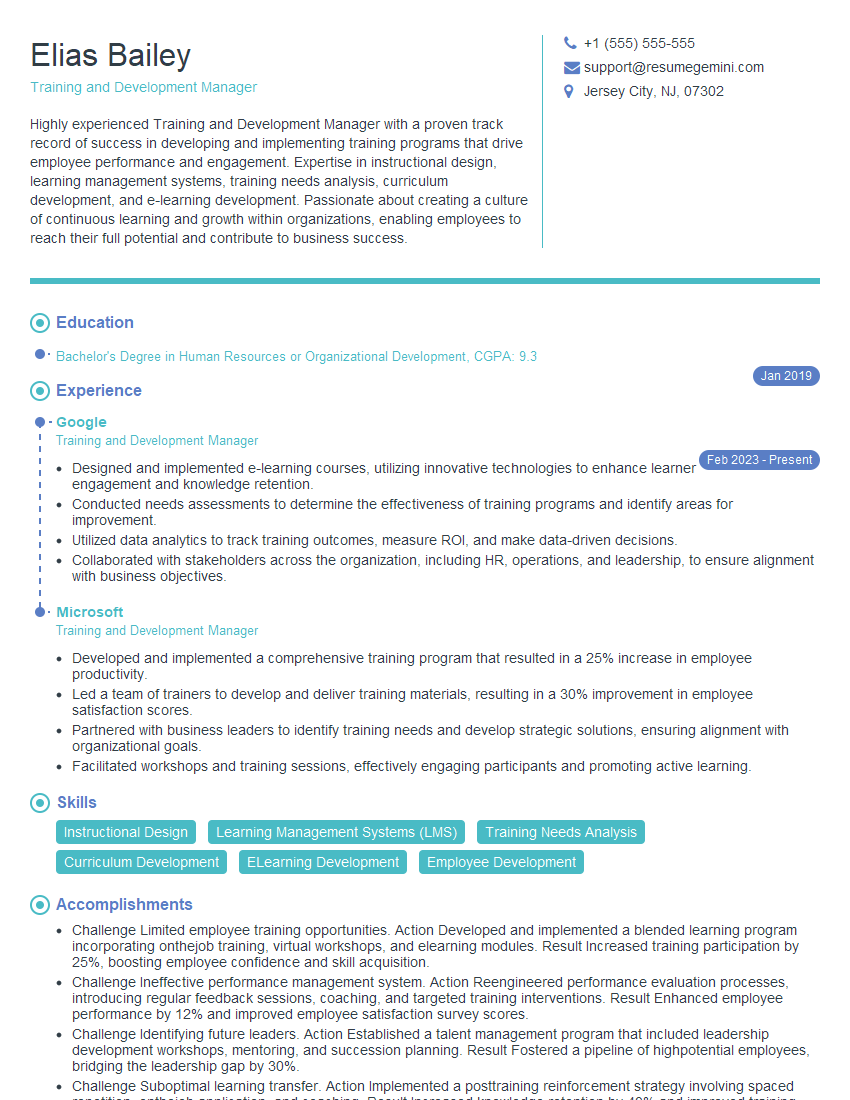
Training and Development Manager Resume Sample
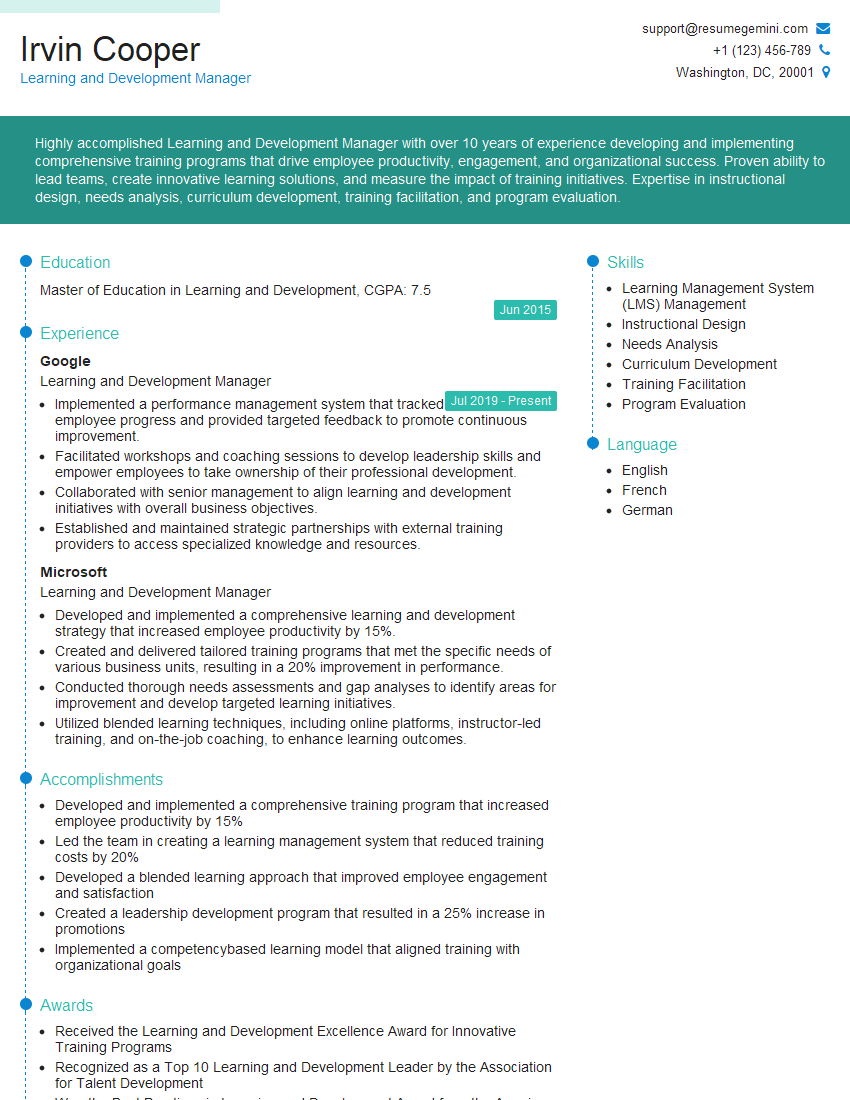
Learning and Development Manager Resume Sample
Explore more articles
Users Rating of Our Blogs
Share Your Experience
We value your feedback! Please rate our content and share your thoughts (optional).
What Readers Say About Our Blog
Very informative content, great job.
good