Every successful interview starts with knowing what to expect. In this blog, we’ll take you through the top CBRN Risk Assessment interview questions, breaking them down with expert tips to help you deliver impactful answers. Step into your next interview fully prepared and ready to succeed.
Questions Asked in CBRN Risk Assessment Interview
Q 1. Describe the process of conducting a CBRN vulnerability assessment.
A CBRN vulnerability assessment systematically identifies weaknesses and gaps in an organization’s or community’s preparedness for chemical, biological, radiological, or nuclear (CBRN) incidents. It’s like a security audit, but focused on CBRN threats.
The process typically involves these steps:
- Identifying Assets and Critical Infrastructure: This includes mapping essential facilities, transportation routes, and population centers. Think hospitals, power plants, water treatment facilities – places vital to community function.
- Threat Identification and Analysis: We determine the likelihood and potential impact of various CBRN threats relevant to the area. This considers factors like geographic location, industrial activities, and potential terrorist targets.
- Vulnerability Analysis: We examine the weaknesses in protective measures and emergency response capabilities for each identified threat. This might involve checking security measures, evaluating emergency response plans, and assessing the adequacy of personal protective equipment.
- Risk Assessment: We combine the likelihood and impact of threats with identified vulnerabilities to create a comprehensive risk profile. This helps prioritize areas needing immediate attention.
- Recommendations and Mitigation Strategies: Finally, we outline specific recommendations for improving preparedness, such as upgrading security, developing response plans, or enhancing training programs. For example, a vulnerability might be a lack of decontamination facilities, leading to a recommendation for building one or establishing partnerships with neighboring regions for access to resources.
Q 2. Explain the different types of CBRN threats and their potential impacts.
CBRN threats are diverse, each with unique characteristics and devastating potential. Imagine them as different types of weapons, each causing a different kind of harm.
- Chemical Threats: These involve toxic chemicals, like nerve agents (sarin, VX), blister agents (mustard gas), or choking agents (chlorine). Impact ranges from immediate incapacitation and death to long-term health problems.
- Biological Threats: These involve harmful biological agents, such as bacteria (anthrax), viruses (Ebola), or toxins (botulinum toxin). The effects depend on the agent but can include widespread illness, death, and societal disruption. Think of the potential for a pandemic causing widespread chaos.
- Radiological Threats: These involve radioactive materials, either from a radiological dispersal device (RDD) – a ‘dirty bomb’ – or a nuclear accident. They cause radiation sickness, cancer, and environmental contamination, potentially making large areas uninhabitable.
- Nuclear Threats: These involve nuclear weapons or devices. The impact is catastrophic, causing mass casualties, widespread destruction, and long-term environmental consequences. Think Hiroshima and Nagasaki.
The potential impact of a CBRN attack depends on the agent, the amount released, the method of dispersal, and environmental factors. The consequences can be widespread, affecting human health, the environment, and the economy.
Q 3. How do you prioritize CBRN risks based on likelihood and consequence?
Prioritizing CBRN risks involves a systematic approach combining qualitative and quantitative data. We use a risk matrix, essentially a table, to visualize the relationship between likelihood and consequence.
Likelihood: This is the probability of a specific threat occurring. Factors considered include historical data, threat actor capabilities, and geopolitical factors. We might quantify likelihood using a scale from low to high (e.g., 1-5).
Consequence: This assesses the potential impact of a threat. We consider factors like the number of casualties, economic damage, and environmental impact. The severity can range from minor to catastrophic (e.g., 1-5).
Risk Matrix: By multiplying likelihood and consequence scores, we get a risk score for each threat. Higher risk scores indicate threats that need immediate attention. For example, a threat with a high likelihood and high consequence will receive a higher score and take precedence in resource allocation and mitigation planning. A visual matrix makes this prioritization easier to understand and communicate.
This process is not simply about numbers. We must also consider factors like societal impact and the potential for cascading failures – how one incident could trigger a series of other crises.
Q 4. What are the key elements of a comprehensive CBRN emergency response plan?
A comprehensive CBRN emergency response plan is crucial for minimizing casualties and damage. It’s like a well-rehearsed play, ensuring everyone knows their role in case of a crisis.
- Preparedness and Prevention: This includes vulnerability assessments, risk communication, training programs, and acquiring necessary equipment and supplies.
- Detection and Warning: This includes establishing a robust monitoring system to detect CBRN releases and a clear communication plan to warn the affected population. Think early warning systems and public awareness campaigns.
- Protection and Mitigation: This involves establishing procedures for sheltering in place, evacuations, decontamination, and the administration of medical countermeasures. Having clear procedures for these actions is vital.
- Response and Recovery: This includes providing emergency medical care, managing casualties, restoring essential services, and coordinating with various agencies. This section details the chain of command and responsibilities.
- Post-Incident Activities: This involves conducting post-incident analysis to learn from experience and improve future response capabilities. It is as important to reflect on successes and failures as to respond to the initial emergency.
The plan should include detailed procedures, checklists, contact lists, and maps. It needs regular testing and updates to remain effective. Regular drills help to ensure preparedness and smooth response.
Q 5. Describe your experience with CBRN risk mitigation strategies.
My experience with CBRN risk mitigation strategies spans various contexts, from advising industrial facilities to developing national-level preparedness plans.
I’ve worked on projects involving:
- Engineering Controls: Designing and implementing improved ventilation systems, containment strategies, and specialized equipment to minimize the risk of exposure to CBRN agents in industrial settings. This includes designing systems to handle hazardous materials safely and prevent accidental releases.
- Administrative Controls: Developing and implementing Standard Operating Procedures (SOPs) for handling hazardous materials, emergency response protocols, and worker training programs. This is about creating a safety-first culture.
- Personal Protective Equipment (PPE): Selecting and providing appropriate PPE based on the specific CBRN threat. This includes respirators, protective suits, and gloves.
- Community Preparedness Programs: Developing and implementing community-based programs focused on public awareness, education, and training. This involves educating the public on what to do in a CBRN event, how to recognize signs of exposure and access resources.
- Countermeasures Development: Collaborating on research and development of new technologies and countermeasures for CBRN agents.
A successful mitigation strategy requires a multi-faceted approach, integrating engineering, administrative, and personal protective measures. It’s not just about technology; it’s about people and processes.
Q 6. How do you determine the appropriate level of personal protective equipment (PPE) for a CBRN incident?
Selecting the right PPE for a CBRN incident is critical for protecting responders and the public. It’s like choosing the right armor for a specific battle.
The selection process depends on:
- The identified CBRN agent: Different agents require different levels of protection. A nerve agent attack demands far more stringent protective measures than a chlorine leak.
- The level of exposure: The proximity to the source and the duration of exposure influence the level of protection needed. First responders might require higher levels of protection than those in less hazardous areas.
- The task: The activities being performed will determine the type and level of PPE. Decontamination teams need different PPE than those conducting rescue operations.
We use a tiered approach, starting with the least restrictive protective measures possible while ensuring adequate safety. This includes evaluating the hazard, selecting appropriate PPE, ensuring proper training on its use, and establishing procedures for its maintenance and decontamination.
Examples include level A suits for the highest levels of protection, level B for less hazardous situations, and respirators for respiratory protection. The choice is always data-driven and tailored to the specific scenario.
Q 7. Explain the importance of communication and coordination during a CBRN event.
Effective communication and coordination are the cornerstones of a successful CBRN response. It’s like a well-orchestrated orchestra, where each section plays its part in harmony.
Effective communication involves:
- Establishing clear communication channels: This includes pre-established contact lists, radio frequencies, and secure communication systems. Think of establishing a chain of command and well-defined communication protocols.
- Sharing real-time information: This includes rapidly exchanging information about the incident, the affected area, and the status of response efforts. This often involves using specialized technologies for quick dissemination of vital information.
- Coordinating with various agencies: This includes coordinating response efforts among different agencies, including emergency medical services, law enforcement, and public health officials. Joint exercises are crucial for creating fluid inter-agency cooperation.
- Providing timely and accurate information to the public: This includes issuing warnings, providing updates, and addressing public concerns. Open and transparent communication helps reduce panic and promotes effective self-protection measures.
Poor communication can lead to confusion, delays, and increased casualties. Therefore, a robust communication plan and regular training exercises are crucial for achieving effective coordination and achieving a successful outcome.
Q 8. What are the key regulatory requirements for handling CBRN materials?
Regulatory requirements for handling CBRN (Chemical, Biological, Radiological, and Nuclear) materials are complex and vary significantly depending on the specific substance, its quantity, and the intended use. They are primarily designed to protect public health and the environment. Key aspects include:
- Licensing and Permits: Most CBRN materials require licenses or permits before they can be possessed, used, transported, or disposed of. These licenses often involve stringent background checks, security protocols, and regular inspections.
- Safety Data Sheets (SDS): Detailed SDSs must be readily available for all CBRN materials, outlining potential hazards, safe handling procedures, emergency response plans, and appropriate personal protective equipment (PPE).
- Transportation Regulations: The transportation of CBRN materials is heavily regulated, with specific packaging, labeling, and routing requirements to minimize the risk of accidents or spills. International regulations like the IAEA’s regulations for the safe transport of radioactive material are crucial.
- Environmental Protection Regulations: Strict regulations govern the disposal and management of CBRN waste to prevent environmental contamination. This often involves specialized facilities and techniques to ensure safe containment and destruction of hazardous materials.
- Emergency Response Plans: Facilities handling CBRN materials must have comprehensive emergency response plans that detail procedures for managing accidents, spills, or releases. These plans typically involve drills and training exercises.
- Security Measures: Stringent security protocols are needed to prevent unauthorized access, theft, or misuse of CBRN materials. This might include physical security measures, access control systems, and surveillance technologies.
For example, a laboratory working with radioactive isotopes would require a specific license from the relevant nuclear regulatory authority, adhere to strict radiation safety protocols, and have established procedures for handling waste disposal. Failure to comply with these regulations can result in severe penalties, including fines and criminal prosecution.
Q 9. Describe your experience with CBRN modeling and simulation tools.
My experience with CBRN modeling and simulation tools encompasses a wide range of software packages, including but not limited to, widely used commercial packages like those that use GIS data to visualize dispersion patterns, and specialized software designed for agent-based modeling. I’ve utilized these tools to:
- Predict the dispersion of hazardous plumes: Modeling software allows us to simulate the spread of chemical or biological agents under various meteorological conditions, helping to predict the affected areas and inform evacuation plans. This often involves inputting data on release characteristics, wind speed and direction, atmospheric stability, and terrain.
- Assess the effectiveness of mitigation strategies: We can model the impact of different mitigation measures, such as sheltering-in-place, evacuation routes, or decontamination efforts, to determine the optimal response strategy in various scenarios. This helps optimize resource allocation during an incident.
- Conduct vulnerability assessments: By simulating various CBRN attack scenarios, we can identify vulnerabilities in infrastructure, emergency response systems, and population density, allowing for better preparedness and mitigation.
- Train emergency responders: Simulations provide a safe and controlled environment for emergency responders to practice their skills and gain experience in handling CBRN incidents.
For instance, in a recent project, we used a combination of atmospheric dispersion modeling and agent-based modeling to simulate the impact of a hypothetical chemical release at an industrial facility. The simulation helped us identify the optimal evacuation zones, determine the required number of decontamination teams, and evaluate the effectiveness of different communication strategies.
Q 10. How do you conduct a post-incident analysis of a CBRN event?
A post-incident analysis of a CBRN event is a critical process to learn from mistakes, improve future responses, and enhance preparedness. It involves a systematic investigation into all aspects of the incident, from the initial detection to the final recovery phase. The process typically involves these steps:
- Fact-finding: Gathering information through interviews, data collection from sensors and monitoring systems, review of emergency response records, and analysis of physical evidence.
- Timeline reconstruction: Creating a detailed timeline of events, highlighting critical decision points and the sequence of actions taken.
- Casualty assessment: Assessing the number and severity of casualties, identifying patterns and potential causes of injuries or fatalities.
- Environmental impact assessment: Evaluating the extent of environmental contamination, assessing the effectiveness of cleanup efforts, and determining long-term ecological consequences.
- Effectiveness of response: Evaluating the effectiveness of the emergency response, identifying strengths and weaknesses in communication, coordination, resource allocation, and decision-making processes.
- Gap analysis: Identifying gaps in preparedness, response capabilities, and training needs, leading to recommendations for improvements.
- Lessons learned report: Documenting the findings and recommendations to improve future response capabilities and prevent similar incidents.
For example, after a simulated anthrax release in a densely populated area, a post-incident analysis might reveal communication breakdowns between different agencies, inadequacies in decontamination procedures, or limitations in the availability of personal protective equipment. This would then lead to recommendations for improving inter-agency communication protocols, investing in advanced decontamination technologies, and expanding the stockpile of PPE.
Q 11. What are the ethical considerations involved in CBRN risk assessment?
Ethical considerations in CBRN risk assessment are paramount, ensuring the process is fair, transparent, and respects human rights. Key ethical considerations include:
- Transparency and Public Participation: Risk assessments should be conducted transparently, involving stakeholders and the public in the process. This fosters trust and ensures that decisions are informed by diverse perspectives.
- Equity and Justice: Assessments should address potential disparities in vulnerability and risk exposure across different populations. This requires considering socioeconomic factors, geographic location, and access to resources.
- Data Privacy and Security: Protecting the privacy and security of sensitive personal data collected during risk assessments is crucial. This involves adhering to strict data protection regulations and ensuring responsible data management.
- Informed Consent: Individuals should provide informed consent for participation in risk assessment activities. This requires clear communication of the purpose, methods, and potential risks associated with participation.
- Accountability and Responsibility: A clear chain of accountability should be established to ensure that individuals and organizations are held responsible for their actions related to CBRN risk assessment and management.
- Avoiding Discrimination: Risk assessment should not be used to discriminate against or unfairly target any specific group or community.
For example, a risk assessment for a nuclear power plant must consider the potential impacts on nearby communities and ensure that their concerns are addressed in the risk management plan. Ignoring the ethical dimensions could lead to mistrust, social unrest, and compromised public health.
Q 12. How do you assess the effectiveness of CBRN training programs?
Assessing the effectiveness of CBRN training programs requires a multi-faceted approach that goes beyond simply measuring participant satisfaction. Key methods include:
- Pre- and Post-Training Assessments: Measuring knowledge and skills before and after the training to quantify the learning gains. This often involves written exams, practical exercises, and simulations.
- Performance-Based Evaluation: Assessing the trainees’ ability to perform tasks under realistic scenarios, often through simulations or practical exercises. This focuses on the application of knowledge and skills.
- Feedback Mechanisms: Gathering feedback from participants, instructors, and stakeholders through surveys, interviews, and focus groups to identify areas for improvement.
- Observational Studies: Observing trainees during exercises and simulations to assess their performance, teamwork, and decision-making skills.
- Long-Term Retention of Knowledge and Skills: Testing knowledge and skills retention at intervals after the training to determine the long-term effectiveness of the program. This helps identify areas that require reinforcement.
- Impact on Organizational Preparedness: Assessing the overall impact of the training program on the organization’s preparedness for CBRN incidents. This may involve evaluating changes in response plans, procedures, and resource allocation.
For example, we might use a simulated emergency response exercise to evaluate a team’s ability to effectively decontaminate casualties following a chemical attack. Analysis of their actions and performance metrics would inform improvements to the training curriculum.
Q 13. Explain your understanding of different CBRN detection and monitoring technologies.
CBRN detection and monitoring technologies are crucial for early warning and response. They vary depending on the threat and the environment. Key technologies include:
- Chemical Detection: Gas chromatography-mass spectrometry (GC-MS), ion mobility spectrometry (IMS), and electrochemical sensors are used for identifying and quantifying chemical agents in air, water, and soil samples.
- Biological Detection: Polymerase chain reaction (PCR) assays, enzyme-linked immunosorbent assays (ELISA), and mass spectrometry are used for detecting and identifying biological agents, such as bacteria, viruses, and toxins.
- Radiological Detection: Radiation detectors, such as Geiger counters, scintillation counters, and high-purity germanium (HPGe) detectors, are used to measure radiation levels and identify radioactive materials.
- Nuclear Detection: Neutron detectors, gamma-ray spectrometers, and radiation portal monitors are used to detect nuclear materials and assess their radiological properties.
- Remote Sensing: Satellites, drones, and aircraft equipped with sensors can be used for wide-area surveillance and detection of CBRN events.
- Personal Protective Equipment (PPE): Specialized PPE, incorporating sensors and integrated warning systems, enhances personal safety and improves situational awareness during incidents.
For example, a portable IMS device can be used by first responders to rapidly screen for the presence of chemical warfare agents at an incident scene, while a stationary GC-MS system in a laboratory can provide more detailed chemical identification and quantification. Satellite imagery can be invaluable for assessing the extent of a radiological event over a large area.
Q 14. Describe your experience with risk communication related to CBRN events.
Effective risk communication during CBRN events is crucial for protecting public health and maintaining social order. My experience involves developing and delivering communication strategies that are:
- Timely and Accurate: Information must be provided promptly and accurately, avoiding rumors and misinformation. This involves using multiple communication channels and tailoring messages to specific audiences.
- Clear and Understandable: Messages should be clear, concise, and easily understood by the general public, regardless of their scientific background. Technical jargon should be avoided whenever possible.
- Credible and Trustworthy: The source of information must be credible, building trust and confidence in the message. This often involves using trusted messengers and aligning communications with established protocols.
- Actionable and Relevant: The information should clearly guide people on what actions to take, providing relevant instructions for protection, evacuation, or other necessary responses.
- Consistent and Coordinated: All communication channels and sources should deliver consistent messages. This requires effective coordination among different agencies and organizations.
In a simulated scenario involving a radiological release, I’ve worked on developing public safety messages that were disseminated through multiple channels—radio, television, social media, and text alerts—providing clear instructions on sheltering in place, evacuation procedures, and necessary precautions. Regular updates kept the public informed and mitigated public anxiety.
Q 15. How do you incorporate stakeholder input into the CBRN risk assessment process?
Incorporating stakeholder input is crucial for a successful CBRN risk assessment. It ensures the assessment is relevant, addresses real concerns, and is ultimately accepted and acted upon. We achieve this through a multi-faceted approach:
- Workshops and Focus Groups: Facilitated sessions where stakeholders from various sectors (e.g., emergency responders, healthcare professionals, community leaders, industry representatives) contribute their expertise and perspectives. This allows for open dialogue and identification of potential blind spots.
- Surveys and Questionnaires: Structured tools to gather information from a broader range of stakeholders, including those who might not be able to attend workshops. This allows for quantifiable data collection on risk perceptions.
- Interviews: One-on-one conversations to delve deeper into specific concerns or areas of expertise. This is particularly useful for understanding the nuances of local contexts and operational realities.
- Community Engagement: Public forums or town halls to present findings and gather feedback from the community. Transparency builds trust and ensures buy-in.
- Document Review: Analyzing existing plans, procedures, and reports to identify potential hazards and vulnerabilities.
For example, in a recent assessment for a petrochemical plant, we held a series of workshops with plant personnel, local emergency services, and community representatives to identify potential release scenarios, vulnerabilities in emergency response systems, and community concerns regarding potential health impacts. This collaborative process led to a far more comprehensive and actionable risk assessment.
Career Expert Tips:
- Ace those interviews! Prepare effectively by reviewing the Top 50 Most Common Interview Questions on ResumeGemini.
- Navigate your job search with confidence! Explore a wide range of Career Tips on ResumeGemini. Learn about common challenges and recommendations to overcome them.
- Craft the perfect resume! Master the Art of Resume Writing with ResumeGemini’s guide. Showcase your unique qualifications and achievements effectively.
- Don’t miss out on holiday savings! Build your dream resume with ResumeGemini’s ATS optimized templates.
Q 16. What are the key performance indicators (KPIs) for measuring the effectiveness of a CBRN program?
Key Performance Indicators (KPIs) for a CBRN program should measure effectiveness across various stages, from preparedness to response. Some critical KPIs include:
- Preparedness: Percentage of personnel trained and equipped; frequency of drills and exercises; adequacy of emergency response plans; availability and functionality of detection and monitoring equipment.
- Response: Time taken to detect and confirm a CBRN incident; speed and effectiveness of containment and mitigation measures; number of casualties and their severity; effectiveness of decontamination procedures.
- Recovery: Time taken to restore essential services; effectiveness of long-term health surveillance; economic impact of the incident; community resilience.
- Prevention: Reduction in the number of CBRN incidents; improved compliance with safety regulations.
For instance, tracking the time taken for emergency responders to arrive at the scene and initiate decontamination procedures after a simulated release provides valuable insights into response effectiveness. Similarly, monitoring the number of training hours completed by personnel helps gauge preparedness levels. These KPIs, when analyzed over time, allow for continual improvement of the CBRN program.
Q 17. Describe your experience with different types of CBRN decontamination techniques.
My experience encompasses a range of CBRN decontamination techniques, both for personnel and equipment. These include:
- Decontamination of personnel: This involves techniques like gross decontamination (removal of visible contaminants using water sprays or wipes) and thorough decontamination (using more specialized methods like showers, chemical washes, or specialized cleaning agents). We often use a combination of techniques depending on the nature of the contaminant and the level of exposure.
- Decontamination of equipment: Techniques range from simple washing and rinsing to more advanced methods such as steam cleaning, chemical decontamination, and specialized equipment like mobile decontamination units. The choice depends on the equipment type, the contaminant, and the level of contamination.
- In-situ decontamination: This involves cleaning contaminated surfaces at the location of the incident, often using high-pressure water jets or specialized cleaning agents. It’s crucial for minimizing spread of contamination.
- Off-site decontamination: This involves transporting contaminated items to a designated decontamination facility for thorough cleaning. This offers greater control and prevents cross-contamination.
During a simulated anthrax release exercise, we utilized a combination of gross and thorough decontamination for personnel, including specialized cleaning agents for removing the bacterial spores. For equipment, we employed high-pressure water jets for initial decontamination, followed by steam cleaning to ensure complete removal of contaminants.
Q 18. How do you manage uncertainty and incomplete data in CBRN risk assessments?
Uncertainty and incomplete data are inherent challenges in CBRN risk assessment. We address this through several strategies:
- Sensitivity Analysis: This involves systematically varying input parameters (e.g., release rate, wind speed) to assess their impact on the overall risk. It helps identify the most critical uncertainties.
- Probabilistic Risk Assessment: This technique utilizes statistical methods to quantify uncertainty and provide a range of possible outcomes rather than a single point estimate. We often use Monte Carlo simulations to achieve this.
- Expert Elicitation: This involves gathering opinions and judgments from experts to estimate probabilities and consequences of events for which there is limited data. Structured techniques like Delphi methods can enhance consistency.
- Scenario Planning: Developing a range of plausible scenarios, including worst-case scenarios, to assess the potential impacts under different conditions. This accounts for a broad spectrum of possibilities.
- Data Gaps Analysis: Identify data deficiencies early in the assessment, and actively seek to improve data collection to reduce uncertainties in subsequent assessments.
For instance, when assessing the risk of a chemical spill from a railcar, we might lack precise data on the exact amount of chemical in the car or the precise wind conditions at the time. We address this by conducting sensitivity analysis to determine how changes in these parameters affect the risk, and utilize expert elicitation to refine our estimations based on professional judgement.
Q 19. Explain your understanding of different CBRN incident command systems.
My experience includes familiarity with various CBRN incident command systems, including:
- Incident Command System (ICS): A standardized, flexible, and adaptable system widely used in the US for managing all types of incidents, including CBRN events. It emphasizes clear roles, responsibilities, and communication.
- National Incident Management System (NIMS): The US national framework for coordinating emergency response activities across all levels of government and various organizations. It incorporates ICS as its core command and control structure.
- Other international incident command systems: Many countries have developed their own incident command systems, often with similar principles to ICS but with variations in structure and terminology. Understanding these variations is important for international collaborations.
The key to successful incident management lies in effective communication, clear roles and responsibilities, and a flexible, adaptable system that can be quickly deployed and modified to suit the specific demands of the event. Understanding the nuances of these systems is vital for coordinating response efforts across various agencies and jurisdictions.
Q 20. Describe your experience with conducting CBRN site surveys.
Conducting CBRN site surveys involves a systematic approach to identify potential CBRN hazards, vulnerabilities, and assess the overall risk. This typically involves:
- Pre-survey planning: Gathering background information on the site, its history, and potential hazards.
- On-site assessment: A physical inspection of the site, including identifying potential sources of CBRN agents (e.g., storage facilities, industrial processes), assessing infrastructure vulnerabilities (e.g., potential release pathways, weak points in containment systems), and evaluating the surrounding environment.
- Data collection: Gathering information on site layout, equipment, materials, and potential environmental factors that could influence risk.
- Sampling: Collecting environmental samples (e.g., air, water, soil) to detect the presence of CBRN agents.
- Documentation: Detailed records of the survey findings, including photos, maps, and sample results.
- Risk assessment: Analyzing collected data to determine the likelihood and severity of potential CBRN incidents.
For example, during a site survey at a chemical plant, we mapped out the layout of the facility, identified storage areas for hazardous materials, and assessed the integrity of containment systems. We also collected air and soil samples to determine the background levels of potentially hazardous chemicals.
Q 21. What are the key differences between quantitative and qualitative risk assessments in a CBRN context?
Both quantitative and qualitative risk assessments play vital roles in the CBRN context, but they differ significantly in their approach and outputs:
- Quantitative Risk Assessment: This involves assigning numerical values to the likelihood and consequences of CBRN events. This allows for the calculation of a numerical risk value and facilitates comparisons between different scenarios or mitigation strategies. Techniques include fault tree analysis, event tree analysis, and Monte Carlo simulation.
- Qualitative Risk Assessment: This uses descriptive terms (e.g., high, medium, low) to characterize the likelihood and consequences of CBRN events. It is often used when quantitative data is limited or unavailable. It focuses on identifying and ranking potential hazards and vulnerabilities.
The choice between these approaches depends on the availability of data, the complexity of the system, and the objectives of the assessment. Often, a combination of both approaches is used to provide a comprehensive understanding of the risks. For example, a qualitative assessment might initially identify key vulnerabilities, while a quantitative assessment could then provide more precise estimates of risk associated with those vulnerabilities.
Q 22. Explain your experience with developing and implementing CBRN contingency plans.
Developing and implementing CBRN contingency plans involves a multi-stage process. It begins with a thorough risk assessment, identifying potential CBRN threats and vulnerabilities within a specific organization or community. This assessment considers factors such as geographical location, infrastructure, population density, and the presence of critical facilities. Following the assessment, we develop a plan that outlines procedures for prevention, preparedness, response, and recovery. This plan needs to be detailed, including communication protocols, evacuation strategies, decontamination procedures, and resource allocation. Implementation requires training personnel on the plan, conducting drills and exercises to test its effectiveness, and regularly updating it based on new information or changing circumstances.
For example, in one project I led, we developed a contingency plan for a large chemical manufacturing facility. We mapped potential release scenarios, identified vulnerable populations, and outlined evacuation routes and shelter locations. We also established communication channels and protocols for coordinating with emergency responders. The plan included detailed procedures for decontamination, including the types of equipment and personnel needed. Regular drills helped ensure that personnel were familiar with the plan and that the procedures were efficient and effective.
Q 23. How do you ensure the accuracy and reliability of data used in CBRN risk assessments?
Ensuring data accuracy and reliability in CBRN risk assessments is critical. We use a multi-layered approach. First, we identify credible data sources, prioritizing those from government agencies, reputable research institutions, and international organizations. For example, we might use data from the CDC, WHO, or national meteorological services. Second, we verify data through triangulation – comparing data from multiple sources to identify inconsistencies and biases. Third, we carefully assess the quality and completeness of the data. This includes considering factors like sampling methods, data resolution, and potential uncertainties. Finally, we use appropriate statistical methods and data analysis techniques to manage uncertainties and quantify risks. Sometimes, gaps in data require us to conduct supplementary research or modeling, clearly documenting assumptions and limitations.
Imagine assessing the risk of a biological attack. We wouldn’t rely solely on one source of epidemiological data. We’d cross-reference different datasets, checking for consistency and using statistical models to understand potential spread and impact. This rigorous approach gives us confidence in the reliability of the assessment results.
Q 24. What are the limitations of current CBRN risk assessment methodologies?
Current CBRN risk assessment methodologies have limitations. One key limitation is the inherent uncertainty associated with predicting future events. CBRN events are often low-probability, high-consequence scenarios, making it difficult to gather sufficient historical data for robust statistical analysis. Another challenge is accounting for the complex interplay of various factors influencing risk. For example, a chemical spill’s impact depends on weather patterns, terrain, and the chemical’s properties, making accurate prediction challenging. Furthermore, many current methodologies struggle to incorporate the human element, such as human behavior during emergencies, which can significantly impact the outcome. Lastly, capturing the full range of potential consequences can be difficult; some methodologies may overlook long-term health effects or economic consequences.
For instance, traditional models may not effectively address the cascading effects of a CBRN event. A chemical plant explosion, for example, may trigger secondary events, such as fires or power outages, that increase the overall impact. These interactions are difficult to fully capture in standard risk assessments.
Q 25. How do you integrate CBRN risk assessment into broader organizational risk management frameworks?
Integrating CBRN risk assessment into broader organizational risk management frameworks is essential for a holistic approach. This is typically achieved by aligning CBRN risk assessments with existing risk management processes and methodologies. For example, a company using the ISO 31000 risk management standard would incorporate CBRN risks into its risk register, using the same risk assessment and mitigation strategies as other organizational hazards. This involves identifying CBRN-related risks, assessing their likelihood and consequences, prioritizing them based on their overall impact, and developing and implementing appropriate mitigation strategies. Regular reviews and updates of the risk register ensure that CBRN risks are continuously monitored and managed.
Consider a hospital; its risk management framework would include risks related to infection control, fire safety, and IT failures. By incorporating CBRN risks into this existing framework, the hospital can prioritize resources and develop protocols to minimize its vulnerability to a CBRN event, ensuring it’s prepared for a wider array of threats.
Q 26. Describe your experience with using GIS technology in CBRN risk assessment.
GIS technology is invaluable in CBRN risk assessment. It allows for the visualization and analysis of spatial data, providing a powerful tool for understanding the geographic distribution of hazards and vulnerabilities. We use GIS to map potential release points, identify population densities, delineate evacuation zones, and model the dispersion of CBRN agents. The integration of different datasets within a GIS environment allows for a comprehensive understanding of the factors influencing risk. For example, we might overlay population density maps with wind patterns and terrain data to simulate the impact of a chemical release.
In a recent project involving a port facility, we used GIS to map the location of hazardous materials storage areas, identify critical infrastructure, and simulate the impact of a potential release on surrounding populations. This allowed us to prioritize mitigation strategies and develop more effective emergency response plans.
Q 27. How do you stay current with the latest developments in CBRN risk assessment?
Staying current in CBRN risk assessment requires a multi-faceted approach. I actively participate in professional organizations such as the International Association of Emergency Managers (IAEM) and attend conferences and workshops related to CBRN risk management. I regularly read peer-reviewed journals and research reports, focusing on advancements in modeling, data analysis, and risk assessment methodologies. Online resources, government agency websites, and industry publications provide valuable information on emerging threats and best practices. Collaboration with other experts in the field is also crucial, allowing for the exchange of knowledge and experiences. Maintaining a network of contacts within government agencies, industry, and academia enables access to the latest information and research findings.
For example, actively following the work of organizations like the Organization for the Prohibition of Chemical Weapons (OPCW) keeps me abreast of emerging chemical threats and international best practices in response and mitigation.
Q 28. Explain how you would adapt your approach to CBRN risk assessment for different organizational contexts.
Adapting my approach to CBRN risk assessment for different organizational contexts is crucial. The approach must be tailored to the specific characteristics of the organization, considering its size, resources, operational environment, and the nature of its CBRN-related risks. A small manufacturing plant would have different needs than a large urban municipality. Factors such as the type of CBRN agents used or stored, the presence of vulnerable populations, and the existing emergency response infrastructure all influence the assessment methodology and the resulting recommendations.
For instance, a risk assessment for a hospital would focus on protecting patients and staff, ensuring the continuity of care, and minimizing contamination. In contrast, a risk assessment for a chemical plant would prioritize preventing releases, mitigating the impact of potential accidents, and protecting the surrounding community. The scope, depth, and resources allocated would vary significantly.
Key Topics to Learn for CBRN Risk Assessment Interview
- Hazard Identification and Characterization: Understanding the different types of CBRN agents (chemical, biological, radiological, nuclear), their properties, and potential health effects. This includes recognizing various release scenarios and understanding agent persistence.
- Vulnerability Analysis: Assessing the potential impact of a CBRN event on people, property, and the environment. This involves identifying critical infrastructure, population density, and environmental factors that could exacerbate the consequences.
- Risk Assessment Methodologies: Familiarity with quantitative and qualitative risk assessment techniques, including hazard identification, risk analysis, and risk evaluation. Practical application might include utilizing different models or frameworks.
- Consequence Modeling: Understanding how to predict the potential consequences of a CBRN release using various modeling tools and techniques. This includes interpreting model outputs and their limitations.
- Mitigation and Response Strategies: Knowledge of protective measures, emergency response procedures, and decontamination techniques for different CBRN agents. This includes understanding the roles and responsibilities of various responders.
- Risk Communication and Public Health: Effective communication strategies for informing the public about CBRN risks and implementing public health interventions.
- Regulatory Frameworks and Compliance: Understanding relevant regulations, guidelines, and best practices related to CBRN risk assessment and management. This includes international and national standards.
- Ethical Considerations: Understanding the ethical implications of CBRN risk assessment, particularly concerning data privacy, resource allocation, and decision-making under pressure.
Next Steps
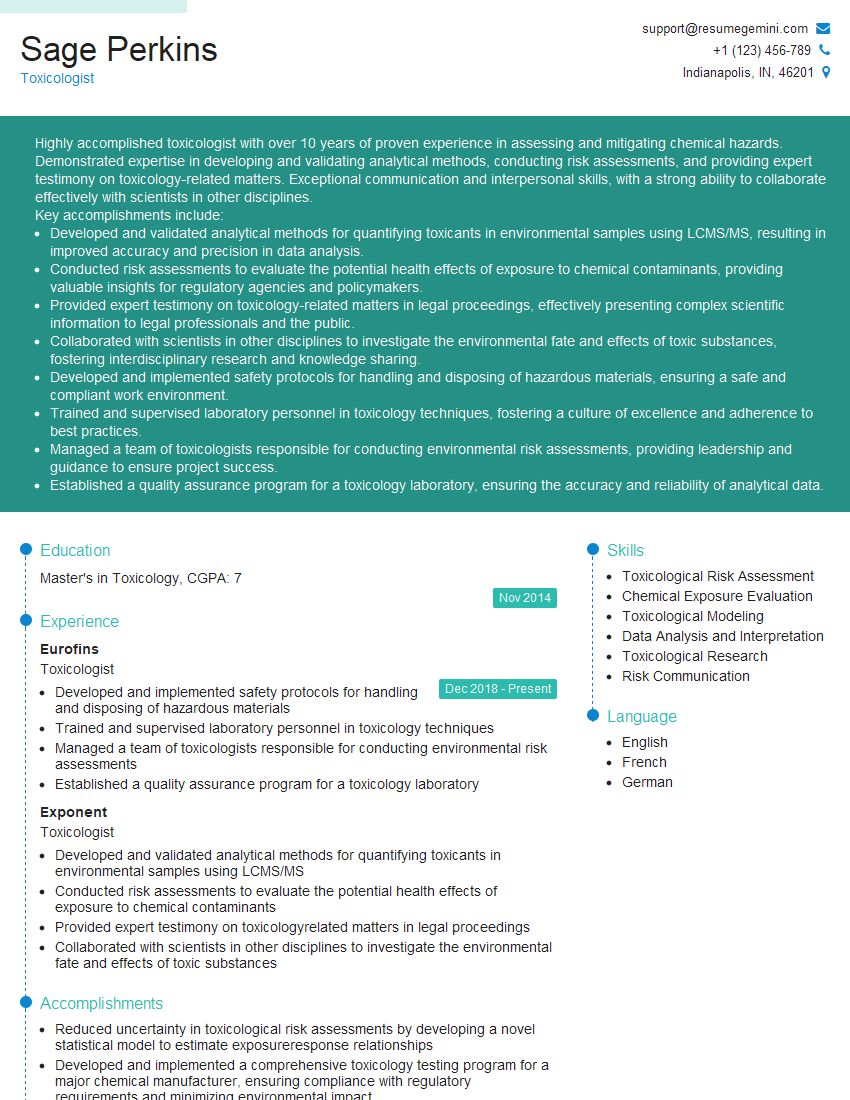
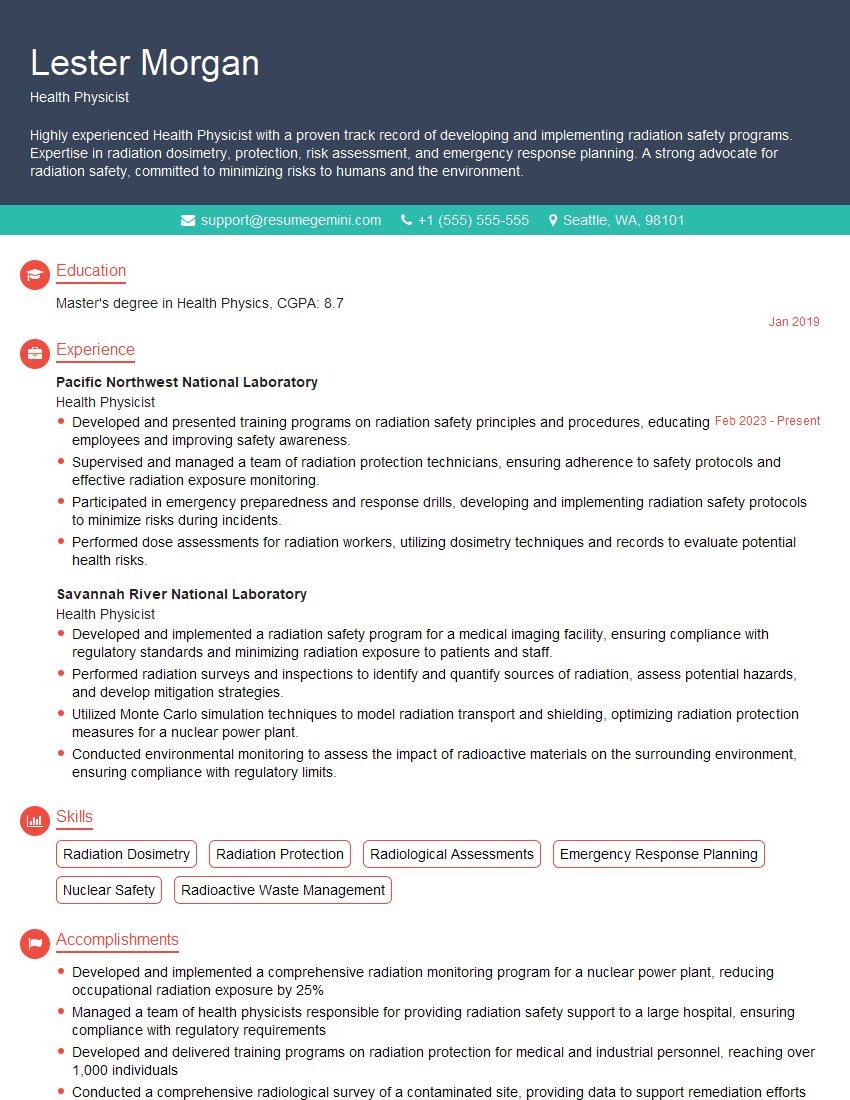
Mastering CBRN Risk Assessment opens doors to exciting and impactful careers in emergency management, public health, and national security. To significantly boost your job prospects, crafting a compelling and ATS-friendly resume is crucial. ResumeGemini is a trusted resource that can help you build a professional resume tailored to highlight your skills and experience. Examples of resumes specifically tailored to CBRN Risk Assessment are available to further guide your efforts. Take the next step towards your dream career today!
Explore more articles
Users Rating of Our Blogs
Share Your Experience
We value your feedback! Please rate our content and share your thoughts (optional).
What Readers Say About Our Blog
Very informative content, great job.
good