Feeling uncertain about what to expect in your upcoming interview? We’ve got you covered! This blog highlights the most important Character Breakdown Analysis interview questions and provides actionable advice to help you stand out as the ideal candidate. Let’s pave the way for your success.
Questions Asked in Character Breakdown Analysis Interview
Q 1. Explain the process of conducting a character breakdown.
A character breakdown is a systematic process of dissecting a fictional character to understand their motivations, behaviors, relationships, and overall impact on the narrative. It’s like assembling a detailed psychological profile, going beyond surface-level descriptions to reveal the inner workings of the character.
The process typically involves:
- Reading/Viewing the Source Material Carefully: Multiple readings or viewings are often necessary to grasp nuances and subtleties.
- Creating a Character Profile: This involves documenting basic information (name, age, appearance) and gradually adding more complex details.
- Analyzing Actions and Dialogue: Every action and line of dialogue offers clues about the character’s personality and motivations. Look for patterns and inconsistencies.
- Identifying Relationships: How the character interacts with others reveals much about their personality and place within the story’s dynamic.
- Tracing Character Arc: Document how the character changes or remains consistent throughout the narrative. This often reveals crucial thematic elements.
- Considering Subtext and Unstated Emotions: What isn’t explicitly said can be just as important as what is. Analyze body language, pauses, and silences.
For example, analyzing Hamlet involves examining his actions (delaying revenge, feigning madness), his relationships (with Ophelia, Claudius, Horatio), and his internal monologue (revealing his conflicted emotions and philosophical musings) to create a comprehensive understanding of his character.
Q 2. How do you identify a character’s primary and secondary motivations?
Identifying a character’s primary and secondary motivations requires careful analysis of their actions and stated goals. The primary motivation is the character’s overarching goal, the driving force behind most of their decisions. Secondary motivations are subordinate goals that support or conflict with the primary one.
Think of it like a tree: the primary motivation is the trunk, while secondary motivations are the branches. The trunk gives the tree its overall shape and direction, while the branches provide complexity and nuance.
For instance, in The Great Gatsby, Gatsby’s primary motivation is to reunite with Daisy. However, his secondary motivations include accumulating wealth (to impress Daisy), throwing lavish parties (to attract her attention), and maintaining a façade of success (to project an image worthy of her).
We can identify these motivations through:
- Dialogue: Explicitly stated desires and fears.
- Actions: What the character does to pursue their goals.
- Internal Monologue (if available): Their inner thoughts and feelings revealing their true intentions.
- Relationships: The influence of other characters on their goals.
Q 3. Describe your approach to analyzing a character’s backstory and its impact on their actions.
Analyzing a character’s backstory is crucial as it provides context for their present actions and motivations. A character’s past experiences—traumatic events, formative relationships, key decisions—shape their personality, beliefs, and worldview. It’s like examining the soil in which a plant grows. The soil’s composition directly affects the plant’s health and development.
My approach involves:
- Gathering Information: Identify explicit and implicit details about the character’s past from the source material (narrator’s descriptions, flashbacks, dialogue).
- Identifying Key Events: Determine significant events that significantly impacted the character’s personality and choices.
- Analyzing the Impact: Consider how these events shaped their beliefs, values, fears, and coping mechanisms.
- Connecting Past to Present: Draw connections between past experiences and the character’s current actions and relationships. For example, a character’s childhood trauma might explain their present-day anxieties or avoidance behaviors.
For example, understanding Scar’s past in The Lion King—his abandonment, his injury, his resentment toward Mufasa—is vital to understanding his ambition and villainous actions. His backstory explains the roots of his hatred and his relentless pursuit of power.
Q 4. How do you interpret subtext and unspoken emotions in a character’s dialogue?
Interpreting subtext and unspoken emotions requires keen observation and an understanding of human behavior. Subtext refers to the implied meaning that lies beneath the surface of the dialogue, often conveyed through body language, tone of voice, pauses, and silences.
My approach involves:
- Analyzing Tone and Delivery: A seemingly innocuous statement can carry a different weight depending on how it is delivered.
- Observing Body Language: Facial expressions, gestures, and posture can reveal unspoken emotions.
- Considering Context: The setting, the relationship between characters, and the overall narrative context are important.
- Identifying Contradictions: Discrepancies between what a character says and what they do often indicate hidden emotions or motives.
For instance, a character saying ‘I’m fine’ while their voice trembles and their eyes well up suggests underlying distress. The subtext reveals the true emotion – they are not fine.
Q 5. What are the key elements you consider when analyzing a character’s relationships with other characters?
Analyzing a character’s relationships is crucial for understanding their motivations, behavior, and development. These relationships provide a framework for exploring their social dynamics, emotional connections, and conflicts.
Key elements to consider include:
- Type of Relationship: (e.g., romantic, familial, platonic, adversarial)
- Power Dynamics: The balance of power within the relationship.
- Communication Styles: How the characters communicate and interact with each other.
- Conflicts and Resolutions: The nature of conflicts and how they are resolved.
- Influence and Impact: How each character influences the other’s actions and decisions.
Analyzing the complex relationship between Sherlock Holmes and Dr. Watson, for example, reveals much about both characters. Their contrasting personalities, their reliance on each other, and their unspoken respect contribute to the depth and intrigue of their dynamic.
Q 6. How do you differentiate between character traits, motivations, and objectives?
While interconnected, character traits, motivations, and objectives are distinct concepts. Understanding their differences is critical for a thorough breakdown.
- Traits: These are inherent qualities or characteristics of a character (e.g., kind, ambitious, deceitful, shy). Traits describe who the character is.
- Motivations: These are the underlying reasons or driving forces behind a character’s actions (e.g., the desire for power, revenge, love, acceptance). Motivations explain why the character acts.
- Objectives: These are the specific goals or aims the character actively pursues (e.g., to win a race, secure a promotion, escape a prison). Objectives describe what the character wants to achieve.
Consider a character who is ambitious (trait). Their motivation might be a desire for social status (motivation). Their objective might be to obtain a specific prestigious position (objective).
Q 7. Describe your method for identifying a character’s arc throughout a story.
Identifying a character’s arc involves tracing their transformation or lack thereof throughout the narrative. This is not just about external changes but also about internal growth, shifts in perspective, and changes in behavior.
My method includes:
- Establishing the Starting Point: Define the character’s initial personality, beliefs, and goals at the beginning of the story.
- Identifying Turning Points: Pinpoint significant events that trigger changes in the character.
- Analyzing Changes in Behavior, Beliefs, and Relationships: Observe how the character’s actions, values, and interactions evolve over time.
- Assessing Internal Conflicts: Identify internal struggles and how the character resolves them (or fails to).
- Determining the Endpoint: Analyze the character’s state at the end of the story. Has there been significant change? What have they learned? How have they grown?
For example, tracing Ebenezer Scrooge’s transformation in A Christmas Carol involves charting his shift from miserly and bitter to compassionate and generous, highlighting the pivotal role of the Ghosts of Christmas Past, Present, and Yet to Come.
Q 8. Explain how you use character breakdowns to inform your own creative writing or design process.
Character breakdowns are the bedrock of my creative process, whether I’m writing a novel or designing a video game character. They transform abstract ideas into tangible, believable individuals. I use them to ensure consistency, depth, and relatability across all aspects of the character’s existence within the narrative.
For instance, before writing a single scene, I’ll create a comprehensive profile. This helps me understand the character’s motivations, conflicts, and relationships. If I’m writing about a detective, I’ll examine their past traumas to explain their cynicism, or their family life to illustrate their softer side. This deep dive into their psychology guides my dialogue, action choices, and even the descriptions of their physical surroundings. In game design, this ensures that the character’s personality is reflected not only in their dialogue and actions but also in their animations, visual design, and even the items they carry.
Essentially, a character breakdown allows me to anticipate how a character will react in any given situation, leading to richer, more organic storytelling.
Q 9. How do you analyze a character’s physicality and how it contributes to their portrayal?
Analyzing a character’s physicality goes beyond simply describing their appearance. It’s about understanding how their body reflects their personality, history, and even their social standing.
Think of it like this: a hunched posture might indicate a character burdened by grief or years of hard labor, while a confident stride reveals someone assertive and self-assured. Scars tell stories of past battles or accidents, adding layers of complexity. Clothing choices communicate social class, personal style, and even rebelliousness. Even seemingly minor details, like the way a character carries themselves, their mannerisms, and even their scent, contribute significantly to their overall portrayal.
For example, a character with prosthetic limbs might be physically strong, but carries emotional scars that are equally important to their portrayal. By meticulously considering every physical aspect, I create a holistic and believable character.
Q 10. Discuss the importance of understanding a character’s voice and how you identify it.
A character’s voice is the essence of their identity – it’s how they communicate their thoughts, feelings, and motivations. Understanding their voice is critical for creating a truly engaging character.
I identify a character’s voice by considering several factors: their background (education, upbringing, social environment), their personality (introverted, extroverted, witty, sarcastic), and their emotional state. This informs their vocabulary, sentence structure, tone, and even their silences. A character from a rural background will speak differently than one raised in a metropolis. A nervous character will use different language than a confident one.
To illustrate, consider two characters: one a grizzled, veteran detective, the other a wide-eyed, idealistic rookie. Their dialogue will reveal these differences dramatically. The detective might use blunt, cynical language, while the rookie’s speech will be more enthusiastic and hopeful. This nuanced approach to voice ensures authenticity and realism.
Q 11. How do you use a character breakdown to inform casting decisions?
A thorough character breakdown is invaluable when making casting decisions. It provides a clear framework for finding actors who can authentically embody the characters. It’s more than just finding someone who looks the part; it’s about finding an actor whose personality, vocal qualities, and acting style align with the character’s profile.
My process involves creating a detailed character profile, including physical attributes, personality traits, vocal characteristics, and emotional range. Then I review headshots and audition tapes, looking for actors who exhibit the necessary qualities. This allows me to present the casting director with a compelling case for why a particular actor is perfect for the role.
For example, if I’m casting for a complex villain, I’ll emphasize their capacity for charm and menace in my casting notes, guiding the selection of someone who can deliver both sides convincingly. It’s about finding the right fit, not just visually, but in terms of overall character essence.
Q 12. Describe how you adapt your character breakdown approach for different mediums (e.g., film, video games, novels).
Adapting my character breakdown approach across different mediums requires understanding the unique constraints and possibilities of each.
In film, I focus on visual storytelling and concise dialogue, ensuring the character’s essence is communicated through expressions, body language, and brief, impactful lines. In video games, I’ll consider player interaction and agency, allowing for more dynamic character development through branching dialogue, choices, and gameplay mechanics. For novels, I have the luxury of detailed descriptions, internal monologues, and extensive character arcs across hundreds of pages.
For example, a character’s backstory might be subtly hinted at through visual cues in a film, explicitly explained through dialogue in a video game, or meticulously detailed in a novel. The fundamental principles remain the same—creating a believable and compelling individual—but the execution adapts to the medium’s capabilities.
Q 13. How do you handle inconsistencies or ambiguities in a character’s portrayal?
Inconsistencies or ambiguities in a character’s portrayal can derail the narrative. Addressing them requires careful analysis and creative problem-solving.
My approach involves identifying the source of the inconsistency – is it a plot hole, a change in the writer’s vision, or an oversight? Once identified, I work to resolve it by either retconning (retroactively changing) elements to create a consistent narrative or by re-interpreting the ambiguous aspects to create a plausible explanation. Sometimes, this involves creating new scenes or dialogue to bridge gaps or clarify contradictions.
For instance, if a character’s personality suddenly changes without explanation, I might add flashbacks to reveal a traumatic event that caused the shift. Open communication with collaborators is essential in resolving such issues, ensuring a unified vision for the character.
Q 14. Explain your process for developing a character profile based on a script or source material.
Developing a character profile from a script or source material is a systematic process. I begin by identifying the character’s role within the narrative – protagonist, antagonist, supporting character – and their primary goals.
Next, I analyze their dialogue and actions, looking for clues about their personality, motivations, and relationships. I pay close attention to the descriptions given by the author or screenwriter. I create a table or document outlining key aspects: background (age, profession, family, upbringing), personality traits (introverted/extroverted, kind/cruel, confident/insecure), motivations (goals, desires, fears), relationships (with other characters), and their arc (how they change throughout the story).
I might even create a timeline of their life, noting significant events that shaped their personality and choices. The goal is to build a holistic picture of the character, going beyond what’s explicitly stated in the source material and inferring details to create a more nuanced and believable individual.
Q 15. How do you use character analysis to enhance audience engagement?
Character analysis is crucial for enhancing audience engagement because it allows us to create relatable and believable characters. When audiences connect with characters on an emotional level, they become invested in the narrative and more likely to remain engaged. This connection is fostered through a deep understanding of a character’s motivations, flaws, strengths, and internal conflicts.
For example, consider a protagonist facing a seemingly insurmountable challenge. Through detailed analysis, we can showcase their vulnerabilities alongside their resilience. This allows the audience to empathize with their struggles, experience their triumphs vicariously, and ultimately feel a stronger connection to the story.
A thorough character analysis helps us craft compelling character arcs. By understanding how a character evolves throughout the narrative, we can create moments of surprise, revelation, and ultimately, satisfying resolutions that keep the audience invested. This proactive approach to character development is far more effective than simply presenting a static character profile.
Career Expert Tips:
- Ace those interviews! Prepare effectively by reviewing the Top 50 Most Common Interview Questions on ResumeGemini.
- Navigate your job search with confidence! Explore a wide range of Career Tips on ResumeGemini. Learn about common challenges and recommendations to overcome them.
- Craft the perfect resume! Master the Art of Resume Writing with ResumeGemini’s guide. Showcase your unique qualifications and achievements effectively.
- Don’t miss out on holiday savings! Build your dream resume with ResumeGemini’s ATS optimized templates.
Q 16. Discuss the differences between protagonist, antagonist, and supporting character breakdowns.
While all characters contribute to the narrative, protagonists, antagonists, and supporting characters have distinct roles and require different approaches to their breakdowns.
- Protagonists: These are the central characters, driving the plot forward. Their breakdown should delve into their motivations, goals, internal conflicts, and how they change over time. We need to understand their strengths, weaknesses, and the specific obstacles they must overcome. A deep understanding of their emotional journey is essential for making them compelling.
- Antagonists: These characters create conflict and obstacles for the protagonist. Their breakdown should explore their motivations, beliefs, and the reasons behind their antagonism. Understanding their perspective, even if morally questionable, adds depth and complexity to the narrative. It’s crucial to avoid portraying them as simply ‘evil’; exploring their backstory and motivations makes them more believable and engaging.
- Supporting Characters: These characters enrich the narrative by providing context, support, or conflict to the protagonist and antagonist. Their breakdowns focus on their roles in the story and how they interact with the main characters. While less detailed than protagonist or antagonist breakdowns, supporting characters still require thoughtful consideration to avoid feeling one-dimensional.
Consider the characters in Hamlet: Hamlet (protagonist), Claudius (antagonist), and Horatio (supporting character). Each requires a distinct analytical approach, focusing on their individual arcs and relationships to the central conflict.
Q 17. How do you identify and interpret a character’s internal and external conflicts?
Identifying and interpreting a character’s internal and external conflicts is crucial for understanding their motivations and actions.
- Internal Conflicts: These are the psychological struggles within a character. This could involve moral dilemmas, conflicting desires, self-doubt, or a battle between opposing personality traits. For example, a character might struggle with their ambition versus their conscience.
- External Conflicts: These are the challenges a character faces from the outside world. This could involve conflicts with other characters, societal pressures, environmental challenges, or physical obstacles. For example, a character might struggle against a powerful enemy or a natural disaster.
To identify these conflicts, we examine the character’s dialogue, actions, reactions to events, and relationships with other characters. Analyzing their internal monologues or narration, if present, is also vital. Interpreting these conflicts involves understanding the character’s motivations, exploring the causes of the conflict, and predicting how they will resolve the conflict.
For instance, in ‘The Hunger Games,’ Katniss Everdeen faces both internal (self-sacrifice vs. self-preservation) and external (survival against other tributes and the Capitol) conflicts. Understanding these conflicts is essential to understanding her character arc and the novel’s themes.
Q 18. Describe a situation where you had to adapt your character breakdown approach due to new information.
During the development of a historical drama, my initial character breakdown for a minor noblewoman portrayed her as solely focused on social climbing. However, during a deeper dive into historical records, I discovered she was a secret patron of the arts and secretly funded several artists. This new information completely shifted my analysis.
My initial approach focused solely on external conflicts: her struggles within the courtly environment. But this new knowledge revealed a significant internal conflict: her desire for social acceptance versus her passion for supporting the arts, actions that were risky and could have severely damaged her social standing. This adaptation involved revising her dialogue, actions, and relationships within the narrative to reflect this richer, more complex character. The character became far more compelling, revealing a hidden depth that enhanced the overall narrative.
Q 19. How do you incorporate psychological principles into your character analysis?
Incorporating psychological principles enriches character analysis, lending depth and believability. I utilize various frameworks such as:
- Freudian Psychology: Examining the id, ego, and superego to understand the character’s motivations and conflicts. This helps explain unconscious drives and the internal struggles shaping their behavior.
- Jungian Archetypes: Analyzing how archetypal patterns (e.g., the hero, the shadow, the anima/animus) manifest in the character’s personality and actions. This provides a broader understanding of their role within the narrative and their psychological makeup.
- Attachment Theory: Exploring the character’s attachment styles (secure, anxious, avoidant) to better understand their relationships and reactions to others. This helps explain their interpersonal dynamics and emotional responses.
For example, analyzing a character’s obsessive behavior might involve drawing on Freudian concepts of repressed desires or Jungian concepts of the shadow self. Applying such principles ensures that the characters’ behaviors feel authentic and psychologically consistent, even when dealing with extraordinary situations.
Q 20. How do you ensure objectivity when analyzing a character’s behavior?
Maintaining objectivity in character analysis is critical to avoid imposing my own biases or interpretations onto the character. I achieve this through:
- Focusing on textual evidence: I rely heavily on the script, dialogue, actions, and descriptions provided by the author or director to form my analysis. I avoid making assumptions not supported by the text.
- Considering multiple perspectives: I analyze the character’s interactions with other characters to gain diverse perspectives on their behavior and motivations. This helps to avoid a one-sided understanding of their actions.
- Identifying personal biases: I am aware of my own biases and actively work to mitigate their influence on my analysis. This involves regular self-reflection and seeking feedback from others.
- Utilizing frameworks and models: Utilizing structured analytical frameworks helps to systematize the analysis process and ensure consistency, mitigating personal biases from influencing the interpretation of data.
Objectivity means understanding the character’s actions within the context of the narrative and their own unique circumstances, even if those actions are morally reprehensible or otherwise objectionable.
Q 21. Explain your understanding of character archetypes and how they inform your analysis.
Character archetypes are recurring patterns of characters found across different narratives. Understanding these archetypes helps to inform my analysis by providing a framework for interpreting a character’s role, motivations, and symbolic significance.
Examples include the hero, the villain, the mentor, the trickster, and the innocent. Recognizing these archetypes doesn’t imply characters are simplistic; rather, it provides a foundation for analyzing how the character deviates from or conforms to these established patterns. A character might embody multiple archetypes simultaneously, or they might subvert expectations associated with a particular archetype.
For instance, analyzing a seemingly heroic character through the lens of the ‘hero’ archetype might reveal underlying flaws or complexities. Similarly, understanding a villain’s motivations using the ‘shadow’ archetype can offer insights into the narrative’s underlying themes and conflicts. By recognizing these patterns, we enrich our understanding of the character’s place within the larger narrative structure and their symbolic weight.
Q 22. How do you prioritize conflicting character aspects when crafting a breakdown?
Prioritizing conflicting character aspects requires a nuanced understanding of the character’s overarching arc and the story’s central themes. It’s not about choosing one aspect over another, but integrating them in a way that creates believable internal conflict and drives the narrative forward. I use a hierarchical approach, starting with the character’s core values and motivations. These form the bedrock of their personality. Conflicting aspects are then assessed in relation to these core elements. For example, a character might be fiercely loyal (core value) but also deeply ambitious (conflicting aspect). The conflict arises when loyalty clashes with ambition, creating compelling choices and dramatic tension. I might map these aspects using a chart, visualizing how each aspect interacts with the core values and the overall story goals. This helps prioritize which aspects are most important to emphasize based on their impact on the narrative.
Consider a character who’s both incredibly intelligent but also deeply insecure. Instead of choosing one over the other, I’d explore how their intelligence might be used to mask their insecurity, or how their insecurity might hinder the application of their intelligence. This creates a more complex and relatable character.
Q 23. Discuss the role of research in effective character analysis.
Research is the cornerstone of effective character analysis. It provides the depth and authenticity necessary to create believable and compelling characters. My research process involves a multi-faceted approach, incorporating various sources to paint a complete picture. This includes studying the character’s background, their social and cultural context, and their relationships with other characters. For instance, if I’m analyzing a character set in 18th-century England, I would research the social norms, fashion, and language of that era. Understanding the character’s world allows me to create believable mannerisms, dialogue, and behaviors. I also delve into the psychology of personality, referencing relevant studies and theories to ensure a realistic portrayal of the character’s emotions and motivations.
For a character struggling with PTSD, for example, research into trauma responses and its effects on the individual’s personality, relationships, and daily life is crucial for an accurate and sensitive portrayal. Without this research, the character risks becoming a stereotype rather than a complex individual.
Q 24. How do you handle complex or morally ambiguous characters?
Complex or morally ambiguous characters present an exciting challenge. They provide opportunities to explore the gray areas of human behavior and create truly memorable characters. My approach involves understanding their motivations, even if they’re morally questionable. I explore their past experiences, the societal factors that shaped them, and the internal conflicts that drive their actions. Instead of judging them, I strive to understand their perspective and create a believable portrayal, even if the audience doesn’t necessarily condone their choices. I might use empathy mapping techniques to fully understand their viewpoint. This involves listing their thoughts, feelings, actions, and motivations. Through this, I explore what drives their questionable actions and bring depth to their morality.
For instance, a character who commits a crime might be driven by a desperate need to protect their family. Understanding this motivation allows us to portray their actions with greater complexity and nuance, making the character more relatable and thought-provoking, even if their actions are ultimately wrong.
Q 25. How do you use character breakdowns to improve collaboration with other creatives?
Character breakdowns are essential tools for improving collaboration among creative teams. They provide a shared understanding of the characters, ensuring everyone is on the same page regarding their personalities, motivations, and arcs. I use them as a starting point for discussions, fostering collaboration among writers, artists, voice actors, and other team members. A well-structured breakdown facilitates clear communication, preventing misunderstandings and inconsistencies in the portrayal of characters across different mediums. For instance, a breakdown clearly defining a character’s physical appearance, mannerisms, and voice characteristics guides the artists in creating consistent visual representations and helps voice actors capture the essence of the character.
Specifically, a shared, digital document outlining the character’s traits, relationships, goals, and conflicts prevents inconsistencies and helps unify the creative vision.
Q 26. How would you present your character analysis findings to a team?
Presenting character analysis findings to a team involves a clear and concise presentation that is tailored to the audience’s needs and understanding. I prefer a visual and interactive approach, often utilizing a combination of mind maps, character profiles, and potentially even short video presentations illustrating key aspects. The presentation should highlight the character’s core values, key relationships, internal conflicts, and their overall arc within the narrative. I’d incorporate visual aids, like concept art or mood boards, to enhance understanding and engagement. The session should be interactive, encouraging questions and discussion to ensure a shared understanding and allow for collaborative refinement.
For example, I might present a character profile document including key stats, personality traits, visual descriptions, and a short narrative summary of the character’s arc.
Q 27. How do you stay up-to-date with the latest techniques in character analysis?
Staying up-to-date involves continuous learning and engagement with the field. I actively participate in industry events, workshops, and online communities dedicated to character development. I regularly read books, articles, and academic papers on narrative structure, psychology, and character archetypes. I also stay current on the latest storytelling techniques by analyzing successful films, television shows, video games, and books. Furthermore, I regularly review and refine my own methods and techniques based on my experiences and the feedback I receive.
This constant learning ensures I’m familiar with the latest theories, tools, and best practices in character analysis and development, allowing me to create rich and believable characters.
Q 28. Describe a time you identified a significant character flaw that influenced the narrative.
In a project I worked on involving a seemingly heroic protagonist, initial character development painted him as a selfless leader. However, through deeper analysis, I uncovered a significant flaw: a deep-seated fear of failure that manifested as an obsessive need for control. This flaw wasn’t immediately apparent but emerged during research into his past experiences and motivations. Recognizing this fear significantly shaped the narrative. It led to compelling internal conflicts – his desire to lead effectively versus his crippling need to micromanage. This ultimately made him more relatable and vulnerable. His seemingly heroic actions were now nuanced by his underlying insecurities, creating a far more compelling character arc than initially envisioned.
The initial portrayal was a two-dimensional hero. The discovery of this character flaw transformed him into a complex individual wrestling with his internal demons, making the story richer and more believable.
Key Topics to Learn for Character Breakdown Analysis Interview
- Understanding Narrative Arc: Analyzing a character’s journey, including their motivations, conflicts, and transformations throughout a story.
- Identifying Character Traits and Motivations: Developing a deep understanding of a character’s personality, values, and driving forces through textual analysis.
- Analyzing Character Relationships: Exploring the dynamics between characters and how these relationships impact their actions and development.
- Interpreting Subtext and Symbolism: Uncovering hidden meanings and implications within a character’s dialogue, actions, and descriptions.
- Applying Different Analytical Frameworks: Utilizing various theoretical approaches (e.g., Freudian, Jungian, feminist) to deepen your understanding of character development.
- Practical Application: Case Studies: Practice analyzing characters from various literary works, films, or plays to hone your skills.
- Problem-Solving: Developing strategies for addressing ambiguous or complex character portrayals and justifying your interpretations.
- Communicating Your Analysis: Clearly and concisely articulating your interpretations in a professional and persuasive manner.
Next Steps
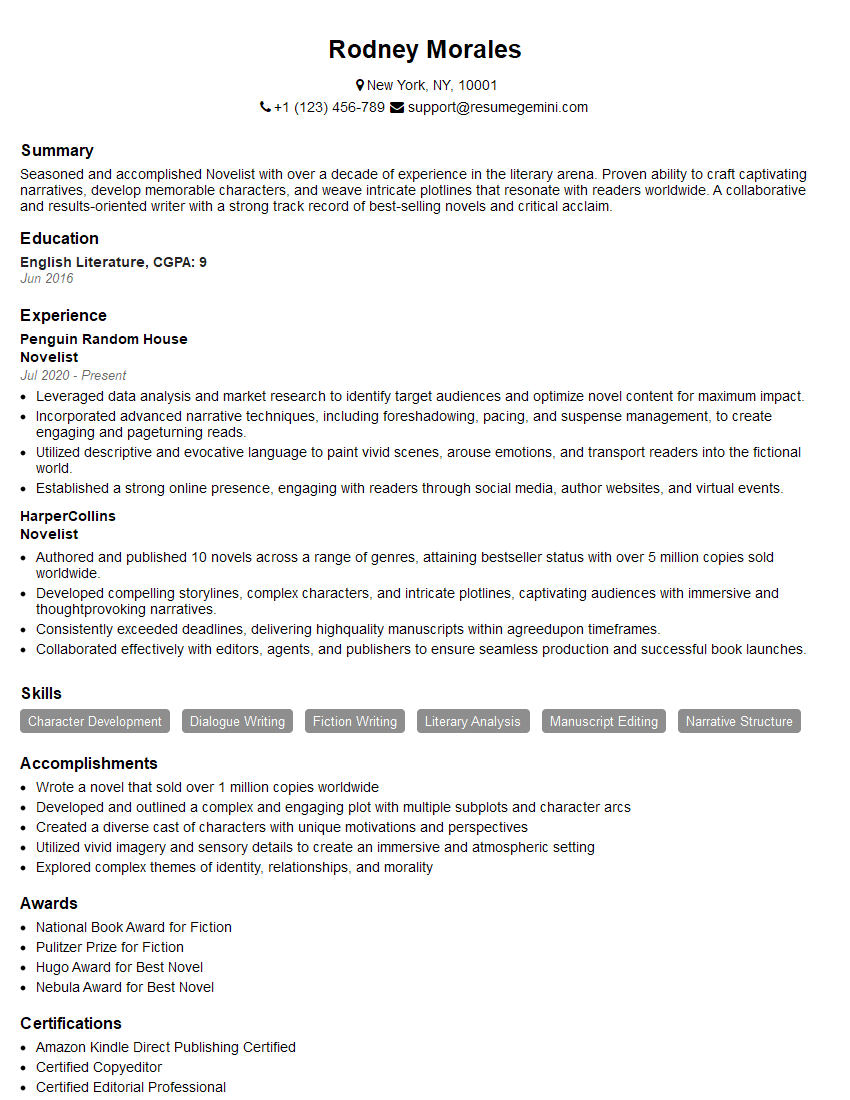
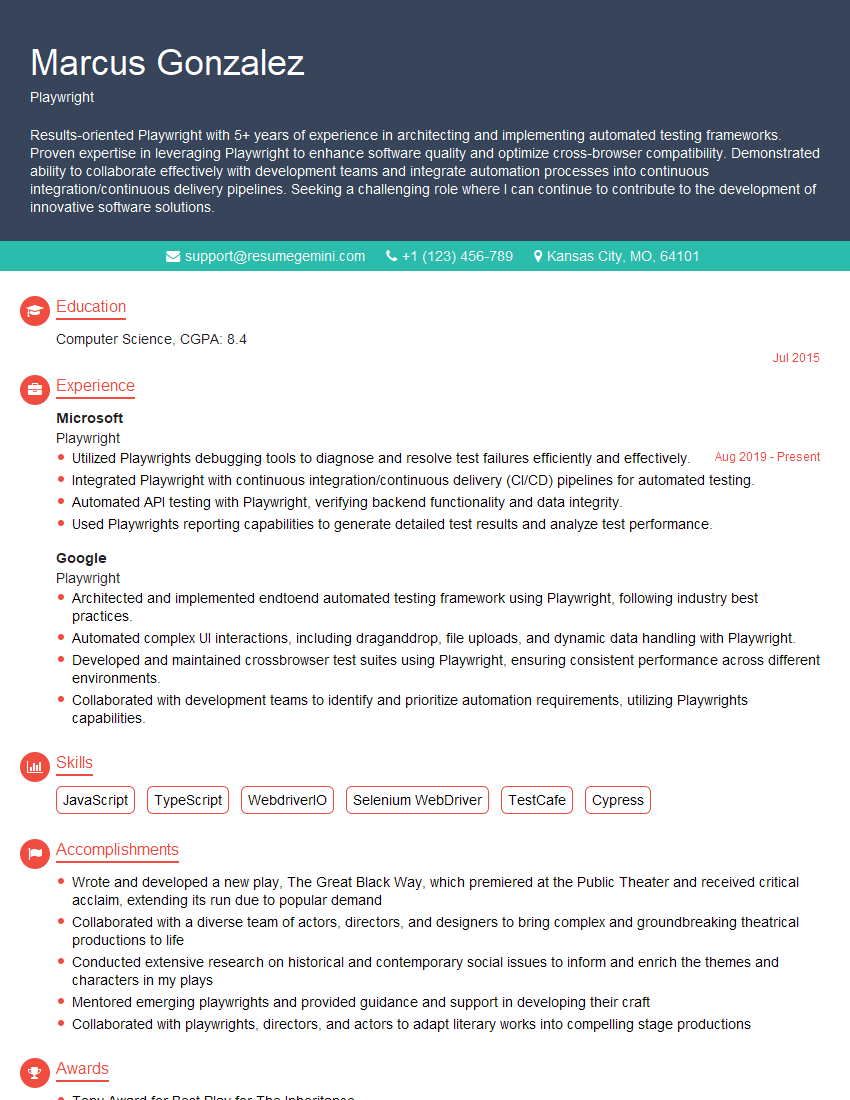
Mastering Character Breakdown Analysis significantly enhances your critical thinking and analytical skills, making you a highly valuable asset in fields such as literature, film studies, screenwriting, and even marketing. To maximize your job prospects, create a resume that is both ATS-friendly and showcases your unique skills. ResumeGemini can be a trusted resource to help you build a professional resume that highlights your strengths effectively. Examples of resumes tailored to Character Breakdown Analysis are available to guide you – use them as inspiration to craft your own compelling application.


Explore more articles
Users Rating of Our Blogs
Share Your Experience
We value your feedback! Please rate our content and share your thoughts (optional).
What Readers Say About Our Blog
Very informative content, great job.
good