Interviews are opportunities to demonstrate your expertise, and this guide is here to help you shine. Explore the essential Chemical and Equipment Safety interview questions that employers frequently ask, paired with strategies for crafting responses that set you apart from the competition.
Questions Asked in Chemical and Equipment Safety Interview
Q 1. Explain the hierarchy of controls in chemical safety.
The hierarchy of controls in chemical safety prioritizes eliminating hazards whenever possible, progressing to less effective but still crucial measures when elimination isn’t feasible. It’s a layered approach, aiming for the most protective option at each stage.
- Elimination: This is the most effective control. It involves removing the hazard entirely. For example, replacing a hazardous chemical with a safer alternative.
- Substitution: If elimination isn’t possible, substituting a hazardous chemical with a less hazardous one is the next best option. Replacing a highly flammable solvent with a less flammable one is an example.
- Engineering Controls: These controls isolate people from the hazard. Examples include enclosed systems, ventilation systems (local exhaust ventilation or general dilution ventilation), and process modifications to minimize exposure.
- Administrative Controls: These controls change the way work is done to reduce exposure. Examples include work permits, safety training, rotating staff to limit exposure time, and implementing strict standard operating procedures (SOPs).
- Personal Protective Equipment (PPE): This is the last line of defense. PPE includes respirators, gloves, eye protection, and protective clothing. It’s crucial, but it’s only effective if the other controls are properly implemented. Remember, PPE protects the worker, not the hazard.
Think of it like a castle defense: elimination is demolishing the siege weapons before they even arrive; substitution is using less powerful weapons; engineering controls are building stronger walls; administrative controls are training your guards; and PPE is the armor for your soldiers. The strongest defense uses all layers.
Q 2. Describe your experience with HAZOP studies.
I have extensive experience conducting HAZOP (Hazard and Operability) studies across various chemical process industries. My involvement typically includes:
- Team Leadership/Participation: I’ve led and participated in multidisciplinary HAZOP teams, including process engineers, safety engineers, operations personnel, and subject matter experts.
- HAZOP Guide Word Application: I’m proficient in applying HAZOP guide words (e.g., NO, MORE, LESS, AS WELL AS, PART OF, REVERSE, OTHER THAN) to systematically identify potential hazards and deviations from the intended process.
- Risk Assessment: Following the identification of hazards, I’ve contributed to the risk assessment by evaluating the likelihood and severity of each potential incident.
- Recommendation Development: I’ve developed and documented a range of safety recommendations, encompassing both engineering and administrative controls to mitigate identified hazards.
- Report Writing and Follow-up: I’ve prepared comprehensive HAZOP reports summarizing the findings, recommendations, and assigned responsibilities for implementation. Moreover, I’ve tracked the implementation of these recommendations to ensure effectiveness.
For example, in a recent HAZOP study for a chemical reactor, we identified a potential hazard of over-pressurization due to an exothermic reaction. Through the application of guide words, we discovered a failure mode in the pressure relief valve. This led to recommendations for regular valve testing, improved instrumentation, and the implementation of a secondary safety system.
Q 3. What are the key elements of a safety data sheet (SDS)?
A Safety Data Sheet (SDS) provides comprehensive information about the hazards of a chemical and how to work safely with it. Key elements include:
- Identification: Product name, manufacturer information, emergency contact details.
- Hazard Identification: Classification of the chemical according to Globally Harmonized System of Classification and Labelling of Chemicals (GHS) categories (flammability, toxicity, reactivity, etc.), signal words (Danger, Warning), hazard statements, and precautionary statements.
- Composition/Information on Ingredients: Chemical identity and concentration of components.
- First-aid Measures: Steps to take in case of accidental exposure.
- Fire-fighting Measures: Suitable extinguishing media, specific hazards arising from the chemical.
- Accidental Release Measures: Steps to take in case of spills or leaks.
- Handling and Storage: Precautions for safe handling and storage.
- Exposure Controls/Personal Protection: Recommended personal protective equipment (PPE) and engineering controls.
- Physical and Chemical Properties: Appearance, odor, boiling point, flash point, etc.
- Stability and Reactivity: Stability, potential hazards, conditions to avoid.
- Toxicological Information: Health effects of exposure.
- Ecological Information: Environmental effects.
- Disposal Considerations: Recommended disposal methods.
- Transport Information: Regulations for safe transportation.
- Regulatory Information: Relevant regulations and labeling requirements.
- Other Information: Additional relevant information, such as preparation date and revisions.
The SDS is a critical document for ensuring worker safety and responsible chemical handling. It’s essential to consult the SDS before handling any chemical.
Q 4. How do you identify and assess potential hazards in a chemical process?
Identifying and assessing potential hazards in a chemical process requires a systematic approach. I typically use a combination of methods:
- Hazard Identification Techniques: This involves reviewing process flow diagrams (PFDs), process and instrumentation diagrams (P&IDs), safety data sheets (SDSs), and operating procedures. I also use checklists and what-if analyses to identify potential scenarios.
- Process Knowledge: My understanding of chemical reactions, thermodynamics, and process engineering is essential for recognizing potential hazards such as runaway reactions, explosions, fires, and toxic releases.
- Past Incident Data: Reviewing historical accident reports (both internal and industry-wide) to identify common hazards and recurring failure modes in similar processes.
- Regulatory Compliance: Checking for compliance with applicable OSHA, EPA, or other relevant regulations.
- On-site Inspections: Performing physical inspections of equipment and facilities to identify potential hazards that might not be apparent from documentation alone.
For instance, when analyzing a chlorination process, I would consider the potential for chlorine leaks, the reactivity of chlorine with other materials, and the potential health effects of exposure. Each hazard would then require detailed evaluation and risk assessment.
Q 5. What are your methods for conducting a risk assessment?
My risk assessment methodology typically follows a structured approach:
- Hazard Identification: Identifying all potential hazards associated with the process, as described in the previous answer.
- Risk Analysis: Determining the likelihood (probability) of each hazard occurring and the severity of the consequences if it does occur. This often involves using a risk matrix or quantitative risk assessment techniques.
- Risk Evaluation: Evaluating the overall risk by combining the likelihood and severity. This helps prioritize hazards based on their potential impact.
- Risk Control: Developing and implementing control measures to reduce the risk to an acceptable level. This aligns with the hierarchy of controls discussed earlier.
- Monitoring and Review: Regularly monitoring the effectiveness of control measures and reviewing the risk assessment periodically to account for changes in the process or environment.
For example, a high likelihood and high severity hazard would require immediate and robust control measures, while a low likelihood and low severity hazard may only require minimal controls or further monitoring.
Q 6. Explain your understanding of OSHA regulations (or relevant local regulations).
My understanding of OSHA regulations (and equivalent international standards where applicable) is comprehensive. I am familiar with OSHA’s Process Safety Management (PSM) standard, which addresses hazards in chemical processes. This includes the requirements for:
- Process Hazard Analysis (PHA): Conducting regular PHAs (like HAZOP studies) to identify and evaluate potential hazards.
- Operating Procedures: Developing and maintaining safe operating procedures.
- Employee Training: Providing comprehensive training to employees on safe work practices.
- Mechanical Integrity: Implementing a program to maintain the integrity of process equipment.
- Emergency Planning and Response: Developing and practicing emergency response plans.
- Incident Investigation: Conducting thorough investigations of all incidents to prevent recurrence.
I also stay updated on other relevant OSHA standards, including those related to personal protective equipment (PPE), confined space entry, and hazardous waste management. Compliance with these regulations is not just a legal requirement; it’s fundamental to ensuring a safe working environment.
Q 7. Describe your experience with lockout/tagout procedures.
Lockout/Tagout (LOTO) procedures are essential for preventing the accidental release of energy during maintenance or repair of equipment. My experience encompasses:
- LOTO Training: I’ve conducted and participated in LOTO training programs, ensuring personnel understand the procedures, responsibilities, and potential consequences of non-compliance.
- Procedure Development: I’ve contributed to the development of site-specific LOTO procedures, ensuring they align with OSHA standards and the unique characteristics of the equipment.
- Implementation and Oversight: I’ve implemented and overseen the practical application of LOTO procedures, regularly auditing to confirm correct application and identifying opportunities for improvement.
- Incident Investigation: LOTO failures can have severe consequences. I’ve investigated incidents involving LOTO failures to determine root causes and implement corrective actions to prevent similar events.
For example, before working on a pump, a worker must first follow a specific LOTO procedure, including isolating power sources, locking and tagging out energy sources, verifying the lockout, and only releasing the lock after the work is complete and the equipment is verified as safe.
The key is consistent training, adherence to established procedures, and regular audits to maintain a robust LOTO program.
Q 8. How do you ensure proper personal protective equipment (PPE) is used?
Ensuring proper Personal Protective Equipment (PPE) use involves a multi-layered approach. It begins with a thorough hazard assessment to identify the specific risks present in a workplace. This assessment dictates the necessary PPE. For example, working with corrosive chemicals requires chemical-resistant gloves and eye protection; working at heights demands a harness and hard hat.
Next, proper training is crucial. Employees must be trained on how to correctly select, don, use, inspect, and maintain their PPE. This isn’t just a one-time lecture; regular refresher training and competency assessments are vital. Imagine a worker using a respirator improperly – it renders the protective equipment useless and even dangerous.
Enforcement is the third key element. Regular inspections ensure employees are using the right PPE for the task and using it correctly. Consequences for non-compliance, such as disciplinary action or retraining, must be clearly outlined and consistently enforced. Finally, easy accessibility to the appropriate PPE is crucial. PPE should be readily available, in good condition, and appropriately sized. A well-stocked PPE station near the work area minimizes any excuse for non-compliance.
Q 9. Explain the different types of chemical hazards (e.g., flammability, toxicity).
Chemical hazards encompass a wide range of risks, each posing unique dangers. Flammability refers to a substance’s propensity to ignite and burn. Examples include solvents like acetone and ethanol. The severity is classified based on flash points (the lowest temperature at which a substance can form an ignitable mixture in air) and the rate of burning.
Toxicity describes a substance’s ability to cause harm through ingestion, inhalation, or skin contact. Toxicity can manifest in many ways, from mild irritation to severe organ damage or death. Acute toxicity causes immediate effects, while chronic toxicity results from prolonged exposure. Consider the difference between inhaling a small amount of ammonia (acute irritation) versus long-term exposure to asbestos (chronic lung disease).
Reactivity involves a substance’s tendency to undergo a chemical change, often violently. This can manifest as explosions, fires, or the release of toxic gases. Examples include strong acids reacting with bases or alkali metals reacting with water.
Corrosivity describes a substance’s ability to destroy or irreversibly damage living tissue or other materials. Strong acids and bases are common examples.
Carcinogenic hazards are substances that can cause cancer. Exposure may lead to long-term health problems. Asbestos and benzene are well-known carcinogens.
Q 10. How do you investigate and report chemical incidents or accidents?
Investigating and reporting chemical incidents follows a structured process. The first step is immediate response, ensuring the safety of personnel and containing the incident to prevent further harm. This includes evacuating the affected area, isolating the source if possible, and contacting emergency services if needed.
Next is a thorough investigation. This involves collecting data – witness statements, physical evidence (damaged equipment, chemical spills), and documentation (operating procedures, safety data sheets). The goal is to pinpoint the root cause(s) – was it human error, equipment failure, inadequate training, or a combination?
The investigation findings are used to prepare a detailed report. This report includes timelines of events, a description of the incident, an analysis of the root causes, and recommendations for preventative measures. The report should be clear, concise, and factual, avoiding speculation. Examples of preventative measures could include improved safety training, equipment upgrades, revised operating procedures, or improved emergency response protocols.
Finally, corrective actions are implemented. These actions are based on the report’s recommendations and aim to prevent similar incidents in the future. Follow-up inspections and audits ensure the effectiveness of the corrective actions.
Q 11. What is your experience with emergency response planning?
My experience in emergency response planning spans several years, including developing and implementing plans for various chemical facilities. This involves understanding potential hazards (fires, explosions, spills, leaks) and designing procedures to mitigate risks.
A key part of planning is establishing clear communication protocols. This ensures all personnel know their roles and responsibilities during an emergency. We conduct regular drills and simulations to test and refine these plans. These drills aren’t just exercises; they provide valuable training for responding to real-world events. I’ve been involved in situations where our well-rehearsed plan allowed us to quickly contain a chemical spill and avoid serious injury.
Furthermore, we maintain detailed emergency contact lists, emergency equipment checklists, and evacuation maps. We also ensure proper training for all personnel, which includes first aid, fire safety, and handling specific chemical hazards. This combination of planning, training, and drills is critical for ensuring swift and effective responses to emergencies.
Q 12. Describe your understanding of process safety management (PSM).
Process Safety Management (PSM) is a systematic approach to managing chemical process hazards. It’s not simply a list of rules; it’s a holistic framework focused on preventing catastrophic incidents. A robust PSM program integrates several key elements.
Hazard identification and risk assessment is the foundation of PSM. This involves identifying potential hazards and evaluating the associated risks to determine the severity and likelihood of accidents. This data informs subsequent steps in mitigating those risks.
Process hazard analysis (PHA) techniques, such as HAZOP (Hazard and Operability Study) and What-If analysis, are employed to thoroughly examine the process and identify potential hazards.
Operating procedures are meticulously developed and followed, establishing safe working practices. These procedures outline emergency shutdown procedures and preventative maintenance schedules.
Employee training is paramount; personnel must be adequately trained on safe operating procedures, hazard recognition, and emergency response.
Mechanical integrity involves regular inspections and maintenance of equipment to prevent failures that could lead to accidents. This includes pressure relief devices, piping systems, and storage tanks.
Emergency planning and response includes procedures for handling various scenarios, including drills, and training exercises.
PSM is a continuous improvement process. Regular audits and reviews ensure the program remains effective and adaptable to changes in the process or technology.
Q 13. How familiar are you with different types of equipment safety systems (e.g., interlocks, pressure relief valves)?
I’m very familiar with various equipment safety systems. Interlocks are safety devices that prevent hazardous operations from occurring unless certain conditions are met. For example, an interlock might prevent a pump from starting unless a safety valve is open. This prevents over-pressurization.
Pressure relief valves (PRVs) are essential safety devices designed to release excess pressure from a system, preventing equipment rupture or explosions. They are crucial in preventing catastrophic failures. Regular testing and maintenance are vital to their reliability.
High-level alarms alert operators to abnormal conditions, such as high temperatures or pressures. These systems must be properly calibrated and regularly tested to ensure timely and accurate warnings.
Emergency shutdown systems (ESD) are designed to automatically shut down a process in case of a hazardous event. They are crucial for preventing major accidents. These systems often integrate with interlocks, pressure relief valves and high-level alarms.
Flame arresters prevent the propagation of flames in pipelines and vents, protecting against fire and explosion hazards.
My experience includes selecting, installing, testing, and maintaining these systems, ensuring they function correctly and reliably. Understanding their limitations is just as important as understanding their capabilities.
Q 14. Explain your experience with equipment inspections and maintenance.
Equipment inspections and maintenance are critical for ensuring process safety. My experience involves performing both routine and preventative maintenance, as well as responding to equipment failures.
Routine inspections involve visually inspecting equipment for signs of wear, corrosion, leaks, or damage. We use checklists to ensure thoroughness and consistency. The frequency of these inspections depends on the equipment’s criticality and the potential consequences of failure.
Preventative maintenance involves scheduled activities aimed at preventing equipment failure. This includes lubrication, cleaning, and replacing worn parts before they cause problems. Preventative maintenance helps extend the lifespan of equipment, reduce downtime, and enhance safety.
Corrective maintenance addresses equipment failures that have already occurred. This might involve repairing damaged components, replacing faulty parts, or troubleshooting problems. Proper documentation of all inspections and maintenance activities is crucial for traceability and analysis of equipment performance.
My experience includes working with various types of equipment, such as pumps, compressors, reactors, and storage tanks. I’m familiar with industry best practices and relevant codes and standards. We use a computerized maintenance management system (CMMS) to track and schedule maintenance activities, ensuring timely attention to equipment needs.
Q 15. How do you ensure the safe handling and storage of chemicals?
Safe chemical handling and storage hinges on a multi-layered approach encompassing proper labeling, Material Safety Data Sheets (MSDS) accessibility, and adherence to strict storage guidelines. Think of it like organizing a well-stocked kitchen: everything has its place, clearly labeled, and stored appropriately (flammables away from oxidizers, for instance).
- Proper Labeling: Each container must be clearly and legibly labeled with the chemical’s name, concentration, hazards, and any specific handling instructions. This is crucial for immediate identification and prevents accidental misuse.
- MSDS Accessibility: Material Safety Data Sheets provide comprehensive information about chemical properties, hazards, handling procedures, and emergency responses. Easy access to these sheets is paramount. In my previous role, we had a dedicated digital database and physical copies readily available near storage areas.
- Storage Guidelines: Chemicals are stored based on compatibility – incompatible materials (e.g., acids and bases) are segregated to prevent dangerous reactions. Storage areas must be well-ventilated, protected from extreme temperatures and moisture, and secured to prevent unauthorized access. We implemented a color-coded system for different hazard classes in my last workplace to further enhance safety.
For example, in one project involving strong acids and volatile organic compounds, we implemented a dedicated, negatively pressurized storage room with specialized ventilation and monitored temperature and humidity to prevent degradation and potential hazards.
Career Expert Tips:
- Ace those interviews! Prepare effectively by reviewing the Top 50 Most Common Interview Questions on ResumeGemini.
- Navigate your job search with confidence! Explore a wide range of Career Tips on ResumeGemini. Learn about common challenges and recommendations to overcome them.
- Craft the perfect resume! Master the Art of Resume Writing with ResumeGemini’s guide. Showcase your unique qualifications and achievements effectively.
- Don’t miss out on holiday savings! Build your dream resume with ResumeGemini’s ATS optimized templates.
Q 16. What is your understanding of the different types of industrial ventilation systems?
Industrial ventilation systems are designed to control airborne contaminants, maintaining a safe and healthy work environment. They fall broadly into three categories: general dilution ventilation, local exhaust ventilation, and specialized systems.
- General Dilution Ventilation: This involves using fans and strategically placed vents to circulate and dilute contaminants in the entire workspace. Think of it as a large-scale air freshener, albeit a much more sophisticated one. It’s effective for low-concentration contaminants but less so for localized, high-concentration sources.
- Local Exhaust Ventilation (LEV): This targeted approach captures contaminants at their source using hoods, ducts, and exhaust fans. Imagine a vacuum cleaner specifically designed for fumes – it’s much more efficient than relying solely on general dilution. This is essential for operations generating significant amounts of hazardous fumes or dust.
- Specialized Systems: These include cleanrooms for sensitive processes, fume hoods for chemical handling, and specialized systems for dealing with specific contaminants, like scrubbers for removing acidic gases. This is where precision engineering meets safety requirements.
Choosing the right system depends on the specific hazards and the process involved. A risk assessment is crucial to determine the appropriate ventilation strategy. For instance, a welding operation would benefit significantly from LEV, while a large paint shop might require a combination of LEV and general dilution.
Q 17. Describe your experience with confined space entry procedures.
Confined space entry requires meticulous planning and execution, emphasizing safety protocols above all else. It’s not something to be taken lightly.
- Permit-Required Confined Space Entry Program: A crucial element is establishing a comprehensive permit-required confined space entry (PRCS) program. This program outlines all procedures, responsibilities, and emergency response plans. It needs to be strictly adhered to.
- Atmospheric Monitoring: Before entry, atmospheric testing is mandatory to check for oxygen levels, flammable gases, and toxic substances. We utilize multi-gas meters to ensure a safe atmosphere. I’ve been trained and certified in operating these meters and interpreting the results.
- Emergency Response Plan: A clearly defined emergency response plan with designated rescue teams and standby personnel is essential. Training and regular drills are critical in ensuring effective rescue operations should an accident occur. In one instance, a near-miss incident highlighted the importance of our well-rehearsed rescue plan.
- Personal Protective Equipment (PPE): Appropriate PPE, including respirators, harnesses, and safety lines, must be worn at all times. The type of PPE varies depending on the hazards identified during the atmospheric testing.
In my past role, we successfully implemented a PRCS program, reducing incidents and significantly improving safety during confined space entries. Regular training and audits were key to maintaining the high standards required in such critical situations.
Q 18. Explain your understanding of flammable and combustible materials.
Flammable and combustible materials pose significant fire hazards, differing primarily in their ignition temperatures. Understanding this distinction is crucial for safe handling and storage.
- Flammable Materials: These materials ignite easily at or below 37.8°C (100°F) and require only a small ignition source. Examples include gasoline, acetone, and many solvents. They present an immediate fire risk.
- Combustible Materials: These materials require a higher ignition temperature (above 37.8°C or 100°F) and a more sustained ignition source. Examples include wood, paper, and many plastics. While less prone to immediate ignition than flammable materials, they are still a significant fire hazard under the right conditions.
Safe handling requires proper storage (flammable materials in designated cabinets, away from ignition sources), using appropriate safety equipment (e.g., flame-resistant clothing), and implementing procedures to prevent accidental ignition (e.g., no smoking signs, grounding of equipment). For example, in a previous project dealing with large quantities of flammable solvents, we employed a dedicated storage area with explosion-proof lighting and ventilation, and strictly adhered to fire safety protocols.
Q 19. How do you manage chemical waste?
Chemical waste management is a critical aspect of environmental responsibility and worker safety. It involves proper segregation, containment, treatment, and disposal according to relevant regulations. The process starts with careful segregation at the source.
- Segregation: Chemicals are segregated based on their compatibility and hazard class. Incompatible chemicals, like acids and bases, are never mixed. Dedicated containers are used for each waste stream.
- Containment: Appropriate containers are used to prevent leaks and spills. These containers must be labeled clearly with the chemical waste’s identity and hazards.
- Treatment: Depending on the nature of the waste, treatment might be required before disposal. This could include neutralization of acids or bases, or treatment to reduce toxicity.
- Disposal: Disposal is carried out by licensed waste management companies that are equipped to handle hazardous materials responsibly. Proper documentation and tracking are crucial.
We implemented a robust chemical waste management system in my previous role, significantly reducing our environmental impact and ensuring worker safety. The system included regular audits and training for all personnel involved in handling chemical waste.
Q 20. Describe your experience with safety training programs.
I have extensive experience in developing and delivering safety training programs, tailored to specific roles and hazards. My approach emphasizes hands-on training and practical application of safety principles.
- Needs Assessment: The process begins with a thorough needs assessment to identify the specific training requirements for each role and the hazards associated with it.
- Curriculum Development: I develop comprehensive training curricula that include interactive sessions, practical demonstrations, and case studies to enhance learning and engagement.
- Delivery Methods: Training is delivered through a variety of methods, including classroom instruction, online modules, and on-the-job training, utilizing a blended learning approach to cater to different learning styles.
- Assessment and Evaluation: Training effectiveness is evaluated through assessments such as written tests, practical exercises, and performance evaluations. This helps identify areas for improvement and ensures that training is effective.
In my previous role, I developed a comprehensive safety training program that reduced workplace incidents by 25% within a year. The program included both initial training and regular refresher courses, ensuring that employees remained up-to-date on safety protocols.
Q 21. What are your strategies for improving safety performance?
Improving safety performance is an ongoing process that requires a proactive and multi-faceted approach. My strategies focus on prevention, proactivity, and continuous improvement.
- Hazard Identification and Risk Assessment: Regular hazard identification and risk assessments are vital to proactively address potential safety issues. This involves identifying potential hazards, evaluating the risks, and implementing control measures.
- Safety Culture: Fostering a strong safety culture is paramount. This involves engaging employees at all levels and empowering them to identify and report hazards. Open communication and employee participation are key.
- Incident Investigation and Analysis: Thorough incident investigation and analysis are crucial to understand the root causes of incidents and implement corrective actions to prevent recurrence. Learning from mistakes is key.
- Data-Driven Decision Making: Utilizing data, such as incident reports and safety audits, to identify trends and inform decisions is essential. This enables evidence-based improvements in safety performance.
- Continuous Improvement: Safety is a journey, not a destination. Continuous improvement is achieved through regular reviews of safety programs and procedures and adapting them based on lessons learned and emerging best practices. The goal is to always strive for better.
For example, in a previous project, we implemented a new safety management system that resulted in a significant reduction in near-miss incidents. The system included regular safety audits, a more robust incident reporting system, and enhanced communication with employees. This comprehensive approach led to demonstrably better safety outcomes.
Q 22. How do you conduct a Job Safety Analysis (JSA)?
A Job Safety Analysis (JSA) is a systematic process used to identify hazards and assess risks associated with a specific job task. It’s like a pre-flight checklist for a potentially hazardous activity, ensuring we’re prepared and aware of potential problems before they occur. The goal is to eliminate hazards or implement controls to mitigate the risks.
- Step 1: Select the Job Task: Clearly define the specific job task to be analyzed. For example, ‘Cleaning a reactor vessel after a reaction’.
- Step 2: Break Down the Task: Divide the job into smaller, sequential steps. This ensures a thorough examination of every action. For our example: 1. Preparation (PPE, lockout/tagout), 2. Vessel Isolation, 3. Cleaning Procedure, 4. Waste Disposal, 5. Post-Cleaning Inspection.
- Step 3: Identify Potential Hazards: For each step, identify potential hazards. Examples: chemical exposure, slips, trips, falls, electrical shock, confined space entry.
- Step 4: Assess the Risks: Evaluate the likelihood and severity of each identified hazard. A risk matrix (likelihood vs. severity) is often used. High-risk scenarios need immediate attention.
- Step 5: Develop Control Measures: Implement control measures to eliminate or reduce risks. This could include using PPE, engineering controls (e.g., ventilation), administrative controls (e.g., training), or a combination of approaches.
- Step 6: Document the JSA: Create a written record of the entire process, including identified hazards, risk assessments, and control measures. This serves as a crucial reference for all involved.
- Step 7: Review and Update Regularly: The JSA is a living document and should be reviewed and updated as needed, especially if the process changes or new hazards are identified.
For instance, in a previous role, we conducted a JSA for a chemical transfer operation. By analyzing each step, from connecting hoses to pumping the chemical, we identified the risk of spills and implemented control measures like secondary containment and improved spill response procedures.
Q 23. Explain your familiarity with different types of industrial accidents.
Industrial accidents are diverse, but they often fall into several categories. Understanding these categories is crucial for effective prevention and mitigation strategies. They are like different branches of a problem tree, all requiring specific solutions.
- Chemical Releases: Spills, leaks, or explosions involving hazardous chemicals. These can cause fires, explosions, toxic exposures, and environmental damage. I’ve personally dealt with a chlorine leak incident, where rapid response and proper neutralization were critical.
- Fires and Explosions: These can result from various causes, including flammable materials, electrical faults, and chemical reactions. Proper fire safety protocols, including fire suppression systems and emergency response plans, are essential.
- Mechanical Failures: Equipment malfunctions, such as failures in pressure vessels or rotating machinery, can lead to serious injuries. Regular maintenance and inspections are vital for preventing mechanical failures.
- Human Factors: Errors in judgment, unsafe work practices, and inadequate training can contribute significantly to accidents. This is why thorough training and clear safety procedures are paramount.
- Ergonomic Hazards: Repetitive movements, awkward postures, and forceful exertions can lead to musculoskeletal disorders. Ergonomic assessments and adjustments to workspaces are essential to prevent these injuries.
- Electrical Hazards: Contact with live electrical equipment can result in electric shock or burns. Lockout/tagout procedures and proper electrical safety practices are crucial.
Each accident type necessitates a tailored approach to investigation and prevention. For example, a chemical release might require specialized cleanup procedures and environmental remediation, while a mechanical failure necessitates a thorough inspection and repair of the equipment.
Q 24. How do you manage safety risks during a project?
Managing safety risks during a project requires a proactive, multi-layered approach. It’s akin to building a house – you wouldn’t start without a solid foundation and plans for safety measures.
- Hazard Identification and Risk Assessment: This is the foundational step, involving a thorough identification of potential hazards associated with the project’s various phases. Tools like HAZOP (Hazard and Operability Study) and FMEA (Failure Mode and Effects Analysis) are invaluable here.
- Risk Mitigation Planning: Develop a detailed plan to mitigate identified risks. This plan should encompass engineering controls (e.g., safety interlocks, ventilation systems), administrative controls (e.g., safety training, permit-to-work systems), and personal protective equipment (PPE).
- Safety Training and Communication: Provide comprehensive safety training to all personnel involved in the project. Regular communication is crucial to keep everyone informed about potential hazards and safety procedures.
- Emergency Response Planning: Establish a detailed emergency response plan that outlines procedures for handling various types of incidents. This plan should include clear communication protocols, evacuation procedures, and contact information for emergency services.
- Monitoring and Auditing: Continuously monitor safety performance throughout the project. Regular safety audits and inspections are vital to identify any deviations from safety procedures and take corrective actions.
- Incident Investigation and Reporting: Establish a system for promptly investigating and reporting any safety incidents. This helps identify root causes and implement preventive measures.
In a past project involving the installation of a new chemical reactor, we employed HAZOP to identify potential hazards like overpressurization and chemical leaks. We then implemented pressure relief valves, automated shutdown systems, and robust leak detection procedures to mitigate these risks. Regular safety meetings and audits ensured everyone remained vigilant.
Q 25. What is your understanding of reactive chemicals and their safe handling?
Reactive chemicals are substances that readily undergo chemical reactions, often releasing energy in the process. These reactions can be explosive, highly exothermic (releasing heat), or produce toxic byproducts. Safe handling requires meticulous planning and adherence to strict procedures; it’s like handling dynamite – one wrong move can have severe consequences.
- Proper Storage: Reactive chemicals should be stored in designated areas away from incompatible materials, with proper ventilation and temperature control. Incompatible chemicals stored together can react violently.
- Material Compatibility: Ensure that all materials used in contact with reactive chemicals (containers, pipes, valves) are compatible and resistant to corrosion or reaction.
- Personal Protective Equipment (PPE): Appropriate PPE, such as respirators, gloves, eye protection, and protective clothing, must be worn at all times when handling reactive chemicals. The choice of PPE depends on the specific hazards of the chemical.
- Safe Handling Procedures: Develop and implement detailed safe handling procedures for each reactive chemical, including steps for transfer, mixing, and disposal. These procedures should clearly define safe work practices, including dilution methods and emergency response procedures.
- Engineering Controls: Employ engineering controls, such as ventilation systems, to minimize exposure to reactive chemicals. This reduces the risk of inhalation or skin contact.
- Emergency Response Planning: Develop a comprehensive emergency response plan, including procedures for spills, leaks, and fires involving reactive chemicals. This plan must be communicated to all personnel.
For example, when working with strong acids, we always use acid-resistant gloves and eye protection, work in a well-ventilated area, and have neutralizing agents readily available in case of a spill. We also follow strict procedures for dilution to prevent exothermic reactions.
Q 26. Describe your experience with Root Cause Analysis (RCA).
Root Cause Analysis (RCA) is a systematic investigative technique used to identify the underlying causes of incidents or problems, not just the symptoms. It’s like peeling an onion—we keep removing layers to reach the core issue, preventing future occurrences. This is crucial for preventing recurrence of the same problems.
- Data Gathering: Collect all relevant information from various sources, including incident reports, witness statements, equipment logs, and inspection records. This is akin to gathering evidence for a detective case.
- Cause Identification: Identify the direct causes of the incident. This might involve using techniques like the ‘5 Whys’ (repeatedly asking ‘why’ to uncover deeper causes) or fishbone diagrams (identifying contributing factors).
- Root Cause Determination: Determine the root cause(s) of the incident, focusing on systemic issues or underlying flaws in processes or systems. These are often the ‘why’ behind the ‘why’.
- Corrective Actions: Develop and implement corrective actions to address the root causes and prevent recurrence. This could include process improvements, equipment modifications, or personnel training.
- Verification and Validation: Verify that the corrective actions are effective and validate that the root cause has been eliminated. This ensures that the solutions we implemented work as intended.
In a previous incident involving a process upset, we used the ‘5 Whys’ method to uncover that the root cause was inadequate operator training, leading to incorrect procedure execution. We then implemented a comprehensive retraining program and revised operating procedures to prevent similar incidents in the future.
Q 27. How do you ensure compliance with environmental regulations?
Ensuring compliance with environmental regulations involves a proactive and ongoing commitment. It’s not a one-time task, but a continuous process, like maintaining a garden—it requires consistent care and attention.
- Regulatory Knowledge: Maintain a thorough understanding of all applicable environmental regulations, permits, and standards. This requires ongoing research and updates to keep pace with changing laws.
- Permitting and Reporting: Obtain necessary permits and licenses and submit timely and accurate reports to regulatory agencies. This is essential for legal operation.
- Waste Management: Implement a comprehensive waste management program that adheres to all regulations, including proper storage, handling, treatment, and disposal of hazardous waste. This helps prevent environmental contamination.
- Emission Control: Implement effective emission control measures to minimize air and water pollution. This often involves the use of pollution control equipment and adherence to operational limits.
- Environmental Monitoring: Conduct regular environmental monitoring to ensure compliance with regulatory limits and identify any potential environmental problems early on. This is like preventative maintenance for the environment.
- Spill Prevention and Response: Develop and implement a comprehensive spill prevention and response plan to manage potential spills and leaks of hazardous materials. This includes having a prepared emergency plan and proper response equipment.
We regularly conduct environmental audits and maintain detailed records of all waste generated and emissions released. This allows us to track our environmental performance and ensure continued compliance with all relevant regulations.
Q 28. How would you address a safety violation within your team?
Addressing a safety violation requires a firm yet fair approach, focusing on both correction and prevention. It’s about teaching, not just punishing; it’s like guiding a child away from danger.
- Immediate Action: Address the violation immediately to prevent further risk. This might involve stopping the activity or correcting the unsafe condition.
- Investigation: Conduct a thorough investigation to understand the circumstances surrounding the violation. This helps determine the root cause and prevent recurrence.
- Corrective Action: Implement appropriate corrective actions, which may include retraining, process improvements, or disciplinary measures depending on the severity of the violation. The focus should be on preventing future occurrences.
- Communication: Communicate the violation and the corrective actions to all relevant personnel. This ensures that everyone learns from the incident and understands the importance of safety.
- Follow-up: Follow up to ensure that the corrective actions are effective and that the violation does not recur. This shows the team that you are committed to making changes and promoting a safe working environment.
In one instance, a team member failed to follow lockout/tagout procedures. We immediately stopped the work, investigated the cause (lack of clear understanding of the procedure), provided additional training, and reinforced the importance of the safety rule. This led to improved compliance and a stronger safety culture within the team.
Key Topics to Learn for Chemical and Equipment Safety Interview
- Hazard Identification and Risk Assessment: Understanding methods like HAZOP, FMEA, and what-if analysis; applying these techniques to real-world scenarios involving chemical handling and equipment operation.
- Chemical Safety: Properties of hazardous chemicals (toxicity, flammability, reactivity); safe handling procedures, including storage, transportation, and disposal; understanding SDS (Safety Data Sheets) and their practical application.
- Equipment Safety: Lockout/Tagout procedures and their importance; understanding pressure vessels, piping systems, and other process equipment; recognizing and mitigating potential equipment failures.
- Personal Protective Equipment (PPE): Selecting appropriate PPE for various chemical and equipment hazards; understanding the limitations of PPE and the importance of other safety measures.
- Emergency Response Planning: Developing and implementing emergency response plans for chemical spills, equipment failures, and other incidents; understanding evacuation procedures and first aid response.
- Regulatory Compliance: Familiarity with relevant safety regulations (OSHA, EPA, etc.) and their application in the workplace; understanding permitting and reporting requirements.
- Incident Investigation and Reporting: Conducting thorough incident investigations to identify root causes and implement corrective actions; documenting findings and reporting to relevant authorities.
- Process Safety Management (PSM): Understanding the principles of PSM and its implementation in chemical process industries; applying risk management techniques to optimize safety performance.
- Safety Training and Communication: Developing and delivering effective safety training programs; communicating safety information clearly and concisely to diverse audiences.
Next Steps
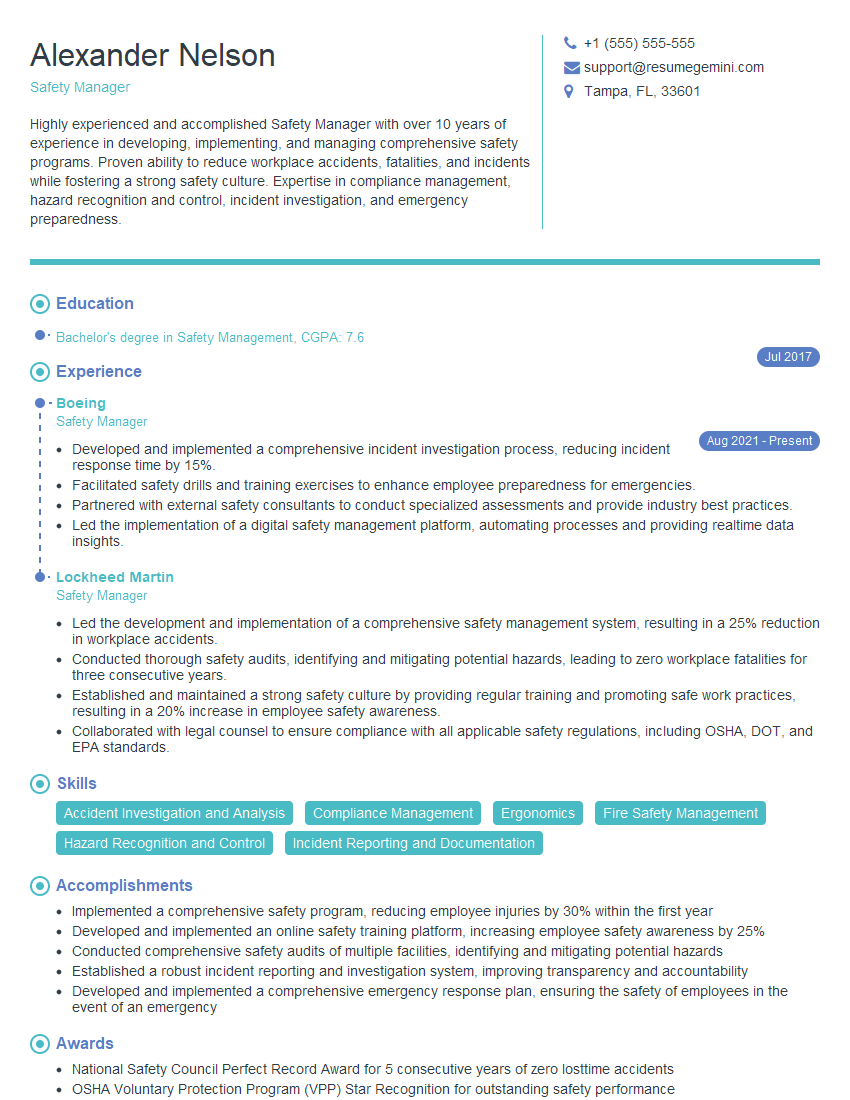
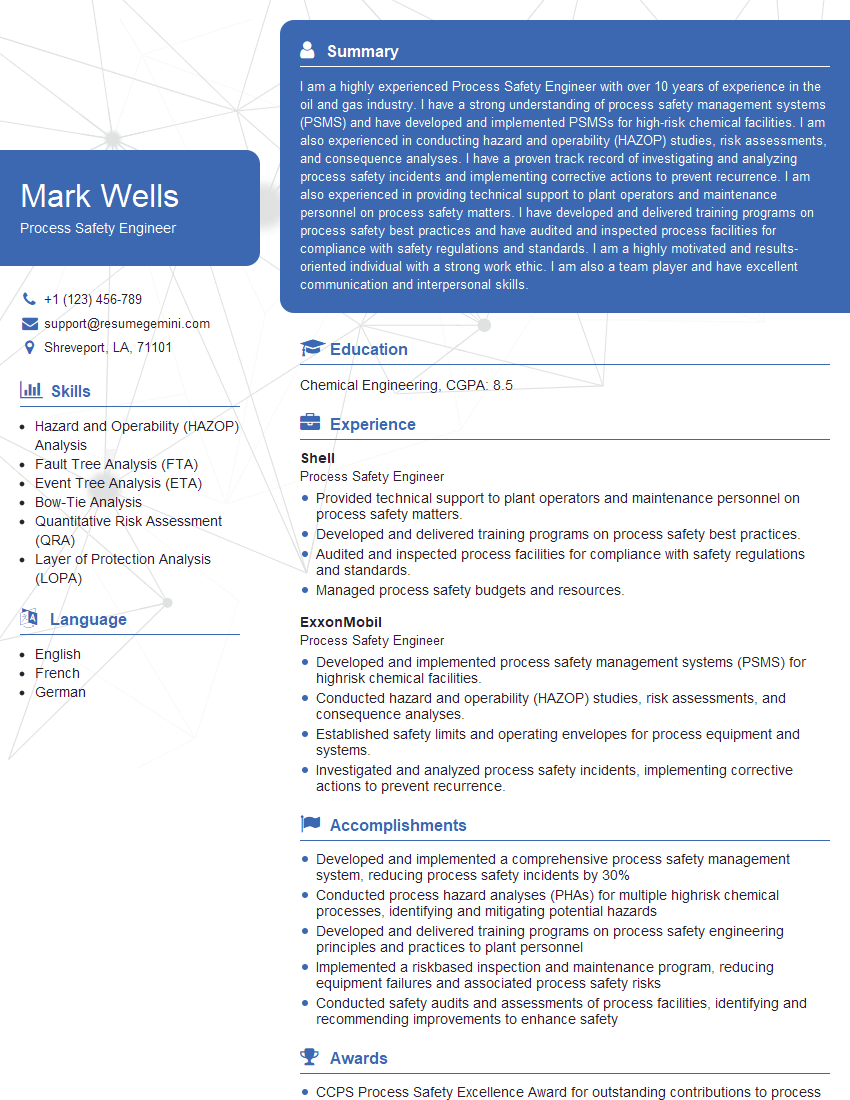
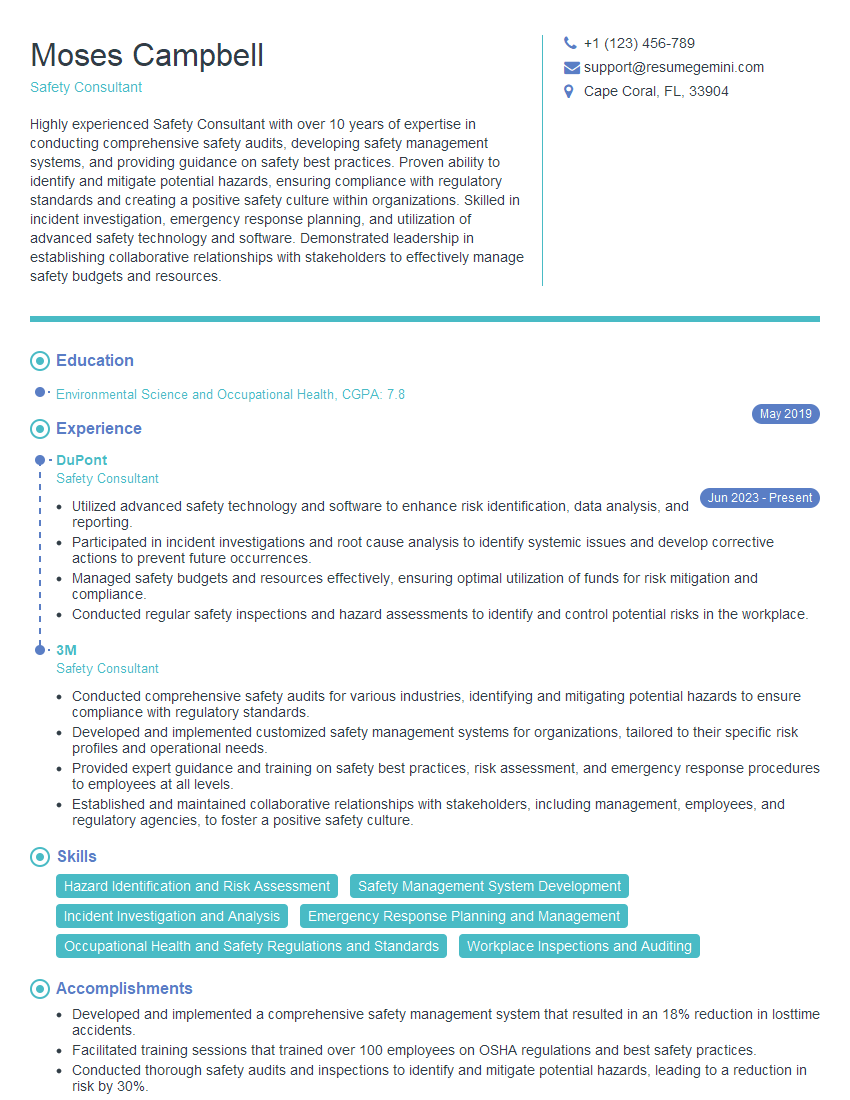
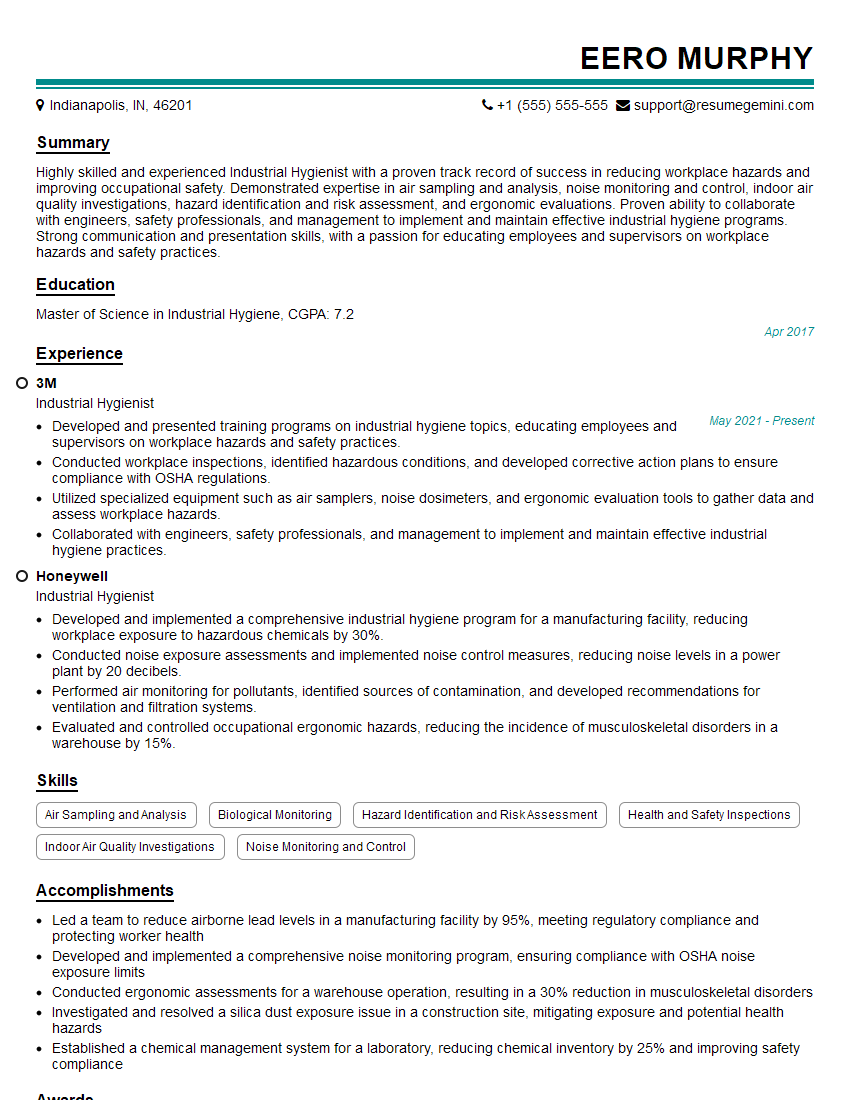
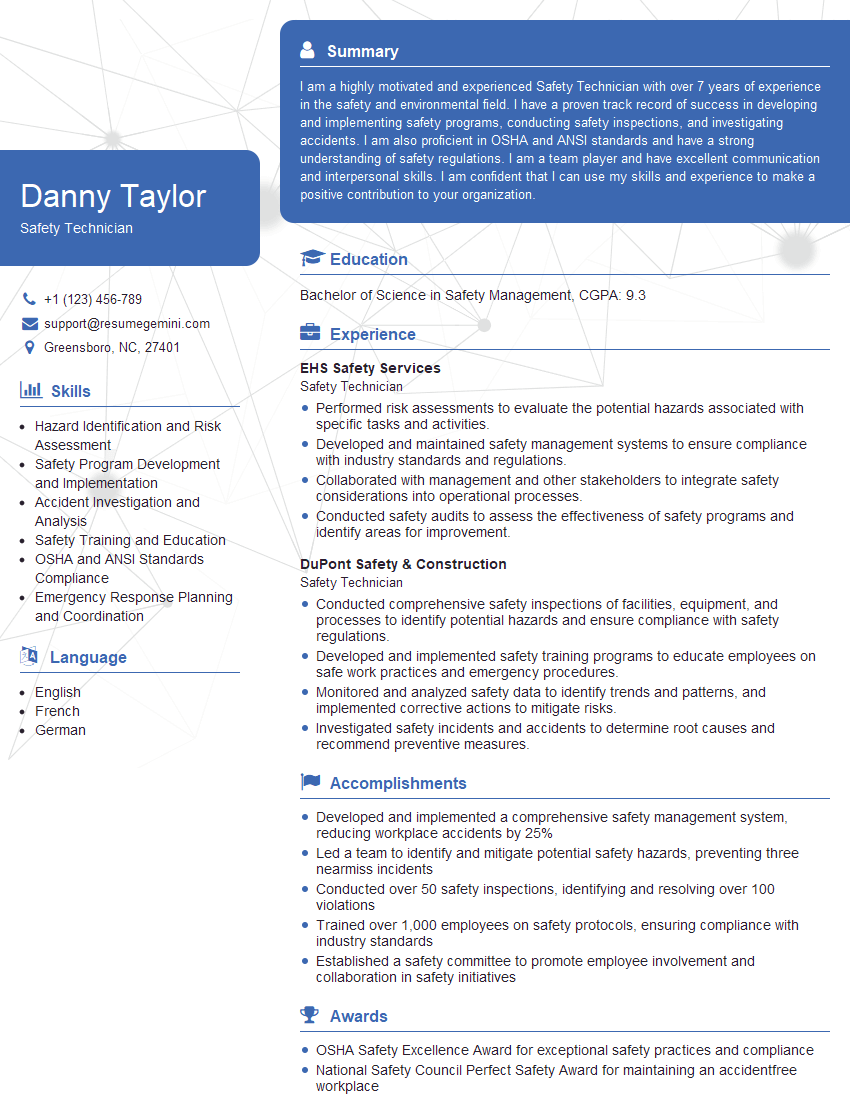
Mastering Chemical and Equipment Safety is crucial for a successful and fulfilling career. It demonstrates your commitment to workplace safety and your ability to mitigate risks, making you a highly valuable asset to any organization. To enhance your job prospects, invest time in creating a strong, ATS-friendly resume that highlights your skills and experience effectively. ResumeGemini is a trusted resource to help you build a professional and impactful resume. They provide examples of resumes tailored to Chemical and Equipment Safety to help guide your creation process, ensuring your qualifications shine through.

Explore more articles
Users Rating of Our Blogs
Share Your Experience
We value your feedback! Please rate our content and share your thoughts (optional).
What Readers Say About Our Blog
Very informative content, great job.
good