Are you ready to stand out in your next interview? Understanding and preparing for Chemical blending interview questions is a game-changer. In this blog, we’ve compiled key questions and expert advice to help you showcase your skills with confidence and precision. Let’s get started on your journey to acing the interview.
Questions Asked in Chemical blending Interview
Q 1. Explain the importance of maintaining precise ratios in chemical blending.
Maintaining precise ratios in chemical blending is paramount because it directly impacts the final product’s quality, performance, and safety. Think of baking a cake – if you don’t follow the recipe precisely, you might end up with a dry, crumbly, or even inedible result. Similarly, in chemical blending, even slight deviations from the specified ratios can lead to unpredictable outcomes. For instance, in formulating a paint, an incorrect ratio of pigment to binder could result in poor adhesion, lack of durability, or an undesirable color. In pharmaceutical applications, inaccurate ratios can affect drug efficacy and potentially cause harm. Therefore, precise control over ingredient ratios is crucial for ensuring consistent product quality, meeting regulatory standards, and guaranteeing product safety.
Q 2. Describe your experience with different blending techniques (e.g., high-shear, low-shear).
My experience encompasses a wide range of blending techniques, focusing primarily on high-shear and low-shear mixing. High-shear blending, using equipment like rotor-stator mixers or high-speed dispersers, excels at creating homogenous mixtures with very fine particle size distributions. I’ve utilized this extensively in producing inks and coatings, where achieving a consistent, smooth finish is critical. In contrast, low-shear blending, often using techniques like ribbon blenders or paddle mixers, is better suited for less viscous materials or those sensitive to high shear forces. For example, I’ve applied this in blending dry powders like fertilizers or food ingredients, where minimizing particle degradation is essential. My expertise also extends to selecting the most appropriate blending technique based on the specific properties of the materials involved—considerations include viscosity, particle size, and the desired level of homogeneity.
Q 3. How do you ensure the quality and consistency of blended products?
Ensuring quality and consistency relies on a multi-faceted approach. Firstly, rigorous quality control (QC) procedures are implemented throughout the entire blending process. This begins with verifying the quality of incoming raw materials using techniques like titrations, spectroscopy, or chromatography to confirm purity and composition. Secondly, precise weighing and metering systems are critical for accurately controlling ingredient ratios. Online process analyzers, such as inline viscometers or particle size analyzers, provide real-time monitoring of the blend’s properties during mixing, allowing for immediate adjustments if needed. Finally, thorough quality checks on the finished product, including physical and chemical testing, are performed to ensure the blend meets all specifications before release. Regular calibration of equipment and consistent adherence to Standard Operating Procedures (SOPs) further contribute to maintaining product consistency.
Q 4. What safety protocols do you follow during chemical blending?
Safety is always the top priority. My chemical blending practices strictly adhere to comprehensive safety protocols. This includes using appropriate Personal Protective Equipment (PPE), such as safety glasses, gloves, lab coats, and respirators depending on the chemicals handled. All blending operations are conducted in well-ventilated areas or enclosed systems with adequate exhaust ventilation to mitigate the risk of inhaling harmful vapors. Detailed Safety Data Sheets (SDS) for all chemicals are reviewed and understood before handling, and emergency procedures, including spill response and first aid, are clearly defined and regularly practiced. Lockout/Tagout procedures are followed for equipment maintenance to prevent accidental start-up. Moreover, regular safety training and audits are essential to maintain a safe work environment.
Q 5. How do you troubleshoot issues related to viscosity, homogeneity, or other physical properties in a blend?
Troubleshooting issues like viscosity, homogeneity, or other physical properties involves a systematic approach. First, I meticulously review the process parameters, including the mixing time, speed, temperature, and ingredient ratios. Deviations from the established parameters may be the root cause. Second, I analyze the properties of the individual components to identify potential incompatibility or unexpected interactions. Third, I perform microscopic analysis to assess particle size distribution and assess the degree of dispersion or agglomeration. For example, an unexpectedly high viscosity might be due to an incorrect ratio of thickeners or poor dispersion of solids. I might then adjust the mixing speed, incorporate additional dispersants, or optimize the mixing time to resolve the issue. Maintaining detailed records allows for a systematic investigation and prevents future recurrences.
Q 6. Explain your understanding of different types of chemical reactors used in blending.
My understanding encompasses a variety of chemical reactors suitable for blending, ranging from simple stirred tanks to more complex designs. Stirred tank reactors are commonly used for low-to-medium viscosity blends, and their efficiency can be enhanced by using impellers optimized for the specific application. For high-viscosity systems or those requiring intense mixing, I’ve utilized planetary mixers or high-shear mixers. In applications where precise temperature control is crucial, jacketed reactors are preferred, enabling efficient heating or cooling. The selection of the reactor depends heavily on factors like viscosity, reaction kinetics (in case of reactive blending), heat transfer requirements, and the scale of operation. Understanding the strengths and limitations of each reactor type is essential for successful blending.
Q 7. Describe your experience with scaling up chemical blending processes.
Scaling up chemical blending processes requires careful consideration of several factors. Simply increasing the batch size in the same type of equipment may not guarantee the same results. Scaling up involves a systematic approach, starting with thorough characterization of the process at the laboratory scale. This includes documenting the mixing time, power input, and the resulting homogeneity. Mathematical models, such as those based on mixing time correlations, can aid in predicting the behavior at larger scales. Pilot-scale experiments are invaluable for validating these models and identifying potential scaling challenges, such as variations in heat transfer or mixing efficiency. Careful consideration of equipment design and selection is crucial; for instance, different impeller designs or baffles might be necessary at larger scales. Rigorous quality control is maintained throughout the scale-up process to ensure consistent product quality.
Q 8. How do you handle unexpected deviations from the specified blending parameters?
Unexpected deviations from blending parameters are a critical concern in chemical blending. My approach involves a multi-step process prioritizing safety and quality. First, I’d immediately halt the blending process to prevent further deviation and potential hazards. Then, I’d thoroughly investigate the root cause. This could involve reviewing the batch record, checking equipment calibration (e.g., ensuring the scales are accurate), verifying the quality and quantity of incoming raw materials, and inspecting the blending equipment for any malfunctions. For example, if a viscosity is outside the specified range, I’d examine if the temperature sensors are functioning correctly or if there’s an issue with the mixing speed. Once the root cause is identified, corrective actions are implemented, which might involve adjusting parameters, recalibrating equipment, or even replacing faulty components. Finally, I’d document all steps of the deviation, investigation, and corrective actions in the batch record, ensuring complete traceability.
Imagine baking a cake: if the sugar measurement is off, you can’t just ignore it! You need to investigate (did you misread the recipe?), correct (add or remove sugar), and document the correction to avoid repeating the mistake. The same principle applies to chemical blending, but with much higher stakes.
Q 9. What are the common challenges encountered in chemical blending, and how do you address them?
Chemical blending presents several challenges. Inconsistent raw material quality is a significant one; variations in the properties of incoming materials can directly impact the final product’s quality. To address this, rigorous incoming quality control is essential, with thorough testing and documentation of each raw material batch. Another challenge is ensuring complete and homogenous mixing, particularly with highly viscous or heterogeneous materials. This requires careful selection of mixing equipment and optimization of blending parameters like speed, time, and temperature. For instance, using the wrong impeller type for a high-viscosity blend can lead to poor mixing. Maintaining consistent temperature is crucial for many reactions, requiring robust temperature control systems. Finally, safety is paramount, so strict adherence to safety protocols and the use of appropriate personal protective equipment (PPE) are critical. For example, handling hazardous chemicals demands specialized training, ventilation, and safety equipment.
Addressing these challenges requires a proactive approach, combining rigorous process controls, advanced equipment, and well-trained personnel.
Q 10. Describe your experience with Good Manufacturing Practices (GMP) in chemical blending.
My experience with GMP in chemical blending is extensive. I have consistently applied GMP principles throughout my career, from raw material handling to final product release. This includes meticulous documentation of every step of the process, adherence to strict cleaning and sanitation procedures to prevent cross-contamination, rigorous calibration and maintenance of equipment, and implementation of robust quality control measures to ensure product consistency and conformity to specifications. I’m familiar with the various GMP guidelines and regulations (e.g., FDA regulations, ISO standards), and I understand the importance of maintaining auditable records to ensure compliance and traceability. For example, I’ve been involved in implementing and maintaining a documented cleaning validation program for blending vessels, ensuring the effectiveness of our cleaning procedures.
Think of GMP as a recipe for success – following it precisely ensures consistent, high-quality results. Skipping steps can lead to problems ranging from product inconsistencies to regulatory violations.
Q 11. How do you ensure proper documentation and record-keeping during the blending process?
Proper documentation and record-keeping are paramount in chemical blending for several reasons: ensuring product traceability, facilitating quality control, and maintaining regulatory compliance. My approach involves using a comprehensive batch record system, which documents every aspect of the blending process. This includes the date, time, identity and quantity of raw materials used, blending parameters (temperature, speed, time), equipment used, operator details, and any deviations or corrective actions taken. The batch record is then signed and dated by the relevant personnel, creating an auditable trail. We use a combination of electronic and paper-based systems for record keeping, depending on the specific requirements of the operation. The records are stored securely and are readily accessible for auditing purposes. All records are retained for a period specified by regulatory guidelines. This detailed documentation is crucial for identifying the source of any issues and for demonstrating compliance with GMP guidelines.
This meticulous record-keeping is essential for avoiding the ‘blame game’ and ensuring process transparency. It helps us improve future batches by analyzing past performance.
Q 12. How familiar are you with different types of mixing equipment (e.g., impellers, agitators)?
I’m very familiar with a wide range of mixing equipment. I have extensive experience with various types of impellers, including axial flow impellers (for low-viscosity fluids), radial flow impellers (for high-viscosity fluids), and helical ribbon impellers (for highly viscous and non-Newtonian fluids). I also have experience with different agitator designs, including anchor agitators, paddle agitators, and turbine agitators. The selection of the appropriate mixing equipment is crucial and depends on several factors, including the viscosity, density, and rheological properties of the blended materials, the desired mixing intensity, and the scale of the operation. For example, a high-viscosity blend would require a high-shear impeller, possibly a helical ribbon or a high-speed turbine agitator, to effectively disperse the components. Choosing the right impeller ensures efficient mixing and prevents clumping or sedimentation, leading to consistent product quality.
Think of it like choosing the right tool for the job: you wouldn’t use a screwdriver to hammer a nail. Similarly, selecting the appropriate mixing equipment is vital for efficient and effective blending.
Q 13. Explain your understanding of reaction kinetics as it applies to chemical blending.
Reaction kinetics play a significant role in chemical blending, especially when the blending process involves chemical reactions. Understanding reaction kinetics helps determine the optimal blending parameters to achieve the desired product properties. For example, reaction rate, equilibrium, and activation energy are all relevant factors. For exothermic reactions, careful temperature control is crucial to avoid runaway reactions and ensure consistent product quality. Similarly, for slow reactions, the blending time may need to be extended to allow sufficient reaction time. In my experience, I utilize knowledge of reaction kinetics to optimize the blending process parameters such as temperature, mixing time, and the order of addition of components to obtain the desired reaction rate and product properties. We often use software modeling to simulate reaction kinetics and predict optimal conditions before conducting large-scale blending operations. This helps mitigate potential risks and optimizes resource utilization.
Understanding reaction kinetics is like understanding the recipe’s timing: knowing how fast the ingredients react helps ensure the final product turns out as expected.
Q 14. Describe your experience with different types of chemical blending software or systems.
I have experience with several chemical blending software and systems, including process control systems (PCS), supervisory control and data acquisition (SCADA) systems, and specialized chemical blending software packages. These systems allow for automated control of blending parameters, real-time monitoring of the process, data logging, and report generation. I’m proficient in using these systems to optimize the blending process, ensuring consistent product quality and reducing the risk of errors. For example, I’ve used SCADA systems to monitor and control parameters such as temperature, pressure, flow rate, and mixing speed in real-time, allowing for immediate adjustments if deviations occur. I’m also familiar with software packages that can simulate blending processes, allowing us to predict and optimize process parameters before actual production begins. This significantly reduces the risk of errors and optimizes resource utilization.
Think of these systems as sophisticated digital assistants that help manage and monitor the complex process of chemical blending, ensuring safety and quality.
Q 15. How do you interpret and utilize Safety Data Sheets (SDS) during the blending process?
Safety Data Sheets (SDS) are crucial for safe chemical handling. Before any blending operation, I meticulously review the SDS for each component. I look for information on:
- Hazardous properties: Flammability, toxicity, reactivity, health hazards.
- Personal protective equipment (PPE): Required gloves, eyewear, respirators, etc.
- Handling and storage: Specific requirements like ventilation, temperature control, incompatibility with other materials.
- First aid measures: In case of spills or exposure.
- Emergency procedures: Contact information, spill response plans.
For instance, if an SDS indicates a component is highly reactive with water, I ensure the blending process avoids water contact and the equipment is thoroughly dried. This proactive approach minimizes risks and ensures worker safety.
Career Expert Tips:
- Ace those interviews! Prepare effectively by reviewing the Top 50 Most Common Interview Questions on ResumeGemini.
- Navigate your job search with confidence! Explore a wide range of Career Tips on ResumeGemini. Learn about common challenges and recommendations to overcome them.
- Craft the perfect resume! Master the Art of Resume Writing with ResumeGemini’s guide. Showcase your unique qualifications and achievements effectively.
- Don’t miss out on holiday savings! Build your dream resume with ResumeGemini’s ATS optimized templates.
Q 16. How do you calculate the theoretical yield of a blend based on the input materials?
Calculating theoretical yield involves understanding the stoichiometry of the blend. It’s essentially a mass balance calculation. Let’s say we’re making a 50/50 blend by weight of Component A and Component B:
- Determine the desired mass of the final blend: Let’s say we want 100 kg of the final blend.
- Calculate the mass of each component: For a 50/50 blend, we need 50 kg of Component A and 50 kg of Component B.
This is a simplified example. For more complex blends with multiple components and different percentages, we use a formula like this: Theoretical Yield = Σ (mass of each component) In this formula, Σ represents the sum. It’s essential to consider the densities of the components if the blending is done by volume rather than weight. We use conversion factors to accurately calculate the masses required.
For example, if Component A has a density of 1.2 g/mL and Component B has a density of 0.8 g/mL, and we’re blending by volume, we’ll have to calculate the mass of each component accordingly before calculating the total theoretical yield.
Q 17. Describe your experience with different types of chemical analysis relevant to blending.
My experience encompasses a wide range of chemical analysis techniques relevant to blending. These include:
- Titration: Used to determine the concentration of acids or bases in a blend.
- Spectrophotometry (UV-Vis, IR): To identify and quantify specific components in a blend.
- Gas Chromatography (GC) and High-Performance Liquid Chromatography (HPLC): Used for the separation and quantification of complex mixtures, crucial for quality control.
- Particle size analysis: Ensures consistency in blends, particularly relevant for suspensions and dispersions.
- Rheological measurements: Determines the viscosity and flow properties of the blend, critical for process optimization.
For instance, in a recent project blending polymers, HPLC was used to ensure the final blend matched the target composition, verifying that the ratios of different polymer chains were within acceptable limits. We would regularly use UV-Vis spectroscopy to check for impurities that might affect the blend’s quality and performance.
Q 18. How do you prevent contamination during the chemical blending process?
Preventing contamination is paramount in chemical blending. My strategies include:
- Dedicated equipment: Using separate blending vessels and tools for different products to avoid cross-contamination.
- Thorough cleaning: Following strict cleaning protocols between batches, using appropriate solvents and detergents, and verifying cleanliness through visual inspection.
- Proper material handling: Using clean containers and transferring materials carefully to avoid spills or introduction of foreign substances.
- Controlled environment: Maintaining a clean and organized workspace, minimizing dust and airborne particles.
- Sampling procedures: Employing clean sampling techniques and equipment to obtain representative samples for analysis without introducing contaminants.
For example, we used a closed-system blending process to minimize exposure to the atmosphere and prevent the introduction of moisture or other contaminants into a highly sensitive blend.
Q 19. Explain your experience with process validation in chemical blending.
Process validation in chemical blending ensures consistent, high-quality products. It involves demonstrating that the blending process consistently produces a product meeting predefined specifications. My experience includes:
- Developing detailed process descriptions: Documenting the entire process, from raw material handling to final product packaging.
- Defining critical process parameters (CPPs): Identifying parameters that significantly influence the quality of the final blend (e.g., temperature, mixing time, order of addition).
- Establishing acceptance criteria: Defining limits for critical quality attributes (CQAs), such as composition, viscosity, and particle size.
- Performing validation runs: Conducting a series of blending runs, carefully monitoring and documenting CPPs and CQAs to demonstrate consistency.
- Data analysis: Evaluating the data from validation runs to show that the process meets the established acceptance criteria.
In one project, we validated a new automated blending system. We performed multiple validation runs, meticulously recording temperatures, mixing speeds, and times, and analyzing the final product’s viscosity and homogeneity to verify the system’s reliability and ensure consistent output within defined tolerances.
Q 20. Describe your experience with cleaning and maintenance of blending equipment.
Cleaning and maintenance of blending equipment are crucial for preventing contamination and ensuring the equipment’s longevity. My approach involves:
- Developing and following standard operating procedures (SOPs): These procedures outline the steps for cleaning and maintenance, including the type of cleaning agents, rinsing procedures, and inspection criteria.
- Regular inspections: Performing visual inspections to identify any wear, tear, or potential issues.
- Scheduled maintenance: Carrying out routine maintenance tasks such as lubrication and component replacement according to manufacturer’s recommendations.
- Documentation: Maintaining thorough records of cleaning, maintenance, and any repairs performed.
For instance, after each batch, we’d clean the blending tank using a validated cleaning procedure that involved rinsing with deionized water, followed by a solvent flush and a final rinse. This ensured no residual material remained from the previous batch, preventing cross-contamination.
Q 21. How do you identify and resolve discrepancies between theoretical and actual blend yields?
Discrepancies between theoretical and actual yields can arise from various sources. A systematic approach is required to identify and resolve these issues:
- Review the blending process: Check for human errors, equipment malfunctions, or deviations from the established procedure.
- Analyze the raw materials: Verify that the raw materials’ properties (e.g., purity, density) match the values used in the theoretical yield calculation.
- Investigate material losses: Account for potential losses during transfer, sampling, or other stages of the process.
- Examine the analytical data: Ensure the accuracy and reliability of the analytical methods used to determine the actual yield.
For example, if the actual yield was significantly lower than the theoretical yield, we might investigate whether there were losses during transfer or whether the raw materials’ properties were different from what was expected, necessitating adjustments to the process or the yield calculation.
Q 22. Explain your understanding of different types of chemical incompatibility and how to prevent them.
Chemical incompatibility refers to the undesirable reactions or interactions that can occur when different chemicals are mixed. These incompatibilities can range from mild fizzing to violent explosions, depending on the chemicals involved and the conditions of mixing. Understanding these incompatibilities is crucial for safe and efficient blending.
- Physical Incompatibility: This involves physical changes like phase separation (oil and water), precipitation (forming a solid), or viscosity changes that hinder the blending process or affect the final product’s quality. For example, mixing certain polymers can lead to irreversible clumping.
- Chemical Incompatibility: This involves chemical reactions between the components. These can range from relatively benign reactions, such as acid-base neutralization generating heat, to highly dangerous exothermic reactions leading to fire or explosions. A classic example is mixing strong acids with strong bases.
- Toxicological Incompatibility: This refers to situations where the mixing of two or more seemingly harmless chemicals produces a toxic or hazardous substance. For instance, mixing certain cleaning agents can create poisonous gases.
Preventing incompatibilities requires careful planning and execution. This includes:
- Thorough Material Safety Data Sheets (MSDS) review: Before blending any chemicals, carefully review their MSDS to identify potential hazards and incompatibilities.
- Small-scale testing: Conduct small-scale tests to verify compatibility before scaling up the process. This allows for the safe identification of potential issues.
- Controlled addition rates and mixing conditions: Carefully control the addition rates and mixing conditions (temperature, pressure, agitation) to minimize the risk of uncontrolled reactions.
- Use of compatible materials: Ensure that all equipment and containers used in the blending process are compatible with the chemicals being handled.
- Proper ventilation and personal protective equipment (PPE): Adequate ventilation is crucial, especially when dealing with volatile or reactive chemicals. Appropriate PPE, including gloves, goggles, and respirators, must always be used.
Q 23. Describe your experience with working in a team environment in a chemical blending setting.
My experience in team environments within chemical blending has been extensive and consistently positive. I’ve worked on numerous projects requiring collaborative efforts ranging from small scale lab experiments to large-scale industrial production runs.
In one project, we faced a challenge in optimizing the blending process of a new cosmetic formulation. The team, comprising chemists, engineers, and quality control specialists, worked together to identify the optimal mixing speed, temperature, and addition sequence of various ingredients. We utilized design of experiments (DOE) methodology to systematically test various parameters and efficiently arrive at the ideal process parameters. Effective communication and regular meetings were crucial to overcome challenges and ensure the project’s timely completion. The collaborative effort led to a superior product with optimized production costs and improved quality.
Effective teamwork involves clear communication, shared responsibility, and mutual respect. I believe my strong communication skills, proactive approach to problem-solving, and ability to work effectively under pressure have contributed to the success of many team projects.
Q 24. How do you handle emergency situations that may arise during chemical blending?
Handling emergency situations in chemical blending requires a calm, decisive, and well-rehearsed approach. My training emphasizes preparedness and immediate action. The initial response involves prioritizing safety and containing the situation.
- Assess the situation: Immediately assess the nature and extent of the emergency, identifying the hazards involved and the potential risks to personnel and the environment.
- Activate emergency procedures: Follow the established emergency response plan, including notifying emergency services and evacuating personnel as needed.
- Contain the spill or leak: Use appropriate containment measures, such as spill kits or absorbent materials, to prevent further spread of the spilled chemicals.
- Neutralize or dilute the spill (if safe to do so): Depending on the nature of the spill, neutralization or dilution might be necessary. This requires careful consideration to avoid creating new hazards.
- Post-incident investigation: After the emergency is under control, a thorough investigation is crucial to identify the root cause of the incident and to implement corrective actions to prevent recurrence.
For example, I once dealt with a minor chemical spill involving a corrosive liquid. We quickly activated the emergency protocols, donned appropriate PPE, contained the spill using absorbent pads, and neutralized the spilled material with a suitable base, following safety protocols meticulously. A post-incident review helped us tighten our spill prevention procedures.
Q 25. What is your understanding of the importance of process optimization in chemical blending?
Process optimization in chemical blending is essential for maximizing efficiency, minimizing costs, and ensuring consistent product quality. It involves systematically identifying and improving various aspects of the blending process.
Optimizing the process can significantly impact several key areas:
- Reduced production costs: Optimizing energy consumption, raw material usage, and waste generation leads to lower operational costs.
- Improved product quality: Optimized blending ensures consistent and predictable product properties, reducing defects and improving overall quality.
- Increased throughput: Optimizing blending parameters like mixing time and speed can increase the production rate without compromising quality.
- Enhanced safety: Optimization can minimize risks by reducing the potential for hazardous events such as spills or explosions.
Techniques for process optimization include statistical methods like Design of Experiments (DOE), process simulation, and real-time data analysis to identify bottlenecks and inefficiencies. For instance, using DOE, we can determine the optimal mixing time and speed for a specific formulation to achieve the desired viscosity while minimizing energy consumption. This systematic approach to continuous improvement is vital in maintaining a competitive edge.
Q 26. Describe your experience with different types of process control systems used in chemical blending.
My experience encompasses a variety of process control systems used in chemical blending, from basic manual control to advanced automated systems.
- Supervisory Control and Data Acquisition (SCADA) systems: These systems allow for centralized monitoring and control of multiple blending processes, providing real-time data on parameters like temperature, pressure, and flow rates. SCADA systems enable remote monitoring and efficient management of large-scale operations.
- Programmable Logic Controllers (PLCs): PLCs are used for automated control of individual blending units, precisely controlling ingredient addition, mixing speed, and other critical parameters. They enhance consistency and reduce human error.
- Distributed Control Systems (DCS): DCS offer a higher level of integration and control than PLCs and SCADA systems, providing advanced functionalities for complex blending processes. They often include features like advanced process control (APC) algorithms for optimization.
- Manual control: For smaller-scale operations or specific tasks, manual control might be used, but this necessitates careful monitoring and skilled operators to ensure consistency and accuracy.
My experience includes configuring and troubleshooting PLC programs, designing and implementing SCADA systems, and optimizing control algorithms within DCS. I’m proficient in using various software tools associated with these systems, including HMI software for operator interfaces and historical data analysis software.
Q 27. How do you ensure the proper disposal of waste materials generated during chemical blending?
Proper disposal of waste materials generated during chemical blending is critical for environmental protection and worker safety. This involves adhering to all relevant regulations and employing safe disposal practices.
- Waste characterization: The first step is to properly characterize the waste materials generated, determining their chemical composition, hazard class (flammable, corrosive, toxic), and physical state. This information is vital for choosing appropriate disposal methods.
- Segregation and containment: Waste materials must be segregated according to their hazard class and stored in appropriate containers to prevent contamination and accidental spills.
- Treatment and neutralization (if necessary): Some waste streams may require treatment or neutralization before disposal to minimize their environmental impact. For example, highly acidic or basic wastes often need neutralization before disposal.
- Disposal methods: Appropriate disposal methods depend on the waste’s characteristics and local regulations. These can include incineration, landfilling (only for non-hazardous wastes), recycling, or specialized treatment facilities.
- Documentation and record-keeping: Meticulous record-keeping is crucial, documenting the type and quantity of waste generated, treatment methods used, and the disposal location. This ensures regulatory compliance and allows for future traceability.
In my experience, we always followed strict protocols to ensure safe and environmentally sound waste disposal. We worked closely with licensed waste disposal contractors to ensure proper handling and disposal of all hazardous wastes according to all applicable environmental regulations.
Q 28. Describe your experience with regulatory compliance related to chemical blending.
Regulatory compliance is paramount in chemical blending. Non-compliance can lead to severe penalties, reputational damage, and environmental harm. My experience involves understanding and adhering to various regulations.
- Occupational Safety and Health Administration (OSHA): OSHA regulations cover workplace safety, including the handling and storage of hazardous chemicals, emergency procedures, and worker training.
- Environmental Protection Agency (EPA): EPA regulations govern the disposal of hazardous waste, air emissions, and wastewater discharge. Compliance requires meticulous record-keeping and adherence to stringent disposal protocols.
- Chemical Safety Board (CSB): The CSB investigates chemical accidents and issues recommendations to prevent future incidents. Understanding CSB recommendations and best practices is crucial for safe operations.
- Other industry-specific regulations: Depending on the industry and the type of chemicals handled, other regulations may apply, such as those related to food safety (FDA) or cosmetic manufacturing.
My experience includes developing and implementing safety programs, conducting safety audits, and ensuring accurate documentation to meet regulatory requirements. I am familiar with a range of compliance standards and regulations and am committed to maintaining a safe and compliant working environment.
Key Topics to Learn for Chemical Blending Interviews
- Stoichiometry and Reaction Kinetics: Understanding mole ratios, reaction rates, and equilibrium constants is crucial for accurate blending calculations and predicting product properties.
- Material Compatibility and Safety: Knowledge of chemical properties (reactivity, flammability, toxicity) and safe handling procedures is essential for preventing accidents and ensuring regulatory compliance. Practical application includes selecting appropriate materials for storage and blending equipment.
- Mixing and Dispersion Techniques: Understanding different mixing methods (e.g., high-shear, low-shear) and their impact on product uniformity and stability. This includes practical considerations like impeller selection and process optimization.
- Quality Control and Testing: Familiarity with various analytical techniques (e.g., titration, spectroscopy) used to ensure the final blend meets specifications. This involves understanding statistical process control and troubleshooting deviations.
- Process Control and Automation: Understanding the role of sensors, controllers, and automation systems in maintaining consistent blend quality and optimizing the blending process. Practical application includes troubleshooting automated systems and interpreting process data.
- Scale-up and Process Optimization: The ability to translate laboratory-scale blending procedures to larger industrial scales, considering factors like heat transfer, mixing efficiency, and energy consumption. This often involves problem-solving skills and understanding process economics.
- Regulatory Compliance (e.g., GMP, OSHA): Understanding relevant safety regulations and good manufacturing practices (GMP) in the chemical industry, ensuring safe and compliant operations. This includes documentation and record-keeping practices.
Next Steps
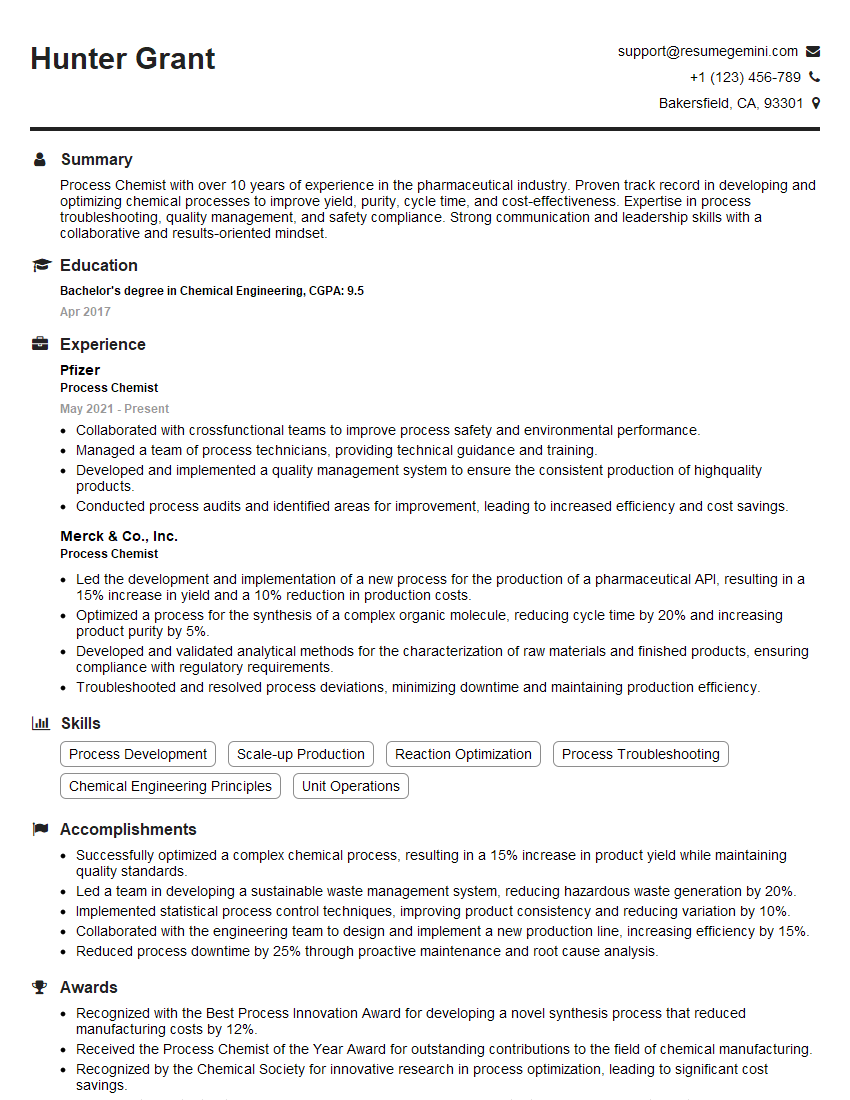
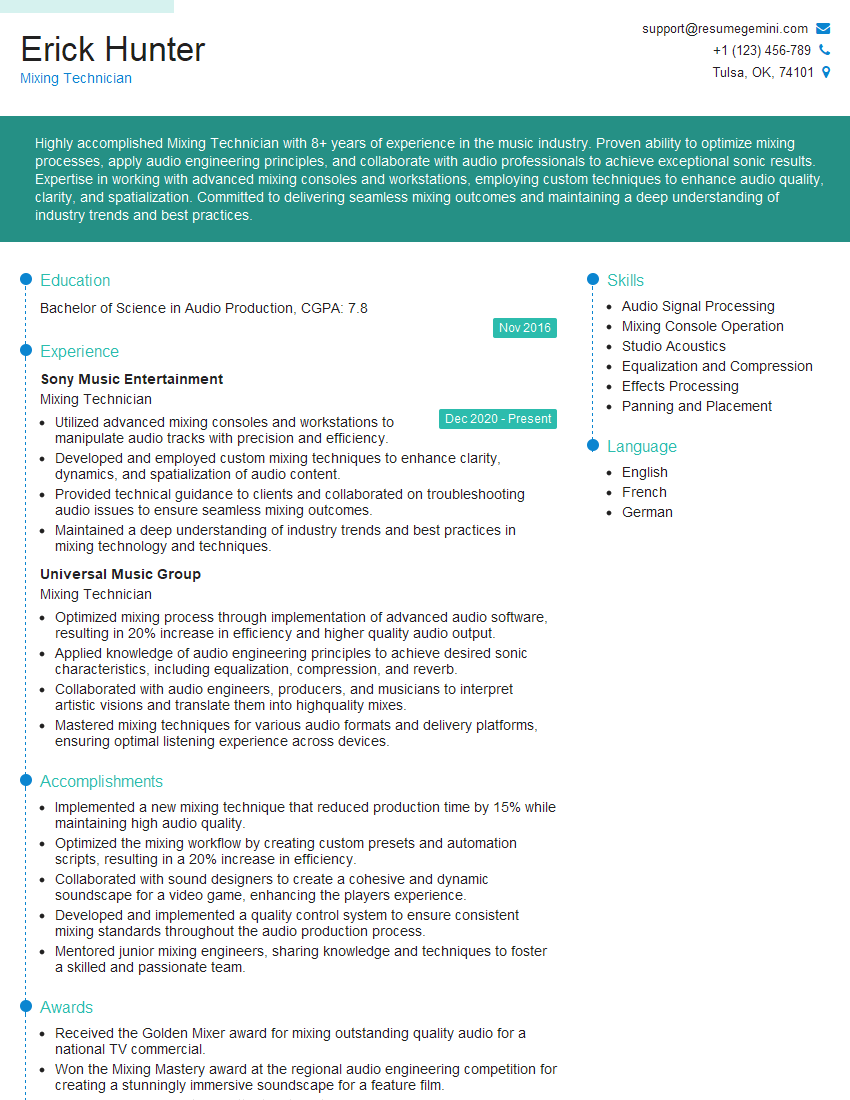
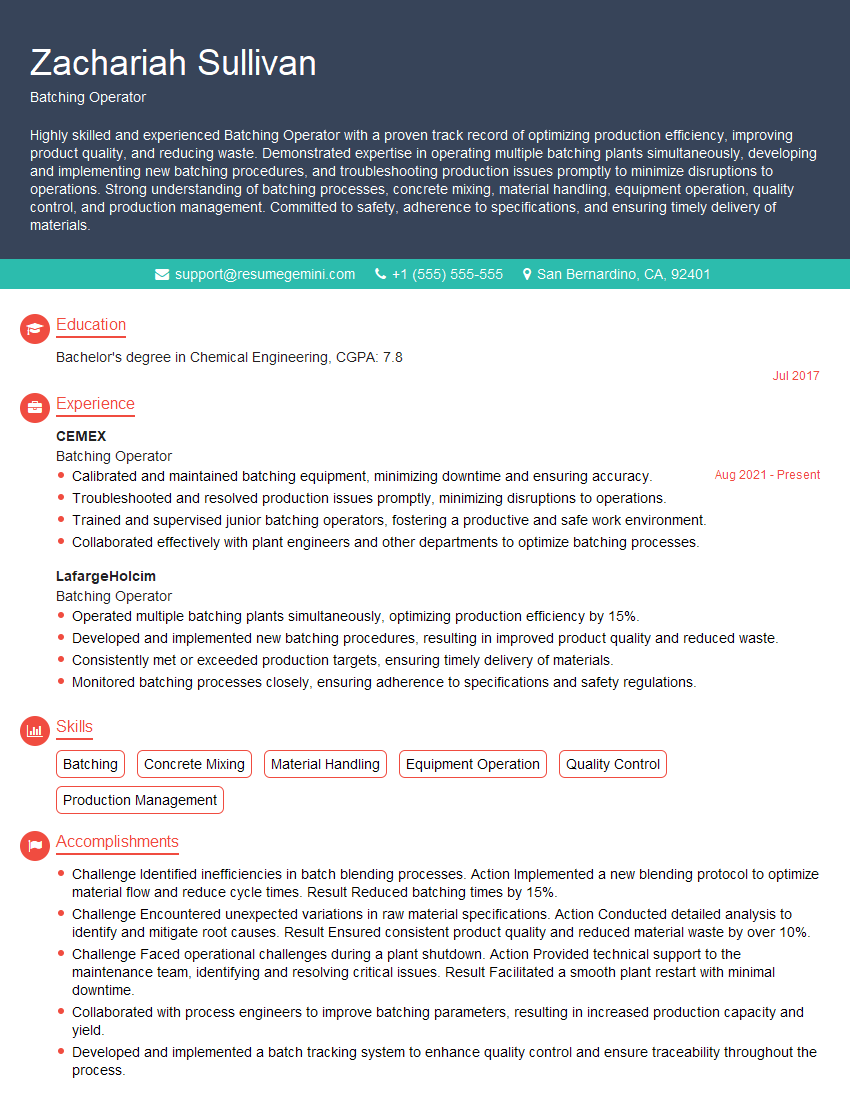
Mastering chemical blending opens doors to exciting and rewarding careers in various industries, offering opportunities for growth and specialization. To maximize your job prospects, creating an ATS-friendly resume is crucial. A well-structured resume highlights your skills and experience effectively, increasing the chances of your application being noticed. ResumeGemini is a trusted resource to help you build a professional and impactful resume. We offer examples of resumes tailored specifically to chemical blending roles to guide you in crafting your own compelling application. Take the next step in your career journey by leveraging the power of a well-crafted resume.
Explore more articles
Users Rating of Our Blogs
Share Your Experience
We value your feedback! Please rate our content and share your thoughts (optional).
What Readers Say About Our Blog
Very informative content, great job.
good