Interviews are more than just a Q&A session—they’re a chance to prove your worth. This blog dives into essential Chip Quality Monitoring interview questions and expert tips to help you align your answers with what hiring managers are looking for. Start preparing to shine!
Questions Asked in Chip Quality Monitoring Interview
Q 1. Explain the difference between parametric and functional testing in chip quality monitoring.
Parametric and functional testing are two crucial methods in chip quality monitoring, each focusing on different aspects of chip performance. Think of it like checking a car: parametric testing is like checking the engine’s vital signs (temperature, pressure, voltage), while functional testing is like driving the car to see if it works as expected.
Parametric testing measures the electrical characteristics of the chip, such as voltage, current, capacitance, and resistance. It verifies if the chip’s physical parameters are within the specified ranges. For example, we might measure the threshold voltage of a transistor to ensure it’s within the design specifications. This helps identify early manufacturing defects or variations in the fabrication process. These tests are often automated and performed at various stages of manufacturing.
Functional testing assesses the chip’s overall functionality by simulating real-world scenarios. This involves executing specific commands or programs on the chip and verifying the output against the expected results. For example, for a memory chip, this might involve writing and reading data to check for errors. Functional testing catches logic errors, design flaws, or defects that affect the chip’s intended operations, which may not be evident in parametric testing.
In essence, parametric testing focuses on the ‘what’ (physical characteristics), while functional testing focuses on the ‘how’ (operational capabilities). Both are essential for ensuring high-quality chips.
Q 2. Describe your experience with Statistical Process Control (SPC) in a semiconductor manufacturing environment.
Statistical Process Control (SPC) is the backbone of any robust semiconductor manufacturing process. My experience spans several years, employing SPC methods to monitor and control key process parameters throughout the fabrication line. We used control charts extensively – X-bar and R charts for continuous variables like linewidth and p-charts for attributes like defect density.
For example, we monitored the etch depth of transistors using X-bar and R charts. By setting control limits based on historical data and process capability studies, we could quickly identify any shifts or trends indicating process instability. If a point fell outside the control limits, it triggered an investigation to pinpoint the root cause, preventing defective chips from being produced. We also utilized capability analysis (Cp, Cpk) to assess how well the process met the design specifications. This data driven approach allowed for proactive adjustments to the process, minimizing variation and maximizing yield.
Beyond basic control charts, we implemented advanced SPC techniques like moving average and exponentially weighted moving average (EWMA) charts for early detection of subtle shifts in the process. These techniques are particularly useful in identifying emerging problems before they significantly impact yield.
Q 3. How do you identify and analyze root causes of chip failures?
Identifying and analyzing root causes of chip failures involves a systematic approach that combines data analysis, physical failure analysis, and engineering expertise. It’s a bit like detective work.
- Data Analysis: We start by gathering data from various sources – parametric test results, functional test results, failure analysis reports, and process monitoring data. We look for correlations between failures and specific process steps or parameters. For instance, if a large number of failures occur after a specific lithography step, we focus our investigation there.
- Failure Analysis: This involves physically examining failed chips using techniques such as microscopy, X-ray inspection, and cross-sectioning to identify physical defects such as shorts, opens, or contamination. This step provides crucial visual evidence of the failure mechanism.
- Root Cause Analysis (RCA): Once the failure mechanism is identified, we use tools like the ‘5 Whys’ technique to drill down and find the root cause. For example, if we find a short, we ask ‘Why is there a short?’, ‘Why was the insulation inadequate?’, and so on, until we identify the underlying process issue, be it a faulty material, incorrect equipment settings, or an operator error.
- Corrective Actions: Once the root cause is identified, we implement appropriate corrective and preventive actions. This might involve adjusting process parameters, improving equipment maintenance, retraining operators, or changing materials.
Documenting this entire process is crucial for continuous improvement and preventing future occurrences. We use a well-defined framework to track and manage these investigations to ensure a thorough analysis and effective remediation.
Q 4. What are the key metrics you use to monitor chip quality and yield?
Several key metrics are used to monitor chip quality and yield. They provide a comprehensive picture of the health of the manufacturing process.
- Yield: This is the percentage of chips that pass all tests and are functional. It’s the ultimate indicator of manufacturing efficiency and quality. A low yield signals problems that need immediate attention.
- Defect Density: The number of defects per unit area of the chip. This helps pinpoint areas of the chip that are particularly prone to defects and can guide design and process improvements.
- Defect Rate: The percentage of chips with at least one defect. This is a crucial indicator of overall process capability.
- First Pass Yield (FPY): The percentage of chips that pass all tests on the first attempt. High FPY indicates a robust and efficient process.
- Failure Rate: The percentage of chips that fail within a specific timeframe (e.g., after a certain period of operation). This metric is crucial for assessing the reliability and longevity of the chips.
- Process Capability Indices (Cp, Cpk): These metrics assess how well the process is capable of meeting the design specifications, indicating the process’ consistency and precision.
By tracking these metrics and analyzing their trends, we can get a clear picture of the chip quality and make data-driven decisions to improve the process.
Q 5. Explain your understanding of Six Sigma methodologies and their application in chip quality improvement.
Six Sigma methodologies provide a structured framework for achieving process excellence by dramatically reducing variation and defects. In the semiconductor industry, its application is critical for maintaining high chip quality and yield. It’s a data-driven approach that focuses on continuous improvement.
The DMAIC (Define, Measure, Analyze, Improve, Control) cycle is central to Six Sigma. We use it to address specific quality issues. For example, if we see a rise in a particular type of defect, we would:
- Define the problem: Clearly define the defect type, its impact, and targets for improvement.
- Measure the current performance: Collect data on the defect rate, its causes, and other relevant parameters.
- Analyze the data: Identify the root causes of the defect through statistical analysis and process mapping.
- Improve the process: Implement corrective actions to address the root causes. This could involve equipment upgrades, process parameter adjustments, or operator training.
- Control the improvements: Monitor the process to ensure that the implemented changes are sustainable and the defect rate remains low. SPC methods play a key role here.
Six Sigma emphasizes data-driven decision-making, process optimization, and the use of statistical tools to drive continuous improvement. In the context of chip manufacturing, this translates to higher yield, improved reliability, and lower costs.
Q 6. How do you interpret and utilize Control Charts in process monitoring?
Control charts are vital tools in process monitoring, providing a visual representation of process behavior over time. They help identify whether a process is in a state of statistical control or if there are assignable causes of variation that need attention. Think of them as a dashboard for your manufacturing process.
Common types include X-bar and R charts for continuous data and p-charts for attribute data. A point plotting outside the control limits suggests a significant shift in the process, possibly due to a machine malfunction, material change, or other assignable causes. Patterns within the control limits (e.g., trends, cycles) can also indicate problems that might not be immediately apparent.
For instance, if we see several points on an X-bar chart consecutively above the center line, it suggests a gradual upward shift in the mean of the process variable, indicating a possible problem that needs to be investigated. We would then use various root cause analysis techniques to identify and address this problem. Conversely, a chart showing points within the control limits demonstrates a stable and predictable process.
Control charts aren’t just for identifying problems. They also help monitor the effectiveness of corrective actions. After addressing an issue, we continue to monitor the process using the chart, ensuring that the problem is resolved and the process remains stable.
Q 7. Describe your experience with Design of Experiments (DOE) for process optimization.
Design of Experiments (DOE) is a powerful statistical technique used for process optimization. It’s a systematic approach to determine the optimal settings of various process parameters to achieve desired results, such as maximizing yield or minimizing defects. It’s much more efficient than the traditional ‘one factor at a time’ approach.
In semiconductor manufacturing, DOE helps optimize complex processes by systematically varying multiple parameters simultaneously and analyzing their combined effects. We’ve used DOE extensively to optimize etch processes, improving uniformity and reducing defects. For example, we might use a factorial design to study the effects of etch time, etch power, and pressure on the etch rate and uniformity. DOE helps us identify which parameters have the most significant impact and their optimal settings, resulting in a process that is both efficient and produces high-quality chips.
The analysis of the DOE results typically involves ANOVA (Analysis of Variance) to determine the statistical significance of the different factors and their interactions. This quantitative approach allows for evidence-based decision-making in process optimization, leading to improved process capability and yield.
Q 8. Explain the failure mechanisms you are most familiar with in semiconductor devices.
Semiconductor device failure mechanisms are complex and varied, stemming from imperfections introduced at any stage of the manufacturing process. I’m most familiar with several key categories:
- Electromigration: This occurs when the flow of current causes atoms within the conducting lines to migrate, eventually leading to open circuits or shorts. Think of it like a river slowly eroding its banks; constant current flow gradually wears away the metal lines. This is particularly problematic in smaller feature sizes where current density is higher.
- Hot Carrier Effects: High-energy electrons can become trapped in the silicon oxide layer of transistors, degrading their performance and reliability over time. It’s like repeatedly hitting a wall; eventually, the wall will weaken and break down.
- Time-Dependent Dielectric Breakdown (TDDB): The insulating layers within the chip can eventually fail due to stress from electric fields, leading to shorts. Imagine a balloon slowly losing air over time until it finally pops.
- Physical Defects: These include scratches, contamination, or other physical imperfections introduced during wafer fabrication or packaging. These are often visually detectable using microscopy techniques.
- Process Variations: Slight variations in the manufacturing process (e.g., temperature, doping concentration) can lead to devices with differing performance characteristics, some falling outside acceptable limits. It’s like baking a cake – slight changes in ingredients or oven temperature can significantly affect the final product.
Understanding these failure mechanisms is crucial for developing robust quality control procedures and improving chip design.
Q 9. How do you prioritize defect analysis and repair strategies?
Prioritizing defect analysis and repair strategies involves a systematic approach focusing on impact and feasibility. I typically use a risk-based prioritization framework. This involves:
- Defect Severity Classification: Categorizing defects based on their impact on chip functionality (e.g., critical, major, minor). Critical defects, those causing complete device failure, take top priority.
- Defect Frequency Analysis: Identifying the most frequently occurring defects. High-frequency defects, even if individually minor, can significantly impact yield and warrant attention.
- Root Cause Analysis (RCA): Investigating the underlying causes of defects to implement targeted preventative measures. This step is crucial to prevent recurrence.
- Cost-Benefit Analysis: Evaluating the cost-effectiveness of different repair strategies. Some defects might be more economically viable to sort out through rework, while others might necessitate process adjustments.
- Repair Strategy Selection: Choosing the most appropriate repair method, considering factors like defect type, location, and cost. Options range from simple rework to complex process modifications.
For example, if a high percentage of chips fail due to a specific metallization issue (high severity, high frequency), I would prioritize root cause analysis of that process and implement corrective actions, perhaps involving equipment calibration or materials changes, before focusing on other less impactful defects.
Q 10. What is your experience with automated test equipment (ATE)?
I have extensive experience with various Automated Test Equipment (ATE) systems, including those from Teradyne, Advantest, and Credence. My experience encompasses both analog and digital test methodologies. I am proficient in:
- Test program development: Creating and debugging test programs using various ATE software packages (e.g., EagleTest, J750).
- Test fixture design and implementation: Understanding the mechanical and electrical aspects of test fixtures and ensuring proper signal integrity.
- Data analysis and interpretation: Analyzing test data to identify failure modes and diagnose issues.
- Test optimization: Reducing test time and cost while maintaining high test coverage.
In a recent project, we used ATE to identify a previously undetected intermittent short in a high-speed memory chip. By implementing a novel test sequence utilizing advanced ATE capabilities, we significantly improved our yield and product quality.
Q 11. How do you manage and analyze large datasets from chip testing?
Managing and analyzing large datasets from chip testing requires a multi-faceted approach. I leverage a combination of techniques:
- Database Management Systems (DBMS): Storing and managing test data using relational databases (e.g., SQL Server, Oracle) or NoSQL databases depending on the data structure and volume.
- Statistical Process Control (SPC): Applying SPC techniques to monitor process parameters and identify trends or deviations from acceptable limits.
- Data Visualization Tools: Using tools like Tableau or Power BI to create insightful visualizations of test data, identifying patterns and anomalies more easily than through raw data alone.
- Machine Learning (ML) algorithms: Employing ML algorithms for predictive maintenance, identifying potential issues before they impact production, or classifying defect types based on complex test data patterns.
- Data Mining and Pattern Recognition: Using advanced data mining techniques to identify hidden patterns and correlations in test data that might pinpoint the underlying causes of failures.
For instance, we used machine learning to predict potential yield losses based on subtle variations in process parameters, allowing for proactive adjustments to prevent future issues.
Q 12. Describe your experience with different types of semiconductor packaging and their impact on quality.
My experience spans various semiconductor packaging types, each influencing quality and reliability differently:
- Wire bonding: A cost-effective method but susceptible to wire breakage or bond failures, especially under stress or temperature cycling. Proper wire bonding processes and materials selection are critical to ensure reliability.
- Flip-chip packaging: Offers improved performance and density but requires precise alignment and soldering techniques. Solder joint defects can lead to significant reliability problems.
- System-in-Package (SiP): Integrates multiple components into a single package, enhancing functionality but increasing complexity and requiring thorough testing to prevent inter-component interference.
- Through-silicon vias (TSV): Allow for 3D chip stacking, improving performance and density but introducing challenges in interconnect reliability and testing. Void formation or delamination in the TSV structures can result in failure.
The choice of packaging directly impacts the overall product quality and needs careful consideration. For example, high-reliability applications like automotive electronics demand robust packaging solutions, possibly involving techniques like underfill encapsulation to mitigate the effects of thermal stress and vibration.
Q 13. How do you develop and implement quality control plans for chip manufacturing?
Developing and implementing quality control (QC) plans in chip manufacturing is an iterative process involving several key steps:
- Define Quality Metrics: Establish clear, measurable quality metrics relevant to the specific chip and application (e.g., yield, defect rate, reliability). These metrics serve as benchmarks for success.
- Process Mapping: Detailing the entire chip manufacturing process, identifying potential points of failure or variation.
- Inspection and Testing Plan: Designing an inspection and testing plan encompassing all stages of the process, utilizing techniques such as in-line process monitoring, wafer inspection, and final test.
- Control Charts and Statistical Analysis: Implementing Statistical Process Control (SPC) charts to monitor key process parameters and detect deviations from acceptable limits. This helps in early detection of problems.
- Corrective and Preventative Actions: Defining procedures for addressing identified problems. This often involves implementing corrective actions (fixing existing issues) and preventative actions (changes to avoid future issues).
- Continuous Improvement: Regularly reviewing and updating the QC plan to incorporate lessons learned and enhance overall effectiveness. Continuous improvement is essential to adapting to changes in technology and processes.
A robust QC plan integrates various techniques and aims for a holistic approach to quality, involving the entire production team, not just a dedicated quality control department.
Q 14. What are your strategies for minimizing defects during the chip manufacturing process?
Minimizing defects during chip manufacturing involves a multi-pronged approach targeting all stages of the process:
- Cleanroom Environment: Maintaining a meticulously clean and controlled environment to minimize particle contamination.
- Process Optimization: Optimizing process parameters (e.g., temperature, pressure, gas flow) to enhance yield and reduce defects. This often involves sophisticated modeling and simulation.
- Material Selection: Selecting high-quality materials with minimal impurities. This includes meticulous scrutiny of silicon wafers and other components.
- Equipment Calibration and Maintenance: Regularly calibrating and maintaining manufacturing equipment to ensure consistent performance and minimize variability.
- In-line Process Monitoring: Implementing in-line monitoring systems to detect and address defects as they occur. This facilitates real-time corrective actions.
- Defect Analysis and Root Cause Identification: Analyzing detected defects to identify their root causes and implement appropriate corrective and preventative actions. This usually involves failure analysis techniques.
- Design for Manufacturing (DFM): Designing chips with manufacturability in mind, using techniques like design rule checking to minimize process-related defects.
For example, we implemented a new in-line optical inspection system that dramatically reduced the rate of particle-related defects. This proactive monitoring prevented thousands of defective chips from being produced, saving time and resources.
Q 15. Explain your understanding of reliability testing, including accelerated life testing.
Reliability testing is crucial for assessing how well a chip will perform over its intended lifespan. It involves subjecting chips to various stress conditions to predict their failure rate and identify weaknesses. Accelerated life testing (ALT) is a key subset of this, using extreme conditions to drastically shorten the testing time. Imagine baking a cake – you wouldn’t wait for it to naturally age for years to see if it spoils. Instead, you might leave it out in the sun to speed up the spoilage process, and observe the results. ALT employs similar principles. We subject chips to higher temperatures, voltages, or humidity levels than they’d normally see, observing failure rates to extrapolate how they’d behave under normal conditions over a longer period. For instance, we might run a chip at 125°C instead of its typical 85°C operating temperature to accelerate any potential degradation. Data analysis, using statistical models like Weibull analysis, then allows us to predict the chip’s reliability under normal operating conditions.
Specific tests within reliability testing include high-temperature operating life (HTOL), temperature cycling, and highly accelerated stress tests (HAST). The results of these tests feed directly into designing robust and reliable chips, ensuring they meet their projected operational lifespan.
Career Expert Tips:
- Ace those interviews! Prepare effectively by reviewing the Top 50 Most Common Interview Questions on ResumeGemini.
- Navigate your job search with confidence! Explore a wide range of Career Tips on ResumeGemini. Learn about common challenges and recommendations to overcome them.
- Craft the perfect resume! Master the Art of Resume Writing with ResumeGemini’s guide. Showcase your unique qualifications and achievements effectively.
- Don’t miss out on holiday savings! Build your dream resume with ResumeGemini’s ATS optimized templates.
Q 16. How do you collaborate with cross-functional teams to resolve quality issues?
Collaboration is paramount in chip quality monitoring. When quality issues arise, I actively engage with multiple teams, including design engineers, process engineers, test engineers, and even packaging engineers. My approach involves clear and concise communication. I initiate meetings, present data using clear visualizations (charts, graphs), and work collaboratively to understand the root cause. For example, if we observe a higher-than-expected failure rate in a particular lot, I’d work with the process engineers to review the manufacturing process parameters. Simultaneously, I’d collaborate with the design engineers to assess if any design flaws might contribute to the problem. Effective communication and shared ownership of the problem are key to finding solutions quickly and efficiently. Using problem-solving methodologies like the 5 Whys, we drill down to understand the underlying cause, and collaboratively decide on corrective actions.
Q 17. Describe your experience with fault isolation and diagnostic techniques.
Fault isolation and diagnostic techniques are crucial for identifying the precise cause of chip failures. It’s a bit like detective work. I begin with gathering data from various testing stages: electrical testing, burn-in data, and field returns. Then, using a range of diagnostic tools and techniques, I narrow down the possibilities. For example, if electrical tests reveal a short circuit, I might employ techniques like optical microscopy and scanning electron microscopy (SEM) to visually inspect the chip for physical defects. If further investigation is needed, I’ll use more advanced methods like focused ion beam (FIB) for cross-sectioning and failure analysis. The data obtained helps determine the root cause, be it a design flaw, manufacturing defect, or even environmental damage. This allows for accurate failure classification and prevents recurrence.
Q 18. How familiar are you with different types of semiconductor failure analysis techniques (e.g., cross-sectioning, FIB)?
I’m very familiar with various semiconductor failure analysis techniques. Cross-sectioning, where we physically slice the chip to reveal internal structures, is fundamental. It’s like cutting open a cake to inspect its layers. Focused Ion Beam (FIB) milling allows even more precise and detailed cross-sections, down to the nanometer level. I’ve also extensive experience with other techniques such as Scanning Electron Microscopy (SEM) for high-resolution imaging, Energy Dispersive X-ray Spectroscopy (EDX) for elemental analysis, and Transmission Electron Microscopy (TEM) for atomic-scale analysis. Each technique serves a different purpose and the choice depends on the nature of the failure and level of detail required. The selection of techniques relies heavily on my understanding of the particular device and the specific failure mode. For example, in cases of electromigration failures, FIB cross-sectioning is particularly useful for observing metal migration paths.
Q 19. How do you ensure the accuracy and traceability of quality data?
Accuracy and traceability of quality data are critical. I employ a multi-pronged approach. First, we use automated test equipment (ATE) with rigorous calibration and validation procedures to minimize measurement errors. Second, we maintain a robust data management system that uses unique identifiers for each chip and lot, ensuring complete traceability from wafer fabrication to final testing. Data is stored in secure databases with version control, allowing us to easily track changes and access historical data if needed. Third, statistical process control (SPC) charts are employed to monitor key parameters, detect anomalies, and prevent out-of-control situations. Audits and regular review of the data management systems further help to ensure the quality and integrity of data.
Q 20. What are your experiences with quality management systems (e.g., ISO 9001)?
I have extensive experience with quality management systems (QMS), particularly ISO 9001. I’ve been involved in implementing, maintaining, and auditing QMS in various semiconductor manufacturing environments. My responsibilities included developing and implementing procedures, conducting internal audits, managing corrective and preventive actions (CAPA), and participating in external audits. A key component of my work within ISO 9001 is continuous improvement, actively participating in discussions to assess process effectiveness and identifying areas for optimization. The principles of ISO 9001, such as focusing on customer requirements, continuous improvement, and risk-based thinking, are integral to my approach to chip quality monitoring. The structured approach facilitates proactive problem-solving, and improved efficiency.
Q 21. How do you balance quality, cost, and time constraints in a manufacturing environment?
Balancing quality, cost, and time is a constant challenge in manufacturing. It’s often described as the ‘iron triangle’ – if you improve one aspect, another might suffer. My approach involves a risk-based approach. We start by clearly defining quality targets and understanding the associated risks of not meeting them. Then, we analyze the cost-effectiveness of different testing strategies and choose the optimal balance between thoroughness and cost. For example, 100% testing might offer the highest quality assurance but could be prohibitively expensive and time-consuming. We might opt for a sampling strategy combined with advanced statistical analysis to achieve the desired quality with a lower cost and faster turnaround time. Effective communication and collaboration with other departments are key to negotiating the trade-offs and finding a sustainable solution.
Q 22. Describe your experience with implementing and improving quality control processes.
My experience in implementing and improving quality control processes in chip manufacturing spans over a decade, encompassing various stages from wafer fabrication to final testing. I’ve been involved in designing and implementing statistical process control (SPC) charts to monitor key parameters like defect density, yield, and process capability. For example, I led the implementation of a new automated optical inspection (AOI) system that significantly reduced the rate of missed defects in our packaging process, leading to a 15% increase in overall product yield. This involved not only the integration of the new system but also the training of operators and the development of new quality metrics. Furthermore, I have extensive experience with the development and execution of acceptance sampling plans, ensuring that incoming materials meet predefined quality standards, and the application of root cause analysis methodologies to identify and eliminate recurring quality issues.
Beyond reactive problem-solving, I proactively seek opportunities for improvement. For instance, I spearheaded the implementation of a proactive failure analysis system that analyzed trends and patterns in failed chips, enabling the early identification of potential process variations before they escalated into significant yield losses. This is a pivotal approach to preventing issues before they impact the production line. These activities involve working collaboratively with cross-functional teams, from engineering and manufacturing to quality assurance, fostering a culture of continuous improvement and data-driven decision-making.
Q 23. How do you handle conflicting priorities and pressures in a fast-paced manufacturing environment?
In the fast-paced environment of chip manufacturing, conflicting priorities are commonplace. My approach involves a structured prioritization process. I utilize tools like a weighted prioritization matrix, considering factors like urgency, impact on product quality, and available resources. For instance, a critical defect affecting a high-volume product would naturally take precedence over a less significant issue in a low-volume product, even if the latter has a shorter deadline. Open and transparent communication is crucial in these situations. I regularly keep stakeholders informed of progress, challenges, and any necessary adjustments to the plan. This prevents surprises and allows for collaborative problem-solving.
Furthermore, I employ effective time management techniques, breaking down large tasks into smaller, manageable components, and utilizing agile methodologies to adapt to changing priorities and pressures. Delegation is also key; I ensure that the right tasks are assigned to the right individuals, maximizing efficiency and empowering team members. Lastly, I don’t shy away from seeking help when needed. Knowing my limitations and seeking assistance from colleagues or management allows me to focus my efforts where they are most impactful.
Q 24. Explain your experience with root cause analysis tools (e.g., 5 Whys, Fishbone diagrams).
Root cause analysis is fundamental to continuous improvement in chip manufacturing. I have extensive experience using various tools, including the 5 Whys and Fishbone diagrams (Ishikawa diagrams). The 5 Whys method is a simple yet effective technique for uncovering the root cause of a problem by repeatedly asking ‘Why?’ until the fundamental issue is identified. For example, if we have a high rate of chip failures, we might ask: Why are the chips failing? (Answer: Due to excessive heat). Why is there excessive heat? (Answer: Inadequate heat sinking). Why is the heat sinking inadequate? (Answer: Poor solder joint). Why are the solder joints poor? (Answer: Defective solder paste application). Why is the solder paste application defective? (Answer: Malfunctioning dispensing machine). This final answer points to the root cause.
Fishbone diagrams offer a more visual and structured approach, allowing us to brainstorm potential causes categorized by various factors such as machinery, materials, methods, manpower, and measurements. For a yield loss issue, the Fishbone diagram would visually map the possible contributors allowing us to systematically investigate each potential cause, leading to focused corrective actions. I often use a combination of both techniques, starting with the 5 Whys to pinpoint a core area, then utilize the Fishbone diagram to ensure a comprehensive examination of all potential causes within that area.
Q 25. What are your strategies for continuous improvement in chip quality monitoring?
My strategies for continuous improvement in chip quality monitoring are based on a data-driven approach, leveraging advanced analytics and automation. This includes regularly reviewing process capability indices (Cpk) to ensure that our processes are consistently meeting specifications. We also use advanced statistical methods to identify subtle patterns and anomalies in production data that might indicate emerging quality issues. Machine learning algorithms can be integrated into the monitoring system to provide predictive capabilities, anticipating potential problems before they impact yield. This early warning system allows for proactive interventions, minimizing production downtime and preventing costly rework.
Beyond technology, continuous improvement also involves fostering a culture of learning and sharing. This includes regular team meetings to discuss quality metrics, identify improvement opportunities, and share best practices. We also encourage employees to propose innovative solutions and participate in Kaizen events (focused improvement activities) to drive efficiency and improve quality. A feedback loop mechanism is important, using data analysis to measure the efficacy of implemented changes, enabling us to refine our strategies over time.
Q 26. How do you communicate technical information effectively to both technical and non-technical audiences?
Effective communication is vital in chip quality monitoring. I adapt my communication style to the audience. When communicating with technical audiences, I use precise terminology, detailed data, and technical diagrams. For instance, I’d explain a yield decrease using statistical process control charts and discussing specific parameters such as defect rates and process capability indices. However, when communicating with non-technical audiences (e.g., management), I use clear, concise language, avoiding jargon and focusing on high-level insights and the impact on business goals. I often use visual aids like graphs and charts to present key findings in a simple, digestible manner. For example, to explain a yield problem, I might focus on the financial impact and proposed solutions instead of complex statistical analysis.
I also prioritize active listening and feedback to ensure clear understanding. This includes asking clarifying questions and summarizing key points to confirm mutual understanding. Regular reports and presentations using a mix of data and narrative are used to effectively convey the status and progress of quality monitoring initiatives to diverse audiences.
Q 27. Describe a time you had to make a difficult decision regarding product quality.
During a critical production run of a new high-performance processor, we detected a significant increase in defects during final testing. Initial analysis pointed to a potential issue with a new material supplier. The decision was whether to continue with the existing production run, risking a significant financial loss due to potential product recalls, or halt production immediately, delaying the product launch and impacting revenue. The decision was particularly challenging because halting production would cause considerable financial and reputational damage but continuing could lead to even greater losses. After careful consideration, weighing the risks involved in both options and gathering further data through expedited failure analysis, we opted to halt the production line immediately. This involved thorough communication to stakeholders and a fast-track investigation with the supplier to identify and rectify the root cause. Although the decision caused a delay, it prevented a massive recall and protected our brand reputation.
The experience highlighted the importance of prioritizing quality over short-term gains. While the initial delay was painful, the long-term benefits of preventing a large-scale product failure far outweighed the short-term costs. It also emphasized the need for a robust supplier management program and proactive risk assessment.
Q 28. How do you stay current with the latest advancements in chip quality monitoring technologies?
Staying current with the latest advancements in chip quality monitoring technologies is crucial in this rapidly evolving field. I actively participate in industry conferences and workshops, such as SEMICON, to learn about new methodologies and technologies. I regularly read industry publications, journals, and online resources, including IEEE Xplore and relevant industry blogs. Furthermore, I maintain a professional network through online communities and professional organizations like the International Society for Quality (ASQ), engaging in discussions and exchanging knowledge with peers.
I also invest time in exploring emerging technologies, such as AI-powered defect detection systems, advanced metrology techniques, and big data analytics for quality monitoring. Attending webinars and online courses provides opportunities for in-depth learning on new technologies. By proactively pursuing these avenues, I maintain a high level of expertise and apply the latest best practices to my work, ensuring that our quality control processes remain at the cutting edge of the industry.
Key Topics to Learn for Chip Quality Monitoring Interview
- Statistical Process Control (SPC): Understanding and applying SPC methods like control charts (X-bar, R, p, c charts) to monitor chip manufacturing processes and identify anomalies.
- Defect Analysis and Classification: Analyzing failed chips to identify root causes of defects, using techniques like optical microscopy, SEM, and electrical testing. Practical application includes developing strategies to prevent recurrence.
- Yield Improvement Strategies: Exploring methods to enhance chip production yield, such as process optimization, material selection, and equipment maintenance. This includes understanding the financial impact of yield improvements.
- Data Analysis and Interpretation: Proficiency in using data analysis tools and techniques (e.g., descriptive statistics, hypothesis testing) to interpret large datasets generated from chip testing and identify trends.
- Automated Test Equipment (ATE) and its application: Understanding the principles of ATE and its role in high-throughput chip testing. This includes knowledge of various ATE architectures and programming languages.
- Failure Mechanisms in Semiconductor Devices: Understanding the various physical and electrical failure mechanisms that affect chip performance and reliability, such as electromigration, hot carrier effects, and dielectric breakdown.
- Quality Management Systems (QMS): Familiarity with industry standards such as ISO 9001 and their implementation in a semiconductor manufacturing environment. This includes understanding the roles and responsibilities within a QMS framework.
Next Steps
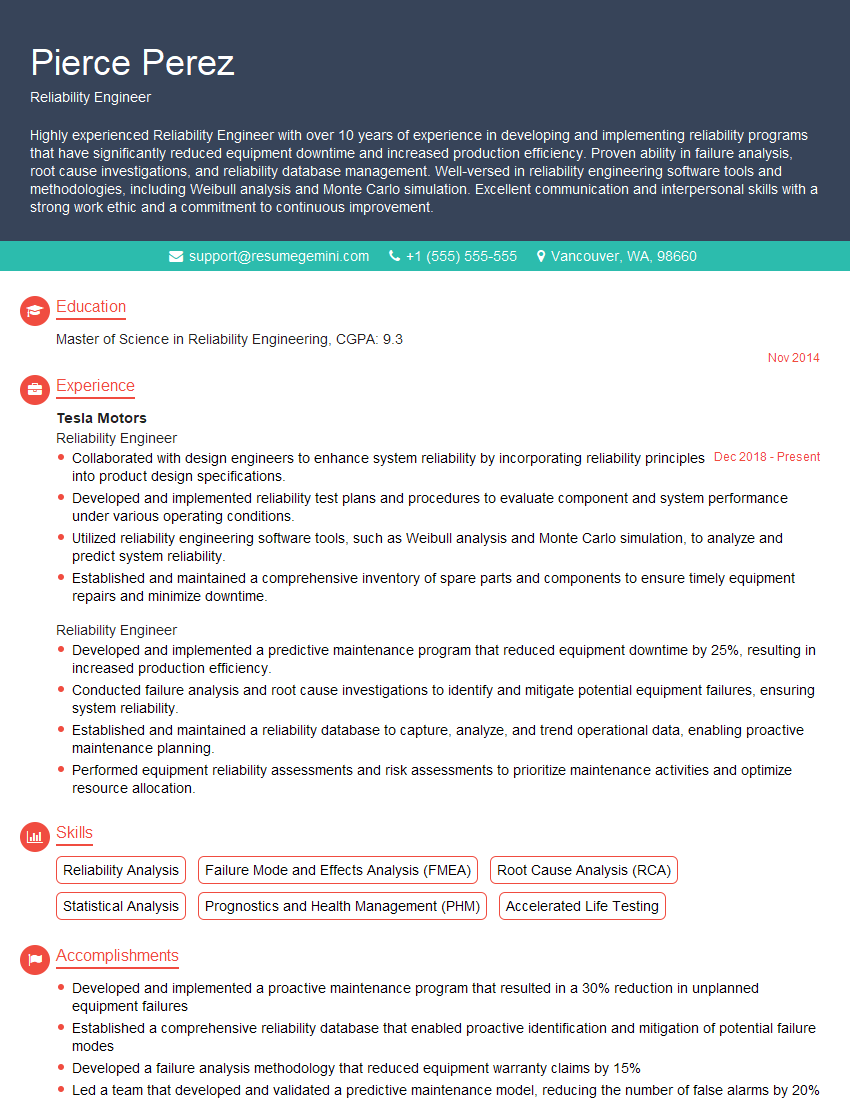
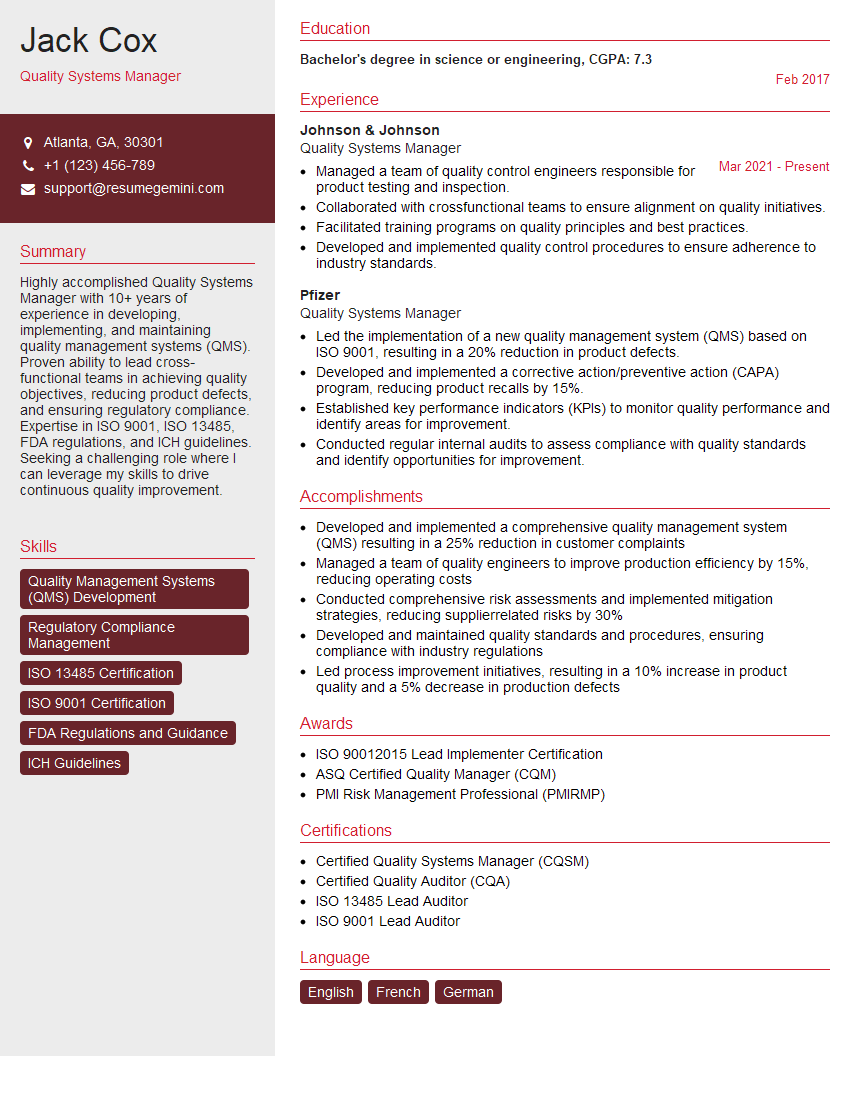
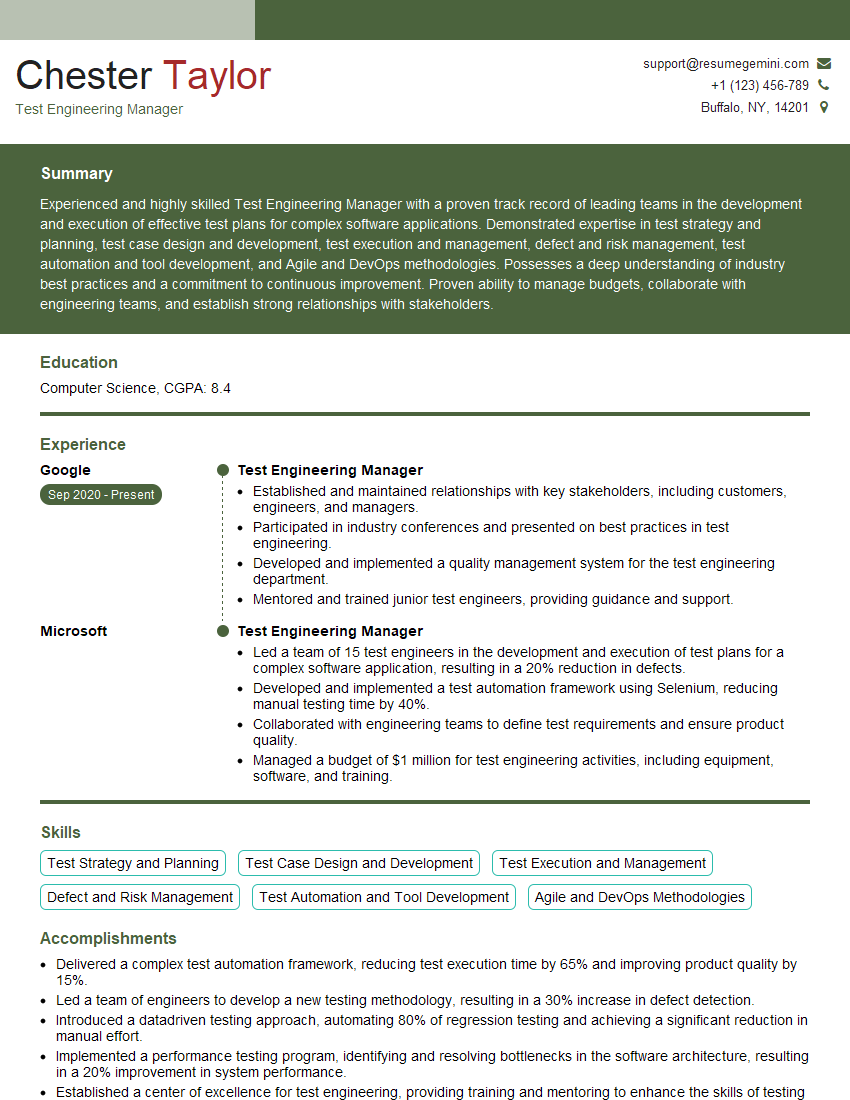
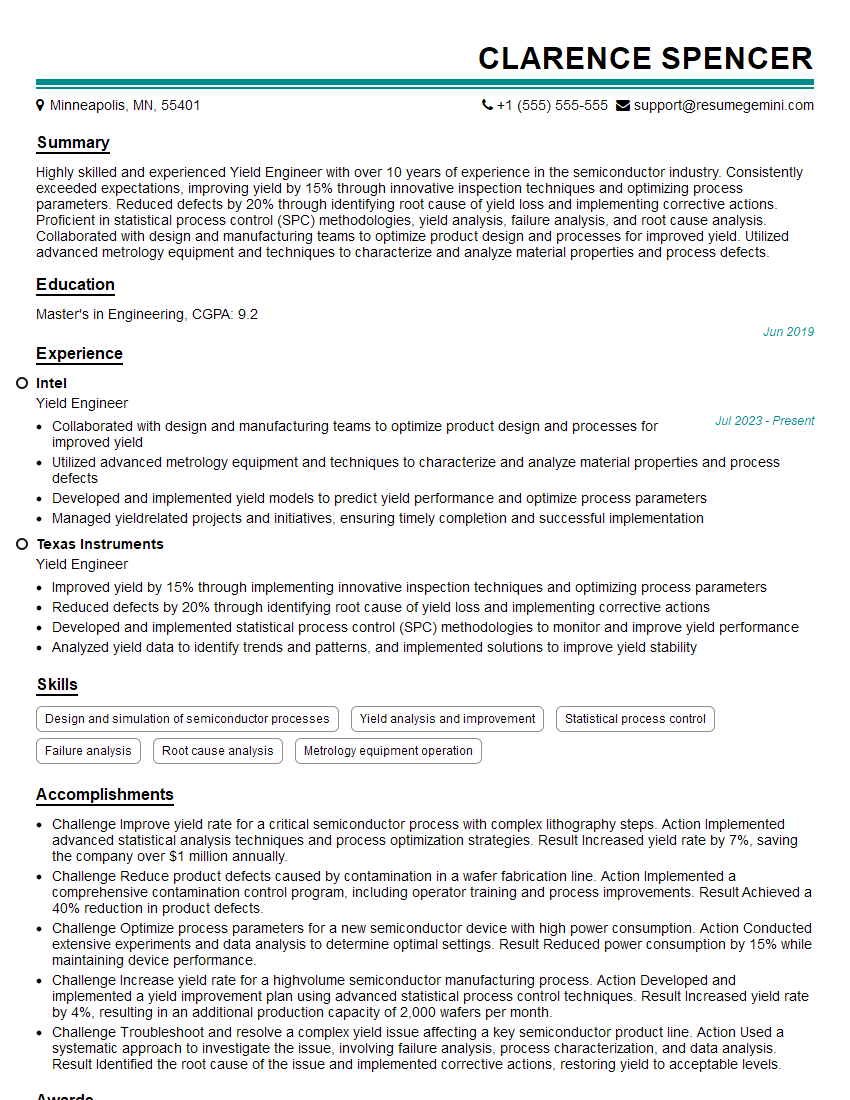
Mastering Chip Quality Monitoring opens doors to exciting career opportunities in a rapidly growing field. Your expertise in ensuring high-quality, reliable chips is invaluable to semiconductor companies. To maximize your job prospects, create a compelling and ATS-friendly resume that showcases your skills and experience effectively. ResumeGemini is a trusted resource to help you build a professional and impactful resume. We provide examples of resumes tailored specifically to Chip Quality Monitoring roles to guide you through the process. Invest time in crafting a strong resume—it’s your first impression to potential employers.

Explore more articles
Users Rating of Our Blogs
Share Your Experience
We value your feedback! Please rate our content and share your thoughts (optional).
What Readers Say About Our Blog
Very informative content, great job.
good