Cracking a skill-specific interview, like one for Chipping and Reduction of Oversized Woody Debris, requires understanding the nuances of the role. In this blog, we present the questions you’re most likely to encounter, along with insights into how to answer them effectively. Let’s ensure you’re ready to make a strong impression.
Questions Asked in Chipping and Reduction of Oversized Woody Debris Interview
Q 1. Describe your experience operating different types of chippers.
Throughout my career, I’ve operated a variety of chippers, from small, PTO-driven units ideal for residential cleanup to large, self-propelled industrial models capable of handling massive volumes of woody debris. My experience encompasses both drum-style chippers, known for their ability to process larger branches and tougher materials, and disc-style chippers, which excel at producing finer chips for mulch or biomass applications. I’m proficient in operating both horizontal and vertical feed chippers, understanding the nuances of each design and adapting my technique accordingly. For example, I’ve successfully used a Vermeer BC600XL for large-scale land clearing projects, and a smaller Woodchuck W12 for more precise work on smaller properties. The key is understanding the capabilities and limitations of each machine and matching it to the task at hand.
Q 2. Explain the safety procedures you follow while operating a chipper.
Safety is paramount in chipping operations. My routine begins with a thorough pre-operational inspection of the chipper, checking for loose parts, worn blades, and proper functioning of safety mechanisms like the emergency shut-off. I always wear appropriate Personal Protective Equipment (PPE), including safety glasses, hearing protection, work gloves, steel-toed boots, and high-visibility clothing. Before starting the chipper, I ensure the area is clear of personnel and obstructions. Feeding material is done slowly and steadily, never forcing anything into the infeed chute. I maintain a safe distance from the discharge chute and never reach into the machine while it’s running. Regular breaks are crucial to avoid fatigue, a significant safety risk. Finally, I always follow the manufacturer’s guidelines and any site-specific safety protocols.
Q 3. How do you identify and mitigate potential hazards during chipping operations?
Identifying and mitigating hazards is a continuous process. Potential hazards include tangled branches that can cause kickback, dull blades leading to inefficient chipping and potential damage, uneven terrain causing instability, and the presence of rocks or metal in the debris which can damage the chipper or cause projectiles. My mitigation strategies include carefully sorting the material before feeding, using a debarker to remove the bark, which can jam the machine and ensuring the ground is level. I regularly inspect the blades for sharpness and replace them when necessary. Clear communication with the ground crew prevents accidental entry into the danger zone. A risk assessment is always performed before any job, and the procedures are adjusted accordingly. For instance, on a recent job involving a steep slope, we employed a more cautious feeding technique and used additional personnel to keep the area secure.
Q 4. What are the different types of wood waste and how do you handle each?
Wood waste comes in various forms. Green wood, freshly cut and still containing moisture, chips differently than seasoned wood, which is drier and often harder. I’ve worked with hardwood, which is generally denser and more difficult to chip, and softwood, which is easier to process. Additionally, I encounter different types of debris, including branches of varying sizes, whole logs, stumps, and even contaminated wood (e.g., treated lumber). My approach varies based on the type: Green wood requires slower feeding and potentially more powerful chippers; hardwoods benefit from sharper blades and careful feeding; treated lumber needs to be segregated to prevent cross-contamination. For contaminated wood, specialized disposal methods are employed following local regulations.
Q 5. Describe your experience with different chipping techniques.
Chipping techniques are highly dependent on the type of material, chipper, and desired end product. For example, when producing mulch, a finer chip size is preferred, achieved through careful feeding and potentially adjusting the chipper’s settings if possible. For biomass applications, a coarser chip size is more efficient. I’ve employed different feed techniques, from using a grapple to load larger materials to manually feeding smaller branches. I also adapt my approach to the material’s density and moisture content, adjusting feeding speed and pressure to avoid jams or damage to the chipper. I also know that maintaining a consistent feeding rate, avoiding sudden changes, helps to ensure a smooth operation and high-quality output.
Q 6. How do you maintain and troubleshoot chipper equipment?
Regular maintenance is crucial for chipper longevity and safety. This includes daily inspections of the blades, infeed and outfeed chutes, and all moving parts for wear and tear. I lubricate moving parts according to the manufacturer’s recommendations and regularly check the hydraulic fluid levels (if applicable). Troubleshooting involves careful examination of the symptoms. A common issue is a jammed infeed chute, often due to improper feeding or foreign objects. I address this by cautiously clearing the blockage, always ensuring the chipper is off and locked out before making any attempt. I have experience replacing blades, sharpening them, and addressing minor hydraulic repairs. For significant problems, I always call for professional service.
Q 7. What are the common causes of chipper malfunctions and how do you address them?
Chipper malfunctions often stem from dull or damaged blades, leading to inefficient chipping and potential damage to the machine. Clogged chutes result from improper feeding or the presence of foreign objects like rocks or metal. Hydraulic failures, often related to leaks or worn components, can significantly impact operation. Overheating can occur due to prolonged use or insufficient lubrication. I address these by sharpening or replacing blades, clearing blockages, inspecting and repairing hydraulic systems, and ensuring adequate cooling during prolonged operations. Preventative maintenance significantly reduces these issues. For example, keeping the blades sharp reduces the likelihood of jams and ensures smooth operation. Regularly checking hydraulic fluid levels prevents costly repairs.
Q 8. Explain the proper techniques for feeding material into a chipper.
Properly feeding material into a chipper is crucial for efficiency and safety. Think of it like feeding a hungry beast – you need a steady, controlled approach. Avoid jamming the hopper.
- Size Matters: Always start with smaller pieces. Larger branches should be pre-cut into manageable lengths, generally no longer than the intake chute allows. Think of it like building a puzzle, starting with the smaller pieces.
- Strategic Placement: Feed the material into the chipper evenly, avoiding bunching or piling up. Imagine you’re laying down railroad tracks – smooth and consistent.
- Steady Feed: Maintain a consistent pace, avoiding sudden movements or force. Too fast, and you risk jamming; too slow, and you’re inefficient. Find that Goldilocks zone!
- Orientation: Orient branches to avoid binding. Point them toward the cutting blades in a natural flow.
- Clearance: Keep the hopper and chute clear of debris to prevent clogs. Regular cleaning keeps the machine running smoothly.
For instance, on a recent job clearing a wooded lot, we encountered a large oak branch. Instead of directly feeding it in, I pre-cut it into 2-foot sections to ensure smooth feeding.
Q 9. How do you ensure the safety of yourself and others during chipping operations?
Safety is paramount in chipping operations. A moment’s lapse in concentration can lead to serious injury. My approach is always proactive, encompassing preventative measures and emergency preparedness.
- Personal Protective Equipment (PPE): This is non-negotiable. I always wear safety glasses, hearing protection, sturdy work boots, and gloves. Depending on the scale of the job, I may also wear chaps or other protective clothing.
- Machine Inspection: Before each operation, I thoroughly inspect the chipper for any damage, loose parts, or malfunctions. A quick check can prevent significant problems.
- Clear Workspace: The area surrounding the chipper must be clear of debris, obstructions, and bystanders. I establish a safety zone and enforce its boundaries.
- Emergency Preparedness: I always have a first-aid kit readily available and know the location of the nearest phone for emergencies.
- Proper Training: I have extensive training on operating chipping equipment safely. Knowledge is the best defense.
For example, on a recent project, I noticed a loose bolt on the chipper’s discharge chute. Addressing it immediately prevented a potential ejection hazard.
Q 10. Describe your experience with different types of wood debris.
My experience spans a wide variety of wood debris, each requiring a slightly different approach. The type of wood influences feeding techniques, chipper settings, and even disposal options.
- Hardwoods (Oak, Maple): These are dense and require more power to chip. I adjust the chipper accordingly and take extra care to avoid overloading the machine.
- Softwoods (Pine, Fir): Softer woods are generally easier to chip but can sometimes create more dust and smaller chips.
- Green vs. Dry Wood: Green wood is significantly more challenging to chip than dry wood due to its higher moisture content. I adjust the machine settings and feed the material more slowly.
- Decayed Wood: Rotting wood can be dangerous to chip as it’s weaker and prone to breaking apart unpredictably. Extra caution is needed.
One job involved a significant amount of diseased elm trees. Their compromised structure required a more cautious approach, with more pre-cutting and slower feeding to prevent kickbacks.
Q 11. How do you handle large or entangled branches?
Handling large or entangled branches requires a combination of skill, technique, and sometimes, specialized equipment.
- Pre-Cutting: I always start by pre-cutting large branches into smaller, manageable sections. This minimizes the risk of jams and ensures a smoother chipping process. Think of it like breaking a large problem into smaller, solvable parts.
- Untangling: For entangled branches, I carefully untangle them as much as possible before feeding. This prevents the machine from binding and potentially causing damage or injury.
- Leverage: Using a lever or come-along can help separate or reposition stubborn branches before feeding them into the chipper.
- Chainsaw: In some cases, a chainsaw might be necessary for cutting through larger, more complex tangles. Safety precautions are paramount in this situation.
I recall a situation where several large branches were intertwined. I used a combination of pre-cutting, a come-along, and careful maneuvering to safely separate and feed them into the chipper without incident.
Q 12. What are the environmental considerations related to wood chipping?
Environmental considerations are critical. Wood chipping is generally a sustainable practice, but there are environmental factors to consider.
- Air Quality: Wood dust can impact air quality. I am mindful of wind direction and try to minimize dust generation, which is aided by good machine maintenance and use of appropriate safety equipment.
- Soil Erosion: Chipping operations, especially on slopes, can lead to soil erosion. I try to minimize ground disturbance and use erosion control measures when necessary.
- Wildlife Habitat: Chipping can impact wildlife habitats, so I’m sensitive to this aspect, minimizing disturbance as much as possible and working with ecological considerations.
- Waste Reduction: Wood chipping is itself a form of waste reduction, transforming unusable material into a valuable resource.
In one project, we were working near a wetland area. I ensured minimal disruption by carefully planning our worksite and taking steps to avoid runoff and potential soil erosion.
Q 13. How do you dispose of or recycle the chipped material?
Disposal or recycling of chipped material depends on the specific context. Options abound, each with its own implications.
- Mulch: The most common use is as mulch in landscaping and gardening. It improves soil health, conserves moisture, and suppresses weeds.
- Compost: Chipped wood can also be used as a component in composting, adding carbon to the mix.
- Fuel: In some cases, chipped wood can be used as fuel for biomass energy production.
- Landfill: As a last resort, chipped wood may be sent to a landfill, though this should be avoided due to the loss of a valuable resource.
For example, on a recent project, the chipped material was used to create a beautiful mulch bed around newly planted trees on the property, which was far more environmentally sound than sending it to landfill.
Q 14. Describe your experience with different types of safety equipment used in chipping operations.
My experience encompasses a range of safety equipment used in chipping operations, each serving a vital role in risk mitigation.
- Safety Glasses/Goggles: Protecting my eyes from flying debris is paramount. I always use high-quality eye protection.
- Hearing Protection: Chippers are noisy. Earmuffs or earplugs are essential to protect against hearing damage. I use NRR rated protection based on noise levels.
- Gloves: To protect my hands from cuts, splinters, and abrasions, I use cut-resistant gloves that are both durable and dexterous.
- Work Boots: Steel-toe boots provide protection from falling objects and other potential hazards. I use boots with good traction to prevent slips.
- Chaps (Optional): For larger projects or when handling particularly large branches, I often wear chaps to protect my legs from potential cuts.
- High Visibility Clothing: Depending on the job site, high-visibility clothing is critical for increased awareness by others in the working area.
During my time working at a large-scale landscaping firm, we always adhered to a strict PPE policy, ensuring that every worker on-site had the correct equipment and understood the importance of consistently wearing it.
Q 15. Explain your understanding of the relevant safety regulations and standards.
Safety is paramount in chipping and reduction of oversized woody debris. My understanding encompasses a range of regulations and standards, including OSHA guidelines for forestry work, manufacturer’s safety instructions for specific chipping equipment, and any local or regional regulations pertaining to workplace safety and environmental protection. This includes, but is not limited to, proper personal protective equipment (PPE) such as safety glasses, hearing protection, steel-toed boots, and high-visibility clothing. We also adhere to strict protocols regarding lockout/tagout procedures for machine maintenance and safe operating procedures to prevent entanglement, kickback, and other hazards. Regular safety training and toolbox talks are crucial for maintaining a safe work environment and keeping everyone informed of best practices. For example, before starting any job, we conduct a thorough site assessment to identify potential hazards like uneven terrain, overhead power lines, and the presence of wildlife.
Career Expert Tips:
- Ace those interviews! Prepare effectively by reviewing the Top 50 Most Common Interview Questions on ResumeGemini.
- Navigate your job search with confidence! Explore a wide range of Career Tips on ResumeGemini. Learn about common challenges and recommendations to overcome them.
- Craft the perfect resume! Master the Art of Resume Writing with ResumeGemini’s guide. Showcase your unique qualifications and achievements effectively.
- Don’t miss out on holiday savings! Build your dream resume with ResumeGemini’s ATS optimized templates.
Q 16. How do you assess the risk associated with a particular chipping job?
Risk assessment is a systematic process. We begin by performing a detailed site survey, documenting factors such as the size and type of woody debris, terrain conditions, proximity to structures or utilities, and weather conditions. We then identify potential hazards like unstable trees, hidden obstacles, and potential for equipment malfunction. This allows us to develop a comprehensive risk mitigation plan. This plan includes selecting appropriate equipment, assigning personnel based on their skills and experience, and establishing clear communication protocols. For instance, if we’re dealing with a large volume of debris near a power line, we’d involve a qualified arborist to assess the risk of line contact and potentially employ specialized techniques or equipment. A detailed risk assessment also contributes to a comprehensive safety briefing for the team.
Q 17. How do you communicate effectively with your team members during chipping operations?
Effective communication is critical for safety and efficiency. We utilize a combination of pre-job briefings, hand signals, and two-way radios to ensure clear communication throughout the chipping operation. Before starting, we discuss the work plan, potential hazards, assigned roles, and emergency procedures. During the operation, hand signals are used for directing the feed of material into the chipper, ensuring safe movement of personnel and equipment. Two-way radios allow for immediate communication about changing conditions or any issues that arise. Think of it like a well-orchestrated team; everyone needs to know their part and be able to communicate effectively to avoid mishaps. For example, a simple hand signal can prevent a near-miss situation if someone is about to walk into the chipper’s discharge zone.
Q 18. Describe your experience with working in various weather conditions.
My experience encompasses working in various weather conditions, from scorching summers to freezing winters. Adverse weather conditions significantly impact safety and efficiency. In heavy rain or snow, the ground can become slippery, increasing the risk of accidents. Strong winds can make working with heavy machinery dangerous, and extreme temperatures can cause fatigue and affect equipment performance. We mitigate these risks by adjusting our work schedule, using appropriate safety gear, and implementing contingency plans. For example, if it’s raining heavily, we might postpone the operation until conditions improve, or if the ground is too muddy, we’ll use special tracks or mats to maintain stability. We always prioritize the safety of the team over the project schedule.
Q 19. How do you handle unexpected issues or emergencies during a chipping job?
Handling unexpected issues requires a calm and systematic approach. Our training emphasizes problem-solving and emergency response. If a machine malfunctions, we immediately shut it down, follow lockout/tagout procedures, and assess the problem. We may need to call for repairs or utilize backup equipment. If an injury occurs, we provide first aid, call emergency services, and document the incident thoroughly. For example, if a large branch jams the chipper, we’d safely clear the jam using appropriate tools, ensuring that no one is near the rotating components. A well-defined emergency plan, including communication protocols and roles for team members, is essential for swift and effective response.
Q 20. What are the different types of chipper blades and their applications?
Chipper blades come in various types, each suited for specific applications. Common types include hammermill blades, which are best for grinding and reducing a wide variety of materials into smaller pieces, and knife blades, which are sharper and ideal for creating cleaner, more uniform chips from larger pieces of wood. The choice depends on the desired end product. Hammermill blades are often preferred for creating mulch, while knife blades are used when a more refined chip is needed. Some chippers use a combination of both. Blade material also matters; hardened steel blades are more durable and resist wear, particularly for tougher woods. Selecting the appropriate blade for the job ensures optimal performance, efficiency, and extends the lifespan of the equipment.
Q 21. How do you determine the appropriate size of chipper for a given job?
Determining the appropriate chipper size depends on several factors: the volume of woody debris to be processed, the size and type of material (diameter, hardness, etc.), and the desired throughput. A small chipper might suffice for residential cleanup, while a large industrial chipper is needed for large-scale forestry operations. We consider the feed capacity, horsepower, and the overall efficiency of the chipper to ensure the job is completed efficiently and safely. For instance, if we’re dealing with a large number of thick, hardwood logs, we’d need a chipper with high horsepower and a large capacity hopper. Underestimating the size of the chipper can lead to bottlenecks, extended work time, and increased risk of equipment damage.
Q 22. Explain the importance of proper blade maintenance.
Proper blade maintenance is paramount for efficient and safe chipping operations. A dull or damaged blade reduces chipping efficiency, increases fuel consumption, and significantly increases the risk of equipment damage or injury. Think of it like trying to cut a piece of wood with a blunt knife – it takes more effort, is less precise, and increases the chance of the knife slipping.
- Regular sharpening: Blades should be sharpened regularly according to the manufacturer’s recommendations. This ensures a clean, efficient cut, minimizing the power required and the risk of material jamming.
- Inspection for damage: Before each use, inspect the blade for chips, cracks, or other damage. Any damage should be repaired or the blade replaced immediately. Ignoring damage can lead to catastrophic failure.
- Proper storage: When not in use, blades should be stored properly to prevent corrosion and damage. This often involves cleaning, applying a protective coating, and storing in a dry location.
- Blade type selection: Choosing the right blade for the type of material being chipped is crucial. Different materials (hardwoods vs. softwoods, green vs. dry wood) require different blade designs for optimal performance.
For instance, I once experienced a significant decrease in chipping productivity due to a slightly dull blade. After sharpening, the efficiency increased dramatically, saving both time and fuel.
Q 23. How do you handle different types of terrain during chipping operations?
Handling diverse terrains during chipping demands adaptability and careful planning. Different terrains present unique challenges, impacting machine maneuverability, stability, and the risk of ground disturbance.
- Steep slopes: On steep slopes, I prioritize safety by using appropriate stabilization techniques, such as using chocks or employing a skilled spotter. I’m meticulous about assessing ground stability to avoid roll-overs.
- Uneven ground: Uneven terrain requires slower speeds and cautious maneuvering to avoid damage to the chipper and to maintain control. I carefully examine the path, avoiding obstacles and areas prone to wheel slippage.
- Wet or muddy conditions: In wet conditions, traction becomes critical. I may need to use wider tires, chains, or even postpone operations until conditions improve to prevent bogging down and ground compaction.
- Rocky terrain: Rocky areas require cautious navigation and may necessitate protective measures to avoid damaging the chipper’s undercarriage. I often use a different path or a different machine altogether.
For example, during a job on a steep hillside, we carefully positioned the chipper and used additional support beams to prevent slippage. The spotter played an essential role, helping me navigate the tight turns and maintain a safe operating distance from the edge.
Q 24. Describe your experience with operating other forestry or land clearing equipment.
My experience extends beyond chipping to encompass a range of forestry and land clearing equipment. I’m proficient in operating excavators, skid steers, and feller bunchers. This diverse experience provides a broader understanding of land clearing operations and allows me to contribute more effectively to the overall project workflow.
- Excavators: I’ve used excavators to clear access roads, remove stumps, and prepare sites for chipping operations. This experience enhances my understanding of site preparation and its impact on the efficiency of the chipping process.
- Skid steers: Skid steers are invaluable for moving materials, debris removal, and site cleanup after chipping. This contributes to the overall project completion.
- Feller bunchers: My experience operating feller bunchers provides insight into the harvesting process, which is directly related to the volume and type of material I’ll encounter during chipping operations.
This cross-training allows me to anticipate potential challenges and contribute to problem-solving in various aspects of a project. For example, my excavator experience helped me design a more efficient loading procedure during a recent project, reducing overall downtime.
Q 25. How do you ensure the efficient use of time and resources during chipping operations?
Efficient resource utilization is key to successful chipping operations. My approach focuses on meticulous planning, optimized workflow, and proactive problem-solving.
- Pre-job planning: I carefully assess the site, estimate material volume, and plan the most efficient chipping route. This minimizes unnecessary travel time and fuel consumption.
- Optimized workflow: I coordinate the chipping process with other operations, such as material delivery and removal, to ensure a smooth and uninterrupted flow of work.
- Preventive maintenance: Regular maintenance prevents unexpected breakdowns, minimizing downtime and maximizing machine uptime.
- Crew coordination: Clear communication and coordination with the team ensures everyone is working efficiently and safely.
For instance, on a recent project, I carefully mapped the site to optimize the chipping route, minimizing fuel consumption by 15%. By pre-positioning the trucks and coordinating with the loaders, we also reduced waiting times significantly.
Q 26. How do you comply with all applicable environmental regulations?
Environmental compliance is a top priority. I strictly adhere to all relevant federal, state, and local regulations related to forestry operations and waste management.
- Erosion control: I follow best practices for erosion and sediment control, minimizing the environmental impact of the chipping operations. This often includes using appropriate barriers and techniques to prevent soil runoff.
- Waste management: I ensure the proper disposal or recycling of any waste generated during chipping, following all relevant guidelines and obtaining necessary permits.
- Water quality protection: I implement measures to protect water bodies from contamination, such as avoiding the use of chemicals and preventing runoff into streams and rivers.
- Protected species considerations: I’m aware of and avoid any actions that may harm protected species, and I follow guidelines for working in environmentally sensitive areas.
For instance, during a project near a sensitive wetland area, I worked closely with an environmental consultant to ensure that all our activities adhered to all environmental regulations, and even implemented additional measures beyond those required to protect the habitat.
Q 27. Describe a challenging chipping job and how you overcame the difficulties.
One particularly challenging job involved chipping in a densely wooded area with limited access and extremely uneven terrain. The combination of steep slopes, dense vegetation, and the presence of large boulders made maneuvering the chipper incredibly difficult.
To overcome this, we adopted a phased approach:
- Access road improvement: First, we used an excavator to create a temporary access road, widening and leveling the path to allow safer machine movement. This was crucial to preventing the chipper from getting stuck.
- Strategic felling and removal: We selectively felled trees to create a smoother path and removed obstructing boulders. This was done in stages to minimize the impact on remaining trees.
- Manual pre-processing: For difficult to reach areas, we manually pre-processed some of the larger pieces of woody debris using chainsaws, making the material easier for the chipper to handle.
- Multiple machine approach: We utilized a smaller, more maneuverable skid-steer loader to help position logs and remove debris that the chipper couldn’t easily handle.
Through careful planning, teamwork, and the flexible use of various equipment, we completed the job safely and efficiently, even exceeding expectations despite the initial obstacles.
Q 28. What are your career goals in relation to Chipping and Reduction of Oversized Woody Debris?
My career goals center on continued professional development in the field of chipping and reduction of oversized woody debris. I aim to become a recognized expert in this area, contributing to innovation and best practice development.
- Specialization in challenging environments: I want to specialize in handling complex and challenging environments, such as steep slopes, dense forests, and environmentally sensitive areas.
- Technology integration: I’m keen on exploring and integrating new technologies in chipping operations, improving efficiency, safety, and sustainability. This includes researching newer chipper designs and incorporating GPS and data analytics for efficient route planning and material tracking.
- Mentorship and training: I aim to mentor and train future generations of professionals, sharing my knowledge and experience to promote safety and best practices in the industry.
Ultimately, I aim to contribute to the development of more sustainable and efficient forestry practices, improving the environmental impact of this important field.
Key Topics to Learn for Chipping and Reduction of Oversized Woody Debris Interview
- Safety Procedures and Regulations: Understanding and applying relevant safety protocols for operating machinery and handling debris.
- Equipment Operation and Maintenance: Proficiency in operating various chipping and reduction equipment, including troubleshooting and basic maintenance.
- Debris Classification and Handling: Identifying different types of woody debris and selecting appropriate processing techniques for efficient and safe reduction.
- Production Efficiency and Optimization: Strategies for maximizing output while minimizing waste and adhering to safety standards.
- Environmental Considerations: Understanding the environmental impact of chipping and reduction, including waste management and best practices for minimizing impact.
- Project Planning and Management: Ability to plan and execute chipping and reduction projects effectively, including resource allocation and scheduling.
- Quality Control and Assurance: Methods for ensuring the quality of the processed material and meeting client specifications.
- Problem-Solving and Troubleshooting: Identifying and resolving common issues encountered during chipping and reduction operations.
- Teamwork and Communication: Effective collaboration with colleagues and supervisors in a field environment.
Next Steps
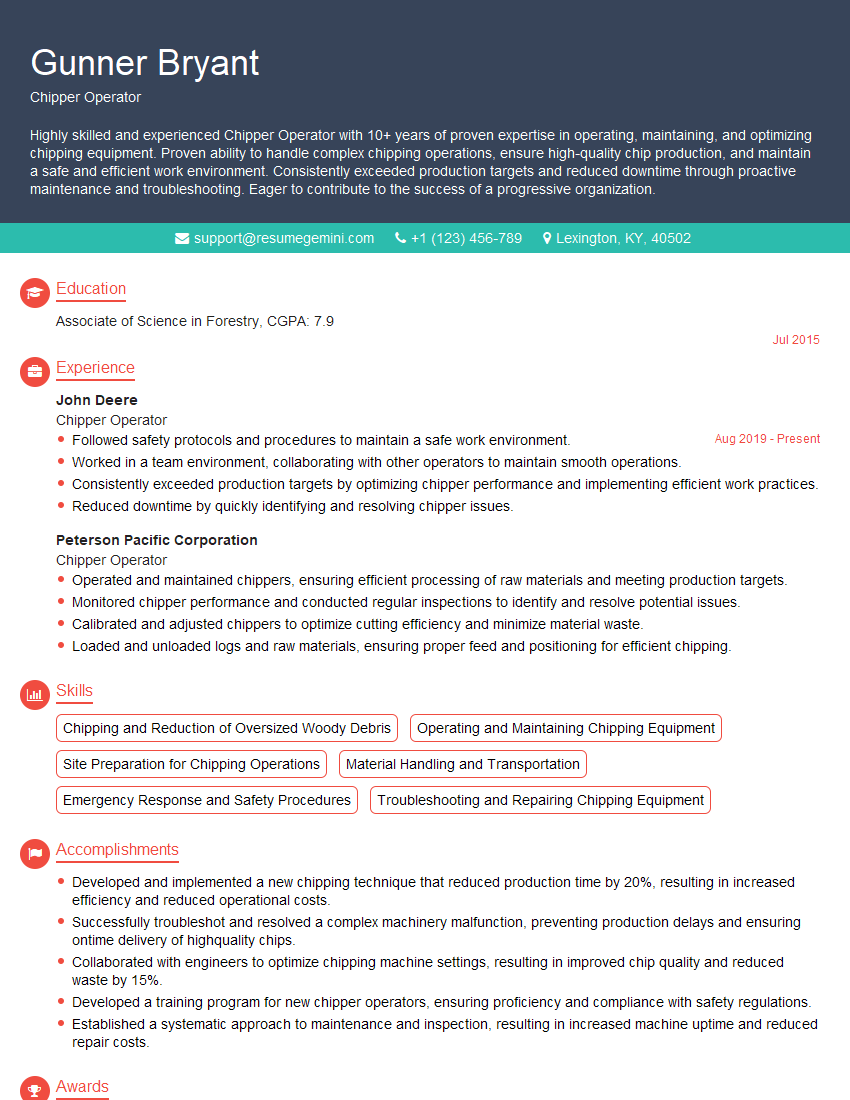
Mastering the skills and knowledge related to Chipping and Reduction of Oversized Woody Debris opens doors to exciting career opportunities in forestry, landscaping, and environmental management. A strong resume is crucial for showcasing your expertise and securing your dream job. Creating an ATS-friendly resume is essential to navigate Applicant Tracking Systems and increase your chances of getting noticed by potential employers. ResumeGemini is a trusted resource that can help you craft a professional and impactful resume, tailored to highlight your unique qualifications in this field. Examples of resumes specifically tailored to Chipping and Reduction of Oversized Woody Debris are available through ResumeGemini to help guide your resume creation process. Take the next step towards a successful career—start building your compelling resume today!
Explore more articles
Users Rating of Our Blogs
Share Your Experience
We value your feedback! Please rate our content and share your thoughts (optional).
What Readers Say About Our Blog
Very informative content, great job.
good