Interviews are opportunities to demonstrate your expertise, and this guide is here to help you shine. Explore the essential Church Management interview questions that employers frequently ask, paired with strategies for crafting responses that set you apart from the competition.
Questions Asked in Church Management Interview
Q 1. Describe your experience managing church budgets.
Managing a church budget requires a keen understanding of both financial principles and the unique needs of a faith-based organization. My approach involves a multi-step process. First, I collaborate with the church leadership and finance committee to develop a comprehensive annual budget, meticulously forecasting income (e.g., tithes, offerings, fundraising events) and meticulously detailing expenses (e.g., salaries, utilities, maintenance, mission projects). This budget is not simply a list of numbers; it’s a strategic roadmap aligning with the church’s overall mission and goals. I then implement robust tracking systems, using software like QuickBooks or Church Management Software (CMS) to monitor income and expenditures closely. Regular financial reports are generated, comparing actuals against the budget, allowing for proactive adjustments if necessary. Finally, transparency is paramount; I ensure that the financial health of the church is regularly communicated to the congregation, fostering trust and accountability.
For example, at my previous church, we implemented a new online giving system, which increased efficiency and transparency in managing donations. We also identified areas of potential savings through careful negotiation of contracts with vendors, which allowed us to redirect funds towards outreach programs. This demonstrates the power of strategic budgeting and proactive cost management.
Q 2. How do you handle conflict resolution within a church setting?
Conflict resolution in a church setting requires sensitivity, empathy, and a strong understanding of biblical principles. My approach is grounded in restorative justice, focusing on reconciliation and healing rather than simply assigning blame. I typically begin by facilitating open and honest communication between the parties involved, creating a safe space for expressing concerns without judgment. Active listening is crucial, ensuring everyone feels heard and understood. I then work collaboratively to identify the root causes of the conflict, seeking common ground and exploring mutually acceptable solutions. Prayer and mediation, often guided by biblical principles, can play a significant role in this process. Sometimes, involving a neutral third party can be beneficial, particularly in more complex situations. The ultimate goal is to restore broken relationships and maintain the unity and peace of the church community.
In one instance, a disagreement arose between two long-standing members regarding church leadership. By facilitating a series of private meetings, allowing each person to share their perspective, we were able to uncover underlying misunderstandings and address their concerns. Through prayer and dialogue, we ultimately achieved a resolution that strengthened their relationship and fostered greater unity within the church.
Q 3. Explain your approach to volunteer recruitment and management.
Effective volunteer recruitment and management is essential for a thriving church. My strategy begins with clearly defined roles and responsibilities, matching volunteers’ skills and interests with specific needs within the church. This requires creating detailed volunteer job descriptions. I utilize various recruitment methods including announcements during services, church newsletters, email campaigns, and social media. Once volunteers are recruited, ongoing communication and appreciation are vital. Regular meetings, training sessions, and opportunities for feedback help keep volunteers engaged and motivated. I also employ a robust system for tracking volunteer hours, providing recognition for their contributions, and ensuring proper oversight to minimize administrative burden. Furthermore, establishing clear expectations and providing appropriate training minimizes potential conflicts and maximizes volunteer effectiveness.
At one church, I implemented a volunteer management system which streamlined scheduling, communication, and training. This resulted in increased volunteer participation and improved efficiency in various church ministries. The system also provided better tracking of volunteer hours, which was valuable for internal reporting and recognizing contributions.
Q 4. What software or systems are you proficient in for church administration?
My proficiency in church administration software spans several systems. I am highly experienced with QuickBooks for accounting and financial management, allowing for meticulous tracking of income, expenses, and budgeting. I also have extensive experience with various Church Management Systems (CMS) such as Planning Center Online, ChurchTrac, and ACS Technologies, utilizing their features for membership management, event scheduling, communication tools, and volunteer coordination. Furthermore, I’m comfortable using Microsoft Office Suite (Word, Excel, PowerPoint) for document creation, data analysis, and presentations. My experience with these systems allows me to efficiently manage all aspects of church administration, improving organizational effectiveness and communication.
Q 5. How do you ensure church compliance with legal and financial regulations?
Ensuring church compliance with legal and financial regulations requires meticulous attention to detail and a proactive approach. This involves staying informed on all relevant federal, state, and local laws, including those related to tax-exempt status (501(c)(3)), employment regulations, and data privacy. I regularly review church policies and procedures to ensure they align with current regulations. This includes maintaining accurate financial records, filing tax returns on time and accurately, and ensuring proper handling of donations and financial transactions. I also work closely with legal counsel and financial advisors to address any complex compliance issues or potential risks. Regular audits and internal controls are also critical elements to ensure accountability and transparency, maintaining the church’s credibility and preventing legal issues.
For example, I played a key role in guiding my previous church through an IRS audit, ensuring all documentation was in order and maintaining open communication throughout the process. This proactive approach resulted in a successful audit outcome.
Q 6. Describe your experience with facility management and maintenance.
Facility management and maintenance are critical for creating a welcoming and functional church environment. My approach involves a combination of preventative maintenance, proactive repairs, and efficient resource allocation. This includes developing and implementing a regular maintenance schedule for all church facilities, encompassing routine inspections, equipment servicing, and preventative repairs. I work with contractors for major repairs or renovations, ensuring competitive pricing and quality workmanship. Additionally, I manage facility usage schedules, optimizing space utilization and minimizing conflicts. Safety is a paramount concern, ensuring compliance with all building codes and safety regulations. Regular safety inspections and emergency preparedness plans are key components of my strategy. A well-maintained facility reflects well on the church and creates a positive experience for its members.
At a previous church, I successfully oversaw a major renovation project, coordinating contractors, managing budgets, and ensuring minimal disruption to church services. This project not only improved the functionality of the building but also enhanced the overall church experience for the congregation.
Q 7. How would you develop and implement a strategic plan for church growth?
Developing and implementing a strategic plan for church growth involves a holistic approach that encompasses spiritual, relational, and organizational elements. It begins with a thorough assessment of the church’s current strengths, weaknesses, opportunities, and threats (SWOT analysis). This assessment informs the development of a clear vision statement, defining the church’s long-term goals and aspirations. Specific, measurable, achievable, relevant, and time-bound (SMART) objectives are then established, focusing on areas such as discipleship, outreach, community engagement, and facility development. Implementation requires a collaborative effort, involving various church leaders and members. Regular progress monitoring and evaluation are essential to ensure the plan stays on track and to make necessary adjustments along the way. Continuous feedback mechanisms and communication are vital in keeping the entire congregation involved and informed.
For instance, a strategic plan I developed for a church focused on expanding outreach efforts to young adults, using social media marketing and engaging community events to attract new members. The plan incorporated specific goals, timelines, and resources, resulting in significant growth in the young adult ministry.
Q 8. What metrics do you use to track the effectiveness of church programs?
Measuring the effectiveness of church programs requires a multifaceted approach, going beyond simple attendance figures. We need to track both quantitative and qualitative data to gain a holistic understanding of impact.
Quantitative Metrics: These are easily measurable numbers. Examples include attendance at events, participation in small groups, number of new members, donations received (for fundraising programs), volunteer hours contributed, and website/social media engagement (likes, shares, comments).
Qualitative Metrics: These assess the intangible aspects. We use surveys, feedback forms, and interviews to gauge member satisfaction, spiritual growth, community building, and the overall impact on people’s lives. For example, open-ended questions in a post-event survey can reveal how a program impacted participants’ faith or sense of belonging.
Benchmarking: Comparing our metrics over time and against similar churches provides valuable context. For instance, tracking the growth of our youth group membership year-over-year allows us to see if our initiatives are successful.
By combining quantitative and qualitative data, we build a comprehensive picture of a program’s success and identify areas for improvement.
Q 9. How do you manage and prioritize multiple projects simultaneously?
Managing multiple projects simultaneously in a church setting requires strong organizational skills and a clear prioritization strategy. I utilize a project management framework, often adapting aspects of Agile methodology, to ensure efficiency.
Prioritization Matrix: I categorize projects based on urgency and importance (Eisenhower Matrix). High-urgency, high-importance tasks (e.g., addressing a critical building repair) take precedence over lower-priority items (e.g., updating the church directory).
Project Timeline & Milestones: Breaking down large projects into smaller, manageable tasks with clearly defined deadlines helps maintain focus and track progress. Regular check-ins with relevant teams keep everyone aligned.
Delegation & Teamwork: I leverage the skills and talents within the church community, delegating tasks effectively. This not only lightens my workload but also empowers others and fosters a sense of shared responsibility.
Communication is Key: Regular updates and transparent communication with all stakeholders are essential to avoid confusion and ensure everyone is working towards the same goals. This includes using tools like project management software (Asana, Trello) to track progress and assignments.
For example, while managing a capital campaign (high priority, long-term), I might simultaneously oversee the planning of a weekly service (high urgency, short-term) and the launch of a new small group program (medium priority, medium-term). A well-defined framework keeps everything on track.
Q 10. Describe your experience with fundraising and donor relations.
My experience encompasses all aspects of fundraising and donor relations, from developing strategic fundraising plans to cultivating strong relationships with donors. I believe in transparency and building trust.
Strategic Planning: I collaborate with church leadership to identify fundraising goals and develop a comprehensive plan, incorporating diverse strategies like capital campaigns, annual giving programs, special events, and online donation platforms.
Donor Cultivation: I prioritize nurturing relationships with donors through regular communication, personalized thank-you notes, and opportunities for engagement with the church community. Recognizing and appreciating their generosity is paramount.
Donor Database Management: I use a CRM (Customer Relationship Management) system to effectively track donor information, donation history, and communication preferences. This allows for personalized outreach and targeted fundraising efforts.
Grant Writing: I have experience writing grant proposals to secure funding from external organizations, which complements our internal fundraising initiatives.
For instance, I successfully managed a capital campaign that raised significant funds for a church renovation project by implementing a phased approach, cultivating major donors, and leveraging online fundraising tools. Regular donor updates kept everyone informed and engaged.
Q 11. How do you handle sensitive information and maintain confidentiality?
Handling sensitive information and maintaining confidentiality is paramount in church management. I adhere to strict ethical guidelines and legal requirements for data protection.
Data Security Protocols: We utilize secure databases, password-protected systems, and encryption to protect confidential information like member records, financial data, and personal details.
Access Control: Access to sensitive information is limited to authorized personnel on a need-to-know basis. We regularly review and update access permissions.
Compliance with Regulations: We are compliant with all relevant data protection laws and regulations (e.g., GDPR, CCPA), ensuring the security and privacy of all information.
Confidentiality Policies: Clear policies regarding data confidentiality are established and communicated to all staff and volunteers. Training sessions reinforce these policies.
For example, we have a clear protocol for handling member information related to counseling or pastoral care, ensuring strict confidentiality and protecting vulnerable individuals.
Q 12. What is your experience with church website and social media management?
I have extensive experience managing church websites and social media platforms to enhance communication and engagement within the community and beyond.
Website Management: I am proficient in using CMS (Content Management Systems) like WordPress to update content, manage website design, and ensure optimal user experience. I focus on creating a user-friendly site with easy access to information about services, events, and church resources.
Social Media Strategy: I develop and implement a social media strategy that aligns with the church’s mission and goals. This includes creating engaging content, scheduling posts, monitoring social media interactions, and managing online reputation.
Online Communication: I use these platforms to communicate important announcements, share inspiring messages, and promote church events, fostering a sense of community among members and outreach to prospective members.
Analytics Tracking: I track website and social media analytics to understand user engagement and optimize our online presence. This data-driven approach allows us to refine our strategies and improve communication effectiveness.
For example, I successfully redesigned a church website, making it more intuitive and visually appealing, resulting in a significant increase in website traffic and engagement. On social media, our targeted campaigns increased event attendance and volunteer sign-ups.
Q 13. Explain your understanding of church governance and policies.
Church governance and policies are crucial for effective leadership and accountability. My understanding encompasses legal compliance, financial transparency, and ethical decision-making.
Bylaws & Policies: I am familiar with the development, implementation, and review of church bylaws, policies, and procedures, ensuring alignment with legal requirements and the church’s mission.
Financial Management: I understand the importance of sound financial practices, including budgeting, accounting, and reporting, ensuring transparency and accountability in all financial matters.
Legal Compliance: I am aware of relevant legal frameworks concerning non-profit organizations, including tax laws, employment regulations, and data protection laws.
Conflict Resolution: I have experience in facilitating conflict resolution within church governance structures, ensuring fair and equitable processes.
For example, I helped a church revise its bylaws to better reflect current best practices in governance and to strengthen its accountability mechanisms. I also assisted in implementing a new financial management system to improve transparency and efficiency.
Q 14. How do you ensure effective communication within the church community?
Effective communication is the cornerstone of a thriving church community. My approach is multifaceted, utilizing a variety of channels to reach diverse members.
Multi-Channel Communication: I utilize various communication channels, including weekly bulletins, email newsletters, church website updates, social media posts, and announcements during services to reach members with different communication preferences.
Targeted Messaging: I tailor communication to specific audiences, ensuring messages resonate with different age groups, interests, and needs. For example, youth group communication differs significantly from that directed at senior members.
Feedback Mechanisms: I establish clear feedback loops, encouraging members to share their thoughts and suggestions. This might involve surveys, feedback forms, or open forums.
Transparency & Openness: Open and honest communication builds trust and fosters a sense of community. Transparency in decision-making processes is vital.
For instance, I implemented a new communication system using a church management software to streamline email campaigns, improving efficiency and ensuring timely delivery of announcements and relevant information to the congregation. Regular feedback surveys helped us refine our communication strategy to better meet the needs of our members.
Q 15. Describe your experience with managing church staff and volunteers.
Managing church staff and volunteers requires a blend of leadership, organization, and pastoral care. My experience involves not only assigning tasks and overseeing projects but also fostering a supportive and collaborative environment. I’ve utilized various methods, including:
- Clear Role Definitions: Creating detailed job descriptions for both paid staff and volunteers, outlining responsibilities, expectations, and reporting structures.
- Regular Communication: Implementing weekly team meetings, email updates, and individual check-ins to ensure everyone is informed and feels valued.
- Training and Development: Providing ongoing training opportunities for staff and volunteers to enhance their skills and knowledge, boosting morale and efficiency. For example, I organized a workshop on social media management for our communications team.
- Performance Evaluation: Establishing a fair and consistent performance review process for staff, providing constructive feedback and identifying areas for growth.
- Conflict Resolution: Developing strategies for addressing conflicts among team members, focusing on open communication and finding mutually agreeable solutions. One instance involved mediating a disagreement between two volunteers regarding event planning responsibilities, resulting in a more collaborative approach.
Ultimately, my goal is to build a strong, cohesive team that is passionate about serving the church and its community.
Career Expert Tips:
- Ace those interviews! Prepare effectively by reviewing the Top 50 Most Common Interview Questions on ResumeGemini.
- Navigate your job search with confidence! Explore a wide range of Career Tips on ResumeGemini. Learn about common challenges and recommendations to overcome them.
- Craft the perfect resume! Master the Art of Resume Writing with ResumeGemini’s guide. Showcase your unique qualifications and achievements effectively.
- Don’t miss out on holiday savings! Build your dream resume with ResumeGemini’s ATS optimized templates.
Q 16. How do you balance the needs of diverse congregational members?
Balancing the needs of a diverse congregation is crucial for creating a welcoming and inclusive environment. I approach this by:
- Active Listening: Regularly seeking feedback from various congregational groups through surveys, focus groups, and informal conversations. This allows me to understand their unique needs and concerns.
- Diverse Programming: Offering a wide range of services, events, and programs that cater to different age groups, cultural backgrounds, and interests. This could include separate youth groups, multicultural celebrations, and diverse worship styles.
- Accessibility: Ensuring that all facilities and programs are accessible to people with disabilities, offering accommodations as needed. This includes providing sign language interpretation, wheelchair ramps, and large-print materials.
- Inclusive Language: Using inclusive language in all communications to ensure that everyone feels valued and respected. I’ve personally trained staff and volunteers on the importance of avoiding language that might unintentionally marginalize certain groups.
- Open Dialogue: Creating opportunities for open and honest dialogue within the congregation to address potential conflicts and build understanding. This could involve hosting town hall-style meetings or establishing a dedicated feedback mechanism.
Essentially, I strive to create a church where every member feels seen, heard, and valued, regardless of their background.
Q 17. How do you develop and maintain positive relationships with church leaders?
Maintaining positive relationships with church leaders is essential for effective church management. My approach focuses on:
- Open and Honest Communication: Maintaining regular communication with church leaders through scheduled meetings, email updates, and informal check-ins, keeping them informed about all aspects of church operations.
- Collaboration and Shared Vision: Working collaboratively with leaders to develop and implement strategies that align with the church’s overall mission and vision. This often involves strategic planning sessions and collaborative goal-setting.
- Transparency and Accountability: Providing regular reports and updates on church finances, programs, and activities, demonstrating transparency and accountability in my role.
- Respectful Dialogue: Engaging in respectful and constructive dialogue with leaders, even when there are disagreements, focusing on finding common ground and solutions that benefit the church.
- Seeking Input and Feedback: Regularly seeking input and feedback from leaders on various aspects of church management, demonstrating a willingness to listen and learn.
By fostering mutual trust and respect, I aim to create a strong partnership with church leaders that enables effective collaboration and supports the church’s overall success.
Q 18. Describe your experience with event planning and execution.
My experience in event planning and execution is extensive. I’ve managed events ranging from small gatherings to large-scale conferences. My approach involves:
- Detailed Planning: Developing comprehensive event plans that include budgets, timelines, venue selection, vendor contracts, and marketing strategies. I utilize project management software to track progress and manage resources.
- Teamwork and Delegation: Effectively delegating tasks to volunteers and staff, ensuring clear roles and responsibilities. For example, I assigned specific roles for setup, registration, hospitality and cleanup for a recent church fundraiser.
- Risk Management: Identifying potential risks and developing contingency plans to address unforeseen issues. This might include having backup plans for weather-related events or technical difficulties.
- Post-Event Evaluation: Conducting thorough post-event evaluations to assess success, identify areas for improvement, and gather feedback for future events. We regularly analyze attendance, feedback surveys, and financial reports to improve future events.
- Budget Management: Meticulously managing event budgets, ensuring responsible spending and staying within allocated funds. Tracking income and expenses allows for transparent and accountable financial reporting.
Successful event management, to me, is about creating memorable experiences that achieve the intended goals while maximizing efficiency and minimizing stress.
Q 19. How do you deal with difficult or challenging congregants?
Dealing with difficult or challenging congregants requires patience, empathy, and a firm understanding of conflict resolution techniques. My approach includes:
- Active Listening: Patiently listening to their concerns without interruption, ensuring they feel heard and understood.
- Empathy and Validation: Attempting to understand their perspective, even if I don’t agree with it, and validating their feelings.
- Clear Communication: Clearly communicating the church’s policies and expectations, using calm and respectful language.
- Mediation and Facilitation: If appropriate, offering to mediate between the congregant and other individuals involved in the conflict.
- Setting Boundaries: Setting clear boundaries regarding unacceptable behavior, ensuring the safety and well-being of all members of the congregation. This might involve referring individuals to pastoral counseling if needed.
- Referral to appropriate resources: Connecting congregants with external resources such as counseling services if needed.
The goal is to de-escalate the situation, resolve conflicts peacefully, and maintain a positive and respectful atmosphere within the church community.
Q 20. What is your experience with database management for church records?
My experience with database management for church records involves utilizing software such as Church Community Builder, Planning Center, or similar systems to manage member information, giving records, event registrations, and financial data. This includes:
- Data Entry and Maintenance: Accurately entering and updating member information, ensuring data integrity and consistency.
- Report Generation: Generating reports on various aspects of church operations, including membership statistics, giving trends, and event attendance.
- Data Security: Implementing appropriate security measures to protect sensitive member information in accordance with privacy regulations.
- Data Analysis: Analyzing data to identify trends and insights that can inform decision-making regarding church programs and initiatives. This can help in identifying areas for growth and areas needing attention.
- System Integration: Integrating the database with other church systems, such as accounting software or website platforms.
Proficient database management ensures efficient operations, informed decision-making, and the protection of sensitive congregational data.
Q 21. How would you improve efficiency in church administrative processes?
Improving efficiency in church administrative processes involves a multi-faceted approach:
- Process Mapping and Automation: Analyzing existing processes to identify bottlenecks and areas for improvement. Automating repetitive tasks, such as email marketing or donation processing, using available software tools to free up staff time for more strategic work.
- Workflow Optimization: Streamlining workflows to reduce redundancy and improve communication between different departments or teams. This could involve implementing a centralized communication system or using project management software.
- Technology Adoption: Implementing user-friendly software solutions for tasks such as membership management, accounting, and communication. Training staff and volunteers on how to effectively use these tools is vital.
- Delegation and Training: Clearly defining roles and responsibilities, delegating tasks appropriately, and providing ongoing training to staff and volunteers to enhance their skills and efficiency. This empowers team members and fosters collaboration.
- Regular Review and Evaluation: Regularly reviewing and evaluating processes to ensure their effectiveness and identify areas for further improvement. This iterative approach is key to sustained efficiency gains.
By embracing technology, optimizing workflows, and empowering staff, we can create a more efficient and effective church administration, freeing up resources for ministry and outreach.
Q 22. What is your understanding of risk management within a church context?
Risk management in a church context involves identifying, assessing, and mitigating potential threats to the church’s operations, assets, reputation, and members. It’s not just about financial risks; it encompasses a broad spectrum of potential problems.
- Financial Risks: This includes mismanagement of funds, insufficient budgeting, debt, and inadequate insurance coverage. For example, failing to adequately insure the church building against fire or theft.
- Legal Risks: These involve issues such as employment law compliance, liability for accidents on church property, and safeguarding children and vulnerable adults. A clear example is neglecting to conduct thorough background checks on volunteers working with children.
- Reputational Risks: Negative publicity, ethical breaches by church leaders, or internal conflicts can damage the church’s standing in the community. For instance, a scandal involving a pastor could lead to a significant loss of members and donations.
- Operational Risks: These relate to disruptions to church services, technology failures, and security breaches. A failure of the sound system during a major service would fall under this category.
- Security Risks: Protecting church property, financial information, and member data from theft, vandalism, or cyberattacks is crucial. Failing to implement strong passwords and firewalls exposes the church to significant data breaches.
A robust risk management plan typically involves identifying potential risks, analyzing their likelihood and impact, developing mitigation strategies, implementing those strategies, and regularly monitoring and reviewing the plan.
Q 23. Describe your experience with technology integration in church ministries.
My experience with technology integration in church ministries is extensive. I’ve overseen the implementation of various systems to enhance efficiency, communication, and engagement.
- Church Management Software (CMS): I’ve implemented and managed several CMS platforms, such as Planning Center, ChurchTrac, or Breeze, to streamline membership management, event scheduling, volunteer coordination, and giving processes. This has led to significant improvements in data accuracy and administrative efficiency. For example, automated email reminders for events drastically reduced manual effort and ensured better attendance.
- Website and Social Media Management: I’ve developed and maintained church websites and social media presence, using platforms like WordPress, Facebook, and Instagram to engage members and the wider community, share announcements, and disseminate vital information. Creating engaging content and managing online interactions improved communication and community building.
- Live Streaming and Online Services: I’ve been involved in setting up and managing live streaming of services, using platforms like YouTube Live or Vimeo, enabling remote participation and expanding the church’s reach. This was particularly important during the pandemic and continues to benefit those who cannot attend in person.
- Giving Platforms: I’ve integrated online giving solutions, allowing members to donate securely and conveniently via credit cards or electronic transfers. This boosted giving rates and simplified the donation process for donors.
In each case, I prioritized user-friendliness, security, and integration with existing systems. The key is to choose technology that aligns with the church’s needs and capabilities, providing adequate training to ensure effective usage by church staff and volunteers.
Q 24. How do you ensure the security of church assets and information?
Ensuring the security of church assets and information requires a multi-layered approach combining physical and digital security measures.
- Physical Security: This includes securing the church building with alarms, security cameras, and adequate lighting. Regular maintenance of security systems and training for staff on security protocols are also critical. For instance, implementing a system to track who enters and exits the building.
- Data Security: Implementing strong passwords, two-factor authentication, firewalls, and antivirus software are essential to protect sensitive data like member information, financial records, and confidential documents. Regular software updates and security audits are also necessary.
- Financial Security: Implementing robust accounting procedures, segregation of duties, and regular financial audits are vital to prevent fraud and misuse of funds. A strong internal control system is essential. For example, requiring two signatures for all checks above a certain amount.
- Cybersecurity Awareness Training: Educating staff and volunteers about phishing scams, malware, and other cyber threats is paramount. Regular training sessions emphasizing best practices help prevent security breaches.
- Data Backup and Disaster Recovery: Regularly backing up critical data to an offsite location is crucial for business continuity in case of hardware failure or disaster. This ensures data recovery and minimal disruption.
Security is an ongoing process, requiring regular review and updates to adapt to evolving threats. It’s not a one-time fix but a continuous commitment to protecting church assets and information.
Q 25. What is your experience with creating and managing church reports?
Creating and managing church reports is a vital aspect of church administration, providing insights into various aspects of the church’s operations and ministry.
- Financial Reports: I have extensive experience in preparing balance sheets, income statements, and cash flow statements to monitor the church’s financial health. This involves reconciling bank statements, tracking expenses, and generating reports for budgeting and decision-making. I utilize accounting software like QuickBooks to streamline this process.
- Membership Reports: I can generate reports on membership demographics, attendance trends, and participation in various church activities. This helps to identify areas for growth and tailor ministry to the needs of the congregation. This might involve analyzing attendance data to identify trends and develop targeted outreach strategies.
- Giving Reports: I produce reports on giving patterns, average donation amounts, and donor demographics. This information is invaluable for stewardship and fundraising planning. Identifying key giving patterns helps to better engage donors and secure future support.
- Event Reports: I create reports on event attendance, volunteer participation, and event costs to assess the success of various events and improve future planning. Analyzing data from past events helps optimize future events for better participation and efficiency.
- Custom Reports: I can create custom reports based on specific needs or questions, using data from various sources within the church’s database.
My approach to report generation emphasizes clarity, accuracy, and timely delivery. I ensure the reports are easy to understand and provide actionable insights to support informed decision-making by church leadership.
Q 26. How do you measure the success of church outreach programs?
Measuring the success of church outreach programs requires a multifaceted approach that goes beyond simply counting attendees or donations.
- Quantitative Measures: These include tracking attendance at outreach events, the number of new members or visitors, and the amount of donations received specifically as a result of outreach efforts. For example, a significant increase in new members following a specific community event would indicate success.
- Qualitative Measures: This involves gathering feedback from participants, volunteers, and community members through surveys, interviews, or focus groups. Qualitative feedback provides insights into the impact of the program on individuals and the community. For example, testimonials from participants detailing positive experiences would demonstrate program impact.
- Spiritual Impact: While difficult to quantify, measuring the spiritual growth of individuals impacted by outreach programs is essential. This could involve observing increased participation in church services, small groups, or other spiritual activities. An increased number of individuals expressing a deepening faith is a key qualitative indicator of success.
- Community Engagement: Assessing the level of community involvement and partnerships forged through outreach efforts is important. This might involve tracking the number of community partners involved or the level of positive media coverage. A strong community partnership suggests the program effectively integrates into the community.
A balanced approach using both quantitative and qualitative methods provides a comprehensive understanding of the effectiveness of outreach programs, allowing for improvements and refinement of future strategies.
Q 27. Describe your experience in developing and implementing a church communication strategy.
Developing and implementing a church communication strategy involves creating a comprehensive plan to effectively communicate with various audiences – members, prospective members, and the wider community.
- Audience Segmentation: Identifying key audience groups (e.g., families with young children, young adults, senior citizens) helps tailor communication to their specific needs and preferences.
- Communication Channels: Utilizing a variety of channels, such as the church website, email newsletters, social media, bulletin announcements, and text messaging, ensures broad reach and accessibility.
- Content Calendar: Creating a content calendar helps plan and schedule communications, ensuring consistent messaging and avoiding information overload. This could involve scheduling announcements, event details, and relevant articles on the church website.
- Consistent Branding: Maintaining consistent branding across all communication channels creates a unified and recognizable church identity. This ensures all communication materials maintain the same tone and style.
- Feedback Mechanisms: Incorporating feedback mechanisms, such as surveys or comment sections, helps to understand audience engagement and improve communication effectiveness.
- Crisis Communication Plan: A comprehensive crisis communication plan outlines how the church will respond to unexpected events or negative situations. This plan should clearly define communication channels and key stakeholders. This is critical for maintaining transparency and managing reputation during stressful situations.
A well-executed communication strategy fosters a sense of community, keeps members informed, and attracts new individuals to the church. Regular review and adaptation are key to ensuring its ongoing effectiveness.
Q 28. How do you handle complaints or concerns from church members?
Handling complaints or concerns from church members requires a compassionate, fair, and timely approach.
- Active Listening: The first step is to actively listen to the member’s concerns without interruption or judgment. Show empathy and understanding.
- Documentation: Documenting the complaint, including the date, time, details of the concern, and the member’s contact information, is crucial for record-keeping and follow-up.
- Investigation: If appropriate, conduct a thorough investigation to gather additional information and determine the facts.
- Mediation: In some cases, mediation may be helpful to resolve the conflict between the parties involved. A neutral third party can help facilitate a resolution.
- Resolution: Once the facts have been established, implement a fair and reasonable solution. Communicate the resolution to the member and follow up to ensure satisfaction.
- Confidentiality: Maintaining confidentiality throughout the process is critical, respecting the privacy of those involved.
- Escalation Procedures: Establish clear escalation procedures for complaints that cannot be resolved at the initial level.
A well-defined process for handling complaints ensures fairness, transparency, and fosters trust within the church community. The goal is to resolve conflicts constructively and maintain positive relationships.
Key Topics to Learn for Church Management Interview
- Financial Management: Budgeting, accounting principles specific to non-profit organizations, fundraising strategies, and donor management.
- Volunteer Management: Recruitment, training, scheduling, and retention of volunteers; understanding volunteer motivation and needs.
- Event Planning & Coordination: Organizing church events, managing logistics, coordinating with vendors, and overseeing event budgets.
- Communication & Outreach: Developing and implementing effective communication strategies across various channels (website, social media, email newsletters); managing church communications.
- Membership Management: Database management, member engagement strategies, tracking participation, and maintaining accurate records.
- Facilities Management: Overseeing the maintenance and upkeep of church facilities, managing repairs and renovations, and ensuring safety and accessibility.
- Technology & Software: Familiarity with relevant software for church management (e.g., accounting software, CRM systems, scheduling tools), and the ability to troubleshoot technical issues.
- Legal & Regulatory Compliance: Understanding non-profit regulations, tax laws, and insurance requirements applicable to churches.
- Strategic Planning & Leadership: Contributing to the strategic direction of the church, working collaboratively with church leadership, and implementing church-wide initiatives.
- Problem-Solving & Conflict Resolution: Addressing challenges related to volunteers, finances, or church operations in a calm and effective manner.
Next Steps
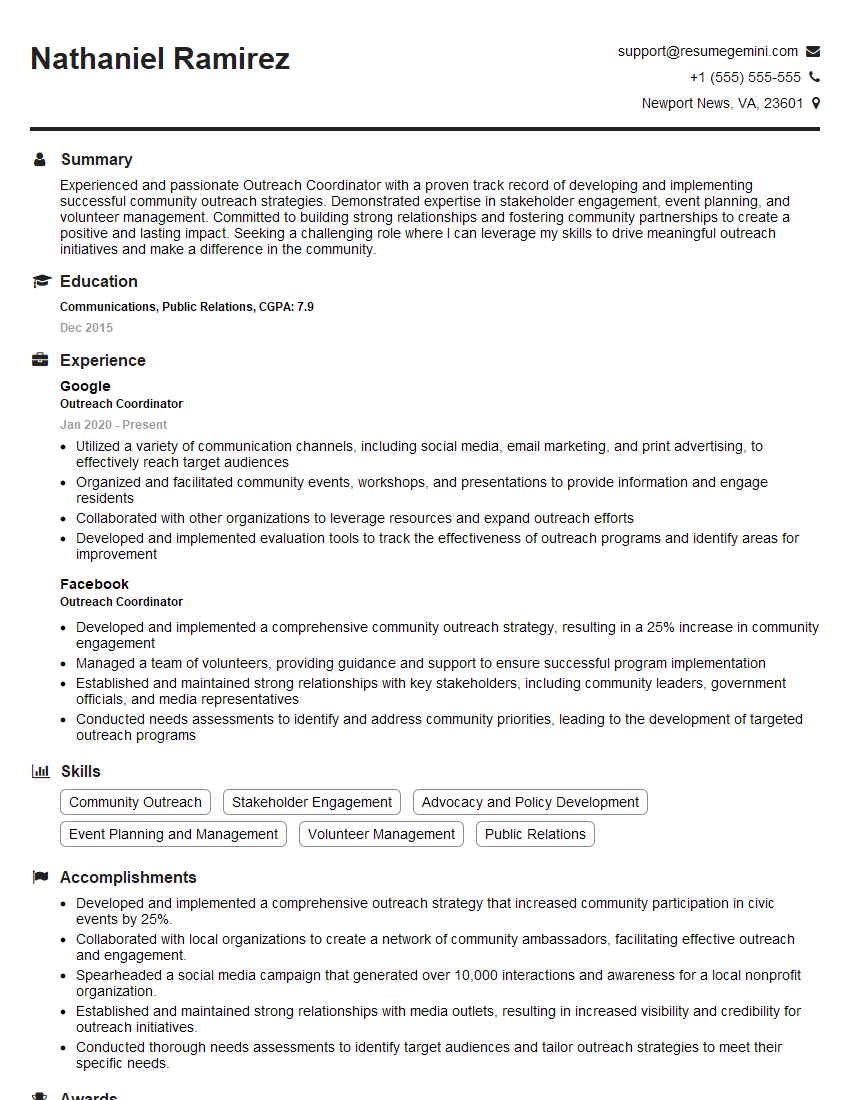
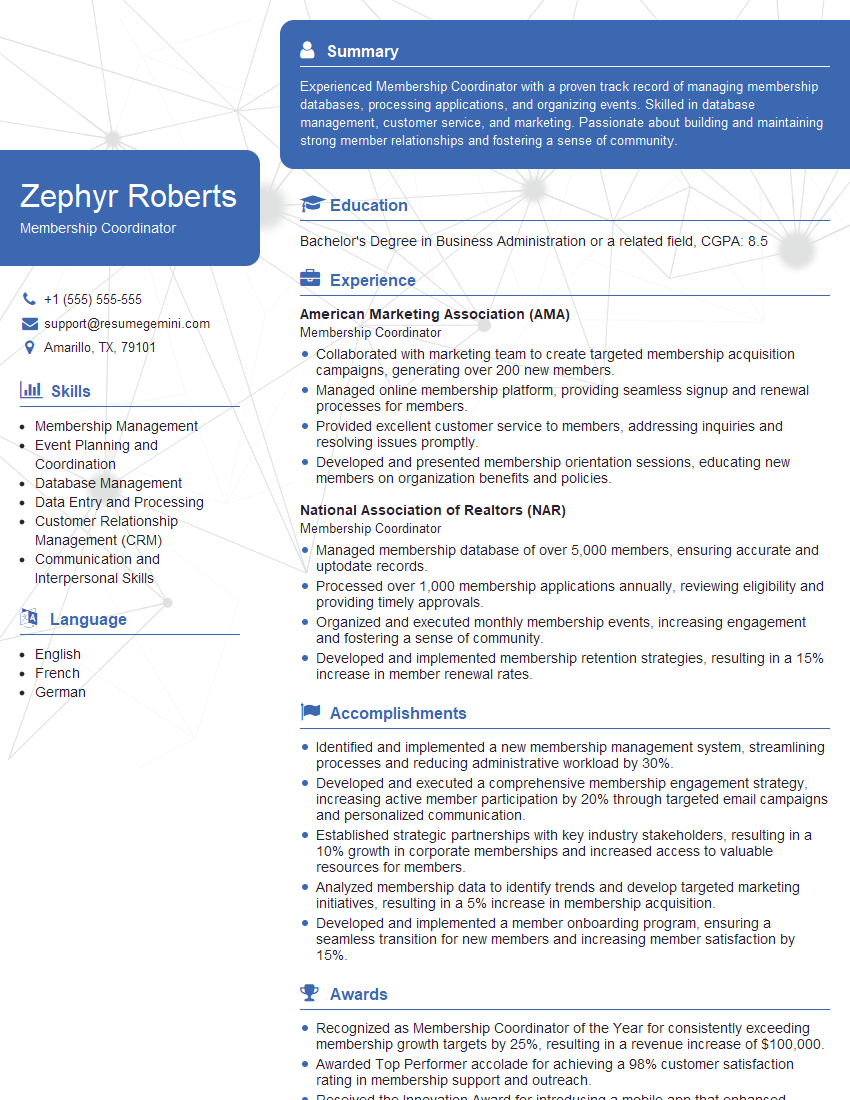
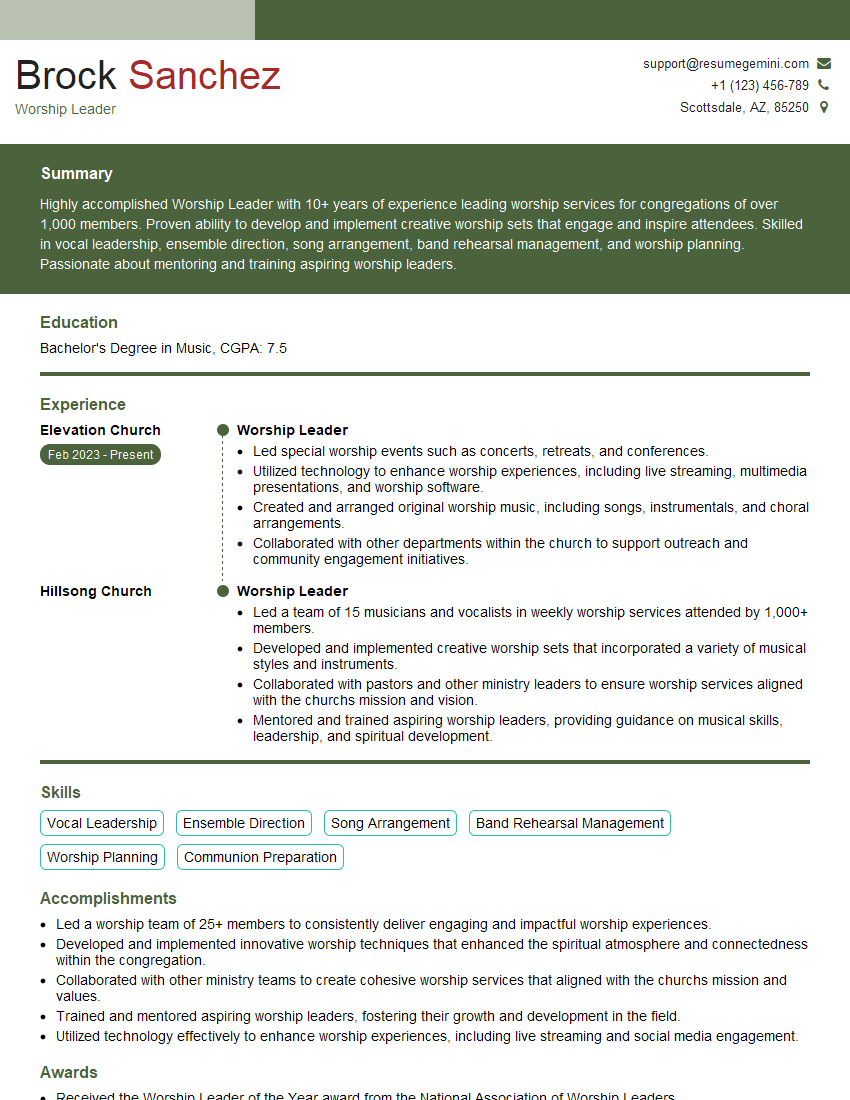
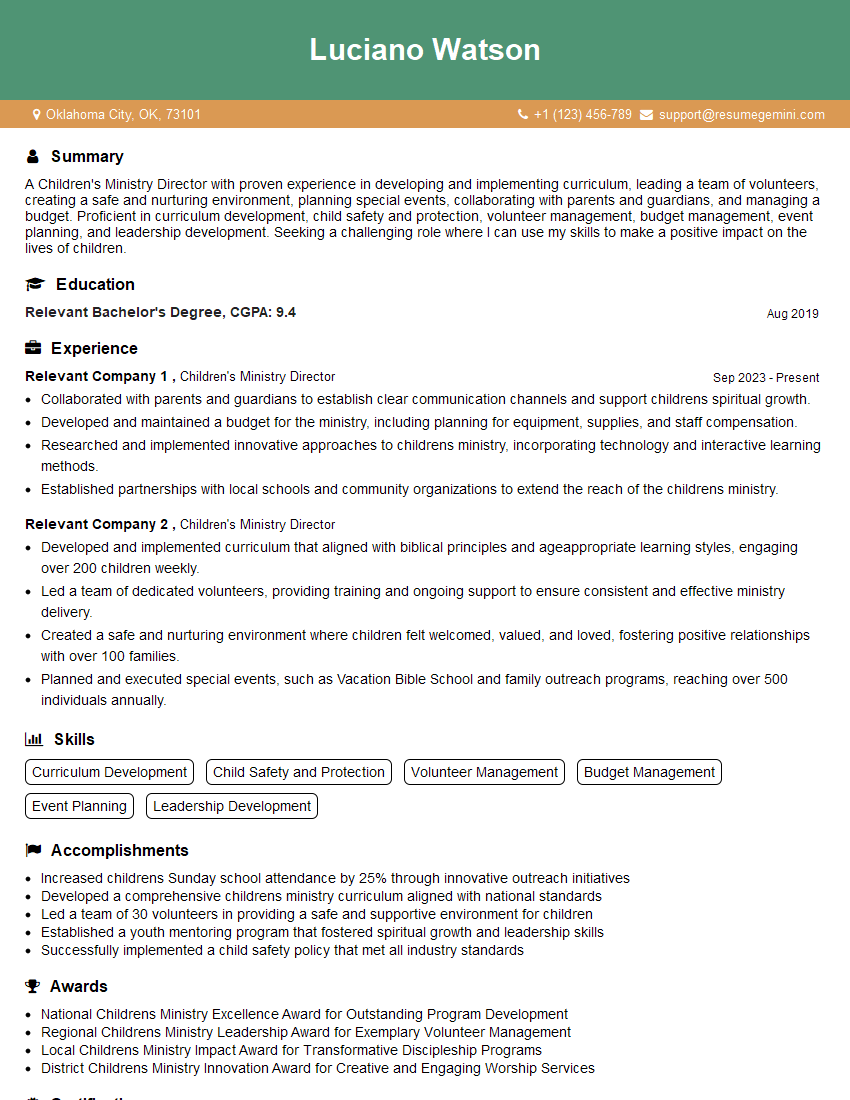
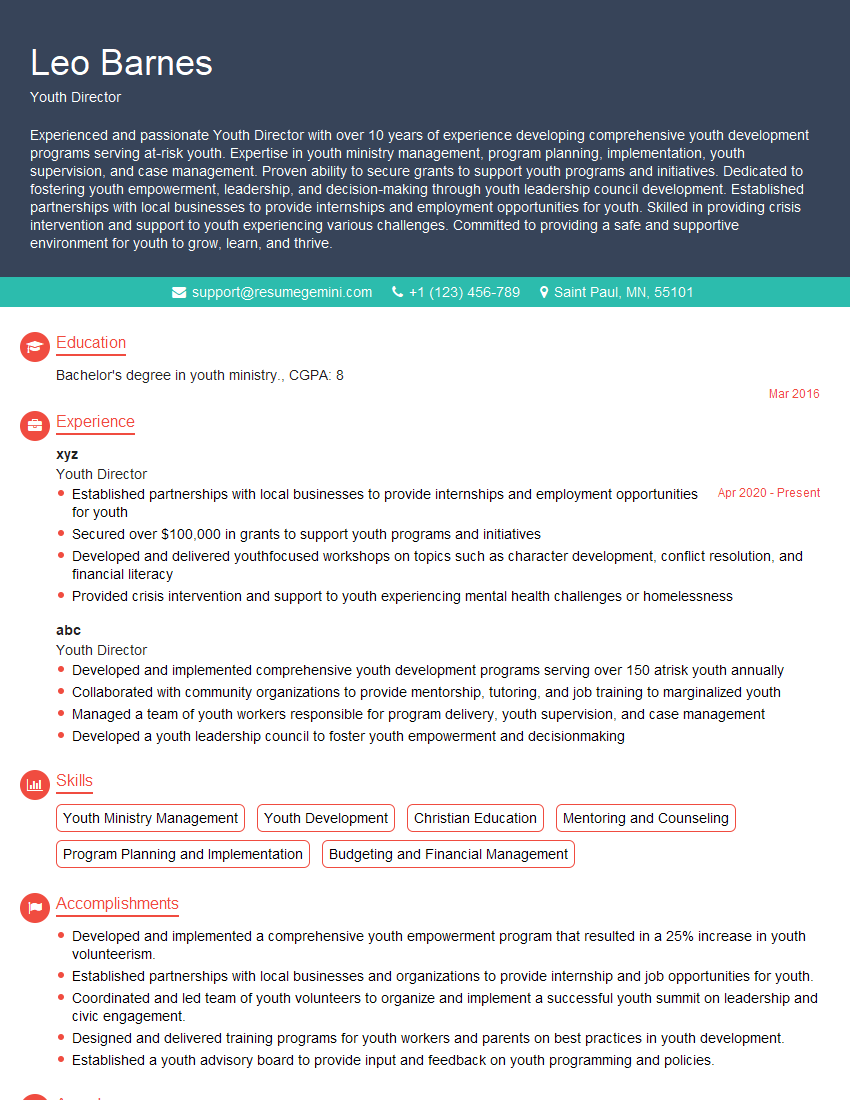
Mastering Church Management opens doors to fulfilling careers impacting communities and making a significant difference. A strong understanding of these areas will significantly boost your interview performance and showcase your valuable skills. To maximize your job prospects, creating an ATS-friendly resume is crucial. ResumeGemini is a trusted resource that can help you craft a professional and impactful resume designed to get noticed by recruiters. ResumeGemini provides examples of resumes tailored to Church Management positions, empowering you to present your qualifications effectively. Invest time in building a compelling resume and highlight your unique contributions to the field; your future success awaits!

Explore more articles
Users Rating of Our Blogs
Share Your Experience
We value your feedback! Please rate our content and share your thoughts (optional).
What Readers Say About Our Blog
Very informative content, great job.
good