Interviews are more than just a Q&A session—they’re a chance to prove your worth. This blog dives into essential Clam Packaging and Labeling interview questions and expert tips to help you align your answers with what hiring managers are looking for. Start preparing to shine!
Questions Asked in Clam Packaging and Labeling Interview
Q 1. What are the advantages and disadvantages of using clam shell packaging?
Clam shell packaging, those familiar hinged plastic packages, offers several advantages and disadvantages. Think of it like a protective plastic clamshell – great for keeping things safe, but not without its quirks.
- Advantages: Excellent product visibility, good protection against damage and tampering, relatively inexpensive to produce (especially in high volumes), easy to open and reclose (though sometimes frustrating!), and suitable for a wide variety of products.
- Disadvantages: Can be bulky and increase shipping costs, not environmentally friendly (often made from non-recyclable plastics), can be difficult to design for products with irregular shapes, and the manufacturing process might create excess plastic waste.
For example, a small electronics retailer might find clam shell packaging ideal for protecting earbuds, but a clothing brand might find it unsuitable and opt for cardboard packaging instead.
Q 2. Describe different types of clam shell packaging materials and their applications.
Clam shell packaging comes in various materials, each suited for different applications.
- Polypropylene (PP): A common choice due to its durability, chemical resistance, and recyclability (though recycling infrastructure varies). Ideal for robust products like electronics or hardware.
- Polyethylene Terephthalate (PET): Offers good clarity and strength, making it suitable for products where visibility is key, such as food items or cosmetics. However, it’s less resistant to heat than PP.
- Polystyrene (PS): Less expensive but less environmentally friendly compared to PP or PET. Often used for disposable items or products where cost is the primary concern. However, this choice comes at the expense of environmental impact.
- Bioplastics: Increasingly popular, these are made from renewable resources and are biodegradable. They present a more sustainable option, though often more expensive.
Consider a toy manufacturer: They might choose PP for a durable toy car, PET for clear packaging showcasing a delicate figurine, or bioplastic for a more environmentally conscious approach.
Q 3. Explain the process of designing a clam shell package for a specific product.
Designing a clam shell package involves a systematic approach considering several factors:
- Product Dimensions and Shape: Accurate measurements are crucial to ensure a snug fit without excessive wasted material.
- Material Selection: Choosing the right material based on product fragility, environmental concerns, and budget.
- Hinge Design: Ensuring a secure and easy-to-open hinge, considering the material properties and desired level of protection.
- Locking Mechanism: Selecting an appropriate locking mechanism, like a snap-fit or friction fit, depending on the product’s weight and the level of security needed.
- Graphics and Branding: Incorporating clear and attractive graphics to highlight product features and brand identity. This step considers aspects like print quality, colors, and layout.
- Prototyping and Testing: Creating prototypes to assess functionality, ease of opening, and overall product protection before mass production. This is a critical step.
For instance, designing clam shell packaging for fragile glassware requires a more robust material (like PP) with reinforced hinges and potentially a cushioning insert compared to packaging for a lightweight item.
Q 4. How do you ensure the structural integrity of a clam shell package?
Structural integrity is paramount. Several methods ensure a robust clam shell package:
- Finite Element Analysis (FEA): Using software to simulate stress and strain on the package under various conditions, ensuring it can withstand handling and transportation.
- Material Thickness and Reinforcement: Optimizing material thickness, particularly at stress points like hinges and corners, for added strength. Adding ribs or gussets to critical areas provides structural support.
- Proper Hinge Design: Ensuring the hinge is appropriately designed and manufactured to prevent breakage and maintain a secure closure. A strong hinge is essential.
- Testing and Validation: Conducting drop tests, compression tests, and other physical tests to evaluate the package’s ability to protect the product during shipping and handling.
Imagine shipping delicate electronics: FEA can predict potential failure points, allowing for design adjustments to prevent damage during transit, ensuring customer satisfaction.
Q 5. What are the key considerations for selecting appropriate labeling materials for clam shell packaging?
Labeling material selection impacts visibility, durability, and environmental impact. Key considerations include:
- Adhesive Properties: The adhesive must securely bond to the clam shell material without leaving residue. Different adhesives work better with different plastics.
- Material Durability: The label must withstand handling, temperature fluctuations, and potential exposure to moisture or chemicals without tearing or fading.
- Print Quality: The label material must be compatible with the chosen printing method (e.g., offset, digital, flexographic) to ensure high-quality graphics and text.
- Environmental Compliance: Choosing materials that are recyclable or compostable aligns with sustainability goals. This is increasingly important.
For example, a food product might require a label material that’s resistant to moisture and grease, while a toy might need a more durable label capable of withstanding rough handling by children.
Q 6. How do you ensure accurate and consistent labeling on clam shell packages?
Accurate and consistent labeling necessitates precise control over the labeling process:
- Label Placement Accuracy: Using automated labeling systems with precise registration to ensure consistent label placement on each package. This is vital for aesthetics and branding.
- Quality Control: Regularly inspecting labeled packages to identify and correct any inconsistencies or defects. A rigorous quality check is essential.
- Label Printing Quality: Ensuring that the printing process is calibrated to maintain consistent color, sharpness, and readability across all labels. Consistent quality is key.
- Proper Label Application: Using the appropriate application method (e.g., pressure-sensitive, in-mold) and ensuring proper pressure and alignment for optimal adhesion.
Think of a pharmaceutical company: Accuracy is paramount; even a slight error in labeling can have serious consequences. Automated systems with rigorous quality checks are essential for consistency and accuracy.
Q 7. Describe different labeling methods used for clam shell packaging (e.g., pressure-sensitive labels, in-mold labeling).
Several labeling methods exist for clam shell packaging:
- Pressure-Sensitive Labels: These are commonly used and offer flexibility in label design and placement. They’re simple to apply but may not always be as durable as other methods.
- In-Mold Labeling (IML): The label is incorporated into the packaging during the molding process, resulting in a highly durable and integrated label that is nearly impossible to remove. Ideal for high-quality products and tamper-evident packaging.
- Sleeve Labels: A printed sleeve is shrink-wrapped around the clam shell packaging. This approach provides excellent coverage and a high-impact visual effect.
A high-end cosmetic brand might choose IML for its premium feel and durability, while a simple grocery product might opt for pressure-sensitive labels for cost-effectiveness.
Q 8. What are the common challenges in clam shell packaging production, and how do you address them?
Clam shell packaging production, while efficient for many products, presents several challenges. One major hurdle is material selection. Choosing the right plastic type balances cost, recyclability, and product protection. For example, PET (polyethylene terephthalate) is popular for its clarity and recyclability, but it might not be suitable for all products due to its rigidity. Another significant challenge is precise thermoforming. The heating and molding process requires careful control to ensure consistent shape and proper sealing. Imperfect heating can lead to warped shells or incomplete seals, compromising product protection. Finally, high-speed production necessitates meticulous machine maintenance and calibration to prevent jams and production downtime. We address these challenges through proactive measures. This includes rigorous material testing and vendor selection, regular machine maintenance schedules with preventative measures, and the implementation of advanced quality control systems incorporating automated visual inspection and statistical process control.
For instance, we use sophisticated software to monitor the thermoforming process in real time, automatically adjusting parameters as needed to maintain consistency. This minimizes waste and maximizes production efficiency.
Q 9. Explain the role of quality control in clam shell packaging and labeling.
Quality control in clam shell packaging and labeling is paramount. It encompasses the entire process, from raw material inspection to finished product verification. We have a multi-layered approach. This starts with incoming material inspection to ensure compliance with specifications. Then comes in-process monitoring during thermoforming and packaging, checking for dimensional accuracy, seal integrity, and proper labeling alignment. Finally, final product inspection involves visual checks for defects and functionality testing, ensuring the packaging adequately protects the product.
Statistical process control (SPC) techniques are crucial for tracking key metrics and identifying potential problems before they escalate into major quality issues. For example, we monitor the percentage of rejected shells or the number of labeling errors. This data informs our adjustments to the production process and helps us identify areas for improvement. We also use automated vision systems for precise and consistent inspection, significantly reducing human error and increasing efficiency.
Q 10. How do you identify and resolve defects in clam shell packaging and labeling?
Identifying and resolving defects requires a systematic approach. We use a combination of visual inspection, automated quality control systems, and data analysis. Common defects include warped shells, incomplete seals, misaligned labels, or cracks. Visual inspection is often the first step; this could involve manual checks or automated vision systems that detect deviations from specifications. When a defect is identified, we trace it back to its source using data analysis. Was it a problem with the raw material, the thermoforming machine, or the labeling process?
For example, if we see a recurring issue with incomplete seals, we might analyze the temperature and pressure settings of the thermoforming machine, and adjust them accordingly. If the problem relates to labeling, we might need to adjust the label placement mechanisms or review the label material’s quality. Root cause analysis is fundamental to preventing recurring problems. Corrective actions are meticulously documented and reviewed to continuously improve our process.
Q 11. What are the regulatory compliance requirements for clam shell packaging and labeling?
Regulatory compliance is critical for clam shell packaging and labeling. Regulations vary depending on the product packaged and the geographical location. Key areas include food safety regulations (e.g., FDA in the US, EFSA in Europe) if food products are involved. These regulations stipulate material safety, labeling requirements (ingredients, nutritional information, allergen warnings), and hygiene standards. Environmental regulations concerning waste management and material recyclability are also critical. For instance, many countries are now implementing regulations related to plastic waste reduction. We must ensure our packaging materials comply with these stipulations. Finally, labeling regulations dictate information required on the packaging (product name, manufacturer details, weight, warnings, etc.). Each regulatory body will have specific requirements regarding formatting, font size, and language used.
We employ a dedicated compliance team to stay updated on relevant regulations and ensure our packaging consistently meets these standards. We maintain detailed documentation of material certifications, testing results, and labeling specifications to support compliance audits.
Q 12. How do you ensure the sustainability of clam shell packaging?
Sustainability is a key concern. We pursue this through several strategies. First, we focus on using recyclable materials, like rPET (recycled polyethylene terephthalate). This reduces our reliance on virgin materials. We also explore the use of bio-based plastics, derived from renewable sources, as a more environmentally friendly alternative to traditional petroleum-based plastics. Further, we optimize packaging design to minimize material usage without compromising product protection. This involves designing thinner shells or using more efficient nesting strategies. We collaborate with recycling facilities to support closed-loop systems, where our packaging materials can be recycled and used again in future production runs. Transparent labeling with clear recycling instructions also plays a role in promoting responsible disposal. Finally, we invest in technologies and processes aimed at reducing energy consumption and minimizing waste generation throughout our production process.
Q 13. What are the key performance indicators (KPIs) for clam shell packaging production?
Key performance indicators (KPIs) for clam shell packaging production are crucial for evaluating efficiency and quality. These include: Production output (units produced per hour or per day), defect rate (percentage of rejected units), material usage efficiency (amount of material used per unit), machine uptime (percentage of time the production line is operational), labor productivity (output per labor hour), energy consumption (energy used per unit produced), and customer satisfaction (feedback regarding packaging quality and functionality). We closely monitor these KPIs using automated data collection systems and regular performance reviews. This data is used to identify areas for improvement and make data-driven decisions to optimize our production processes.
Q 14. How do you optimize the production process for clam shell packaging to improve efficiency?
Optimizing clam shell packaging production for improved efficiency involves several steps. Lean manufacturing principles, such as eliminating waste, improving workflow, and reducing lead times, are fundamental. This might involve implementing automated systems for material handling, thermoforming, and labeling, reducing manual labor and error. We also use Six Sigma methodologies for process improvement, aiming to reduce variability and defects. Regular preventative maintenance on equipment minimizes downtime. Process optimization software allows us to monitor and analyze production data in real time, allowing for adjustments to improve speed and consistency. Investing in advanced technologies like automated vision systems for quality control further increases efficiency by reducing manual inspections. Finally, continuous improvement initiatives are essential. This includes regular employee training, process reviews, and the implementation of best practices based on industry trends and technological advancements.
Q 15. What are the different types of labeling equipment used in clam shell packaging?
Clam shell packaging utilizes various labeling equipment depending on production volume and label type. The most common types include:
- Hand-held label applicators: Ideal for low-volume operations, these are simple and inexpensive but require manual application, leading to potential inconsistencies.
- Semi-automatic label applicators: These machines partially automate the process, often feeding labels automatically but requiring manual placement onto the clam shell. They offer increased speed and accuracy compared to manual application.
- Automatic label applicators: These are high-speed, high-volume solutions, typically integrated into the packaging line. They automatically feed, apply, and often verify label placement, ensuring consistent and accurate labeling.
- Print and Apply labelers: These combine printing and application capabilities, allowing for variable data printing (like lot numbers or barcodes) directly onto the label before application. This is crucial for traceability and inventory management.
The choice of equipment depends heavily on factors such as budget, production volume, label type (e.g., paper, vinyl, tamper-evident), and required accuracy.
Career Expert Tips:
- Ace those interviews! Prepare effectively by reviewing the Top 50 Most Common Interview Questions on ResumeGemini.
- Navigate your job search with confidence! Explore a wide range of Career Tips on ResumeGemini. Learn about common challenges and recommendations to overcome them.
- Craft the perfect resume! Master the Art of Resume Writing with ResumeGemini’s guide. Showcase your unique qualifications and achievements effectively.
- Don’t miss out on holiday savings! Build your dream resume with ResumeGemini’s ATS optimized templates.
Q 16. How do you maintain and troubleshoot labeling equipment?
Maintaining and troubleshooting labeling equipment is crucial for uninterrupted production. Regular maintenance includes:
- Daily checks: Inspecting label supply, sensor alignment, and print quality. Addressing any minor issues immediately prevents larger problems down the line.
- Weekly maintenance: Cleaning print heads, rollers, and other moving parts. This removes dust and debris that can cause jams or poor print quality. Lubrication of moving parts as per manufacturer’s instructions is also vital.
- Monthly maintenance: More thorough cleaning, checking for wear and tear on parts like belts and rollers, and calibration of the label placement mechanism. This often involves specific procedures outlined in the equipment manual.
Troubleshooting involves systematic investigation. For example, if labels are misaligned, I would first check the sensor alignment, then the label path for obstructions, followed by checking the calibration settings. If printing errors occur, I would examine the print head for clogs, the ribbon condition, and the print settings within the machine. Keeping detailed logs of maintenance and troubleshooting greatly aids in identifying recurring issues and preventing future problems.
Q 17. How do you manage inventory for clam shell packaging materials and labels?
Efficient inventory management is essential to avoid production downtime due to shortages. This involves:
- Accurate stock tracking: Utilizing a system (e.g., ERP, inventory management software) to track clam shell packaging materials (including different sizes and types) and labels (considering variations in label design and material). This system should provide real-time information on stock levels and reorder points.
- Regular stock checks: Physical checks against the inventory system to identify discrepancies and ensure accuracy. This prevents costly overstocking or sudden shortages.
- Predictive inventory management: Forecasting demand based on historical data and sales projections. This allows for proactive ordering and prevents delays caused by supply chain issues.
- Supplier relationships: Maintaining strong relationships with reliable suppliers to secure consistent supply and manage lead times effectively.
For instance, I’ve implemented a Kanban system in previous roles, visually signaling when a particular material is running low, prompting timely reordering. This minimizes storage space while maximizing production efficiency.
Q 18. Describe your experience with different types of adhesives used in clam shell packaging.
Different adhesives are used in clam shell packaging depending on the application and material being packaged. Common types include:
- Hot melt adhesives: These are widely used due to their fast setting time and strong bond. They require specialized equipment to melt and apply. Different hot melt formulations exist for various substrates and environmental conditions.
- Pressure-sensitive adhesives (PSA): These are commonly found on labels, offering easy peel-and-stick application. The tack and adhesion strength vary depending on the specific adhesive formulation. Choosing the right PSA for the clam shell material and application is critical for reliable sealing.
- Water-based adhesives: These are environmentally friendly and often used for paper labels. However, they require longer drying times compared to hot melt adhesives.
My experience includes working with both hot melt and PSA adhesives. For example, in one project involving delicate electronics, we chose a low-tack PSA to prevent damage during label removal. Understanding the characteristics of each adhesive is paramount for choosing the best option for the specific application.
Q 19. What are the best practices for preventing label damage during the packaging process?
Preventing label damage requires careful attention to various aspects of the packaging process:
- Proper label handling: Storing labels in a cool, dry place, away from direct sunlight and moisture, prevents curling or damage to the adhesive. Handling labels gently to avoid tearing or creasing is also essential.
- Suitable label materials: Choosing durable label materials that can withstand the packaging process and environmental conditions. For example, using a thicker, more resistant label stock for products likely to experience rough handling.
- Optimized label application: Correctly aligning and applying labels to avoid wrinkles, folds, or damage to the label during application. Regular maintenance of labeling equipment prevents issues like label jamming or stretching.
- Environmental protection: Using protective coatings or laminates on labels if they need to withstand extreme temperatures, humidity, or UV exposure.
In a past project, we experienced label curling issues due to high humidity in the factory. Switching to a more resistant label material and improving the storage conditions resolved the problem completely.
Q 20. How do you handle label misalignment or printing errors?
Label misalignment or printing errors require immediate attention to prevent defective products. My approach involves:
- Identify the root cause: Determining if the issue is due to equipment malfunction (e.g., sensor misalignment, print head problems) or an issue with the label design or material.
- Isolate the problem: Stop the production line to prevent further defective products from being produced. This allows for a controlled investigation and resolution of the problem.
- Implement corrective actions: Addressing the root cause, whether by adjusting equipment settings, replacing parts, or redesigning the label.
- Quality control checks: Implementing thorough quality control checks after the corrective actions to verify the issue is resolved and to prevent recurrence.
For example, if labels are consistently misaligned, I would first check the sensor alignment, then the label path for any obstructions. If the issue persists, I would investigate the calibration settings and potentially call for maintenance support if needed.
Q 21. What is your experience with automated labeling systems?
I have extensive experience with automated labeling systems, from simple conveyor-based systems to highly integrated, complex systems utilizing vision systems for label placement verification. My experience includes:
- System integration: Working with different manufacturers’ equipment to design and implement efficient, integrated labeling solutions within the overall packaging line.
- Programming and configuration: Configuring and programming PLCs and HMIs (Human Machine Interfaces) for control and monitoring of automated labeling systems. This includes setting parameters for speed, label type, and placement accuracy.
- Troubleshooting and maintenance: Diagnosing and resolving issues with automated systems using diagnostic tools and documentation. This involves understanding the interplay between various components of the automated line.
- Performance optimization: Analyzing system performance to identify areas for improvement, such as throughput and label placement accuracy. Data analysis plays a significant role in optimizing these systems.
One project involved implementing a high-speed automated labeling system that increased production by 40% and significantly reduced labor costs. This involved careful selection of equipment, efficient integration, and thorough testing to ensure reliable performance.
Q 22. How do you ensure the accuracy and readability of labels?
Ensuring accurate and readable labels on clam shell packaging is paramount for consumer understanding and brand integrity. It involves a multi-step process focusing on design, printing, and verification.
- Clear and Concise Design: The label should prominently display essential information like product name, ingredients, warnings, and barcodes. Font size, color contrast, and overall layout must be carefully considered for optimal readability. Think of it like writing a clear instruction manual – you want it easily understood at a glance.
- Pre-press Proofing: Before mass production, a digital proof needs to be meticulously reviewed. This includes checking for spelling errors, ensuring the correct imagery and information are placed, and verifying the color accuracy. Any discrepancies are corrected at this stage, avoiding costly reprints.
- Print Verification: After printing, a random sample of labels is checked for quality, including print clarity, color consistency, and proper alignment. This ensures the printing process met specifications and the labels are ready for application.
- Adherence Standards: We need to choose the right adhesive and printing material to ensure the label will securely and consistently adhere to the clam shell plastic.
For example, a recent project involved a client whose label design was too cluttered. We redesigned it, using a larger font size for key information and implementing a clearer color scheme. This resulted in a significantly improved consumer experience and better product recognition.
Q 23. Describe your experience with different types of printing techniques used for labels.
My experience encompasses various printing techniques commonly used for clam shell labels. Each method has advantages and disadvantages depending on the project’s needs, budget, and desired volume.
- Flexographic Printing: A cost-effective solution for high-volume production. Uses flexible printing plates and is suitable for simple designs with solid colors. It’s very efficient, but less detailed than some other methods.
- Digital Printing: Ideal for shorter print runs, customization, and variable data (like unique serial numbers). Offers greater flexibility and design detail compared to flexography, but can be more expensive per unit for larger quantities.
- Screen Printing: Suitable for specialized effects and thicker ink layers. Good for unique designs or logos but limited in detail compared to digital.
- Offset Printing: Often used for high-volume, detailed labels where precision and consistent color reproduction are critical. It provides high-quality printing but has higher setup costs compared to other methods.
For instance, a client requiring unique batch numbers on each label for traceability would benefit from the flexibility and variability of digital printing. Conversely, a product with mass market appeal and a simple design would be ideal for flexographic printing because of its cost-effectiveness.
Q 24. What software or systems are you familiar with for designing and managing labels?
I’m proficient in several software and systems for label design and management. My experience includes:
- Adobe Illustrator and Photoshop: Used extensively for creating and manipulating label artwork, ensuring design accuracy and quality.
- Label design software: Such as NiceLabel, BarTender, and LabelView, which offer specialized tools for creating and managing label templates, integrating with databases, and controlling print jobs. These software are extremely efficient for optimizing the workflow, reducing the amount of human error, and ensure printing consistency.
- Enterprise Resource Planning (ERP) systems: Integration with ERP systems like SAP and Oracle allows for streamlined label generation, incorporating data directly from production and inventory management systems.
For example, in a previous project, we used BarTender to connect label design with our inventory system. This automated the label generation process, ensuring each clam shell package had the correct product information and barcode, minimizing manual input and potential errors.
Q 25. How do you ensure the label adheres properly to the clam shell packaging?
Proper label adhesion is crucial for maintaining product integrity and providing essential information to consumers. This involves a combination of factors:
- Adhesive Selection: The type of adhesive used must be compatible with both the label material (paper, film, etc.) and the clam shell packaging material (typically plastic). Factors such as temperature, humidity, and surface energy of the plastic need to be considered.
- Surface Preparation: The plastic clam shell needs to be clean and free of dust, oil, or contaminants that might hinder adhesion. Sometimes a surface treatment might be necessary to enhance bond strength.
- Label Application Method: The application method (manual, automated labeling machine) affects adhesion. Automated systems often require specific label dimensions and adhesive characteristics for optimal performance.
- Environmental Conditions: Temperature and humidity can impact adhesion. Extreme temperatures or humidity can weaken the bond over time.
For example, we once encountered poor adhesion issues with a new type of plastic. By testing different adhesives and surface treatments, we identified a combination that ensured reliable adhesion even under fluctuating temperature conditions.
Q 26. Describe a time you had to troubleshoot a problem with clam shell packaging or labeling.
During a project for a food product, we experienced an issue with label curling after application. The labels were designed and printed correctly, but shortly after application to the clam shell, they would curl at the edges, making the information illegible.
Our troubleshooting process involved:
- Analyzing the Materials: We examined the label stock, adhesive type, and the plastic clam shell material. We discovered the label material was highly absorbent and the environment the product was being stored in had high humidity. This combination resulted in the curling.
- Testing Different Adhesives: We tested various adhesives with lower moisture sensitivity.
- Adjusting Label Design: Small modifications to the label design to minimize the absorption issue.
- Environmental Control Recommendation: We made recommendations to the client regarding their storage conditions to minimize the humidity issues that caused the problem.
By systematically investigating the issue, we identified the root cause and implemented effective solutions, ultimately ensuring the product labels remained readable and adhered correctly.
Q 27. How do you stay up-to-date on the latest trends and technologies in packaging and labeling?
Staying updated in the dynamic field of packaging and labeling is essential for maintaining a competitive edge. I utilize several strategies:
- Industry Publications and Trade Shows: I regularly read industry magazines and attend trade shows to learn about new technologies, materials, and regulations.
- Online Resources and Webinars: I actively follow industry websites, blogs, and participate in webinars to stay informed about the latest trends and best practices. This allows for the continuous education and understanding of the fast-paced industry.
- Networking with Professionals: Connecting with peers and professionals in packaging and labeling helps me learn about real-world experiences and challenges. This allows for collective knowledge and better solutions to be created.
- Professional Organizations: Membership in professional organizations keeps me up to date through newsletters, conferences, and other resources.
For example, recent research into sustainable packaging materials has led to our exploration of bio-based films and compostable adhesives, a change that aligns with current environmental concerns and growing consumer demands.
Key Topics to Learn for Clam Packaging and Labeling Interview
- Clam Shell Packaging Design: Understanding different clam shell designs, their applications, and material selection based on product characteristics and budget constraints. Consider factors like ease of opening, product visibility, and environmental impact.
- Labeling Regulations and Compliance: Familiarize yourself with relevant industry regulations (e.g., FDA, country-specific requirements) concerning labeling accuracy, material safety, and legal compliance for different product types.
- Production Processes: Gain a working knowledge of the manufacturing process involved in clam shell packaging and labeling, including thermoforming, printing techniques, and automated packaging lines. Understand potential bottlenecks and quality control measures.
- Material Science & Sustainability: Explore different materials used in clam shell packaging (plastics, paperboard, etc.) and their properties. Understand current trends in sustainable packaging and the role of recyclability and biodegradability.
- Cost Optimization & Efficiency: Learn how to analyze packaging costs, identify areas for improvement, and implement strategies to optimize production efficiency without compromising quality or compliance.
- Troubleshooting & Problem Solving: Develop your ability to identify and solve common problems related to packaging design, production, and labeling, such as sealing issues, label misalignment, and material defects. Consider root cause analysis techniques.
- Automation & Technology: Explore the role of automation and technology in clam shell packaging and labeling, including robotic systems, automated labeling machines, and quality control software.
Next Steps
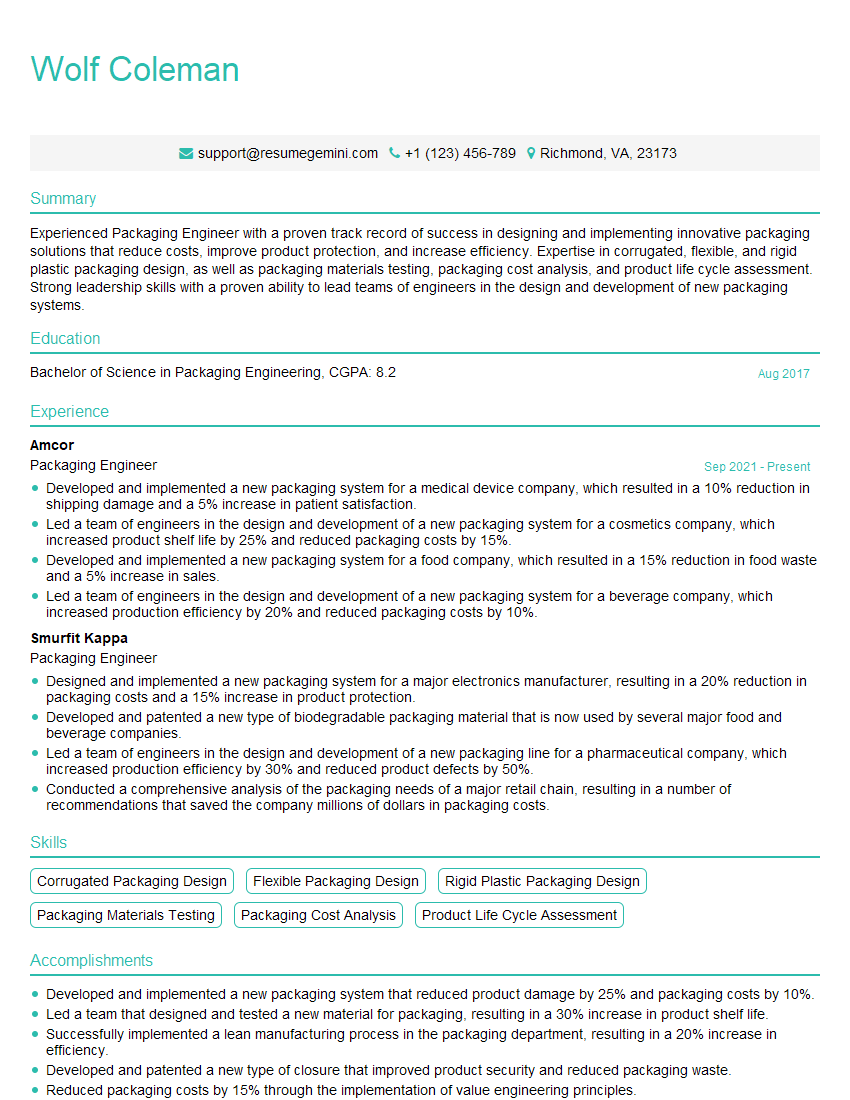
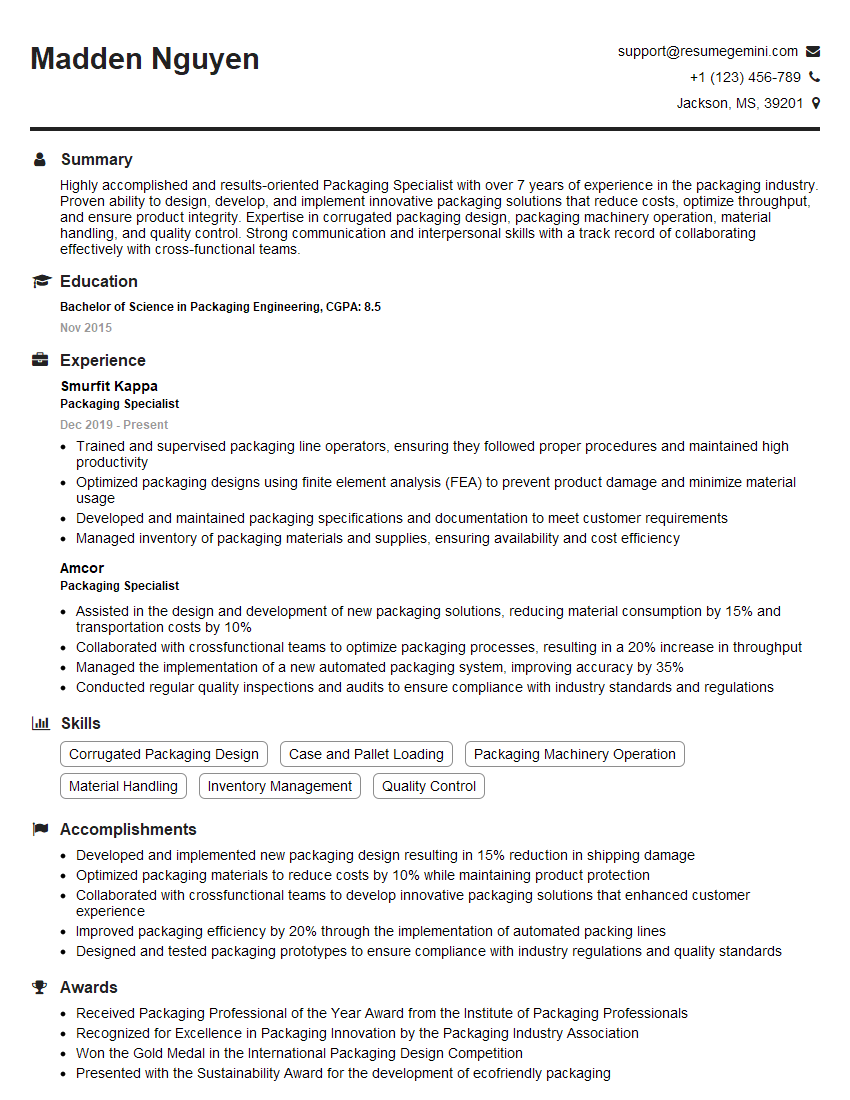
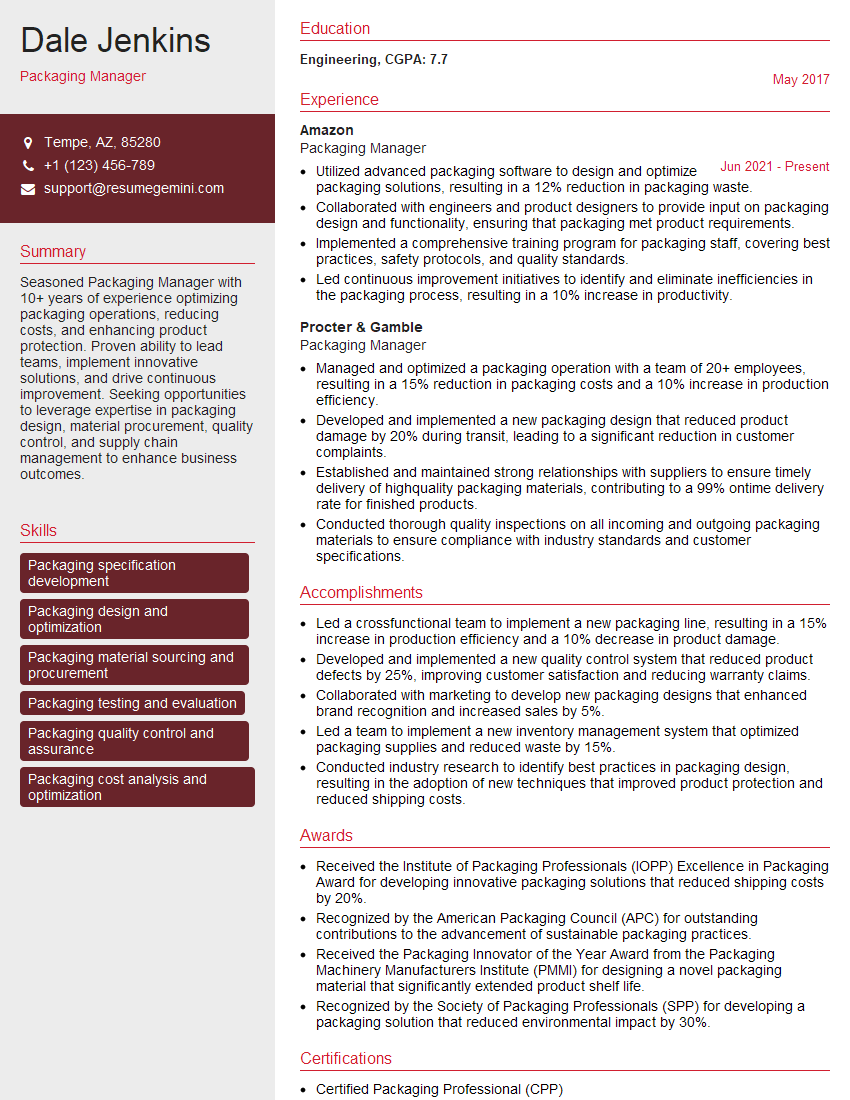
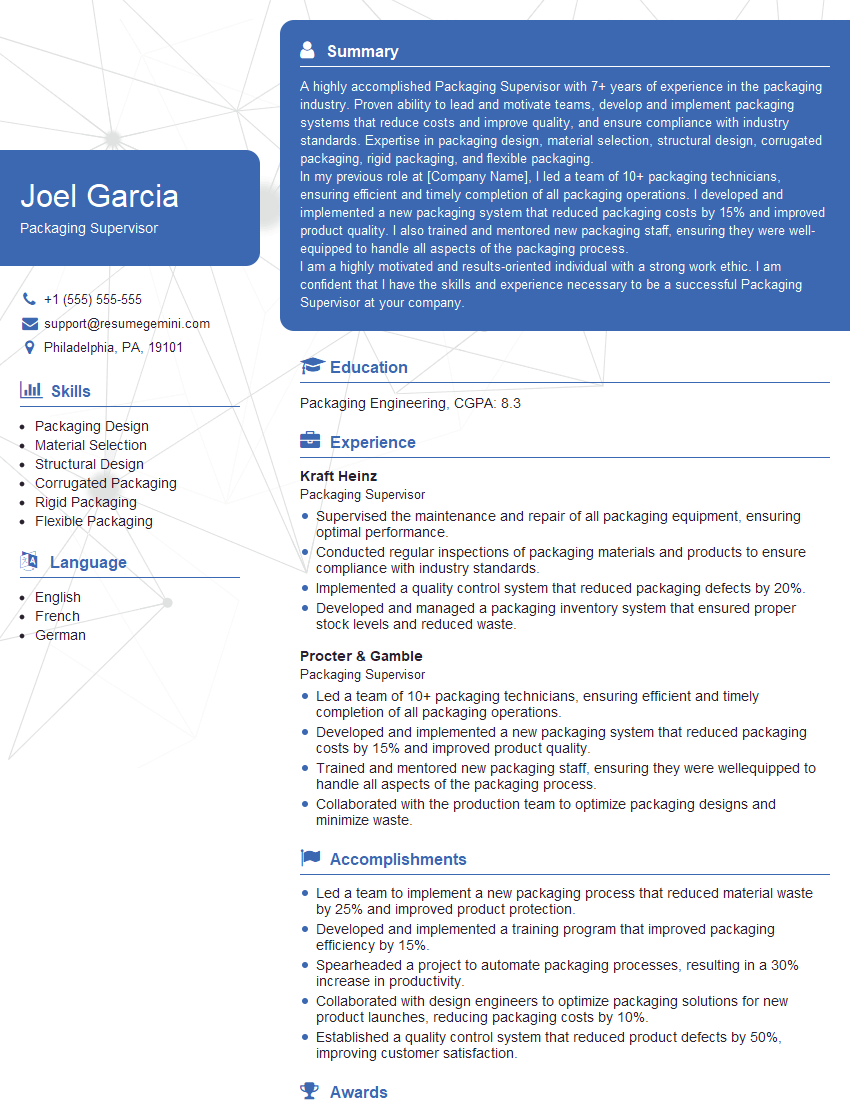
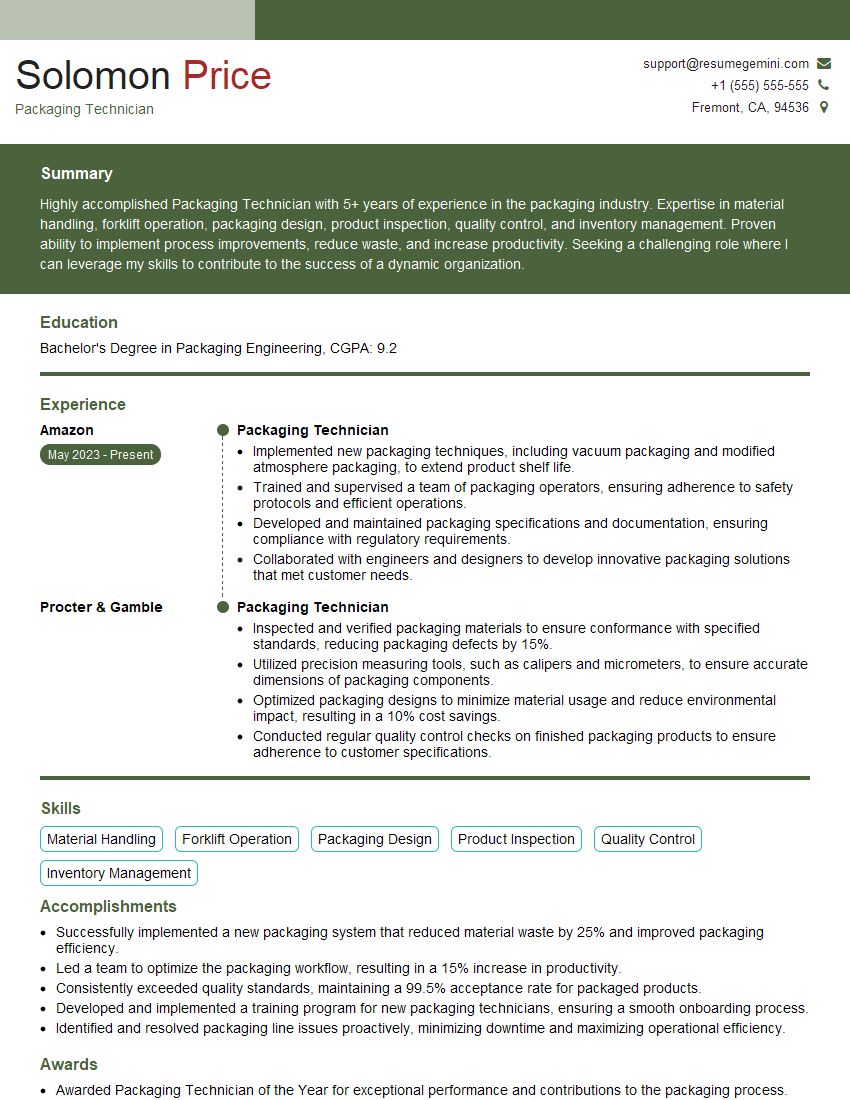
Mastering clam packaging and labeling opens doors to rewarding careers in manufacturing, supply chain management, and packaging engineering. A strong understanding of these concepts significantly enhances your marketability and allows you to contribute effectively to a company’s success. To maximize your job prospects, focus on crafting an ATS-friendly resume that effectively highlights your skills and experience. ResumeGemini is a trusted resource to help you build a professional and impactful resume that grabs recruiters’ attention. Examples of resumes tailored to the clam packaging and labeling industry are available to help guide you.
Explore more articles
Users Rating of Our Blogs
Share Your Experience
We value your feedback! Please rate our content and share your thoughts (optional).
What Readers Say About Our Blog
Very informative content, great job.
good